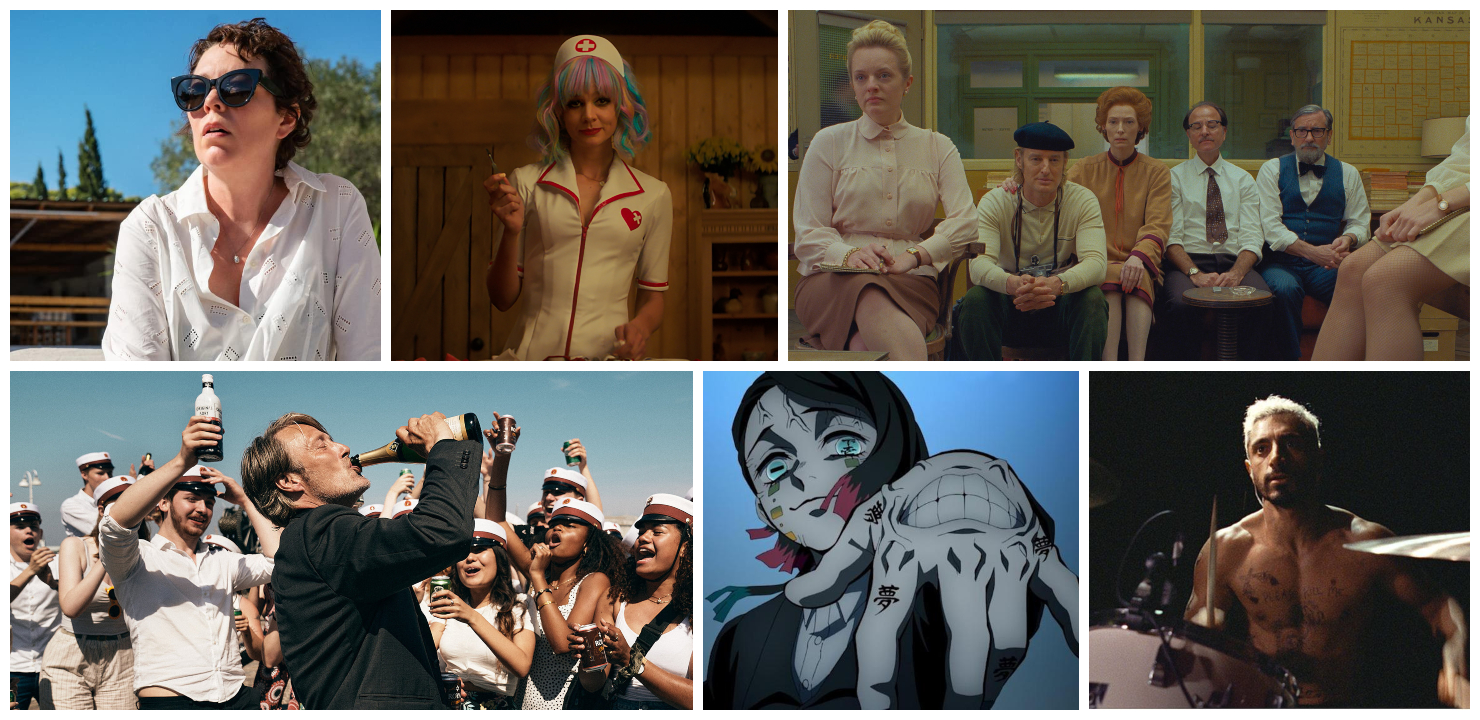
2021 was the year which many claimed saw the return of cinema, after the short bursts of intermittent returns in 2020. Cinemas, distributors, studios and cinemagoers each had their fair share of worry about how well certain major films would fare while still in a pandemic, and yet audiences came back with high demand to see the return of their favourite franchises. While popular throughout the year, Marvel truly proved their draw when ending 2021 with the pandemic-record-shattering (not to mention crowd-pleasing) Spider-Man: No Way Home. While before then the UK saw a hit with the return of Bond, and Venom: Let There Be Carnage proved to be an equal hit in the States. And, let’s not forget the blockbuster that caused some of us to return in the first place, Godzilla Vs. Kong (because nothing truly signals the return of cinema like a giant monkey lamping a lizard!)
However, there was still much of the year spent indoors, yes, catching up on old favourites, but also hearing the love for newer, original titles. The likes of The Mitchells Vs. The Machines and Love And Monsters appeared to come out of nowhere, but both proved to be favourites amongst their respective audiences and pleasing surprises from the past year. Streaming services provided plenty of acclaimed films throughout the pandemic, including a number of awards favourites. It was through them that many viewers got to see the likes of Sound Of Metal (Amazon Prime), Promising Young Woman (Sky Cinema) and this year’s Best Picture winner Nomadland (Disney+). They even continued to do so once lockdowns were lifted, releasing films such as Tick, Tick… Boom, The Harder They Fall and Don’t Look Up (all Netflix). Even titles such as The Green Knight, Palm Springs (Amazon Prime), First Cow and Shiva Baby (MUBI) perhaps gained larger attention thanks to their placement on such services.
Post-awards season, when other contenders finally saw a big screen release, there was plenty of attention towards the likes of The Father and other indie films that may not have had a light shone upon them had 2020 been a more regular year with bigger titles released. Indie films thrived throughout the year, even before Wes Anderson came back to do for arthouse cinemas what Bond and Spider-Man did for chains. Annette, Censor, Pig, Another Round and Titane all saw plenty of audience discussion and reception, and were perhaps amongst some of the most talked about films of the year.
It can be said that a number of films have struggled this year, at least when looking at box office figures for the likes of ‘underperformers’ like West Side Story, In The Heights and The Suicide Squad (although West Side Story certainly pulled in an audience and the latter two titles were also available to stream on HBO Max in the US). But, there’s still been plenty of original titles, alongside the continuing success of franchise titles and blockbusters, that have created conversation and brought more audiences to various titles. Plenty of the most-praised, and often rightfully so, titles of 2021 have been original features. It’s been a strong year for film, and not just in terms of the return of cinema and box office numbers and records (even if ‘records’ does have to be prefaced by ‘pandemic’), and perhaps one of the most difficult in the last few years to put together a top ten where I didn’t have to remove multiple films that I really wish I could have kept in and mentioned (particularly those that I wish had been discussed more, such as Spontaneous, Bad Trip, Herself and Wildfire). However, after yet another overlong introduction simply listing film titles, here are my top ten films of 2021.
10. Demon Slayer The Movie: Mugen Train
Demon Slayer The Movie: Mugen Train was one of the true surprises of 2021. For me, it was one of those films that you go into knowing absolutely nothing about and leave rather amazed at what you’ve just seen. I knew barely anything about the film, especially not the fact that it was a bridge between the first and second series of hit anime show Demon Slayer: Kimetsu no Yaiba. The film certainly doesn’t feel like a bridge, although perhaps leaning that way very slightly towards the very end. I was easily swept up in the narrative as it flowed and moved with the pace of the train that it’s almost entirely set on.
As the demon slaying protagonists do battle with the various demons that reside on the train, including core villain Enmu (Daisuke Hirakawa) – bringing about some of the best combat exchanges of the film, with his open-mouthed hand like a much more gothic version of Thing from The Addams Family – there’s plenty of striking visual flare to expand the world. The detail of the animation heightens the fantasy element and pulls you into the world, and yet also helps to engage you into the psychological delves into each figure. The action almost seems to stop at one point as we experience character beats and flashbacks which help to propel action further on and the nightmarish events occurring throughout the train which has seen the disappearance of many demon slayers before.
The crew and animation team have crafted something which makes the most of your heightened sense, particularly when it comes to the extended sequences of non-stop action. Particularly as stylish anime style is mixed with CG animation to create an occasional extra layer of visual power that puts you back in your seat with the simple response of “wow!”. There’s plenty to like about the stylish action of Demon Slayer The Movie: Mugen Train. It holds plenty of thrills and engaging sequences that truly come to life on the big screen. Yet, it still finds time for dream and subconscious-delving character beats which help to advance the train-rattling narrative and allow you further connection with the world and its characters.
9. Another Round
There’s something about the Scarlet Pleasure song What A Life accompanying the final (and opening) stages of Another Round which perfectly summarise the film. It’s part midlife crisis drama, part midlife crisis comedy mixed with booze. A true cocktail of dizzying proportions as we see an excellent Mads Mikkelsen and fellow teaching staff (Thomas Bo Larsen, Lars Ranthe and Magnus Millang, all forming an excellent ensemble) attempt to write a paper on whether a theory that humans work best with a blood-alcohol level of 0.05%, although increasing the level of alcohol overtime.
There’s humour to be found within the drunken antics of the quarter, however as time goes on the levels of drama are pushed with fine balance and introduction to form something rather thoughtful, and not without its elements of emotion and tragedy. Clearly all coming from a personal angle from writer-director Thomas Vinterberg, who appears to be supported just as much by his cast and crew as he does them.
Everyone appears to band together to create a story about relationships and rejuvenation. One which, as it goes on, begins to blend the lines between comedy and drama as you start to wonder whether you should laugh or be fearful for the characters as their lives indeed become something of a drunken blur. It’s all helped by a number of great central performances, the supporting cast around Mikkelsen truly shining and almost showing as co-leads on re-watches, and a real sense of (perhaps booze-infused) hope amongst crisis. Not to mention, perhaps, the best ending of the year!
8. The Lost Daughter
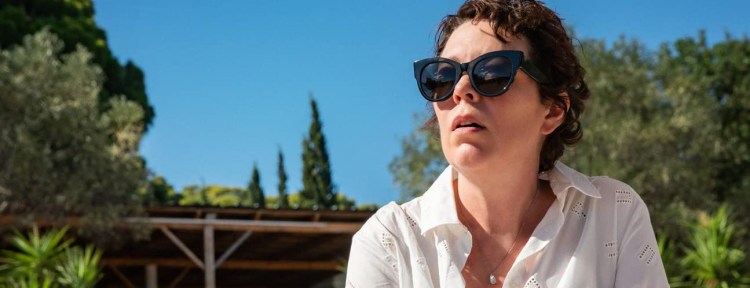
The Lost Daughter starts out the way in which the perfect film, or travel series, might; simply showing Olivia Colman having a lovely time on holiday. Luring you into something of a false sense of security Colman’s happily relaxing on the beach eating an ice cream far from prepares you for the strongly compelling set of flashbacks and repetitions that are to come over the course of the film.
As fellow holidaymaker Dakota Johnson loses her daughter on the beach it triggers callbacks for Colman to her years as a young mother, the younger version of herself played by Jessie Buckley. She almost sees herself in Johnson and the events that pan out on the Greek island they find themselves on, Colman seemingly there to escape herself and her past – yet almost always talking about her younger years and her now seemingly estranged children. She gives a truly fantastic performance, that draws you further into the film, as someone still experiencing, yet not trying to show out of fear and guilt, years of pain and regret.
Everything pans out very gradually, yet you’re held in place by writer-director Maggie Gyllenhaal (making her feature debut in both respects) as the film offers new insight and information at each turn. Simply strengthening each character and the unfolding events which feel as if they could go in any direction, and lean into any genre, at any moment. It’s all finely balanced and helps expand the detail that lines, and is even hidden in, the piece. Forming an engaging, compelling and thoughtful film which is so wonderfully conveyed by Gyllenhaal’s camera, and the stunning subtlety of Olivia Colman’s central performance.
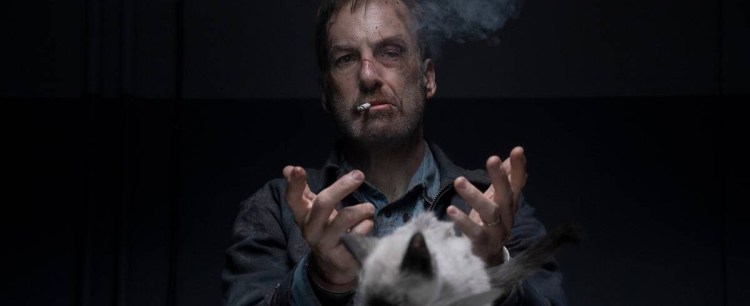
7. Nobody
Towards the end of John Wick: Chapter 3 – Parabellum I began to think to myself ‘I don’t know how much more of this I’m going to be able to watch’. While I really enjoy that trilogy I’m tentative about the upcoming fourth and even fifth instalments of the franchise, wondering if (and when) it’s going to begin to feel somewhat tired and done with. In the case of Nobody, penned by John Wick writer Derek Kolstad, that answer might be not any time soon.
Another film which lures you into something of false sense of security, although with a sense of being rather self-aware, Nobody begins to Bob Odenkirk as mild-mannered, number-crunching, family man (and past-life ‘auditor’) Hutch Mansell. However, it’s not long until you anticipate who’s face will meet his bloodied fist next, after introductory lines and one-liners lead the way to (sometimes literally) explosive needle-drops which can only really be described as COOL! Through fist, knife and gun fights Nobody forms engaging action which brings you in for perhaps one of the most entertaining films of the year, helped along by the fact that it appears to be so aware of itself and exactly what it’s trying to be – particularly as Hutch’s simple quest to get his daughter’s beloved kitty-cat bracelet back from a pair of home-invaders leads him to a run-in with the Russian mob, led by Aleksey Serebryakov’s Yulian Kuznetsov.
There’s plenty of thrills and entertainment to be found within this fast paced (while some might choose to show a triple headshot in slow-motion director Ilya Naishuller shows it as it happens and moves swiftly on to keep the pace going in the short 92 minute run-time) action flick. The kind which has you on the edge of your seat, leaning in to the screening in anticipatory joy, issuing excited giggles at the needle-drop infused carnage that’s on display. Whether led by Bob Odenkirk, or one of the brief appearances of Christopher Lloyd as his father, there are plenty of thrills and chuckles to be found within Nobody.
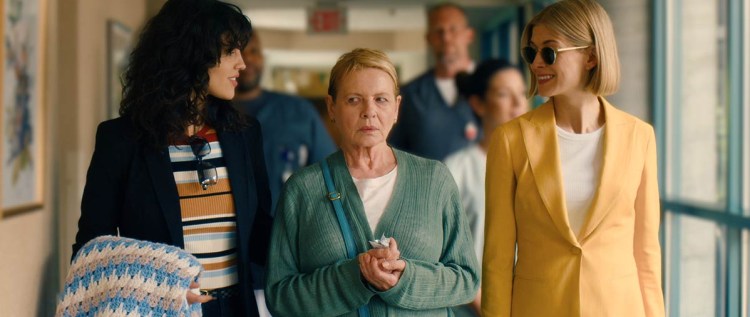
6. I Care A Lot
“Playing fair is a joke invented by rich people to keep the rest of us poor” explains Rosamund Pike’s gleefully evil Marla Grayson. Likely wearing another brightly-coloured outfit to further brighten up her sunny demeanour she makes a living by manipulating the courts into thinking she’s a trustworthy person and therefore making her the guardian of a number of aging figures. However, once guardian she blocks all contact with the family of those who have been put into her care, all in the hope of gaining inheritance money that would have otherwise gone to the children of those she’s responsible for.
That is until she manipulates, abuses and attempts to steal thousands of dollars from Jennifer Peterson (Diane Wiest), the mother of increasingly angered gangster Roman (Peter Dinklage). He’s intent on finding out who Marla is and exactly what’s happening to his mother. In multiple respects the question “what lines will I cross?” is asked, and it helps to ramp up the tension that the piece builds up. Tension which never really has anywhere to go as you can’t get behind or support anyone’s cause due to every character being a, perhaps knowingly, bad person. In fact, the only person you truly can feel sympathy for is Wiest’s as she begins to rapidly deteriorate at the uncaring control of Pike’s wonderfully performed (in a cast holding many great performances) central character.
As characters get closer to each other and the eventual clash nears the stakes rise, alongside the tension, and a delirious thriller is formed. One filled with twists and turns to boost the escalating fast pace. A pace which is even held in the high drama of courtroom and one-on-one conversation scenes. There’s plenty enjoy within the finely balance tone and nature of the film, where your tension rises due to having nowhere to go, particularly as you’re kept in the grip of the various antagonistic and villainous figures that line the piece. All revolving around Diane Wiest’s Jennifer Peterson who is largely kept in mind throughout the film, especially the build-up to when things truly kick off, so your sympathy has somewhere to go, and many later actions are contextualised and built upon for a truly built-up-to pay off and set of events.
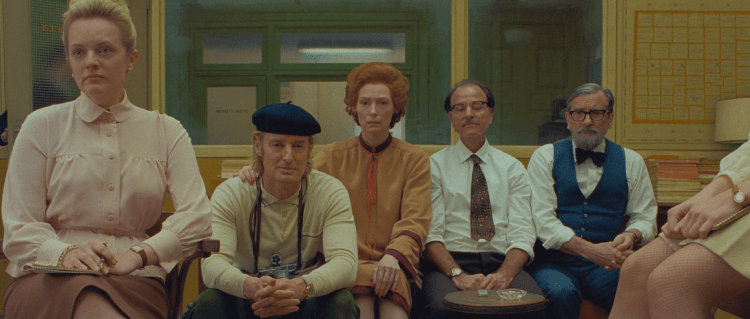
5. The French Dispatch
Words and expression are integral to The French Dispatch. So, it’s fitting that it contains, what I believe to be, Wes Anderson’s best screenplay yet. The dialogue that makes up the three core articles, and brief travel feature, feels like it could be taken directly from a magazine, yet never distractingly so. Certain moments are altered for conversational beats, or to further bring to life the idea of a talk, or interview, however the love, care and power of words is consistently in place throughout each strand. Bringing it to life and further allowing the viewer to enter into the world which is being detailed and expanded in the very moment.
It’s easy to say ‘Wes Anderson’s made his film again’ in the build-up to a new Anderson feature, I certainly said it a number of times before the release of The French Dispatch, and probably will when it comes to his next feature too. However, I happen to quite like Wes Anderson’s film. The standard elements are there within The French Dispatch. The visual style and flair which helps to bring the film further to life – it’s clear that Anderson is showing off on some occasions here, and not just as Owen Wilson whizzes through the streets of France on a stop-motion-like bike tour. But, In ihe case of his latest feature Anderson displays slight hints of something new. Clearly on display that show brief glimpses of hints and spirits of hope and thoughtfulness. A considered style which has been very briefly on show in the likes of The Grand Budapest Hotel and Fantastic Mr. Fox. Beats which are stretched out here and feel integral to thoughts of emotion and looking towards the future in a moment where hope is being searched for.
It’s an interesting angle that adds to further engagement with the film as a whole – once which already holds the charm of Jeffrey Wright monologuing as he works his way through the confusing corridors of a police station. One, as has become expected from Wes Anderson, which is already filled with precision in the visual detail. The words match the magazine and the film as a whole. The death of the editor which signals the final issue (and his obituary), echoing throughout the film in different styles and volumes. It’s a finely thought out and sculpted piece of work brought about, much like a magazine or newspaper itself, by an entire team effort. Amongst Anderson’s best, and definitely sounding as if he wrote it that way on purpose.
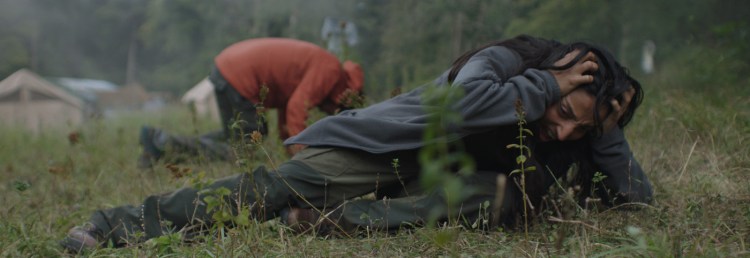
4. In The Earth
While there had been one or two blockbusters (primarily Godzilla Vs. Kong) released already nothing brought back the scale of the cinematic experience quite like the visual and audible attack that is Ben Wheatley’s In The Earth. A film which, after only just having been allowed back outside, will make you want to not go back out for a considerable amount of time.
Everything is stripped back for the writer-director’s return to low-budget horror as we see scientist Martin (Joel Fry) and park scout Alma (Ellora Torchia) make the trek through the woods to deliver essential equipment to a research base run by Hayley Squires’ Olivia. From initial conversations about folk demon Parnagg Fegg and the belief that the plant-life is all connected as one active mind the pair soon find themselves fighting for their life when they encounter the cult-like figure of woods-dwelling Zach (a terrifyingly dead-pan Reece Shearsmith).
It’s here that the blend of horrors comes into play. From cult links to effective lingering body horror and simply entrapment (the environment feels like an unidentifiable, inescapable expanse yet has a truly claustrophobic feel at the same time) the film builds-up to a truly mind-melting set of events that cause you to truly question just what’s happening on-screen, while being forced back into your seat to simply witness and take everything in. All gradually built-up to after an initial, and continuous, set of subtle camera techniques, such as slight wobbles or being placed at an angle at a far distance, in the bushes, as if someone is watching the pair in secret – truly setting in an early sense of almost unrecognised unease.
The look and sound of the piece are key and truly place you into the woods in which everything takes place, gradually increasing bit by bit – hand-in-hand with the horrors that are on display – for a real cinematic experience. One which begins to take control and display a real sense of power (even when watched on the small screen). It all builds into a truly effective attack on the senses that heightens the nature of the film as a whole and the horror sub-genres that form it. It’s an excellent piece of work that’s further boosted by a small ensemble cast, each of whom delivers a great performance in helping to capture the true terror that’s unfolding in the enclosed space of the surrounding wilderness.
3. Promising Young Woman
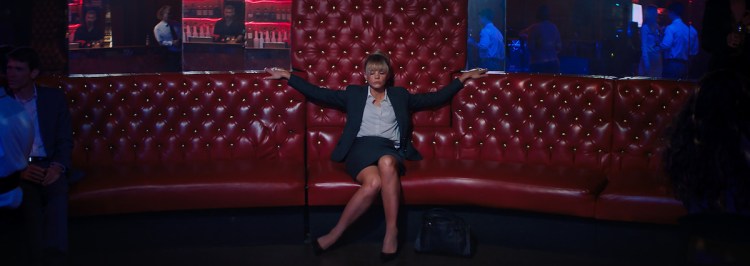
There’s something unexpectedly tense about a high-pitched string version of Britney Spears’ Toxic, it acts as a final countdown to protagonist Cassie’s (Carey Mulligan) grand act of revenge. Her best friend Nina committed suicide after being sexually assaulted and raped while at the same medical school that Cassie would later drop out of, and she’s out for cleverly-planned justice. As the plan is enacted out there’s something increasingly sinister about Mulligan’s performance. A number of reveals, sometimes you piece things together just before the film confirms your fears, are genuinely shocking, a gasp-inducing mixture that sometimes leads to gut-punch horror – even if everything isn’t always as it seems.
Everything is mixed in a fine blend of genres within writer-director Emerald Fennell’s Oscar-winning debut feature screenplay. From the aforementioned moments of shock and horror placed neatly within the escalating drama, matching with the satire that lines the piece and some of themes that it holds. The idea of self-believing ‘nice guys’ certainly has an element of humour as their panic rises when Cassie reveals that she is in fact not drunk after they begin to try to take advantage of her after taking her home from nights out at the bar or club. There’s something rather cinematic about the way the dark satire, and ultimate act of revenge, pans out. You’re caught in the grip of the film and the suspense that it creates, for both Cassie and those that she’s after.
However, it’s Mulligan’s deeply personal monologue that acts as the film’s standout scene. Conveying the themes and ideas that it’s been playing with and forcing you back in amazement with an astounding effect. It’s the peak of a performance that has been flowing with fiery passion from the opening stages and bringing you further into the narrative with slight tension (perhaps for Cassie and what will happen to her after the discomfort that has been gone through just a few moments before in a number of instances) and plenty of intrigue. There’s a boldness to the film that comes from emotion and rage, caught up in a fiery style that you can’t help but feel the effect of. Mulligan is excellent in the leading role and wonderfully captures the tones of Emerald Fennell’s screenplay. From the dark satire to the revenge thriller there’s a sinister streak within Promising Young Woman that doesn’t try to hide itself and it adds an extra layer of force and energy to the film as a whole.
2. The Dissident
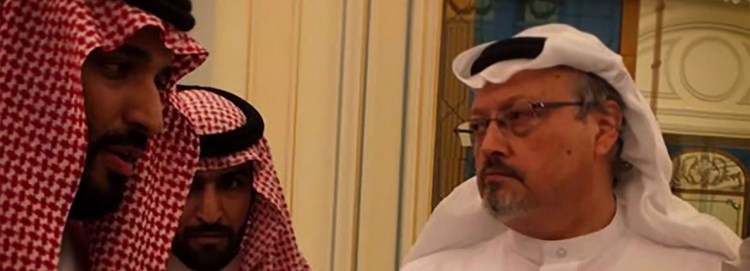
There’s a chance that the scariest film of 2021 wasn’t even a horror film, well, at least something firmly in the horror genre. Director Brian Fogel’s latest documentary, The Dissident, takes an in-depth look at the murder of Saudi Arabian journalist Jamal Khashoggi in the Saudi consulate in Turkey in 2018. As the events are detailed, and various figures relating to them and Khashoggi are interviewed, the film plays out more like a thriller than anything else. There’s a feeling of intense investigative journalism throughout the film, like a highly cinematic piece from This American Life. It all builds up the levels of tension surrounding the event and creating fear in almost anything that you’re shown over the course of the run-time.
The themes of “Learn more. Take action. Make a difference” ring throughout as it delves into Khashoggi’s journalism for various sources, including The Washington Post, and his interactions on Twitter with other critics of the Saudi government, some of whom are interviewed in the film and reveal a truly dark world. Long after the credits have rolled shockwaves remain floating around your head with an undeniable effect. There’s plenty to unpack and witness in the film, and it certainly warrants a still tense and uneasy re-watch. Potentially it’s the fact that you know what’s going to happen and where the film is going, but then again it’s testament to the fact that with everything that it covers the film remains tight and focused. Moving along with a quick pace, never overloading or rushing information but simply keeping the fast, thriller-like feel.
The Dissident is a film which is about as passionate about Khashoggi’s work as he was about fighting for freedom of speech and the right to criticise those in power. Heightening the intensity and overall effect there’s a powerful wave created by Fogel’s latest documentary created through the shock that it creates through fine craft and precision. Forming a highly cinematic documentary that feels direct (despite the messy nature of the events, the twists, turns and diversions that come with it), detailed and ultimately engaging. Keeping you in place, often glued to the screen, as the spiralling events pan out and more is revealed about the Saudi government and the context and events building up to Khashoggi’s murder. By the time a simple transcript of events comes up the feeling that runs through the viewer is that of pure terror.
1. Sound Of Metal
I said earlier in the year that if I was a voting member of the Academy, and it’s probably a good thing that I’m not, I would have voted for Riz Ahmed in the Leading Actor category this year. His turn as a heavy metal drummer, and recovering addict, whose hearing begins to rapidly deteriorate pulls you in to Darius Marder’s Sound Of Metal. It’s an angered, frustrated, scared performance that also captures all the physical beats of the character. A figure who looks like Ahmed, sounds like Ahmed (with an American accent) and more, but feels completely different in almost every way. Yes, that’s generally acting, but there’s something truly transformative about his performance in Sound Of Metal.
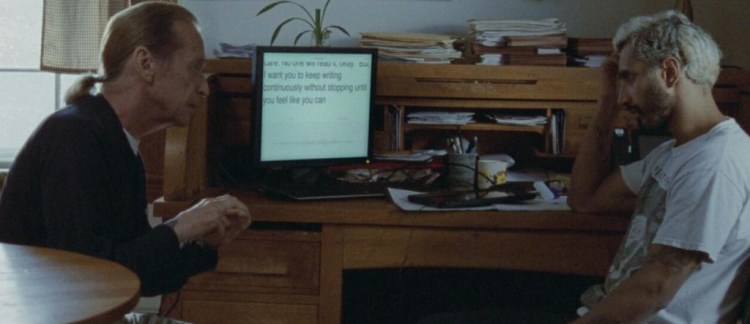
Ahmed’s Ruben recieveds help from Paul Raci’s Joe, teaching him, simply, how to be deaf. You can’t help but feel pride, hope, uplift and sadness as he makes his way through the film and experiences certain character changes and downfalls too. You’re placed into his shoes through the sound design. Highly detailed and effective you hear the muffled, rumbled and distorted chaos and confusion of his new life, before it may go permanently silent. All after the clear everyday noises of his creaking motorhome and slowly dripping coffee. All of a sudden everything is plunged into an equally subtle cold, grey look.
There are plenty of cliched words that could be used when talking about Sound Of Metal, I’ve likely rattled off a number of them already. There’s a true attention to detail that enhances the audible nature of the world and helps bring you in to almost be able to feel it on a number of key occasions. You’re firmly rooted there to observe the course that Ruben takes, for better and worse, from start to finish, still hoping at each turn that things will pan out ok for him or that he will make the ‘right’ decision. Regardless, there’s a truly impactful and emotion story told within Sound Of Metal. One that’s led by your responses to the central character and those around him who are simply trying to help and understand him, despite increasingly closing himself off from the rest of the world. A truly striking piece of detailed work, in multiple areas, which I believe is the best film of 2021.