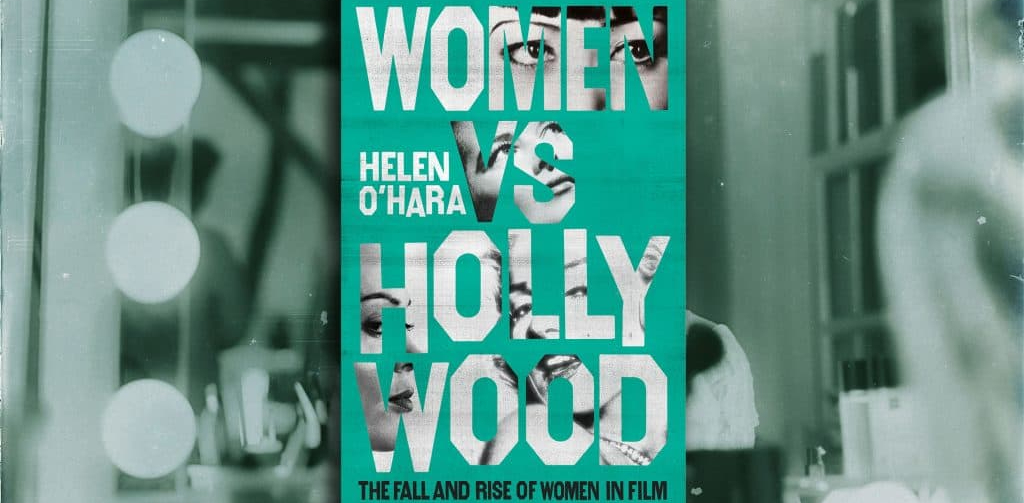
Film journalist, and Empire Magazine and Podcast contributor, Helen O’Hara joins me once again to discuss the upcoming paperback release of her book Women Vs. Hollywood – available from 3rd February, while the hardback and audiobook are already available.
Helen can be found through her Twitter account. Women Vs. Hollywood can be bought in a number of places, in both hardback and paperback (from February 3rd), including: Waterstones, Amazon and “all good and evil book shops”. The audiobook can be found here. Meanwhile, the Women Vs. Hollywood podcast (which may come under the title of Helen’s Christmas film podcast Bah Humbug) can be found on most podcast platforms.
Release Date – TBC, Cert – N/A, Run-time – 1 hour 38 minutes, Director – Maung Sun
While trying to make his debut feature, hopeful director Wai Bhone (Okkar Dat-Khe) runs into financial troubles in both his personal and moviemaking lives.
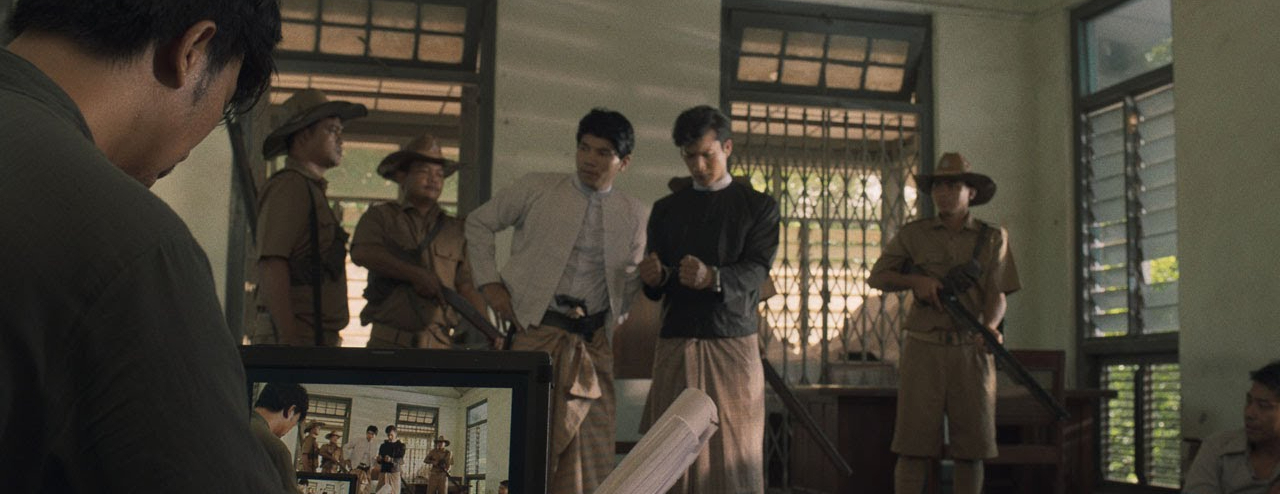
Opening his feature debut, co-writer (alongside Ma Aeint) and director Maung Sun takes a slightly satirical look at censorship within the Burmese film industry. His central figure, Wai Bhone (Okkar Dat-Khe) is attempting to also make his own feature debut, however the gritty gangster flick that he aspires to create is being shot down in lengthy conversations with his producer for containing too much violence, sex and swearing. This all before anything has even been properly filmed. The film simply viewed in comparison to the original upon which it is based. We see the initial struggles of the first-time director, not just with his producer but with a minimal, not always present, crew. Sun manages to avoid a comedic tone that comes into effect later in the piece and forms an interesting depiction of such creative struggles that helps bring you into the film and the attempts and efforts of the central figure.
A central figure who the film acknowledges early on is undeniably flawed, making him an interesting early drawing point. As a need for money, not just within his filmmaking career but his personal life, where his family’s situation in their flat is put at risk if they don’t pay up on time, comes into play the more slightly comedic elements come into play, alongside the gradually appearing notes of a heist. The film certainly feels as if it’s telling two different lines just shown through the eyes of the same figure. One in his working life, the other in his family life. It’s during scenes focusing on the latter that the film almost feels as if it comes to something of a standstill, particularly within the first half of the narrative when they’re still being warmed to. After having built up the film production elements such moments seem like something of a slight detour and distraction. And while adding to Wai Bhone as a character they don’t always keep you in the flow of the film.
In general as we reach the second half of the fairly short run-time the details and general line that’s travelled don’t quite click or work as well as they did before. There’s an almost jumbled sense to the film and the different things that it’s trying to show to enhance the actions and desperation of the central character in his search for money. There are certainly some good elements, mostly in relation to the heist itself; particularly a rather amusing getaway, but they don’t entirely distract from the overall wavering nature of the rest of the scenes that surround them.
Over time the initial elements that brought you in in the first place, especially those focusing on the main character’s original frustrations and the film-related side of things, begin to shed. The second half progresses dealing with a few more elements, again with the same varying degree of interest and engagement from the viewer. And while the film as a whole just about manages to stay standing it’s not always on the most sturdy of grounds after having changed its stance, or at least narrative focus, a couple of times throughout its 98 minute course. There are moments of interest to be found along the way, mostly in relation to the initial filmmaker struggles that we see being faced, particularly creative and censorial disputes. But, there’s aren’t always kept in focus beyond the first half resulting in a slightly wavering narrative that while throwing the main character around and creating some mild amusement every now and then never properly feels as if it stabilises.
Despite a promising opening and set up once Money Has Four Legs begins to delve into the more non-film-related areas of its central characters life and the events that spur from there it begins to feel jumbled in tone, themes and an overall central focus.
Cert – U, Run-time – 1 hour 50 minutes, Director – Garth Jennings
Musical theatre producer Buster Moon (Matthew McConaughey) convinces wealthy businessman Jimmy Crystal (Bobby Cannavale) to put on a show, in three weeks, featuring his hopeful cast, and reclusive former rock star Clay Calloway (Bono).
In my opinion the best joke in 2016’s Sing is perhaps held within the short audition montage. As we cut through a handful of loud, belted out, largely pop-infused, songs we get a brief glimpse of a barbershop quartet of tortoises singing “I love my shoes”. While there isn’t quite anything at this level of snappy silliness within the sequel it does feature Adam Buxton putting on a slightly silly voice. He plays “stupid, fat, old monkey” Klaus Kickenklober. He’s the dance instructor for Taron Egerton’s Johnny. Throwing him straight in at the deep end and declaring any mistakes he makes as soon as they show even the earliest signs of appearing.
Johnny’s preparing for a dance battle sequence in an upcoming big-budget stage musical produced by Buster Moon (Matthew McConaughey). A show which is kick-started after a somewhat chance encounter with highly wealthy Redshore City (think Vegas meets New York meets Orlando) figure Jimmy Crystal (Bobby Cannavale) providing the seeming millions of dollars, a three week deadline and plenty of threats on Moon’s life and career. All under the impression that the performance will see the return of reclusive rock star Clay Calloway (Bono), after fifteen years away from the spotlight. It’s just one of the many issues that Moon has to deal with, amongst the various struggles of his cast that may prevent them from giving a truly authentic performance amongst the towering heights of the sprawling sci-fi sets which have been built.
Out of the returning faces that lead the musical ensemble we perhaps see slightly more of German pig Gunter (Nick Kroll) – who comes up with the whole idea for the ambitious, not entirely thought through, or finished, sci-fi venture – and elderly iguana assistant Miss Crawly (writer-director Garth Jennings – with what seems to be the help of some frequently noticeable voice-changing technology). The pair certainly don’t dominate the piece, but feel slightly more present for mildly amusing comedic moments than last time around, after, mostly highly-energetic Gunter and his rendition of Bad Romance, acted as a key selling point for the original film. In the case of this film the marketing, particularly the trailers, seems to have revolved around the idea of giving away the entire narrative. It’s something that comes into play while watching the film as you feel the more formulaic elements guiding the film to the handful of conclusions for its central characters.
Throughout the film and its many musical segments (there’s a lot on the soundtrack for this film and at times it almost begins to get a bit too much as you only hear short bursts of each track before moving to the next in another scenes) you can generally feel the fairly conventional lines in which it travels down. It feels apparent that this is perhaps one more for the kids than the adults in the audience. That being said, as the film progresses there are certainly moments and beats that help to keep you in place, not just the handful of chuckles, slight cameos and highlights featuring Adam Buxton simply having fun voicing his character that are thrown into the mixture, and over time you find yourself slightly more engaged with the piece as a whole. It picks itself up from being generally fine and watchable and turns out to be something that’s quite good. A rather enjoyable set of moments and strands that combine to make something that, yes, while somewhat predictable and slightly familiar, manages to just about stretch beyond the large amounts of detail shown in the trailers.
While you can feel the more formulaic strands and elements there’s a bit more to Sing 2 than just what the trailers show. It has some chuckles dashed throughout the heavily-soundtracked narrative and overall makes for enjoyable enough, if eventually forgettable, viewing.
Release Date – 20th January 2023, Cert – 12, Run-time – 1 hour 25 minutes, Director – Victoria Fiore
Following four years in the life of Entoni, grandson of worried grandmother Dora, who fears that he is heading towards a dangerous life of crime.
There’s a compelling draw within the conflicting familial nature of Victoria Fiore’s documentary feature debut, Nascondino (translated to Hide And Seek). We see grandmother Dora worry about the future of her nine-year-old grandson Entoni. He’s not just rebellious but is pitched as a wannabe mafia boss, seemingly hurting towards a future life of crime. Not only does this make his grandmother fear that his future will be one of destruction (particularly towards himself) but that he may be taken away from his family, after Italy passes a law saying that if there is a threat of children entering into crime then they will be moved away from their families.
Entoni makes for an interesting central focus throughout the four year course that the film covers in a very short 85 minutes. He’s clearly confident in himself and what he says, although it’s said that “your tongue is your biggest enemy” as often his outspokenness can be as potentially destructive as his actions in the cramped streets of Naples. The audience watches Entoni’s slight developments, and his family’s increased struggles and worries, over the years much like Fiore’s camera. Sat and observing the unfolding actions naturally play out, as if a camera isn’t present at all and you’re actually in the cluttered greyness of Entoni’s surroundings. It helps to bring you in and form a larger connection with the piece as a whole as the film, helped by the editing, simply allows the story to tell itself.
It’s a point that’s pushed through the fact that there are very few interview segments placed throughout. In fact, the only person we really properly hear the spoken-to-camera views of is Dora as she reflects on her own past, not wanting to see Entoni go through the same thing, despite appearing to be hurtling towards it. It’s echoed when he’s told “get your head straight… because sooner or later you’ll get your wings clipped”. An early threat thinly wrapped as advice that appears to go straight over the head of the young focus as he can’t wait to get away from the busyness of the cramped apartment he’s often confined to.
And yet, amongst everything that the film shows in terms of Entoni’s links to crime, and even increasingly high chances of being sent to prison, the film reminds us that he is still a child. There are brief moments of him simply sat down playing games, whether at home or in the streets. Exploring in his own way and wanting a sense of freedom. While sometimes this leans into his own view of freedom and the path he may be knowingly going down, there’s still an occasional sense and reminder that he is a child. It helps to stabilise things and bring about the seriousness of the situation that he finds himself in, and the threat he faces in regards to his future and the actions put in place that could take him away from his home and family. It forms an emotional level of intrigue from the audience to the piece and rounds off a wholly engaging nature to Fiore’s film. One which makes the most of your fascination with the central figure and naturally-occurring events that make up the short run-time. Forming a quiet, unforced connection between you and the piece and an overall compelling surprise.
Thanks to the way it largely allows its events to naturally play out Nascondino brings you in for a fantastically pieced together and compelling course by reminding you of both the seriousness of the situation that the central focus is in, and the fact that he is still very much a child.
Release Date – 11th March 2022, Cert – 15, Run-time – 1 hour 37 minutes, Director – Ruth Paxton
Widowed mother Holly (Sienna Guillory) begins to fear for her teenage daughter, Betsey (Jessica Alexander), when she begins to refuse to eat, and yet loses no weight. While it may initially seem as a response to grief, it may be closer to an unexplained possession.
There’s a real attention to detail when it comes to the various dishes and drinks that line the extensive family dining table in which many pivotal scenes involving mother Holly (Sienna Guillory) and teenage daughter Betsey (Jessica Alexander) play out. Plates and glasses full of colour have a dark shadow cast across them as if some form of evil has been injected into them. It’s perhaps exactly how Betsey sees what is put in front of her as what her mother sees as a refusal to eat intensifies. However, what could be a response of grief after the loss of her father could be linked more closely to possession, particularly after a not properly seen event at a friend’s party, as Betsey’s weight remains the same despite not consuming anything. Regardless tensions begin to rise between the two as heated arguments and words fly not just across the table, but across the house as a whole. Holly finds herself unable to understand why her daughter won’t eat, appearing to become scared and from there frustration rises.
While the elements relating to grief are certainly present within the eating disorder walls of the piece as the film begins to lean more into the idea of potential possession it begins to explore such reaches more. It’s around this point where things feel slightly more drawn out. The central line is good and a number of scenes, particularly the interactions led by character’s in-the-moment emotional responses, work well but when everything comes together it doesn’t quite grab you as something overly convincing. Particularly as the idea of Betsey not being in control of her own body is further explored and a feeling of being too treaded begins to settle – particularly when it comes to some of the other elements of the piece that slightly seem to fall behind the primary focus of the themes and narrative.
Despite a handful of interesting moments that focus on the worries and fears of each of the characters, relating to their family unit and how it feels to them as if it may be falling apart after their recent bereavement, overall there’s a feeling that A Banquet begins to lose itself amongst the ideas that it has in its mixture. There are some which manage to rise and work every now and then. They’re conveyed with more certainty and helped along by the performances at the centre of the piece. However, things begin to detach as certain themes and ideas take the lead and create a feeling that the film is starting to lose itself, which carries on throughout much of the third act up until the ending.
It’s hard to properly engage with what becomes the somewhat hectic nature of the piece as points are jumbled and switched and yet true uncertainty, or perhaps rather ambiguity, never properly lies in terms of what the cause of Betsey’s eating disorder is. Tensions between the family may rise, but amongst everything that’s being wrapped up and further explored in the final 20-30 minutes things get lost, and the viewer simply becomes even more disengaged from the piece. The quiet-to-loud table interactions are gone as the darkness begins to settle in. But, there’s little effect due to the sense of disengagement from the film. Pushing the feeling of the run-time and unfortunately not providing much savoury food for thought as the credits begin to roll.
While there are a handful of interesting interactions led by character emotions within A Banquet the film as a whole somewhat loses itself as it juggles between its ideas of grief and possession. It pushes the run-time and gradually as one becomes more focused upon the viewer loses engagementwithin the slightly over-treaded ideas.
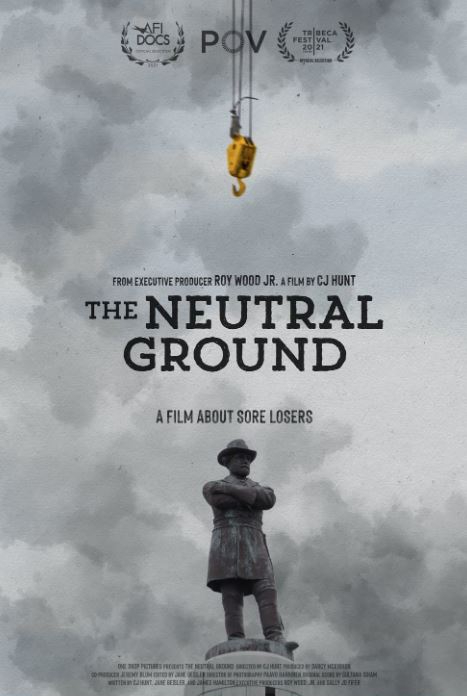
Release Date – 21st January 2022, Cert – 12, Run-time – 1 hour 22 minutes, Director – CJ Hunt
Documentary looking into the feuding reactions and campaigns in response to the New Orleans City Council’s vote to remove four confederate statues in the city, with similar events happening around the world.
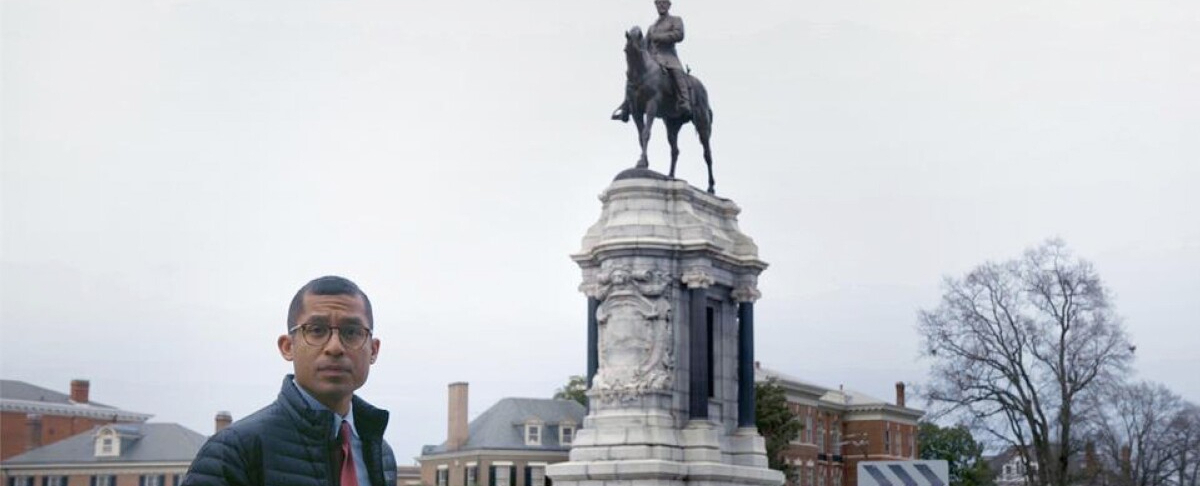
When it comes to great editing documentaries are very often left out of the conversation. However, it would be hard to not feel the stirring impact of CJ Hunt’s The Neutral Ground if it wasn’t for the effective editing which allows for the fine balance between the serious and the comedic in what manages to stretch beyond the feeling of a feature length Daily Show segment. Yes, there’s certainly injections of humour that naturally emerge throughout from Hunt as he naturally adapts his wit to the situation, but it contrasts well with the shock and seriousness that comes in a number of montage-like sequences that appear throughout the film. After scenes from the Charlottesville riots Hunt seems almost unable to make a joke after what he has witnessed. It reflects the shocked and terrified nature of the viewer.
The film revolves around the reactions, protests and even attacks spawned by the decision of the New Orleans City Council to remove four confederate statues in the city. We’re eased in to the situation through the comedic slant of the opening monologue. Bringing about plenty of early chuckles the film soon settles and breezes through informing the audience of the situation as it begins to look into the history of the statues and the effects that they have had on the residents of the city, and indeed America where many alike statues stand. While only 82 minutes there’s plenty of unforced information stored within Hunt’s film. Finely delivered through the general construction of the piece that manages to blend the engaging humour with the lump-in-your-throat shock.
Reaching beyond the grand-scale disputes over the controversial, long-standing monuments Hunt manages to look at the idea of black history in America. It’s stated that “we as black people have only heard a small fraction of our story” as the idea of how American history, particularly in response to the near-romanticising of who some deem as heroes of the Civil War, is taught and told. Not just in the modern day, but how it has been over the years. There’s an interesting perspective and set of discussions that are enhanced by Hunt’s clear natural passion for all subjects that are being covered within the film. None of which ever feel tangential or distracting from the main point at hand. Everything links and helps to tell the story in a concise, informative and engaging way. It’s easy to get caught up within the flow of things and have your interest in the subject matter increased over time as more is glimpsed and talked about. All led by an interested, interesting and concerned director and witness.
By the well-tuned ending The Neutral Ground leaves things slightly open. Providing space for discussion and thought afterwards. It doesn’t just ask the various interviewees and contributors questions, but also the audience. Inviting them to play an active role in what plays out in the weeks and months that are depicted. Both in America and around the world, a montage demonstrating statues being removed and toppled all across the world includes the Bristol crowd who took down the statue of Edward Colston. With ease, Hunt makes a film not just for those in New Orleans, or America. But something to create a sense of thought, understanding and progressive conversation around the world. It does it in an engaging and effective manner that manages to create humour, occasionally poking fun, and still create a stunning sense of horror and seriousness. All well-controlled in the editing process which simply helps to craft The Neutral Ground into the finely blended passionate documentary that it is.
Thanks to the fine editing and guiding figure of CJ Hunt The Neutral Ground is a passionate documentary that effectively balances its comedy and seriousness to bring the viewer in for an engaging, impactful, consistently interesting and occasionally shocking piece of work that’ll leave plenty of questions and thought stirring in your mind long after.
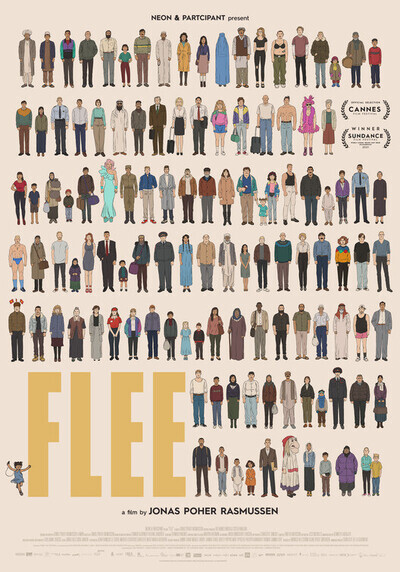
Release Date – 11th February 2022, Cert – 15, Run-time – 1 hour 29 minutes, Director – Jonas Poher Rasmussen
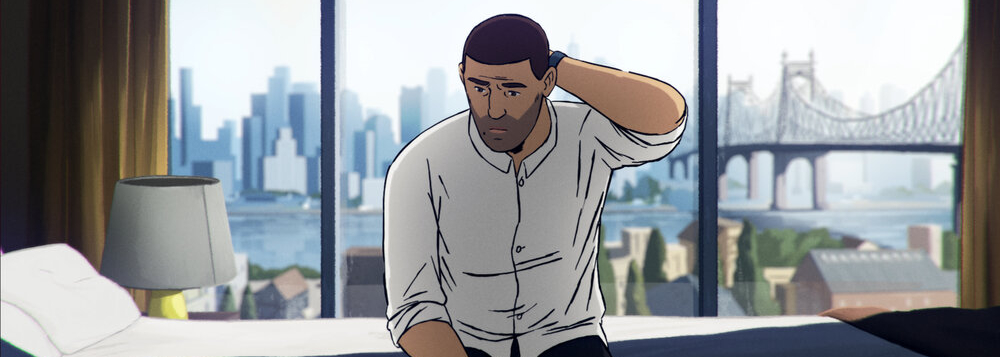
Animated documentary following Amin Nawabi as he recounts his childhood in 80s and 90s Afghanistan before finding refuge in Denmark many years later.
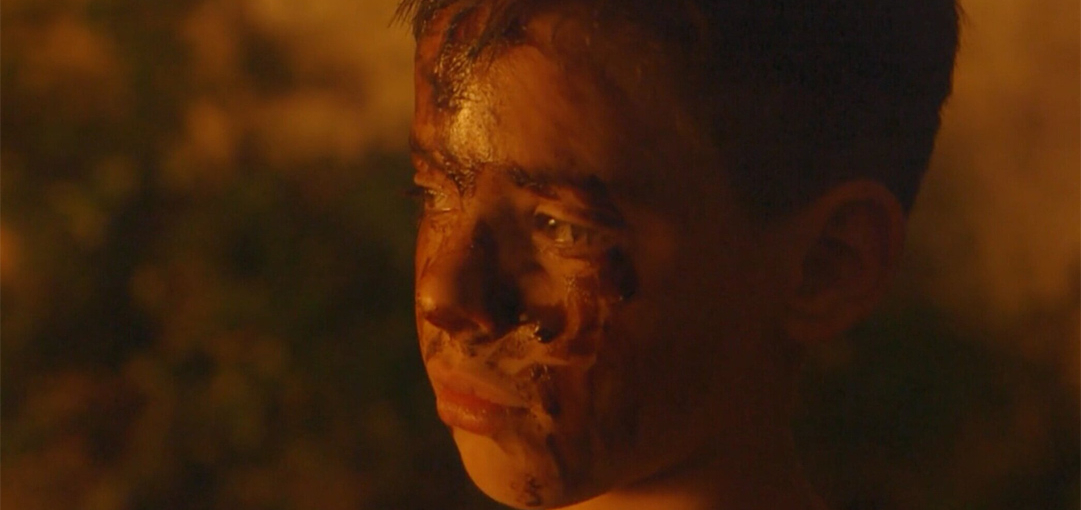
“Most people can’t begin to understand how fleeing like that effects you” states Amin Nawabi after having recounted much of his tale from growing up in 80s and 90s Afghanistan, eventually finding refuge in Denmark; after a harsh time in post-Soviet Russia. His words are true, as an audience throughout the course of Jonas Poher Rasmussen’s documentary we witness much of his story as its translated into an animated form. Bringing to life Nawabi’s words and placing us in the world that his words are helping to form. It brings a more visual sense to the piece, and thanks to a handful of different styles helps to get more across and form more of a connection with the viewer.
While holding a short run-time – at just under 90 minutes – Flee is certainly filled with plenty of detail, outside of the animation. It comes in Nawabi’s words as his recounts of events and tragedy in his life, simply to gain freedom. Given freedom by the director and, more clearly, his friend to tell his story as it comes to him. It’s made clear when moments are being slightly filled in, and generally where we are; for example whether we’re looking at the interview or the unfolding story of Amin’s life, thanks to a handful of slightly different animation styles. For example, a number of the darker moments of fighting for safety and survival are portrayed with what feels like slightly scratchier animation, an almost hand-drawn style, to get across a harsher tone. It works and certainly has an effect, bringing the audience further into the story as the world feels even more detailed beyond what we’re already being told. Even by seeing animated interpretations of the interview setup, where Amin occasionally lies down almost like a therapy session, the film could be seen as the events playing out in his mind, adding to the personal and emotional core of the piece.
Much of the emotional engagement that we have with the film appears to come from the animation which helps to lift up and strengthen so many moments. As we get a look into the world that is being described, and also means that there’s more time to focus on the story instead of hearing descriptions of surroundings and areas. It creates a closer bond with Amin, almost alike to that which he appears to have with Rasmussen. Allowing for a finer sense of flow to his words and an overall stripped back nature to the way in which they speak. The film as a whole, in fact, has the feeling of something quite stripped back, and yet still holding plenty of details within the animation. All particularly helping when it comes to the way he initially interacts with a more open world; the thoughts that come to mind in regards to living in Denmark and visiting America.
There’s thoughtfulness at each turn and stage of the life story, and always a thought of the subject as a person, not just his story. Learning about and understanding his sexuality in a time and country where homosexuality is largely unacknowledged, and, if it is seen, simply deemed as wrong and something to be met with severe consequences. Such moments manage to break through well and fit naturally into Amin’s story. And while the film’s focus is still very much on the physical journeys that he takes in increasingly desperate search for safety and as he later puts it “a life” there’s still time and space to occasionally get glimpses into his life in Denmark and the contrast that it has to the confinement, uncertainty, isolation and fear he felt before. It’s again further show in the animation styles and the way in which they pair up with what Amin is saying. Creating a story that is both visually and more emotionally engaging and allows us to follow what the subject is saying with more understanding and connection. All in an attempt to help us understand the effect that fleeing has had on him. While we might not be able to fully do so, Flee certainly does a good job of getting us some of the way there, particularly on a level of personal change and emotion.
Flee’s use of animation helps us to form a better sense of understanding when it comes to the personal story of its subject. By varying styles we get put into the world and the emotional effects that it creates, and indeed created. Focusing not just on the journeys themselves, but the person (and people) who went through them.
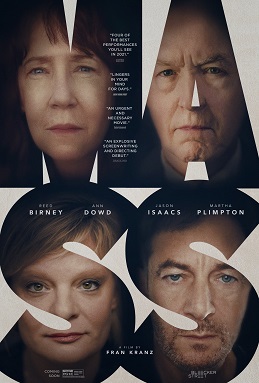
Six years after a school shooting the parents of one of the victims (Jason Isaacs, Martha Plimpton) meet with those of the shooter (Ann Dowd, Reed Birney) to discuss the tragedy, its effects and what built up to it.
“The world mourned ten, we mourned eleven” Reed Birney’s Richard forces out to finally bring his true personal perspective into the gradually steaming emotion of the conversation which until now he’s largely treated as if he were at a business meeting. Formally dressed in shirt and tie he stands out as an emotionally guarded figure, compared to the varied emotions that are circling around him – including from his wife, Linda (Ann Dowd), who consistently displays her personal deal of what could be seen as guilt and damage from the last six years on her after constant press attention, and yet it feeling like the world has turned its back on her and her husband – who appears to have a somewhat distant approach from her after what feels like a disagreement about how they were going to go into the meeting which Mass largely concerns itself with.
The meeting is with parents Jay (Jason Isaacs) and Gail (Martha Plimpton), who lost their child, Evan, in a school shooting by Richard and Linda’s son, Hayden. Jay and Gail are looking for more answers. A sense of understanding, yet a sense of blame. They want to know more about the tragedy that lead to their sons death, what may have lead to it; and indeed the events after. None of the conversation, which takes part at a table in a quiet, largely plain white, church room, is easy for anyone to start. It’s not easy to end or keep going. This is shown in the gaps and the silences which both the characters and audience experience over the nearly two hour course of the film.
Focusing on this central conversation throughout, after some initial build-up preparing us for the meeting and arrival of the characters, there’s, of course, a need for a solid screenplay and set of performances to keep the audiences attention. Debut writer-director Fran Kranz crafts a piece that doesn’t just give time to the naturalistic words and performances that form the humanity of the film, but simply gives time and space to the characters at the heart of it. Allowing for the moments of silence, the sharp breaths and the tears. After one particular outburst, perhaps the key one of the film, there’s a short cutaway. Not one to take you away from the moment, but simply allows that point to circulate in your mind for longer, thinking about it before time unfreezes and you’re back in the room where most of the film takes place.
The conversation doesn’t as much escalate, but rather progresses towards the points of heated questioning, explanations and eventually discussions. Both pairs of parents are hurting. You can see this by just looking at them, not just hearing the words they need to say. You can tell just by looking at Plimpton’s excellent performance (for my money, the best in the film) that her character isn’t showing anger, like her husband, but instead feels distress and fear. She’s clearly thought about what she wants to do and say, as shown in the car before the meeting, but now in the moment nothing seems right. Instead she, like everyone else, finds herself relying on vocalising her thought process, the emotional flow that’s are going through her mind at the time.
It’s perhaps the only flow throughout the film. There are large portions, particularly in the early stages of the meeting, where things don’t flow. They’re not meant to. We’re meant to experience the moments of static, and it’s all thanks to Kranz’s screenplay that we do. Pushing a sense of freedom which is lightly held in place so that we don’t often notice or think about it. The room could be left at any time, it certainly doesn’t feel like a prison or as if the character’s or trapped; and yet we remain there, often in static shots that gradually move into emotional shakes and wobbles.
It all comes together to enhance the emotional build-up. Early on church worker Judy (Breeda Wool) is told not to put a box of tissues in the very centre of the table, it makes room for the piling collection of emotions that forms over the course of the film. Only ever threatening to spill over towards the final stages, before being reined back in for a highlight monologue from Plimpton, which brings everyone in the room into consideration.
Each emotional response is different for each person, experiencing their own form of grief and narrative after the tragedy which has unfortunately brought them together at this point, seemingly not for the first time. Personal confrontation and reflection is continued from outside just this meeting, simply verbalised at this point in time to eventually act as a form of understanding for both parties. It’s interesting to see them come together and express their views and pain in their own individual ways, not just as couples but as individual human beings caught up in and affected by the events. People may go in looking for clear villains, but there certainly aren’t any and the film makes that clear. This is a simple, effective, discussion between human beings that acknowledges and uses humanity and naturalism to enhance the emotional centre of the grief and tragedy that sparks much of the intentionally hesitant conversation.
Mass is a film which knows how to give time and space to not just its excellently performed characters but to the words that are so integral to the conversation that takes place. Understanding humanity and naturalism to heighten the emotional responses of both viewers and characters.
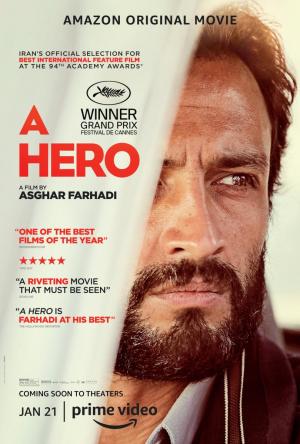
Release Date – 21st January 2022, Cert – 12, Run-time – 2 hours 8 minutes, Director – Asghar Farhadi
When given two days of parole from his prison sentence Rahim (Amir Jadidi) attempts to paint an image of himself as an honest, almost saintly, man in the hope of never going back, despite cynicism from his creditor(Mohsen Tanabandeh).
There’s so much about the general narrative of A Hero that could lead it to so easily fall into comedy that perhaps one of the most admirable things about it is that it’s mostly consistent in the dramatic tone in which it presents. Yes, there’s certainly room for chuckles every now and then, and it threatens to tip into farce as elements lead on to other occurrences, but largely the drama of writer-director Asghar Farhadi’s latest is somewhat set in stone. He follows the increasingly worried and desperate flight of Amir Jadidi’s Rahim as he tries to present the world with a narrative of his saintly actions, in the hope that his jail term for unpaid debts will be terminated, instead of remaining as the two days of parole which he has been given.
It all begins when his girlfriend Farkhondeh (Sahar Goldust) discovers a bag of gold coins, which when proved to not be worth very much are offered up as a found item. Rahim claims he found the bag when searching for the owner, attempting to paint himself in a good light with this heroic deed. While the world goes mad over his gradually increasing yarn, which soon requires family support – especially from his young son (Saleh Karimai); whose stammer is eventually used for sympathy points, and that from strangers, to keep things afloat, his creditor, Bahram (Mohsen Tanabandeh) remains cynical. There’s a strong cast at the centre of this piece, particularly Jadidi in the leading role, consistently reminding the viewer of the drama at play. This is a film that could so easily feel tired, calling back to features we’ve seen before with similar strands and narratives, if played out as an out and out comedy.
Everything sets up for the chaos that all the lies create in the second half. The winding roads of deception that are being spun out as increasing interested is shown towards the story of this lost bag of ‘valuable’ gold coins. As the second half arrives the risk of stepping into something farcical comes back into play, with the film luckily swerving to just about avoid it. Instead while the piece doesn’t quite lose steam it does somewhat dip as you feel the winding nature of the piece pushing along the run-time. While not by much the feeling that one or two scenes could be slightly trimmed down is present, especially as more is added on to make the initial deceit that bit more complex, eventually involving even more people. Rahim’s aim soon becomes not being out of jail for good, but simply not being found out so that he ends up in jail for even longer once he returns.
It’s something you can see running through his mind during a number of the lengthier ensemble conversations, where most of the occasional humour lies in such effective interactions. An increased panic spreading through his eyes with each addition to the elaborate tale he’s telling, with each new detail he needs to craft and, more importantly, remember. All with suspicion and doubt being cast upon him, and an ever-looming creditor (Tanabandeh also on excellent form), insistent on payment before he considers anything to do with Rahim’s jail term.
Such elements and interactions, while occasionally somewhat lengthy, act as some of the highlights of the film as the characters get the opportunity to, while initially through a kind of mediator, bounce off each other and play a, sometimes unknowing, role in the developing course of Rahim’s tale. It eventually pushes the run-time a bit beyond where it would perhaps be better suited, but overall there’s a solid drama to be found within A Hero. One that while occasional straying towards farce in the winding nature of the second half manages to keep its head above water thanks to a selection of fine performances that recognise the drama in the script and bring that about to stop a tired comedic tone coming through.
While a bit overlong, because of the winding additions to the initial lie of Jadidi’s finely performed central character, A Hero never fully strays into comedy or farce. While there are some chuckles the performances largely remind you that what is playing out is a piece of drama.
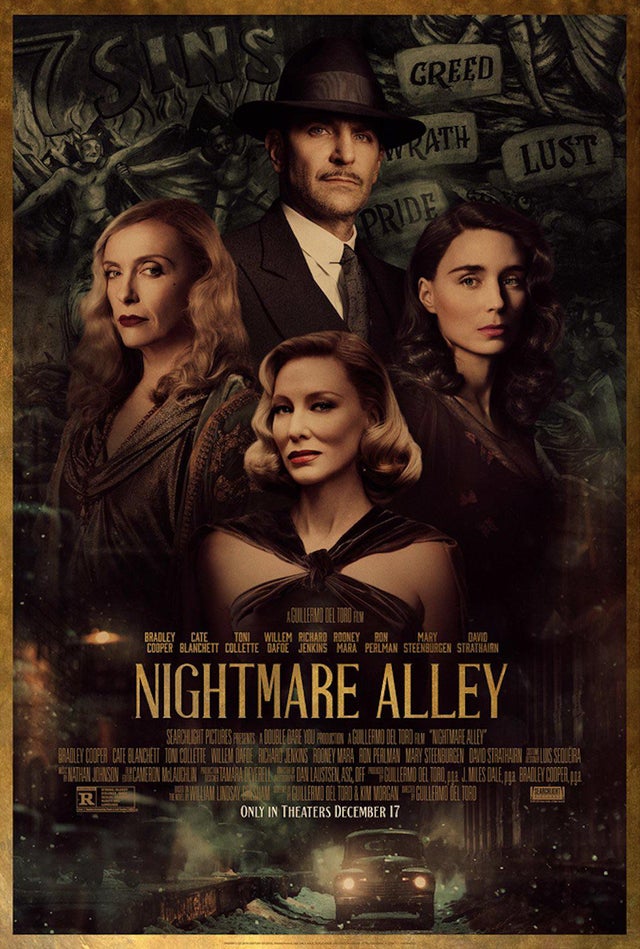
Cert – 15, Run-time – 2 hours 30 minutes, Director – Guillermo del Toro
Shady stranger Stanton Carlisle (Bradley Cooper) finds himself picking up skills and tricks as a mentalist after joining a carnival, however a world of lies opens up as his success increases.
“It ain’t hope if it’s a lie, Stan” drunken retired mentalist Pete (David Strathairn) snaps at suave and quite stranger Stanton Carlisle (Bradley Cooper) when he questions about clairvoyance being used as a way to give hope to people wanting to know about their loved ones in the afterlife. On realising that he had gone too far and couldn’t tell the difference between truth and lie the dishevelled Pete turned his back on that part of his life, having turned more towards alcohol and acting as a hidden assistant to his wife, Zeena (Toni Collette), who is in similar work at the same carnival. Stanton comes into their life when getting off the bus outside the carnival at which they work at, wandering in and working his way into a job helping out the various figures that make up the group of ‘oddities’ and attractions. After a short amount of time Stan (as he becomes known) finds himself picking up and learning skills and abilities from Pete, which he soon intends to use for his own hustler gain.
Despite having seen what the seemingly controlled life has done to Pete – Strathairn delivering a truly unsung standout performance, which may go down, for me, as one of the best of the year! – Stan is adamant that he has everything in order and knows exactly how things will pan out. Even more so with the help of fellow performer Molly (Rooney Mara), not always aware of Stan’s true intentions. As the two turn their own backs on the carnival and set out into the world to perform in-front of high society Guillermo del Toro’s latest flicks a switch and the narrative begins to take shape. It feels like the first half of this two and a half hour piece is largely made up of build-up and development for the plot that makes up the second half of the film. We get to see and generally know the figures that welcome, train and, at times, threaten Stan before he moves on to a more profitable life.
There’s certainly the feeling of a different tone and more fluidity as this change occurs, particularly as we finally get to see Cate Blanchett’s psychologist Dr. Lilith Ritter. However, Nightmare Alley, despite it’s length; which could be trimmed down, likely by taking out or shortening some of the instances in the largely carnival-based segment of the film, never feels like two different films stuck together. It simply has two different halves as it explores one world and demonstrates the consequences in another. The style and flare still remains the same – technically, particularly in terms of the production and costume design, there’s a lot of attention to detail to enhance the noir-like nature of the world which is being laid out for the viewer.
Yet, with everything that you do see there still seems to be lacking in terms of the mystery that surrounds Stanton’s past. We see very brief occasional glimpses of the event that led him to get on a bus to as-far-away-as-possible but these feel rare and you sometimes forget the fact that there’s a key event that led to his arrival in the first place. The element of mystery somewhat vanishes as his dark past is put aside in exchange for everything that is happening in the present, and while when it does return the mystery, and slightly sinister nature, is felt, it’s certainly rare and feels moved on from quickly.
There’s sometimes a busy sense to Nightmare Alley, particularly in the first half where the ensemble nature is emphasised more amongst the carnival folk. However, great performances and an intriguing sense of build up and development help keep you engaged for when the narrative finally comes into play. The film as a whole might feel overlong, and there may be some elements that could do with trimming while others may work better with slight expansion, but overall there’s still an interesting tale being spun by del Toro and co-writer Kim Morgan. Just one that sometimes takes a while to tell and takes some, although still engaging and holding some of the best elements; and performances, of the film, build-up beforehand.
Nightmare Alley is certainly a film of two halves. One focused on build-up, the other narrative. They both work, although eventually pushing the feeling of the run-time, and have plenty of visual detail and great performances to be caught up in.It just occasionally feels that amongst everything we do see there’s a certain dark mystery left out.