In a year where blockbusters came back, and largely appeared to thrive, we were still met with plenty of stories of the equally successful indie scene. There was plenty of conversation around smaller films, particularly in the earlier months of 2021 when we were still mostly indoors, and even with the return of the scale of the big screen there were clearly many films that stayed with us throughout the year. It’s shown in the results of this year’s audience vote for the best films of the year. The latter half of the top ten appeared to change almost every day, while the race occurring between the top four was tightly fought, and a tie for a large segment of the voting period. So, from the smaller-title awards successes to the major franchise names, here is what the readers, listeners and visitors, and people who just wanted to take part in the poll, of Just A Little Bit Random named the top ten films of 2021 (by UK release date).
10. House Of Gucci
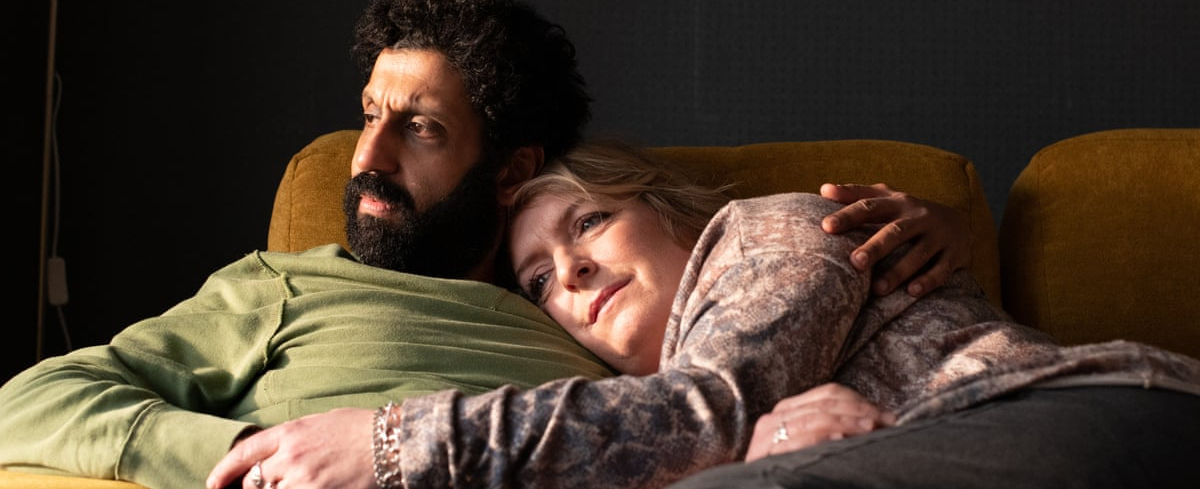
While The Last Duel found favour in the later months of 2021, once landing on Disney+, it appears to be Ridley Scott’s other release which found favour amongst the voting audience. With its multiple arcs featuring a series of major A-List actors, not to mention the various costumes that line the piece, there was clearly plenty for people to find themselves involved and engaged in over the course of the film’s narrative.
Following the course of the romance and marriage between Maurizio Gucci (Adam Driver) and Patrizia Reggiani (Lady Gaga) the film also follows the downfall of the Gucci family empire as it was at the time. A decades long course caught in a developing landscape with few shifts in change and style in order to keep up; there’s a twisting want for power and influence from Patrizia (Gaga still in conversation as a potential Leading Actress contender in this year’s Oscar race). Her performance, and general character, adds to the general weight of the drama in the various strands that the film explores for each of the characters, all while still finding moments to almost satirise the Gucci brand and fashion houses at the time.
Jared Leto (who certainly received mixed responses for his performance to say the least) and Al Pacino could almost be a comedy double act with their performances, as they increasingly struggle to keep up in the fashion world, and have their voices and influences heard over those who are beginning to take over. It simply adds to the blend of figures and feuds within the Gucci dynasty that unfold and find themselves explored by the film over the course of the narrative. It clearly provided plenty for people to engage and find interest in, as it’s found its way into the top ten for 2021.
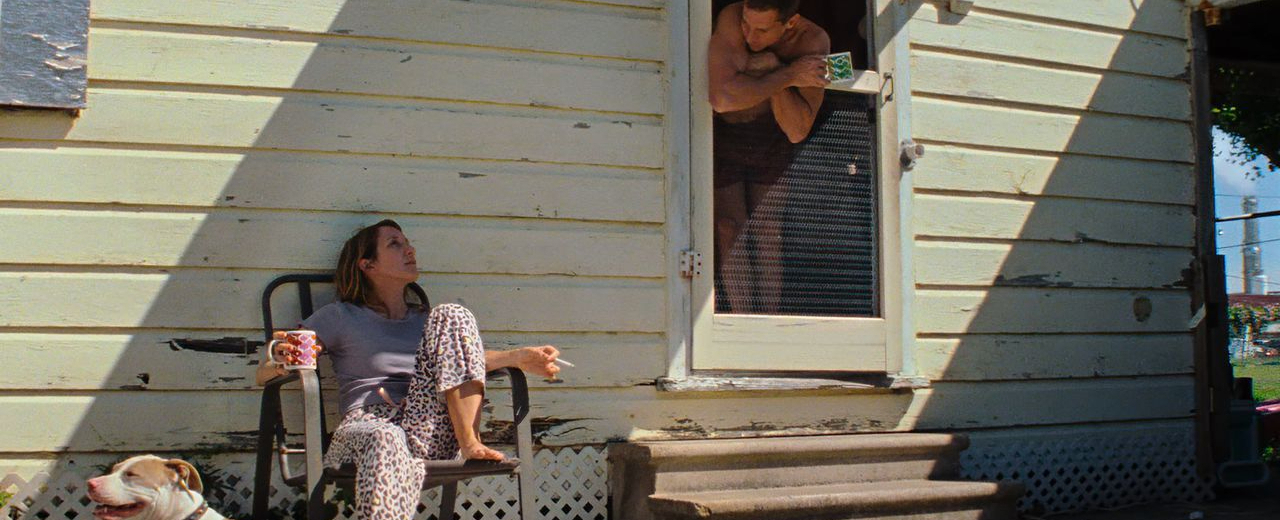
9. Nomadland
The clear favourite, and eventual winner, in this year’s Best Picture Oscar race, Nomadland also found wins in the Best Director and Leading Actress categories. It’s a stripped back, personal piece that allows the characters to speak for themselves as each event is lead by thoughtfulness, consideration and grief. There’s something new to notice with each viewing, and each time you’re simply guided by the subtleties of Frances McDormand’s central performance and Chloe Zhao’s calm direction as they guide you on a wandering journey through the American plains.
With the help of Joshua James Richards’ stunning cinematography you’re given a front row seat to the often pastel-like colours of the sweeping landscapes through which the film travels. Giving fine backdrops to the unfolding conversations about identity which enhance the lives and stories of the characters – most of the cast being non-actors and nomads themselves. During such moments it feels as if time has been stopped as you’re simply brought into the conversation and each figure is given time to think, breathe and speak.
There are plenty of elements of Nomadland which can undeniably connect to the past two years. Themes of loss, isolation, grief and community, which still continue to echo and have an effect on many people, are highly present and add to the personal connection to the film for both the characters and the viewer. Perhaps it’s such themes and elements which had the most effect on audiences – plus the fact that it’s simply a very well-made film – and brought thekm to voting for it as one of the best films of the year.
8. Barb And Star Go To Vista Del Mar
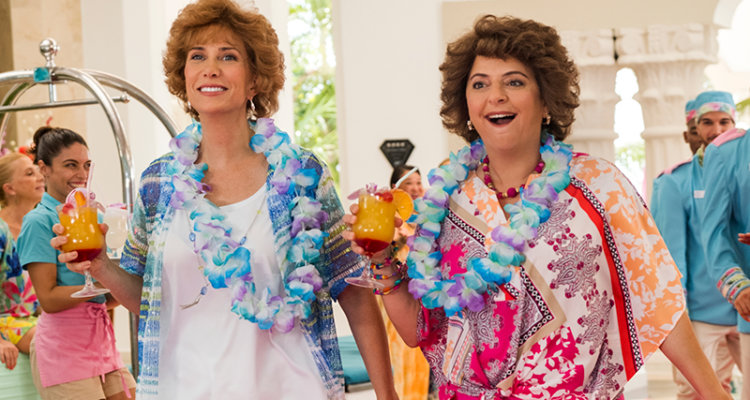
Perhaps one of the most gloriously silly films of 2021, the title of Barb And Star Go To Vista Del Mar is enough in itself to make me personally chuckle and smile. The film as a whole was clearly one of the funniest, and best, of the year for many people with its ZAZ, and occasionally Pythonesque, style humour, riffs and parodies (who can forget Jamie Dornan passionately singing to a seagull).
There’s something oddly engaging and believable about the stereotypical mid-western American 40-somethings that are Barb (Annie Mumolo) and Star (Kristen Wiig) that bring the various dumb jokes, and musical numbers, around them to life. Perhaps it comes from familiarity with the characters from their role as screenwriters, but even moments such as an entire plane journey being taken up with a conversation, and then discussion of an entire backstory for a person who doesn’t exist, about the name Trish has plenty of chuckles within it.
Jamie Dornan as well, playing against type, ditches all seriousness as conflicted love interest Edgar. Working for the film’s villain (also played by Wiig, imaging Millicent Clyde played for laughs) who wants to send a swarm of deadly mosquitos to Vista Del Mar. Even in this strand, aside from the fun and joy of the central holiday and high-pitched discussions, there’s plenty of silliness to be found within the parody that the film lines itself with. The absurdity is often pushed with this blend of elements, and the styles of humour – verbal, visual and musical – also increased. There’s simply just a good time to be found within Barb and Star’s chaotic trip to Vista Del Mar.
7. Don’t Look Up
A late release in the year, particularly when landing on Netflix, but Don’t Look Up was a clear favourite of voters. With its mixture of drama and satire there’s a true ‘unfortunate’ nature to it and the way it shows a very believable reaction of modern society to a trending world-ending threat.
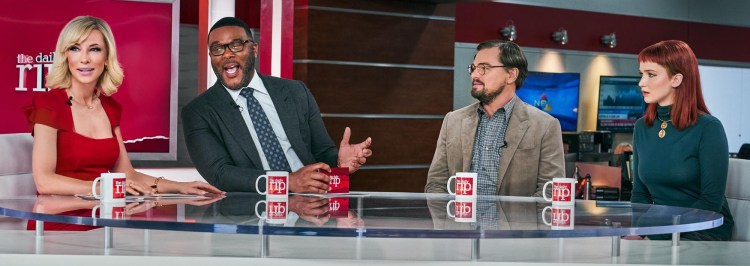
Adam McKay’s satire has been noted as breaking a number of Netflix records within its first week of release, and there was plenty of discussion to be found about it on various social media platforms. Although none of which quite sparked the divisions shown in the film, with those depicted largely being political divisions. It’s lucky that as a whole the film, and its performances – even Meryl Streep as an undeniably Trump-inspired President and Jonah Hill as her son and Chief of Staff – manage to avoid falling into a state of complete parody. It adds to the dramatic stakes of the film, as Leonardo DiCaprio and Jennifer Lawrence become increasingly frustrated at the ignorance of the world to the fact that a comet, which they discovered, is going to hit the Earth in a short amount of time an likely wipe out all life on it.
As their rage and anger, particularly DiCaprio in the second half the film, increases there’s a real sense of suspense and tension that begins to set in – making for a stirring mixture in the final, and truly uncertain, stages. It’s a film that shines a mirror for better and worse and manages to find the right balance in terms of how to show certain subjects and points throughout its run-time and which tones to strike. Further fuelling hr tension and worry that still comes in hand with the dramatic stakes and the glimpses of humour and satire present in various scenes. It’s a seemingly accurate mirror to the world in a number of cases, and quite an unfortunate one at that.
6. Another Round
Many have said that one of the best scenes, and perhaps the best ending, of the year belongs to the finale of Another Round. The pure energy that runs throughout Mads Mikkelsen’s free-spirited dance routine to Scarlet Pleasure’s What A Life sums up the more positive sides of the film. A film which manages to find a balance within both its comedic, dramatic and tragic depictions of a mid-life crisis created through worrying about a mid-life crisis.
While successfully holding plenty of humour as the four central teachers (Mikkelsen, Thomas Bo Larsen, Magnus Millang and Lars Ranthe) – all of whom form a tight ensemble – experiment with booze and blood-alcohol levels there’s a real sense of thought that comes into play as the drama is introduced. Looking into themes of relationships and rejuvenation as the narrative develops, as each of the central figures becomes increasingly drunk – some falling into addiction. A clear personal strand for each of the cast and crew, particularly writer-director Thomas Vinterberg who lost his daughter four days into filming and re-worked the film to make it more about “being awakened to life”.
The final stages of Another Round, particularly the final scene, certainly hold this feeling, especially after the course that has come before it. It connects with you and creates an engaging, enjoyable, care-free and, perhaps, slightly tipsy nature to summarise the events that have come beforehand, as a true sense of pay-off. It’s a great ending and look back at, what many clearly believe to be, a great film.
5. Shang-Chi And The Legend Of The Ten Rings
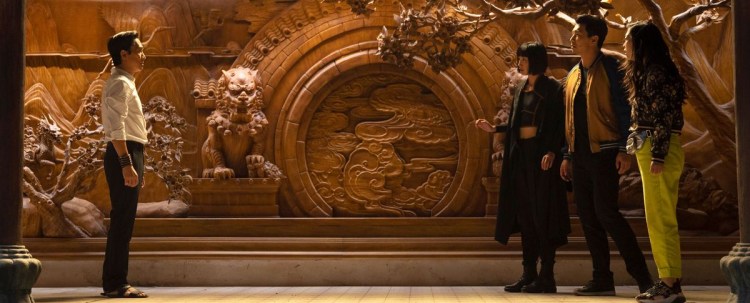
Shang-Chi And The Legend Of The Ten Rings has been largely praised for its visual style and the nature of its fight scenes – for me, the smoothly choreography fight-cum-dance between Tony Leung and Fala Chen in the opening stages of the film is one of the scenes of the year – not to mention Simu Liu in the leading role. However, it also takes a slightly different step in terms of introductions and ‘origins’ for characters within the Marvel Cinematic Universe. It feels different thanks to the fact that the central character is already aware of their abilities and powers. Where the film then takes this idea is by introducing the easily likable Shang-Chi (posing as Shaun) to us through his being brought back into a life he managed to escape, and coming to terms with his potential destiny, and father (Leung).
There’s a compelling family story at the centre of the film, with perhaps the most initially everyday heroes in the MCU since (maybe discounting Tom Holland’s Spider-Man) leading it. Yet, it is the fight sequences that have largely been the most discussed part of the film. Each stylised sequence manages to bring you further into the world, something different from the rest of the MCU, and shows off the creativity of the filmmakers as events unfold and feel as if they could truly be a part of a legend – not to mention the dragon, and Morris!
It was a film that had plenty of surprises and unique offerings from other entries into the franchise – and perhaps, for a number of viewers, caused it to stand out from the studio’s other releases this year; amongst many other reasons. Not to mention the pandemic box office success that it was and being one of the films that brought some audiences back to the cinema, even if just for the one film or viewing. It was clearly something that meant a lot to a number of audiences in terms of representation and also succeeded in providing a strong action/ superhero film in the process.
4. Dune
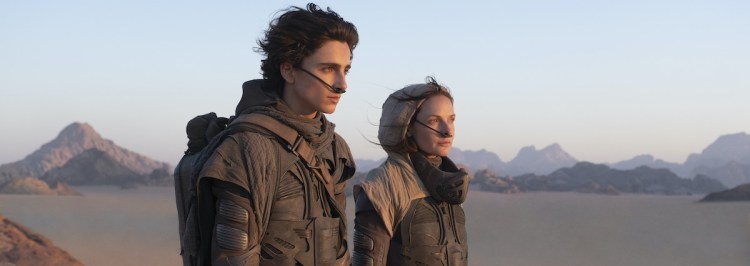
Dune was perhaps the box office success that not many of us expected. There were certainly those who thought that it would do well, and those who hoped that it would so that we could get the sequel, adapted from the second half of Frank Herbert’s classic sci-fi novel. Denis Villeneuve’s vision matches the scale of Herbert’s work and fills the big screen with stunning visuals to truly immerse you in the futuristic world of desert planet Arrakis.
Simply in terms of the visuals the film is a triumph, thanks to the scale and scope that it achieves. It’s understandable reading reviews and thoughts on the film where some suggest it to be a new Lord Of The Rings, at least in terms of scale. The film manages to use its handful of narrative beats to explore the world and the various figures and elements within it, which build up to the now greenlit sequel. From towering sand worms to the simple use of red flashes to show a strike on a protective suit there’s plenty o engage you in the film, alongside the gradual development of the narrative, particularly as the drama and action picks up in the final 45 minutes of the piece.
There’s a lot going on in the film through the individual scenes and sequences that form the progression of central figure Paul Atreides (Timothée Chalamet), and the plans of litt-eseen; yet still enjoyable, villain Baron Harkonnen (Stellan Skarsgård). And Villeneuve manages to keep you in place for much of the two and a half hour plus run-time without it being felt. It’s testament to the action and detail held within Dune (:Part One) and just how caught up in it all you find yourself. All thanks to the initial impressive visual spectacle which it unleashes onto the audience and makes what has proved to be for many a memorable cinematic experience.
3. West Side Story
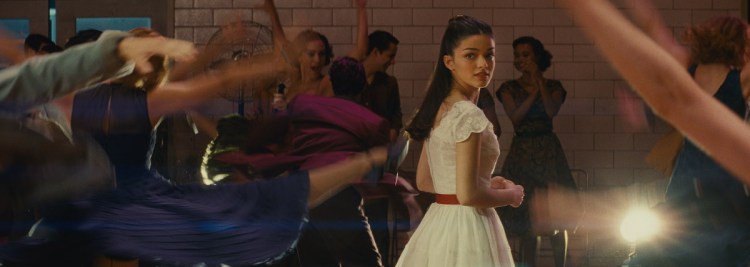
Despite a positive reception to the trailers there was still a fair deal of trepidation for many going into Steven Spielberg’s remake of classic musical West Side Story. The question was in the air of how do you improve upon something as acclaimed and loved as West Side Story. Well, it seems the answer is you get Steven Spielberg to direct it. His take on the musical has all the traditional Hollywood studio flourishes and yet opens the song and dance numbers out into the world, to take full advantage of the space for a true celebratory feel that runs throughout the film. Not to mention the slight tweaks and changes to introduce some more modern sensibilities to the piece, while still highlighting the relevancy of the original production.
The infectious energy that a number of songs provide with their fluidity and general nature, especially Gee, Officer Krupke and America (led by a scene-stealing Ariana DeBose), are further pushed by Spielberg’s gliding and effortlessly sweeping camera. All combining to truly bring to life the idea that “tonight, tonight, the world is wild and bright. Going mad, shooting sparks into space”. There’s plenty of detail to be found within the joy of each of the songs that line the musical, all pushing the general style that each moment is aiming for, working as a true ensemble piece while also contributing to the wider film as a whole.
Yet, aside from the joy and energy there’s still space for the dramatic tension and feeling of eventual/ foreboding tragedy within this Romeo and Juliet inspired love story. You certainly feel the bond between Tony (Ansel Elgort) and María (Rachel Zegler) as they sing the first rendition of Tonight, growing from something quiet to something with a powerful effect – much like the film as a whole – and it makes for a grander effect overall that shapes your reaction to many events throughout the rest of the film. For many trepidation was easily moved aside on seeing Spielberg’s take on West Side Story. Some consider it better than the 1961 adaptation, some just as good, others almost as good. Generally, though, the film received plenty of crowd-pleased acclaim, enough to bring it to be voted as the third best film of the year in what became a very close race between the top four.
2. Spider-Man: No Way Home
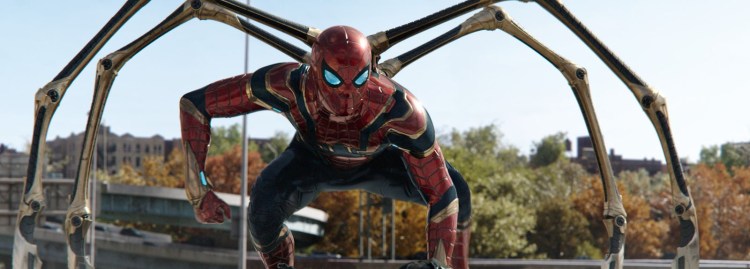
With each new trailer, poster, advert, fan theory and piece of new speculation Spider-Man: No Way Home increasingly became, for many people, the most anticipated film of the year. And such hopes and expectations were seemingly not let down. The film, with it’s multiverse opening narrative and re-introduction of villains from previous iterations of Spider-Man, was a hit with both audiences (you may have seen some of the reactions online of screening rooms going wild over certain shots, revelations and plot beats) and critics alike.
There are certainly a number of bold steps taken within the film, perhaps most notably juggling multiple villains while also trying to progress the Spider-Man/ Peter Parker narrative for Tom Holland’s iteration of the character, and carry on from previous entry Far From Home (voted as the sixth best film of 2019 – where Avengers: Endgame came out on top). Yet, the film succeeded in pretty much all of these, while also managing to provide plenty of action and spectacle along the way – particularly involving Benedict Cumberbatch’s Doctor Strange.
Perhaps where the film most succeeds is in not only providing plenty for fans of all forms of Spider-Man, and the MCU and comics, to enjoy and hook onto, but also not alienating those not aware of characters featured in previous movie versions that followed the titular superhero. Managing to easily fill the two and a half hour run-time, while never feeling too full, there’s plenty to enjoy, get caught up in and be thrilled by within the universe expanding course of the piece. One which has clearly pleased plenty of fans, and more casual viewers, easily becoming the highest grossing film of the year – smashing pandemic box office records – and even now getting an Oscars push after receiving such mass acclaim and success. The wait was worth it for a film packed with plenty of surprises, after successfully keeping much under wraps, which met, and even went above, many, many expectations to become one of the most acclaimed, and undeniably successful, of 2021.
1. No Time To Die
Continuing the idea of films being worth the wait, No Time To Die has been largely labelled as the first film to truly come along and save UK cinemas, despite one or two mild hits beforehand. The much delayed return of James Bond was an action-packed blast with plenty of the traditional Bond elements for fans and casual viewers alike. Daniel Craig’s final performance as 007 is one that reflects on what has made his iteration of the character so different to those before him. A punchier, grittier 21st century Bond. Yet, No Time To Die is perhaps also his most traditional outing, and seemingly intentionally so.
The film observes Bond as a character, allowing Craig to bow out with his best performance in the role, and gives him a proper emotional arc over the course of the nearly three hour narrative – managing to fill it with plenty of engaging action and spectacle to keep you in place. Looking back on his course over five films and fifteen years, the relationships that he’s had and how it’s impacted him. And yet, we still have what crucially feels like a James Bond film thanks to the inclusion of the standard elements. There are, obviously, differences to the rest of the series and director Cary Joji Fukunaga knows how to bring these about through the strong visual style of the piece.
Yet, amongst all of this there’s still plenty of time for each of the supporting characters to have their chance to shine. Whether it be Lashana Lynch’s new 007, Moneypenny (Naomie Harris), Q (Ben Whishaw), M (Ralph Fiennes) or new addition Paloma (a delightful, if one-sequence, Ana De Armas) there’s plenty to like about the supporting cast who each play their role in progressing the narrative and pushing Bond forward, certainly not alone. It’s a fine look back at he character as a whole and indeed Craig’s iteration of him. The relationships that have been built up, and lost, and forming a true arc over five films and this one alone.
Clearly having an impact, and a strong emotional response from audiences, it was what brought many back to the cinema, particularly after strong box office success and word of mouth in its opening weekend (particularly in the UK). The many delays and pushbacks (from November 2019 to September 2021 – not all delays because of COVID) seemingly made the film and everything that it held in store worth the wait. Leading it to be a firm favourite of many from the new releases of 2021, as it’s been voted the best film of the year by the Just A Little Bit Random audience.