Cert – 15, Run-time – 2 hours 5 minutes, Director – Mark Fischbach
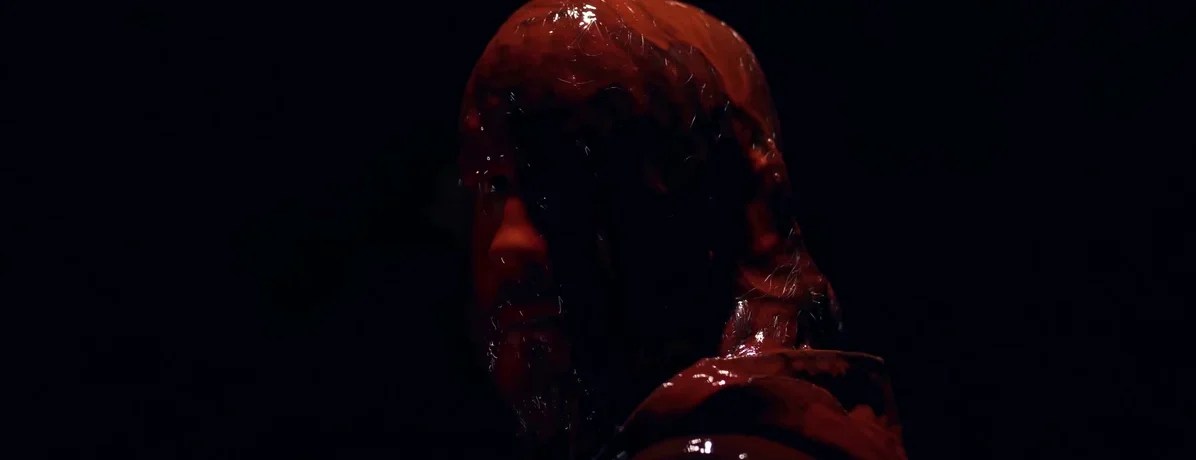
A convict (Mark Fischbach) stranded at the bottom of an ocean of blood fears for his life as unexpected noises surround his leaking submarine suggesting he’s not alone on the deserted planet.
“…Moving away from simply steering to specified coordinates, Fischbach’s lead forges a more engaging path. Additionally, he appears to grow confidence as director and editor once getting into the things he truly loves about the game. As if the build-up before losing contact is simply an extended tutorial. While blood might start to leak in, the confined location feels less limiting as the outside ocean is broadened, at least narratively…”
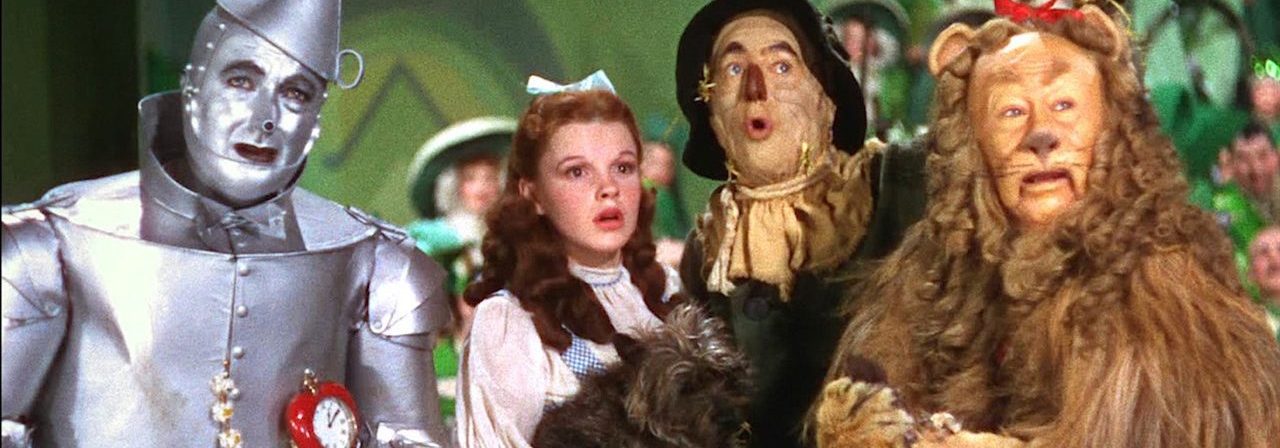
The sudden flood of colour onto the screen as we first enter Oz is just as wonderous as it ever was, however I think that what’s just as striking about The Wizard Of Oz is just how much it moves. It’s one of the points that I talk about in this introduction to the film that I gave in July 2025 at The Little Theatre in Bath, as part of Picturehouse’s ‘Lynchspirations’ season, where the film was paired as an inspiration for David Lynch’s Wild At Heart.
The Wizard Of Oz was perhaps one of the most influential films for Lynch, with the director claiming that it was a film he thought about every day, loving the truth there was on the screen. And, indeed, there’s an honesty to the simple wishes of the characters, echoing things that at many stages of life we find ourselves wanting, perhaps why the film continues to echo and connect today.
My full introduction can be heard in the video below, the audio for which was recorded afterwards based on the rough introduction that I had written for the screening.
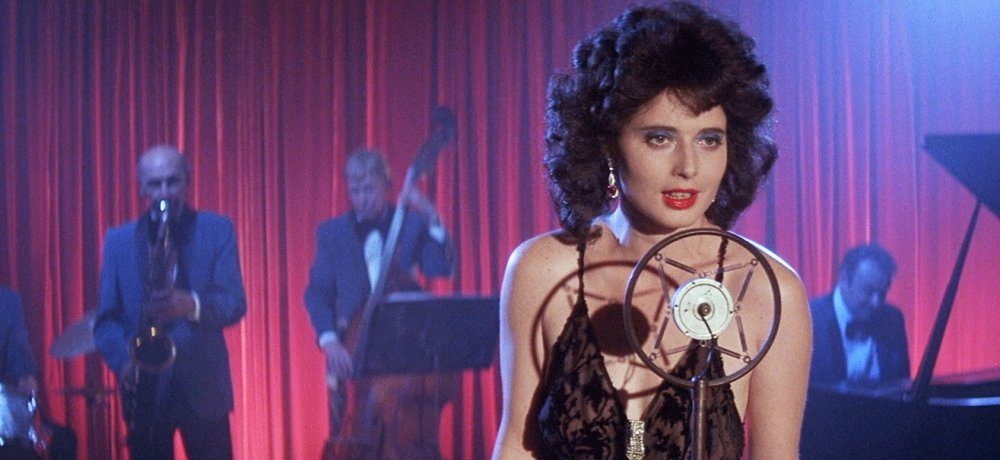
Back in June 2025 I introduced a screening of Blue Velvet at The Little Theatre in Bath as part of Picturehouse’s ‘Lynchspirations’ season. The film was paired with Hitchcock’s Rear Window, which is said to have inspired Blue Velvet. I look at those possible inspirations, alongside those of Lynch’s favourite Kubrick film, Lolita, and his cold feelings towards the city of Philadelphia.
The audio in the below video was specially recorded for it based on the rough introduction that I had written before the screening. Looking back on this intro I can see how I fell into the trap of treating every Lynch film like Mulholland Drive, when largely Blue Velvet can be seen as fairly direct (and there’s a chance that all of his films may be seen as such by some people, Lynch certainly insisted that they each told a direct story, but openly liked to leave things down to interpretation and what viewer’s got from his films). And, as with all of his films, there’s of course a good deal of interpretation that can be brought to this particular one. Hopefully there’s still something here in this introduction, the first that I had done for a good while at the time the screening happened.
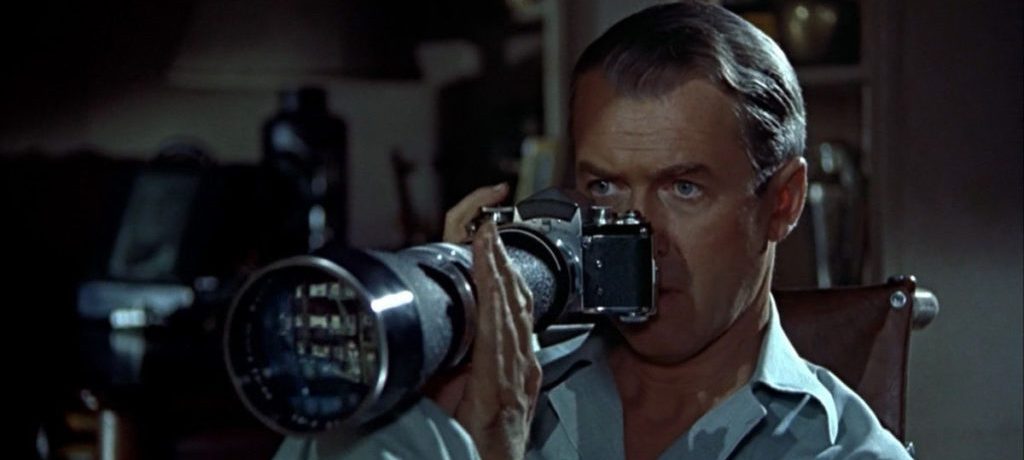
As part of Picturehouse’s ‘Lynchspirations’ season Rear Window was paired with David Lynch’s Blue Velvet as a film that inspired it. Below is the introduction I gave for Hitchcock’s classic thriller, based on the rough one I had written before the screening at The Little Theatre in Bath in June 2025.
Fuelled by the 50s paranoia of McCarthyism, Rear Window continues to be a classic tale of paranoia, control and acknowledging changing, and breaking, traditions. Working just as well in an age of true crime podcasts and TikTok detectives.
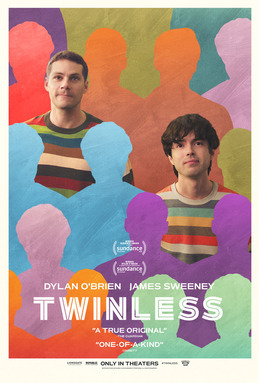
Release Date – 6th February 2026, Cert – 15, Run-time – 1 hour 40 minutes, Director – James Sweeney
Roman (Dylan O’Brien) and Dennis (James Sweeney) meet at a bereavement group for those who have lost their twin, as a friendship forms helping them cope there may be more behind it than it seems.
The opening credits of Twinless appearing 20 minutes in are almost a distraction from the rug being pulled out from under you. The first of a number of unexpected tonal shifts in writer-director James Sweeney’s grief-tinted dramedy. Beforehand we’ve spent time with Roman (Dylan O’Brien) and Dennis (Sweeney) as they form a friendship after meeting at a support group for bereaved twins. Their bond is a tender one that helps them both cope in quiet ways with their respective losses.
However, it becomes clear that there may be more to the friendship’s context than it may seem on the surface – although Sweeney and O’Brien make it clear in their performances in the early stages that a romantic relationship isn’t on the cards. Dennis is gay, while Roman is straight – although his brother, Rocky (also O’Brien) was. As we learn more about the pair, particularly Dennis, shades of Ingrid Goes West come into play. The tone may not be as threatening or sinister, but there’s still an unsettling air to certain aspects of the central bond. Wonderfully portrayed by the sharp subtleties of the two lead performances, showing characters caught in varying forms of uncertainty in response to the holes in their lives.
Grief can be uncertain and messy, and it’s something that Sweeny understands in the dark comedy of his film. Early on we see Roman emotionlessly sitting alone at home, the screen from his TV lighting up the room, as he plays The Sims watching a figure named after his late brother get caught in a kitchen fire. It contrasts with Dennis’ emotional monologue about the pain he feels since losing his twin, yet a pain he likes due to it seeming as if he’s still there. The blend of tones and genres throughout is seamlessly handled in much the same way as the twists and reveals of the narrative are.
I went into Twinless knowing nothing about what was in store, and in many ways that seems like the best way to watch the film. It takes you on its ride and the changing shape of the central friendship with early engagement thanks to the humour on display. Once the shock factor comes in after the opening credits there are further surprises in store while still keeping a consistent feel to the overall style at hand. Never does it feel as if something is being borrowed from a different film, and Sweeney manages to grapple the consistent tones and themes of his film with strong precision whilst maintaining an entertaining style.
Much of which is conveyed by him and O’Brien, with good efforts being put in by the supporting cast, particularly a strong and very likable turn from Aisling Franciosi as Dennis’ colleague Marcie who starts to form a relationship with Roman. The belief in the project from all involved comes through on screen as even during more ominous moments a sense of tenderness still manages to come through, even if just for one of the characters unaware of the other’s actions. Helped by the humour which is scattered throughout and itself allows for the film as a whole to pass by quickly, even during extended dramatic beats which revolve around the inheld emotions of the characters. Unexpected, and with plenty more unexpected moments throughout, Twinless is a series of entertainingly swift rug pulls which always keep the characters at the core of what happens.
Full of consistent twists and surprises, Twinless keeps us connected to the characters with the well-held tenderness and humour throughout its drama, all captured in the subtle performances of the core cast.
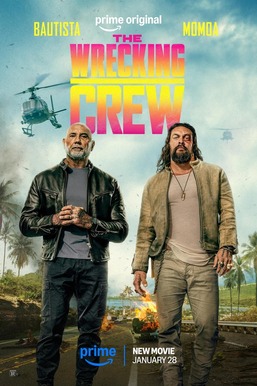
Cert – 15, Run-time – 2 hours 4 minutes, Director – Ángel Manuel Soto
Estranged half-brothers James (Dave Bautista) and Jonny (Jason Momoa) are reunited in the wake of their father’s mysterious death, leading them to investigate a series of covered up family secrets and gang ties.
Get the buddy relationship of your buddy actioner right and you’re already part way there. Even if you stay just part way there you’re at least scratching something of a minimum, and perhaps other elements can be forgiven in light of this. It’s certainly the case for The Wrecking Crew where Dave Bautista and Jason Momoa’s chid-like bickering (with added flourishes of f-bombs) raises a good few chuckles.
The pair play estranged brothers James (Bautista) and Jonny (Momoa), brought back together in Honolulu in the wake of their father’s death. However, the circumstances behind it seem mysterious and the pair soon find themselves on the explosive trail of uncovering buried secrets, conspiracies and gang ties in the family’s past. The pair of modern action stars certainly embrace their roles and bring a sense of fun to the humour and characters. Carrying the tough guy roles with a healthy dose of vanity-lacking machismo competition through the half-sibling lens.
Slightly obvious CG can be forgiven when the film produces the handful of likable chuckles that it does amongst the general amusement of the film. A helicopter chasing and shooting at a car going down the freeway towards a tunnel may look a tad clunky, but it’s not the dominating thought in the moment as the action at hand is clearly put at the fore to make for an enjoyable and in part thrilling sequence.
It’s what helps see The Wrecking Crew through. Yes, the outline may be somewhat familiar from other buddy actioners of decades gone by, but it gets through thanks to the clear signs that an attempt has been made to make this a breezy and comedic film that still has some solid action sequences throughout. Whether up-close fights or more outlandish moments, such as the aforementioned helicopter chase, there’s a swiftness to the action that keeps things moving. There may be a sense that things border on being slightly overlong, but there’s still a well-paced energy to things in the third act where things are perhaps at their most upfront when it comes to the scraps, fisticuffs and stair falls at hand. Much of which is brought about by the fact that director Ángel Manuel Soto knows that he can let Momoa and Bautista relax and be funny.
By knowing that Momoa and Bautista can be funny there’s a loose and breezy feeling the The Wrecking Crew’s familiar outlines. With focus on enjoyable action it sees itself through rather well, with enough amusement to keep things going until the end.
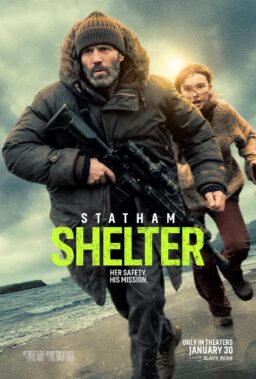
Cert – 15, Run-time – 1 hour 47 minutes, Director – Ric Roman Waugh
Michael Mason (Jason Statham) has spent the last decade living on a remote Scottish island, however MI6 and rogue government forces are soon after him when his location is revealed after taking in a young girl (Bodhi Rae Breathnach).
2002’s Ali G Indahouse is not a film I ever expected a Jason Statham flick to remind me of. Yet, as a rapidly-cut car chase plays out the edits make it seem as if the cars are barely going above 40. Calling back to the drag race scene where Sacha Baron Cohen’s street poser makes sure to not exceed the 30mph speed limit. It’s a messy and anticlimactic look to the sequence which echoes into later action sequences where the action itself feels cut around or overshadowed by a cluttered scene. Trying to rely on its star more than forming more solid action.
Shelter is a film that’s leaning into the fact that Jason Statham is in the lead role. It’s tone is one that’s constantly suggesting an inner struggle, a dark past for the main character. It’s something that Statham tries to lean into in his performance, but the screenplay is relying on him and therefore gives little detail. For much of the first half his dialogue is limited to short, single sentences as he refuses to give away details to the young girl, Jesse (Bodhi Rae Breathnach), he’s taken in after saving her from a storm.
Whilst looking after her as she recovers from an injury, her uncle lost to the storm, his face is falsely recognised by MI6 surveillance as an internationally wanted terrorist, his character Michael Mason having remained hidden on an isolated Scottish island for the last ten years. Soon, when forces arrive on the island on night, he finds himself, with Jesse, on the run, escaping capture, or the threat of death from rogue government agents (led by Bill Nighy who’s commanding Bryan Vigier to kill Mason on sight). To get here, however, there’s a lot of slow build-up. Sat in the drawn-out, grey cycle of Michael’s remote island life and the lack of communication he provides Jesse with. There’s the feeling of promised action to come, however when it does arrive it feels brief and scattered.
The process of Statham’s character building up to reaching the various forces who are after him is drawn out and full of clear stages that at times feel slightly improvised as they lead from one to the other. Further marks of the film trying to lean into star power to get it through and not having the screenplay or narrative to be able to allow for that to be the case. Leading to a bland sense of one-note congestion that fails to create a proper sense of energy or pace as Mason often finds himself trying to escape trained killers with his, and Jesse’s, life.
Interactions between the pair match the bluntness, and to some extent coldness, of the film. There’s a feeling of hope that things will somehow come together if certain elements click. But, those elements need the help of those which feel more reliant meaning that Shelter stumbles and falters because of that. The overall film ends up feeling lacking in thrills and entertainment value as it draws out the stages of its story and occasional scrappy action.
Trying to lean into Statham as the lead, despite giving little for him to work with, Shelter is a slow-to-get-going action flick that bridges such sequences together with a rambling narrative.
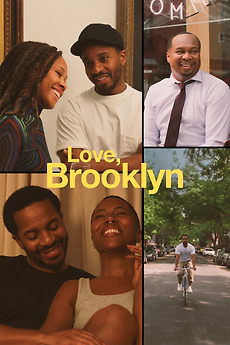
Release Date – TBC, Cert – TBC, Run-time – 1 hour 37 minutes, Director – Rachael Abigail Holder
Writer Roger (André Holland) is trying to write a feature about Brooklyn as it enters a new post-COVID chapter, whilst balancing relationships with friendly ex Casey (Nicole Beharie) and widow Nicole (DeWanda Wise).
Much like Love, Brooklyn tries to focus in on the New York City borough as much as it can, the film itself feels very held in. A contained look at the location and the lives within it. Namely through the eyes of writer Roger (André Holland) as he tries to write a magazine feature about the new chapter Brooklyn appears to be entering in a post-COVID era. However, writer’s block has struck, and his mind appears to be focusing on his romantic relationships. Thus, a contained and considered love triangle narrative plays out.
Whilst friendly with art gallery owner ex Casey (Nicole Beharie) he’s begun seeing widow Nicole (DeWanda Wise) although not seemingly labelling an official relationship, despite a relationship being formed with her daughter, Ally (Cadence Reese). Debut feature director Rachael Abigail Holder takes Paul Zimmerman’s script and doesn’t make a blown out, broad comedy and instead keeps everything contained and considered. There’s a quietness to the film which is maintained throughout in an overall calm tone.
Even moments that feel as if they should be more swollen moments of emotion – the phrase “you think I don’t know how f**ked up I am?” stands out yet still slots right in with the quietness of the rest of the film – are kept in the film’s view of natural and honest character emotion. There may not be a rise, fall or shift in tone or emotion but there’s still a watchable film at play for the short run-time at hand.
The relationships don’t conflict and instead play off each other well as Holder gently looks at them and allows them to be. Trying to keep them within the creative angles of Brooklyn, with occasional reminders of the location and the feature that Roger’s either meant to be or is struggling with writing. In the end the unifying idea for Holland’s character amidst the love triangle he finds himself at the upper point of and his work is “it’s possible to love something new in a different way.” In this view, there’s a considered film here. One that, even if it may not quite, perhaps intentionally, fully impact with its emotions, makes for calm and likable enough viewing.
A calm and considered film, even if that means it doesn’t lean into the possible rises and falls of its emotional elements, Love, Brooklyn doesn’t go for big comedic laughs in its view of its love triangle and seems to be better and more contained for it.
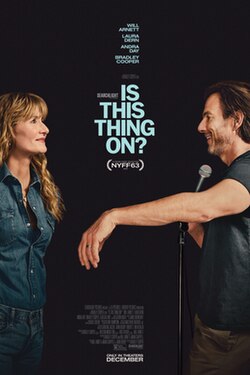
Release Date – 30th January 2026, Cert – 15, Run-time – 2 hours 1 minute, Director – Bradley Cooper
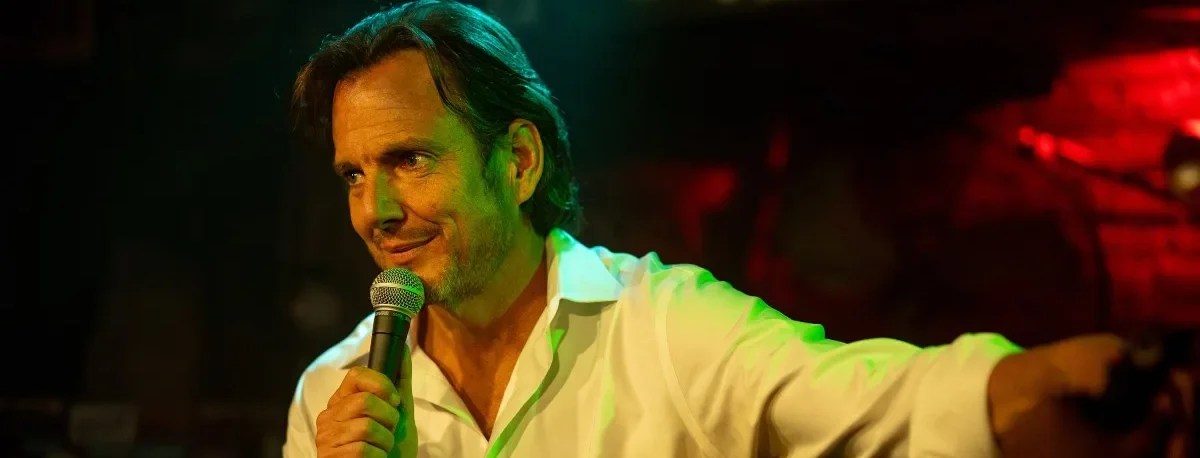
Trying to cope with the divorce process, Alex (Will Arnett) finds himself turning to stand-up to get into a bar for free, getting a kick from it he grows his confidence for comedy and rebuilding his relationship with wife Tess (Laura Dern).
Loosely inspired by the life of British comedian John Bishop, Is This Thing On? appears to be very loosely inspired indeed. Basing events in New York City we follow finance-based Alex (Will Arnett) amidst the process of separating from his wife Tess (Laura Dern). One night whilst trying to get into a bar to drown his sorrows, and without the $15 entry fee, he puts his name down for an open mic slot to get in for free. There an outpouring of his recent weeks unfurls into the mic, with a couple of attempts at jokes and scattered chuckles dotted throughout the stilted, improvised routine.
It’s during the drawn out view of this first routine, as the camera pushes up against Arnett’s face against an almost silent response it gets, that the film makes clear its tone and pacing. Whilst going in expecting a film with more comedic beats the overall tone of the film leans largely dramatic, especially amongst the very slow pacing from start to finish. One thing for Bradley Cooper’s latest, brought to him by Arnett after working a bit on the screenplay with Mark Chappell, after hearing Bishop’s story (with Bishop receiving a co-story credit) during a chance meeting, is that it certainly seems to take its time. Which perhaps highlights the feeling that the director doesn’t quite seem to be as invested in this particular project than previous features A Star Is Born and Maestro.
That comes through quite often with a slightly semi-detached feeling from certain aspects behind the camera, despite Cooper also appearing on-screen as attempted comic-relief best friend character ‘Balls’. There’s a watchable nature to this particular film from the director, but nothing that quite rises above that as Alex’s confidence for stand-up grows, and starts to lightly inspire him to try and fix things with Tess.
Thus, a set of shifts in their relationship start to unfold, largely in the second hour, which don’t always feel as if they click. Despite good individual performances from Dern and Arnett I never quite found myself fully buying into their relationship. especially the course that it starts to take as they begin to properly talk again with conflicting conversations. The stand-up scenes certainly still have an effect as Alex uses them to make sense of what’s in his mind, and come to terms with where his life appears to be going. He’s told by other comics that he may not be good at stand-up, but he’s at least funny and should therefore keep going, even if his family (including parents Christine Ebersole and a wonderful but rarely used Ciarán Hinds) don’t know about any of it.
There’s a slight feeling of American stand-up to the film overall. Where the joke, or in this case point, tends to be repeated two or three times, just with slightly different wording, as if being explained without the person telling it seemingly realising it. As if the joke itself is just another layer of set-up to the explanation and repetition of it. Is This Thing On? doesn’t quite repeat itself but certainly feels as if it has to explain its point a couple of times in the overly slow pacing of the narrative. It makes it feel that bit more drawn out, and not entirely solid. What’s there is watchable but, much like Alex’s early stand up, gets a scattered response with a slight feeling of detachment as part of the act.
While watchable Is This Thing On? struggles to fully engage with its overly slow pacing and need for a couple more laughs here and there. Arnett and Dern give good performances, even if their characters’ relationship doesn’t quite hitin the somewhat detached feeling of the film.
Release Date – TBC, Cert – TBC, Run-time – 1 hour 37 minutes, Director – Samuel Abrahams
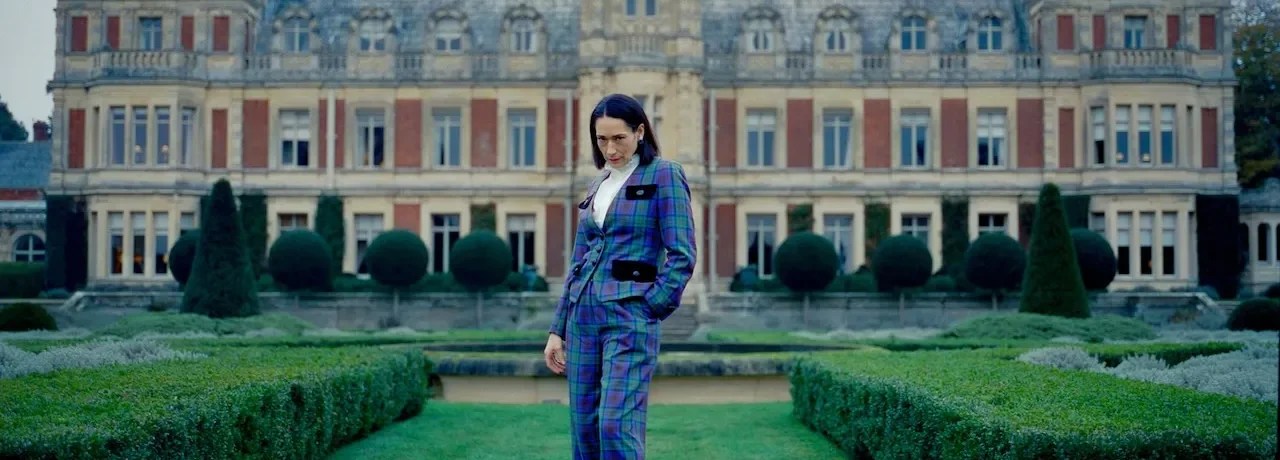
Isolated Lady Isabella (Sian Clifford) welcomes a camera crew into her estate to make a documentary about her in the build-up to her youth talent show, however over time she starts to lose herself in her home.
Lady Isabella (Sian Clifford) wants to present herself as “the aristocracy’s answer to the Kardashians.” A relevant, up-to-date figure of popularity who wants to use her wealth to help others – in this case by hosting the Stately Stars talent competition, which she herself will take part in, despite not having an act. Yet, even when announcing all of this to the camera crew she’s hired to follow her, led by Laurie Kynaston’s BAFTA-nominated (instead of winning) director Sam there’s an awkwardness to the character, brilliantly conveyed by Clifford, whose seeming isolation has led her to act up to the camera and those around her. She’s aware of herself and yet at the same time has no self awareness of how she comes across because of this.
With a number of great quotes in these opening stages Clifford brings in plenty of laughs very early on thanks to the awkwardness of her character. Things are comfortably set up to be about her character’s distance from the rest of the world – despite her best efforts to do good, “I pay minimum wage, I recycle – well, someone here does” – until the most sudden of left turns that introduces an almost unbelievable turnaround in what starts to happen within the confines of the titular Lady’s estate.
To give away this change in focus would be to, in some way, perhaps spoil the film. Where things start to turn narratively in some ways look at Isabella losing herself in her expansive home. While the turn may lead to some patchier sequences; including one drug trip which sits uncertainly in the film, there are still some good laughs to be found amongst the more hit-or-miss gags. Yet, the way in which this thread is dealt with wavers the more it goes on, despite the amusing suddenness when first revealed, as is the case for the film as a whole.
When leaning into more dramatic territory, largely regarding Isabella’s past relationships, reasons for isolation and relationship with Sam and the documentary crew, the film is at its patchiest. The closing stages feel, much like the gags increasingly become, patchy and not everything lands. Clifford may still make plenty of hesitant glances to camera to get a good chuckle but they’re not quite enough to hold up the weight the film creates for itself with the turns that it takes into each new act.
There’s certainly an attempt to pull off a surprise, and a surprise is certainly the case, and while there’s enough here to see things through they do start to struggle and draw things out the more they go on. Yes, there are chuckles thanks to Clifford’s performance of light-headed, slightly unaware lead who acts as the draw of the film from start to finish, but the gap between them eventually grows as the film appears slightly more uncertain when it comes to dealing with its developments beyond the simple mockumentary awkwardness.
As the laughs grow more hit-or-miss and the narrative turns lead to patchier sequences, Lady still has an enjoyably awkward central performance from Sian Clifford who acts as the constant, bringing a good number of laughs, throughout the film.



 Just A Little Bit Random