The Bluff – Review

Cert – 15, Run-time – 1 hour 43 minutes, Director – Frank E Flowers

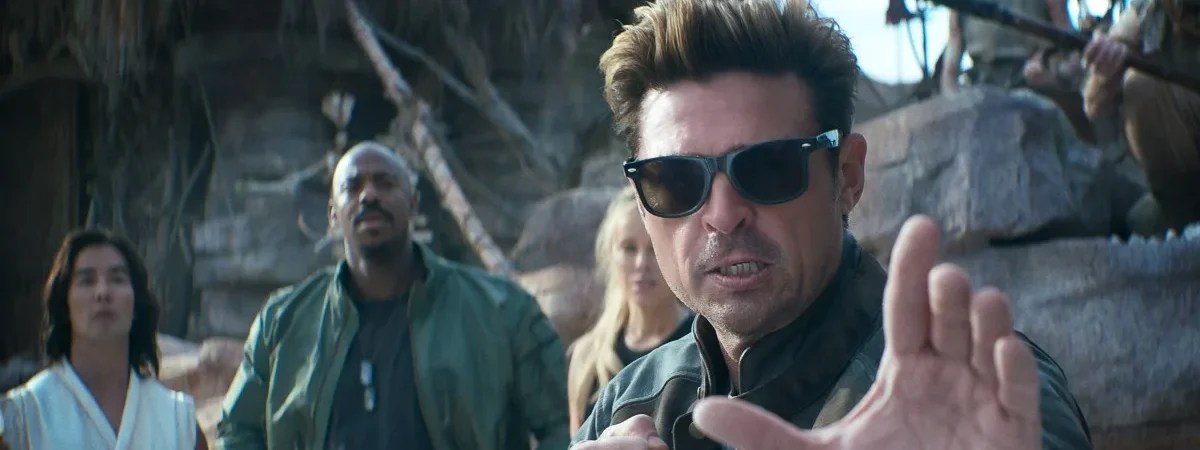
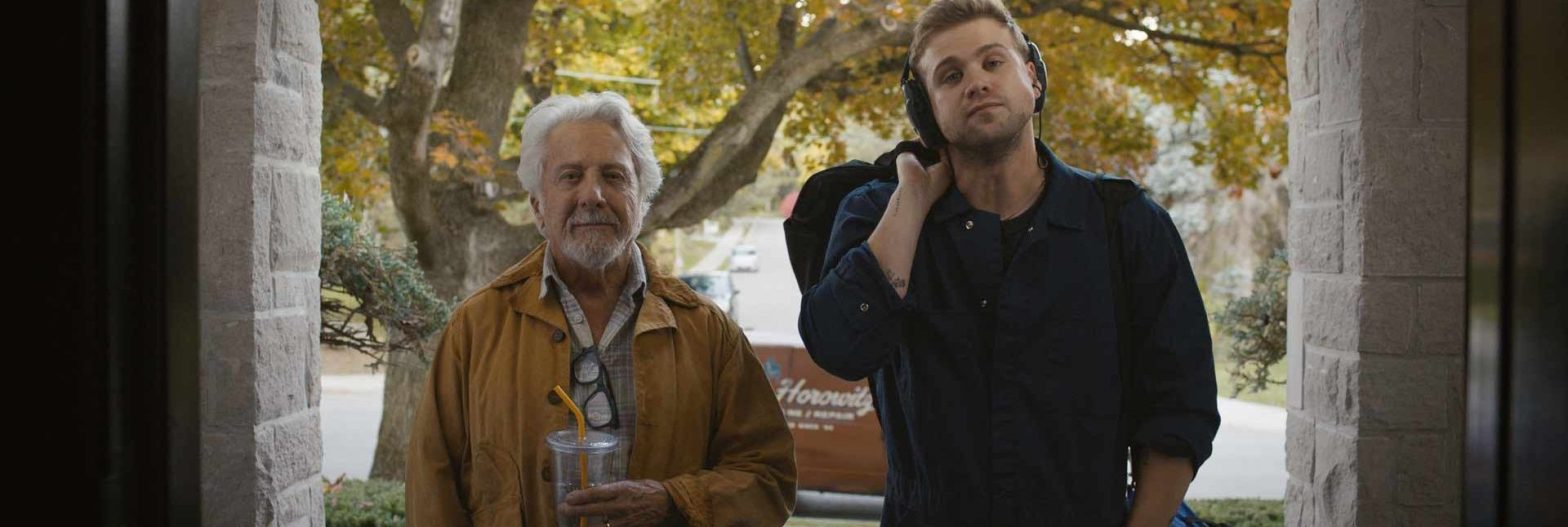
Ercell’s (Priyanka Chopra Jonas) pirating past is long behind her, however when bloodthirsty Captain Connor (Karl Urban) kidnaps her husband (Ismael Cruz Córdova) and goes in search of her, she must protect her family from attack.

The pirate movie is something of a rarity these days, perhaps now more than ever. Amazon have chosen to bury their crack at the sub-genre, produced by the Russo brothers, directly on Amazon Prime rather than giving a cinema release. It seems something of a wise decision from them as a cinema release may well have led to a Cutthroat Island level impact for pirate flicks, although at least after that we got Muppet Treasure Island.

What The Muppets provided that The Bluff doesn’t is a sense of fun. Entertainment and slight thrills (let’s not forget Kermit The Frog’s sword fight with Tim Curry). This heavy-on-the-blood actioner is a bland trudge from start to finish as Priyanka Chopra Jonas’s Ercell, once nicknamed ‘Bloody Mary’, finds her quiet Caribbean island life turned upside down when old mentor Captain Connor (Karl Urban, boasting one of the most uneven accents for quite some time, ticking off almost every British county along the way) kidnaps her husband (Ismael Cruz Córdova) and attempts to track her down. Constantly fleeing through the island’s terrain a revenge-chase flick plays out while Ercell tries to protect her family.


Director Frank E Flowers and Joe Ballarini’s screenplay cycles through the same set ups of Connor commanding his crew to hunt down Ercell while she finds herself getting more into her old ways and reassuring her family that everything will be fine, whilst still looking worried. For 103-minutes much of what we see plays out along these overstretched, repeating lines, trying to push action that appears to lean into its bloodiness to compensate for the fact that it’s just not very interesting. We’ve seen this film done before, and better, and it simply feels difficult to engage with anything that’s happening on-screen with just how damp it all feels.

The plot is undoubtedly simplistic, and that’s not in itself an issue. It’s fine to have a simple revenge narrative play out, but the problem with The Bluff’s is that it feels like a cardboard cut-out, and at times looks like it was filmed against one too – an insistence on seemingly lighting a number of scenes with one giant spotlight provides some unappealing shots. Style is what the film truly lacks, the formulaic nature is highlighted by the fact that it plays things so safely and even more blandly in the wake of this. Dull from start to finish, it’s one of the most trying films in terms of pure boredom that I’ve seen for quite some time. Not even Karl Urban’s fluctuating accent is down to joyously hamming it up like Tim Curry.

A cardboard cut-out revenge flick with no real style, The Bluff is a bland, repetitive trudge from start to finish. Calling back to the kind of pirate movies that led to a pause in the sub-genre before.

Rating: 2 out of 5.

How To Make A Killing – Review

Release Date – 13th March 2026, Cert – 15, Run-time – 1 hour 45 minutes, Director – John Patton Ford

Becket (Glen Powell) has never seen his family after his mother (Nell Williams) was disowned before he was born, deciding he’s had enough he tries to ensure a $10 billion inheritance by pruning the family tree.

It goes without saying that almost no film is necessary, but particular ones along the lines of a remake of Kind Hearts And Coronets. However, while trying to pass itself as ‘inspired by’ the Ealing classic, here we are with How To Make A Killing, a remake that exchanges some of the original’s British wit and sharpness for an extra helping of darkness.

While not pitch black there’s an enjoyable smirk to the film, especially as Glen Powell’s lead Becket Redfellow goes about trimming the family tree in order to obtain an otherwise unreachable $10 billion inheritance, alongside the lifestyle of the ridiculously rich and famous. He’s had to graft and be undermined much of his life after his mother (Nell Williams) was disowned after falling pregnant, eventually passing away when Becket was young, and himself subsequently rejected by head Redfellow Whitelaw (Ed Harris). The kills themselves may not be darkly comic, generally they play out with the humour surrounding them, but over time they develop more into the mould of the film as Becket’s life changes.

He starts to fall in with Jessica Henwick’s Ruth, despite still maybe having feelings for childhood crush Julia (Margaret Qualley). While Ruth is a direct and likable character, bringing about much of the film’s ideas about money and happiness, Julia is an odd figure. As Becket finds himself in better positions at work she starts to appear more with requests for money, and suggestions of unhappiness in her marriage. However, her appearances are brief and each time feel somewhat patchy, bringing about a feeling of unintentional inconsistency to her. Perhaps boosted by the feeling of only a rough character outline.


To some extent her character matches the humour in the film. While there are some good chuckles here and there, especially once the film finds its rhythm with Becket’s plan properly unfurling, there are also good stretches where they falter or just don’t seem to be coming through at all. There’s still a general likability to the film, helped by Powell’s lead performance, as is the case with much that he leads, but it can sometimes feel as if its slowing down as it tries to reconfirm what it wants to say amongst the various killings and relationships we see struck up by the murderous tailor employee trying to evade the circling FBI (with agents played by Phumi Tau and Stevel Marc).

In tackling Becket’s conflicting feelings about money, happiness, love and wants things are dealt with fairly lightly but fitting for what the film is. However, there’s a feeling of things twisting around themselves in the third act, especially in the very final stages where it feels like the film has a slight vein of uncertainty about whether it’s going to get away with its end (which it generally does, but feels held back by that uncertainty). It’s a feeling likely stemmed from the reduced sharpness, and more upfront satirical edges through the lifestyles led by the wealthy Redfellow family members – including an amusing turn from Zach Woods as attempting artist Noah.

For the most part the film works and provides a good amount of chuckles and amusement as Powell goes about offing the Redfellow family more swiftly as the run-time goes on. There may be patches where things sit uncertainly as to character or whether the film will get away with how it eventually presents its ideas, but for the most part the darker edges help to see it through while maintaining the lead’s likability in the wake of his character’s murderous activities.

While there may be some bumpy patches in terms of character and confidence in how themes are presented How To Make A Killing gets through with a good handful of dark, satirical chuckles and Glen Powell’s naturally likable presence.

Rating: 3 out of 5.

Paul McCartney: Man On The Run – Review

Cert – 15, Run-time -1 hour 55 minutes, Director – Morgan Neville

Documentary looking at Paul McCartney’s 70s career, from the break-up of The Beatles to chart success of Wings.

Throughout the 70s, through solo work and the success of Wings Paul McCartney is, and was, asked about whether The Beatles will be getting back together. Increasing millions are offered for them to perform just one song together on stage again, as they all continue with their own projects – especially Lennon and McCartney. In the case of the latter during this decade, the focus of Morgan Neville’s Man On The Run, moving on from this period of his life is a major point. He wants to explore different pursuits, although many will point to echoes of The Beatles within them.

Despite McCartney’s want to move on with both life and work, in looking at how he does this Neville seems to consistently refer back to The Beatles making it somewhat hard to look at Wings as its own thing with the overhanging past success. Yet, McCartney, interviewed by the director in multiple sessions forming the film’s narration, is open about his attitudes at the time to making music and spending time with his family. The struggles he went through in trying to pursue both amongst hassle from the press and fans.


There’s something of a whistle-stop nature to the film as it covers the decade and everything that was thrown at McCartney as part of it, and in turn he threw back at it. As someone largely only familiar with the hits around this time, and even some of those I’m still clueless about (I’d comfortably say I know more about The Frog Chorus than any of his 70s work), I still felt as if the film occasionally repeated itself or leaned back into familiar subjects rather than referring back to them with more depth. This, again, particularly feels the case with references to The Beatles and the Lennon-McCartney relationship, even if this does produce the more emotional side of the film’s subject in the later stages when talking about the pair making up.

When looking at McCartney going out and simply performing, doing what he wants to do, and letting that work almost speak for itself the film is at its best. Whether deciding to release his take on Mary Had A Little Lamb, strange TV specials in the early 70s or going out and performing while everyone demands or expects his former bandmates to appear on stage when admiring the artist and his work over talking about success the film is largely at its best. Especially when backed by McCartney talking about his drive, connection with band, family and music and wanting to do well with all of them. I just wish that things didn’t feel as if they had to unnecessarily refer back so much to The Beatles.

When looking at McCartney’s views on his work and relationships, in the many forms each takes, his drive boosts the footage of his various performances. However, Man On The Run, like the star in the view of many in the 70s, lives in the shadow of The Beatles with a few too many references to the band.

Rating: 3 out of 5.

Hoppers – Review

Release Date – 6th March 2026, Cert – U, Run-time – 1 hour 44 minutes, Director – Daniel Chong

19-year-old Mabel (Piper Curda) wants to protect a peaceful glade from a highway construction, when her mind is put into a beaver’s body she leads the animals to rebel, but could be creating more problems for humans.

It hasn’t been that long since the likes of Soul and Turning Red, or even Inside Out 2, but when a studio as notable as Pixar has just one stumble (I was not the biggest fan of Elio’s overstretched busyness) it can sometimes feel a while since a film of theirs hit, especially an original one. Hoppers feels like the studio simply having fun with an idea, and making a rather entertaining film whilst doing so.

Much of this comes from the sparkiness of rebellious 19-year-old Mabel (Piper Curda), intent on protecting the peaceful glade where she spent much of her childhood with her grandmother (Karen Huie) from becoming a construction site for a new highway, led by popular city mayor Jerry (Jon Hamm). The glade has been a place of calm for Mabel for many years, having become almost therapeutic to observe the wildlife there when stressed or angry – the opening scene sees young Mabel (Lila Liu) trying to save class pets in her backpack and causing chaos when trying to escape from teachers. She’s an energetic character, and even more so when she discovers technology her university professor (Kathy Najimy) has created which allows her consciousness to be put into a robot beaver.


From here she excitedly explores the animal world, guided by beaver King George (Bobby Moynihan), and tries to get them to return to the glade to prevent construction. However, her efforts quickly lead to grown tensions between humans and animals, with the formers lives at risk. There’s plenty of fun to be had when this latter point develops – including a wonderfully silly moment involving a shark – helping to see things through as they start to feel like they’re trying to find their way towards an ending rather than knowing fully what that route is.

It means that the film may feel about 10 minutes too long, with some ideas being dealt with separately rather than together, but there’s still a good number of chuckles to be found along the way. Generally, the humour of Hoppers is what helps to see it through, alongside those brief moments of emotion that remind us of Mabel’s relationship with her grandmother – highlight moments in the film, alongside the aforementioned shark which strikes a very different tone. Much of this humour comes from the supporting characters and the ways in which they play into the narrative. An animal council with figures representing the likes of mammals, serpents, birds, insects (Meryl Streep making an appearance), fish, etc feels less thrown in and notably formulaic than in Elio and while not the strongest element of Hoppers manages to have enough backing behind it to create a handful more antagonists for Mabel, George and co to face.

It’s around the introduction of these characters that things start to gradually develop in a more step-by-step way, but they’re at least given a push by the narrative that leads to a number of likable sequences which makes the most of both the animal world, and the technology that put Mabel into this situation in the first place. You can feel the creatives having fun with the ideas at hand which boosts the entertainment factor and makes for a simply enjoyable film that believes in its characters. One that might not have as much of a rebellious attitude as its lead character, but matches her energy on first taking on beaver form and continuing that until the end. This may not quite be the studio at their strongest, but it’s another slice of entertaining animation that they still manage to do rather well indeed.

While it might start to deal with its matters in a very step-by-step way there’s plenty of spark within Hoppers to see it through, helped by a good dose of successful humour from the world and supporting characters around the likably propulsive lead.

Rating: 4 out of 5.

Scream 7 – Review

Cert – 18, Run-time – 1 hour 54 minutes, Director – Kevin Williamson

Ghostface (Roger L .Jackson) comes back, taking on faces from the past, to once again attack Sidney Prescott (Neve Campbell), by also targeting her teenage daughter (Isabel May).

My views on Scream VI were that it suffered from a rushed production. It was a film that needed more than a year from greenlighting to release. Scream 7 has had a much more tumultuous production. With multiple re-writes and directors dropping out, following the firing of new franchise faces Melissa Barrera, and quitting of Jenna Ortega, following comments made by Barrera in support of Palestine, causing it to take three years to get to the screen; with Neve Campbell returning to the role of Sidney Prescott (now Sidney Evans) having not been in the previous instalment when the pay offered to her didn’t match what she believed she was worth. Also returning is original Scream (and Scream 2 and 4) writer Kevin Williamson, taking on directing duties as well as co-writing with Guy Busick who created the story with James Vanderbilt.

With Ghostface (again voiced by Roger L. Jackson) taunting Sidney and her teenage daughter, Tatum (Isabel May), with faces from her, and the killer’s, past there’s a slight feeling of this seventh instalment clinging to that whilst being significantly less self-aware. The kills are more intense and at times in the first few instances almost feel as if they border on sadistic with how much they linger on gory details. Two early examples in particular feel as if they could be tonally better suited to Saw than Scream; as if trying to rival recent, non-franchise-threatening, slashers such as Terrifier or In A Violent Nature. Yet, it’s these sequences where Williamson feels most engaged as a director, leaning into the loudness of the moment as opposed to the soap opera-esque stylings of more dialogue-centric scenes.


As for his cast, however, whether new faces, newer faces, faces who have been with the series for the last 30 years or just Ghostfaces, there’s a consistent feeling throughout that most people we see on-screen would rather be elsewhere. It simply feels as if a number of key cast-members’ hearts aren’t in this particular film and that lack of energy comes through and dampens a film that’s already struggling to get beyond a weak script. One lacking in proper engaging actions for its characters, leaving them to feel stuck in the same rotation of scream-led chases and attacks. Amongst all of this I found myself sat simply bored, the film not pointing out its own clichés as it became focused on referencing the past with more old faces cropping up in supporting roles more than cameos.

There’s less a feeling of multiple re-writes or a story that’s changed hands and more one that’s purely weak. One that isn’t completely bought into by those on screen – the reveal of who’s behind the Ghostface mask this time leads to suddenly hammier acting than ever – and subsequently those watching. Maybe an unnecessarily troubled production led to a sense of weariness from those involved. But, there seems little attempt to cover that up on screen as actors limply fight off another, unthrillingly bloodier, Ghostface.

With ill-fitting focus on the severity of attacks and a soap opera style outside of them, Scream 7 is a weak story that it seems very few involved buy into. There’s an unengaging lack of energy on screen and an overall weariness to much that happens.

Rating: 2 out of 5.

EPIC: Elvis Presley In Concert – Review

Cert – 12, Run-time – 1 hour 36 minutes, Director – Baz Luhrmann

Concert and rehearsal footage of Elvis Presley with excerpts of the singer talking about performing and his relationship with his music.

While I liking Baz Luhrmann’s 2022 hit Elvis biopic I did find the film to be a near 3-hour montage. Using largely never-publicly-seen footage of Presley in rehearsals and concerts for his Vegas shows Luhrmann constructs a 96-minute concert documentary with much the same feeling. While maybe not as glitzy as his biopic this footage discovered while researching for the film is overseen with rapid editing to create the director’s maximalist feel. Perhaps trying to capture the iconic performer’s movement and energy when overcome by music the film, instead, feels restless.

There’s a likable way to which songs flow when performances and different stages of rehearsals, with a growing band and backup singers, are seamlessly cut together, but the problem is it feels like we’re only getting bursts of songs. The song credits list feels almost endless and while it’s interesting to hear Presley singing the likes of Yesterday and Bridge Over Troubled Water alongside big hits like Hound Dog and Suspicious Minds, I sat wishing that Luhrmann would let the songs breathe instead of rushing from one to the other.


His hand is immediately evident as the opening stages is a whistle-stop tour through Elvis’ career in the build-up to his Vegas residency. From early hits and TV appearances to his becoming a movie star, even if after being drafted into the US army roles blended into each other and he wanted a challenge and to show his dramatic chops more. Then, we have the showman himself finally stepping onto stage. And it’s clear from his own words that he wants to put on a show and involve the whole audience – saying at one point that his job is an entertainer, over anything else. A natural, goofy humour comes through in brief bursts every now and then, raising a couple of chuckles throughout.

There’s, of course, an enjoyable nature to the performances and clips we see of various stages of developing and performing concerts. And endlessly barrelling construction, sometimes quickly hearing from Presley about his relationship with his songs, or framing them in different ways – a brief montage of Colonel Tom Parker is set to You’re The Devil In Disguise. I just wish that occasionally that structure would calm down just to let the film and songs breathe instead of becoming tiring and restless, particularly rather early on.

A restless concert montage rather than energetic documentary, EPIC seamlessly blends rehearsal and concert footage, highlighting Elvis’ showmanship and natural humour, but often forgets to let the songs breathe amongst the rapid editing.

Rating: 3 out of 5.

Sirât – Review

Release Date – 27th February 2026, Cert – 15, Run-time – 1 hours 54 minutes, Director – Óliver Laxe

A father (Sergi López), alongside his young son (Bruno Núñez Arjona), goes in search of his missing daughter through a series of raves in the Moroccan desert.

Sirât’s Oscar nomination for Best Sound isn’t just for the rave music that echoes throughout it. Pulsating in the early scenes through the crowds of organised gatherings before thumping through personal speakers set up near a couple of vans. Whatever the set up each happens in the middle of the desert. An endless and shattering landscape, the effects of which are altered by a set of drawn out, tragic noises around the film’s midpoint.

It’s a moment that switches from one likely divisive half to another. While some may find the first half of Óliver Laxe’s drama, co-written with Santiago Fillol, slow and focused more on the raves than father Luis’ (Sergi López) slightly repeating search, accompanied by his young son Esteban (Bruno Núñez Arjona), for his missing daughter, others may find the emotional punches of the second half a growing stretch that can prove difficult to buy into; or perhaps just a bit much.

In the case of the second half I certainly found myself starting to struggle to buy into one particular moment towards the closing stages before the tension started to settle in. Bringing back round the feeling of pure overhanging fear that the film creates so well. When mixed with the music I was reminded of Gaspar Noé’s Climax, a film that while highly divisive I love the consistently descending terror-inducing effect of. So much of the effect of these moments in Laxe’s film is down to the atmosphere created in the soundscape. The explosive bursts, the echoes of the desert landscapes and van convoys as Luis and Esteban follow a group of ravers to what’s described as the last dance, in the hope that Mar might be there. It seems to be their last hope and opportunity.


As it goes on, the film proves itself to be so much about its atmosphere and landscape. The sense of bleakness that starts to play into the events of the second half as Luis and Esteban start to become more a part of the close unit of partiers going from one drug-assisted rave to the other spreads out into what we hear of the rest of the world. Radios tell us directly, and soldiers telling European ravers that they need to go home immediately, suggest that international tensions are escalating, attacks could be hinting at World War III. But, the problems of the ensemble are still the focus, they’ve escape from the troubles of the rest of the world, but into their own pains and troubles.

It’s an idea that takes a while to grow in the film, especially in the somewhat held back nature of the first half as the father and son that act as the film’s perspective are wandering towards a more direct sense of searching. There’s a push from what we see, and attention to detail in what we hear where many of the moments that hit are defined by how they sound more than anything else.

Throughout Sirât I found myself interested by what it was doing and the directions in which it was going. And it’s certainly a film that I’ve thought about quite a bit in the days since seeing it. Largely in terms of the tone that it strikes and the shift that occurs halfway through into a likely more divisive narrative than that taking place in the first, and for rather different reasons. My thoughts have continued to be interested by the film, and its most dramatic moments. Those intended to stop the audience, and characters, in their tracks with a sense of emotional shock. I may not have always felt that, but I still felt some form of effect and generally stayed in the world of the film and the various senses of loss that it looks at in an isolated state and place shut off, initially intentionally, from the rest of the world.

Both halves of Sirât will likely prove divisive for different reasons, the first may be somewhat repetitive and the second may have beats that aren’t always brought into. But, the detail of the sound design creates an atmosphere to the desert and growing pain of the characters that undoubtedly continues to interest me and hold some form of lasting beat in my mind.

Rating: 4 out of 5.

Good Luck, Have Fun, Don’t Die – Review

Cert – 15, Run-time – 2 hours 14 minutes, Director – Gore Verbinski

Attempt 117: ‘The Man From The Future’ (Sam Rockwell) enters Norm’s Diner and assembles another group of strangers to take down the AI force that leads to the robot apocalypse, due to be created in one hour a few blocks away.

Sam Rockwell, donning a mixture of metal and plastic like a worn out toy with its mechanisms exposed, jumps from table to table in Norm’s Diner trying to rouse just a few of the 40+ people trying to enjoy a quiet evening into joining him to fight the imminent AI apocalypse – being created just a few blocks away. This is his 117th attempt and he appears to be assembling his most ragtag ensemble yet amongst monologues which (if you remove the f-bombs) sound as if they could easily come from the mouth of modern-day Lisa Simpson.

Lisa’s Flanderised preaching comes to mind a couple of times in director Gore Verbinski’s latest. Whether sequences about teenagers becoming zombies, obeying every command from the phones their eyes are constantly glued to, or people trying to find more immersive ways of entering virtual realities beyond their headsets much of what we see throughout Good Luck, Have Fun, Don’t Die feels at least two or three years out of date. Matthew Robinson’s screenplay was initially intended as a TV pilot entitled Don’t Trust Anyone Under 30, almost telling you everything you need to know about the film, yet on realising there wasn’t enough for a series he added more characters and tangents and formed the screenplay for the film.

Despite strands being added after the decision to go from TV to film, each vignette has the feeling of something originally intended to be played out in more detail on the small screen. When placed into the film, with only the clear focal characters/ starry names getting their own vignettes the rest are clearly expendables for the mission of Rockwell’s character, simply named ‘The Man From The Future’. Alongside an outdated feeling there’s also a sense of overfamiliarity to the beats being travelled. While not unoriginal the film doesn’t quite live up to the promise of posters and trailers that this is “from completely unhinged Gore Verbinski.”


There are occasionally interesting moments amongst the attempts at weirdness – one particular set of shots involving a suddenly-appearing towering are genuinely creepy but appear to have nothing done with them aside from being there for a brief patch of weirdness before moving on completely as if nothing happened. It’s a case for much of the film as much of what we see only feels lightly referenced later or simply a repetitious set of events from other films and series. It means that the likes of Juno Temple and Haley Lu Richardson don’t get the impactful moments that their characters, and the film, perhaps want.

The third act finds a stride that works and manages to bring amusement into the proceedings, even if very late in the day. Things are loud and undoubtedly chaotic, but manage to find more solid grounding as action starts to properly become the focus amongst the greater stakes; rather than a vein to see things through with occasional attempts at chuckles. Attempts at laughs tend to fall flat through much of the film as, like the surroundings, they feel tired and simply lacking in a major engaging push. Throughout Good Luck, Have Fun, Don’t Die I sat watching it unfold in a slightly preachy manner about our relationship with our phones, AI and wider technology.

Yet, with that aside perhaps the film’s biggest issue is that it all feels rather dull. Not properly kicking in with a full sense of interest until the third act, where it even still manages to be predictable. It all feels a bit reheated rather than the weird and unhinged labels that it seems to be batting for. In trying to be timely it’s found itself as a piece for a few years ago rather than now, and even then one lacking some punch and full engagement power in its various on-the-nose vignettes and progressions towards the home where the AI is being created.

A drawn-out, already outdated-feeling sci-fi comedy that stumbles when it comes to its self-proclaimed unhinged nature. Good Luck, Have Fun, Don’t Die doesn’t properly kick in until its third act, by which times its overlong run-time has been made clear in the various tangents.

Rating: 2 out of 5.

Cold Storage – Review

Cert – 15, Run-time – 1 hour 39 minutes, Director – Jonny Campbell

Naomi (Georgina Campbell) and Teacake (Joe Keery) are working the nightshift at an isolated storage facility when a long-contained deadly space fungus in the former government facility breaks loose.

As the site of an alien fungus’ deadly spread is blown-up by military forces, seen from a distance from escaping armed vehicles, The Beach Boys’ I Get Around plays. After a hint that the film may be leaning slightly more seriously than expected it’s a burst of lighter amusement as we see the fungus being locked away in an underground government facility, turned many years later into a storage company. Unfortunately, this burst isn’t a sign of things to come as we quickly turn back to a slightly wondering, not-as-fun-as-hoped sci-fi horror comedy.

Night shifters Naomi (Georgina Campbell) and Teacake (Joe Keery) investigate a strange beep in the walls of the storage building and quickly stumble across old, isolated rooms still housing the long-locked-off but now spreading deadly space fungus. Infecting those who come into contact with it and leading them to infect others as quickly as possible before killing them. It just so happens that the isolated building is particularly populated on this evening with customers (Vanessa Redgrave, slightly uncertain as to how she found herself in this film), the boss (Gavin Spokes) organising TVs to be smuggled from one locker and retired government agents (Liam Neeson and Lesley Manville) turning up to stop the familiar spread.


David Koepp’s screenplay, based on his novel of the same name, doesn’t quite have the tongue-in-cheek fun and energy that the film needs to see itself through. Early on we see Keery’s Teacake starting his shift by reading a copy of The Body Snatchers, but that’s about as far as things go in this regard. It quickly becomes apparent that the film is a bit too busy with one too many characters involved in the spread or trying to stop it when really it should be trying to focus on Campbell and Keery’s characters as much as possible, they have the most potential for fun but the busier the film gets the more it starts to feel distracted from them despite being our introduction and main lens into the unfolding events.

With more characters comes more opportunities for infection, but also more opportunity for repetition which the film particularly falls into in the second and third act as the spread takes its contained and not overly threatening course – it seems largely apparent who’s safe from the fact that they’re always kept a good few feet away from the fungus at any time. It all dampens the film which has potential to be a solidly entertaining flick, but stumbles into un-amusement, despite one or two mild chuckles, rather quickly. There’s little spark to the events at hand and it sometimes feels as if things are being held back, although perhaps more for budget reasons than anything else, from being properly propulsive. What we end up getting is something not entirely cold, but more lukewarm after having already tried to reheat elements. A shame for a film that could have been quite fun.

Not as fun as it has the potential to be, Cold Storage falters because it doesn’t have complete faith in its lead characters. Surrounding them by a series of repetitive events for the supporting cast which never fully manage to entertain.

Rating: 2 out of 5.

Wasteman – Review

Cert – 18, Run-time – 1 hour 30 minutes, Director – Cal McMau

Eligible for parole, Taylor (David Jonsson) just needs to keep his head down for a few more days, however the arrival of new cellmate Dee (Tom Blyth) upsets the prison hierarchy and brings trouble and threats Taylor’s way.

Wasteman could so easily fall into the trappings of low-budget British geezer flicks, based in the hard-edged walls of prison life. Yet, by focusing on quiet, somewhat reluctant yet still faintly rough-interiored inmate Taylor (David Jonsson) a character piece of someone just trying to keep their head down forms amongst the threats that surround him. A film looking at incarceration over rehabilitation. Where prison is a breeding ground for a growth in violent behaviour.

Taylor is told early on that due to overcrowding he’s one of a number of cases being considered for possible early release, he just needs to stay out of trouble for a few more days. He plans to do so with the hope of finally getting to see his 14-year-old son (Cole Martin), born just before he was sentenced. However, the arrival of new cellmate Dee (Tom Blyth) upsets the prison’s order when he instantly sets up his own set of drug deals and trades – rivalling the looming glare of Alex Hassell’s Paul who leads many of the deals and hits in the cold confines of the building.


The violence throughout is caught with unflinching brutality by feature debut director Cal McMau. Upfront and refusing to shy away from the rage and seeming habitual nature of the attacks, as if the only way to maintain order and status in both prison and the world, just the former further fuels and allows for it. Sometimes we see these moments through phone camera footage, we see them smuggled in and carried around the prison – alongside TVs, air fryers and many instances of drugs – adding to the realism with calls to recent Oscar-nominated documentary The Alabama Solution, although the framing and impact of both films is different.

Jonsson effectively shows the worry and hints of hope held in Taylor, yet gets across a believable streak that reminds us of how he’s survived in this place for so long. It’s a strong lead role that both compliments and occasionally rubs up against Blyth’s loud, brash newbie who appears to already be well-accustomed to the prison system; his eyes on maintaining as much of his life outside as he can. Through him, Hassell and Corin Silva’s Gaz much of the threat comes through. Taylor’s life, and almost any other inmate, feels consistently at risk, particularly tense with the days counting down to his release and opportunity to (hopefully) see his son again.

While unflinching the film produces plenty of swift, flinch-inducing moments through its hard look at the prison system and those held within it. One that doesn’t just find itself preoccupied with just looking at that and finds room for the characters who the themes are conveyed through. Connecting us to Taylor, thanks to a great, understated performance from Jonsson, and throwing us into the confines of the buildings ordered disorder.

A film looking at incarceration over rehabilitation, Wasteman weaves these ideas through the strongly-performed characters who create an unflinchingly brutal hierarchy of threat and disorder.

Rating: 4 out of 5.