LFF 2020: Honeymood – Review

Release Date – N/A, Cert – N/A, Run-time – 1 hour 30 minutes, Director – Talya Lavie

A young couple’s (Avigail Harari, Ran Danker) wedding night quickly turns into a chaotic traipse through the streets of Jerusalem

One of the last thing’s Eleanor (Avigail Harari) and Noam (Ran Danker), or any newlywed couple for that matter, on their wedding night was to be wandering the streets of Jerusalem at two in the morning. While their intentions are clearly laid out early on – they enter their grand hotel suite three times (they have to get it right, of course) with the intention of making their way to the bedroom, you can fill in the blanks from there, even if they can’t. Instead, after discovering one of their wedding gifts is a ring from Noam’s ex – her presence at the wedding having already caused some tensions – Eleanor begins a journey through the city in the hope of finding Renana (Yael Folman) and questioning her on her gift, dragging a reluctant Noam along with her.

To an extent this is your standard set-up for a tale of diversions and sidetracks of the ‘all in one night’ kind and the film does play off in that way, but that doesn’t stop it from having some worthwhile laughs along the way. The simple, light-hearted humour of the first 20 minutes or so produces a number of laugh out loud moments that eases you into the piece. It has an almost traditional rom-com style feel to it, yet somehow a modern enough feel and tone that helps it along and stops it from feeling repetitive and as if we’ve seen it before too many times. While familiarity does come into play plot-wise as the narrative develops the laughs are still there, even if less frequently and not as strong. A feeling which becomes ever more present during the somewhat uneven third act; where things begin to slightly lose themselves during a tonal shift in both the film and character personality.

As has come to be expected from this style of film there are elements that do seem to be added just after the hour mark seemingly in hope of pushing the film to the 90 minute mark. Just about linked to the main events to create even more turmoil for the couple, as their arguments increase and they seemingly recognise their differences – was there every really anything in their relationship? Did they rush into their wedding? Was this just a way for Noam to get back at Renana, while also trying to get his parents, who seem to have got on a bit too well with his ex, to move on from her too? And yet there’s nothing exactly frustrating about the film, it’s an enjoyable watch and does have a number of amusing moments throughout its traipse through the streets of the Holy City.

Perhaps it’s the general nature of the characters and the performances behind them that help to bring you in. You might not exactly emotionally connect with them, but for the majority of the short run-time you’re happy enough to follow them and see what happens as their desperation for opposing outcomes increases. Talya Lavie’s direction and screenplay manage to capture an inviting tone that welcomes you in with a slightly traditional feeling that keeps you in place throughout the various diversions that the film travels along. Things just about click together for a simple and enjoyable comedy that has its moments among the winding journey that it takes, oddly place dance number aside, it might not be anything ground-breaking, but for the time it’s on it’s a pleasantly amusing wander through the opposite of most movie wedding nights.

It might seem fairly conventional but there are still some laughs to be found within Honeymood. With a welcoming feel thanks to the mostly light humour dotted throughout it does what it does rather well in a simple yet pleasing enough fashion.

Rating: 3 out of 5.

LFF 2020: Kajillionaire – Review

Release Date – Friday 9th October 2020, Cert – 12, Run-time – 1 hour 45 minutes, Director – Miranda July

A family of desperate small-time crooks/ cons need to raise $1,500 in a matter of days in order to pay their rent, bringing in a new, opinion-splitting, member (Gina Rodriguez) to the group

Often when we see a film open with a heist the situation is tense and dramatic. The protagonist, although worried, never breaks a sweat. Walking their way through the task step-by-step as if it’s second nature. They might get out in the nick of time just as security or the police arrive but they get away with it and prepare for another job. Kajillionaire begins in quite a different place. We see our central three figures hanging around outside a post office. The youngest of the group, Old Dolio (Evan Rachel Wood), waits for her time to shine, avoiding the security cameras with various press-ups and shuffles along the wall under the camera it’s clear that these aren’t your ordinary crooks. She walks in, getting into a locker and taking things in the compartments next to it, taking them for her parents that wait outside (played by Richard Jenkins and Debra Winger). It’s clear from the very start that the group don’t earn much, and it’s certainly not honest work, although it’s certainly amusing for the viewer to watch.

The family live in a small office, making their beds on the floor, next to a factory for Bubbles. Inc – soapy pink suds regularly drift down the back wall of the room, collected in bins and disposed of in the large shower room attached to the office. However, it seems likely that the trio are to be evicted soon if they don’t pay up the last three months of their rent – totalling $1,500 – to the attempting-to-be-strict owner of the factory (Mark Ivanir). And so they devise a plan to quickly earn the money through a lost baggage claim at an airport, where they meet Melanie (Gina Rodriguez). While the parental side of Jenkins’ and Winger’s Robert and Theresa welcome Melanie there’s a streak of jealousy and disappointment within Old Dolio as she sees them treat their new addition to the team in a way she’s never experienced.

There’s a welcoming edge to the film that brings you in to the world. Not like the welcome that Melanie receives, but one that puts you on the side of Old Dolio. Introduced to a world of theft and crime from the beginning, yet there’s part of her that’s unsure as to whether this is the right thing to do. It’s interesting to see her develop over the course of the film. While her jealousy and the catalyst for this development might be something along the lines of what we’ve seen before there’s something about the characters and how they stand out within a world that also stands out from our own, some have compared its feel slightly to that of Napoleon Dynamite – which from the indie perspective and some of the style this is understandable and links can be made – that brings you in to the world. Never poking fun at them, but allowing you to laugh at some of their actions, within a humorous context, and bringing you to their side even more, particularly that of Dolio and her increasingly conflicted nature when it comes to how she comes to the almost equally conflicting figure of Melanie.

There’s a lot to like within the film and the way that it tells its story, stemming from Miranda July’s screenplay, which, alongside the other elements of the piece, are fuelled further by her direction which helps give the film the flair and feel that it has. There’s humour and an overall likable nature that allows you to find more of that humour from the get go, as you are introduced to these people who aren’t trying to be big-time bank robbers or criminals. They just don’t have jobs, and don’t seem to want them; and they would likely admit that, instead they steal or try to sell things off for extra cash, spending their entire day doing so – one key scene sees Rachel Wood’s protagonist try to exchange a free massage voucher for initially a stereo and eventually some decorative rocks (no attempts are successful). Overall everything comes together to create an enjoyable piece with some interesting character points and figures that you do want to see develop over the course of the film, which they do. Much like the soap that floats down the wall of the office space the family sleep in it’s easy just to be caught up within the film and drift along with it.

Specific in tone and style Kajillionaire is fuelled by Miranda July’s screenplay and direction. It’s enjoyable and works easily, inviting you in early on for a funny look into the minds of these characters, one or two of them who are a bit more than just amateur thieves.

Rating: 4 out of 5.

LFF 2020: The Painter And The Thief – Review

Release Date – 30th October 2020, Cert – 15, Run-time – 1 hour 47 minutes, Director – Benjamin Ree

A painter forms a friendship with one of the thieves who stole one of her best paintings from an art exhibition

Can you truly pinpoint the moment when a friendship begins? A genuine closely-bonded friendship. It might be difficult, and often the answer is highly subjective, but in the case of The Painter And The Thief there’s one particular stand out moment. As artist Barbora Kysilkova reveals a large life-like portrait of Karl Bertil-Nordland, one of the men who stole one of two of her paintings from an art exhibition, to himself the subject breaks down in tears. It looks as if thousands of thoughts are racing through his mind yet he’s left completely speechless, unable to speak anyway due to his relentless tears. His face is full of guilt, regret and a want for forgiveness. He staggers closer to the piece of art as it covers almost an entire wall, looking as if he’s about to collapse in front of it. From what he’s told about his life up until this point it appears as if nobody has ever shown him such an action and kindness. It’s at this point that I believe the friendship between the titular painter and thief begins.

The pair in a number of respects are totally different, yet both have their scars leading to a bond being formed between the two. Karl speaks of his tattoos saying “the red rose symbolises lost childhood”, going on to say that he has seven of these inked onto his skin. His life has been filled with trauma and falling in on what some would claim is the wrong side of the tracks. Meanwhile Barbora although having recovered from an abusive relationship with an ex still displays the scars, it is said of her that “the wounds run deep but it gives her this drive” and gradually the same goes for Karl, who inspires much of Barbora’s artwork for a long period of time. Often while able to show a bond between two figures documentaries aren’t always able to capture a true spirit of genuine friendship, yet during the early stages of the film as the relationship between the two is explored such a feeling is strong, seemingly being easily conveyed. Bringing the viewer in and easily connecting with the two central figures.

And yet, despite being happy in each other’s company the two still have their own personal struggles. Karl is a drug addict – even going as far as almost buying heroin on the way to rehab, which he struggles to walk through the door of without anything to help calm him down. This is part of why he’s so taken aback by his artist friend’s displays of kindness, “how can you understand a junkie that’s been awake for four days?” he asks as she tries to talk to him about his behaviours. Meanwhile, she has her own personal issues, unable to sell her art to more ‘commercial’ galleries there is little income, leading her to be three months behind on her rent. Feeling guilty for relying on her partner, who begins to worry that Barbora is going down a self-destructive route with her relationship with Karl, to help her out.

As we discover more of these personal troubles and worries for the pair the film begins to move away from their friendship, still showing it being hinted, but focusing more on the separate stories and lives. While initially there is some interest the connection with the film begins to loosen as the tone changes. There are still some engaging points that bring the viewer back in and there is still some form of connection with those at the heart of it, however because the strong bond that was once the centre of the piece isn’t as prominent and there almost seem to be two new and different stories being told, unrelated to that of the missing pieces of artwork – Karl claims that he can’t remember what he did with the painting that he stole in broad daylight and there is no trace of his accomplice who took the other. When this point is discussed and developed you almost wish that the film could have spent time looking into this more than Karl’s life in prison or Barbora’s time in couples therapy with her partner for as long as it does. It’s at these points that the feeling of disconnection and a change in tone come in. However, when looking at that close bond of strong friendship between two initially seemingly very different people the film definitely gets it right. And what it shows and the impact that it has is something that not a lot of documentaries can do.

While it might dwell for a bit too long on the individual separate lives, instead of perspectives, of the titular pairing The Painter And The Thief does have a number of welcoming moments within its theme of friendship. Effectively showing it on screen and bringing the audience in through it. The film might not be perfect but neither are the people at the centre of it, and that’s what makes their bond so strong and investing.

Rating: 3 out of 5.

LFF 2020: Mogul Mowgli – Review

Release Date – 30th October 2020, Cert – 15, Run-time – 1 hour 29 minutes, Director – Bassam Tariq

On returning home to see his family for the first time in two years a rapper (Riz Ahmed) finds himself hospitalised with an autoimmune disease, just before he’s apart to embark on a potentially career-changing tour

Before breaking out as an actor for many years Riz Ahmed was an accomplished rap artist. As the lead in Mogul Mowgli, the directorial debut of Bassam Tariq, Ahmed absolutely steals the show, and not just when it comes to the scenes where his characters releases his frustrations via rapping. His character, Zed, initially starts speaking his thoughts out loud gradually getting louder into a fully formed rap, proclaiming his worries, stresses and fears to the audience through this method. The striking nature of this lead performance brings you in for an easily formed connection with the character that is created.

Zed has just finished a successful US tour and has been given the opportunity to be the opening act on a bigger artists upcoming European tour. In-between this he flies home from the heights of New York skyline apartments to his parents’ secluded house in Wembley. It’s been over two years since he last saw them, for him the home is filled with scattered memories, some nostalgic and some he’d rather forget. Meanwhile for his Mum (Sudha Bhuchar) and Dad (Alyy Khan) the feeling is that of happiness that their son is back in person, for the past two years they’ve only ever occasionally heard him on the radio, featuring music that isn’t exactly to their tastes.

However, Zed isn’t at home for long. He quickly finds himself being rushed to hospital and being diagnosed with an autoimmune disease, causing his body to effectively attack itself; leaving him almost unable to properly move. Yet, his priorities remain on his upcoming tour, doing everything he can in terms of treatment and defiance to be discharged so that he doesn’t get replaced by another rapper he views as a rival – Majid (Nabhaan Rizwan) raps about “P*ssy Fried Chicken” in music videos featuring twerking and people with rubber chicken masks wielding guns. But, as it becomes increasingly certain that Zed won’t make the tour his deteriorating body leads him on something of a journey of exploration.

Tariq and Ahmed’s screenplay, and indeed the film as a whole, is deeply personal. The central figure is almost haunted visions and flashbacks relating to his, and his family’s. Pakistani background, as his body deteriorates he finds himself having to come to terms more with who he is. At one point as his anger begins to peak, leaving behind the idea of rap as he gradually breaks down, shouting “I’m stuck. I’m never going to be what I f*cking want to be. I’m stuck at this f*cking bullsh*t level!” The outburst shows Zed’s near defeat, how much he feels left alone by himself. Even with other people in the room occasionally Ahmed will come close to breaking the fourth wall, looking near the camera in a lost and silent gaze as if looking to the audience as his only source of help, knowingly unable to properly confront or ask them. There’s true pain in his performance, pushed further by the personal nature of the piece, and in a film filled with great performances he still manages to truly stand out.

Zed’s raps take the form of the film itself. Once fully taking shape, which doesn’t take long to do, it starts off quiet but gets louder and more passionate as it goes on. Bringing the viewer in with each new detail and idea, all keeping relevance and adding to the pain that everyone is feeling. An interesting delve into the main character’s background, of which he’s told he talks about so much on stage but barely ever spends time looking into, not without its emotional beats all infused with heart, passion and care for the subject matter. It all comes together with the fingerprints of a great deal of work and effort into something for all to be able to connect with. One thing’s for sure, everyone involved certainly isn’t stuck on the same level, they all bring their best, making for an even bigger impact throughout.

Heartfelt, caringly made and passionate Ahmed’s raps are astounding and so are the performances that line the piece. This is a number of steps above the average discovery through deterioration story. You’ll be as invested and enthralled as the crowds at Zed’s shows, and you’ll also have the emotional connection with the support too.

Rating: 4 out of 5.

Bill And Ted Face The Music – Review

Cert – PG, Run-time – 1 hour 31 minutes, Director – Dean Parisot

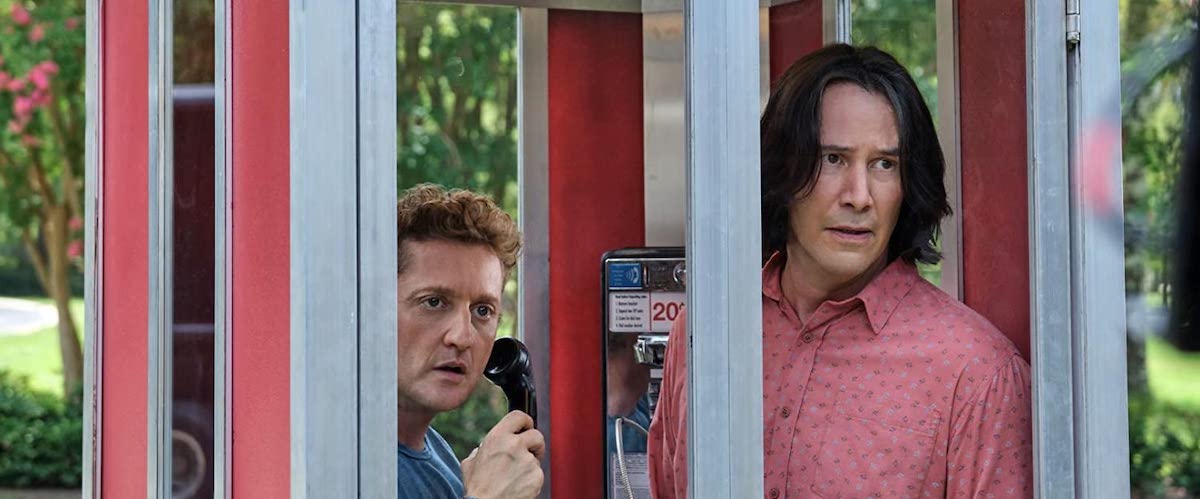
Bill (Alex Winter) and Ted (Keanu Reeves) are tasked with creating a song to unite the universe in 78 minutes, otherwise all of space and time will be destroyed.

There’s a point as the familiar faces of William S. Preston (Alex Winter) and Theodore Logan (Keanu Reeves) are tasked with their mission for their third big screen outing that you feel a surge of joy and excitement. A rush brought by the fact that you know you’re about to spend the next hour or so in good company, as if revisiting friends that you haven’t seen for a while. Although older and with their differences since the last time we met – after all 29 years have passed since their bogus journey – they’re still the same old Bill and Ted that have gained more than just a cult following over the last 31 years.

Brought to the future to the society that they so strongly influence the Great Leader (Holland Taylor) tells the pair that they have just 78 minutes to come up with a song that will unite the universe, and stop all space and time from closing in on itself. However, the Wyld Stallyns have split after a decline in sales and an apparent overall decline in quality; they’re not what they once were, and it’s taken a toll on Bill and Ted. They’ve believed for a long time that at some point they will create a song to bring everyone together but after almost three decades of trying nothing’s arrived. Still trying to find it they perform songs with convoluted names involving bagpipes, theremins and throat singing – making for a hilarious re-introduction – to little response from the wedding guests. Thus the time travelling phone booth returns and Bill and Ted decide to travel to their future in the hope of finding versions of themselves that have created this song.

Meanwhile the pair’s daughters Billie (Brigette Lundy-Paine) and Thea (Samara Weaving) also find themselves travelling through time – in a similar vein to their fathers – picking up various different musicians in the hope of forming the world’s greatest band. While initially it seems as if the young duo are trying to exactly mirror the late-80’s, early-90’s versions of Reeves’ and Winters’ famous duo. However, gradually as their narrative grows they come into their performances and slightly begin to grow their own character personalities.

While roughly travelling along the same lines with each new place in time in the case of both plot-lines it doesn’t really matter. The entertainment value and laughs carry the film along and secure your engagement within these characters and what they’re doing. This could easily come across as a ‘reunion tour’ of sorts, but the film and its characters mostly avoid this feeling. This isn’t a cheesy wistful look back on past glory days. Yes, there are elements of nostalgia within the company of these figures. Yes, they do have their differences and some new issues. Their backs might not exactly creak but there are elements of their now marriages with the princesses from the first two films that are under strain – going to couples therapy as a couple of couples pretty much tells you everything that you need to know. Yet despite this none of it really matters because you’re there for the two titular characters, Bill and Ted. They face the music in a number of ways throughout the film and it’s a pure joy to watch.

From big grins spread across your face as the pair enthusiastically air guitar and William Sadler’s much anticipated return as Death to the many laugh out loud moments of the film and even some genuine emotion during the big scale finale; facing the music might actually be what some people need after the last few months. This might not be a most excellent adventure, but it’s certainly a bodacious return to good, entertaining friends.

Filled with plenty of entertaining laugh out loud moments it’s easy to forget, or simply not notice, any potential issues with this nostalgic re-visit thanks to how easy it is to engage with the film. Who cares about those anyway? Bill and Ted are back, dudes!

Rating: 3 out of 5.

The Broken Hearts Gallery – Review

Cert – 12, Run-time – 1 hour 48 minutes, Director – Natalie Krinsky

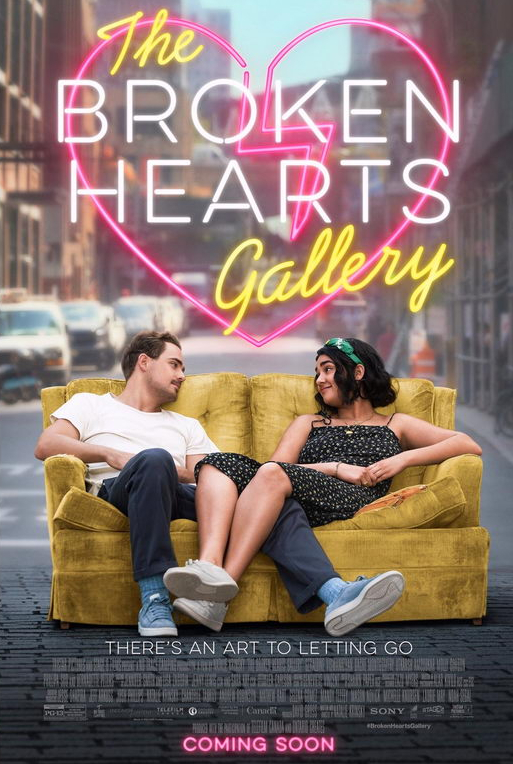
A young woman (Geraldine Viswanathan) starts up a gallery for people to dispose of items leftover from previous relationships

During the opening credits of Natalie Krinsky’s directorial feature debut the streets of New York are filled with the towering figures of a variety of objects in statue-like form. Some of them actually seem to be statues others are enlarged everyday items such as watches. There’s no real explanation for their presence, much like the hoarded objects that gallery assistant Lucy (Geraldine Viswanathan) allows to linger in her flat. Each one a memory of a past relationship. The latest one a tie from her boyfriend Max (Utkarsh Ambudkar) who she breaks up with at the start of the film when it turns out that their relationship isn’t as serious and exclusive as she thought.

It’s not long until, after a couple of chance encounters, Lucy meets Nick (Dacre Montgomery), a young man aspiring to build and open his own hotel – alongside his friend Marcos (Arturo Castro). When Nick encourages Lucy to leave her ex’s tie on a wall in the shabby walls of what will hopefully one day become his business, allowing her to get rid of the heartbreak, Lucy comes up with an idea for a gallery. A place where people can leave and donate the leftover items from past relationships and hopefully resolves some lingering upset. Throughout the film there are brief interview-style clips of minor characters talking to camera holding specific items and talking about the relationship memories that they bring, a number of which manage to raise a mild chuckle.

This certainly isn’t your standard rom-com, it does feel different in terms of style and overall feeling. There doesn’t seem to be a formulaic feel and you actually quite like the characters, leading to a couple of effective laughs every now and then that just bring you to like the characters even more. This isn’t a rom-com that feels lazy and seems to say ‘these people are young and attractive – you will like them’. You actually do find yourself enjoying the company of these figures as they try to just make their dreams come true through their hope and creativity. Bring into the mix an equally entertaining supporting cast, including Molly Gordon and Phillipa Soo as Amanda and Nadine, Lucy’s deeply supportive flatmates, alongside Amanda’s silent boyfriend Jeff (Nathan Dales), who can raise a laugh with a small smile in response to a cue line.

You feel the connection between each character, and the antagonism that some feel for others, such as Lucy initially feels for Max after their break-up. But when it comes to the friendships that are present they feel genuine, adding to the level of friendly engagement you have with the piece. The bond between Lucy and Nick never feels forced, they’re friends, they know that and the film knows that and by not adding pressure to anything or making things obvious the film feels even more relaxed. It’s an uncomplicated engaging feature that brings you in to a bright, inventive world full of people who also match that description. And as the gallery begins to take off and the plot as takes form the film still admirably remembers such characters and instead of being a standard cliché modern rom-com it gives something more, and a fair deal better. It gives something enjoyable, with likeable characters who actually have individual personalities, who do good things and you want to see them succeed; and also doesn’t forget to throw in the odd laugh either. It’s light, enjoyable and engaging fun, not just down to the performances but also Natalie Krinsky’s screenplay and direction.

Taking a step away from the standard modern rom-com The Broken Hearts Gallery invites you in for a relaxed, enjoyable time with characters who feel genuine and you want to spend the duration of the run-time with.

Rating: 3 out of 5.

The Roads Not Taken – Review

Cert – 15, Run-time – 1 hour 25 minutes, Director – Sally Potter

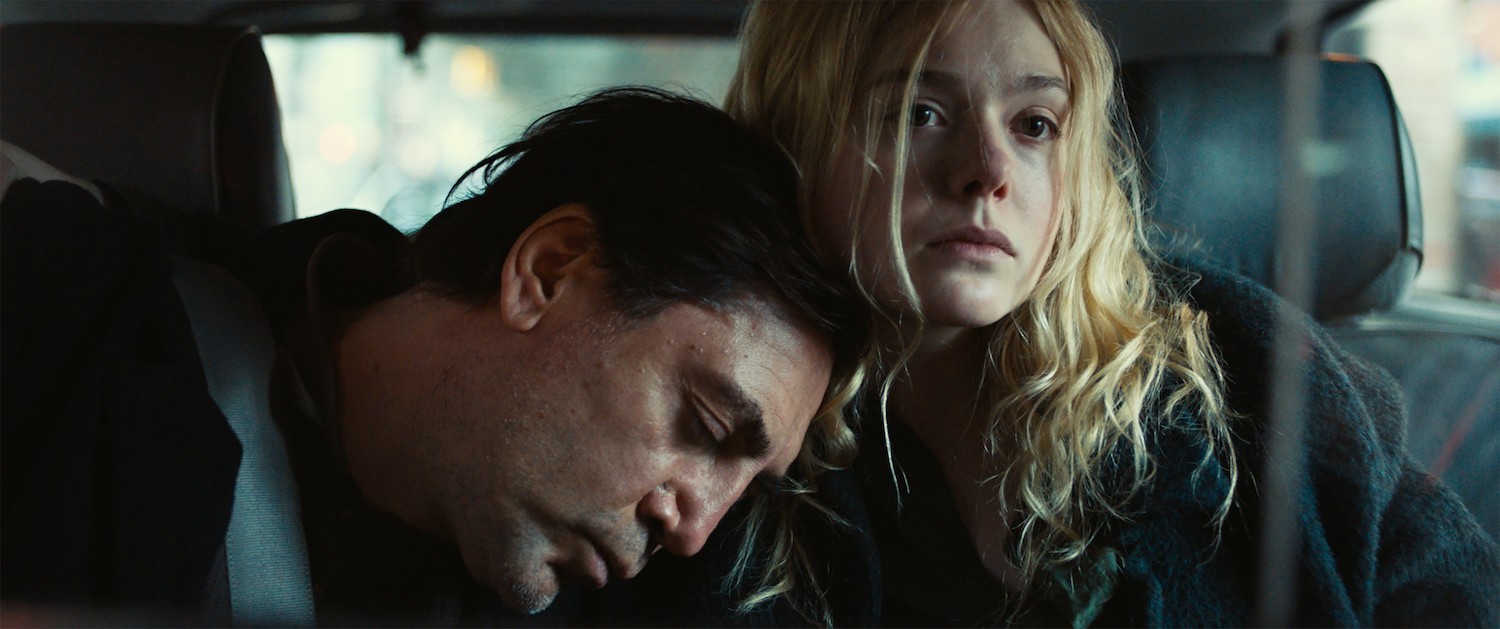
The day in the life of Leo (Javier Bardem), experiencing growing dementia, as his daughter (Elle Fanning) takes him to various appointments in New York while his mind drifts back to memories of his past.

“What kind of endings do you like?” asks Javier Bardem’s Leo as he converses with someone about a novel that he’s almost completed, but is struggling to end. The Roads Not Taken is a film that while following a simply laid out – although unfolding as somewhat chaotic – day in the life of it’s main character is strongly concerned about its ending and where the central figure ends up. Throughout the film we see him staggering around, lost and confused on the busy streets of New York, and various buildings within it. His dementia has reduced him to only be able to stutter a limited amount of words, and often when in private with his daughter Molly (Elle Fanning), his head seemingly forced downwards trying to get to grips with the basics of his overwhelming surroundings. His memory is limited, although certain things, such as seeing a dog, do bring back memories – although often emotional, perhaps negative, ones. Writer-director Sally Potter’s screenplay builds to a point when someone may actually recognise Leo and treat him with some decency – instead of simply asking his daughter if everything’s alright with him, if he’s all there or even just attacking him telling him to go back to his own country after a heated set of events in a shop.

As all of this happens and the day gets thrown off course Leo finds his mind thrown back to key memories of his past, which are often sparked by some of the events or circumstances of the day. One such memory is to his life back in Mexico, to an often tense relationship with his ex-wife Delores (Salma Hayek), the tensions of which sometimes reflect the chaos of his life in the current day. The other a holiday in Greece where he continues to stumble into, and follow, a young tourist who reminds him of his daughter, who at this point in time he rarely sees due to his travels to aide his writing.

Over the course of its short 85 minute run-time the film jumps back and forth between the three time periods and events, initially seeming like a selection of ideas with little connection apart from all being told from the same perspective – something which seems to remain the case until about just over halfway through the film. While some flashbacks start with a link to the events in a different time beforehand there are others that do still occasionally feel quite jumpy; not quite with a different tone or feeling, but seemingly something else to connect with. Bardem’s character certainly isn’t a completely different personality in all three circumstances, although there are key differences, a life affected by tragedy, loss and regret shows its scars but the short amount of time that we sometimes spend in the flashbacks does mean that a bond is somewhat difficult to form.

Despite all the flashbacks and the different ideas that the film brings up there are patches that feel as if they could be explored more. Little bursts of sparks and interest as a new point is brought in, only to be quickly gotten rid of or are only lightly touched upon. The themes are kept relatively the same, not that there’s no change or exploration; but that which there is does come across as if it could go a bit deeper or show something more to increase the connection that the viewer has with the characters. Yes, there is some interest in the fact that the film only takes place over the course of one day, assisted by the view of past memories, and there are some emotional beats there; but because of the lack of connection with the characters and the one or two familiar beats within the plot. There are some decent elements within the film however not quite enough, especially in terms of an emotional connection or response. Most elements are perfectly fine and drift along rather well, however when everything comes together the punch isn’t quite there and it forms a slight distance between film and viewer. Despite some good ideas and occasional sparks the amount of jumping that the film does is overall the thing that prevents it from establishing a proper connection.

There are a number of ideas witnessed throughout The Roads Not Taken, and the film as a whole is fine. However, the lack of connection and jumpy nature do stop the viewer from feeling the full potential of the emotional beats within it.

Rating: 2 out of 5.

Les Misérables – Review

Cert – 15, Run-time – 1 hour 44 minutes, Director – Ladj Ly

New to Montfermeil, Paris and the anti-crime brigade a police officer (Damien Bonnard) soon discovers an angered world of gang rivalries, tough cops and racial tensions on the French streets.

The 2018 World Cup. There’s joy in the air of the streets of France, people coming together; bringing peace and harmony as the country celebrates the victory of the French team. However, darkness isn’t far away. Set after the World Cup and inspired by 2008 Parisian riots documentarian and short maker Ladj Ly throws new-to-the-area police officer Stéphane Ruiz (Damien Bonnard) into a world of high gang related tensions and power-abusing cops. For much of his first day encountering squad leader Chris (Alexis Manenti) and Brigadier Gwada (Djebril Zonga) Ruiz remains quiet. Sat in the back seat with little to comment on, yet his face reads all as he notices the behaviour of his colleagues – especially leader Chris.

Chris regularly abuses his powers, not properly following the rules in all manner of situations – on one occasion seemingly doing so just to make the girl he’s searching at a bus stop feel uncomfortable. It’s testament to Manenti’s startling performance that the viewer also manages to feel this discomfort, and tension whenever he appears on screen. With the streets of Montfermeil filled with rival gangs, seemingly always at each others throats its almost a necessity to be careful and always aware of your actions, however Chris doesn’t seem to care, while Gwada goes along with things as if he’s used to this behaviour, although somewhat reluctantly, and Ruiz watches in astonishment as all this goes against what he knows and has been taught. Tensions truly reach a peak, however, after the theft of a lion cub from the circus that has recently arrived in town. Fingers are instantly pointed while the police can do little until the real culprit – a young child (Issa Perica) – is worked out and found.

While the constant feuds between gangs are already enough the rising racial tensions in the streets – racist abuse casually being spat out in enraged assaults in the middle of the street – add to the violence and stresses that everyone faces. We come across various faces over the course of the narrative, yet spend enough time with each figure to understand who they are and what they stand for; all adding to the tension that the film gradually builds up until it’s big releases – in some respects there are two major stages and releases of the course of the piece. All the chaos as the riots and disputes increase is captured by Ly in a documentary style. The edits and cuts between various angles and perspectives are, on some occasions, only just allowed to get into focus before a new change. You know exactly what’s going on and are thrown into the centre of it, much like Ruiz – and to an extent his colleagues – is.

As all the characters come together and the narrative progresses over the course of the relatively fast-paced and flowing run-time nothing is wasted. Everyone and everything is relevant and once you’re in the flow you’re there for the entire run. Gripped by the precise construction of the story and the characters, the events that unfold and the various twists and turns in the psychology of each figure, especially the actions of police at the centre of the film. There’s no denying that this is a timely film. Calling back to much of the year’s news, and perhaps it’s the realism of each figure – helped by a fine screenplay and fantastic performances that help to capture the stresses, worries, anger and fear of a lot of the characters, even the number of child performers who have a strong impact on the narrative excel, even if they get little to no lines their expressions and body language say everything. All simply placing you further into the authenticity of the world that the cast and crew create. A world that’s unfortunately not too different from our own.

Perhaps it’s because of this, and the fear and panic that the viewer experiences during a number of sequences, that there’s such a strong connection with the film. It’s the way that everything feels so genuine. As already mentioned the film is inspired by the Parisian riots of 2008, Ly captured footage of this as the chaos unfolded and there are feelings of this, the anger and the tensions are emitted throughout. Even during some of the quieter moments of conversation, the context of the film and everything built up already provides a feeling that anything could go wrong. Anyone could lash out or say something that could be easily misconstrued at any time. Or simple someone might just say something intentionally wrong and violent inducing a public brawl. The film is lined with such feelings and for 104 minutes carries you through this blood-pumping, tension-filled piece of reflection. Yet an admirable piece of reflection that never feels drab or bleak or as if it’s lecturing the viewer or talking down to them. A finely crafted non-documentary mirror of character, intrigue, action and tension.

Fantastically directed, with equally brilliant performances Les Misérables perfectly uses characters to progress the narrative and boost the levels of tension that engage the viewer throughout almost the entire run-time.

Rating: 4 out of 5.

Mulan – Review

Cert – 12, Run-time – 1 hour 55 minutes, Director – Niki Caro

As the war against the increasing threat of Northern invaders demands more troops a young woman (Liu Yifei) disguises herself as a man, running away to join China’s Imperial Army in place of her elderly father (Tzi Ma)

Like many films of recent months Mulan has faced a long journey to the screen. After multiple push-backs amidst the Covid-19 pandemic the film finally finds a home away from the silver screen, on Disney+. Which is a shame, because Mulan is a film made for the big screen. Its immense detail, mixed with Niki Caro’s direction, creates the look and feel of something akin to a true epic. And much of the action throughout the film carries the same feeling. Carefully constructed and laid out often you find yourself with your eyes glued in awe to the screen as Liu Yifei’s Hua Mulan boldly faces battle, skilled with wits as sharp as her sword. The entertainment factor is high from start to finish within this film, bringing the viewer in for an enjoyable ride from start to finish throughout the fast flowing running time.

But, this is much more than a piece of entertainment. This remake of Mulan is a well-told, well-craft story. Keeping some of the themes of the original bringing in tweaks and additions that help to build a new style and tone, keeping thing fresh and engaging. The standard story is still there Mulan finds herself disguising as a man, running away and joining the Chinese Imperial Army so that her elderly father (Tzi Ma) doesn’t have to go and fight, being the only male in the family. Therefore, in disguise as Hua Jun, Mulan finds herself surrounded by a multitude of boisterous, somewhat rowdy men – one from each family. Each one having to be quickly trained and disciplined to fight the ever growing threat of Northern invaders, led by the vengeful Bori Khan (Jason Scott Lee), with the assistance of Xian Lang (Gong Li), a powerful witch with the ability to overcome entire forces with her shape-shifting abilities.

These aren’t typical Disney villains, and are certainly different to those of the original Mulan film. They are scarred and pose a harsh force to the heroes of the film. A promise that’s ingrained within the violence of the battle sequences and fights. Sparingly used and precisely laid out the 12 rating is lived up to, and again offers something different. There’s a fine streak of mild intensity and drama to the combat sequences. Using the connection that you’ve formed with Yifei’s protagonist. Like her, and those that she’s around, you’re thrown into this new situation, feeling the high stakes always at play; especially for the central figure as she is, of course, having to hide herself in such a situation where you’re almost always in sight of other people. Yet, it’s difficult not to root for such a strong and well-formed figure. Wanting to see her succeed, knowing she has each situation in hand. All leading back to that entertainment factor that spawns from the levels of investment that you have with the film and the characters within it.

With everything that the film has to offer in terms of action, plot, character and everything else the piece never feels slow or as if it goes on for too long. You simply sit there at the spectacle on offer, immersed by the detail in each element and the pure entertainment factor that it emits. This might not be the full-on straight, direct no laughs action-drama that some might have hoped for. There are one or two mild laughs to be found in some scenes, in a similar vein to the 1998 animation on which this remake is based, alongside Guo Maoqian’s original work The Ballad Of Mulan, and a fair share of them are successful in raising a mild chuckle. However, gone are asides to Mushu and Cri-kee, as Caro has stated mostly for the sake of realism, but it allows for the attention to be back on the flowing dramatics of Mulan’s journey. She is the main focus of the film after all. The titular intelligent warrior with whom we have the connection with, and experience the majority of the film through the eyes of. Defying the expectations of those around her and traditional roles this isn’t your traditional Disney film, or indeed live-action remake. This is something different. Something bolder with style and flair. It might be made for the big screen but it’s still captivating on the small screen.

Carefully crafted in each department, brought to life by Niki Caro’s sweeping direction, Mulan isn’t just a strong piece of entertainment; it’s a well told story with engaging characters and fine action. All solidifying the stakes, and the viewers engagement, with an effective, and equally detailed, style that fully brings you into the world and tone of the film.

Rating: 4 out of 5.

I’m Thinking Of Ending Things – Review

Cert – 15, Run-time – 2 hours 14 minutes, Director – Charlie Kaufman

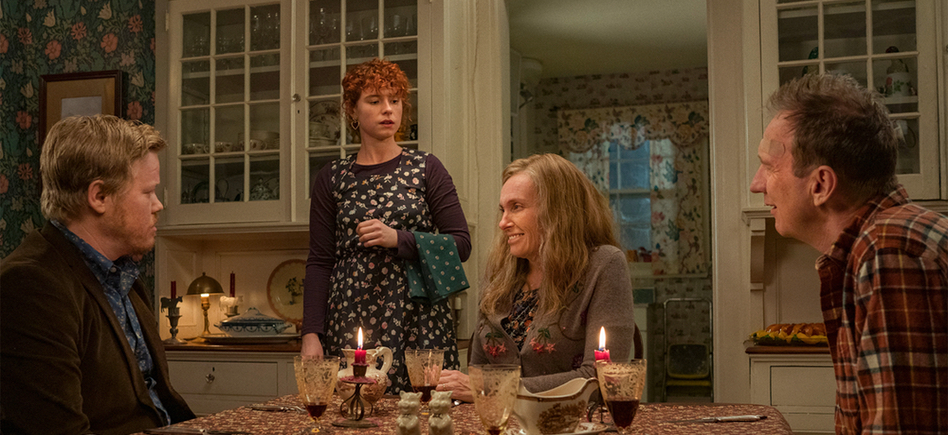
When travelling through a blizzard to meet her boyfriend’s (Jesse Plemons) parents (David Thewlis, Toni Collette) a young woman (Jessie Buckley) begins to experience warped events that make her certain that she should end her relationship

One of the key lines of dialogue in Christopher Nolan’s Tenet is “don’t try to understand it, feel it”. The same advise could be given towards Charlie Kaufman’s latest piece of human observation, taking the form of a quasi-relationship-horror. However, it’s sometimes difficult to properly be able to engage with and ‘feel’ lengthy conversations as part of a long car journey in a blizzard. The conditions are harsh, cold and icy. Jessie Buckley’s character finds herself trapped in a cramped space – heightened by the box-like aspect ratio in which the film is shot in – with her boyfriend Jake (Jesse Plemons). She’s already sure that her relationship isn’t going where, finding herself repeating the words “I’m thinking of ending things” over and over again in her head. The reason for the car journey is so that she can meet Jake’s parents (played by David Thewlis and Toni Collette) for the first, and possibly last, time; she states early on that it’s unlikely that Jake will ever meet her parents, they don’t even know that he exists. Yet, here she finds herself on a long car journey in snowy conditions from the city to an isolated farmhouse.

For the majority of the car journeys – one of which makes up the first 25 minutes of the film – the audience is seemingly locked outside of the car. The camera sits outside of the windows; the wipers monotonously going back and forth brushing the never ending white downfall that seems to come from nowhere. As the film’s somewhat mysterious protagonist, burdened by a multitude of equally mysterious spam phone calls, is locked inside, the viewer is locked outside simply as an observer. The conversation is limited and struggling. Jake certainly isn’t the most exciting person in the world – and this is something that Buckley’s voiceover, which fills a lot of the film, makes note of. It’s this voiceover that throughout much of these scenes the viewer is able to connect with, it’s the through world into most of the film’s events.

Much of the film is made up of extended scenes and moments. Aside from the conversations in the car there are almost real-time scenes around a dinner table or at a roadside ice cream shop. Through this the realism and humanity of the film is brought through, especially the way that it delves into relationships. However, unlike the likes of Anomalisa and Eternal Sunshine Of The Spotless Mind, both of which were penned by Kaufman, there’s a slight horror tone to the film. As things become warped and twisted within the home of Jake’s parents the look into the relationship seems to be put aside for the sake of looking at eerie events within the household, and the behaviour of Thewlis and Collette’s exceptionally performance characters. Not just their off the cuff comments such as “Billy Crystal’s a nancy” or their loud somewhat raspy gasp filled laughs that linger for a while after the joke respectively but their general physicality and appearance that seems to change, evolve and devolve around every corner; as if each new room is in a different time period.

It’s fair to say that there’s a lot being said within Kaufman’s screenplay, and his direction style – assisted by the dimly lit cinematography of Cold War cinematographer Łukasz Żal. At some points it feels as if he’s commentating on the state of Hollywood, or even the film industry as a whole, and the way that it treats relationships. The ideals that they present of a female mindlessly following and supporting the male, passively observing their accomplishments in multiple genres, despite what may happen. The extent to which this commentary comes into play is mostly in the very latter stages of the piece, as the film’s focus screams to herself, after the torment that has come beforehand, “it’s hard to say no… it’s easier just to say yes”. Yet, such readings and themes come, as already mentioned, later in the film. Before then there’s a gradually drawn out tangle of ideas and situations, some working better than others. When in the car things are slow, it’s hard to engage with them – perhaps that’s the point? But when in the farm grounds, at the ice cream shop and almost anywhere else there’s a bit more detail and energy to the piece, even if everything happening is a bit of a confusing mind-twist.

Once everything is over and done with, or as could be perceived to be the case anyway, it’s sure to take a while for everything to sink in. It might not exactly be something that can be properly comprehended and understood, but there’s enough detail and style in there, attaching to unconventional styles of horror and beyond;. All of this done in a way that only Charlie Kaufman can, almost always looking at the idea of human reactions; emotion, or perhaps lack of emotion. Each scene assisted by top performances from each member of the small but stunning cast. Led by a sublimely subdued performance from Jessie Buckley, capturing the tone of each scene and moment almost perfectly; even if the viewer’s connection isn’t quite as present in that moment she still manages to excel and capture the true essence of the moment, getting across what her character is thinking, even if her voice sounds like she’s hiding this by demonstrating other feelings to those around her. You might not know what’s happening during each scene or be able to connect with the film at all times, although during some of the genuinely scary isolated farmhouse scenes especially you’re probably not meant to, but you’ve always got Buckley’s performance to rely on to get across the feelings of each scene while still allowing you to make up your own mind as to the reason behind what’s happening, if you can find one within the sometimes empty drifting conversations and monologues.

While Charlie Kaufman’s traditional themes are certainly present within his latest observation of relationships and the human mental condition it isn’t his most accessible or engaging feature. The cast are on top form but the connection isn’t always there during some of the more isolated sequences, even if the unique scare factor and viewpoint are effective in others.

Rating: 3 out of 5.