Midwinter Break – Review

Cert – 12, Run-time – 1 hour 30 minutes, Director – Polly Findlay

An aging couple (Lesley Manville, Ciarán Hinds) take a trip to Amsterdam which causes them to confront personal feelings and past tragedies in their relationship.

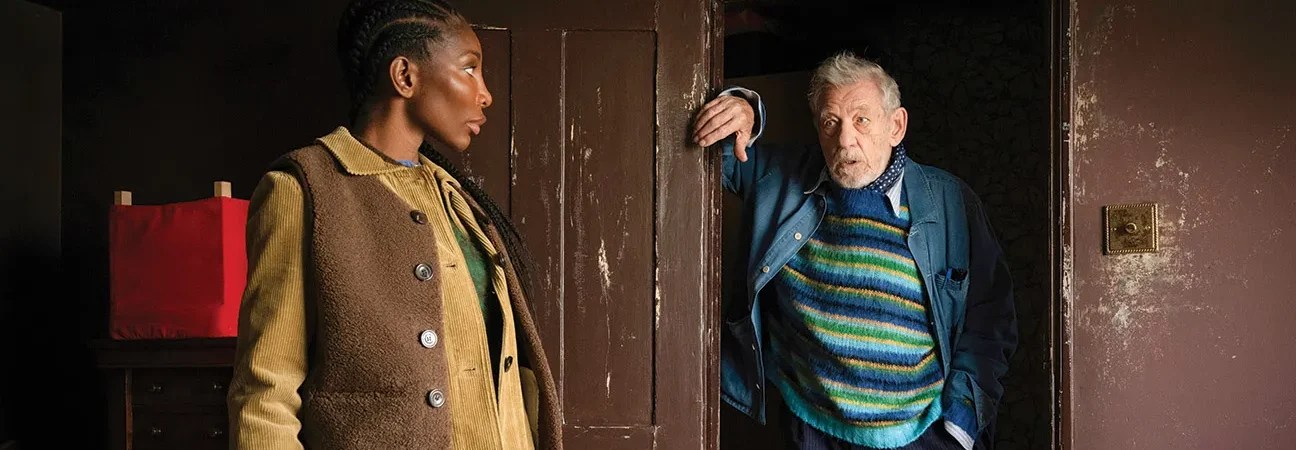
A perfect example of a drama lifted by its leading performances, Lesley Manville and Ciarán Hinds are the heart of Midwinter Break, even if it, like those of their characters, isn’t entirely beating. They play long-married couple Stella and Gerry. Over an opening which sees a Christmas where there’s perhaps more fondness than love, but still some spark present between them, Stella gifts a holiday for the couple to Amsterdam. However, there may be more to the trip for her than just a present, stemming back to a tragedy faced decades ago during The Troubles – which forced the couple to move from Belfast to Scotland.

While we see details of the tragedy acting as the film’s opening there’s still an air of mystery around Stella’s intents in Amsterdam. There appears to be more behind her want to see the various Catholic churches in the city than just her religious beliefs, while Gerry tags along with a slightly disinterested view with his own lack of belief. Yet, the mystery that plays out doesn’t have a great deal of actual mystery. Everything that we see in Midwinter Break is on the surface of both the characters and narrative. That isn’t necessarily a bad thing, and Manville and Hinds both give, as you’d expect, solid performances which hold the film up.


Without them then there may be a faltering nature to things, and a slight blandness even at just 90-minutes. However, the pair, and indeed the feature debut direction of Polly Findlay lean into the theatrical, without overdoing things and still bearing in mind this is a film. It helps that Findlay comes from a theatrical background, having directed productions for the National Theatre and Royal Shakespeare Company, and appears to have worked closely with her lead actors in this film in forming their characters and the relationship rooted in growing distance and lingering tragedy.

Emotions come to the fore, particularly in the monologues of the final stages, and there are some nice touches in the silences and failed interactions that crop up two. Gerry tries to start conversations, or make light after a particularly heavy conversation, especially for him on the receiving end, as his wife continues on her way and largely ignores him. There may not quite be punches throughout, however much the film may want them – those final monologues seem more like a back-and-forth of ideas trying to individually lead towards wrapping up than something properly fluid. Yet, there’s still an overall likability to things. A slight gentleness that sees the events pan out over a largely contained hour-and-a-half with help from two strong performances who hold the film up and see it through with an authenticity in the characters and their relationship, even if not entirely a connection with their dramas.

Manville and Hinds deliver expectedly strong performances which lift up Midwinter Break, allowing for interest in its on-the-surface drama if not always emotion.

Rating: 3 out of 5.

Arco – Review

Cert – PG, Run-time – 1 hour 29 minutes, Director – Ugo Bienvenu

2075, Iris (Margot Ringard Oldra) attempts to help ten-year-old Arco (Oscar Tresanini) return to his home in the far future.

Arco is a film directly inspired from the world of Ghibli. From the brightly coloured hand-drawn animation to narrative style and childhood friendship, the French filmmakers behind this Oscar-nominated feature appear to have a good deal of influence from Miyazaki’s work in particular as they race through both the far-future of 2932 and nearer environment of 2075.

Young Iris (Margot Ringard Oldra in the original French version, with Romy Fay voicing the English dub) lives in the latter time, chasing a rainbow one day she discovers not a pot of gold at the end of it but a ten-year-old boy who’s crash-landed from the future. After taking him home, and evading three brothers who appear to be seeking him, she becomes committed to ensuring that Arco (Oscar Tresanini/ Juliano Krue Valdi) gets back to his time safely.


The world’s they come from are very different responses to the changing, or changed environments. Neither quite treated as dystopias, although there is an environmental message at the core of the film, 2075 has hints of The Jetsons, while 2932 sees humanity living above the clouds, the environment on land seemingly inhospitable at this point. Both are treated with bright (and not just because of Arco’s rainbow flying suit), immersive animation which is a delight to see on the big screen as the adventure unfolds around it. One particular sequence seeing characters race through different environments is fun run through much of the imagination that has been present through much of the film up until this point, but with more pace. Helped in the English dub by the voice performances of the three bickering brothers (Andy Samberg, Flea and an entertainingly restrained Will Ferrell, who appears to be the most engaged with the film), acting as a likably traditional set of antagonist forces.

Another effective detail in the English dub is having Mark Ruffalo and Natalie Portman, who voice Iris’ busy and present-by-hologram parents also voicing nanny robot Mikki (voiced in the original French version by director and co-writer Ugo Bienvenu). Adding to that slight sense of distance that Iris has with her parents, but pushing her connection with the robot carer, in a society where many jobs are now being performed by such robots (which, again, look like they’ve come from The Jetsons).

Much of Arco’s delight comes from its style and the imagination on display. Mixed with how swiftly it moves along, clocking in at just 89-minutes without feeling too brief, there’s an enjoyable time to be had in the sci-fi aspects which help to get across the environmental messaging without feeling forceful. Both in part to the heart with which things are made and the consistent movement of the narrative.

An entertaining and colourful Ghibli-inspired family sci-fi with plenty of imagination on display throughout the pacey narrative which avoids forceful messaging or oversentimentality.

Rating: 4 out of 5.

Dead Man’s Wire – Review

Cert – 15, Run-time – 1 hour 46 minutes, Director – Gus Van Sant

After being denied an extension on a loan, Tony Kiritsis (Bill Skarsgård) walks into the Meridian Mortgage office with a shotgun and takes the owner’s (Al Pacino) son (Dacre Montgomery) hostage, using his favourite radio host (Colman Domingo) as an intermediary with the police.

Dog Day Afternoon is all over Gus Van Sant’s dialled-back return to feature directing. The casting of Al Pacino on the other side of the hostage situation is surely intentional, and he seems to acknowledge this somewhat in his performance as the head of Meridian Mortgage, holidaying in Florida whilst his son, Richard Hall (Dacre Montgomery), is taken hostage by an angered Bill Skarsgård.

After an extension on a loan payment is denied, Bill Skarsgård’s Tony Kiritsis walks into the Meridian offices for a scheduled meeting and, believing he knows the firm’s plan for where his loan would have gone, puts a shotgun to Richard’s head, marching him to his apartment with the police and reporters not far behind. Kiritsis is a jittery figure who, despite how calm he tries to be, you feel could accidentally pull the trigger at any time, if the dead man’s wire around Hall’s neck doesn’t set it off first. Skarsgård gives on of his best performances to date as the uneven rage of his character is cut up by his near excitement at just what he’s doing, as he and Hall sit in his apartment, occasionally talking to his favourite radio host, Colman Domingo’s suave Fred Temple, who acts as a mediator between Kiritisis and the police.


The look and style of the piece is packed with attention to detail, capturing the sweaty, 70s thriller vibe that’s specifically aimed for. As mentioned, Dog Day Afternoon is present throughout, it would be hard to avoid it even if it wasn’t a key inspiration. But, the gritty look, if not entirely feel, and containment of the Hollywood thrillers of that decade are found thick here, and add to the entertainment factor. Van Sant manages to create a confined piece of work when it comes to the cramped spaces the two leads find themselves in that has a wide scope thanks to the external forces at work trying to stop Kiritsis from pulling the trigger and just how well everything is pulled off with the constantly moving plan at hand, alongside themes at play.

Each figure who plays a part in Kiritsis’ hostage situation contributes to the constantly shifting piece that’s been formed in Austin Kolodney’s screenplay. Each character and group feels interconnected in some way, capturing the tension and uncertainty at hand. All revolving around Skarsgård’s central performance which brings in the uneasy feelings early on and maintains the tension at hand in a film that would fit right in amongst the 70s thrillers that have inspired it.

With 70s thriller influences on clear display, although not copied, Dead Man’s Wire is an entertaining, contained story with scope to allow for interconnected characters who keep things constantly moving around Bill Skarsgård’s strong central performance.

Rating: 4 out of 5.

Peaky Blinders: The Immortal Man – Review

Cert – 15, Run-time – 1 hour 52 minutes, Director – Tom Harper

Tommy Shelby (Cillian Murphy) leaves his seclusion to return to Birmingham to steer his son (Barry Keoghan), the new leader of the Peaky Blinders, away from a Nazi plot that could collapse Britain.

A criticism often thrown towards TV adaptations is that they feel like an extended episode rather than a full feature film. On the other hand, it’s sometimes mentioned that they can feel like a condensed series. Peaky Blinders’ feature treatment somehow manages to feel like both as Tommy Shelby (Cillian Murphy) leaves the seclusion he’s been living in for years, writing a book on his life, to don the newsboy cap and return to a bombed Birmingham (the year is 1940) in order to confront the new leader of the Peaky Blinders, his son Duke (Barry Keoghan – feeling more like he’s trying to imitate Murphy rather than give his own performance) about his part in attacks and bombings in the city. Not to mention, links to Nazi plots; represented by Tim Roth’s John Beckett who plans to assist in spreading fake banknotes throughout Britain in order to tank the economy.

It should already have been mentioned by this point that I haven’t seen any of Peaky Blinders, and was going into this blind. There’s plenty, almost a bit too much, of introduction for those unaware of the hit series, unfolding in the slower pace of the first half when Tommy is still very much isolated and trying to stay out of things. He’s had enough of that life and he’s staying out of it (until he isn’t). It’s this half that feels more like an extended episode. At the sudden turn around, an undeniably cool moment that sees the old clothing and gear come out of the shadows, the feeling of a condensed series comes through.


Supporting characters begin to crop up more, locations broaden and plans unfold in more detail. The third act certainly has some entertaining moments as action becomes more of a focus. Confrontations gain more of an edge and flair, and the tones of the film feel more direct and defined with how characters have come together in a particular moment rather than having stands playing out somewhat separately (although intentional for the narrative). A canal boat chase that evolves into a shootout is particularly enjoyable as it plays out alongside Tommy’s own journey before the big final clash – even if at times I was thinking of similarly-based events in Wallace And Gromit feature Vengeance Most Fowl.

There are a lot of characters cropping up throughout, some much more prominent than others, and some who feel as if they could be used a bit more than others, too. It doesn’t quite feel like the film is trying to get as many familiar faces in as possible alongside the possible newer figures, or as if it’s taking anything of a victory lap – in fact it avoids that rather well and instead makes for a simple feature sequel to the series that should have a good deal present to please fans. The pacing can sometimes feel as if it shifts somewhat, although mostly from the switch between the first and second halves, and generally things pass by fairly quickly and don’t feel overlong,

As a film The Immortal Man is perfectly fine. It may work better for fans and those aware of the show than those who have never seen it before, but still there seems to be something to like either way, especially when elements play out together. A solid feature sequel that has a good deal of entertaining moments, largely held in the return of Tommy Shelby.

An effective feature follow-up, The Immortal Man may work better for fans of the show than newcomers, but there’s still enough to entertain and like about the unfolding action, even if it does switch between feeling like an extended episode and condensed series.

Rating: 3 out of 5.

The Tasters – Review

Cert – 15, Run-time – 2 hours 3 minutes, Director – Silvio Soldini

Rosa (Elisa Schlott) is one of seven women forced to become a food taster for Hitler to ensure that it isn’t poisoned.

There’s very little tasting in The Tasters. Not just from the obvious hesitancy to try potentially poisoned food, but as the film focuses on the lives and other fears of the seven women forced to ensure that Hitler’s food is safe to eat. We see the bond that forms between them in-between meals, having been taken from their homes and forced to take on their new roles or face the consequences of not doing so.

We primarily see things through the eyes of Rosa Sauer (Elisa Schlott), a young woman taken from her in-laws home soon after arriving whilst her husband is out fighting. She leads many of the conversations and interactions that we see, and this is very much her story, playing into those of the other tasters. There are some likable moments between the group, faintly tinged with familiar emotional beats, against the backdrop of the Nazi threat they face.


A threat which itself can feel, in terms of the film’s tone, somewhat tame as a narrative with a number of familiar elements plays out in rather middle-of-the-road form. What’s present is fine, and generally sees through the 2-hour run-time, but never quite has the tension, threat or emotional effect perhaps wanted, and definitely needed. The tasting scenes themselves have the helpful layer of being what sparks everything and the film revolves around, to some extent. The uncertain fear of whether the food is or isn’t safe, and having no choice as to whether they eat it or not, plays out well, especially with the factor that the poison will likely take time to have an effect, and there’s no real knowledge as to if there’s anything that can be done if it does. Even in subsequent scenes set in the tasting room there’s still an effect to be found that stops a fully cycling feel to things.

The issues largely come when it comes to the more personal side of things to each character. It never quite feels as if The Tasters is able to fully connect to each of the handful of characters it chooses due to how much it still wants to predominantly focus on Rosa, who even still there isn’t a full connection with. Things move along generally fine, but don’t quite have the dramatic impact wanted amongst all it wants to do in moving things along while still trying to have the characters lead. It’s not quite a conflicted film, but one that feels at risk of being pulled in multiple directions whilst still being a familiarly direct, rather middling, drama.

Not quite forming the connection needed with the characters to have a dramatic effect, The Tasters is fine but has a tendency to feel familiar and almost cyclical.

Rating: 3 out of 5.

Being Ola – Review

Release Date – 3rd April 2026, Cert – PG, Run-time – 1 hour 12 minutes, Director – Ragnhild Nøst Bergem

30-year-old Ola lives in an inclusive Norwegian village, exploring the community around him and looking at what life is, and could be, like for him in the wider world.

30-year-old Ola Henningsen doesn’t let the world stop him. He doesn’t need to when he’s allowed to be as determined as he is, both by himself and those around him. He lives in Vidaråsen, a small Norwegian village which houses an inclusive community, particularly for those with learning disabilities such as Ola. It’s a quiet place, seemingly tucked away, where people are people. Everyone’s supported and encouraged by each other and life appears to be calm and welcoming.

Of course, there’s a world outside and one of independence which Ola talks about exploring, especially when his friend moves away. Independence, community and respectful acceptance are key themes throughout director Ragnhild Nøst Bergem’s documentary which follows the titular figure through his life as he discusses his passions through taking part in speaking events and activities put on in the community he lives in.

However, after a while the tone and attitude of such scenes can start to feel similar. At just 72-minutes Being Ola is a short film, yet it feels as if its points could be condensed into an actual short film with less bordering on repetition. Ola still makes for a likable focus, especially when talking about his views for independence, moments showing him going out into the world have a particular effect as things finally appear to have developed in some way beyond the affable focus that takes up much of the run-time.

Again, one that’s good-natured and likable, especially when it comes to the figures we see as part of the peaceful and picturesque community at the heart of the film, but feels as if it has more that it could explore and say, yet steers focus into the basics and activities in the village where Ola lives and takes a while to stretch beyond. We see Ola step out, and want to see him succeed and continue the confident stride after his mentions of exploring independence. When this happens, there’s a regrown interest and engagement as ideas of acceptance are widened out to look at the wider world, and possibly make bigger points away from the base of the village where things feel most firmly comfortable.

Feeling better suited to a short film, there’s a likable nature to Being Ola, especially when it manages to widen its focus to look at independence and wider acceptance beyond that of the titular figure’s peaceful community.

Rating: 3 out of 5.

Ready Or Not 2: Here I Come – Review

Cert – 15, Run-time – 1 hour 48 minutes, Directors – Matt Bettinelli-Olpin, Tyler Gillett

Having survived the Le Domas family, Grace (Samara Weaving), alongside her sister Faith (Kathryn Newton), now finds herself in another deadly hide and seek game against a high council of wealthy families, who all want to take the influential throne that her death (or survival) controls.

There’s a gothic tone to the look of the mansion in which the bloody events of Ready Or Not played out in, and to the Le Domas family who Samara Weaving’s Grace had to fend off. That tone isn’t in place in this follow-up which instead leans more into the satanic rituals and beliefs the family held with an increasing sense of unsettling darkness.

Grace, still recovering from the events of the first film and being visited by estranged sister Faith (Kathryn Newton), finds herself thrown into a new game of hide and seek against a High Council of families (led by David Cronenberg), each wanting control of the council, and in turn the world. The only thing standing in their way is Grace. Whoever kills her gets control, unless she survives then it’s all hers. All of this explained, eventually, with all the needed loopholes, too, by Elijah Wood as the Council’s overseer and enforcer of the bylaws, simply called The Lawyer.

Once the game’s on the main attraction is well and truly underway and the film makes that known. The pace picks up and there’s a well-tracked set of kills and attacks which flow from one to the other without feeling like individual, segmented encounters. From initial near misses to upfront throws, punches and, of course, eventual coatings of crimson. It’s clear who the more disposable figures are, and who the film is building up to introducing into the game, but with the knowledge of comic relief and actual threats we simply look forward to eventual interactions, which still have airs of thrills and tension.


Where the real threat lies is in Sarah Michelle Gellar and Shawn Hatosy’s Danforth twins Ursula and Titus. The pair want the council crown the most, to continue their family legacy at the top, and have tampered with the game, unfolding at their family’s expansive country golf resort, to put it in their favour. Halfway through, however, in an up-close encounter between them and the lead sisters a darker side starts to be shown to Titus. Quickly he becomes a dark, angered and threatening figure. Much different to those also hunting Faith and Grace. Violence is his answer, instead of part of blood-written tradition.

It’s the second half of this film where the darkness and threat comes through thick. Titus is a fearful character who wouldn’t be out of place in a drama about toxic masculinity and abuse, he presents the most upfront horror in the form of genuine scares in a film where much of the horror tones are found in the splatter. As his rage and the fury of his attempts to kill Grace and her sister grow the satanic rituals of the High Council also take more of a central role, and themselves are coated in ominous and threatening darkness.

It’s an enjoyably sinister streak in the film that takes some time to emerge, as does this second round of hide and seek, but when things kick in they’ve got a real spark. A sense of fun is when things truly emerge, especially during a pepper-spray-infused fight set to Total Eclipse Of The Heart. From consequences involving people blowing up in a burst of blood to characters struggling to use their weapons there’s plenty to enjoy in terms of the fun that the film has with its ideas, especially when letting loose and not focusing so much on the exposition and workings of the game and various loopholes and bylaws. Even if they do allow for the dark chaos of the closing stages.

Much darker than expected, there’s a real sense of violent threat to Ready Or Not 2 that grows more as the game and its entertainingly splattery offerings take swing.

Rating: 4 out of 5.

Project Hail Mary – Review

Cert – 12, Run-time – 2 hours 36 minutes, Directors – Phil Lord, Chris Miller

Waking up in the middle of space on a Hail Mary mission, science teacher Ryland Grace (Ryan Gosling) teams up with a rock-like alien (James Ortiz) to save both their worlds from star-eating cells.

It’s been 12 years since Phil Lord and Chris Miller’s last feature directorial credit (with TV work and what could have been their version of Solo in-between that, alongside writing and producing work, including on the Spider-Verse films). Their return to being behind the camera comes with plenty of visual style in front. Even a chamber of endless buttons and switches brings a sea of light and colour to wash over the concerned face of Ryan Gosling’s science-teacher-turned-astronaut Ryland Grace. Stranded in space, unsure of where he’s going, the ship he’s in shows the confining yet endless nature of space.

He’s on a mission to save Earth when it appears the sun is at threat of being eaten by a sea of star-eating cells which have been working through the galaxy. The effect could kill more than half the world’s population within 30 years, and Grace is the one sent to find a solution. However, waking up from his induced coma he floats through the ship having to piece together why he’s alone in space, until stumbling across a small, rock-like alien which he names Rocky (voiced and puppeteered by James Ortiz) who’s on a similar, isolated mission from his own world.


Gosling can balance existential fear and weighty responsibility (calling to his more dramatic works of years gone by) with the buddy comedy aspects with his character’s alien friend. It’s something that Lord and Miller themselves get a kick out of in Drew Goddard’s screenplay, adapting Martian author Andy Weir’s novel of the same name, leaning in to the humour when they get the opportunity whilst understanding the isolation of their central figure. Throughout we see flashbacks of him helping the Project Hail Mary team (led by Sandra Hüller’s Eva Stratt, riding both sides of dead-pan) prepare for launch, gradually getting closer to going on the mission himself.

Boardrooms and rooms on aircraft carriers contrast with the vastness of the galaxy, especially in scope and colour. Charles Wood and his production design team have gone all out and spent every penny of their budget effectively, pushed by the visual effects team and cinematographer Greig Fraser. The space sequences in particular are utterly immersive and made to be seen on the big screen, with Daniel Pemberton’s wonderful score tackling the wonder tinged with isolation. Instances of ships rotating, almost swirling, as they float in the sea of nothingness, or the rainbow of light cast by nearby planets – the third act is full of this, and tension – are spectacles of wonderment. Reminders of traditional sci-fi joy and immersion, mixed with the human story. As a technical piece there’s hope that this will be remembered come next year’s awards season.

As a whole piece there’s no denying the enthralling nature of Project Hail Mary. It captures a stronger emotional aspect, and better sense of isolation, than previous Weir adaptation The Martian (which had more viewpoint from Earth and the effort to ‘Bring him home’) while still bringing in an easy wit in naturally-placed gags and comments. An entertaining spectacle of uncertainty, isolation and companionship. There’s a warmth to Project Hail Mary which slips into many scenes, particularly those which see Grace and Rocky start to succeed in their attempt to save the stars. It adds to the drive of the mission, and the tension we eventually feel for it, and them. All in the traditional-feeling endless confinement of space.

A survival narrative of one man and humanity with isolation, companionship and an amusing rock alien. There’s a warmth to Project Hail Mary’s narrative and wonder to its spectacle. It’s an enthralling, traditional-inspired sci-fi joy.

Rating: 4 out of 5.

Scarlet – Review

Cert – 15, Run-time – 1 hour 51 minutes, Director – Mamoru Hosoda

Danish princess Scarlet (Mana Ashida) is killed and finds herself in an afterlife known as the Otherworld. With a modern-day Japanese paramedic (Masaki Okada) she attempts to get her life back to get revenge for her death and her father’s (Masachika Ichimura).

Scarlet is a film that demands to be seen in the cinema. Both for its blend of 2D and 3D animation, which creates an interesting visual style – somewhat seen in director Mamoru Hosoda’s previous film, Belle – and the fact that if you’re in any way distracted you’ll have no clue what’s going on. If you’re watching at home and look at your phone for just 30 seconds the subject and landscape will very likely have dramatically changed.

Hosoda’s take on Hamlet sees the titular Scarlet (Mana Ashida) go from 16th century Danish princess to venturer of desert afterlife the Otherworld after she’s killed trying to get revenge for the murder of her father (Masachika Ichimura) by her Uncle, Claudius (Kôji Yakusho). With the help of modern day Japanese paramedic Hijiri (Masaki Okada) she travels through the Otherworld, facing assassins sent by Claudius and other faces in the Otherworld in the hope of returning to her life to finish getting revenge.


Yet, in trying to match the made-for-IMAX scale with the narrative there’s a very scattershot feeling to the events that unfold. There’s almost always something happening with a feeling that it’s meant to be grand in stakes and drama. The film wears a dramatic hard stare into the distance from start to finish, yet with how often things switch up, the intensity doesn’t get time to properly build or linger. There are flashbacks, shifts back to the world of the living, jumps to side characters and recurring figures throughout Scarlet and Hijiri and generally a lot going on. Even with some of the more consistent characters they’re appearances can still add to the chaotic feeling of the film’s structure.

There are solid visuals which bring an engaging look to the world and its fantastical elements, especially in the detail of the 2D elements and action-based confrontations. There’s something striking about these particularly in the third act and they help to move things along with an amusing style. As a whole the film sits in likable fashion, but feels like each brief scene is a new moment; a new idea, rather than something flowing from one to the next. Things can feel slightly jumpy, adding to the scattered feeling that dominates the narrative. It holds things back and stops Scarlet from being as enjoyable, and dramatically affecting, as it wants to be. A solid but shaky telling of Hamlet that’s feels pulled in multiple directions by its own imaginative interpretation.

Visually striking, particularly during action sequences, there’s a likeable nature to Scarlet which never quite soars due to a scattered scene-by-scene narrative structure.

Rating: 3 out of 5.

A Pale View Of Hills – Review

Cert – 12, Run-time – 2 hours 3 minutes, Director – Kei Ishikawa

When her journalist daughter (Camilla Aiko) asks about her life in Nagasaki, Etsuko (Yoh Yoshida) revisits the tragedies of her past (Suzu Hirose) and the life she tried to leave behind.

There’s not so much two different films playing out in this adaptation of Kazuo Ishiguro’s debut novel, but more two different views of the world. They come from two distant ages and dealings with tragedy. 1980s England, Etsuko (Yoh Yoshida) is soon to move house and is getting some help from visiting daughter Niki (Camilla Aiko). Niki has dropped out of university, but is working as a journalist and begins to ask about her mother’s past in Nagasaki. It’s something Etsuko is reluctant to talk about, as much as her other daughter Keiko who we gather took her life years before – scenes showing even Nikki still dealing with this play out quietly as she herself seems to only reluctantly half-acknowledge this.

In flashback form, although making up most of the run-time, we see a young Etsuko (Suzu Hirose) in 1950s Nagasaki. A peaceful place populated by plenty of green scenery that’s veiling a community still recovering from atomic attack. Etsuko often finds herself looking out the window silently comparing her life, increasingly distant in her relationship with husband Jiro (Kôhei Matsushita) to that of those around her, particularly single-mum neighbour Sachiko (Fumi Nikaidô).


With the tragedies and lives that are being reflected on in both periods there’s a lightness to the overall impact of the film. It doesn’t quite feel to be as emotionally striking as it perhaps once to be, largely due to not entirely investigating the feelings of Etsuko. Things don’t feel as if they’re intentionally holding back, like the character who appears to have spent years living in the shadow of her past without actually mentioning anything about it in the hope that will help with moving away from it, but more that they never quite investigate the emotions at hand. There’s something of a surface feeling to the film as it moves from one moment to the next.

It all seems rather untroubling, and admittedly left me wanting something deeper. There’s a likable nature to the quiet moments, especially those dwelling on the characters restraining in emotion – Nikki standing in a dark corridor as an estate agent take pictures of Keiko’s room is a rare affecting moment from the film, and one of its best. However, sometimes quietness is exchanged for something sedate. Moving along easily and making for something lightly engaging, but not entirely affecting. Even as a film about holding on to emotion and the tragedies of the past.

While featuring some striking moments of silently withheld emotion, A Pale View Of Hills fails to properly get into the feelings of its characters beyond a lightly engaging surface.

Rating: 3 out of 5.