Civil War – Review

Cert – 15, Run-time – 1 hour 49 minutes, Director – Alex Garland

With a civil war unfolding across America, four journalists (Kirsten Dunst, Wagner Moura, Cailee Spaeny, Stephen McKinley Henderson) travel to Washington DC, where journalists are banned, to question the President (Nick Offerman).

Writer-director Alex Garland has said that with Civil War he set out to make an uncontextualised, apolitical film. For the most part he and his cast and crew succeed in this. However, it’s also what holds the film back on a number of occasions, lessening the tension that could be experienced in certain scenes due to a lack of knowledge as to what’s actually happening in the war depicted, and how it started.

As we see a group of journalists (Kirsten Dunst, Wagner Moura, Stephen McKinley Henderson) and the young hopeful who joins them (Cailee Spaeny) encounter various characters and locations with different responses to the war the main response is interest. Suspense is present in the clearly segmented journey, but not as much as there perhaps could be as the group makes their way from New York to Washington DC – which journalists are forbidden from entering – to question the President (Nick Offerman), now on his third term, about the war.


Yet, a believable nature is created thanks to both the threats which are experienced and the way in which Garland and cinematographer Rob Hardy capture them. You could stop the film on any frame and it would look like one of the pictures which we see the central war photographers taking throughout. The style isn’t like a documentary, but certainly throws you upfront to directly observe the proceedings.

Nowhere is this more effective than in a key action sequence in the third act. We’ve seen the White House surrounded by towering protective walls and chaos is now unfolding outside of them. A barrage of sound and explosions fills the screen and speakers already part way through the seamless flow of the final 15-20 minutes. It’s here where we see some of the biggest vulnerabilities from the already-tested characters. None more so than from Kirsten Dunst who has played an almost dead-pan yet emotionally fraught performance until this point – one which brilliantly packs all the detail into her eyes.

The rest of the cast helps to push a recognisable nature in most scenes along the way, particularly with the lack of context to the events at hand, helping to build up the engagement as Washington grows closer – and the fear of being shot on sight rises. The immediate threat is often where the tension arises in each sequence throughout the film instead of what we’re building towards, although there’s plenty once events finally begin to pan out in the goal location where the scale is truly ramped up in a relentless cascade of shouts, explosions, gunfire and even some grounded spectacle.

The recognisable nature of a number of Civil War’s scenes help bring believability to the way the effectively-captured events pan out. The tension may not have full room to grow, but it’s certainly present, and there’s a lot of interest to be found in the proceedings witnessed by the characters, particularly a brilliant Kirsten Dunst.

Rating: 4 out of 5.

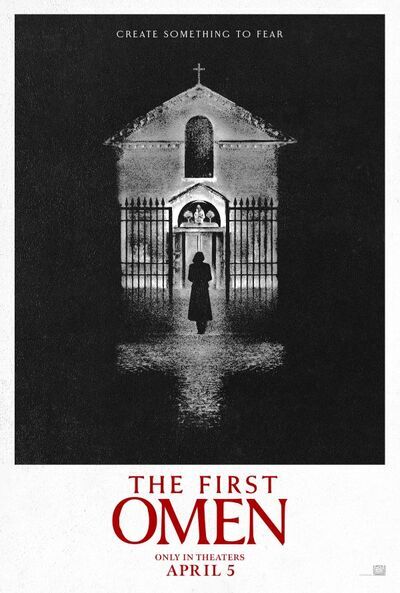
The First Omen – Review

Cert – 15, Run-time – 1 hour 59 minutes, Director – Arkasha Stevenson

Novice Margaret (Nell Tiger Free) is welcomed into a convent in Rome, however everything may not be as it seems, especially as she shows kindness to an isolated child (Nicole Sorace)

The slow-burn psychological nature of The Omen’s horror could mean a hit or miss take when melded with jump scares from dark corners. While not filled with them, prequel The First Omen throws in a couple of jump scares throughout its run-time, and manages to be successful with a couple of them thanks to drawing them out and making the situation feel as if it’s not going in such a way. As for the psychological nature while there might not be a major fear factor to the film, particularly with the way in which it tries to draw its ideas together, there are still some effective moments here and there.

Novice nun Margaret (Nell Tiger Free) has been welcomed into a convent in Rome, one working as an orphanage where she extends a hand to silent teenager Carlita (Nicola Sorace) – often excluded by the nuns for her behaviour which puts her in ‘The Bad Room’. However, with Margaret’s friendliness towards Carlita conflicting with how everyone else treats her already something appears to be up, something pushed further by the appearance of Ralph Ineson’s Father Brennan – claiming there’s an evil plot unfolding in the convent that might involve the Antichrist.


As Margaret begins to uncover more around her bursts of horror come through. When dealing with the gorier elements director Arkasha Stevenson gives the film a real kick, not skimping on the detail while avoiding making this a river-of-blood affair; giving us not one but two squirm-inducing birth scenes. Such points act as the highlights, the horror sometimes quite literally bursting through, in a film that can occasionally feel quite busy with its narrative strands. With the various perspectives and ideas that crop up over the almost 2-hour run-time the final stages of the film, particularly the key climactic sequence, feel quite drawn out due to just how much needs to be wrapped up.

A feeling which isn’t helped by the fact that this prequel has multiple points where it could effectively cut things off and yet carries on with more endings – one sequence in particular seems to have a number of key cut-off points and yet somehow carries on before another scene or two. There’s a good 95-100 minute film within The First Omen, but it does draw itself out, largely with references to the classic 70s film, and with a bit of trimming could be slightly breezier, and perhaps more effective with the bursts of horror which are there. When aiming for prequel over requel this is a much more solid film.

There’s some effective gore and jump scares within The First Omen, while it might feel narratively busy, leading to an overall set of endings, there’s enough within the drama and bursts of horror to create a solid prequel.

Rating: 3 out of 5.

Monkey Man – Review

Cert – 18, Run-time – 2 hours 1 minutes, Director – Dev Patel

An anonymous fighter (Dev Patel) seeks revenge on the officials who attacked his childhood village and murdered his mother.

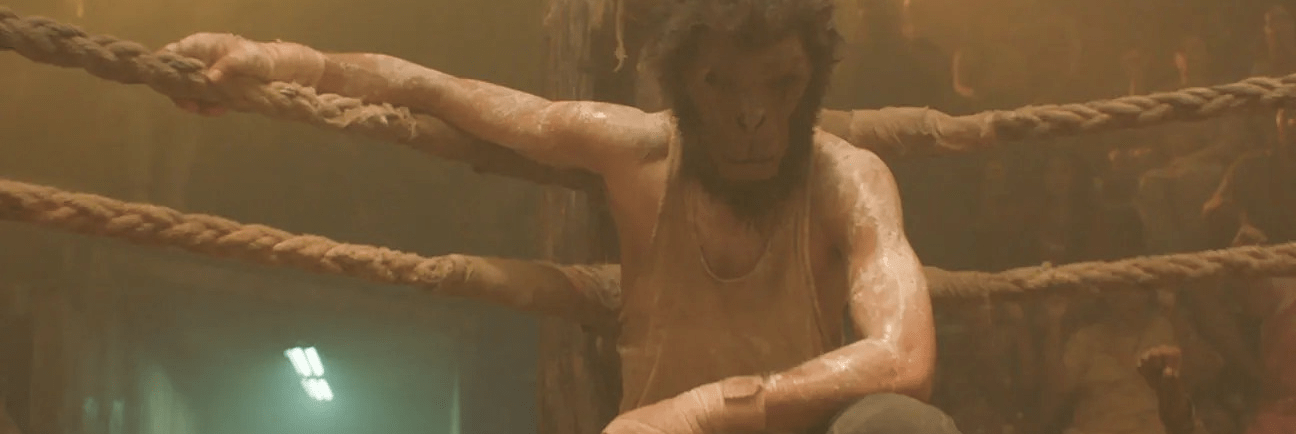
With his directorial debut Dev Patel further solidifies himself as one of the best British talents currently working. It’s clear that the images have been in the writer-director-producer-lead’s head for a long time and they come through via a lens coated in sweat and grease – a mixture of both the heat and actions unfolding on screen. The action, particularly during tracking shots, is intense, earning the film its 18 rating as Patel’s anonymous fighter, credited as ‘Kid’ – taking part in illegal matches set up by Sharlto Copley, who it’s always good to see – seeks revenge on the officials who attacked his childhood village and murdered his mother.

Set in India, there are hints of Bollywood action to the fights which unfold, mixed with the brutality of Gareth Evans’ The Raid films, with Monkey Man also having been shot in Indonesia and featuring a gasp-inducing kitchen fight choreographed by some of the same talents. Meanwhile, there’s an air of Christopher Nolan’s Batman trilogy to the sequences dedicated to ‘Kid’s’ growth and increase in strength. Yet, Monkey Man feels like a unique product of its own full of individual personality, including dashes of infrequent natural humour, largely from supporting characters such as Copley’s egotistical fight boss and Pitobash’s small-time gangster Alphonso who acquaints himself with ‘Kid’ – going by the name Bobby – when working in a kitchen to climb the ladder towards his targets.


Halfway through as Patel’s on-screen venture takes his character back to his roots it dawned on me that I was watching something truly extraordinary; one of the best action films I’ve seen in a long, long time. Not just because of the bloody sequences, with a number of very effective shots, but because of how the story is followed. A fairly traditional revenge-thriller arc is given a jolt of personality thanks to the world that it’s set in, the way in which we feel just how long Kid has been building up anger in need of revenge – while those responsible for his years-long loss are frequently seen campaigning on TV.

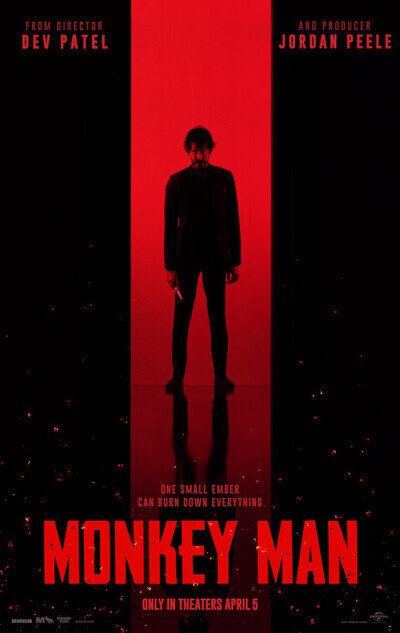
Originally a Netflix production, before the studio were worried about the film’s reception in India, after seeing the film Jordan Peele came on board as producer under his Monkeypaw Productions label and convinced Universal to distribute. With the impact that it has, and just how lived in everything feels, Monkey Man flourishes on the big screen. With plenty to get lost in visually it adds further depth and impact to the narrative and where the characters go, and particularly the themes that are being dealt with.

Yet, the stylish nature of the action sequences, and the messy brutality featured in them, is what makes this a real big screen feast. From the crowd cheering on ‘Monkey Man’ as he develops in the ring to a crowd of henchmen pouring out of an elevator in the flawless flow of the escalating third act, something done with a knowing grin, there’s plenty to enjoy. All held in the same believable world which brings so much to the proceedings, and has clearly forming in Patel’s mind for a long time. And what a punch it has after all this time!

Frantically energised, bloody action compliments a narrative with plenty of thematic weight for both story and character. This is a knockout actioner in a lived-in world that absorbs the film’s details and the audience into it.

Rating: 5 out of 5.

Godzilla X Kong: The New Empire – Review

Cert – 12, Run-time – 1 hour 55 minutes, Director – Adam Wingard

Whilst Godzilla protects the surface, Kong discovers a threat in Hollow Earth which neither could take down alone, however can the two titans team up before it’s too late?

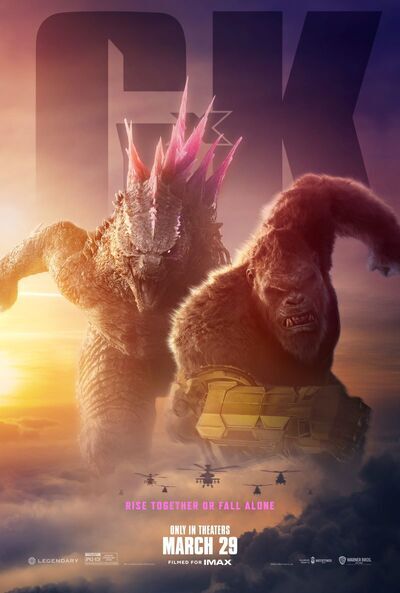
Despite getting top billing in the title Godzilla barely makes what most films would credit as a ‘special appearance’ in Godzilla X Kong. Perhaps he was busy filming Godzilla Minus One while this sequel to 2020’s Godzilla Vs Kong was in the works. Whatever the reason is, there’s a good deal of focus on Kong and a selection of human characters over the towering lizard – whose narrative strand is largely shown through other humans tracking him down. In total there are about three, perhaps four, different perspectives making up this clash, and potential team-up, of the titans as a new ape threat in Hollow Earth is discovered, and one which could cause destruction for the surface world if neither of the titular creatures can defeat it.

There’s a slightly busy, and occasionally slow, feeling to some of the scenes focusing on the human characters exploring Hollow Earth, trying to find the source of what they believe to be a distress signal. However, with the likes of returning Brian Tyree Henry, and Dan Stevens as a doctor for titans, there’s a good deal of humour injected into such moments to stop them from simply losing all possible entertainment factor. Focusing largely on Rebecca Hall’s Ilene Andrews and adopted daughter Jia (Kaylee Hottle) the pair are trying to make sure that Kong is safe, while discovering Jia’s roots, these scenes aren’t for exploring the underground world, that’s what Kong’s perspective is for.


As Kong wanders through new areas of Hollow Earth that it seems he hasn’t strayed into before we begin to meet the main threat at hand for the film, introduced somewhat late simply for the need for the film to have a villain and a reason for the titular creatures to team up eventually. Once in place this is where the majority of the action comes in, and there’s an enjoyable nature to it when things do kick off. This is a film that’s aware of what it’s depicting and tries to have fun with a number of its ideas – ice breathing creatures and Kong’s eventual robot arm included; the latter feeling as if it’s done simply because it’ll look cool, and it gets away with it. When unfolding on the surface there’s little dramatic impact from the buildings that are destroyed during battles, that’s what they’re there for after all, the push is simply making sure that the titan we’re told is evil doesn’t win.

For those wishing to see a repeat of the first film’s selling point of seeing the giant monkey lamp the lizard again you won’t be disappointed, Godzilla X Kong relishes in portraying that again in a fresh fight. In fact, the first meeting of the pair since the previous Monsterverse instalment is a highlight of the film, knowing not to let things drag on for too long before getting back into the other action at hand, where the ideas are truly let loose while still managing to successfully track the action. Plus, better intertwining the human sequences with the monsters for a generally better flow and sense of connection with each strand as they come together for the third act.

In a number of ways this is likely exactly what you would expect from a film such as this, and it’s an improvement on the human-dominated Godzilla Vs Kong. Yes, we still spend a good deal of time with these characters in this sequel, but there’s more humour injected into their scenes and more focus on the titans at hand – even if Godzilla is barely present throughout the almost two-hour run-time. This is an enjoyable, if occasionally bumpy due to multiple perspectives working at the same time, sequel with some entertaining monster scraps, and that’s what we want from this, isn’t it?

While suffering from a number of events and perspectives in the build-up, Godzilla X Kong: The New Empire is an amusing improvement on Godzilla Vs Kong featuring some entertainingly destructive monster fights.

Rating: 3 out of 5.

Kung Fu Panda 4 – Review

Cert – PG, Run-time – 1 hour 34 minutes, Directors – Mike Mitchell, Stephanie Stine

Reluctant to become the spiritual leader of the Valley Of Peace, Po (Jack Black) finds reason to keep the label of Dragon Warrior when a shapeshifting sorcerer (Viola Davis) threatens to take over the surrounding lands

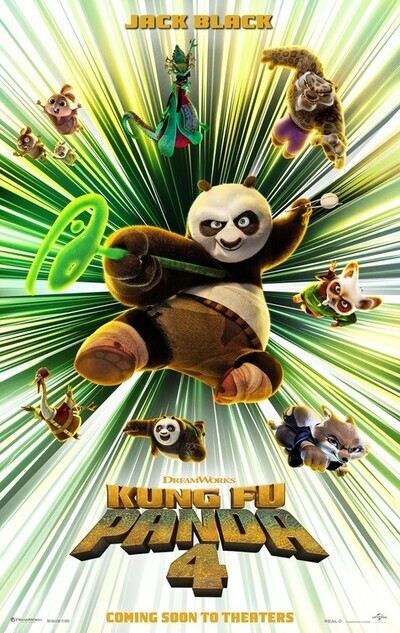
The Kung Fu Panda formula has proved favourable for Dreamworks Animation in terms of reception and box office. The same appears to go from a filmmaking standpoint as eight years after panda Po’s (Jack Black) previous outing he’s back in action, minus the Furious Five of kung fu masters, for another adventure which some creatives have already claimed could open a new trilogy. From the off the fat jokes are rolled out as Po struggles with both stairs and the prospect of moving on from his Dragon Warrior label to become the spiritual leader of the Valley Of Peace.

He’s comfortable as he is, and doesn’t feel that he needs to promotion from Master Shifu (Dustin Hoffman). Just at the right time a new villain arises to delay his decision, as shapeshifting sorcerer The Chameleon (Viola Davis) is intent on taking over the surrounding lands for her own gain. Davis’ villain is undoubtedly one of the highlights of the film, and when on screen feels like an enjoyable threat with a dark edge – something which this franchise has successfully dealt with in each of its films – it’s a shame, therefore, that the character is little-seen over the 94-minute course of the narrative. It takes a while for her to even properly make an entrance as we spend a large amount of time seeing Po battle with his possible future, and meet fox Zhen (Awkwafina) who could guide him to The Chameleon.


There’s a generally likable nature to the somewhat familiar proceedings, helped by the occasional moments of humour and the starry voice cast – including James Hong returning as Po’s adoptive father Mr Ping, forming something of a double act with actual father Li (Bryan Cranston), and a very likable appearance from Ke Huy Quan. And when cropping up the action manages to land a solid, colourful punch, yet it feels that occasionally the film is reaching for the reliable hits to get itself through. As mentioned, there are cuts to Ping and Li trying to catch up with their son before he gets himself into danger; despite his previous missions, which seem like little more than bursts of comic relief aside from those within Po and Zhen’s travels and the various characters who crop up along the way.

Kept close to 90 minutes the run-time manages to not feel overstretched and generally the story gets in and out with little trouble aside from the moments which feel somewhat diverted from the main course at hand. There are a good deal of enjoyable sequences here and there – one in a rough mountaintop bar comes to mind – demonstrating that the film is most comfortable in the reliable company of the titular panda, despite a strong villain who deserves much more screen-time than they get. A fitting entry into the franchise, although perhaps not quite reaching the same heights when it comes to the action and threat posed, this feels like a safer outing for Po and Dreamworks Animation, but still with enough personality to make for an entertaining enough time while on, even if not proving as memorable.

Occasionally feeling like its leaning into the hits of its franchise’s formula Kung Fu Panda 4 is a likable adventure for Jack Black’s Po, but one which prevents itself from delving into its best elements, leaving a strong villain lying in the background.

Rating: 3 out of 5.

Mothers’ Instinct – Review

Release Date – 29th March 2024, Cert – 15, Run-time – 1 hour 34 minutes, Director – Benoît Delhomme

After the death of her own son (Baylen D. Bielitz), Celine’s (Anne Hathaway) relationship with best friend and neighbour Alice (Jessica Chastain) becomes fractious amongst feelings of grief, guilt and paranoia

It would be so easy to accuse Mothers’ Instinct of being a slice of forced melodrama. Yet, it’s got to be commended for being effective. As Anne Hathaway’s Celine is thrown into grief after losing her young son, Max (Baylen D. Bielitz), when he falls of the upper storey balcony of their home, the emotion and tragedy really gets across. There’s a real emotional core and push from the scenes delving into the loss which Celine and her husband (Josh Charles) are experiencing. Pushed by that felt by next door neighbour and best friend Alice (Jessica Chastain), alongside her own husband (Anders Danielsen Lie) and son Theo (Eamon Patrick O’Connell), who was best friends with Max.

After trying to shout to Max to get off the balcony bannister, where he was trying to attach a birdhouse to a tree branch, before his fall Alice feels guilty for not having reacted sooner. Does Celine believe that Alice should feel guilty? As the cocktail of grief and guilt begins to mix the pair begin to experience respective paranoia about what the other might be thinking and doing in response, particularly when it comes to Celine’s relationship with Theo.


With the 1960s setting as the thriller plays out there’s a clear Hitchcockian influence. It even comes across in some of director Benoît Delhomme’s style, particularly during driving scenes. Yet, perhaps the most interesting and effective moments that come through in Delhomme’s direction are a few scattered shots which feel as if they’re breaking in to the private lives and conversations of the characters. Like a near-documentary style presentation, as if taken from a camera in the corner of the hoe secretly observing the goings on. While infrequent such shots help to lift up the drama as it unfolds, and brings out the emotional core of a number of instances.

It’s also as the film dives more into its thriller tones and stylings that the structure becomes more noticeable. Instead of feeling entirely fluid it feels as more a set of clear events that almost seem to start and stop. Going from one test of the friendship to another with the effects and responses seen every other test. While things generally work, helped by the performances of Hathaway and Chastain (although perhaps not Chastain’s wig), there is an occasionally staggered feeling to the developments and structure of the narrative which holds back potential tension that the film seems to be aiming for once it has its elements properly built up.

Yet, there’s no denying the effect that the build-up has. While what follows may not be as stirring the emotional response to the opening half hour is strong. It helps to push the remaining hour some way, particularly in the way the performances continue such ideas, and while the tone might change there are still good moments and ideas here and there to make things worthwhile – helped by the overall 94-minute run-time. While the ending might prove somewhat divisive it’s not enough to make or break the film as a whole, and in general Mothers’ Instinct is a likable enough thriller that may not live up to its opening scenes due to some repetition within the noticeable structure but manages to make for solid viewing overall.

While it might not live up to the emotional punches of the opening scenes Mothers’ Instinct is a solid enough thriller helped by its two central performances who form consistency amongst the segmented narrative.

Rating: 3 out of 5.

Immaculate – Review

Cert – 18, Run-time – 1 hour 29 minutes, Director – Michael Mohan

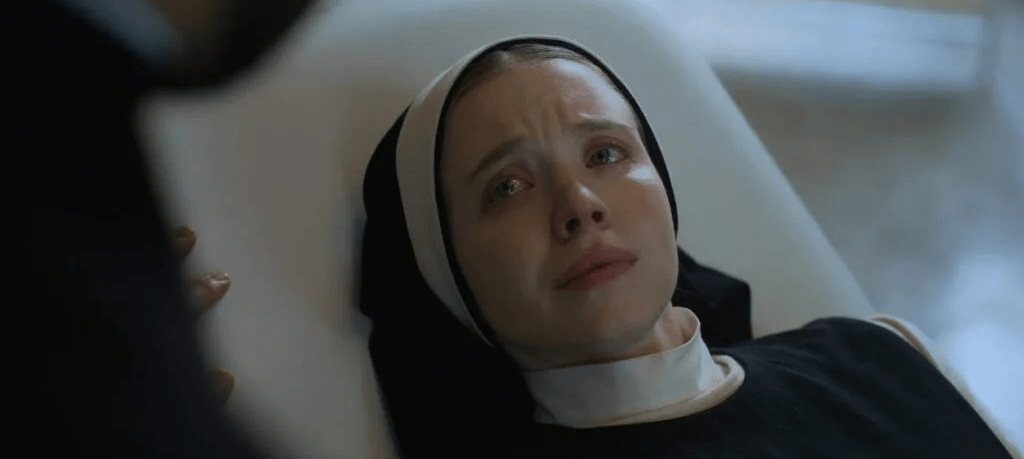
Shortly after arriving at an Italian convent Sister Cecelia (Sydney Sweeney) is revealed to be pregnant, could she be carrying the returning messiah?

The final stages of Immaculate fly by with a mixture of potential influences. The lashings of crimson blood of the Evil Dead franchise, the fervour of Rosemary’s Baby and the escape attempts of Get Out. All contained within a gory search for answers as Sydney Sweeney’s nun Sister Cecelia frantically searches for possible answers as to what is happening to her. She’s been pregnant for most of the run-time, labelled as a miracle, a case of immaculate conception, Other characters claim that she’s possibly carrying the second coming of Christ, but could that really be the case?

The build-up may seem somewhat slow at times, despite some effective jump scares hidden in the walls of the Italian convent which Cecelia has recently been welcomed into after her church in America was closed due to low attendance, but thankfully at 89-minutes the film knows how to get to the point. We might have to tick some familiar boxes here and there, but thankfully writer Andrew Lobel injects some jet black humour into the early proceedings. From the bluntness of disapproving Sister Isabelle (Giulia Heathfield Di Renzi) coldly showing Cecelia around the convent looking after aging nuns at the start of the film to the smirk given away during a key reveal before the third act kicks in there’s a consistent level of engagement throughout, and indeed one which consistently grows, as Cecelia attempts to find out whether there’s something more sinister behind her pregnancy.


Sweeney throws herself into the role, especially during the gorier scenes – while earning the 18 rating this isn’t a frequent blood-fest, allowing the instances of splatter to have more of an effect – and truly sells the confliction going on in her character’s mind, and the growing physical struggle. Her surroundings grow increasingly threatening with the narrative allowing for developments to come through with good pace without feeling rushed. Apparently a passion project for the lead this comes through in the effective closing shots, which may well go down as influential themselves; acting as the tense highlights of the film. Capping off a well-tracked sequence where things flow effortlessly from one moment to another.

It’s well worth the wait, and indeed some of the more conventional moments the film has to offer – Cecelia told that she can’t leave to go to a regular hospital, the doctor who visits the convent on most days is trained enough, and delivers babies on Thursdays and Saturdays. Luckily, with the short run-time and the way in which things grow and develop, as mentioned, the film generally goes by quickly. Not all the jump scares or attempts to escalate tension may properly land, but for the most part there’s still interest to be found in the film and Cecelia’s journey in the unfamiliar location. Give it time for things to properly kick in and as the developments grow so does the overall quality of the film.

While it might have its conventional beats and faltering jump scares Immaculate grows in a short space of time, flowing into a seamless, bloody finale, stormed through by Sydney Sweeney, which is more than worth the wait.

Rating: 3 out of 5.

Ghostbusters: Frozen Empire – Review

Cert – 12, Run-time – 1 hour 55 minutes, Director- Gil Kenan

When an ancient ghost threatens to bring the world into a new ice age generations of Ghostbusters must team up to defeat it

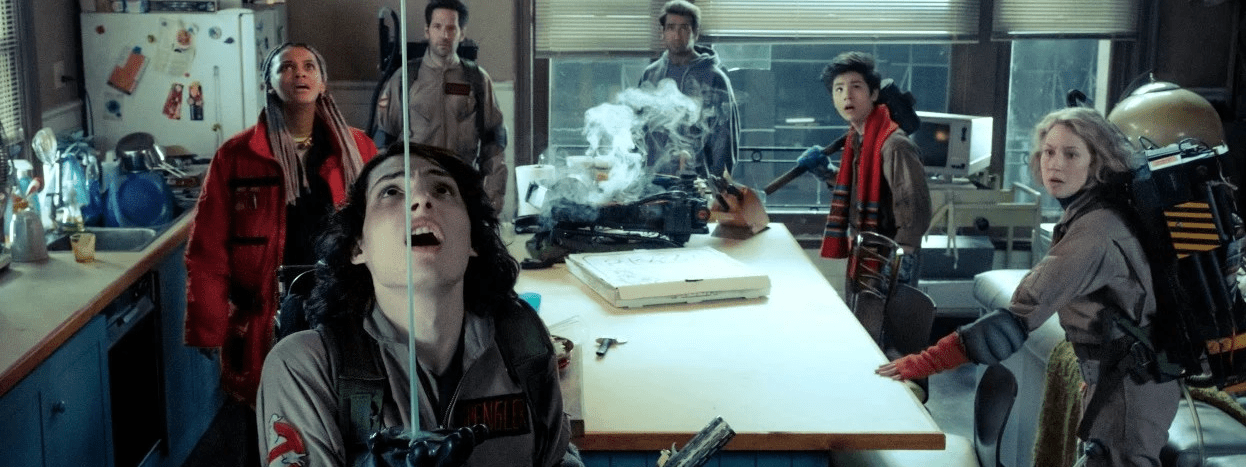
The Ghostbusters have typically been a team of four, with, as with any classic quartet, a changing potential fifth member. Whether the classic faces or the new line-up we’ve typically seen a group of four taking on the central roles of ridding the world of haunting ghouls and lingering spirits. However, Frozen Empire both raises the stakes that any group has faced and the number of central Ghostbusters. Instead of four, or even eight, over ten characters come together to save the world.

As an ancient spirit threatens to escape its prison and plunge the world into a second ice age the stakes at hand are clearly those of a grand scale blockbuster. While the titular Frozen Empire doesn’t overly come into play until unexpectedly late into the film the build-up still causes it to feel like an idea perhaps too big for a Ghostbusters film, especially one that’s already trying to juggle as much as it is.

New hand Phoebe Spengler (Mckenna Grace) is wishing to be taken more seriously and allowed to go out and catch ghosts, despite the mayor of New York (William Atherton), and her family, saying she’s too young, and indeed with the Ghostbusters’ future constantly at threat. Meanwhile the rest of her family feel reduced to minor roles, while the old guard pop up for turns between not-quite-cameos (Bill Murray and Annie Potts) and small supporting roles (Dan Aykroyd and Ernie Hudson – who still deserves more screen-time).


Add in other faces from the previous film (Logan Kim’s Afterlife highlight Podcast has nowhere near the same push and therefore likability here) and new additions such as Patton Oswalt, James Acaster and Kumail Nanjiani and there’s a very busy film here. One moment of context ends on a line that writers Gil Kenan (also acting as director) and Jason Reitman appear to hope is cool before jumping into the next moment with a new character. It’s a pattern which frequently happens throughout this legacy sequel sequel and becomes rather tiresome the more the film goes on, jumping between faces without ever really expanding them, and in some case removing the personalities that we’ve seen before.

With so much going on between Phoebe’s strand and the various stages of investigation surrounding a threatening ancient artefact going on around her this is a very busy film, and yet shorter than the previous instalment. Perhaps things would feel less busy if they were allowed more time to grow instead of being wrapped in forced nostalgia, especially in the opening stages which feel almost cynically constructed to wring out joyous ‘memories’ of films past.

What’s lacking is the humour, and to some extent simplicity, that have made previous Ghostbusters films work so well, brought them their sense of fun. There’s so much plot crammed into Frozen Empire that there doesn’t seem to be room for fun, instead we’re meant to find joy in skits involving Finn Wolfhard trying to catch Slimer who has made a home in the firehouse attic, or the antics of mini Stay Puft Marshmallow men who are being treated like the Minions.

It all makes for something that, despite some glimmers and likable moments, feels tired and overstuffed. It leaves you wishing that it would get to the point and bring about its promises, in a more concise and enjoyable manner than something which simply finds ways to jump between a group of characters which is far too big for it to handle, particularly in the back and forth way in which it tries to do so. The feeling is of a film trying to be a huge blockbuster rather than a big budget comedy. And therefore the laughs rarely arrive and neither does the amusement or engagement with the characters. It might take a good while for the ice to properly arrive, but there’s a coldness to Frozen Empire long before it does.

With too many characters and forced attempts at nostalgia, Ghostbusters: Frozen Empire is an overstuffed, occasionally cold, blockbuster aiming for spectacle over comedy, faltering under its ideas and ultimately lacking in humour

Rating: 2 out of 5.

Drive-Away Dolls – Review

Cert – 15, Run-time – 1 hour 24 minutes, Director – Ethan Coen

Escaping their lives for a road trip to Tallahassee, friends Jamie (Margaret Qualley) and Marian (Geraldine Viswanathan) are mistakenly given a car containing criminal belongings.

With the Coen Brothers having gone their separate ways, although it seems only briefly with a horror project seemingly in the line, it was revealed that Joel brought the John Lennon darkness (as seen in The Tragedy Of Macbeth) while Ethan brought Paul McCartney’s impish whimsy. The latter brother’s Drive-Away Dolls is reminiscent of the comedies the pair released throughout the 2000s, even bringing in certain stylings that call back to the films of that time.

Set in 1999 we follow the “modern 20th, soon-to-be-21st, century lesbian” friendship of Jamie (Margaret Qualley) and Marian (Geraldine Viswanathan) as they need to escape their lives and take an impromptu trip down to Tallahassee. However, while one wants to stop and see the sights of the lesbian bars along the way the other simply wants to get to the destination in their drive-away car by the agreed-upon next day. The reason for that date? Unknown to them, the car holds a briefcase containing mysterious criminal belongings meant to be delivered by a group (led by Colman Domingo, overseeing Joey Slotnick and CJ Wilson’s amusing, bickering goons) coincidentally scheduled to also go to Tallahassee.


As each party is setting out on the road the cuts between each one feel as if they’re trying to lead the film’s tone. Cartoonish sound effects mixed with edits that feel like someone just discovering the animation tab on PowerPoint bring a jolt finish to a number of very brief scenes – bringing to mind questions of why certain moments were even included in the first place. The way that the strands play out it feels at times as if we’re seeing two short films, the same events from different perspectives almost, with Jamie and Marian’s story in particular feeling as if it would actually make quite an enjoyable short. The gags may be somewhat hit or miss, with the hits largely gaining a mild exhale of amusement, but there are still some good ones here and there – and as a comedy this thankfully sticks to under 90 minutes.

As things develop and the two stories begin to interact more, and feel more direct as the flashy cuts are toned down and made less frequent, things begin to feel more a whole. There’s a better overall pacing, and more likably nature to the events as they pan out. Qualley and Viswanathan are certainly enjoyable in their roles and help to bring out some of the funnier moments in a narrative with some increasingly bizarre twists and details, it just never feels as if the film has the fast pace it perhaps needs to keep up with them and the more dialled-up caper it’s perhaps going for but never quite reaches despite its efforts.

Instead what we have is a somewhat bumpy ride, but one that gets smoother as it goes on. There are some enjoyable moments and an overall likable nature to Drive-Away Dolls but it feels as if it never fully embraces itself or what it’s offering leading to a number of scenes feeling like very brief filler for two related short films preventing the feature from reaching the pace it seems to be aiming for to match the absurdity of certain situations it brings up as part of its narrative. But, overall there’s enough within Ethan Coen’s solo directorial effort – co-written with wife, and editor, Tricia Cooke – to make for a road trip which manages to get itself from A to B with a couple of stops along the way.

While it might not be as fast paced it perhaps wants to be when Drive-Away Dolls clicks and works there’s enough to like and be amused by the help things along, particularly as things come together more and prevent brief scenes of filler.

Rating: 3 out of 5.

Monster – Review

Release Date – 15th March 2024 Cert – 12, Run-time – 2 hours 7 minutes, Director – Hirokazu Kore-eda

When her son (Soya Kurokawa) begins to hold himself back, single mother (Sakura Ando) demands answers from his school, where he claims a teacher (Eita Nagayama) is abusing him.

We’ve already witnessed about half of the ambiguous drama that director Hirokazu Kore-eda’s latest has to offer when one of the most key lines is uttered. “What really happened doesn’t matter” says headteacher Fushimi (Yūko Tanaka) to accused teacher Mr Hori (Eita Nagayama). She wants to protect her school, and perhaps her own reputation, in the wake of claims that the fifth grade teacher has been abusing one of his students – both verbally and physically. Yet, the question lingers as to if this is really the case, what is truly going on?

Minato’s (Soya Kurokawa) single mother, Saori (Sakura Ando), believes her son’s eventual reasoning behind his scars, bruises and increasingly quiet and held off behaviour, finding herself in frequent meetings with the school arguing this case. However, she’s constantly met with downplaying from the school and a lack of action. The hesitancy from those also in the meeting – insisting that there’s been a misunderstanding of instruction from the child – brings about thoughts of Thomas Vinterberg’s The Hunt. While not holding the same overall sinister tone, the ambiguity which runs throughout creates a fascinating thread of confliction, particularly when we see events from different perspectives while still allowing for consistent uncertainty.


Helped by fantastic performances from Ando and Nagayama the film gets across the point that anyone could be, and perhaps everyone is, hiding something. Preventing the truth from getting out for their own reasons. Even as things grow and we learn more detail there’s something else to question around each corner. Brilliantly tracked by Kore-eda and writer Yūji Sakamoto suspense creeps its way in as Minato’s behaviour grows stranger after he’s found wandering around a tunnel at night, before throwing himself out of a moving car claiming that he has a pig’s brain in his head. He’s at the fore of the conversation and we’re reminded that his words are the reason many of the discussions and meetings are happening, and yet there’s a seemingly personal angle and effect for everyone involved.

As Saori becomes more desperate to see her son happy again you feel the love that she has for him, the pain that she feels seeing him like this. Yet, as we shift perspectives the coin flip to wondering what if Hori is innocent, what if he’s going to lose his career and that around him for something he didn’t do, comes into almost instant effect. Everything gels together to continue the threads without starting over and creates a drama full of intrigue and mystery. It’s only as we get to the third act that things somewhat move away. While ambiguity is still present it feels as if some threads aren’t quite picked up, some intentionally so, and therefore leave the film more open ended than it perhaps wants to be.

While what we see panning out still works and provides a good deal to engage with, especially in relation to the 90 minutes or so we’ve seen beforehand, however there feels like less of a push the more we see from this stage onwards. A large part of this likely because of the ideas and ends which aren’t brought back up and are left on their own in the moments they help construct. Yet, as perspectives come together and start to work alongside each other instead of against for layers of ambiguity there’s still a good deal to like, and suspense takes a new form as the narrative starts to twist and reveal its true colours.

While it might slightly move away from its initial suspense and ambiguity in a third act which leaves one or two points unanswered, Monster is a strong drama led by its layered mysteries and performances.

Rating: 4 out of 5.