LFF 2024: Emilia Pérez – Review

Release Date – 25th October 2024, Cert – 15, Run-time – 2 hours 12 minutes, Director – Jacques Audiard

Lawyer Rita (Zoe Saldaña) is recruited by a feared cartel boss to help her transition, subsequently working together in very different lives to help those with missing family, whilst keeping secrets from Emilia’s (Karla Sofía Gascón) own family about their presumed-dead father/ husband.

Emilia Pérez’s opening musical number is a grand, glitzy piece of flashy world building. Zoe Saldaña’s Rita paces through the streets, a crowd of dancers assembling behind her, as she runs through the opening argument she’s just written before heading into court. Pitched as the main character, she walks into the courtroom and pushes the written argument towards her male boss who then begins to recite it for the jury. Struggling to be heard and the make the progress she wants to make Rita is called upon by cartel boss Manitas Del Monte (Karla Sofía Gascón) to help arrange the best possible gender-affirming surgery, and help organise a new life away from crime once transitioned.

Much of this is covered within the first ten-fifteen minutes through about three or four musical numbers. Yet, instead of this time jumping from song to song the majority of musical bursts are brief, as is the case for the film as a whole. In total, only three songs feel as if they were actually written as songs. For the most part dialogue appears to have been set to music at the last minute, bringing a cliched view of a musical where anyone will jump into song at any moment for no apparent reason. Often, just as you’re getting into the style and flow of a song it comes to an abrupt end before we move on to the next scene, and perspective.

As Rita and post-transition Emilia begin to work together in helping families of missing people either reunite with their loved ones, or more likely find peace in knowing what happened to them, they find themselves keeping the secret of what really happened to Manitas from his wife, Jessi (Selena Gomez), and children – who believe that he died after disappearing – who they have taken in to care for as they grieve. Once under the same roof Rita shifts away from the main character as a three-hander unfolds, yet with the divide between Jessi and Emilia, and Rita off working, the trio barely share the screen together meaning that the perspective constantly shifts back and forth.


This should be Emilia’s story, yet she doesn’t properly start to get the screen to herself from her own perspective until beyond halfway through the film, yet still with jumps to see what another character is up to. It ends up creating a pinging jumble of moments and ideas, increased by the sudden stop-start of verse-and-a-chorus-if-there’s-time. It becomes apparent quite quickly, as Emilia’s idea to help those with missing family begins to come into effect and the film seemingly changes focus once more, that there’s a very busy, overstuffed, narrative here.

Gomez, with very little to do in the first place, and Saldaña are pushed to the side and yet come back into play with one of the few fully-rounded songs as if they never went away. A new relationship for Emilia comes into play while she continues to focus on her work. It’s work that the film wants to make a big deal about, but never quite gives the proper space to for it to properly flourish, and for Pérez to actually feel like the title character and warrant the story that’s eventually formed around her, particularly in regards to the directions that it swerves into.

As each stands plays out and the emotions of each character intensifies, whether via song or not, the film begins to dive into melodrama. Sustained shots, darkening drama and more sudden twists and turns further fuel the impression of this as a soap opera; one big, telenovela. Feeling restless due to rarely settling or allowing its ideas space to breathe it appears to throw everything at the screen in the hope that something sticks. Crumbling from the big Broadway-style opening which holds so much promise.

With songs that feel like they were crafted at the last minute interrupting an overstuffed narrative, melodrama settles in and eventually turns Emilia Pérez into a messy, disengaging soap opera.

Rating: 2 out of 5.

LFF 2024: The Room Next Door – Review

Release Date – 25th October 2024, Cert – 12, Run-time – 1 hour 47 minutes, Director – Pedro Almodóvar

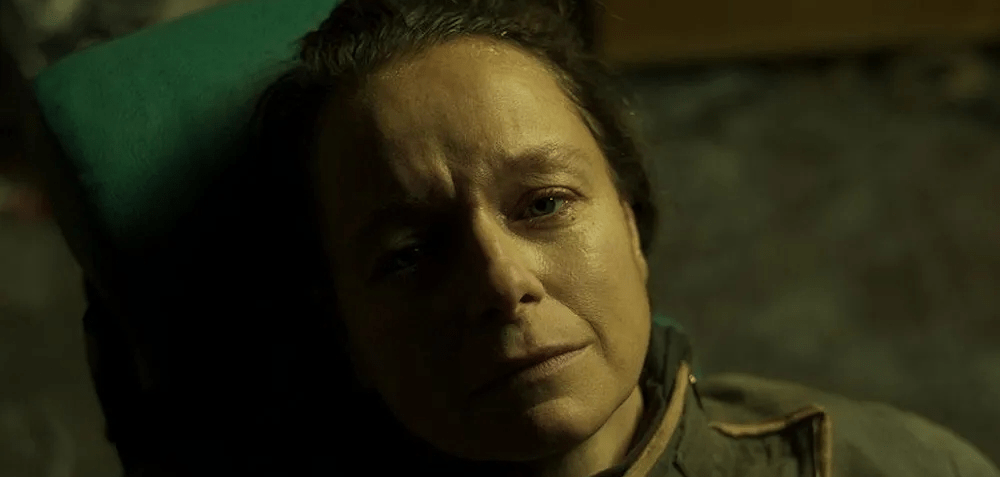
Old friends Ingrid (Julianne Moore) and Martha (Tilda Swinton) reunite after years apart to spend time in a quiet, rented home, at the end of which cancer-patient Martha intends to commit suicide through the use of a euthanasia pill.

Pedro Almodóvar’s English-language feature debut doesn’t angle itself as a film about a fearful or sad build-up to death, instead it views the approaching inevitable, as seen through the eyes of former war reporter and cancer patient Martha (Tilda Swinton), as a prolonged, isolated trudge with everyone around you expecting the worst any day. “After all the preparing to face the end survival feels almost like a disappointment” she tells old friend Ingrid (Julianne Moore) after being reunited for the first time in years.

The first conversation between the pair is warm, tinted with empathy from Ingrid as she sees her friend lying in a private hospital room. Wishing to leave these confines Martha asks Ingrid to accompany her for a short stay in a quiet, rented house in the woods. However, at the end of this time Martha intends to take her life via a euthanasia pill, her request being that Ingrid is in the room next door when she does this. If the police enquire, everything is in place and set up for her to deny that she knew anything about this.


There’s a consistent sense of melodrama flowing through the conversations between the pair. The performances themselves are strong, particularly Swinton who delivers the standout turn with an occasionally creeping sense of calm melancholy, but there’s an almost forced nature to certain moments. Much of this comes from Alberto Iglesias’ score which while great feels unnecessary in a number of scenes, almost forcing the viewer into feeling, as with the use of his Oscar-nominated score for Parallel Mothers. It pushes a somewhat disjointed feeling in certain moments, particularly flashback sequences early on in the film which feel detached from the rest of the proceedings, failing to hit the emotional beats they appear to be trying to hit.

As a whole the film never quite manages to push the emotional weight it wishes to due to the strong melodramatic style that it carries. There’s a connection to be found with Ingrid as her understanding and struggle with her friend’s choice conflict throughout, even as the pair simply enjoy sitting down and watching films together one evening. Moore and Swinton effectively capture the fond, yet somewhat distant after so much time apart, connection between the central characters, filling in the gaps in their relationship with stories and increasingly bittersweet memories of the past.

There’s certainly an interesting mixture and perspective within this particular Almodóvar feature. Sometimes suffering from its melodrama it thankfully doesn’t fall into an intense dreariness, as both Martha and Ingrid seem to want to avoid themselves. There’s a core of emotion and yet one that comes with understanding and a lighter touch thanks to the time we see the friends spend together, and indeed Almodóvar’s own gentle influence on the tone of the proceedings. While occasionally this might lead to more dramatic moments diving deeper into the personal lives and pasts of the characters feeling somewhat forceful and leaning too much into the emotional aspects, there’s still an overall likable, if rough around the edges, English-language feature debut here.

While it falls into forceful melodrama, the quieter aspects of the relationship and understanding between Julianne Moore and Tilda Swinton’s finely performed characters helps lift up The Room Next Door as its less intense angle on approaching death.

Rating: 3 out of 5.

Venom: The Last Dance – Review

Cert – 15, Run-time – 1 hour 49 minutes, Director – Kelly Marcel

Eddie Brock (Tom Hardy) is on the run from the police, the US army and now aliens tracking down his symbiotic partner Venom (Hardy) in order to release his world-ending creator from imprisonment.

Venom is perhaps one of the most consistent trilogies to makes its way to the silver screen. While not excellent, nor terrible, the most successful films in Sony’s Spider-Man Universe (starting out when it was still known as SPUMC) have got through with a jumble of tones, seriousness and silliness. Initially shifting from a film that took itself too seriously before embracing its ridiculousness (and vice versa for the sequel – where I still stand by the first half being a five star rom-com) to now a third entry made up of a mixture of the first two.

Pitched as a final outing for Tom Hardy’s former-reporter Eddie Brock and alien symbiote Venom, The Last Dance flits between the comedy of the central pairing’s bickering and the intense seriousness of scenes featuring those chasing after them. Jumping from a Mexican bar into the empty landscapes of the US desert, Eddie is on the run from the police following the near-death of detective Patrick Mulligan (Stephen Graham). Also after the pair are the US army, intent on destroying (Chiwetel Ejiofor’s commander Rex Strickland), or studying (Juno Temple’s Dr Teddy Payne), the symbiotes to protect Earth; and an alien creature sent by barely-glimpsed symbiote creator Knull (Let There Be Carnage director Andy Serkis) who requires a Codex key fused to Eddie and Venom to free him from a prison his creations placed him in, and eventually destroy the universe.


If just focused on Eddie and Venom’s perspective as they travel across the country, arguing with each other as they fight for their lives, then there’d be a lightly entertaining near-road trip nature to the film. The best elements of this trilogy have always focused on Hardy’s physical comedy and back-and-forth with himself as the voice of Venom. It creates a good deal of chuckles here, including an all-too-brief, smile-spreading sequence involving the symbiote taking over a horse before an instant cut back to Area 55 – the testing unit under the decommissioned Area 51. The dramatic edges focusing on the bloated supporting cast clang with an intense seriousness, the colour palette appears darker, the score deeper; everything simply feels much more forced to get across the drama of the moment in comparison to the more comedic beats.

What doesn’t help is that the drama of these moments is never the most interesting part of the film, simply because it doesn’t feature the main characters. When with them things move quicker, are more entertaining and things feel as if they’re moving along with more ease, and a more engaging nature. Of course, everything has to come together eventually, and when it does it certainly has the aforementioned lift, but also some likable enough action that – as with the previous two films – manages to make for a solid-enough ending, even if it doesn’t entirely blow you away.

There’s an air of chaos to it, and not entirely because of the stakes and threat at hand, which warrants the various explosions seen throughout the third act. It contrasts with the humorous absurdity of the dance sequence set to a remix of Dancing Queen shortly before, and almost seems as if it’s from a different film, but it certainly manages to quickly bring each strand together and jump into the action almost instantly. There’s certainly a bumpy ride to get there, and one akin to the nature of the previous two entries in perhaps the only good thing to come out of Sony’s Spider-Man spin-offs to date.

While scenes focusing on the supporting cast may be constructed with forced drama, the lighter, more humorous angles focusing on Tom Hardy’s continuing comedic skills are the highlights of Venom: The Last Dance, before building to a likable, if chaotic, third act.

Rating: 3 out of 5.

Terrfier 3 – Review

Cert – 18, Run-time – 2 hours 5 minutes, Director – Damien Leone

It’s Christmas and Art The Clown (David Howard Thornton) has been revived, seeking revenge on Sienna Shaw (Lauren LaVera) and her family.

Terrifier 3 confirms more than anything else that this franchise simply isn’t for me. While my dislike for it may not be as strong as that which I have for the second instalment in this growing cult slasher franchise many of the same issues crop up for me.

Art The Clown has been acclaimed as a new horror icon, up there with the likes of Freddy Krueger, Jason Voorhees and Michael Myers. However, his latest outing still seems undecided as to how he should be viewed. Having been resurrected just in time for Christmas he traipses around a town chopping up anyone he comes across – no matter their age. His actions when scenes solely focus on him seem to be seeking a comedic response from the audience. The clown persona is played upon as we know that the snow will soon be coated dark crimson, yet when he confronts and gets closer to protagonist Sienna Shaw (Lauren LaVera) we’re meant to be feeling for her and hoping she and her family can protect themselves once again from the character we’re supposed to have had a good time with on his merciless killing spree.


The kills here are certainly much more brutal than the previous Terrifier outings. Yet, the blood flows so much that they become somewhat unbelievable. Of course, this is a franchise with its fantastical elements, but surely after having had multiple limbs cut off and slashed by a chainsaw you should be dead instead of still crawling away? Diving into the Tom And Jerry sound effects catalogue, the kills often sound plucked from a cartoon (perhaps emphasised by the fact I saw this in a screening where the sound was turned up to 12), both removing some of the severity, likely intentionally, but also just taking away from the otherwise strong-18 rated kills and violence. Art’s mocking laughter and glee becomes sadistic, and at times uncomfortable, and not in ways of fear or tension, during two particular kills which personally feel as if they go too far.

When following Sienna, still living with the trauma of the events five years prior when she believed she had defeated Art, and her brother Jonathan (Elliott Fullam) – hassled by his college roommate’s (Mason MeCartea) girlfriend (Alexa Blair Robertson) for an interview about his experiences on her true crime podcast – there’s a slower pace to the drawn-out proceedings. As a whole the film alternates before fully shifting from being frustrating to boring. LaVera’s character, despite her return, almost feels present simply to build-up to a big finale face-off for Art to try and exact his revenge. Her time in therapy is occasionally brought up, made a big factor of in the early stages as she settles back in at home, for arguments and heated moments with other characters, but as a whole it feels as if she has relatively little to do apart from worry about the possible, and eventual, return of the serial killer clown who acts as the bigger draw for this franchise and seemingly a good portion of its audience.

Set in the build-up to Christmas the setting is less tongue-in-cheek and more dedicated as an actual Christmas film, with the darkness of the killer’s actions contrasting with his joy for the season and Santa, and the general spirit and goodwill of the holiday. Of course, the season is played with as Art himself dresses as Santa in multiple sequences, unloading whichever weapon he feels like playing with from the sack he’s carrying around. No matter the weapon the guarantee is that the kills will be overdone and often prolonged, adding to the confusing mixture of how we’re meant to feel about the actions of the killer who’s plastered all over the posters and advertising. It adds to the film’s extensive bombardment of slasher sequences crawling towards the third act which is rushed through as a final bloody set-piece before the next instalment.

A string of sequences featuring overexaggerated kills, diminishing their effect, Terrifier 3 still doesn’t know whether its sadistic killer is meant to be humorous or fear-inducing. Fans of the franchise will likely be engaged and entertained, but for those outside this is a frustrating and eventually boring 2-hour trudge.

Rating: 1 out of 5.

LFF 2024: The Apprentice – Review

Release Date – 18th October 2024, Cert – 15, Run-time – 2 hours 2 minutes, Director – Ali Abbasi

The 80s approach, real estate businessman Donald Trump (Sebastian Stan) sees his chance to bring life back into New York City, taken under the wing of Roy Cohn (Jeremy Strong).

The success of the specifically-timed The Apprentice perhaps comes down to the fact that it takes its time to build up its attack on Donald Trump (Sebastian Stan). Despite opening with Richard Nixon’s “I am not a crook” speech, after a note about this being based on a true story but featuring some fictionalised events, the first half of this story following the rise of the real estate businessman in New York City plays out exactly like a ‘based on a true story’ tale of the spread and growth of greed.

1970s New York City is a run-down and struggling place, however a young Trump sees hope in it. He wishes to buy the old Commodore hotel in an undesirable area seeing it as an opportunity to launch the city’s big comeback. Taken under the wing of lawyer Roy Cohn (a fantastic display of ruthlessness from Jeremy Strong) New York begins to expand and develop into a new era, with plenty of Trump-name brands alongside it.

Stan may not look or sound like Trump and it takes some time to get used to him as the younger version of the man we’ve seen on the news so much over the last near-decade (references to Reagan’s presidential campaigns, possible runs for Trump and general political comments heavily wink at the camera) but over time as he comes more into his own, particularly in interviews, a familiar style and pattern of speech begins to emerge. As his character becomes a bigger societal figure, outshining his family, Stan appears bigger on screen, the light more focused on him.


A great Maria Bakalova is confined to the mid-section as first-wife Ivana, with the relationship quickly deteriorating into impactful abuse. Over time the villain arc of the central figure becomes more defined as he grows out of being Cohn’s apprentice, and even their close relationship is challenged – with a strong turn of performance from Strong in the later stages as he sees his former protégé consumed by what he views as the art of the deal, “relentless in the pursuit of perfection.”

While the question remains as to who this film is really for (despite a successful Kickstarter campaign to get it a wider US release, although eventually failing to set the box office alight), the film itself is rather good. Growing its narrative before going out on the attack, when it does we have seen a true growth and development grow from an initial taste from obsession. The drama is effectively paced and built-up, with an interesting Blade-Runner-esque score from Martin Dirkov backing the fracturing relationships amidst the rise of Trump’s business empire. 

As this happens the engaging ‘based on a true story’ style shifts into an effective villain arc where hostility hangs in the rooms acting as bases for the pursuit of money and power.

Saving its attack for the second half, The Apprentice constructs its story via the performances which capture the heated feuds, tensions and greed between its characters before forming an effective, and still engaging for those who feel they already ‘know’ this story, villain arc.

Rating: 4 out of 5.

Smile 2 – Review

Cert – 18, Run-time – 2 hours 7 minutes, Director – Parker Finn

Popstar Skye Riley (Naomi Scott) finds a demonic curse passed onto her as she’s about to embark on a comeback tour after becoming sober.

Smile 2’s spin on the success of the 2022 hit horror (originally intended for direct release on Paramount Plus before a series of positive test screening results) allows for a story of someone who thought she was past a crumbled world only to find herself entering a new one. After being involved in an intoxicated car accident which took the life of her boyfriend (Ray Nicholson), popstar Skye Riley (Naomi Scott) is preparing to set out on a freshly-sober comeback tour. However, when the demonic smile curse is passed on to her following the death of her friend (Lukas Gage), she’s tormented by stalking, grinning figures, including in the form of her late-boyfriend, and a time limit of seven days to remove the curse.

Certainly the bigger scale in terms of the character and those who surround her brings an extra layer to this sequel which allows for interesting moments in regards to her personal life and recovery from past traumas. It’s enough to avoid a re-tread of the original, which could so easily happen in a pass-the-curse situation such as this, up until the events of the third act, which still have the edge of Skye’s celebrity and upcoming tour.


The overhanging threat and horror may not bring in consistent creeps due to a cyclical feel to the narrative which occasionally feels as if it repeats ideas throughout, but there are some effective jump-scares dotted throughout. Mix in some well-used gore when it enters the picture and there are some solid moments of horror on display to bring in solid momentary bursts of suspense and eeriness. Scott gives a good performance in the lead role as her character’s world fractures to unveil perhaps unhealed wounds while she increasingly struggles to present a calm and collected demeanour to her friends, family and the press – one of the ideas which begins to feel repetitious as the 7-day timer ticks down.

While it may run into some of the same problems as the original, largely in the third act, there are clear tweaks on display in regards to the narrative and perspective of Smile 2 that it works rather well. Repetition might create an issue as the tension should be rising amongst the growing, smiling figures surrounding Skye more and more, but there’s still some solid creeps to be found amongst the claustrophobia and occasional 18-rated gore.

Smile 2’s events may occasionally feel as if they repeat themselves, but the bigger public presence of the protagonist brings a new layer to the narrative that helps things hold up amongst it, alongside a handful of solid scares and bloody scenes.

Rating: 3 out of 5.

LFF 2024: The Wild Robot – Review

Release Date – 18th October 2024, Cert – U, Run-time – 1 hour 42 minutes, Director – Chris Sanders

After crashing onto an island a robot assistant (Lupita Nyong’o) explores and adapts to the landscape, tasked with raising a baby goose amongst the natural surroundings.

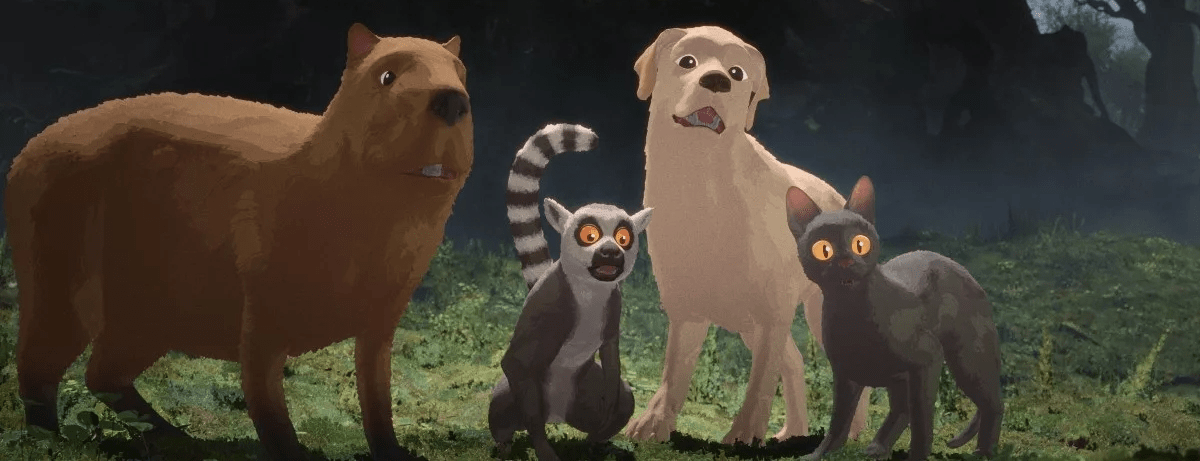
Rozzum 7134, or ‘Roz’, (Lupita Nyong’o) is a robot led by a need to assist. Having crashed onto an island uninhabited by humans she awakes to stagger around the landscape to fulfill her programmed feelings of “crushing obligation”. Visually the landscape is fantastic, Dreamworks continue their trend of being inspired by anime and the works of Hayao Miyazaki with stunning animation and scenery as Roz terrifies the animals living on the island – similar to Stitch in writer-director Chris Sanders’ Lilo And Stitch.

Looking for someone to assist, no creature is interested. That is until she comes to protect a lone surviving egg from which hatches a gosling (Boone Storm). It’s clear that Roz’s aim is to help the baby goose, named Brightbill to survive, and prepare him for his migratory flight in the Autumn. That is if Roz’s understanding of the world doesn’t get in the way, or her programmers come to get her.

The run-time breezes by, and avoids feeling episodic as it so easily could, as relationships build and Sanders works in his deeper thematic elements. It seems he’s always taken a shine to the outsiders exploring a new world, trying to be welcomed into it. This is exactly the case for Roz and Brightbill, alongside cynical fox Fink (Pedro Pascal), who quickly assemble a small, dysfunctional family unit as the goose grows up (to be voiced by Kit Connor).


There are plenty of laugh-out-loud moments to be found throughout, cleverly playing into the world and the different animals which crop up – a group of baby possums, led by their mother voiced by Catherine O’Hara, bicker about what they died of when playing dead – this may be one of the most frequently funny films of the year. Helping to connect us with the brightly-coloured world and characters as they try to understand and make their way through it. Making way for the emotional beats which crop up in the latter stages with good effect in multiple moments, and help from the starry ensemble voice cast which also includes Ving Rhames, Mark Hamill, Stephanie Hsu, Bill Nighy and Matt Berry – who delivers a stunning bit of wordplay which makes for perhaps the best line of the year in the third act.

The Wild Robot is a film that has a heart. One that is on full, proud display from start to finish. Wasting no time or frames that heart grows alongside that of the main character, wonderfully voiced by Nyong’o, growing feelings, a sense of self and belonging. All hand-in-hand; never separately. 

It all makes for a wonderful animated film with a strong visual style, the kind we’re beginning to thankfully see more of post-Spider-Verse, with plenty of laughs and heart building towards the successful emotional peaks within the clear and stripped-back thematic elements. This feels destined to rightfully become a fondly-remembered modern classic.

A film that emits the heart and warmth that it’s made with, The Wild Robot has plenty of humour to elevate its wonderfully animated world and bring to life the emotional beats along the way which sees Chris Sanders once again extend a hand to those who may feel different in the environment they’ve crashed into.

Rating: 4 out of 5.

Joker: Folie à Deux – Review

Cert – 15, Run-time – 2 hours 18 minutes, Director – Todd Phillips

As he prepares for his murder trial, Arthur Fleck (Joaquin Phoenix) finds himself set free by Arkham Asylum’s musical therapy programme, and fellow singer, and Joker fan, Lee Quinzel (Lady Gaga).

If you loved Joker you’ll likely hate Folie à Deux. If you hated Joker you’ll also likely hate Folie à Deux. If you thought that Joker was fine or pretty good be prepared to flip a coin. 2019’s take on the classic Batman villain is one of the most successful films ever made, grossing over a billion dollars, receiving audience and critical acclaim and picking up a good few awards along the way. With a budget increase from $55 million to an estimated $200 million co-writer (alongside Scott Silver) and director Todd Phillips has made an even bolder, even darker, follow-up that you would almost think was designed to address and stir the conflict around the first film, as if made to be a contrast to the original and turn away the audience who loved it so much. If Joker was Taxi Driver meets The King Of Comedy then this is Bringing Out The Dead meets New York, New York.

While not packed with songs, to the point where you can almost understand the cast’s statements about this not being a musical, the musical beats lift up and take away from the darkness of the film as Arthur Fleck (Joaquin Phoenix) prepares for his murder trials. Locked in the dirty cells of Arkham Asylum’s E ward, abused by guards such as Brendan Gleeson’s Jackie, Fleck is set free by both music therapy and B ward patient Lee Quinzel (Lady Gaga). The first time Arthur properly sings he gradually builds up For Once In My Life, moving around the room more fluidly as his vocals grow. It’s at this moment, after a bumpy time establishing the current state of the main character’s life, that Folie à Deux properly takes shape.

More an extended epilogue than a fully rounded sequel; the focus is very much on the courtroom drama at hand, and the world’s reactions to the Joker and his murders. A TV movie has been made, which Arthur hasn’t been allowed to see, and reporters are constantly at the asylum gates trying to get an interview, not helping the case of Arthur’s lawyer (Catherine Keener) that Arthur and Joker are two different people, a case of dissociative identity disorder.


As with his Oscar-winning performance in 2019, here Phoenix is largely playing as Arthur, with Joker creeping in now and then outside of the performative make-up guise. Handcuffed in a police car to and from trial proceedings Arthur’s face and eyes twitch with thoughts coming to mind, shifting from one to the next in real time. Phoenix is remarkable here as a man being tortured by everyone else’s impressions of him whist he battles with his shadow, detailed in a Looney Tunes style animation as the film’s opening.

Breaks into fantasy for the musical numbers during the trial, with classic soundstage production design and colour schemes – the production design throughout is fantastic – can initially seem somewhat jarring, but the more they appear the more likable they become. The more they feel like they work within the film and the world that its creating. The same one from the first film, but more in the mind of Arthur as he competes with the Joker, trying to understand if they’re the same person or not with conflicting hopes and opinions on either side of him. All as the threat of the death penalty hangs over him.

Perhaps best exemplified in his relationship with Gaga’s Harley/ Quinzel. Batted back and forth by her view of him purely as Joker, claiming to have watched the TV movie 20 times, lured in by their shared performance of standards, even if growing as escapes in his mind conceptualising his relationship with the rest of the world. There’s a smile to be found in such moments with the escape and relief that they provide from the darkness of the rest of the film. Not a downbeat trudge, but, much like 2019’s outing, not a joyful 2-hour breeze. Even after a film such as Joker this is an even bolder follow-up that deviates strongly from that film.

This sequel certainly won’t be for everyone, particularly strong fans of the original, but there’s an interesting continuation of character study here. One that takes risks with how it depicts the developments, and while some stages might be somewhat bumpy through the lens of the central character in his more uncertain moments there’s still an interesting, risk-taking sequel to be found here. Driven by Phillips and a once-again-excellent Phoenix who both appear driven to strike a different chord, and potentially crowd, here.

An undeniably bold departure from the first film, Joker: Folie à Deux will not be for everyone. As its musical numbers grow so does the confliction for Joaquin Phoenix’s fantastically-performed central character, making for an interesting character study where the scattering of songs stop the increased darkness from becoming a bleak slog.

Rating: 4 out of 5.

Megalopolis – Review

Cert – 15, Run-time – 2 hours 18 minutes, Director – Francis Ford Coppola

Architect Cesar Catilina (Adam Driver) dreams of creating a utopia within the divided city of New Rome, however those battling for control of the city fight against his attempts.

Francis Ford Coppola has wanted to make his passion project Megalopolis for years. Whether the technology wasn’t ready or no studio would fund it it took the writer-director-co-producer four decades to eventually fund the project with $120 million of his own money. A film seemingly intended to show a mirror to a divided America with an air of hope for where it could go we follow architect Cesar Catilina (Adam Driver) as he attempts to build a city he calls Megalopolis within the city of New Rome; the costumes and architecture of ancient Rome fastened to the structure and bustle of New York City.

However, those in control of New Rome, and those wishing to seize it, take against Cesar’s plans, seeing it as a threat to them and their potential empire. This primarily comes from city mayor Franklyn Cicero (Giancarlo Esposito) who takes against his daughter, Julia (Nathalie Emmanuel), working for, and eventually forming a relationship with Cesar. However, issues also come from family such as brattish cousin Clodio (Shia LaBeouf), TV presenter and financially-driven mistress Wow Platinum (Aubrey Plaza) and the wealth of bank-owner uncle Hamilton Crassus (Jon Voight); not to mention the various other faces and names which crop up throughout. Overall, Megalopolis feels as if it contains every idea and character Coppola has thought of over the last 40+ years. Cramming them all in with the aim of keeping things under 2-and-a-half hours and therefore cutting the narrative to ribbons.

How much the project has changed over time I don’t know. Certain lines of dialogue feel outdated and as if they’ve not been changed at all, whereas certain scenes feel like someone trying to jab at what they see as the current state of America in a completely unsubtle way. The narrative bounces around between various characters in baffling manner as developments twist and turn with no proper sense of stable direction. One minute Cesar is playing with the idea of stopping time, an element which is constantly brought up and yet nothing appears to be done with beyond the opening scene, the next he’s facing financial ruin yet continues building his utopia from a multi-purpose material of his own creation – to the anger of those who once lived in the area he destroyed to make way for Megalopolis.


The sets and performances in the opening stages have a theatrical style to match the sub-title’s promise that we’re going to see ‘a fable’. I thought for a good while that what I was seeing was fine, but it feels better-suited to the stage. As more and more locations are brought into play Coppola’s cinematic vision for this film is clear, but it simply adds to the unsettled state of the film. The clash of inspirations for the setting are evident in an extended sequence set in Madison Square Garden, which has been converted into a coliseum for all kinds of strange ceremonies and activities, with one key detail having a good deal of time spent on it and only just finding its slight effect on the plot late in the day.

We see Driver briefly attend a family wedding celebration before wandering off in a drug-fuelled state, half mucking around with time while we see various acts performing in the arena. At no point could I properly understand what the film was wanting to depict at this point, or a good deal of moments afterwards. Megalopolis feels as if a number of its themes and ideas need more time and development, some more context. Yet, where it chooses to explain itself are in the basic moments where the audience is able to interpret and understand what’s happening without the help of a character telling us in the moment just in case nobody got it.

There are good moments within Megalopolis, but they’re often brief and just as you escape into them they’re over and another slice of confusion arrives. The focus wants to be on Driver and yet with so many people wanting power there’s an ensemble cast which largely features characters with more screen-time than their detail should allow – Dustin Hoffman and Jason Schwartzman effectively have cameo roles with nothing to do at all, even Jon Voight’s key role, at the end of the day, provides little for him to do despite what feels like so much screen-time.

A number of characters, including Driver and his city on occasion as the film shifts back to focusing on a power struggle rather than responses to his actions; where the fable-like quality is most evident and likable as a modern myth briefly plays out, are simply lost amongst the clutter of the narrative at hand. One that feels messy with ideas and faces so that things rarely settle into one core theme. It feels as if over 40 years Coppola has simply added and squeezed together rather than properly refined, meaning that his passion project, despite having some interesting concepts within its depiction of insecurity amongst power struggle and control, simply feels messy and disorganised, much as New Rome is made to seem.

Overstuffed with ideas and characters Megalopolis fails to stick to its best themes and instead feels like an unfocused clutter of 40-years of ideas, some of which haven’t been tweaked or changed since they were first thought of.

Rating: 2 out of 5.

Never Let Go – Review

Release Date – 27th September 2024, Cert – 15, Run-time – 1 hour 41 minutes, Director – Alexandre Aja

A family (Halle Berry, Anthony B. Jenkins, Percy Daggs IV) must stay attached to their house by ropes or be corrupted by a stalking force known as The Evil, but what about the world beyond their isolated forest cabin?

Much of Never Let Go revolves around the idea of the world beyond the isolated forest cabin which the central family is constantly connected to. Halle Berry’s ‘Momma’ and her two young children Nolan (Percy Daggs IV) and Samuel (Anthony B. Jenkins) are attached to their home by ropes every time they go out, or else there’s a chance that a force known as The Evil will attach itself to them and corrupt them. However, youngest (by three minutes) child Nolan begins to wonder if The Evil is really real, his mum is certainly the only person who can see the zombie-like figures it apparently takes the form of. And what about the rest of the world beyond their home, has that been struck by The Evil, too?

Over the course of the film the rest of the world threatens to leak into the enclosed space in which the family lives, throwing their lives off-balance as Momma tries to plead that The Evil does exist. The sound of helicopters landing breaks into scenes of hushed conversation, or is it a lorry round the back of the cinema delivering a new load of popcorn? No, it’s the low rumble of the score creating a detachment from the moment. In the opening stages as we’re introduced to the workings of the film, and some of the ambiguity constructing the narrative, there’s an off-kilter fairy tale style to the music that fits and helps to lift things up. However, during quieter moments when simply sounding and feeling like a rumble the effect is pure distraction.


Yet, this possible attempt to put the viewer on ease is far from as forceful as the building ambiguities in the first half. Instead of allowing the mysteries to naturally unfold a twisting nature of events and possible explanations come into play. The film leans into them too much yet never feels as if it has full confidence in them and so moves on to a new scene or idea. Some of which have promise and potential, especially in the second half where the child actors get more chance to shine, especially when out on their own away from Berry – who also gives a good turn.

However, as a new good idea starts to flourish things jump back into familiarity. There are plenty of reminders in the second half of other horror films that have had similar ideas and executed them in more consistent, and effective ways. Amongst the patches of creepiness here and there, including some likable creature design which acts as a highlight alongside the fantastic sound design which contains a great deal of attention to detail, there’s a strong reminder of Shyamalan’s Knock At The Cabin. Perhaps brought about through a mixture of the central location’s isolation and the question as to whether the central threat is real or not – although here it’s something that’s played with to a dampened, and often fluctuating degree.

There’s a good, perhaps more direct, film within Never Let Go, however its struggles to properly ground itself within its won world. Instead, diverting into familiar ideas from other films that are never quite as effective as the better points that this particular film brings into play and quickly drops. Despite some good technical aspects and central performances this is an overall frustrating film that falters due to not living up to, or rather continuing, the more promising aspects that it introduces, therefore dropping any eeriness that it brings in.

Despite a solid world created in excellent sound design and creature effects Never Let Go stumbles due to not sticking to its own promising ideas. Bursts of creepiness are broken up by forcefulness and overfamiliarity with other films making for an okay but frustrating watch.

Rating: 3 out of 5.