Zola – Review

Cert – 18, Run-time – 1 hour 26 minutes, Director – Janicza Bravo

Pole dancer Zola (Taylour Paige) finds herself trapped in an increasingly dark and exploitative road trip, after being invited by a relative stranger (Riley Keough).

There’s an air of mistrust around almost everything in Zola. While the Twitter thread based story acknowledges that there’s a fair deal of fiction thrown into the mix, deciding what’s true and what isn’t doesn’t cause this feeling. It’s created by the various characters that central character Zola (Taylour Paige) encounters on her road trip to Florida. Invited by relative stranger Stefani (Riley Keough) after the two discover, while Zola is waiting Riley’s table, that they’re both exotic dancers, there’s a sense of unease as Zola is crammed into a car that feels as if it could be heading anywhere. And often that is the case. Co-writer (with Jeremy O. Harris) and director Janicza Bravo often places the camera as if it’s at the front of the car, barrelling down empty streets in the middle of the night – giving the impression that there truly is no way out once Zola finds herself trapped in an increasingly uncomfortable world. A feeling pushed further by the occasional use of Mica Levi’s haunting score.

After having just signed up to dance she finds herself being sold for sex by Stefani’s nameless pimp (Colman Domingo – often referred to as her roommate). Although often standing aside and refusing to engage in anything, instead seeing Stefani go through everything, there’s a fear that negative repercussions will emerge. There’s a fierce sense of darkness within Domingo’s performance. His character is prone to snapping at any moment, losing his temper and effectively holding the two young women prisoner. He’s the complete opposite of Stefani’s awkward, stammering boyfriend Derrek (Nicholas Braun); a character who himself shows his own fear in the situation that he finds himself inadvertently – yet somehow often excluded from properly being – involved in.


As things progress over the 48 hours that the film covers, in a much shorter 86 minute run-time, they manage to engage you further. Once past the initial deception of a dance trip and the situations become increasingly uncomfortable, and indeed risky, there’s a truly dark world that’s uncovered over time. A slight fear factor for Zola is uncovered, her mistrust is shown to have been true. Even in early scenes when simply conversing with Stefani are there subtle facial twitches and changes within Paige’s performance that hint at her characters’ uncertainty towards her new, sudden alleged friend. It’s certainly as the true intentions and behaviour of Domingo’s exploitative figure are shown that things pick up and rattle along the tracks with a quickened pace, sense of depth and heightened ability to engage.

Playing with fact and fiction you don’t always know what to believe, but that’s a concern for afterwards. For the short, yet effectively used, run-time of the film you’re planted into the world that the characters are thrown into – some off-screen, others on. Everything is allowed to happen freely as you simply witness it all unfolding over time, often the same going for the titular character who often acts as the humorously opinionated narrator for the film. She speaks her mind and it’s clear that this is a film that is replaying in her mind as she tells it – living up to the promise that it’s “full of suspense”, particularly from her point of view. Things snowball into dangerous territory for many of the characters, and looking into the controlling and deceptive side of such scenarios – far from revelling in a sexualised nature, which it doesn’t go near or seem to consider. Once in it seems as if there’s no way out for Zola, and the film that shares her name puts this across, simply contrasting it with an eventually fast-paced, well-flowing hybrid of genres.

Once it seems the main character is trapped in the dark world she has been thrown into, Zola is an effectively tense mix of genres, fact and fiction that captures the spirit in which the story itself is relayed back to the viewer.

Rating: 4 out of 5.

Vivo – Review

Cert – U, Run-time – 1 hour 35 minutes, Director – Kirk DeMicco

Kinkajou Vivo (Lin-Manuel Miranda) travels from Cuba to Florida to deliver an old love song from his owner (Juan de Marcos González) to a long-distant retiring musician (Gloria Estefan).

After the fizzing energy of this summer’s In The Heights Lin-Manuel Miranda returns to power another film’s musical soundtrack in the form of Sony Animation’s latest, Vivo. Miranda, who has formulated the idea for well over a decade, takes on the titular lead role of a Cuban kinkajou, happily spending his days singing and dancing in the streets with his elderly human counterpart Andrés (Juan de Marcos González). However, despite the close bond between the two that fuels their crowd-drawing performances Andrés has a musical past that Vivo is unaware of. It comes calling him back when former romantic interest Marta (Gloria Estefan) writes from Florida asking her former collaborator to perform in her farewell show. Andrés views this as a sign to finally deliver a years old love song he wrote when the pair parted, him unable to express his proper feelings towards her all those decades ago when the opportunity of success and bigger audiences arose for Marta.

Despite initial protests Vivo finds himself travelling to the much busier suburban streets of Tampa. Separated from his friend he instead finds himself in the company of unruly and enthusiastic child Gabi (Ynairaly Simo). Preferring to do anything but spend time selling cookies with the other, much more passionate, Sand Dollar Scouts (a trio of which are the source of many of the film’s best jokes), Gabi takes it upon herself to assist Vivo in travelling the four hour plus journey to Miami to deliver Andrés’ song to Marta before it’s too late. Along the road, or rather throughout the jungle-like environment in which they find themselves drifting into, there’s plenty of musical numbers and brightly-coloured characters within the Roger Deakins assisted world to keep things moving, each providing a decent amount of amusement in their own way. Alongside avoiding giving the film a slightly episodic feel around the mid-section when briefly; and often conveniently, popping in and out of the proceedings.


It’s obvious that Miranda is behind the soundtrack. The songs have a distinct style and feel to them that, especially when he performs them himself, pulse with his energy. Yet, personally, nothing completely stands out as potentially memorable. The tracks are certainly good for the time that they’re on, but none properly grab you or bring you further into the world or unfolding journey. What starts and ends as a film with music as a core point doesn’t exactly push it aside, but perhaps somewhat dims it in exchange for more focus on the story. Although, the songs aren’t forgotten about and are certainly still present throughout. The majority seem to be somewhat forgettable and appear to be moved on from rather quickly, not leaving a great deal of impact afterwards. And while the film itself might not leave a great impact on the viewer it’s certainly a good source of entertainment while it’s on. At a short 95 minutes it certainly doesn’t outstay its welcome and provides decent enough mid-summer family streaming fare.

Like the musical numbers, Vivo’s perhaps not going to be the most memorable, however it’s amusing mid-summer family content for the time it’s on.

Rating: 3 out of 5.

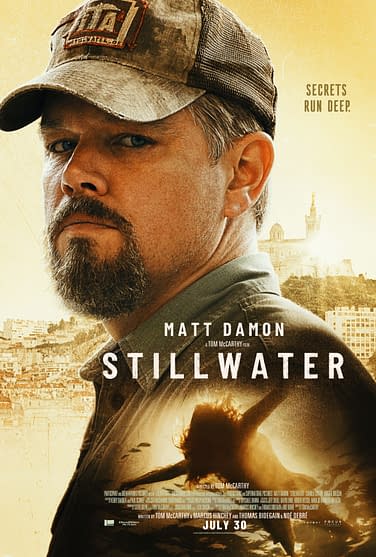
Stillwater – Review

Cert – 15, Run-time – 2 hours 19 minutes, Director – Tom McCarthy

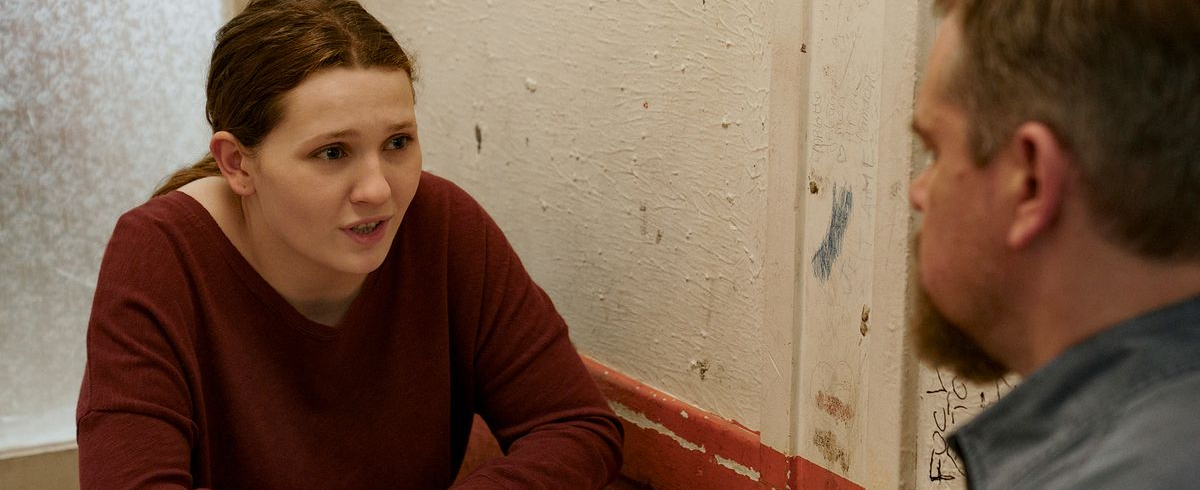
An American father (Matt Damon) searches France for the man his daughter (Abigail Breslin) claims committed the murder that she has been falsely imprisoned for.

Much like Matt Damon’s central character, Tom McCarthy’s latest, Stillwater, wastes no time in rushing straight into its narrative. You’re thrown straight into the middle of it, almost feeling that perhaps a detail or two has been missed, as Damon’s Bill meets with his daughter, Allison (Abigail Breslin), who is serving a nine year sentence for the murder of a collegemate who she was in a relationship with at the time. It’s a long journey from Oklahoma to the Marseille, however he makes it regularly to check in on how she’s doing, especially as she claims to have been falsely imprisoned. On discovering further details about the murder and the events that led up to it Bill steps away from lawyers, judges and his own daughter’s wishes and begins to investigate himself. Trying to find the man who Allison claims did commit the crime.

All thoughts that something may have been missed out are quickly dispensed of and you find yourself almost unknowingly being tightly gripped by the film as it travels across its narrative. A tone alike to a neo-western thriller is established as Damon finds himself diving further into unknown and uncertain territories looking for dark answers in dark places. And yet, this isn’t an entirely dark film. Yes, there are moments of tension and slight chase-adjacent action, and certainly there are some dark character moments throughout, but co-writer (with Marcus Hinchey, Thomas Bidegain and Noé Debré) and director McCarthy ensures some lighter moments are dashed throughout the frantic investigation.


Bill soon finds himself residing with theatre actress Virginie (Camille Cottin) and her young daughter Maya (Lilou Siavoud). For the most part the relationship is a close and friendly one. There’s an almost family dynamic to the relationship, at least between Bill and Maya – she teaches him French, while he speaks English which she pretends to understand – a bond that he’s perhaps missed over the years with his real daughter having been in prison in another country for so long. However, as slight romantic tones are brought in part way through the second half of the film things begin to slightly crumble. Initially the shifts in tone feel well done, especially as this isn’t a huge tension-filled thriller, however as more elements are brought in towards the close of the film the run-time is pushed on and it begins to feel overlong. At 139 minutes there’s a lot going on in the final stages and some of it does feel as if it could be dialled down to avoid the slight dip that begins to appear. It leads to an ending that feels unsure of itself. In terms of where it should end, when and how.

And yet, before all of this, there’s a large proportion of the plot that is perhaps unaware of just how good it is. There are occasionally tones of hopeful-outsider-Oscar-contender within Stillwater, and yet they never scream or shout and beg for awards style attention. And perhaps that’s because of the western-thriller tone and the way that it brings you in and engages you within the personal search that Damon’s often dead-pan central character embarks on, in the hope of freeing his daughter from prison four years early, justice for the allegedly wrongly convicted five which she’s already served. A narrative that holds your interest and intrigue, while managing to throw in some dashes of evenly balanced tension and darkness within the drama, and lighter elements of bonding between Bill, Virginie and Maya.

The main issues come in the fact that it becomes aware of everything it hasn’t done that it’s wanted to do and either rushes or it briefly mentions points in the latter stages of the piece, making it feel somewhat rushed and overstuffed itself. Once again, by the time it gets to the ending, the film feels overlong and unsure as to where to go or what to do when to wrapping up its story. It’s a gradually declining nature to what had become an engaging, and at times thrilling, drama. It’s a shame that, like Matt Damon’s character in his research throughout the streets of Marseille, what begins to work so well was perhaps that way because it held off certain details until a rushed panic towards the end.

After being thrown into it, Stillwater takes time to grip you with its engaging tone and style. However, it then rushes its other ideas and plot points at the uncertain end of an overlong film.

Rating: 3 out of 5.

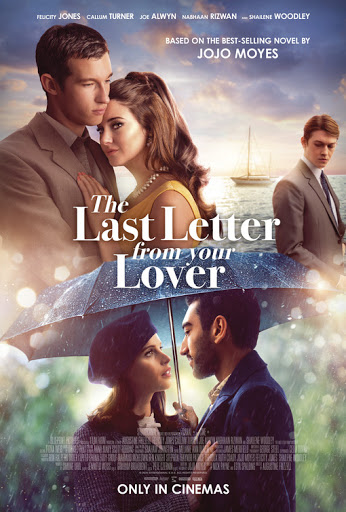
The Last Letter From Your Lover – Review

Cert – 12, Run-time – 1 hour 49 minutes, Director – Augustine Frizzell

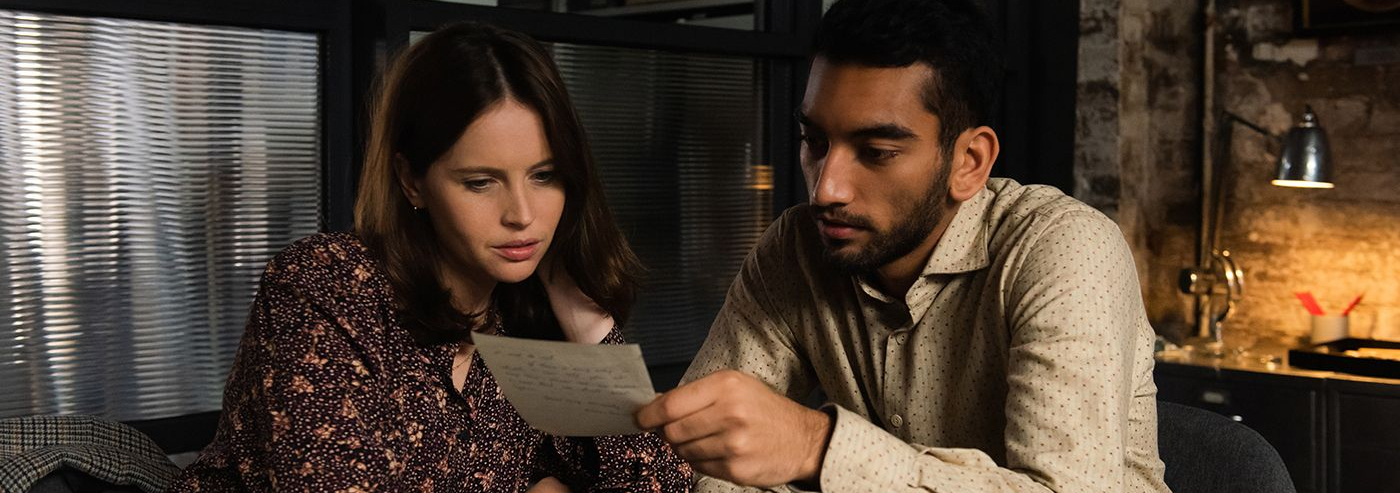
While researching for an obituary, journalist Ellie (Felicity Jones) unveils a series of unrelated letters telling the story of a lost love affair.

There’s an almost dreamy nature to the idealistic portrait of a picturesque 60s love affair in this adaptation of Jojo Moyes’ 2012 novel of the same name. As Shailene Woodley’s Jennifer and Callum Turner’s journalist Anthony meet in the Southern French heat a spark is formed in their initial debates, apologies and insistent tours of the area. The lengths of their relationship only skyrocket from there with plenty of very steamy moments for what is a 12A rated film. It differs greatly from the grey array of flings that we see modern day London-based journalist Ellie (Felicity Jones) wake up to after breaking up with her boyfriend of eight years – only seeing him in early pictures towards the start of the film. There are two distinct tones established and it does sometimes lead the film to feel like two different films entirely.

This is even with the links between the two stories. Ellie, while researching for an obituary, uncovers a mysterious letter between the two lovers and begins to delve deeper into their affair – Jennifer is married, although with little connection, to wealthy industrialist Laurence (Joe Alwyn). Jennifer herself is piecing together her own experiences, after suffering memory loss due to a car crash we’re almost experiencing a flashback within a flashback. It appears that we spend the majority of time in the mid-60s settings, with their brightly coloured costumes and scenic views it’s often like looking a ta holiday brochure from the time, and this is certainly where the film’s strengths lie. It almost feels as if just this story could run on its own and provide amusement enough – all before Jones’ near subplot comes more into play and effect in the second half of the piece, when things begin to balance out more with less jumping around.


Once out of the restrictions of just five minute segments with a somewhat cliché modern rom-com style – Ellie finds herself getting close to her paper’s archivist Rory (Nabhaan Rizwan), a relationship which doesn’t quite match the flare of Woodley and Turner’s; perhaps due to less screen-time – the narrative of the modern day based events is able to flow with more ease. They certainly pick up more once given more time to breathe, and the interactions of the cast, particularly the two central characters in this time, are advanced beyond the basics. Jones appears to feel more at home in the character, initially feeling slightly out of place due to being underused in the first half of the film where she’s given little screen time. However, as things begin to properly balance out and Ellie’s research and personal life begins to wrap around the unfolding and increasingly risky affair Augustine Frizzell’s film truly shows itself as one of two halves.

As the narrative finds its stride you begin to become more engaged with both stories that are being told – therefore forming a more effective impact when they finally begin to properly meet and develop together. There may still be some more conventional elements in place, but they don’t appear to be as obvious, and certainly don’t begin to remove anything from the film overall. It is perhaps proof that the lure of the 60s is the film’s biggest and best draw. Keeping the viewer in place to see how that pans out. However, there’s still amusement and engagement to be found elsewhere once everything is in play, and given more time to be explored. It just, much like the long-distanced lovers who tell their story through the various scattered letters, takes a bit of time for things to be explored and unravelled enough for this to kick in.

Certainly a film of two halves The Last Letter From Your Lover’s biggest draw is the picturesque 60s backdrop. Once out of cliché rom-com territory and given more time, the modern day segments help progress the story, even if its own relationship isn’t as strongly felt.

Rating: 3 out of 5.

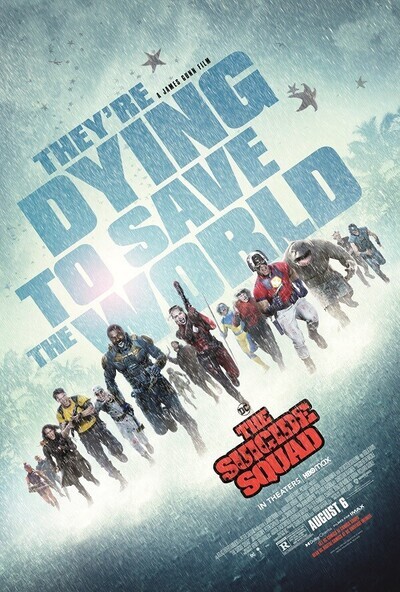
The Suicide Squad – Review

Cert – 15, Run-time – 2 hours 12 minutes, Director – James Gunn

A team of killers and villains is put together to destroy a sinister lab on a small South American island

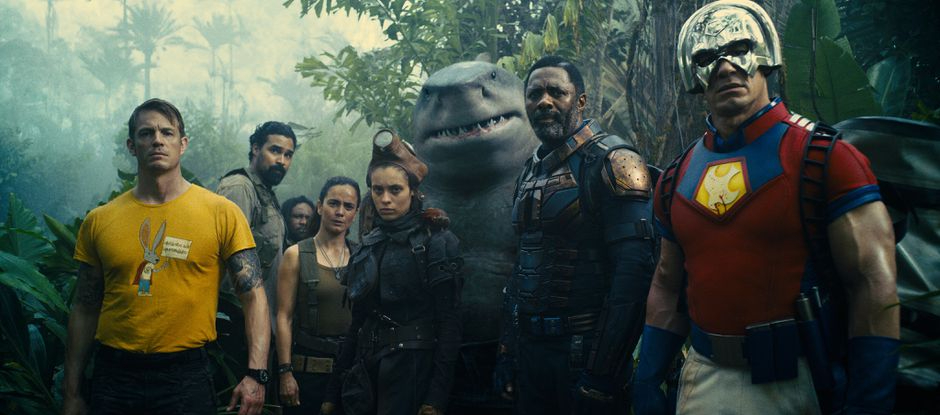
As Michael Rooker’s Savant wipes a crushed bird’s blood from a ball he’s been throwing around his prison cell onto his trouser leg writer-director James Gunn makes clear that The Suicide Squad is an intensely different affair to DC’s 2016 misfire, Suicide Squad. Set as a standalone-sequel-reboot we see a similar formula of a taskforce of, some familiar, imprisoned killers and villains assembled to complete a deadly mission for the US government. In this case Task Force X (otherwise labelled the titular Suicide Squad) is sent to Corto Maltese, a small island in South America, to destroy Jotunheim, a mysterious lab run by The Thinker (Peter Capaldi) with a sinister experiment hidden inside the towering building.

With plenty of violence and fore within the explosive action Gunn never appears to cross a line with his film. Body parts fly across the screen – scene-stealer King Shark (Sylvester Stallone) can be seen casually gnawing on a human skull if he’s not proclaiming “nom nom” while eating a person whole – as characters often literally show off their skills and try to one-up each other. There’s a constant battle between reluctant member, and father, Bloodsport (Idris Elba) and over-patriotic Peacemaker (John Cena). Their feud demonstrates that Gunn recognises that despite the seriousness the characters are trying to display, they’re still characters in (often) odd, brightly-coloured costumes. It’s also nice to see the welcome return of Margot Robbie’s Harley Quinn – embracing and continuing her much more colourful, not to mention entertaining, egg sandwich loving Birds Of Prey side.


The Suicide Squad stands out from many other comic-book adaptations of recent years. It feels unique in its style. Amongst the action and humour – of which there’s plenty of both – there’s a sense of threat and darkness running throughout it. Much of it coming from Viola Davis’ returning Amanda Waller, who recruits and sends out the team in the first place. She runs with the extra detail her character is given in this feature, creating a dark, almost antagonistic presence; certainly one that creates a slight fear factor. An angered figure who asserts her authority at every possible second, eyes on the mission; without concern for others. It’s a tense, biting and, again, dark determination that contrasts greatly with that of the squad itself – who simply want to get their task over and done with, preferably alive by the end of it. Alongside a strong sense of mission within this film there’s also a clearer sense of a team unit, albeit one of people initially pushing others for the sake of their own survival. You find yourself forming a bond with a number of the on-screen figures, leading you to be further unprepared for the various twists and turns that the narrative takes.

Gunn has created a film where literally anything could happen to anyone at any time, and very often does. There’s a rush of excitement when it comes to the chaotic and unpredictable outcomes. All adding to the thrills and surprises that the film provides around plenty of its corners. It forms a truly unique piece of work amongst other blockbuster films of recent years. With The Suicide Squad, James Gunn, alongside his cast and crew, has created a bold achievement, the likes of which we might not see another of for a long time.

Bold, explosive, unpredictable and very gory and violent The Suicide Squad has a subtle yet sparkling dark streak within its action and humour. Never forgetting the fact that it poses not so serious characters in an explosively serious situation.

Rating: 4 out of 5.

Jungle Cruise – Review

Cert – 12, Run-time – 2 hours 7 minutes, Director – Jaume Collet-Serra

Avid explorer Lily (Emily Blunt), alongside brother MacGregor (Jack Whitehall), enlists the help of boat skipper Frank (Dwayne Johnson) to take them down the Amazon, in the hope of finding a tree with petals with advanced healing powers.

As explorer Lily (Emily Blunt) gently cruises down the Amazon river, gazing at the many sights and colours on display, she comments to boat skipper Frank (Dwayne Johnson) that “it’s like drifting through the Garden of Eden”. While this isn’t quite the look and feel that Jungle Cruise creates for the viewer it certainly captures the theme park ride essence and spirit that inspired it. You can’t help but get caught up in the scenery which feels as if it could be directly taken from the long-standing Disneyland attraction. There are certainly plenty of moments, particularly within the film’s first act, where sequences of constant action, escapes and close calls give the impression that the film is trying to give the audience a feeling of being on a ride, with constant thrills and little room to properly breathe in-between them.

However, as things slightly calm down and the crew, which also consists of Lily’s much posher brother MacGregor (Jack Whitehall), the narrative is put further in place. Frank has been recruited to take the siblings down the Amazon so that Lily can find a mysterious petal known as the ‘tears of the moon’; said to have complete healing powers, which could revolutionise medicine. Unfortunately, the trio aren’t the only people searching for the petals. Hot on their tails, equipped with missile-launching submarine is German Prince Joachim (Jesse Plemons), who desires to use the petals to win the ongoing First World War. Tracing the steps of doomed 16th century conquistadors in hope of fulfilling his seemingly self-set mission.


There’s a lot going on in the film, and it certainly fills up the 127 minute run-time that it holds. Yet, focus does sometimes seem to shift every now and then from the core story and the various characters involved in it to a focus on an apparent connection between Lily and Frank. While Blunt and Johnson play convincing friends, where the film feels most comfortable with the characters’ relationship, when a romantic interest begins to come into play things slightly come apart. It’s not that their performances are bad – although Johnson, despite his ever-present charisma, doesn’t quite feel like the right choice for his role as a fraudulent and deceptive boat captain; certain moments come crashing down when revealed to be one of Frank’s elaborate setups – simply that the romantic line the film wants to create for them feels less preferable to the simply friendly bond that’s initially set up between the two.

It’s evident that Jungle Cruise had a big budget (around $200 million). It shows in much of the scenery, and some of the spectacle. And while, as already mentioned, there’s a certain visual flair to the piece the spectacle doesn’t always fully engage you. There’s not always a chance to properly drink it in as the camera cuts and changes so frequently – particularly during action sequences – and often doesn’t appear to have a proper focus, creating a dizzying distance from the film and the unfolding action at that moment.

Much like the narrative certain elements appear to have been seen before and don’t quite grab the viewer as much as the the cast and crew would perhaps hope. The film as a whole isn’t exactly bad, and there are certainly some watchable moments; it simply feels rather weak at certain intervals, and often feels as if it’s packing a bit too much in in certain scenes and sequences. The visual nature alone is simply not enough to keep you engaged within the exotic environment that surrounds the boat for large portions of the run-time. While the theme park look is a plus for Jungle Cruise, the occasional attempted style isn’t. Causing many moments to feel too chaotic and dizzying as you try to keep track of the action, and then the rather familiar plot on top of it.

Amongst the better films based on Disney theme park rides, Jungle Cruise both benefits and falters because of its theme park stylings. The performances and look are good, but the action and narrative often lack engagement.

Rating: 2 out of 5.

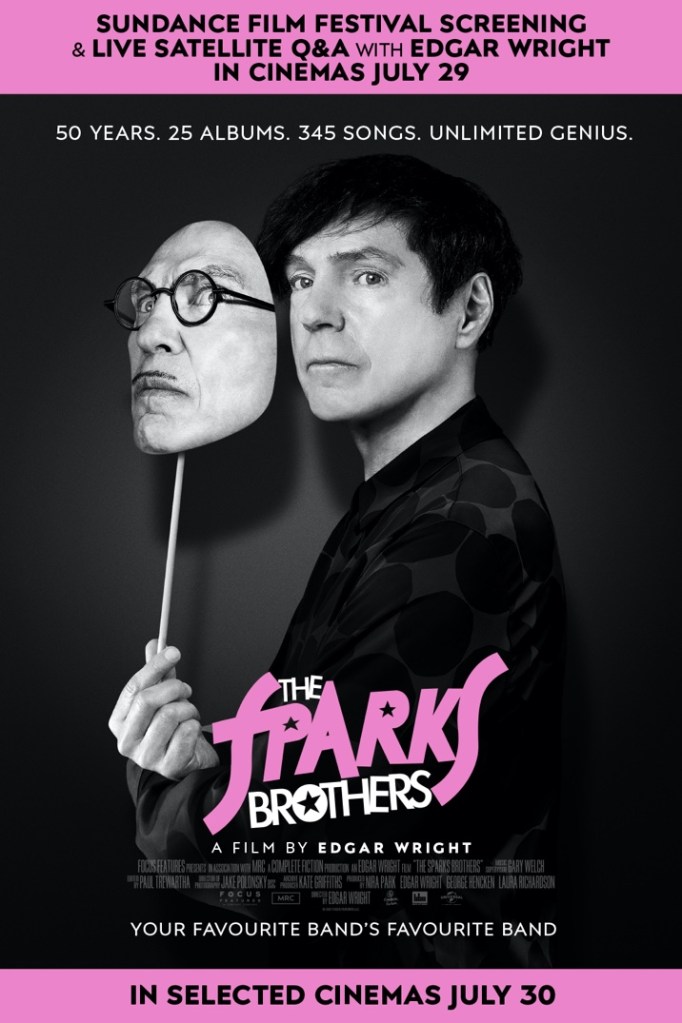
The Sparks Brothers – Review

Cert – 15, Run-time – 2 hours 21 minutes, Director – Edgar Wright

Documentary looking at the career of Ron and Russell Mael, the minds behind the songs of Sparks.

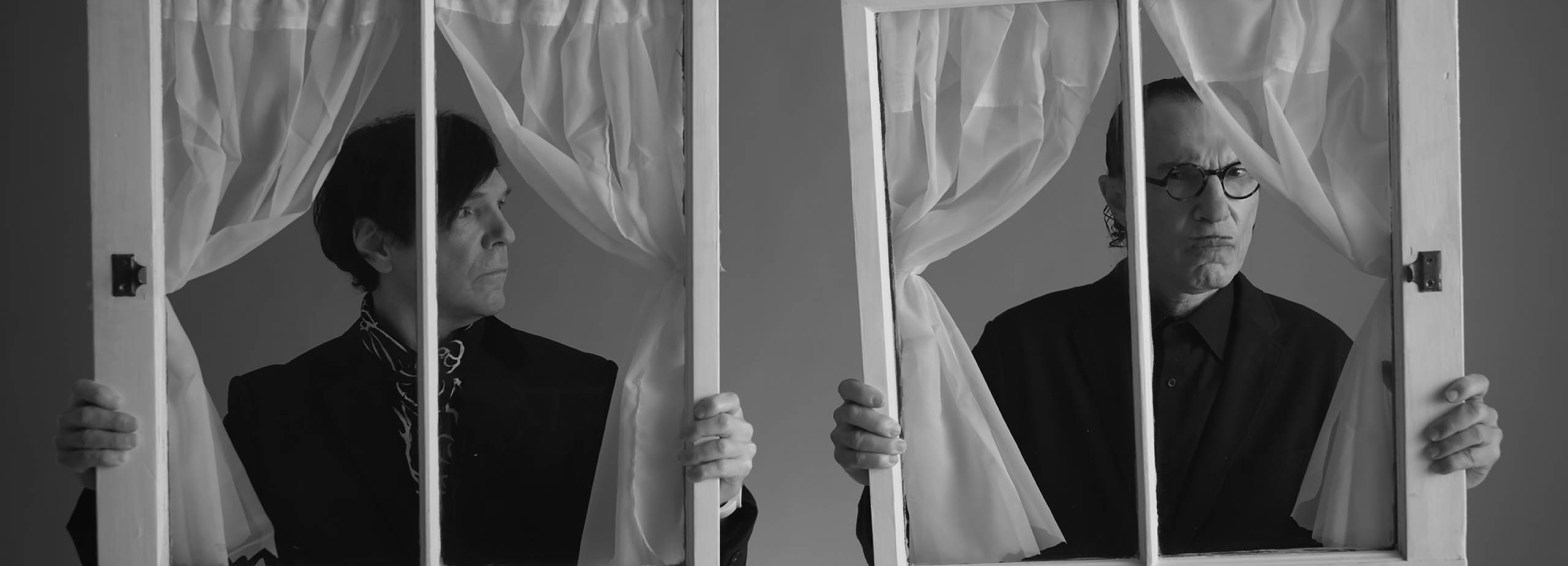
In many interviews for the documentary of their careers Ron and Russell Mael, the titular Sparks Brothers, have claimed that the only person who could properly capture their style and music in a film is Edgar Wright. On seeing the 25 album spanning documentary it’s hard to argue with this. Throughout the intentionally pointed-out visual gags that introduce the literal window in the somewhat mysterious lives and workings of the central duo, and indeed the film as a whole, there’s a shared sense of humour and respect from director to band, and vice versa. Wright credits himself as a “fanboy” of Sparks, delving deep into their songs and discography throughout the almost two and a half hour course of the film. There’s a lot to get through within the diverse selection of albums and tracks that the film, and its various talking heads, gives time to.

Present is a true celebration of the way that Sparks never leaned into what was truly popular at the moment, they simply continued to do their own thing (while experimenting with certain forms and genres – often meaning that they were ahead of the curve). If they did create something for the mainstream it was self aware and jokey – a dance track called Music That You Can Dance To is a highlight amongst a soundtrack full of earworms. Whether you’re already aware of Sparks, or; as many viewers may be, completely unaware of them, there’s likely to be plenty of songs going around your head for days to come after watching the film. The infectious heart and spirit of the siblings (who undeniably look wonderful for their ages!) filling each one. Never do any songs or albums feel rushed or skipped over. The run-time certainly allows for Wright to give enough time to the creations of his subjects, capturing the passion that there is for them and what makes them so unique.


There’s a point made that there could be hidden meanings and points within each song, and this is pointed out through dictionary definitions provided for words in the titles, which appear in bold, towering letters. It pushes the idea of the elusive nature of the band – something which made them wary of having a documentary made about them for so many years. The brothers themselves, while looking back at their career and a number of their songs and interactions with various band members, continue to have an air of mystery around them. Lyrics are looked into and recited, and yet it’s not so much for analysis, more amusement and certain figures saying how much they enjoy certain lines, even if they don’t always make sense – or simply how certain figures have interpreted them themselves. And with such a range of personalities, ranging from the likes of Beck, New Order and Duran Duran to Mike Myers, Jonathan Ross, Adam Buxton and the legend that is ‘Weird Al’ Yankovic, there are plenty of thoughts and opinions to hear. Yet, none are ever louder than others or appear to take precedence, while also not allowing the film to feel too busy.

With the interviews being shot in black and white, Wright allows for the brightly-coloured music videos, performances and brief animated segments to truly pop on the big screen. Further showing the imagination and creativity of the band. Bringing you further into their world, and perhaps even slightly their minds. It’s an interesting dive, and one that will certainly expand your playlist. Easing people in, no matter what their familiarity with Sparks is, for an entertaining, engaging and interesting look into who are described as “your favourite band’s favourite band”. All part of a documentary that celebrates identity and expression, both creatively and in life. Through a selection of unique songs, plenty of which were clearly ahead of their time, there’s plenty to enjoy about being in the company of Edgar Wright and the Sparks Brothers for this 141 minute ride.

There’s plenty to get through within The Sparks Brothers, and none of it fights for attention or space within this detailed and entertaining dive into a wholly creative band that, 50 years on, maintain their unique mystery.

Rating: 4 out of 5.

‘Love Without Walls’ Crowdfunding Interview

Writer-director Jane Gull and producer Karen Newman join me to discuss their upcoming feature film Love Without Walls, and the crowdfunding campaign currently behind it.

If you want to support Love Without Walls, or find out more about it, you can find the campaign here.

Links to Karen and Jane’s Twitter accounts can be found below, alongside those to their requested songs; if you want to listen to them:
Karen NewmanGertcha – Chas And Dave
Jane GullStep By Step – Niall McNamee
China In A Box – Niall McNamee

Keeping The Projectors Rolling: The Future Of Cinemas Post-Pandemic

“The movies”

While it became something of a meme across Twitter in the build-up to Fast And Furious 9 the sentiment within Vin Diesel’s simple, two word expression is hard to argue with. There’s truly nothing like the cinematic experience. The large-scale visuals; explosions and sweeping landscapes, the roar (or perhaps silence) of the speakers, the collective audience experience of laughing along at a character’s stupid decisions in a comedy, or the edge-of-your-seat tension at a character’s stupid decisions in a horror. However, how have the places in which we view and participate in such spectacles fared during the pandemic? What does the future look like for them now – especially after a year of closures, few new releases and, for some, disputes with distributors?

I was lucky enough to have the opportunity to speak to managers and curators from a handful of different cinemas about their experiences working in cinematic exhibition throughout the pandemic. Independent cinema Watershed in Bristol, arthouse-specialising The Little Theatre in Bath; owned by chain Picturehouse, and a branch of a major UK chain cinema who wished to remain anonymous.

As with most businesses and industries, the last 12 months and beyond has created much uncertainty in regards to the future of cinemas. Headlines forecasting doom over low audience numbers, Tenet not making as much money as ‘expected’ and more appeared to overshadow the seemingly few positive angles that were thrown deep into the mix. “We were most worried after the second lockdown, just before Christmas” explains the chain manager. “We saw very few customers, because we just didn’t have the films”. Posing itself as a family cinema the chain simply didn’t have the families wanting to risk going to the cinema, despite safety precautions in place. Alongside this new releases, particularly major wide-release blockbusters, were a rarity. With little to attract audiences cash inflow began to dry up, creating worry and risk of closure. However, as things have reopened this time, and with major releases such as Black Widow and Fast And Furious 9 – even Space Jam: A New Legacy has proved a success – things are gradually getting back on track, thanks to the increase in demand.

Meanwhile, Watershed view things slightly differently. The main worry is with the world in its current state. With daily cases continuing to fluctuate and trepidation still in the air how far to go with reopening is still a matter of questioning. While able to open up to full capacity Watershed has chosen to limit screens to 50% capacity (up from their previous 25%) – The Little Theatre, who managed to secure funding during the pandemic, allowing them to keep their doors open and projectors on, claim to be continuing with measures in order to keep their staff and customers as safe as possible during this time of “uncertainty”. Watershed is understandably, particularly in regards to their location – which has often been hit hard by the spread of the pandemic – wary. “First time round it felt like we were reopening for good, however that was not to be… We have learned not to be too optimistic, but pragmatic. So, whilst this feels like we are on a journey to ‘normal’ we do not know”.

Yet, perhaps the biggest headline that dominated cinemas in 2020 involved just what they would be showing when they finally reopened. After a falling out between some chain owners and Universal over the PVOD release of Trolls: World Tour there was a refusal to show any films that came under the studio and distributors label. It was an odd time, particularly considering the franchise titles, and money, that would be missed out on – including the likes of Jurassic Park, Fast And Furious and Despicable Me – if they were to not be shown. Yet, the chain, which was caught up in this debate, casually claims “it wasn’t really anything to worry about, we kind of knew that it would be ironed out”. While it appears that bridges were rebuilt and the distributor-exhibitor relationship is certainly changing much quicker than before, there have still been a couple of select titles that have escaped screenings at certain cinemas, allegedly due to ongoing conversations with distribution partners.

But, if the landscape looked rough for such chain cinemas, even The Little Theatre admits with its largely arthouse and independent focusing programming “we cater our programming to our audience to ensure that we are screening their choice of film… Distributors weren’t releasing many films for us to screen last year”, the independent market seemingly provided plenty of titles. The Little Theatre finished their line of thinking with “we are certainly spoilt for choice at the moment”, and while this wasn’t quite the case for Watershed during the summer of last year they certainly state that “there was mutual support across independent distribution and exhibition”. Amongst the doom and gloom that the news often dwells upon we saw plenty of success stories about just how well independent films and cinemas were doing amongst the somewhat struggling sector. British indie features such as Rocks and Saint Maud were two of the standout success stories from the year, doing well at the box office against titles such as Bill And Ted Face The Music – and, for the former, perhaps earning further BAFTA success because of it.

While chains appear to have had communication and support from each other – regular meetings and visits with the likes of regional managers, and message communication with fellow managers – the independent sector has truly shown strength in support. “There has been a really positive sense of community” details Watershed’s cinema curator, adding “through our role as Film Hub lead in the South West we have been supporting independent cinemas across the South West, which has been a great source of support and sharing. Also… sharing intelligence with independent cinemas across the UK with the [UK Cinema Association]”. Independent cinemas appear to have long had a sense of unity and support towards each other, and now more than ever that has shown. Campaigns detailing and describing just how important independent films and the cinemas that show them are lit up across social media in the last year. Crowdfunding pages and petitions to keep historic, landmark cinemas alive – such as The Phoenix in East Finchley – achieved large scale pushes from fellow cinemas and audiences alike.

In regards to the current, still slightly changing, release schedule there’s a heavy amount of optimism from all corners. Perhaps, the surprising factor in this optimism isn’t so much linking to the increased slate of blockbuster films due out; it’s more to do with festivals. Watershed cites the recent Cannes Film Festival and the excitement that this has drawn up to a number of potential upcoming releases. With film fans ready to attend festivals again this has been a sign of positivity for cinemas who will hopefully be showing such films at some point in the near future, after further hype and build-up. As for the current moment in time awards season has also created a buzz of excitement in returning to the big screen experience. Best Picture winner Nomadland, despite being available on Disney+ for free in the build up to cinemas re-opening, was one of the success stories when the lights were once again dimmed (after being turned back on) – “we have had a decent slate of this year’s award-winning films being released which has kept us busy” explains the manager of The Little Theatre.

They explain that their usually quiet summer period has seen plenty of demand. Part of this is put down to the quick restarting of various strands within their programme. The Discover strand showcasing new independent films has proved popular, as have Silver Screen events. “We have had consistent numbers since we reopened, greatly helped by the consistency of films that we are screening”. This is partly put down to the vaccination scheme potentially making people feel more comfortable about returning to the cinema. Watershed too has seen a variety of ages walking through the door, from those in their 20s to the over 70s.

The only cinema still seeing some trepidation in booting strands back up is the chain (Watershed will soon be running and hosting annual festival Cinema Rediscovered, alongside having already hosted a number of introductions and Q&As). Wary about restarting their silver cinema screenings due to a lack of elderly customers they have struggled with their kids club because of a lack of new releases in the build up to reopening, something which appears to have changed since talking to the manager. Perhaps this is down to the decisions of the chain owners themselves, “we usually get told what to show” they state. However, they add, in reference to continuing occasional throwback screenings – such as recent ones for Fargo and Saving Private Ryan – which proved successful after previous reopenings “we have seen good audiences for those and they were really popular last time around. I saw Back To The Future and everyone loved it, there’s something about that experience, revisiting something with an audience [on the big screen]”.

It’s recognised that, as already mentioned at the start of this piece, there is nothing like the big screen experience, especially with an audience. Each person I spoke to almost instantly acknowledged that they were looking forward to being able to, safely, be at full capacity again. Allowing for films to truly come to life and make an impact on the big screen. Whether they be new major releases, revisited classics, smaller character pieces or something odd, obscure and under the radar. “Initially I thought people were just wanting to get out of the house [after so long], but overtime… it’s become clearer that people really want to be here and see films this way, with an audience” admits the chain manager in a moment of reflection, looking back over how the past two months have put the cinema in a better spot to the one in which it found itself a year ago.

The main phrases that I took away from these conversations is that we’re entering a time where cinemas are more “confident” (The Little Theatre). The landscape is one of “hope” (a word which echoed throughout the answers of the chain manager). And while there may still be some issues along the road, for now – and based on the continued support that cinemas have been seeing throughout the pandemic and since this most recent reopening period – the future is looking strong. Relationships with distributors are certainly changing quicker than ever, but to perhaps benefit both parties further, and even customers. With such changes we could perhaps even see wider Netflix releases in cinemas sooner than we may have initially thought? The pandemic has seen a change across the exhibition industry as a whole, and how cinemas with varying showcases have come together to support each other, and adapted individually – including in what they screen. The main takeaway appears to be the hopeful view that while “fragile” (Watershed) the future is one “with lots of great films” viewed in a way that has an effect unlike any other.


When asked how people can support their respective cinemas, aside from buying tickets, there was a strong case from the cinema managers and curators for cinema memberships, which often give further bonuses/ discounts in terms of food and drink, and special screenings. In addition to memberships plenty of cinemas also offer the likes of gift cards and reward schemes. Many also have cafes and bars as a part of them, so if you don’t feel safe going to see a film just yet there is the opportunity to simply buy a drink – or even a snack, etc – to take away. A number of independent cinemas also have ways in which you can donate to them, which you can likely find details in relation to on their websites, alongside the various ways in which you can support them. Or, if you’re able to afford it there are lots of cinemas which offer the chance to hold private screenings and events – details of which are also available through their websites. “It’s a challenging time for everyone, and the more we support each other the more likely we will get through this” (Watershed).

Old – Review

Cert – 15, Run-time – 1 hour 48 minutes, Director – M. Night Shyamalan

A group of holidaymakers find themselves trapped on a beach which causes them to age rapidly.

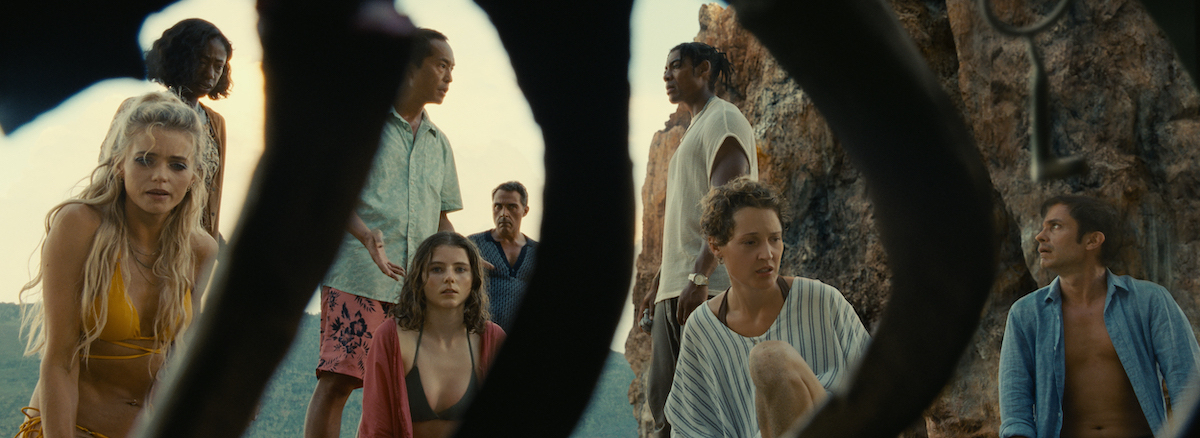
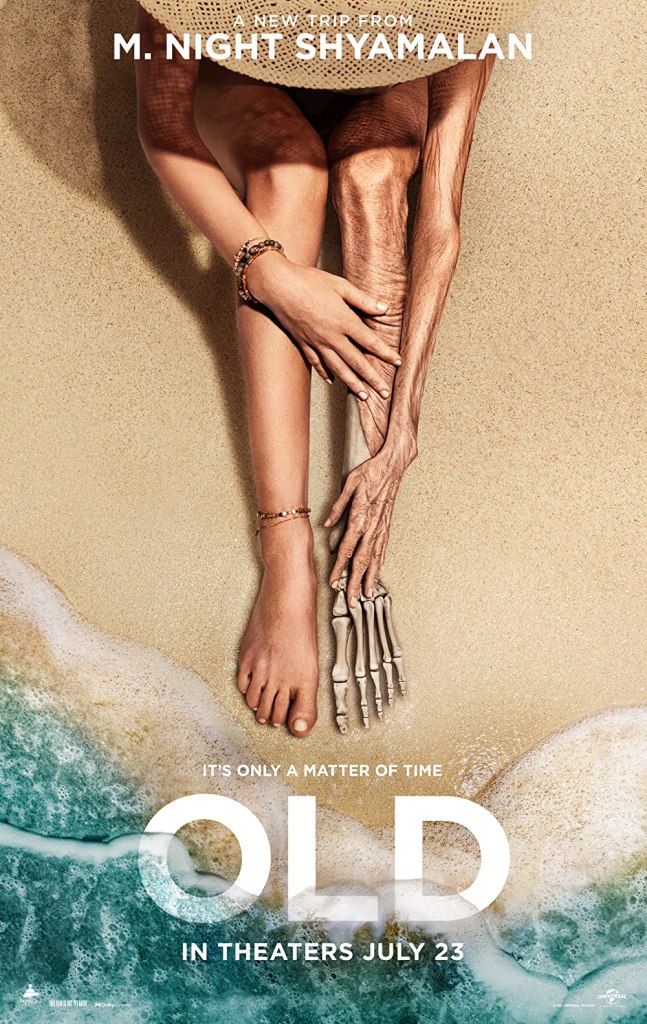
The trailers for M. Night Shyamalan’s latest gave the impression that it could be very hit or miss. Something highly creepy and unsettling, or where the concept is pushed too far making for an overambitious watch. In actual fact the released product is something in-between the two. Based on the graphic novel Sandcastle, the film sees a group of holidaymakers escape the confines of the luxury resort that they’re staying at to spend the day on a secluded beach. However, it appears that once on the beach there’s no way of leaving – instead the characters find themselves trapped in the fearful state of rapid aging, seemingly caused by their new permanent environment.

While the discovery of a dead body creates some mystery the real kickstart to the fear and panic that the group experiences is the dramatic change in central couple Guy (Gael Garcia Bernal) and Prisca’s (Vicky Krieps) children, Trent (Nolan River) and Maddox (Alexa Swinton) – seemingly having aged by 5 or 6 years and taking the form of Alex Wolff and Thomasin McKenzie respectively. While this family unit forms the core of the film, we see most of the events through, or close to, their eyes, there’s no escaping the inevitable changes that everyone else on the beach faces. There’s little room for comment on aging and what, for some people, comes with it. There are mentions and slight moments hinting at dementia or physical or sensory debilitations, however there’s not much else. In fact, much of the film appears to be just what it shows on the surface level as the group of largely strangers attempt to escape the beach and find help, despite what appears to be an unnatural force keeping them there.


Despite the area being relatively small there’s still plenty of space for characters to wander off and be forgotten about while others demonstrate rising tensions. Particularly the untrusting form of Rufus Sewell’s doctor Charles, creating little developed racial tensions with famous rapper Mid-Sized Sedan (Aaron Pierre). It feels like there’s so much that Shyamalan wants to show that instead of a properly flowing plot he instead creates patches of ideas, like dramatic sketches with increasing and narrative progressing stakes and effects on the characters who appear in them. While the ideas and concept are certainly interesting and the film itself is largely watchable there’s something that doesn’t always sit right in terms of the execution. A toss-up between horror-thriller and tense mystery is in place and there’s a constant battle throughout the film for which one takes control. Especially when characters or eventual deaths are forgotten about and barely referenced again.

Again, the general idea of many points is good. It creates something that keeps you in place, even if you aren’t always properly engaged with the film as a whole. This is particularly in the case of the first half of the film where for the most part the majority of ideas appear to still be saying ‘look at how weird this is’ continuing to point out the obvious; that these characters are aging rapidly. In such a busy film it almost feels like a bit of a waste and begins to form an unsatisfying sense around what’s unfolding, or is still to unfold.

This is certainly a film where a lot surfaces to mind after having seen it. For the time that it’s on, however, there is something watchable there. You may notice some issues, but there are certainly some good ideas present that make for something decent for the time that it’s on. And, in fact, it does gradually get better as it goes on, mostly when out of the fairly lengthy build-up. But, once out of there Old presents something with some eerie moments and style. It helps to capture a specific mood that does help to push things along and keep your intrigue within certain elements that are at play over the course of the feature. It may not be a perfect film, and it’ll likely divide audiences, but at least you don’t feel yourself aging while watching it!

Far from perfect, there are some clunky moments within Old. However, as it goes on, there are some interesting ideas and moments to be found within its collection, making for an overall watchable experience for the course of the run-time.

Rating: 3 out of 5.