Kingdom Of The Planet Of The Apes – Review

Cert – 12, Run-time – 2 hours 26 minutes, Director – Wes Ball

When his village is attacked and destroyed, chimpanzee Noa (Owen Teague) sets out to find and free his tribe from an ape trying to unlock a secret which could give him control of the now planet of the apes.

When Disney bought 20th Century Fox one of the first things they set to action was working on new instalments of some of the studio’s biggest franchises. When it comes to the recent series of Planet Of The Apes films the right thing was done in moving things on from the days of Andy Serkis’ Caesar by over three hundred years. Now based in the 24th century we are well and truly in the planet of the apes. Apes live in various tribes amongst a new wilderness, growing over what were once skyscrapers and airports, almost all backdrops we see take the form of natural land.

We follow chimpanzee Noa (Owen Teague) who the night before a major ceremony which will see him develop in life sees his village attacked and burned down by a group of weapon-wielding apes. Presumed dead he takes it upon himself to travel to the once-forbidden area beyond his home to track down his friends and family and get revenge. As with the previous entries in this iteration of the franchise the visual effects, motion capture performances and human characters blend seamlessly. There’s no hint of uncanny valley in any of the visuals throughout the film and once again it’s easy to buy into the genuine nature of the characters and their surroundings.

Whilst travelling, Noa encounters various new faces including key figures orangutan Raka (Peter Macon) – the most likable presence of the film, recounting the words of Caesar which he claims have been forgotten and twisted over the years – and human Mae (Freya Allan), who appears to be hunted by those who attacked Noa’s village. There’s a lot of build-up before meeting these characters, and it even takes a while to progress further as they make progress towards Noa’s uncertain destination. At almost 2-and-a-half hours the run-time is certainly long, particularly during this first half where everything is still coming together.


Once in the second half we’re finally introduced to villain Proximus (Kevin Durand), an ape trying to unlock a secret which he believes could give him total control of the planet of the apes. It may be the case that things move quicker once everything has been set out or it might be that we simply spend less time here than it takes to get to the location, but the feeling is certainly that things pick up. The narrative might feel somewhat familiar, perhaps emphasised by the contrasting visuals and setting, but there’s luckily still some effective action here and there.

Early on a bit more context and insight might help when it comes to certain conflicts, and even the initial attacks by Proximus’ followers, but there’s still an engaging nature to things thanks to the effective way in which the ape characters come across and, now fully speaking, communicate, even if some introductions do feel a bit staggered as the world opens up.

Without Caesar this entry manages to find success, although its best successes lie in the moments that call back to the character and feel particularly inspired by him – especially as the central characters discover that man and ape once lived together in peace. Not a whole piece aimed at expanding a world and leading to more sequels, although the final stages are undoubtedly building up to more in the future, but interest is created in what might be the case in the wider world outside of what we see here, and just what the rest of the developing planet of the apes is like, and how apes interact with the almost silent human figures living in the wilderness in minimal numbers. As a continuation and potential new starting point this is an overall solid enough bridge-like new chapter in this particular saga.

While the run-time is felt due to a lengthy first half, and familiar narrative, there’s likable action and characters within Kingdom Of The Planet Of The Apes, helped by the consistently brilliant visual effects and motion capture performances which bring much of what we see to life.

Rating: 3 out of 5.

Love Lies Bleeding – Review

Cert – 15, Run-time – 1 hour 44 minutes, Director – Rose Glass

Gym manager Lou (Kristen Stewart) finds her distant family’s shady activities reaching back to her after she meets competitive bodybuilder Jackie (Katy O’Brian).

Rose Glass’ sophomore feature is drenched in sweat. From the grime of a gym workout to the heat of a night of passion to that induced by fear, worry and panic, it constantly takes new meaning as tensions rise, and bodies twist and pulse, throughout this thriller.

It’s 1989, the world has been graced by Die Hard and guests at Louville Shooting Range have increased, especially when it comes to trying out the guns seen in the film. The weapons are small, powerful and sensitive. Passing through town and needing to make some money before heading to Vegas for a competition, bodybuilder Jackie (Katy O’Brian) tells owner Lou Sr. (Ed Harris) that she likes to feel and know that she’s powerful. 

Jackie quickly proves her strength that night when putting some guys in their place outside a gym, leading her to properly meet manager Lou (Kristen Stewart). The pair quickly hit it off and a relationship begins to blossom, one which might see Lou leave the small town in which she grew up, having stayed to protect her sister (Jena Malone) from her abusive husband (Dave Franco), to travel with Jackie.


However, the shady familial relations which Lou has tried to push to the side and ignore for years suddenly come to the fore, with the FBI beginning to inquire. Plans to leave become much more difficult, especially when natural strength begins to mix with steroids and both Lou and Jackie – whose body we see, and hear with pulses and cracks rippling across the speakers, growing stronger – find themselves mixing blood and sweat as rage and long-building emotions begin to take control.

Glass captures an intensely stylish small-town world where the real fear comes through the idea that everyone may well know each other, and could pull a consequential string at any time for their own gain. The production design is often sparse, a set of locations giving the impression of people just getting by with what they’ve had for years; items which they could easily leave at any moment if they want, or rather need, to leave. Often featuring a good coating of dirt, dust and grime. Add in the work of cinematographer Ben Fordesman and that idea of a sweat-drenched world truly kicks in.

Go in to Love Lies Bleeding knowing little about the narrative and allow it to take its course. Let the tension rise as the central relationship, which thanks to Stewart and O’Brian who are both powerful forces here feels genuine even in such a short space of time, faces strain from the shady goings on of Lou’s family. Only slightly detailed in red-tinted close-up flashbacks, but we know from Stewart’s reactions and distance to her character’s father that he’s still a major threat while she stays around – an almost silent threat who could dispose of someone or something quite easily and move on with his day with noone questioning anything.

With each new development the film packs a new punch and, like Jackie’s body, takes something of a new form. Building the tension, and blood and sweat, for an investing thriller full of suspenseful details and relationships.

Love Lies Bleeding creates a genuine feeling to its central relationship leading to a growing tension in the tonal shifts and fits of rage which grow and burst throughout the stylishly presented, sweat-drenched run-time.

Rating: 4 out of 5.

The Fall Guy – Review

Cert – 12, Run-time – 2 hours 6 minutes, Director – David Leitch

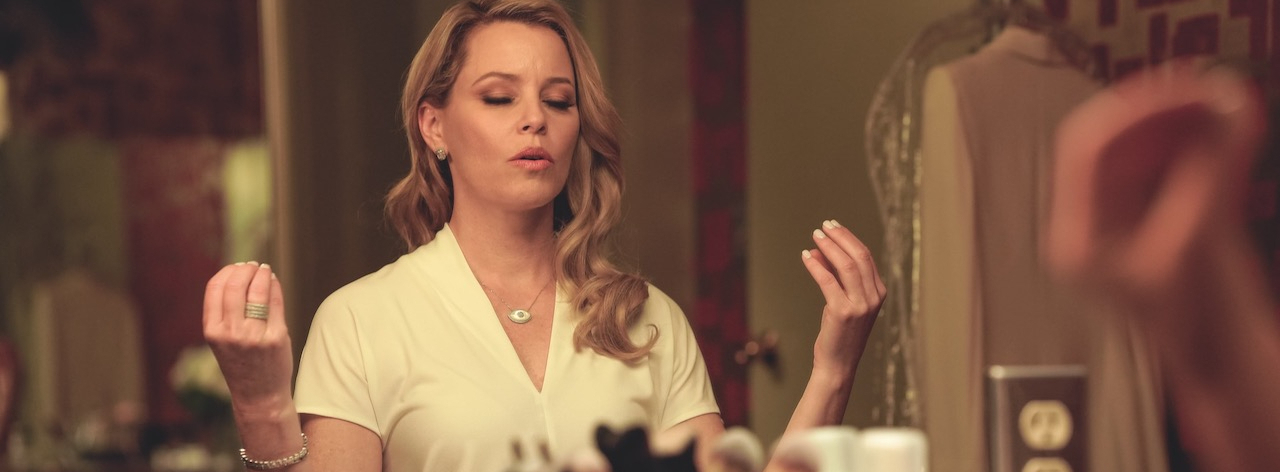
Track down the missing star (Aaron Taylor-Johnson), try to make up with the ex-girlfriend director (Emily Blunt), evade thugs after discovering a dead body and be on set in time to cannon roll a car, just the return to work stuntman Colt Seavers (Ryan Gosling) didn’t want.

The Fall Guy’s ode to stunt workers is somewhat what causes the film to shoot itself in the foot. Opening with various stunts from other films, including behind the scenes elements, a narration detailing the work of stunt people and later scenes showing some of the tricks of the film set; I subsequently spent a good number of the ensuing action sequences looking for the cuts where these figures were on screen instead of the leading cast. It’s only as I was experiencing a proper sense of tension during a fight in a skip being dragged along the road by a vehicle full of thugs, cut with the karaoke evening at the bar where the main character should be, that I realised I’d not been properly caught in the flow of these big, but brief, sequence until this point.

Perhaps it’s the better establishing of stakes, and reminder in the moment of all that protagonist Colt Seavers (Ryan Gosling) is trying to achieve, that makes this particular sequence, and the third act spectacles, that creates the tension. A reminder that while his life may be at risk, he’s largely doing this to save the sci-fi blockbuster he’s been called in to work on at the last minute. Back after a serious back injury he sees Metal Storm – the kind of exaggerated film-within-a-film that you think likely wouldn’t exist until you see the fake trailer – as a chance to make amends with ex-girlfriend Jody Moreno (Emily Blunt), a camera operator making her directorial debut.


There’s a long build-up as the pair reunite and make the tensions of their relationship clear for the cast and crew around them. Colt is thrown head first – sometimes literally – into the moviemaking process as Jody has him set on fire multiple times and begin with a major cannon roll car stunt; making up for the missing leading man, Tom Ryder (Aaron Taylor-Johnson). It’s here that the narrative properly kicks in as Colt is sent by producer Gail (Hannah Waddingham) to track down Ryder, leading him to the discovery of a dead body and a gang of gun-wielding thugs on his tail.

As the film brings together its elements its biggest successes lie perhaps in its humour. While not everything may land there’s a ZAZ-style quality to a number of the gags, although here the humour is somewhat recognised rather than played straight or away from, which helps establish a funnier film than some may be expecting. There’s a good deal of comedy within The Fall Guy and it helps to keep things moving until the bigger bursts of action, outside of the Metal Storm set, start to unfold. Moments which, while the opening scenes of the film might remove something from them, do have an enjoyable nature when it comes to some of the ideas within them. Ideas which are occasionally few due to the brief nature of the earlier sequences.

When it’s combining its elements and reminding us of what’s at stake – particularly for Colt – The Fall Guy is at its best. Tension begins to rise up, and a bigger entertainment factor is created. Particularly in the latter half of the film, the third act in particular brings things together and rounds them off in explosive and entertaining fashion. When one style or element dominates as a thematic priority it creates a slower pace, even during fights and action scenes which grow in scale as the film goes on, and has you looking for the spots where the key stunt performers are present – which doesn’t happen when you’re given more to focus on and think about, as is the case for Gosling’s central figure. The Fall Guy generally sticks the landing, but it does occasionally meet some obstacles on the way to the airbag, although dodges them well enough.

ZAZ-style humour and some good ideas help the lengthy build-up of The Fall Guy to pass by with more ease before it escalates to deal with bigger action sequences and character strands at once, leading you to stop thinking about where the stunt performers are in certain shots.

Rating: 3 out of 5.

Challengers – Review

Cert – 15, Run-time – 2 hours 11 minutes, Director – Luca Guadagnino

The lives and loves of three tennis prodigies (Zendaya, Mike Faist, Josh O’Connor) unwind on the court when the two men meet after many years in the final of a low-level pro tournament.

The opening stages of Challengers frantically bat back and forth between times like a tennis ball being ricocheted from one side of a court to another. It’s a style which gets off on the wrong foot as we see the start of the first and most interactions between the central trio of characters play out at the same time. The former being 13 years prior where they show themselves to be tennis prodigies, the latter seeing former best friends Art Donaldson (Mike Faist) and Patrick Zweig (Josh O’Connor) reunited in the final of a low-level pro tournament.

Sat in the crowd is Art’s wife, and Patricks’ ex-girlfriend Tashi (Zendaya), a former prodigy who after an injury became her husband’s coach. It’s as the three properly begin to talk at a Junior US Open party that Justin Kuritzkes’ screenplay begins to calm down and give them a bit more time and space to breath. Yet, perhaps the biggest sign of this is in Trent Reznor and Atticus Ross’ score. Working more alongside the film instead of randomly cropping up as a burst of a nightclub-ready dance track to close each scene.


As the central rivalry comes to a true clash in the final match glimpsed throughout we continue to cut back to the growth and developments in the central love triangle. While at times true feelings may be difficult to truly understand due to it seeming like there are no true feelings in either set of romantic relationships – and at some times verge on a thick air of dislike – there are still a good set of performances to lead the film, particularly when getting more dialogue-heavy scenes to sink in to.

Many have already proclaimed Challengers as a turning point in Zendaya’s career – almost a second coming – however, the film further cements the dramatic chops of all three of its leads. While the pacing of the bookends may cause a slight stumble – despite there being a good deal of investment, and some tension, as the final set plays out – there’s plenty of interest to be found in the rise and fall of the relationships. Although, sometimes thinking about the real thoughts and intentions that are a part of them is brought up a bit more than director Luca Guadagnino perhaps intends.

More is added to the drama as rivalries spark and eventually flare up. Colliding with the varying career trajectories, and struggles, that the trio individually face. What holds them back and what they put themselves into in the face of that. It all leads them to the eventual finale and the different perspectives from which they watch, or participate in, it from. There may be some bumps along the way, but after the cluttered opening stages there’s a well-performed, gradually building love triangle drama at play.

After a frantic setup Challengers eventually settles to form an interesting and effectively performed love triangle drama, with the sporting elements well wound in to bring out a further competitive streak in the film and its occasionally veiled characters.

Rating: 4 out of 5.

Boy Kills World – Review

Cert – 18, Run-time – 1 hour 50 minutes, Director – Moritz Mohr

Having been trained by a shaman (Yayan Ruhian) for many years, Boy (Bill Skarsgård) ventures back into the city to get revenge on the ruling Van Der Koy family for murdering his family.

You’d be forgiven for thinking that Boy Kills World is a video game adaptation from the style of the various bloody fight sequences. It’s certainly the thought that came to mind as an initial Street Fighter-esque view appeared at the start of another scrap, before the camera begins to swirl around the action to bring about thoughts of other games. Bill Skarsgård’s Boy punches and shoots his way through a variety of henchmen on his way to the members of the Van Der Koy family, in charge of the city he once called home, to get revenge for the murder of his family many years before.

The Van Der Koys, particularly leader Hilda (Famke Janssen) are also responsible for Boy being deaf and mute. For initial festival screenings of the film Skarsgård provided the narration for his own character, however now properly released the character’s internal voice is that of H. Jon Benjamin – claimed to be the voice from Boy’s favourite arcade game growing up. There’s a feeling that Benjamin was brought in late to the film as his narration largely seems present to simply add context to one or two moments and make quips where there may be a slight pause. In general the dialogue he’s given is quite hit or miss and feels disjointed from a film which already feels somewhat disjointed with the elements not quite gelling together.


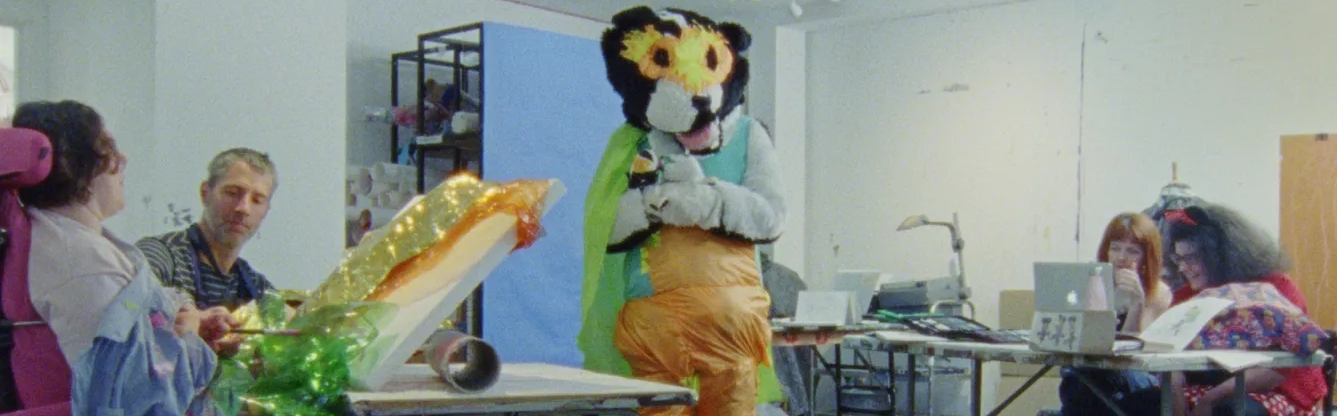
The premise is somewhat simple. Boy sees his chance to finally leave his isolated life in the woods, where he’s been trained since childhood by a shaman (Yayan Ruhian) to be able to get revenge on the Van Der Koys and intends to target them before the annual broadcast of The Culling – a live massacre of citizens who oppose the leaders. The Culling features many cheery, bulky mascots parading around to promote the breakfast cereal sponsors, a point which is amusing when first mentioned but become just another element very quickly. This is largely the case with Boy Kills World’s humour, the spark never quite manages to get above that.

Instead the focus is very much on how to get from one fight to another, and how to pick off the rival family. The latter certainly happens much more quickly than expected and shows that each member of the family almost acts as the progression of the narrative, almost a new plot point and development, over development of the central character which appears very late in the day; during the much more drawn out and less-pacey third act.

While there may be a lacking feeling to the narrative course, and indeed the attempts at humour, throughout the film there’s a contrasting sense of flow as things generally seem to go by fairly briskly, perhaps due to the simpler nature of the plot and the likable nature of the first few action sequences. However, it doesn’t stop things from eventually falling into a sense of blandness, and feeling overlong and winding in the final stages. Leading it to fall off the rails after travelling along them in a very gradual fashion up until it does.

While the fight sequences initially have a likable nature the video game style quickly wears off leading to its disjointed and simplistic course becoming much clearer and eventually drawn out and lacking.

Rating: 2 out of 5.

Abigail – Review

Cert – 18, Run-time – 1 hour 49 minutes, Directors – Matt Bettinelli-Olpin, Tyler Gillett

A group of criminals are trapped in a house with a child (Alisha Weir) they’ve kidnapped for ransom, however their victim may be hiding a deadly secret.

Abigail’s much-marketed ballerina vampire spin doesn’t arrive until almost halfway through the film. With how gradual the build-up to it is, and how much time we spend getting to know the central cast of criminals, it feels like this was meant to be a secret for the film instead of a key selling point. Perhaps this is why the film’s first half feels so gradual, we know what’s coming because of the marketing, even if it still feels as if it’s trying to reach to the big turn around that will lead things to truly kick off.

Before this happens we’re introduced almost one by one to our cast of characters, going through them in sequence multiple times. Once for their skills, once for their names, once for their hidden secrets, etc. It’s evident how far through the film’s course they’ll make it from the latter of these instances, leading in to some early predictability. While the team leader may be Dan Stevens’ slimy, streetwise gangster ‘Frank’ the focus is on Melissa Barrera’s ‘Joey’, taking on this job so she can raise enough money to look after her young son after recovering from a drug addiction. Joey is the member of the criminal team in charge of looking after their kidnapped victim, Abigail (Alisha Weir). Keep her safe in the house overnight, earn $30 million in ransom money from her unknown wealthy father, however when they find themselves trapped in the hideout house things take a sinister turn.


While not wall-to-wall in terms of being spread throughout the film when the bursts of bloodshed do erupt there’s a fair coating of 18-rated gore on display. There’s no denying that the Radio Silence team know how to bring effect to blood by not using it in every scene, but providing lashings of the stuff when it does appear.

When it comes to the hiding from and planning to attack Weir’s dancing vampire – a very different tone to her leading turn in the film take of Matilda The Musical, mocking “I like playing with my food” – the style is much more similar to the pair’s Ready Or Not, although holding some of the self-awareness from their recent Scream films. Much like these, Abigail stands to simply entertain and provide some gory amusement throughout its run-time. While that run-time might feel slightly overstretched due to the drawn out nature of the first act in trying to establish everyone rather than the briefer everything/ set-up.

Once things kick off there’s an entertaining nature to the proceedings as a better sense of flow takes place. There’s more for the characters to interact with beyond each other, and there’s no denying the entertainment factor of the kills and splatters as things build up to the third act. Not everything completely manages to land with the various ideas which begin to fly around, but there’s still a good amount that clicks and works and makes for an enjoyable enough time with Abigail, especially once it truly gets going and allows for the trapped-with-a-vampire horror to truly flourish as it’s actually on-screen.

While the build-up might be drawn out due to predictability-inspiring character introductions, once Abigail’s vampire spin comes into play there’s an enjoyable nature to the bloody kills and spills which allow for a better overall flow.

Rating: 3 out of 5.

Back To Black – Review

Cert – 15, Run-time – 2 hours 2 minutes, Director – Sam Taylor-Johnson

Amy Winehouse (Marisa Abela) finds almost immediate success with her voice and music, however as her fame rises so does her battle with alcoholism and drug addiction.

Within about ten minutes of Back To Black’s opening scene Amy Winehouse (Marisa Abela) has already released one album and her fame is rapidly rising. Yet, despite all the details of her life and stardom which the film could capture there’s still time later on for three scenes and a montage, all in the same location, detailing the start of her relationship with Blake Fielder-Civil (Jack O’Connell). Throughout the focus is very much on this relationship and the effects that it had on Winehouse, and indeed her addictions – it seems that almost every time something doesn’t work out for the singer the film jumps to a shot of her downing a drink – framed in exactly the same way as shots of her getting a new tattoo.

The script is clunky to say the least. I’m sure that the key creatives all feel a connection to the film’s focus and her music, however in both screenplay and final film that can’t be felt. Instead there seems to be a distance between the subject matter and those trying to capture her story, almost the opposite to the deeply personal depiction captured in Asif Kapadia’s 2015 documentary Amy, which many have already called on when talking about this film. Perhaps the biggest drawback that causes this feeling is the simple conventionality of the piece. As is becoming more frequent with music biopics it feels as if we’ve seen Back To Black and its narrative beats multiple times before, particularly in recent years.


Abela puts in a strong performance and holds her own amongst the cliched surroundings, and you buy into her statements that music is her escape – at one point she claims it’s her rehab when the prospect of getting help is first brought up. Her performance helps stop things from feeling as messy as they could, or matching the occasional clunkiness of the dialogue – pushing multiple times in a scene how great Amy’s voice is before moving on to another conversation about how bad drugs and alcohol are. She effectively brings Winehouse’s relationship, familial and addiction struggles together showing them piling up together instead of all feeling as if they’re happening separately to each other in each instance.

As a whole the cast – also including Eddie Marsan and Lesley Manville as Winehouse’s conflicting father and close grandmother respectively – tries their best however the struggling nature of the film comes through due to its overall depiction of events. One which doesn’t quite get onto the personal level that a story like this needs, doesn’t even feel as if it properly delves into the music, despite Winehouse saying that she needs to live her songs when battling with producers and her agent in trying to construct a second album.

Eventually feeling overlong, and somewhat unfocused with the switches between music and relationships in the second half, Back To Black fails to make for an engaging or interesting piece of work. It falters due to a feeling of distance between those making the film and the star their trying to capture – despite Marisa Abela’s strong leading performance. The distance grows more and more over the course of the film as we spend inconsistent amounts of time on differing subjects, although clearly wanting to focus on the relationship between Amy and Fielder-Civil amongst various other elements of the protagonists’ life. It’s a busy, overlong and, most unfortunately, cliched music biopic with a lack of noticeable connection to its star.

Marisa Abela gives a strong performance, and the cast as a whole tries their best, however Back To Black struggles to stay afloat with a screenplay and overall style that feels cliched and distant from the iconic singer it’s trying to depict.

Rating: 2 out of 5.

Civil War – Review

Cert – 15, Run-time – 1 hour 49 minutes, Director – Alex Garland

With a civil war unfolding across America, four journalists (Kirsten Dunst, Wagner Moura, Cailee Spaeny, Stephen McKinley Henderson) travel to Washington DC, where journalists are banned, to question the President (Nick Offerman).

Writer-director Alex Garland has said that with Civil War he set out to make an uncontextualised, apolitical film. For the most part he and his cast and crew succeed in this. However, it’s also what holds the film back on a number of occasions, lessening the tension that could be experienced in certain scenes due to a lack of knowledge as to what’s actually happening in the war depicted, and how it started.

As we see a group of journalists (Kirsten Dunst, Wagner Moura, Stephen McKinley Henderson) and the young hopeful who joins them (Cailee Spaeny) encounter various characters and locations with different responses to the war the main response is interest. Suspense is present in the clearly segmented journey, but not as much as there perhaps could be as the group makes their way from New York to Washington DC – which journalists are forbidden from entering – to question the President (Nick Offerman), now on his third term, about the war.


Yet, a believable nature is created thanks to both the threats which are experienced and the way in which Garland and cinematographer Rob Hardy capture them. You could stop the film on any frame and it would look like one of the pictures which we see the central war photographers taking throughout. The style isn’t like a documentary, but certainly throws you upfront to directly observe the proceedings.

Nowhere is this more effective than in a key action sequence in the third act. We’ve seen the White House surrounded by towering protective walls and chaos is now unfolding outside of them. A barrage of sound and explosions fills the screen and speakers already part way through the seamless flow of the final 15-20 minutes. It’s here where we see some of the biggest vulnerabilities from the already-tested characters. None more so than from Kirsten Dunst who has played an almost dead-pan yet emotionally fraught performance until this point – one which brilliantly packs all the detail into her eyes.

The rest of the cast helps to push a recognisable nature in most scenes along the way, particularly with the lack of context to the events at hand, helping to build up the engagement as Washington grows closer – and the fear of being shot on sight rises. The immediate threat is often where the tension arises in each sequence throughout the film instead of what we’re building towards, although there’s plenty once events finally begin to pan out in the goal location where the scale is truly ramped up in a relentless cascade of shouts, explosions, gunfire and even some grounded spectacle.

The recognisable nature of a number of Civil War’s scenes help bring believability to the way the effectively-captured events pan out. The tension may not have full room to grow, but it’s certainly present, and there’s a lot of interest to be found in the proceedings witnessed by the characters, particularly a brilliant Kirsten Dunst.

Rating: 4 out of 5.

The First Omen – Review

Cert – 15, Run-time – 1 hour 59 minutes, Director – Arkasha Stevenson

Novice Margaret (Nell Tiger Free) is welcomed into a convent in Rome, however everything may not be as it seems, especially as she shows kindness to an isolated child (Nicole Sorace)

The slow-burn psychological nature of The Omen’s horror could mean a hit or miss take when melded with jump scares from dark corners. While not filled with them, prequel The First Omen throws in a couple of jump scares throughout its run-time, and manages to be successful with a couple of them thanks to drawing them out and making the situation feel as if it’s not going in such a way. As for the psychological nature while there might not be a major fear factor to the film, particularly with the way in which it tries to draw its ideas together, there are still some effective moments here and there.

Novice nun Margaret (Nell Tiger Free) has been welcomed into a convent in Rome, one working as an orphanage where she extends a hand to silent teenager Carlita (Nicola Sorace) – often excluded by the nuns for her behaviour which puts her in ‘The Bad Room’. However, with Margaret’s friendliness towards Carlita conflicting with how everyone else treats her already something appears to be up, something pushed further by the appearance of Ralph Ineson’s Father Brennan – claiming there’s an evil plot unfolding in the convent that might involve the Antichrist.


As Margaret begins to uncover more around her bursts of horror come through. When dealing with the gorier elements director Arkasha Stevenson gives the film a real kick, not skimping on the detail while avoiding making this a river-of-blood affair; giving us not one but two squirm-inducing birth scenes. Such points act as the highlights, the horror sometimes quite literally bursting through, in a film that can occasionally feel quite busy with its narrative strands. With the various perspectives and ideas that crop up over the almost 2-hour run-time the final stages of the film, particularly the key climactic sequence, feel quite drawn out due to just how much needs to be wrapped up.

A feeling which isn’t helped by the fact that this prequel has multiple points where it could effectively cut things off and yet carries on with more endings – one sequence in particular seems to have a number of key cut-off points and yet somehow carries on before another scene or two. There’s a good 95-100 minute film within The First Omen, but it does draw itself out, largely with references to the classic 70s film, and with a bit of trimming could be slightly breezier, and perhaps more effective with the bursts of horror which are there. When aiming for prequel over requel this is a much more solid film.

There’s some effective gore and jump scares within The First Omen, while it might feel narratively busy, leading to an overall set of endings, there’s enough within the drama and bursts of horror to create a solid prequel.

Rating: 3 out of 5.

Monkey Man – Review

Cert – 18, Run-time – 2 hours 1 minutes, Director – Dev Patel

An anonymous fighter (Dev Patel) seeks revenge on the officials who attacked his childhood village and murdered his mother.

With his directorial debut Dev Patel further solidifies himself as one of the best British talents currently working. It’s clear that the images have been in the writer-director-producer-lead’s head for a long time and they come through via a lens coated in sweat and grease – a mixture of both the heat and actions unfolding on screen. The action, particularly during tracking shots, is intense, earning the film its 18 rating as Patel’s anonymous fighter, credited as ‘Kid’ – taking part in illegal matches set up by Sharlto Copley, who it’s always good to see – seeks revenge on the officials who attacked his childhood village and murdered his mother.

Set in India, there are hints of Bollywood action to the fights which unfold, mixed with the brutality of Gareth Evans’ The Raid films, with Monkey Man also having been shot in Indonesia and featuring a gasp-inducing kitchen fight choreographed by some of the same talents. Meanwhile, there’s an air of Christopher Nolan’s Batman trilogy to the sequences dedicated to ‘Kid’s’ growth and increase in strength. Yet, Monkey Man feels like a unique product of its own full of individual personality, including dashes of infrequent natural humour, largely from supporting characters such as Copley’s egotistical fight boss and Pitobash’s small-time gangster Alphonso who acquaints himself with ‘Kid’ – going by the name Bobby – when working in a kitchen to climb the ladder towards his targets.


Halfway through as Patel’s on-screen venture takes his character back to his roots it dawned on me that I was watching something truly extraordinary; one of the best action films I’ve seen in a long, long time. Not just because of the bloody sequences, with a number of very effective shots, but because of how the story is followed. A fairly traditional revenge-thriller arc is given a jolt of personality thanks to the world that it’s set in, the way in which we feel just how long Kid has been building up anger in need of revenge – while those responsible for his years-long loss are frequently seen campaigning on TV.

Originally a Netflix production, before the studio were worried about the film’s reception in India, after seeing the film Jordan Peele came on board as producer under his Monkeypaw Productions label and convinced Universal to distribute. With the impact that it has, and just how lived in everything feels, Monkey Man flourishes on the big screen. With plenty to get lost in visually it adds further depth and impact to the narrative and where the characters go, and particularly the themes that are being dealt with.

Yet, the stylish nature of the action sequences, and the messy brutality featured in them, is what makes this a real big screen feast. From the crowd cheering on ‘Monkey Man’ as he develops in the ring to a crowd of henchmen pouring out of an elevator in the flawless flow of the escalating third act, something done with a knowing grin, there’s plenty to enjoy. All held in the same believable world which brings so much to the proceedings, and has clearly forming in Patel’s mind for a long time. And what a punch it has after all this time!

Frantically energised, bloody action compliments a narrative with plenty of thematic weight for both story and character. This is a knockout actioner in a lived-in world that absorbs the film’s details and the audience into it.

Rating: 5 out of 5.