Oscars 2025 – What I’d Vote For

With another Academy Awards ceremony quickly approaching, and final predictions nearing their last-minute change it’s time for me to waffle about what I would personally vote for out of the nominees in each category. As usual, there will likely be consistent picks of frontrunners with the occasional left field (if that term can even be used when it comes to the 5 (or 10) nominees which have been whittled down to contend for one of the highest honours the film industry has to offer) choice thrown into the mix. So, to just jump right into it, here is who I would vote for at the 97th Academy Awards.

Best Cinematography – The Brutalist
For the most part this is a pretty strong category, but The Brutalist jumps to the front of the pack for me due to the detail that the cinematography adds to the grinding down of Adrien Brody’s character. The way the hopeful light of arriving in America appears to deteriorate over time as he pours his soul and passion into the multi-functional build he’s been commissioned to design. Yet, there’s still an impact from the colour and at times stillness of the film in the latter stages. When searching for marble in the Italian caves or the search through the layers of the building in the final stages – each of these moments looks fantastic with the camera drinking in the surroundings and adding to the designs and construction process, and the central character’s journey alongside it.

Best Costume Design – Wicked
There’s so much going on when it comes to the costumes of Wicked. Yes, this might be me falling into the trap of ‘most’ costume design rather than ‘best’, but then again that could perhaps also apply if I picked Nosferatu (which would likely be my second place pick). Taking some designs from the classic 1939 take on The Wizard Of Oz and spanning them across more locations, and characters, having not seen the stage musical I don’t entirely know how much was translated costume-wise from there. Nonetheless there’s a great variety of detailed and colourful costumes in the One Short Day sequence alone which could warrant this. And, as should be the case, each feels entirely fitting for the characters wearing them. (This feels like a lot of waffle saying nothing, regardless Wicked would be my pick here).

Best Makeup And Hairstyling – The Substance
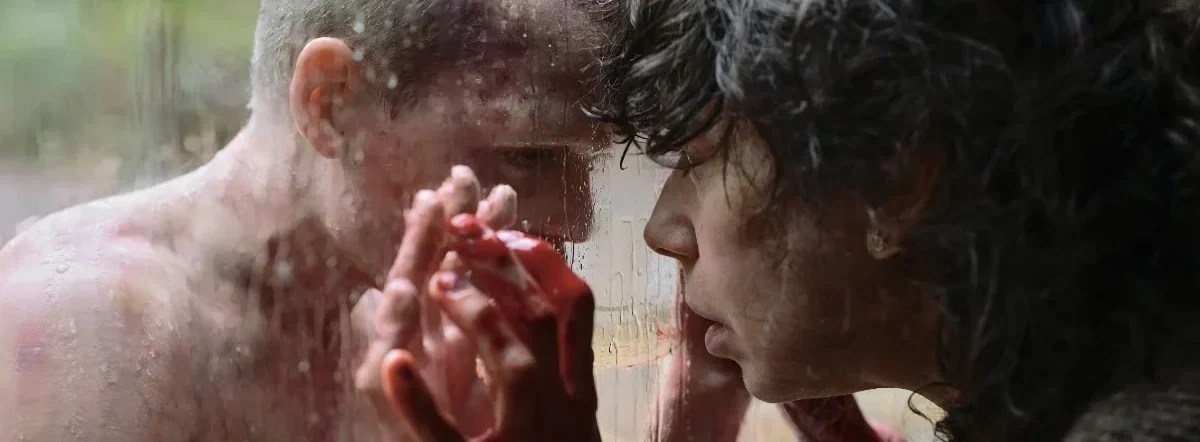
Not just for the big changes and transformations we see in the final half hour for both Moore and Qualley, but for the gradual changes we see throughout the film. The changes we see in Demi Moore’s character, growing increasingly wild and frantic as she begins to lose her life to Margaret Qualley’s Sue. All as Elisabeth begins to physically lose herself and become unrecognisable with each switch. Yet, in addition to this, the hair and makeup we see throughout the film, particularly when it comes to those we see at the New Year’s Eve broadcast event in the final stages of the film. All adding to the tale of societal and industry-based body and beauty standards which the film tells, critiques and splatters with blood and strange-coloured fluids expelled from someone or something’s body.

Best Production Design – The Brutalist
Maybe in this case I’m being led by the fact that the film revolves around design and architecture, but there’s something truly impactful about the look of the brutalist structure as it grows in height and area. Even during the building process the building has this towering, haunting nature to it – from the deep foundations to the endless scaffolding. Yet, even outside of the sequences directly seeing the construction there’s a lot to admire about the general design of The Brutalist. The scale that it achieves and just how much it shows on just $10 million. It places you directly into the post-war landscapes and structures in which the events play out in, from run-down a dirty work yards and rooms to the more lavish estate of Guy Pearce’s character, including the initial work we see undertaken to put together a library for him. The design of The Brutalist has a core and daunting effect, working hand-in-hand with the aforementioned cinematography to make a strong, visceral and cinematic look helping to push the themes and emotions at the heart of the film.

Best Sound – Dune: Part Two
A tough decision between this and The Wild Robot – which it could be argued had the more difficult job of doing everything from scratch and alongside the animation. Dune: Part Two gets my pick here for the controlled chaos of the sound in its grand scale action sequences, and even the close-up fights involving Austin Butler’s Feyd-Rautha – the sound of the various elements at play; weapons, protective armour, a shouting audience, each increasing the atmosphere of the moment in a grand arena yet still capturing the close nature of the fight – with a much closer nature in the final duel which closes the film. All while still having the loud machine-like noise of spacecraft various other kinds of ‘vehicles’ (definitely not the right word), and the explosions which often accompany them, throughout the film.

Best Visual Effects – Dune: Part Two
In much the same way as this was the case for the first film, the visual effects in Dune: Part Two blend in seamlessly with the desert planet at the centre of it, and the other worlds that we occasionally see as well. They help to create the scale and make some of the best sequences – such as the much-discussed sandworm riding scene, or the aforementioned large-scale action scenes where we see the Fremen attacking large carriers and spice collectors. The visual effects enhance the world of Arrakis, and those beyond it, and create a believable and authentic world. They simply look brilliant.

Best Original Song – Like A Bird from Sing Sing
The Best Original Song category is often one of the most shambolic at the Oscars, with a number of notorious snubs over the years. For every I’m Just Ken and Naatu Naatu there’s a lack of an Upbeat Inspirational Song About Life, Drive It Like You Stole It or A World Of Your Own. This year the omission of The Wild Robot’s Kiss The Sky from the category is a standout snub, alongside for some Harper And Will Go West from documentary Will And Harper (and dare I mention Vengeance Most Fowl’s The Gnome Song?). However, of the nominated songs, Like A Bird was for some the one that seemed most unlikely to get in, but I’m rather glad that it did. I’ve stated in previous years that I don’t really know how to talk about music (although if this piece has shown anything so far I probably don’t really know how to talk about film either), it’s more a case of whether I like it or I don’t. And I rather liked the gentle and soulful nature of Like A Bird, it’s simply for me the song that stands out as the best in a somewhat weak category – this sounds like damning with faint praise, the song is great.

Best Original Score – The Brutalist
There’s a haunting quality to the music of The Brutalist which echoes throughout the film. Something quietly emotional and capturing the tragedy of the past echoing into the present. It both compliments the film wonderfully and works on its own as a great piece of music too. Even the intermission is worth sitting through for the brief bursts of piano which crop up throughout it, echoing into the second half. The Wild Robot and Conclave both have great scores, too, but Daniel Blumberg’s score for The Brutalist captures the emotional tragedy which hangs over the film and the characters, and is generally a great score and piece/s of music.

Best Film Editing – The Brutalist
Conclave could very easily have got the mention here for telling a tight 2-hour thriller, but at just over three-and-a-half hours long and not feeling like it – with two equal halves and an intermission in-between – The Brutalist’s editing makes what could be a very heavy, and perhaps lengthy, film pass by much more easily. Yes, there are scenes which they could remove and make a film an hour, or more, shorter, but they somehow work in the grander scheme of the narrative, adding to the film and the characters without affecting the flow. It’s also a film which allows its silences and pauses, letting them sink in and effectively so. So much of what is allowed could so easily backfire and push things into drawn-out territory. But it doesn’t, The Brutalist manages to get away with it somehow because of the way in which it’s edited and pieced together.

Best Documentary Feature – No Other Land
The best categories at the Oscars often tend to be International and Documentary Feature, they tend to hold the hidden gems. This year there are some great films in the Documentary Feature race, but the one which truly lands the biggest, most devastating emotional impact is No Other Land. A hard watch in every sense of the word, alongside its tragic story of a Palestinian village being destroyed by occupying Israeli soldiers it manages to tell a story of a growing friendship between Palestinian and Israeli reporters Basel Adra and Yuval Abraham. Urgent, devastating, harrowing and wonderfully constructed in its use of first-hand footage from the pair of journalists at the scene this is another case of the Oscars leading me to a film that if I had seen it last year it would have undoubtedly been in my top ten of the year – as was the case with last year’s deserving winner in this category 20 Days In Mariupol. No Other Land is a truly fantastic piece of documentary and journalistic filmmaking which puts the emphasis on the people in the village, their lives, experiences and displacement.

Best International Feature – The Seed Of The Sacred Fig
Another category where there are some truly great hidden gems, and for once thanks to release dates (and festivals) I’ve managed to see all the nominated films before the ceremony. The Seed Of The Sacred Fig would get my vote here as a film that’s in touch with its activism and just what it’s showing. Especially from the perspective of its two young leads, the way they see the truth of the world around them on social media leading them to growing activism, despite their father’s occupation as an investigative judge for the Iranian regime – asked to sign death warrants without investigation. Yes, things might feel a little overlong in the third act, but there’s still a great film here – made in secret after a ban from the Iranian government from making films – one with a good deal of tension and overhanging threat as the truths of the world are uncovered thanks to characters who, much like the film, have their finger increasingly on the pulse of the society they’re living in.

Best Animated Feature – Memoir Of A Snail
For so long I would have been adamant that Inside Out 2 would have got my vote here, and that it would win the actual award on Oscar night – which now seems set to go to The Wild Robot. However, Adam Elliott’s feature follow-up to 2009’s wonderful Mary And Max is full of just as much care for its characters and the tragedies, and uplifts, that they go through in their lives – particularly central figure Grace, voiced by Sarah Snook. I started tearing up in the first few minutes, and spent the remainder of the film on the verge of tears thanks to the understanding which goes into creating the characters and story at hand, all with an effective sense of humour which has self-awareness and brings a sense of joy to the proceedings. I just loved it and what it reflects – as was also the case with Inside Out 2 and it’s sublime representation of anxiety. Which I wrote about in a piece for Movie Marker last year.

Best Original Screenplay – Anora
While it might not quite be the bulk of it, once things kick off in Anora at the approach of the second hour there’s a wonderfully laid out barrage of chaos as the characters race around Brooklyn trying to find Mark Eydelshteyn’s Ivan. Even beforehand the extended home invasion sequence is full of laugh-out-loud chaos as Mikey Madison’s title character loudly bites back with swear-laden fury while those who have made their way in after hearing of her and Ivan’s marriage ask “rich people don’t have ice?” From here there’s a brilliantly scripted tale full of laughs, and there’s plenty of wit on display throughout much of the first hour as the central relationship is built up and Ani finds herself in a new world; just starting on her journey of the differences between love, intimacy and sex. All tracked throughout Sean Baker’s screenplay with acknowledgement from the film, but not always the characters until the end.

Best Adapted Screenplay – Conclave
There’s a lot I love about the script for Sing Sing and its open, frank conversations about mental health and healthy and unhealthy performance Conclave – at this moment – just gets the edge for me with the way its screenplay tells a tight, detailed thriller with plenty of twists and turns all whilst following the election of a new Pope. Completely subverting how the idea sounds on paper and making for a film of escalating tension with a new reveal around each corner, and its own sense of occasional, fitting wit amongst the battle to become the new head of the Catholic church, and that between the more conservative and liberal stances amongst the various cardinals; and indeed those which they are internally experiencing – such as Stanley Tucci’s doubts as to whether he wants the papacy or Ralph Fiennes’ crisis of faith. All wrapped up in a script and story which manages to be consistently suspenseful even on re-watches.

Best Supporting Actor – Jeremy Strong in The Apprentice
Jeremy Strong is truly the standout in this category for me. Even against Sebastian Stan’s Donald Trump – nominated in the Leading Actor category – he manages to steal the show as a slimy Roy Cohn introducing Trump to a world of power and influence, and how to get ahead in it. Yet, even after all the ruthlessness we see displayed by Cohn a small layer of sympathy is introduced in the closing stages of his arc in the film, pushed aside by his former apprentice outside of expensive clubs and offices and out on the street as a shadow of his former self. It’s an excellent transition which is all part of an amazing performance from Strong who truly excels in the role and gives one of the best supporting performances of last year.

Best Supporting Actress – Isabella Rossellini in Conclave
In all honesty, there’s not really a performance in this category that particularly stands out for me. They’re all good turns, but there isn’t quite an overwhelming standout for me as there is in the other acting categories. And while Rossellini’s nomination has proved divisive, with many saying her screen-time doesn’t warrant it – Beatrice Straight won in this category for her five-minute performance in Network, Judi Dench for eight minutes in Shakespeare In Love and even Anne Hathaway for a turn in Les Misérables largely confined to the first 25-minutes (albeit whilst singing a shattering rendition of I Dreamed A Dream) – her key ‘Oscar clip’ moment isn’t quite why I’ve picked her. Her role in Conclave may be minimal in run-time, and for some overall impact on the story, but there’s a lot to like about her various reactions, those internal which gradually leak out into her physical and verbal responses, to the battles raging on to become the new Pope which gives the film overall a big, understated push. Perhaps this also comes down to having seen Conclave a couple of times, and realising just how much she appears in the film, even if very briefly each time. But it is an enjoyable performance with plenty of quiet subtle beats to compliment the ensuing drama at the fore, and capture nervousness, and influence, amongst those not even voting for the new Pope.

Best Leading Actor – Ralph Fiennes in Conclave
Fiennes is truly brilliant in Conclave. A quiet, unshowy performance packed with so many subtleties. He wears his character’s crisis of faith, and burden of having to arrange the papal election, on both his face and stance. Concealing so much as he finds himself caught in the middle of the push and pull of the various factions of cardinals, trying to maintain calm and order as new details come to light; this is one of Fiennes’ best performances to date. Conclave very much revolves around him and the force of his, again quiet, performance captures things perfectly and brings the audience into this secretive world full of further secrets and twists.

Best Leading Actress – Mikey Madison in Anora
As a character, Anora is a force of nature and much of that is thanks to Mikey Madison’s performance. Relentless in the way she fights, and hurls f-bombs and those who dare to try to break up her marriage, the deeper core of the character begins to physically and emotionally come through in the developments of the third act. Madison is truly fantastic from showing the day-to-day attitude of an exotic dancer and sex worker to the whirlwind spiral of events once her work and life take the turn into the marriage. Fiery and adamant, again, Madison, like her character, is truly a force of nature blazing across the screen and truly selling herself and the film as a whole. Capturing the humour, and absurdities, in the escalating, racing daze of a search and the realisations and barriers of Ani when it comes to her journey of her own relationships with sex and intimacy.

Best Director – Brady Corbet for The Brutalist
The way in which all of the technical elements of The Brutalist are brought together is truly fantastic. Made on around $10 million there’s such a grand scale and scope to the look and feel of the film, all brought together by Brady Corbet’s gentle yet precise direction. A similar sense of scope is brought to the themes and narrative of the film as well, captured in the way Corbet brings out the personal angles and stories of the characters in what’s around them, and indeed the performances and developments of the film as a whole. The point where I truly realised just how much of an impact Corbet’s direction was having on me, and the film, is a long shot showing a train derailment. Focusing on the detail as a whole and yet also seeming to demonstrate a sense of detachment running hand-in-hand with the emotional response. And that’s the key factor of the elements of The Brutalist, they all work hand-in-hand. Complimenting and lifting each other up. Shining through in Corbet’s observant and truly brilliant direction.

Best Picture
With Best Picture being voted for via preferential ballot, as in previous years, I’ll list what my ranking would look like (from strongest to weakest – the only film out of this year’s nominees that I’m not really a fan of is Emilia Pérez) with a few sentences about my number one choice below that.

1. Conclave
2. Nickel Boys
3. Anora
4. The Substance
5. The Brutalist
6. I’m Still Here
7. A Complete Unknown
8. Wicked
9. Dune: Part Two
10. Emilia Pérez

As mentioned above, Conclave is a really well told political thriller taking place across the process to elect a new Pope. Filled with twists and turns all unfolding in quiet revelations and secretive discussions in silenced corridors in the middle of the night it plays out as a consistently suspenseful piece of work which works just as well on re-watches. The layered performances from a great ensemble cast add to the details of a quiet battle which grows increasingly loud in heated confrontations, all while the atmosphere attempts to remain calm for the sake of the process, cardinals, tradition and history of the papacy and elections. It’s amazing just how much subtle detail is packed into the performances, script and overall film, all bubbling to eventually come together amongst the various co-existing themes for a film about tradition and modernity, conservative and liberal stances and indeed what it means to be the head of the Catholic church.

The Monkey – Review

Cert – 15, Run-time – 1 hour 38 minutes, Director – Osgood Perkins

After 25 years of peace and safety a deadly monkey toy comes back to cause bloody havoc for twins Hal and Bill (Theo James), however the rifts that lay between the two are still present and may link back to the toy itself.

Stay to the end of the credits of The Monkey and you’ll see an early teaser for Osgood Perkins’ next feature, Keeper. It appears a dark, tense and direct horror, more in the vein of his previous feature Longlegs. Sandwiched in-between the two, almost as a twisted palate-cleanse, is the dark comedy of The Monkey. While some may have gone for a darker, more serious tone to the various deaths which are seen through Perkins takes the humorous angle, particularly with the ridiculous nature of some of them – the first death we see wouldn’t feel out of place in a Final Destination film. The comedic angle also likely helping the film achieve a 15 rating rather than an 18.

The deaths are at their best when swift in their build-up and execution. A trio of events part way through the film acts as one of the comedic highlights with just how bizarre some of the situations seem to be – as is pointed out shortly after, “there aren’t any cobras in Maine.” The more the film goes on, with the kills believed to be caused by a wind-up toy monkey; when it strikes its drum it inevitably leads to someone dying in particularly gory fashion, some loose their impact as the still-building narrative feels as if it’s just a series of linked kills with these moments put more at the fore than a full plot.


Eventually the titular toy falls back into the life of supermarket cashier Hal (Theo James). Having been tormented by it through a string of family tragedies in his childhood, Hal, alongside his twin brother Bill (also James), threw the toy down a well hoping that its seeming ability to teleport would know longer work when chained inside a box. It’s the one thing we see the pair as children (both played by Christian Convery) agree on, with Bill often bullying his younger brother (by three minutes) alongside a group of girls at school. However, the monkey’s return also brings back the rift between the pair, when Bill calls up Hal to tell him of the creature’s likely return and how he must be the one to get rid of it – despite planning on spending a week with his estranged son Petey (Colin O’Brien).

The plot throughout is somewhat thin and at times feels better suited to a short film rather than a feature, although at just 98-minutes the run-time is just about gotten away with comfortably. The Stephen King short story on which the film is based was previously adapted as an hour-long ‘short’ less than a year before this went into production as part of the Dollar Baby scheme. Part of where The Monkey’s run-time feels pushed is largely because of the opening stages which instead of acting a prologue forms into a part of the core events and character relationships, eventually leading to moment in flashbacks, too. There’s amusement to be found, and that helps to keep things going throughout, but it feels as if the biggest developments, in terms of both narrative and the actions of Hal and Bill, whose relationship is increasingly lightly dealt with, are largely left until just before the third act when a clearer path for events suddenly sparks into life.

Yet, it does appear that The Monkey’s main intention is to raise some laughs through its dark humour. And in that respect it’s successful. While frequency might make some moments lose their impact there’s still plenty of chuckles held in the run-time, especially in the quicker beats which know how to make the twisted joke work without making a spectacle of it. Perkins certainly goes for something different tonally with The Monkey compared to his previous feature, and seemingly his next, and he manages to make it work rather well by pointing out the absurdities of a number of the situations and heightening them for further effect. In that regard, the base of this as an enjoyably bloody comedic horror is successful, even if some of the points which stem from that create some pacing issues along the way.

While the opening stages might create some pacing issues, and some lost steam midway through when it comes to the deaths, the bulk of The Monkey’s splatter raises a good few chuckles on the way to an eventually more focused set of darkly comedic events.

Rating: 3 out of 5.

Captain America: Brave New World – Review

Cert – 12, Run-time – 1 hour 58 minutes, Director – Julius Onah

Captain America (Anthony Mackie) finds himself trying to clear the name of original super soldier Isaiah Bradley (Carl Lumbly) in an escalating international crisis which involves the new President (Harrison Ford) and a mysterious mind behind events.

Captain America: The Winter Soldier is one of the best entries in the Marvel Cinematic Universe. A tense political thriller with tested friendships and deep-rooted plots. In some way Brave New World; the fourth Captain America film, first led by Anthony Mackie and 35th in the MCU overall, tries to echo this. However, the origins of the narrative link back to two of the franchise’s weakest films – the largely pushed-aside until now The Incredible Hulk and thought-to-be-pushed-aside Eternals. To make this the core of the first big screen venture for the new Captain America may be seen as something of a bold move. It could also be seen as simply a way to close off some loose ends from previous instalments – at least it’s nice to have a film that doesn’t go on about the multiverse and the future a great deal.

Brave New World plays out like a 90s thriller, multiple pots boiling all linking to one central mind behind a potential international crisis. Sam Wilson (Mackie) finds himself caught up in the details, trying to clear the name of original super soldier Isaiah Bradley (Carl Lumbly), when something takes him over to try to kill recently-in-office President Thaddeus ‘Thunderbolt’ Ross (Harrison Ford, taking over duties from the late William Hurt and throwing himself into the role). As the world tries to come to a deal on how to use adamantium, having found much of the new metal in the celestial being lying in the ocean since the events of Eternals, trained killers are trying to track down Wilson and the President to seemingly break down talks and create rifts in international relations.

On reflection, it may feel as if some of these strands, or at least what we see of certain characters, end somewhat abruptly and maybe without a more complete resolution, but whilst watching the film there’s a rather enjoyable time to be had within the traditional thriller leanings which play out. Yes, there may be some clunky green screen and VFX shots here and there, but there’s a likable nature to some of the action and seeing Mackie take centre stage. Comfortably in the role of Captain America, Sam is still trying to find out who he is under that title and perform as that rather than perform as Steve Rogers – who gets a thankfully small number of mentions here. Danny Ramirez joins him as Falcon-in-training Joaquin Torres, a nice pairing being built up between the duo which will hopefully have more room to flourish in later films.


As a whole there’s a slightly scrappy nature to this latest MCU film. While 2024 may have acted as something of an opportunity to get things back in order and give their upcoming slate a bit more time and work, with only Deadpool And Wolverine seeing a cinema release, the news of re-writes and re-shoots, and five credited writers, sees does show in certain aspects of Brave New World. This largely being the case in the opening stages of the core narrative as everything is still coming together, there’s a slightly jumbled feeling to certain events as the film is clearly trying to find its way – whilst building up to the reveal of the Red Hulk, front and centre in much of the marketing, which appears so late in the day that it would have been better to save this appearance for the film to unveil itself.

Yet, as the thriller aspects play out there’s a good deal to get caught up in. At just under 2-hours the events are largely well-contained, getting out just before they outstay their welcome, and as a way of giving Mackie’s Captain America a big screen launch there could be worse ways to do so. The narrative, while having its multiple elements, manages to whittle itself down overtime and make for a more direct set of entertaining events. There’s a knowledge from the film that this isn’t a big universe-expanding work. It’s a solo outing for Captain America, maybe with one or two other character tagging along for the journey, and in that respect this is a rather well handled film.

One that provides a good deal of escalating and entertaining thrills to see it through to the end. It may not be one of the best entries in this franchise, but for a film which has had multiple nightmare headlines throughout production it’s not turned out too badly. One which allows Mackie to shine and come into his own more, with some nice details for his character, and indeed he carries the film effectively and with a likable style. Helping to move things along in addition to the various action sequences, which use his evolved suits and technology, and the same old trusty shield, rather well, leading to some exciting uses and instances in certain sequences. It, like the film, might get a bit rough around the edges as a result of everything that’s thrown at him, but things hold up and manage to get through, with a growing strength and enjoyable nature.

Anthony Mackie carries his first big screen outing as Captain America with effective style, while Brave New World might start off feeling busy, the recognisable thriller beats make for an enjoyable, if scrappy, ride as things come together and provide enough amusement for a solid and likable MCU entry.

Rating: 4 out of 5.

Bridget Jones: Mad About The Boy – Review

Cert – 15, Run-time – 2 hours 5 minutes, Director – Michael Morris

Widowed and spending her days looking after her two children (Casper Knopf, Mila Jankovic), Bridget Jones (Renée Zellweger) reopens her diary as she re-enters the world of work and love, while one seems direct the other may have unexpected offers.

To take the fourth instalment of a relatively light rom-com franchise and make it a film about grief is a bold move. It’s a move that makes Bridget Jones: Mad About The Boy all the more interesting and admirable. While there’s plenty of laugh-out-loud funny moments from scene to scene there’s an emotional core tinged with tragedy. “Do you miss daddy sometimes?” her daughter, Mabel (Mila Jankovic) asks early on. “I miss him all of the times” Bridget (Renée Zellweger, on perhaps her best form as the titular character yet) responds, shortly before reopening her diary.

It’s been four years since Mark Darcy (Colin Firth) passed away, and while her friends encourage her at memorial dinners to get back into the dating world, each in their own different way, she’s uncertain as to if she’s ready. When forced onto Tinder by friend Miranda (Sarah Solemani) she soon forms a relationship with 29-year-old Roxster (Leo Woodall) – kudos to the film for not making any jokes about the name in relation to the character’s age. However, while love and sex begin to reappear in her life the loss of her husband still hangs over her. While bringing moments of humour there’s a tenderness to these depictions. Before many decisions, and indeed during, Bridget’s mind calls back to Mr Darcy, and indeed the grief that her children are going through as well. It leads to some of the film’s most emotional moments, wonderfully in tune and leading to a surprising impact.


As things are going well with Roxster mild flirtations begin to unfold with her son’s (Casper Knopf) teacher Mr Wallaker (Chiwetel Ejiofor – embracing this rom-com role with plenty of charm). There’s no Darcy Vs Cleaver between the two love interests here – Hugh Grant returns as a back-from-the-dead Daniel, stealing his brief scenes with an every-line-a-gem performance – instead they play out as two distinct elements of Bridget’s progression and getting back into life and work. Learning to live with grief at the same time as living her life – we see her also living with the loss of her father (Jim Broadbent), telling her in a flashback that “it’s not enough to survive, you have to live”). These moments are what truly deliver the boldness and unexpectedly touching details of the narrative.

They hang in the background as something the central family hold, not completely acknowledged by all of the supporting cast – who each put in good turns in their encouragement for the lead figure to move on, get out there and live before ‘labial fusion’ sets in. It’s even at the quiet core of some of the humour, of which there is plenty. From start to finish there are plenty of laughs to be found within Mad About The Boy. In many ways it’s the British rom-com at its finest, offering plenty of laugh-out-loud funny lines which involve the whole audience, and indeed this makes for a great audience experience.

One which keeps the familiar elements of Bridget Jones, her clumsiness is still very much present as is her entertainingly flustered nature, but brings in subtle and quietly held complexities which act as key themes. This is in no way a downbeat intensely dramatic film, the closest it comes to trudging is simply by being overlong, yet still entertaining. It’s a fully-rounded comedy as the other three entries try to be. Emotional moments are successfully present and bring in a tender and thoughtful heart to the proceedings, but very much this is still a comedy with plenty of laughs and uplift. It’s just one that has something different to say, and does so boldly and very well indeed. Making for perhaps the best outing for Bridget Jones yet. And if this is her final big screen venture, what a wonderful way to close her diary!

Frequently very funny, Bridget Jones: Mad About The Boy features a quiet, tender examination of grief at its bold core, bringing in emotion while still allowing the laughs and Renée Zellweger’s wonderful central performance to lead the way, this is Bridget at her entertaining best.

Rating: 4 out of 5.

I’m Still Here – Review

Release Date – 21st February 2025, Cert – 15, Run-time – 2 hours 18 minutes, Director – Walter Salles

Rio, 1971, mother Eunice (Fernanda Torres) finds herself trying to hold her family together whilst uncertain as to if her husband (Selton Mello) is still alive after being taken in for questioning by the dictatorship-run army.

I’m Still Here finds itself amongst a growing number of titles, largely international films, which show the Academy Awards votership responding to word-of-mouth successes. Much like Drive My Car a few years ago, with its success at various critics bodies, the Portuguese-language drama picked up nods and wins at the typically celeb-filled Golden Globes and began to enter the wider awards conversation. Leading it to Leading Actress and Best Picture nominations in addition to growing speed in the International Feature race, against holding frontrunner Emilia Perez.

Having gone in to director Walter Salles’ latest film knowing of the awards success and very little else the gradual build-up constructs a slice-of-life drama. We see housewife Eunice (Fernanda Torres) enjoying life, spending days on the beach with her children, while her former congressman husband, Rubens (Selton Mello), appears to work on building homes nearby with friends. Despite the occasional signs of the military driving down the nearby roads serving as reminders of the military dictatorship, the sun is shining and life appears to be idyllic. Occasionally mysterious phone calls or knocks at the door are responded to in secret by Rubens but this appears to be a part of everyday life, especially after six years away from civil life.

However, when agents with links to the army arrive one day to take members of the family into questioning, Eunice and her daughter (Luisza Kosovski) are returned home after an uncertain amount of time away in dark and dirty cells, however Rubens doesn’t return. The longer he’s away, the more worry begins to fill Eunice. Friends help her search for his possible whereabouts, however no information is provided by the government or the army, proof is needed that something happened to him for them to admit anything. Is he dead? If not then where is he? Once things kick off with the tension and darkness, and yet to start with lightly, uncertainly amusing – the agents lingering in the home playing table football with the kids raises a chuckle before cutting straight back to the threat at hand – at play I’m Still Here properly starts to take form.


A slow-burn drama, there’s a good deal to engage as the details of the lack of details grows. Character drama, as Eunice tries to keep her family in order and avoid admitting her worries of her husband’s likely death, plays out alongside the political fears and impacts that construct much of the film’s basis – based on real-life Eunice’s son Marcelo Rubens Paiva’s memoir of the same name (Ainda Estou Aqui in the original Portuguese).

Once things get into gear there’s a direct and well-pieced-together drama at hand. One that’s engaging and manages to move the run-time along with an effective pacing which leans into the confusion at the heart of each character and the family dynamic. This is a film where much of what we see, and understand, is hidden behind slipping veils. The fear and uncertainty, and the worry of the further effects that this might have especially considering the government response or any escalation. All comes to the fore in a subtle and finely-tuned performance from Torres in the leading role, having become a quietly strong contender throughout awards season.

There may be some slight uncertainty when it comes to how to close the film, or at least where things should be closed off in a segmented epilogue of sorts, but there are still interesting points to be raised – particularly regarding the responses and feelings of the children who may have lost their father. It does reflect the slower nature of the opening, but for much of the film there’s a focused and effective political drama that manages to stir the emotion, worry and tension in the characters and in some way on the audience, largely thanks to the way that it grows its events and creates understanding in the difficult, almost impossible, search for answers.

The opening and closing stages might feel somewhat gradual, but the bulk of I’m Still Here is a well-tuned and understood political drama which successfully leans into hidden emotions and details which stir the fear and worry at hand, much of which is caught in Fernanda Torres’ central performance.

Rating: 4 out of 5.

Heart Eyes – Review

Release Date – 14th February 2025, Cert – 18, Run-time – 1 hour 37 minutes, Director – Josh Ruben

When mistaken for a couple, colleagues Ally (Olivia Holt) and Jay (Mason Gooding) spend Valentine’s Day night being chased by seasonal serial-killer the Heart Eyes Killer.

Heart Eyes wears its Scream influences prominently throughout its run-time. How intentional this is is a different matter. At times this seasonal slasher seems to borrow more than be inspired from the self-aware franchise, particularly the recent requel instalments as a mystery as to who the Heart Eyes Killer is somewhat plays out in the background of the main killing spree at hand.

The targets of the serial-killer, who targets couples in a different US city each year, are colleagues Ally (Olivia Holt) and Jay (Mason Gooding). When Jay is brought in to work on Ally’s ad campaign for a jewellery brand, to lean it away from a focus on famous couples who died together, they meet for dinner on Valentine’s Day. However, when running into her ex and his new girlfriend in the street Ally kisses Jay to prove that she too has moved on. Something seen by the killer who, mistaking them for a couple, begins to stalk the pair who only met for the first time that morning.


Through this central relationship the horrors contrasts with rom-com stylings which falter due to a lack of chemistry between the two leads. While Holt gives a solid performance as the character we follow for most of the film, Gooding often feels on a different plain leading to a clash between the two rather than the feeling of a growing bond. What doesn’t help in this situation is that the film is also only sporadically funny. There are some good chuckles here and there, but there are also a similar amount which fail to take off.

Even the horror sequences where the masked killer, with glowing, heart-shaped eyes, chases after Ally and Jay in various settings, don’t always have a kick to them. In early instances there feels to be a lack of tension, leading to a bland overall feeling to the horror-tinted scenes. As things move on there’s a slightly more entertaining side to events, especially as they become somewhat more relaxed and begin to bring the humour and horror closer together without them clashing. Yet, perhaps the biggest effect is that of the kills themselves. Gnarly and crimson from the beginning they begin to feel like less of a string of exploitation-style kills and detail with little to link them to actually having more of an effect on the film as a whole.

There are undoubtedly a number of key bumps and clashes throughout Heart Eyes which stopped me from fully gelling and engaging with it. However, there are enough likable moments, and spills, here and there throughout the luckily compact and well-contained 96-minute run-time, to keep it moving towards the end. While its groove to some extent may be largely based in the recent Scream films, albeit providing some safety and easy movement for some of the events, there’s enough within the semi-tongue-in-cheek Valentine’s Day angle and the successful comedic beats to see the film through.

Due to a lack of chemistry between the two leads and patchy laughs the rom-com elements of Heart Eyes falter, leading to that weight just about being held up by some successful chuckles, likable horror sequences involving the masked killer and the double-sided effect of the heavy Scream influences.

Rating: 3 out of 5.

Nickel Boys – Review

Cert – 12, Run-time – 2 hours 20 minutes, Director – RaMell Ross

When wrongfully sent to an abusive reform school in 1960s Florida, Elwood (Ethan Herisse) makes friends with fellow inmate Turner (Brandon Wilson), the pair’s views on the world and their futures shift in relation to each other and what they go through.

I don’t think I know just how Nickel Boys’ first-person perspective camerawork works so well. Perhaps it’s because of how still and gentle director RaMell Ross and cinematographer Jomo Fray keep the camera in each situation, as opposed to the chaotic shaking of an action flick or found-footage horror film. Perhaps the perspective in this case, not just limited to one character, and at times not strictly from what their eyes are seeing, adds to the personal drama at hand – it certainly makes a hug feel more emotionally connected and impactful.

Teenager Elwood (Ethan Herisse) is wrongfully sent to Nickel Academy, a Floridian reform school, after hitchhiking to a campus in what turns out to be a stolen car. There he meets cynical Turner (Brandon Wilson). The two have differing views on both getting out of the school, which is more like a prison for students of colour, and the treatment of African-Americans in society. While Elwood has certainly suffered and witnessed abuse a teacher’s (Jimmie Fails) messages about the civil rights movement, turning away from the teachings provided by the American South, give him a drive and hope that has diminished in Turner during his time in Nickel Academy.


The pair bounce off of each other and there’s something of an exchange of views which grows and develops in both their friendship and personalities. The reform school is rife with abuses, some shown off screen but we hear the effect and it’s just as impactful. Hope fades in and out of view for the characters, we jump forward in time to look at the idea of lingering trauma – the camera sitting just behind characters’ heads as if demonstrating a disconnect with themselves due to their experiences – in some ways these moments have a commonality with fellow Oscar-nominee Sugarcane. Indeed the pair both have strong emotional punches when looking at the generational effects of reform school racism and abuse, seen here in both the events beyond the 60s and in Elwood’s grandmother (Aunjanue Ellis-Taylor), trying to see her grandson but constantly being distanced from him; eventually forming a communication with him through Turner.

The bonds and relationships within Nickel Boys naturally grow from a sense of hope. Hope which is twisted and tangled amongst the various experiences that the characters go through, and those that in some cases – such as Ellis-Taylor’s Hattie – that they’re unaware of. Somehow the camera captures this, the subtle gestures and glances which allude to the characters thoughts and feelings without anything having to be said – carrying that along for almost two-and-a-half hours without feeling like a dizzying gimmick, adding to the emotional impact in both the upfront events and increasingly tight friendship on display, and the lingering sense when we see the course taken in the future. Much of this stems from how we get to know the characters, both in the two central performances full of their own subtleties, and the impact of the first-person narrative full of its own range of tenderly dealt with feelings.

Nickel Boys is a film that gently understands the subtleties of its first-person camerawork to heighten the communicated feelings of the characters and their experiences, pushing the tense hope and emotion throughout before bringing in finely-tuned themes of trauma, all with the same gentle and thoughtful view.

Rating: 4 out of 5.

Love Hurts – Review

Cert – 15, Run-time – 1 hour 23 minutes, Director – Jonathan Eusebio

Real estate agent Marvin Gable (Ke Huy Quan) loves his work and the people he meets, however one Valentine’s Day sees his past catch up with him, with deadly consequences if he continues to run.

Love Hurts is definitely more in the vein of Nobody, with whom it shares producers, rather than John Wick. Not just for the everyday-guy’s violent past but the more comedic angle that it takes. We see it as an office is wrecked with pencils and awards being used as weapons against giant blades and knives. While the likely intended humour of these instances doesn’t always come through there’s still a likable, if not entirely frantic, nature to the action sequences when they crop up. As things progress the inspirations of the aforementioned action flicks begins to fade and Love Hurts becomes something of a much more familiar, standard actioner – although it could be argued that since John Wick the standard actioner is changing.

Marvin Gable (Ke Huy Quan) is the man using whatever’s around him to defend himself against towering, muscled attackers. Each trying to take him to his brother, known as Knuckles (Daniel Wu), who had finally caught up with him. As a mysterious and violent past comes to light Marvin is torn between running once again and keeping up his life as a friendly, well-liked realtor. This clash especially comes to life when underwritten old flame Rose (Ariana DeBose) returns, seeking vengeance for what Knuckles did to her years before.


Quan holds his own in the leading role and manages to create a likable and entertaining figure in an increasingly familiar film. Convention rears its head more and more as the, admittedly and helpfully short, run-time moves along. Amusing beats are scattered here and there with a couple of good punches and chuckles, and again Quan doing a good job at the centre of the film as Marvin finds himself increasingly torn, despite only one option being possible as all roads begin to lead multiple forces to him at once.

Occasionally some of these roads can feel somewhat like padding just to push the run-time that bit further, but there’s some enjoyment to be found along the way with certain scenes – particularly involving Marvin’s assistant Ashley (Lio Tipton) and Mustafa Shakir’s deadly knife-wielder known as The Raven. Generally things move along well enough and the action manages to provide enough amusement, especially when bringing in some inventiveness with the weapons which Quan picks up here and there. It may not have as much of a memorable nature as some of the titles which have clearly inspired it, or the same punch – in general it appears to be going for a lighter tone with its Valentine’s Day setting – but while it’s on there’s an amusing enough actioner here helped by an engaging lead performance from Ke Huy Quan.

Ke Huy Quan’s likable leading turn helps to push through some of the overfamiliar beats of Love Hurts’ somewhat plain narrative. The action has its moments, especially when leaning into inventiveness, but the basics of the overall structure hold the film back and shows its conventions.

Rating: 3 out of 5.

Dog Man – Review

Cert – U, Run-time – 1 hour 29 minutes, Director – Peter Hastings

Police officer Dog Man is constantly battling with evil cat Petey (Pete Davidson), who wishes to take over the world. However, Petey’s schemes begin to tangle, showing links between the pair and bringing the city further to destruction.

For fans of 2017’s Captain Underpants: The First Epic Movie this spin-off, based on a comic created by main characters George and Harold, will go down a treat. An equally silly, brightly-coloured, sub-90-minute cartoon caper full of silliness. With an animation style matching the idea of a child-drawn comic, and the illustrations in source book writer Dav Pilkey’s illustrations, the images pop from the screen from the opening frames and assure as to what kind of film is going to unfold over the next hour-and-a-bit.

When Police Officer Knight (writer-director Peter Hastings) and his dog Greg are involved in a bomb-defusal gone wrong the medics operating on the pair see the only way forward as sowing one’s head onto the other’s body. Thus, by combining their respective strengths, Dog Man is born. Just as soon as this happens then orange, human-sized cat Petey (Pete Davidson, creating a good deal of fun with this character labelled ‘the evilest cat in the world’) tries to take the titular officer down through a series of towering robot traps. Each backfires and lands the quick-to-escape feline in cat jail. However, when his various schemes begin to backfire they also create links to Dog Man, especially through the creation of a clone, Lucas Hopkins Calderon’s innocently amusing Li’l Petey, and threaten to destroy the city.


Alongside giant vacuum cleaner traps racing down the streets this is a film where you simply buy into the idea of a factory which creates gas which can bring anything to life. Again, much like it’s come from the mind of a child here it’s hard not to embrace it as another simply silly, and very funny idea. The world and narrative are full of consistently funny cartoon-style antics which help to move an otherwise thin plot – for the most part this feels more like a set of funny ideas loosely strung together into a narrative, although the successful humour gives this a slight, but not entire, pass in this case. Each character has their own quirk which manages to provide visual gags – even as simple as Lil Rel Howery’s police chief’s protective obsession with doughnuts – unfolding at the same time as those contained in the dialogue.

In a number of ways, Dog Man is quite a straightforward comedy in the way that it presents itself and constructs its jokes. Much like Captain Underpants before it, humour is put at the fore of this spin-off. Yes, the other elements are given plenty of time, effort and thought, but there appears to be a collaborative effort here to make a funny film. There are plenty of laugh-out-loud funny moments throughout in a mixture of styles, all catering towards the family audience – if parents can embrace the cartoon absurdities on display there’s just as much to enjoy here as there is for the kids. Whilst chasing Petey in the opening scene, Knight and Greg crash through a ‘Box Of Bees’ in the middle of the road; across the ground spills numerous letter ‘B’s, I was quickly won over and in place for the rest of the film as it breezed by for a largely untroubled, albeit occasionally thin, 89-minutes.

A loud and very funny family comedy, Dog Man’s brightly-coloured animation is packed with fun characters who bring about plenty of visual and verbal gags, helping to largely move aside from the occasionally thin plotting.

Rating: 4 out of 5.

September 5 – Review

Cert – 15, Run-time – 1 hour 35 minutes, Director – Tim Fehlbaum

With the Israeli hostage crisis unfolding in the building next to them, ABC’s sports team switches from broadcast the 1972 Munich Olympics to covering the crisis, especially being the only ones who can properly do so.

There are some who have referred to September 5 as ill-timed and a propaganda piece. Certainly, as the story leans into political angles, possibly making links to the modern day, it feels its most heavy-handed, and to some degree uncertain. Perhaps why much of the action is confined to the control room of ABC’s sports broadcasting team at the 1972 Munich Olympics. Getting ready for another day of covering boxing and volleyball the team, led by John Magaro’s Geoffrey Mason, find themselves putting aside the day’s competition when the Israeli team in the neighbouring Olympic Village, just 100 yards away from the studio, are taken hostage by a terrorist group.

Realising that they’re the only ones able to properly cover the unfolding crisis the sports team hastily put cameras in place and find themselves thinking on the spot as to how they can get across all information to their viewers, including arguing with CBS about satellite access. Yet, while there’s some tension and interest in the assembly of the crew and how they work to keep the broadcast going, with the US-based news team seeking control, the most suspense lies in the simple acts of directing the coverage in the control room. As Magaro sits and orders cuts, fades and previews between cameras and text on screen the suspense is at its greatest. I found myself caught up in the flow of the moment and the attempt to keep control in an unpredictable, and to some extent for the team out-of-depth, situation.


During such moments the film feels most direct and focused, elsewhere as various key figures congregate in corridors to discuss their plan and just what’s happening outside. As occasional disturbances rear their head into the building the feeling of uncertainty comes back into play. As the worry that the terrorists are seeing the broadcast and getting a step-ahead of German officials the police storm into the building. It’s a moment so brief it almost feels like the scene was half-cut with the remains accidentally left in the final film, the effect is strange and the moment overall instantly moved on from. Yet, as a whole the film doesn’t feel entirely limited by the angle that it takes in covering the events, largely because it wants to cover the sports team and their responses rather than the upfront hostage crisis – although in some respects a better job of covering the events is done here than in Kevin Macdonald’s (albeit Oscar-winning) surface-level One Day In September.

Even at 95-minutes September 5 sometimes feels as if it’s padding itself out. For the most part it generally works and moves things along, even if some of those points do feel a little bit underdone. The best elements are those focusing on the focus of the central broadcast team and their actions and decisions in creating what the viewers at home are seeing. What we’re seeing is meant to be an extraordinary piece of broadcasting where all involved in the transmission are highly commended, the filmic depiction of this is generally competently made. That’s certainly the defining word that came to mind, and continues to do so, after seeing the film – competent. A solid enough, if sometimes bumpy and uncertain-feeling, thriller that’s at its best when leaning into the TV crew and their coverage of the unfolding events.

Wanting to focus on the central broadcast team, September 5 is at its best, and most suspenseful, when showing them at work and covering the unfolding crisis on the spot, when leaning into heavy-handed politics or disturbances it feels uncertain and at times half-baked.

Rating: 3 out of 5.