Heart Eyes – Review

Release Date – 14th February 2025, Cert – 18, Run-time – 1 hour 37 minutes, Director – Josh Ruben

When mistaken for a couple, colleagues Ally (Olivia Holt) and Jay (Mason Gooding) spend Valentine’s Day night being chased by seasonal serial-killer the Heart Eyes Killer.

Heart Eyes wears its Scream influences prominently throughout its run-time. How intentional this is is a different matter. At times this seasonal slasher seems to borrow more than be inspired from the self-aware franchise, particularly the recent requel instalments as a mystery as to who the Heart Eyes Killer is somewhat plays out in the background of the main killing spree at hand.

The targets of the serial-killer, who targets couples in a different US city each year, are colleagues Ally (Olivia Holt) and Jay (Mason Gooding). When Jay is brought in to work on Ally’s ad campaign for a jewellery brand, to lean it away from a focus on famous couples who died together, they meet for dinner on Valentine’s Day. However, when running into her ex and his new girlfriend in the street Ally kisses Jay to prove that she too has moved on. Something seen by the killer who, mistaking them for a couple, begins to stalk the pair who only met for the first time that morning.


Through this central relationship the horrors contrasts with rom-com stylings which falter due to a lack of chemistry between the two leads. While Holt gives a solid performance as the character we follow for most of the film, Gooding often feels on a different plain leading to a clash between the two rather than the feeling of a growing bond. What doesn’t help in this situation is that the film is also only sporadically funny. There are some good chuckles here and there, but there are also a similar amount which fail to take off.

Even the horror sequences where the masked killer, with glowing, heart-shaped eyes, chases after Ally and Jay in various settings, don’t always have a kick to them. In early instances there feels to be a lack of tension, leading to a bland overall feeling to the horror-tinted scenes. As things move on there’s a slightly more entertaining side to events, especially as they become somewhat more relaxed and begin to bring the humour and horror closer together without them clashing. Yet, perhaps the biggest effect is that of the kills themselves. Gnarly and crimson from the beginning they begin to feel like less of a string of exploitation-style kills and detail with little to link them to actually having more of an effect on the film as a whole.

There are undoubtedly a number of key bumps and clashes throughout Heart Eyes which stopped me from fully gelling and engaging with it. However, there are enough likable moments, and spills, here and there throughout the luckily compact and well-contained 96-minute run-time, to keep it moving towards the end. While its groove to some extent may be largely based in the recent Scream films, albeit providing some safety and easy movement for some of the events, there’s enough within the semi-tongue-in-cheek Valentine’s Day angle and the successful comedic beats to see the film through.

Due to a lack of chemistry between the two leads and patchy laughs the rom-com elements of Heart Eyes falter, leading to that weight just about being held up by some successful chuckles, likable horror sequences involving the masked killer and the double-sided effect of the heavy Scream influences.

Rating: 3 out of 5.

Nickel Boys – Review

Cert – 12, Run-time – 2 hours 20 minutes, Director – RaMell Ross

When wrongfully sent to an abusive reform school in 1960s Florida, Elwood (Ethan Herisse) makes friends with fellow inmate Turner (Brandon Wilson), the pair’s views on the world and their futures shift in relation to each other and what they go through.

I don’t think I know just how Nickel Boys’ first-person perspective camerawork works so well. Perhaps it’s because of how still and gentle director RaMell Ross and cinematographer Jomo Fray keep the camera in each situation, as opposed to the chaotic shaking of an action flick or found-footage horror film. Perhaps the perspective in this case, not just limited to one character, and at times not strictly from what their eyes are seeing, adds to the personal drama at hand – it certainly makes a hug feel more emotionally connected and impactful.

Teenager Elwood (Ethan Herisse) is wrongfully sent to Nickel Academy, a Floridian reform school, after hitchhiking to a campus in what turns out to be a stolen car. There he meets cynical Turner (Brandon Wilson). The two have differing views on both getting out of the school, which is more like a prison for students of colour, and the treatment of African-Americans in society. While Elwood has certainly suffered and witnessed abuse a teacher’s (Jimmie Fails) messages about the civil rights movement, turning away from the teachings provided by the American South, give him a drive and hope that has diminished in Turner during his time in Nickel Academy.


The pair bounce off of each other and there’s something of an exchange of views which grows and develops in both their friendship and personalities. The reform school is rife with abuses, some shown off screen but we hear the effect and it’s just as impactful. Hope fades in and out of view for the characters, we jump forward in time to look at the idea of lingering trauma – the camera sitting just behind characters’ heads as if demonstrating a disconnect with themselves due to their experiences – in some ways these moments have a commonality with fellow Oscar-nominee Sugarcane. Indeed the pair both have strong emotional punches when looking at the generational effects of reform school racism and abuse, seen here in both the events beyond the 60s and in Elwood’s grandmother (Aunjanue Ellis-Taylor), trying to see her grandson but constantly being distanced from him; eventually forming a communication with him through Turner.

The bonds and relationships within Nickel Boys naturally grow from a sense of hope. Hope which is twisted and tangled amongst the various experiences that the characters go through, and those that in some cases – such as Ellis-Taylor’s Hattie – that they’re unaware of. Somehow the camera captures this, the subtle gestures and glances which allude to the characters thoughts and feelings without anything having to be said – carrying that along for almost two-and-a-half hours without feeling like a dizzying gimmick, adding to the emotional impact in both the upfront events and increasingly tight friendship on display, and the lingering sense when we see the course taken in the future. Much of this stems from how we get to know the characters, both in the two central performances full of their own subtleties, and the impact of the first-person narrative full of its own range of tenderly dealt with feelings.

Nickel Boys is a film that gently understands the subtleties of its first-person camerawork to heighten the communicated feelings of the characters and their experiences, pushing the tense hope and emotion throughout before bringing in finely-tuned themes of trauma, all with the same gentle and thoughtful view.

Rating: 4 out of 5.

Love Hurts – Review

Cert – 15, Run-time – 1 hour 23 minutes, Director – Jonathan Eusebio

Real estate agent Marvin Gable (Ke Huy Quan) loves his work and the people he meets, however one Valentine’s Day sees his past catch up with him, with deadly consequences if he continues to run.

Love Hurts is definitely more in the vein of Nobody, with whom it shares producers, rather than John Wick. Not just for the everyday-guy’s violent past but the more comedic angle that it takes. We see it as an office is wrecked with pencils and awards being used as weapons against giant blades and knives. While the likely intended humour of these instances doesn’t always come through there’s still a likable, if not entirely frantic, nature to the action sequences when they crop up. As things progress the inspirations of the aforementioned action flicks begins to fade and Love Hurts becomes something of a much more familiar, standard actioner – although it could be argued that since John Wick the standard actioner is changing.

Marvin Gable (Ke Huy Quan) is the man using whatever’s around him to defend himself against towering, muscled attackers. Each trying to take him to his brother, known as Knuckles (Daniel Wu), who had finally caught up with him. As a mysterious and violent past comes to light Marvin is torn between running once again and keeping up his life as a friendly, well-liked realtor. This clash especially comes to life when underwritten old flame Rose (Ariana DeBose) returns, seeking vengeance for what Knuckles did to her years before.


Quan holds his own in the leading role and manages to create a likable and entertaining figure in an increasingly familiar film. Convention rears its head more and more as the, admittedly and helpfully short, run-time moves along. Amusing beats are scattered here and there with a couple of good punches and chuckles, and again Quan doing a good job at the centre of the film as Marvin finds himself increasingly torn, despite only one option being possible as all roads begin to lead multiple forces to him at once.

Occasionally some of these roads can feel somewhat like padding just to push the run-time that bit further, but there’s some enjoyment to be found along the way with certain scenes – particularly involving Marvin’s assistant Ashley (Lio Tipton) and Mustafa Shakir’s deadly knife-wielder known as The Raven. Generally things move along well enough and the action manages to provide enough amusement, especially when bringing in some inventiveness with the weapons which Quan picks up here and there. It may not have as much of a memorable nature as some of the titles which have clearly inspired it, or the same punch – in general it appears to be going for a lighter tone with its Valentine’s Day setting – but while it’s on there’s an amusing enough actioner here helped by an engaging lead performance from Ke Huy Quan.

Ke Huy Quan’s likable leading turn helps to push through some of the overfamiliar beats of Love Hurts’ somewhat plain narrative. The action has its moments, especially when leaning into inventiveness, but the basics of the overall structure hold the film back and shows its conventions.

Rating: 3 out of 5.

Dog Man – Review

Cert – U, Run-time – 1 hour 29 minutes, Director – Peter Hastings

Police officer Dog Man is constantly battling with evil cat Petey (Pete Davidson), who wishes to take over the world. However, Petey’s schemes begin to tangle, showing links between the pair and bringing the city further to destruction.

For fans of 2017’s Captain Underpants: The First Epic Movie this spin-off, based on a comic created by main characters George and Harold, will go down a treat. An equally silly, brightly-coloured, sub-90-minute cartoon caper full of silliness. With an animation style matching the idea of a child-drawn comic, and the illustrations in source book writer Dav Pilkey’s illustrations, the images pop from the screen from the opening frames and assure as to what kind of film is going to unfold over the next hour-and-a-bit.

When Police Officer Knight (writer-director Peter Hastings) and his dog Greg are involved in a bomb-defusal gone wrong the medics operating on the pair see the only way forward as sowing one’s head onto the other’s body. Thus, by combining their respective strengths, Dog Man is born. Just as soon as this happens then orange, human-sized cat Petey (Pete Davidson, creating a good deal of fun with this character labelled ‘the evilest cat in the world’) tries to take the titular officer down through a series of towering robot traps. Each backfires and lands the quick-to-escape feline in cat jail. However, when his various schemes begin to backfire they also create links to Dog Man, especially through the creation of a clone, Lucas Hopkins Calderon’s innocently amusing Li’l Petey, and threaten to destroy the city.


Alongside giant vacuum cleaner traps racing down the streets this is a film where you simply buy into the idea of a factory which creates gas which can bring anything to life. Again, much like it’s come from the mind of a child here it’s hard not to embrace it as another simply silly, and very funny idea. The world and narrative are full of consistently funny cartoon-style antics which help to move an otherwise thin plot – for the most part this feels more like a set of funny ideas loosely strung together into a narrative, although the successful humour gives this a slight, but not entire, pass in this case. Each character has their own quirk which manages to provide visual gags – even as simple as Lil Rel Howery’s police chief’s protective obsession with doughnuts – unfolding at the same time as those contained in the dialogue.

In a number of ways, Dog Man is quite a straightforward comedy in the way that it presents itself and constructs its jokes. Much like Captain Underpants before it, humour is put at the fore of this spin-off. Yes, the other elements are given plenty of time, effort and thought, but there appears to be a collaborative effort here to make a funny film. There are plenty of laugh-out-loud funny moments throughout in a mixture of styles, all catering towards the family audience – if parents can embrace the cartoon absurdities on display there’s just as much to enjoy here as there is for the kids. Whilst chasing Petey in the opening scene, Knight and Greg crash through a ‘Box Of Bees’ in the middle of the road; across the ground spills numerous letter ‘B’s, I was quickly won over and in place for the rest of the film as it breezed by for a largely untroubled, albeit occasionally thin, 89-minutes.

A loud and very funny family comedy, Dog Man’s brightly-coloured animation is packed with fun characters who bring about plenty of visual and verbal gags, helping to largely move aside from the occasionally thin plotting.

Rating: 4 out of 5.

September 5 – Review

Cert – 15, Run-time – 1 hour 35 minutes, Director – Tim Fehlbaum

With the Israeli hostage crisis unfolding in the building next to them, ABC’s sports team switches from broadcast the 1972 Munich Olympics to covering the crisis, especially being the only ones who can properly do so.

There are some who have referred to September 5 as ill-timed and a propaganda piece. Certainly, as the story leans into political angles, possibly making links to the modern day, it feels its most heavy-handed, and to some degree uncertain. Perhaps why much of the action is confined to the control room of ABC’s sports broadcasting team at the 1972 Munich Olympics. Getting ready for another day of covering boxing and volleyball the team, led by John Magaro’s Geoffrey Mason, find themselves putting aside the day’s competition when the Israeli team in the neighbouring Olympic Village, just 100 yards away from the studio, are taken hostage by a terrorist group.

Realising that they’re the only ones able to properly cover the unfolding crisis the sports team hastily put cameras in place and find themselves thinking on the spot as to how they can get across all information to their viewers, including arguing with CBS about satellite access. Yet, while there’s some tension and interest in the assembly of the crew and how they work to keep the broadcast going, with the US-based news team seeking control, the most suspense lies in the simple acts of directing the coverage in the control room. As Magaro sits and orders cuts, fades and previews between cameras and text on screen the suspense is at its greatest. I found myself caught up in the flow of the moment and the attempt to keep control in an unpredictable, and to some extent for the team out-of-depth, situation.


During such moments the film feels most direct and focused, elsewhere as various key figures congregate in corridors to discuss their plan and just what’s happening outside. As occasional disturbances rear their head into the building the feeling of uncertainty comes back into play. As the worry that the terrorists are seeing the broadcast and getting a step-ahead of German officials the police storm into the building. It’s a moment so brief it almost feels like the scene was half-cut with the remains accidentally left in the final film, the effect is strange and the moment overall instantly moved on from. Yet, as a whole the film doesn’t feel entirely limited by the angle that it takes in covering the events, largely because it wants to cover the sports team and their responses rather than the upfront hostage crisis – although in some respects a better job of covering the events is done here than in Kevin Macdonald’s (albeit Oscar-winning) surface-level One Day In September.

Even at 95-minutes September 5 sometimes feels as if it’s padding itself out. For the most part it generally works and moves things along, even if some of those points do feel a little bit underdone. The best elements are those focusing on the focus of the central broadcast team and their actions and decisions in creating what the viewers at home are seeing. What we’re seeing is meant to be an extraordinary piece of broadcasting where all involved in the transmission are highly commended, the filmic depiction of this is generally competently made. That’s certainly the defining word that came to mind, and continues to do so, after seeing the film – competent. A solid enough, if sometimes bumpy and uncertain-feeling, thriller that’s at its best when leaning into the TV crew and their coverage of the unfolding events.

Wanting to focus on the central broadcast team, September 5 is at its best, and most suspenseful, when showing them at work and covering the unfolding crisis on the spot, when leaning into heavy-handed politics or disturbances it feels uncertain and at times half-baked.

Rating: 3 out of 5.

The Brutalist – Review

Cert – 18, Run-time – 3 hours 35 minutes, Director – Brady Corbet

Jewish Hungarian architect László Tóth (Adrien Brody) arrives in America shortly after World War II, putting his various disconnects and traumas of the past into a giant passion project for a wealthy client (Guy Pearce).

Many have commented on the surprise that The Brutalist only had a budget of $10 million. The surprise is more than justified. Not for what seems to be the display of a big budget from start to finish throughout Brady Corbet’s 3-and-a-half hour epic, but for the scale and scope of it. A multi-segmented concrete tower grows both out of and into the ground, passionately pieced together by Jewish Hungarian architect László Tóth (Adrien Brody). Arriving just outside of Philadelphia shortly after World War II László is shaken by the tragedy of the past, particularly that which continues his separation, at the hands of the Nazis, from his wife Erzsébet (Felicity Jones) and niece Zsófia (Raffey Cassidy), although communicating with them via letters for much of the first half of the film.

The work at hand is commissioned by wealthy industrialist Harrison Van Buren (Guy Pearce), a multi-functional community centre in honour of his late wife. László becomes obsessed with the years-long project, his work kicked back into gear after working on a surprise library room for Harrison from his increasingly standoffish son Harry (an understated and scene-stealing Joe Alwyn). Brody plays the central character as aware of his skills and achievements, and yet not their grandness – humble doesn’t quite seem the right word – until the faltering of the American Dream, and others stepping in his way with their ways of cutting costs and changing the design in the process. Addiction and illness begin to appear as the past begins to haunt its way into his work.


The technical departments shine all the way throughout The Brutalist. Brought together by Corbet’s emotionally tuned direction the look – the cinematography and production design compliment each other with great precision – and sound of the film is meticulously crafted and has its own intensity. Wrapping you in the grey and muddy landscapes and environments in which László finds himself in, forging ahead with a project for which he has undescribed personal feelings and passions. Daniel Blumberg’s score captures some of his fractured and haunted inspirations and feelings, used gently throughout yet having a profound effect, it’s a deserving frontrunner for this year’s Original Score Oscar.

Even the decision to include a 15-minute intermission pretty much exactly halfway through the film, dividing up the two distinct halves of the narrative, has a strong effect on the film and the overall arc. Whilst additionally creating no disturbance to the flow, I found myself absorbed straight back into the proceedings once the countdown was over. The film as a whole is wonderfully edited with each scene or sequence feeling perfectly paced. Yes, you could probably cut out certain moments that don’t entirely impact the plot, yet they feel like they have an effect on the character and his place in the world, and indeed the pacing and style of the film as a whole – which certainly doesn’t feel its run-time.

Everything appears to slot together with ease thanks to the precise crafting that has gone into the film and its style. It makes for an engaging drama where the audible and visual details make it all the more compelling and create the layers for all those playing out the story; the towering concrete structure which dwarfs them has a strong effect even with just supports and base columns put in. All made more impactful as we see László’s connection with the project and the world around him fluctuate and intensify, stirred with the eventual arrival of Erzsébet and Zsófia who carry their own traumas from the past, and those they’re combatting in their new home. It’s meaning that’s brought to the fore in the very latter stages of the film, bringing more to the effective drama that’s been playing out beforehand. Without the epilogue there would still be a strong film, but it’s provided with that bit more detail and emotion in the closing moments. Rounding off the wonderfully constructed and thought-through depiction of this story of immigrant experience, creativity, passion; identity and trauma.

Technically brilliant, The Brutalist has masses of visual and audible detail to enhance the finely acted epic at play. Masterfully handled by Brady Corbet the run-time breezes by thanks to the pacing and investing detail in the emotional stakes of the drama created from the hovering tragedies and pasts the central characters face.

Rating: 4 out of 5.

Companion – Review

Release Date – 31st January 2025, Cert – 15, Run-time – 1 hour 37 minutes, Director – Drew Hancock

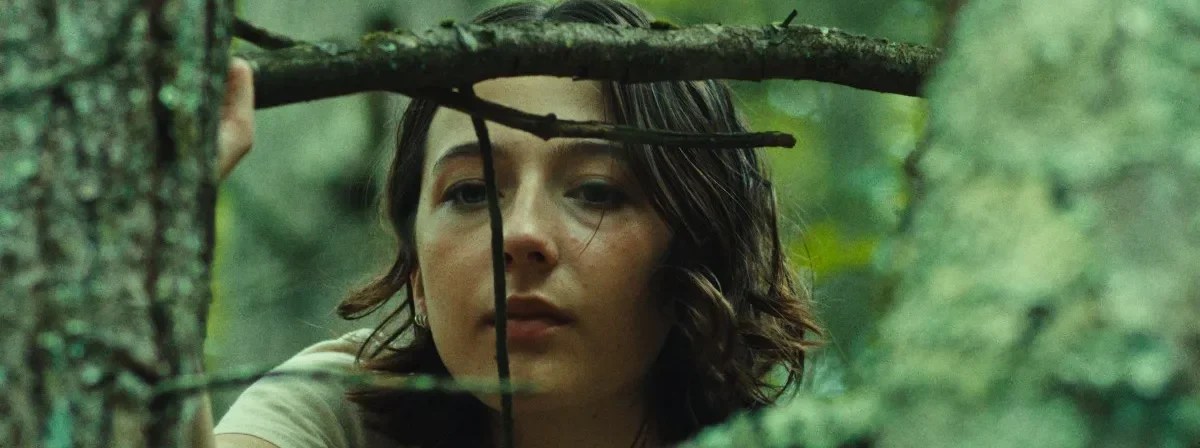
After a self-defensive murder, Iris (Sophie Thatcher) uncovers multiple secrets about herself and those she was spending the weekend with, whilst fleeing them in the surrounding woods.

One of the joys of Companion is the sudden twist which properly kicks everything off early in the run-time. While the teaser trailer did exactly what it should do and didn’t given anything away, the main trailer, and some reviews, give this detail away upfront. It’s a shame, as the moment in question brings in a lot of the mystery and ideas that the film subsequently plays with in entertaining fashion.

Iris (Sophie Thatcher) is spending the weekend at a lavish, isolated lakeside home, spending time with her boyfriend Josh (Jack Quaid) and his friends, who she thinks don’t like her. However, after being sexually assaulted and attacked by house owner, Russian millionaire Sergey (Rupert Friend, in an enjoyable brief and knowingly hammy role) Iris kills him in self-defence. Subsequently tied up and bound to a chair whilst those left alive wait for the police to arrive she quickly escapes and while strands about control play out the following few hours see her on the run an uncovering secrets about both her own life and those chasing after her.


While having billed as a horror Companion plays out as more of a dark comedy with thriller-like edges. There are plenty of laughs to be found throughout as the threat at hand is diminished by the various arguments unfolding between Josh and friend Kat (Megan Suri) – who may have their own plans together – and couple Eli (Harvey Guillén) and Patrick (Lukas Gage). There’s also a good deal to enjoy about Iris’ own adventure, with both a good deal of laughs and moments which simply bring about a knowing smile of anticipation as she learns more about herself and pushing herself out into the world around her – even if it is largely woodland surrounding the house and nearby lake.

As things move along with consistently fast pace, all contained in a short, well-handled 97-minute run-time, there’s a lot to enjoy. Largely from the overall tone of the piece but also the darkly comic laughs which come through more consistently the more the film goes on. Even in the closing stages the moments of splatter and bordering-on-18-rated gore allow have their own entertainment factor which works well alongside the suspense. Lines of dialogue around control might feel a little bit on-the-nose and as if they think the film has been making a grander point about this than it actually has, but it does make for a welcome smile for the details and nature of the closing shot. Perhaps, though, what makes it most worthwhile is the simple enjoyment there is to be found from the preceding hour-and-a-half. Both the humour and the occasional gore all held in a tightly and well-told thriller.

A tight and effective thriller with plenty of dark comedy held throughout, Companion is best seen knowing as little as possible. From there the mystery develops in entertaining fashion with likable humour and splatter for consistent enjoyment in the fast-flowing, not to mention short, run-time.

Rating: 4 out of 5.

Flight Risk – Review

Cert – 15, Run-time – 1 hour 31 minutes, Director – Mel Gibson

Back-in-the-field Madolyn Harris (Michelle Dockery) is air marshal for fugitive witness Winston (Topher Grace), however a safe flight through the Alaskan mountains soon turns deadly when their pilot (Mark Wahlberg) turns out to have other intentions.

Flight Risk feels as if it could be perfectly described by a report card that simply says ‘Poor’. Not an abysmal waste of time, but certainly an underwhelming and tiresome film that’ll quickly be forgotten. Screenwriter Jared Rosenberg’s script appeared on the 2020 Blacklist and was quickly picked up, however with the most basic of basic dialogue cropping up throughout the film it feels as if surely lines and scenes must have been changed and tweaked to turn a praised script into a mundane slog.

Nothing throughout the run-time ever feels as if it properly gels, there are hints in the performances of the central three characters which suggest that their hearts are never fully invested in the project, not helped by Mel Gibson’s wobbly direction which feels uncertain as to where to move and place the camera in the cramped confines of the plane in which much of the events take place. Flying over the Alaskan wilderness to take fugitive witness Winston (Topher Grace) to New York to testify against the Moretti crime family, deputy marshal Madolyn Harris (Michelle Dockery) finds herself facing a pilot (Mark Wahlberg – sporting a dodgy semi-bald look which is never explained) who may in fact be working for someone after Winston.


Throughout the various scraps and last-minute course corrections I found myself distracted by both the amount of ugly shots in the film and the overall lack of fun that it seems to be having. There may be a number of attempts at jokes, only one or two of which gain something of a sympathetic chuckle, but as a whole the humour of the film seems lacking as its events feel as if they could be cut down into a 30-45 minute TV episode rather than a 90-minute feature, a thankful run-time however. There are occasional glimmers of amusement, even amongst the confines the film creates for itself in its single-location thriller aspect, but not quite enough to give it a proper lift.

Instead things trudge along with little to amuse and engage. Instead, I largely sat there rather bored by everything I was seeing, all of which felt somewhat detached and disinterested, having a similar effect on the audience. What appears to want to be a simplistic, stripped back thriller feels too stripped back and therefore basic. It leads to an uncertainly made and eventually messy 90 minutes, all rooted in a rather boring set of sequences.

Far too bland and lacking to create any proper engagement, Flight Risk trudges along without feeling as if anyone involved’s heart is truly invested in the project, creating a boring, even if not doing enough to be worked up about, set of events which lack the thrills and fun that something like this should have.

Rating: 2 out of 5.

Presence – Review

Release Date – 24th January 2025, Cert – 15, Run-time – 1 hour 25 minutes, Director – Steven Soderbergh

In the hope of seeking peace and a close-to-fresh start a family move into a new house, however they may not be alone and the ghostly goings-on send mixed messages.

Presence appears to unconsciously stylistically acknowledge the limitations of its own central conceit. Told from the first-person perspective of the titular presence each scene is made to seem like a one-shot with the unseen figure gliding through the house in which all of the events take place. Each time a scene ends there’s a brief cut to black before things start back up again with the next set of events. While keeping the slow pacing consistent throughout it does create something of an overly slow feeling in the opening stages as scenes feel more like short bursts rather than fully contributing to the overall arc of the film which is being established. When longer sequences, at least a couple of minutes, are at play the elements have more room to breathe and have a better chance of forming a connection.

The cut-to-black device may push some people away with a stop-start feeling, but what comes through more is the fact that it shows the limitations of the film. Restricted to the one location, and needing the family at the centre of the events to be present, there’s a confined feeling to the action which has a knock-on effect on the film as a whole which while leaning into the central style with good effect also finds itself reined in by it.


Mum and dad, Rebekah (Lucy Liu) and Chris (Chris Sullivan) have moved them and their two children, son Tyler (Eddy Maday) and younger daughter Chloe (Callina Liang), to a quieter area where they hope to find peace. Chloe is grieving the loss of two school friends who have taken their own lives, while her parents find themselves arguing constantly about their parenting, work stresses and matters of legalities within them. Tyler appears to be the only one cruising through life, although still finding himself in arguments with his family who he views as failing to move on.

While not a horror elements of the genre are still very much at play within the drama of Presence. It doesn’t go for scares, although prolonged developments in the climactic stages do reach very uncomfortable territory where one character’s actions really got under my skin. These closing stages make for some of the best stuff of the film, and indeed when using the ghostly viewpoint’s abilities instead of just having them wander through the house, as is often the case when observing the central family. Yet, with all the time spent watching them go about their lives, and question whether they’re alone in the house, there’s never a full connection formed with any of them during the short run-time, which for the most part, at 85-minutes, gets in and out just before things go on for too long.

As a whole, there’s little investment and involvement with the film beyond some interesting effect from the stylistic elements and the occasional impactful beat. For the most part I simply sat and watched it all unfolding on the screen in front of me. Presence moves along well enough and uses its style well, but it also unconsciously displays its flaws and hold backs, those which stop it from moving along with greater effect and engagement.

While there are interesting beats and elements courtesy of Presence’s central framing device, especially when at its most upfront, it also holds the film back as it shows the limitations and restrictions it brings to the narrative leading to a lack of full connection with the events as a whole.

Rating: 3 out of 5.

Wolf Man – Review

Cert – 15, Run-time – 1 hour 43 minutes, Director – Leigh Whannell

When travelling back to his childhood home in the middle of the woods, Blake (Christopher Abbott) is attacked by a mysterious animal. As the night goes on he begins to change, can he protect his wife (Julia Garner) and daughter (Matilda Firth) from himself?

For the most part Wolf Man isn’t a bad film. It has some nice ideas, good central performances and it handles the werewolf transformation story relatively well. Yet, there’s something about the film that somewhat fumbles this key element as the highly stripped-back and traditional leanings sometimes make for an air of blandness for the proceedings. For those going in expecting another social horror from Leigh Whannell after 2020’s The Invisible Man, also made under Blumhouse, this is far from a repeat. Wolf Man is an upfront transformation tale through-and-through.

When family man Blake (Christopher Abbott) is attacked after a near-collision in the woods, returning to his childhood home in the wake of his father’s death (played by Sam Jaeger in the film’s 90s set opening scene), he quickly falls ill. Rapidly deteriorating his behaviour becomes more frantic, with wife Charlotte (Julia Garner) and eight-year-old daughter (Matilda Firth) having to focus on the possible threat in the house with them, and the creature prowling outside ready to attack. While at times the intended gradual transformation can sometimes feel somewhat rushed when shown as happening almost all at once over a minimal number of hours there are some good ideas to be found. Eventually we get to see how Blake is seeing the world with his animalistic viewpoint compared to Charlotte as she tries to look after him, unsure as to what is happening.


There may not be many scares, despite some tension here and there, but Wolf Man works dramatically, while still landing firmly in the horror genre. There are likable elements to be found, particularly helped by Abbott and Garner’s performances; and indeed Firth puts in a good child performance, but occasionally things, especially in the first half, can feel very slow and over-familiar. You can see the classic influences on this film, and where it steps out to do something different, and overall it’s hard to argue that the film doesn’t achieve what it appears to set out to do in trying to make a traditional werewolf movie with one or two new ideas and elements, which work rather well.

There’s a successful claustrophobic feel in some scenes and visually there’s a good deal of detail when it comes to the changes in Abbott’s appearance. None more so than when you can see the inevitable, where from there the makeup department’s efforts pay off and then some with the changes and animalistic elements which begin to appear more rapidly – again, with the help of Abbott selling the role in these moments. There may still be elements of convention at play, but at least there’s still a likable sense to the film which stops it from dipping into a slightly staggering set of repeats as could so easily be the case. It takes a bit of time to get here after the wandering opening stages, but for the most part once in the house there’s enough to like and be amused by stylistically that Whannell and co manage to pull off this occasionally familiar, if perhaps forgettable, werewolf transformation flick.

Not a bad film, Wolf Man appears to achieve what it sets out to do. While sometimes the familiarity can be a bit too much and brings in a sense of blandness there are likable stylistic details at play that, even if lacking in scares, with the help of Garner and Abbot’s performances, makes for a lightly interesting and passable werewolf transformation film.

Rating: 3 out of 5.