LFF 2024: Bionico’s Bachata – Review

Release Date – TBC, Cert – TBC, Run-time – 1 hour 20 minutes, Director – Yoel Morales

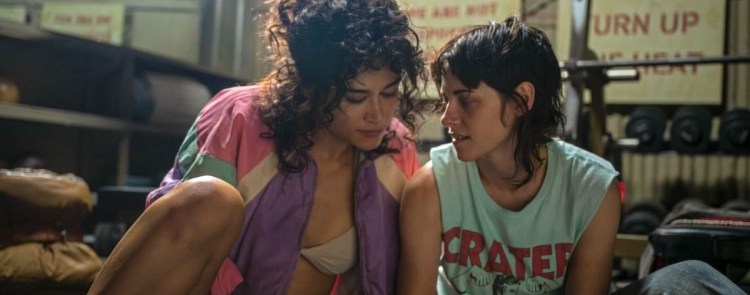
Stoner Bionico (Manuel Raposo) is followed by a camera crew as he attempts to get sober by the time his girlfriend (Ana Minier) leaves rehab, however he’s met with a strong current of temptations, including from best friend Calvita (El Napo).

Bionico’s Bachata is a film that has a great deal in common with its titular figure. Manuel Raposo’s character is a likable figure, trying to do his best and get better but constantly being hampered by those around him. We know exactly what the film wants us to think of him with the introductory description of “among the useless they were looking for the least damaged”. Bionico is determined to get sober by the time his girlfriend La Flaca (Ana Minier) gets out of rehab – although whether the relationship is now one-sided crops up every now and then. However, after many years of drugs he’s surrounded by dealers and takers, including best friend Calvita (El Napo) who while supporting his friend’s decision is still very much pro-drugs at any time of day or night.

Calvita is a loud, loud character. Bursting into scenes and sentences with a style which hampers the film under the character’s simply annoying nature. When properly supporting Bionico Calvita comes across as a slightly calmer character, and even when moved slightly to the background as the film develops and moves towards its closing stages. This may mean that a good deal of the intended humour falters, largely as Calvita appears to be intended as the biggest source of comic-relief within this comedic mockumentary. Yet, where the occasional chuckles come through are in more clearly cut moments where there’s something of a build-up or generally more rounded sense to the joke which belongs in the moment rather than a near in-the-moment interference or a dance which leaves an uncertainty as to the response it’s meant to get.

Undoubtedly, the film is helped by its short 80-minute run-time. It moves along well enough, despite some bumps, but much like the central figure there’s a likable nature to it, particularly when focusing on Bionico’s journey and actual attempts to get sober – “you can’t mix love and crack” is a phrase which begins to echo in his mind. There’s a confliction to some scenes depicting this, some good and fitting in well and others from my mind as I wasn’t entirely sure of the style of a certain moment as the film once again goes in a big musical montage of inebriation. However, as Bionico comes closer to being reunited with La Flaca, for most of the film all we see of them together are brief TikTok videos from before she went to rehab, things almost feel properly settled with a more direct sense. As if with the aim closer in sight the film knows where it wants to go and how it wants to do it.

Building up to this point with enough amusement to hold light engagement this might be an occasionally jumbled film, but it has enough present to find something to like amongst that jumble. Much of it connects to the central character who sticks out from his surroundings as a generally calmer individual, and one wanting to change whilst being drawn back in by the people and recognisable environment which surrounds him. The seriousness isn’t too-often shown as the film sets out to be a comedy, although there are one or two dramatic beats in the later stages, and not all the humour works largely due to loud supporting characters, much as is the case for Bionico’s life it seems. Things move along with occasional sketch-like form and while the film as a whole might not be anything memorable there’s still enough to hold amusement and engagement for the duration of the short run-time.

Like its lead character, Bionico’s Bachata is likable but held back by a loud supporting character holding back much of the humour. The film remains watchable and passes by well enough, if not always going as in-depth as it might like, working best when shaped and directed towards the central character’s aim.

Rating: 3 out of 5.

The Contestant – Review

Release Date – 29th November 2024, Cert – 12, Run-time – 1 hour 30 minutes, Director – Clair Titley

Tomoaki Hamatsu (AKA Nasubi) becomes an unknowing overnight star in Japan when taking part in a TV show which leaves him confined to a room, naked for over a year, here he looks back on the effect it had on him and his life.

Despite the background laughs from the watching studio audience the images from hit Japanese reality show Denpa Shōnen’s A Life In Prizes challenge could well be footage used in a court trial. It’s the late 90s and aspiring 22-year-old comedian Tomoaki Hamatsu enters the show in the hope that it could lead to his big break, however producer Toshio Tsuchiya wants to push the boat out and prove critics who claim the show is just a travel programme wrong. Therefore, Hamatsu, referred to as Nasubi (meaning eggplant, after his long face), is stripped-down and confined to a small, windowless room with only magazines, a phone and postcards. He can apparently leave at any time, but the challenge ends when he wins 1 million yen worth of prizes from magazine competitions. It’s a game based on pure luck.

Despite being told that barely anything would be broadcast, Japan receives weekly updates on Nasubi and he comes an overnight sensation, with over 30 million people tuning in to see his progress. The laughter continues to roll in from audiences and hosts, while the unaware star – in a pre-Truman Show era – dances for joy that he’s won dog food; desperate for food he tries some. It’s undeniably shocking, and what director Clair Titley creates is a dark film, although not one that dives into bleakness.


We see Hamatsu provide talking head interviews reflecting on his time, recounting the desperation he had to succeed. Knowing that the could leave, but it feeling safer to stay and achieve the goal he was set while his mental state spiralled and declined alongside his physical one – the longer he spends confined to the one room we see the titular contestant become increasingly wild and worn down. Speaking of isolation and loneliness, even well after the challenge, the effects clearly stayed with him for some time. These interviews sometimes play alongside images of Tsuchiya, also providing talking heads for the film, who admits that he was no God, but the devil. While there may be reflection in the closing stages of the film there’s no denying that when we see what the central figure was put through that he comes across as a force of evil.

Claims from older viewers at the time, many of whom had experiences war and tragedy throughout their lives, objected to the show and viewed it as torture. In seeing what Nasubi goes through it’s hard to argue with that, particularly when we see the producer retrospectively talking about thinking how far things could be pushed in order to keep high viewership, and prove critics wrong. In the present day the man who endured all of this still bears the scars, but openly discusses them in an honest way where he still appears to be constructing things as he continues the thought that he’s put into them. Without his input, and indeed Tsuchiya’s, The Contestant perhaps wouldn’t work as well as it does. Perhaps the bleakness would come through, or there’d be less insight into the mental impact A Life In Prizes had on him whilst a country watched in consistent amusement.

From seeing Hamatsu’s interviews, and elements of his life after A Life In Prizes, there’s a slight sense of hopefulness coming from him in the final stages, although amongst later tragedies which would hit Japan and his life. As a whole there’s a fascinating nature to the film which compels you in the story which unfolds as Nasubi is a clearly determined figure but one tormented by a TV show he doesn’t know he’s a part of. Titley creates a compelling portrait of events which engages you with both the shock factor and the human story which, while further contributing to this, is placed at the centre meaning that the documentary provides some of the same footage as shown on Denpa Shōnen but with a different, human angle and therefore impact.

Shocking without that being the central intention, The Contestant focuses on the human angle and mental impact of the torment gone through by the central figure who contrasts well with interviews with the producer of his experience for a deeper connecting film.

Rating: 4 out of 5.

LFF 2024: Soundtrack To A Coup d’Etat – Review

Release Date – 15th November 2024, Cert – 12, Run-time – 2 hours 30 minutes, Director – Johan Grimonprez

Documentary examining the influence of and for jazz in relation to the decolonisation of Africa and the geopolitical response in the 1950s and 60s.

The spirit of jazz permeates into every frame of Johan Grimonprez’s Soundtrack To A Coup d’Etat. Not just in the unrelenting score which maintains its energy from start to finish, but in the overall freewheeling style of the film as a whole. There’s so much being covered that I know for a fact my above plot summary is undeniably incorrect. For 2-and-a-half-hours the film barrels through the geopolitical tensions of the 1950s and 60s, with specific focus on the world’s responses to a decolonised Africa, particularly through the lens of jazz.

Running through the cold war, racial tensions in America, the influence of and for jazz music at the time everything links to create a grand portrait of the time, particularly regarding race relations in the eye of politics and music. Even the first hour is packed with so much fast-paced detail that many other films would take just one detail of for a focus point. Yet, Grimonprez and editor Rik Chaubet are never light on detail; they make sure that everything connects, linking one point to the next with as seamless an effect as the various stages of the score throughout. With just as much bounce, as well, from the opening stages there’s an enjoyable nature to the documentary, which still manages to get across its serious points as it delves into the messages of the music and the political impact that it was having, and in some cases being used to have as artists such as Louis Armstrong were flown around the world to show a healthier portrait of American actions in, or views towards, other countries.


Slowing down a little bit for the more serious elements of the final hour, particularly regarding the assassination of Patrice Lumumba and the events following around the world, particularly in regards to the UN, there’s still plenty of pace to the film. The more serious themes are handled well within the shape of the execution and continue to make the film undefinable as to what it’s actually about, and not in a negative way. At times the style might start to get exhausting, it certainly doesn’t stop to give you a breather at any point, but it means that the film is consistently lifted, particularly in tandem with the music which underpins everything. It’s a highly enjoyable documentary that knows how it wants to demonstrate its plethora of points and does so with a great deal of success. Paralleling what it shows by using the score to lift the events unfolding on screen which has a knock on effect in enhancing the jazz itself.

While its fast-paced freewheeling style might begin to get exhausting Soundtrack To A Coup d’Etat is a brilliantly laid out documentary of many united subjects, being influenced by and enhancing its jazz score to create entertainment and make a number of successful serious points.

Rating: 4 out of 5.

Gladiator II – Review

Cert – 15, Run-time – 2 hours 27 minutes, Director – Ridley Scott

Taken to Rome after his homeland is taken over, Lucius (Paul Mescal) is forced to become a gladiator, with his eyes set on vengeance he becomes a pawn in multiple attempts to take control of the empire.

There are two sides to Gladiator II. There’s the focal narrative side delving into the politics of a struggling Roman empire, where multiple forces are vying to take control from twin emperors Geta (Joseph Quinn) and Caracalla (Fred Heichinger), and there’s the action-based side of gladiatorial action, occasionally diving head-first in suspensions of disbelief as the coliseum is filled with water and sharks for a boat battle – although likely far from the fantasies of Nick Cave’s one-time script for the sequel subtitled Christ Killer. Undoubtedly the latter has more of a punch, particularly during the more up-close, personal battles which strip things down to swords and fists.

Paul Mescal undoubtedly sells these fights, alongside his stunt doubles, with a silently determined expression set on vengeance. Vengeance for his wife (Yuval Gonen) who was killed in the Roman invasion of his city. Taken to Rome to become a gladiator, under the grinning view of Denzel Washington’s Macrinus, his intent is to kill the man behind the attack; General Marcus Acacius (Pedro Pascal).

Mescal’s Lucius becomes unknowingly involved in multiple plans to take over, or keep control of, Rome, including Acacius’; who plans an uprising to overthrow the corrupt emperors. There are a lot of players involved in each plot and the film wants to give each of them time. While it doesn’t feel jumpy or choppy, the way it cuts back and forth between different schemes, alongside the action in the coliseum, when paired with the lengthy 2-and-a-half-hour run-time things feels better suited to a TV series. The film itself feels almost inspired by many big-budget, smash-hit pieces of cinematic television from the last decade and while there are certainly moments of cinematic spectacle here the political-leaning narrative feels as if it could work as a miniseries, especially if it gives certain moments a bit more time to breathe.


Yet, this may lean into one of the film’s biggest problems in the first hour which is that it failed to consistently grab my attention. For much of the early stages I simply sat bored as things were still being brought together, in the end it takes even longer for each strand to finally converge and unite for the dramas to play out together and the clashes to finally appear in a grander, more direct way. It certainly means that there are less characters in separate places and so confrontations begin to play out alongside multiple plans in action. The stakes finally begin to raise as they do and while eventually this might all seem brief and largely confined to the third act, there’s still some interest and effec to be found.

Although, much of the interest still lies within the action itself, and the tension that surrounds it and the threat that it has to sometimes jump out at any moment during a confrontation or conversation, the impact that it, or the decision to not choose it, can have. When these stakes are working together the film is at its most effective, when dealing with things separately there’s a bland nature which also perhaps comes down to a lack of full connection with the central character. This isn’t down to Mescal’s performance, which, like the whole cast, is rather good, but more down to what we see of his story.

There’s a grit to Russell Crowe’s Maximus and his story in the first film, indeed how it’s followed and the events we see him go through. The context for Lucius’ arrival into Rome doesn’t have the same effect, while the character has effect the same emotional connection isn’t there having an impact on the already uneven film as a whole. The action has an impact, even in its grander moments which Ridley Scott successfully avoids bringing a sense of silliness to which could so easily be present, and often acts as the returning point of engagement and drama as a longer, drier battle for power plays out in-between fights, eventually colliding into them. It takes some time for this to be the case but when it finally starts to happen the film as a whole opens up and Gladiator II becomes a more enjoyable film as it feels less constructed of separate pieces and instead becomes a bigger drama with the various plays for power playing alongside instead of against each other.

As the many separate characters and stories start to come together Gladiator II steps out of its boring state for a more effective, if still occasionally trudging, drama where the action does much of the lifting and connecting over the characters themselves.

Rating: 3 out of 5.

LFF 2024: The Balconettes – Review

Release Date – TBC, Cert – N/A, Run-time – 1 hour 44 minutes, Director – Noémie Merlant

A late-night, mid-heatwave party between three friends (Sanda Codreanu, Soulheila Yacoub, Noémie Merlant) and a handsome neighbour (Lucas Bravo) takes a threatening and deadly turn, leading the trio to figure out how to dispose of a body.

The Balconettes is a film with an underlying streak of darkness. It comes in a number of different forms; directly dealing upfront with the dead, and ghosts coming back to haunt people, and also the threat of sexual abuse and misogyny which hangs over the three central characters. The mixture works well and brings a consistent darkness to both the comedy and drama at hand as the film leans towards horror tones and ideas without often treading into, or on the line of, the genre itself. Yet, amongst all of this, it still finds room for a couple of fart gags.

Even as central friends Nicole (Sanda Codreanu), Ruby (Soulheila Yacoub) and Elise (co-writer and director Noémie Merlant) find themselves trying to dispose of a body, and deal with the worry and panic that comes with it, especially in the wake of the events building up to the death, there are still patches of humour to be found. They’re well wound in and make for a successful dramedy which consistently focuses on the central friendship and the strong bond between the three. The trio stare from the balcony of Nicole and Ruby’s flat at a neighbouring apartment block where an attractive stranger (Lucas Bravo) consistently catches writers-block-inflicted author Nicole’s eye. When the three are invited mid-heatwave to a late-night gathering at his apartment a tipsy, flirty evening soon takes a dark turn that’s only fully realised the next morning when outgoing cam-girl Ruby becomes silent, staring horrified into the distance.

As the three try to work out what to do with the body the ghost of the stranger starts to haunt and taunt Nicole. This begins to spread to a slightly broader element about seeing the dead which doesn’t entirely click as much as the film perhaps hopes it would, despite some good moments, and at times it sits apart from everything else within the narrative – fortunately it makes for the briefest/ least focused on of ideas. Although, in terms of its knock-on effect into the film’s other strands and the overhanging themes of toxic masculinity, misogyny and its impact on the women in their lives, work and relationships. there is some good work done in this strand that still manages to engage.

The biggest strengths, as mentioned, are based in the friendship, and with that the impact that the key turn of events has on each character. The central performances each bring further strength to the characters and the film as a whole, bringing you further in to the relationships and the ways in which each figure reacts and pushes forward in the wake of the leaking chaos. There’s humour to be found with a good deal of laughs surrounding some of the first reactions, and tense situations, that crop up – Nicole hiding in the apartment of the deceased while his neighbours look around having not seen him for a few days has a sense of tense glee to it with threat and humour walking hand in hand with the splatterings of blood.

Merlant, both in direction and screenplay – co-written with Céline Sciamma, this marking a very different script to those which she’s penned before – captures the mixture of panic, chaos, humour and darkness effectively and while sometime the mixture holds scenes of the characters on their own slightly back when all together there’s a lot to enjoy about the way they work together and the overall tone of the film as a whole. A tone which could so easily turn leading things to become an overall different film but manages to avoid doing so and keeps a generally consistent style to the proceedings that’s caught within the bond between the wonderfully performed central friends.

An entertainingly dark dramedy with a trio of great performances at the centre while certain moments of The Balconettes focusing on singular characters may not fully capture the tonal mix when as a group there’s a strength to the relationship and blend of ideas and styles.

Rating: 4 out of 5.

LFF 2024: The Surfer – Review

Release Date – 9th May 2025, Cert – 15, Run-time – 1 hour 39 minutes, Director – Lorcan Finnegan

Waiting for a call to confirm his purchase of his childhood home, The Surfer (Nicolas Cage) is confined to a car park in the Australian heat, days before Christmas, being attacked and manipulated by a group of surfers who hold the below beach for themselves.

The Surfer feels like someone set out to make a cult Nic Cage film, or just rather the perception of a Nic Cage film pre-Mandy, and definitely pre-Pig. It largely banks on the fact that Cage takes on the lead role of The Surfer, and appears to rely on him to push the film while director Lorcan Finnegan conjures up a strange style to boot.

Confined to a car park in the Australian heat days before Christmas Cage’s ‘the surfer’ is waiting for a call to confirm his purchase of his childhood home. However, the area has changed from what he remembers it. When trying to go down to the beach with his son (Finn Little) to surf near the start of the film, they’re instantly turned away by the local men who appear to hold the beach for their own. Thus ensues a ‘this is a local beach for local people, there’s nothing for you here!’ mentality. A set of events sees The Surfer stuck in the car park, running out of money and phone battery, and seemingly being tortured by those who have set themselves up on the beach – but, as one person claims about them marking their land “if it stops them beating the botox out of their wives so be it”.

What unfolds is a fairly familiar story and set of events, however director Lorcan Finnegan, who has brilliantly created unease before in underrated 2019 horror Vivarium, seems to be aiming for a trippy, off-kilter style to the overall tone of the film. It creates an odd feeling, particularly as it becomes increasingly forced, within a very familiar film. It’s a strangeness that’s enhanced by a quasi-fantasy score lingering in a handful of scenes, particularly in the early stages as Cage’s character tries to get his bearings before he properly starts to break down when his possessions go missing or his car is messed with – although the question of why he can’t just walk off and find help down the road does come to mind.

In addition to this, if this is supposedly designed as a hopeful cult Cage flick, I found myself asking whether any of it was meant to be funny. While not getting any laughs from me it seemed as if the film was trying to get some chuckles, perhaps from its hammered style conflicting with just how recognisable the film and its overall narrative are. Is the behaviour of the central character, his reactions to the increasing frustration and pressure that he’s experiencing, and in part putting upon himself, and the trippy-adjacent surroundings meant to be comedic? It’s something I can’t answer for certain, it seems as if it may be trying to be, but at the same time that could be something in the aesthetic backfiring to give that impression.

By putting a forced style over substance, and relying on Cage – who successfully doesn’t entirely appear to go full Cage for much of the duration – The Surfer stumbles and feels consistently uneven. Largely down to the fact that much of its events feel familiar despite what’s trying to happen tonally. It leads to a messy and confused feeling film which doesn’t seem to realise that it’s digging its own hole and therefore keeps going with increased speed. Therefore failing to engage, and leaving me uncertain as to whether any of it was meant to be humorous or not.

The Surfer’s narrative is very familiar, which makes the odd tone feel both all the more forced and unwarranted, especially considering the ambiguous nature as to whether it’s meant to be funny or not.

Rating: 2 out of 5.

LFF 2024: Maria – Review

Release Date – 10th January 2025, Cert – 12, Run-time – 2 hours 2 minutes, Director – Pablo Larraín

As she tries to return to the operatic stage Maria Callas (Angelina Jolie) revisits her life with a journalist (Kodi Smit-McPhee) in Paris, where she has retreated to away from the public eye.

“Book me a table at a café where the waiters know who I am, I’m in the mood for adoration” Maria Callas (Angelina Jolie) requests of her butler (Pierfrancesco Favino). It’s the 1970s and she’s moved to Paris to get away from the public eye, however the occasional moment of recognition doesn’t go amiss, particular as she seeks a return to the operatic stage. Whilst going to rehearsals where her voice proves to not be what it once was she’s seen roaming the city, softly captured by cinematographer Edward Lachman, with a journalist played by Kodi Smit-McPhee questioning her about her life.

The three strands playing out intermittently create a choppy feeling to the overall structure of the film, but they’re held down by a fine, naturalistic performance from Angelina Jolie who acts as the key source of connection to the film as a whole. Callas is aware of her own ego, to some extent using it to push her forward in her strive to get back on the stage. There’s a slight humour to this side of her which makes for a more interesting and engaging character within a highly restrained film.


Maria marks the quietest of Pablo Larraín’s sort-of-trilogy of biopics, following Jackie and the excellent Spencer, and like those films the lead performance will likely receive awards attention. Yet, the quietness sometimes leaves the film lacking, as if needing a bit more substance to certain scenes to simply pick up the pace of scenes less interested in building up the central figure and more showing a near day-to-day style which contrasts with the flashbacks to her past. There are still elements of the woman who confidently states “to be a possession in a cabinet is not my ambition”, particularly as we see her trying to find her singing voice again.

Where things feel most uneven are in the interview segments. While initially acting as a way to give more information surrounding events in the past and how Callas views them later in life. However, as the character develops throughout the film more scratches of details come through for Smit-McPhee’s character and his views on, and relationship with, Maria. Sticking out due to occasionally coming from nowhere, and not really having room to breathe, such moments struggle and fail to land an impact as they simply lose their way halfway through the film amongst everything else that’s happening. Certain lines of dialogue, which with the brief nature of such moments is almost the majority of them as the film goes on, simply strike as odd, with a knock-on effect to the strand as a whole.

In general, Maria strikes as a film where the screenplay and aesthetics are constantly trying to add more detail to the titular figure, yet are trying to do it in multiple different ways which should combine but occasionally find themselves working separately. Jolie still manages to give a strong central performance, giving the most detail in the film as an openly flawed, sometimes wearing these with pride, yet defiant character. Larraín captures some of this but still keeps his film quiet without being entirely observant. There are likable beats and the key scenes certainly have an effect as they truly allow Jolie and Callas to flourish as they are put truly centre stage, but the construction of the film and slow pacing hinder it, stopping a proper emotional connection and effect from being created.

Angelina Jolie gives a great performance and brings most of the detail to Maria Callas as Pablo Larraín keeps a quiet, yet choppy, focus on the central character, occasionally feeling as if more detail could be given in less time and the film could between unify its strands to truly give the push it wants to give its title figure.

Rating: 3 out of 5.

LFF 2024: Hard Truths – Review

Release Date – 31st January 2025, Cert – 12, Run-time – 1 hour 37 minutes, Director – Mike Leigh

Pansy (Marianne Jean-Baptiste) is bitter about the world around her, constantly pushing away her family and bringing them down, despite this her sister Chantelle (Michele Austin) continues to extend a friendly hand.

Pansy (Marianne Jean-Baptiste) is a starkly bitter woman, taking issue with everything around her even a friendly smile from someone behind her in the shop queue is a problem. The world hates her, and in turn she’s started to hate it back. Constantly bringing down her family meal times are a pit of silence aside from her lengthy rants about her day of observing the world’s decline. She moves with topic to topic with increasing ease and fury, much to the amusement of the audience.

As if flicking a light-switch Jean-Baptiste and director Mike Leigh are able to turn these rants from hilarious outbursts to intensely dramatic tirades where you see just how cold the character is. Sympathy grows for her near-silent husband (David Webber) and 20-something son (Tuwaine Barrett), spending his days isolated away, occasionally going out for walks where he’s antagonised by possible former classmates. Even hairdresser sister Chantelle (Michele Austin), who has a much more comfortable home-life with her two confident, striving-for-success daughters (Sophia Brown, Ani Nelson); the complete opposite of the former’s non-existent familial ties, who extends a loving hand to her sister receives just as much torment, despite still being called to sort her hair.


As the relationship between the pair is grown, observed in pure naturalistic style by Leigh, a character who could so easily turn an entire audience away, and does, manages to find a spark of connection. Past hardship brings context to her lingering anger and despair, excellently conveyed by Jean-Baptiste in a powerhouse performance packed with held-in and disguised emotion; a far call from her brilliant turn in Leigh’s Secrets And Lies back in 1997. Between Pansy and Chantelle there are not only two different lives, but two different ways of coping with life and expressing emotions. It leads to a fantastically tender scene between the pair where the real confrontation with the past, and its effects in the present, come to the fore for the audience, and in words for the pair.

Emotion hangs thicker in later scenes as more and more builds up, we know just how much characters are dealing with and the multiple thoughts, and personal hard truths, that their hiding alongside what they’re presenting to everyone else. Fear, sadness, anxiety, hesitation and isolation are all confined to one room. Every character’s mind and face are a portrait of feelings, all combining into the dark tangle which starts to cloud up the room. It’s all excellently built up by Leigh and his performers who create a story of real human emotion mixed with personal conflict and uncertainty. “They all hate me” cries Pansy, she includes herself in that group.

While she starts off bringing plenty of laughs, it’s not the continuing humour which connects us to Pansy, it’s the opposite. The reason she turns a shoulder to the rest of the world and feels constantly restless. Marianne Jean-Baptiste is sensational, while Michele Austin delivers a lighter, understanding performance of compassion. It stirs the details of revelations and reactions between the two sisters, and indeed the rest of their family. There’s plenty to already have an effect in the film’s first half, but the second half reveals new layers and details to truly deliver a knockout which acts as one of Leigh’s best films. One which for the characters lives up to the honesty of its name and for the audience live sup to the fascination it creates.

Fuelled by a set of brilliant performances, especially a superb Marianne Jean-Baptiste, Hard Truths offers a human portrait of unspoken emotions and the ways in which people behave in the wake of them, creating punches of humour, emotion and pain through its honesty.

Rating: 5 out of 5.

LFF 2024: Joy – Review

Release Date – 15th November 2024, Cert – 12, Run-time – 1 hour 57 minutes, Director – Ben Taylor

Through the 60s and 70s a scientist (James Norton), surgeon (Bill Nighy) and nurse (Thomasin McKenzie) battle infertility, the church and media in their attempts to create the first ‘test tube baby’.

For a straightforward, silver-cinema-leaning British drama Joy certainly makes a lot of noise. It’s largely the sound of lines of dialogue clanging and hammering the point in as they yet again explain everything down to the most basic of details. Very little is left for the audience to interpret or work out for themselves just in case anyone is left behind by the rather simple telling of this story.

The story at hand is that of the attempts throughout the 60s and 70s to help those who are infertile to have children via the creation of the first ‘test tube baby’. Young nurse Jean Purdy (Thomasin McKenzie) is recruited by medical scientist Robert Edwards (James Norton) to help him with his research and eventual tests, when surgeon Patrick Steptoe (Bill Nighy) enters the picture. However, as their research grows they’re met with more backlash from the media and church who believe that what they are doing is morally wrong and against the word of God. Amongst the clashes, and frequent sound of clunky dialogue, subtlety is lost – particularly early on when a church service which Jean attends with her mother (Joanna Scanlan) conveniently has everyone stand and sing All Things Bright And Beautiful.


Things may even out eventually to get to a familiar standard, light British drama feeling, but a bad screenplay occasionally gets in the way, feeling the need to explain everything and certain interactions feel unnatural – particularly between Jean and lab colleague Arun (Rush Shah), who respectively begin to view their relationship differently. The film instead begins to focus more on the actual matter at hand as the central trio get closer to success, and in turn meet even more outrage from those who are only hearing or reading about their work without being in the room. While it might eventually seem that this is the case to lead up to some clear bell-ringing, creating a parallel between the opening and closing scenes, there’s still a more even, generally calmer, nature to the film once the task at hand truly takes form.

When this is the case there’s a likable enough nature to the film as it takes the form of another celebratory, not-too-challenging drama. We may have seen the outline, and some of the content, before, but it manages to just about do the job and while sailing in with some issues it sails out with a handful fewer, making something watchable and likely to go down well with its intended audience. Helped by its central trio who capture just the right tone for the film with their performances and try their best to guide it through some of the more uneven moments, particularly Nighy who gives a good turn with his supporting role. There may be a good few bumps along the way in the build-up, but once the elements are in place, particularly in the second half, there’s a familiar yet watchable Sunday-afternoon-drama here which could get its fingers a bit more into its central debate but wants to avoid too much heaviness and so instead focuses on the responses of the solidly performed characters to their work and the reactions to it instead.

The dialogue in the first half relentlessly clangs and hammers with a lack of subtlety, but once Joy finally gets its elements together there’s a watchable yet familiar British drama at hand, maybe not entirely warranting its own bell ringing but still making for serviceable silver cinema fare which is helped along by its central performances.

Rating: 3 out of 5.

LFF 2024: We Live In Time – Review

Release Date – 1st January 2025, Cert – 15, Run-time – 1 hour 47 minutes, Director – John Crowley

Rising star chef Almut (Florence Pugh) and divorcee Tobias’ (Andrew Garfield) find themselves going back over their years-long relationship, the good and the bad, in the wake of Almut’s cancer diagnosis.

Jumping back and forth between tragedy and the relationship build-up before this point We Live In Time has the feeling of a relationship montage for rising chef and restaurateur Almut (Florence Pugh) and Weetabix IT team member – an idea the film runs with for a few jokes before solely focusing on Almut’s work – Tobias (Andrew Garfield), looking back on the highs and lows of their life together as they confront the former’s cancer diagnosis. Having met after Almut hits Tobias with her car while he returns from the shop to buy a pen to sign divorce papers in a hotel room he has for the night the pair quickly strike up a bond when she invites him to the opening of her restaurant to make up for the accident. Quickly a relationship forms between the pair which plays out in naturalistic, and exceptionally middle class, fashion.

While bringing the aforementioned montage-adjacent feeling the non-linear construction of events works well, settling in and finding its pace fairly early on to avoid feeling like a complete near-2-hour montage. This decision also helps to lighten the film overall. The drama is certainly present, and has its moments of weight, when dealing with the pair’s reactions to Almut’s health, and how she wants to be remembered by their daughter – “I don’t want my relationship with Ella to be solely defined by my decline” she protests to her husband in a wonderfully delivered monologue by Pugh – but by jumping back to the early years of dating, and even after, there’s plenty of largely naturalistic humour to be found, occasionally making certain more dramatic moments have a slightly orchestrated feel.


Pugh and Garfield give great performances, both together and individually. Bringing in the laughs and emotion – bouncing off each other wonderfully, in particular during a very funny extended sequence which sees Almut giving birth in a petrol station. Even during beats where the central idea feels somewhat drawn out, as if uncertain of where to cut things off in its search to get the characters from one stage of their relationship to the next, the strength of the central pairs performances manages to carry things through and keep things moving. There’s a clear bond created between the two characters which acts as as much of a hook into the film as the build-up and development of the love they have for each other, and where that takes them in their conversations and arguments, and indeed the largely naturalistic tone of the film as a whole.

As a whole, We Live In Time presents a likable portrait of the couple as they ride through their ups and downs. Drama is both lifted and lightened by the humour scattered throughout bringing you into their lives which are wonderfully performed by the two leads. While some moments might seem a bit uncertain as they try to get from A to B, overall this is an enjoyable and successfully emotional, particularly when relating to arguments and monologues between the pair during key moments of struggle in their lives – where both actors really give it their all. It might not all be perfect, but neither is the relationship depicted, but there’s plenty to like and be brought into for the film to have success with an emotionally engaged audience.

While some moments might feel stagnant as they try to bridge ideas, there’s plenty to be emotionally engaged by within We Live In Time’s natural humour and slightly orchestrated struggle thanks largely to two great lead performances from Andrew Garfield and Florence Pugh who create a convincing and effective relationship.

Rating: 4 out of 5.