Sonic The Hedgehog 3 – Review

Cert – PG, Run-time – 1 hour 50 minutes, Director – Jeff Fowler

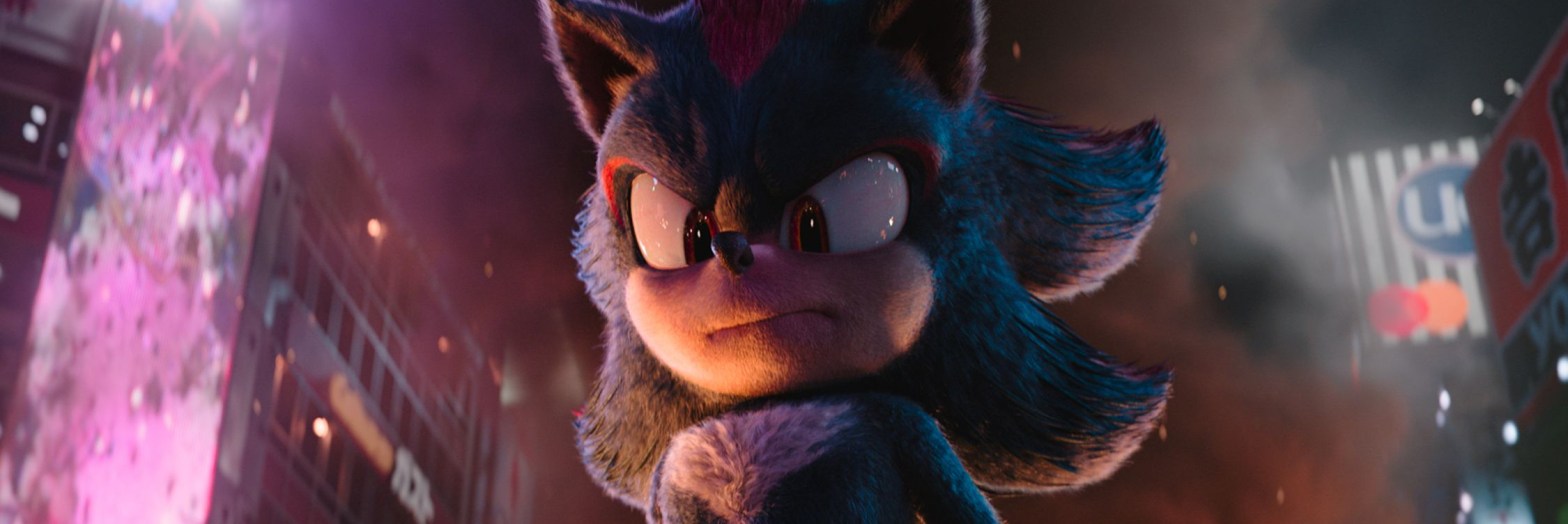
Sonic (Ben Schwartz) and co. must team up to stop another hedgehog (Keanu Reeves) with stronger powers from destroying the world alongside his nemesis Dr Robotnik’s (Jim Carrey) grandfather (Carrey).

At the end of Sonic The Hedgehog 2 I was somewhat hopeful about the inevitable third instalment. While not being a fan of the first film, although certainly being far too harsh on it when first released, the second was something of an improvement, improving as it went on to end with a solid and enjoyable third act. The marketing for this third film heavily focused on something of a darker tone with more focus on action through the introduction of antagonistic hedgehog Shadow (Keanu Reeves). Indeed, the action largely makes for the best stuff within Sonic The Hedgehog 3. Unfortunately, there’s still a tendency to lean back into the frustrations of the past in-between such sequences.

Shadow’s backstory, being created by the grandfather (Jim Carrey) of Sonic’s enemy Dr Robotnik (also Carrey, in a dual performance which is pulled off rather well) 50 years before, is seen in flashbacks a number of times throughout, growing increasingly orchestrated and tiresome through their convention each time. His story of loss contrasts with Sonic’s (Ben Schwartz) family, having become a strong largely-superpowered team, now with the additions of Colleen O’Shaughnessey’s Tails and Idris Elba’s consistently enjoyable Knuckles from the previous film, contrasting with the in-it-for-themselves nature of the Robotniks.


The more intense side of the action in this entry does bring about a likable nature to such moments, and as mentioned they make for the highlights of the film. However, where inconsistency lies is in the endless wise cracks of the tile hedgehog. Sonic is perhaps at his most annoying in this film, and while he calms down in the third act, there’s an almost relentless array of attempted gags unfurling from his mouth during most scenes. As a bike chase unfolds with Shadow through the busy streets of Tokyo he’s told “the more you talk the harder I want to hit you” and I couldn’t help but agree with the sentiment.

In total there are only a very small number of bits of wordplay that work over the near two-hour run-time, with most gags simply disturbing the flow of a scene or going on for too long without adding anything new to the joke so that one idea is simply stretched out until something else comes along. It’s one of the most frustrating things about this film which once again generally finds its proper footing in the, this time quite brief, third act. If all the build-up were more focused and stable like the final portion then, again, this would be a more enjoyable and successful time.

However, for a good deal of the time when promise is shown and the sequences find their stride they’re quickly knocked back by a tonal imbalance or out-of-place comment which feels as if it could be removed, or at least changed, to fit the moment better. It all makes this third instalment end in much the same way as the previous; hoping the improvement will continue into the next to make for a better-rounded film that leans into its promise rather than familiarity and seeming safety.

Once again, feeling most focused and balanced in the third act, the action of Sonic The Hedgehog 3 works well but is constantly disturbed by failed wisecracks from the lead character and repeating plot elements.

Rating: 2 out of 5.

Alternative Christmas Film Advent Calendar 2024 – Dance Dreams: Hot Chocolate Nutcracker

When it comes to Christmas films many are packed with elements of fantasy. Reasonings for how Santa achieves his annual worldwide delivery, and keeps the North Pole hidden, introduce sci-fi leanings with increasingly futuristic ideas. Delving into imagination has long been a big part of many fictional festive films, no matter what genre. However, this year’s Alternative Christmas Film Advent Calendar switches focus to look at documentaries which follow real world Christmas stories and figures, each with their own strand of imagination, festive spirit and occasional fantasy.

Hundreds of performances of The Nutcracker happen across the world every December, many in the US. The New York City Ballet’s production is attended by over 100,000 people each year. Performed by children and adults alike, fellow documentary Getting To The Nutcracker follows a largely adult-performed production, sometimes a new interpretation comes to the stage, such as The Hot Chocolate Nutcracker put on by the Debbie Allen Dance Academy.

Featuring modern musical numbers and new segments such as Bollywood The Hot Chocolate Nutcracker is designed by Allen and her fellow dance teachers to more greatly feature and involve the young students at her dance academy; putting them front and centre of the production – instead of, as one teacher says, just having a brief moment to run across the stage like in the regular production. Throughout the build-up to the performances we hear from Allen about her views on teaching and the Hot Chocolate Nutcracker, her teachers and staff about their own dreams and where they hope to go professionally and, of course, the young people trying to fulfil their own dreams within this production and their own future.

As the big day gets closer and closer Christmas increasingly leaks into view alongside it. The festive season begins to emerge in the rehearsals before the explosion of colourful Christmas cheer in the final product. Of course, the documentary leans into the idea of a race against time in getting everything ready, including costumes and sets alongside each routine and segment of the production. All playing into a light countdown to Christmas and how it’s captured within both the regular production of the Nutcracker and the special one featuring talking mice put on by DADA.

The hints towards the festive season cause the film to lean into more of a feeling of seasonal viewing than other documentaries which look at The Nutcracker and generally bring about a more conventionally feel-good nature as we see the young performers; a number of whom are accepted and given an opportunity by Allen that they may not be given elsewhere simply for money reasons, and those around them, succeeding and striding forward in trying to achieve their dance-based dreams. There’s plenty of determination on display from everyone interviewed, and involved in the production as a whole, and it allows for the closing scenes of performance to have an even more uplifting and entertaining effect. Wrapped in a glitzy, glittery bow.

Dance Dreams: Hot Chocolate Nutcracker can be watched in the following places:
Netflix
If you live outside the UK, JustWatch is worth looking at to see if the film is available to buy, rent or stream elsewhere.

Alternative Christmas Film Advent Calendar 2024 – Becoming Santa

When it comes to Christmas films many are packed with elements of fantasy. Reasonings for how Santa achieves his annual worldwide delivery, and keeps the North Pole hidden, introduce sci-fi leanings with increasingly futuristic ideas. Delving into imagination has long been a big part of many fictional festive films, no matter what genre. However, this year’s Alternative Christmas Film Advent Calendar switches focus to look at documentaries which follow real world Christmas stories and figures, each with their own strand of imagination, festive spirit and occasional fantasy.

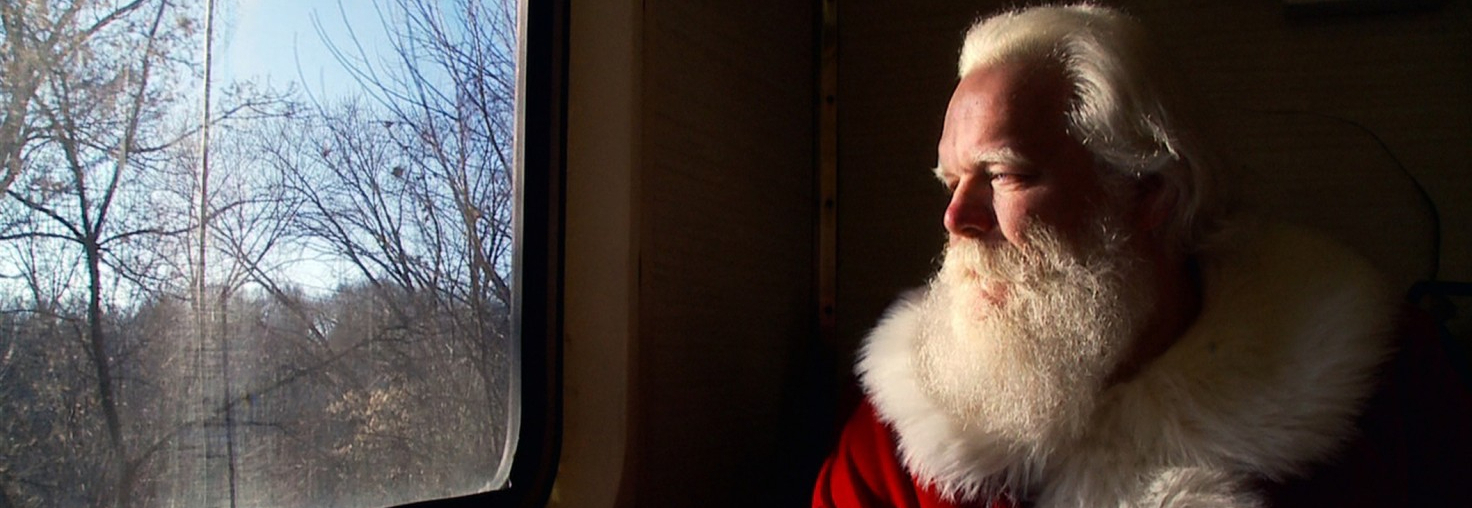
What does it take to be Santa? An endless stomach? An extremely dedicated workforce? Do you have to know what song each person sung to you on your birthday? Do you have to not smell like beef and cheese? How do you avoid sitting on a throne of lies? At least some of these questions are asked in Becoming Santa as Jack Sanderson heads to Santa School in order to do just this.

After losing both of his parents and preparing to spend Christmas alone Jack decides to dye his hair white, buy a red suit and get ready to play Santa throughout the festive season. From making his way through a train full of children waiting to see him to pulling off some last-minute Christmas Eve visits Jack throws himself into each aspect of the role, no matter how tiring it may become. At Santa School he’s taught all the words he can’t say, the answers he should give that keeps the magic alive for children who see and visit him while not making direct promises for certain things – such as killing whoever the US government is after, ‘you’re Santa, you know where everyone is, you can do anything’.

Yet, while being worn down and tired out Jack still remains largely positive about what he’s doing, and the effect that it’s having. He sees the joy that him as Santa brings to not just children but their families, too. He observes early on that the pictures that are being taken, particularly with very young children who may be meeting Santa for the first time, are likely to be displayed and kept as memories; he’s a part of their lives and memories for now. It’s an emotional thought for him and makes the experience, one which he treats with positivity and seriousness. While saying throughout that the period the documentary covers will be the only year he does this there’s a hint every now and then that he may throw his red and white cap into the ring again after the personal effect that the experience has had on him.

It’s something you can see grow and develop as he enters the world of Santa with anticipation and a smile on his face which he maintains throughout. Seeing Christmas from another, or perhaps long unseen, perspective and embracing it wholeheartedly. Demonstrating a catching warmth as he fully commits to the part both feeling and emitting Santa.

Becoming Santa can be watched in the following places:
Amazon
Plex
To see if the film is available to buy, rent or stream on any other platforms, particularly in another part of the world, then JustWatch should have a list of most places.

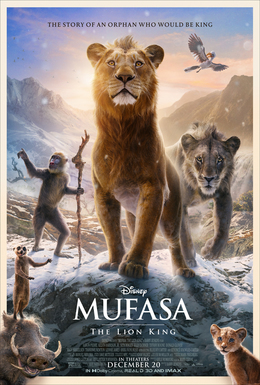
Mufasa: The Lion King – Review

Cert – PG, Run-time – 1 hour 59 minutes, Director – Barry Jenkins

Before becoming king of Pride Rock, lion Mufasa (Aaron Pierre) finds himself part of a group of fellow ‘strays’, being hunted down by a pride of lions vengeful lions.

The photorealistic CG animation which makes up Disney’s prequel to their 2019 (non)live-action remake of The Lion King feels somewhat in two minds. On the one hand, they appear to have listened to audience reactions that the expressionless nature of the characters was an issue when it came to emotional impact, on the other they’re clearly aware that the remake made over $1.6 billion worldwide and is one of the highest grossing films of all time. The result is brief glimmers of emotion before going back to the largely blank, photoreal looks which create a wall for any feelings the animal characters might be feeling to run into.

One of my biggest issues with the remake, which generally I thought was fine, was the fact that the nature of the visuals meant that the film felt restricted. Big, colourful musicals numbers such as I Just Can’t Wait To Be King were limited to characters running around a watering hole for three minutes. This is a problem for Mufasa as most of the songs – which themselves are solid thanks to the involvement of Lin-Manuel Miranda – simply show multiple wide shots of characters walking and running across different landscapes while singing. The scenery itself looks good and there’s an undeniable strength to the quality of the animation, but it doesn’t make a proper platform for the musical numbers which feel held back by the visual environment.


Throughout we see a young Mufasa (Braelyn Rankins) separated from his parents after a flood, saved by fellow cub, and future Scar, Taka (Theo Somolu). The two grow up together (now voiced by Aaron Pierre and Kelvin Harrison Jr respectively) and as calls for being the future king of the pride begin to properly enter their minds they must flee the pride after an attack by a group of white lions, seeking vengeance for the death of their leader’s (a very welcome appearance from Mads Mikkelson) son after an earlier attack. As they’re hunted down the pair of adoptive brothers come across fellow lion Sarabi (Tiffany Boone), separated from her own pride and father the king, who accompanying bird Zazu (a wobbly Preston Nyman) is meant to report back to if they can find their way back.

As a whole, the narrative feels occasionally familiar, largely when involved with more talky sequences trying to build-up character dynamics to where they are by the start of The Lion King. At times these moments can feel somewhat forceful, although nothing as clanging as the bordering on funny creation of Pride Rock, and disturb the steady flow of each sequence into the next as the cat-and-mouse (or lion-and-lion) chase through varying terrains plays out. While the villains, largely Mikkelson’s Kiros, might be somewhat plain there’s a clear villainous nature to them, and no other side to the coin. They also make for some of the best moments when simply engaging in confrontation and acting as a threat that you wish would sometimes be more upfront in a moment rather than pushed aside quickly as the central trio find a way to quickly escape.

It means that a number of moments come close to feeling repetitive, and the film slower than it perhaps should be at times. When dealing with its points upfront and moving things along Mufasa is at its best, when it stops to take in a moment it starts to falter – despite this so often being where director Barry Jenkins best succeeds. As a whole the narrative works and holds up, perhaps in part because of its relatively simplistic nature, and there’s enough within Mufasa to see it through, even if it does come across a few bumps along the way. The voice cast do a good job in helping with this, and after hearing that Jenkins directed recordings and assembled them as if they were a radio play I’d be interested in hearing that on its own, hearing the imagination and story, in comparison to what has been paired up with the chain of photorealistic animation.

Much like the 2019 remake, Mufasa: The Lion King suffers from the limiting photorealistic animation. Restricting emotional expression and freedom to drift into further fantasy, the film has its moments but falls flat trying to find itself in longer, dialogue-heavy scenes where the main points are less upfront.

Rating: 3 out of 5.

Alternative Christmas Film Advent Calendar 2024 – ‘Twas The Fight Before Christmas

When it comes to Christmas films many are packed with elements of fantasy. Reasonings for how Santa achieves his annual worldwide delivery, and keeps the North Pole hidden, introduce sci-fi leanings with increasingly futuristic ideas. Delving into imagination has long been a big part of many fictional festive films, no matter what genre. However, this year’s Alternative Christmas Film Advent Calendar switches focus to look at documentaries which follow real world Christmas stories and figures, each with their own strand of imagination, festive spirit and occasional fantasy.

Whether transforming a home or shop into an unrecognisably festive space with endless ribbons and paper chains, attempting to impress the family or entering into a battle with the neighbours for the best light show there are plenty of moments in Christmas films where the characters, and filmmakers, will stop to admire the displays. Even Kevin McCallister takes a moment to stop thinking about the Wet Bandits or Tim Curry’s concierge, constantly on his tail, to take in both the towering tree outside the Rockefeller Centre and the smaller ornament-laden one in the lobby of the Plaza Hotel. However, today’s Alternative Christmas Film Advent Calendar entry looks less at taking a moment to take in the decorations and more having them constantly flooding through your street and window, and only from one house.

Jeremy Morris loves Christmas, and wants to spread the joy to everyone with welcoming events at his house. Each year his decorations grew brighter, expand further across the outside of his house and eventually became an attraction. Hot chocolate would be given out while a camel joined in the attraction. Eventually, when moving with his family to a quieter neighbourhood outside of the city limits, where a permit to hold this kind of event isn’t needed, Jeremy finds himself clashing with the Homeowners’ Association over his displays which draw in hundreds of visitors to the small community and cause disturbances to fellow residents.

Jeremy himself, his talking head interviews largely held in a storage garage filled with brightly coloured Christmas decorations, his clothes fitting colours for the season, says that he views himself as Clark Griswold, wanting to create the best, most spectacular Christmas for his whole family and those around them. However, it seems those around him view him as the other side of Clark Grisworld which causes chaos and headaches. Director Becky Reed quickly shifts perspective to show that the responses the Homeowners’ Association in the quiet North Idaho neighbourhood received from lawyer Jeremy, and his friends, escalated quickly and strayed from politeness. What unfolds is a festive battle twisting the meanings of Christmas spirit and how going all out to display it might actually backfire and show quite the opposite.

The season of goodwill begins to contain very little of just that as the streets begin to fill up with noisy visitors attending the illuminating display covering the entirety of the Morris’ home. The idea of religion begins to play into things are different ideas of the true meaning of Christmas begin to be brought up by both parties creating a set of arguments all of which recognise that somewhere the Christmas season isn’t being properly embraced or celebrated. However, the film quickly asks and delves into where this is really coming from with all the sympathy going towards everyone else in the community, particularly those leading the Homeowners’ Association (who show themselves as far from Hot Fuzz’s Neighbourhood Watch Association) as Christmas becomes an increasing struggle of heated back-and-forth communication and strong visual and audible noise.

Perhaps when it comes to feeling like a traditional Christmas film ‘Twas The Fight Before Christmas doesn’t tick most of the boxes, although that is to some extent what the Alternative Christmas Film Advent Calendar is all about. However, it deals with the season upfront and keeps it at the focus of its events, bringing in new ideas and arguments as to what the true meaning of it is, and how that can twist and change depending on who your asking and when. And just how much Christmas spirit is too much?

‘Twas The Fight Before Christmas can be watched in the following places:
Apple TV+
To see where else the film is available to stream, buy or rent, especially if you live outside the UK, JustWatch should list most places where you can find it.

Alternative Christmas Film Advent Calendar 2024 – What Would Jesus Buy?

When it comes to Christmas films many are packed with elements of fantasy. Reasonings for how Santa achieves his annual worldwide delivery, and keeps the North Pole hidden, introduce sci-fi leanings with increasingly futuristic ideas. Delving into imagination has long been a big part of many fictional festive films, no matter what genre. However, this year’s Alternative Christmas Film Advent Calendar switches focus to look at documentaries which follow real world Christmas stories and figures, each with their own strand of imagination, festive spirit and occasional fantasy.

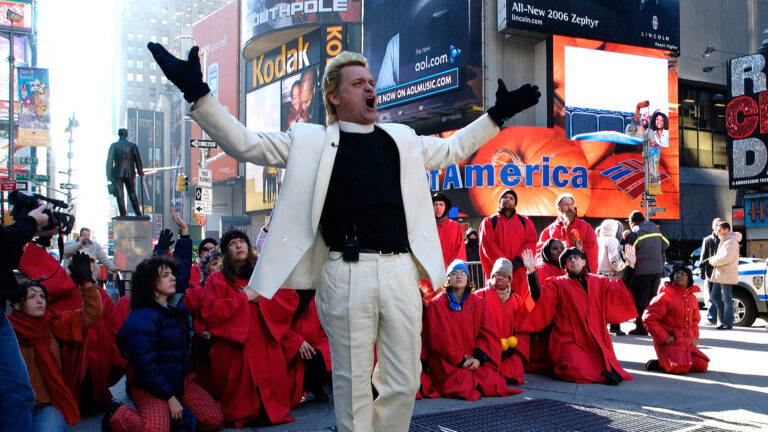
In 1996 Arnold Schwarzenegger took on the biggest fight against the commercialisation of Christmas since Charlie Brown’s. How did he do this? By running all across Minneapolis in a desperate bid to get his son the must-have toy that year before dressing up as the Turbo Man action-figure in a Christmas Eve parade. For Reverend Billy and the Stop Shopping Gospel Choir their fight with the festive season’s increased promotion of consumerism isn’t limited to just Christmas Eve or Minneapolis as What Would Jesus Buy? sees them travel across America preaching their cause through performance protest.

Whether being escorted out of a mall, appearing on TV or going door-to-door carolling (“Joy to the world, in the form of goods. Consume! Consume! Consume!” or “Pack the malls with folks with money, fa la la la la la la la la”) their message is loud and clear, Christmas has become too much about money. As the church makes their way across the country towards Disneyland we hear from church ministers about their views about what Christmas has become and from small business owners about the impact that a Wal-Mart opening in their area has had on their livelihoods, particularly at this time of year.

Throughout there’s an awareness from the protesters as to what they’re doing, and a sense that they’re having some fun with their performances – whether out on the street or engaging in their form of church service. All in order to get across their point about both the true spirit of Christmas, the generosity and togetherness at the heart of it and how you don’t need to spend huge wads of cash to display that – “give a gift out of love this season!” Reverend Billy shouts through a cone loudhailer outside a Toys R Us to a positive, agreeing response from onlookers.

We hear snippets of memories of simpler Christmases past from people who may have grown up with little and, indeed what people think Jesus would buy in this day and age (well, 2007; the Wii and Xbox 360 get a couple of mentions). Alongside combatting consumerism the church aims to fight against unethical means of making products, such as sweatshops. Each point they tackle on their journey across the US links back to their push of remembering others throughout the festive season, showing a care for those around us, all through their entertaining brand of rather joyful protest.

What Would Jesus Buy? is available to watch in the following places:
YouTube
To see other platforms where you can buy, rent or stream the film, especially in your part of the world, it’s worth having a look at Justwatch.

Alternative Christmas Film Advent Calendar 2024 – Tree Man

When it comes to Christmas films many are packed with elements of fantasy. Reasonings for how Santa achieves his annual worldwide delivery, and keeps the North Pole hidden, introduce sci-fi leanings with increasingly futuristic ideas. Delving into imagination has long been a big part of many fictional festive films, no matter what genre. However, this year’s Alternative Christmas Film Advent Calendar switches focus to look at documentaries which follow real world Christmas stories and figures, each with their own strand of imagination, festive spirit and occasional fantasy.

If the fireplace isn’t big enough, or proves too much of a safety hazard, there’s no greater warmth for many film characters than gathering around the Christmas tree. It’s what the people of Whoville unite around after Christmas has been stolen, with the Grinch eventually joining them after he returns it. Even before buying one the people of Manhattan, and occasionally beyond, are connected and infused with the Christmas spirit not by the trees for sale but by the man who’s selling them. Every year Quebec resident François travels over 500 miles to the same New York City street corner and sets up shop, living in a van parked up on the edge of the pavement for the couple of months he spends away from his wife and young children.

Manhattan provides something of a second family to François. As soon as he parks up he’s greeted warmly by the street’s security guard. Hugs begin to spread as more people arrive and we meet those who also help to sell trees, sometimes at other stalls, and those who will always return to François to buy their annual evergreen. We hear from many customers who state that visiting him, alongside his quickly-assembled street-side shop, is as much of an annual tradition as decorating the tree itself.

When it comes to his staff all, including their families, have warm words to say about François. He’s been there for some throughout their lives, given them opportunities and been there to encourage towards the right path. For much of the film he seems like a quiet figure, set on selling Christmas trees while the world around him while constantly moving appears to throw all sorts of praise, thankfulness and admiration his way, even from those at other stalls who themselves have travelled hundreds of miles to sell trees. It creates a large sense of welcoming and family in streets that could so easily feel isolating.

François’s tree shop acts as a hub where people come together and the festive season truly kicks off for many, putting them into the Christmas spirit. It comes across in a growing sense of warmth that everyone shows towards the film’s titular Tree Man, and gently receive from him, for customers this includes the stall going out of its way to deliver trees and sometimes help set them up. It may just be part of the service, it may be the seasonal cheer and generosity. Whatever it is it surrounds both the shop and man at the centre of the film and those who interact with him and make up that second family. The tight community within this big city may relieve some of the loneliness and separation as they gather around the Tree Man with open arms.

Tree Man is available to watch in the following places:
Apple TV/ iTunes
The Roku Channel
To see other places where you can buy, rent or stream the film, particularly in your own country, then JustWatch is always worth looking at.

Carry-On – Review

Cert – 15, Run-time – 1 hour 59 minutes, Director – Jaume Collet-Serra

TSA agent Ethan (Taron Egerton) is threatened to let a deadly package onto a Christmas Eve flight, or else the mysterious passenger (Jason Bateman) speaking to him via an earpiece will kill his partner (Sofia Carson).

Carry-On is less Die Hard on cruise control and more Die Hard 2 on cruise control. Not just because of the airport setting, much of which is confined to security where passengers carry-on items are being scanned, but also because of the idea of terrorists plotting to ruin Christmas.

The man behind the scheme, who refutes the terrorist label, credited as Traveler (Jason Bateman) is little-seen throughout the film. Largely confined to the background of moving crowds or shown from the back. For the most part we hear his voice speaking into the ear of Taron Egerton’s TSA agent Ethan. Being encouraged by his recently-pregnant partner (Sofia Carson), who also works at LAX, to go back to police training he’s looking for a promotion. However, his dismissive boss (Dean Norris) says he needs to put in the effort and show that he wants the job. When things don’t go to plan for Traveler, Ethan becomes his blackmail victim, claiming to have a sniper ready to kill his partner if he doesn’t allow a deadly case of novichok onto a Christmas Eve flight.


The relationship between uncertain, yet outwardly calm, Ethan and the antagonist in his ear is certainly no McClane and Gruber, and as a whole the beats of their interactions, and the film as a whole feel very familiar. We’ve seen Carry-On’s arc a number of times and as a whole it means that this iterations feels tired quickly. While throwing in a subplot about LAPD detective Elena Cole (a wasted Danielle Deadwyler) following a track which leads to the airport this strand never has the energy to properly lift off. Instead it quickly falters and feels like out of place padding, which contributes the worst scene of the film in a truly terrible and visually ugly car fight, to simply build-up a character relevant to the third act.

Back in the airport there are some likable moments, largely as we see Egerton properly confront the situation at hand in a more upfront way, taking things into his own hands instead of being lead by Bateman’s character, despite the threatened consequences. Yet, for the sake of keeping the villain in frame and giving control back to him, often things loop back round to the mystery flyer regaining the upper hand and using Ethan as a pawn in his deadly plan, and if he doesn’t play along the whole airport could go down.

The stakes are made clear throughout, although not always felt depending on the circumstance and how far through the film we are, but they do add to the increasing desperation and worry of Egerton’s character who feels consistently out of his depth. The build-up relating to his home life is clearly in place to simply push lightly referenced details on to him to give him something to fight for, the effect they have is similarly light and at times feels forced when the focus of interactions with Carson’s Nora during breaks, where Bateman is still talking to him via the earpiece. Scenes like these help with certain character dynamics but eventually dip back into making Carry-On fall under the weight of its familiarity, and lacking nature when it comes to the overall suspense. It means that the film falls and struggles to find its own footing, following that steadily paved by other films and feeling almost like a copy of those instead.

References to Die Hard and its sequel are impossible not to make as Carry-On borrows from their formula and leads to a tired and familiar festive thriller that never quite captures the action or suspense that it wants.

Rating: 2 out of 5.

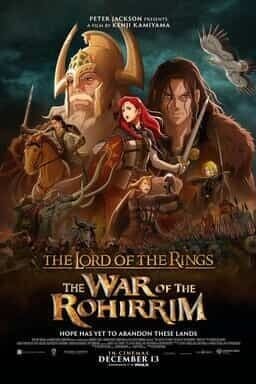
The Lord Of The Rings: The War Of The Rohirrim – Review

Cert – 12, Run-time – 2 hours 14 minutes, Director – Kenji Kamiyama

When the throne of Rohan is challenged by the vengeful leader (Luke Pasqualino) of a rival people, the king’s (Brian Cox) daughter, Héra (Gaia Wise), leads the defence while their people hide away in a surrounded mountain fortress.

It’s been widely reported that The War Of The Rohirrim was rushed into production so that New Line Cinema could keep the film rights to adapt the works of J.R.R. Tolkien. Yet, this anime fantasy set in the same world as Peter Jackson’s live-action trilogy features credits for a number of returning names, with the archives from those films having been opened up to the filmmakers here. The dramatic fantasy is enhanced by the detail of the animation and creates a film which feels the opposite of a cash-grab.

Based on appendices from Tolkien’s books, The War Of The Rohirrim follows Héra (Gaia Wise), the daughter of the king of Rohan; the brilliantly named Helm Hammerhand (Brian Cox). After killing a rival leader (Shaun Dooley) who seeks to usurp the throne, his son, Wulf (Luke Pasqualino), a childhood friend of Héra, seeks vengeance, and doesn’t hold back on his near-instant attacks. Whether fights involve fists, swords or entire armies the framing of each sequence is undeniably cinematic. There’s a thrilling sense of scale which makes the most of the big screen and the animation style in general.


At times the visual nature of certain scenes and creatures calls back to animated fantasies of the 70s and 80s, Ralph Bakshi – who had his own take on The Lord Of The Rings – comes to mind. Much of the run-time is made up of action, or building up to a major battle. As the people of Rohan suffer fiery attacks from Wulf and the ‘wildmen’ of the Dunlendings they escape to the mountain fortress of the Hornberg. Tension escalates as we see the progression of Wulf and his men’s attempt to stage a siege, especially as all suffer a harsh winter. As these events unfold director Kenji Kamiyama brings in a strong sense of atmosphere to the film as a whole. Adding to the overall suspense that the film’s events hold, moving from one event to the next with ease.

At almost two-and-a-quarter hours the run-time does begin to feel long as the third act unfolds and while there’s still enjoyment to be found in the increasingly upfront and angered clashes and the ideas which crop up within them. What helps things move along is the fact that they rarely feel as if they’re trying to build up to or reference Jackson’s trilogy, taking place almost 200 years after the events of this film. One or two moments crop up here and there, some more clanging than others, but as a whole this works as an effective appendix adaptation following a traditional rival-armies outline.

One which is effectively led by Héra at the centre of the action. With Gaia Wise providing a voice performance which captures a determined and headstrong character, particularly the more the film goes on. As a whole the voice cast appears to improve as things develop, moving on from the feeling that most are simply audio acting rather than acting for animation or film, aside from Brian Cox who gives an enjoyable, increasingly bellowing performance throughout. The elements quickly come together and make for a frequently fantastic return to this iteration of Middle Earth, if in a different form; one which brings a lot to the overall tone of the fantasy and tension at hand.

While it might begin to feel overlong there’s still plenty to enjoy about the suspenseful action and spectacle of The Lord Of The Rings: The War Of The Rohirrim’s traditional fantasy clash.

Rating: 4 out of 5.

LFF 2024: Flow – Review

Release Date – 21st March 2025, Cert – U, Run-time – 1 hour 25 minutes, Director – Gints Zilbalodis

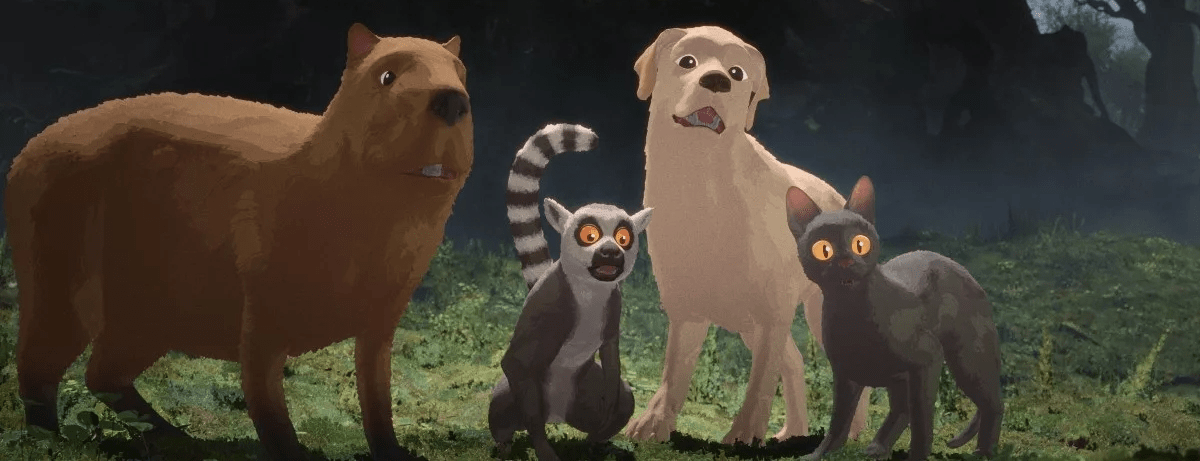
A group of animals band together to survive in an old boat when their homes are destroyed by a mass flood.

In a world without dialogue the language we hear throughout Flow are a variety of animal noises and the natural world that surrounds the central group constructed of a cat, dog, lemur and capybara. The sound design throughout is fantastic and, alongside the sparingly used score, manages to bring us in to the initial disaster and subsequent story of interspecies survival. As a giant flood rushes into the habitat of the animals, largely seen through the eyes of a small black cat, there’s a genuine sense of stress and panic as each situation and hint of safety is quickly disrupted, or made worse, by a rapidly rising tide.

While the animation of this €3.5 million feature may not be what we’ve become ‘used to’ over the last few years there’s still a number of really nice shots which look great on the big screen, stay through the credits for one of the best of the film. The scenery and various locations we visit are brought to life thanks to the perspective of both the environment and the equally natural course in which the flood takes the characters travelling in their old, tired-looking boat. The world may be filled with water, but there’s plenty to look at and visually enjoy about the different locations we visit over the course of a short run-time.


With each place visited the overall arc that Flow covers manages to avoid repetition and keeps a steady, consistent pace. There’s a gentle feeling to the film as a whole but it isn’t without its moments of peril and tension as the fight for survival, and at times with the world around them and other animals, is put at the focus of a particular sequence. Yet, within the core grouping there’s a believable unit. Their behaviours and expressions are kept largely natural, with some assistance from the animated world, and yet a good deal of emotion comes across from each, combining to create a stronger eventual team looking for survival both individually and coming together by some form of coincidence, but quietly surviving as a whole.

Much of what causes Flow to work is rather quiet. It’s a film that appears to have been made on something of a small scale but makes a big splash because of the overall effect that it has in communicating its sequences led by a believable group of non-speaking animated animals. All going through a well-rounded set of events made with a fluid style which avoids feeling chaptered, and locations which should be seen on the big screen for the best impact.

A small film with a big visual and audible impact from its sound and story, Flow takes a group of believable animal characters and uses them to express much of the wonder and tension there is to be found within an overall rather gentle film.

Rating: 4 out of 5.