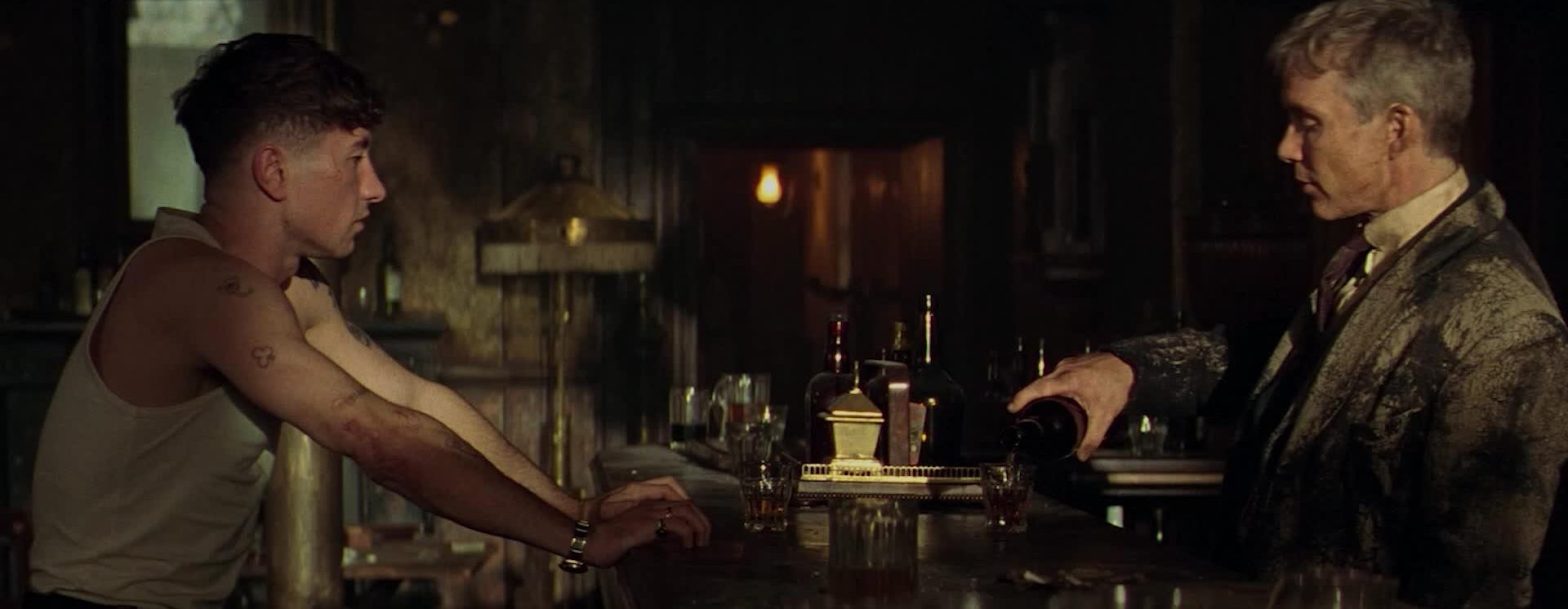
Return To Silent Hill – Review

Cert – 15, Run-time – 1 hour 45 minutes, Director – Christophe Gans

After receiving a mysterious letter from his ex (Hannah Emily Anderson), James (Jeremy Irvine) returns to the town of Silent Hill, however as its form changes around him it seems abandoned aside from a series of deadly monsters.

20 years ago, Christophe Gans’ adaptation of Silent Hill may not have been the best video game adaptation in the world, but there’s a feeling of care for the original material that helps to see it through to some extent. Now, finally making the follow-up that he’s been long attached to the director appears to less pay respects to Silent Hill 2 and more directly copy and paste it. While I’ve not played the video game, or any in the hit, heavily acclaimed franchise, almost every shot enters an uncanny valley area that seems to be trying to directly replicate the visuals and camera. With visual effects and an overall design to match. The film overall looks and feels like something released directly after the original instead of two decades later.

It’s been said that the intention with Return To Silent Hill was to bring out the psychological aspects of the game more. If psychological means throwing chunks of ideas at the wall and hoping something sticks then the film’s a success. Screenwriters Gans, Sandra Vo-Anh and Will Schneider appear to be trying to create a fluid set of events, blending one to the other as everything appears to merge before central character James (Jeremy Irvine) as he travels through the changing face of Silent Hill, and the various monsters – or perhaps visions? – around him in search of his ex-girlfriend, Mary (Hannah Emily Anderson – largely seen in flashbacks), following a mysterious letter left by her at his apartment. However, instead we get a jumble of ideas that messily jump around in inconsistent fashion.


Monsters appear for brief bursts of time before either the setting changes or they just seem to be moved on from all of a sudden. Are they visions? It’s something that’s only really considered towards the closing stages of the film when the directions the narrative takes feel more like obvious excuses than anything else. There’s little proper backing or context for James’ search for Mary, even early on when the ash-filled town appears completely deserted. Some form of apocalypse appears to have struck, one that even means that decoration and furniture also seemed to abandon buildings along with the people in them. Yes, he’s trying to find the woman he still has feelings for after so long apart, but there seems little explanation for just what he puts himself through, and appears to accept, as he does so.

Everything appears like a glaring ‘TURN BACK’ sign that he just strolls through like a casual walk in the park on a sunny day. Yet, whether a series of horror sequences or a pleasant stroll the narrative strikes as purely bland from start to finish. Complimented by visuals which simply strike as ugly. Again, seemingly trying to replicate the video game style too often, and with an overuse of CG that also appears to be trying to match the look of the game and just comes across as visually offputting. Despite being covered in ash, or at times coated in a dark orange hue as if everything has rusted or caught fire the whole film feels as if it was shot through a layer of sludge, as if the real reason everyone left Silent Hill was because of a major breakage and subsequent spill from a nearby sewer.

Everything boils down to a film that looks and feels dated; a product of 20 years ago that’s only just been brought to the big screen now. Narratively messy, and at times plain confusing when it comes to the various layers that are attempted amongst the character’s unbelievable push and motivations, this unenthusiastic return to Silent Hill is a boring walk through ideas which fail to stick together due to just how often they change and appear from almost nowhere.

As if trying to replicate the video game too much, Return To Silent Hill is a visual and narrative mess which would have likely still been boring 20 years ago.

Rating: 2 out of 5.

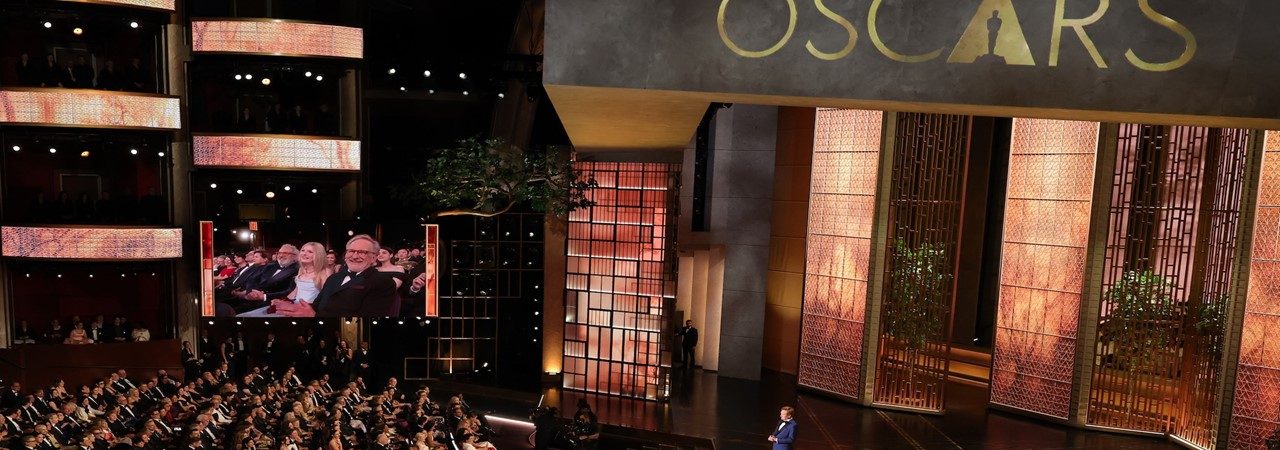
Discussing the 2026 Oscar nominations – BBC Radio Somerset

A live conversation had between myself and BBC Radio Somerset’s Breakfast show presenter Charlie Taylor about the 2026 Oscar nominations, announced the day before.

As might be expected from this kind of coverage we discuss snubs, surprises, likely winners and notable nominees. A moment of my mind blanking also leads to me committing the cardinal sin of claiming Irish talent as British (sorry to Ireland and Paul Mescal). You can hear the conversation by clicking the video link below!

The audio in the video was originally broadcast live on Friday 23rd January 2026.

LFF 2025: Retreat – Review

Release Date – TBC, Cert – TBC, Run-time – 1 hour 47 minutes, Director – Ted Evans

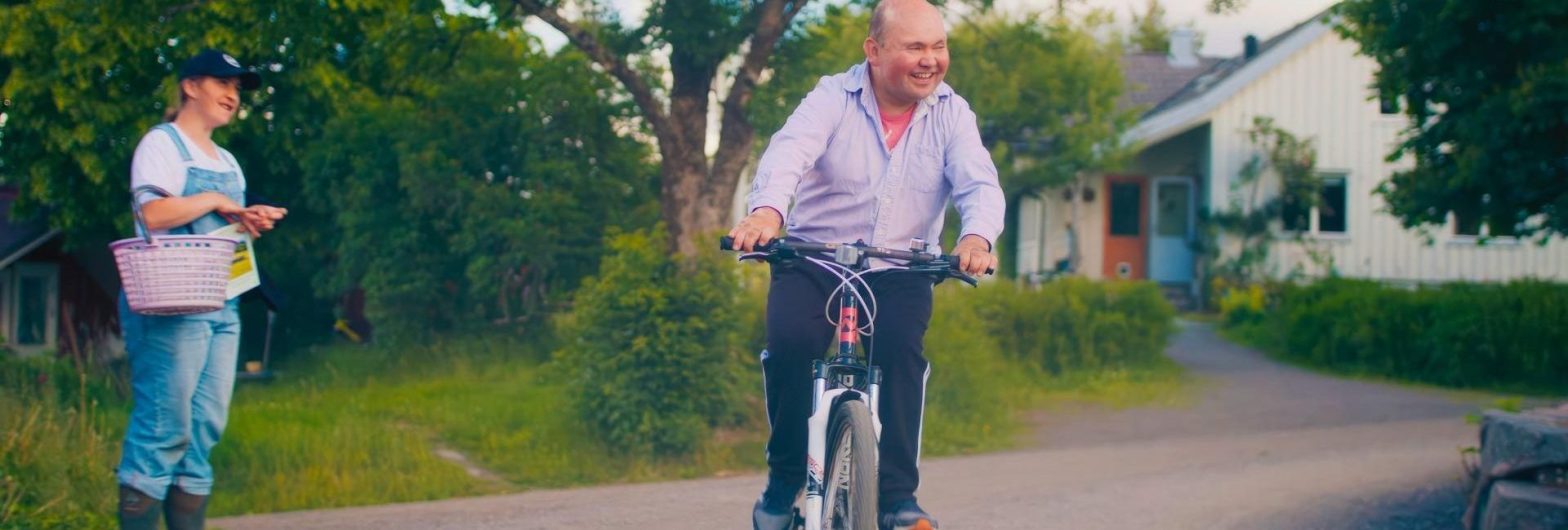
Eva (Anne Zander) arrives at a special community for deaf people, as she becomes more involved in the place Matt (James Joseph Boyle), who has been there since childhood, becomes more disillusioned with it and drawn to the outside world.

As I write this review, F1 has just been nominated for the Best Picture Oscar. The speeds travelled at in that film don’t provide nearly the same level of whiplash as the sudden sharpest of left turns that are the tonal shifts in Retreat. There’s a near sense of confusion from them as not only does the horror-tinted drama shift into a thriller but the main character appears to completely change.

Matt (James Joseph Boyle) has spent much of his life in a large communal house for deaf people. Not far from the giant mural of the retreat’s founder holding a child, he’s told early on that he doesn’t “have the trauma or outside experience like we do.” His interest in the outside world grows with the arrival of new member Eva (Anne Zander). Eva makes for our introduction to the world of this community, and the possibly dark goings on in closed rooms, alongside uneasy therapy sessions that eventually see her welcomed in more. In no time at all she’s indoctrinated with barely any questions asked.

However, these more threatening allusions are conflicted with the general tone and behaviour throughout the building that everything is fine, especially from leader Mia (Sophie Stone). Thus, the film eventually, a good deal of the way through, switches to focus on Matt with no real explanation as to why apart from shifting the narrative to focus on something different, too. It means that time has to be taken to start to connect with him more alongside push the new thriller sensibilities that the film has developed.

While making for a bumpy ride with too-sharp turns there’s still a watchable nature to a good deal of Retreat. It has enough to hold interest during its more consistent developments, but consistency throughout the whole run-time is something more difficult to find. The film as a whole appears to hide, or shy away from, its strengths which are largely confined to the background. There’s an interesting film at hand, which the all-deaf primary cast manage to capture rather well. But, the tonal shifts of the narrative step in and lead to very sudden changes that take some getting used to whenever they arrive.

A film that has its elements of threat and darkness, but confines them to the background, Retreat falters by sharply switching character, tone and narrative focus multiple times. While still holding interesting beats it’s a largely watchable yet bumpy ride.

Rating: 3 out of 5.

Airplane – Introduction

Originally intended as a film within a film, Airplane borrowed so much from one 50s disaster flick that the ZAZ creative team got the rights to remake it in order to get away with their spoof. As everyone was asking “surely, you can’t be serious?” the line that followed got everyone to relax about what the film would be, and famously changed Leslie Nielsen’s career.

I look into this and more production stories from Airplane in this introduction I gave for a special charity screening in November 2023, held at the former Bristol IMAX (now called the Bristol Megascreen) in Bristol Aquarium. The audio featured in the below video was recorded specially for it, based on notes that I had made before the screening.

The screening itself was raising money for homelessness charity BillyChip, which you can find more information on here.

Titane – Introduction

Back in the summer of 2023 I introduced a screening of writer-director Julia Ducournau’s body horror Titane at the Bristol Megascreen (at the time simply known as the former Bristol IMAX) in Bristol Aquarium. The video below features a specially re-recorded version of that introduction, read from what I had written before the screening.

Looking at how Guillermo del Toro and a dream about giving birth to a car led to a story of sexuality and gender identity through the lens of flesh vs metal, and Julia Ducournau’s empathic view of people who feel like monsters.

LFF 2025: High Wire – Review

Release Date – TBC, Cert – TBC, Run-time – 1 hour 45 minutes, Director – Calif Chong

Go-wing (Isabella Wei) spends her days studying and working at her dad’s (Ka-Wah Lam) takeaway with little time for herself, until she finds her desired path, secretly training to become a touring circus’ high-wire act.

2025 marked my seventh year of getting away with attending the London Film Festival and in that time out of all the films I’ve seen as part of the various editions few have got me excited for the future work of an actor and director as Calif Chong’s feature debut High Wire. A film which rises above its familiarity and flaws by the simple emotional push that it creates for us to invest in the central character.

Go-wing (a wonderful performance by Isabella Wei – who based on this performance alone I can’t wait to see more from) spends her days studying for a law degree, for which she’s recently missed an exam, and her evenings working in her immigrant father’s (Ka-Wah Lam) Chinese takeaway. Now nineteen she’s feeling more suffocated than ever, with no time to herself. Her social life is largely made up of interactions with former school friends when they come in to pick up an order. However, things change when a chance order leads Go-wing to a travelling circus with upcoming auditions. From there she finds herself training to be a high-wire act, in secret from everyone around her, especially her father who expects big things from his daughter – “I didn’t pay to come all the way to the UK, pay all that tuition, just for you to slave over a stove like I do.”

Yes, the beats of the narrative might be familiar, and it might not always be the most subtle when it comes to an occasionally intrusive score, but there’s a compelling rawness to the way in which it presents itself. Go-wing is an endearing character who holds our engagement as the film follows her trying to find a balance (no pun intended) in her life rather than simply develop her high-wire skills. There are a handful of likable chuckles to be found in this strand, and overtime some real punches of emotion. Multiple scenes had me unexpectedly tearing up, one argument scene strikes a real chord as it draws out its rising emotion. High Wire marked, for me, one of the most emotionally impactful films of 2025’s London Film Festival, and much of it is naturally ingrained in character and story.


So much of Go-wing’s character is caught up in personal emotion, feeling almost as a continuous reassurance from co-writers Chong and Jackie Lam that she’ll be alright in the end – but with the admission that, yes, she does have to go through the weight of her life as it is at the moment to get there. Taking on the different elements of it without the needed time, she tells her dad that she’s actually at a work placement helping her studies when she’s training with the circus, while trying not to disappoint multiple people.

From ignorant, mocking ‘friends’ and racist attacks on her home to the feeling that she needs to conceal her newfound tightrope-walking joy, not to mention the utter punch of looking at the loss of the central character’s former ice-skater mother with the simple quote “she moved to the moon when I was your age” there’s an underlying emotion to Go-wing and the film as a whole. The family tensions present, those who want to see her succeed and where she feels caught all play into the narrative making for a naturally rounded character and narrative.

For its emotional impact, and even the chuckles that it manages to raise here and there with some elements in the same vein as those which caused me to tear up, I found myself forgiving the familiarity and occasionally overdone beats of High Wire. There feels a personal film here from Calif Chong, one that brings the audience in to experience it alongside the well-channelled performance from Isabella Wei. There’s a likable, acknowledging and empathetic story here of someone finding their joy and expression. A solid feature debut that shows promise for star and director, I’ll definitely be keeping an eye out for what they both do next!

While its narrative might occasionally feel familiar and certain elements slightly forced, High Wire is easily forgivable because of the emotional connection it creates with Isabella Wei’s wonderfully performed central character. Creating both chuckles and emotional punches, this is an effective and promising feature debut.

Rating: 4 out of 5.

LFF 2025: More Life – Review

Release Date – TBC, Cert – TBC, Run-time – 1 hour 18 minutes, Director – Bradley Banton

A group of friends (Tuwaine Barrett, Dipo Ola, Jordan Peters) reunite and travel to Copenhagen to celebrate one of them opening an art gallery exhibition.

With a portrait look and comments scrolling past in the lower left-hand corner More Life is intended to be like an Instagram Live hangout movie. Indeed it feels just like something that would crop up randomly in my recommended feed because it’s been popular elsewhere. Even more, throughout More Life’s mere 78-minute run-time I found myself asking the question I perhaps ask myself most when scrolling through social media: ‘why do I care?’

As friends Welton (Tuwaine Barreett), Damien (Dipo Ola) and Kieran (Jordan Peters) reunite to celebrate one of their unit having an exhibition open at an art gallery, they document their time wandering around Copenhagen, eating in restaurants and generally bantering with each other. The opening scene is a five minute ramble that seems to be directionless, before ending with the punchline “that’s why I called my cat Bolognese.” It’s an amusing payoff that got a chuckle out of me, the only time until the very end.

Unfortunately, the film follows the course of the build-up with a series of meandering rambles with very little to cause interest. I realise that I’m probably not the target audience for the film but I couldn’t help but be utterly bored by the presence of the characters and whatever they found to get up to to fill both their and the film’s run-time. Whether there was meant to be something else going on, I don’t know. It certainly didn’t seem like it. Amongst my confusion as to what I was meant to care about I simply wandered what was actually happening on some occasions.

In closing we see the events of the film again, this time played out sped-up and in reverse. A closing montage that feels as if it wants to make a bigger point about friendship that the previous 70-minutes have done. Perhaps watching this with an audience would make for a more inclusive experience, something more communal that adds to the intended hangout nature of the film and the livestream aspect that leads it. However, how much more it would bring to a series of aimless activities and conversations I’m doubtful of, especially with the lack of laughs which stem from them. Again, More Life may well work for those who watch and actively engage with social media livestreams, but for me, who doesn’t, I just found this to be an utterly dull, aimless display of rambling.

A last-minute run-down doesn’t bring a tale of friendship to the previous 70-minutes of More Life, as characters wander around Copenhagen creating little interest or amusement in their extended conversations and activities. Like much on social media, it’s something to scroll past.

Rating: 1 out of 5.

The Rip – Review

Cert – 15, Run-time – 1 hour 53 minutes, Director – Joe Carnahan

After discovering much more money than expected in what’s believed to be a stash house, a narcotics team experience rising tensions against paranoia that one of their own is setting them up for their own gain.

Since being labelled as a sort-of double act there’s grown an expectation that a project that sees Matt Damon and Ben Affleck together on-screen will have a sense of fun. The Rip sets out to flip this idea on its head with an ultra-serious police thriller about suspicion and corrupt cops. The pair, in the roles of lieutenant and detective sergeant respectively, circle each other and their fellow narcotics detectives, a team who are less back-up and more the film’s substance, suspecting that one of them is behind the murder of a fellow officer and is attempting to set up the rest of the team with the current operation.

That operation is the discovery of stashed-away drug money which turns out to be a few million more than the couple of hundred thousand expected. With the homeowner (Sasha Calle) tied up the team – which also includes Teyana Taylor, Steven Yeun and Catalina Sandino Moreno – get to work counting and trying to get to the bottom of the situation, with other departments often adding to the tension. As fingers are indirectly pointed and suspicions rise there’s a rising tension to be found as Carnahan turns the heat up on the characters, largely containing them in the house with conflicting back and forths.


While sold on the two macho, bearded leads (who also produce), with Affleck turning in a performance that maintains the over-seriousness of the film before we arrive at the home of Calle’s Desiree, it’s the interactions and uncertainty of the supporting cast who manage to spin the film into what it is. Creating an engaging throwback thriller which largely contains its characters and tension. Although occasionally leaking out into the street, one scene involving Damon and Yeun walking in the middle of the road is successfully suspenseful the longer it goes on, with help from Clinton Shorter’s rising strings.

However, when things completely move outside there’s a far less contained nature to the film. It tries to barrel along but amongst its developments gets caught under the weight of keeping track of its own narrative and in doing so takes itself too seriously again. It dampens the tension and overall enjoyment there is to be had from what is otherwise a well worked on paranoid thriller, set against backdrop themes of modern corrupt cops – our introductions to the characters and their ways of working aren’t for making us like them, they’re for making them all seem like they could be the one working against the team and bringing the police a bad name.

When focusing on this there’s a well-constructed film at play, and one that rises a good deal above the initial impressions. Unfortunately, things are knocked back, although not to a point of dullness, when the film tries to reach grander, more twisty levels that feel as if they have to match the visual darkness of the piece rather than complimenting them in a more contained space and atmosphere.

When largely contained to one area there’s a rising tension to The Rip that makes for a gripping paranoid thriller made by its supporting cast. When outside of that environment it dampens its effect with a brooding atmosphere that takes itself too seriously.

Rating: 3 out of 5.

LFF 2025: Straight Circle – Review

Release Date – TBC, Cert – TBC, Run-time – 1 hour 48 minutes, Director – Oscar Hudson

Two soldiers (Elliott Tittensor, Luke Tittensor) from rival countries are stationed in the middle of the desert, as tensions grow between them the lines that separate them blur as they question who each other are.

The split-screen opening of Straight Circle shows two rival military parades. Each trying to be the loudest, grandest and most patriotic of their respective countries. War may not be taking place between the pair, but there’s certainly an ongoing feud to prove which country has the most strength and power. It’s not the only time the split-screen style will be used in the film, although when it later appears its less for amusing bickering and more to get across the strange descent the central characters go through as the lines, and indeed border, that separates them start to blur.

Luke and Elliott Tittensor play the two soldiers, one from each country, stationed in a cramped hut in the middle of the desert, tasked with small tasks that appear to resemble very little. As one puts it “we’re guarding dust for politicians.” Yet, despite this, the pair have their own personal domestic disputes to attend to; such as where have the boiled eggs gone? Their attitudes and humour represent a grumpier version of Bottom’s Eddie and Richie.

Yet, the handful of enjoyably silly moments that we get, each captured in a very British vein, between the pair soon sees the humour fade as a more sinister tone comes in. Twists and developments start to settle in which cause the pair to question who they are, and the other person, and what their roles are actually meant to mean. As the film enters much more surreal territory it starts to move on from the feeling that things could perhaps work better as a short film, and are perhaps helped from having gone in knowing very little apart from the brief synopsis which suggested the initial satirical elements – which themselves are certainly effective.

While the humour may fade, and be missed, where the tonal shifts best succeed is in feeling as if they’re from the same film while still being so different to what comes beforehand. They’re well handed by writer-director Oliver Hudson and editor Fouad Gaber. Yet, the film as a whole still feels as if it could be trimmed down, and slightly better condensed, once the twists start to properly cause a mad descent for the characters. The full effect doesn’t seem to come through as stretched nature of the run-time starts to take over the closer to the 2-hour mark the film gets (eventually clocking in at 108-minutes when screened at 2025’s London Film Festival).

As the satirical edges start to be worked more into the surreal beats there’s a bit more grounding that helps to see them through beyond simple interest, but these tones are mostly present in the more straightforward elements of the first half. When the petty feuds between the two central characters, stuck together in a confined space, bring about a good handful of chuckles before their twisty (in multiple senses of the word) descent.

While it might forget the laughs as it goes on, the surreal beats of Straight Circle help to push it on for a good while before the overstretched run-time starts to impact. A likable satire that occasionally needs to recover when it ideas go on for a bit too long.

Rating: 3 out of 5.

28 Years Later: The Bone Temple – Review

Cert – 18, Run-time – 1 hour 49 minutes, Director – Nia DaCosta

Now on the mainland, Spike (Alfie Williams) is brought into the sadistic gang of Sir Jimmy Crystal (Jack O’Connell), whilst Dr Kelson (Ralph Fiennes) pieces together a discovery that could cure the Rage Virus.

Despite where we leave him at the end of 28 Years Later, and the fact that this sequel trilogy is linked by his presence, Spike (Alfie Williams) feels like more of an observer than a main character in follow-up The Bone Temple. Screenwriter Alex Garland instead focuses on the light and shade of post-apocalyptic Britain via two other characters introduced in the previous film. The look for hope and peace provided by Ralph Fiennes’ returning Dr Ian Kelson as he tries to look for a cure for the Rage Virus, using Alpha infected Samson (Chi Lewis-Parry) as an almost patient, is contrasted with the sadistic cult of self-titled Sir Lord Jimmy Crystal (Jack O’Connell) and his gang of tracksuit and wig wearing Jimmys.

In this world where culture stopped in 2002, and therefore Jimmy Savile’s spree of sexual abuse was never properly uncovered, the Teletubbies get a handful of mentions, but the inspiration for this dress feels somewhat sidestepped from – especially considering how much Boyle spoke about it whilst promoting the previous entry, and its final stages. Yet, the look still brings an unsettling feeling in itself to the gang and their cult-like behaviour. There’s a sinister air that hangs thick over them and their activities labelled as ‘charity’ – each handing over the film’s 18 rating with ease. These scenes alone make The Bone Temple a much darker sequel to 28 Years Later, with O’Connell’s Crystal providing a much more tense and uneasy sense of fear to the fast-paced attacks of the infected.


Often we cut from this group to Fiennes’ Kelson as he talks to the towering infected he’s formed something of a bond with, whilst also amusingly singing Duran Duran songs. The patches of humour we naturally find with Kelson add to the lightness that his strand largely produces, at least when the characters are kept separate, and the search for peace that he seems to be after. When the two forces meet, leading into a fiery third act, there’s a true clash on-screen that finds fuel in what has come before it in the run-time. This is a simpler and more rounded story than last time, and one that in some ways feels more certain and better off for that fact. Allowing director Nia DaCosta, taking over from Danny Boyle, to bring out that threat at hand as characters meet and feel proper fear for the first time in many years.

It might take some time for things to properly come together and not everything sits comfortably in the confines of the film, some of the moments with Samson feel as if they may be expanded on in the now confirmed third entry in this trilogy but feel somewhat disjointed; or perhaps simply cutdown, in this second outing for Spike who only gets a couple of brief scenes for his own story this time around, it feels. Yet, as things come together there’s a more enjoyable film than in last year’s effort. One with more effect and overall fear factor, perhaps as an effect of having the world building out the way with, something which 28 Years Later was held back by.

The Bone Temple’s contrasts are intentional and they make for a bloodier, more sinister time. One that may not have all elements working alongside each other, and sometimes seems to forget the protagonist who links the two central characters of this sequel, but improves upon itself as it goes on to land an effect spawned from the very different attitudes and efforts of two very well performed, highly contrasting figures who have responded to the Rage Virus, having broken out at different stages of life and against different backgrounds, in very different ways.

A more brutal and intentionally contrasting story, 28 Years Later: The Bone Temple has a sinister air hanging over it that brings unease and tension to the darkness at hand. Showing the dark and light with great help from Fiennes and O’Connell, this is a bloody, fiery step up from last time.

Rating: 4 out of 5.