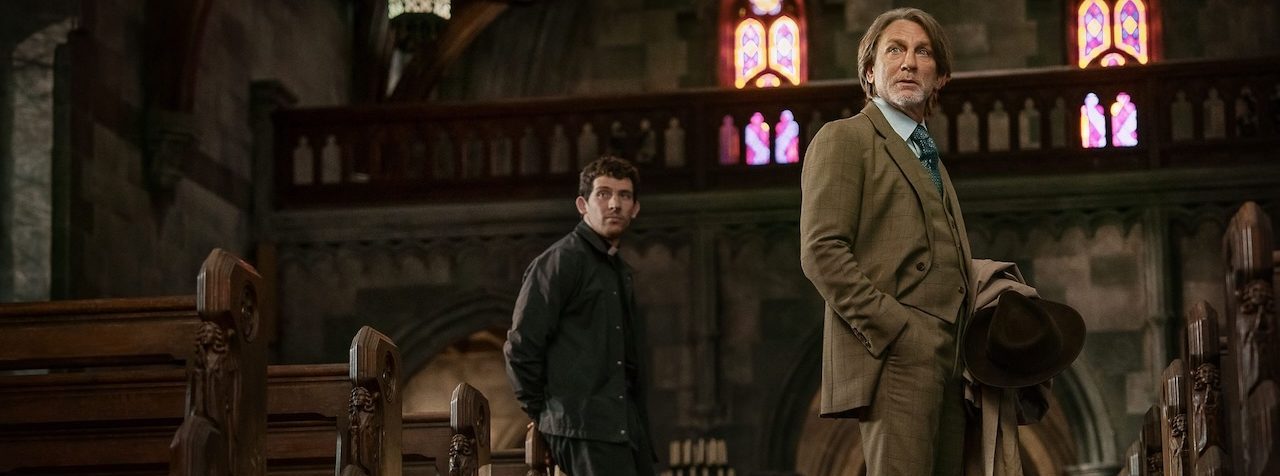
LFF 2025: Wake Up Dead Man: A Knives Out Mystery – Review

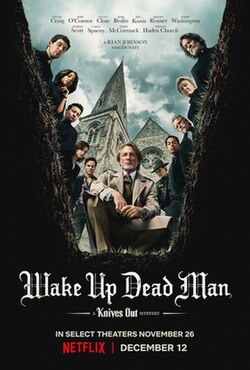
Release Date – 26th November 2025, Cert – 12, Run-time – 2 hours 24 minutes, Director – Rian Johnson

Arriving in a small, New England town, Benoit Blanc (Daniel Craig) is called to assist in investigating an unexplainable murder in a closed-off church, could the cause actually be spiritual?

Benoit Blanc (Daniel Craig) describes himself as a “proud heretic – I kneel at the altar of the rational.” To challenge his belief Rian Johnson throws him into his most personally challenging case yet, an unexplainable murder that may well have been a divine, or demonic, act. A body tucked away in a rural New England church with nobody near it at the time of death, during a service.

The congregation (including Glenn Close, Cailee Spaeny, Andrew Scott, Kerry Washington, Daryl McCormack and Jeremy Renner – no references to Renning Hot, unfortunately) is assembled at the time of the murder and we see them gathering a number of times throughout. Generally, we see them more as a starry collective rather than individual figures. Johnson’s screenplay is still full of fun and clever details, but it seems to focus more on the challenge at hand for Blanc rather than the suspects, who don’t appear to have as much time spent with than in the delicious mysteries of the previous two Knives Out features.

Where we see these characters most is in the flashbacks to the days building up to the murder, and the different perspectives that surround these events. There certainly seems to be more jumping back and forth between times in this third film for Craig and Johnson’s detective and while the film is slower-paced with a more intense edge to the dramatic confrontations and heated exchanges – largely headed by the local Monsignor (Josh Brolin – often made to look like he’s just walked out of The Ten Commandments) whose sermons are less about the word of God and more fiery attacks on newcomers to the church, including recently-placed Father Jud Duplenticy (Josh O’Connor).

It’s Jud who we follow throughout the film, alongside Blanc, as the newcomer accused by the congregation of stirring trouble and committing the murder. O’Connor gives a strong performance as the determined yet increasingly nervous priest still dealing with a church that appears to have decided to clash with and challenge him before he even arrived. He pairs well with the battle that Craig’s consistently entertaining Blanc finds himself in with the impossible crime at hand – a point which creates some of the most interesting beats of the film that could be expanded on more.

For all the drama unfolding in the investigation there’s still the familiar comic relief present in the previous two films, and more than you’d perhaps expect from all the promotion and interviews making it seem as if Wake Up Dead Man will be a deadly serious affair. There are still plenty of chuckles throughout which don’t distract from the overall tone and slower pace, and further highlight the audience aspect of watching a mystery such as this. Even if the slower pace means that the overall film feels less tight than before.

Yet, Johnson and Craig are still clearly having a great deal of fun making these films, and it comes across in the detail of the clues, reveals and investigation. Still involving and intriguing, even if the suspects aren’t quite glimpsed as much on an individual basis this time around. The characters who lead, and the mystery around the mystery, are the biggest draws here and create the most engagement and entertainment. Bringing out the sharper edges of the intense dramatic exchanges and personal battles which surround the murder and those near to it. While Blanc may struggle to suspect foul play this time, it’s easy for everyone else to suspect another finely executed Knives Out mystery.

While it might not quite be as tight as previous entries due to less time spent focusing on the suspects, Wake Up Dead Man is still an investing mystery that turns up the drama with personal battles for the well-performed leads of Blanc and O’Connor. This is another slice of gloriously detailed fun from Johnson and Craig.

Rating: 4 out of 5.

LFF 2025: Jay Kelly – Review

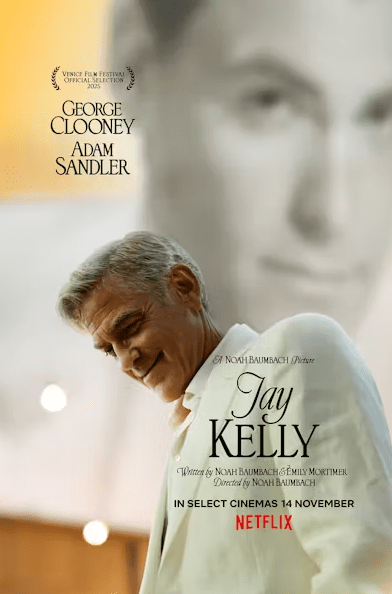
Release Date – 14th November 2025, Cert – 15, Run-time – 2 hours 12 minutes, Director – Noah Baumbach

In an attempt to reconnect with his daughter (Grace Edwards), a famous Hollywood actor (George Clooney) follows her across Europe, confronting his past and other relationships in the process.

Jay Kelly (George Clooney) is a rich and famous Hollywood actor, but he has problems, too. For year’s he’s been recognised largely as himself, not associated with everyone – although after a string of dud films and a particularly tacky production he’s looking to rekindle old working relationships to get back on track and find the joy of his work again. However, when the director who gave him his big break (Jim Broadbent) passes away Jay starts to look back on his life even more.

After realising his distant relationship with his youngest daughter (Grace Edwards), his estranged eldest (Riley Keough) has left home and forged her own path away from the silver screen, he decides to follow her across a holiday in Europe under the guise of accepting a lifetime achievement award from a festival. However, the journey brings more flashbacks to his past beyond just his work, despite claiming early on that “all my memories are movies.” As director Noah Baumbach – co-writing with Emily Mortimer – dives into these flashbacks there’s something of a disjointed feeling to such scenes, as if separate pockets from the rest of the journey that constructs the overall narrative. It contributes to a feeling of slight uncertainty at the end as to what’s meant to have been taken away from everything that’s just been seen.

Alongside Jay’s journey we see individual strands for those following him, including manager Ron (a wonderfully restrained Adam Sandler in a performance that could finally get him a well-deserved Oscar nomination) and publicist Liz (Laura Dern). The pair appear to have had a history together, but it’s not quite given time to breath, as with most side details from the core arc which settles in nicely to a very traditional Hollywood feel of years gone by.


Clooney leads the action with a brilliant charm and swagger which is chipped away at as Jay re-encounters his past without the lens of work or film. Alongside the light, although sometimes very funny, humour throughout he helps keep engagement throughout the run-time, alongside Sandler who he effectively bounces off of in a relationship which grows more tense in regards to work and life, and giving time to other clients. “You’re a proper human with a family” Ron’s told at one point, “Jay’s single and weird and needs to be entertained.” His entertainment comes from maintaining the glamour, style and suave nature of his films and performances for fans who tell him how much they love him and his work. However, as life and fame appear to be slowing down the fractures in that façade grow and give a chance for the other elements of his life to catch up.

Baumbach and Mortimer bring in moments of poignancy amongst the amusement of the plot. It comes in the quieter more reflective moments where Jay is forced by those around him to finally have an open and direct conversation, to drop the performance. We can see the performance he’s putting on as Clooney shows us the battle playing out behind his character’s eyes between the thoughts of Jay Kelly the famous movie star and Jay Kelly the man forced to confront the moments and relationships of his life. As mentioned, these moments are wonderfully performed with mixed, bittersweet emotions coming from the characters – and often wonderfully captured by Baumbach and cinematographer Linus Sandgren who brings some great shots to the proceedings.

The growing, conflicting emotions of working relationships with friendships and familial bonds is at the fore of Jay Kelly and when being properly confronted they make for some of the strongest details of the film. Brilliantly performed by Clooney with a fantastically understated turn from Sandler, and a great supporting cast, with Baumbach complimenting the unfolding events with a traditional Hollywood feel. Not everything may click as the central figure pushes back against some of what he looks back on and creates an occasionally separate feel to flashbacks, but there’s no denying the level of engagement and amusement there is to be found over the course of this increasingly reflective and consistently enjoyable piece.

While moments that stray from the core narrative of Jay Kelly might feel slightly disjointed from everything else, Clooney and Sandler bring brilliant performances to Baumbach’s funny, reflective and undeniably engaging traditional Hollywood tale of an actor confronting the past and his life outside of films.

Rating: 4 out of 5.

The Running Man – Review

Release Date – 12th November 2025, Cert – 15, Run-time – 2 hours 13 minutes, Director – Edgar Wright

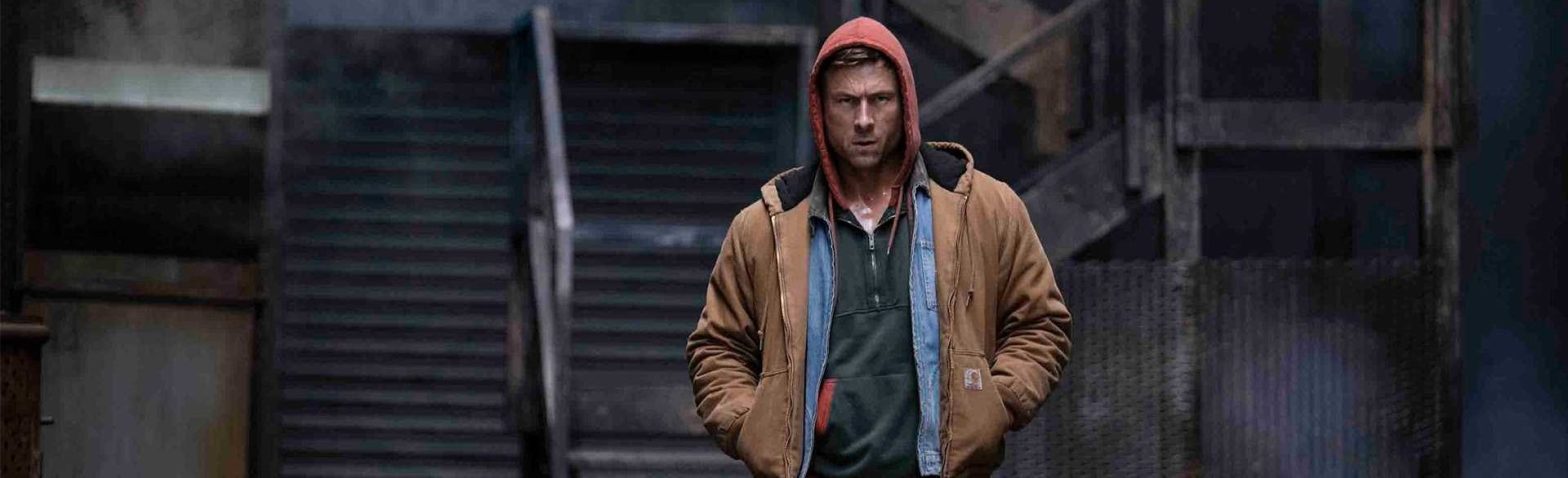
To afford a better life for his wife (Jayme Lawrence) and ill daughter, Ben Richards (Glen Powell) enters The Running Man, a show where he must survive a month while trained hunters and the world are after him.

Despite the title The Running Man is far from Edgar Wright’s most fast paced film. It’s also a film that seems to acknowledge when it’s run out of steam. Moving into a quick succession of sequences as if the film starts rattling off its ending in montage form so as not to go on any longer, and as the central chase nears its conclusion.

The chase at hand is The Running Man competition, where three runners must evade being killed by trained hunters, or the public, over the course of a month. If they succeed they earn a billion new dollars – the currency in this dystopian future, which we see much more of compared to the 1987 Arnold Schwarzenegger starring adaptation of Stephen King’s novel of the same name (published under his pseudonym Richard Bachman). The money is exactly what Ben Richards (Glen Powell) needs, fired from his job for reporting a safety violation after a major incident and wanting to move his wife (a largely unseen Jayme Lawrence) and ill daughter to a better place, and pay for medicine.

As the chase unfolds Wright certainly restrains his trademark style of quick-cuts and snappy-editing, yet there are still glimpses of the director’s style still present here, including some fun needle drops. Tension rises during multiple close calls with the hunters, especially as Ben thinks that he’s safe at least for a couple of hours. The more Wright allows the camera to follow the action, or at least things move around the multiple layers of a building, the more tension rises. Two particular sequences show off in-the-moment plans and a more layered set of traps, led by an entertaining Michael Cera, with equally as much enjoyment.


The more the hunt goes on, presented by an ominous Colman Domingo, the more Ben starts to encounter faces who suggest that there’s more to the behind-the-scenes of the show than viewers, and participants, are being told about. It’s this that the second half, particularly the third act, deals with more as things start to have to move more towards an ending that’s about more than whether the central figure, well-performed by Powell taking on a more serious-edged leading action role still with some of his naturally playful humour, will survive to the end. While not all of these beats entirely click as they become much more of a core focus of the narrative, largely feeling like they push the run-time – Emilia Jones comes in as a hostage brought into the game by Ben and is on-screen for longer than her underwritten character initially suggests.

Yet, there are still fun details when action kicks off, even in the climactic stages where fights are much more upfront and seemingly personal as the run-time starts to be felt. While Wright has certainly made more of a studio film than what might be more widely recognised as an Edgar Wright film that’s no bad thing. The visual look of the world certainly has a good deal to like and be caught in, even in the confines of a near-future dystopia that seems to be run by the controllers of an authoritarian TV network.

As Powell’s increasingly determined underdog, and a set of floating cameras alongside Wright’s, runs through the various landscapes on offer there’s a good deal to enjoy, especially when the action kicks in, sometimes with a good needle drop. Things might feel overlong as the plot starts to wind in setting things up for its conclusion, but there’s no denying the push of Ben’s efforts to survive, and the Running Man viewers rallying calls of Richards Lives!

The Running Man appears to admit that it runs out of steam as its plot starts to wind, but there’s still an enjoyable hit with the action as the camera tracks Glen Powell’s entertaining lead through different floors and settings, although not quite as fast-paced as you’d expect from Wright.

Rating: 4 out of 5.

The Choral – Review

Cert – 12, Run-time – 1 hour 53 minutes, Director – Nicholas Hytner

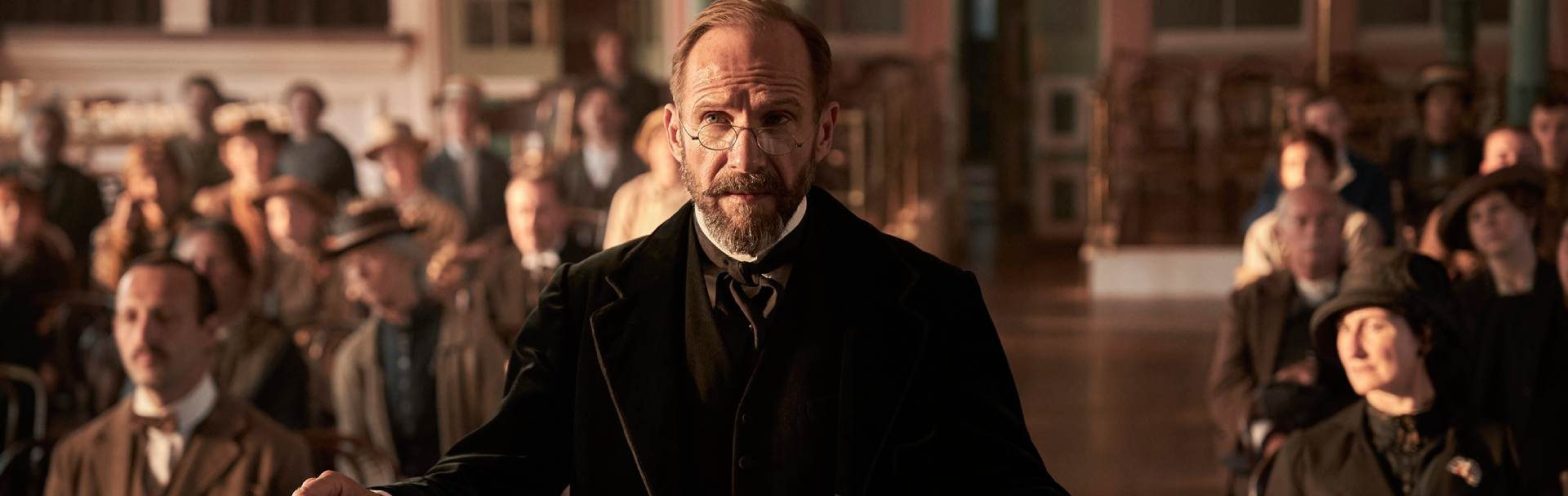
Having spent years living in Germany, Dr Henry Guthrie (Ralph Fiennes) is brought in as the new choirmaster of Ramsden, Yorkshire, a town facing considerable loss as World War I continues.

There can be many members of a choir, and in just under two hours The Choral tries to feature each of them. Some as slight comic relief, others as more prominent protagonists. It makes for a very busy and awkward-sitting film as throughout scenes are cut down to the most fleeting of moments. Hastily stopping and starting, as choirmaster Dr Guthrie (Ralph Fiennes) gets those he’s conducting to do.

Guthrie has been called upon by the senior members of the Ramsden Choral Society to lead them when their choirmaster signs up to fight in World War I. However, while he’s viewed as the best, most musically experienced choice he’s spent a number of years living in Germany, and frequently speaks the language to the shock of those around him. He’s a strong advocate for art being an escape rather than a distraction, something that can benefit and help – and sees that being the case with some of the choir members, particularly young men returning to war, or preparing to be called up.


Ramsden (a fictional town) is full of grief as telegrams go round signalling the death of friends and family members, or in one case the uncertainty of an MIA notice. Yet, through the lens of the effect of art director Nicholas Hytner, once again teaming up with writer Alan Bennett, there’s a more sedate feeling to things. Particularly pushed with just how many characters and situations we cut back and forth between in a jumpy manner that stops a connection from being properly performed. Certainly there are a couple of good chuckles along the way, particularly courtesy of Roger Allam and Mark Addy, and the big final performance lands an effect that successfully stirs emotions, but this is the moment that’s built up to by almost all points amongst all the separate details and relationships.

For the most part The Choral is a film that if you’ve seen the trailer you’ll know how the film will go down with you, but even that fails to get across the restless nature that runs throughout much of the first half, and threatens to return every now and then. When it feels most confident in the themes that it’s dealing with, those which are most consistent, the film moves along rather well. But, when cutting back and forth between sometimes poorly edited scenes there’s a disconnect formed due to the unsettled nature of the unfolding events which struggle to base multiple ideas into one core theme. Most of the notes may be in tune, but they’re not always in harmony.

While fine and certainly hitting some good notes throughout when focusing on its themes surrounding the effect and use of art, there’s an awkwardness to much of The Choral’s first half as it hastily cuts between brief scenes featuring a busy cast.

Rating: 3 out of 5.

Predator: Badlands – Review

Cert – 12, Run-time – 1 hour 46 minutes, Director – Dan Trachtenberg

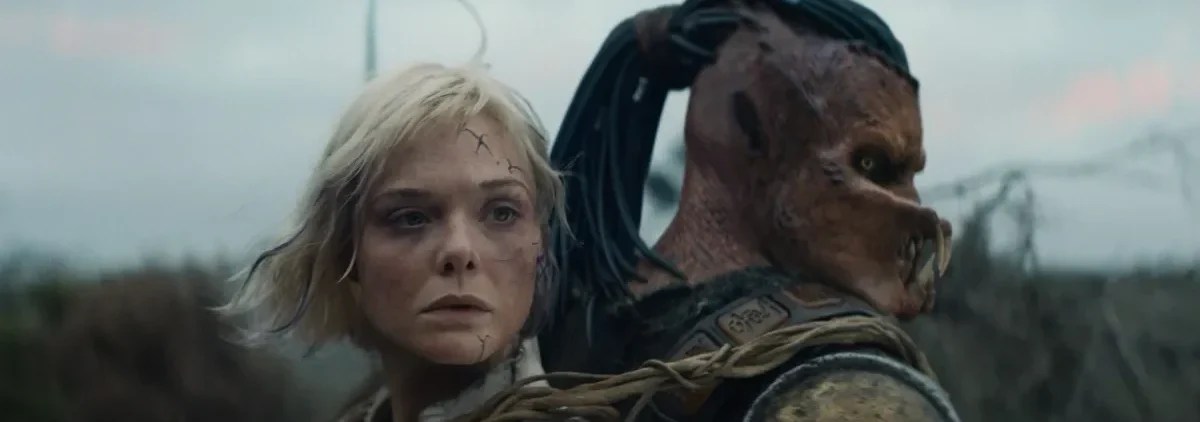
A young predator (Dimitrius Schuster-Koloamatangi) tries to prove himself by travelling to the universe’s deadliest planet to kill the un-killable, with help from a broken Weyland-Yutani android (Elle Fanning).

Much of the threat and draw of the predator as an antagonist are its swift, evolved killing techniques. As Prey and animated anthology take Killer Of Killers showed this can go for whichever historical context you drop the Yautja species in as protagonists adapt and use what’s around them to fend for their lives. Predator: Badlands, once again helmed by Dan Trachtenberg, switches things up to focus on a young predator, Dek (Dimitrius Schuster-Koloamatangi), trying to survive one of the universe’s deadliest planets.

Travelling there to prove himself to his clan leader father (Reuben de Jong) by getting the head of an apparently unkillable creature as a trophy the planets and animals found on Genna are immediately forces to be reckoned with. Instead of showing off skills immediately Dek has to, like most characters in Predator films, learn and adapt before the big final confrontation – a sequence which from his perspective leads to the feeling of an alien John Wick or Robert McCall. However, it’s clear that on Genna Dek is out of his depth, and finds help from the remaining top half of a Weyland-Yutani android, Thia (Elle Fanning).


With Thia strapped to Dek’s back like a backpack the pair encounter the various forces and plants on the planet in a variety of action sequences. There’s something of an unsettled feeling to some of these events as the feeling of individual ideas and sequences comes through. It’s a tone that, alongside the generally CG-filled crashes of it all, created a sense of disconnect with me during these major sequences. There was some interest and amusement here and there, but they certainly create something of a lengthy build-up before properly getting into the meat of things with the involvement of Thia’s fellow android sister Tessa (also Fanning), trying to also track down the fearsome Kalisk, and now a Yautja, too.

When the feeling of things moving forward with more strength comes into play that’s when Badlands picks up and starts to progress with more engagement and a better sense of flow. The third act certainly takes a step up as it properly gets into more familiar Predator-style action, with an unfolding plan adding to the thrills on display, plus a hint or two of neon green blood marks (Badlands only holds a 12 – although likely top-end 12 – rating from the BBFC, a first for the franchise which has often held 15 and 18 ratings up until this point). Yet, it takes some time to get to these particular sequences with the various ideas happening in establishing future points, details and styles of action whilst exploring Genna. Ideas which have an occasional thrill despite being slightly bogged down in set-up and exposition.

Working best when focusing on the developed skills of the central predator, and those around him, through more fluid and structured action, Predator: Badlands takes some time to properly kick in with its, while lightly enjoyable, segmented expository sequences.

Rating: 3 out of 5.

Bath Film Fest 2025: Alpha – Review

Release Date – 14th November 2025, Cert – 15, Run-time – 2 hours 8 minutes, Director – Julia Ducournau

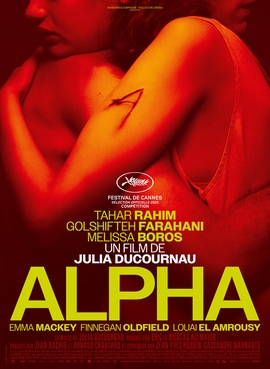
After a dodgy tattoo, 13-year-old Alpha (Mélissa Boros) starts to be pushed away by those at school, and isolated by her mother (Golshifteh Farahani) when she may have a spreading virus that could turn her into marble.

The body horror of Julia Ducouranu’s Titane follow-up is much more gradual and less invested in shock factor than her Palme d’Or winner, or debut, Raw. While it could be accused of being more on the nose, with the virus that appears to turn those suffering from it into marble having very clear links to AIDS, it makes for an investing film as the fear of carrying the deadly virus, for which there is no cure, grows.

This is especially the case for 13-year-old Alpha (Mélissa Boros) and her mother (Golshifteh Farahani). After a dodgy letter A tattoo on her arm – both in look and tattooing process, seemingly done with an unclean, pre-used needle whilst almost passed out at a party – Alpha starts to display symptoms of the unnamed virus, leading to her being outcast from those around her at school. One scene involving other students fleeing from a growing pool of blood after an incident in a swimming pool displays the other side of fear for what will happen if she isn’t infected but everyone believes she is.

Isolated by her mother alongside her drug-addicted uncle Amin (Tahar Rahim), who is confirmed to be turning into marble; coughing dust and has back forming into jagged marble edges, a generational story starts to pan out with emotionally stirring effect. Ducournau shows that she’s not interested in just providing a shock factor – Alpha is rated 15, with only really one true ‘shock’ moment, compared to her previous features’ 18 certificates – and wants to use the body horror to tell and impact the story. To grow it in the tired, slightly run-down world that she and her cast and crew have created. One which I couldn’t take my eyes away from.


In general horror doesn’t appear to be the defining focus of the film, although it certainly falls comfortably into the genre with the worry and fear that grow not just within the titular character but her family, contrasted with that displayed by those around her. There’s no need to state further, or at all, the worries that are already present in those early teenage years, they’re naturally on display already as aspects already making things tougher for Alpha as she tries to navigate her new way of life, and the fact that it may be over sooner rather than later.

As things develop, and reach the closing stages, I may have found things becoming slightly tangled in the narrative yet I was still totally emotionally immersed. Alpha proved itself as a film that is primarily about how it made me feel over anything else. And I was totally in-tune with the emotions of the central character, and the ways in which Ducournau witnesses the world and the events that unfold in it. Blending horror into the themes at play and establishing personal character relationships through their fears to expand on both points at the same time with ease.

Whilst tonally different to her previous features, with a slower pace, Ducournau continues to prove herself as a masterful, visionary writer-director. Getting into the emotions of her increasingly scared young protagonist, with a strong performance from Boros, and those around her. The same goes for more fantastical moments when doctors, including Farahani’s character, walk the wards washing patients at different stages of turning into statues knowing there isn’t a cure, and seeing some of them pass away. Deeply rooted in its emotional basis, Alpha is a propulsive horror where the fear and worry are consistently about the conflict of personal and uncertain matters. It’s excellent, stirring stuff. I’ll be first in line for whatever vision Ducournau conjures up next.

A more gradual film than her previous works, Alpha still shows Julia Ducournau as an emotionally in-tune and invested writer-director, using subdued body horror to heighten the personal and uncertain worry and fear on display.

Rating: 5 out of 5.

A House Of Dynamite – Review

Cert – 15, Run-time – 1 hour 52 minutes, Director – Kathryn Bigelow

A nuclear missile has suddenly been launched from an unknown place directed at the United States. With 18 minutes until it strikes; is it real, and what should be done if it is?

With A House Of Dynamite Kathryn Bigelow channels a similar uncertain, deadly, countdown-based tension to the defusal sequences in her Oscar-winning The Hurt Locker. However, in the case of her latest it’s much more difficult to defuse a nuclear missile, or, it seems, to know how to deal with it. The United States has just 18 minutes to work out if the launch is real or not and if so how to respond to it, including working out where it’s come from and where it will land.

Tension rises the more uncertainty and its different contexts rise over the course of the opening 35-40 minutes. Shifting into panic as the digital clock rapidly morphs closer to 0 with still not a proper plan in place as to how to protect the population in such a short amount of time – alert notifications on phones only add to the tension and seem to largely be seen by government employees and officials who are already caught up in the fear, whilst trying to piece things together. For much of this time we’re based in the White House Situation Room, with attempts to contact the President (Idris Elba) trying to be made. From there we eventually switch to other linked locations and perspectives seeing more details of the US government’s responses over the course of the same countdown.


Diminishing returns is somewhat the case for the following switches in perspective as they tend to cover the same events just with a few more details in a different room. One of the best examples of the tension being brought back involves Gabriel Basso’s Deputy National Security Advisor frantically asking and negotiating with Russian ministers for assurances after time has already been lost trying to go through building security. During these instances which aren’t really heard of or glimpsed prior the film brings back detail and interest instead of feeling like a slight repeat which the second and third run-throughs certainly suffer from.

There are still interesting ideas at play, and a lingering sense of fear and dread around the central theme as a whole, but the tension isn’t quite as strong as it is through the more fluid escalations of our introduction to this world – especially with just how many players we see and hear from this time around. Bigelow does a good job of bringing in personal emotion for certain characters – one instance involving a father calling his daughter particularly comes to mind – even if the moments are brief and sometimes rub slightly against the pacing of the rest of the film.

As a whole the structure of A House Of Dynamite feels as if it holds it back. While everything happening at once would likely lead to a longer, busier, more chaotic film it would perhaps feel more solid with continuing tension than in the state of the finished film where we see the same (or at least largely similar) events three times. There’s still effect to be found beyond the first set of sequences, especially ones that try to lean into the emotional and moral side of things more, but the tension isn’t quite as effective as beforehand and that’s the biggest issue with a thriller of panic such as this.

By splitting A House Of Dynamite’s events across three perspective cycles the tension in the latter familiar instances feels held back, despite Bigelow’s focus on emotional and moral elements. There’s still suspense and panic to be found, but certainly not on the level of the strength of the first third.

Rating: 3 out of 5.

LFF 2025: Die My Love – Review

Release Date – 7th November 2025, Cert – 15, Run-time – 1 hour 59 minutes, Director – Lynne Ramsay

After moving to an isolated house in Montana and giving birth, Grace (Jennifer Lawrence) finds her mental health and relationship with her partner (Robert Pattinson) starting to spiral.

Die My Love was shown towards the end of this year’s London Film Festival, when tiredness has more than settled in and almost anything shown at 8am isn’t an 8am film. There’s a chance that I was too tired or not tired enough for Lynne Ramsay’s latest, sitting and waiting for the various ideas to come together in the vignettes which set up much of what is to come throughout the film.

We appear to move between moments and times in the relationship of Grace (Jennifer Lawrence) and Jackson (Robert Pattinson). Moving in to an isolated home in rural Montana the couple are ready for the next stage of their lives together, and to push ahead in their respective careers. For Grace that’s writing, however finding ideas and motivation to write becomes difficult as she struggles with her mental health, especially in the wake of her declining relationship and mental health.

“My brain just seems chopped up” she explains at one point, a phrase mirroring the style and pacing of the film. A slightly dizzying spiral of back and forths which certainly have their effect when leaning into the central performance which are often the standouts of the drama at hand. However, it does mean that the overall flow of the film can struggle. While the choppiness can help connect us to the character it can also put us at a distance from what’s happening on screen, especially in the introductory stages where it feels like a lot is being built up. The later knock-on effect is that the near-2-hour run-time starts to feel lengthy, especially when the scenes and needle drops in the closing stages each feel as if they’re about to bring things to a close.


Perhaps I should have known more about Die My Love before going into it, I went into it pretty much blind. When it strikes and really gets across the mental struggles that Lawrence’s central figure is going through there’s a real effect that gets across the toughness, and a sense of unease, about what’s happening – especially in the state of seclusion that the film takes place in.

Even when observing other characters there appears to be a sense of isolation that hangs over the tone and style of a scene. Something that Ramsay and Lawrence understand and click into place about the feeling of your mind kicking you and making you feel alone. It also comes through in a set of highlight scenes involving Sissy Spacek as Jackson’s mother, Pam – caring for her husband (a very briefly seen Nick Nolte) with dementia. One particular scene involving Nolte and Lawrence stands out amongst the noise of the surroundings and is called back to later on with a continuing effect from the translation of internalised mental pressure experienced by not just Grace but also Pam.

These are such aforementioned scenes which truly strike. Capturing a strain, a sense of isolation and possible fear with nowhere to properly escape or turn to. Would it matter much if the world caught fire or chaos broke out? Such thoughts perhaps make Die My Love worthy of reflection, and the film certainly grows whilst doing so. Beyond the occasionally choppy structure of ideas and vignettes which the film sometimes delves into. Regardless, it certainly seems as if a revisit in a non-festival state is in order.

Striking best when capturing the internal noise and struggle experienced by Lawrence, and pushed by isolation, there are a number of points where Die My Love feels like a lengthy succession of less-focused ideas and vignettes which hold back its biggest potential effects.

Rating: 3 out of 5.

LFF 2025: Anemone – Review

Release Date – 7th November 2025, Cert – 15, Run-time – 2 hours 6 minutes, Director – Ronan Day-Lewis

Former soldier Ray (Daniel Day-Lewis) has isolated himself in the woods for years, one day his brother, Jem (Sean Bean) turns up trying to convince him to come home to abandoned familial ties.

Halfway through Anemone it became apparent that this was a film that I was going to have to sit with for some time after. It was a feeling that only increased the more extended monologues of emotional openness led into moments of odd yet intriguing fantasy. Internalised anger leaks out in revelations such as “we learnt our violence from the #1 British regional champion” before leading into the sight of a strange, glowing horse-like figure.

Internalisation, and how it’s exacerbated by isolation, are key themes of Anemone. Daniel Day-Lewis’s Ray has closed himself off in a small shack in the woods. A former soldier, having done multiple stints during The Troubles, his hostile attitude gradually leaks out a history with violence and the undealt with effects that’s had on him. Building up into anger and hidden regret. His isolation and attitude has had knock-on effects that still hang over the family he left behind years prior – particularly ex Nessa (Samantha Morton) and grown son Brian (Samuel Bottomley). When brother Jem (Sean Bean), also a former soldier who has since turned to religion (a tattoo spread across his back reads “only God can judge me”), turns up to convince him to return home and confront the past there’s very little dialogue between the two for much of their initial interactions.


Bean remains generally silent for much of the run-time as the bulk of the dialogue is given to Day-Lewis for a series of monologues circling his character’s held-in rage and trauma. Day-Lewis not only notably returns to acting after retiring in 2017 after Phantom Threat but also co-writes alongside son Ronan, who makes his directorial debut with this feature. The pair appear to set out to cover a lot in the opening stages when it feels like there’s a lot being scrambled together, especially with the score and soundtrack assisting the feeling that the set-up is like a music video or lengthy montage.

When things start to settle that’s where the biggest emotional pulls are to be found. Yes, there are still the strays into more fantastical elements which will undoubtedly be very hit-or-miss; as the film likely will be, too, but they slightly gel better than some of the more naturalistic ideas at play. When we cut to Nessa and Brian alone at their home, whilst Ray tries to make it clear to Jem that the pair won’t reconnect, the quietness of these moments feel disconnected from everything else, as if not holding as much substance and only providing later details for Ray’s course. It’s part of the overall structure of the film which certainly creates some distance with its bumpiness throughout, yet still manages to have enough to hold interest in the unfurling emotions, confrontations and resistances.

Having given the film some time afterwards, and even more so before writing this, there’s no doubt that I have admiration for it and the ways in which it deals with the different ways of dealing with and confronting different kinds of trauma and violence. Especially when it comes to those which span generations. Strong performances, especially Day-Lewis who’s given the juiciest monologues throughout, help to add to the thematic interest, also present in the likely divisive fantastical beats. Just, whilst watching, much like the central brothers, there feels a slight disconnect between the elements at play which don’t always gel together.

While holding interest throughout, especially with its strongly performed themes of generational trauma and violence, there’s occasional disconnect between what Anemone depicts, especially when playing with a lot at once.

Rating: 3 out of 5.

Relay – Review

Cert – 15, Run-time – 1 hour 51 minutes, Director – David Mackenzie

A New York City fixer (Riz Ahmed) finds himself caught between parties in a chase for details when his client (Lily James) tries to hand back documents proving a major company cover-up.

I’ve long referred to Riz Ahmed as one of the best actors currently working. Relay is proof that he doesn’t even have to speak to be utterly chameleonic. Much of his performance as a New York broker/ fixer, helping those who have information of cover-ups but have decided against releasing it, is silent yet you can read exactly what’s going through his mind as he pieces together and executes each stage of his plan. Especially as things start to go off track and he needs to think in the moment, something which appears to rarely have to happen for him.

The client in the case of Relay is Lily James’ Sarah. Having taken a report from her former employer, Cybo Sementis, proving possible deadly issues with modified crops they’ve been working on she wishes to not whistleblow and uses Ahmed’s anonymous character – the pair are kept separate for much of the run-time, communicating via a telephone relay service for the deaf – to give them back before the team sent to stop her releasing them (led by Sam Worthington) catch up.


For much of the run-time there’s an intricate and exciting nature to the dialled-back action, largely based around Worthington and co trying to track James in various locations whilst Ahmed’s plan comes together (with him often appearing in a number of enjoyable disguises). As multiple parties almost converge at multiple points there’s a feeling that the control will easily shatter at any moment – especially in crowded public spaces such as an airport or Times Square. Tension helps to ease along the pacey nature of the run-time whilst separated by the communication between the two leads, still forming some form of connection and relationship despite never properly directly communicating.

There’s an air of a stripped-back paranoid thriller, yet one where you know full well that someone is constantly on your tail – especially with the fact that we see both their perspective and know their van is sat outside Sarah’s apartment building, with a prime view of her window. It’s a shame, then, that a key direction the third act takes feels so lazy, emphasised by the fact that the film appears to try to play it off as far more clever than it actually is. There’s still a thrill to be found in the events that follow, but just with a slightly tamer effect after the dampener that has been put on what has come beforehand. Where the tension that comes through still comes from is the continued reminders of how close characters are and Ahmed’s performance as his character has to think on his feet more quickly, and upfront, than he has before.

While there’s something of a dampener to the laziness of a third act decision much of Relay is an exciting, well-executed thriller of intricate plans that feel as if they could go wrong at any moment with the cat-and-mouse lens of the tension throughout.

Rating: 4 out of 5.