Is This Thing On? – Review

Release Date – 30th January 2026, Cert – 15, Run-time – 2 hours 1 minute, Director – Bradley Cooper

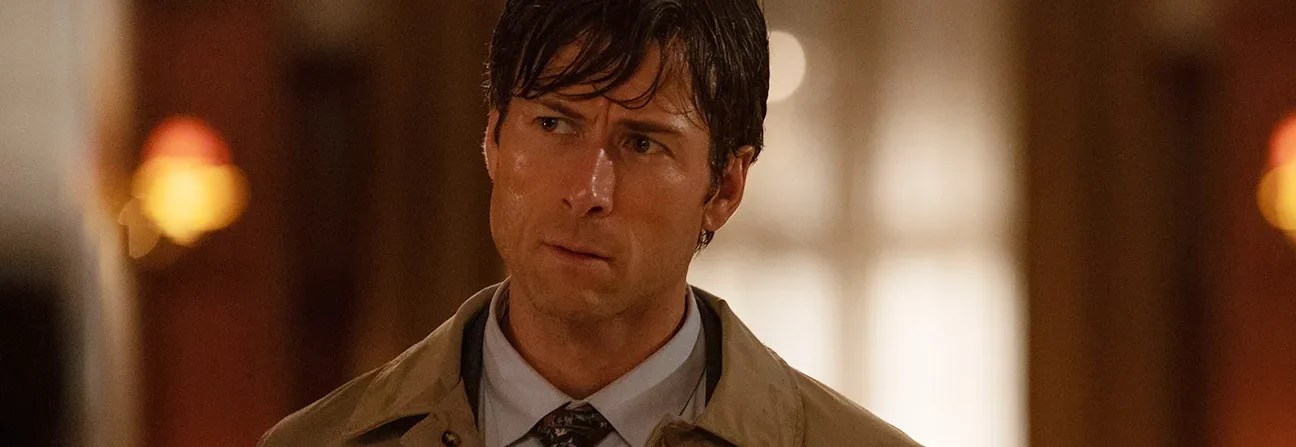
Trying to cope with the divorce process, Alex (Will Arnett) finds himself turning to stand-up to get into a bar for free, getting a kick from it he grows his confidence for comedy and rebuilding his relationship with wife Tess (Laura Dern).

Loosely inspired by the life of British comedian John Bishop, Is This Thing On? appears to be very loosely inspired indeed. Basing events in New York City we follow finance-based Alex (Will Arnett) amidst the process of separating from his wife Tess (Laura Dern). One night whilst trying to get into a bar to drown his sorrows, and without the $15 entry fee, he puts his name down for an open mic slot to get in for free. There an outpouring of his recent weeks unfurls into the mic, with a couple of attempts at jokes and scattered chuckles dotted throughout the stilted, improvised routine.

It’s during the drawn out view of this first routine, as the camera pushes up against Arnett’s face against an almost silent response it gets, that the film makes clear its tone and pacing. Whilst going in expecting a film with more comedic beats the overall tone of the film leans largely dramatic, especially amongst the very slow pacing from start to finish. One thing for Bradley Cooper’s latest, brought to him by Arnett after working a bit on the screenplay with Mark Chappell, after hearing Bishop’s story (with Bishop receiving a co-story credit) during a chance meeting, is that it certainly seems to take its time. Which perhaps highlights the feeling that the director doesn’t quite seem to be as invested in this particular project than previous features A Star Is Born and Maestro.


That comes through quite often with a slightly semi-detached feeling from certain aspects behind the camera, despite Cooper also appearing on-screen as attempted comic-relief best friend character ‘Balls’. There’s a watchable nature to this particular film from the director, but nothing that quite rises above that as Alex’s confidence for stand-up grows, and starts to lightly inspire him to try and fix things with Tess.

Thus, a set of shifts in their relationship start to unfold, largely in the second hour, which don’t always feel as if they click. Despite good individual performances from Dern and Arnett I never quite found myself fully buying into their relationship. especially the course that it starts to take as they begin to properly talk again with conflicting conversations. The stand-up scenes certainly still have an effect as Alex uses them to make sense of what’s in his mind, and come to terms with where his life appears to be going. He’s told by other comics that he may not be good at stand-up, but he’s at least funny and should therefore keep going, even if his family (including parents Christine Ebersole and a wonderful but rarely used Ciarán Hinds) don’t know about any of it.

There’s a slight feeling of American stand-up to the film overall. Where the joke, or in this case point, tends to be repeated two or three times, just with slightly different wording, as if being explained without the person telling it seemingly realising it. As if the joke itself is just another layer of set-up to the explanation and repetition of it. Is This Thing On? doesn’t quite repeat itself but certainly feels as if it has to explain its point a couple of times in the overly slow pacing of the narrative. It makes it feel that bit more drawn out, and not entirely solid. What’s there is watchable but, much like Alex’s early stand up, gets a scattered response with a slight feeling of detachment as part of the act.

While watchable Is This Thing On? struggles to fully engage with its overly slow pacing and need for a couple more laughs here and there. Arnett and Dern give good performances, even if their characters’ relationship doesn’t quite hit in the somewhat detached feeling of the film.

Rating: 3 out of 5.

LFF 2025: Lady – Review

Release Date – TBC, Cert – TBC, Run-time – 1 hour 37 minutes, Director – Samuel Abrahams

Isolated Lady Isabella (Sian Clifford) welcomes a camera crew into her estate to make a documentary about her in the build-up to her youth talent show, however over time she starts to lose herself in her home.

Lady Isabella (Sian Clifford) wants to present herself as “the aristocracy’s answer to the Kardashians.” A relevant, up-to-date figure of popularity who wants to use her wealth to help others – in this case by hosting the Stately Stars talent competition, which she herself will take part in, despite not having an act. Yet, even when announcing all of this to the camera crew she’s hired to follow her, led by Laurie Kynaston’s BAFTA-nominated (instead of winning) director Sam there’s an awkwardness to the character, brilliantly conveyed by Clifford, whose seeming isolation has led her to act up to the camera and those around her. She’s aware of herself and yet at the same time has no self awareness of how she comes across because of this.

With a number of great quotes in these opening stages Clifford brings in plenty of laughs very early on thanks to the awkwardness of her character. Things are comfortably set up to be about her character’s distance from the rest of the world – despite her best efforts to do good, “I pay minimum wage, I recycle – well, someone here does” – until the most sudden of left turns that introduces an almost unbelievable turnaround in what starts to happen within the confines of the titular Lady’s estate.

To give away this change in focus would be to, in some way, perhaps spoil the film. Where things start to turn narratively in some ways look at Isabella losing herself in her expansive home. While the turn may lead to some patchier sequences; including one drug trip which sits uncertainly in the film, there are still some good laughs to be found amongst the more hit-or-miss gags. Yet, the way in which this thread is dealt with wavers the more it goes on, despite the amusing suddenness when first revealed, as is the case for the film as a whole.

When leaning into more dramatic territory, largely regarding Isabella’s past relationships, reasons for isolation and relationship with Sam and the documentary crew, the film is at its patchiest. The closing stages feel, much like the gags increasingly become, patchy and not everything lands. Clifford may still make plenty of hesitant glances to camera to get a good chuckle but they’re not quite enough to hold up the weight the film creates for itself with the turns that it takes into each new act.

There’s certainly an attempt to pull off a surprise, and a surprise is certainly the case, and while there’s enough here to see things through they do start to struggle and draw things out the more they go on. Yes, there are chuckles thanks to Clifford’s performance of light-headed, slightly unaware lead who acts as the draw of the film from start to finish, but the gap between them eventually grows as the film appears slightly more uncertain when it comes to dealing with its developments beyond the simple mockumentary awkwardness.

As the laughs grow more hit-or-miss and the narrative turns lead to patchier sequences, Lady still has an enjoyably awkward central performance from Sian Clifford who acts as the constant, bringing a good number of laughs, throughout the film.

Rating: 3 out of 5.

Saipan – Review

Cert – 15, Run-time – 1 hour 30 minutes, Directors – Glenn Leyburn, Lisa Barros D’Sa

In the build up to the 2002 World Cup the Irish national team travel to Saipan to acclimatise and train, however tensions rise between manager Mick McCarthy (Steve Coogan) and star captain Roy Keane (Éanna Hardwicke)

The heat of Saipan beats down, the air conditioning isn’t working and the hotel’s food offerings largely consist of cheese sandwiches. All fuelling the fire already building up in Irish national football team captain Roy Keane (Éanna Hardwicke) as he looks to get his head down and train for the upcoming 2002 World Cup, which the team qualified for without him whilst he was injured. However, training proves difficult when many key pieces of kit, including footballs, haven’t arrived on the island where the team have arrived to acclimatise and train before the tournament in Japan, two weeks away.

Manager Mick McCarthy (Steve Coogan) receives much of the blame from Keane. The pair have rarely got on, and that’s leaked into the tabloids on several occasions to the agitation of the other. An awkwardness often settles amongst the team and the executives who have also travelled over, despite the jokes and camaraderie attempted – also the frustration of the team captain who suggests none of them are taking anything seriously. Against the heat the rising tensions are thoroughly enjoyable to watch.


Coogan and Hardwicke invest in their characters and just how much they rub against each other. With McCarthy uncertain how to deal with Keane, while the latter berates his manager to his face – leading to a particularly explosive finale.

Having personally known nothing about the events, or relationship, at hand directors Glenn Leyburn and Lisa Barros D’Sa, previously behind 2019’s underseen emotional cancer drama Ordinary Love, make a quickly engaging and entertaining drama. One that isn’t without its humour, in fact there are a good couple of well-placed chuckles throughout which naturally slot in and help keep things moving for the mere 90-minute run-time.

Things move and develop smoothly, even if the central relationship at the core of the film is beyond rocky. Much of this captured in Paul Fraser’s screenplay, which creates much of the spark for Keane and McCarthy further fuelled by Hardwicke and Coogan’s performances. Each acknowledges that this isn’t a deep, gritty drama. It’s centring on a football feud where one figure wants to win the World Cup and other wants to unite his team and keep them in good spirits to represent their country as best they can, with the hope of winning. It all makes for a well-paced and developed rift which we see grow to its peak, rather than start, in easily engaging and entertaining fashion.

With two invested central performances and consistent pacing, the rift that grows throughout Saipan captures the heat of both the tense relationship and location. Easily engaging and entertaining, this is a rock solid dramatic feud.

Rating: 4 out of 5.

Mercy – Review

Cert – 12, Run-time – 1 hour 40 minutes, Director – Timur Bekmambetov

2029, LAPD detective Chris Raven (Chris Pratt) has 90 minutes to prove his innocence before an AI judge (Rebecca Ferguson) for the murder of his wife (Annabelle Wallis). If he fails, he’s executed.

The odds should really stacked against Mercy, in fact they pretty much are. How much excitement can you get out of a film that’s likely to be met with a great deal of cynicism from the basic details alone. Chris Pratt sat in a chair for 90 minutes as his character testifies before an AI judge (Rebecca Ferguson).

Yet, somehow I found myself quickly brought into the not-quite-screen-based trawl through phone and camera records as Pratt’s LAPD detective Chris Raven, a supporter of the near-future Mercy courts, attempts to prove he didn’t murder his wife, Nicole (Annabelle Wallis). However, this proves particularly difficult in a new court that has so far executed everyone put on one-on-one trial, where you’re considered guilty until proven innocence.

Yes, Pratt may often look like he’s trapped in the room with a bad fart, but luckily this isn’t the main focus of the film. It also doesn’t overly distract from the growing tension at hand. To include a gradually ticking clock throughout, consistently referred to to the point where it may as well appear in the corner of the screen instead of in the not-quite-background, is a bold move but it’s one that Mercy, alongside a number of elements, manages to just about get away with. In large part because of how the tension rises throughout. Creating a more and more gripping narrative as Raven attempts to track down the person who did kill his wife, whilst providing a consistent string of linked details to the judge before him (Ferguson does her best with a blunt and dry role – it is an AI figure, after all).


Events start to spill out into the streets as we see calls with fellow LAPD officers, and Chris’ daughter, Britt (Kylie Rogers). The calls can conflict, and more often than not make Chris seem even more guilty. Yet, after a short while the film isn’t quite so interested in asking whether he’s guilty or not and simply his race to prove that he isn’t. A strange kind of sci-fi mystery thriller plays out, largely from the one location, and I can’t say that I wasn’t compelled by it. I’ve seen the trouncing that this film has received from a number of critics, and I can understand some of the negative reviews and why some may have not got on with the film, but part way through I realised that after the build-up I had become very much engaged in what was happening. I was interested, and perhaps even invested.

Shown in the escalating tension that I felt during a number of key sequences as one thing effectively rolled into the next with a good deal of pace, and the race against time bring felt more and more the less it was reminded of and the more it was simply just allowed to be known about and remembered by the audience. From everything I had seen beforehand I had quite the opposite experience with Mercy to that which I was perhaps expecting going in. Once past the set-up and establishing of the ways in which the courtroom, its access to files and Pratt’s repeated shouting that his character is innocent and shouldn’t be in this situation, there’s a feeling that the gimmick-iness of the setting, and to some extent base of the narrative, fades away to allow for that tension of the situation to come through.

Whatever it was, there’s something about Mercy that clicked for me (maybe I just wasn’t smelling the same fart Pratt and many others were). Bringing out the gradually growing tension of the constantly moving and developing narrative for an interesting, engaging and entertaining sci-fi thriller.

Once past the gimmicks of the set-up, Mercy, albeit with a couple of bumps, manages to make for a sci-fi thriller with gradually growing tension and interest in the rolling screen-based narrative.

Rating: 4 out of 5.

Return To Silent Hill – Review

Cert – 15, Run-time – 1 hour 45 minutes, Director – Christophe Gans

After receiving a mysterious letter from his ex (Hannah Emily Anderson), James (Jeremy Irvine) returns to the town of Silent Hill, however as its form changes around him it seems abandoned aside from a series of deadly monsters.

20 years ago, Christophe Gans’ adaptation of Silent Hill may not have been the best video game adaptation in the world, but there’s a feeling of care for the original material that helps to see it through to some extent. Now, finally making the follow-up that he’s been long attached to the director appears to less pay respects to Silent Hill 2 and more directly copy and paste it. While I’ve not played the video game, or any in the hit, heavily acclaimed franchise, almost every shot enters an uncanny valley area that seems to be trying to directly replicate the visuals and camera. With visual effects and an overall design to match. The film overall looks and feels like something released directly after the original instead of two decades later.

It’s been said that the intention with Return To Silent Hill was to bring out the psychological aspects of the game more. If psychological means throwing chunks of ideas at the wall and hoping something sticks then the film’s a success. Screenwriters Gans, Sandra Vo-Anh and Will Schneider appear to be trying to create a fluid set of events, blending one to the other as everything appears to merge before central character James (Jeremy Irvine) as he travels through the changing face of Silent Hill, and the various monsters – or perhaps visions? – around him in search of his ex-girlfriend, Mary (Hannah Emily Anderson – largely seen in flashbacks), following a mysterious letter left by her at his apartment. However, instead we get a jumble of ideas that messily jump around in inconsistent fashion.


Monsters appear for brief bursts of time before either the setting changes or they just seem to be moved on from all of a sudden. Are they visions? It’s something that’s only really considered towards the closing stages of the film when the directions the narrative takes feel more like obvious excuses than anything else. There’s little proper backing or context for James’ search for Mary, even early on when the ash-filled town appears completely deserted. Some form of apocalypse appears to have struck, one that even means that decoration and furniture also seemed to abandon buildings along with the people in them. Yes, he’s trying to find the woman he still has feelings for after so long apart, but there seems little explanation for just what he puts himself through, and appears to accept, as he does so.

Everything appears like a glaring ‘TURN BACK’ sign that he just strolls through like a casual walk in the park on a sunny day. Yet, whether a series of horror sequences or a pleasant stroll the narrative strikes as purely bland from start to finish. Complimented by visuals which simply strike as ugly. Again, seemingly trying to replicate the video game style too often, and with an overuse of CG that also appears to be trying to match the look of the game and just comes across as visually offputting. Despite being covered in ash, or at times coated in a dark orange hue as if everything has rusted or caught fire the whole film feels as if it was shot through a layer of sludge, as if the real reason everyone left Silent Hill was because of a major breakage and subsequent spill from a nearby sewer.

Everything boils down to a film that looks and feels dated; a product of 20 years ago that’s only just been brought to the big screen now. Narratively messy, and at times plain confusing when it comes to the various layers that are attempted amongst the character’s unbelievable push and motivations, this unenthusiastic return to Silent Hill is a boring walk through ideas which fail to stick together due to just how often they change and appear from almost nowhere.

As if trying to replicate the video game too much, Return To Silent Hill is a visual and narrative mess which would have likely still been boring 20 years ago.

Rating: 2 out of 5.

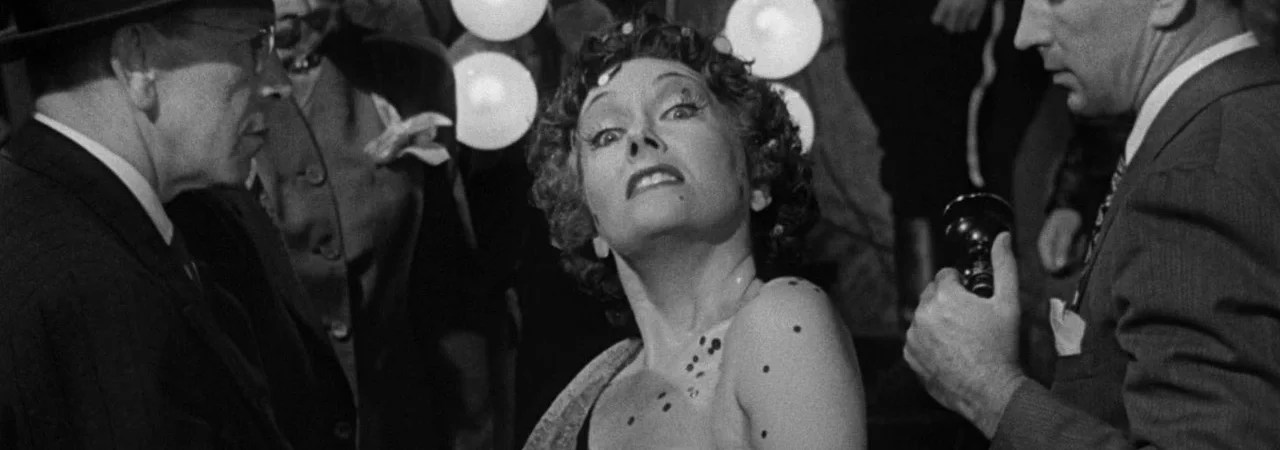
Discussing the 2026 Oscar nominations – BBC Radio Somerset

A live conversation had between myself and BBC Radio Somerset’s Breakfast show presenter Charlie Taylor about the 2026 Oscar nominations, announced the day before.

As might be expected from this kind of coverage we discuss snubs, surprises, likely winners and notable nominees. A moment of my mind blanking also leads to me committing the cardinal sin of claiming Irish talent as British (sorry to Ireland and Paul Mescal). You can hear the conversation by clicking the video link below!

The audio in the video was originally broadcast live on Friday 23rd January 2026.

LFF 2025: Retreat – Review

Release Date – TBC, Cert – TBC, Run-time – 1 hour 47 minutes, Director – Ted Evans

Eva (Anne Zander) arrives at a special community for deaf people, as she becomes more involved in the place Matt (James Joseph Boyle), who has been there since childhood, becomes more disillusioned with it and drawn to the outside world.

As I write this review, F1 has just been nominated for the Best Picture Oscar. The speeds travelled at in that film don’t provide nearly the same level of whiplash as the sudden sharpest of left turns that are the tonal shifts in Retreat. There’s a near sense of confusion from them as not only does the horror-tinted drama shift into a thriller but the main character appears to completely change.

Matt (James Joseph Boyle) has spent much of his life in a large communal house for deaf people. Not far from the giant mural of the retreat’s founder holding a child, he’s told early on that he doesn’t “have the trauma or outside experience like we do.” His interest in the outside world grows with the arrival of new member Eva (Anne Zander). Eva makes for our introduction to the world of this community, and the possibly dark goings on in closed rooms, alongside uneasy therapy sessions that eventually see her welcomed in more. In no time at all she’s indoctrinated with barely any questions asked.

However, these more threatening allusions are conflicted with the general tone and behaviour throughout the building that everything is fine, especially from leader Mia (Sophie Stone). Thus, the film eventually, a good deal of the way through, switches to focus on Matt with no real explanation as to why apart from shifting the narrative to focus on something different, too. It means that time has to be taken to start to connect with him more alongside push the new thriller sensibilities that the film has developed.

While making for a bumpy ride with too-sharp turns there’s still a watchable nature to a good deal of Retreat. It has enough to hold interest during its more consistent developments, but consistency throughout the whole run-time is something more difficult to find. The film as a whole appears to hide, or shy away from, its strengths which are largely confined to the background. There’s an interesting film at hand, which the all-deaf primary cast manage to capture rather well. But, the tonal shifts of the narrative step in and lead to very sudden changes that take some getting used to whenever they arrive.

A film that has its elements of threat and darkness, but confines them to the background, Retreat falters by sharply switching character, tone and narrative focus multiple times. While still holding interesting beats it’s a largely watchable yet bumpy ride.

Rating: 3 out of 5.

Airplane – Introduction

Originally intended as a film within a film, Airplane borrowed so much from one 50s disaster flick that the ZAZ creative team got the rights to remake it in order to get away with their spoof. As everyone was asking “surely, you can’t be serious?” the line that followed got everyone to relax about what the film would be, and famously changed Leslie Nielsen’s career.

I look into this and more production stories from Airplane in this introduction I gave for a special charity screening in November 2023, held at the former Bristol IMAX (now called the Bristol Megascreen) in Bristol Aquarium. The audio featured in the below video was recorded specially for it, based on notes that I had made before the screening.

The screening itself was raising money for homelessness charity BillyChip, which you can find more information on here.

Titane – Introduction

Back in the summer of 2023 I introduced a screening of writer-director Julia Ducournau’s body horror Titane at the Bristol Megascreen (at the time simply known as the former Bristol IMAX) in Bristol Aquarium. The video below features a specially re-recorded version of that introduction, read from what I had written before the screening.

Looking at how Guillermo del Toro and a dream about giving birth to a car led to a story of sexuality and gender identity through the lens of flesh vs metal, and Julia Ducournau’s empathic view of people who feel like monsters.

LFF 2025: High Wire – Review

Release Date – TBC, Cert – TBC, Run-time – 1 hour 45 minutes, Director – Calif Chong

Go-wing (Isabella Wei) spends her days studying and working at her dad’s (Ka-Wah Lam) takeaway with little time for herself, until she finds her desired path, secretly training to become a touring circus’ high-wire act.

2025 marked my seventh year of getting away with attending the London Film Festival and in that time out of all the films I’ve seen as part of the various editions few have got me excited for the future work of an actor and director as Calif Chong’s feature debut High Wire. A film which rises above its familiarity and flaws by the simple emotional push that it creates for us to invest in the central character.

Go-wing (a wonderful performance by Isabella Wei – who based on this performance alone I can’t wait to see more from) spends her days studying for a law degree, for which she’s recently missed an exam, and her evenings working in her immigrant father’s (Ka-Wah Lam) Chinese takeaway. Now nineteen she’s feeling more suffocated than ever, with no time to herself. Her social life is largely made up of interactions with former school friends when they come in to pick up an order. However, things change when a chance order leads Go-wing to a travelling circus with upcoming auditions. From there she finds herself training to be a high-wire act, in secret from everyone around her, especially her father who expects big things from his daughter – “I didn’t pay to come all the way to the UK, pay all that tuition, just for you to slave over a stove like I do.”

Yes, the beats of the narrative might be familiar, and it might not always be the most subtle when it comes to an occasionally intrusive score, but there’s a compelling rawness to the way in which it presents itself. Go-wing is an endearing character who holds our engagement as the film follows her trying to find a balance (no pun intended) in her life rather than simply develop her high-wire skills. There are a handful of likable chuckles to be found in this strand, and overtime some real punches of emotion. Multiple scenes had me unexpectedly tearing up, one argument scene strikes a real chord as it draws out its rising emotion. High Wire marked, for me, one of the most emotionally impactful films of 2025’s London Film Festival, and much of it is naturally ingrained in character and story.


So much of Go-wing’s character is caught up in personal emotion, feeling almost as a continuous reassurance from co-writers Chong and Jackie Lam that she’ll be alright in the end – but with the admission that, yes, she does have to go through the weight of her life as it is at the moment to get there. Taking on the different elements of it without the needed time, she tells her dad that she’s actually at a work placement helping her studies when she’s training with the circus, while trying not to disappoint multiple people.

From ignorant, mocking ‘friends’ and racist attacks on her home to the feeling that she needs to conceal her newfound tightrope-walking joy, not to mention the utter punch of looking at the loss of the central character’s former ice-skater mother with the simple quote “she moved to the moon when I was your age” there’s an underlying emotion to Go-wing and the film as a whole. The family tensions present, those who want to see her succeed and where she feels caught all play into the narrative making for a naturally rounded character and narrative.

For its emotional impact, and even the chuckles that it manages to raise here and there with some elements in the same vein as those which caused me to tear up, I found myself forgiving the familiarity and occasionally overdone beats of High Wire. There feels a personal film here from Calif Chong, one that brings the audience in to experience it alongside the well-channelled performance from Isabella Wei. There’s a likable, acknowledging and empathetic story here of someone finding their joy and expression. A solid feature debut that shows promise for star and director, I’ll definitely be keeping an eye out for what they both do next!

While its narrative might occasionally feel familiar and certain elements slightly forced, High Wire is easily forgivable because of the emotional connection it creates with Isabella Wei’s wonderfully performed central character. Creating both chuckles and emotional punches, this is an effective and promising feature debut.

Rating: 4 out of 5.