LFF 2019: Uncut Gems – Review

Release Date – 10th January 2020, Cert – 15, Run-time – 2 hours 15 minutes, Directors – Josh Safdie, Benny Safdie

A New York jewellery dealer (Adam Sandler) makes a number of high-stakes bets that could lead him to a huge windfall, however if won he must get around a number of forces to get the money.

Sitting down ready for Uncut Gems, the latest feature from Josh and Benny Safdie – following on from their acclaimed thriller Good Time – me and another critic began to discuss the career of Adam Sandler so far. She stated that “he’s just a lazy actor”, something which I myself agreed with slightly – it does seem like most of his choices in films have been those where he can play the same man-children and go on holiday at the same time. But also the point is in place that while Sandler’s audience grew up he, or at least his characters, never have. And while his comedy performances have often been relatively the same his rare dramatic performances have something else to be said for. Punch Drunk Love, which I consider to be his best film, and indeed performance, is a fantastic piece of work. And while I wasn’t a fan of the film many praised his performance in The Meyerowitz Stories. Sandler can do drama – proven by the fact that there’s already a fairly strong Oscar campaign around him for Best Leading Actor for this specific performance, even though when the offer first came to him to do this film in 2009 he rejected it.

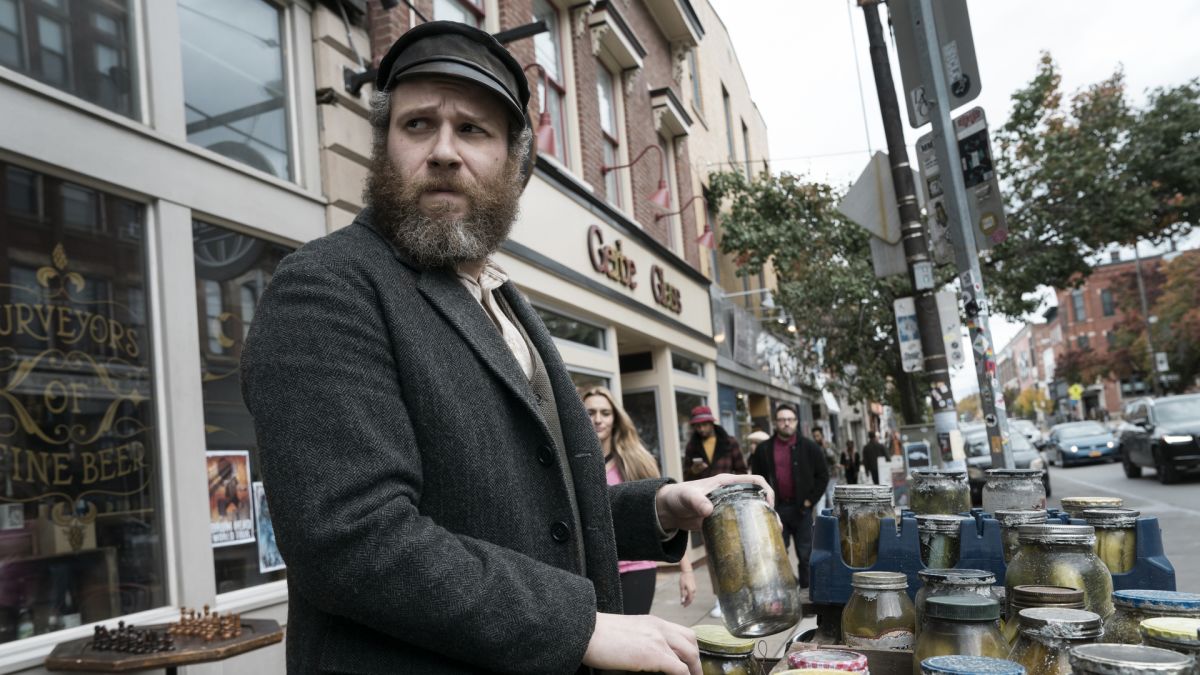
Sandler plays Howard Ratner, a New York jewellery dealer always looking to make more money, which as sprouted a slight gambling obsession. He buys to sell and sells to gamble to make more money, often through very high-stakes and unlikely odds. In fact much of the film revolves around a number of Howard’s highly specific bets, which could lead him to one of the biggest windfall’s of his life. However, there are various groups against him, some he owes money or products to, others who simply want something from him that he sells in his small , brightly lit store – contrasting with the dark nature of his office.

While initially it seems like Howard/ Sandler does nothing but shout and drop the f bomb, as the narrative begins to develop, and actually show itself, his performance does too. Forming into something much more complex and detailed, bringing the viewer into a world of high risk tension and unpredictability. The Safdie Brothers – who write and direct this feature – play with lingering on the nature of the film, how the narrative could go absolutely anywhere, not helped by their frantic, almost dizzying central figure. Forming a large, swirling cocktail of energy, stress and tension that almost leads the viewer into a sweat as they try to keep up with everything that’s going on, and the forces that surround the, what could be referred to as, antihero – if he even is any form of hero – of the film.

Amongst all of this there’s plenty of room for dashes of humour to be spread throughout. While the more direct attempts at gags don’t quite work the blunter, more conversational, quick-witted bursts do get a response. And that’s not to say that the other elements of comedy don’t always work, on particular scene set in an auction room is one of the pure highlights of the film, and allows Sandler to almost unleash the closest thing to his standard style of comedy, while still managing to raise some laughs through the desperate tension and panic of the scene slightly twisted for comedic effect. In fact it seems that once it properly kicks in there are almost no faults in Sandler’s performance, and the general flow of the film; the only thing he can’t seem to be able to do is dramatic/ serious crying.

Throughout the film Sandler’s character states “It doesn’t matter until the final minute” – in reference to a basketball game that he has multiple bets on. However, when it comes to the general shape and feel of the film this couldn’t be further from the case. Carrying on from the tension and rapid nature of Good Time the Safdie Brothers form a world of fast-paced nerves. Everything feels risky or as if it could lead down an even darker route. All this combining to create a purely enjoyable ride. The comparison of a film to a rollercoaster is definitely overused, however if there is one film for it to be used it’s this one. A genuine thrill ride that’s sure to get the heart racing and the viewer almost breathless by the end of it.

At the end of the screening, as the credits had rolled for a minute or two, the critic I was talking to beforehand turned to me and as we were discussing our thoughts on the film she said “I think that’s the best thing he’s ever done”. While I still think that Punch Drunk Love is Sandler’s best film and performance this is definitely close, and maybe on a re-watch would be better, it strikes as a film that rewards re-watches, potentially having missed a lot from being caught up in the racing nature of things as they quickly unfold. What starts off as a potentially questionable selection of ideas and a shouty, sweary performance, turns into one of the most tense thrill rides in years and a wonderful performance from Sandler. After all these years what he’s needed is character and direction – who would have guessed?

After the first 10-15 minutes the Safdie Brothers immediately snap their fingers and the audience are in for a brilliantly tense and unique experience. There’s nothing quite like it narrative and there certainly won’t be anything quite like it in terms of scale and stress any time soon. Wonderfully written and directed, just see Sandler’s performance for proof of this.

Rating: 4 out of 5.

LFF 2019: Miles Davis: Birth Of The Cool – Review

Release Date – 13th October 2019, Cert – 15, Run-time – 1 hour 55 minutes, Director – Stanley Nelson

Documentary looking at the life of jazz musician Miles Davis

“For him, not playing is like not playing anymore” says a friend of Miles Davis, arguably one of the most influential jazz musicians of all time, let alone the 20th Century, as he talks about the trumpeter’s second period of drug problems. Davis himself said “I put down the thing I love most, my music, and found myself falling deeper into darkness”. Birth Of The Cool – which shares a name with one of Davis’ albums – tells much of Davis’ life over it’s nearly two hour run-time. From childhood to death, via multiple run-in’s with drugs. There’s a lot that gets covered and often a fair deal of it leads to the film feeling longer than it actually is, beginning to drag as the focus is refined to one man’s entire life.

Much of the film is built into stages and sections of Davis’ life, mostly through each of his albums. The creative process that went into them, the build-up to the release and the impact that it had on his career. The decision to break this story down into such stages helping to make the film slightly more digestible overall. There’s a lot to show and there are some elements that are rather interesting, especially within the final hour as we see the gradual fall and eventual slight bounce back of this musical icon, something which the film really seems to want to try to get across. It almost seems at times like the creators don’t want to say a bad word about Davis, and so stray more to look at his albums and music rather than his personal problems – in fact it’s for such reasons that the film itself has a somewhat by-the-numbers feel to it.

In fact much of Davis’ music – whether through his own bands or those that he was a part of – features heavily throughout the film. Lining almost every minute. While the music itself is, of course, quite good the feeling can’t be escaped from that sometimes it simply feels unnecessary or out of place, especially during the more laid-back moments detailing the more emotional stages of Davis’ life. When this is the case the music often simply feels too upbeat to properly capture the tone that the film feels as if it’s trying to convey, alongside the fact that it feels overused, being used in the background almost all the way through the film, never really being given a break and sometimes beginning to feel intrusive.

Davis’ life is one that can’t quite be confined to one film – at least one documentary such as this, especially when done in a rather basic, by-the-numbers way. There are some interesting moments, especially in the final stages of the film as the various interviewees begin to properly reminisce about the final stages of their friend and colleague. However, overall there’s a lot missing from the film, and some things – such as the music in every scene – that could be used a bit less. But, for what it is the film is a perfectly fine piece, maybe for those less aware of Miles Davis and looking to know more about him, or just for casual watchers. But, fans of the iconic musician may feel that there’s something slightly lacking in this seemingly made-by-fans documentary.

Miles Davis: Birth Of The Cool is perfectly fine for what it does. While being relatively generic it does make some slightly interesting points, most coming from Davis’ own words, though his music does seem somewhat overplayed and unnecessary over the course of the almost two hour run-time of the piece.

Rating: 3 out of 5.

LFF 2019: La Belle Époque – Review

Release date – 22nd November, Cert – 15, Run-time – 1 hour 55 minutes, Director – Nicolas Bedos

An ageing man (Daniel Auteuil) goes through an experience that takes him back to the day he met his now distanced wife (Fanny Ardant)

La Belle Époque may very well be one of the best time travel movies where time travel never actually happens. Victor (Daniel Auteuil) is a depressed, ageing man. He feels that his life is going nowhere, and his love-life retreating, feeling a large distance from his wife Marianne (Fanny Ardant). However, one day he meets a young entrepreneur (Guillaume Canet) who offers him the chance to go back to his more youthful days. Through a company that he owns that builds set, hires actors and creates realistic, exact recreations of historical events for clients willing to pay thousands for their own personal escapism. While some figures choose to go back to the era of Nazi Germany or medieval history Victor chooses to be transported to 1974, the day he first met his wife, to be exact.

Victor, much like the viewer, finds himself almost immediately swept up within the warmly lit town square that’s built specially for him. There’s something about the look and relaxed feel of the set that somehow brings about a sense of familiarity – something which Victor instantly feels, along with a deep sense of nostalgia. He knows exactly what will happen, what will be said and when it will be said in the titular cafe where he and his wife first met. His wife in this case being played by a young actress called Margot (Doria Tillier), who when around he begins to break character of his younger self to tell her what she’s meant to say next, and how. It’s not long until Victor begins to fall for Margot, wanting to see her outside of the set, or as much as possible when on-set. The time he spends with her contrasting with the arguments he has with his wife, who he fears might want to separate from him.

As a whole writer-director Nicolas Bedos’ film is very much one about one man’s reflection. A wistful look back at his youth and why he fell in love in the first place. It’s relaxed nature helps it to simply overflow with charm, and makes the romance element of this rom-com feel far from forced. The comedy easily finding its way in too, with a number of deeply funny laugh-out-loud moments throughout, with the odd welcome chuckle thrown in from good measure too. Everything simply combines to create a welcoming and deeply enjoyable film.

The audience are put into Victor’s shoes and are carefully guided along the same journey. A thoughtful, imaginative, entertaining journey of reflection. Through his rises and falls the viewer gets behind Auteuil’s fantastic central performance – backed up by an equally strong supporting cast. He’s a deeply likeable character, a creation from the combination of Auteuil’s acting and the wonderfully sweet and finely paced screenplay. When everything comes together the final product is a deeply sweet and charming rom-com. Easily involving and overflowing with warmth, heart, laughs and emotion it’s a wonderfully put together and engaging feature that keeps the viewer in its gentle hold from start to finish of its calm and quick flowing run-time.

Filled with great performances La Belle Époque is a deeply warm, sweet and charming affair that throughout its humour, emotion and entertainment never forgets its core themes and ideas.

Rating: 4 out of 5.

LFF 2019: Knives Out – Review

Release date – 27th November 2019, Cert – 12, Run-time – 2 hours 10 minutes, Director – Rian Johnson

A private investigator (Daniel Craig) tries to find the true cause of a wealthy writers death by making his way through every member of his extended family

“A whodunnit like no one has ever dunnit” ran the tagline for much of the advertising for Rian Johnson’s exceptionally clever murder mystery. Knives Out very much lives up to this label in a number of ways. Not only does it feel fresh and unique, a fine new take on the murder-mystery detective genre that seems to be gradually reviving, but also the fact that at times it feels as if nobody has actually done the murder – living up to the other tagline of “Hell, any of them could have done it”. Something which the film leads the audience to think on a number of occasions over the course of its proceedings.

Throughout the entire fast-paced run-time of Knives Out the viewer is kept on the very edge of their seat. Leaning in further and further to the screen, as much as possible; simply to relish ever single clue and detail that the film has to offer. Jumping right into the plot with Lakeith Stainfield’s lieutenant Elliott interviewing members of the Thrombey family. A wealthy family descending from the recently deceased author Harlan Thrombey (Christopher Plummer). The family is made up of an insanely all-star cast including Jamie Lee Curtis, Michael Shannon, Chris Evans, Ana De Armas, Katherine Langford and Toni Collette – all of whom are having great fun being a part of this film. However, none more so than Daniel Craig as private investigator extraordinaire Benoir Blanc.

Blanc’s name itself sounds like one direct from an Agatha Christie novel, something which Johnson’s screenplay, and in fact direction, leans very strongly into. Feeling already like a classic of the genre, the status of which it’s guaranteed to instantly earn. Throughout the various twists, turns and red herrings that the film has to offer the viewer is invited to play along, double-guessing themselves, backtracking and – much like the flawed detective at the heart of the investigation – sometimes being purely uncertain as to who might have actually done the murder. All this coming from the intricately detailed and shocking nature of the story. At times you simply don’t want to breath so that you can savour every single element that each individual frame has to offer. This is cinema, pure, enthralling cinema that grips you from the very start. Commanding your attention and bringing you totally into another world that you just want to visit again and again – something which can easily be done, to notice the details missed the first time around. Much of this stemming from the intense originality that flows thick and fast throughout the entire narrative.

What makes Knives Out work so well as a fresh take is how well it uses simple conventions. Ideas that we all know and recognise, some left alone, other slightly twisted, to lead to the best possible response of not knowing what to believe and what not to believe, especially with such shadowy and potentially devious characters. Each individual figure having their own unique personality, helping to flesh everything out further and make an even more involving nature to the film as a whole. As mysteries begin to layer – never getting in the way of each other – and the film becomes much more of an enthralling rollercoaster, the personalities still shine. Nothing ever vanishes, is forgotten about or simply lost track of, everything has order amongst the chaos of the investigation – something which is used for full impact in the third act, where the viewer begins to wonder whether there even will be a big reveal.

Everything masterfully blends together to create a finely made cocktail of mystery. One that engages, entertains and powers through with full force from start to finish. Never loosening the tight grip that it so strongly holds on the viewer at any point over the fast-paced, quick-flowing, insanely clever, tension filled run-time. Knives Out is a pure, cinematic joy and definitely one of the best films of the year. A true modern classic.

From start to finish Knives Out is a brilliantly clever and fantastically tense murder mystery. Filled with great performances from a cast that are clearly having great fun that helps to get across the energy of the piece. Overflowing with detail and gloriously involving it’s nothing less than a truly phenomenal piece of work.

Rating: 5 out of 5.

Frozen II – Review

Cert – U, Run-time – 1 hour 43 minutes, Directors – Jennifer Lee and Chris Buck

Elsa (Idina Menzel) and sister Anna (Kristen Bell) follow a mysterious voice into an enchanted forest after an unknown threat attacks and removes all elements from their kingdom

Back in 2013 Frozen-fever (not the short film featuring characters from the film) swept the world. The soundtrack flooded cars and homes, kids had new favourite characters and the inescapable Let It Go still remains an earworm to this day – something which the sequel makes reference to. No surprise then that the film went on to become the highest grossing animated film of all time at the box office, once the fifth (now the fifteenth) biggest film of all time the film went on to gross over $1.29 billion worldwide. Therefore there’s no surprise that Disney announced that a sequel would be on the way, but one that’s a rarity for the studio. A theatrically released sequel, not Direct-To-DVD, even more so a theatrically released sequel to a Disney princess film.

Frozen II opens with some relatively conventional ideas for such a sequel – Kristoff (Jonathan Groff) is getting ready to propose to Anna (Kristen Bell) – although not quite being able to get his words right – who, along with sister Queen Elsa (Idina Menzel), are getting back into the swing of things within the kingdom of Arendelle. Everything seems laid back and relaxed, to the point where the sing about how some of the best things in their lives never change. However, everything begins to change when Elsa begins to hear a mysterious singing voice, soon everything in Arendelle changes as the whole landscape changes, the water and light all disappearing too. As the entire kingdom is thrown out, Elsa, Anna, Kristoff, Sven and Olaf (Josh Gad) all venture to an enchanted forest where they hope the answer to saving their home lies.

In many ways the first film was an animated Broadway show. Grand musical numbers, adventure and fairytale plot. The sequel might not capture the same Broadway feel in terms of its musical numbers, not a great deal of which stand out; although Into The Unknown has been understandably labelled as this film’s anthem, and Show Yourself is also a quietly great track. In some ways Frozen II is more deeply rooted in fantasy than its predecessor. The almost mythical personified workings of the enchanted forest – with wind that seems to have a life of its own, which quickly gets named Gale – creates a vivid world of history and fantasy both for the characters and the audience who find themselves brought into the piece with relative ease. Helped by the strong animation and wonderful visual style and flair that the piece holds, bringing about a slightly autumnal twist on the wintry look that the majority of the first feature held.

There’s a fair deal of simplicity to the general plot and ideas that are presented within the sequel, some slight retreads and conventional ideas amongst the more bolder plot points that are put across – mostly those coming from Elsa’s individual personal journey through her past and powers. Anna still by her side and equally strong and fearless, determined not to loose her sister, whose powers could easily cause as much danger as the forest they find themselves in. Jennifer Lee proves in her screenplay and direction that these are not just one-hit-wonder characters. They are strong, passionate figures who are not to be relegated to a Direct-To-DVD sequel. They are deserving of the sequel that they get and very much dominate the screen with power and style far more than the Disney princesses of old. And there’s a lot to be enjoyed about when in their presence.

The scenes with Elsa simply belting out her signature songs, and those with more action, showing genuine consequences for each character, are the highlights of the film. Truly standing out amongst the slight convention and tangents presented to show the whereabouts of the likes of Kristoff – who almost seems to disappear for a large proportion of the narrative – and at times when delving into the general backstory and history of Arendelle and the forest in which much of the plot unfolds in. However, despite this there’s still a fair deal to like about this sequel. It’s bold and occasionally loud, and proud of that fact. It knows what it wants to do and while there’s a brief feeling once or twice that the film might begin to stagger its overall fantasy nature and passionate characters bring it through to a fine follow-up that manages to avoid being simply labelled as a cash-in thanks to the heart that flows through it.

The storm might not quite rage on in this sequel however the highly creative feel, passion and heart that runs through are enough to keep Frozen II afloat. Making it a worthwhile, finely animated feature that helps to develop some of Disney’s strongest, and most likeable, characters.

Rating: 3 out of 5.

21 Bridges – Review

Cert – 15, Run-time – 1 hour 39 minutes, Director – Brian Kirk

A New York detective (Chadwick Boseman) has less than four hours to hunt down two drug-carrying cop killers before they escape Manhattan

“Well, that escalated quickly” is one of the things that comes to mind in the build-up to the more than large-scale manhunt that makes up 21 Bridges. When two criminals (Taylor Kitsch and Stephen James) arrive at a wine shop to steal 30KG of cocaine what they actually find is at least 300, totalling to millions of dollars worth. However, when multiple policemen turn up at the scene they let loose with their weapons and shoot 7 officers dead, alongside the security guard at the shop. It’s not long until ace detective Andre Davis (Chadwick Boseman) is called in to find the two men who committed this atrocity. In an even shorter amount of time the NYPD cop, despite protests from the FBI, is given full control of the situation; shutting down every entrance and exit to Manhattan for just under four hours in the hope of capturing the two threats.

It’s such a response to this very early on event that also connotes that fact that 21 Bridges – formerly called 17 Bridges until one of the writers realised that there are actually more entrances and exits to the heart of New York City than they initially realised – is a film that seems to want to be taken more seriously than it actually is. Focusing on the gory details of each gun battle between cops and criminals, every escape and the frustration of both parties with what seems to be an attempt at lingering insight. However, the tension that the film wants to create to lead to it being taken as seriously as it would hope is never properly built up, a problem created by the decision to show the perspectives of both the heroes and the villains of the piece.

As the two criminals, Ray and Michael, try to get away, after getting the money they’re owed for stealing the drugs, after the entire mission almost goes wrong, they very much form the central focus of the film. Most of the events seem to be shown from their perspective, as they try to fight off police to escape the city, even if it means running for the rest of their lives. Meanwhile Boseman’s attempts – assisted by Sienna Miller’s feisty narcotics expert Frankie – to stay on the tracks of the duo, always seeming one step behind, appear lacking in tension due to the fact that the audience knows where the pair is; the film not quite leaning into the stresses of Andre’s position and instead bordering on just a frantic rush across Manhattan to find the two criminals.

Amongst all the perfectly serviceable action and the competing perspectives there is undeniably a slight sense of interest within the proceedings. While there would likely be more effect, tension, and potentially mystery, if everything were to be shown from one perspective, the plot plods along with relative consistency, helped by a somewhat concise 99 minute run-time, partly helped by the fairly interesting direction that the film goes in the third act, minus a rather disappointing ending that tries to bring more quiet plot-points to the forefront as if trying to make the film seem clever. But, the focus of the film and relative intrigue that it occasionally creates just about make it worth it. It might meander and stagger throughout its run-time; not helped by the combined use of two perspectives in a not quite cat-and-mouse chase style.

The tension might not be there, however the action is, at times, fairly well done. Mixed with some decent performances, Stephen James often stealing his scenes and making a further name for himself after If Beale Street Could Talk, and his fantastic lead role in 2016’s Race. There’s much confliction and passable ideas throughout 21 Bridges. While it has some moments that help to bring the audience into the world for short bursts of time it does sometimes feel fairly middle of the road and lacking in tension. Overall creating something that wants to be braver and taken much more seriously than it is. It feels like a watered-down version of what it could have been.

While it has some promise the attempt to make a more serious and layered film means that 21 Bridges suffers, it has some good ideas and potential but its early set-up and conflicted perspectives mean that it falters and doesn’t manage to live up to the darker, tenser film it could be.

Rating: 3 out of 5.

Harriet – Review

Cert – 12, Run-time – 2 hours 5 minutes, Director – Kasi Lemmons

Biopic of Harriet Tubman (Cynthia Erivo) who after escaping from slavery led multiple missions to free others from the same lifestyle through the underground railroad.

The story of Harriet Tubman is one that is undeniably remarkable. Escaping from a lifetime of slavery in 1849, and then frequently returning back to Philadelphia to free not just her friends and family, but as many slaves as possible – never once loosing a life. The shoes of this character are evidently big ones to fill, however Cynthia Erivo, in her first feature leading role, absolutely commands every scene in which she appears. Showing the adamant hope and determination of her lead character in almost every frame she appears in, alongside singing a rather good song in the credits.

While Tubman’s feats are certainly astonishing, to say the least, the way that director and co-writer, along with Gregory Allen Howard, Kasi Lemmons tackles the story an element of repetition almost begins to come into play. As Tubman, formerly known as Minty, begins to make multiple returns to Philadelphia to free more slaves in the middle of the night – soon gaining the name “Moses” – the film begins to dwell on the multiple escapes to freedom and the various routes taken through the gradually forming underground railroad. As the escapes become more frequent and detailed the feeling of repetition begins to sink in. And what was once a relatively tense and engaging element of the film turns into a somewhat lacking and at times lengthy piece near extended montage.

While this is something that almost begins to run throughout the entire rest of the film – such ideas feeling needlessly extended and not leaving time, or space, to focus on details without a great deal of focus and insight. Points such as Harriet’s general life in Philadelphia; something which is briefly shown, to establish her relationships with slave-freedom leader William Still (Leslie Odom Jr.) and boarding-house owner Marie (Janelle Monae), both of whom offer kindness and solace, despite Harriet’s continuing sense of longing for her friends and family. Despite her new friendships and life of freedom she still feels the need for those who were around her when she was a slave, setting out to free each one – something which takes up the majority of the run-time of the film.

It’s not until the end that we soon begin to get more information and detail into Harriet’s life in regards to the underground railroad, and her efforts outside of her multiple missions to eventually free over 70 people. It’s such moments that lack detail and almost seem to be rushed, so that the film can wrap up and try to stick to as close to two hours as possible. Nonetheless the film feels overlong and repetitive, leaving it with a feeling less powerful than the one that it possibly should have.

While at times it seems as if Harriet is aiming for tones and stylings similar to revenge westerns such as Clint Eastwood’s Unforgiven – possibly remaining from initial attempts to make a biopic about Tubman with Allen Howard’s first screenplay for the film – while at others it seems to simply wander through the woods, much like its characters seem to do on some occasions, hoping to reach a point of safety. It occasionally feels rather tame, and therefore as if it’s being held back. And while some points are interesting and have enough for the audience to engage with the world as a whole, and with Harriet as a character – not so much anyone else due to little screen-time, despite the collection of good, passionate performances – the extended points do get in the way and create an overlong feel to what could be a more promising and dramatic film.

While it does have some interesting and tense moments, helped by Cynthia Erivo’s steadfast and passionate performance, the repetition and lengthy feel to much of the second act does get in the way of what could be a more promising and gripping biopic of a truly incredible woman.

Rating: 3 out of 5.

LFF 2019: Greed – Review

Release date – 21st February 2020, Cert – 15, Run-time – 1 hour 44 minutes, Director – Michael Winterbottom

A British retail tycoon (Steve Coogan) takes over almost all of a Greek resort to host an extended party for his 60th birthday.

Sir Richard “Greedy” McCreadie is a name devised specifically for a villain. It also happens to be the name of Steve Coogan’s British retail tycoon in Michael Winterbottom’s latest satirical feature. Throughout the film Coogan’s fake-ghost-white toothed multi-millionaire is seen to be taking over almost the entirety of a Greek holiday resort for a lavish 60th birthday party. Winterbottom’s screenplay, with additional material from Sean Gray, is very much taking aim at the likes of Sir Phillip Green. McCreadie is followed by the astounded and perplexed writer of his biography (David Mitchell) throughout the film. Mitchell’s character goes round the individual friends and family of McCready, travelling across the world to the sweatshops that supply the cheap clothing for his fashion brand and shops, many of which have failed over his many decades in business.

It’s made clear that McCreadie is very much your standard unaspirational satirical business owner. Only in it to make more money for himself, not thinking about the welfare of other people – at one point during footage from a past court trial he’s told that one failed brand led to “the loss of 11,000 jobs”, to which he bluntly shrugs off with “most of those jobs were part time”. It’s the distinct lack of care, and very much the frivolous spending of such a liquid character that brings about a number of the laughs in the film. It almost seems that everything is played for laughs, which helps with the sense of ridicule that it feels the film is trying to get across – Coogan going as far to almost be doing his best Terry Tibbs impression; the rest of the cast, including the likes of Isla Fisher as Richard’s ‘sort of’/ ‘for show’ wife and Asa Butterfield as the estranged son, understanding the stereotypes that make up their characters and put it into their performances.

However, despite the constant streak of ridicule some of the biggest laughs come from the plainly stupid and absurd lines of dialogue – of which there are a fair many. Often distracting from the gags that do go a bit too close, or sometimes just over, the line; one specific running gag being McCreadie’s constant demands to have a large group of refugees removed from the beach just so he can build a colosseum to hold an event in on his birthday, Tim Key frustrated in charge of making the large structure despite the lack of effort from anyone else. Alongside jokes around sweatshops and various other similar areas there are a number of near the mark jokes, some of which are slightly successful, while others create a feeling close to a cringe that stops the flow of the film and at times almost brings it to a dead halt.

The only other thing that comes close to such a feeling is when Winterbottom attempts to bring in a much more dramatic tone – almost the polar opposite to the tone of the comedy beforehand – in the third act. With less frequent comedy and the feeling of a rather forced tone, as the main party begins and things are wrapped up; despite there not being much plot to actually wrap up, the film does begin to drag, feeling as if it could be cut down close to 90 minutes than the 104 minute run-time that it actually holds. However, what comes beforehand is a fairly funny satire that, while not having a range of ideas, just about manages to keep its head above water, even if there are some lacking patches along the way.

Much like the investments of the main character the gags in Greed are very hit or miss, some possibly stepping a bit too far over the line. While the drama doesn’t quite work what does is when the film lets go and simply goes for the stupid lines of dialogue that really create the actual laughs.

Rating: 3 out of 5.

LFF 2019: Nocturnal – Review

Release date – N/A, Cert – N/A, Run-time – 1 hour 26 minutes, Director – Nathalie Biancheri

A man in his 30’s (Cosmo Jarvis) begins to form a close bond and relationship with a schoolgirl (Lauren Coe)

The basis of Nathalie Biancheri’s narrative feature directorial debut is a rather simple one. A man in his early 30’s (Cosmo Jarvis), after tensions with his partner begin to rise, and she storms out of his flat in the middle of the night, begins to form a relationship with a schoolgirl (Lauren Coe). Pete’s life is one of repetition and little excitement, he spends his time as a self-employed painter and decorator, before returning to his drab and barely decorated flat. However, his life seems to change when he meets schoolgirl Laurie. His interests appear to immediately shift, almost forgetting his girlfriend entirely in favour of this young figure who grabs his attention from first sight.

It would be easy to tag this film as creepy and just plain unacceptable, however, somehow for much of the short run-time the film avoids stepping into areas of discomfort. Instead there’s something rather interesting about the piece and the way that it handles its themes. The screenplay, and indeed the performances, is subtle and considered. The film itself feels somewhat relaxed, helping to bring the viewer into the film, and wanting to see what happens to the characters. Characters who as they develop begin to introduce elements of tension into the film with their crossed and conflicting intentions and feelings. In fact the only major moment of discomfort is when Laurie, playfully flirting with her new, older, friend says “33, like Jesus. Better than Jesus”. It’s this praise and flirtation that brings in a sense of unease and worry as to where the film might go. However, as the film proceeds it goes back to it’s initial relatively calm, not too challenging, tone that just about gets away with its themes. Being more interesting instead of inappropriate.

Jarvis’ central role not only solidifies his status as one of the next big names in British acting but shows a layered and thoughtful performance. One that invests the viewer who almost feels the need to try and unpick the slightly mysterious figure that they see on-screen. Mixing in hints of anger, confusion and almost a sense of loss – something which Coe gets across in her performance, but to connect more with her own generation and with rather different thoughts for her character – which further highlights the laid-back nature to the quieter scenes involving the central pairing.

Much of the film is quiet, very conversational and thoughtfully paced. It might sometimes not go quite further than the general basis and themes that the plot entails, however there are one or two surprising areas to which the film goes. And with it all done in the short, fairly quick 86 minute run-time the film is concise, does what it does and does it fairly well. With good performances and a lack of creepiness that is alone to be commended it’s a decent and quite interesting piece, especially for a directorial debut from a director who looks set to bring about some very interesting naturalistic British cinema in the years to come.

While at times it might seem somewhat basic Nocturnal is an overall good watch. With an interesting tackling of themes and ideas, and good performances it’s worth it just for the way that it avoids creepiness and the acting and directing careers that it will surely launch further alone.

Rating: 3 out of 5.

LFF 2019: The Painted Bird – Review

Release date – 27th March 2020, Cert – 18, Run-time – 2 hours 49 minutes, Director – Václav Marhoul

A young Jewish boy (Petr Kotlar) must fend for himself in the hostile landscape of World War 2 Eastern Europe.

Writer-director Václav Marhoul has claimed about his latest feature – his first for 11 years – that his decision to make it in the Interslavic language (the first feature film ever to do so) was made so that no Slavic nation would nationally identify with the story. Which seems like a good tactic as it turns out that almost every character in The Painted Bird (based on the novel of the same name) is a terrible, terrible person. Almost every single figure that Petr Kotlar’s young character, who for almost the entire film remains nameless; simply labelled as “A Boy”, comes across feels the need to beat and abuse him, and not just the Nazi soldiers who attack any Jewish person they come across.

Kotlar’s character, who’s almost always on-screen, finds himself walking the harsh landscapes of a cold, desolate Eastern Europe during the heights of World War 2 after his aunt dies, his parents having sent him away to avoid antisemitic attacks. For the remaining two hours and forty minutes the central figure finds himself coming across a range of different people, taking residence with each of them and being abused and effectively tortured by each sadistic mind he comes across. You’d think that there’s only so much child abuse, torture, attacks, murder, sexual abuse and much more that you could put in an almost three hour film, however at times it seems that Marhoul thinks otherwise. Yet, somehow he’s managed to bring some fairly big names such as Harvey Keitel and Stellan Skarsgård on board.

Amongst all the drab and lengthy sequences that the film has to offer, the dehumanising nature of which is enhanced by the black and white nature of the film – despite almost always seeming as if it’s in colour – and the cold, isolated feel to every scene and landscape that the main character comes across. There are admittedly some rather powerful scenes – seeing a large group of Jewish people trying to run for their lives from a train likely bound for a camp as various Nazi soldiers mercilessly shoot at them is deeply effective at creating a helpless sense of emotion. One that contrasts well with the, at times, rather boring nature of a number of other scenes and ideas that the film has to present. Much of it told through a relatively episodic nature, as the boy goes from place to place, person to person and generally seems to start a new chapter and restart multiple times – potentially something carried over from the novel of the same name, which the film is adapted from?

It’s easy to figure out part way through the first act that The Painted Bird is a very arthouse film for a very specific, rather niche audience. Who that very specific, rather niche audience is I’m not quite sure. But then again the overall lengthy nature doesn’t help, the feeling that the film could do with some editing, especially during the longer scenes and extended sequences, It all makes for the film being a mixed-bag. Leading the final product to be something that can be appreciated and simply just watched rather than properly liked, it certainly can’t be enjoyed due to the subject matter and overall tone of the piece. I’m certainly not the target audience, whatever that audience might be, and this, if there is any type of film that isn’t my type of film, probably isn’t my type of film, so can I really be a person to give an opinion on it, probably not? But, while it has some good points and there are a number of merits throughout, The Painted Bird is a very, very long film, the length not quite helped by the highly bleak and depressing tone and feel of the piece.

The Painted Bird is a long, long film and often one that, while holding some powerful and effective moments; which are sparingly used for effect, is too bleak and depressing to properly engage with and feel a part of the world. The style can be appreciated more like ‘liked’. However, as I say, if there’s any, this certainly isn’t my type of film.

Rating: 2 out of 5.