Writer, director, producer and actor Jenna Suru joins me to discuss her upcoming feature debut The Golden Age – which is premiering at the London Independent Film Festival later this month.
The Golden Age can be followed through its Twitter account. Tickets for the premiere on Friday 13th March, followed by a Q&A with Jenna, at the London Independent Film Festival, which the film is opening, can be booked here.
A corporate environmental lawyer (Mark Ruffalo) takes on one of the biggest chemical companies in America when it’s revealed that they’re poisoning the water of a town in Virginia
Dark Waters is a shocking film, there’s no denying that. There’s something about seeing the rotted teeth and insides of a cow, due to poisoned water, that only begins to start off the true effects of chemical giant Dupont dumping chemicals into the water of Petersburg, Virginia; affecting the health and lives of those living there. As you learn more about the company over the course of the film it’ll possibly make you think twice before next using a frying pan – even if not made by part of the company – or even drinking water. But, Dark Waters doesn’t dwell on the shock and affects of the knowing poisoning. Instead it focuses on the way it pushes and frustrates corporate environmental lawyer Robert Bilott (Mark Ruffalo).
Bilott finds himself representing farmer Wilbur Tennant (Bill Camp) after 190 of his cows are killed from the water in the stream that runs through his farm. While the film has a number of good performances from big name stars it’s Camp who steals the show in every scene in which he appears. Robert finds himself going against not only one of the biggest chemical companies in America at the time, if not the world, but also one of the companies that his firm, of which he is close to being made a partner of, represents. When the repercussions of this lead to tense relationships with those around him, including with his wife (Anne Hathaway) things begin to take a turn for the worst; especially when it comes to the severity of the full extent of Dupont’s actions.
As with Tom McCarthy’s Best Picture winning Spotlight back in 2016 sometimes the most action can be found in someone running to a photocopier, or possibly in this case Ruffalo foraging through stacks of old documents in order to find data and evidence relating to Duponts actions. There’s a fair deal of tension to be found within such events, especially within the way that director Todd Haynes captures this with limited, yet effective camera use. Often using a wide-shot or birds-eye-view to capture the enormity of the situation at hand.
Despite this Dark Waters lacks the tension, or perhaps suspense that a film like this seems to want. It doesn’t quite have the captivating intrigue of a film like Spotlight, or other legal dramas in a similar vein. While there are some interesting points there are occasionally moments which seem to pander or go on for too long, leaving the gap until the legal disputes – the highlights of the film – much longer. It’s such legal moments, battles in court and the true focus on the feuds between the company and citizens and lawyers, and indeed lawyers within the firm having something of a civil feud, that are the most interesting. Bringing the viewer into the world as Ruffalo’s situation becomes increasingly tense and prolonged over many years.
A prolonged feeling is something which does lie in some of the scenes of the film. Some seeming slightly too long and giving the film a feeling that it might be a bit too long itself. This is admittedly a slightly slow-burn, and while in some scenes this is effective in others it does seem to hinder the progress. Scenes that could do with slightly faster pacing to heat up the ‘action’ that’s unfolding on-screen. To further intensify the situation and make for a more engaging and intriguing story. While there’s a fair bit to enjoy within the film, there’s a fair deal that could be improved with some fast pacing, which is possibly the biggest downfall of the film. While the performances, direction and screenplay as a whole are good. The overall pacing is somewhat slow at times, which does prove damaging during some scenes and the overall feeling of the run-time of the film. There’s a fair deal of interest and intrigue in the film, however there are one or two things that prevent full impact.
Dark Waters is definitely an interesting film, and there are a number of shocking moments. However, the slow pacing of some of the non-legal moments do prevent from a full-punch impact.
After escaping an abusive relationship Cecelia (Elisabeth Moss), believes that her ex-boyfriend (Oliver Jackson-Cohen), who has recently committed suicide, is somehow stalking and terrorising her in an invisible form.
The Invisible Man is a title commonly associated with the ghouls and grim reapers of 1930’s horror cinema, amongst other classic Universal monster horror titles. We’re used to seeing the figure with his face wrapped in bandages, with thick glasses in the middle and donning a suit or smoking jacket, alongside the standard gloves. However, in an age where horror is becoming more of a social commentary, taking elements of every day life and intensifying them for effect – look at the likes of Get Out, Unfriended and even Hereditary – The Invisible Man preys on the idea of fear of what we cannot see.
In the extended opening sequence we see Elisabeth Moss’ central character, Cecelia (Elisabeth Moss), attempt to silently escape from the lavish shore-side home of her boyfriend, Adrian (Oliver Jackson-Cohen). The scene is filled with tension, her actions and behaviour suggest that she’s escaping an abusive relationship, her desperation and the fact that the house is flooded with CCTV adding to this. However, when she escapes there’s no relief, this is only the start, and we know it. Something is bound to go wrong, or rather get worse, and so the rest of the film is equally suspenseful.
As Cecelia is getting back on her feet, going out into the world after finding shelter in the house in the friend (Aldis Hodge) of her sister (Harriet Dyer), she finds out that her ex has committed suicide. However, after this news she finds herself being stalked and terrorised by an invisible force which she believes to somehow be her ex. Cecelia who after escaping from her life of isolation and domestic abuse already obsessed with a fear of being stalked and observed round any corner, or through any camera now fears that there’s something, or someone, watching her in every room. As attacks begin and her relationships with other people are tested Cecelia slowly begins to break down. The abuse she suffered when in a relationship restarts, both physically and mentally.
As her other relationships are viciously torn apart the horror of the film doesn’t lie in jump-scares – although there are a number of effective jump-scares throughout the film – but in the high levels of worry and unease that are in almost every scene. As Cecelia’s mental state begins to deteriorate the true extent of the horror is shown. This is not a film that examines a descent into madness; Cecelia is never mad, she’s desperate to end people perceiving her as mad. The audience knows that there is something following her, that’s made clear, it’s those that don’t believe her. And when mixed with Elisabeth Moss’ commanding central performance the nature of the film is often genuinely horrifying. How can you tell how good her performance is? When her hands shake with fear it looks real instead of forced, as is often the case.
Moss shows mass levels of fear that only increase as the titular monster seemingly lingers in every corner, despite not being present even the audience can somehow see it. Her screams and tears are far from the cliches of a number of female characters in horror films, especially in the likes of classic 1930’s Universal titles – after all we are now far from this age, and this is proof that the times have been changing for the better. This is a slightly unconventional character for this style of film, however the background and arc make for a unique and engaging piece. Bringing the viewer in with an interesting study on her behaviour and responses.
The idea of the fear of what we can’t see is effectively used and never feels gimmicky. Especially during moments of attack the impact of the film is often flinch inducing, even when nothing bad is happening. Thus creating the high levels of unease and worry that linger in every corner of every room – somehow making open spaces all the more tense.
Director Leigh Whannell shoots a number of action sequences from the possible perspective of the unseen attacker, however even this is sometimes doubted as he could be anywhere in the shot, or through CCTV cameras. By doing this the action and horror are escalated, Whannell having experience in both fields with his previous film Upgrade, and work on the Insidious franchise; of which he directed the third instalment. Combining both, often at the same time, he makes for an even more intense and almost edge-of-your-seat set of events. Overall the entire cast and crew manage to create something truly unique and suspenseful within The Invisible Man. Bringing a new style and edge to the modern trend of socially inspired horror films. Carrying tension, worry and pain throughout, led by a fantastic performance from Elisabeth Moss, this is truly something special, and not to mention fantastically tense and terrifying.
Elisabeth Moss dominates as the lead in this wonderfully unique, carefully crafted take on The Invisible Man. Something highly, and successfully, contemporary, this is a horror about the monsters of domestic abuse, a theme which is strongly held throughout and helps to add to the suspense and worry that the film so tensely holds.
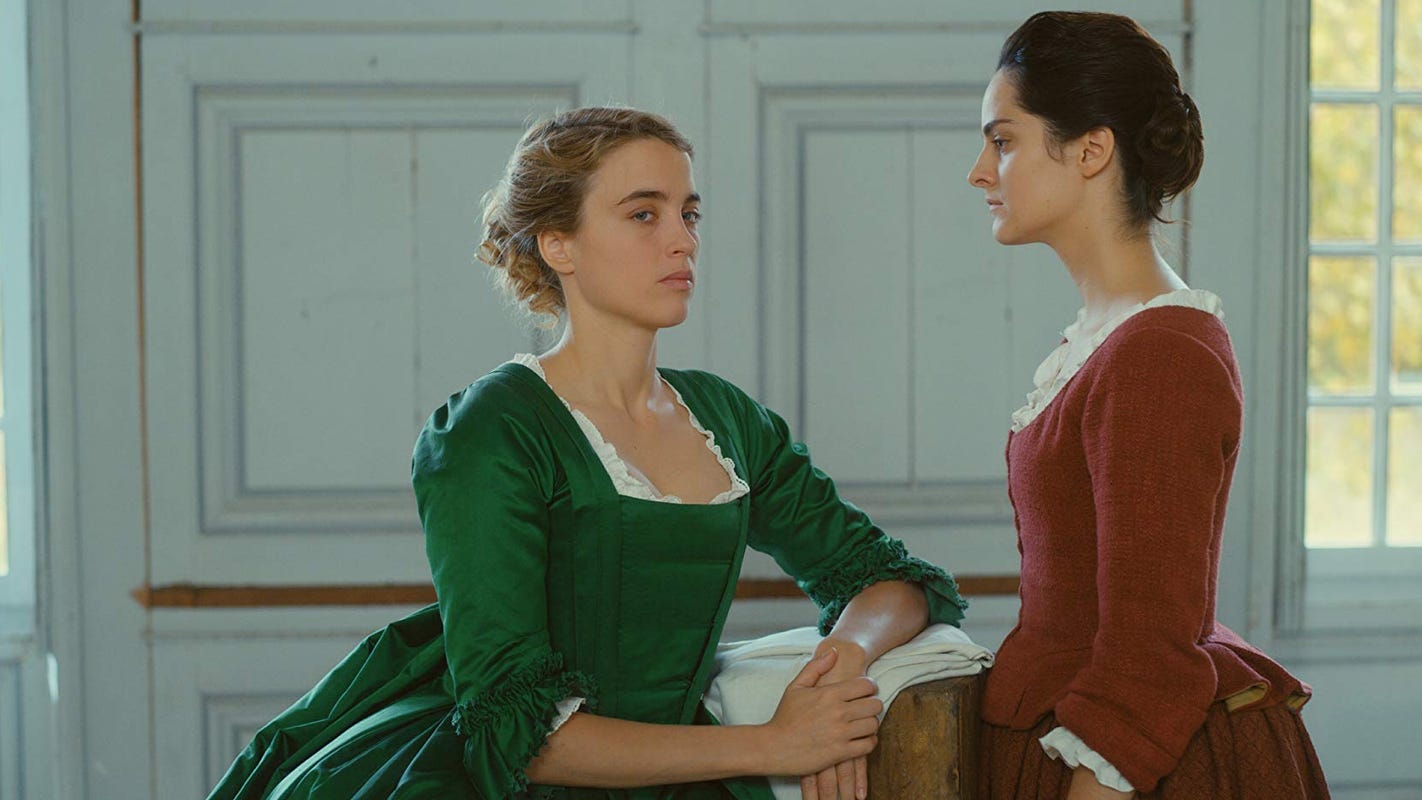
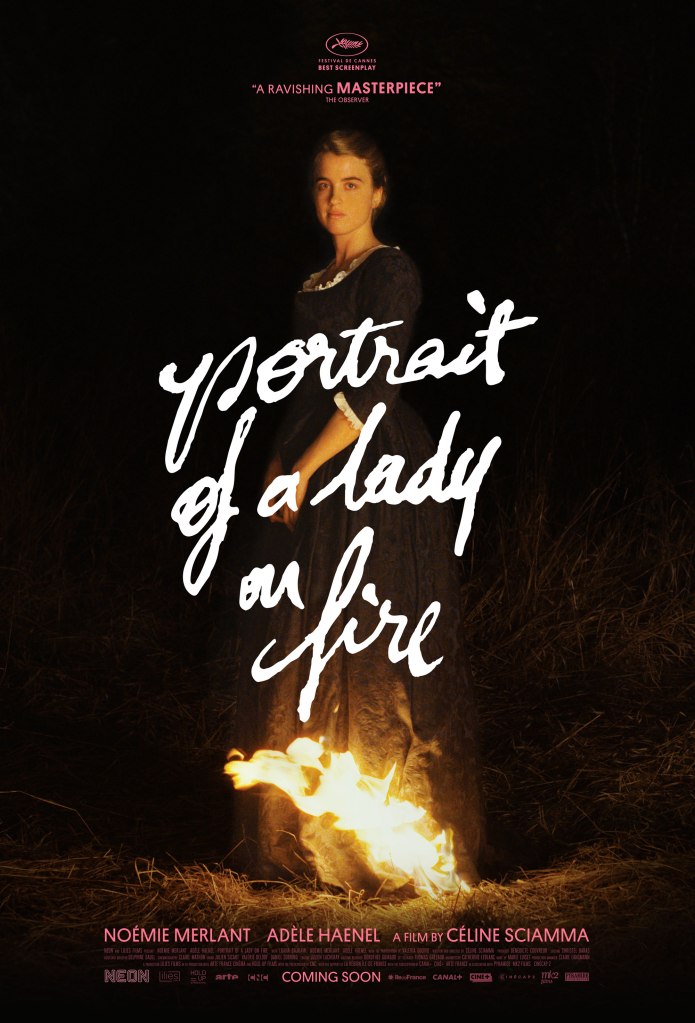
A painter (Noémie Merlant) closely observes a bride-to-be (Adèle Haenel) in order to make a portrait for her wedding without her knowing.
Portrait Of A Lady On Fire is a work of art that communicates its points through a story about communication through art. Many of the interactions between the two central characters, Marianne (Noémie Merlant) and Héloïse (Adèle Haenel), are based around various arts; such as song, writing, storytelling and; more than anything else, art. The reason that the two meet is due to Marianne being commissioned to paint a portrait of Héloïse for her upcoming wedding. However, Héloïse is not to know about this, so Marianne must observe her closely by day in order to create the portrait in secret.
As the two begin to spend more time together their relationship, instead of getting closer, begins to open. The beauty of writer-director Céline Sciamma’s screenplay is that it never asks ‘will they, won’t they?’ It asks ‘when will they?’ Throughout the film the viewer is left in breathless suspense as the pair wait for their moment to show their feelings. The question is how and when. From the moment they meet it’s clear that there’s love and passion between them, the film doesn’t hide this – and neither do the truly mesmerising performances of both Merlant and Haenel. Love and passion which burn bright throughout the film in a deeply poetic manner. If there’s a film that sums up the idea of something being ‘poetic’ it’s very likely this.
With a rather small cast there’s a minimal amount of dialogue. A number of scenes simply focus on Marianne sketching the rough outline for her painting, or carefully sweeping the colours onto the canvas. Even the character’s longing gazes and the lingering shots of the wonderfully shot landscapes – thanks to the stunning cinematography – manage to keep the viewer in awe throughout the entire film. There’s an honest delicacy that lies throughout the entire film when it comes to Sciamma’s direction. What brings this honesty is the fact that this is clearly a film told entirely from the female gaze – almost every single figure who appears in the film is female. They understand what the film is aiming for, what Sciamma wants to achieve with the finished piece and the collaborative effort shines. Forming a stunning feature that captivates the viewer from the the very start to the very end. It would be very easy to spend many more hours with these two characters, in fact even just in the world of the film through the gaze that events are seen through.
Throughout there are many moments that feel reminiscent of Julian Schnabel’s At Eternity’s Gate (one of the best films of last year). However, instead of focusing on the harsh and angered breakdown, exclusion and isolation of the main character, Portrait Of A Lady On Fire focuses on the increasing adoration and revealing passion that the film displays. The moments of silence as sometimes all that can be heard are the natural surroundings, such as the crashing of waves, are some of the most effective moments of the film. The feeling that everything in the film is naturally happening and that what you’re watching is truly in the moment adds to the breathless suspense and hope that you feel all the way through the relationship. Everything comes together in the best possible way to create something authentic, genuine and heartfelt.
Never do any of the actions on-screen feel rushed or hesitant. Everything is perfectly timed and balanced so to emphasise the characters. The detail that they have, made stronger and more powerful by the fantastic performances, and their arcs make for a compelling study. Bold, passionate and caringly made by all involved. Portrait Of A Lady On fire is itself a genuine work of stunning art.
Portrait Of A Lady On Fire is a work of art made with heaps of care and passion from all involved. Told from a unique and honest female perspective this is a stunning piece, the light of which will likely continue to burn brightly onto a number of best of the year lists.
Cert – U, Run-time – 2 hours 4 minutes, Director – Autumn de Wilde
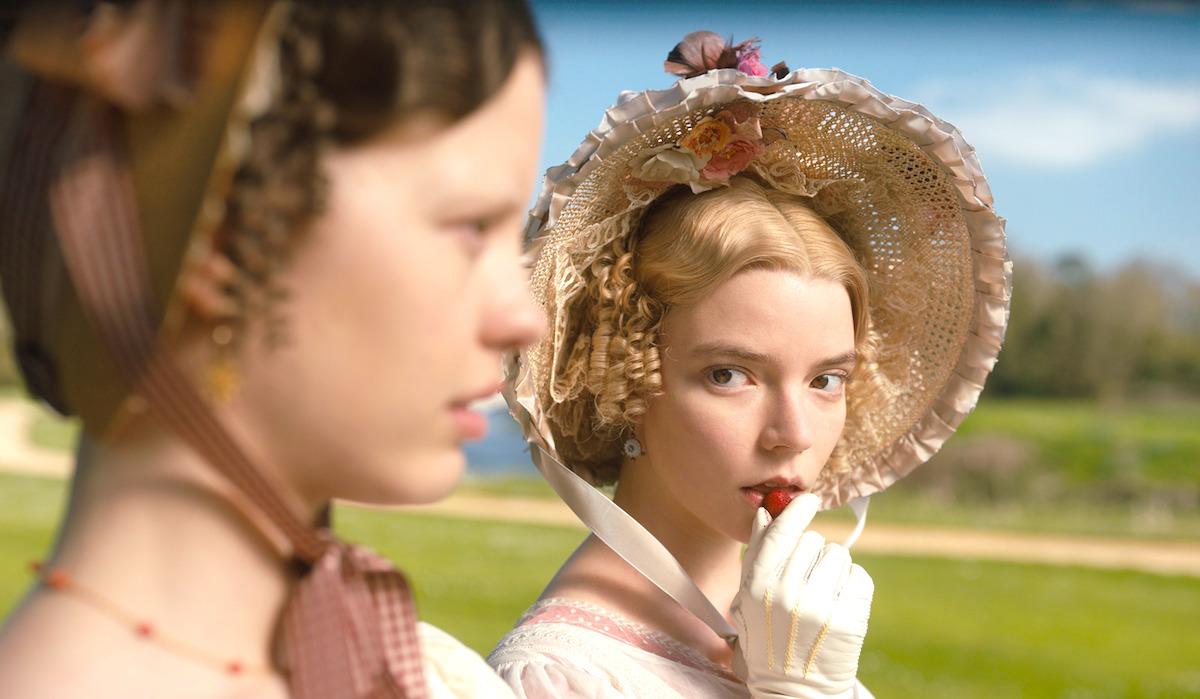
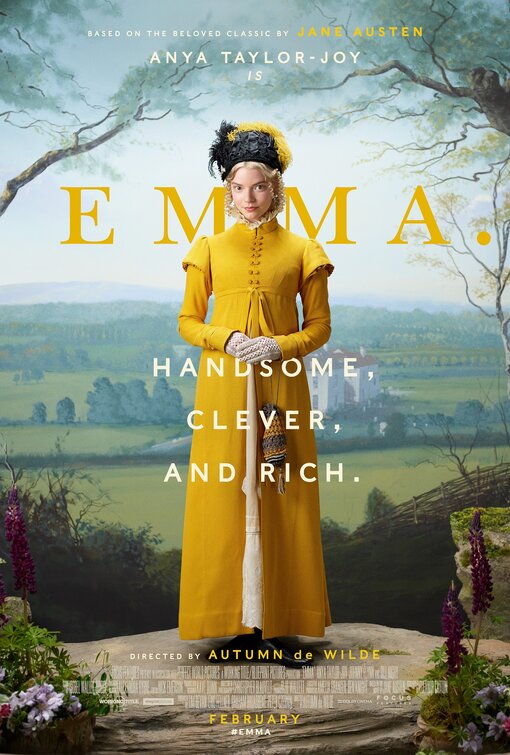
Emma Woodhouse (Anya Taylor-Joy) delights in her life of matchmaking friends and family, while dealing with her complex relationships with the men around her.
Director Autumn de Wilde’s previous experience mostly relates to music videos for rock artists. The likes of The Raconteurs, Florence + The Machine and Beck are prominent, and in some cases frequent, collaborators. So, making a feature debut with an adaptation of a Jane Austen romantic-comedy novel might seem to be something on almost the complete opposite end of the scale, but, with all this aside de Wilde’s feature is mostly a success.
The titular Emma Woodhouse (Anya Taylor-Joy) is described in the opening text, alongside almost all of the advertising, as “handsome, clever, rich”, and this is very much how those around her seem to view her. She’s the respectable, high-class figure in all social circles. Communicating more with those of lower classes she sees herself as something of a matchmaker for her friends and family, never having not had success when forming relationships for other people. Where her slightly testing relationships lie are with those of a similar status to her own. Especially with Johnny Flynn’s Mr. Knightley, who appears to disapprove of what seems to be Emma’s vanity and refusal to marry, despite seemingly always putting herself first, even when being a matchmaker for others.
From the off it’s made clear that this is a ‘quirky’ period comedy. The frequently appearing score made up of jaunty strings screams this, and from the start almost begins to set up the feeling of a long and forceful feature. The wit is quick, almost too quick. As Bill Nighy interacts with his daughter (Taylor-Joy) in the opening scenes, and questions the local vicar, Mr Elton’s (Josh O’Connor) pronunciation of innocence – “Inn-know-sense” – the fast nature of the humour, mixed with the fact that such moments are nothing more than brief flashes lead to the joke’s either being missed or just lacking a response. And for much of the first 20-30 minutes of the film the screenplay seems to aim for nothing more than humour, which never properly takes off. Leaving it all feeling rather flat and lacking, meaning the viewer can’t properly connect with it.
The narrative of the film is shown through the four seasons. And the way the film feels seems to follow the style of the seasons too. Starting in Autumn things are a bit damp and slightly trudge along, however as we get closer to summer you begin to warm to the film – no pun intended – and enjoy it that bit more. Overtime, as the elements of drama and romance come more into play there’s more to like and engage with. Emma’s relationships become slightly more layered than the simple points for humour they initially appear to be. Even her relationship with Miranda Hart’s loud Miss Bates – constantly talking about the smallest of details in the letters from her relation – becomes something slightly deeper and more thoughtful as the film progresses, in fact one picnic scene in particular where the two have a key interaction is a highlight of the film. Hart’s character becomes far more than a shouty hopeful socialite and the actor herself more than the almost typecast figure that people have come to associate her with.
Throughout the film, as she tries to form a relationship for her friend Harriet (Mia Goth), Emma comes across her own complications with men. There are conflictions as she tries to set Harriet up with Mr Elton, who appears to be infatuated with the school-girl, despite Harriet clearly having feelings for local farmer Mr. Martin (Connor Swindells). Meanwhile Emma’s own relationship with Mr. Knightley wavers and she herself appears to take a slight shine to the often underseen Frank Churchill (Callum Turner). This is a film made up of multiple not quite complete love triangles, mixed-messages, misunderstandings and general complications relating to the idea of love and relationships. Much of which forms the tone of the film and helps to eventually bring the audience into the film. In fact it’s as the film develops such a plot and the themes are pushed more that the humour dies down, although still present, and seems to balance out. The mild chuckles, while not exactly frequent, are present and help to make the piece that bit more pleasant and enjoyable. The quirks of the characters, shown by the performances, show a bit more than just a rough design and help to also progress the narrative and the viewer’s engagement in the piece.
By the end the characters and their relationships feel enough to form something satisfying by the end, even when responses and eccentricities do begin to branch into the absurd, something rather fitting for the film. Much like the relationships that are being formed the film realises that this isn’t a gradual process and everything can’t be quirky and joyful from the very start, it needs to take time and have some detail and development. Once that starts that’s when things truly begin to hit right. The pacing, humour and balance of themes begins to even out and the film becomes that bit more enjoyable and satisfying. While it starts off as a bit much eventually Emma. calms down and becomes something rather likeable.
Like the lead character Emma starts off as rushed, joyful with/at itself and hoping for the best from the start. But, as the film progresses it gradually becomes more detailed, thoughtful and engaging thanks to the hints of character and plot development and detail that it introduces.
Cert – PG, Run-time – 1 hour 39 minutes, Director – Jeff Fowler
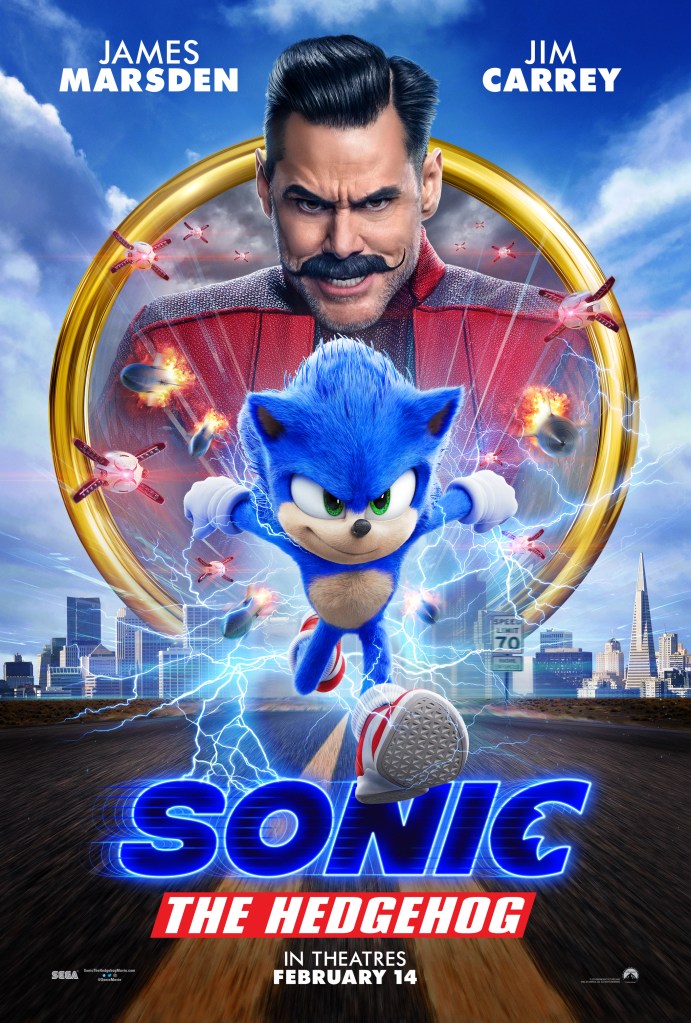
After loosing his teleportation rings Sonic the hedgehog (Ben Schwartz) must find his way to San Francisco to get them back before he’s captured by a drone-wielding inventor employed by the government (Jim Carrey)
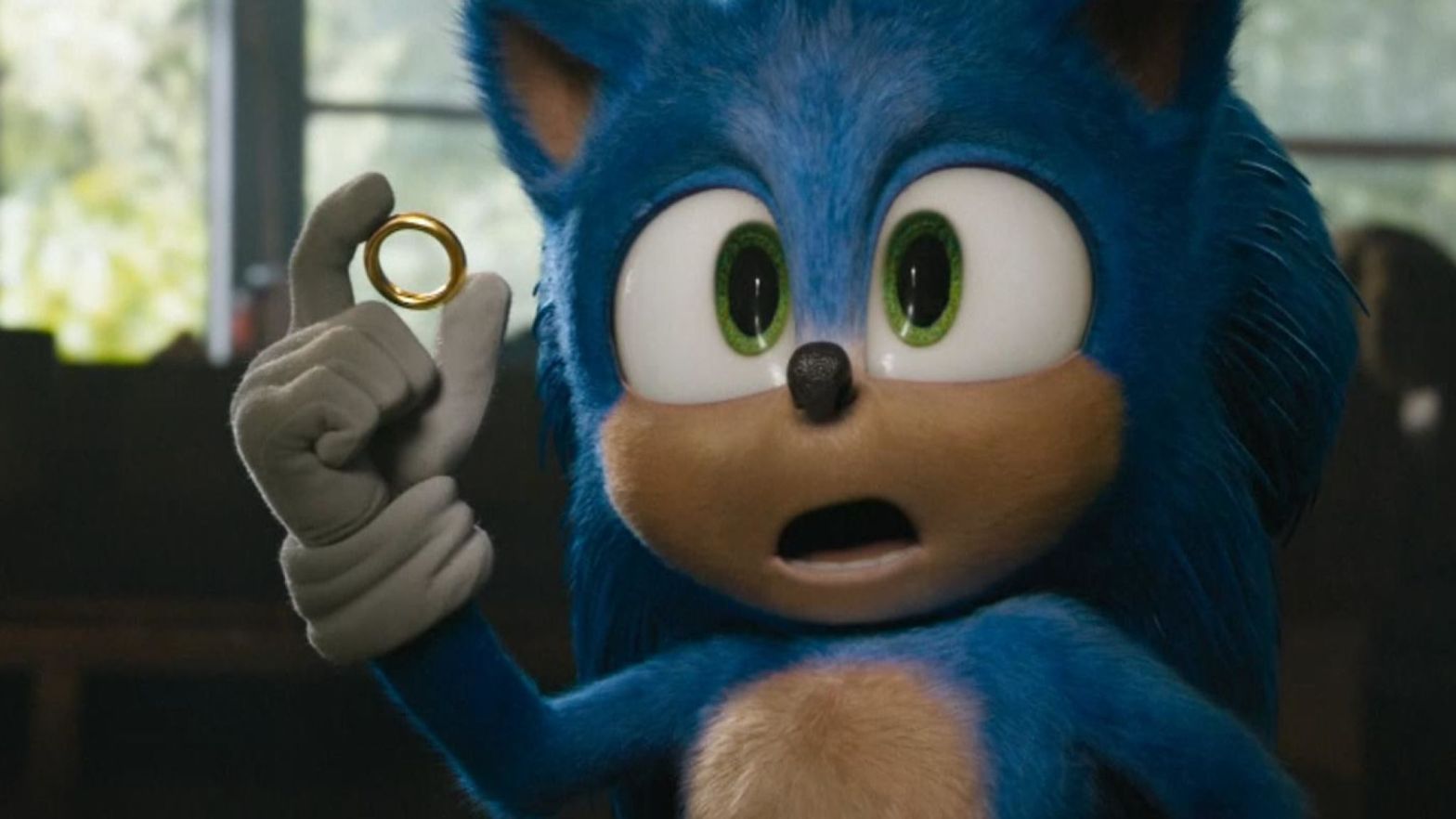
“What if we were back in the 90s but also, simultaneously in hell”, This tweet very much sums up the largely negative reactions to the first trailer for the big-screen adaptation of one of Sega’s biggest titles and figureheads, Sonic The Hedgehog. Most of this outrage was directed towards the design of the titular alien. After all he looked nothing like the standard design that gamers have gotten to know so well since his first appearance back in 1991. Therefore the film found itself pushed back by almost two months so that the VFX could be altered and the appearance of the lead made to look more like that in the games. When the new trailers were released fans seemed to be happy, there was hope for the film.
The one thing that the response didn’t change towards was Jim Carrey as villain Dr. Robotnik, a government agent sent to capture Sonic after he causes a large power outage. It seemed that many people were looking forward to seeing Carrey not only back in a big role after so long, but also back to what appeared to be his usual chaotic self. There’s no denying that he was one of the major drawing factors of the film. He’s also undeniably the best thing about the film. His pure energy and general performance does its best to lift the heavy weight of an otherwise tired and severely lacking film.
It’s established early on that Sonic (Ben Schwartz) is an alien, having arrived on Earth through golden rings that act as portals to other places. When he’s hunted down on discovered for his intense speed he moves on to another place, after Earth he’s got one more place, a world with no life apart from the mushrooms that grow on it. However, it seems that things are going well in the quiet town of Green Hills. He observes day to day life in the town, binge-reads his collection of The Flash comics and looking in on the life of police officer Tom Wachowski (James Marsden), or as he’s known to Sonic ‘Doughnut Lord’, and his wife Maddie (Tika Sumpter), ‘Pretzel Lady’.
After years of going unnoticed – apart from the local branded ‘Crazy Carl’ who goes ignored when it comes to his sightings – Sonic is discovered by Tom. After being shot with a tranquillizer and noticing Tom’s San Francisco shirt Sonic’s rings fall through a portal and land on one of the city’s biggest buildings. It’s not long until the two find themselves embarking on a road-trip with Robotnik hot on their tails, being sent out to capture the suspected alien after he causes a mass power outage during a game of one-man baseball, where he plays all members of each team. In many ways this could be seen as a standard set-up for a film of this nature, especially a buddy film, which this very much falls under the category of. And it’s the base that everything else builds up from. Making for an overall standard and rather basic feature.
With a central figure known for the high speeds that he can reach this idea doesn’t really seem to have much done with it, only really for the sake of plot necessity – of which there are a number of elements that are there for the sake of coincidence. Surely this should be a character filled with spark and energy? Instead he just comes across as rather bland and two dimensional – as do most of the characters. The full extent of this shown in an early sequence where Sonic runs with a tortoise in his hands set to Queen’s Don’t Stop Me Now. Carrey truly does have a great deal of heavy-lifting to do, but unfortunately he’s not enough to carry the film out of the slow drudge that it is. In fact even kids, who are possibly the core audience for the film, might not have much to clinch onto over the course of the 99 minutes that the film is to be endured for.
There seems to be a complete void of humour, no jokes land and almost every single one has been used before in similar stories. Occasionally the film appears to call back to the likes of Alvin And The Chipmunks – with it’s quirky, out-of-place lead character – and even Hop (not just because of the James Marsden connection). In fact even during moments where Sonic’s speed is shown in comparison to everything that’s happening around him such instances simply feel as if they’re taken directly from Quicksilver in the X-Men films. The finished product simply feels lazy and lacking in any form of required energy or draw. The only feelings it creates are those resembling boredom (some parents may even find themselves dropping off) and even possible irritation. While the characters might be smiling and having a good time the feelings are far from shared by the audience. There’s a slight sense of hope during the opening sequence as we see Sonic rush through an island landscape identical to the ones that he’s known for speeding through in the iconic games, but all of this is dropped very early on as we land on Earth and the fact that this is yet another lacking tale of the talented CG outsider and his friend who’s striving for more sets in.
While the redesign might have helped make the title character look better, and Jim Carrey is a highlight, Sonic The Hedgehog ultimately crashes due to an intense lack of energy, stamina and originality.
Cert – PG, Run-time – 1 hour 41 minutes, Director – Stephen Gaghan
When Queen Victoria (Jessie Buckley) suffers from a gradual poisoning Dr Dolittle (Robert Downey Jr) is sent on a voyage to find the one thing that will cure her
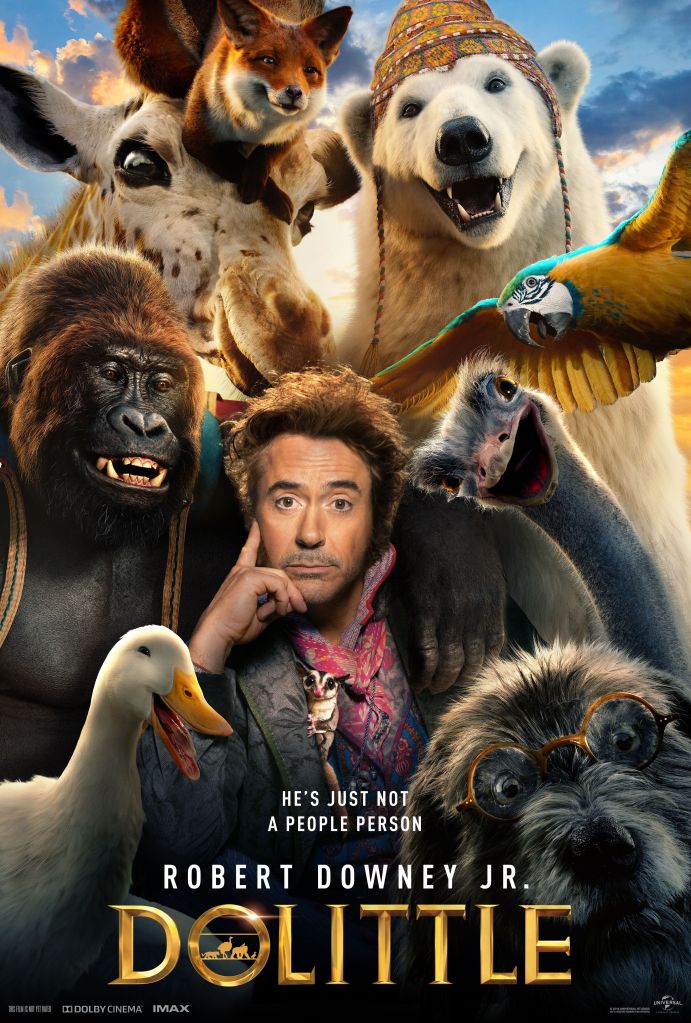
Talking (and singing) animals really don’t seem to be going well for Universal. Cats was a universally panned box-office bomb that, aside from the odd jab, seems to have been mostly forgotten, even the nightmares have begun to fade away. Now, comes another story with talking animals, voiced by a similarly all-star cast, and the man that can talk to them, Dolittle. Once again, it almost seems weird to think that the cast were brought on by the script, in fact the conclusion that some wouldn’t be mistaken for would be the fact that the likes of Robert Downey Jr, John Cena, Rami Malek, Emma Thompson, Selena Gomez, Marion Cotillard, Kumail Nanjiani and more were paid a large sum of the $175 million budget – it certainly couldn’t have all gone on the CG animals and ocean landscapes. But, this isn’t something to throw-up presumptions and accusations, this is, after all, a review, not a blame game with a lack of knowledge in such areas.
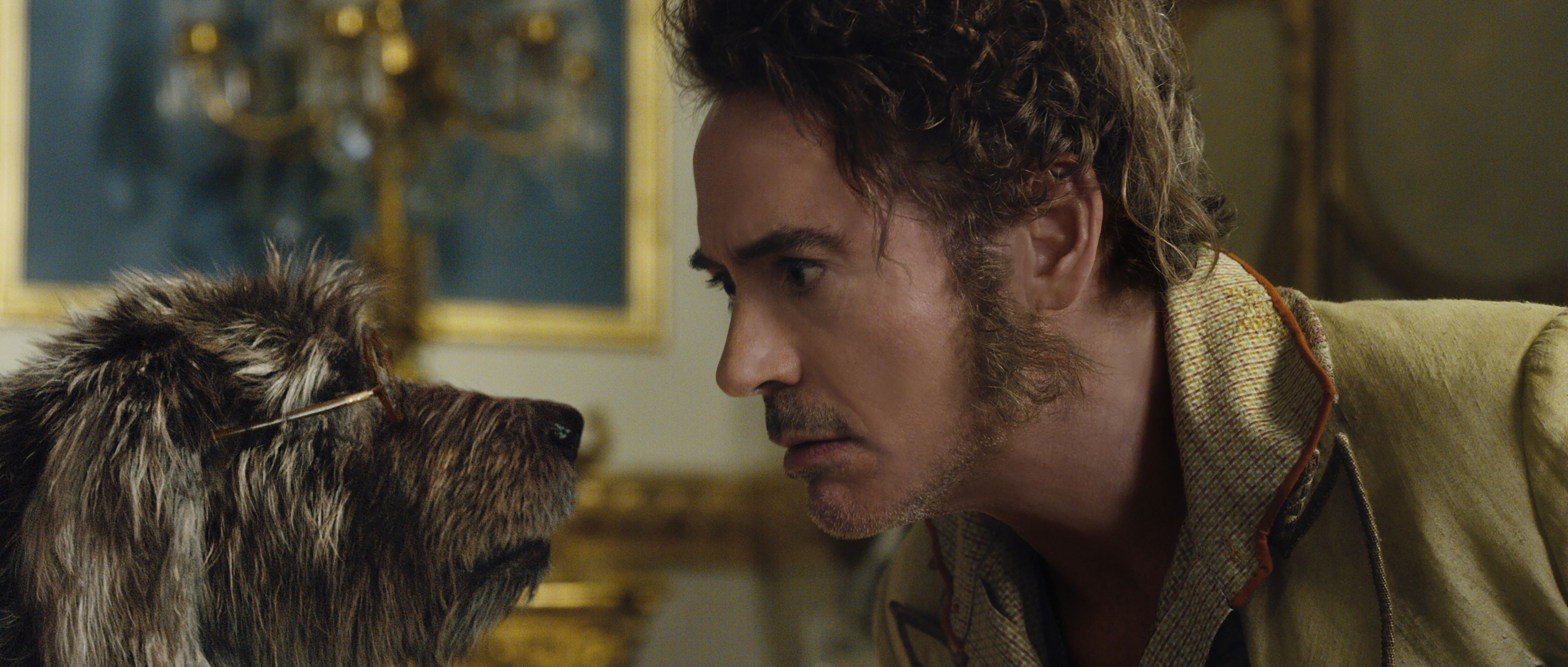
Speaking of the largely A-list cast that lines the film Michael Sheen is also present as Dolittle’s rival, Dr. Blair Müdfly – the joke being that people pronounce his last name as ‘mudfly’, and he apparently hasn’t got a chin. At some points when hearing Downey Jr speak as the titular Dr. Dolittle it almost seems as if he heard Michael Sheen’s Welsh accent and decided to copy it. However, when he speaks the accent produced almost seems as if it’s been badly dubbed over the movement of his lips in post-production, alongside sounding like a mixture of various other British accents. That is when he’s not grunting or squawking to animals, Dolittle’s ability essentially makes him a translator, which makes for some slightly awkward scenes when his new apprentice, Tommy Stubbins (Harry Collett), also tries to adopt this skill. In fact even from one of the opening scenes, an extended sequence of Dolittle attemping to play chess with Rami Malek’s gorilla, Chee-Chee, where the chess pieces are mice with headgear on, while speaking in various different animal tongues, sets the tone for what the film is likely to be. While the two opening scenes for mild context show some hope in the end the film ends up as a bit of a mess.
Dolittle lives in hiding from the rest of the world after the death of his wife, Lilly (Kasia Smutniak). However, when the Queen (Jessie Buckley) calls for his help after being poisoned he emerges back into the world to go on a voyage to find the only thing that will cure the mostly unconscious monarch. However, first he must travel somewhere else to find a journal in which lies instructions on how to find the island on which the tree that grows the fruit grows on. What seems like something relatively simple somehow manages to get deeply tied up and borderline confusing. This might be because of the messy nature of the film, and the generally uninteresting nature. And while all this is happening Michael Sheen is trying to get the cure before Dolittle by the order of Jim Broadbent’s Lord Thomas Badgley, a figure who you would never once begin to guess was secretly villainous so that it comes as even more of a shock when the film reveals for the second time that he’s the villain, as if thinking it can get a response like it’s the first – it almost seems as if the writer’s forgot about the character – the audience certainly did – and needed to make note of this element again.
When it comes to the attempted humour things never properly takes off – one moment where John Cena’s polar Bear, Yoshi, states “one day my Dad went out for a pack of seals and never came back” you don’t know whether it’s meant to be humorous, serious or even both. While there are some elements that work, and points where the film is at least bearable and just about watchable before the humour and awkwardness sets back in, including the costume design which at least adds something, the overall feel is somewhat uninviting. There’s not a great deal to connect with that brings the viewer into the world of the film. Mix in some rather lacking performances, the heart just doesn’t seem to be there from anyone, this almost seems to be a project to pass the time until the next big role that’s to come along. Even star-power can’t help but lift the screenplay, something just above a selection of ideas but not quite beyond the second draft. It all combines to make a rather un-enthralling, sloppily made trudge through messy and lacking material.
Rounding off Dolittle’s messy themes and style is the fact that it doesn’t seem to know whether it’s a family film or just a film for young-kids, the climax involves bagpipes being removed from a mythical creatures rear-end. This is a very different film for writer-director Stephen Gaghan, who’s previous works consist of more adult dramas like Traffic, Syriana and 2017’s Gold – which had a somewhat lukewarm-poor response, but I personally really liked – his take on a family film seems unsure. His screenplay, written with occasional sitcom and animated TV show writers Dan Gregor and Doug Mand, feels as if there is trepidation around what the tone and feel of the film should be, further pushing the idea of a second draft feeling. There’s a great deal missing from the film. Much like the boats that feature throughout; the script, and film in general, and in need of further construction.
Seemingly stuck in the second draft Dolittle is a mixture of unengaging characters, adventure that lacks in thrills and a number of poor attempts at jokes, the most stable thing about it might just be Robert Downey Jr’s wobbly Welsh accent.
Cert – 15, Run-time – 1 hour 49 minutes, Director – Cathy Yan
After being dumped by The Joker, all of Gotham city is after Harley Quinn (Margot Robbie). The only way for her to end this is by finding a diamond which hides details of a mass fortune.
There’s something rather delightful about seeing Harley Quinn (Margot Robbie), one of DC’s most recognisable villains/ antihero’s, waiting longingly as she watches an egg sandwich being made in a greasy corner-shop-cum-cafe. As bacon and cheese that’s probably six months out of date are piled on it’s made to seem that this glorified snack could easily replace The Joker on the first day of her newly single life. The last time we saw Robbie’s Quinn was in the dismal grit and greyness of 2016’s Suicide Squad. From the start it’s proved that this is a very different character to the one that seemed to be nothing more than a rough idea or thought – all down to poor scripting – four years ago. Sat in brightly-coloured clothing with a wrap made of streams of almost luminous plastic Quinn is truly starting afresh in her latest big-screen appearance.
What else do we find her doing to cope with being dumped by the clown prince of crime? The usual; going to clubs and getting drunk, sitting at home eating cereal and watching Looney Tunes, buying a pet hyena – which she names Bruce – and also driving a lorry full-speed into, and thus blowing up, the chemical factory where her relationship first properly began. However, Harley’s easy new life is abruptly put to an end when the rest of Gotham city finds out that she’s no longer under The Joker’s protection, and it turns out that there are a great many people who hold more than just a small grudge against her. None more so than Ewan MGregor’s fittingly camp crime-boss Roman Sionis, sometimes known for his persona, Black Mask (making him look like the Masked Magician). Sionis makes it his mission to hunt Quinn down and be the one to claim full victory by killing her.
However, things take a turn when Harley finds herself enlisted by Sionis to find a highly valuable diamond which holds the details to a strong fortune. And so, with almost everyone in the city, the police, Sionis and all his men after her Quinn and the audience are all set-up for a hilarious, action-packed ride. In fact, when you mix in the various fourth wall breaks and the often bouncy personality of the central character, alongside various fourth-wall breaks and flashbacks, there’s an air to the film that almost begins to remind you of Deadpool. And even with this in mind Birds Of Prey is a very different film in terms of its style and energy. Style and energy which overflows from the film, leading it to successfully connect with the viewer and simply bring them further into the world that’s created – one which shows a further advancement in terms of variations of tone and feel for DC.
While one her own Harley is a strong character, raising a number of laughs and simply being a source of pure entertainment, the supporting cast is not to be overlooked. With the likes of Mary Elizabeth Winstead, Rosie Perez, Jurnee Smollett-Bell and Ella Jay Basco all creating a kick-ass ensemble cast there’s no stopping the true force of the finished piece. Each figure, whether police detective or crossbow-wielding assassin, has their own unique personality (even if Winstead’s Huntress does seem to have only a short amount of screen-time, especially when compared to the rest of the cast) that’s clearly defined and makes for an even stronger group, especially during fight sequences. In many ways the true strength of the film lies in the fight sequences, where the worth is proved and the levels of care and passion that have gone into the production are truly revealed. And it’s in something rather simple. The fact that during fight scenes character’s don’t simply just go straight for a punch and a kick, or even just a kick in the nads, there’s clear signs of carefully constructed choreography that help to ramp up the impact of many of the film’s violent moments. Some of which do leave a slight wince on the face of the viewer, alongside a potential audible expression of pain.
All throughout the film the fingerprints of a cast and crew that are passionate about what they are making, wanting to make something good with strong female characters. This is very much a film for and about empowerment, while also still fitting in with the standard comic-book adaptation films that have continued to grow in number since the start of the last decade. And Birds Of Prey manages to be both this things while never shouting about that fact, it just gets on and does it, and it does it rather well. It’s a hugely enjoyable time and also very funny. Much of which comes from Christine Hodson’s screenplay – Hodson previously wrote the first good Transformers film, Bumblebee, and is also signed on to write DC’s upcoming The Flash and Batgirl films; if this is the case then the future of DC is very much in safe hands, especially with their current track record. When brought to life by still relative newcomer, this is her second feature, Cathy Yan’s precise direction. Yan, and the cast, clearly understand the tone that Hodson’s screenplay aims for and by bringing it to life they create an utterly engaging, brilliantly constructed and all round fun action film. Filled with some brilliant fight sequences, entertaining characters – who you can even just watch casually go shopping and be entertained by it – and plenty of style, sparkle and colour to make it something that feels unique and original to the comic-book genre!
Harley Quinn’s aim to start life anew is also in many ways a re-imagining of the character. Amongst all the finely choreographed action and passionate girl-power themes, which can be enjoyed by anyone, there’s clearly a great deal of care that’s gone into the film from all sectors. Fun, entertaining, stylish, and not to mention colourful Birds Of Prey is truly a fantabulous emancipation!
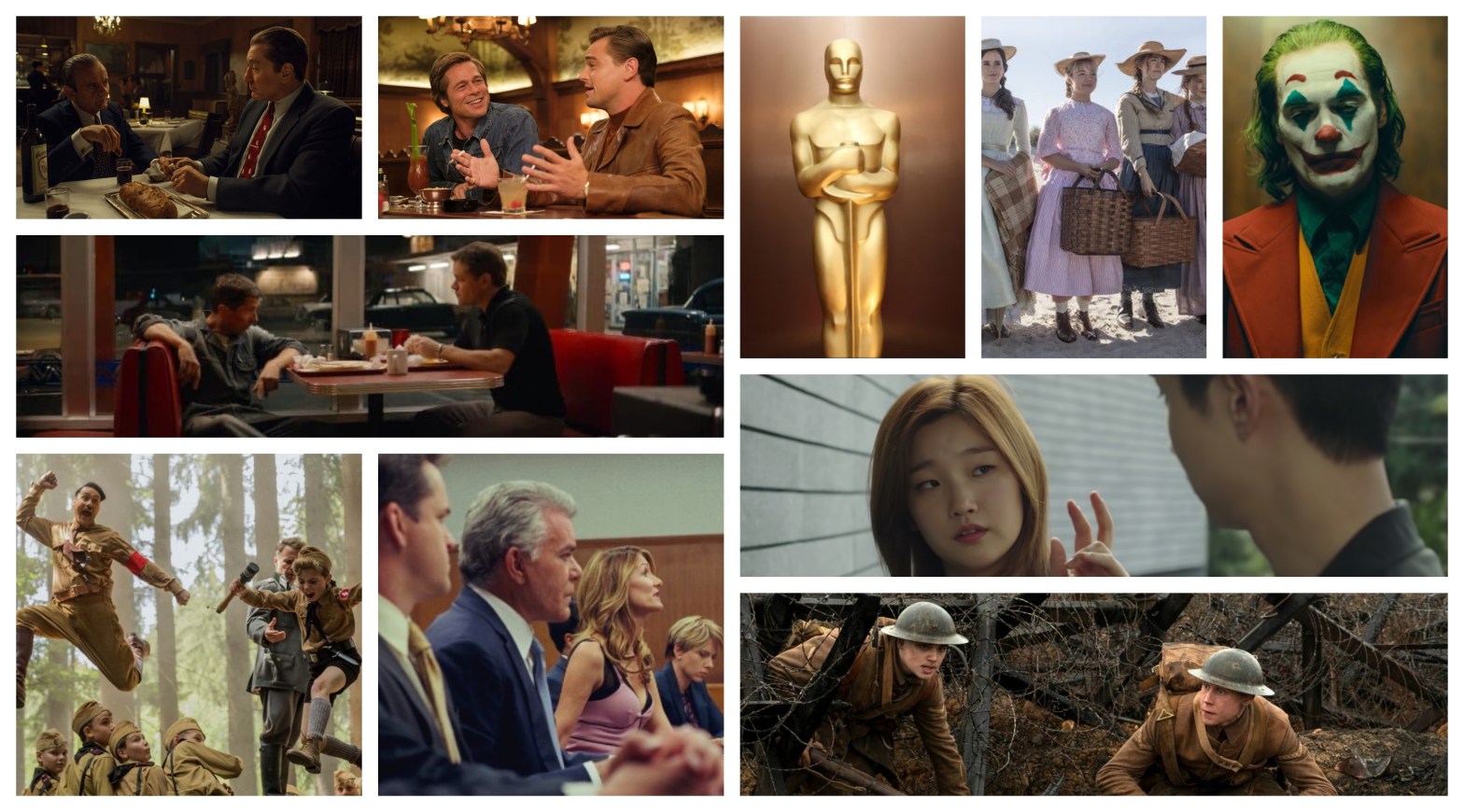
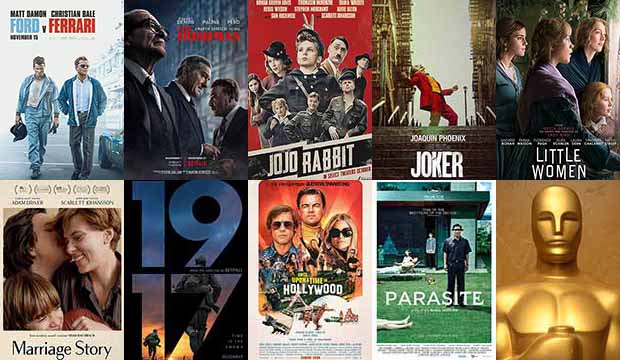
Every year as awards season heats up the debate as to what will win the Best Picture Oscar also increases. At the same time I find myself, along with many others, saying that the year’s race is one of the closest and most unpredictable ever. And of course when it comes to the competition between this year’s nominees the same has very much been said.
It seems that almost each week there’s been a new front-runner with the other nominees following directly on the tail of the supposed lead. And so, for the third year running I’m going to take a detailed look at each nominee and their chances of winning to attempt to predict what will win the top prize at this year’s Academy Awards.
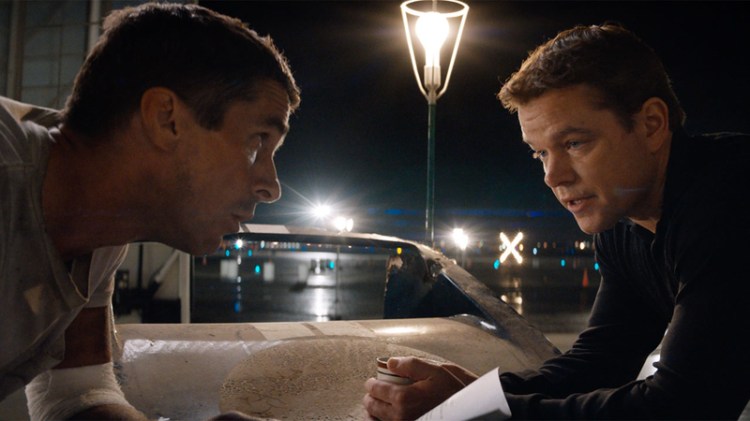
For two consecutive years it seemed as if the Academy were changing direction in what they were awarding Best Picture to. Moonlight and The Shape Of Water appeared to almost be ushering in change after two years of #OscarsSoWhite, demand for more diverse nominees in every category, including the ongoing argument for more women in the Best Director category, and the diversifying of Academy members. And then last year voters decided to go back to the somewhat standard politically correct and lazy choice by giving the top award of the night to Green Book. And so, it seems only right to start with the most politically correct and lazy out of the nine nominees on this years ballot; Ford V Ferrari (or as it’s called in the UK Le Mans ’66).
While it seems to be one of the nominees that just slipped onto the ballot there’s no denying that Ford V Ferrari is very much an Oscar bait film. It’s also one of the films that could be likely to connect well with older voters, who make up a large proportion of the voters – after all it’s believed that this is how Green Book ended up with a Best Picture win. It is a fairly traditional, easy-riding Hollywood-underdog-buddy-film. The kind that a range of voting members, not just older voters, like. There aren’t many boxes in terms of style and genre that the film doesn’t tick. But, when compared with the competition that it has in the category it does seem to be the outsider of the bunch. In fact it seems to be the only outsider, often there are at least two or three films that stick out as being behind the rest of the pack, however this year Ford V Ferrari appears to be the only one. It’s almost been universally agreed that this is the case. Because of this attitude and the general response to the film (which has admittedly been fairly positive) there isn’t exactly a great deal to comment on when it comes to its chances of winning the Best Picture Oscar. However, of course, there is still a clear love with it, and it could very well be a surprise win. It has a number of the elements that make up a common Best Picture winner and it could be something of a guilty pleasure for a number of voters – and seeing as their ballots are mostly anonymous/ are never seen by the public, a number of voters could easily show favour to the film knowing this, giving it a bit more of a push towards winning the top prize.
The film definitely strikes as one that people ‘enjoyed’ more than one that they consider it to be the ‘best’. However, when it comes to the preferential ballot voting system of Best Picture – something which is very important when it comes to what the winner of Best Picture will be, and that I’ll come on to later – simply enjoying a film could mean that it’s placed consistently in a certain spot on the ballot. Meaning that by pure enjoyment and ‘liking’ of the film Ford V Ferrari could just about get away with continuing a trend – making the two years before Green Book something of anomalies.
In total the film only has four nominations (Best Picture, Best Film Editing, Best Sound Editing and Best Sound Mixing), three of these are in technical categories. More often than not a film needs nominations in some of the big five categories (Leading and Supporting Acting, Writing, Directing and Picture)to have any real chance at a Best Picture win. With no Director, Screenplay and Acting nods this would supposedly make Ford V Ferrari’s chances very small. Despite this the film does have a nomination for Best Film Editing, something which is of understated importance when it comes to predicting what might win the honour of being labelled as the best film of the past year. Often it’s the editing that people are taken in by, how they feel engaged with the world and the film as a whole, especially when it comes to how concise the story is and how well it flows. This film in particular is a front-runner in this specific category, with many praising the racing scenes in particular for the way they show the action – something similar to the cases made for the concert sequences in Bohemian Rhapsody when it was announced to much surprise as the winner of this very award last year. When you also take into account the 2 and a half hour run-time of Ford V Ferrari the editing nomination is even more impressive, in anonymous interviews some voters have claimed that they haven’t selected Martin Scorsese’s The Irishman in this category due to it not being edited enough with it’s heavy 3 and a half hour run-time.
When all this is taken into account, the enjoyment of the well-edited racing scenes, the safe and traditional nature of the politically correct ‘buddy’ film and a potential win in the Film Editing category could overshadow the lack of support from other voting branches. The way that the film is simply ‘enjoyed’ and ‘liked’ could place it high enough on ballots to mean that the big win of the night could very well go to Ford V Ferrari.
Last year the biggest competition to Green Book was undeniably Roma. Netflix’s black-and-white foreign language film was, for many people, the favourite to win the top prize at the ceremony. It would have been a bold choice for the Academy but would have matched the changing shape of voters and winners. However, the general style seemed to be something not backed by voters, despite director Alfonso Cuaron being presented with his second Best Director Oscar (after winning for Gravity in 2014). But, it seemed that the main thing that may have pushed some, again mostly older, voters away was the fact that Roma was a Netflix film.
Many highly influential figures campaigned against Roma and placed the film at the bottom of their ballots specifically so that it wouldn’t win Best Picture. The likes of Steven Spielberg claimed that Netflix films weren’t proper films. They weren’t distributed properly, only the minimum was done to qualify for Oscar nominations and they were TV movies instead of proper cinematic features. Despite this the film still ended up with 10 nominations, three of which led to a win, and was a front-runner for the top prize. Similarly The Irishman is a Netflix film, however the argument against the company doesn’t seem to have been as big this year, in fact it barely seems to have come up at all. The studio has clearly done more to release their films into more screens and not simultaneously releasing in cinemas and on the streaming platform; often leaving a three week gap in-between the both. The Netflix label is also more notable because the film is directed by none other than Martin Scorsese.
Scorsese has been a lifelong devotee to the big-screen experience. And even with The Irishman he urged audience of see his three and a half hour mob epic in a cinema, instead of at home on the small screen, or even on their phones. With even the likes of Scorsese partnering with Netflix it may be hard for voters to simply vote against films because of the studio. What could make voters turn away from the film is the run-time, are they all going to watch a film that long on the small screen in one instalment? Surely not all of them, and if they watch it in instalments the film certainly doesn’t have the same impact, which could lead it to being placed lower on lists. Despite this the film still has a Best Film Editing nomination, which does indicate that the run-time potentially isn’t a huge problem for all voting members of the academy?
Alongside this the film also has nominations in key categories such as Best Director, Adapted Screenplay and two nods in Supporting Actor (for Joe Pesci and Al Pacino). In total The Irishman has ten nominations, showing love from a number of voting branches. Aside from this one notable exclusion from the film’s various nominations is that of Robert De Niro in the Best Leading Actor category. While he was widely praised for his de-aged, and at some points aged, central role in the film De Niro failed to gain a nomination in this category, possibly because his performance is one of a character who limits and restricts their visible emotions, something which is often overlooked at awards ceremonies. If the Academy couldn’t nominate the lead performance the eyes of which almost everything in the film is seen, then does that bode well for the films chances of receiving a big-step forward for Netflix in the world of cinema?
It could be argued that De Niro’s mob figure is one that he’s played before, especially in Scorsese films, although certainly not one quite like this. The Irishman is Scrosese’s return to the mob genre of which he is so commonly associated with outside of the likes of Taxi Driver and Raging Bull. It marks a film where he almost looks back at his career in a highly reflective and wistful way, something which could connect with voters. While it’s been made clear that voters love stories about Hollywood, as some might put it ‘themselves’, there’s certainly a potential sparkle in The Irishman when it comes to a filmmaker looking back at their own career. Alternatively another debate comes into play against The Irishman winning the Academy’s greatest honour in relation to this. Scorsese has already won his Oscar. Back in 2007 The Departed won Best Picture, Director, Adapted Screenplay and Film Editing – Director and Picture being firsts for Scorsese after so many years of movie-making, and filmmaker friends of his such as Spielberg and Coppola all having won the top awards. The only other nomination the film had, which it didn’t win, was Supporting Actor; indicating that De Niro’s lack of a nomination might not be such a problem for the film. The Departed is certainly not held as one of Scorsese’s best films, despite it being rather good. However, it was very much agreed that he was overdue an Oscar, and with the competition he did seem to have the upper-hand that year. And this was in the days of a first-past-the-post voting system for Best Picture, before the maximum of ten nominees in the category and the preferential system were introduced in 2010, after the uproar at the lack of a nomination for The Dark Knight the year before. All this aside, the point that Scorsese has already won his Oscar is very much in play. This could very much push him away from another chance at the top award.
However, after somewhat middling responses to the likes of Silence and Hugo – despite Hugo receiving a nomination in this category, as did The Wolf Of Wall Street – The Irishman could be seen as something of a return to form for one of Hollywood’s most highly held figures. A strike-back, or possible redemption story could be what the Academy want. They’re known for liking underdog stories, something which will also be mentioned later, and The Irishman does, to an extent, focus on one of these, and a comeback story is potentially even better? In fact this was a large talking point when the film was first released in early November last year – almost a prime spot for Oscar season, late October to mid-December being prime times for potential Oscar releases. For a long time this was the front-runner to win the award. Many considered the race to be over after nothing else really coming along to take it down, however conversation does seem to have died down as other nominees appear to have taken the reins. But, with clear support from across the Academy and Scorsese’s name attached to the project in a look back at his career, there’s certainly a strong chance that his return to the mob drama genre could very well usher a second film of his to be the one that those making speeches are thanking people for their involvement in at the end of this years ceremony.
The Irishman isn’t the only film that Netflix have competing in the Best Picture category this year. It seems that they’ve almost been fully embraced and that the campaigns against them that were so present in last year’s Best Picture race have almost completely vanished. Noah Baumbach’s Marriage Story is the writer-director’s second film with the company; following The Meyerowitz Stories: New And Selected, and shows the clear relationship that Netflix is forming with big filmmakers. Following its release not long after fellow nominee The Irishman Oscar talk soon followed – especially when it came to the fantastic natural performances that line it.
In fact the film boasts nominations in the Leading Actor, Leading Actress and Supporting Actress categories. Adam Driver was at one point a front-runner in the Leading Actor category, however it now seems as if there’s no stopping Joaquin Phoenix from winning for Joker. Scarlett Johansson is up against strong competition in the Leading Actress category, including Charlize Theron in Bombshell and suspected winner Renée Zellweger in Judy. And as for the latter category, it seems as if with her success at almost every other awards ceremony that Laura Dern has the award in the bag. With such strong performances running throughout the film they make for a number of memorable scenes. With this in mind Marriage Story is certainly a film that will likely be remembered by a number of voters, something which could come in handy on the preferential ballot. While some films may be more forgettable, thus placed lower on the ballots, those that are remembered more, if for good reasons, will likely be placed higher on such ballots as voters can recall more about them, specifically what they loved about the film, therefore possibly giving it more of a push for Best Picture.
One scene in particular in which this is the case is the much talked about moment in which Adam Driver passionately belts out Stephen Sondeheim’s Being Alive – the moment that alone could win him the Oscar if it wasn’t for the more physical nature of Joaquin Phoenix in Joker. There’s no denying that this is one of, if not the, most talked about moments of the film; next to the various monologues and arguments effectively placed throughout. This moment being placed very close to the end of the film, in fact it’s one of the closing scenes. It’s likely that this could be the moment that leaves the taste of Marriage Story in the mouths of voters, the impact that it has is potentially a lasting one that makes up the minds of voters on whether they liked the film or not. In most cases this point has been praised, meaning that Marriage Story’s ending moments could lead it to a high enough place on ballots to win Best Picture. Something which was talked about a great deal with the effective nature of the highly emotional closing moments of Roma last year.
Aside from all the acting nominations Marriage Story also holds a nomination for Best Original Screenplay – one of the under-discussed and potentially most unpredictable categories this year, where all the nominees (even Knives Out which has no other nominations) appear to have a potentially equal chance at winning the award. Noah Baumbach’s script has been highly praised for its thoughtful and natural style – having been inspired by his own divorce. However, with the natural feel of the piece there isn’t always a great deal of visual spectacle to marvel at as there is with other nominees, whether it be First World War action or high octane racing sequences. This is evidenced by both the lack of technical nominations, but more importantly the absence of nods in the Best Director and Film Editing categories. When considering this amongst the crowd of highly visual and potentially ‘inventive’ films it’s likely that the film could have its name lost in the crowd – if that hasn’t happened already. There’s a high chance that if it hasn’t already occurred the film could easily lose steam and simply not have enough push or momentum to earn it the iconic golden statue.
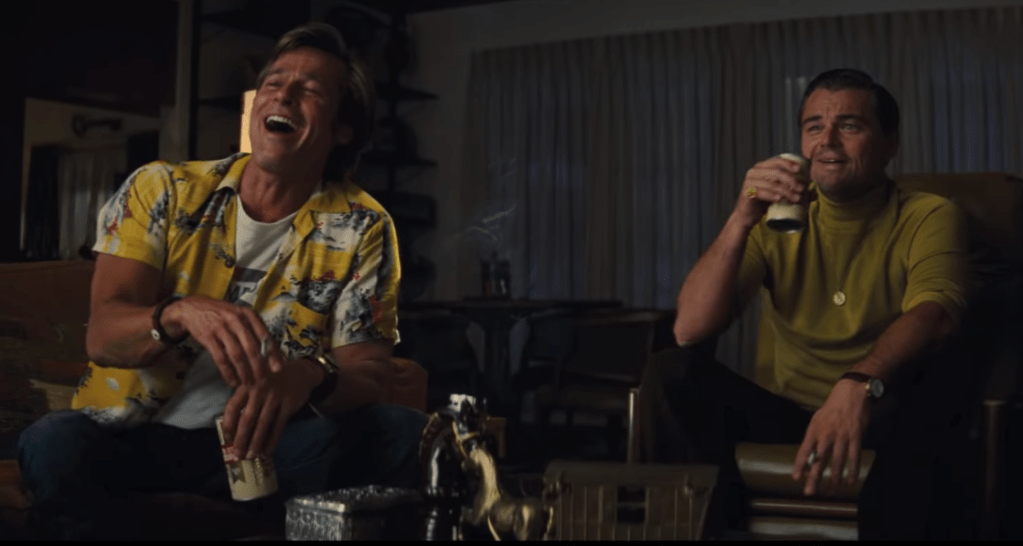
On the other hand there’s a great deal within Marriage Story that voters could potentially connect with. For a number of voters divorce is potentially something that they’ve gone through at some point, when seeing what the characters are going through on-screen they may find themselves connecting with the piece more than other nominated films due to understanding and sympathising with the figures as the proceedings unfold and become more complicated. All of this having effect and power as voters recognise the ideas that the film presents and therefore connect with it more, potentially making it come across stronger to them, as they give it a bigger push on their ballots. When it comes to those not going through divorce there’s still something for a large number of Academy members to associate with. The two leads in the film are a play director and actress, Johansson’s actor trying to break back on to the screen, after success in film she goes to the stage for her husband, however chooses to go to TV just before/ during the divorce. Thus by containing characters who work within the world of stage and film there may be more for voters to associate with when it comes to this than any other film. It’s known that the Academy are fond of films about themselves, even about former big-name actors working on the stage or just trying to get another big break – as was the case with Birdman, which also signalled something of a return for Michael Keaton to big leading roles back in 2015. And if that was enough for Birdman then it could be enough for Marriage Story. Plus, Birdman didn’t need a Film Editing nomination to win Hollywood’s highest award, and Green Book didn’t need a Directing nod either, or many nominations, to take home the award last year. So, why should Marriage Story? Especially when it has so much natural power that voters can easily identify and connect with?
Marriage Story isn’t the only film where Scarlett Johansson worries about her son during a feud that’s nominated for Best Picture this year (a rather tenuous link, I know). And in fact she also has an acting nod for her role in this film too, in the Supporting Actress category, making her the twelfth person to ever have two acting nominations in the same year (something also notable for the fact that these are her first two Oscar nominations ever). However, what’s more notable about Jojo Rabbit is those that Johansson’s character opposes. Specifically the way that the film pokes fun at them. These people, of course, being the Nazi’s. Much of the advertising for Jojo Rabbit, and indeed some of the awards campaign, has been based around the idea that it’s “an anti-hate satire”. Poking fun at Hitler through a comedic take on him, and how easily susceptible people were to his lies, through fantastical ideas and claims throughout the film, an early sequence comparing the way people treated Hitler to Beatlemania in the 60’s.
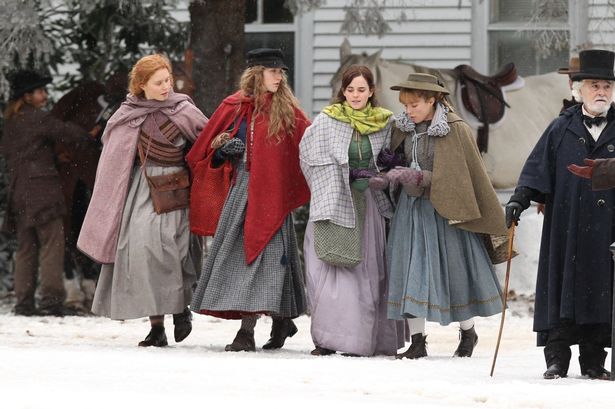
However, this is also where a number of people’s problems lie within Jojo Rabbit. The fact that it uses Nazi’s for the sake of comedy. There are many people who have taken issue with the film’s depictions of Nazi views, and for some its references and treatment of the holocaust. This is certainly not The Producers (which is surrounded by a great deal of other humour aside from the memorable Spingtime For Hitler sequence), which won the Best Original Screenplay Oscar in 1969. And while Jojo Rabbit has an Adapted Screenplay nod, and for some is the front-runner in the category, while others might say that the real lead in the race for this category is Greta Gerwig’s screenplay for Little Women. Add to this a nomination for Best Film Editing there is some heat behind Jojo Rabbit that could lead it to a Best Picture win – especially if it does win Adapted Screenplay. And this might be down to the fact that when it comes to the people who have enjoyed the film they’ve really enjoyed it, and when it comes to the preferential ballot that could really benefit the film. When mixed with the fact that this is a film that does make fun of, and takes aim at, the far right, to an extent, in a modern light it could somewhat reflect some voters views of America, and potentially the world, at this current point in time. If some voters want to bite back or try to make a point then they may too also place Jojo Rabbit high on their ballots, giving it a further push.
Away from all the Nazi related humour and fun poking the main plot of Jojo Rabbit is based around that of the main character, played by Roman Griffin Davis, discovering a Jewish girl living in the walls of his house. Thomas McKenzie’s Elsa uses Nazi stereotypes to scare Jojo and to keep herself safe in his home, creating further humour. In many ways instead of a biting scathing satire the film is more along the lines of a standard bittersweet Taika Waititi film. And this could go in one of two directions. Either voters don’t get what they were expecting and take against the film for not being a harsh satire with strong modern links; or, they find the charm within it, connect with the film and enjoy it. To an extent the general response from audiences to the film has mostly been the latter – the film won the Audience Award at the Toronto Film Festival, which has often been a good indicator in recent years of what will win Best Picture. Whereas, there are a number of vocal figures who have views along the lines of the former point, and their grievances with the film are understandable. And if this line is taken, where some voters think, for example, that the film is making light of severe atrocities and simply lampooning Hitler, then that could damage the chances of the Audience Award and Toronto matching with this year’s Best Picture winner.
Aside from this the film doesn’t have a Best Director nomination for Taika Waititi, and, as already mentioned, just one acting nomination, supporting Actress for Scarlett Johansson – which it seems she will lose out to Marriage Story co-star Laura Dern. When looking at the other categories in which the film is nominated in it doesn’t quite seem to be the front-runner in any of them. And this could mean that other nominees overshadow it in the Best Picture category. If someone were to vote for Little Women for Adapted Screenplay, for example, they may remember how much they liked that film, and it’s screenplay, when it comes to Best Picture, possibly placing it higher than Jojo Rabbit. On the other hand, they may feel that Little Women has their vote in one category, so Jojo Rabbit should have the vote in another. However, this style of voting, in either case, is probably rather unlikely. Voters are probably more likely to vote per category with their individual thoughts – as seems to be the case from anonymous interviews online with various voters from different backgrounds within the world of film.
As with most of the films in this year’s group of nominees Jojo Rabbit really goes for it at the end; and, again, if people remember the ending of a film and the impact that it has, that may more likely lead them to support the film. Jojo Rabbit’s ending is a war scene that is somewhat reflective of the ending of Blackadder. After all the comedy it takes a moment to make a serious point through the emotional ending, and indeed some of the more serious and emotional points of the film. With this in mind, alongside a young performance from lead Roman Griffin Davis that shines during such moments, there could be a chance for the film.
Comedy is a genre that is highly subjective which is why comedies don’t tend to win, or even be nominated for Oscars that often. However, when it comes to Jojo Rabbit there’s a balance of humour and seriousness to creating a lasting impression of the film that voters may reflect on positively. They may think of this balance and remember that it’s difficult to achieve something like this; choosing to vote for the film for this achievement, and the points that it makes along the way. Jojo Rabbit certainly isn’t a film that when everything comes together it’ll lead to a Best Picture win. It’s more one where when the individual elements are thought of and remembered that’s what could push it to a win. While there are some who are quite against the film, or don’t quite see what all the fuss is about for those who support the film there is a real push. And that could very well be enough, if it’s a big enough push that is, to lead rapidly rising talent Taika Waititi the biggest award of the night!
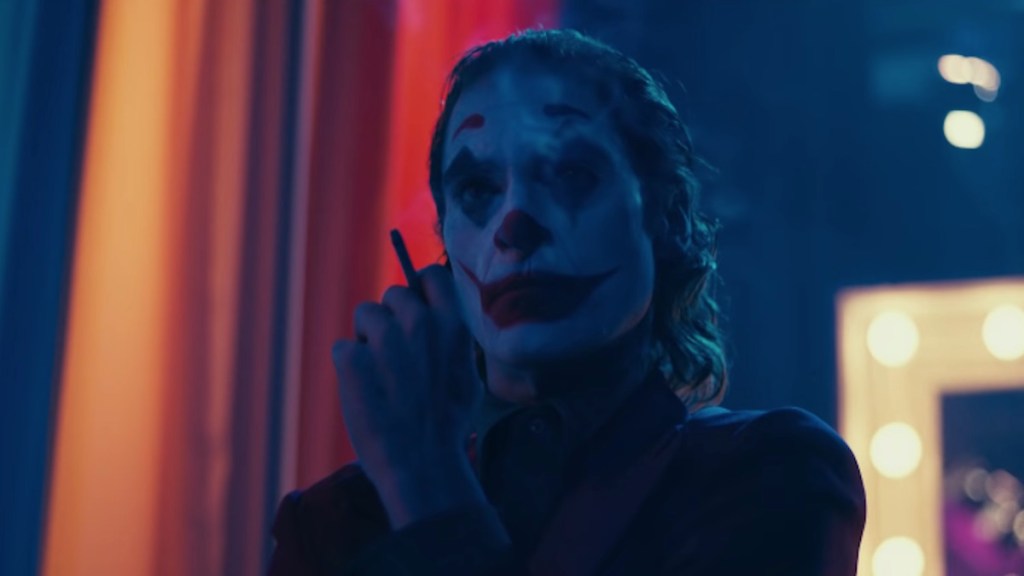
Moving on from one film featuring a depraved, nihilistic murderer playing for laughs to another one of the most talked about films this awards season is Joker. Last year Black Panther was one of the big winners of the Oscars ceremony. Winning four awards and in the eyes of some people it had a good chance at winning the top prize. It helped to usher in, or rather reignite, a new wave of Oscar contenders in the form of comic-book films. Early on in the awards season campaign Disney were heavily pushing box-office smash Avengers: Endgame for awards, and it may have stood a chance if they’d kept the fight going, however the campaign seemed to quiet down a week or two after it was started and thus Endgame only shows up in the Visual Effects category. However, instead of Marvel it seems as if Academy members really favoured DC this year, particularly in the form of Joker.
Joker is possibly one of the most divisive films nominated this year. While there have been those who absolutely love it, placing it high on many best of the year lists, there are also those who have actively spoken out against it for it’s dark, nihilistic tone. Nonetheless the film still has 11 nominations in total, the most this year, so there’s clearly a love for it from almost all sectors of the Academy. Add this to the fact that the film is potentially one of the most widely seen of the nominees – having grossed over $1 billion at the box office; making it the highest grossing R (the American equivalent of a UK 15) rated film of all time and one of the most profitable films ever made – it’s likely to appear on many lists. It’s very likely that most voters will put all nine films on their ballots, however for those who don’t the films they have seen will have a big impact. And if Joker is on almost every list, having potentially been the most seen, then that could be enough to give it the win – especially if the love for the film is as strong as the nominations indicate.
While a number of the categories in which Joker appears in are technical ones it also ticks off the key areas of Best Director, Adapted Screenplay, Leading Actor and Film Editing. Todd Phillips’ Directing nomination was something which was always uncertain. While it was likely that the film would get multiple nominations; as it had done at a number of other awards, Phillips was always an uncertain name for Best Director. This was mostly due to his comments about why he moved from comedies, such as The Hangover trilogy and Due Date, to dramas like War Dogs and now Joker. He stated that comedy had been ruined by “woke culture”, going on to say “all the f**king funny guys are like, f**k this s**t, because I don’t want to offend you”. When it came to the backlash towards the film a number of sources claimed that Phillips didn’t respond well to it. However, the fact that he’s managed to get a nomination, especially when voters often think of the past track record of an individual – one of the reasons given as to the lack of a nomination for Adam Sandler in Uncut Gems in the Leading Actor category – is impressive and shows that there’s potentially some real force behind Joker.
When it comes to force in other departments the most is clearly behind lead actor Joaquin Phoenix. With his current track record at pretty much every other awards ceremony he’s almost a lock-in to win this year’s Leading Actor Oscar. His physical portrayal of the titular clown prince of crime is certainly one of a troubled, tormented and eventually just plain twisted character. In many ways it’s a very Oscar bait-y performance. And with such a strong, highly-praised central performance that many are likely to remember, that makes up a large majority of the film and the praise that it received. Therefore when remembering the strength of Phoenix’s performance voters may very well remember the film, if they liked it that is (there are those who admit to thinking that Phoenix gave a great turn that object against the film), and place it favourably on their ballots.
However, despite the fact that people in various departments clearly favour the film there’s one group where uncertainty lies as to whether they’ve seen the film. That group being older voters. Last year a number of older voters said that they either didn’t like, or simply hadn’t seen, Black Panther, partly due to it being a comic-book adaptation. And with Joker also being one of these that might not help its chances of winning the main award on Sunday. But, it should also be said, as it has been many times before by a great many people, that Joker isn’t quite a conventional comic-book adaptation/ inspired film. There have been a large deal of comparisons to the work of Martin Scorsese, particularly the likes of Taxi Driver and The King Of Comedy – jokes were made on Twitter that the film got its Adapted Screenplay nomination for being based on the works of Martin Scorsese. With this style and feel some older voters may be pulled in, but also the film might act as a call back to this particular age of cinema. Allowing for such voters to connect/ enjoy the film more and give their vote to it, especially with the various themes and ideas of mental health and illness that it plays with.
Throw into the mixture undertones of Oscar bait and you would think that you have your Best Picture winner here. As said on Twitter by @Saachi, “Joker is a movie made by people who think they are underdogs (but are not) about a man who thinks he is an underdog (but ultimately is not)”. As already mentioned the underdog story is an Oscar favourite, no matter what form it comes in. The similarities between Moonlight, The Shape Of Water and even Green Book – in fact almost any Best Picture winner of the last decade – is the fact that they focus on underdogs in some form or another. Most of the time these figures are overcoming something, while in Joker the lead character doesn’t quite overcome anything, instead begins killing people to deal with his problems, which soon just becomes him mentally snapping into a state of uncontrollable madness and cynicism. Either way the character believes that he’s an underdog, and if voters view this as a general underdog story they may be more likely to lean towards voting for it.
It’s certainly been a divisive film; possibly the most divisive out of all the nominees. But, there are a number of clear pushes in favour of Joker, not just from individual Academy branches, but also from the general reception and style. This isn’t a standard comic-book film and that’s likely to give the film an advantage that other DC, or Marvel, adaptations wouldn’t have. There are multiple points that could almost all come together to create a big forceful push for Joker. And if Green Book was an anomaly and the Academy is truly changing direction, and even going away from the likes of Moonlight and The Shape Of Water then Joker may be the option in this case. It’s almost a step forward, but a step in the same direction as Green Book in a number of ways. It’s a complicated film, but somehow there could be enough support to finally give a comic-book adaptation Best Picture.
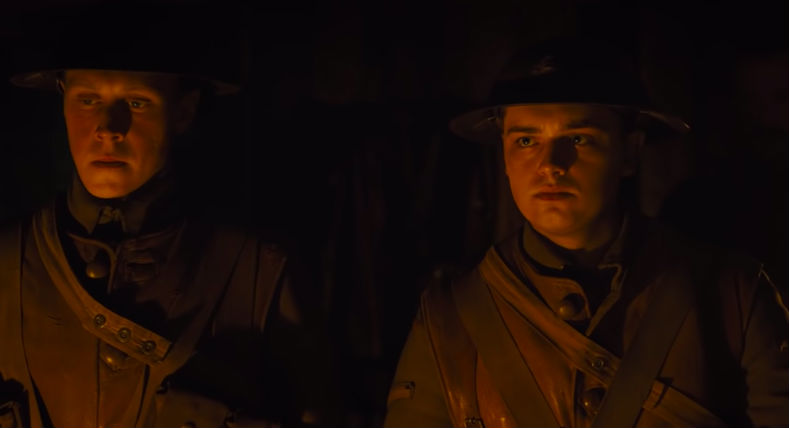
Moving on from one man’s war against the entire sane world to another film about a World War, 1917 may very well have turned out to be something of a dark horse in this year’s Best Picture race. It seems that for the first two and a half months of awards season nobody was even mentioning it. Part way through December the name began to be banded around as a potential competitor. And then suddenly, one day it just seemed to be a front-runner, completely flipping the table and changing the course of the race for this year’s biggest film award. And with the love that it’s had at other ceremonies – including wins at the Directors Guild Awards, Producers Guild Awards and the BAFTAs, there’s a big push for it. While a number of these awards show that where there is overlap between voters that the film is at the top of a number of lists. Admittedly not all Best Picture nominees have been on this list, so with nine instead of five nominees things could very well change. But, the Producers Guild use a preferential ballot just as the Oscars do for Best Picture, plus they’ve matched the best picture winner 6 and a half (technically 7 – there was a draw in 2014 when Gravity and that year’s Best Picture winner 12 Years A Slave both won) times in the last ten years. But, whatever way you look at it there are clear trends at other awards shows that show 1917, as many believe it to be, as a clear front-runner in this year’s Oscar race. The potential winner that just one day came out of nowhere.
1917 has been highly praised for its technical achievements. Acting as a World War One action-drama that’s made to look like it’s done in two shots – using similar techniques to 2015’s Best Picture winner Birdman – the film follows its two main characters in a real-time setting, so to ramp up the tension that the viewer feels. Add to that the intense nature of the war environment, with many near-death situations for the characters the intent is to create a pulse-pounding war film that pulls the viewer in so they feel every gunshot and explosion. And that seems to have been successful due to the fact that the film has managed to pick up a number of technical nominations – and seems very likely to win a number of them. It appears that Cinematography is an almost certain win in a somewhat uncompetitive list, giving master cinematographer Roger Deakins his second Oscar. In the sound categories the only competition appears to be Ford V Ferrari (which could very well win) and the film has been discussed as a potential winner in Production Design and Visual Effects. While some say this could go to Avengers: Endgame there are those who seem to go away from the big franchise films. one voter has claimed that they don’t like the film, or franchise, and so won’t vote for it in a visual effects category. This same voter also said about the Best Original Song category that they wouldn’t vote for a particular song because despite liking the song they didn’t like the film (logic!) Nonetheless the film has been discussed as a Visual Effects winner. All of this showing that there is a clear love for the visual cinematic spectacle that 1917 offers.
In total the film has 10 nominations, including Best Director and Best Original Screenplay. Sam Mendes almost seems to be a lock-in for the Best Director award. The category is actually titled Achievement in Directing. And with 1917 Mendes certainly comes under deserving this, while he seems to have competition from Bong Joon-ho and Quentin Tarantino Mendes as won directing awards at a number of other ceremonies in the past few months. And often the director Oscar it goes to the person who has made the biggest ‘achievement’ or piece with the most ‘spectacle’, so this could very well go to Mendes this year. And often Best Director and Best Picture have matched up, not so often since the introduction of the preferential ballot, but there is still the occasional match-up, and that could very well be the case this year. After all the reasons for why Mendes might win Best Director are almost the same as to why his film might win Best Picture, the sheer spectacle of the piece.
A piece that many have said should be viewed on the big screen, the biggest screen possible in some cases, and it’s understandable as to why people have said this. However, with the Oscars often films are seen on the small screen through screeners. Meaning that 1917 may not be able to unpack its full potential on those who decide to watch it on a disc at home instead of in a cinema, which could mean that it falters in impact and doesn’t get the maximum response that it could get from viewers. This was the case that was made by some when it came to Christopher Nolan’s Dunkirk not winning Best Picture in 2018. However, Dunkirk was a mid-summer release, 1917 has a potential recency boost with the fact that it was released in the US in December, qualifying it for this year’s Oscars. With this in mind there was the chance for voters to see it on the big screen, meaning that they could very well have had the full experience, and if this is the case, with the film being witnessed as the creators surely which it to be, and the fact that it’s a more recent memory in the minds of voters, this could all manage to work in the favour of the film.
One of the slight surprises of the film is the fact that it got a Best Original Screenplay nomination. 1917 is a very visual film, there’s not a great deal of dialogue in it. And many people weren’t expecting it to get a screenplay nomination, however, the fact that it’s earned one is certainly something for great consideration when thinking about its chances of winning Best Picture. At the point when this category was announced 1917 slowly began to show that it could easily be a dark horse in the race for the top Oscar, and it shows further love for the film in an unexpected category.
The film lacks an editing nomination, and there is potential for that to damage its chances. While the aforementioned Birdman didn’t have an editing nomination, due to the editing not being anything overly new, with various hidden cuts; just like 1917, managed to win Best Picture, it did have acting nominations. 1917 doesn’t have any acting nominations and that could prove almost as damaging, if not more so, than not having a Best Film Editing nod. If there aren’t any performances that prove strong, or memorable, enough for Oscar nominations what does that say about the strength and power of the film? While the two leads are still rising stars that may not be overly well-known to the Academy, in a year filled with many starry names, there was still room for Yalitza Aparicio in the Leading Actress category for Roma last year. And it even could be said that Olivia Colman was relatively unknown to the Academy last year. 1917 is very much an ensemble piece, which struggle to pick up Oscar nominations. However many of the big name appearances, which could easily be viewed as cameos, from the likes of Mark Strong, Colin Firth and Benedict Cumberbatch, are only on-screen for two-three minutes on average and therefore don’t really warrant awards attention. Even if Judi Dench did win Supporting Actress in 1999 for her eight minutes in Shakespeare In love.
There are those that have said that 1917 is “gimmicky” or something of a novelty. And that could do some damage to it. While there has been praise the groups of people who think that it’s nothing more than a technical piece with not much else of a punch then that could mean that its placed low on the ballots of a number of people. But, often when it comes to Best Picture the film that wins is the one that seems to have been ‘liked’ by more people, the one that’s been most consistently agreed upon as a good or enjoyable film – an idea once put across by film critic Mark Kermode, when explaining why he thought that Lady Bird was going to win Best Picture back in 2018. Hence why often, since the preferential ballot, it’s been the mostly agreed upon second or third best film that’s won the top award. And 1917 has won at a number of other ceremonies, as already mentioned, and with Academy members also being parts of various guild awards, etc then there is strong support for 1917 at the top of a number of lists. And if it’s placed somewhere in the top three, or even four at a stretch, on most lists, then depending on what’s above it it could stand a strong chance of winning Best Picture.
Alongside 1917 another rapidly rising frontrunner that seems to be dominating the conversation is Parasite. Last year we were talking about the fact that a foreign language film could very well be the first to win Best Picture, and this year we’re having the same conversation. And it seems that the event is more likely for Parasite than it ever was for Roma. There doesn’t seem to be a bad word said about Parasite by anyone, it seems to have had five star plaudits across the board. Add to that wins at the Writers Guild Awards, Screen Actors Guild Awards and prominent wins at other ceremonies, including Original Screenplay at the BAFTA’s, the race for Best Picture could very well stop here. Parasite has been praised by many as not just one of the best films of the year, but also the decade. It’s arguably the most loved and heralded film out of all nine of this year’s nominees.
In total the film has six nominations. This might not seem like much in comparison to other Best Picture nominees this year, but it ticks off almost all of the key areas; Best Director, Film Editing, Original Screenplay and even International Feature (the new name for Foreign Language Film, introduced this year). The sign that Parasite was going to do well when it came to nominations actually came when the Production Design nods were announced. The fact that a foreign language film that may not have been seen by many people has earned technical nominations is often a good sign, it certainly was for Roma. And Production Design is particularly interesting. It’s the way the sets in the film look and feel that shows the themes of class separation so well, especially when you compare the run-down, washed out almost cave like living spaces of the central family of the piece to the luxurious architect-designed home of the family they begin to work for and infiltrate. The house itself also feels like a cave with its various layers and hidden points, however the main areas almost feel like a fully renovated luxury cave, the type of which some people may very well book a room in for a holiday. Either way the fact that such an integral part of the story has been recognised in this category does show promise when it comes to whether the film can win Best Picture, it sounds weird when comparing to technical categories not always meaning a lot for other films, but in the case of Parasite it does show promise and a push for the film.
However, the fact that the film is nominated for, and is pretty much set to win, Best International Feature could pose a problem. As has been argued in the past, why should a film win both International/ Foreign Language Feature and Best Picture? After all, isn’t that basically winning Best Picture twice? There are also some people who may simply vote against the film, or place it low on their ballots, because it’s a subtitled foreign language film, or they might just refuse to see the film because of this. There are some voters who may do this because the Oscars are American awards. Why give an American award to a foreign film, or foreign actors, even if those actors do speak English, but come from the likes of the UK or Australia, a problem that some people have brought up this year with some of the nominees. However, as happened with Roma last year and various films in previous years this seems to be becoming less of a problem, if it ever was one to start with. But, when it comes to those who are voting on the film for its merit and how good they think it is, if people stick by their word and love it as much as they seem to claim to, and the wild praise is accurate, then Parasite is very likely to get a lot of number one placements of ballots. However, where others place it plays a heavy factor. Do they place it around the middle, in the top three, at the bottoms? If it’s the former or the latter then the film may be in danger of continuing the trend of no wins for foreign language films for Best Picture. But, if there’s enough strong support in the top three, to go alongside all the first place pushes, then it could just slip in to a monumental Best Picture win.
Continuing a similar theme some voters may feel that after the mixed (to an extent somewhat negative) response to Green Book winning last year that giving the Oscar to a foreign language film might act as some form of redemption for Roma and apology for Green Book. They may feel that something should be said or done and by positively voting for Parasite that’s doing something towards this, especially with its foreign language nature and the fact that it is, as Roma was, a strong front-runner in the race, that many are predicting to be the winner. In fact many are saying that it could even win Best Director, which isn’t outside the realms of possibility.
However, while it ticks of the likes of Director, Screenplay and Film Editing the film clearly doesn’t have any presence in any acting categories – despite the strong performances. Some expected there to be some support for Song Kang-ho in Best Supporting Actor (although I would personally argue that he’s the lead of the film) although this was something that didn’t end up happening. The acting branch of the Academy is by far the largest of all voting branches, with over 1,200 members (as of 2018). This is closely followed by the short films and feature animations branch, holding over 550 members, while the directing branch has just over 500 members. In total the Academy has over 8,400 members that are eligible to vote, so the acting branch makes up just over 1/7 of the maximum possible amount of votes. However, this is still a rather large proportion that can have a big impact, and if their votes reflect the performances they nominated then this might not bode well for Parasite. Despite this the film did win the Best Ensemble Cast award at the Screen Actors Guild Awards, of which has some overlap, in terms of voters, with the Oscars. However, the Ensemble Cast winner at the SAG’s hasn’t often matched up with the winner at the Oscars. Although, in the last decade they have predict some underdog winners such as Spotlight, Birdman, The King’s Speech and Argo they have also opted for some outsiders in past Best Picture races like Hidden Figures, The Help and, to some degree, Black Panther. So, there’s almost a coin-flip chance of whether the Screen Actors Guild will match with the Best Picture Oscar winner.
There’s no denying the status and the power that Parasite has in this year’s Best Picture race. It rapidly became one of the major frontrunners, going on to wider releases in various countries than most foreign language films because of the awards attention that it has been receiving. While genre films don’t always win awards, particularly Oscars, due to how subjective they are – Parasite is very much a satirical thriller – this one seems to have connected with people really well, and there’s a lot of praise for it in anonymous voter articles and interviews. There’s a strong chance that it could very easily win Best Picture. And if voters do want to make up for Green Book, or prove that it was just an anomaly; then Parasite may very well be the way to go to help usher in a new age and time for the Oscars. Especially when it comes to the likes of diversity rows and the type of film that is nominated for, and wins, Best Picture. Parasite might just be the film to help bring some of this to an end, and help bring in a new, unique age for the Academy Awards.
While Parasite is certainly a unique, but somewhat more commonly appearing, film in the Best Picture category if there was one person who was almost sure to be there, alongside a number of other categories, it would be none other than Quentin Tarantino. The Oscars love nominating Quentin Tarantino, and occasionally they like to give him a Screenplay win, or one of his actors will take home a trophy. However, he’s never taken home a golden statuette with the words “Best Picture” engraved on the bottom, and perhaps this year could be his year with his ode to the film industry of the 60’s, Once Upon A Time In Hollywood.
As already established Oscar voters love films about themselves, or rather actors and the film industry in general. Once Upon A Time In Hollywood not only deals with struggling actors and stunt doubles but also features prominent scenes of film and TV making, people going to the cinema and also features Sharon Tate as a somewhat prominent character; just to name a few things. This film is a love letter to Hollywood. Tarantino is known for using many elements of classic Hollywood influences in his works, alongside his famous soundtracks, but Once Upon A Time In Hollywood is a new level for him, and with its style and the way it features the iconic land of cinema as a key background throughout the film. Add to that the lack of his standard brand of intensely bloody violence (apart from one specific sequence in the final 15 minutes) and it seems that this may be his best chance at the Best Picture Oscar yet, and if this is his penultimate film that might be a bit more of a push, although this is something that hasn’t really been made much of a deal of.
In total the film has ten nominations, including Best Original Screenplay and Best Director. Both of which are common Tarantino territory. The film itself has been widely talked about for Best Original Screenplay, however this is possibly one of the most unpredictable and closest races of this years Oscars; even Knives Out, which has no other nominations, could very easily prove to be a dark horse in this race. But, in each of these key categories Once Upon A Time In Hollywood has been a strong contender, and it could very easily walk away with the awards, in one or two cases potentially as a slight surprise, there is a lot of love for this film in various categories. Love that hasn’t quite been spoken about or had a light completely shone on it. Plus, there are a number of people who believe this years Best Picture race to be between three films, Once Upon A Time In Hollywood, 1917 and Parasite. And if that is the case, with the love that it seems to have, then the former could quite possibly be the winner. There’s a likelihood that it’s consistently placed within the top three of ballots more than any other film, even if it’s mostly second and third rankings. Nonetheless that can be very beneficial and could slide it into, for some, a shock win.
Add to that two acting nominations, Leading and Supporting Actor, the film has favour from more key branches. It seems highly likely that Brad Pitt will walk away with Best Supporting Actor on Sunday night, judging from his track record at other awards ceremonies this season. While Pitt’s role is something I personally don’t quite get the love for, he’s good but I don’t completely get the awards attention? many have praised it for getting the stunt man trying to break-in more to the world of film and be seen and heard is good. DiCaprio has strong competition from both Adam Driver and Joaquin Phoenix – with Phoenix being almost certain to win Leading Actor – however he has also been praised for his performance of a once strong actor trying to recover from a period of one-off villain roles in TV shows. Both characters representing themes that voters love! This is a film that features a high level of Oscar bait – Oscar bait, served Tarantino style, something which both brings voters towards the film, but also turns some away. Tarantino is certainly a mixed bag amongst the Academy, there’s no denying that.
However, there is a notable absence of an editing nomination. Were there some people who thought that the film was too long? Did the extended scenes of filming a TV show feel too much like watching a programme instead of the narrative of the film? Once Upon A Time In Hollywood is 2 hours and 40 minutes, The Irishman managed to get a nod in the Film Editing category with a run-time of 3 and a half hours, and even Ford V Ferrari at 2 and a half hours. So, this could be damaging for Tarantino’s love letter to the world of classic cinema, which at one point he mentioned there’s a four hour cut of somewhere. There could be something in the run-time of the style of the film that meant that it didn’t earn an Editing nomination, and that could be reflected by the ballots of some Academy voters. Something which could prove to be a big issue for Tarantino if he finally wants to win Best Picture.
The authenticity and general style of the film is something that a number of anonymous voters have praised. The film has both Production Design and Costume Design nominations. In many ways the film is made up of large set-pieces, so a Production Design nomination is understandable, and in a number of ways this is also a front-runner in that category, but again it seems as if even this category is almost unpredictable. It seems as if most of the categories Once Upon A Time In Hollywood appears in are very close, almost too close to call in some cases, or it just has strong competition with one or two other films, often Ford V Ferrari, which is also something of a call back to more traditional forms of filmmaking and cinema. When it comes to Costume Design it just goes to show that members were brought into this world of 60’s filmmaking. A number of voters would have lived in this world, and some of them have praised the film for what it shows and represents, saying that its accuracy is what they loved most about the film, offering almost all of their possible votes to the film at any given opportunity. When people love this film they really love it and show their support in droves, something which could prove highly beneficial to it. There’s an authentically designed world here, and if people were truly engaged in it then they’re likely to show that through their votes.
For the most part this has been a Tarantino feature that has avoided controversy, and as already mentioned mass amounts of bloodshed and violence. However, one scene in particular seems to have garnered some backlash towards its representation of Bruce Lee. Lee is portrayed as rather arrogant and full of himself, something which is family, who object against the scene and the representation of the iconic martial arts movie star, say he never was. There are also people who claim that he comes across as nothing more than an Asian stereotype and that the scene is offensive and lazy. This was very much a big talking point when the film was first released back in the summer. However, now that awards season is upon us it seems to be something that is barely discussed, if not at all, almost as if it has been swept under the rug. However, there could still be some people who hold this view and vote against the film for such a reason. There may also be others who simply disagree with the degree of violence in the final stages of the film. While only in a brief scene some say that Tarantino still went where other directors wouldn’t, the ending is, to an extent, an overall happy one, however in the final scenes there are a number of bloody decisions made to get to there (obviously no spoilers for those who haven’t seen the film). But, that moment is relatively brief, and for the most part, much like the Bruce Lee scene, doesn’t seem to have been brought up much or referenced at all. So, both of these potential issues may not be present at all, and may very well not affect people’s views of the film and where they place it on their ballots.
Linking back to the film’s release back in the summer; out of all the Best Picture nominees this year Once Upon A Time In Hollywood is the one with the furthest away release date. In the US the film was released on July 26th, a fair couple of months outside of standard awards season hopeful territory. This could mean that the film hasn’t been viewed for quite a while by some voters, not all of whom may return to it, therefore this could affect it when it comes to the recency value of other nominees. Alternatively this could be viewed as voters have remembered the film fondly. It’s something that has stayed with them and so they may be more likely to vote favourably for it due to the ‘loyalty’ that they have with it, or how good they remember it being, judging all other films on how well they remember Once Upon A Time In Hollywood to be.
While it’s difficult to tell how well the film will do at this years Academy Awards juding by its track record – at some ceremonies, such as the Writers Guild awards, the film hasn’t been eligible due to Tarantino not being a member of the guild – there’s no denying the fact that this is very much a strong piece of Oscar bait. A celebration of 1960’s Hollywood that also acts as a buddy film about an actor and his stunt double written and directed by Quentin Tarantino? In many ways it’s pure Oscar gold. It’s a different film from him and also his best chance at Best Picture yet. He has all the right elements and despite a lack of an editing nomination he has almost every other box ticked. The audiences seem to have enjoyed his film and that comes across with technical nods that show their engagement in the world. 2020 may very well be the year where a Quentin Tarantino film finally wins Best Picture, and with his producer credit on the film he’d be making the speech!
Finally, after discussing all the many achievements in each of this year’s Best Picture nominees there is perhaps one that stands out more than the rest. How does a Best Picture nominated film that looks wonderful, has a screenplay considered one of the five best adapted screenplays of the year, manages to get two performances so good that they also earn nominations amongst a strong ensemble cast and so much more direct itself? Well, according to Academy members the answer is very simply. It just has to be Little Women. That’s right Greta Gerwig’s much praised, by women and men alike, managed to earn her an Adapted Screenplay nomination but not a Best Director nod, despite many people believing that she could earn one. Back in 2018 Gerwig rightfully earned a Best Director nomination for Lady Bird, after backlash that she was missed out at other awards ceremonies where the main feature was, as Natalie Portman so wonderfully put it when presenting the award at the Golden Globes, “the nominees who are all male”. People thought that after similar backlash happened this year that Gerwig would surely get her deserved nomination for directing Little Women; her direction of this film is genuinely brilliant. However it was not to be, in fact none of the big audience pushes seemed to happen this year – no Wild Rose is Original Song, no Jennifer Lopez in Supporting Actress for her brilliant turn in Hustlers, Lupita Nyong’o seemed to be nowhere near the win she should have in the Leading Actress category for her phenomenally distressing dual-performance in Us, and most of all no sign of Hugh Grant in Supporting Actor for Paddington 2, even if he was only eligible for that last year.
Therefore Little Women could be receiving a push from some voters who feel like they owe some form of justice to Gerwig for missing her out of the Best Director category, therefore they may give her film a push in the Best Picture category. Although they may choose to just do this in the Best Adapted Screenplay category, for which the film also has a nomination in, and could prove to win, where its only other competition seems to be Jojo Rabbit, which has proved to be fairly divisive amongst Academy voters. And an Adapted Screenplay vote could lead voters to remember how much they like the film, potentially giving it a boost on their ballots if that were to be the case. Plus, it seems that Greta Gerwig is generally liked amongst the Academy. Her last film, Lady Bird, was successful in obtaining some big nominations and for some posed a potential threat to the frontrunners in the race that year. Admittedly the film left trophy-less, but in a number of ways it may have helped to also give Little Women a push, and it could, likely, go home with a golden statuette or two on Oscar night.
Little Women does strike as another, potentially of only two, nominee that only just slipped into this year’s Best Picture race. However, it does actually stand a good chance. Partly because it is a very good film, and also because of the general response that it seems to have had. Of course there are the female audience members that have enjoyed the film and may given it a push from a feminist angle, especially in a category dominated by stories about white males and whatever problems they seem to have. And this isn’t to say that the only vote for Little Women will come from the female audience. Far from it, Little Women has been enjoyed by a wide range of people, and that has shown in the support that it’s had. It dos stand a good chance of winning, it has been consistently liked and praised by people and that could be beneficial. As already mentioned the film that wins Best Picture isn’t always the one that people love the most or gets the most nominations, or indeed anything like that. Often the film that wins Best Picture is the one that people agree upon the most, and Little Women could very well be that film.
That being said the film hasn’t overly had success at other awards, but then again it hasn’t really been nominated at a number of them, and so hasn’t really been given the chance to shine. And with that in mind maybe this will be its chance. 1917 and Parasite have had their time, so has Once Upon A Time In Hollywood, and even to an extent Joker. So why shouldn’t voters have their say on Little Women? It’s certainly got the strength and positive responses to do it. Admittedly the lack of a Best Director or Film Editing nomination could prove damaging but, the film does have two acting nominations. One for Saoirse Ronan in Best Leading Actress (making her, at the age of 25, the second youngest person to ever receive four Academy Award nominations, behind Jennifer Lawrence who was only four months younger when she received her fourth nomination back in 2016) and the other for Florence Pugh in Best Supporting Actress. Pugh who made her debut back in 2016 in Lady Macbeth skyrocketed last year with prominent roles in Fighting With My Family, Little Woman and Midsommar – if the Academy gave horror a chance that she may have even found her name appearing in the Leading Actress category for her deeply unnerving turn in Ari Aster’s two and a half hours of dread and discomfort. For a still rising star, who’s appearance in the Marvel Cinematic Universe arrives in May, to get nominated at the age of 24 amongst such a strong cast there’s a strong argument for the memorable nature of the performances that line Little Women. And if that’s the case then there may be an equally strong love for the film, after all if the performances are remembered fondly then it may be likely that the film is too.
Perhaps one of the biggest, or at least most understated, factors that could guide Little Women to Best Picture success is its style. The film is very much a rather traditional period piece, the kind that won Best Picture back in the 60’s, and has every couple of years had a resurgence. Amadeus in 1984. Shakespeare In Love in 1999, and potentially even the likes of 12 Years A Slave in 2014 or The Artist in 2012. While a proper period piece hasn’t won in recent years there have certainly been a number of strong competitors. Just last year The Favourite was a strong potential winner; although in the end it only took home a deserved Best Leading Actress for Olivia Colman. Is this the year where we finally see another period piece winning Best Picture. It’s the type of film that could connect well with older voters, but also with the themes and ideas that the film presents, and the general style and feel there’s a lot there for voters of all ages to like and connect with. It’s an easily accessible film, despite some voters claiming to be confused by the way the film is told (there are literally children who have been able to follow it with ease), for pretty much everyone. Place on top of that the generally positive reception that the film has had, and the recency factor, having been released in mid-December, meaning it might be fresher in some voter’s minds – something which might be more convenient than before with this year’s early Oscars – then one of the most under-discussed contenders might not be so much of an outsider as some people might think. When you look at the amount of forces working in favour of the film they build up to create what is possibly quite a large push. Little Women could very well end up winning this year’s Best Picture Oscar.
And now, we come to the point of this entire piece. Deciding what is likely to win this year’s Best Picture Oscar. The film that all 8,000+ members of the Academy Of Motion Picture Arts And Sciences have deemed to be the best film released in the United States (that meets qualifying guidelines) in 2019.
Most of the time there are at least two or three films that can be instantly cancelled out as clear outsiders. However, this year there only seems to be one film that from just looking at the rest of the nominees it can be said it’s highly unlikely to win. Therefore Ford V Ferrari finds itself driving out of this year’s race.
To an extent Little Women does seem to be a film that just slipped into the nominees, and while it could do well it just doesn’t seem to have the steam that a number of the other films in this category have. In fact it seems that a number of films have simply lost steam and haven’t been discussed as much as they were early on during awards season. Thus we find both Netflix productions, Marriage Story and The Irishman knocked out of the race. Honestly, if you asked me a month ago, and even for a large part of this awards race I would have said that The Irishman was going to win Best Picture. If I were the betting type then I may have even put money on it. The love and praise for the film was so immense that I was absolutely certain that it would win, however it now seems as if that isn’t the case anymore. Martin Scorsese won his Oscar with The Departed and that was that.
Now, we come on to the more divisive films. Sometimes films are surrounded by some form of controversy. Whether it be to do with the director, things people have said in relation to the film or simply a scene or character within it. But, this year controversy doesn’t seem to be overly present. Nonetheless there are still divisive films present. The most notable one being Joker. While Joker has been highly praised its dark, and as some claim twisted, nature has proved to split audiences, seemingly more than any other of this years nominees. It’s simply too divisive. Similarly Jojo Rabbit has also proved to have its supporters and haters. While some simply don’t want to vote for a ‘Hitler comedy’ or simply don’t like the film there are others who protest against it’s depiction/ discussion of the holocaust. This is likely to prove damaging to the film’s chances of winning Best Picture, even if there are a number of people who really love it and show their enjoyment by placing it high on their ballots.
And now there are three films left; 1917, Once Upon A Time In Hollywood and Parasite. For a couple of weeks after the nominations were announced many believed Once Upon A Time In Hollywood to be a front-runner in the field. In fact there are still a number of people who believe that it could just about get away with the win, there seems to be some rising support for Quentin Tarantino in the Best Director category and it has long been a lead amongst the other nominees for Original Screenplay. However, it’s the name Tarantino that could both cause the film to win Best Picture or push it away from that prize. This is certainly a different film for him, and the film based focus causes an even bigger case for his film to win. However, I think that the film isn’t quite strong enough in the competition to compete with the two solid front-runners of this year’s awards race. Therefore the 2020 Best Picture Oscar is between 1917 and Parasite.
Often the style of film that wins Best Picture changes with the decade, as the final year or two of a decade come around the style slowly begins to shift, as if with every tenth Oscars the films that win have a shared theme, alongside that of the underdog. Often the point in which the slight theme changes comes around the end of one decade into the next, as if every ten years the Academy celebrates the films they give Best Picture slightly change, or rather evolve. And this seemed to be the case when Moonlight won, followed by The Shape Of Water. However, Green Book disturbed that and makes it slightly more difficult to try and decide what will win this year’s Best Picture Oscar. And with 1917 and Parasite, two very different films, the clear leaders making a prediction that one is fully satisfied with. Both films have large pushes yet also moderate forces acting against them achieving the title of the best film of 2019.
Parasite has nominations in Best Director, Original Screenplay and Film Editing, and a large degree of love, there might be some who vote against the film because its a subtitled film in a foreign language. However, there is clear support in major categories and the film is likely to earn a lot of first place votes on preferential ballots.
In the case of 1917, the film has Best Director and Original Screenplay nominations but no Film Editing nod; most likely due to the editing being slightly noticeable/ easy in terms of the two-shot look. There are those who have said that the film is slightly gimmicky or something of a novelty, and that could hurt its chances too. But then again the film has won a number of awards, including the DGA, BAFTA, Golden Globe (but they mean nothing) and the PGA, which has the preferential ballot. This shows it’s number one on a number of lists. But, some of these other ceremonies didn’t have the same amount of nominees, or just the same nominees, as those in the Best Picture category at the Oscars. Either way, there could likely be a number of consistent placements of the film in the top three of ballots, which is often more important than having the most first place mentions.
And that brings me on to the annual point of the preferential ballot. The preferential ballot means that voters rank the films nominated in the Best Picture category. When a film gets 51% or more of first place votes that’s when it becomes the winner of Best Picture. This isn’t likely to happen in the first round, so the film with the least amount of votes is taken out of the race. For example if Ford V Ferrari obtained the least votes then it would be removed, the people who voted for that in prime position then have their second place option move up to their first place choice. This continues to happen until a film achieves at least 51% of the vote.
Thus it’s often more important that a film gets more votes in the second and third place positions than first. It’s also important to think about what will be placed consistently higher on more ballots 1917 or Parasite? One is widely loved and praised, but also might have some lower mentioned, while there seems to be consistent placement for the other. But, the love for the former could just about prevail and lead to a monumental change in the winner of Best Picture, something which many people have been calling for. Whereas the latter, while having a big push, would continue current trends while also following traditional voting lines.
I’ve waffled on enough in this piece. If you’re even still reading by this point then well done. If you’re just skimming through, or have just taken a couple of minutes to scroll through the whole thing in the hope of just reading the verdict, then welcome, here it is.
If Parasite wins Best Original Screenplay then that will likely give it more of a push to win Best Picture, even more so if it manages to nab Director from the seemingly locked-in Sam Mendes, and even against Tarantino, who seems to also have some love behind him in that category. In fact even a Film Editing win would be big, it’s certainly not impossible. And all three would be something truly special! Aside from all this there’s already a lot of love for it as it is for Best Picture. But, when considering the winner of Best Picture it all comes back to the preferential ballot. And, with that in mind you have to think of what film will place consistently higher on each ballot, often in the top three of ballots. And with that in mind, this year I am going to say that the film joining the likes of The Godfather, Gone With The Wind, Moonlight, The Silence Of The Lambs and Green Book (ok, you get the picture now, let’s just get to the likely reason you’re reading this) as a Best Picture Oscar winner will be Parasite.
Release date – 31st January 2020, Cert – PG, Run-time – 1 hour 48 minutes, Director – Marielle Heller
Cynical journalist Lloyd Vogel (Matthew Rhys) is sent to meet iconic television personality Mr Rogers (Tom Hanks) for a piece of heroes.
“It’s a beautiful day in this neighbourhood, a beautiful day for a neighbour. Would you be mine? Could you be mine” sings Tom Hanks as iconic American television personality Mr Rogers as he emerges through the door of his television home greeting the viewer with a charming smile and calming tones. This was how every episode of long-running American children’s show Mr Rogers’ Neighborhood began with an immediate connection with the viewer, openly inviting them in to be Mr Rogers neighbour for 30 minutes each day. A Beautiful Day In The Neighborhood very much treads along the same lines, telling its story as if a standard episode set in the titular neighbourhood. Filled with charm, innocence, care and joy. Whether you’re aware of Mr Rogers or not – which for most people in the UK the answer is very likely the latter – there’s an inescapable air of happiness as a smile spreads across your face at the pure presence of not just Tom Hanks, but the spirit of Mr Rogers.
Hanks certainly doesn’t look like Fred Rogers, he doesn’t sound like him; but the most important thing is that he perfectly encapsulates the figure of one of the nicest men to have graced the earth. Spreading messages of kindness and care, telling each person that they are special while helping to tackle their emotions through his half hour of gentle thought. Through the harsh ‘t’s’ and slow, quiet style of speech, whether presenting or talking to others, Hanks is Mr Rogers. It’s almost impossible not to be consumed by his performance alone, connecting on a deeply emotional level with lines that seem to have been plucked from the brightly-coloured, cardigan-wearing host himself. Lines such as “anything mentionable is manageable” or simply the offer of a minute of reflective silence.
However, while Hanks certainly steals the show and is easily the main talking point of the film – earning his Supporting Actor Oscar nomination – the film actually follows journalist Lloyd Vogel (Matthew Rhys). Based on a 1998 Esquire article by Tom Junod about Mr Rogers, Vogel is sent to hold a short interview for 400 words for an issue on heroes. Vogel is the complete opposite of Rogers. Cynical, repressed, closed-in and seemingly lacking in empathy. None of this helped by the tense relationship he has with his distant father (Chris Cooper) who seems to reappear after a considerable time away from Lloyd’s life.
Lloyd views Rogers and his show as cheap and tacky. Only catering to the very young with silly songs, puppets and a false overly-sweetened personality. However, he comes to learn that what he sees is the true personality. Rogers’ Fred and Mr are very much the same. As he finds his eyes being opened, against the adversity of strained relationships, his time spent with his wife and newborn child, and, of course, his everyday life the emotional factor of the film grows. There aren’t simple bursts dotted throughout the piece and the carefully constructed screenplay, this is a film that builds up emotion alongside care – creating a unique warm brand; similar to that brought by Rogers himself – gradually building it up for a truly effective nature as the film goes on instead of restarting after each watery-eye-generating moment. When mixed with the dashes of humour that are spread throughout – never laughing at the characters and there behaviour, but more admiring their quirks and how others might respond to them, even an extended moment of Rogers struggling to set up a tent is finely tuned with a light coating of sweetened charming humour instead of laughter at the man himself – there’s a real sense of genuine heart and control to the film – clearly helmed with great precision by director Marielle Heller. All while avoiding a feeling of overdone sugary, syrupy sap.
As everything comes together and each character becomes more sympathetic, while still avoiding a forceful feeling, you can’t help but want to be more a part of the film. The echo of “won’t you be my neighbor?” is heard throughout the film and the viewer takes the hand of Rogers and the invite itself. Gently guided through the narrative as Vogel begins to experience some form of transformation, going from a 400 word addition to an almost 9,000 word article (something of an editors nightmare). A change that never feels instant as if snapping in a split second, as is often the case with Scrooge – the instant comparison for any cynic turned more open, caring figure – but a gradual process that you can see. One of reluctance, hesitation, rejection and struggles. All told through the eyes of a relatively family-friendly PG lens. With such a tone and style it manages to avoid feelings of cliche and convention. Instead bringing the viewer in for 108 minutes of calm and kindness. Something which a number of people potentially need right now. Provided in a way that never feels exclusively for kids or as if it’s talking down to the viewer. Instead openly inviting them in for a personal, thoughtful and still enjoyable experience. Wholly encapsulating the essence of Mr Rogers while managing to successfully tell a story of one man’s journey to becoming a simply better person. By the end you’re sat in equally reflective silence as you consider what you’ve seen, all the emotion and all the joy. And if you’re not stuck to your seat throughout the credits, make sure to stick around for the delights within them.
Warm, charming, thoughtful, emotional and funny; the list goes on, A Beautiful Day In The Neighborhood is a fantastic blend of everything that made Mr Rogers. A kind and caring tale of people becoming better with the strong support of Tom Hanks’ fantastically performed Fred Rogers. A gentle hug of a film, and very possibly America’s Paddington.