The Spongebob Movie: Sponge On The Run – Review

Cert – U, Run-time – 1 hour 31 minutes, Director – Tim Hill

Spongebob (Tom Kenny) and Patrick (Bill Fagerbakke) venture to Atlantic City to retrieve pet snail Gary (Kenny) from King Poseidon (Matt Berry)

2004’s The Spongebob Squarepants Movie has perhaps become something of a slight cult classic over the years since its release. Not just amongst younger viewers and those who saw it when it was first released but with adults too, to this day around 25% of Spongebob’s TV audience are adults with no kids. 11 years later the world was introduced to Sponge Out Of Water which, for about 20 minutes, brought Spongebob, in 3D animated form, to the real world. But, the majority of both films are made up of the traditional 2D animated form that the TV show that started it all still takes the form of. However, now, in Sponge On The Run, things look; and feel, different. Spongebob and all his ocean dwelling friends now take the form of 3D computer animation, which while there’s no problem with this the style does at times seem somewhat odd. Nothing new seems to be done with the style, instead it feels like what would be done with 2D animation in a 3D world – at times almost feeling like a form of stop-motion animation just without the fingerprints.

And yet fingerprints do seem to lie throughout the film’s screenplay, written by director Tim Hill. For a number of TV comedies it’s apparently common to have writers rooms where groups of writers get together to throw jokes around and come up with the best ones; it works well for 22-30 minutes episodes where you need to still try to get as many jokes in as possible. Although apparently never so much with films. Hill’s screenplay seems to try to throw in as many gags and asides as possible into the film’s already quite jumpy and all-over-the-place nature. Never quite giving the audience time to breathe as it flicks to something new in the hope of raising even a mild smirk. It feels as if a number of these attempted jokes have been either taken from the more recent series of the show, where apparently the quality has begun to decline, or have just been rejected.

The film itself almost feels like three loose episodes strung together to create a plot. We find Spongebob (Tom Kenny) enjoying his life working as a fry cook at The Krusty Krab restaurant, but when his pet snail Gary (also Kenny) goes missing he heads off to The Lost City Of Atlantic City – the underwater answer to Vegas – with his best friend Patrick (Bill Fagerbakke) to retrieve him from King Poseidon (Matt Berry). The reason for Gary being missing being that Plankton (Mr. Lawrence) notices that if he gets rid of Gary he gets rid of Spongebob and can take the Krabby Patty secret formula for his own unsuccessful rival the Chum Bucket. Thus King Poseidon – who uses snail slime to retain his young looks and avoid facial blemishes such as wrinkles, having run out of snails and issuing a royal decree for people to give their own up – is in possession of the sea snail that sounds like a cat. It all sounds rather busy and convoluted, and it is; and yet none of it ever really becomes engaging or that amusing at any point. Even with all of this going on the film still somehow finds time for Snoop Dogg to rap about being a pirate-zombie-cowboy before Danny Trejo turns up – something which sums up the whole film rather well.

Other celebrity roles and cameos include Tiffany Haddish, Awkwafina, Reggie Watts and Keanu Reeves as a wise tumbleweed – almost seemingly playing himself, which there is nothing wrong with – let’s not forget the majesty of David Hasselhoff in the first Spongebob movie. But the film seems so pre-occupied with celebrities, and random intervals that the plot, despite having multiple elements, occasionally feels thin. Maybe as a feature length TV special this would work better but certainly not as a proper film. It all seems to fall rather flat as the jokes never properly land and instead of focusing on the events of the film you almost focus on the sometimes rather odd soundtrack choices, Livin’ La Vida Loca plays as if it’s a catchy modern song that fits perfectly with the film.

Eventually the film, with about 20 minutes to go enters into a musical number and various flashbacks to how the various characters met Spongebob – the initial pitch for the film when it was first announced in 2015 under the title It’s A Wonderful Sponge – it feels as if, once again, this is a separate idea for TV (it’s already been announced that Kamp Koral adventures are to be a spin-off show). Everything simply feels extremely random and somewhat disorganised. In need of tightening up to create something that provides more than just one or two small exhales of mild amusement over the course of its 91 minute run-time. Through it’s various tangents, flashbacks, songs and general randomness this very much feels like something better suited for younger TV audiences than anyone else.

Unfortunately this nautical nonsense is not something you wish.

Rating: 2 out of 5.

LFF 2020: Mangrove – Review

Release Date – 15 November 2020, Run-time – 2 hours 6 minutes, Director – Steve McQueen

After multiple racist police attacks around the Mangrove restaurant a group of local figures and regulars get together to stage a protest, after ending violently they find themselves on trial, fighting for their futures and equality.

Much like the internal feelings of its characters Steve McQueen’s Mangrove is a swirling cocktail of emotions. As you get caught up within the infectiously joyful celebrations of music and dancing in the streets outside the titular Mangrove restaurant you’re soon knocked down with fear and emotion as the police enter the situation. Frank Crichlow (a magnificent Shaun Parkes!) runs the landmark meeting place where local West Indians living in or near Notting Hill frequent. Since its opening in 1968 the business, and its visitors, have been subject to endless racist raids from the local police, led by the cruel, unjust and unprovoked PC Pulley (Sam Spruell) – a figure who causes the blood to rage and boil at his sneering, overbearing behaviour and attitude. All instantly shattering the weightless uplift of the limitlessly enlivening parties that, even more joyously, start from a small spark from almost nowhere.

After many months of putting up with this a number of key local figures, including British Black Panther Movement leader Altheia Jones (Letitia Wright), stage a protest in response to their mistreatment and suffering. However, these actions soon end in further violent attacks. As with the bright energy of the street celebrations McQueen’s direction of the chaos that unfolds during these moments of violence emphasises the rapid nature of the events, while also managing to display their true impact. With each cut to a new angle, character and focus the viewer is made aware of what is happening to individual people as they, along with the characters, find themselves lost in the mess of the unfolding battle – tragically reflecting events we still witness today, allowing for such moments to have an even greater punch.

It’s not long until select members of the group – being named as The Mangrove Nine – find themselves on trial, trying to save their futures and avoid prison simply for their fight for equality. While there does seem to be a tonal shift for this second hour the quality is still upheld. McQueen’s finely scripted courtroom drama is fantastically paced, lingering on each vital element, allowing the audience to relish every carefully-sculpted word that the characters utter. Wanting to see them succeed, but worrying that in a 1970 court, and police witnesses lying to uphold their reputation over anything else, things are unlikely to swing in their favour. During a shot of the ceiling of The Old Bailey court the word “Truth” sticks out, remaining in the mind of the viewer. As anger rises in the courtroom, fuelled further by the fantastic performances from the entire cast, the tension also increases. You feel each knockback for the characters, not to mention their hope and burning passion. All kept in place by the ever wonderful direction of Steve McQueen.

While there might be a slight tonal shift about half way through there’s still a brilliant passionately told story at the heart of Mangrove. Told and performed with care, thought and a sense of urgency McQueen, along with the entire cast and crew, has created an engaging, lively, emotional, tense and even at times humorous within its joy. A celebration of identity, urging for equality with a loudly beating heart that brings you in for an affecting, engaging and finely tuned work of cinema. This is truly something great, accessible for all and something that should certainly be seen by all.

Steve McQueen refuses to calm down and with Mangrove he proves that he is consistently always at the top of his game. A fantastically directed, scripted and performed film – with a standout performance from Shaun Parkes – this is an emotional celebration of identity, power and so much more.

Rating: 4 out of 5.

Friday The 13th Marathon Watch Party

2020 may have seemed horrifying enough, and for the some who believe the superstition a Friday the 13th is the last thing we need. However, this November sees exactly that date land of a Friday, and that may prompt some to take part in their own watch of classic 1980 slasher Friday The 13th, or perhaps the whole series. Well, that’s exactly what I intend to do that day, and likely into the next one.

Feel free to join me over on the Just A Little Bit Random Twitch channel on Friday the 13th of November for a marathon watch party of the series. From Crystal Lake to Manhattan, from the depths of hell, up to space and back for the remake – with Freddy Vs Jason thrown in too. Having only ever seen the first and eighth films in the series this should prove interesting.

I won’t be able to stream/ show the films themselves on Twitch and it’s highly unlikely that there will be any guests, the certainty being that this is a completely stupid and useless thing to do. However, hopefully this can turn out to be something slightly successful, for however long it lasts (it tasks roughly just over 18 hours to get through all 12 films without any breaks), can provide some amusement, escape and conversation in chat.

The stream will hopefully start at around 10:15am (UK time) on Friday 13th November with the first film beginning at 10:30am. If you are interested in watching any of the films alongside the stream there are links to lists of where you can stream them, if you don’t own a physical copy, at the bottom of this post. Other than that, that’s about it feel free to check out what’s happening if this sounds like your sort of thing. I’ll try and find some ways to make the stream a bit more exciting and engaging when it comes around.

Links to where the films can be streamed;
Friday The 13th (1980)
Friday The 13th Part II
Friday The 13th Part III
Friday The 13th: The Final Chapter
Friday The 13th: A New Beginning
Friday The 13th Part VI: Jason Lives
Friday The 13th Part VII: The New Blood
Friday The 13th Part VIII: Jason Takes Manhattan
Jason Goes To Hell: The Final Friday
Jason X
Freddy Vs. Jason
Friday The 13th (2009)

LFF 2020: Farewell Amor – Review

Release Date – N/A, Cert – N/A, Run-time – 1 hour 41 minutes, Director – Ekwa Msangi

After seventeen years apart an Angolan immigrant (Ntare Guma Mbaho Mwine) is reunited in New York with his wife (Zainab Jah) and daughter (Jayme Lawson) having to not just rebuild relationships but build them from the start

When it comes to awards seasons I hope that Farewell Amor is remembered after it’s hopeful release, specifically for it’s leading performance from Ntare Guma Mbaho Mwine. Bringing to life a character which he performs with sadness, loss, regret and so much more all hidden behind his eyes. He plays Walter, an Angolan immigrant living in New York who, after seventeen years apart, is reunited with his wife, Esther (Zainab Jah) and daughter Sylvia (Jayme Lawson), both brought to life by equally great performances. Walter finds himself having to do more than just rebuild relationships, but in the case of his daughter he has to start a bond from the very start, after having been absent for almost her entire life.

While for Esther the first response is to run to Walter at the airport and greet him with a tight embrace, she’s happy to finally see her husband again and live a life of joy in the land of the free, for Sylvia the case is quite different. She’s already been given no choice about moving away from all her friends to another country where she has to start anew, her mother doesn’t allow her to fulfil her passion of dancing and she has to now live with a total stranger, apparently her father, in a tightly packed apartment – with only one proper bedroom. Her greeting, a silently half-hearted, slightly awkward and uncertain handshake, after having been left to the side as if she isn’t there.

All of this just scratches the surface of the various passions, desires and secrets of each character. Walter has felt so distant over the previous 17 years that he has had to end an affair just as his wife is arriving back to him, something which he hopes will remain a secret. You can fell the emotion of the loose bonds and connections between the three. Walter tries to be a good father, engaging with his daughter, however he knows almost nothing about her and so struggles to talk to her – while his wife seems to be rather strict with her. There’s a feeling during such scenes where the family are attempting to bond, or rather pretending that everything is alright, that you fell the tense nature of the situations. You know that they know this is the case, but sit through the lack of conversation and struggles, as they do.

The way that writer-director Ekwa Msangi tells the story adds to the depth of each character. Allowing one perspective to be shown, then another and another. All while adding extra pieces of detail in each time, progressing the narrative at the end of each one; never looking at the same events. You understand each figure, their personal views and struggles while also focusing on the mindsets of others. When focusing on one character the film still allows you to remember the thoughts and feelings of others and what they are going through, while still ensuring that you know who the central focus is at any specific point. And it all works and comes together telling an emotionally engaging story with brilliantly performed figures who you can’t help but empathise for and with. It’s hard to believe, with everything that this film does, that this is Msangi’s feature debut!

Questions are raised as to where each person feels they belong. Where is home? Who are they, and who do they want to be with? During one key conversation Walter utters the words “After the war the home that I knew was gone”. This is a story about lives shaken up. Tragedies and the bonds they create and destroy. But, most prominently and importantly, a story about people trying to connect with each other, at times something which seems to be an impossible task. This is a film told with emotion, care and honesty. Something that feels genuine and real. Brought to life by caring direction from Ekwa Msangi and the passionately detailed and thoughtful performances that bring the characters in her screenplay to life. And what truly brings it together and proves the effect that the film has had is the warmth and emotion emitted from the final shots after a carefully sculpted final stages.

Mwine, Jah and Lawson are all stunning in the leading roles in Ekwa Msangi’s feature debut. Filled with care, passion and empathy this is a brilliantly told story of separation and connection that you can’t help but be caught up in the emotion of.

Rating: 4 out of 5.

The Witches – Review

Cert – PG, Run-time – 1 hour 45 minutes, Director – Robert Zemeckis

A young boy (Jahzir Bruno) and his grandmother (Octavia Spencer) escape to a hotel after finding out there are witches who turn children into mice in the area, only to discover that a gathering of witches is taking place there, with the Grand High Witch (Anne Hathaway) in attendance

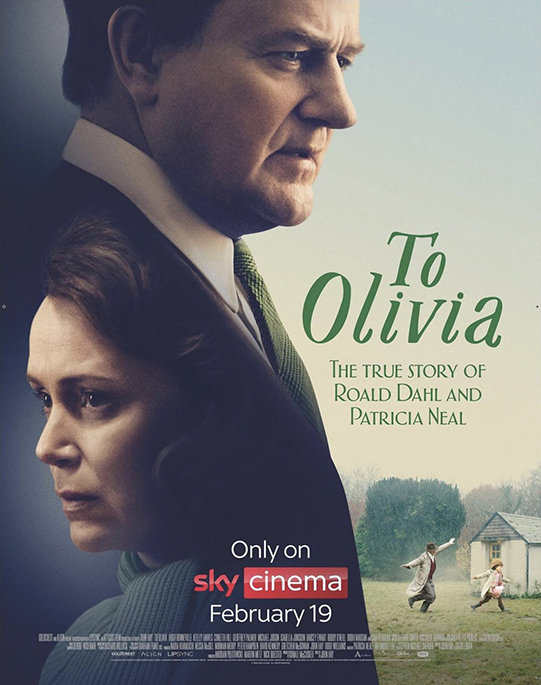
Throughout the 105 minute run-time of Robert Zemeckis’ take on Roald Dahl’s The Witches I had no clue what Anne Hathaway was doing, but she was clearly having a great time doing it. Her seemingly German accent, occasionally slipping into something that sounds like Russian, as the Grand High Witch almost matches the state of the film itself. It isn’t good but it’s certainly enjoyable.

We follow a protagonist simply credited as Hero Boy (Jahzir Bruno), living with his grandma (Octavia Spencer), who has recently had his eyes opened to the existence of witches. After a discussion between the two – Spencer’s character having witnessed the effects of witchcraft as a child – they escape to an expensive hotel to avoid any risk of Bruno’s character being turned into a mouse, witches take delight in turning children into mice and then stamping on them. However, what the pair are unaware of is the fact that a collective of witches have congregated at the very same hotel, under the guise of the Royal Society for the Prevention of Cruelty to Children.

While appearing to the rest of the world as normal people, although with long scars on either side of their mouths, with brightly coloured hats, dresses and accessories, fitting in with the aesthetic of the hotel, the witches are far different creatures when by themselves. Their mouths open almost across the width of their faces to reveal sharp jaws, they have a singular claw for their feet, three for their hands, and their neat hairstyles are all just wigs. And a fair deal of the witches appearance as witches does seem to be somewhat CGI heavy, as are a number of details of the film. In recent years Robert Zemeckis seems to have regularly used CGI to help tell his stories and bring them to life, such as in Welcome To Marwen and The Walk, not to mention his motion-capture animation work throughout the early 2000’s. And yet you feel as if some of the effects could be more convincing and effective if they were practical, the CGI almost seems to be wasted – Angelica Huston was, for many kids, terrifying thanks to her prosthetics in the 1993 adaptation of the story, whereas this film may provide younger viewers with some creepy moments but potentially not much else. The use of CGI throughout seems to just remove something from the film, especially during some of the longer scenes of the film.

There are a number of lengthy sequences over the course of the piece. The meeting of the witches themselves almost seems to go on for 20 minutes. While it seems to want to take its time to gradually reveal its elements for the suspense and development of the characters. However, the effect is one that simply makes the scene seem slow itself. Almost bringing in a feeling of repetition as the gathering of magical beings discuss, and to some extent act out, their plans. Bearing this in mind, and with what the scene tries to pack in it still seems to take a while to actually get to it. The spectacle that some of the ideas and shots seem to want to capture isn’t quite there and therefore the scene feels longer and more drawn out. You just find yourself wondering that if the witches really wanted to squash the mice that they’ve just created, surely they wouldn’t wear heels, or would find something bigger to do the job with – this is unless they’re trying to challenge themselves?

And yet, despite such scenes and some weird dialogue choices in the screenplay – this might be the 1960’s but would a young British boy, Bruno (Codie-Lei Eastick) really exclaim “crikey!” ever few minutes, or describe themselves as “portly” – the film somehow has some mild entertainment value. There are some chuckles to be found, although perhaps not always for the right reasons. Stanley Tucci (thank God for him!) seems to be having a nice time gently making his way through the role of thick Southern States accented hotel manager Mr Stringer, his screams at one point as the hotel is revealed to have a mouse problem do provide some amusement. And a specific sequence towards the end of the film also provides some chuckles, most likely intentional. There is so much in The Witches that makes up for a rather lacklustre and not best feature. And yet some of the individual elements do admittedly provide some amusement, although maybe not always for the right reasons. This new, even if it does feel like it was made a number of years ago, take on The Witches isn’t dreadful, but it certainly isn’t great either.

Anne Hathaway’s accent throughout this CGI filled take on Roald Dahl’s The Witches matches the film rather well. It’s not good and you don’t always know what’s going on, but it certainly provides some amusement, and she seems to be having a great time in the role.

Rating: 2 out of 5.

Rebecca – Review

Cert – 12, Run-time – 2 hours 1 minute, Director – Ben Wheatley

After meeting on the French Riviera a young woman (Lily James) falls in love with a wealthy man (Armie Hammer) who is still plagued by the memory of his late first wife

Daphne du Maurier’s novel Rebecca is regarded as a true classic gothic thriller. Many have brought it to the screen, perhaps most notably Alfred Hitchcock, whose take on the film won 1941 Oscar for Best Picture. Now sees a new take on the story of a young woman (Lily James) who falls in love with a wealthy man, Maxim de Winter (Armie Hammer), after meeting on the French Riviera, gradually learning of the dark past of her new husband and the tragedy of his late wife, Rebecca. When Netflix announced that Ben Wheatley would be bringing his take on du Maurier’s classic novel to their service, and cinemas, the choice seemed highly fitting – especially with Wheatley’s past of working with dark and gothic themes, particularly in his early films. Yet, this new take on Rebecca almost seems to be without an overly gothic tone.

The first 20 minutes of the film, as the young couple come together and get to know each other within the grounds of a lavish French hotel, where James’ unnamed protagonist (only really going by the new Mrs. de Winter) is acting as the low-paid companion for an elderly and wealthy lady (Ann Dowd) who looks down on and sneers at her employee, are highly romanticised. Everything plays at as an idyllic romance drama. Two unlikely people coming together and then running off to be married, ignoring those who say it won’t work. How could it not work? Well, it seems that everyone else knows why while our central figure is left out of the ring. Mr. de Winter is rumoured to have a dark past, mostly in relation to his first, now deceased, wife. Comparisons between wives old and new are made, although quietly in the eyes of the other figures throughout the film. Doubts begin to emerge about James as she notices the odd stares she receives, eventually being told “He can’t love you because you’re not her”. Much mystery lies around Rebecca. One certainty is that she’s undeniably highly missed by both the de Winter family and the antagonistic housekeeper of Maxim’s Manderley estate, Mrs Danvers (Kristen Scott Thomas).

All the elements of the film work rather well together. The performances are good and the general design helps to emphasise the lavish nature of the lives that the characters lead. And yet there’s one major contrast that gets in the way of the piece being properly investing. While every element is in agreement for the tone that they are aiming for the film itself feels as if it’s aiming for something different. The two tones conflict and mean that the film never feels like it properly settles. Even with slight shifts in tone during the film as a new element is introduced, a new act begins; or characters simply dramatically change their behaviour and attitudes in a split second with no gradual development, the tone the film seems to want doesn’t match that of the elements within it – not to say that this is the fault of Wheatley’s direction, this certainly isn’t the case. It almost seems to be something that happened in the editing room when the film was being pieced together and the pacing confirmed.

There’s a scene during Rebecca where Lily James is at a party. Her character feels out of place and unsure of her surroundings. Thoughts are rushing through her head in a state of confusion and upset. The camera slowly pans downward to gaze up at her as she looks around the room unsure as to where to go. It was at this point that I realised I wasn’t connected with her character, or the film. You’re not in the world that the cast and crew have been trying to create and have simply, for most of the run-time, been watching a screen. A lot of this seems to come down to the tonal conflictions between the film and its various different elements. It seems no major fault of any of the cast and crew, who all put in a good turn. It simply seems to not be quite as gothic or dark as it potentially wants to be and therefore conflicts with itself and leaves the viewer outside of its world in doing so.

Each of the individual elements of Rebecca work well together to try and create a mysterious tone and feel to the thriller. Yet it seems that the film loses itself somewhere, perhaps in the editing room, feeling as if it aims for something else and therefore disallowing the viewer from engaging with, or feeling a part of, it.

Rating: 2 out of 5.

LFF 2020: Siberia – Review

Release Date – N/A, Cert – N/A, Run-time – 1 hour 32 minutes, Director – Abel Ferrara

A man (Willem Dafoe) journeys into a cave to confront both his past and his dreams, or nightmares

Willem Dafoe has definitely had a thing for playing characters in remote situations seemingly going mad. After the release of The Lighthouse earlier this year we now find him in Abel Ferrara’s Serbia as a bar-owner in the middle of the Serbian mountains. Serving few patrons and simply living his days calmly, peacefully and with little interactions, those that he does have are rarely in his own language. His behaviour and isolation implies that he’s been running from something, trying to hide from it – the film backing this up with its general concept. And so, over the course of the film we see his journey through a cave, where he goes to confront his past and his dreams.

At this point it would seem fitting to briefly explain some of the events that occur within the cave, a bit more about the plot, unfortunately from here not a great deal makes sense. There are numerous interjections as Dafoe’s character seemingly reimagines scenarios with his family – him playing each figure including his Mum and Dad, and there are points where the film seems to pick up or begin to make sense as these moments go on. However, it’s not long until the seemingly deep-thinking, metaphorical, philosophical, psychological conundrums of the film come back into play and it seems to float around in an unspecified space or realm trying to say something with the viewer unsure as to what that might be.

Dafoe’s Clint enters the cave in the hope of confronting his past and dreams, to make peace with himself and others. In a number of ways the film itself feels like a 92 minute dream, nightmare might potentially be more fitting, sequence. Many occurrences are strange and unusual, and definitely beyond explanation. They feel trippy and weird throughout the entire film. You’re never truly grasped by it, instead such feelings act as a barrier towards you properly engaging with the film, if you’re able to understand most of what’s actually going on amongst the constant jumping back and forth between ideas, sequences and numerous naked bodies.

There are individual ideas lightly scattered at certain intervals over the course of the film that show some potential. Hope that things might pick up and start to properly get going amongst the slow stagger of madness that the film otherwise displays. Simon McBurney, simply credited as Magician, turns up for a few minutes and shows some promise. Not exactly bringing you in to the film, but at least doing something to help it along somehow. And yet the film as a whole never really comes together. It seems almost too much and as if it needs a bit more explanation over just showing you multiple dream sequences to construct a 92 minute fever-dream-cum-nightmare-sequence, not to mention the regular sex scenes/ nudist parties. Siberia seems to be trying to say something, but the way that it goes about it is just too unengaging, scattered and generally all over the place in terms of plot and ideas, makes it unclear as to what that is and overall makes for a rather lengthy and dissatisfying watch.

Possibly one of the weirdest and trippiest dream/ hallucination sequences ever made Siberia never properly clicks, simply disengaging the viewer due to its seemingly busy yet structurally lacking, not to mention confusing, narrative and detail.

Rating: 2 out of 5.

LFF 2020: One Man And His Shoes – Review

Release Date – 23rd October 2020, Cert – 15, Run-time – 1 hour 23 minutes, Director – Yemi Bamiro

Documentary about basketball and Michael Jordan’s part in the rise of Nike shoes

Within the first 15 minutes of One Man And His Shoes you feel as if you’re watching an Aaron Sorkin directed documentary. Yemi Bamiro’s latest feature packs in huge amounts of detail, talking to multiple figures with passion for the topics covered in a short space of time; while still making the film accessible and engaging. Throughout we follow the story of the rise of Nike trainers and their use of basketball to advertise themselves, particularly the iconic figure of Michael Jordan – and the brand deals that they had with him. Information is packed in and yet still easy to follow, thanks to the simplistic style of the documentary and the setting and basis of each interview, quickly forming and telling a gradual narrative that’s simple to follow even for those not the most interested in either basketball or shoes, a category which I fall into.

What makes the film so engaging is the level of passion that emits from the people at the centre of it. From basketball fans and historians to former Nike and advertising/ PR heads and workers, and even just shoe collectors, there’s care and knowledge for the subject from everyone involved. The way they speak about the subjects and the topic, how much they love what they’re describing simply brings you in as you want to see the story unfold and know about the connection between, at one point newbie basketball player, Michael Jordan and one of the biggest shoe brands in the world. At one point an interviewee says in relation to a specific pair of shoes, and Jordan, “It’s more than just the shoes. It’s what he did as a basketball player in those shoes that means a lot to me”. You see a personal side to these stories and the impact that the events in the film had on people, adding to your engagement.

The film doesn’t just shower praise onto the Nike, Air Jordan’s and the titular figurehead of the shoes, however. In the final 15-20 minutes the film does begin to lean into tragedies related to the shoes. Bringing in hints of emotion with them and helping to avoid the feeling of a hagiography. However, with what has to be said about such points and how briefly they seem to be discussed, in relation to the rest of the film’s topics; including Spike Lee directed adverts for Air Jordan’s, such ideas do create a sort of tonal shift. While they’re fairly effective and work well in comparison to what has happened before there’s a definite, almost immediate, shift in tone. Thoughts do begin to enter the mind as to why this wasn’t the main point of the film, or at least discussed earlier on, it does feel the most relevant and timely point that the film makes, when the idea of deaths of children and teenagers in relation to the shoes does seem important and not something to breeze over – something which the film might only just avoid.

But, with that aside the core of the film still remains intact. One featuring many people overflowing with passion for the subject matter, unpicking and reliving certain details allowing them to hold a sense of nostalgia and happily tell the camera their thoughts and memories, while still keeping an informing and engaging feature. It’s precisely this that hooks you and draws you in, even if you have no initial interest in the subject matter. For the most part the film is interesting and engaging, told in a way that keeps this feel and interest throughout the short run-time of the film. There may be the tonal shift towards the end to something that could be dwelled on a bit more than it is, but for the most part this is a well-made, engaging documentary that works because the people involved know what they’re talking about and care greatly about the subject matter.

While the final stages of One Man And His Shoes feel a bit rushed and aside from the rest of the film what comes before is an engaging, passionate and thorough look through the relationship between PR, shoes and basketball, even for those with no initial interest in the subject matters.

Rating: 4 out of 5.

LFF 2020: Shirley – Review

Release Date: 30th October 2020, Cert – 15, Run-time – 1 hour 47 minutes, Director – Josephine Decker

Bored by the seemingly pedestrian style of the outside world anxiety-filled author Shirley Jackson (Elisabeth Moss) begins to find inspiration in a twisted relationship with a young woman (Odessa Young) staying in her home.

Elisabeth Moss has been heavily billed and advertised as the central figure of Josephine Decker’s latest feature, after all Shirley Jackson is the title star. However, the story very much belongs to Odessa Young’s house guest, Rose, staying in the Jackson’s home after being invited by Shirley’s husband, Stanley (Michael Stuhlbarg), Rose’s husband, Fred (Logan Lerman) having become his assistant at the college he lectures at. The film is an exploration of the famous writer’s behaviour through the eyes of someone new to her world. Rose becomes Shirley’s inspiration after far too long struggling to find something to base her new novel on – only having found something in the story of a recently missing girl in the area, but unsure as to what to do with it.

Shirley’s behaviour is undeniably peculiar. She takes delight in testing other people and their behaviour and reactions to the dark and macabre – something which initially disturbs Rose before gradually finding intrigue within the woman whose home she finds herself living in. The two are interested by each others personalities and what makes each other tick, and there’s a level of interest to that. However, on Shirley’s part there’s definitely more under the surface layer, something that’s made clear from the very start. It appears that she and her husband, who plays with the mind of Rose’s husband, causing him to almost be tormented at work and having an effect on Rose herself, take delight in playing with other people’s minds. Not quite creating a horror feel to the piece but still that of a dark drama – perhaps capturing the tone of the titular figure more than a horror would.

Because of the nature of the characters and they way that they interact throughout the piece it’s often difficult to properly connect with them and engage with the scenarios that they find themselves in. This especially being the case when it comes to some of the more intimate, character-altering scenes between Rose and Shirley. As they come to apparently understand each other more, their bond increasing during some of the weirder moments of the film. However, often during such moments you never quite feel a part of the world. Often there’s something about the film that leads you to simply be watching a screen, not feeling properly involved with the unfolding actions on screen. Leading a number of scenes and ideas to not quite have the fully intended effect.

The performances throughout are all good, and as many have noted Moss is again on great form; with Young also demonstrating an equally strong turn. And there are some tonally interesting moments that help to convey the twisted nature of some of the characters, their intentions questionable throughout; their string-pulling ways surrounding playing with the mind also creating elements of intrigue. However, due to the lack of proper investment within the world and little connection with the characters the film does plod along at times with a rather slow pace. The viewer is left to simply watch a screen instead of properly get up close into the personal state of the complex and otherwise intriguing minds of the characters, which have the potential for a truly dark and thrilling feature.

The performances that act out the scenarios the complex characters find themselves in within Shirley are all strong, and the tonal feel is well done too. However, due to the nature of the characters it’s hard to properly connect with them and therefore feel a part of the world, meaning the film does sometimes feel rather slow.

Rating: 3 out of 5.

LFF 2020: Relic – Review

Release Date – 30th October 2020, Cert – 15, Run-time – 1 hour 29 minutes, Director – Natalie Erika James

When Edna (Robyn Nevin) suddenly returns after going missing her daughter (Emily Mortimer) and granddaughter (Bella Heathcote) go to her home to discover an unseen presence that seems to be consuming her

Relic sits in the vein of real-scenario, grief-related horrors, such as Hereditary with its look into the horror of losing a child. Although, Relic very much sits on the other side of the age spectrum taking a look at dementia how it consumes and changes people. Edna (Robyn Nevin) goes missing out of the blue leading her daughter, Kay (Emily Mortimer) and granddaughter, Sam (Bella Heathcote to travel to her home to see what’s going on. When she turns up claiming to be fine not long after they arrive there’s definitely something different about her behaviour, as if something is gradually forcing her to act out against her family, potentially leading them to be consumed as well.

The walls of the small home are already cramped, with a number of rooms and corridors filled with various boxes and memories. For Sam they seem to close in on her, trapping her inside an endlessly dark stretch of fear and uncertainty. Meanwhile Kay finds herself worrying about her mother. What’s happening to her? Is this dementia or is something else happening? Their relationship is tested as Edna’s actions begin to almost take against her own daughter, snapping at random points at small exchanges. Throughout her film director and co-writer, with Christian White, Natalie Erika James hints at the confusion and fear that dementia has on people, the impact that it has on the people around those who have it; translating such ideas into a visual horror.

Often the elements of horror come in short bursts within the drama of the film, which seems to be the dominating element. It feels more like a drama with some horror elements, at least in the first half, before shifting into a full horror in the second half. Perhaps because of this, the tone and the narrative that the film sets up, the fear factor doesn’t quite come through. You can understand what the characters are going through and empathise with some of them, however when the tone shifts in the final stages to truly show a visual sense to the genre the tone almost changes as it seems to demonstrate something different to the rest of the film. Going down a more conventional line for the genre during such moments instead of managing to quite continue the tone of the dramatic moments.

These points are quickly jumped back into, meaning that the more genre orientated bursts are quite short and moved on from rather fast meaning that the impact does feel somewhat lessened. However, there’s enough within the drama, within the characters reactions to what they see in the supposed real-world to keep the viewer interested and wanting to see how things turn out. The film might have its stumbles and in terms of horror might, like Hereditary, be quite divisive. However, when it comes to the three central performances there’s enough detail and skill, alongside James’ careful and thoughtful direction and handling of the topic and themes of the piece, to keep you situated with the characters and keeping track of their minds and states over the course of its short run-time. And with a film like this and what it covers that’s quite possibly the exact thing you need to not just keep you engaged but for the horror to connect and work, which for a number of people the film is bound to do.

Relic is likely to prove a divisive film when it comes to the horror angle, taking a bit more of a conventional scare style during the more horror-orientated moments. However, with the performances and direction coming together to create a decent drama there’s a fair deal of be interested and engaged by within the film.

Rating: 3 out of 5.