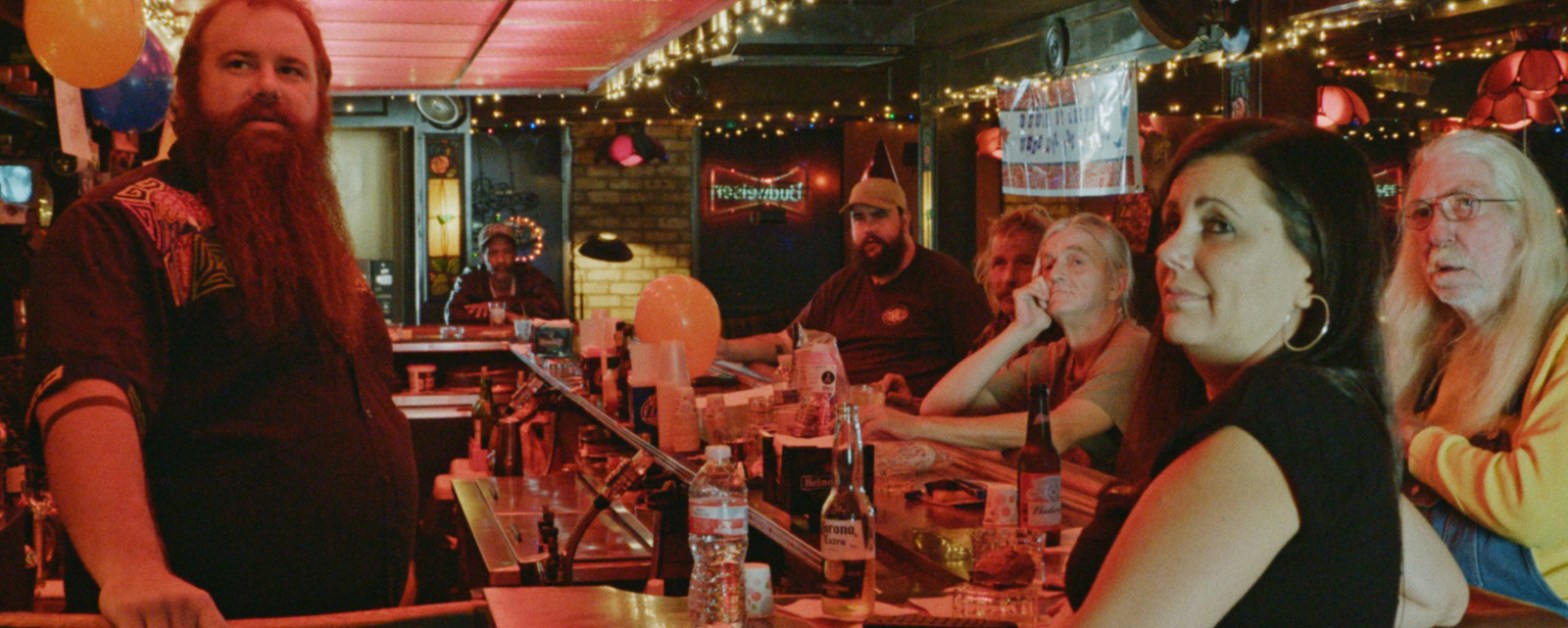
On The Rocks – Review

Cert – 12, Run-time – 1 hour 36 minutes, Director – Sofia Coppola

Suspecting that her husband (Marlon Wayans) is cheating on her, Laura (Rashida Jones) somehow enlists the help of her playboy father (Bill Murray) to find out the truth behind his various business trips

It may seem hard to believe but, Bill Murray’s only Academy Award nomination is for his performance in Sofia Coppola’s Lost In Translation. A magnificent turn that many were sure could have earned him the win, if it wasn’t for Sean Penn in Mystic River. Almost seventeen years later we could finally see him gain a second nod for his first feature collaboration – Netflix’s A Very Murray Christmas aside – with the writer-director in that time.

Although, while Murray shines throughout the film, the focus is definitely not on his character. Instead we follow Rashida Jones’ Laura. A mother of two who begins to suspect that her husband (a highly restrained and subtle Marlon Wayans – far away from the loud, spoof comedy performances that many of us have likely become use to from him over the years) is having an affair. He regularly flies off to other countries on business trips with his co-worker Fiona (Jessica Henwick). As she becomes increasingly worried and suspicious Laura finds herself somehow enlisting the help of her playboy father, Felix (Murray), to help get to the bottom of what’s really happening.

Murray and Jones’ chemistry throughout is fantastic. Beat for beat they match each other, creating a genuine bond that brings the viewer into the charmingly lit world of the film, assisted by Philippe Le Sourd’s warm and effective cinematography; having previously worked on Coppola’s The Beguiled. Two award worthy performances that bring about the many laughs – particularly around the somehow charming forwardness to and about the women Felix encounters – with a finely tuned sprinkling of emotion elsewhere. All bringing about the fact that this is a film about people just being themselves. Humans being humans, connecting and conversing with other humans. Admittedly rather wealthy humans who personally know the concierges of the best hotels in London, but still these characters feel real. Never stepping anywhere near the thought of exaggeration just for the purposes of entertainment.

You find yourself brought in for an enjoyable time. Into a piece of irresistible escapism. It’s hard not to have a large smile spread across your face, not just for a few seconds but for entire scenes and stretches of time. Simply caught up within the central father-daughter relationship that pushes the story further, allowing you to further connect with that also. Everything spring-boarding from Sofia Coppola’s fantastic screenplay; captured through her, as ever, expert direction. From start to finish of the gently flowing 96 minute run-time you invest in the central relationship that helps form the events of the film for an almost perfect story about human behaviour and responses, worries and joys.

Murray and Jones are sensational in the lead roles of Sofia Coppola’s latest hit. Bringing to life a top screenplay and creating an irresistibly inviting world that you can’t help but be caught up in. A pure escapist delight that manages to feel genuine and real.

Rating: 4 out of 5.

Pixie – Review

Cert – 15, Run-time – 1 hour 33 minutes, Director – Barnaby Thompson

A young woman (Olivia Cooke) finds herself on the run from the effects of her dangerous relationships, travelling across the country with two near-strangers (Ben Hardy, Daryl McCormack), a bag full of drugs and multiple gang members not far behind

Pixie (Olivia Cooke) is said to be one of the most mysterious people in her town. She mostly keeps to herself in her small, isolated house on the outskirts of town while various rumours circulate about her, particularly among the men about her sex life. And her actual life is almost as complex as the rumours. Her step-dad (Colm Meaney) and step-brother are both key figures in a large gang who happen to rival a gang that are after something that Pixie happens to have in her shared possession. It’s not long until both gangs, partly spawned by the deaths of Pixie’s boyfriend and her ex, are after the titular figure on a road-trip through the country roads of Ireland.

Driving with Pixie, and often taking her lead, are Frank (Ben Hardy) and Harland (Daryl McCormack), two friends who have accidentally come across a large bag filled with drugs and, after another set of circumstances, a dead body in the boot of the car. Everything somehow leading back to Pixie; who has hatched the plan of selling the drugs, worth at least one million euros – according to Google – and then get the first flight out of the country, ideally to San Francisco. And while two gangs are on the tail of the group this never exactly feels like a gang story, one about someone stuck between two gangs or even just someone trying to escape from something. There’s more of a communal feel about the piece because of the relationship between the central three figures, and yet one feeling, or style, that sits throughout is that of an early 2000’s British gangster comedy.

On a number of occasions with the short lines that some characters are given the screenplay does sometimes feel as if it’s about two drafts away from being properly complete. There are brief asides that don’t seem to go anywhere and moments that don’t have any major benefit to the plot, and instead seem to be there so that a singular character has something to do while others are doing something to advance the narrative a bit more. While there are one or two mildly amusing moments that create the odd exhale of amusement the laughs don’t really roll in – during one shootout scene in particular the question comes about as to whether the scene is meant to be funny or not, the facial expressions and score – which sometimes you begin to switch your focus towards – imply it might be, but the effect isn’t really there.

All other elements are fine, the performances are relaxed and the actors seem to be having a good time – although Alec Baldwin’s Irish accent when we first meet his character; Father Hector McGrath, is somewhat questionable. Baldwin initially seems as if he’s present for as an odd cameo. However, after another 30-40 minutes he finally reappears for a few more minutes, proving, alongside various reports and articles on the film that reference his name, that this isn’t a cameo and making it feel as if there’s a lot with his character that’s been cut out. It ends up feeling like a very minor character is soon rushed into having a big deal made about them when it comes to the gang of priests and gun-wielding nuns in the drug trad – because nobody suspects a priest, cue joke about paedophilia within the Catholic Church.

When it all comes together everything feels as if it falls a bit flat, and it mostly leads back to the screenplay feeling as if it needs at least one more revision. While the performances are good and there’s potential for a good film, and some decent call-back moments, the film seems to lack something. Not quite having the comedic punch that it potentially could have. Leading it to not quite engage or have the energy and push that it might want to properly capture the feeling that could make it feel like a proper throwback to the 2000’s road-trip caper comedy.

With a few details lacking from the screenplay Pixie ultimately falls short of capturing the potential energy and humour that it could have. It might have some amusing moments but not enough to make it the pacey caper it could be.

Rating: 2 out of 5.

The Secret Garden – Review

Cert – PG, Run-time – 1 hour 39 minutes, Director – Marc Munden

A young, orphaned girl (Dixie Egerickx) finds herself living on her uncle’s (Colin Firth) estate in the Yorkshire Moors, which holds a large, fantastical garden

Since its first publication in 1911 The Secret Garden has been regarded as one of the most British children’s tales. Brought once again the the screen by producer David Heyman, behind British classics such as the Harry Potter franchise and both Paddington films – Paddington exec producer Rosie Alison also has a hand in this big-screen iteration of Frances Hodgson Burnett’s classic novel. Both highly British, especially Paddington, with there elements of fantasy. As the film’s protagonist, Mary (Dixie Egerickx) finds herself exploring the grounds of her uncle’s (Colin Firth) estate in the gloomy fog of the Yorkshire Moors, she quickly discovers a fantastical garden beyond that of the regular overgrown patches visible from the house.

Mary finds herself back in Britain after being orphaned in late 1940’s India. Taken to her distant Uncle, Lord Archibald Craven’s expansive home – rarely seen, and often spoken through his strict and direct housekeeper Mrs. Medlock (Julie Walters). The corridors of the home are dark, dusty and lacking decoration. Sounds are dull with the occasional rattling echo. One of those sounds belonging to Mary’s ill bedbound cousin Colin (Edan Hayhurst). Initially there are conflictions between the two, especially regarding their different backgrounds; it isn’t always easy to get on with the rather spoilt Mary, especially when her first instinct is to command maid and houseworker Martha (Isis Davis) before questioning whether she really is her servant – the answer is definitely no.

The state of the manor vastly differs from that of the garden. A brightly lit, sunshine-filled realm with plants that seem to stretch up to the sky and out to far reaches. Scattered with the occasional gently flowing stream and blatantly CGI bird. It’s in this area that almost seems like an entirely different world that the children, including new friend Dickon (Amir Wilson), who acts as the introduction to the garden itself, easily find escape and safety within. It offers a form of healing for them, and protection from the confines of the manor and the rest of Lord Craven’s estate. It’s during such moments where the central figures are simply allowed to be free and play in a relatively worry-free environment, although the pressures and anxieties of the rest of the world gradually creep in. And it’s also in such moments that the film shows itself as one that appears to target the kids more than anyone else.

At 99 minutes the run-time of the film is relatively short. The film breezes through with a fairly simplistic and traditionally told story, something that echoed through screenwriter Jack Thorne’s screenplay for 2019’s The Aeronauts. This doesn’t make the film unwatchable for the adults, there’s enough there to make this a pleasant watch for the fairly short and mostly harmless time that it’s on for. There’s enough there to certainly work for the kids and bring them into the world that the trio of youths find themselves exploring and experiencing the wonders of, and it’ll likely capture their imagination and engagement. However, there are points where you almost feel some elements could be slightly expanded upon, particularly in the final 15 minutes where the pacing begins to speed up and elements appear to rush by so that the film can still get out with a double digit run-time. But, for what it does provide and do within the space of time that it’s on The Secret Garden is a perfectly fine piece of work. It might be more for the kids, but there’s enough within this fantastical realm, and even the one that it separates from, to engage the adults too and make the film worthwhile enough with its rather traditional ways.

Simplistic and traditional help give this edition of The Secret Garden to life, yet they can also sometimes act as its barriers, for adult viewers at least. Nonetheless this is still a rather fine adaptation that’s very likely to work with younger viewers, and should act as a decent watch for everyone else.

Rating: 3 out of 5.

Borat: Subsequent Moviefilm – Review

Cert – 15, Run-time – 1 hour 36 minutes, Director – Jason Woliner

Borat (Sacha Baron Cohen) returns to America in the hope of supporting the now struggling nation of Kazakhstan, after the impact of his first film, through a gift to Vice President Mike Pence.

Back in 2006 Borat was one of the most outrageous characters the world had ever seen. Causing further waves across the world than he already had in his days on Da Ali G Show. And yet his misogynistic, anti-Semitic, sometimes racist, homophobic and all-out offensive views have no been claimed, by some, to be rather mild compared to what we see in the world today. And this is something that comes across as Sacha Baron Cohen’s iconic moustachioed Kazakh reporter ventures back into the land of the free, minus former travel companion Azamat Bagatov.

After the impact of his first film Kazakhstan has become a laughing stock. Borat is jailed, ridiculed and hated for what he has done. However, when America’s leadership changes to “Mcdonald Trump” the country is eager to form a bond with the States powerful leader, who they believe they share a number of views with. Borat is sent out into the world, travelling to America to gift Vice President with Johnny The Monkey; Kazakhstan’s Minister of Culture, and a highly successful ape porn star. Unfortunately after a series of events the gift changes from a chimpanzee to Borat’s far more dishevelled daughter Tutar (a scene-stealing Maria Bakalova); after a major make-over, of course.

One notable element of this sequel is the fact that it clearly has a much larger narrative in place. The relationship between Baron Cohen and Bakalova’s characters is key, as Borat’s belief in traditional Kazakhstani rules such as women not being allowed to drive, and not being able to learn or else strings in their brain will snap, conflicts with Tutar discovering feminism, freedom and her own identity. There are still a fair deal of interviews and run-ins with various figures – although not quite with the spark that the original film had, the joke of a stranger in a foreign land isn’t quite present in this place, more just someone with different views and background – to be found but not always a feeling like the first film. Mostly due to such moments seemingly relying on pushing the narrative on rather than the reaction of those involved.

In one key scene we see Baron Cohen’s character don one of a number of disguises throughout the film – preventing him from being chased and recognised with shots of “very nice!”, “great success!” and, of course, “my wife!”, all of which are mentioned in the film – lead a big sing-a-long at a pro-Trump anti-virus rally. The lyrics being sung repeated by the crowd amongst whoops and cheers brings back the flavour that many know from Borat, dwelling on and relishing the responses of the people who were, at the time of the first film, a seeming minority. It’s these moments that work the best and truly bring in the chuckles. There are one or two laugh out loud moments throughout the film, although not really at the shock factor of the film, rather some of the more ‘out there’ lines of dialogue and scenarios; the snappier, punchier moments of quick jokes and jabs and then onto the next thing. There are a handful of chuckles and exhales of amusement to be found but somehow the comedy gets lost in the narrative driven tone of the film, and perhaps the election and pandemic themed currency of the film that leads it to feel even more satirical and focused on various different points.

Borat is very much the same, and his daughter is a nice addition – avoiding being irritating and on a number of occasions being the true highlight of the film. Perhaps he just seems to blend in a bit more with everything we see in the world now, or we’re just not sure what to make of someone who’s already discovered the world he’s walking around in. The film certainly has it’s moments during the quicker, less-narrative driven moments where the film seems to be allowed to be itself, focusing on people rather than plot. There are some laughs throughout, and not all at the more outrageous moments, but the more organised focus of the film seems to prevent it from being a great success.

Borat is very much back as he once was, and Maria Bakalova very much steals the show as his daughter. While there are still some laughs based around the reactions of the unknowing participants something seems to be lost about the film within its more narrative driven focus.

Rating: 3 out of 5.

LFF 2020: Time – Review

Release Date: 16th October 2020, Cert – 12, Run-time – 1 hour 21 minutes, Director – Garrett Bradley

While her husband faces a 60 year prison sentence for robbery Fox Rich fights a tough judicial system while trying to provide for her family and get out a message of the racism within the US’s legal system.

The personal nature of Garrett Bradley’s Time is solidified early on through the use of black and white home movie footage from the Rich family who make up the centre of his film. Bradley keeps the more recent footage of Fox Rich fighting her way through the US court and legal system in the hope of finding justice for her husband, Rob, who has been jailed for 60 years for a robbery he committed in the late 90’s – something which she also took part in but got a much lower sentence for – in the same black and white style. This not only keeps a level of consistency but forms a connection with the viewer that doesn’t break. They feel for the figures at the centre of the piece as they struggle to get themselves heard while also trying to support a family, primarily Fox’s two sons whose father is in prison. It’s because of this emotional connection and the fact that it feels like you’re seeing something private and personal throughout the piece that the feeling of watching a home movie is spread over the course of the entire film, as if everything comes from the Rich’s themselves.

For years Fox has struggled, campaigning against the racism within the US legal system, the inequality in the way that it treats and sentences those of different races; forcing the harshest upon people of colour. Fox is honest throughout, her and her husband committed the crime, but their time doesn’t equate to what they did. Like with many families across the States it has a big impact. Causing stresses, emotion and hurt. Cries of “I want to be as far away from this level of pain as I can be” are heard as people discuss their experiences and Fox gives passionate speeches of what she has been through to get to where she is, even though her husband is still trapped within the prison confines. You want to see her succeed and believe she can, but whether the courts will allow her too is a different matter.

A key quote in the film when discussing how people of colour are treated by courts and prisons is “it’s almost like slavery time”. Something said with certainty, anger, emotion and no fear – much like the events of the film itself. There are some similar themes to Ava DuVernay’s 2016 documentary 13th, Bradley worked as a 2nd unit director on DuVernay’s Netflix series When They See Us, and they hit just as hard. This is a documentary that aims to show things as they really are and goes about doing just that. It’s unflinchingly defiant. Capturing a similar tone to Fox as she keeps going despite her struggles, trying to provide for her children while forking out increasingly expensive legal fees – the fact that she seems to be left alone to do this also providing an angle on the subjects of the film.

Just like a home movie Time shows you what happens as it happens. You feel a connection with the people who are in it, wanting to see them overcome the various obstacles in their way and be able to find some form of relief and happiness. Through each struggle and the pain it brings you connect and empathise for Fox and her family. The film is honest in its portrayal and thus captures a strong emotional core. Making the most of the personal elements of the piece for the biggest possible emotional engagement and from there response. It all comes together to create something that while engaging is, more importantly, upsetting, thoughtful, potentially angering, and knowing exactly what it wants to do and is doing. All because you see this not from the eyes of Bradley, but the hopeful, sometimes tearful, defiant, passionate, dedicated and angered eyes of Fox Rich and her family. While the film is about the story millions across the United States of America face every day, it’s this family we thoroughly experience it through.

Honest and unflinching Time is a heartfelt, emotional documentary that digs deep into the cruel flaws of the US legal system that cause families further pain by keeping them apart. This is felt through Garrett Bradley’s highly personal telling of Fox Rich’s story.

Rating: 4 out of 5.

The Trial Of The Chicago 7 – Review

Cert – 15, Run-time – 2 hours 9 minutes, Director – Aaron Sorkin

A group from different walks of life all find themselves on trial for their association with the 1968 protests around the Democratic National Convention

Aaron Sorkin has very much been known for his quickly walk and talk style of screenwriting. Packing in as much detail as possible in a short space of time. However, in a courtroom setting where individuals often take their time to get their point across and dwell on each one can he work as well? The answer is a resounding yes. A large proportion of his latest feature, The Trial Of The Chicago 7, initially written in 2007 for Steven Spielberg, takes place within the same courtroom – based on the trial that saw a number of figures from different backgrounds put on trial for their involvement with the 1968 protests amidst that year’s Democratic National Convention; sparked by opposition to the Vietnam War. Throughout Sorkin’s screenplay is detailed and considered, dwelling on the feelings and emotions of each figure as they get their time to shine and develop over the course of the piece. Once you’re in you’re likely in for the entire run-time.

The opening seven minutes rapidly introduces you to the protagonists that we see on trial. Giving them a brief, yet impactful, space of time to let the audience know who they are and what they stand for. Set to Daniel Pemberton’s energetic and racing score the montage breezes by, effectively establishing the tone and setting in concrete everything that is to come over the next two hours. Edited for further precision; something that continues throughout the entire film helping with the fine pacing. And then comes the trial.

The player’s in Sorkin’s recreation of the trial contain many a famous face, each one giving a stellar performance. A cast that includes the likes of Eddie Redmayne, Sacha Baron Cohen, Yahya Abdul-Mateen II, Mark Rylance, Frank Langella and Joseph Gordon-Levitt; just to name a few. Each one understands their character, where they come from and what they want to represent. While it’s made out that not all of them have met before the trial – particularly Abdul-Mateen as Black Panthers co-founder Bobby Seale; a passionate performance filled with anger and emotion as his figure finds himself discriminated against within the court setting, and by Langella’s unfairly ruling judge.

It’s the performances that help to capture some of the emotion that the film holds. One particular scene has you in speechless, open-mouthed, shock and emotion at the point of a cruel reveal, the impact of which is pushed further by the top-form acting throughout. As Rylance and Ben Shenkman’s lawyers struggle to fight for all seven of their clients – Seale’s lawyer in hospital and not able to properly represent him – the defendants don’t always help themselves. Being accused of contempt of court on many occasions over the course of the over six month trial, and interrupting with jokes and jabs – especially Youth International Party founders Abbie Hoffman (Baron Cohen) and Jerry Rubin (Jeremy Strong). There are conflicting beliefs as to what this trial is about. Is it to avoid going to prison for ten years? Is it about causing mayhem and creating a political point? Is it even a political trial at all, if there even is such a thing? “I’ve never been on trial for my thoughts before” claims one figure as they get to sit in the witness box in the hope of finally being able to tell their side of the story, possibly not even knowing themselves in what way it’ll come out.

Seemingly more politically involved figures, such as Hoffman and Rubin, and Redmayne and Alex Sharp’s student protest leaders, appear to get more screen-time than some of the other members of the trial. While most characters get a fair deal of development and opportunity to shine over the course of the film there are one or two who do seem to be pushed aside for a large deal of the feature. Not as if the film isn’t sure what to do with them, but more that there wasn’t much known about them when writing the screenplay or the other figures are already compelling enough in Sorkin’s view – and those that the film does focus on are undeniably compelling and engaging personalities.

As the piece develops and for those going through it the trial goes on ever longer the fast moving, detailed nature is consistently in place. Keeping the viewer in place throughout. Even when it briefly jumps to different settings and times it never looses its pace and focus, once again down to the films editing, and Sorkin’s precisely written screenplay. Almost everything comes together to create something fast, detailed, engaging and thoughtful. It knows what it wants to do and does it brilliantly forming one of the most well-written and performed films of the year. Things click together and form possibly one of the best films of the year that despite one or two figures being set aside is an Aaron Sorkin courtroom drama through and through. It works on a number of levels and because of that it’s great.

The Trial Of The Chicago 7 is fantastically written, overflowing with excellent performances from an all star cast to match. Yet, what truly brings everything together is the equally precise and effective editing, creating a fast-paced, engaging tone; entertaining the viewer and bringing them in to this impactful and thrilling drama.

Rating: 4 out of 5.

LFF 2020: Herself – Review

Release Date – 10th September 2021, Cert – 15, Run-time – 1 hour 37 minutes, Director – Phyllida Lloyd

A mother (Clare Dunne) escapes an abusive relationship with her two daughters and decides to build a house for them to finally live in safety.

Mamma Mia! and The Iron Lady, two very different films from the same director. It’s been nine years since we last saw a feature film from Phyllida Lloyd – having worked on a number of Shakespeare stage performances for the past few years. However, now she returns with her third feature, Herself. Telling the story of Irish mother Sandra (Clare Dunne), her life seems to be filled with joy and escape. Spending the morning care-free playing with her kids around the house. The sun shines through the window, life couldn’t possibly get better than this. And that seems very true when her partner Gary (Ian Lloyd Anderson) returns home. Instantly resorting to beating her there’s a clear history of this treatment in Sandra’s screams, sending one of her daughters running for help, she will escape this, and yet this is only hoped for by the viewer, they can’t truly believe while they’re seeing Sandra be taken to the ground. It’s a harsh opening but it truly forms a strong connection with the central character.

As Sandra finds herself and her children placed into temporary beds, in a nearby hotel, she becomes more certain that she will find a place of safety where she can finally be in peace with her family. It’s then, after seeing various DIY promotions, that she decides to build her own house; although it’s clear that she’ll need all the help she can get. With no experience herself she eventually gets the help of some of her friends – including the woman who she cares for (Harriet Walker), who allows her to use space in her expansive garden to build her potential home – and initially reluctant builder Aido (a restrained and very funny Conleth Hill). The group gradually set to work putting together the structure of the new house. A sense of teamwork and community fills the film. It’s a genuine joy to see it all come together, a large warm smile spreading across your face as it does for the characters. At one point as the camera pans up part of the wooden structure you sit there in open-mouthed astonishment at what you’re seeing. These people are building a house! It all revolves around the quote “people come forward to help each other and by doing that they help themselves” – something which is felt throughout and truly creates an immense sense of uplift.

Yet amongst all of this Sandra’s worries are not forgotten. Her abusive ex lurks as a threat in the background of her life and mind. Trying to see his kids, doing his best to get custody. It’s during such points that the viewer truly realises their investment in the character and what she is trying to achieve. Helped by Lloyd’s direction, co-write Dunne, alongside Malcolm Campbell, gives a fantastic leading performance. She captures the true pain and hope of her character as she struggles to build a new life for her family while it seems to be knocked down or threatened at each turn. There’s a real emotional connection with her throughout the film that carries you along the fine flow of the piece. You’re there to support her and will her on like those who volunteer to help her along the journey.

As everything comes together you get a film that brings delight in its uplift and real emotion when it comes to the adversities that the characters face. It all blends together really well, inviting the viewer in to spend time with strong, well-developed characters, particularly the titular Herself. It’s definitely something different from Lloyd, and absolutely her best film so far. A fantastic feature with strong efforts from the whole cast and crew who have clearly poured their hearts and souls into each element of the piece to make it as great as it can be, while also having a good time. That shows and allows the audience to be part of the communal sense of the film, enjoying it even more. Being caught up in a film that, like the structure of the house, is strongly, specifically and finely crafted.

From start to finish Herself is a real journey for the characters and the audience who get to watch it. Filled with heart, humour and emotion it’s truly a great film with a lot held within its short and fast-flowing 97 minute run-time. A genuine delightful hit.

Rating: 4 out of 5.

LFF 2020: The Disciple – Review

Release Date – 30th April 2021, Cert – 15, Run-time – 2 hours 7 minutes, Director – Chaitanya Tamhane

A young musician (Aditya Modak) dedicates his life to performing Indian classical music, although finding little success

“If you walk this path learn to be lonely and hungry” says one of the voices that echoes around the mind of Sharad (Aditya Modak), a young man trying to make his way to success through performing Indian classical music. He strives to be just as great as the best of the best, in which he includes an elder singer who he performs as part of the limited supporting band with. And yet while many people turn up to such concerts when it’s competitions that Sharad takes part in, or personal recitals, the turn out is often low. And yet he finds himself dedicating his life to it, trying his best to ignore the number of negative comments that he overhears and sees online – both about him and the music he cares so deeply about; it’s seen as a dying genre.

Much of the film is taken up with extended scenes of the music being performed – Modak himself has a career forged in this, this is his feature debut as an actor, and he does a good job especially for starting out in a leading role. However, there are points when this can become a bit repetitive, giving the film a slightly lengthy feel – when it’s already a somewhat slow watch. The film is well intentioned, from all involved, and there’s a clear passion for the music – something which helps to carry the piece through and occasionally grab your attention during some of the more dramatic scenes, particularly in scenes where he considers his future and the likelihood of a proper career.

While trying to boost his name there are various other complications in his life. There are people around him facing illness, he’s struggling to bring money in; selling CD’s of his musical genre, there are complications with his Mum who lives far away, a number of hours away. Things pile up over the years that the film takes place over and yet in most instances such points aren’t touched on as much as they could be. They only add a touch to the main character and while you would like to see more the film is definitely focused on his dreams not being achieved again and again. And while there is some engagement it would likely be increased if the connection with the central figure was greater because of the greater potential emotional connection were dwelled upon just a bit more. However, despite the good intentions of the cast and crew; and a number of decent scenes and moments throughout the piece, there’s a slow feel to it which wouldn’t be so bad if there wasn’t more to get engaged with.

Despite the care for the subject matter from the entire cast and crew there’s unfortunately a need for a more detail in terms of side aspects of the film for a bigger emotional connection to the film and its protagonist which would prevent the final product from being quite so slow.

Rating: 2 out of 5.

LFF 2020: Honeymood – Review

Release Date – N/A, Cert – N/A, Run-time – 1 hour 30 minutes, Director – Talya Lavie

A young couple’s (Avigail Harari, Ran Danker) wedding night quickly turns into a chaotic traipse through the streets of Jerusalem

One of the last thing’s Eleanor (Avigail Harari) and Noam (Ran Danker), or any newlywed couple for that matter, on their wedding night was to be wandering the streets of Jerusalem at two in the morning. While their intentions are clearly laid out early on – they enter their grand hotel suite three times (they have to get it right, of course) with the intention of making their way to the bedroom, you can fill in the blanks from there, even if they can’t. Instead, after discovering one of their wedding gifts is a ring from Noam’s ex – her presence at the wedding having already caused some tensions – Eleanor begins a journey through the city in the hope of finding Renana (Yael Folman) and questioning her on her gift, dragging a reluctant Noam along with her.

To an extent this is your standard set-up for a tale of diversions and sidetracks of the ‘all in one night’ kind and the film does play off in that way, but that doesn’t stop it from having some worthwhile laughs along the way. The simple, light-hearted humour of the first 20 minutes or so produces a number of laugh out loud moments that eases you into the piece. It has an almost traditional rom-com style feel to it, yet somehow a modern enough feel and tone that helps it along and stops it from feeling repetitive and as if we’ve seen it before too many times. While familiarity does come into play plot-wise as the narrative develops the laughs are still there, even if less frequently and not as strong. A feeling which becomes ever more present during the somewhat uneven third act; where things begin to slightly lose themselves during a tonal shift in both the film and character personality.

As has come to be expected from this style of film there are elements that do seem to be added just after the hour mark seemingly in hope of pushing the film to the 90 minute mark. Just about linked to the main events to create even more turmoil for the couple, as their arguments increase and they seemingly recognise their differences – was there every really anything in their relationship? Did they rush into their wedding? Was this just a way for Noam to get back at Renana, while also trying to get his parents, who seem to have got on a bit too well with his ex, to move on from her too? And yet there’s nothing exactly frustrating about the film, it’s an enjoyable watch and does have a number of amusing moments throughout its traipse through the streets of the Holy City.

Perhaps it’s the general nature of the characters and the performances behind them that help to bring you in. You might not exactly emotionally connect with them, but for the majority of the short run-time you’re happy enough to follow them and see what happens as their desperation for opposing outcomes increases. Talya Lavie’s direction and screenplay manage to capture an inviting tone that welcomes you in with a slightly traditional feeling that keeps you in place throughout the various diversions that the film travels along. Things just about click together for a simple and enjoyable comedy that has its moments among the winding journey that it takes, oddly place dance number aside, it might not be anything ground-breaking, but for the time it’s on it’s a pleasantly amusing wander through the opposite of most movie wedding nights.

It might seem fairly conventional but there are still some laughs to be found within Honeymood. With a welcoming feel thanks to the mostly light humour dotted throughout it does what it does rather well in a simple yet pleasing enough fashion.

Rating: 3 out of 5.

LFF 2020: Kajillionaire – Review

Release Date – Friday 9th October 2020, Cert – 12, Run-time – 1 hour 45 minutes, Director – Miranda July

A family of desperate small-time crooks/ cons need to raise $1,500 in a matter of days in order to pay their rent, bringing in a new, opinion-splitting, member (Gina Rodriguez) to the group

Often when we see a film open with a heist the situation is tense and dramatic. The protagonist, although worried, never breaks a sweat. Walking their way through the task step-by-step as if it’s second nature. They might get out in the nick of time just as security or the police arrive but they get away with it and prepare for another job. Kajillionaire begins in quite a different place. We see our central three figures hanging around outside a post office. The youngest of the group, Old Dolio (Evan Rachel Wood), waits for her time to shine, avoiding the security cameras with various press-ups and shuffles along the wall under the camera it’s clear that these aren’t your ordinary crooks. She walks in, getting into a locker and taking things in the compartments next to it, taking them for her parents that wait outside (played by Richard Jenkins and Debra Winger). It’s clear from the very start that the group don’t earn much, and it’s certainly not honest work, although it’s certainly amusing for the viewer to watch.

The family live in a small office, making their beds on the floor, next to a factory for Bubbles. Inc – soapy pink suds regularly drift down the back wall of the room, collected in bins and disposed of in the large shower room attached to the office. However, it seems likely that the trio are to be evicted soon if they don’t pay up the last three months of their rent – totalling $1,500 – to the attempting-to-be-strict owner of the factory (Mark Ivanir). And so they devise a plan to quickly earn the money through a lost baggage claim at an airport, where they meet Melanie (Gina Rodriguez). While the parental side of Jenkins’ and Winger’s Robert and Theresa welcome Melanie there’s a streak of jealousy and disappointment within Old Dolio as she sees them treat their new addition to the team in a way she’s never experienced.

There’s a welcoming edge to the film that brings you in to the world. Not like the welcome that Melanie receives, but one that puts you on the side of Old Dolio. Introduced to a world of theft and crime from the beginning, yet there’s part of her that’s unsure as to whether this is the right thing to do. It’s interesting to see her develop over the course of the film. While her jealousy and the catalyst for this development might be something along the lines of what we’ve seen before there’s something about the characters and how they stand out within a world that also stands out from our own, some have compared its feel slightly to that of Napoleon Dynamite – which from the indie perspective and some of the style this is understandable and links can be made – that brings you in to the world. Never poking fun at them, but allowing you to laugh at some of their actions, within a humorous context, and bringing you to their side even more, particularly that of Dolio and her increasingly conflicted nature when it comes to how she comes to the almost equally conflicting figure of Melanie.

There’s a lot to like within the film and the way that it tells its story, stemming from Miranda July’s screenplay, which, alongside the other elements of the piece, are fuelled further by her direction which helps give the film the flair and feel that it has. There’s humour and an overall likable nature that allows you to find more of that humour from the get go, as you are introduced to these people who aren’t trying to be big-time bank robbers or criminals. They just don’t have jobs, and don’t seem to want them; and they would likely admit that, instead they steal or try to sell things off for extra cash, spending their entire day doing so – one key scene sees Rachel Wood’s protagonist try to exchange a free massage voucher for initially a stereo and eventually some decorative rocks (no attempts are successful). Overall everything comes together to create an enjoyable piece with some interesting character points and figures that you do want to see develop over the course of the film, which they do. Much like the soap that floats down the wall of the office space the family sleep in it’s easy just to be caught up within the film and drift along with it.

Specific in tone and style Kajillionaire is fuelled by Miranda July’s screenplay and direction. It’s enjoyable and works easily, inviting you in early on for a funny look into the minds of these characters, one or two of them who are a bit more than just amateur thieves.

Rating: 4 out of 5.