Alternative Christmas Film Advent Calendar 2025 – Fitzwilly

While The Grinch is the most famous example, from Hans Gruber to Willie Soke each year we return to stories of characters trying to steal Christmas. Amongst shopping busyness or ‘Closed for Christmas’ signs the season seems to be an ideal time to pull off a heist, or upfront robbery. So, this year’s Alternative Christmas Film Advent Calendar looks at a series of less-mentioned attempts at festive thefts.

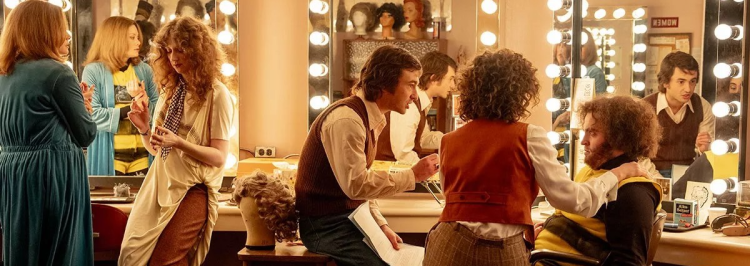
With the news of him having just turned 100 it seems fitting to start this year’s Calendar with a film led by Dick Van Dyke. Mary Poppins, which acts as festive-feeling viewing for many at this time of year, may have seen him tackling jobs such as street painter, chimney sweep and one-man band just three years later in Fitzwilly he’d take on the double duty of butler and heist mastermind. Keeping his employer, Victoria Woodworth (Edith Evans), in her life of luxury. With he and the other staff living comfortably, too.

However, as their plans come close to being foiled Fitzwilly and co find themselves needing to pull off a major heist in order to bring in the money they’ve missed out on due to the presence of Barbara Feldon’s Juliet, helping Miss Vicki to write a special dictionary. With Buddy The Elf not yet monitoring festive cheer throughout Gimbels, the department store is the target to steal $75,000 (in 1967 – today the value would be around $720,000). With a difficult-to-move-through sea of customers darting from one counter to the next in each department Fitzwilly and co go almost unseen as their organised plan plays out amongst the festive chaos.

Over time we see a rom-com style relationship that grows less and less performative/ scheme-based form between Fitzwilly and Juliet, slotting right into a familiar vein in Christmas viewing. Set against the backdrop of a house that starts to see a scattering of decorations amongst the stolen trinkets, silverware and piano – all obtained by the title character in various different guises and accents, with a slight wink to camera as he very briefly reprises his infamous Poppins accent.

Unlike most examples of festive robberies where we’re largely rooting for Christmas to not be stolen, there’s an enjoyment in Fitzwilly to seeing the heists in action, and in most cases pulled off. Perhaps because the season largely seems to be a backdrop than a full driving force, although it of course helps with the need for a bigger scheme. Alongside the lightness with which the thefts are played out in the comedic tones of the film, and relationships at play in the unit of criminals trying to maintain both their lifestyle and that of their employer, some of whom have served for generations. All in a bid to make sure that everyone continues to get what they want for a more-than-comfortable Christmas.

To see where you can buy, rent or stream Fitzwilly, JustWatch is always worth checking out.

LFF 2025: The Blue Trail – Review

Release Date – TBC, Cert – TBC, Run-time – 1 hour 26 minutes, Director – Gabriel Mascaro

In the near-future the aging population are sent to remote, controlled living spaces. Not wanting this to be her fate, Tereza (Denise Weinberg) flees through the Amazon rainforest in the hope of achieving her dream to fly in a plane.

There’s a truly degrading set of images as we see elderly figures queued up and pushed onto buses as they make their apparently inevitable journey to the remote ‘community’ where all Brazilian citizens are sent at age 77. Up until this point there have been only a scattering of near-future elements in The Blue Trail, but this sequence highlights something truly dystopian in tone and imaging. Elderly citizens are seen as a burden on society, stopping the country and younger members of society from being properly productive. Thus, they must be sent to a growing village where they won’t cause trouble to anyone but themselves.

The shots come in contrast to the open spaces of the Amazon, and other locations seen throughout protagonist Tereza’s (Denise Weinberg) journey. Fleeing the clutches of her life being taken away from her she pursues her dream of flying in a plane by first travelling through the rainforest – with the help of boat captain Cadu (Rodrigo Santoro). As the boat sets off the initial stages of the pair’s journey is a calm and gentle one. Cruising along, taking in the scenery and the freedoms of the outside world which Tereza may be slightly overwhelmed by, although trying not to show it, and drinking it all in with a hint of determination.


It’s a tone that’s struck throughout and proves to be quietly engaging. Holding interest for the 86-minute run-time which grows the bond between the two leads, and Tereza’s independence along with it. All done in a largely calm manner that makes the more dystopian elements stand out and land a tense impact when the coldness of the attitude and environment are glimpsed up close. A sudden change from the sense of wonder that’s captured in the characters as they look with new eyes at their natural surroundings.

In some ways the best way I could describe The Blue Trail is as a film that I simply enjoyed being in the company of. A calm, likable piece of work that captures two characters making the most of their freedom and independence by exploring the world around them with different backgrounds. Yet, the push is very much with Tereza. The heart is in her journey to the end. Which is perhaps why when the final stages seem uncertain as to where they’re going to go the end manages to stick the landing.

A calm and gentle journey where the heart is consistently with the main character, there’s brief cold dystopia to contrast with the freedom and independence of the rainforest journey which quietly holds attention throughout The Blue Trail.

Rating: 4 out of 5.

LFF 2025: The Devil Smokes (And Saves The Burnt Matches In The Same Box) – Review

Release Date – TBC, Cert – TBC, Run-time – 1 hour 37 minutes, Director – Ernesto Martínez Bucio

When their parents don’t come back home, a group of siblings are left to fend for themselves, and their grandmother (Carmen Ramos), as being stuck in the house plays with their minds, or are their visions real?

It takes some time for the parents in The Devil Smokes to seemingly leave their children, by the time that they do co-writer (alongside Karen Plata) and director Ernesto Martínez Bucio has decided to focus on all five siblings left at home with their grandmother (Carmen Ramos), who keeps them inside, away from the threats and dangers of the outside world. With the film switching between the perspectives of five children the narrative that follows can feel more wandering rather than jumpy. Even when held in a relatively short 97-minute run-time.

The narrative itself, perhaps because of how many times the perspective switches to show us the blending visions and reality unfolding inside the house, feels slight. The pacing is slow, but with how much changing around seems to happen, even before the children are left alone, it almost feels as if there’s an attempt to make it seem like The Devil Smokes has more happening than is actually the case, despite the different experiences for the characters at the centre of it.


Yet, I would be lying if I said that my attention wasn’t held; especially during moments which sustain the questioning, and an almost sense of hope, from the children. The final shot in particular proves to be very effective, making me wish that the film had struck more of a mysterious supernatural tone. Horror certainly doesn’t seem to be the genre at play here, more dramatic with themes relating to the former genre – despite the idea of visions and minds being played with in the confines of the same structure.

Much of this is dealt with in rather surface-level form, often I found myself wanting the film to get more involved with what was happening, to flesh itself out that bit more to create greater interest. For what there is, there’s a watchable film that has some good moments and ideas but, due to just how tonally restrained it is, in addition to what it shows, proves to be very forgettable once it’s over.

Watchable but never fully engaging, The Devil Smokes has some good ideas, especially when sustained in a moment and leaning more into the horror themes at hand, but never quite rises above surface level detail.

Rating: 3 out of 5.

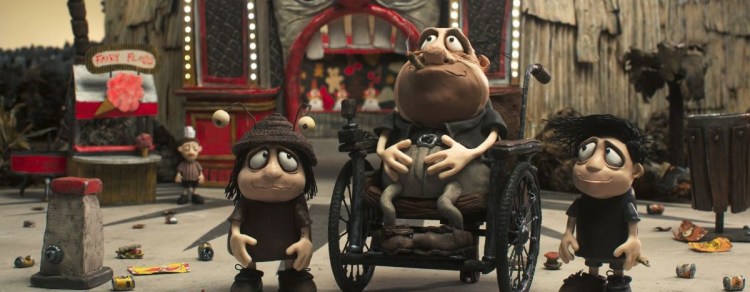
LFF 2025: Animal Farm – Review

Release Date – TBC, Cert – TBC, Run-time – 1 hour 36 minutes, Director – Andy Serkis

A group of animals take control of their farm and start to run it for themselves, however their home of equality soon shifts into a corrupt power structure the more the pigs take greedy charge.

In a pre-recorded introduction to an LFF screening of Animal Farm director and producer Andy Serkis said that he wanted to make an adaptation of George Orwell’s classic novel that told the story in an entertaining way rather than a messagey, browbeating way. However, isn’t part of the point of Animal Farm that it is browbeating in its allegory of communism and fascism? There’s certainly not-entirely-subtle dialogue scattered throughout, especially when early on one character declares that “freedom is the ability to act, speak and think what we want!”

Adapting Animal Farm has been something of a passion project for Serkis for the best part of 15 years. Having gone through development hell, different studios (even Netflix ditched it after a while) and moving away from initial motion capture intentions; I don’t believe that this is the film that he initially set out to make, and one or two tweaks may have been made for the sake of the studio, but it’s still one that he wanted to make, and that he’s happy with. One that takes a look at the world as it is today – Napoleon (Seth Rogen), now in a state of full control of the farm after ousting owner Mr Jones (Serkis – who also plays rooster Randolph), declares “everyone is saying I’m doing a really, really super job.”


Generally the film is likable enough for what it does and passes its run-time fairly well with its more commercially leaning targeting of a younger/ more family-based audience, with a couple of bumps along the way. But, what diminishes it the most is that in the attempt to make an entertaining version of the story screenwriter Nicholas Stoller has made the pigs (also including Kieran Culkin’s Squealer) the comic relief. Perhaps in an effort to make them seem foolish, their acts of greed and corruption don’t quite come across in that way, and don’t perhaps have the threat that they should have either when a couple of fart gags are thrown in. Or just slightly strange sequences seeing the characters ascending a never-ending escalator to a supermarket – or a bank representative (Steve Buscemi) going to a group of animals about mortgage repayments.

Yet, there are occasional amusing moments here and there throughout the film. One which manages to hold its head just above water and I was glad I watched. This was one of the films I was looking forward to most at this year’s London Film Festival, largely because of how long Serkis had been working on it, and I was perhaps more glad I saw it at one of the two public screenings where it seemed to go down ok with an almost full screening room. I don’t believe that Serkis’, or the audience’s, time was wasted on this project. It may not be perfect and it may have some key creative choices that truly hold it back from landing that impact that it needs – although the note of the ending is effective and the decisions made understandable considering the angles the film has taken in trying to depict the world today in some way.

A world that sees no Old Major, where Moses has turned from a crow into a drone and the opening credits play out like an action sequence as the animals rid the farm of Mr Jones. As mentioned, this may not be the film Serkis initially set out to make, but it’s at least one that he wanted to make and appears happy with. And one that’s generally worthwhile as it manages to amuse and make some solid points, especially in its closing stages, amongst its still-rather-messagey nature that follows the familiar themes and beats that many of us will have likely studied in great detail at school. It may not be perfect, and it could possibly do with some more browbeating, but there’s a solid family-friendly take here.

Animal Farm somewhat shoots itself in the foot by making the pigs the comic relief and focusing more on entertainment than message, yet, while it could do with a more looming sensibility it manages to amuse and make for a likable enough time whilst on.

Rating: 3 out of 5.

Fackham Hall – Review

Cert – 15, Run-time – 1 hour 37 minutes, Director – Jim O’Hanlon

To remain in Fackham Hall the Davenport sisters (Thomasin McKenzie, Emma Laird) must maintain tradition and marry a fitting suitor (and first cousin) (Tom Felton), however new hall boy Eric (Ben Eadcliffe) could change things.

For those who have seen the opening of any episode of 8 Out Of 10 Cats, its Does Countdown spin-off or even the annual Big Fat Quiz Of The Year, or simply anything hosted by Jimmy Carr, you’ll likely have seen his selection of quick ‘your mum’ jokes which tend to kick off each episode. They raise a light chuckle to ease into the show, but are, of course, never the highlight. With a co-writing credit on Fackham Hall (one of four total writers) this Downton Abbey spoof feels very much like 90-minutes of these gags – with Carr himself making an appearance as a vicar.

Not entirely made up of crude humour, although there is a good deal of it throughout (which isn’t alone a negative), Fackham Hall strikes best when it captures the fast-pace, almost throwaway nature of gags in classic spoof films that it clearly takes some inspiration from. While many jokes are spoiled by the fact that the punchline can be seen coming from the drawn-out build-up, the snappier lines throughout made up of wordplay and misunderstandings tend to gain healthy chuckles (when told that people’s presence are requested in the drawing room Katherine Waterston responds “but we have nothing to give him”) amongst frequent reminders of the Davenport family’s aristocratic tradition of marrying first cousins.


In this case, sisters Pippa (Emma Laird) and Rose (Thomasin McKenzie) are expected to marry a suitable gentlemen if their family is to stay living in the grand Fackham Hall estate. However, both are swayed away from Tom Felton’s Archibald by other loves. We particularly see Rose’s interest in recently-arrived hall boy Eric (Ben Radcliffe), arriving at the manor from the orphanage where he grew up, with a secret letter to give to Lord Davenport (Damian Lewis). Over time the screenwriters shift from less a Downton parody and more targeting the wider work of Julian Fellowes, a sudden murder-mystery turn in the narrative brings about feelings of Gosford Park.

It’s at this point that the film embraces silliness more rather than near crude for the sake of shock or crude, lacking humour which constructs a lot of the first half’s faltering gags. A lot of jokes in this first half in particular fall flat and the silence they’re met with can be deafening, especially when the set-up is so lengthy and obvious. As things go on there are more chuckles to be found, the gap between them seemingly decreasing over time, but even that’s a very gradual shift. And even noticeably good wordplay on signs doesn’t quite manage to gain a response simply because of the stumbles in the surroundings.

The aristocracy and clear period drama inspirations primed for spoofing certainly help the film along, but at times can also hinder it when it goes for gags that largely involve dropping a dirty joke into the upper-class surroundings. When almost ‘blink’-and-you’ll-miss-it questions and wordplay are fired that’s where the more enjoyable gags which actually gain a laugh to be found. It’s just unfortunate that they’re not more frequent and showing off the lengthy gaps between certain laughs. Luckily, there are at least a couple more laughs than references to the aristocracy marrying first cousins.

Producing laughs with intermittent snappy wordplay, Fackham Hall’s effective gags are certainly spaced out amongst the more obvious ones which are given away in the lengthy set-up which unfortunately hold things back from being simply more enjoyable.

Rating: 2 out of 5.

Ella McCay – Review

Cert – 12, Run-time – 1 hour 55 minutes, Director – James L. Brooks

Ella McCay (Emma Mackey) is promoted to state Governor, however familial tensions and pushes from party members cause immediate trouble.

Set in 2008, described as a far less divided time; and seemingly one much easier to base a film in the world of politics, Ella McCay feels somewhat like a film from that era. It also feels like it could be among writer-director James L. Brooks’ 80s work, and the 50s with the slightly unnatural tone to some of its dialogue. The scenes of conversation, and there are a great many in what is an undoubtedly dialogue-led film, are largely what create the jumbled and over-busy feel that weighs down both the film and titular characters life.

Ella (Emma Mackey) is promoted to state Governor when current position holder Bill Moore (Albert Brooks) is offered a place in the incoming cabinet. However, with a report seemingly imminent about her use of government spaces for “marital relations” with her husband (Jack Lowden) and many party officials prepared to push back against her at every turn, Ella’s time in the role is launched with a rocky start. Her personal life, too, sees struggles with family as her distant father (Woody Harrelson) – who had multiple affairs against her mother (a very briefly seen Rebecca Hall) when Ella was young – seeks forgiveness, and her younger brother, Casey (Spike Fearn) isolates himself after a bad not-quite-break-up; leading to a set of very awkward late-in-the-day scenes with Ayo Edebiri.


Brooks jumps back and forth from one idea to the other never really giving anything time to breathe as Mackey’s character races back and forth across town seemingly pausing conversations only to return later after resuming those with other characters. When starting to come together in some way, largely sparked by the tension growing in her marriage, the film truly shows just how busy it is in its struggle to do so in a way that feels brief. The most pace to be found here is that which characters do back and forth around a room or through the corridors of the state Capitol.

Points are often so drawn out and tangential that the handful of gags dotted throughout feel drawn out to the point that they blend in with everything else and often don’t seem to be gags until a few beats later. There are one or two amusing moments and light chuckles to be found throughout, but they’re very spread out in the near two-hour run-time, which itself is certainly felt. From looking at trailers after having seen the film it seems that the intended push is Ella trying to not go under the sea of familial problems she’s facing, where much of her stresses stem. However, they never feel united enough to be summed up in this way.

Everything plays out separately for so long, with the addition of pressures from her political colleagues who don’t all share the views she expresses in amusingly lengthy speeches, that the events playing out all feel so distanced. Even still needing individual moments when being brought together. A key sequence bringing Ella’s future into question has to feature multiple conversations inside, then a step outside, the back in for an announcement which instead of cutting to the next moment leads to more of this particular scene. Meanwhile, a scene involving her security detail (led by Kumail Nanjiani) bickering about overtime pay feels completely unnecessary for the eventually rushed, almost nothing, conclusion. Much like the central character of the same name, concise isn’t quite in Ella McCay’s dictionary. A shame for a film that could otherwise be a light, enjoyable dramedy.

Despite some amusing moments, Ella McCay feel weighed down by a great many characters and narrative strands, with a run-time drawn out by jumbled dialogue and scenes which jump back and forth between largely disconnected dramas.

Rating: 2 out of 5.

Eleanor The Great – Review

Cert – 12, Run-time – 1 hour 38 minutes, Director – Scarlett Johansson

94-year-old Eleanor (June Squibb) moves in with her family in New York after her Holocaust survivor best friend (Rita Zohar) passes away, however she finds attention, and friendship, when telling Bessie’s story as her own.

I don’t entirely know what it is that the trio of screenwriter Tory Kamen, director Scarlett Johansson (in her directorial debut) and star June Squibb bring to Eleanor The Great that doesn’t bring an air thick with dislike to the titular character, but somehow in her Dear Evan Hansen-esque journey there’s some form of interest and emotional engagement, if not entirely forgiveness, for her. 94-year-old Eleanor (Squibb) has just moved from Florida to New York after the passing of her best friend, Holocaust survivor Bessie (Rita Zohar). While trying to put her in an assisted living space, her daughter, Lisa (Jessica Hecht), signs her up to a Broadway song group at the nearby Jewish Community Centre. However, a friendly interaction outside the wrong room leads her to a Holocaust survivors group.

From here Eleanor tells not her own story, having grown up in Iowa and The Bronx, but that of Bessie’s – told to her in private after a dream taking her back to the trauma of her youth one night. Soon, Eleanor becomes a notable figure for journalism student Nina (Erin Kellyman) – grieving the loss of her mother six months prior which creates a lack of conversation with her newsreader father, Roger (Chiwetel Ejiofor) – who wants to write about what she believes to be the nonagenarian’s life.

While scenes between Squibb and Zohar have an emotionally striking nature, as Bessie describes the trauma she faced and relives regularly in her mind, Kellyman often appears as the real heart of the film. Delivering a strong, affecting performance that’s in tune with the until-now held-in grief Nina is holding on to. Often having to excuse herself to find a space to cry at the mention of her mother, Kellyman’s performance is one that grows in person emotional handling as the film goes on and the friendship with Eleanor grows.


When focusing on Eleanor, especially as Roger learns about her and wants to put a story about her on TV, the film certainly has its familiar beats. Despite the surroundings there are occasional scenes which feel somewhat sedate and conventional in their approach to lightness, a tone which itself is no bad thing and in some way helps the film along, especially between heavier moments. Eleanor decides, when attending services at the nearby synagogue, to finally have her Bat Mitzvah, although without telling her family, with the film following the various stands of her recently-started New York life/ lives coming together around this point.

I may not have found myself quite reaching forgiveness for Eleanor and her continuations of telling her best friend’s trauma as her own, uncertainty was the more dominant feeling for good portions of certain scenes. What keeps interest and engagement is perhaps down to Squibb’s central performance which is filled with good-natured compassion and hints of fear of loneliness as a part of aging, even if she is irritatingly patronising to service staff. The relationship that forms with Nina is kind and displays the aforementioned compassion and you genuinely believe the bond between the pair.

Also down to Kellyman’s great performance which might steal the show, especially when given her own moments in the spotlight, but never distracts from who the main character is. One who may conflict every now and then, but is treated in a way that doesn’t make her wholly unlikable, perhaps because of knowing when to show other characters and details of stories so as to still capture the pain and trauma of some of the subject matter at hand without as much sense of deception.

While not unlikable there’s not complete forgiveness towards Eleanor The Great’s lead character. Certain scenes might feel a bit too familiar, but there’s an overall interesting and emotionally engaging course to the film, especially when involving Erin Kellyman’s wonderful supporting turn.

Rating: 3 out of 5.

LFF 2025: Balearic – Review

Release Date – TBC, Cert – TBC, Run-time – 1 hour 14 minutes, Director – Ion de Sosa

Whole a group of teenagers are stranded in a pool surrounded by bloodthirsty dogs a group of wealthy friends get together for a summer party, where other disaster is nearing.

Balearic’s downfall lies in the way that it doesn’t quite set itself up. The opening 15 minute sets up a horror of teenage friends breaking into an empty home only to find themselves stranded in the pool, one of them injured, surrounded by bloodthirsty dobermans ready to attack. Just as the sequence starts to reach its most interesting and tense point the action moves to a summer party seeing another group of wealthy friends gathering together, a wildfire potentially nearing them; not that they have much care for the matter.

Whilst initially feeling like two short films randomly stuck together Balearic’s opening sequence seems to be more and more forgotten about the more time we spend away from the pool. It may be mentioned or suggested towards the final stages, but its more lightly thematically than anything else. Instead, a plodding set of satirical conversations play out, largely around a table outside the home in the hills elsewhere from the one broken into. Yet, the biggest issue with the dialogue that constructs these conversations is it has far less bite than those of the dogs earlier on in the not-quite-set-up.

The film, once it gets to its seeming main points, just feels rather tame, in part because of its blandness and lack of sharpness. Meaning that the short-run time, which thankful still manages to feel drawn out at times. Only towards the end do we get something that feels properly in-tune. It might be that things are intended as a big reveal, but it just feels as if the film has finally found what it properly wants to do after a lot of wandering conversation. Things finally come together, as ash starts to fall on one group of characters like snow; played like a joyous scene from a Christmas film. Yet, all of this, comes too late in a very short run-time. Not having the build-up that it needs to have the effect that it wants. It just made me wish that the whole film took the position and visual style that these final stages do. Unfortunately, for the most part, there’s little bite and not much bark to Balearic either.

Despite a likable horror set-up, Balearic gets bogged down in a satire with very little bite or edge until the very final stages, meaning that it falters as it wanders through its short yet drawn out run-time.

Rating: 2 out of 5.

LFF 2025: Reflection In A Dead Diamond – Review

Release Date – 5th December 2025, Cert – N/A, Run-time – 1 hour 27 minutes, Directors – Hélène Cattet, Bruno Forzani

When his neighbour disappears a retired spy (Fabio Testi) finds himself reliving, and being caught up by, various iterations of his dangerous past.

A 70s-style Bond homage told through the trippy 60s lens that brought us The Monkees’ Head, I’d struggle to coherently tell you much of what happens in Reflection In A Dead Diamond. But, what I can say, is that I think I still managed to enjoy it. The basics follow retired spy John D (Fabio Testi) falling through his past after the disappearance of his neighbour, who looks like a familiar face, in the seaside hotel he lives in.

From there a kaleidoscopic array of iterations of his life start to unravel with fracture-like cuts from one to the next. Like the different forms of Bond the story almost takes form of novel, movie, production, character, actor and segments of life – although which is which can sometimes be uncertain.


Past (young John D is played by Yannick Renier) and present, not to mention possible future alongside fictional and alternate timelines, start to fuse together with the baton passed with more frequency and haste, almost mid-scene, the more the film goes on and the main characters life appears to unfold all at once, the one mission that seemed to never truly be over. Co-directors and screenwriters Hélène Cattet and Bruno Forzani’s screenplay swiftly jumps in and out of meta situations with no full warning, adding to the baffling, spoof-style tone.

There’s clear detail in the 70s aesthetic that’s been recreated here and it allows for some of those spoof details to come through more. There may not be many full laughs, but a couple of exhales of amusement here and there. Even in the final 20 minutes where I truly had no clue what was going on as it seemed that everything on screen was a swirling array of colours while the speakers blared one of the loudest films I think I’ve ever heard. With everything unfolding Reflection In A Dead Diamond, at least as I saw it, was certainly a film impossible to sleep through. A good thing for a film with so much happening at once, although whether awake throughout or nodding off for a moment there’s still a task to work out just what’s happening.

Reflection In A Dead Diamond is a knowingly chaotic piece. It doesn’t always quite work, and can sometimes feel like multiple vignettes that have been cut up and spliced together at random intervals. As meta sequences are jumped in and out of with likable visual details there’s some amusement to be found in the more parody-based elements. But, even with the engagement, even if stemmed from slight perplexion, the film itself; with just how much it rushes past, through, over and into over its mere 87-minute run-time, can feel a bit much. Likely disengaging more than tiring, although it may well prove to also be that. How you inevitably feel about the film overall will likely come down to how you get on with been stuck in a falling, shattering, meta Bond spoof kaleidoscope.

A baffling and dizzying time, Reflection In A Dead Diamond manages to produce some likable elements in its visual details and occasional humour, but with all its chaos and barrage of sights and sounds it can sometimes prove to be a bit much.

Rating: 3 out of 5.

Oh. What. Fun. – Review

Cert – 12, Run-time – 1 hour 48 minutes, Director – Michael Showalter

Claire (Michelle Pfeiffer) works every year to give her family the best Christmas possible, when they forget her on the way to a Christmas Eve event she ditches them for the big day to appear on her favourite show.

Claire (Michelle Pfeiffer) wonders why so many Christmas movies are about men, particularly dads, trying to give their families the best Christmas possible. Especially when it’s always the mums putting in the effort to make Christmas Day as smooth and wonderful as possible. Where are the films about them? Thus begins Chandler Baker and Michael Showalter’s (who also takes on directing duties) agitated greeting card of a film.

Claire’s family (including children Felicity Jones, Dominic Sessa and Chloë Grace Moretz), and their partners (Jason Schwartzman, Devery Jacobs), all gather together to celebrate another Christmas. Bickering ensues followed by jabs increasing tense and strained relationships and the stress Claire is facing as her family largely seem to ignore her, and her bid to have a better, more unifying Christmas than the family across the road, who we see harmonising carols together. However, when her family forgets her on the way to a Christmas Eve dance show, Claire gives up, abandons Christmas and drives to appear on a special Christmas Day edition of her favourite show.


Every year Eva Longoria’s Zazzy Tims invites families to put their hard-working mums forward for a special competition to celebrate them on the show. Despite Claire’s pushes none of her family applied. It’s another layer of hurtful ignorance from them. Pfeiffer’s narration and performance hammers home with the subtlety of a sledgehammer the idea of how unrecognised she and many other mums are at this time of year. That not even a simple ‘thank you’ is heard. It appears that Oh. What. Fun. is a film made for people who feel like Pfeiffer’s character, as if to be put on in front of their families, watched with arms crossed and occasional glances at said family with the feeling of making a disgruntled point.

There are one or two chuckles throughout, mostly courtesy of Jason Schwartzman wandering through the corridors of his mother-in-law’s home, but as the film goes on attempts at laughs start to be surrounded by the forced messaging and lost amongst it. Despite attempts from some of the supporting cast, and occasionally amusing moments, there’s just no escaping the fact that the film devolves into a thematically repetitive thank you card. One seemingly led by the person it’s presented to, and perhaps from, and so brings about a cycle of self-congratulation from Claire in her bid for appreciation from her family. Leaving no room for festive sentiment which could have eased the edges of the film and it’s somewhat hostile lead character.

A sledgehammer of a self-addressed greeting card, Oh. What. Fun. struggles to create laughs the more lost it becomes in its own messaging. Some festivity and sentiment are sorely missing.

Rating: 2 out of 5.