Giant – Review

Cert – 15, Run-time – 1 hour 50 minutes, Director – Rowan Athale

‘Prince’ Naseem Hamed (Amir El-Masry) rises from matches in front of racist club audiences in 80s Britain to world champion boxing, however over time rifts form with his trainer, Brendan Ingle (Pierce Brosnan).

“Same story, different actors” says Alma Ingle (Katherine Dow Blyton) as she notices the rift already forming between her boxing coach husband, Brendan (Pierce Brosnan), and his latest prodigy ‘Prince’ Naseem Hamed (Amir El-Masry). Having trained together since Naz was seven the bond the pair once had appears to be fading as the boxer gets further into the professional world. The observation of a familiar story is certainly one that I agreed with as the markings that make up Giant’s story felt just so while watching it.

Instead of focusing on El-Masry’s character much of the film is told through the eyes of his trainer. Brendan consistently pushes his past as a boxer, although how successful he was seems to be overstated, and starts to ask for a bigger cut of the winnings from the man he made as skilful as he is, in line with what other trainers ask for. It’s this that truly kicks off the arguments between the pair. Yet, around these moments the film seems to switch perspectives between the two leads. Whether this is meant to be largely one person’s film or both starts to tangle as who we’re meant to feel empathy for and who the ‘bad guy’ is meant to be constantly flip-flops. The tone suggests that at least one person must be, but just who that is never feels solid due to that figure changing in line with the viewpoint we’re seeing things from.

When focusing on Brendan the film certainly feels most confident. There’s a slightly more relaxed tone that sits more comfortably in line with the figure, despite Naz having the potential for more dramatic weight as he grows up fighting in northern English clubs of the 80s for racist audiences – scenes which provide a number of grating child performances – growing to fight for world champion titles; where we finally get El-Masry conveying the arrogance ingrained in the boxer. Brosnan gives a good performance and tries to bring a layer of warmth to the conventional beats of the script and the more unsubtle moments.


The boxing sequences are intentionally flashy, but this comes at a cost as they’re edited and shot in a way that tries to put the action front-and-centre but removes its effect from cutting at each moment so that an attempt at a punch suddenly appears to have been nowhere near the opponent, or the action is simply made more jumpy and difficult to follow. A particularly issue when Naz’s dance-like footwork is said to be his greatest skill, providing his abilities with a strong fluidity which the edits stop from coming across.

As things move on, and the rift truly comes more to the fore in what turns out to be the third act, character is clearly at the front of Giant’s mind. While occasionally things might conflict when it comes to perspective there’s still a film that does a solid enough job here. One that works, and manages to have a good handful of engaging moments; helped along by small beats of humour, in fact a good amount more than I would have expected going in. It helps to bring a bit more pace to some of the slower scenes, largely because of the blend of familiarity and uncertainty when it comes to how characters are supposed to be viewed.

There’s a good film in Giant, and one that for the most part, despite its bumps, passes by fairly well. However, with a good deal of stumbles it doesn’t make for the smoothest of rides. Occasionally feeling like two biopics about the same events that have been melded together both of them are decent enough, but they can start to spar with each other for control of the frame. Meaning that the character drama at hand doesn’t always get the room it perhaps should have to properly breathe. There’s some space allowed by the elements of familiarity, but not enough for the film to properly move around.

With two perspectives uncertainly conflicting, while watchable and having some likable moments of character drama thanks to the two lead performances, Giant feels held back by its style and editing from properly landing a punch.

Rating: 3 out of 5.

Just A Little Bit Random Review Of The Year 2025

Film journalist Tom Beasley once again joins me to count down our respective top ten films of the year lists, this time looking back at the best films of the year that was 2025. Covering smart horror films and a good number of indie films about people being sad, with some plain silly and feel-good films, alongside slight disagreements, in-between. All part of looking back on our best and favourite films of 2025.

To find more from Tom check out his Instagram and Bluesky.
If you want to listen to his song requests follow the links below:
Crazy Little Thing Called Love – Queen
Johnny B. Goode – Chuck Berry
Rhinestone Cowboy – Glen Campbell

Just A Little Bit Random Audience Top Ten Films Of 2025

2025: a year noted for, perhaps more so than in recent years, the acclaim of original films, and success of them over franchise titles. That certainly seems to be the case with the audience top ten this year, where original titles dominated the voting process – although there are notable franchise titles and adaptations in the mixture as well.

While one film may have ran away with the vote for first place, those that followed were close together, and over the two weeks or so that voting was open original films, and indie hits, were shown plenty of love. This is the first year since perhaps starting these audience top tens that the MCU, or a superhero movie for that matter (despite some love for Superman), hasn’t made the list. Favour was shown towards British films, particularly comedies with an emotional vein such as Bridget Jones: Mad About The Boy and The Ballad Of Wallis Island, while awards contenders for both 2025 and 2026 races – Frankenstein and, somewhat surprisingly considering its mid-January release, A Real Pain especially.

The final audience top ten has a good deal of variety in terms of both genre and release date here in the UK. And so, let’s see what’s joining the recent likes of Wicked, Oppenheimer and Glass Onion to be named the Just A Little Bit Random audience best film of the year, alongside the rest of the top ten.

10. A Complete Unknown


One of the few stars today who can seemingly open a film, Timothée Chalamet received much praise, and awards love, for his portrayal of Bob Dylan when he went electric. A Complete Unknown was a hit with fans of Dylan and general audiences with a traditional feel that still appeared to stand out amongst the growing cliché of many music biopics – something which 2025’s Springsteen: Deliver Me From Nowhere was criticised by some for.

But, with the switch to electric, of course, comes a focus on the music, and that may well have been what audiences were hoping for from this film. Providing just that it showed itself to be a hit in multiple ways. Especially in regards to Chalamet’s performance, and those around him such as Edward Norton, Monica Barbaro and Elle Fanning. Music, lyrics and the connection we can have with them lead the film and may have served as reminders to many about just what they love about Dylan’s work, reconnecting with it through the film as we see him defiantly stick to what he wants to do in the wake of pressure from the folk scene to stick to tradition and his roots. Captured in that 1965 Newport Folk Festival set that starts to round off the film.

9. Wicked: For Good


After one of the world’s longest marketing campaigns, effectively beginning over a year and a half ago in the build-up to the first film (named the audience film of 2024) and seemingly continuing a month-and-a-half after the release of the follow-up, mixed with an awards campaign, Wicked: For Good had a lot to live up to. The stage musical has largely been said to have a weaker, stranger second act without the same level of hits that act one has, yet still remains a beloved, highly popular production. This film adaptation of that second act seems to have succeeded in capturing some of that stage magic that people loved so much, and effect of the first film, is still present in this second half of the Glinda-Elphaba story.

Transporting audiences back to the visual detail of Oz, with more being shown of it amongst the musical numbers (including Jeff Goldblum having a great time performing Wonderful, a highlight of the film). The film seems to have especially worked for those who have double billed the pair together, something which seems to have been done many times by many people, boosting For Good beyond what many have said when viewing it alone. And that may be what’s helped it reach this year’s audience top ten, alongside a general love for the musical and simply film on its own.

8. 28 Years Later


Another return enjoyed by voters, although to a much darker place then Oz, 28 Years Later saw a long-awaited view of Britain under the Rage virus. A return to the zombie franchise that tackles ideas in the wake of a post-COVID world and rise of nationalism, there’s much tackled in this third entry in the franchise, and first of a trilogy, that audiences recognised and connected with. All amongst the expected chaos of a ‘they’re-not-called-zombies-but-they’re-absolutely-zombies’ outbreak.

Fear and dread were ramped back up, even back in the unsettling island community that young protagonist Spike (Alfie Williams) finds himself brought up in the safety, at least from the mainland, of. All before delving into a more restrained and emotionally-based story surrounding grief and the illness faced by Spike’s mother (Jodie Comer), as they seek Ralph Fiennes’ possibly mad doctor who is believed to still be alive on the mainland after all this time. Through this director Danny Boyle and writer Alex Garland, returning after working together on 28 Days Later 23 years prior, brought in poignancy and a set of events that unexpectedly affected a good number of people, and created a more weighty film than was already present in this follow-up made with something of a zombified reflection that audiences truly connected with.

7. KPop Demon Hunters


The word-of-mouth Netflix hit that turned into a chart sensation and a box office smash (twice), KPop Demon Hunters is undoubtedly one of the biggest, most talked about films of the year. And deservingly so. Not just another showcase of strong visuals from Sony Animation, after the likes of the Spider-Verse films and The Mitchells Vs The Machines there’s a truly entertaining film to be found here. Backed by a great soundtrack full of equally enjoyable earworms – Golden has been just one of the tracks on a loop in many households since the film started to grow its audiences around halfway through the year.

Proving a longevity, and entertainment for all ages, the film is still being talked about and the soundtrack played all these months later, with little sound of people being tired of it. Perhaps because, especially in a year with little in the way of notable animated films (instead we had a shot-for-shot remake of How To Train Your Dragon or a live-action take on Lilo And Stitch that faltered under the weight of the studio wanting to keep as much the same as possible), it showed just so much creativity in both its style and what it chose to do with its narrative. Making for a fun, entertaining and humorous adventure.

In a year where Ne Zha 2 was the biggest box office hit, Disney managed to cross the billion dollar mark with Zootropolis 2, Captain Underpants spin-off Dog Man was perhaps one of the funniest films of the year and anime continued to fill cinema screens via the likes of Demon Slayer: Infinity Castle and Chainsaw Man: The Movie, KPop Demon Hunters appears to be the film that came from almost nowhere, defied expectations from the title and sprinted ahead of them all.

6. Wake Up Dead Man: A Knives Out Mystery


From the first instalment the Knives Out films have quickly become consistently enjoyable audience favourites. Some of the most discussed films of the year, they’ve become actively anticipated and enjoyed by many, particularly with re-watches. Knives Out was named the third best film of 2019 while Glass Onion, as mentioned above, was crowned the best of 2022. Wake Up Dead Man continues the series’ placement in audience top tens by making it into the best of 2025 with a more serious, yet still humorous, locked-door mystery. One where it seems the murder was impossible, with no one nearby who was able to do it.

Another starry ensemble is assembled for Daniel Craig’s thickly-accented Benoit Blanc to scan over and question as he tries to work out whodunnit when it seems that nobody could have possibly dunnit. A murder mystery against the background of faith, possible spiritual forces at play and a hostile, tight-lipped church congregation, there was as much a guessing game at play here as before. All made with the usual glee that Rian Johnson displays in his writing and directing as the mystery unfolds with as much delight each time we watch it. With the level of quality maintained, it seems that many welcome more Knives Out films for years to come, as long as Johnson and Craig are prepared and happy to keep making them, as and when they’re ready.

5. Weapons


One of the most acclaimed films, and original stories, of the year. In a year that had plenty of love directed towards horror films, Weapons was one of the ones that stood out the most. Covering an array of themes that could well differ with each viewing, if there weren’t already some before Amy Madigan appears chills were certainly felt by audiences by the time her character becomes a proper presence in the darkness of Weapons. A film that many found delight in from going in to knowing very little, and has had such an effect that little has been given away about it in the months since the films release. With audiences letting other see the film as fresh as possible for the first time instead of leaping to openly analyse every shot and detail online.

The image of children running out into the dark in the middle of the night, arms stretched out like the shadows falling behind them in the dim glow of the street lights, is one of the most effective of the year. Itself a chilling image to match the concept of the film, especially when kicking things off with the backing of George Harrison’s Beware Of Darkness – one of the best needle drops of the year. Weapons has proved itself as a film that has had almost everyone taking something different from it, and pretty much all of them are right in what they’ve seen. Regardless of what people have seen it’s certainly got under the skin of many who watched it and believed it to be one of the best films of the year.

4. The Choral


Each year the audience top ten features of a British drama such as The Choral, but usually towards the lower end of the list but this particular film did consistently well in the poll. Whether it was the emotionally affecting nature of the performance that almost everything builds up to, or the simple touch of writer Alan Bennett, there’s clearly something that created a lasting impact with a good number of people who saw the film.

2025 was a year with many films that looked into the idea of art as therapy and escape. Certainly there are a handful in the awards race for this year (such as Hamnet, a 2026 release in the UK, and Sentimental Value, released on 26th December so perhaps a bit late for some when it came to voting, although Marty Supreme received a couple of votes; but had a bigger release. The theme is central to The Choral, against the backing of the First World War, with multiple members of the titular choir preparing to be called up to fight at any moment. Done in a calm and traditional British vein, this was a drama that audiences appeared to give a warmer reception to than the critical one, which generally seemed to be fairly lukewarm, although not without praise. But, its depiction of escape and release through music and song, whilst maintaining something of a stiff-upper-lip attitude, was enough to push it to a place as the fourth best film of 2025 in this audience top ten.

3. Sinners


Before Weapons came along, and after it, Sinners was the original 2025 horror, and really just original film in general, that took the box office, and audiences by storm. Outperforming expectations and too-quick-to-jump doomsayers the film proved to be a word-of-mouth hit that retained an audience thanks to the pure acclaim that it received. Showing that there is demand for fresh, original genre filmmaking in this day and age. And Sinners pushes itself with all three of those boxes. With both the largely unadvertised first half and the second half where everything ramps up into a fiery battle, although the heat is present long before, after the appearance of vampires led by Jack O’Connell.

Far beyond a musical sequence which acts as one of the best scenes of the year, capturing the blend and drive within Sinners as a whole, there’s plenty of force and flair throughout the film. Whether in the dual lead performance of Michael B. Jordan – perhaps the most acclaimed in a year that also saw some from Elle Fanning and Roberts Pattinson and De Niro – or acclaimed supporting turns from Wunmi Mosaku, Miles Caton, Hailee Steinfeld or Delroy Lindo, or technical aspects such as the music and visuals. The celebration that kicks off the juke joint set up by Jordan’s twin brothers descends into a dark, musically-tinted actioner with blood, sweat and fear. A big all-round success in 2025.

2. I Swear


A true British crowdpleaser, in the UK I Swear built up an audience through preview and mystery screenings and found success through its true-life-tale leanings and word-of-mouth acclaim. A dramedy with plenty of heart, and praise in the build-up to its release, there was plenty of humour, it’s acknowledged in the opening scene that ‘it’s ok to laugh’, to be found amongst the emotional punches in the story of Tourette’s advocate John Davidson (Robert Aramayo).

Much of the aforementioned heart comes through moments of kindness and understanding, whether from Peter Mullan’s character or Maxine Peake’s standout turn. Breaking up the struggle faced by Davidson through acceptance. Pushing him to become an advocate and teach people about Tourette’s syndrome so that there’s more awareness and understanding around it. A film that took a good number of people by surprise with just how much they responded to it, perhaps that understanding and aforementioned kindness is what really allowed the film to strike the right chord and resonate in the way that it did. Making for a film that appeared in many best of the year conversations, and had enough love to appear as the second best film of 2025 according to the audience poll.

1. One Battle After Another


In previous years the gap between first and second, and even third, in the audience poll has been very close, with the lead often changing. However, this year One Battle After Another took the crown early and continued to storm ahead with a particularly strong showing compared to any other film. Little was known about Paul Thomas Anderson’s latest in the build-up to release, with the marketing keeping much under wraps, but once in cinemas the acclaim was unleashed and from there it’s barely calmed down; looking at becoming an awards sweeper in the next couple of months.

Almost every element of the film has been praised, especially the thrills of the third act with its dizzying hill-based car chase. One Battle After Another is undoubtedly one of, if not the, most acclaimed films of the year. While it might not have been the biggest box office success there was still plenty of discussion around it and the performances of the ensemble cast in the constantly moving dramatic thriller. One with constantly shifting thematic layers which provided particular, if not entirely intended, resonance against their political backdrops. In some ways boosting the thrills and tension on display in the various chase aspects that make up the narrative at hand.

Regardless of what it was in particular, if just one thing, that clicked with people, One Battle After Another has been named the Just A Little Bit Random audience’s best film of 2025.

LFF 2025: Lucky Lu – Review

Release Date – TBC, Cert – TBC, Run-time – 1 hour 43 minutes, Director – Lloyd Lee Choi

Having only just secured a cramped, one-bedroom space for his imminent families arrival, New York City deliver rider Lu (Chang Chen) struggles to get by, especially when at risk of losing his job.

There’s an emotional helplessness to Lucky Lu as the titular protagonist’s (Chang Chen) life continues to give in under the weight of itself. Having emigrated to New York City in the hope of giving his family a better life, and opening a restaurant, five years have passed and Lu is finally ready to welcome his wife (Fola Chen) and young daughter (Carabelle Manna Wei) into the cramped one-bedroom flat he’s only just barely secured.

However, not long after their arrival Lu’s e-bike is stolen. He frantically runs around trying to collect and deliver orders, only for them to take too long to arrive to customers, and get cold in the process. Money troubles get worse, loans are declined and work is on the line. The washed-out, grey look that adds to the dirt and grime of the city, squashed into the aspect ratio adding to the feeling that this city, and land, or dreams isn’t all it’s been made out to be.

All these pressures and worries are maintained in a slow-pace that’s made bearable, and somehow not bleak, by the level of compassion which writer-director Lloyd Lee Choi, in his feature debut, shows to his characters. From start to finish his gaze, and the restrained lead performance from Chang Chen, remains quietly compelling and emotionally in-tune with everything we’re shown. Lu tries to connect with his daughter but struggles to amongst the demands to bring in money for his family, often attempting to do both at the same time with what seems like little success in both regards.

Choi wills him on, as do we, amongst the emotionally and mentally draining struggle we see him go through over again. With care and want to see him, and his family, succeed. Gently paced and providing a good deal of insight into his life with details of others naturally leaking into the wider picture as a portrait of another side of New York life is created. One that’s caringly and thoughtfully made, getting across many stories of struggle within one of a single family. A family who have great weight behind them thanks to the quiet and natural performances which effectively get across the strains they face and the natures of their relationships with the most subtle of looks and gestures. Creating further compassion from the viewer to add to that displayed by the camera in the grime of the faded city.

Multiple stories leak into that of the central family in Lucky Lu, subtly performed and captured with quiet compassion which helps to prevent despair in the effectively slow pacing, this is a finely-tuned story of struggle in a city as faded as the dreams brought to it.

Rating: 4 out of 5.

LFF 2025: Diamonds In The Sand – Review

Release Date – TBC, Cert – TBC, Run-time – 1 hour 42 minutes, Director – Janus Victoria

After the death of a neighbour, Yoji (Lily Franky) leaves his life behind and heads to the Philippines, where he believes noone is truly lonely.

“So, in the Philippines you’re never alone?” asks Yoji (Lily Franky), a sense that this neighbouring country is a completely different far off land simply because of this fact. After losing his friend and neighbour he decides to depart his isolated life in Japan to spend time in the Philippines.

Writer-director Janus Victoria quietly follows Yoji as he wonders through the streets and starts to have conversations with those he comes across. Finding a small sort-of-community in the places he ventures. He undoubtedly spends his time wandering and the film in turn has a similar feeling to its pacing and structure. It’s certainly intentional, but still feels like general wandering. I sat watching, willing the film and Yoji on in his search to lessen his isolation, but at the same time wanting to film to ever so slightly pick up and show a bit more. To just be that bit better. Especially once the different stages of the central character’s journey become noticeable.


In the earlier stages we see more of his home life than I had expected from the brief plot description I’d seen beforehand, which somewhat implied a different kind of film – although one that we get more in the final half hour where indeed things feel like they’ve been taken from a different film. In the opening stages, however, there’s a more close-up look at things. The camera leans into Franky’s eyes as he truly gets across the loneliness of his character. It’s his performance that truly gets these feelings across and does so rather effectively in these quieter moments that focus on this point, and his turn before gradually stretching into something different the more the film gets towards the closing stages. Leaving me to wish that, while what I was seeing was still fine, that it would get back onto that more intimate track with the lead than the wider environment he found himself floating in, and into.

A film with clear stages, where the opening ones that focus on the isolation of the lead character and the best and most intimate, before things get somewhat lost in the less quiet Philippine streets where the tone shifts into that of a different film.

Rating: 3 out of 5.

LFF 2025: Good Boy – Review

Release Date – TBC, Cert – TBC, Run-time – 1 hour 50 minutes, Director – Jan Komasa

Reckless youth Tommy (Anson Boon) is kidnapped by a family he doesn’t know who trap him in their basement wishing to teach him a lesson about valuing his life.

As we see an extremely reluctant set of minor changes in Good Boy’s main character, Tommy (Anson Boon), I was reminded of the Don’t Hug Me I’m Scared TV series. But, instead of Stain Edwards being transformed into the not-quite-departed Duck the sinisterly dark comedy at hand made me think that the intent from the family who have kidnapped and trapped him is to almost indoctrinate him into their drab home. But, Tommy proves a struggle for them as he lashes out and attempts to escape his imprisonment from the group of strangers.

Attempting to change the violent and reckless youth’s life – the opening two or three minutes does a good job of making him instantly, wholly unlikable with his obnoxious partying lifestyle – 80s style VHS tapes are shown to him, alongside his own TikToks, claiming “everything that surrounds you is filled with love and understanding.” The uneasy style of ‘care’ shown, however, largely by father Chris (Stephen Graham with a hint of Dennis Nilsen about him) certainly say otherwise. Yet, despite the sinister nature at hand there’s still a slight gentleness and warmth shown from Chris towards Tommy, as if he does actually have good intentions in wanting to see him be better person – even if he goes around it in far from the right way.


Chris also cares for his wife, Kathryn (Andrea Riseborough), who herself seems to be ill. A quiet and isolated figure there’s very little for Riseborough to do for a good chunk of the film, leading me to sit and wonder when the detail that could have attracted her to the role was going to finally arrive. While largely confined to the second half, where some of the film’s darker edges wear off leading to a dampened effect from the pushed run-time.

There are still darker elements at play, and some moments of real suspense, especially when it comes to one particularly difficult-to-watch scene involving Chris and Kathryn’s young son Jonathan (Kit Rakusen). However, as we learn more about the family and Tommy starts to find more freedom in the house – even if still walking with a literal chain around his neck – the tone starts to shift, and in that the film appears to lose itself and where its strengths lay. It doesn’t quite become a different film, but one simply stuck in its shifts and weakening because of that. The darkness of the comedy, and to some extent the comedy in general, isn’t quite as present and the film appears to be more clearly trying to build towards an ending, albeit quite gradually. But, when remembering its darker tones in various aspects Good Boy is at its best with a sinister nature hanging over both the humour and drama, with help from Stephen Graham and Anson Boon’s paired performances in particular.

Working best when focusing on the darkly comic and sinister Good Boy starts to lose itself in its tonal shifts, meaning that its effects wear off and thematically it starts to feel as if it strays.

Rating: 3 out of 5.

Anaconda – Review

Cert – 12, Run-time – 1 hour 39 minutes, Director – Tom Gormican

A group of friends (Jack Black, Paul Rudd, Steve Zahn, Thandiwe Newton) set out to the Amazon rainforest to achieve their childhood dream of making a film. However, whilst remaking Anaconda they must escape an actual giant snake.

In the build-up to this not-quite-remake of cult 90s creature adventure flick Anaconda (one that even with that cult audience still doesn’t have the best of reputations) I found myself wondering why Paul Rudd and Jack Black weren’t just playing themselves instead of struggling actor and aspiring director turned wedding video maker Griff and Doug. Perhaps that would feel a bit too self-referential with too many distracting in-jokes, and what we get certainly has a good few chuckles as the childhood friends reunite, alongside Thandiwe Newton’s Claire and Steve Zahn’s Kenny, to finally achieve their dream of making a film together.

The film in question is a remake of Anaconda, which Griff claims to have the rights of after the widow of the Japanese author who wrote the book the original is allegedly based on enjoyed the four episodes of a cop show he was in years before agreed to give them to him. So, with very little budget the four set out to the Amazon rainforest to make their film. As they make a series horror-adventure flick this reboot is firmly a comedy that acknowledges the ridiculousness of the eventual giant snake attacks, and the original film – particularly Jon Voight’s accent.


While not frequently or raucously funny there are still some good chuckles to be found here, and they largely come from the characters being themselves – a sign that the pair of leads not playing themselves was perhaps the better decision; although while led by Rudd and Black in advertising and general narrative this does largely play out as an effective four-hander, even if Newton gets very little of the comedy which is mostly handed to her male co-stars.

However, narratively the film appears to admit that it’s rather thin. Travelling down the river via river boat the group take a good while the come across the titular snake itself, which seems to appear just over halfway through and then crops up for various sequences from then. Alongside this main thread there’s also a strange strand about gold smugglers (led by Daniela Melchior as Ana, who we see fleeing men with guns tracking her from the film’s opening). This strand consistently feels out of place and thin amongst everything else that’s surrounding it, and ultimately feels like little more than padding for the run-time, which itself feels slightly overlong with some of the slower-paced set-pieces, and perhaps set-up once we finally arrive in the Amazon.

It’s hard to judge this against the original Anaconda because it’s a very different film. One that’s more tongue-in-cheek and aware of its central elements, with a sense of self-awareness about at least its core details. However, the laughs can be sporadic which also means you feel the fairly short run-time. When the laughs do come through they hit relatively well and help to move things along, generally working best when this film is putting the comedy first, especially as it’s meant to be a comedy. It’s unlikely anyone will view this as anything particularly great, but for the most part it’s a likable enough comedy that’s easy enough to switch off into and be amused by whilst on.

While not as funny as it perhaps could be due to getting distracted with thin sideplots, Anaconda manages to raise a couple of chuckles through its run-time thanks to the characters at hand and the ways in which, for the most part, they lead the film.

Rating: 3 out of 5.

Song Sung Blue – Review

Cert – 12, Run-time – 2 hours 12 minutes, Director – Craig Brewer

Husband and wife Neil Diamond tribute act Lightning (Hugh Jackman) And Thunder (Kate Hudson) taking the state of Wisconsin by storm, with music helping them get through many personal battles.

I can’t help but feel that part of the reason Hugh Jackman said yes to Song Sung Blue was for the opportunity to sing whilst doing a bit of acting. That’s not to say that his performance is bad or lazy, it’s certainly not, but it certainly seems to have the most push put into the songs with a slight acknowledgement that this isn’t quite an awards contender.

It’s the musical sequences in writer-director Craig Brewer’s latest which have the most effect. Whether a crowdpleaser like the much-mentioned Sweet Caroline or Forever In Blue Jeans, or a more held back ballad there’s a likable nature to the moments of performance as Neil Diamond tribute act Lightning And Thunder, better known as Mike (Jackman) and Claire (Kate Hudson) become local legends in the state of Wisconsin. Their act, and relationship, comes together quickly after meeting at a fair when performing as part of a tribute act line-up, of which Mike is tired, feeling nothing for the music he’s told to play.


As rowdy biker bars are exchanged for theatres and casino audiences, with Thai restaurant karaoke gigs cropping up along the way, the success the pair find contrasts with the events of their lives as they face personal tragedies. The drama is certainly played up and can occasionally feel somewhat forceful, especially when certain ideas and drawn out with a teary attitude from the film that doesn’t quite translate to those watching, with the main effect being a pushed run-time.

The drama itself feels overfamiliar, in part because of its oversentimentality which brings in a sense of slight awards bait. It leads to an air of artificiality to the overall film, despite lead performances which are putting themselves into the songs and clearly like the characters they’re playing and what the escape and release they find in the music. At their lowest we see them not singing or even really listening to music, instead lying on the sofa watching Family Feud or scanning phone books and newspapers for other work.

Yet, there’s a feeling that certain elements behind the camera don’t quite have the same investment or engagement with the Lightning And Thunder story – the film itself is based on a true story, particularly found in a 2008 documentary of the same name. It means that there feels like a push to compensate for something that doesn’t need to be compensated for. Therefore, the film falls into unnecessary trappings that show its conventions and familiar beats that cause it to be held back despite the likable nature of the musical performances and the links to their effect on the characters, and their simple love of Neil Diamond. If that was kept more in mind throughout the whole film then it may have passed by a bit more easily. For what there is, Song Sung Blue is a solid enough piece of work that doesn’t cause too much trouble whilst on, but feels as if it could be stronger and more in tune with the songs it occasionally makes a big point of.

While the musical performances are highlights it’s because they emphasise the performances best and the relationship the characters have with the music at the hear of Song Sung Blue, however overemphasised drama creates familiarity and emotional holdback.

Rating: 3 out of 5.

The Housemaid – Review

Cert – 15, Run-time – 2 hours 11 minutes, Director – Paul Feig

Needing a job to meet parole requirements, Millie (Sydney Sweeney) becomes the housemaid for the Winchester family (Amanda Seyfried, Brandon Sklenar, Indiana Elle), whose erratic behaviour quickly raises tensions in the house.

Amanda Seyfried is currently in the awards conversation for her leading turn in The Testament Of Ann Lee. However, if she wins anything I’m going to pretend that it’s really a win for The Housemaid. Seyfried truly understands the levels of camp required for this latest thriller from director Paul Feig. Based on the novel of the same name, this is a more contained set of events than either of the Simple Favour films, barrelling along with a growing sense of fun with each sudden switch in character.

They arrive early as Sydney Sweeney’s Millie becomes the new housemaid for the Winchester family. Welcomed with open arms by Seyfried’s Nina the first proper day is jumpstarted when Nina starts to break the kitchen in frustration that her PTA speech has been either hidden or disposed of, either way blaming Millie. Her behaviour only grows more erratic as time goes on, with the future of Millie’s job uncertain – she knows she needs to keep it to meet the requirements for her continued parole, having spend the last ten years in prison for a crime that goes largely undiscussed. While seven-year-old daughter Cece (Indiana Elle) takes against Millie with many blunt interactions it’s husband Andrew (Brandon Sklenar) who keeps her in work. Looking out for Millie while he calms Nina down and sees through multiple outbursts.


Could more than a housemaid and employer bond be forming between Millie and Andrew? The answer very early on is yes, the film certainly doesn’t try to hide this fact although doesn’t make it an in-your-face focus. There’s a good deal more to get through before then. As twists and turns arrive and tension grows within the wealthy household there’s a great deal of fun to be had as even Feig seems to be finding a way to chew the scenery from behind the camera. Embracing the camp while still getting across a solid sense of drama to the thriller narrative. One that I found an unexpectedly good time in the company of.

The Housemaid is proof that marketing can be deceptive. I thought I knew what I would be getting going in, but found a much more enjoyable, and very likely rewatchable time. One that manages to sprinkle in a good few chuckles along the way – including in references to Barry Lyndon amongst the dark comedy. And while there are good performances to help things along none shine more than in Seyfried’s gleefully ramped up turn. Itself single-handedly boosting the entertainment factor and letting us know just what kind of film we’re in for from the opening scene where Nina sits down to interview Millie.

Once wincing at the bloodier elements of the films third act I knew, although even a good while before this, that I was truly in its grip. Not even minding the slightly overlong run-time as the entertainment continued to consistently flow with a darker thrill coming through. The Housemaid is a film that’s absolutely sure of itself, although perhaps not always intentionally, and is all the better for it. Taking you through the smirking events of a thriller that has just a bit more bite than it perhaps knows (and fortunately might also intend). I can’t wait to go on this fast-paced, entertainingly edgy, with plenty of unforced camp, ride again.

A wonderfully entertaining thrill ride with plenty of campness and the right level of edge, The Housemaid raises a good few chuckles amongst the fast-paced developments. Even if you can see them coming there’s still a dark glee to be had with this well-contained thriller.

Rating: 4 out of 5.

Top Ten Films Of 2025

2025 may not go down as a banner year for film. However, it was one that saw a growth in highlights and discussion around original films from audiences who seemed to turn away more from franchise titles. Sequels still provided solid box office, even if not quite in the way of numbers that have become expected after recent years of billion-dollar grossing superhero and family flicks.

Instead, indie, genre and foreign features have caught attention. Original horrors Sinners and Weapons are among the biggest, an undoubtedly most discussed, films of the year – with the former being a frontrunner in a number of categories as we enter awards season. Additionally. the Phillippou brothers’ Talk To Me follow-up Bring Her Back created much conversation, especially around Sally Hawkins’ brilliantly unsettling performance.

In the UK comedies such as The Roses, The Ballad Of Wallis Island and Bridget Jones: Mad About The Boy proved popular with audiences, with the latter two titles particularly landing an emotional effect alongside creating laughs. While in terms of overall acclaim adult dramas like One Battle After Another continued to prove that there is demand for these kind of films. Foreign language titles further showed this with more seemingly being discussed each year. While Mickey 17 may have proved divisive, Bong Joon-ho’s beloved Parasite seems to still have had an effect in bringing audiences towards foreign language titles a few years on. From Norwegian Sentimental Value, Iranian It Was Just An Accident and Portuguese I’m Still Here – all solid awards contenders (and in the latter case Oscar winner) – to a number of anime hits such as Demon Slayer: Infinity Castle and Chainsaw Man.

With anime films in mind Zootropolis 2 may be one of the two (likely to be three once Avatar: Fire And Ash crosses the mark) billion dollar grossers this year, but in general animation seems to have been dominated by indie groups in 2025 (albeit a year without many animated titles). Memoir Of A Snail may have received plenty of love, but the film that truly stole hearts, and imaginations, was undoubtedly Flow – which also took away the Best Animated Feature Oscar this year.

There may still be plenty of audience for the latest Marvel or DC blockbusters (this was the year where many found unexpected enjoyment in Thunderbolts*, and it’s just nice to feel a sense of hope from Superman again), and Wicked: For Good and Avatar: Fire And Ash once again brought in crowds (as it seems has Marty Supreme towards the end of the year with multiple sold out screenings from what I’ve seen). But, indie titles, original films and just generally non-traditional-blockbuster cinema continue to grow their audiences and in turn demand. And that may well be my biggest takeaway from 2025 cinema.

Looking at my own personal top ten it does look like a lot of indie films about people being said, but those have been the most emotionally striking and affecting works from this year. The ones that have played on my mind the longest (one or two since first seeing in October 2024). Yes, 2025 may not have been the greatest year for film, but there have still bee some great films which will stay with me for considerably longer than some of my top ten films from previous years. And so, to bring this traditional opening waffle to a close, here are (by UK release date) my top ten films of 2025:

10. Good One


India Donaldson’s emotionally intelligent debut successfully avoids falling into the trappings of a coming-of-age film. In fact, it’s not a coming-of-age film at all. More a character study of teenage Sam (Lily Collias – matching the subtleties of Donaldson’s direction), as she embarks on a hiking weekend with her dad (James Le Gros) and family friend Matt (Danny McCarthy).

However, as the pair start to see the weekend as a form of competition, especially when meeting a trio of younger hikers who make the pair feel out-of-touch, or as it actually appears emasculated, a film about both a gender and generational gap starts to appear. Sam is emotionally open, at least with those close to her – a distance seems to have formed with her father since he divorced from her mum – and confident in herself. But, Matt and Chris appear to internalise everything, putting on a consistent machismo façade, with little confidence in itself. Without being forced the divide between the group is easily shown without feeling like a rift, it’s, for most of the run-time at least, shown as a distance. One that creates awkwardness, hesitation and uncertainty.

Good One is as much about externalising feelings, and false personas, as it is the aforementioned generational gap. A quiet and intelligent drama which consistently keeps its wonderfully performed character in focus as she remains sure of who she is and her place in the world amongst two people in an unknowing competition to show that they seemingly don’t and are unnecessarily insecure because of that.

9. Restless


The scariest film of the year and it’s all purely naturalistic. Restless is a film that understands how to utilise panic. A fear for Lyndsey Marshall’s increasingly tired lead character as she fails to sleep every night due to the noise from her new, partying neighbours. Themselves, led by Aston McAuley, starting to taunt her before turning aggressive.

Each development and decision Marshall’s Nicky makes creates leads to another tense, squirm-inducing sequence. Creating near-audible wishes for her to just go back to safety, or simply for her to not be in a certain situation where it feels her life could be at risk. With multiple such moments in the short 89-minute run-time which still manages to raise some chuckles in the closing stages without creating a sudden sense of tonal whiplash.

I’ve seen Restless a couple of times now, and am still calming down from the last viewing. Each time I’ve almost watched some moments from behind my hands in a way you might expect from a gruesome slasher or body horror, Yet, this film has nothing like that here. It all plays out in a realistic, down-to-earth way that makes Nicky feel more isolated in her effort to simply get some sleep. We can see and feel her tiredness and escalating madness in the wake of the nightly torment she’s facing. Creating that sympathy and fear for her as her neighbours’ rage grows to the point where it feels he could easily break down her front door and kill her. Truly scary, worst-case-scenario horror. And much like Spielberg’s Duel it works because we feel it could actually happen.

8. On Falling


I can’t put my finger on what makes On Falling such a brilliant depiction of isolation and loneliness, but there’s something about writer-director Laura Carreira’s observation and Joana Santos’ understated central performance that truly get to the heart of those feelings.

On Falling is a film about the effects of being shut off, and to some extent shutting yourself off, from the rest of the world. The unhealthy nature of being suffocated by work so you can’t have a proper work-life balance and time that is your own. The impact that this has on Santos’ Aurora can be seen in the way she almost struggles to carry herself, and put herself across in certain moments as she appears to feel the weight and pressure of her warehouse picker job wherever she goes. The film;s view of her and her situation is greatly empathetic, putting that onto the audience with ease.

Worry, hope and tension mix together all felt towards Aurora as to whether she’ll be able to escape and move to a job that will get her more freedom. Hesitations in a job interview scene, failing to answer he hobbies because she hasn’t got time for them, is painful to watch simply because we want to see her succeed. And because so much of the film comes from a place of understanding for both the isolation and loneliness felt, and the context of the immigrant experience which can further contribute to both.

7. The Ballad Of Wallis Island


This might be my favourite film of the year, and it certainly has one of the best soundtracks. The key to The Ballad Of Wallis Island is just how much heart it’s got. There’s an emotional undercurrent to pretty much everything we see that grows the charm found in both the frequent humour and the film as a whole.

A distinctly British film that’s made with love and care for the characters it rather wonderfully, not to mention subtly, brings in themes of looking back, moving on and letting go. And the healthy ways in which to do so. All as part of not getting stuck in the past and focusing on just that, with it being different cases for each of the central three characters – each wonderfully performed. Although, perhaps none more so than Tim Key who should be in the awards conversation for his supporting turn in this film.

Really, Wallis Island should be in consideration for its screenplay, scattered with some brilliant quips and pieces of wordplay, and multiple original songs (while not exactly prominent Raspberry Fair has been a key track on rotation for me since first seeing the film), too. A warm and funny film that successfully weaves in its core ideas to each scene, growing to form something much bigger that still fits into its calm, quaint and charming surroundings. It’s a real gem that I hope continues to be picked up in future, and one that certainly I’ll be returning to for a good while to come.

6. Train Dreams


The grandness of an ordinary life. So much of what makes Train Dreams is in the narration which tracks the life of Joel Edgerton’s Robert Grainier against the rapidly changing face of 20th century America.

Edgerton says very little over the course of the film, yet you can see the immense weight his character is carrying through the pure physicality of his performance. So much about Grainier is internalised, he’s a muted and withheld figure, especially in the wake of tragedy and a distance from the world outside of his wife (Felicity Jones) and child.

While tinged with sadness there’s a wisdom and sentiment to a number of conversations throughout the film. Fitting with the feeling of a great American novel, which the narration (spoken by Will Patton) pushes alongside the brilliant visuals. Director Clint Bentley and cinematographer Adolpho Veloso have made one of the most visually stunning films of the year, another that makes me wish Netflix would properly release their films to be seen on the big screen as they deserve to be instead of quietly dropping on their service after a brief limited cinema run. Thankfully, through becoming a deserving awards contender Train Dreams has found, and seemed to maintained, an audience.

It’s great to see such attention directed towards a restrained, thoughtful drama that keeps in mind the vast picture of a normal life amongst the small details.

5. Alpha


A more restrained, rather different body horror affair to writer-director Julia Ducournau’s previous films, Raw and Titane. Ducournau has never been a director for pure shock when it comes to her horror, and there’s little in Alpha that’s there for shock. Instead it creates a deeper sense of emotion within the story of generational fear, pain, worry and grief.

The filmmaker is interested in the emotional side of things and telling the story, using the visuals of the film to heighten that and move the plot along. As those with an unknown virus start to turn to marble, in a tired and run-down 80s-style setting that boosts the idea that the virus is linked to AIDS, key moments see people coughing dust, or a back made up of jagged edges almost shatter – a true gasp-inducing moment. Fear grows as to what will happen if 13-year-old Alpha (Mélissa Boros) has the virus, but what if she doesn’t and everybody thinks she has? One of the most effective images in the film, involving blood spreading through a swimming pool, shows just what would happen. Creating a shock of worry for the titular character.

The first time I saw the film I wasn’t entirely sure as to the directions the final stages were going, or what they were meant to mean. Yet, I was still totally invested in the film. Caught in emotional engagement, and that’s what mattered most, the fact that I understood the film emotionally and what it was trying to do in that regard. It continued to be stirring in its depiction of personal conflictions for both Alpha and her family – who themselves have shared and contrasting fears and worries in relation to the virus which she may have, and her uncle (Tahar Rahim) definitely has. We see him slowly turning into a marble statue. Coming together to make for an emotionally investing body horror that uses its genre elements to heighten the details of the characters and story at hand and the ways in which things move forward.

4. Sorry, Baby


One of the most profound films of the year, multi-hyphenate Eva Victor has made a film of tragedy that maintains a spirit of hopefulness. So much of the film is tinged with worry, fear and the lingering effects of trauma. Yet, there are glimmers of understanding that see things through, alongside a scattering of effective humour that also comes through some of the anxiety and responses of Victor’s Agnes.

We go from ‘the year with the bad thing’ to ‘the year with the good sandwich’ – itself a title that provides a hint of optimism. Piecing together events at different stages in time and how Agnes’ life changes, and her reactions to the world around her. Each element is tenderly dealt with with an empathetic gaze which allows for something that manages to make for a more easily digestible film, alongside the humour which brings an entertaining nature amongst the struggle that we see Agnes go through.

Sorry, Baby is certainly a film that stayed with me for a long time afterwards. It tells its story in an original and thoughtful way, creating impact very early on and maintaining it long after the credits have finished rolling. It’s a film about hidden emotions, coping and internalised battles that for multiple reasons aren’t properly discussed or let out – largely through ignorance or lack of understanding from others. It’s what makes the brief scene involving John Carroll Lynch, and the good sandwich, so effective. A moment of simple care and understanding with some real heart at the centre of it. And in many ways, that’s what Sorry, Baby is as well.

3. Saturday Night


I’m not really a fan of Saturday Night Live, but managed to be caught up in the catharsis of this schmaltz-less love letter to the show. While the recreations of SNL sketches may fail to get laughs there are plenty throughout the rest of the film as Jason Reitman’s camera tracks the various figures involved with the show as backstage arguments and chaos unfold in the 90-minutes building up to the show’s uncertain first broadcast.

Crackling with energy from start to finish the film barrels along full force capturing the personalities of the characters perfectly in the style, also thanks to the tight screenplay courtesy of Reitman and Gil Kenan. Easily keeping track of the multiple figures, disagreements and events unfolding amongst the hopes and fears for the show. Much of which is captured in the performance of Gabriel LaBelle as show creator Lorne Michaels – keeping everything as grounded as possible with an awards-worthy turn.

I wasn’t expecting to get on with Saturday Night as much as I did, but there’s something about its energy and style which is purely irresistible. A celebration of SNL, a show made for the generation who grew up watching TV by the generation who grew up watching TV. And that want to make something revolutionary is captured perfectly in the film that above anything else gets across the want to make something different with a cast (and crew) who don’t quite embrace but certainly resemble chaos and disruption, even if not in the conventional sense either.

I’ve seen this a couple of times now and each time it’s been just as joyous and free. One of the most entertaining films of the year and I’ve absolutely fallen in love with it each time.

2. Memoir Of A Snail


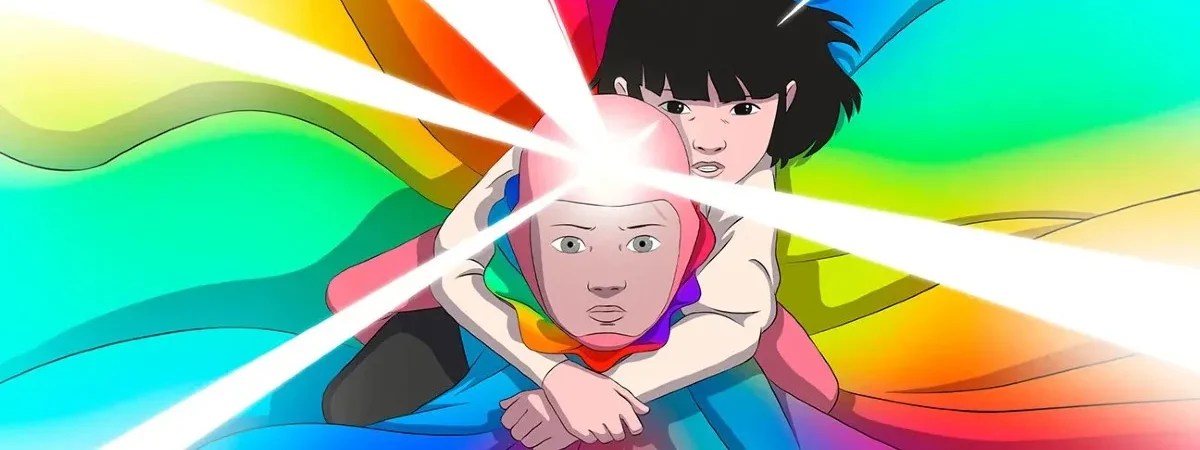
There’s an image in the first few minutes of Memoir Of A Snail that captures an all too familiar feeling. As a young child, Grace (Sarah Snook) is in the playground, surrounded by bullies taunting her. An imaginary protective snail shell forms around her. Both shielding and shutting her off from the world around her. This image had me considerably tearing up and for the rest of the film I sat on the verge of tears.

Finally following up the brilliant Mary And Max, Adam Elliott brings another film that understands people. Those who may well feel like outsiders, especially. Embracing such figures and admitting that it can be hard to be a person, to get through life, there’s so much care and understanding in Memoir Of A Snail. A film that is constantly in-touch with its central character and her emotions. As she simply wants to find happiness and acceptance, and manages to do so at certain points, including in care-free, chuckle-inducing elderly friend Pinky (Jacki Weaver).

There’s plenty of silly humour to be found throughout that manages to border on quirky without fully diving into it and emphasises the joy of the ‘outsider’ nature. Also captured in Elliott’s particular visual style that can be found in a number of his stop-motion projects. Still finding more than enough room for the emotional aspects in the wake of personal pain and distance from Grace’s brother Gilbert (Kodi Smit-McPhee) this was a film that I’m glad I gave myself time to reflect on it after first seeing it at a festival, instead of jumping straight into the next screening. It’s a film that needed me to spend time with it. To stay in its emotions and reflections. To feel understood by it in some way. And the film, for me, was all the better for that being the case, and continues to be after a long-overdue re-watch whilst putting this list together. And love it and the way that Adam Elliott views, and clearly loves, people and the world.

1. Hard Truths


Marianne Jean-Baptiste gives the best performance of the year in Hard Truths. Capturing bitter rants which at one moment can raise a chuckle and the next create awkwardness and tension in Pansy’s intensely distanced family life. The reason for her anger at the world around her is briefly mentioned early on with her sister Chantelle (Michele Austin), but they properly come to the fore in a sudden flood of emotional release just over halfway through where true understanding is formed. The lingering overflow in the following scenes creates a tenderness in the performance if not entirely the character.

Hard Truths is a film about held-in fear, anxiety, sadness and isolation; all shown in Mike Leigh’s key naturalistic style. The contrast between the two sisters details two very different responses to coping with life, and eventually grief. A true mix of human emotion conflicts in the film and the dramas at hand. Less a character study and more an emotional one, as Pansy breaks down crying “they all hate me” you feel the hurt at her core, with everything beforehand having contextualised it with ease and rawness.

This is a film with many frequent punches of humour, emotion and pain. All making for a very human portrait of responses and reactions. All helmed by a powerhouse performance from Marianne Jean-Baptiste which should have won, let alone been nominated for, an Oscar. A knockout portrait of emotions, and the best film of 2025.