
Cert – 15, Run-time – 2 hours 54 minutes, Directors – Nathan Fielder, Lance Oppenheim
Nathan Fielder is invited to live with Theranos founder Elizabeth Holmes 34 days before she goes to prison for defrauding investors, but is he getting full transparency?
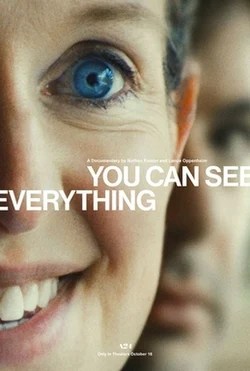
It’s been quite some time since a film pulled the rug from under me like You Can See Everything managed to do. The first half of Nathan Fielder and Lance Oppenheim’s epic documentary sees Fielder invited by Theranos founder Elizabeth Holmes, and her partner Billy Evans (the biggest villain of the year), to live with her and document the month building up to her imprisonment for defrauding investors. The aim? To see who she is instead of who she’s been portrayed as by the media, particularly Hulu series The Dropout and a New York Times articles where she claims she was misquoted.
However, while dealing with how Elizabeth might see the world differently to others once we reach the second half we get a kaleidoscopic examination of truth, lies, deception and manipulation. Is Nathan truly being shown everything, as Holmes insists multiple times, or is the narrative being controlled outside of the film crew? The film becomes a look at whether Fielder has been drawn into something and his personal feelings are potentially getting in the way. Insight and opinions of those around him become key.
I was reminded throughout of Orson Welles’ 1973 piece of docufiction F For Fake as the film examined the nature of deception and the forms that can take. Fielder’s use of references to pop-culture are precise and effectively communicate with both Holmes and the audience. David Blaine and Who’s On First are cleverly referenced to make and expand points, simple yet cleverly layered, pulling back the curtain on confusion and falsehood in upfront and subtle fashion.
The many questions throughout are clear and cutting, with a slight air of Theroux to their inescapability. As the film’s form changes and becomes a wider piece of work feeding off the events of the first half there’s an utterly fascinating film that’s not just asking its questions for the audience. What’s happening on screen and being played with is for the filmmakers on their journey as much as it is anyone else.
There are tense reveals – a number of which involve Billy whose words and actions cause him to come out of the film particularly scathed, far more than his partner who’s going to prison in a matter of days. Where some of the confusion and confliction comes from is the fact that the film doesn’t necessarily go out on the attack, it’s not a vicious piece of work and there are at times natural sympathies from Fielder; leaning into the idea of if he’s been drawn into a deception at times.
It asks questions that are so key to documentaries and while not a documentary about documentaries it’s a fine example of one on the border, especially when working into more meta areas with some echoes of Joshua Oppenheim’s The Act Of Killing. This is an excellent, surprising and fascinating study of truth and deception. One of the smartest, most investing films of the year.
A fascinating examination of truth, deception and our relationships with them, You Can See Everything is made with razor-sharp intelligence which forms a rug-pulling second half of self-questioning, meta documentary brilliance.

