
Cert – 12, Run-time – 2 hours 38 minutes, Director – Francis Lawrence
When forced to take part in the 50th Hunger Games, Haymitch Abernathy (Joseph Zada) plans to take down the Capitol and stop the games forever.
Glenn Close is incredible in Sunrise On The Reaping. Unrecognisable in garish costume and make-up, with around ten-fifteen minutes of screen-time in the two-and-a-half-hour-plus run-time she captures pure hateful elitism as Panem’s District 12 envoy Drusilla Sickle. A sickening smugness of wealth and privilege that she lauds over the struggling figures of the District, especially the four faces she accompanies to the 50th annual Hunger Games – twice more than usual to celebrate the anniversary. Her performance here is genuinely worthy of major awards contention and the fact it’s in a Hunger Games film means it’ll be overlooked and ignored. I feel about her turn here the way people did about Amy Madigan in Weapons.
It’s also Close’s performance that shows early on that the treatment of the Capitol’s control of the people of Panem, and the overall narrative of the dystopian society, is an open secret, fearfully so. Sunrise On The Reaping plays into these ideas, whilst ramping up the colour and visuals with a new bright palette for the franchise to contrast with the threat of the government’s control. The games are a controlled machine and narrative that they lead, coming through in so much of the actions that happen in the arena.
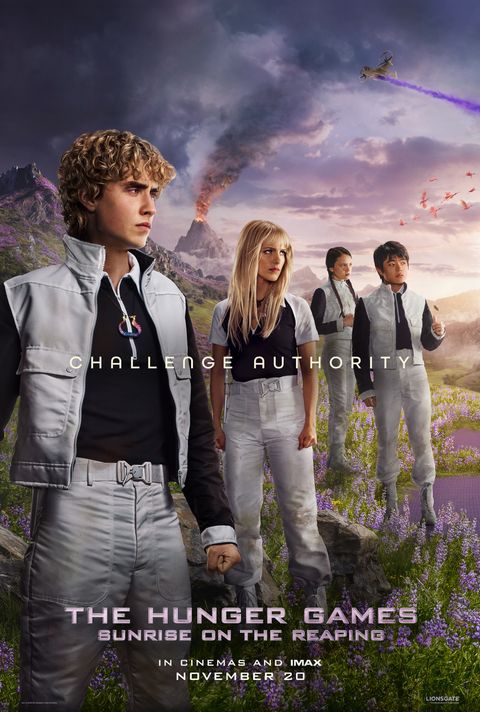
This prequel gets into the process of the games, and a major attempt to take it down from Haymitch Abernathy (Joseph Zada, taking on the character played by Woody Harrelson in the original line of adaptations), forced to take part in the games after an altercation at the reaping where tributes are meant to be randomly selected. A sense of doom hangs over almost all characters here, we know they’re entered into a last-man-standing fight to the death and there’s an acknowledgement of an early fate that’s leaned into before anything even happens. Amongst the bright colours there’s a real darkness and overhanging sense of threat and doom to the film that comes through in the control that’s hung over those competing, and trying to take down the system. The power imbalance is core to this film perhaps more than others in the franchise so far and it creates our engagement with the determination of Haymitch to bring an end to it all.
While some of the action in the arena, in-between the protagonist trying to execute his plan, might threaten to become repetitive in regards to the Capitol’s interference in the games, there’s a good deal of thrilling action within it and things are kept moving narratively without simply leaning into the feuds and action. With so many connections formed between Haymitch and others taking part, both from his district (including McKenna Grace, Ben Wang and Molly McCann) and beyond, things can sometimes feel slightly drawn out when it comes to character beats and details, again coming back to that almost repetitive nature, but the bigger effect is on the events of the third act. While having a slight impact and leaning into some of the strongest themes and ideas of the film as a whole, especially aiming for relevance with current conversations around narrative control of different forms, the overall run-time does start to feel pushed amongst the different factors that are addressed in the final stages.
Even in the light of the Jennifer Lawrence starring series focusing on her Katniss Everdeen there’s a lot of star presence in this film. Faces such as Jesse Plemons, Ralph Fiennes, Elle Fanning, Billy Porter and Kieran Culkin all crop up for supporting roles of varying sizes and yet each appear to acknowledge the themes of challenging power and control at hand. They and the film as a whole provide the biggest push when focusing on these points. When confined to one space, even if an expansive one, the ways in which these ideas come across can sometimes feel the same, on more than one occasion characters are attacked by animals in the arena. But, for the most part there’s an effectively dark prequel here that perhaps makes some of the biggest points and expressions of the franchise so far.
Perhaps the most upfront and pointed entry in the Hunger Games franchise, Sunrise On The Reaping ramps up the visuals and the feeling of threat and doom from both the games and those in control of them.

