Cert – 15, Run-time – 1 hour 28 minutes, Director – Adrian Chiarella
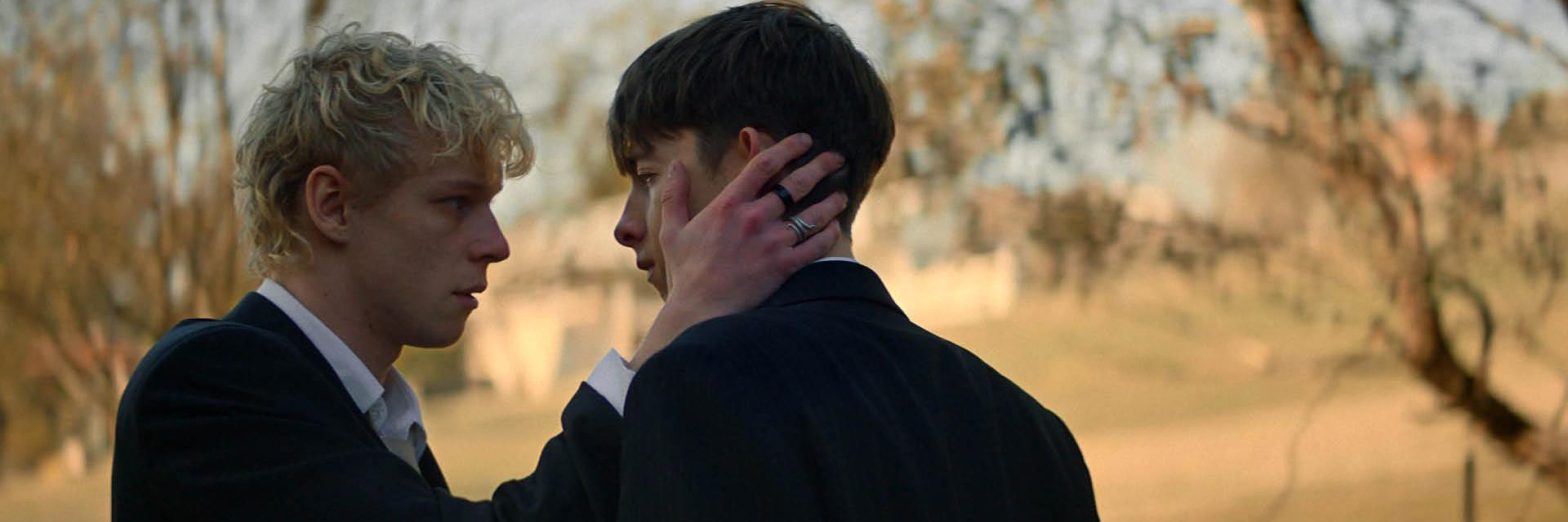
Teenagers Naim (Joe Bird) and Ryan (Stacy Clausen) are subjected to a conversion exorcism, causing a demon to follow them that takes the form of the person they love most – each other.
The idea of ‘pray the gay away’, or going away to camp as a form of conversion therapy, has been provided much fear and pain in often indie dramas. In writer-director Adrian Chiarella’s feature debut; Leviticus, taken from the book in the Bible that some have interpreted verses in to forbid homosexuality, the Christian community of a rural Australian town are treated like the mob in a Scorsese gangster flick.
Dragging teenager Naim (Joe Bird) out of his mum’s (Mia Wasikowska) car to force him in-front of a ‘Deliverance Healer’ (Nicholas Hope), after finding out about his feelings for fellow student Ryan (Stacy Clausen), there’s less praying and something closer to being bludgeoned by possession. The feeling of being beaten with a crucifix as we’re well aware of what’s already happened during the alleged healing when Ryan and his other possible romantic interest, Hunter (Jeremy Blewitt), went through it earlier.
We’ve also seen the fear and bloody aftermath that follows. Fittingly inspired by It Follows by way of the Philippou brothers, Ryan and Naim find themselves stalked by demons, which only they can see, taking the form of the person they most desire, each other. From there the central pair are pushed and pulled apart by each other and their demons. Intimacy and attacks look very similar, one moment on a bus is especially tense as Chiarella pushes the camera through what feels like slow, suspenseful build-up to a fight for survival.
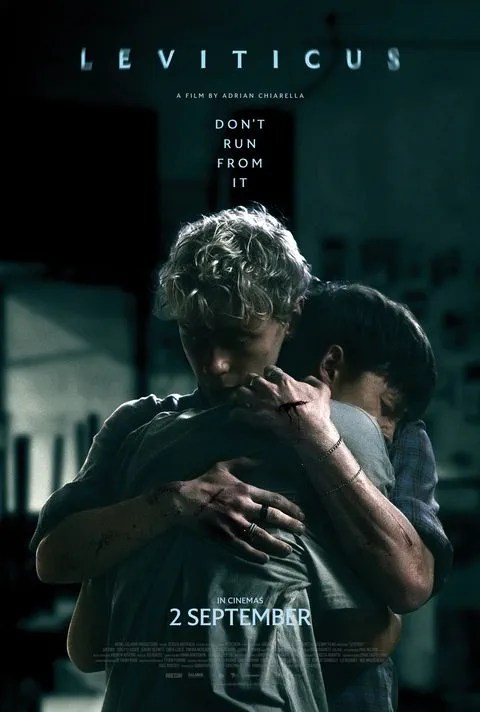
There’s plenty of tension throughout Leviticus, yet there’s still also a sense of yearning coming particularly from Bird’s protagonist. Yearning for Ryan, but also to understand and come to terms with his sexuality against the backdrop of intense conservative Christian pressure in the kind of town that’s so empty there’s nowhere to hide.
The layout is open, even with large buildings in the background the horizon appears to go on forever; Naim feels as if he could be eternally lost and chased. Yearning of course comes, sometimes, with a feeling of isolation and Chiarella and cinematographer Tyson Perkins understand that in their framing. Naim and Ryan both wish to escape, their closest and tensest moments revolve around it, often in the containment and opportunity of transport. The idea of mistrust, that the person opposite could kill them, overshadowing the potential freedom.
At just 88-minutes there’s a tightly edited story here which manages to draw out its suspense and fear against the growing horizon. A horizon scattered with fear, yearning and occasionally gnarly moments, especially once the switch is flicked as Naim and the audience experience what Ryan and Hunter have been stalked and attacked by. Leviticus brings another exciting voice for horror from Australia’s indie boom in the genre.
Tense and yearning, Leviticus captures the fear and isolation of wanting to be free. Intimacy and attacks blend together for suspense as the threat of demons and mob-like conservative Christianity hangs over each frame.

