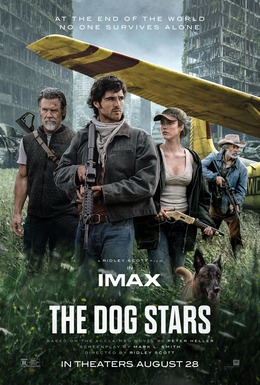
Cert – 15, Run-time – 1 hour 58 minutes, Director – Ridley Scott
After a virus has wiped out most of humanity, survivor Hig (Jacob Elordi) hears a signal that indicates more, fending off deadly factions whilst searching for the source.
If you were to leave The Dog Stars and come back in a couple of minutes later there’s a chance that for a moment you might feel as if you’ve walked into a different film. While working as a whole piece there’s a feeling that the individual segments are striving for such different post-apocalyptic(ish) tones that once the film appears to have settled it wants to explore something new.
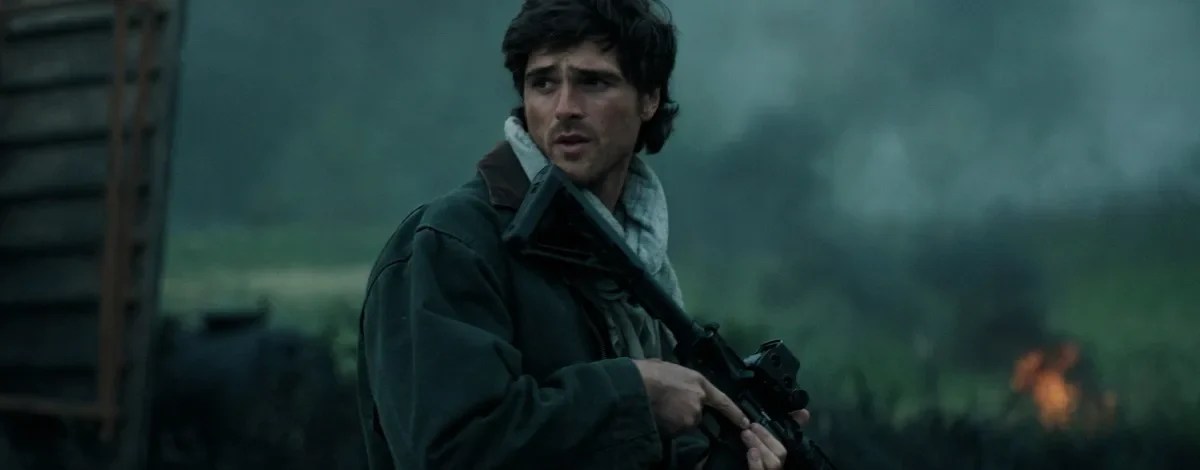
Jacob Elordi’s Hig is one of the few survivors of a virus that has wiped out most of humanity. That which remains has largely divided into factions with intent to kill anyone else on sight, stalking amongst overgrown cities – the design of which is consistently immersive even if the story unfolding within it lags behind. When Hig hears a signal from other possible friendly survivors whilst flying his plane to get supplies from the nearby city he becomes fixated on trying to find them, someone else other than grumpy, defensive sniper Bangley (Josh Brolin).
However, the dangers of the world outweigh the kindness of the likes of lightly-glimpsed Mennonite communities, such as one led by Benedict Wong, causing a handful of stops for Hig – including an uneasy one involving Margaret Qualley and Guy Pearce (giving a performance worthy of a much better film) as a father and daughter surviving in their isolated ranch. During this time the film keeps cutting back to Brolin with little to do until a burst of sudden action, simply shouting at us that we must be coming back to him properly later, otherwise his strand would be over with, he’s certainly not providing anything for Hig, or really the audience.
When in its flow there’s a likable sense to The Dog Stars. Scott’s attention to detail when it comes to the world has a real effect and a solid atmosphere in the initial world building. In the later stages an escape sequence brings in horror tones which feel out of place but hint at tenser possibilities even if in a very brief, otherwise out of place, moment. It’s a feeling that crops up a lot within The Dog Stars. Scott wanting to cover a lot and explore plenty of different tones and elements with a screenplay that doesn’t cover as much, or help to contain the directors vision.
Each longer thread and sequence has something to it to like and engage, particularly when leaning into the quieter character threat at hand – which Pearce captures from the first moment he appears on screen – other louder, more explosive action feeling more rushed and out of nowhere. While it might feel slow in some areas the two-hour run-time doesn’t feel too pushed and there’s just about enough in the world to keep us engaged, especially when the characters feel a part of it rather than being dwarfed in it.
With a screenplay that can’t keep up with its director’s grander vision, the world of The Dog Stars is immersive but the story itself lags behind. When focusing on threat there are effective moments, but they feel brief amongst the larger tonally shifting sequences.

