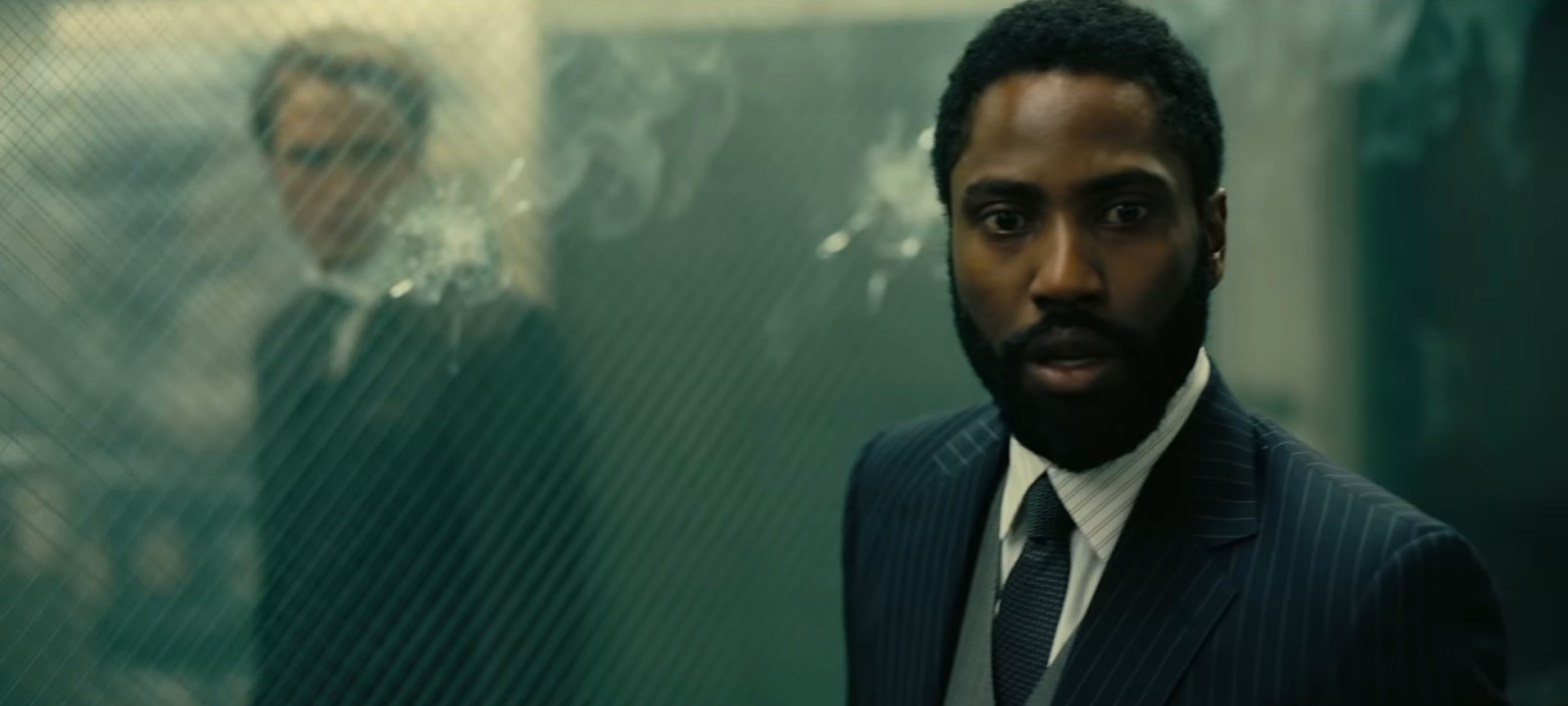
Tenet – Review

Cert – 12, Run-time – 2 hours 30 minutes, Director – Christopher Nolan

After encountering bullets that have the ability to act in reverse The Protagonist (John David Washington) finds himself on a mission to stop what could be World War Three.

It’s become expectation when it comes to a new Christopher Nolan release that you go in knowing almost nothing. In the case of Tenet you also almost leave knowing almost nothing. The time-meddling writer-director’s latest venture sees him tinkering with the idea of reverse time. The film’s central figure, known as The Protagonist, (John David Washington) finds himself investigating mysterious bullets that seem to act backwards, moving in reverse – the power behind these reality defying objects could potentially lead to World War Three. When properly encountering the bullets for the first time The Protagonist is told “don’t try to understand it, feel it”, and this is almost the advice that Nolan is giving the audience. Don’t try to understand or keep track of the plot, just loose yourself in it. And luckily there’s just about enough within Tenet to allow this to happen.

Tenet is easily Nolan’s most complex work so far, and may potentially prove to be his most divisive. It’s easy to get lost and confused by the plot and what’s actually happening in the film however the director and his team, made up of a number of new faces compared to his regular collaborators, manage to create something thrilling enough to keep you seated for the duration of the two and a half hour run time. For months we’ve been advertised action scenes and chases that defy the regular workings of the real world and that’s certainly what we get. The thrills are definitely present and possibly even more frequently than any previous Nolan feature, including the entries in his Dark Knight Trilogy. Tension is heightened by Ludwig Göransson’s thrillingly paced score. With certain moments and phrases that sound as if they’re being played in reverse they bring back the true nature of this film, the threat that’s being faced and bring the viewer in even more.

As the second half of the film arrives the heavy plot build-up and details gradually begin to decrease and the viewer may find themselves not just watching the film but beginning to become more involved and engaged with what’s happening. They’re actually in the world of the film – and the various action scenes, often the more extended moments of the film that feel less like world-hopping and scene-jumping than one or two scenes before hand start to feel like after so long, contribute to this feeling. Admittedly there are still might not make sense, but once you’re in you mostly stay where you were, as the scale and twists and turns of the film only grow in stature and grandeur.

Yet amongst all of this the quieter – or at least less explosive – points are never forgotten. There are relationships that are explored, including a key central point that leads to many of the film’s key decisions and events. In fact such connections are the catalyst for many of the larger moments in the second half of the piece, and continue to act as fuel during them, amongst everything that goes on it’s such points not being forgotten that almost truly keep you in your seat while the world seems to go to greater chaos. You might not overly connect with the characters, although the performances in the leads of the film are all on quality form, as is to be expected from such a stellar cast (which includes the likes of Robert Pattinson, Elizabeth Debicki and Kenneth Branagh – with a somewhat questionable accent), but you can certainly emote for them and feel the pressure that they face. And with Nolan repeating the height of the threat that is being face – described as being worse than nuclear holocaust – the stress is translated to the viewer not just through shouting but through the panic felt. Add to that Göransson’s score and Hoyte Van Hoytema’s immersive cinematography, helping to define a number of the film’s various layers and details.

After a key mind-twisting set-piece Pattinson’s character asks The Protagonist – a name that creates almost as much mystery as the film itself – “does your head hurt yet?” To which Washington’s spy responds “yes”. At this point the audience may no longer be frantically trying to keep up with things, after they almost get a bit too much a bit earlier on, but it could reflect the feelings of some viewers. Tenet is certainly a lot, in terms of both plot and scale. Yet, there’s always something with occasional well-placed reminders and cuts to pick up on that keep you seated. The run-time certainly doesn’t show itself and this does go by fairly quickly, and it’s down to the, as always, creative work of Nolan’s team and the visuals and feelings that they help to conjure up within the viewer. The quicker you fall into the film and just watch what’s happening and don’t focus too much on the plot the more likely you are to enjoy the film. It’s best to bear in mind the advice that it gives you early on “don’t try to understand it, feel it”.

Tenet is undoubtedly Christopher Nolan’s most complex film so far, and it could very well work out to be his most divisive too. With individual technical elements that combine to keep you there, and thankful reminders of the basics of what’s happening you’re kept in your place during the finely flowing run-time for a thrilling, action-packed and mind-twisting ride. Get past the confusion of the plot and there’s a lot to like about this thriller – a genre which this definitely lives up to.

Rating: 4 out of 5.

The One And Only Ivan – Review

Cert – PG/ Recommended for viewers aged 6+, Run-time – 1 hour 35 minutes, Director – Thea Sharrock

A gorilla (Sam Rockwell) who has spent almost his entire life working as part of a circus of animals discovers his talent for painting, and dream to escape.

It’s been said before that if the performances are good enough a film is lifted in quality, something which may very well be the case with The One And Only Ivan, the latest Disney+ feature, having skipped a cinematic release. This isn’t to say that the film itself would be bad otherwise, there’s certainly a fair deal in there to like, but the performances are very much what bring the viewer into the big top world of the film. Most are voice performances, bringing to life the CG animals that reside within a small circus enclosure within a shopping mall. Bryan Cranston leads them as the circus-master, introducing their small tricks; such as a ball-balancing seal (Mike White – who wrote the screenplay for the film, based on Katherine Applegate’s childrens book of the same name), a baseball playing chicken (Chaka Khan) and the standard balancing elephant (Angelina Jolie – who also served as a producer on the film). However, the star attraction of the show has always been Ivan (Sam Rockwell). While back in the day Ivan’s roar and might brought in crowds of ticket buyers now it seems as if the magic has gone from the smallest big top in the world, only filling a limited, and scattered, amount of seats.

Times are tough and the circus needs to find some way of coping or else there’s a risk that it’ll go bust, meaning that Cranston’s Mack will be separated from Ivan – who he has effectively brought up, Ivan having spent almost his entire life with humans – and the other animals. And so, in comes a new star attraction, baby elephant Ruby (Brooklynn Prince). Of course it’s at this point that themes of jealousy begin to be introduced within Ivan. He was the headline act and now his time in the spotlight is being reduced with each performance, the applause no longer his. It almost seems as if this could be Toy Story with animals, however screenwriter White and director Thea Sharrock manage to avoid this by slightly changing some strings. The film begins to look into Ivan’s other relationships and talents, his past. When handed some old crayons and paper by Julia (Ariana Greenblatt), the daughter of another employee at the circus, Ivan discovers his talent for drawing. While those around him don’t initially recognise what his doodles are, particularly his best friend; stray dog Bob (Danny DeVito – arguably the highlight of the film – bringing in a number of chuckles throughout), Julia does, and with this a wave of inspiration comes to both him and the circus.

Ivan’s past is delved into, and while there aren’t a great deal of flashbacks what is revealed is his desire to escape. To be free in the wild, and to bring all the other animals with him – each with only some mild personality trait due to a relative lack of screen-time. It’s around this point, and particularly around the second half of the film, that things begin to get somewhat formulaic. As this becomes a more prominent point it almost seems as if one or two short ideas are tacked on to properly ensure that the film is of feature length and crosses the 90 minute mark. Yet, even if this is the case there’s no denying that the film is watchable. There’s an appeal to it, to the characters, that brings you in and you do find yourself engaged and interested. Maybe it’s the humour. Perhaps it’s the lightness that it holds, and the feeling of something close to a traditional, almost stripped back, Disney film that it emits. Whatever it does it works, and a fair deal of these feelings could all be brought back to the performances. Performances that just welcome you in and simply allow you to be drawn to the characters, understand them and have a relatively relaxed 95 minutes with them.

This certainly isn’t anything new and revolutionary, although in some aspects it is a nice change from Disney, not just in the way that the CG animals actually have emotion in their faces. But, it is nice to see something like this from the studio, something calmer and more traditional. The air to it is inviting and welcoming and you’re able to simply sit there and drift off into the ‘wild’ – although far from chaotic – big top world of the one and only Ivan. One that, perhaps much like the circus itself, will likely delight the kids and also provide something of interest and definitely a step or two above just plain amusement for the adults.

It might seem formulaic at times but the performances from the starry cast of The One And Only Ivan are enough to bring you in for a finely stripped-back, relaxed and well-handled tale straight from the vein that we know as Disney.

Rating: 3 out of 5.

Babyteeth – Review

Cert – 15, Run-time – 1 hour 58 minutes, Director – Shannon Murphy

Fifteen year old Milla (Eliza Scanlen) begins to form a relationship with twenty three year old Moses (Toby Wallace), while her parents (Essie Davis and Ben Mendelsohn) disapprove, they want her to be happy due to her suffering from cancer

Throughout Shannon Murphy’s directorial debut Babyteeth each new stage in the life of fifteen year old Milla (Eliza Scanlen) is headed with what seems to be a chapter title. Almost every one is written in the past tense, or foreshadows what is to come. Yet, like those around her, the audience is seemingly prepared for each event but is never quite ready, often being taken by surprise and feeling the emotional impact of what happens. Milla is suffering from cancer and is going through another round of chemotherapy, which begins to cause a decline for her – potentially removing her from school.

However, while still at school during a chance encounter at a train station she meets 23 year old Moses (Toby Wallace), a drug-addict who has recently been evicted from his family home. It’s not long until a bond between the two grows and a relationship forms. Milla’s mother (Essie Davis) tells her “that boy had problems” to which she responds “So do I!” The two figures connect due to the ways in which they feel disconnected from the outside world and those around them. As the relationship grows Milla’s parents begin to disapprove, yet don’t want to disappoint their daughter, especially knowing that they too have their own issues – which they perhaps don’t want Milla experiencing.

This is an honest film where every character has their own personal issues and problems. Everyone has room to grow; perhaps linking to the title of Babyteeth, although Milla does still have one of her own left. Despite this personal growth isn’t on the minds of most characters, their main worry is how and when those around them will better themselves for their own benefit, still having to bear through their own issues. Every character is looking for their own bit of happiness, which they very rarely seem to find. But, when Milla does find happiness she knows it, she briefly looks at the camera with a small smile and a glint in her eye knowing that things are going well for her. Opposed to this whenever she’s uncomfortable and things are clearly not right her gaze specifically avoids the camera, it doesn’t go near it. During one scene where she lets a fellow student wear her wig her vulnerable, less-confident state it shown. She literally forces herself up against a wall during this moment of vulnerability and insecurity – which she doesn’t really show to Moses, instead expressing herself with her wigs, of various different styles and colours, a new one as she seems to progress to more confidence during her relationship.

All the performances add to the honest that the film holds. The four central figures (Scanlen, Davis, Wallace and Ben Mendelsohn) all bring in great deals of emotion, particularly during the final half an hour of the film where things begin to be left open without foreshadowing for the viewer, truly heightening the impact. Everything feels authentic and brings you into the film, connecting with each character. This is particularly in the second half of the film as you’ve warmed and connected to each character and understand the situation that they find themselves in. It might take some time, but once you feel a part of the film you’re there and truly feel the impact of the punches that it pulls, and these are powerful punches.

It all eventually comes together to create something engaging, emotional, surprising and with a truly grand impact. You feel for these characters because of the honest reality that they depict. It’s what forms a connection and the top performances only heighten this feeling and the effect that the film has. Because, much like ourselves, these characters all have their own individual problems, ours might not be the same, but we sympathise with these figures as they try to succeed and move ahead with their lives, trying to find some happiness. Which makes it all the more better when Scanlen turns to the camera and gives a warmed smile, reflecting similar feelings to the audience, letting them know that things are going to be alright.

You might not be fully connected with the film until the second half, however before then you’re shown a genuine and thoughtfully produced story looking into the lives of wonderfully performed, honestly imperfect characters, who much like the titular Babyteeth all have room to grow. All building up to true emotion that the audience, like a number of the characters, are told about, but are never truly ready for.

Rating: 4 out of 5.

Spree – Review

Cert – 15, Run-time – 1 hour 32 minutes, Director – Eugene Kotlyarenko

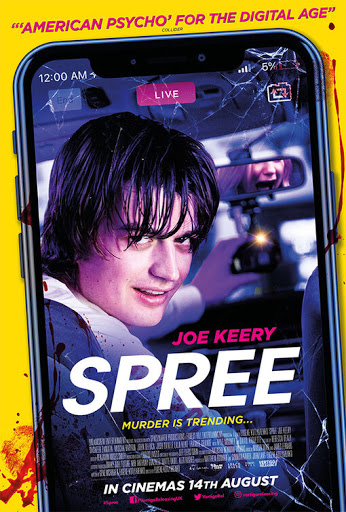
A rideshare driver (Joe Keery) goes on a livestreamed killing spree in the hope of gaining more online followers.

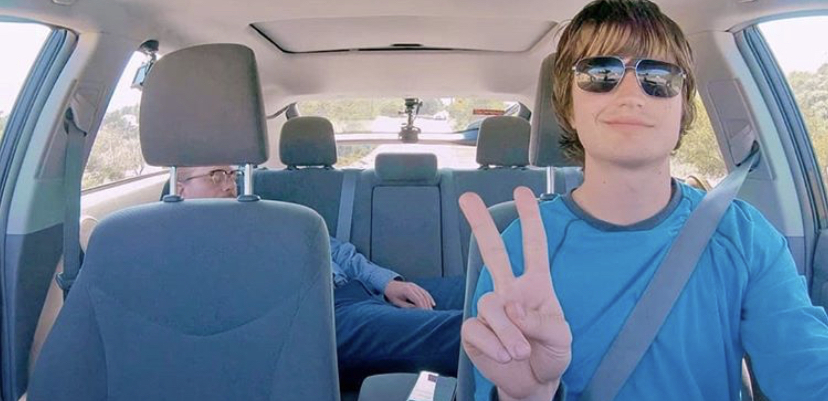
Since the release of Unfriended back in 2014 we’ve seen the release of a number of inventive screen-based stories from the likes of Searching to Host. All using the likes of computer and phone screens to tell their story, now with Spree another unique angle is taken. In an age when ‘influencer’ has seemingly become a job title thanks to online platforms such as YouTube, Instagram and Twitch it seems that gaining an online following has become a deep desire for so many. And that’s exactly what Kurt (Joe Keery) craves. While it seems that everyone around him has skyrocketed into wealth and fame from an online presence he remains stuck on single digit followers after over ten years of making videos and livestreaming content. However, Kurt has come up with a plan, which he refers to as #thelesson, to grow his followers in the space of one night, hoping to get the help of his ‘friend’; high-profile internet personality Bobby (Joshua Ovalle) on whom he is relying on a share from. The only downside is that Kurt’s plan involves killing the people who enter the rideshare vehicle that he drives, working for a company called Spree.

Kurt’s taxi is decorated with multiple cameras on almost every window so that he can show the world everything that happens to him, and more importantly the people he kills. While initially his murders are seemingly targeted towards racists, homophobes, bigots and those with strong right-wing beliefs eventually Kurt goes out of control and his obsession with popularity and viewers leads him into another type of spree – likely the title’s intention.

The initial basis for the film is interesting, and seeing the world of vloggers and internet culture caught in this way does bring the viewer into the film, however once the bloodshed begins the tone begins to get darker with every event. Feeling less like Taxi Driver and more like Joker – which itself was seemingly inspired by Taxi Driver – Kurt’s sanity rapidly deteriorates as his jealously of anyone with more viewers and followers grows. And yet for much of the film this seems to be the only idea, an actual hint of a plot doesn’t properly come into play until about half an hour towards the end, when all barriers are removed. The piece descends into a stream of nihilistic blood and death. You wait for it to end, thinking at any point that it can’t go any further with what it shows and yet continues to go further and further in what it shows, almost going too far over the edge and becoming too much for the viewer to actually sit through.

It’s also during these final stages that the film almost seems to be trying to make some form of comment about the kind of lifestyle and psychosis that it’s depicting, and about the world of internet culture as a whole. Yet by this point it’s almost far too late and instead of being anything of interest it, if anything, simply disconnects the audience from the film even more as, unlike those watching and commenting on Kurt’s stream – who believe that everything they see is just an elaborate prank, because, of course, everything on the internet is fake – there just isn’t enough to properly connect to and engage with, especially when most of the characters are as unlikable and unsympathetic as they are. All of it simply spiralling into bleak intensity. Straying away from the jet-black comedy tones that it starts with and travelling along the lines of a fiercely excessive meta-horror. Kurt may be a five star driver, but his world is far from it.

Joker in an Uber, with less laughs.

Rating: 1 out of 5.

Pinocchio (2020) – Review

Cert – PG, Run-time – 2 hours 4 minutes, Director – Matteo Garrone

A destitute carpenter (Roberto Benigni) carves himself a son from a log that he is presented with. Soon the puppet (Frederico Ielapi) comes to life and discovers the dangers of the outside world, often escaping the harsh characters within it, alone.

Back in 2002 Roberto Benigni, at the age of 49, took on the role of Pinocchio in his poorly received film, to say the least, of the same name. Giving the famous puppet a highly energetic and hyperactive personality. Now, almost two decades later, at the age of 66 he takes on the role of carpenter Gepetto, the father (and carver) of Pinocchio. Benigni’s Gepetto is a deeply subdued performance from the often exuberant actor – some may remember his walking over the chairs and bounds up the stairs on winning the Best Foreign Language Feature Oscar for Life Is Beautiful in 1998. The character is a lost, isolated, lonely soul. Destitute and alone in a village where it seems as if everyone is struggling to get by. Unlike other takes on the character, the most commonly known of course being that from Disney’s twinkly animated version, this version doesn’t even have a cat or a fish for company. However, this all changes when he’s presented with a pine log that he soon crafts into a puppet, which, as many of us will be aware, comes to life and becomes the living puppet-boy Pinocchio (Frederico Ielapi).

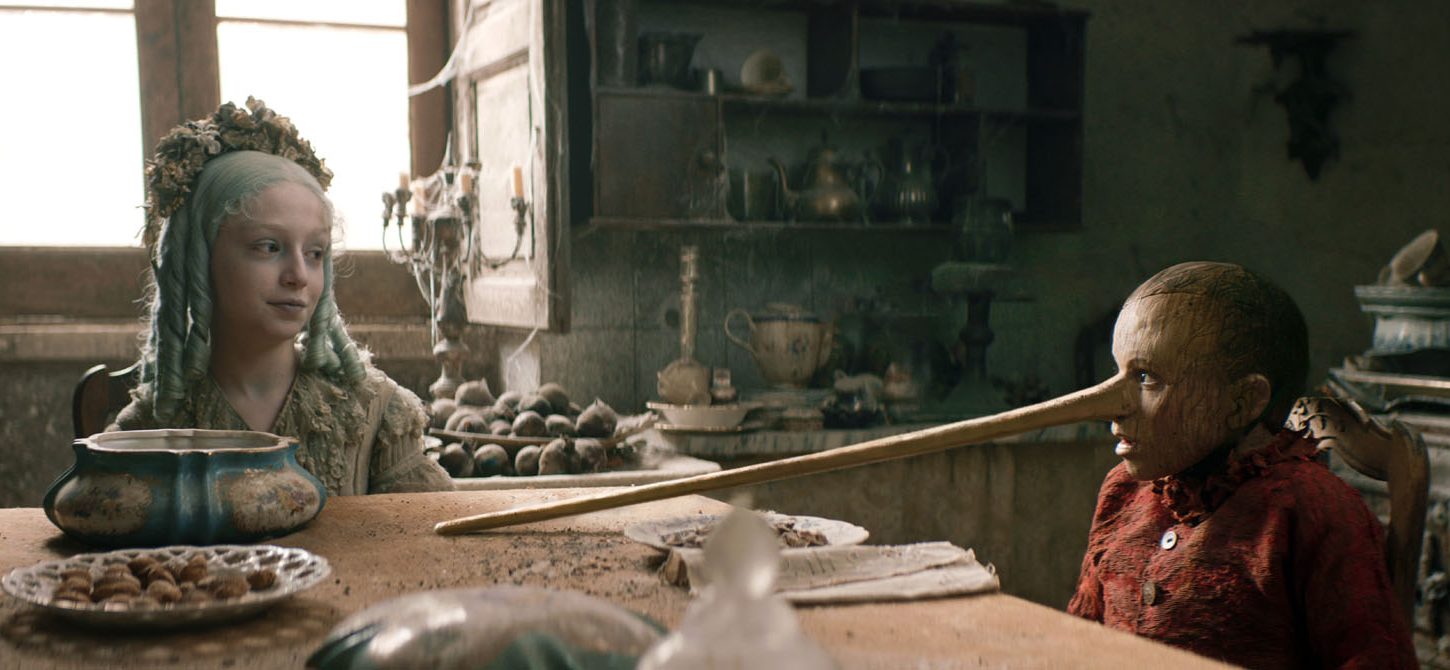
This is certainly a different take to the story that viewers have become used to over the decades. There’s no wishing on stars, although there are still fairies and talking crickets – even if their presence isn’t as large as it is in other screen interpretations of Carlo Collodi’s 1883 novel. There’s a darkness and an occasionally sinister nature to a number of the scenes. Much of it heightened by the immersive look and design of the piece – particularly the cinematography and detailed hair and make-up work. You’d be forgiven for thinking that the titular puppet was brought to life by a fair deal of CGI, however Ielapi is transformed by the hair and make-up skills of Mark Coulier; the same man who transformed Tilda Swinton into 82 year old actor Lutz Ebersdorf in the 2018 remake of Suspiria. All elements combining to create a visually arresting piece.

However, while the film might have an interesting look and style when it comes to the plot things do gradually begin to feel somewhat episodic – an issue that a number of adaptations of Collodi’s work seem to suffer from. The story was initially published as a selection of short stories in 1882, and the novel itself is known as The Adventures Of Pinocchio, perhaps explaining why this feeling exists. Perhaps, this episodic feeling is part of the reason why in the second half of the piece things do gradually begin to loose steam, at just over 2 hours this might not be the longest of films but there is a lot going on here and with varying degrees of how long each point is dwelled upon.

Yet, there’s no denying that there is something engaging about the weird and twisted world in which the film takes place. One in which monkeys rule over dungeon-like courtrooms and the innocent are sent to jail. Pinocchio is quickly taught as he braves the world alone, after running away from his father and practically being abducted by the owner of a travelling puppet show, that people can be harsh and manipulative. The world is a cruel place. After stumbling into characters such as The Fox (Massimo Ceccherini) and The Cat (Rocco Papaleo) – two rather entertaining, if unsympathetic, con-men who are definitely there for some mildly successful comic relief, while still bringing in elements of drama – the central figure’s life begins to spiral further and further downwards as his eyes are opened to the threats of a sometimes corrupt world. Within the first 30 minutes the character has his legs burnt off, is kidnapped and threatened to be thrown onto a giant fire.

Obviously one of the key things that people remember, and often cite, about Pinocchio is the fact that when he lies his nose grows longer, and that element is present within this film, but it’s not exactly a prominent detail. The idea isn’t there for major comedic effect every few minutes, helping to create a more unique feel to this more traditional-leaning take on the tale, in terms of how it links to the original source material. There’s something there for both the kids and the adults, including a definite fear factor, safe to say that the donkey scene is potentially nightmare inducing for all generations, and that seems to be what this film is aiming for. A sombre, darker, twisted and more fantasy-based take on the tale. All of this happening within the realms of a PG rating, although definitely a high PG, further setting in the potentially more mature family viewpoint that this sometimes intriguingly strange take on the classic tale travels along.

While it might suffer from an episodic feel, which particularly impacts the second half of the film, there’s still plenty to like about this more strange, potentially scary, far from star-wishing spin on Pinocchio. The design and look of the piece is excellent and this seemingly unique interpretation is definitely engaging and enough due to the interest that it creates.

Rating: 3 out of 5.

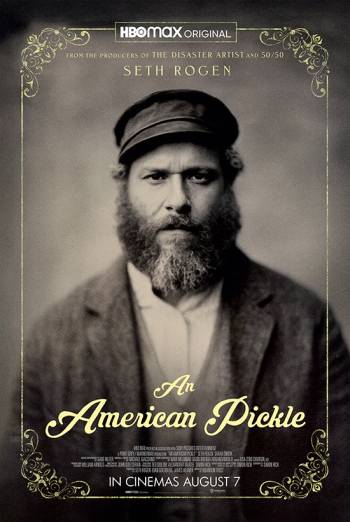
An American Pickle – Review

Cert – 12, Run-time – 1 hour 28 minutes, Director – Brandon Trost

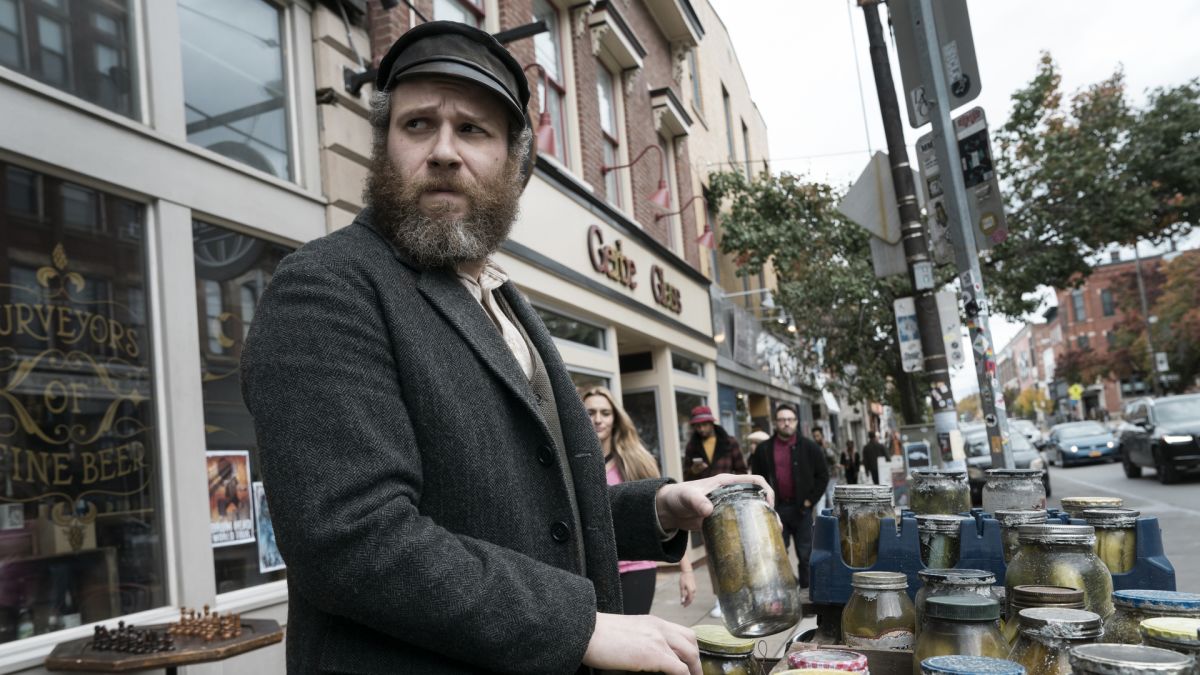
Ditch-digger Herschel Greenbaum (Seth Rogen) finds himself in present day Brooklyn after being preserved in pickle brine for 100 years.

Seth Rogen falls into a giant vat of pickles and is preserved in the brine for 100 years. This may sound, to some, like the standard basis for a Rogen led feature, especially with the brand of “stoner-comedy” that he seems to have become associated with. However, An American Pickle is something rather different from the man behind the likes of Bad Neighbours, This Is The End and Sausage Party. Having worked with Rogen on some of these features is Pickle’s director Brandon Trost, making his debut here; having served as cinematographer on a number of Rogen projects. Trost, alongside Simon Rich’s screenplay – adapting his New Yorker published short story Sell Out – and the efforts of the entire cast and crew, manages to make something rather endearing of this tale of salt and cucumbers.

Rogen plays Herschel Greenbaum, a penniless ditch digger in early 20th century Schlupsk who finds himself travelling to America in hope for a better life. Unfortunately not long after his hope-filled travels Herschel finds himself falling into a giant vat of pickles, preserved in the brine for 100 years, until he is let free in the modern day. He finds himself left to wander the streets of Brooklyn; alone, without his wife or any family for that matter. That is until it’s revealed that he has one living relative left, a great-grandson called Ben (also played by Rogen). Ben works as an app developer and takes it upon himself to teach his distant relative, who conveniently happens to be the same age as him (or at least he was when he was first preserved), despite his behaviour being that of an older man, the ways of the 21st Century.

There’s something about the dual performance at the centre of this film where due to the plot things could easily delve into parody – especially when Herschel starts up his own pickle business which leads to an odd rivalry of revenge between the pair – particularly from Ben towards the almost clueless, and highly ‘traditional’ Herschel. Yet, the central figures always seem real, engaging and most of all entertaining, while never straying away from feeling genuine. There’s a chance that a number of the themes, particularly that of Ben’s Jewish background, yet lack of faith, and in particular the themes of grief within the film, are personal for Rogen and therefore bring an extra layer to his performances. Either way he brings in an element of delightfully surprising charm, not to mention the emotion that’s emitted from a number of scenes.

As the characters develop and the modern world is further revealed to the somewhat time-travelling protagonist his olde-age views and offensive comments spark outrage and protests. Yet, never does the film step into the realm of critique or commentary. Such points simply make it feel more relevant, while also adding to the humour that the piece emits. This is a deeply funny feature that knows how to balance the carefully fuelled comedy with equally effective sorrow. All while never being a complicated feature.

From the opening scenes as we see Herschel describing his life in his homeland, drab and simple yet warm and beginning to be fulfilled – as also told by the almost colourless cinematography and square framing – the film’s tone is clearly set out. This is an uplifting piece. Joyful and caring, and in some ways that makes it even more relevant and engaging. All of this done while never forgetting that this is the story of a man who fell into a vat of pickles and was immaculately protected in salty brine for a whole century. There is warmth and charm, sorrow and joy all emitted from this story. A true collaborative effort, a potentially personal one for many of the key parties involved. And much of it comes down to Seth Rogen’s fantastically sobering dual performance at the centre of it.

At times An American Pickle feels like a collaboration between Mel Brooks and Taika Waititi. Fantastically observed writing, direction and performances bring to life this hilarious, impassioned, effortlessly charming tale. While the initial idea might be obscure the finished product may just be one of the most accessible and entertaining films of the year.

Rating: 5 out of 5.

Proxima – Review

Cert – 12, Run-time – 1 hour 47 minutes, Director – Alice Wincour

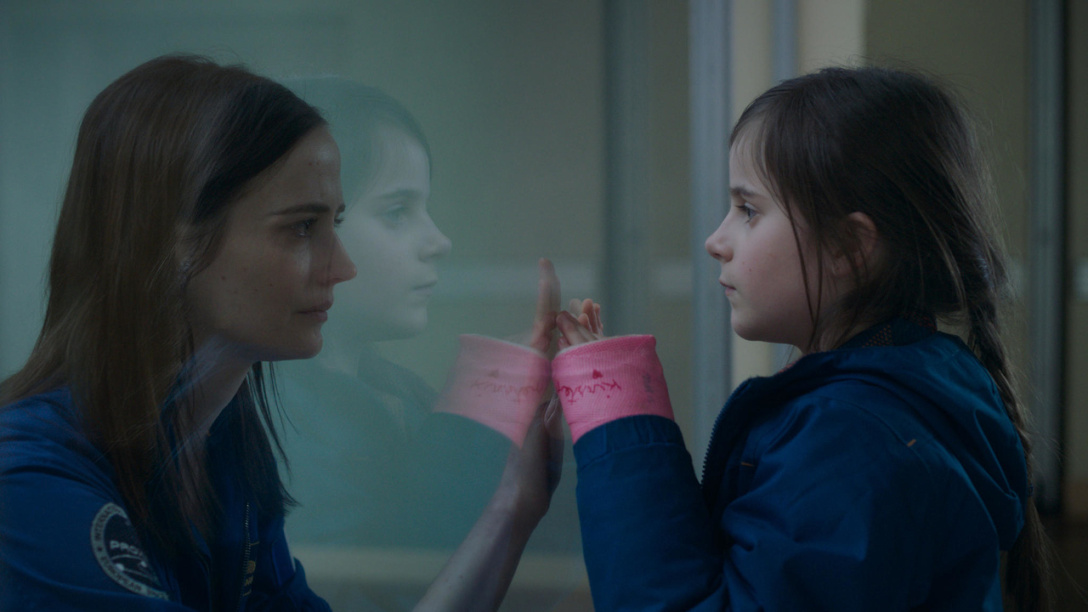
Astronaut Sarah (Eva Green) is preparing to spend a year in space in the last mission before going to Mars, however this is also a year away from her eight year old daughter (Zélie Boulant)

Years of education and training have led astronaut Sarah (Eva Green) to the final frontier. At the start of Alice Wincour’s Proxima Green’s character finds herself being selected for the last mission before people are finally sent to Mars. However, while she will only be away from Earth for a year this is also a year away from her eight year old daughter, Stella (Zélie Boulant); perhaps the biggest stress and loss for her.

Stella desperately wants her Mum to stay, while she has a relationship with her father – her parents being separated – it’s clear that it’s certainly not as strong as that with her mother, with whom she lives with most of the time. She breaks into tears claiming that her dad is allergic to the cat so she must have to stay with her Green’s increasingly worried character. As the mission gets closer it’s clear that the impact of a year away from her daughter, as she already begins to spend less time with her while training and getting ready for launch, is getting to both parties as they begin to break down bit by bit. At one point a child seeing their parent going into space is likened to them being strapped into a giant bomb – something which is clearly felt more and more by both characters.

While initially the film seems to be divided as to whether mother or daughter is the main focus of the film once it establishes that we see everything through the caring, if fearful, eyes of the parent things begin to pick up. There’s still an understanding for the thoughts and feelings of both figures, yet the pressures from fellow astronauts, engineers and almost everyone else involved with the mission heaps even more upon the film’s eventual focus, adding to the weight she has to carry and trying to get the audience to connect with her more. The emotional punch might not always be there, the film truly works when the characters are together, even if talking to each other over the phone. When separated although one is obviously in the mind of the other some scenes begin to loose the emotion and slight momentum that the film has built up as they focus on other relationships, or rather Sarah’s various training exercises or medical procedures and exams to prepare her for her life in space.

It’s during such moments that the connection begins to drop and the 107 minutes run-time begins to show, and while some such moments just about click there are others that don’t quite work as well, due to not having that established connection that is so clearly there between Sarah and Stella. They both go through experiences of having to get used to new surroundings and people, yet Stella’s stick out more due to her being a child, alongside the way that the film handles such matters in different ways. Throughout the film the bond between the pair is what brings about most of the emotion and the flow. It’s what’s there for the audience to connect with, almost everything revolves around that main relationship and without it the film occasionally begins to not quite wander off, like the viewer’s attention sometimes starts to as certain scenes start to go on for too long, but slightly shift focus to other relationships than the one that creates the proper connection and impact over the course of the run-time.

It’s the mother-daughter relationship at the front of Proxima that truly forms a connection with the characters and the film, while those with other characters don’t quite take off or feel that in-depth, pushing on the run-time, there’s always that reliable look at the closely bonded family core to lift things up.

Rating: 3 out of 5.

How To Build A Girl – Review

Cert – 15, Run-time – 1 hour 44 minutes, Director – Coky Giedroyc

Aspiring teenage writer Johanna (Beanie Feldstein) finds herself being a rock critic for a national magazine, however is it helping her discover more of her own personality or a harsh alter-ego?

Johanna Morrigan (Beanie Feldstein) sits at her desk unsure what to write. Hunched over her brother’s pale typewriter struggling for ideas. She knows that she wants to write, but she’s unsure as to what, and her poetry certainly isn’t taking her anywhere. That’s all until she sees an advert looking for a rock critic for a national magazine. While her application is a review of the soundtrack to Annie – perhaps the opposite of rock and roll – she quickly finds herself with the job, and a growing personality away from her Wolverhampton council estate family and background. Soon it becomes more of an escape for her. Writing is no longer “putting a wish in a bottle” to provide hope of bringing money in to her home, it acts as fuel for her growing and potentially damaging alter-ego, Dolly Wilde.

Screenwriter Caitlin Moran adapts her somewhat autobiographical 2014 novel of the same name for the screen, with Beanie Feldstein wonderfully bringing to life the fictionalised 16 year old protagonist, still discovering herself and the world around her. An exciting world of freedom and possibility. During such moments when Johanna gazes at everything around her in awe and wonder the feeling of the film shifts into something close to fantasy. This is her ideal world, even when surrounded by businessmen that tower over her in spotless suits in a cramped lift, and nothing is going to stop her from exploring it. There’s an air of immense joy also captured in Feldstein’s performance during such moments that make them even more fantastical and act as a further escape for her character from the outside world. As she passionately types up her rave reviews of gigs that almost seem to be more like immensely energectic out-of-body-experiences everything else drifts away as a smile spreads across her face and nothing can stop her from fixedly punching away at the typewriter keys relaying her enthusiastic praise. However, such moments, while frequent, do find themselves broken quickly by reality. For instance a moment of uncomfortable harassment from one of the head-writers of the magazine, who commissions her work.

However, much like the moments of near fantasy, the bursts of seriousness are brief, and in this case somewhat few. There is a sense that a number of issues are strayed away from for a large proportion of the run-time; some with nothing more than a brief one line mention, leading to a feeling that seriousness isn’t as present as it perhaps could or should be amongst the elements of comedy and fantasy. While Johanna’s transformation from herself into her advanced pseudonym of Dolly Wilde begins to take a turn as her once passionate reviews turn into heinous hatchet jobs – all for the sake of further publication, and allegedly giving the readers (or rather the editors) what they want – does add some hints of drama a fair deal of comedy also comes from it. One particular sequence where she lies on her bed, talking to her brother in the other room, describing her various sexual exploits and self-taught lessons provides a couple of laughs, while also shows her developing and discovering the world around her, and herself. Building the girl that she is.

There is something interesting about the rapidly overtaking alter-ego as Johanna goes to more and more gigs, immediately connecting to a new passion as she abandons all cares and simply joins everyone in front of the stage leaping and raving to the sound of loud pulsating music in whatever dark, dimly lit venue she may be in. Or at least this is the case until she begins to walk in early before the gig actually starts, scribbling away scathing insults that could possibly ruin the band on stage, alongside her reputation. Yet, the most interesting and engaging content does remain the elements of comedy that land and the always enjoyable real world fantasies, mostly down to Beanie Feldstein’s engaging and ecstatic central performance.

Beanie Feldstein shines in this tale of a passionate writer and her damaging pseudonym. While the seriousness doesn’t always have time to shine and certain issues and elements could be dwelled upon a bit more the humour and joyful fantasies that Giedroyc and Moran help Johanna and the viewer escape into help pull the film along.

Rating: 3 out of 5.

Clemency – Review

Cert – 15, Run-time – 1 hour 52 minutes, Director – Chinonye Chukwu

A prison warden (Alfre Woodard) finds herself facing many moral issues when a death row inmate (Aldis Hodge) loudly insists his innocence, backed by his lawyer (Richard Schiff), family and protesters. Meanwhile her home life is becoming increasingly tense.

Being a prison warden dealing with death row inmates is undeniably one of the most morally challenging jobs a person could possibly have. The potential personal and psychological impact that it could have is almost unthinkable. Yet, for Bernadine Williams (Alfre Woodard) this is her everyday life, made increasingly stressful when media attempt to get into the prison that she’s in charge of after protesters begin to act outside the gates. Chanting against the soon-to-be-execution of inmate Anthony Woods (Aldis Hodge). Woods continues to proclaim his own innocence, although refusing to speak to Bernadine and the prison chaplain. Claiming that he was not behind a shooting several years earlier – something which his lawyer, Marty (Richard Schiff) has been fighting for this whole time.

This is very much a story of people at the end of their tether, in multiple ways. Marty is about to go into retirement, something that Anthony claims is him giving up, Bernadine finds herself in greater conflict between her job and her own personal opinions, especially in relation to the innocence of the next person to be executed in her prison, Anthony, who finds himself in increasing panic and worry that his life will be prematurely ended for a crime that he claims, alongside many other people, he didn’t commit. The film is very much a slow burn, yet because of this mixture of drama, primarily told from the viewpoint of Woodard’s conflicted warden – a perspective not often shown in the likes of death row dramas – there’s always something to grab on to. To be engaged and brought into the film by. While you may not always form a connection with the characters you certainly feel for them as you observe them and their actions, seeing inside their minds – as if you’re on the window side of a two-way mirror; making the drama more authentic and real.

Bernadine’s worklife troubles find themselves leaking into her homelife, making her relationship with her husband (Wendell Pierce) increasingly tense. During a heated discussion he claim that he’s been “living with an empty shell of a wife”. Telling Bernadine that her job is beginning to consume her and remove her from the rest of the world, only adding to her worries, all expressed behind a shielded, dead-pan face; all while still conveying the struggling identity and mindset that makes up the character. “No matter what I do or don’t do he’s dead” she exhales, believing herself to be powerless, despite having the most power in the prison, all adding to the in-depth character study that this film explores. The debate of morals, work and the death penalty as a whole, amongst various other things. By putting the prison warden in centre of the film’s events the arguments are further pushed and explored. At one point Bernadine tells Marty “You want to put it as good guys and bad guys, and I’m one of the bad guys” knowing, much like the audience, that things aren’t that simple.

Throughout the run-time Chinonye Chukwu’s direction shines in the strong performances of the cast. The way the camera is kept stationary on a number of occasions to heighten the emotion and impact of a number of scenes. As Bernadine tells Anthony what will happen to him on the day of his execution Hodge’s performance is kept in frame almost the entire time. As he seems frozen yet restless, endless thoughts of panic, fear, pain and worry racing through his mind all at once, all while his character intensely fights to hold back tears packs a great punch of emotion – something that Woodard almost expertly replicates within her own character at another point in the film. There are plenty of scenes just like this over the course of the film each with their own individual tone and flavour, never feeling dried-up or tired, and much of it comes down to Chukwu’s direction, the way that she deals with the heavy subject matter of the piece, never shying away from the facts, managing to convey an honest and in-depth character study all show a promising rising talent (this being Chukwu’s second feature) with a strong, interesting voice.

From the opening scene writer-director Chinonye Chukwu takes hold of an interesting angle to show the confliction of her central character as everything around her causes increasing debate in this finely held death row drama, all brought to life by three brilliantly emotional and layered central performances.

Rating: 4 out of 5.

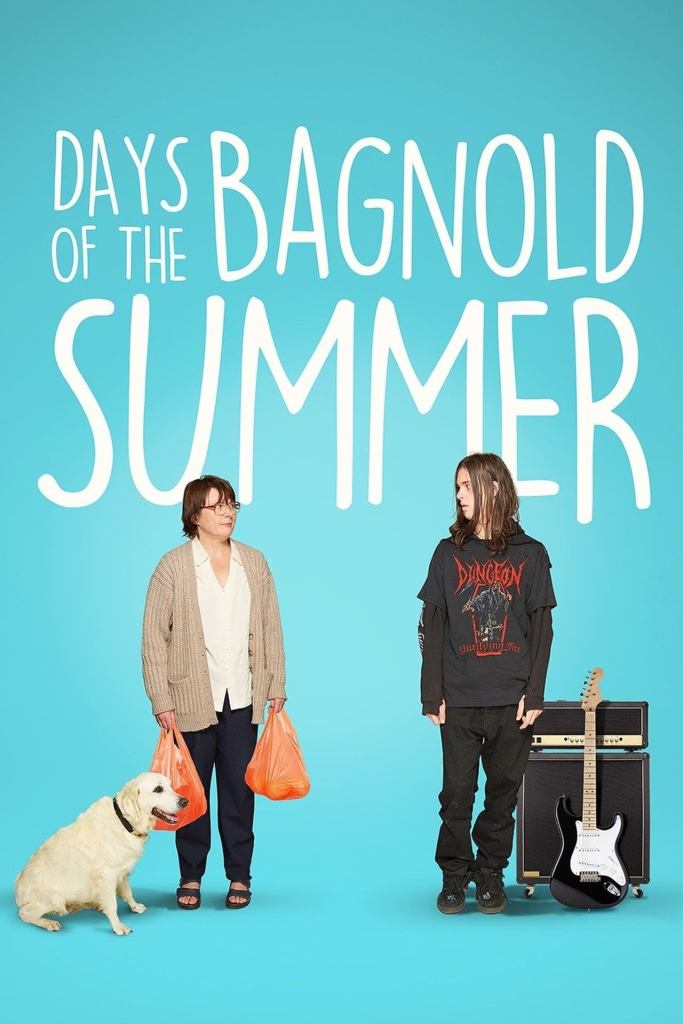
Days Of The Bagnold Summer – Review

Cert – 12, Run-time – 1 hour 25 minutes, Director – Simon Bird

When his plans to visit his Dad in Florida during the summer holidays collapse at the last minute 15 year old Daniel (Earl Cave) is forced to spend six weeks with his devoted, yet drab, Mum (Monica Dolan)

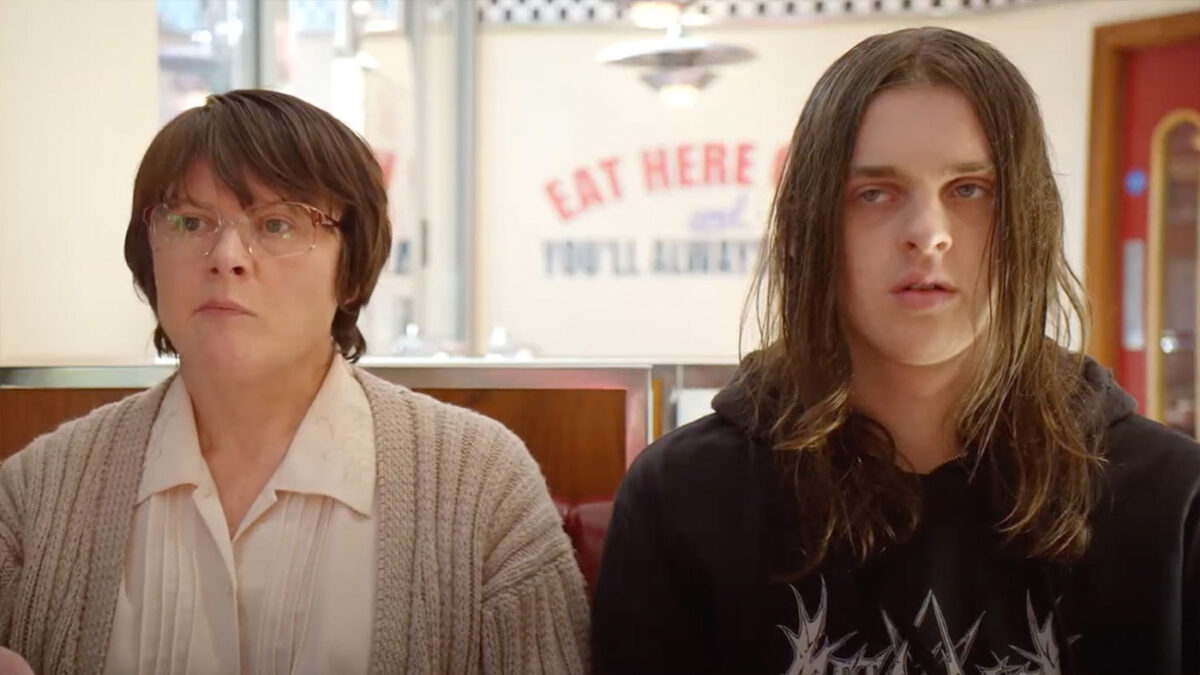
If it weren’t for it being based on Joff Winterhart’s 2012 graphic novel of the same name you would be forgiven for thinking that Days Of The Bagnold Summer screenwriter Lisa Owens had recorded the genuine conversations of a 50-something year old mother and her son, and had the cast of the film perform the lines verbatim. While the central characters of the film, Daniel (Earl Cave), a 15 year old metalhead, and his devoted mum Sue (Monica Dolan), a mild-mannered, seemingly drab librarian, could easily seem like stereotypes there’s something about the accuracy of the characters, and the performances that bring them to life, that avoids caricature and instead hits some form of recognition for the audience.

Daniel finds himself lost and more out of place than usual when his plans for the summer holidays collapse and vanish in an instant when his father’s expected child prevents him from travelling to Florida to meet him – something which Daniel believes is simply down to the fact that he isn’t wanted there. Therefore he finds himself spending six weeks at home enduring both the British summer and his mum. “But we’ll have fun” she insists to little response from her baggy-clothed son. Throughout the film Daniel shows very little response to his mum’s comments and questions. He often replies with one or two word answers. Yet Cave’s performance shows the sadness and anger behind his characters often dead-pan or miserable look.

Yet, aside from this and the seeming loneliness of the two central figures there is a fair deal of humour to be found within this film. Directed by Owens’ husband Simon Bird this is a different type of comedy to what some may be used to from the star known best for his TV acting roles in The Inbetweeners and Friday Night Dinner. There’s a light-hearted sense to the comedy that goes in hand with the equally light elements of drama that the film also introduces. Catching the conflicts and connections that surface amongst families during the British summertime. Throughout the film there are rising tensions between Sue and Daniel, both reaching a breaking point as things don’t quite go the way they would hope over the course of the quick 85 minute run-time – something which is heightened by the lingering sense of summer in the background of the film. However, their bond is still clearly shown. There’s something about these two recognisable figures that you almost instantly connect with, never laughing at them but always with the actors.

On a number of occasions the film does specialise in what’s become known as ‘cringe humour’. Lingering on the awkwardness of the interactions of the two titular Bagnold’s as they try to converse with the outside world. Predominantly this comes from the perspective of Sue as she has doorstep conversations with the excessively relaxed and easy-going mother of Daniel’s friend (played by Bird’s Friday Night Dinner co-star Tamsin Greig) or goes out on a date – to the amusing disgust of teenager Daniel. While some do come close to being so awkward that the laugh almost doesn’t quite happen there are still a number of successful hits throughout the film. None coming close to the brief appearance of Tim Key channelling the energy of Michael Scott with the cringe levels of David Brent. Luckily there are plenty of one-liner gags and interactions free from awkwardness that also provide laughs. All creating a fine blend of naturalism for the viewer to connect with, yet still managing to allow them to escape to another world that the entire collaborative team pour care and effort into creating.

This is a wonderfully upbeat and joyous piece. Celebrating families and their summer holiday struggles. Not a great deal happens throughout the film, yet it certainly avoids the dread that Daniel feels as his Mum reassures him “I’m afraid you’re stuck with boring old me for six weeks, but we’ll have fun”. Fun may not be something that this film aims for, but it certainly has cheer and enjoyment and a truly funny streak running throughout it, with a number of laugh out loud moments coming from the heartful relationship between the two fantastically performed central figures. With both lead actors bringing to life a wonderfully natural and caringly written screenplay. This is a pure joy from start to finish, and at the heart of it is a genuine, believable relationship between two almost perfectly written people.

From start to finish Days Of The Bagnold Summer is a fantastically natural thanks to a brilliant screenplay and two equally accurate central performances from Dolan and Cave, both of whom create a genuine bond and relationship that brings you into their lives and takes you along for a joyful and funny 85 minute summer.

Rating: 4 out of 5.