Moxie – Review

Cert – 12, Run-time – 1 hour 51 minutes, Director – Amy Poehler

Quiet, 16 year old Vivian (Hadley Robinson) causes a wave at her school through her anonymous, sexism battling zine, Moxie.

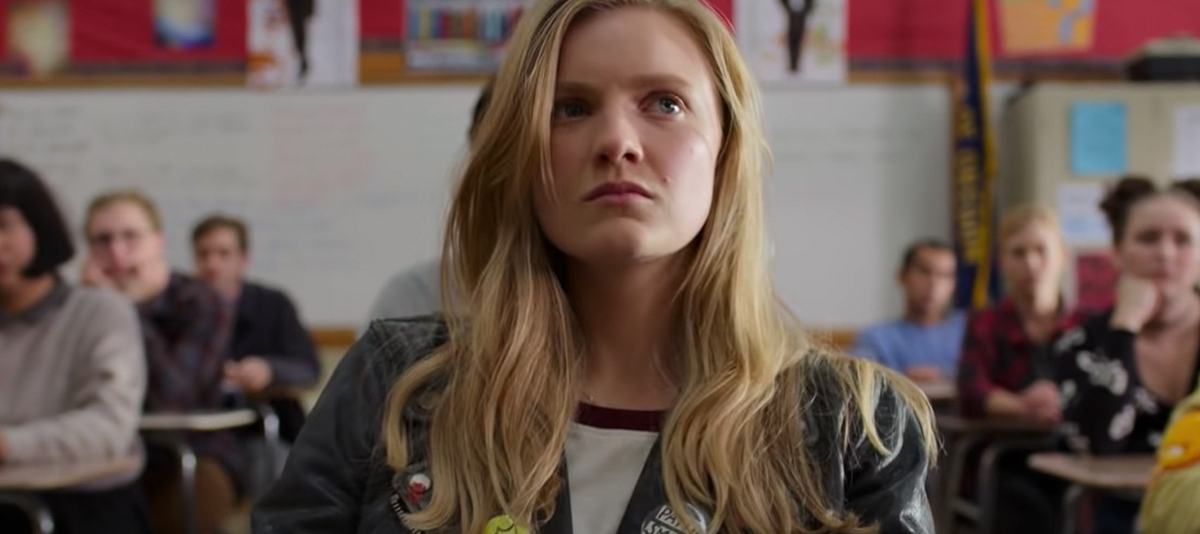
The last two or three years have brought us an array of brilliant new teen movies. From the likes of Love, Simon, Eighth Grade and Booksmart to this year’s darkly comic Spontaneous. Moxie, although still with its comedic edges, takes a more frequently deeper, serious tone to the above. Throughout we follow Vivian (Hadley Robinson), a quiet 16 year old high-schooler happily going about her days until she meets new student Lucy (Alycia Pascual-Peña). From her first day Lucy battles against the sexism and harassment of her male classmates – predominantly by the uncomfortable presence and actions of outspoken jock Mitchell (Patrick Schwarzenegger). As a new version of ‘The List’ is released – labelling female students in categories such as ‘Best Rack’, ‘Best Ass’, ‘Most Bangable’ and ‘Most Obedient’ – Vivian, alongside many others in the school, decides she has had enough of this being ignored by everyone else in the school, including the Principal (Marcia Gay Harden).

A wave spreads throughout the school, fighting against sexist dress-codes and silent teacher actions, once a mysterious zine, entitled Moxie, is found in the girls bathrooms. Revolution starts and it only grows over the course of the film. While nobody knows it Vivian is behind Moxie, printing it in increasing amounts of black and white copies from a nearby copy-store. All of this inspired by stories of the leather jacket wearing, punk-feminism revolution actions of her mother (Amy Poehler) from her own school days.
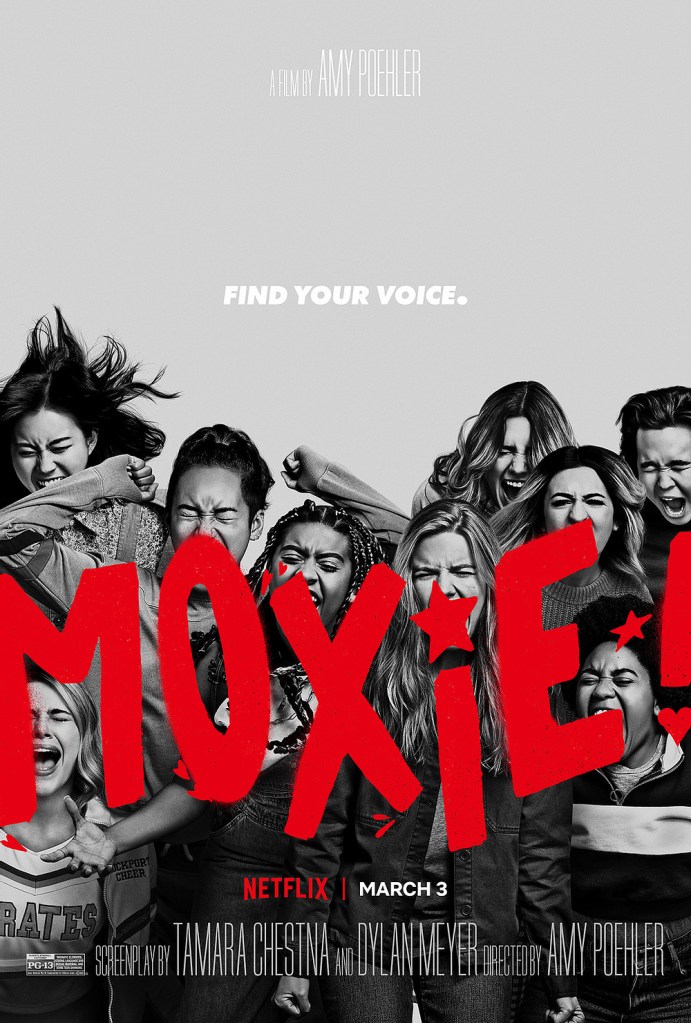

Unlike the popularity divide represented in Poehler’s comedy partner Tina Fey’s screenplay for, rather different teen movie, Mean Girls this film, directed by Poehler – from a screenplay by Tamara Chestna and Dylan Meyer, based on Jennifer Mathieu’s novel of the same name – is very much about people coming together, no matter their status or background, to fight for a common cause. You feel the strength and unity of the expanding group as their demonstrations become prouder and more widespread. It’s difficult not to get caught up in the fire and the passion of not just the style and the themes of the film but the performances of the rising talent on-screen. Managing to convey the seriousness of the ideas that the film produces and the dashes of grounded humour that are spread throughout help to keep a feeling of natural conversation between the characters – particularly between Vivian and her best friend Claudia (Lauren Tsai).

As the second half arrives the film very much shifts focus from the group push aspect of things to the affect that Moxie is having on Vivian’s life. It causes a rift in her friendship with Claudia, who doesn’t take part in the demonstrations that are being encouraged in the zine, becoming distanced from her and closer to Lucy and classmate Seth (Nico Hiraga) – a noticeable figure in class after having experienced a large growth spurt over the summer. The laughs die down as Vivian’s situation becomes more personal and the fear that she will be found at as Moxie grows alongside the movement that she created. During this particular section of the piece a different kind of drama certainly comes through and while it doesn’t quite have the same energy and power as the core cause at hand it serves as a good, if lengthy, piece of character drama. It takes a while for the powerful efforts of the Moxie group to truly step towards the front of the stage again. However, when they do it’s a grand scale push that truly captures the spirit, heart, passions and understanding of the film. One where time has been taken to understand not only the issues, but the responses of the characters, individually and as a collective. This is a very different type of teen movie, a perhaps essential one. And, much like many recent teen movies, one that’s definitely worthwhile.

Personal relationship beats for the central character may not have the same punch as the finely handled power of the unified demonstrations throughout but, Moxie is still an enjoyable, interesting and fiery teen movie with passion and hope at its heart.
Rating: 3 out of 5.

Coming 2 America – Review

Cert – 12, Run-time – 1 hour 48 minutes, Director – Craig Brewer

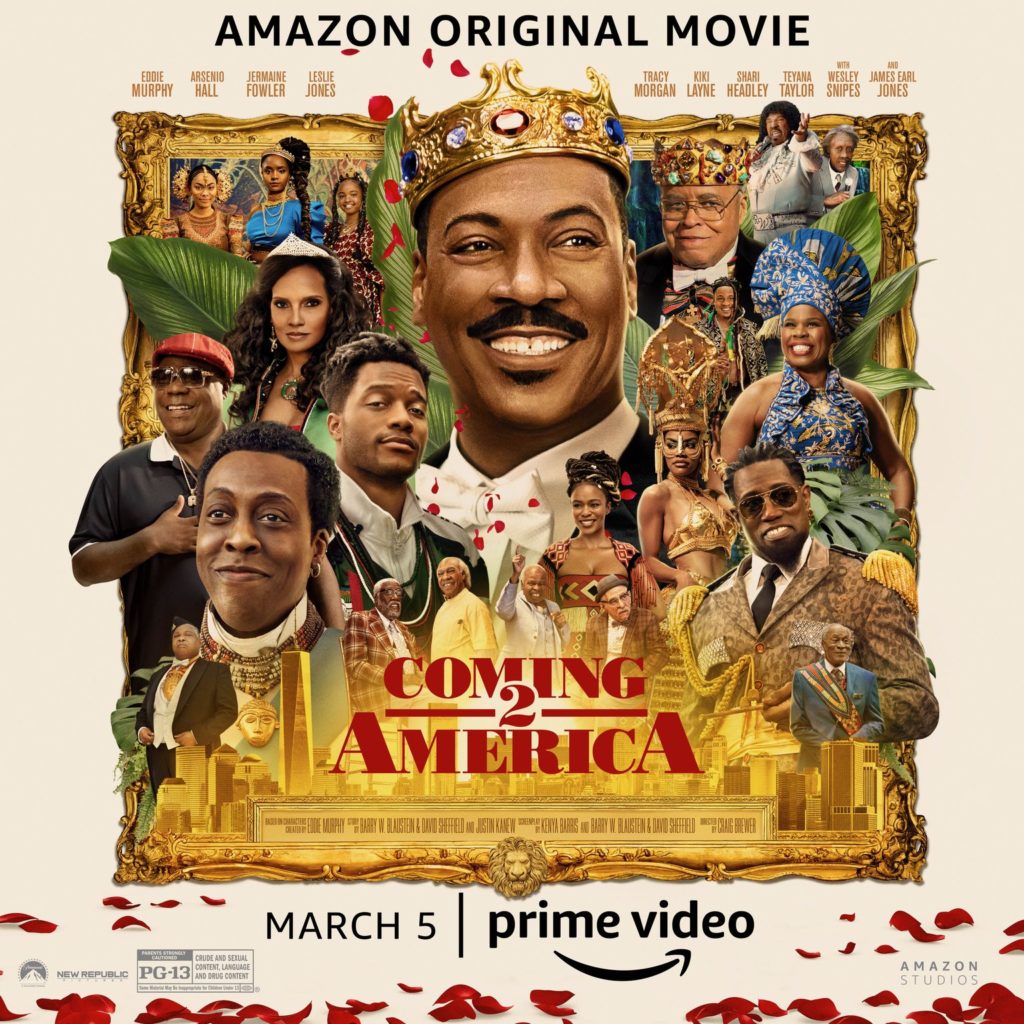
Seeking a male heir to the throne of Zamunda, now King Akeem (Eddie Murphy) discovers that he has a son (Jermaine Fowler) living in America.

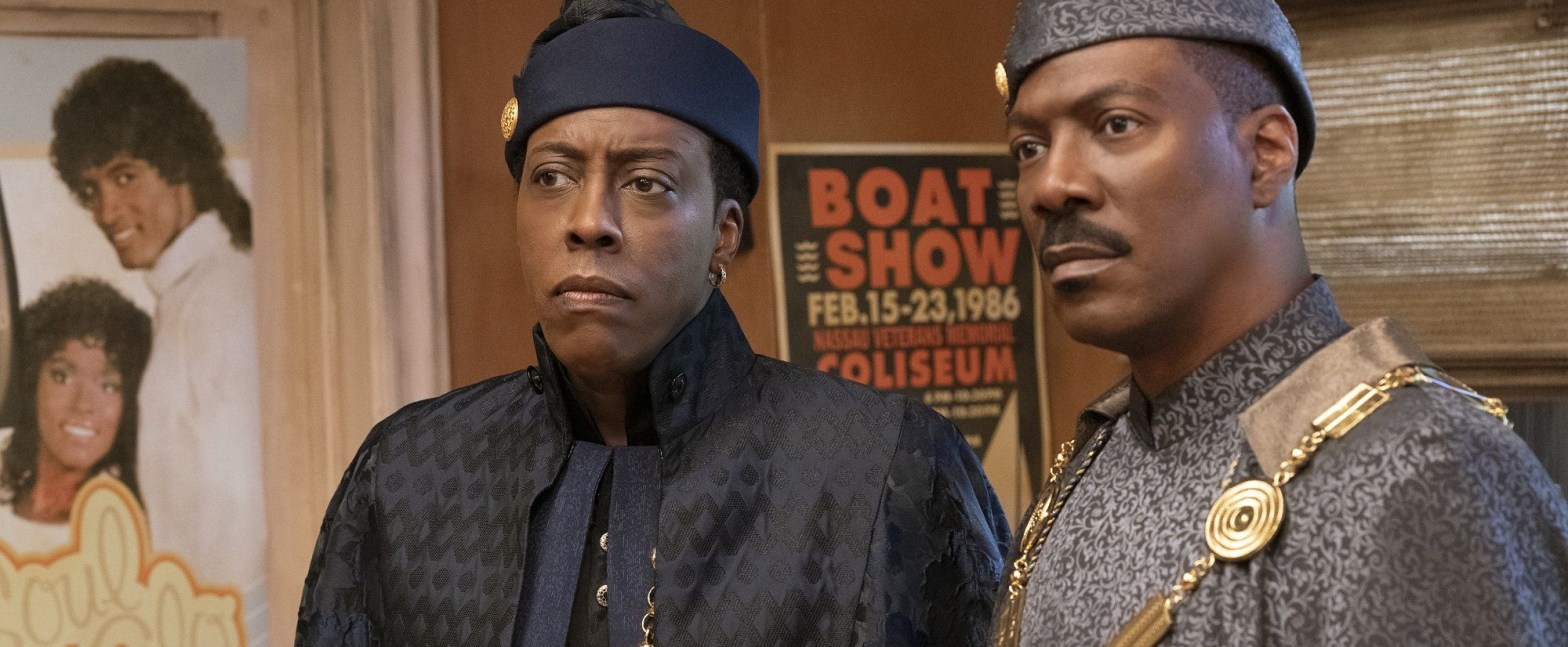
1988’s Coming To America marked the first time Eddie Murphy played multiple characters in a film (the makeup received an Oscar nomination, alongside Scrooged and eventual winner Beetlejuice), and provided us with a range of hilarious, memorable characters. Many of which (also played by Arsenio Hall) pop up for brief cameos in this sequel. Murphy returns as Prince Akeem, heir to the throne of Zamunda. The last thirty years seem to have been free of worries and stresses. However, his happily married family life, still with wife Lisa (Shari Headley) and three daughters, is interrupted when he is made king after the ceremonial passing away of his father (James Early Jones). It is revealed that he needs to find a male heir to the throne, in a country where women are not allowed to rule. Luckily, he has a, unknown to him, son in America from his late-80’s quest to find a Queen in Queens, New York.

Thus Akeem, with friend and aide Semmi (Hall), make a quick trip back to America where they find ticket resaler Lavelle (Jermaine Fowler). Just as soon as they arrived, the pair go back to Zamunda – bringing with them Lavelle and his loud mother (Leslie Jones), bathing in the glory and riches of royal Zamundan life. This is more Lavelle’s story than anyone else’s. Original Coming To America writers David Sheffield and Barry W. Blaustein, with Kenya Barris, focus on his rise to princedom, completing the tasks he needs to in order to become the heir to the throne – this is certainly less Coming To America, more Coming To Zamunda. This training causes rifts in Akeem’s family relationships, his wife angered by the appearance of the until now unknown Mary (Jones) and Lavelle – Headley seems assigned to the far diminished disapproving wife role – and eldest daughter Meeka (Kiki Layne), who could have otherwise possibly been the aim.


Zamunda is certainly a land that has potential and much to be explored, and it’s easy enough to get lost in the production design and Ruth E. Carter’s costumes, however, with all the plot elements the film holds there seems little room to properly invest in it. While the film tries to focus on Lavelle, Akeem’s story is still very much present as he worries about not just his future but that over the nation he rules, still holding outdated traditions to limit the authority of women. With all this going on in comes Wesley Snipes as General Izzi, the leader of neighbouring country Nextdoria – a joke which seems funnier on paper – himself trying to take control of Akeem’s land after his sister was made to look a fool by him through a failed arranged marriage. Izzi is attempting to arrange a marriage between his son or daughter to Akeem’s, after a number of grand, musical entrances into expansive halls and gatherings. Snipes is clearly having a great time being a part of this film and truly gets into his character – he’s a highlight of many scenes, what else would you expect from someone described as “the inspiration for Mufasa”? However, with little screentime, and not much to do, his character, like many, feels rather wasted.

This is all in-between catching up with multiple, slightly more wrinkled, faces such as Randy Watson, Rev. Brown and, of course, the residents of My-T-Sharp barbershop for flash in the pan appearances. The first 20 minutes of this sequel largely seem to call back to the original film, and use its high reputation to its advantage for various celebrity cameos. It takes a while to get going and admittedly there are some decent scenes throughout. Perhaps not a great deal of laughs, despite some good ideas and moments every now and then, but the film certainly isn’t unlikeable. The issues come in with the various plot elements, most of which call back to the original film – a particular line sees Akeem seem more like his father and Lavelle put into his father’s shoes from the 80’s. There simply seems to be too much going on, with a lot left in the background for lengthy periods of time, for the film to feel overall satisfying instead of muddled for focus – both in terms of story and character.

During the credits John Legend covers She’s Your Queen (occasionally equally high-pitched) from the first film, one of my personal favourite moments from the John Landis classic. Much like the sequel, it’s good, and calls back to the original film well enough, but seems to lack a full punch, and Wesley Snipes. Unlike the sequel it has one direct focus and doesn’t quite seem to be as busy with its content.

Coming 2 America is a busy sequel, in terms of its various characters, narrative arcs and throwbacks to the original film. There’s potential to explore and advance Zamunda from an outside perspective, and the film isn’t bad, but it feels muddled for focus even amongst the occasionally amusing throwbacks and original beats.

Rating: 2 out of 5.

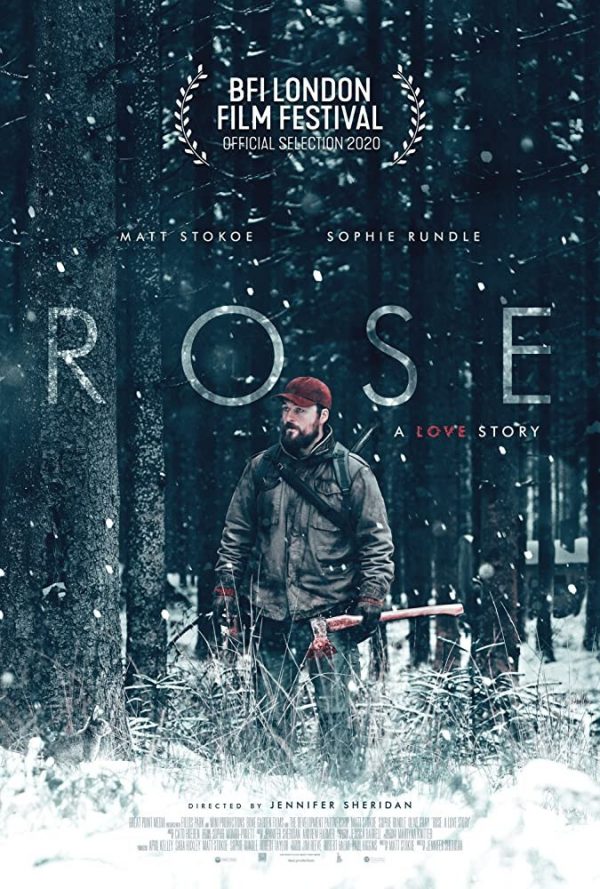
LFF 2020: Rose: A Love Story – Review

Release Date – TBC, Cert – N/A, Run-time – 1 hour 26 minutes, Director – Jennifer Sheridan

Sam (Matt Stokoe) and Rose (Sophie Rundle) live in isolation in the hills above a small town, hiding a dark secret in their small cabin.

Director Jennifer Sheridan makes her feature debut with Rose: A Love Story, a film that adds to the increasing amount of features using horror elements and suggestions to heighten suspense and drama within a story. Throughout the film it’s hinted that Rose (Sophie Rundle) has something more than a mysterious illness. She lives in isolation, in a small cabin in the hills with her husband Sam (screenwriter Matt Stokoe). Sam only occasionally leaves to go to the nearby town where he buys supplies, petrol and other basic necessities. Although, largely they rely on what he catches when hunting in the area for food. There’s a deeply mysterious side to the pair and their odd behaviours – Sam regularly goes to casually read while leeches attach to his legs in a corner room – that adds to the potentially dark side of not just their relationship but their behaviours as a whole.

Throughout there are hints and suggestions that everything is not as it seems and that a dark secret is being kept. Over the short course of the narrative there’s an eerie sense to the couple – and Sam’s responses to conversations he overhears while in the town, there’s a risk that they’re going to be discovered and something bad, potentially uncontrollable, is going to be unleashed without warning. Sam’s behaviours and often fight-or-flight responses to everything around him create a shadowy figure and boost the potentially dark edge that the film holds, one which keeps you invested throughout.


If this were simply a two-hander, which for a number of scenes it is, then this may not work as well. While the scenes between Stokoe and Rundle work well and their shady performances work well together in some of the more intense sequences as the darkness and solitude of the living space seems to get to them. Their anger clearly boosts, especially for Sam, while Rose feels the cold of the outside environment which she barely ever sees, while she works on her novel it doesn’t serve as a distraction. If anything it reminds her of her illness, making her isolation worse. Of course, contact with the outside world looms, with people becoming more and more interested – especially after a number of unfortunate collisions – in the outsiders in town.

It all adds to the build-up that the film creates as it leads to forming a big reveal. The line on the way there isn’t exactly scary, but that doesn’t seem to be what the film is aiming for. It’s a short film and the run-time very much works in its favour, there’s a bit of context but some scenes do feel more like build-up than anything else. And while much of the film works well in keeping a consistent tone and feel throughout the majority of the story and substance is build-up. It works well enough and there’s certainly some engaging elements within the light horror injected mystery and general eerie nature of the piece. And certainly as events pick up and people come closer to discovering Sam and Rose the audience learns along with them, things pick up, and so does the horror. It all leads to something well worth the wait as the elements come together around the halfway point and the detail increases. Luckily, thanks to the short well-paced run-time it doesn’t take too long for such things to get going,

While the first half feels like mostly mysterious build-up the second half of Rose: A Love Story brings in more horror elements and the suspense and eerie tone helps form something worth the wait as each dark turn has unfortunate light shed on it for the characters.

Rating: 3 out of 5.

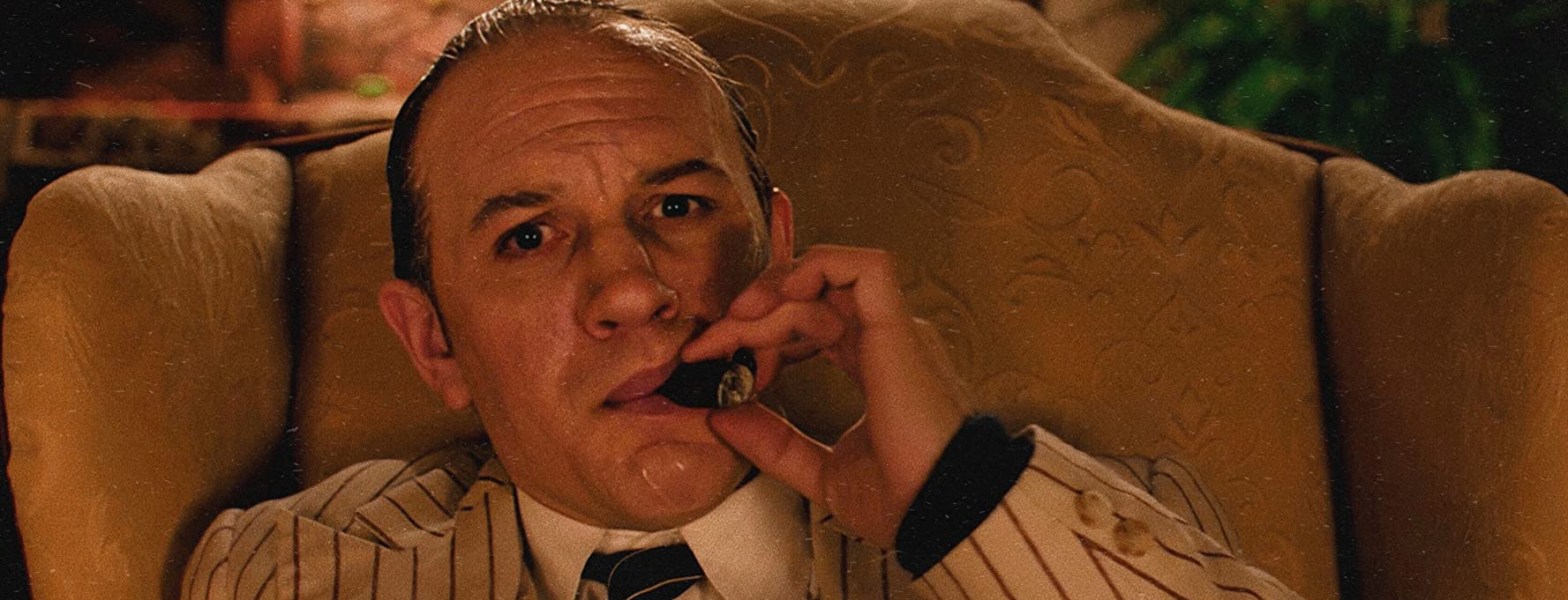
Capone – Review

Cert – 18, Run-time – 1 hour 43 minutes, Director – Josh Trank

Following the last year of mob-boss Al Capone’s (Tom Hardy) life as he suffers from neurosyphilis and the dementia that it leads to.

When it comes to mob films you may expect a fair deal of bloodshed to feature. Writer-director Josh Trank’s latest certainly contains a fair deal of this, however it also features a fair deal of drool and stool too, as it looks at the last year of the life of Al “Scarface” Capone (Tom Hardy). After being released from prison early a number of years before, due to diminishing health, the once feared mob-boss spends his time in his FBI surveilled Florida mansion. His untreated neurosyphilis getting worse and leading to a stroke he is left in a constantly deteriorating state with increasing dementia. Trank’s film takes place between two Thanksgivings – a time when people say what they’re thankful for in their lives. Over the course of a year those around Capone, called “Fonz” by his friends and family, begin to worry about not just his future but theirs. They insist on selling off the various statues, paintings and artwork across his expansive house – the repetitive corridors getting the better of his hobbling stature.

Capone, most of the time unable to respond, especially with anything lengthy, grumbles and slurs his words. A mixture of English and Italian Hardy’s performance may start off sounding like a gravelly member of the Ant Hill Mob but gradually, as the character’s state decreases and he seemingly becomes more distant from those around him. This includes his wife (Linda Cardellini resigned to the sympathetic wife role) who spends her time on screen worrying and trying to care for and attend her husband, despite his occasional violent, angry outbursts. As the course of the film goes on it becomes apparent that there’s noone to properly connect with and so the drama of the disease isn’t properly felt. It’s not that you can’t feel sympathy for Hardy’s excessively dribbling character because of who he was before going to prison, it’s simply the idea that there doesn’t quite seem to be enough connection with the characters and so you’re simply watching what happens instead of being properly invested in most of the film’s events. On some occasions the film feels more concept than fully-fledged story.


This being said, there are a handful of interesting moments. As Capone’s dementia causes him to experience flashbacks to the crimes of his past he finds himself regressing and becoming more and more violent. His moments of reliving/ flashbacks are certainly interesting and while starting off as something almost like a ballroom scene from The Shining they gradually form into a selection of interesting snapshots. A reminder that this is Al Capone – these are potentially needed every now and then as the mob-boss element and FBI tracking isn’t played upon properly until the second half. It’s this that feels like occasionally there are some details lacking and at times, particularly in the first half, this is only Al Capone because of the lavish setting and the giant cigar permanently rooted in his mouth.

Even during some seemingly out of character moments there’s something of Capone craving for his old life and state back. Even as he stands up and sings along to the Cowardly Lion singing If I Were King Of The Forest in The Wizard Of Oz, a moment that initially creates a chuckle or two before you realise its seriousness/ dramatic elements, the case for one or two moments over the course of the film. There are certainly some interesting moments throughout the film, and often while you have to give them a bit of time to properly develop, they’re enough to make for a decent enough watch. Hardy’s struggling figure, widening and squinting his eyes as he tries to prove life is still in him before giving in through what appears to be pain, might seem like a caricature of an ill gangster, but again does have a bit more too it than that. A character craving, and yet being haunted by, his past. Wanting it back and giving in to it at the same time. It’s absolutely a mixed bag and a lot conflicts and needs a bit more developing. But, for what it is it’s fine enough, if not always feeling like a film about the titular Al Capone.

More concept than story Capone is good for what it provides, but certainly in need of more development. Much like Hardy’s performance, some moments might take a bit of time but eventually find some sort of grounding.

Rating: 3 out of 5.

The United States Vs Billie Holiday – Review

Cert – 15, Run-time – 2 hours 5 minutes, Director – Lee Daniels

In response to her song Strange Fruit the FBI attempt to bring in Billie Holiday (Andra Day) on narcotics charges.

In a film about the entire United States seemingly being against singer Billie Holiday Lee Daniels’ latest does a good job on focusing on her relationships and love-life. It’s the start of a mixed bag of conflicted focuses in a film where the title refers to the often left behind trials and arrests Holiday went through when investigated for narcotics by the FBI. This was all to silence Day, whose song Strange Fruit, protesting the lynching of African Americans, was causing mass controversy at the time. However, this harassment throughout the later years of her life leads her to meeting FBI agent Jimmy Fletcher (Trevante Rhodes). The pair certainly form a sexual relationship and share a handful of experiences together, however how much of a romantic relationship this is seems to fluctuate throughout the film depending on how Rhodes is being viewed. An agent by day, lover by night type of scenario seems to be in play.

Luckily, to keep things some what grounded, and slightly consistent, is a sensational Andra Day in the leading role. Day, with seemingly little acting experience (aside from brief appearances in Marshall and Cars 3), gives a sensational performance as an artist, despite her platform, struggling to have her voice heard. Trying to break barriers but having new ones put up as she gets close. Yet, when in her element her songs ring out. During musical performances Daniels seems to change his style somewhat. Sweeping the camera across the stage and the audience, capturing an up-close spectator’s view of the concerts and the effects that they have on those who have paid to attend. This seen most prominently when Holiday performs in-front of a non-segregated crowd at Carnegie Hall.


Similarly during a hallucinogenic sequence the almost silent actions and flashbacks that occur seem to be choreographed. The actors seem to rely more heavily on their facial expressions and body language to convey the flow of each snapshot of the titular figures past. It creates the feeling of a dance number that helps bring you back into the film after a number of minutes of jumping from point to point in the various elements of the busy narrative. It’s certainly these more stylistic moments that work the best within the film, ones that use the visual format well and make something aside from standard biopic beats. It breaks the otherwise conventional nature – a number of moments are part of larger flashbacks as Holiday sits down for an interview (with Leslie Jordan) where the opening question asks what it’s like to be a person of colour. It simply leads to an initial point that, like a handful of others in the film, is either quickly forgotten or simply stopped before they have time to properly gain steam.

And yet, throughout the whole jumble of ideas, points and potential storylines there’s always some form of connection with the film. That with Day’s belting performance, which also helps to capture Holiday’s distinct jazz and blues styling, which makes for a serious awards contender. Her performance is worth the viewing itself, and there’s certainly enough within the film in terms of stylistic sequences and more cinematic moments to keep things flowing. While some story points might distract from the main attacks, defences and trials that should be the core focus of the film, and the full extent of the drama isn’t quite felt, there’s just about enough within this mesh of ideas of potential narrative points that work and click with the actors and the better linked moments and arcs of the film. The film is certainly a jumble, luckily there’s enough decent content dotted throughout to make it a worthwhile enough jumble.

Even if much of The United States Vs Billie Holiday doesn’t live up to its title, focusing on a number of other elements of the singer’s life in a jumpy mess of plot and flashbacks, the more visual, stylistic moments help it along and Day’s performance alone is worth the watch.

Rating: 3 out of 5.

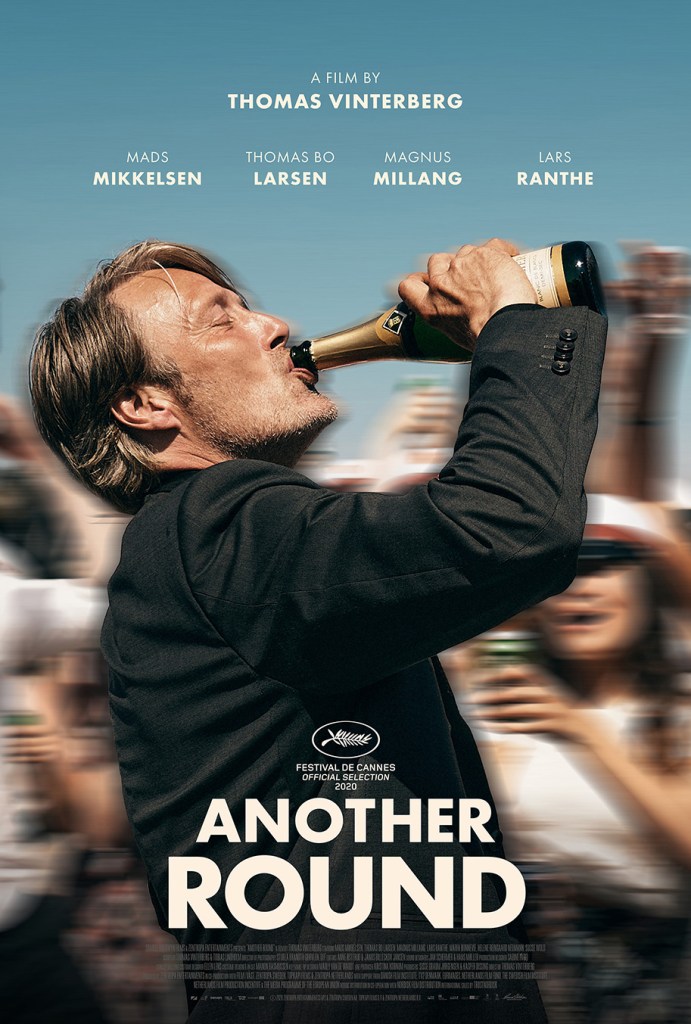
LFF 2020: Another Round – Review

Release Date – 2nd July 2021, Cert – 12, Run-time – 1 hour 57 minutes, Director – Thomas Vinterberg

Four teachers decide to conduct an experiment to see whether a theory about keeping a blood-alcohol level of 0.05% will improve their everyday and working lives, however overtime they decide to increase this mark.

Binge drinking. It’s tradition held exclusively by the youths! Funnelling – sometimes literally – down excess alcoholic content in ritual competitions and booze-fuelled races students at Mads Mikkelson’s Martin’s school take part in this event on their graduation day each year. As for the middle-aged teachers, they’re left inside; their worries and life stresses continuing to weight them down, no buzz left in their lives. Martin himself is feeling distance in his homelife, especially when it comes to his relationships with his wife, Anika (Maria Bonnevie), and his two sons. However, when he and three other teachers – Tommy (Thomas Bo Larsen), Peter (Lars Ranthe) and Nikolaj (Magnus Millang) – begin to discuss Finn Skårderud’s blood-alcohol theory they embark on an experiment that begins to make their lives seem that little bit better.

According to the film, Skårderud’s theory states that the average human’s blood-alcohol level is 0.05% too low. It should be this slight percentage shift higher to allow for better concentration and relaxation in both social and work scenarios. The four agree to keep their own levels at this mark and write an essay together on their personal experiences conducting this experiment. Initially things go well. Martin finds himself able to better connect with his students, to start with rowdy and unengaged with the lack of enthusiasm from their teacher. However, as a buzz kicks on from the alcohol in his system – consumed during work hours, the rules are that alcohol can’t be drunk after 8pm – things pick up both in class and at home. Mikkelsen especially shows this in his performance as he engages more with his class and engages in back and forth conversation with them in banter-like classes and lectures. The group seem more alert, and yet more at ease with their students and surroundings, the most tension coming from being found drinking, or stashing bottles of Smirnoff, on school property.


As the ‘research’ goes on the level of alcohol goes up. The central four begin to drink more heavily, and into the night. While to start with this produces some relatively light and comedic moments, the staggering and joyous nature of the group is certainly something with much care-free joy, things soon begin to get serious. Addictions begin to approach and this causes further rifts in family lives. What once seemed like happy-go-lucky tipsiness almost instantly snaps into dangerous drunkenness. It’s a well-handled shift from comedy into drama, and the performances don’t seem to change, it’s the tone of the film that gradually does. Forming a fine sense of drama with no dramatic change in tone. Helped by the performances, and the details of the screenplay, the film carries along its tracks with some heart, humour, drama and in hand emotion.

The film seemingly sets its tone from the start, with a montage of various political figures drinking, potentially even getting drunk. However, much more is covered than just this, more than just the experiment. It shows the complications of it, the harsh impacts that it may have, even if there are some laughs to be had at first. And even during the drama the occasional humour isn’t dropped, it’s still present, but in slightly more darker tones, bordering on slight black comedy. There’s a fair deal to witness and enjoy within the film and overall it’s encapsulated in the run-time rather well.

Things might seem to slow down and feel a bit lengthy in the final 20 minutes but there’s still some entertainment to be found, particularly in a finely sculpted ending that truly sums up the themes of abandon that the film sets out, while also well-tuned to the rest of the themes and ideas that are created in the mix. Never a swirling cocktail, or a chaotic boozy tumble – although some scenes may be better described by the film’s original Danish name, Druk. Another Round is a coherently told story of addiction, worry, drunkenness and hints of middle-age crisis, led by a top form Mads Mikkelsen.

Mads Mikkelsen leads a great cast in this booze-infused story of drunkenness, where the true themes are of worry and a want for greater connections in relationships, rejuvenation and more. It might get tough along the way, but there’s still plenty of humour and heart mixed in for good measure.

Rating: 4 out of 5.

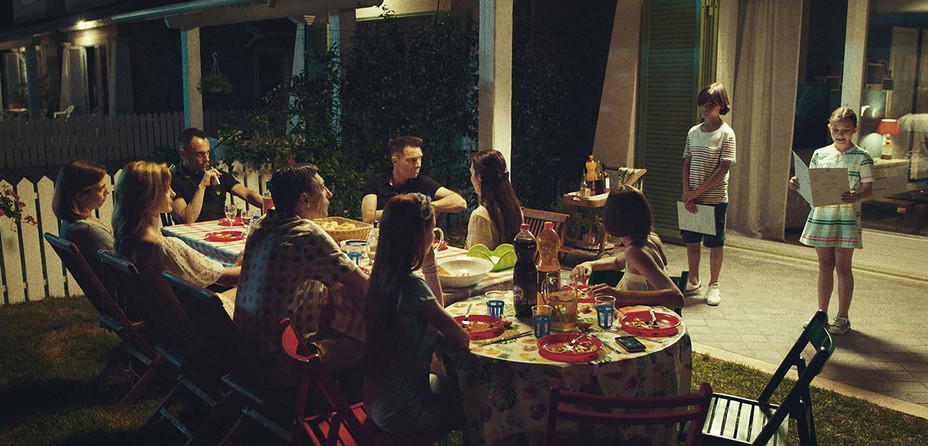
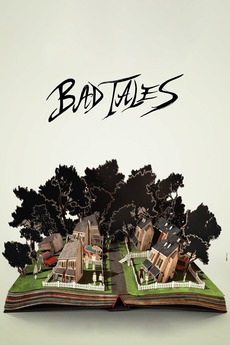
LFF 2020: Bad Tales – Review

Release Date – TBC, Cert – N/A, Run-time – 1 hour 38 minutes, Directors – Fabio D’Innocenzo, Damiano D’Innocenzo

In the heat of the Italian summer family rifts are caused as a group of parents begin to act out in anger against their children, who themselves are discovering more of the world and themselves.

The height of summer is often a time when anger rises. The heat adds to stresses and tensions. It further boils upset over and, as many films have depicted in the past, causes many troubles both in the streets and in the privacy of your own home, although it can often cause the walls to become unrecognisable; adding to the swirling effects of the heat. In Bad Tales – the second feature of brothers Dabio and Damiano D’Innocenzo – the heat adds to already tense relationships between parents and their children. Over the course of the 98 minute run-time, almost feeling like an anthology, anger rises and on many occasions spills over, with repercussions for the young kids. It’s a film largely compromised of such ideas – parents unnecessarily lashing out, and taking out their problems, on their children.

At one early instance a father shakes his child upside down to stop them from choking, before walking off and crying and blaming the child for his response. With much more to come it’s already safe to say that this is certainly one to put in the book of bad movie parenting. There isn’t often much character development or huge elements of plot throughout the film, it mostly follows the lines of the characters and their behaviours and actions over the course of the summer, and how one or two scenarios have knock-on effects into others peoples lives and personal problems. There’s a lot to keep track of, with both the adults and kids being followed and almost all in different places at one time. A great many characters are present and the film tries to pack a lot in during it’s fairly short run-time – reducing most scenes to snapshots of its near-anthology style.


With their parents acting in random acts of rage and making home feel unsafe the kids each go out to explore the world. A world which they seemingly know little about apart from what they wish it to be in their ideals and what they’ve heard from grown-ups. Thus ensues various chasings of relationships, dark thoughts and encounters. They’re discovering themselves and developing that way, however often their discoveries or want to discover more about themselves leads to them acting on their initial instincts. One child is told, by an adult who initially seems like one of the only good people in the film, to “go and stare at girls in their swimsuits”. It’s an unsettling remark and only leads to more rather uncomfortable moments and exchanges not just within this section of the narrative but within the lives of each of the young members of the cast.

At a number of points the question could be asked to whether this film is trying to be a comedy, or at least have some comedic tones. And while this might be the case, the nature of some of the dialogue and actions within the piece simply overshadow this point and remove any humorous potential, even if in a dead-pan style. The film simply goes along its lines of bad people doing bad things to each other, or rather specifically their children, and describes itself rather well in the line “this senseless, sad and even pessimistic story”. Some have described this as a fairy-tale – a dark, twisted one at that, as many classics often turn out to be – yet, the film never really seems to have any fantastical elements or anything aside from its constant depictions of family abuse and childhood development influenced by slanted adult views. It’s a sort of anthology with repetitious depictions of negative humanity that stop comedy – if that is what the film is aiming for – from coming through. It’s just lucky that the autumn comes through to hopefully cool down the heated anger and discomfort of the summer.

Bad Tales may be aiming for dead-pan comedy of sorts, however it’s tone and angered characters simply don’t allow it to come through. What we end up with is a slightly repetitive selection of snapshots all similar in content and style, which appears to be angered abuse and occasional discomfort.

Rating: 2 out of 5.

LFF 2020: Ultraviolence – Review

Release Date – TBC, Cert – N/A, Run-time – 1 hour 35 minutes, Director – Ken Fero

Documentary exposing deaths in prisons, and on the streets, caused by police brutality and the effects that they have had.

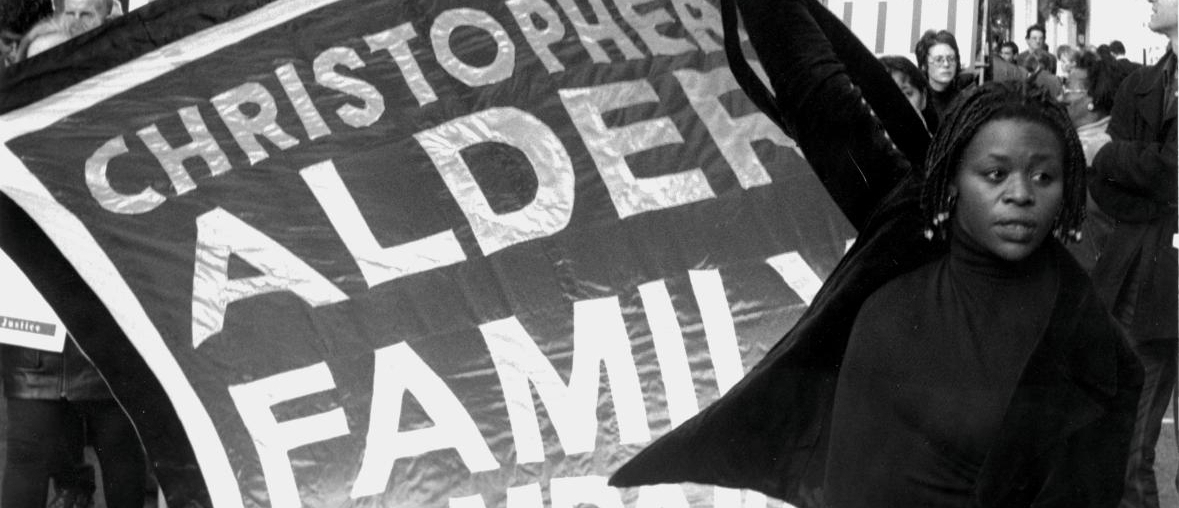
The brief text-filled trailer for Ultraviolence claims that this is a film that the police and politicians don’t want you to see, the film marks one of those few occasions where this may actually be true. Ken Fero’s film takes an unflinching look at a number of deaths in police custody, caused by police brutality. “It’s a powerful thing the truth” is stated at one point after multiple instances of CCTV footage, archive pieces, interviews, protest footage and more, “and it can’t go away. It’s been here since day one and will be there until the day I die”. This is a film made to expose the shocking, often heavily uncomfortable, truth behind the unjust deaths in police custody, over 2000 in the last 50 years. The actions that are being taken to receive justice for them and how in so much time so little has changed – this film has been in the works for ten years, and serves as a follow-up to Fero’s (and Tariq Mehmood’s) 2001 feature Injustice.

The film is bold. It’s quick. It jumps right to the point and doesn’t stop for breath. It’s not afraid to shy away from the heavy details and at times may very much be an uncomfortable watch, but a necessary one. At one point we witness the slow death of Christopher Alder, literally left to curl up and die on the floor of the police station reception. It’s impossible to look away, no matter how much you want to. As the seemingly lengthy process continues, and the film covers more acts of police brutality; often racially provoked attacks, you can’t help but feel the same fiery anger and rage that the film burns brightly throughout its short 75 minute run-time.

“Here we watch death happen. It is not cinematic, it is brutal”. This is a film concerned with what it’s showing, about trying to send a message. It’s a timely film and that makes it all the more powerful. The lack of recreations and use of archival footage only increases the impact on the viewer. Archival footage helps to tell the narrative of each instance and point that the film covers, telling individual narratives while also helping to create an overarching (nonchronological) story of unfortunate never-changing. Meanwhile, interviews form a further emotional connection with the subjects causing the film to pack and even grander punch, and protest scenes put you right in the centre of it all. You get caught up within the action, emotion and anger and the film argues its point more than effectively thanks to the way it structures itself and displays its points.

This is a film that knows precisely what it wants to do and does precisely that with all the information and resources it can possibly get. Not wasting any time and coming from a personal, yet unified, angle. Fero’s narration throughout acts as a letter to his son, encouraging him to stand up against violence and injustice from the police. To prevent further inequalities in the court system, and to stop them from defending the police, despite proof against them. It’s an angered letter, and one that is open to everyone while still having that highly personal feel to it from father to son. This is a finely constructed letter of “powerful… truth”, one that captures many harsh, discomforting truths and puts the viewer in the centre to see it all. The pain and the injustice, there seems no other way to describe it. It’s a film that needs to be seen to truly understand and feel the true extent of, and even words can’t properly prepare someone for some of the content. Much of which comes from the pacing and style of Fero’s filmmaking, structure and the editing that contributes to the overall power of the piece.

Ultraviolence is shocking, emotional, sometimes uncomfortable, but most of all it’s angry. Personal to the filmmaker as he speaks to his son and the viewer it’s not an easy watch, but certainly a finely made one that’s as quickly edited as it is to its urgent messages.

Rating: 4 out of 5.

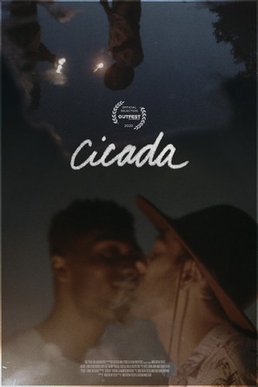
LFF 2020: Cicada – Review

Release Date – 21st January 2022, Cert – 15, Run-time – 1 hour 33 minutes, Directors – Matt Fifer, Kieran Mulcare

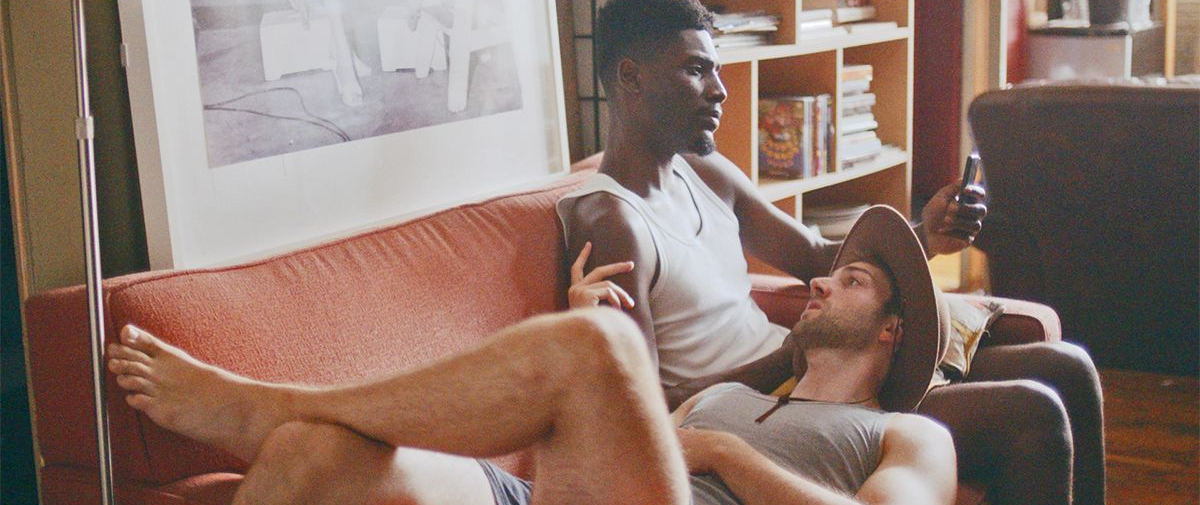
Breaking from a string of one night stands Ben (Matt Fifer), trying to cope with the recurring impacts of past sexual trauma, forms an instant connection with Sam (Sheldon D. Brown)

New York City, a place often showed crammed with residents and tourists in its crowded streets and towering buildings. Not often associated with quiet intimacy and soft, brushstroke style hues as seen in Cicada. Over the course of its short 93 minute run-time its priorities are clear, specifically the emotions of the two central figures in the relationship that the film focuses on. The discussions they have and how they relate to their previous traumas, alongside the way people perceive them in public. For the most part we follow Ben (Matt Fifer), a young man spending most of his nights engaging in passionless one night stands. He regularly attends somewhat informal therapy sessions with Cobie Smulders, where he still struggles to be properly open about his past, however, things seem to change all of a sudden after a chance encounter in a book shop.

Looking through the other side of the shelves is Sam (Sheldon D. Brown). It’s a traditional place for a movie romance to start, and in some ways the pair’s relationship follows such lines. Yet, the conversations of the romance are what truly show the bond between the pair. Both figures have something they’re trying to hide. For Ben it’s sexual trauma in his past, which gradually comes to life bit by bit over the course of the film. Meanwhile, Sam is worried about homophobic abuse he might experience in public, on top of potential racial abuse, particularly after previous harsh experiences with this – this being the reason why he isn’t openly gay. For this reason Sam doesn’t even like to hold hands with Ben in public, and prefers to keep their relationship inside and private. Both figures have their struggles, and yet somehow there’s a belief in the relationship.


Ben’s nerves and worries as his reluctance to talk about the assault in his past is shown through the use of handheld cameras; particularly during the therapy scenes. The camera faintly wobbles and shakes as his voice stammers and pauses, although sometimes becoming slightly distracting after a while. This is clearly a personal film for Fifer – who stars, writes, co-directs (with Kieran Mulcare), and produces the film – and also for Brown, who has an additional story credit. Some have stated a number of the elements to be autobiographical, this is a film that itself is a very naturalistic piece, emphasising the humanity and internal thoughts and struggles of the two leads. Their situations are brought to life on the screen with thought, care and sensitivity.

There may not be a lot going on, but there’s detail and worries that keep the film going, and the viewer engaged with the development of the characters and they ways in which they cope with their pasts and current fears. The plot is light, at times it simply feels like a relationship being watched in real time – although, of course, this definitely isn’t the case. Much of the pacing is slow and gradual, although most scenes and elements of the film don’t feel like this. They take time to provide a fly-on-the-wall view of the relationship that both constricts and frees the two figures and the effects that it has on them and their mindsets. It’s certainly interesting at times and the viewpoint and focus on the characters’ rather than just their relationship helps, too. Providing that natural feel, genuine pain, reluctance and connection.

While the relationship as a whole might be conventional, the quiet, personal style and focus on the internal thoughts, fears and traumas of the pair pushes the film gently along; it’s realism showing through the bit by bit revelations showing when the characters themselves, and perhaps the actors, are ready.

Rating: 3 out of 5.

LFF 2020: The Intruder – Review

Release Date – TBC, Cert – N/A, Run-time – 1 hour 35 minutes, Director – Natalia Meta

When her voice recordings begin to contain strange background noises Inés (Érica Rivas) begins to experience strange nightmares, further fuelled by the thought that there could be something unknown inside her.

It’s been pointed out before, and shall likely continue to be, that Natalia Meta’s The Intruder seems to be very much inspired by Peter Strickland’s Berberian Sound Studio. Of course, it’s one of the first things to come to mind when a sound recording-booth for a film is involved. And there are some similarities between the two. In the case of this feature we follow Inés (Érica Rivas), by day she works as a voiceover artist, dubbing violent gore-fests in a dark, cramped booth with few co-workers. In the evening’s she continues to use her voice as part of a choir. Her voice is integral to her worklife, her passions and her communication with the few other people that crop up in her life. So, of course, it would be very serious if something, or perhaps someone, bad were to happen to it. And thus the scene is set for the remaining 85 minutes or so.

One day during a recording session it’s brought up to Inés that there are strange noises, perhaps voices, in the background of her dubs. Over time these instances only become louder and more prominent in the recordings. It begins to be suggested that perhaps there’s a force living inside of Inés that’s causing these disruptions to her work, this leads her to worry and leaks into her efforts in the choir. Soon, it feels as if all aspects of her life are being affected. She has increasingly vivid nightmares, disturbing her sleep and causing further issues in her day-to-day life. When looking at such elements the film certainly feels like more of a drama or thriller, however during the nightmare sequences the horror elements are certainly there.


Writer-director Natalia Meta’s piece (adapted from C.E. Feiling’s novel El mal menor – The Lesser Evil) works best when looking at such horror based themes. The feeling begins to arise part way through, during the slower, more dramatic, scenes where Inés’ situation simply feels like more of a personal conundrum rather than something that could – and in some respects is – the content of a horror film. Yet, when leaning towards the horror genre the film works best. It feels like it has some more detail and that the story is going somewhere, the pace certainly picks up during such moments and more often than not, when they do eventually arrive, they tend to be fairly effective.

Perhaps it’s the feeling of Berberian Sound Studio that provides this feeling, although The Intruder does stray away from feeling exactly like it when it begins to tread on the border. Such moments are during the more dramatic stages, when twists and turns begin to be introduced during the protagonists mysterious relationship with the equally ambiguous Alberto (Nahuel Pérez Biscayart). There are a number of different ideas made within the film, not all of them convincingly wrapped up in the large, multi-tie bow that’s attempted to be drawn together in the final few minutes, and it’s a lot to get through in 95 minutes. And while the film gets through it well enough there’s the feeling that on the one hand it’s trying to cram in a lot in a short space of time and on the other that sometimes even at such a short length it feels somewhat drawn out at times. It’s a weird feeling, luckily not present all the way throughout.

When leaning in to the horror, particularly during the opening half hour, it works best and has some interesting elements. There’s some engagement to be found in the drama, too, however, the slightly different tone and themes during such moments does create a slightly uneven sense that distracts from the potential of the title intruder. An element which should feel darker and further explored than it actually does. Instead leaving the film feeling rather uneven as it begins to focus on other themes or elements.

There’s potential in The Intruder, mostly coming from the horror related scenes which are the true high points. The drama has some interesting moments, however it seems to divert on occasion causing the finished product to feel slightly uneven.

Rating: 3 out of 5.