LFF 2025: More Life – Review

Release Date – TBC, Cert – TBC, Run-time – 1 hour 18 minutes, Director – Bradley Banton

A group of friends (Tuwaine Barrett, Dipo Ola, Jordan Peters) reunite and travel to Copenhagen to celebrate one of them opening an art gallery exhibition.

With a portrait look and comments scrolling past in the lower left-hand corner More Life is intended to be like an Instagram Live hangout movie. Indeed it feels just like something that would crop up randomly in my recommended feed because it’s been popular elsewhere. Even more, throughout More Life’s mere 78-minute run-time I found myself asking the question I perhaps ask myself most when scrolling through social media: ‘why do I care?’

As friends Welton (Tuwaine Barreett), Damien (Dipo Ola) and Kieran (Jordan Peters) reunite to celebrate one of their unit having an exhibition open at an art gallery, they document their time wandering around Copenhagen, eating in restaurants and generally bantering with each other. The opening scene is a five minute ramble that seems to be directionless, before ending with the punchline “that’s why I called my cat Bolognese.” It’s an amusing payoff that got a chuckle out of me, the only time until the very end.

Unfortunately, the film follows the course of the build-up with a series of meandering rambles with very little to cause interest. I realise that I’m probably not the target audience for the film but I couldn’t help but be utterly bored by the presence of the characters and whatever they found to get up to to fill both their and the film’s run-time. Whether there was meant to be something else going on, I don’t know. It certainly didn’t seem like it. Amongst my confusion as to what I was meant to care about I simply wandered what was actually happening on some occasions.

In closing we see the events of the film again, this time played out sped-up and in reverse. A closing montage that feels as if it wants to make a bigger point about friendship that the previous 70-minutes have done. Perhaps watching this with an audience would make for a more inclusive experience, something more communal that adds to the intended hangout nature of the film and the livestream aspect that leads it. However, how much more it would bring to a series of aimless activities and conversations I’m doubtful of, especially with the lack of laughs which stem from them. Again, More Life may well work for those who watch and actively engage with social media livestreams, but for me, who doesn’t, I just found this to be an utterly dull, aimless display of rambling.

A last-minute run-down doesn’t bring a tale of friendship to the previous 70-minutes of More Life, as characters wander around Copenhagen creating little interest or amusement in their extended conversations and activities. Like much on social media, it’s something to scroll past.
Rating: 1 out of 5.

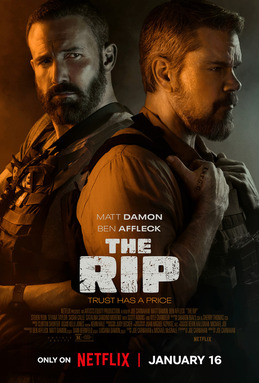
The Rip – Review

Cert – 15, Run-time – 1 hour 53 minutes, Director – Joe Carnahan

After discovering much more money than expected in what’s believed to be a stash house, a narcotics team experience rising tensions against paranoia that one of their own is setting them up for their own gain.

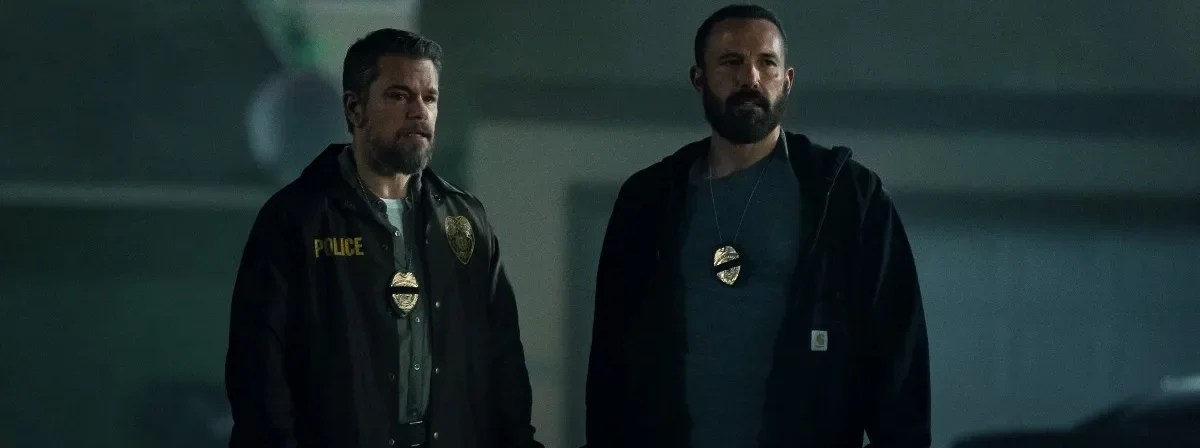
Since being labelled as a sort-of double act there’s grown an expectation that a project that sees Matt Damon and Ben Affleck together on-screen will have a sense of fun. The Rip sets out to flip this idea on its head with an ultra-serious police thriller about suspicion and corrupt cops. The pair, in the roles of lieutenant and detective sergeant respectively, circle each other and their fellow narcotics detectives, a team who are less back-up and more the film’s substance, suspecting that one of them is behind the murder of a fellow officer and is attempting to set up the rest of the team with the current operation.

That operation is the discovery of stashed-away drug money which turns out to be a few million more than the couple of hundred thousand expected. With the homeowner (Sasha Calle) tied up the team – which also includes Teyana Taylor, Steven Yeun and Catalina Sandino Moreno – get to work counting and trying to get to the bottom of the situation, with other departments often adding to the tension. As fingers are indirectly pointed and suspicions rise there’s a rising tension to be found as Carnahan turns the heat up on the characters, largely containing them in the house with conflicting back and forths.


While sold on the two macho, bearded leads (who also produce), with Affleck turning in a performance that maintains the over-seriousness of the film before we arrive at the home of Calle’s Desiree, it’s the interactions and uncertainty of the supporting cast who manage to spin the film into what it is. Creating an engaging throwback thriller which largely contains its characters and tension. Although occasionally leaking out into the street, one scene involving Damon and Yeun walking in the middle of the road is successfully suspenseful the longer it goes on, with help from Clinton Shorter’s rising strings.

However, when things completely move outside there’s a far less contained nature to the film. It tries to barrel along but amongst its developments gets caught under the weight of keeping track of its own narrative and in doing so takes itself too seriously again. It dampens the tension and overall enjoyment there is to be had from what is otherwise a well worked on paranoid thriller, set against backdrop themes of modern corrupt cops – our introductions to the characters and their ways of working aren’t for making us like them, they’re for making them all seem like they could be the one working against the team and bringing the police a bad name.

When focusing on this there’s a well-constructed film at play, and one that rises a good deal above the initial impressions. Unfortunately, things are knocked back, although not to a point of dullness, when the film tries to reach grander, more twisty levels that feel as if they have to match the visual darkness of the piece rather than complimenting them in a more contained space and atmosphere.

When largely contained to one area there’s a rising tension to The Rip that makes for a gripping paranoid thriller made by its supporting cast. When outside of that environment it dampens its effect with a brooding atmosphere that takes itself too seriously.

Rating: 3 out of 5.

LFF 2025: Straight Circle – Review

Release Date – TBC, Cert – TBC, Run-time – 1 hour 48 minutes, Director – Oscar Hudson

Two soldiers (Elliott Tittensor, Luke Tittensor) from rival countries are stationed in the middle of the desert, as tensions grow between them the lines that separate them blur as they question who each other are.

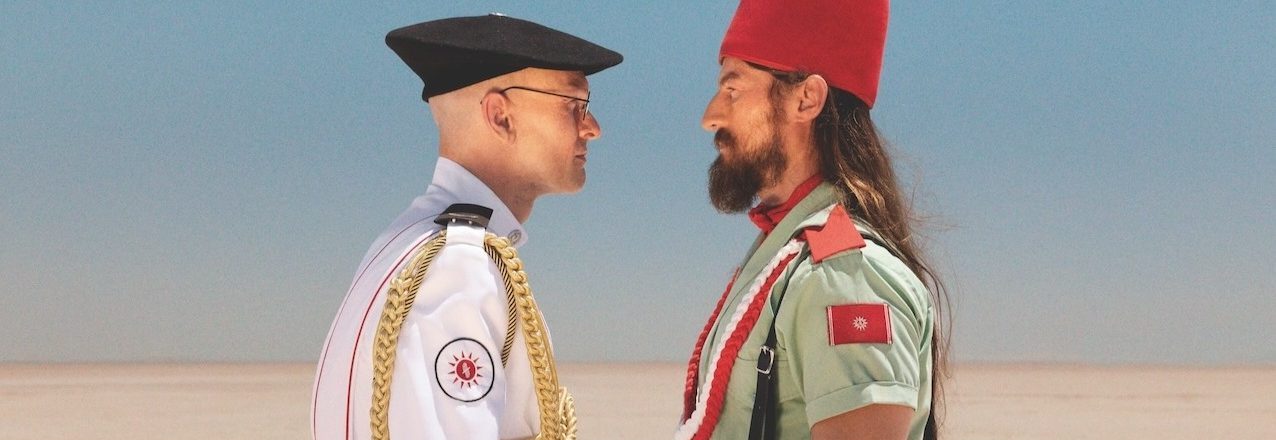
The split-screen opening of Straight Circle shows two rival military parades. Each trying to be the loudest, grandest and most patriotic of their respective countries. War may not be taking place between the pair, but there’s certainly an ongoing feud to prove which country has the most strength and power. It’s not the only time the split-screen style will be used in the film, although when it later appears its less for amusing bickering and more to get across the strange descent the central characters go through as the lines, and indeed border, that separates them start to blur.

Luke and Elliott Tittensor play the two soldiers, one from each country, stationed in a cramped hut in the middle of the desert, tasked with small tasks that appear to resemble very little. As one puts it “we’re guarding dust for politicians.” Yet, despite this, the pair have their own personal domestic disputes to attend to; such as where have the boiled eggs gone? Their attitudes and humour represent a grumpier version of Bottom’s Eddie and Richie.

Yet, the handful of enjoyably silly moments that we get, each captured in a very British vein, between the pair soon sees the humour fade as a more sinister tone comes in. Twists and developments start to settle in which cause the pair to question who they are, and the other person, and what their roles are actually meant to mean. As the film enters much more surreal territory it starts to move on from the feeling that things could perhaps work better as a short film, and are perhaps helped from having gone in knowing very little apart from the brief synopsis which suggested the initial satirical elements – which themselves are certainly effective.

While the humour may fade, and be missed, where the tonal shifts best succeed is in feeling as if they’re from the same film while still being so different to what comes beforehand. They’re well handed by writer-director Oliver Hudson and editor Fouad Gaber. Yet, the film as a whole still feels as if it could be trimmed down, and slightly better condensed, once the twists start to properly cause a mad descent for the characters. The full effect doesn’t seem to come through as stretched nature of the run-time starts to take over the closer to the 2-hour mark the film gets (eventually clocking in at 108-minutes when screened at 2025’s London Film Festival).

As the satirical edges start to be worked more into the surreal beats there’s a bit more grounding that helps to see them through beyond simple interest, but these tones are mostly present in the more straightforward elements of the first half. When the petty feuds between the two central characters, stuck together in a confined space, bring about a good handful of chuckles before their twisty (in multiple senses of the word) descent.

While it might forget the laughs as it goes on, the surreal beats of Straight Circle help to push it on for a good while before the overstretched run-time starts to impact. A likable satire that occasionally needs to recover when it ideas go on for a bit too long.

Rating: 3 out of 5.

28 Years Later: The Bone Temple – Review

Cert – 18, Run-time – 1 hour 49 minutes, Director – Nia DaCosta

Now on the mainland, Spike (Alfie Williams) is brought into the sadistic gang of Sir Jimmy Crystal (Jack O’Connell), whilst Dr Kelson (Ralph Fiennes) pieces together a discovery that could cure the Rage Virus.

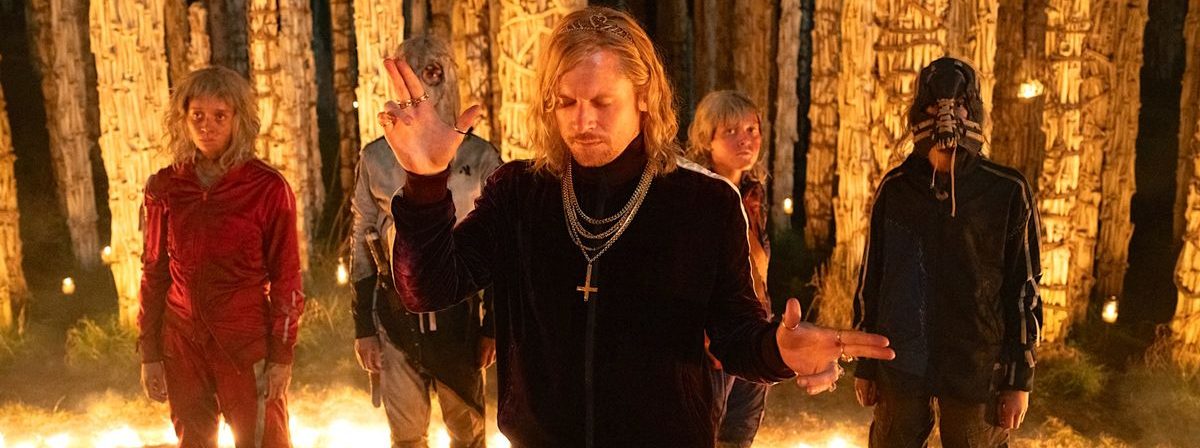
Despite where we leave him at the end of 28 Years Later, and the fact that this sequel trilogy is linked by his presence, Spike (Alfie Williams) feels like more of an observer than a main character in follow-up The Bone Temple. Screenwriter Alex Garland instead focuses on the light and shade of post-apocalyptic Britain via two other characters introduced in the previous film. The look for hope and peace provided by Ralph Fiennes’ returning Dr Ian Kelson as he tries to look for a cure for the Rage Virus, using Alpha infected Samson (Chi Lewis-Parry) as an almost patient, is contrasted with the sadistic cult of self-titled Sir Lord Jimmy Crystal (Jack O’Connell) and his gang of tracksuit and wig wearing Jimmys.

In this world where culture stopped in 2002, and therefore Jimmy Savile’s spree of sexual abuse was never properly uncovered, the Teletubbies get a handful of mentions, but the inspiration for this dress feels somewhat sidestepped from – especially considering how much Boyle spoke about it whilst promoting the previous entry, and its final stages. Yet, the look still brings an unsettling feeling in itself to the gang and their cult-like behaviour. There’s a sinister air that hangs thick over them and their activities labelled as ‘charity’ – each handing over the film’s 18 rating with ease. These scenes alone make The Bone Temple a much darker sequel to 28 Years Later, with O’Connell’s Crystal providing a much more tense and uneasy sense of fear to the fast-paced attacks of the infected.


Often we cut from this group to Fiennes’ Kelson as he talks to the towering infected he’s formed something of a bond with, whilst also amusingly singing Duran Duran songs. The patches of humour we naturally find with Kelson add to the lightness that his strand largely produces, at least when the characters are kept separate, and the search for peace that he seems to be after. When the two forces meet, leading into a fiery third act, there’s a true clash on-screen that finds fuel in what has come before it in the run-time. This is a simpler and more rounded story than last time, and one that in some ways feels more certain and better off for that fact. Allowing director Nia DaCosta, taking over from Danny Boyle, to bring out that threat at hand as characters meet and feel proper fear for the first time in many years.

It might take some time for things to properly come together and not everything sits comfortably in the confines of the film, some of the moments with Samson feel as if they may be expanded on in the now confirmed third entry in this trilogy but feel somewhat disjointed; or perhaps simply cutdown, in this second outing for Spike who only gets a couple of brief scenes for his own story this time around, it feels. Yet, as things come together there’s a more enjoyable film than in last year’s effort. One with more effect and overall fear factor, perhaps as an effect of having the world building out the way with, something which 28 Years Later was held back by.

The Bone Temple’s contrasts are intentional and they make for a bloodier, more sinister time. One that may not have all elements working alongside each other, and sometimes seems to forget the protagonist who links the two central characters of this sequel, but improves upon itself as it goes on to land an effect spawned from the very different attitudes and efforts of two very well performed, highly contrasting figures who have responded to the Rage Virus, having broken out at different stages of life and against different backgrounds, in very different ways.

A more brutal and intentionally contrasting story, 28 Years Later: The Bone Temple has a sinister air hanging over it that brings unease and tension to the darkness at hand. Showing the dark and light with great help from Fiennes and O’Connell, this is a bloody, fiery step up from last time.

Rating: 4 out of 5.

H Is For Hawk – Review

Release Date – 23rd January 2026, Cert – 12, Run-time – 1 hour 55 minutes, Director – Philippa Lowthorpe

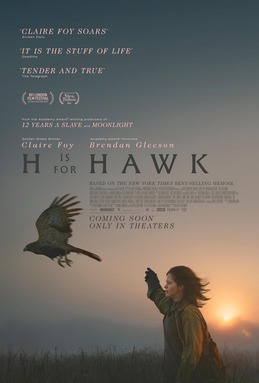
Helen (Claire Foy) grew up watching for hawks with her father (Brendan Gleeson), after he passes away she buys one. However, as it helps her through grief her connection with the bird starts to isolate her.

It feels odd to refer to a performance such as Claire Foy’s in a drama like H Is For Hawk as joyous. The film itself isn’t joyous, but there are moments of uplift for central figure Helen (Foy) as she develops a bond with the goshawk, named Mabel, she’s bought in the wake of her father’s (Brendan Gleeson) death. In these moments Foy captures a joy which truly gets across the healing that she feels from training Mabel, despite also saying that the bird is of a non-affectionate species.

Yet, the more time Helen spends with Mabel, starting to put her lecturing work at Cambridge and friends and family aside, means that she becomes isolated, and appears ill. Increasingly pale and slightly lost the effects of grief weight more heavily on her, and she appears to know it. Much of this is lifted by Foy giving one of the best performances of her career, and in many ways making the film what it is. Capturing the inheld, unhealthily leaking pain her character feels in the wake of losing her father, with a number of flashbacks to their bond watching for hawks and taking photos together and a slight warmth brought by Gleeson.


Yet, as we see the shifts that Helen goes through in the wake of loss the film can occasionally seem meandering. Yes, there are plenty of nice, and sometimes entrancing, scenes involving Mabel being trained – or some nature-documentary style sequences involving her hunting – but the way the film moves from one point to another can sometimes feel a bit slower than perhaps intended. At just under two hours there is a slight sense of the run-time throughout, even if things do generally manage to move forward smoothly enough to see them through, and with enough engagement throughout.

And while the film can occasionally feel a bit too slow, and at times muted, there’s still an emotionally affecting close. As Helen speaks at her dad’s funeral, photos from both his career as a news photographer and hobbies being projected next to her, I found myself tearing up more than I have done at a good number of other films for quite some time. Perhaps this was solely because of Foy’s performance, which, again, elevates the film and helps to keep engagement as director and co-writer (with Emma Donoghue) Philippa Lowthorpe keeps consistent focus on her, this is her story after all (adapted from the real Helen MacDonald’s autobiographical book of the same name). It’s Helen who keeps us engaged in the events that unfold, largely avoiding a feeling of familiarity. Especially helpful during the film’s quieter and slower moments.

Claire Foy elevates the emotion and overall engagement of H Is For Hawk with one of her best performance to date, helping get over some of the more drawn out and muted moments with a turn focused on by Philippa Lowthorpe that locks into the emotions.

Rating: 3 out of 5.

LFF 2025: ChaO – Review

Release Date – TBC, Cert – TBC, Run-time – 1 hour 30 minutes, Director – Yasuhiro Aoki

After falling overboard, ship worker Stefan (Oji Suzuka) finds himself getting married to princess of the merpeople, ChaO (Anna Yamada). However, will his uncertainty about the relationship break peace between the land and sea?

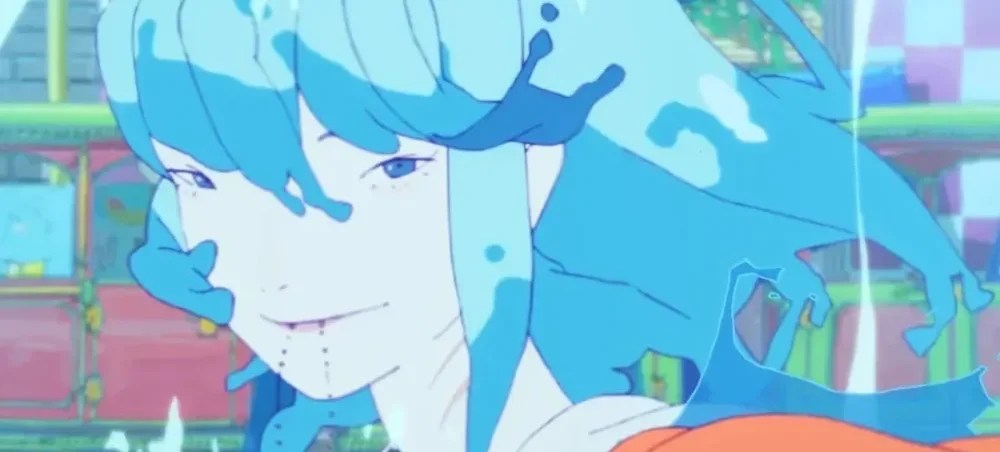
Reporters have swarmed around young Stefan (Oji Suzuka) asking him if he’s consummated his new marriage to princess of the merpeople ChaO (Anna Yamada). The engagement itself came after the giant orange fish-person, appearing largely in fish form, saved Stefan after he fell overboard from his job on a ship – working for a major company in the hope of one day designing a safer, better ship. Seeing an opportunity to finally bring peace between the land and the sea – stopping attacks from King Neptunus (Kenta Miyaki) – a wedding between the pair is fast-tracked, with the eager encouragement of Stefan’s boss (Ryota Yamasato). Even after all of this it still takes Stefan some time to say “things are getting crazy.”

So much of this course is captured with a breezy lightness that brings through the frequent laughs and chuckles that are all part of the colourful world that feature debut director Yasuhiro Aoki and his team of animators have created. Aoki was a key animator on The Lord Of The Rings: The War Of The Rohirrim, a very different looking and feeling film to ChaO (pronounced ‘chow’) which has a much bubblier feeling with as much detail in the futuristic world.


There’s a constantly moving nature to the narrative that fuels the frequency of the laughs as the absurdity of the narrative is acknowledged without being dug up or poked at. All helped by the way in which the world comes across and how easy it is to be immersed in it.

Much of what we see is told in flashback by an older Stefan to aspiring journalist Juno (Shunsei Ota). With Stefan’s story being the bulk of the film it does feel as if the details we get of Juno’s arc are ended very abruptly, and somewhat weirdly, perhaps also an effect of the 90-minute run-time, which itself is no bad thing and most of what we see if effectively condensed into. Including the stages of the final act which increases the growing threat faced by Stefan and ChaO in the uncertain state of their relationship and its constant push and pull. Although, amongst this a sense of heart starts to grow as things develop between the pair. Yet, the protagonist still finds himself worrying about what his marriage to a stranger, who just so happens to be princess of the fish people, means for maintaining peace and his won future.

Where this eventually develops has some true video game final boss style to the tone and look of the eventual action towards the film’s close. Yet, still slotting in with what has come before and the overall style of the film. One that provides plenty of light entertainment and laughs over the course of its short run-time that truly captures the colour and energy of the world in which the embraceable chaos unfolds.

A film that knows and embraces its absurdity to boost the humour in its colourful, futuristic world. There’s a good deal of entertainment to be found within ChaO and the heart found growing in the central relationship.

Rating: 4 out of 5.

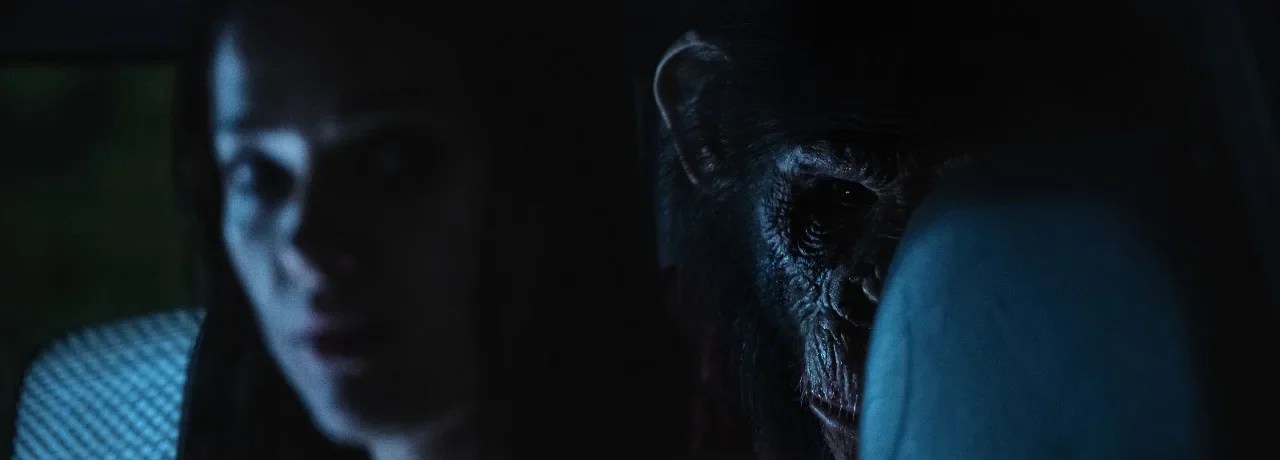
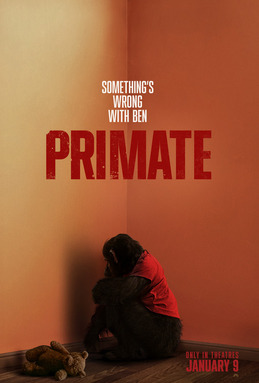
Primate – Review

Release Date – 30th January 2026, Cert – 18, Run-time – 1 hour 29 minutes, Director – Johannes Roberts

After being infected with rabies a chimpanzee (Miguel Torres Umba) turns deadly and terrorises the family that owns it, and their friends, in their isolated home.

There’s only so far you can take a film like Primate. The story of being trapped by a friendly-turned-deadly pet is somewhat familiar, and when confined to an isolated home on the cliff-edge of a Hawaiian island is also limited. That point where the film can’t go much further arrives about 20 minutes in when the central group of young friends are trapped in a swimming pool, looking over the rocky edge, with chimpanzee Ben (movement specialist Miguel Torres Umba) lurking around it, ready to attack at any moment.

And his attacks are, while brief and sometimes shown slightly off-screen, despite the film’s 18 rating, brutal. His first attack in the first few second happens in darkness until the camera pushes in and reveals a victim with his face half ripped off. It’s a grisly opening that promises a good deal more to come. While that’s not quite the case as the friendly chimp quickly turns deadly after catching rabies there are still some moments of dark-red splatter, or perhaps rather puddles. Yet, because of the infrequency some of the sudden bursts into violent horror can feel somewhat overblown within the confines of the film.


We can tell from the point Lucy (Johnny Sequoyah), younger sibling Erin (Gia Hunter) and friends Kate (Victoria Wyant), Nick (Benjamin Cheng) and slightly distanced Hannah (Jessica Alexander) first land in the pool just who’s going to survive and who won’t. And it’s not entirely a matter of in what order they won’t, just when. The film appears to lean into that fact as it knows you’re waiting for the next kill and so puts focus on that fact without building up tension, simply promising that there will be more along the way at some point. Although occasionally when they do the editing is so frantic that the bloody details seem to be shot around and the possible intensity and general effect of the slaughter lost.

In this regard there’s a very simple frenzied ape horror at play. There’s no background or layered or additional themes, and it doesn’t try to include any of these. And that’s not a bad thing. A simple piece of popcorn horror cinema is nothing to be sniffed at or seen as negative. And Primate is perfectly fine. Yes, perhaps a bit too slim, and it certainly reaches as far as it can go within the first half an hour, although maintaining a sense of threat and occasional intrigue rather than tension, but it does a decent enough job of keeping things going for 90 minutes. Largely with the promise of more horror around each corner. You know what you’re going to get and you get it in a tight 89-minute run-time. It just feels as if it had a bit more space it could have that bit more intensity and entertainment factor.

You can see the limits of Primate’s simple narrative and setting very early on, and it hits those not long after. While it could be a bit more intense and entertaining, what there is passes the short run-time well enough without gaps between kills feeling too overstretched.

Rating: 3 out of 5.

LFF 2025: Hamlet – Review

Release Date – 6th February 2026, Cert – 15, Run-time – 1 hour 54 minutes, Director – Aneil Karia

Modern day telling of Hamlet, where Prince Hamlet (Riz Ahmed) seeks revenge for the murder of his father (Avijit Dutt) whilst being caught in familial ties and tensing relationships.

This modern day telling of Hamlet marks perhaps the most walkouts I’ve seen in a press screening to date. And I don’t think it’s an overall sign of the quality of the film, but more the mood of the press and industry audience nearing the closing days of the 2025 London Film Festival and not quite being in the right frame of mind to close the day on a Shakespeare adaptation that updates the setting but not the language used.

I’ve spoken before about my difficulties to properly engage with the language, but with the right performances the meaning can still be understood and conveyed and followed just as simply by a modern audience as if the language had been updated. Denzel Washington and Frances McDormand’s turns in Joel Coen’s The Tragedy Of Macbeth being perfect recent examples. Perhaps the problem is that in this modern day telling of Hamlet – featuring such sights as Wren Kitchens, The Big Yellow Self Storage Company and good old British industrial estates – single performances encapsulate a variety of styles. While good turns, the likes of Riz Ahmed – leading as Prince Hamlet in his search for revenge after his father’s (Avijit Dutt) murder) – and Timothy Spall, playing Polonius, feel as if they switch between acting for stage and screen, with modern and traditional elements of recital and performance. It’s a feeling brought up by many of the core cast members in the film.


Where the performances best succeed is in a physical sense, something which director Aneil Karia translates to the environments the film takes place in. Moving events between locations, and generally using them, to stop things from becoming stagnant. The ‘to be or not to be’ speech is a scared battle with inner thoughts as Hamlet speeds down the motorway in his car, foot pressing down further on the peddle the more he questions his life and sanity.

To pair with the physicality which stands out so much in this screen adaptation moments of silence are where the most power is found. For all the performance(s) in the film, quietness is where it finds the most success, even in scenes with plenty of dialogue there can still occasionally be found a quietness that has a strong effect. Getting across more than much of the speech. Yes, it could be said that these moments are what push the run-time, which itself at just under 2-hours is felt, but they’re the most understated and appreciated moments in a film that often finds itself struggling to properly engage a wider audience due to not quite getting past the Shakespeare ‘language barrier’.

Physicality in location and performances pairs well with quietness to create a push in this modern day telling of Hamlet, yet the slow pacing means that keeping the original language, with actors displaying a mixture of performance types, may still prove a barrier to proper engagement for some.

Rating: 3 out of 5.

Giant – Review

Cert – 15, Run-time – 1 hour 50 minutes, Director – Rowan Athale

‘Prince’ Naseem Hamed (Amir El-Masry) rises from matches in front of racist club audiences in 80s Britain to world champion boxing, however over time rifts form with his trainer, Brendan Ingle (Pierce Brosnan).

“Same story, different actors” says Alma Ingle (Katherine Dow Blyton) as she notices the rift already forming between her boxing coach husband, Brendan (Pierce Brosnan), and his latest prodigy ‘Prince’ Naseem Hamed (Amir El-Masry). Having trained together since Naz was seven the bond the pair once had appears to be fading as the boxer gets further into the professional world. The observation of a familiar story is certainly one that I agreed with as the markings that make up Giant’s story felt just so while watching it.

Instead of focusing on El-Masry’s character much of the film is told through the eyes of his trainer. Brendan consistently pushes his past as a boxer, although how successful he was seems to be overstated, and starts to ask for a bigger cut of the winnings from the man he made as skilful as he is, in line with what other trainers ask for. It’s this that truly kicks off the arguments between the pair. Yet, around these moments the film seems to switch perspectives between the two leads. Whether this is meant to be largely one person’s film or both starts to tangle as who we’re meant to feel empathy for and who the ‘bad guy’ is meant to be constantly flip-flops. The tone suggests that at least one person must be, but just who that is never feels solid due to that figure changing in line with the viewpoint we’re seeing things from.

When focusing on Brendan the film certainly feels most confident. There’s a slightly more relaxed tone that sits more comfortably in line with the figure, despite Naz having the potential for more dramatic weight as he grows up fighting in northern English clubs of the 80s for racist audiences – scenes which provide a number of grating child performances – growing to fight for world champion titles; where we finally get El-Masry conveying the arrogance ingrained in the boxer. Brosnan gives a good performance and tries to bring a layer of warmth to the conventional beats of the script and the more unsubtle moments.


The boxing sequences are intentionally flashy, but this comes at a cost as they’re edited and shot in a way that tries to put the action front-and-centre but removes its effect from cutting at each moment so that an attempt at a punch suddenly appears to have been nowhere near the opponent, or the action is simply made more jumpy and difficult to follow. A particularly issue when Naz’s dance-like footwork is said to be his greatest skill, providing his abilities with a strong fluidity which the edits stop from coming across.

As things move on, and the rift truly comes more to the fore in what turns out to be the third act, character is clearly at the front of Giant’s mind. While occasionally things might conflict when it comes to perspective there’s still a film that does a solid enough job here. One that works, and manages to have a good handful of engaging moments; helped along by small beats of humour, in fact a good amount more than I would have expected going in. It helps to bring a bit more pace to some of the slower scenes, largely because of the blend of familiarity and uncertainty when it comes to how characters are supposed to be viewed.

There’s a good film in Giant, and one that for the most part, despite its bumps, passes by fairly well. However, with a good deal of stumbles it doesn’t make for the smoothest of rides. Occasionally feeling like two biopics about the same events that have been melded together both of them are decent enough, but they can start to spar with each other for control of the frame. Meaning that the character drama at hand doesn’t always get the room it perhaps should have to properly breathe. There’s some space allowed by the elements of familiarity, but not enough for the film to properly move around.

With two perspectives uncertainly conflicting, while watchable and having some likable moments of character drama thanks to the two lead performances, Giant feels held back by its style and editing from properly landing a punch.

Rating: 3 out of 5.

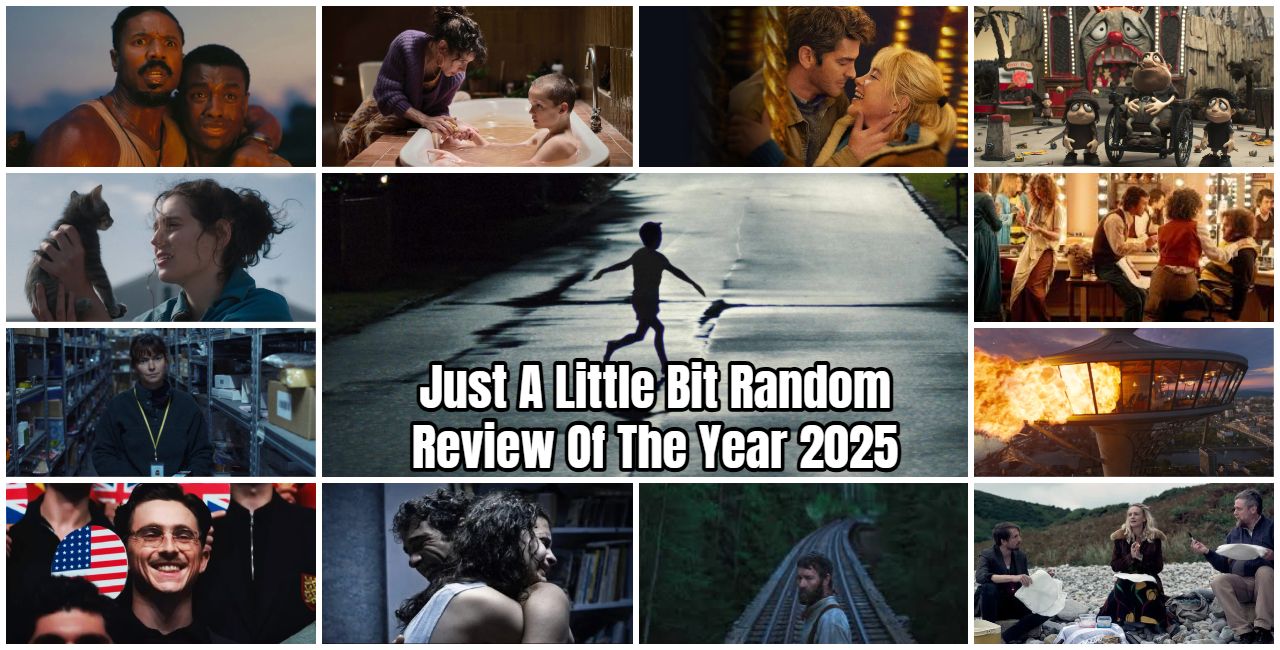
Just A Little Bit Random Review Of The Year 2025

Film journalist Tom Beasley once again joins me to count down our respective top ten films of the year lists, this time looking back at the best films of the year that was 2025. Covering smart horror films and a good number of indie films about people being sad, with some plain silly and feel-good films, alongside slight disagreements, in-between. All part of looking back on our best and favourite films of 2025.

To find more from Tom check out his Instagram and Bluesky.
If you want to listen to his song requests follow the links below:
Crazy Little Thing Called Love – Queen
Johnny B. Goode – Chuck Berry
Rhinestone Cowboy – Glen Campbell