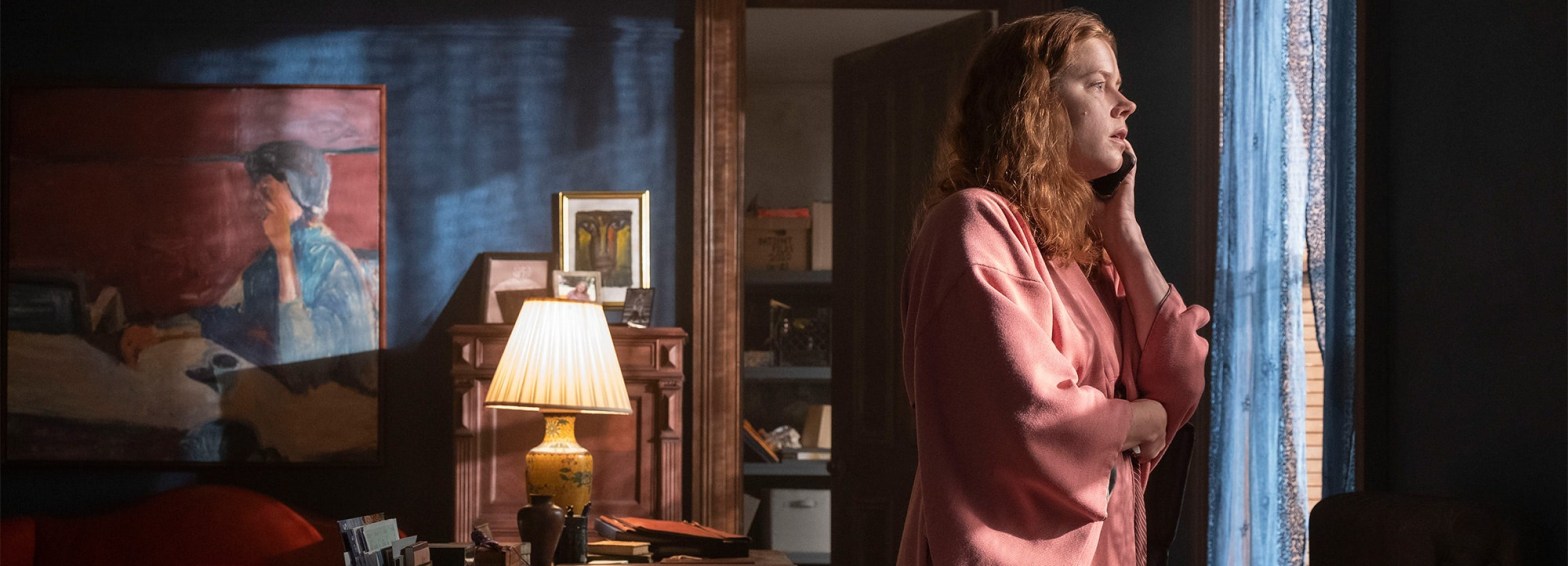
The Little Things – Review

Cert – 15, Run-time – 2 hours 8 minutes, Director – John Lee Hancock

A former homicide detective turned small-town sheriff (Denzel Washington) teams up with a young California detective (Rami Malek) to track down a serial-killer whose murders match those from a previous case he oversaw.

How can you tell when a character is a psychopath? A twisted serial-killer that needs to be locked up? Films have many different ways of showing us this. Sometimes it’s down to the performance, sometimes the direction, a camera angle or the specific lines of dialogue in the screenplay. In John Lee Hancock’s latest, The Little Things, the answer to the question is when Jared Leto asks for “pineapples and jalapenos” on a pizza. The film attempts to keep the nature of Leto’s wild-eyed, rarely blinking character ambiguous, you’re supposedly meant to decide for yourself whether he’s a killer or not – his performance certainly alludes to the fact that he is. Either way fellow Academy Award winners Denzel Washington and Rami Malek are close on the case following him closely, from just after the hour mark onward.

Washington plays Joe Deacon, a former homicide detective turned small-town sheriff. When a number of murders similar to ones he investigated years before crop up he finds himself pairing up with detective Jim Baxter (Malek). The two travel throughout the county to the sites of new victims of a mysterious killer, going from scene to scene seemingly arriving at a dead end each time. While the content might have a feeling of a fairly by-the-numbers mystery-thriller it’s elevated by the two central performances.


Yet, even with the two performances that lead the feature there’s still a fair deal that the screenplay doesn’t quite delve into enough. Various hints to the past of Washington’s character during his time in the city are only briefly shown before either being forgotten about or left too long for any major interest to be formed around them. There’s a lack of impact because of this and the overall emotional engagement with the film dims. The idea that seems to be held on to for the longest amount of time, is the belief that Jared Leto is possibly the killer – in the eyes of Baxter and Deacon anyway – and the investigation into him. It might come in late into the film, and certainly be the point where it begins to weaken as it goes on; feeling more and more like a late-90’s, early 2000’s crime thriller, but it’s absolutely what the film focuses on most, which to an extent removes some of the mystery of the first half of the film for the, not as successful, mystery of a potential suspect.

This all coming from a screenplay that feels as if it comes from such an era, and hasn’t had an updated draft since. Featuring lines of dialogue such as “your d!ck is harder than Chinese arithmetic” before moving swiftly on to the rest of the scene. It’s all part of something that feels overall underdone and lacking. While it starts off fairly middling, if already dated, there’s a continuing spiral-like decline as the film repeats itself, forgets ideas and simply seems to delve into something different every so often in ineffective mystery. The biggest emotional response is that to the film’s most disturbing content, Jared Leto’s character’s pizza order.

The Little Things suffers not from a lack of focus, but from that which isn’t focused on enough, creating an overall feeling of something missing or not explored enough in the film, that which we do get unfortunately can’t be lifted by the central performances of Washington and Malek.

Rating: 2 out of 5.

Raya And The Last Dragon – Review

Cert – PG, Run-time – 1 hour 47 minutes, Directors – Carlos López Estrada, Don Hall

Raya (Kelly Marie Tran) has spent years trying to find the last dragon, Sisu (Awkwafina), in the hope of reassembling a gem that will remove the threat of the consuming force of the Druun.

In the past Disney have delved into the realms of Sherlock Holmes style characters (Basil The Great Mouse Detective), dark(ish) 80’s family fantasy (The Black Cauldron) and even explored video games (Wreck-It-Ralph). It’s surprising to think that it’s taken the studio 60 films, and 84 years, to create a piece with a truly adventurous exploration core to it. Their latest hero, Raya (Kelly Marie Tran), captures such spirit as she scours the South East Asian inspired regions of Kumandra for the last surviving dragon, Sisu (Awkwafina). There’s a richness to both the design and the animation of the various landscapes that we visit throughout the piece, whether sea-side markets or trap-laden caverns Raya acts as a fighting presence potentially amongst explorer ranks such as Lara Croft and Indiana Jones, above the likes of Dora (even in The Lost City Of Gold) with her higher degree of age-based universality.

Raya, alongside her ‘furrbug’ – an adorable hamster-armadillo hybrid – named TukTuk (Alan Tudyk), searches for Sisu in the hope of igniting the power within the shattered sections of a gem which once helped to ward off the purple-black fog-like force of the Drunn. Humans and dragons once lived in harmony in Kumandra, however when all but one dragon used their powers to create the gemstone – which now resides in secured pieces in the individual lands of each of Kumandra’s divided tribes. With the gemstone, and peace alongside it, broken, the Druun returns; enveloping whoever may be near it and turning them into a solid stone statue. Much of this detail is explained the build-up and exposition of the initial half hour of the run-time. It’s once the delightful Awkwafina arrives that the ball truly begins to get rolling.


For starters, there’s less reliance on comedic asides. While TukTuk is a strong character who may very well shift a lot of merchandise – and rightly so! – there are a great deal of moments in the early stages of the film where after the main action of the scene there’s a quick cut to him at the end of the scene for comic relief before moving on. Once we’re introduced to Sisu the comedic beats come more naturally in the form of dialogue while the plot progresses with more ease. The adventure form may be somewhat simplistic as we go from area to area in the dragon-shaped land, however writers Adele Lim and Qui Nguyen manage to avoid an episodic feeling, especially with the unique feel to each tribe’s area – all contributing to the overall feeling of the piece, which is held in place fairly well throughout.

If there’s one major element lacking from this piece it’s that of an opportunity to be able to see it on the big screen. Like many of Disney Animation Studios recent ventures this is a film made to be relished on the big screen, especially with, amongst the detail, the hints of action that come with the exploration of the world that is created. And while this works well on the small screen and certainly still has an impact; Raya is every bit as much of a triumphant character as she could possibly be and the films messages of unity and trust are made perfectly clear as the narrative develops, the command for something large to view this on. Yet, it speaks to how much of an engaging and enjoyable adventure Raya And The Last Dragon is that it works as well as it does on the small screen. Perhaps it’s down to the world that the brave and heartful central characters find themselves in, perhaps its such figures themselves. Whatever it might be there’s a lot to like about this particular Disney feature. It has their conventional markings, while also having a slightly different, more adventurous, feel to some of their previous efforts, with Tran’s Raya continuing their growing line of strong, engaging, female characters.

Kumandra serves for a world as detailed as the animation that brings to life the delightful characters at the heart of Raya And The Last Dragon’s other exploration of trust.

Rating: 4 out of 5.

Locked Down – Review

Cert – 15, Run-time – 1 hour 54 minutes, Director – Doug Liman

A married couple (Anne Hathaway, Chiwetel Ejiofor) whose relationship is cracking during lockdown plan a diamond heist.

Bad internet, relationship frustrations, bread-making and the extent of the effects of boredom are all elements of lockdown that have been poked fun of countless times over the past year. They’ve been the subject of a handful of stand-up sets, podcast conversations, TV show segments and more, and now it’s time for the film treatment. Anne Hathaway and Chiwetel Ejiofor both go through such events in lockdown comedy – the aptly named – Locked Down. It would be easy for such jabs and jokes to already feel old and monotonous, yet there’s something about director Doug Liman’s latest that feels enough of the moment to make it a worthwhile, mildly humorous, watch.

Perhaps it’s down to the central performances of the central pairing as a married couple struggling with their relationship during lockdown. Fashion CEO Linda (Hathaway) and delivery driver Paxton (Ejiofor) find themselves with a number of different stresses during the pandemic. Linda worries about having to send employees on furlough, or laying them off, and breaking the news via Zoom; meanwhile her husband suffers from lockdown boredom, barely having anywhere to drive to and spending most of his time inside. It’s not long until the urge to bake arrives, soon after he emerges into his street to read poetry late at night – to varying responses. Yet, it’s not long until the pair are met with a task that they can finally work on together, stealing a £3 million diamond from Harrods.


Throughout the planning process, which comes late in the film after we’re acquainted with the lives that may very well match our own, and a fair deal before the film is scattered with a number of famous faces, some as small supporting cast-members, others as brief cameos. From the likes of Ben Stiller and Mindy Kaling to more homegrown talent such as Stephen Merchant and Mark Gatiss. Luckily, the film avoids a feeling as if it’s simply trying to cram in a showcase of celebrity appearances for the sake of laughs, there’s a lack of a showy feel and they manage to simply exist as characters on the occasional video call that add to the frustrations of the central two figures, simply adding to their worries, stresses and growing use of cigarettes.

Once we finally get to the heist the laughs may die down as the plot finally begins to take form, in the second half of Steven Knight’s screenplay. At 114 this is a slightly too long film, once again proving that comedies should try, as much as possible, to stick to the 90 minute rule – while amusing, there are a number of moments that focus on small sections of the pairs lives that don’t overly impact the film. They push the run-time on and cause it to be truly felt as the main case of the ‘action’ takes place, leading the film from going to rather good to fairly average. While the performances are still good, and capture the needed lightness for the situation at hand – creating something enjoyable and of the time – the events in the outside world are surprisingly less entertaining than what we seem to have been living through for the last year.

Locked Down is certainly a film made up heavily with observational comedic beats. Held up by Hathaway and Ejiofor’s performances there’s a light helping of amusement to be found here, even when the film does eventually divert into its heist premise.

Rating: 3 out of 5.

Judas And The Black Messiah – Review

Cert – 15, Run-time – 2 hours 6 minutes, Director – Shaka King

Car thief William O’Neal (Lakeith Stanfield) is brought in by the FBI and sent to join the Black Panther Party, where he begins to get close to Illinois leader Fred Hampton (Daniel Kaluuya).

It’s clear that one day both Lakeith Stanfield and Daniel Kaluuya are both going to win Oscars. Since their leading performances in Sorry To Bother You and Get Out respectively (Stanfield appearing in both) their careers have only gone on to greater heights. While it’s likely that Kaluuya will only get, deserved, recognition for his alleged supporting – he’s every bit as much the lead as Stanfield is – role in Shaka King’s Judas And The Black Messiah, co-written with Will Berson, by the time you read this this year’s nominations will have been announced, there’s no denying how much the two performances elevate the passionate heart of the film. 

Stanfield plays William O’Neal, a small-time car thief pretending to be an FBI agent. It’s not long until he finds himself brought in by the actual FBI, however instead of facing jail time he finds himself in an small interrogation room with Agent Roy Mitchell (a darkly quiet Jesse Plemons). O’Neal is recruited to join the Illinois division of the Black Panther Party, particularly close to their leader, the revolutionary Fred Hampton (Kaluuya). It’s here, especially when rumours of a rat begin to circulate, that his words “a badge is scarier than a gun” truly come into effect. It’s Hampton the FBI are after, holding large meetings in darkly-lit theatres, illuminated by a projection that makes the BPP leader seem like a large-scale threat. Their aim: to infiltrate them and stop the rise of a “black messiah”.


Loosely told from the perspective of a 1989 interview there’s a shaky regret in Stanfield’s voice as the older O’Neal still hasn’t come to terms with his time in the Black Panther Party. The film certainly has its elements of shock and suspense. Police attacks, raids and shootouts are often loud and tense. The gradual build-up makes such bursts punchier and make the events seem quicker, sometimes dealt in a swift blow, compared to the rest of the film, to truly get across the relentlessness of the scene and brutality of the police. 

And yet, there’s hope with the formation of movements such as the Rainbow Coalition, and the coming together of people from all sides of the black power movement – where once there seemed to be divide and tension, despite the charisma of Hampton’s words, and Kaluuya’s performance. Not to mention the bond that Hampton and O’Neal form, despite the latter continuing to keep his head down, or hunched, in slightly hidden fear he’ll be found out. However, if anything, such specific pacing and performance beats simply make for a larger degree of intensity when we arrive at some eventual fates that in the heat of the film we become unprepared for. 

Kaluuya and Stanfield lead a film as bold and powerful as their performances. While there’s hope there’s a balance of effective shock and tension that knocks the air from the viewer as they can’t help but watch in unprepared disbelief, thanks to Shaka King’s immersive pacing and detail. 

Rating: 4 out of 5.

Moxie – Review

Cert – 12, Run-time – 1 hour 51 minutes, Director – Amy Poehler

Quiet, 16 year old Vivian (Hadley Robinson) causes a wave at her school through her anonymous, sexism battling zine, Moxie.

The last two or three years have brought us an array of brilliant new teen movies. From the likes of Love, Simon, Eighth Grade and Booksmart to this year’s darkly comic Spontaneous. Moxie, although still with its comedic edges, takes a more frequently deeper, serious tone to the above. Throughout we follow Vivian (Hadley Robinson), a quiet 16 year old high-schooler happily going about her days until she meets new student Lucy (Alycia Pascual-Peña). From her first day Lucy battles against the sexism and harassment of her male classmates – predominantly by the uncomfortable presence and actions of outspoken jock Mitchell (Patrick Schwarzenegger). As a new version of ‘The List’ is released – labelling female students in categories such as ‘Best Rack’, ‘Best Ass’, ‘Most Bangable’ and ‘Most Obedient’ – Vivian, alongside many others in the school, decides she has had enough of this being ignored by everyone else in the school, including the Principal (Marcia Gay Harden).

A wave spreads throughout the school, fighting against sexist dress-codes and silent teacher actions, once a mysterious zine, entitled Moxie, is found in the girls bathrooms. Revolution starts and it only grows over the course of the film. While nobody knows it Vivian is behind Moxie, printing it in increasing amounts of black and white copies from a nearby copy-store. All of this inspired by stories of the leather jacket wearing, punk-feminism revolution actions of her mother (Amy Poehler) from her own school days.


Unlike the popularity divide represented in Poehler’s comedy partner Tina Fey’s screenplay for, rather different teen movie, Mean Girls this film, directed by Poehler – from a screenplay by Tamara Chestna and Dylan Meyer, based on Jennifer Mathieu’s novel of the same name – is very much about people coming together, no matter their status or background, to fight for a common cause. You feel the strength and unity of the expanding group as their demonstrations become prouder and more widespread. It’s difficult not to get caught up in the fire and the passion of not just the style and the themes of the film but the performances of the rising talent on-screen. Managing to convey the seriousness of the ideas that the film produces and the dashes of grounded humour that are spread throughout help to keep a feeling of natural conversation between the characters – particularly between Vivian and her best friend Claudia (Lauren Tsai).

As the second half arrives the film very much shifts focus from the group push aspect of things to the affect that Moxie is having on Vivian’s life. It causes a rift in her friendship with Claudia, who doesn’t take part in the demonstrations that are being encouraged in the zine, becoming distanced from her and closer to Lucy and classmate Seth (Nico Hiraga) – a noticeable figure in class after having experienced a large growth spurt over the summer. The laughs die down as Vivian’s situation becomes more personal and the fear that she will be found at as Moxie grows alongside the movement that she created. During this particular section of the piece a different kind of drama certainly comes through and while it doesn’t quite have the same energy and power as the core cause at hand it serves as a good, if lengthy, piece of character drama. It takes a while for the powerful efforts of the Moxie group to truly step towards the front of the stage again. However, when they do it’s a grand scale push that truly captures the spirit, heart, passions and understanding of the film. One where time has been taken to understand not only the issues, but the responses of the characters, individually and as a collective. This is a very different type of teen movie, a perhaps essential one. And, much like many recent teen movies, one that’s definitely worthwhile.

Personal relationship beats for the central character may not have the same punch as the finely handled power of the unified demonstrations throughout but, Moxie is still an enjoyable, interesting and fiery teen movie with passion and hope at its heart.

Rating: 3 out of 5.

Coming 2 America – Review

Cert – 12, Run-time – 1 hour 48 minutes, Director – Craig Brewer

Seeking a male heir to the throne of Zamunda, now King Akeem (Eddie Murphy) discovers that he has a son (Jermaine Fowler) living in America.

1988’s Coming To America marked the first time Eddie Murphy played multiple characters in a film (the makeup received an Oscar nomination, alongside Scrooged and eventual winner Beetlejuice), and provided us with a range of hilarious, memorable characters. Many of which (also played by Arsenio Hall) pop up for brief cameos in this sequel. Murphy returns as Prince Akeem, heir to the throne of Zamunda. The last thirty years seem to have been free of worries and stresses. However, his happily married family life, still with wife Lisa (Shari Headley) and three daughters, is interrupted when he is made king after the ceremonial passing away of his father (James Early Jones). It is revealed that he needs to find a male heir to the throne, in a country where women are not allowed to rule. Luckily, he has a, unknown to him, son in America from his late-80’s quest to find a Queen in Queens, New York.

Thus Akeem, with friend and aide Semmi (Hall), make a quick trip back to America where they find ticket resaler Lavelle (Jermaine Fowler). Just as soon as they arrived, the pair go back to Zamunda – bringing with them Lavelle and his loud mother (Leslie Jones), bathing in the glory and riches of royal Zamundan life. This is more Lavelle’s story than anyone else’s. Original Coming To America writers David Sheffield and Barry W. Blaustein, with Kenya Barris, focus on his rise to princedom, completing the tasks he needs to in order to become the heir to the throne – this is certainly less Coming To America, more Coming To Zamunda. This training causes rifts in Akeem’s family relationships, his wife angered by the appearance of the until now unknown Mary (Jones) and Lavelle – Headley seems assigned to the far diminished disapproving wife role – and eldest daughter Meeka (Kiki Layne), who could have otherwise possibly been the aim.


Zamunda is certainly a land that has potential and much to be explored, and it’s easy enough to get lost in the production design and Ruth E. Carter’s costumes, however, with all the plot elements the film holds there seems little room to properly invest in it. While the film tries to focus on Lavelle, Akeem’s story is still very much present as he worries about not just his future but that over the nation he rules, still holding outdated traditions to limit the authority of women. With all this going on in comes Wesley Snipes as General Izzi, the leader of neighbouring country Nextdoria – a joke which seems funnier on paper – himself trying to take control of Akeem’s land after his sister was made to look a fool by him through a failed arranged marriage. Izzi is attempting to arrange a marriage between his son or daughter to Akeem’s, after a number of grand, musical entrances into expansive halls and gatherings. Snipes is clearly having a great time being a part of this film and truly gets into his character – he’s a highlight of many scenes, what else would you expect from someone described as “the inspiration for Mufasa”? However, with little screentime, and not much to do, his character, like many, feels rather wasted.

This is all in-between catching up with multiple, slightly more wrinkled, faces such as Randy Watson, Rev. Brown and, of course, the residents of My-T-Sharp barbershop for flash in the pan appearances. The first 20 minutes of this sequel largely seem to call back to the original film, and use its high reputation to its advantage for various celebrity cameos. It takes a while to get going and admittedly there are some decent scenes throughout. Perhaps not a great deal of laughs, despite some good ideas and moments every now and then, but the film certainly isn’t unlikeable. The issues come in with the various plot elements, most of which call back to the original film – a particular line sees Akeem seem more like his father and Lavelle put into his father’s shoes from the 80’s. There simply seems to be too much going on, with a lot left in the background for lengthy periods of time, for the film to feel overall satisfying instead of muddled for focus – both in terms of story and character.

During the credits John Legend covers She’s Your Queen (occasionally equally high-pitched) from the first film, one of my personal favourite moments from the John Landis classic. Much like the sequel, it’s good, and calls back to the original film well enough, but seems to lack a full punch, and Wesley Snipes. Unlike the sequel it has one direct focus and doesn’t quite seem to be as busy with its content.

Coming 2 America is a busy sequel, in terms of its various characters, narrative arcs and throwbacks to the original film. There’s potential to explore and advance Zamunda from an outside perspective, and the film isn’t bad, but it feels muddled for focus even amongst the occasionally amusing throwbacks and original beats.

Rating: 2 out of 5.

LFF 2020: Rose: A Love Story – Review

Release Date – TBC, Cert – N/A, Run-time – 1 hour 26 minutes, Director – Jennifer Sheridan

Sam (Matt Stokoe) and Rose (Sophie Rundle) live in isolation in the hills above a small town, hiding a dark secret in their small cabin.

Director Jennifer Sheridan makes her feature debut with Rose: A Love Story, a film that adds to the increasing amount of features using horror elements and suggestions to heighten suspense and drama within a story. Throughout the film it’s hinted that Rose (Sophie Rundle) has something more than a mysterious illness. She lives in isolation, in a small cabin in the hills with her husband Sam (screenwriter Matt Stokoe). Sam only occasionally leaves to go to the nearby town where he buys supplies, petrol and other basic necessities. Although, largely they rely on what he catches when hunting in the area for food. There’s a deeply mysterious side to the pair and their odd behaviours – Sam regularly goes to casually read while leeches attach to his legs in a corner room – that adds to the potentially dark side of not just their relationship but their behaviours as a whole.

Throughout there are hints and suggestions that everything is not as it seems and that a dark secret is being kept. Over the short course of the narrative there’s an eerie sense to the couple – and Sam’s responses to conversations he overhears while in the town, there’s a risk that they’re going to be discovered and something bad, potentially uncontrollable, is going to be unleashed without warning. Sam’s behaviours and often fight-or-flight responses to everything around him create a shadowy figure and boost the potentially dark edge that the film holds, one which keeps you invested throughout.


If this were simply a two-hander, which for a number of scenes it is, then this may not work as well. While the scenes between Stokoe and Rundle work well and their shady performances work well together in some of the more intense sequences as the darkness and solitude of the living space seems to get to them. Their anger clearly boosts, especially for Sam, while Rose feels the cold of the outside environment which she barely ever sees, while she works on her novel it doesn’t serve as a distraction. If anything it reminds her of her illness, making her isolation worse. Of course, contact with the outside world looms, with people becoming more and more interested – especially after a number of unfortunate collisions – in the outsiders in town.

It all adds to the build-up that the film creates as it leads to forming a big reveal. The line on the way there isn’t exactly scary, but that doesn’t seem to be what the film is aiming for. It’s a short film and the run-time very much works in its favour, there’s a bit of context but some scenes do feel more like build-up than anything else. And while much of the film works well in keeping a consistent tone and feel throughout the majority of the story and substance is build-up. It works well enough and there’s certainly some engaging elements within the light horror injected mystery and general eerie nature of the piece. And certainly as events pick up and people come closer to discovering Sam and Rose the audience learns along with them, things pick up, and so does the horror. It all leads to something well worth the wait as the elements come together around the halfway point and the detail increases. Luckily, thanks to the short well-paced run-time it doesn’t take too long for such things to get going,

While the first half feels like mostly mysterious build-up the second half of Rose: A Love Story brings in more horror elements and the suspense and eerie tone helps form something worth the wait as each dark turn has unfortunate light shed on it for the characters.

Rating: 3 out of 5.

Capone – Review

Cert – 18, Run-time – 1 hour 43 minutes, Director – Josh Trank

Following the last year of mob-boss Al Capone’s (Tom Hardy) life as he suffers from neurosyphilis and the dementia that it leads to.

When it comes to mob films you may expect a fair deal of bloodshed to feature. Writer-director Josh Trank’s latest certainly contains a fair deal of this, however it also features a fair deal of drool and stool too, as it looks at the last year of the life of Al “Scarface” Capone (Tom Hardy). After being released from prison early a number of years before, due to diminishing health, the once feared mob-boss spends his time in his FBI surveilled Florida mansion. His untreated neurosyphilis getting worse and leading to a stroke he is left in a constantly deteriorating state with increasing dementia. Trank’s film takes place between two Thanksgivings – a time when people say what they’re thankful for in their lives. Over the course of a year those around Capone, called “Fonz” by his friends and family, begin to worry about not just his future but theirs. They insist on selling off the various statues, paintings and artwork across his expansive house – the repetitive corridors getting the better of his hobbling stature.

Capone, most of the time unable to respond, especially with anything lengthy, grumbles and slurs his words. A mixture of English and Italian Hardy’s performance may start off sounding like a gravelly member of the Ant Hill Mob but gradually, as the character’s state decreases and he seemingly becomes more distant from those around him. This includes his wife (Linda Cardellini resigned to the sympathetic wife role) who spends her time on screen worrying and trying to care for and attend her husband, despite his occasional violent, angry outbursts. As the course of the film goes on it becomes apparent that there’s noone to properly connect with and so the drama of the disease isn’t properly felt. It’s not that you can’t feel sympathy for Hardy’s excessively dribbling character because of who he was before going to prison, it’s simply the idea that there doesn’t quite seem to be enough connection with the characters and so you’re simply watching what happens instead of being properly invested in most of the film’s events. On some occasions the film feels more concept than fully-fledged story.


This being said, there are a handful of interesting moments. As Capone’s dementia causes him to experience flashbacks to the crimes of his past he finds himself regressing and becoming more and more violent. His moments of reliving/ flashbacks are certainly interesting and while starting off as something almost like a ballroom scene from The Shining they gradually form into a selection of interesting snapshots. A reminder that this is Al Capone – these are potentially needed every now and then as the mob-boss element and FBI tracking isn’t played upon properly until the second half. It’s this that feels like occasionally there are some details lacking and at times, particularly in the first half, this is only Al Capone because of the lavish setting and the giant cigar permanently rooted in his mouth.

Even during some seemingly out of character moments there’s something of Capone craving for his old life and state back. Even as he stands up and sings along to the Cowardly Lion singing If I Were King Of The Forest in The Wizard Of Oz, a moment that initially creates a chuckle or two before you realise its seriousness/ dramatic elements, the case for one or two moments over the course of the film. There are certainly some interesting moments throughout the film, and often while you have to give them a bit of time to properly develop, they’re enough to make for a decent enough watch. Hardy’s struggling figure, widening and squinting his eyes as he tries to prove life is still in him before giving in through what appears to be pain, might seem like a caricature of an ill gangster, but again does have a bit more too it than that. A character craving, and yet being haunted by, his past. Wanting it back and giving in to it at the same time. It’s absolutely a mixed bag and a lot conflicts and needs a bit more developing. But, for what it is it’s fine enough, if not always feeling like a film about the titular Al Capone.

More concept than story Capone is good for what it provides, but certainly in need of more development. Much like Hardy’s performance, some moments might take a bit of time but eventually find some sort of grounding.

Rating: 3 out of 5.

The United States Vs Billie Holiday – Review

Cert – 15, Run-time – 2 hours 5 minutes, Director – Lee Daniels

In response to her song Strange Fruit the FBI attempt to bring in Billie Holiday (Andra Day) on narcotics charges.

In a film about the entire United States seemingly being against singer Billie Holiday Lee Daniels’ latest does a good job on focusing on her relationships and love-life. It’s the start of a mixed bag of conflicted focuses in a film where the title refers to the often left behind trials and arrests Holiday went through when investigated for narcotics by the FBI. This was all to silence Day, whose song Strange Fruit, protesting the lynching of African Americans, was causing mass controversy at the time. However, this harassment throughout the later years of her life leads her to meeting FBI agent Jimmy Fletcher (Trevante Rhodes). The pair certainly form a sexual relationship and share a handful of experiences together, however how much of a romantic relationship this is seems to fluctuate throughout the film depending on how Rhodes is being viewed. An agent by day, lover by night type of scenario seems to be in play.

Luckily, to keep things some what grounded, and slightly consistent, is a sensational Andra Day in the leading role. Day, with seemingly little acting experience (aside from brief appearances in Marshall and Cars 3), gives a sensational performance as an artist, despite her platform, struggling to have her voice heard. Trying to break barriers but having new ones put up as she gets close. Yet, when in her element her songs ring out. During musical performances Daniels seems to change his style somewhat. Sweeping the camera across the stage and the audience, capturing an up-close spectator’s view of the concerts and the effects that they have on those who have paid to attend. This seen most prominently when Holiday performs in-front of a non-segregated crowd at Carnegie Hall.


Similarly during a hallucinogenic sequence the almost silent actions and flashbacks that occur seem to be choreographed. The actors seem to rely more heavily on their facial expressions and body language to convey the flow of each snapshot of the titular figures past. It creates the feeling of a dance number that helps bring you back into the film after a number of minutes of jumping from point to point in the various elements of the busy narrative. It’s certainly these more stylistic moments that work the best within the film, ones that use the visual format well and make something aside from standard biopic beats. It breaks the otherwise conventional nature – a number of moments are part of larger flashbacks as Holiday sits down for an interview (with Leslie Jordan) where the opening question asks what it’s like to be a person of colour. It simply leads to an initial point that, like a handful of others in the film, is either quickly forgotten or simply stopped before they have time to properly gain steam.

And yet, throughout the whole jumble of ideas, points and potential storylines there’s always some form of connection with the film. That with Day’s belting performance, which also helps to capture Holiday’s distinct jazz and blues styling, which makes for a serious awards contender. Her performance is worth the viewing itself, and there’s certainly enough within the film in terms of stylistic sequences and more cinematic moments to keep things flowing. While some story points might distract from the main attacks, defences and trials that should be the core focus of the film, and the full extent of the drama isn’t quite felt, there’s just about enough within this mesh of ideas of potential narrative points that work and click with the actors and the better linked moments and arcs of the film. The film is certainly a jumble, luckily there’s enough decent content dotted throughout to make it a worthwhile enough jumble.

Even if much of The United States Vs Billie Holiday doesn’t live up to its title, focusing on a number of other elements of the singer’s life in a jumpy mess of plot and flashbacks, the more visual, stylistic moments help it along and Day’s performance alone is worth the watch.

Rating: 3 out of 5.

LFF 2020: Another Round – Review

Release Date – 2nd July 2021, Cert – 12, Run-time – 1 hour 57 minutes, Director – Thomas Vinterberg

Four teachers decide to conduct an experiment to see whether a theory about keeping a blood-alcohol level of 0.05% will improve their everyday and working lives, however overtime they decide to increase this mark.

Binge drinking. It’s tradition held exclusively by the youths! Funnelling – sometimes literally – down excess alcoholic content in ritual competitions and booze-fuelled races students at Mads Mikkelson’s Martin’s school take part in this event on their graduation day each year. As for the middle-aged teachers, they’re left inside; their worries and life stresses continuing to weight them down, no buzz left in their lives. Martin himself is feeling distance in his homelife, especially when it comes to his relationships with his wife, Anika (Maria Bonnevie), and his two sons. However, when he and three other teachers – Tommy (Thomas Bo Larsen), Peter (Lars Ranthe) and Nikolaj (Magnus Millang) – begin to discuss Finn Skårderud’s blood-alcohol theory they embark on an experiment that begins to make their lives seem that little bit better.

According to the film, Skårderud’s theory states that the average human’s blood-alcohol level is 0.05% too low. It should be this slight percentage shift higher to allow for better concentration and relaxation in both social and work scenarios. The four agree to keep their own levels at this mark and write an essay together on their personal experiences conducting this experiment. Initially things go well. Martin finds himself able to better connect with his students, to start with rowdy and unengaged with the lack of enthusiasm from their teacher. However, as a buzz kicks on from the alcohol in his system – consumed during work hours, the rules are that alcohol can’t be drunk after 8pm – things pick up both in class and at home. Mikkelsen especially shows this in his performance as he engages more with his class and engages in back and forth conversation with them in banter-like classes and lectures. The group seem more alert, and yet more at ease with their students and surroundings, the most tension coming from being found drinking, or stashing bottles of Smirnoff, on school property.


As the ‘research’ goes on the level of alcohol goes up. The central four begin to drink more heavily, and into the night. While to start with this produces some relatively light and comedic moments, the staggering and joyous nature of the group is certainly something with much care-free joy, things soon begin to get serious. Addictions begin to approach and this causes further rifts in family lives. What once seemed like happy-go-lucky tipsiness almost instantly snaps into dangerous drunkenness. It’s a well-handled shift from comedy into drama, and the performances don’t seem to change, it’s the tone of the film that gradually does. Forming a fine sense of drama with no dramatic change in tone. Helped by the performances, and the details of the screenplay, the film carries along its tracks with some heart, humour, drama and in hand emotion.

The film seemingly sets its tone from the start, with a montage of various political figures drinking, potentially even getting drunk. However, much more is covered than just this, more than just the experiment. It shows the complications of it, the harsh impacts that it may have, even if there are some laughs to be had at first. And even during the drama the occasional humour isn’t dropped, it’s still present, but in slightly more darker tones, bordering on slight black comedy. There’s a fair deal to witness and enjoy within the film and overall it’s encapsulated in the run-time rather well.

Things might seem to slow down and feel a bit lengthy in the final 20 minutes but there’s still some entertainment to be found, particularly in a finely sculpted ending that truly sums up the themes of abandon that the film sets out, while also well-tuned to the rest of the themes and ideas that are created in the mix. Never a swirling cocktail, or a chaotic boozy tumble – although some scenes may be better described by the film’s original Danish name, Druk. Another Round is a coherently told story of addiction, worry, drunkenness and hints of middle-age crisis, led by a top form Mads Mikkelsen.

Mads Mikkelsen leads a great cast in this booze-infused story of drunkenness, where the true themes are of worry and a want for greater connections in relationships, rejuvenation and more. It might get tough along the way, but there’s still plenty of humour and heart mixed in for good measure.

Rating: 4 out of 5.