2025 may not go down as a banner year for film. However, it was one that saw a growth in highlights and discussion around original films from audiences who seemed to turn away more from franchise titles. Sequels still provided solid box office, even if not quite in the way of numbers that have become expected after recent years of billion-dollar grossing superhero and family flicks.
Instead, indie, genre and foreign features have caught attention. Original horrors Sinners and Weapons are among the biggest, an undoubtedly most discussed, films of the year – with the former being a frontrunner in a number of categories as we enter awards season. Additionally. the Phillippou brothers’ Talk To Me follow-up Bring Her Back created much conversation, especially around Sally Hawkins’ brilliantly unsettling performance.
In the UK comedies such as The Roses, The Ballad Of Wallis Island and Bridget Jones: Mad About The Boy proved popular with audiences, with the latter two titles particularly landing an emotional effect alongside creating laughs. While in terms of overall acclaim adult dramas like One Battle After Another continued to prove that there is demand for these kind of films. Foreign language titles further showed this with more seemingly being discussed each year. While Mickey 17 may have proved divisive, Bong Joon-ho’s beloved Parasite seems to still have had an effect in bringing audiences towards foreign language titles a few years on. From Norwegian Sentimental Value, Iranian It Was Just An Accident and Portuguese I’m Still Here – all solid awards contenders (and in the latter case Oscar winner) – to a number of anime hits such as Demon Slayer: Infinity Castle and Chainsaw Man.
With anime films in mind Zootropolis 2 may be one of the two (likely to be three once Avatar: Fire And Ash crosses the mark) billion dollar grossers this year, but in general animation seems to have been dominated by indie groups in 2025 (albeit a year without many animated titles). Memoir Of A Snail may have received plenty of love, but the film that truly stole hearts, and imaginations, was undoubtedly Flow – which also took away the Best Animated Feature Oscar this year.
There may still be plenty of audience for the latest Marvel or DC blockbusters (this was the year where many found unexpected enjoyment in Thunderbolts*, and it’s just nice to feel a sense of hope from Superman again), and Wicked: For Good and Avatar: Fire And Ash once again brought in crowds (as it seems has Marty Supreme towards the end of the year with multiple sold out screenings from what I’ve seen). But, indie titles, original films and just generally non-traditional-blockbuster cinema continue to grow their audiences and in turn demand. And that may well be my biggest takeaway from 2025 cinema.
Looking at my own personal top ten it does look like a lot of indie films about people being said, but those have been the most emotionally striking and affecting works from this year. The ones that have played on my mind the longest (one or two since first seeing in October 2024). Yes, 2025 may not have been the greatest year for film, but there have still bee some great films which will stay with me for considerably longer than some of my top ten films from previous years. And so, to bring this traditional opening waffle to a close, here are (by UK release date) my top ten films of 2025:
10. Good One
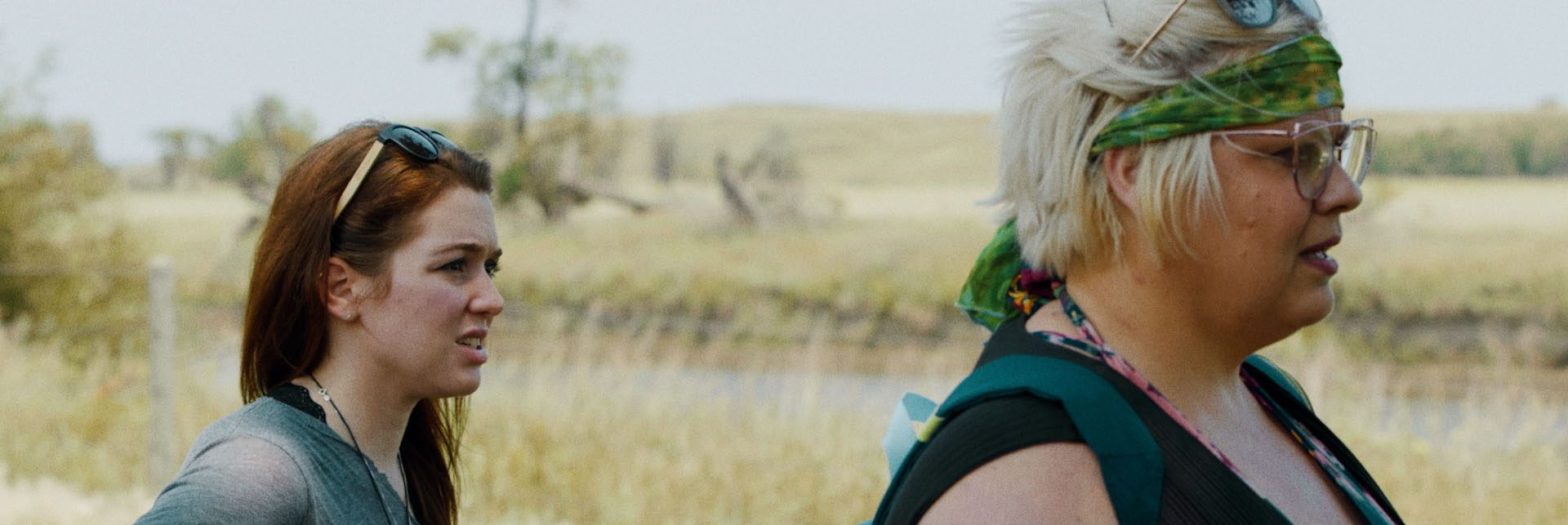
India Donaldson’s emotionally intelligent debut successfully avoids falling into the trappings of a coming-of-age film. In fact, it’s not a coming-of-age film at all. More a character study of teenage Sam (Lily Collias – matching the subtleties of Donaldson’s direction), as she embarks on a hiking weekend with her dad (James Le Gros) and family friend Matt (Danny McCarthy).
However, as the pair start to see the weekend as a form of competition, especially when meeting a trio of younger hikers who make the pair feel out-of-touch, or as it actually appears emasculated, a film about both a gender and generational gap starts to appear. Sam is emotionally open, at least with those close to her – a distance seems to have formed with her father since he divorced from her mum – and confident in herself. But, Matt and Chris appear to internalise everything, putting on a consistent machismo façade, with little confidence in itself. Without being forced the divide between the group is easily shown without feeling like a rift, it’s, for most of the run-time at least, shown as a distance. One that creates awkwardness, hesitation and uncertainty.
Good One is as much about externalising feelings, and false personas, as it is the aforementioned generational gap. A quiet and intelligent drama which consistently keeps its wonderfully performed character in focus as she remains sure of who she is and her place in the world amongst two people in an unknowing competition to show that they seemingly don’t and are unnecessarily insecure because of that.
9. Restless
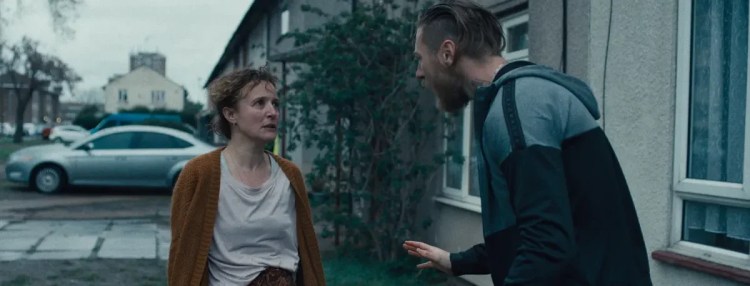
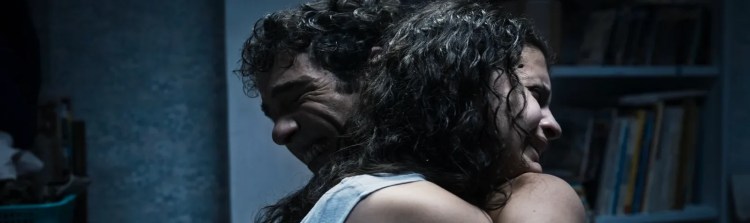
The scariest film of the year and it’s all purely naturalistic. Restless is a film that understands how to utilise panic. A fear for Lyndsey Marshall’s increasingly tired lead character as she fails to sleep every night due to the noise from her new, partying neighbours. Themselves, led by Aston McAuley, starting to taunt her before turning aggressive.
Each development and decision Marshall’s Nicky makes creates leads to another tense, squirm-inducing sequence. Creating near-audible wishes for her to just go back to safety, or simply for her to not be in a certain situation where it feels her life could be at risk. With multiple such moments in the short 89-minute run-time which still manages to raise some chuckles in the closing stages without creating a sudden sense of tonal whiplash.
I’ve seen Restless a couple of times now, and am still calming down from the last viewing. Each time I’ve almost watched some moments from behind my hands in a way you might expect from a gruesome slasher or body horror, Yet, this film has nothing like that here. It all plays out in a realistic, down-to-earth way that makes Nicky feel more isolated in her effort to simply get some sleep. We can see and feel her tiredness and escalating madness in the wake of the nightly torment she’s facing. Creating that sympathy and fear for her as her neighbours’ rage grows to the point where it feels he could easily break down her front door and kill her. Truly scary, worst-case-scenario horror. And much like Spielberg’s Duel it works because we feel it could actually happen.
8. On Falling
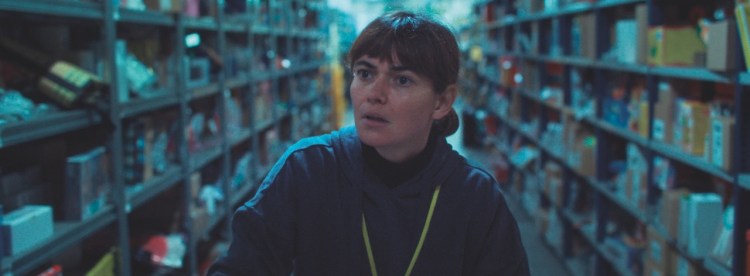
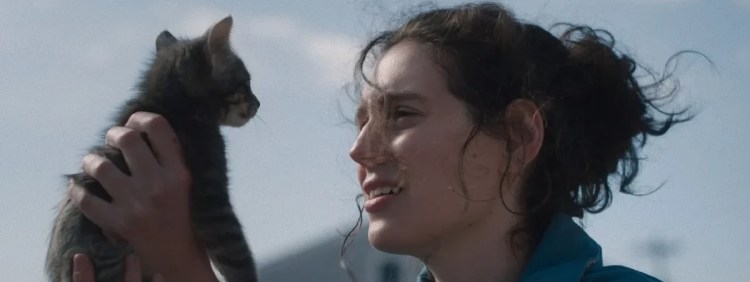
I can’t put my finger on what makes On Falling such a brilliant depiction of isolation and loneliness, but there’s something about writer-director Laura Carreira’s observation and Joana Santos’ understated central performance that truly get to the heart of those feelings.
On Falling is a film about the effects of being shut off, and to some extent shutting yourself off, from the rest of the world. The unhealthy nature of being suffocated by work so you can’t have a proper work-life balance and time that is your own. The impact that this has on Santos’ Aurora can be seen in the way she almost struggles to carry herself, and put herself across in certain moments as she appears to feel the weight and pressure of her warehouse picker job wherever she goes. The film;s view of her and her situation is greatly empathetic, putting that onto the audience with ease.
Worry, hope and tension mix together all felt towards Aurora as to whether she’ll be able to escape and move to a job that will get her more freedom. Hesitations in a job interview scene, failing to answer he hobbies because she hasn’t got time for them, is painful to watch simply because we want to see her succeed. And because so much of the film comes from a place of understanding for both the isolation and loneliness felt, and the context of the immigrant experience which can further contribute to both.
7. The Ballad Of Wallis Island
This might be my favourite film of the year, and it certainly has one of the best soundtracks. The key to The Ballad Of Wallis Island is just how much heart it’s got. There’s an emotional undercurrent to pretty much everything we see that grows the charm found in both the frequent humour and the film as a whole.
A distinctly British film that’s made with love and care for the characters it rather wonderfully, not to mention subtly, brings in themes of looking back, moving on and letting go. And the healthy ways in which to do so. All as part of not getting stuck in the past and focusing on just that, with it being different cases for each of the central three characters – each wonderfully performed. Although, perhaps none more so than Tim Key who should be in the awards conversation for his supporting turn in this film.
Really, Wallis Island should be in consideration for its screenplay, scattered with some brilliant quips and pieces of wordplay, and multiple original songs (while not exactly prominent Raspberry Fair has been a key track on rotation for me since first seeing the film), too. A warm and funny film that successfully weaves in its core ideas to each scene, growing to form something much bigger that still fits into its calm, quaint and charming surroundings. It’s a real gem that I hope continues to be picked up in future, and one that certainly I’ll be returning to for a good while to come.
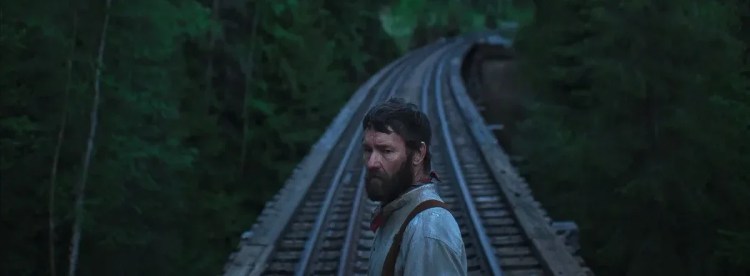
6. Train Dreams
The grandness of an ordinary life. So much of what makes Train Dreams is in the narration which tracks the life of Joel Edgerton’s Robert Grainier against the rapidly changing face of 20th century America.
Edgerton says very little over the course of the film, yet you can see the immense weight his character is carrying through the pure physicality of his performance. So much about Grainier is internalised, he’s a muted and withheld figure, especially in the wake of tragedy and a distance from the world outside of his wife (Felicity Jones) and child.
While tinged with sadness there’s a wisdom and sentiment to a number of conversations throughout the film. Fitting with the feeling of a great American novel, which the narration (spoken by Will Patton) pushes alongside the brilliant visuals. Director Clint Bentley and cinematographer Adolpho Veloso have made one of the most visually stunning films of the year, another that makes me wish Netflix would properly release their films to be seen on the big screen as they deserve to be instead of quietly dropping on their service after a brief limited cinema run. Thankfully, through becoming a deserving awards contender Train Dreams has found, and seemed to maintained, an audience.
It’s great to see such attention directed towards a restrained, thoughtful drama that keeps in mind the vast picture of a normal life amongst the small details.
5. Alpha
A more restrained, rather different body horror affair to writer-director Julia Ducournau’s previous films, Raw and Titane. Ducournau has never been a director for pure shock when it comes to her horror, and there’s little in Alpha that’s there for shock. Instead it creates a deeper sense of emotion within the story of generational fear, pain, worry and grief.
The filmmaker is interested in the emotional side of things and telling the story, using the visuals of the film to heighten that and move the plot along. As those with an unknown virus start to turn to marble, in a tired and run-down 80s-style setting that boosts the idea that the virus is linked to AIDS, key moments see people coughing dust, or a back made up of jagged edges almost shatter – a true gasp-inducing moment. Fear grows as to what will happen if 13-year-old Alpha (Mélissa Boros) has the virus, but what if she doesn’t and everybody thinks she has? One of the most effective images in the film, involving blood spreading through a swimming pool, shows just what would happen. Creating a shock of worry for the titular character.
The first time I saw the film I wasn’t entirely sure as to the directions the final stages were going, or what they were meant to mean. Yet, I was still totally invested in the film. Caught in emotional engagement, and that’s what mattered most, the fact that I understood the film emotionally and what it was trying to do in that regard. It continued to be stirring in its depiction of personal conflictions for both Alpha and her family – who themselves have shared and contrasting fears and worries in relation to the virus which she may have, and her uncle (Tahar Rahim) definitely has. We see him slowly turning into a marble statue. Coming together to make for an emotionally investing body horror that uses its genre elements to heighten the details of the characters and story at hand and the ways in which things move forward.
4. Sorry, Baby
One of the most profound films of the year, multi-hyphenate Eva Victor has made a film of tragedy that maintains a spirit of hopefulness. So much of the film is tinged with worry, fear and the lingering effects of trauma. Yet, there are glimmers of understanding that see things through, alongside a scattering of effective humour that also comes through some of the anxiety and responses of Victor’s Agnes.
We go from ‘the year with the bad thing’ to ‘the year with the good sandwich’ – itself a title that provides a hint of optimism. Piecing together events at different stages in time and how Agnes’ life changes, and her reactions to the world around her. Each element is tenderly dealt with with an empathetic gaze which allows for something that manages to make for a more easily digestible film, alongside the humour which brings an entertaining nature amongst the struggle that we see Agnes go through.
Sorry, Baby is certainly a film that stayed with me for a long time afterwards. It tells its story in an original and thoughtful way, creating impact very early on and maintaining it long after the credits have finished rolling. It’s a film about hidden emotions, coping and internalised battles that for multiple reasons aren’t properly discussed or let out – largely through ignorance or lack of understanding from others. It’s what makes the brief scene involving John Carroll Lynch, and the good sandwich, so effective. A moment of simple care and understanding with some real heart at the centre of it. And in many ways, that’s what Sorry, Baby is as well.
3. Saturday Night
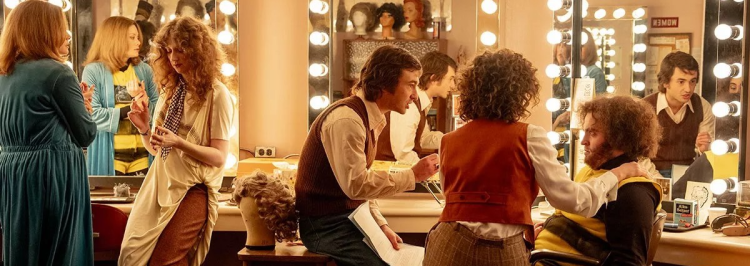
I’m not really a fan of Saturday Night Live, but managed to be caught up in the catharsis of this schmaltz-less love letter to the show. While the recreations of SNL sketches may fail to get laughs there are plenty throughout the rest of the film as Jason Reitman’s camera tracks the various figures involved with the show as backstage arguments and chaos unfold in the 90-minutes building up to the show’s uncertain first broadcast.
Crackling with energy from start to finish the film barrels along full force capturing the personalities of the characters perfectly in the style, also thanks to the tight screenplay courtesy of Reitman and Gil Kenan. Easily keeping track of the multiple figures, disagreements and events unfolding amongst the hopes and fears for the show. Much of which is captured in the performance of Gabriel LaBelle as show creator Lorne Michaels – keeping everything as grounded as possible with an awards-worthy turn.
I wasn’t expecting to get on with Saturday Night as much as I did, but there’s something about its energy and style which is purely irresistible. A celebration of SNL, a show made for the generation who grew up watching TV by the generation who grew up watching TV. And that want to make something revolutionary is captured perfectly in the film that above anything else gets across the want to make something different with a cast (and crew) who don’t quite embrace but certainly resemble chaos and disruption, even if not in the conventional sense either.
I’ve seen this a couple of times now and each time it’s been just as joyous and free. One of the most entertaining films of the year and I’ve absolutely fallen in love with it each time.
2. Memoir Of A Snail
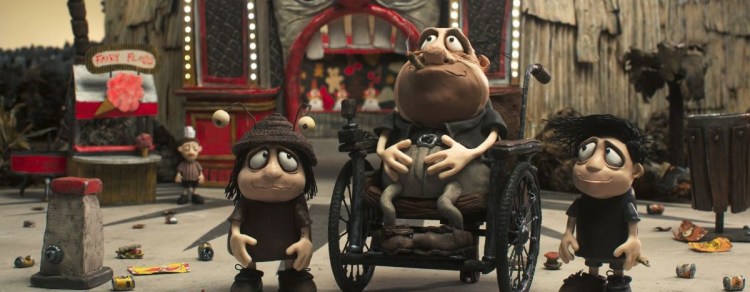
There’s an image in the first few minutes of Memoir Of A Snail that captures an all too familiar feeling. As a young child, Grace (Sarah Snook) is in the playground, surrounded by bullies taunting her. An imaginary protective snail shell forms around her. Both shielding and shutting her off from the world around her. This image had me considerably tearing up and for the rest of the film I sat on the verge of tears.
Finally following up the brilliant Mary And Max, Adam Elliott brings another film that understands people. Those who may well feel like outsiders, especially. Embracing such figures and admitting that it can be hard to be a person, to get through life, there’s so much care and understanding in Memoir Of A Snail. A film that is constantly in-touch with its central character and her emotions. As she simply wants to find happiness and acceptance, and manages to do so at certain points, including in care-free, chuckle-inducing elderly friend Pinky (Jacki Weaver).
There’s plenty of silly humour to be found throughout that manages to border on quirky without fully diving into it and emphasises the joy of the ‘outsider’ nature. Also captured in Elliott’s particular visual style that can be found in a number of his stop-motion projects. Still finding more than enough room for the emotional aspects in the wake of personal pain and distance from Grace’s brother Gilbert (Kodi Smit-McPhee) this was a film that I’m glad I gave myself time to reflect on it after first seeing it at a festival, instead of jumping straight into the next screening. It’s a film that needed me to spend time with it. To stay in its emotions and reflections. To feel understood by it in some way. And the film, for me, was all the better for that being the case, and continues to be after a long-overdue re-watch whilst putting this list together. And love it and the way that Adam Elliott views, and clearly loves, people and the world.
1. Hard Truths
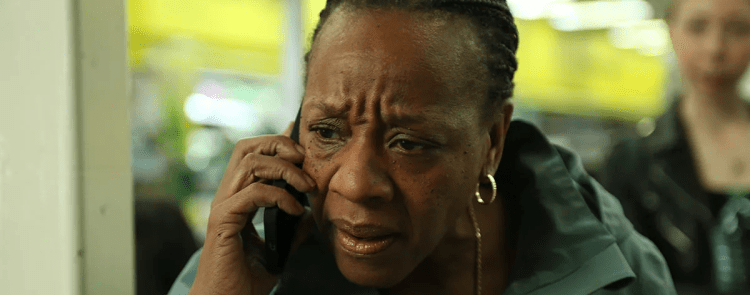
Marianne Jean-Baptiste gives the best performance of the year in Hard Truths. Capturing bitter rants which at one moment can raise a chuckle and the next create awkwardness and tension in Pansy’s intensely distanced family life. The reason for her anger at the world around her is briefly mentioned early on with her sister Chantelle (Michele Austin), but they properly come to the fore in a sudden flood of emotional release just over halfway through where true understanding is formed. The lingering overflow in the following scenes creates a tenderness in the performance if not entirely the character.
Hard Truths is a film about held-in fear, anxiety, sadness and isolation; all shown in Mike Leigh’s key naturalistic style. The contrast between the two sisters details two very different responses to coping with life, and eventually grief. A true mix of human emotion conflicts in the film and the dramas at hand. Less a character study and more an emotional one, as Pansy breaks down crying “they all hate me” you feel the hurt at her core, with everything beforehand having contextualised it with ease and rawness.
This is a film with many frequent punches of humour, emotion and pain. All making for a very human portrait of responses and reactions. All helmed by a powerhouse performance from Marianne Jean-Baptiste which should have won, let alone been nominated for, an Oscar. A knockout portrait of emotions, and the best film of 2025.






 Just A Little Bit Random