House Of Gucci – Review

Cert – 15, Run-time – 2 hours 38 minutes, Director – Ridley Scott

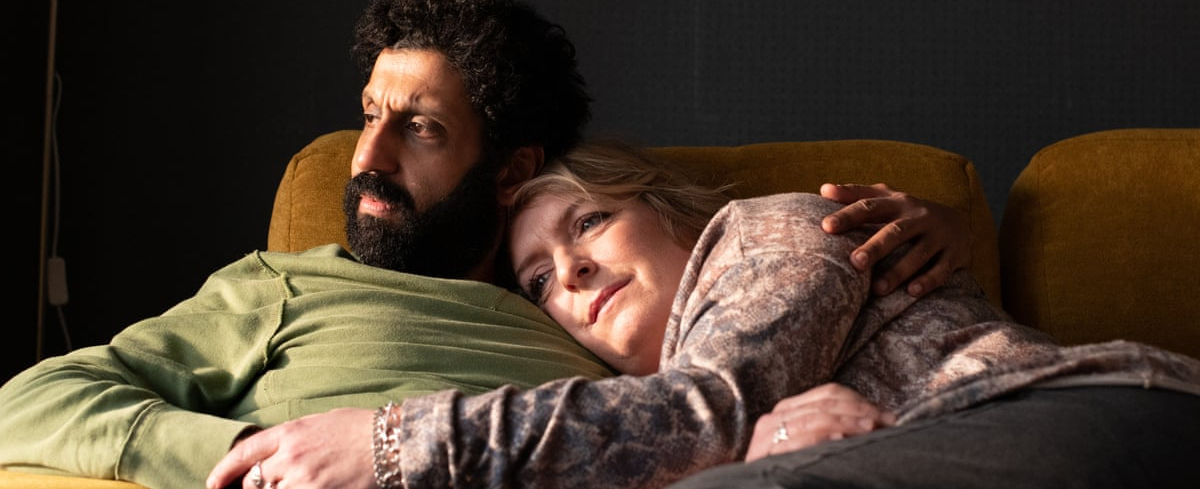
The Gucci brand and dynasty experiences a decades long downfall after the turbulent marriage of initially unconcerned Maurizio (Adam Driver) to increasingly influential Patrizia Reggiani (Lady Gaga).

House Of Gucci undeniably houses an A-list cast to match the heights of the fashion dynasty at the heart of the film they star in. While some of the accents might have been somewhat mocked and poked at – while some are somewhat clunky or non-existent they aren’t as bad or distracting as you might think – the performances are what lead the film and push it through the over two and a half hour run-time. The film and screenplay allow the performances this space and give the cast the room to go all-out during certain sequences. However, this all sometimes comes down to the feeling that the film is relying on the performances and not always allowing the story to speak for itself, or truly come across. The feeling that you’re simply watching various strands unfold instead of being in the world of the film begins to settle in and a slight distance begins to form between you and the barrier of the screen.

Tone is often a key playing factor in this feeling. As we see the early stages of a relationship between young romantics Patrizia (Lady Gaga – who gets to don plenty of lavish and stylish costumes throughout the film, no two the same) and Maurizio (Adam Driver) the tone could easily be compared to that of a soap-opera – particularly as Maurizio tries to underplay his connections to the Gucci fashion house, which he appears to have little interest in, to his very much interested family-business accountant/receptionist partner. Yet, as Patrizia becomes more of a part of her soon-to-be-husband’s life and meets the family the pair’s involvement with Gucci grows until they’re practically working against current acting and involved leader of the brand, and Maurizio’s uncle, Aldo (an exaggerative Al Pacino) and his eccentric, ambitious son Paolo (Jared Leto – who, while seemingly having a great time, appears to be in a different film to everyone else, and at times feels as if he’s about to break into a rendition of Joe Dolce’s Shaddap You Face). When sharing scenes together Pacino and Leto give the impression that they could easily be a double act in a comedy about two unsuccessful businessmen having pitches constantly rejected.


As the family, including Jeremy Irons as Maurizio’s father Rodolfo, begins to play a more prominent role in the narrative we witness a number of new strands enter into play. The idea is brought up that “actions have consequences” however it rarely feels like we actually see such consequences play out. Characters appear and disappear without the impacts of their actions and efforts properly being seen, only being described in a handful of occasions. Largely this is due to the focus on Patrizia as an outsider to Gucci who gradually manages to work her way in and take over from the side, and Gaga gives a good performance throughout, however a lot is shown that feels as if it’s sometimes left with little more detail – causing the run-time to be felt as it could be cut down slightly. Things move from soap-opera to middling drama which, while having points of interest, largely thanks to the performances, never truly grabs you.

As the marriage between the central couple begins to break down in tandem with the Gucci brand Driver takes a further step into the centre, although pushing Gaga out. Gaga very much becomes support, and at times a near different character, in these stages, rarely seen, much like the rest of the cast, as Driver’s character development moves in swiftly in the final 35-40 minutes. It feels the simplest way to depict the drama set up beforehand and bring certain elements and lines within the narrative to a close. While not everything is brought to this point with quite the same effect there’s an overall rounded nature to the film, even if it doesn’t completely have the impact it might hope for. It matches the nature that the piece has had throughout. One which never quite demonstrates the effect and impact of its various character’s actions. The points of interest that do truly click and work are perhaps made more so by the performances which the film relies on, and luckily they’re mostly rather good.

House Of Gucci’s run-time is felt because of the multiple strands that it starts and doesn’t always demonstrate the full extent of. Luckily, the performances – even if not always in the same film – manage to pull things along and keep you mostly interested in the unravelling arcs.

Rating: 3 out of 5.

Encanto – Review

Cert – PG, Run-time – 1 hour 39 minutes, Directors – Jared Bush, Byron Howard, Charise Castro Smith

The only person in her family to not receive a magical gift, Mirabel (Stephanie Beatriz) takes it upon herself to try and save the fading magic that brings their house to life.

Looking back on their offerings over the last few years Walt Disney Animation Studios have truly dived into the spirit of adventure. The last five years have included titles Moana, Ralph Breaks The Internet, Frozen II and Raya And The Last Dragon. Now, in the same year as the latter they return with something somewhat more stripped back. While Encanto has been slightly pitched in its trailers as a travelling journey with plenty of action and thrills amongst the mysticism of the titular magic, however its exploration rarely leaves the boundaries of the living house in which central figure Mirabel (Stephanie Beatriz) and her family live in. The family Madrigal are perhaps the most respected people in the town which their house lies at the top of – and which they practically run and helped build. Each has their own special gift – whether that be strength or the ability to talk to animals – apart from Mirabel who appears as a slight dark sheep in the family.

Their home is the product of a magic candle which came to grandmother and matriarch Abuela Alma (María Cecilia Botero, with Olga Merediz providing the singing voice) after her husband was tragically taken away from her. However, the magic begins to fade and while the Madrigal’s try to get on with their lives, in preparation for the flawlessly elegant Isabela’s (Diane Guerrero) engagement. Therefore Mirabel, despite not having her own gift, takes it upon herself to try and save the magic and explore the various forbidden walls and corners of the house.


It appears to take a while for the film to get to this point. While it offers occasional plot points every now and then they’re certainly spaced out amongst the scenes and details of the film, providing a more gradual pacing to the events overall. You feel like it’s going to build up to more, but once in the second half it becomes apparent that Encanto is a much simpler film than initially expected. It wears its themes of family and acceptance clearly throughout its fairly short run-time and allows those to often take centre stage and guide the narrative. When this clicks there’s a slightly smoother nature to the film to bring you further in. Although the extent to which you’ve already been brought in is perhaps underestimated due to the punch that an emotional flashback in the latter stages of the piece has.

It’s a more traditional feature from Disney – perhaps more alike to their effort eleven years and ten films ago in the form of Tangled – and perhaps that feeling adds to the simplicity and overall effect. The humour comes through well enough and the songs; while sometimes feeling somewhat out of place and uneven, with the help of Lin-Manuel Miranda provide a certain energy to push things along and add even more colour to the already colourful scenery of the Colombian town. By the ending, while the final scenes may feel like they’ve been divided up into distinct segments they undeniably round off the film and its themes rather well and keep you in place for an overall enjoyable time from Disney, the kind of pleasant trip which we haven’t seen from them for a while.

Encanto is a much more simplistic piece from Disney than perhaps initially expected, once this clicks in your mind it’s a more enjoyable and energetic film which allows its clear themes to lead with success.

Rating: 4 out of 5.

‘Stealing Chaplin’ Interview

Co-producers, director Paul Tanter and stars Simon Phillips and Ken Bressers join me to discuss the upcoming digital release of their film Stealing Chaplin. The film will be available on a number of digital platforms from Monday 6th December 2021.

You can follow Stealing Chaplin on Twitter. The film will be available across multiple platforms when digitally released on 6th December.

If you want to find any of the guests on Twitter, or listen to their song requests, you can find them by following the links below:
Ken BressersThis Is Your Song – Petula Clark
Simon PhillipsSpice Up Your Life – Spice Girls
Paul TanterViva Las Vegas – Elvis Presley

tick, tick… Boom! – Review

Cert – 12, Run-time – 2 hours, Director – Lin-Manuel Miranda

Jonathan Larson (Andrew Garfield) lives his life through his unrecognised songs and musicals, however he’s struggling to come up with a key song in the build up to a workshop for a musical he’s been working on for almost a decade.

“I’m the future of musical theatre” confidently claims Jonathan Larson (Andrew Garfield), in a way that feels almost as much of a threat as it does a promise. This big screen take on his hit musical about him trying to get a musical into production is told through a workshop pitch for tick, tick… Boom! itself. In many ways his life is shown to be like a hopeful yet desperate workshop. Full of song and theatricality, wanting to please and amuse those around him, particularly his peers in the industry, and greatly trying to get his work off the ground he’s had very little success up until this point. His chances of proving himself as the next big thing appear to be dwindling as he nears 30, far past the age when many other musical writers and performers had their big breaks. However, he powers through with his eight-years-in-the-making rock opera, Superbia.

Pairing up with the theatricality of Jonathan’s life, further shown through fellow musical writer and creator Lin-Manuel Miranda; in his feature directorial debut, are an array of musical numbers capturing the various moods, tones and musicals that make up his life in the build up to the biggest moment of his career so far, a workshop for Superbia. In fact the musical numbers appear to have their own distinct look and tone to fit this. While an early one about desires and riches almost appears like a music video an idealistic dream sequence in Jonathan’s diner workplace sets itself out exactly as if it’s a stage in itself.

It perhaps seems odd to say it, but it feels as if this story was meant to be told through music and songs. The ode to creativity, particularly within musical theatre, that’s painted out by Miranda and the rest of the cast and crew flows through the musical numbers and helps to create a specific energy. An energy which feels like the traditional exuberant ‘theatre kid’ style and helps push Garfield’s performance and own energy further. The story, much like Jonathan’s life, has to be told through songs and performance. Bringing you in for an, as would be hoped for with such a tone, enjoyable and joyful time from the smile that forms on your face during the opening number – which will likely become an earworm for many who haven’t already seen or heard tracks from the original stage musical, or perhaps will happen all over again for those who have.


It’s this energy and style that carries you through much of the film, and it helps to lift up some of the more traditional lines that the film follows. While not completely straying into anything like conventionality it does have some familiar beats in that are at least slightly shadowed by the musical nature – seemingly knowledgeable of the situation and coming in to save the day. As Jonathan isolates himself to find the perfect missing song in his work as the deadline of the performance to potential producers nears, his relationships become increasingly distanced. None more so than with his girlfriend Susan (Alexandra Shipp). Desperately trying to help him find a job, despite his hesitance and what she begins to view as ignorance, she finds herself shut out and nearing the feeling that she’s present for simply nothing more than musical inspiration, which never seems to arrive to Jonathan.

As songs back such instances and help progress the story we find what appears to be a musical that’s almost aware it’s a musical. Or perhaps Jonathan’s views and ability to have a song for everything – even the sugar in the diner he works at – begin to leak into the world, maybe we’re just in his mind throughout or seeing the world from his stage. A stage which we witness being performed on throughout the film as his workshop pans out and forms a musical within a musical filled with odes to other musicals and their creators. And luckily, it’s not as overwhelming as it sounds. The story is followed well all building up to the key moment where Jonathan is almost no longer in control as he’s left in the hands of his assembled and rehearsed cast, alongside producers and key figures; including his inspiration Stephen Sondheim (Bradley Whitford).

tick, tick… Boom! is a film that’s made by musical theatre fans for other musical theatre fans. It has that loud energy within its musical number core where it succeeds most, and manages to distract from the more traditional and familiar beats of the more dialogue-based scenes – sometimes merging both elements to lift things up and show them through Jonathan’s stage-like view. Garfield captures all of this within his performance that further pushes the air of a celebration of creativity, particularly within theatre, that flows throughout the film and in many of the musical and workshop based scenes. All particularly leaning towards a celebration of Jonathan Larson’s creativity, and the style and energy that he held that, from this film, has clearly gone on to inspire many figures within the musical theatre industry since.

A celebration of Jonathan Larson’s creativity and musical work and efforts, with songs and theatrical energy which naturally carry the film and stop the more familiar elements from becoming too much, tick, tick… Boom! is a proud display of knowing theatrical ambition.

Rating: 4 out of 5.

LFF 2021: The Power Of The Dog – Review

Release Date – 19th November 2021, Cert – 12, Run-time – 2 hours 7 minutes, Director – Jane Campion

Patronising rancher Phil (Benedict Cumberbatch) finds his home-life disturbed when his far less domineering brother George (Jesse Plemons) marries boarding-room owner Rose (Kirsten Dunst), bringing her son (Kodi Smit-McPhee), who Phil also torments, along with them.

The Power Of The Dog’s composer Jonny Greenwood stated in an interview with Variety “to me, the banjo can be a dark and sinister instrument”. It’s this darker side to the plucked-instrument which is demonstrated in the film. Whereas it might normally be associated with something more jaunty and joyful, think Kermit The Frog lightly singing Rainbow Connection, in writer-director Jane Campion’s latest it’s placed in the hands of rancher Phil Burbank (Benedict Cumberbatch). He’s picking away in the dark shadows, already having proved himself to be a looming figure full of spite for anyone who isn’t a tough male just as himself. He’s the complete opposite of his brother George (Jesse Plemons), a much friendlier figure who appears to be embarrassed by, and deeply apologetic for, Phil.

When George marries widowed boarding-room owner Rose (Kirsten Dunst), bringing home both her and her son Peter (Kodi Smit-McPhee) tensions and fury begin to rise within Phil. Despite having already frequently patronising and tormenting the pair, particularly Peter, when serving him food at their inn, he dials up the behaviour that clashes violently with the way he chooses to live his life. The film focuses on such interactions between Phil and Rose or Peter, particularly within the mid-section of the piece, with much of the arc being made up of vignettes detailing them. Instead of any overall narrative arc the characters develop, if at all, off screen. We jump forwards in time to see the change that has been undergone since the ending of the previous chapter and how things are now playing out, before moving on again to the next simple, extended chapter.


This makes for a slow-burn that while initially interesting in the way that it depicts its characters begins to slightly lose the viewer due to the lack of visible development occurring in the moment. It’s what makes the mid-section feel somewhat lengthy and a much slower burn than it perhaps is. There are elements and details that manage to keep your interest, not just the sinister banjo (although that is a highlight), but perhaps not as much in terms of change in characters until the third act where things begin to turn around. The relationship between Phil and Peter becomes more of a focus, at a point where it doesn’t quite feel too late but almost quite sudden. Because we haven’t seen what has occurred in the gap in-between there are certain decisions or moments that while interesting and adding to the late-stage development of the film and the characters within it, you almost want to see more of what has led up to this. More of an overall narrative, or feeling of character development, rather than the vignettes that we do see – of largely interactions that build up to the eventual change and development.

The characters themselves certainly have potential. There’s enough detail within them and the interactions certainly pose themselves as a point of interest to keep you in more than just the detailed scenery of the world – displayed in a handful of early pan-shots that truly immerse you in the setting, closed in by the surrounding circle of hills. However, it’s as the slow pacing is felt and the chaptered nature really comes through that you begin to disengage from the piece to then gradually reengage as a new point is brought into the mix that makes us questions Phil’s real attitudes and mindset in the next stage of the piece. Perhaps a second viewing is in order, to allow the detail of the characters to wash over me rather than the pacing and nature of the plotting and development. It’s certainly not a bad film, and it does have its moments at the start, end and at a number of points in the generally slow and divided by middle. However, on first viewing The Power Of The Dog almost leaves you wanting more, in terms of what you haven’t seen, to give what you have seen that extra bit of interest and intrigue.

As The Power Of The Dog appears to become more about character interactions rather than their development the slow burn of the chaptered structure is felt. However, either side of this there are moments of interest that keep you in place in the visually striking nature of the piece.

Rating: 3 out of 5.

LFF 2021: Petite Maman – Review

Release Date – 19th November 2021, Cert – U, Run-time – 1 hour 12 minutes, Director – Céline Sciamma

When her mum suddenly leaves one morning, eight-year-old Nelly (Joséphine Sanz) discovers Marion (Gabrielle Sanz), a young girl who looks exactly like her, in the woods outside of her late grandmother’s house, and her mum’s childhood home.

For my money Tideland is Terry Gilliam’s best film. It’s a view that in holding puts me in a very small minority. However, there’s something about the childlike perspective that Gilliam captures, pushing across the feeling of innocence that works really well and brings you into the world of creativity and imagination. I found this feeling arising again within writer-director Céline Sciamma’s latest, Petite Maman. As eight-year-old Nelly (Joséphine Sanz) explores the woods outside of her late grandmother’s house, building tree forts and briefly playing with a paddleball she comes across a young girl who looks exactly like her in the form of Marion (Gabrielle Sanz). Over the course of the short 72 minute run-time of the piece the two gradually form a close bond in the games they play and the conversations they have.

Dialogue is often relatively simplistic yet it manages to form a big impact in the light of the events that are going on in Nelly’s home life. While her mother (Nina Meurisse) and father (Stéphane Varupenne) are clearing out her recently-passed grandmother’s house her mum, also called Marion, suddenly leaves one morning, with dad claiming that she’ll be back soon. It’s made apparent that the younger Marion is the same as the one that Nelly knows as her mum, and soon her mind begins to piece together lessons about grief and emotion. Yet, the film never feels overbearing or forceful. Much like Nelly herself, or perhaps any other child, you gain the slightest pieces of information that develop overtime, and in your mind, without you overly realising. Adding to the emotional aspect of the piece and further putting you into the childlike exploration of the themes that the film handles so well.


It’s a feeling that’s expanded upon by not having any overall explanation as to the presence of the younger Marion. No major mystery or sci-fi links; it simply just is. It’s an acceptance that’s found with Nelly as she finds herself connecting to gradual unforced parallels in her own life while simply being able to just be free and play. Expressing herself and growing without realising. Even the viewer may not realise it as they’re taken on this open and personal journey. One that’s quiet, collected and gradual, knowing exactly where it’s going, even if the character’s don’t. And much of this is down to Sciamma’s carefully written dialogue and understanding of her characters – which she continues to demonstrate after her screenplays for the likes of the sensational Portrait Of A Lady On Fire and My Life As A Courgette.

There’s an overall childlike innocence to Petite Maman. It’s displayed in so many elements, not just the U rating, where you don’t truly realise the information that has been dropped in an absorbed until the more emotional, yet still quiet and collected, points in the latter stages of the short and effectively used run-time. Everything flows from the perspective of the young central figure as she simply plays and explores through playing and creating with her friend. Allowing the theme of friendship to be key to the film, explored deeply with simplicity and effectiveness that helps to bring you in to the film as a whole. One that on the surface is about the central friendship, and yet subtly provides you with detail and information, preparing you for a deeper, more thoughtful piece on grief through the eyes and mind of a child, whether for the child or adult, or both, in all of us.

Petite Maman’s detail is subtle yet effective. It comes through the play and imagination of the central friendship, pushing the theme of childlike innocence while allowing us to unknowingly absorb and store information, like a child, for a rounded and emotional conclusion.

Rating: 4 out of 5.

LFF 2021: King Richard – Review

Release Date – 19th November 2021, Cert – 12, Run-time – 2 hours 24 minutes, Director – Reinaldo Marcus Green

Richard Williams (Will Smith) does everything he can to help train his daughters, Venus (Saniyya Sidney) and Serena (Demi Singleton), become the most successful tennis stars in the world, despite anything, and everything, that might stand in his and their way.

One of the questions that may arise about this biopic about the rise of tennis superstars Venus and Serena Williams is why does it focus on their father? Perhaps that’s because King Richard isn’t your standard sports biopic, or really a biopic at all. It’s about one specific time in the life of the pair, as their careers appear to finally be properly taking off. It’s just as their father planned in the 78 page plan he wrote for their whole career before they were even born. The film follows him passionately trying to see them succeed, no matter what stands in their way. “This would ain’t never had no respect for Richard Williams” he tells them in the packed family van “but they gonna respect y’all”.

Will Smith is great in the central role and with his standard brand of charisma, mixed with the dramatic hits we know he can deal, makes for an engaging figure. One striving and fighting for his family to make their lives the best they can possibly be, trying to prove those who attack him late at night on the nearby public tennis courts wrong. While those around him, from neighbours to famous tennis coaches, doubt his ability as both a father and a coach the abilities of Venus (Saniyya Sidney) and Serena (Demi Singleton) soon turn them quiet and gain high-attention. Moving them from the streets of Compton to the estates of sunny Florida where fortune comes ever closer, and barriers of all kinds begin to fall down around them thanks in part to the persistence of their father – his high demands causing bafflement amongst coaches, managers and many other industry figures around him.


Yet, amongst the more serious points that the film makes – including just how much the rise of Venus and Serena means in terms of representation of black players in what is shown to be a sport almost exclusive and only accessible to white people – there’s plenty of heart emitted in the family core. The unexpected needle drop of Bananarama’s Cool Summer sets the tone of one scene to later lead into a family road-trip singalong of Kenny Rogers’ The Gambler – an instant joy creator if ever there was one. It’s joy that begins to be toned down as the girls begin to enter the world of professional training with Jon Bernthal’s Rich Macci. He’s worked in the industry for a long time and knows the best, and often only, ways for a player to reach the heights that Richard has in his eyes. However, the two somewhat clash when father begins to claim he knows best in regards to this and won’t have his daughters play in junior matches and tournaments. As the film begins to feel more like a traditional sports biopic, somewhere in the vein of Le Mans ’66/ Ford Vs Ferrari – perhaps pushed by Bernthal’s presence – you begin to question whether the passionate figure of Richard really knows what he’s talking about.

It’s perhaps in this second half, where relationships with coaches and training become more of a focus and perhaps take centre-stage, where the more traditional feel brings a new overall tone to the film. It’s certainly not vastly different and you’re still able to remain in the piece, but the general feeling is one of traditional familiarity. What helps it along, and perhaps helps keep you truly situated in the unfolding events that build up to the tennis match finale – which is played out rather well and begins to bring you back to the state you were in before the slight shift – is Smith’s performance. There’s been plenty of awards season discussion around his role in this film, and it’s very likely that he’ll get a nod, and you can understand those who say that he may very well win. It’s certainly his best performance in years, thanks to the laidback nature that he gives Richard’s exterior, yet the consistent concentration, worry and hope that lies within him for the future of his daughters. It’s very likely him who stops the film from feeling as much like a traditional sports film and biopic as it could.

Yet, the feeling of a father trying his best to push his kids is still there. Needing to be reminded not to go too far, while some wish that he would go further when it comes to sponsorship deals, or simply just listen to others. While his three half-daughters don’t get a great deal to do there’s at least time for his wife Brandy (Aunjanue Ellis) to shine in a particularly effective scene in the later stages of the piece. It’s another reminder of the family unit and feeling that runs throughout the film and acts perhaps as the biggest push for Richard, amongst everything else and the more dramatic tones. It adds an extra layer to the tennis matches that he watches with pride as his daughters, in the views of the frequent players and coaches in the junior tournaments, come from nowhere and go from strength to strength and win to win. It’s what largely sets the film aside from a number of sports biopics, and, alongside Smith’s engaging and connecting central performance, stops it from wholly feeling like one too.

While it might slip into the realms of a more traditional sports biopic as it focuses more on training, Will Smith’s performance in King Richard keeps the film’s passion, spirit and drama afloat. Reminding us of the striving father trying to see his daughters succeed in both tennis and breaking down barriers, even if to the frustration of others who he may see as such barriers.

Rating: 3 out of 5.

Ghostbusters: Afterlife – Review

Cert – 12, Run-time – 2 hours 4 minutes, Director – Jason Reitman

After moving to their late grandfathers run-down house siblings Phoebe (Mckenna Grace) and Trevor (Finn Wolfhard) soon discover links to the long-parted Ghostbusters and the ghosts that remain in the quiet town of Summerville.

Logan Kim’s Podcast – self-called because of his podcast and the recording equipment he carries around with him – claims that his series “really finds its voice in the 46th episode”. While this might not be the case with Ghostbusters: Afterlife, not just because of the film, it does admittedly take some time to gradually warm to it. The 2016 remake was its own product, something different from the original 80s classic(s), however this latest take is a continuation, even being directed (and co-written with Gil Kenan) by original director Ivan Reitman’s son Jason Reitman. It’s been claimed that Ghostbusters: Afterlife is a film for those who grew up wanting to be Ghostbusters. And in many ways that feeling is present, it comes across in what’s perceived as nostalgia for those making the film. However, the feeling is one of the film trying to be nostalgic rather than actually being nostalgic. It’s a presence that lingers in the opening stages as we see single mother Callie (Carrie Coon) move, along with her two children 12-year-old Phoebe (Mckenna Grace) and 15-year-old Trevor (Finn Wolfhard), move to the quiet town of Summerville, where her late father left her his run-down, falling-apart house.

It’s here that Phoebe begins to unravel links to the original, now parted, Ghostbusters. Eventually catching the eye of her summer school teacher, and fan of the original team, Mr. Grooberson (Paul Rudd). As the discoveries of old ghost traps and proton packs coincides with daily earthquakes in a town with no fault lines, it appears that the stuck-in-time town of Summerville still has its fair share of ghosts. It certainly makes what Phoebe initially describes as “a state sponsored work camp for delinquents”, where she would otherwise be shown VHS copies of Child’s Play and Cujo, that bit more interesting. Meanwhile her old brother finds himself working at the local fast food place, where the waiting staff still deliver food on roller-skates, in order to impress older-girl Lucky (Celeste O’Connor). It’s here that the film still feels somewhat uneven. While it begins to find its stride once the narrative is established and the plot is progressed, after a somewhat hesitant (mostly for the audience) opening 20 minutes, the one thing that remains is the strand for Wolfhard trying to get close to a girl he had only just met the night of his arrival in the town.


However, once even he begins to join the new ghost busting group, flooring it in the dusty and much-marketed Ecto-1, things begin to fully lift off. The entertainment value is boosted as you can’t help but smile at the joy of an Ecto-1 gunner-seat car chase through the streets of the town, racing after new ghost Muncher (think a slightly more solid, angrier and less fussy Slimer). There’s plenty of similar moments that just provide the right amount it joy and entertainment that you want from a film like this, and it seems as if the cast are having an equally good time – particularly Paul Rudd who, while being effortlessly funny, appears to be having as much of a great time as his character nerding out over old Ghostbusters equipment, and simply enjoying the fact that he’s in a Ghostbusters film. Rudd manages to make some of the more in-your-face throwbacks that bit more palatable. While the inevitable “who ya gonna call?” feels forced and somewhat cringe-inducing the more natural moments where the likes of the more major elements, such as the classic Cadillac, are simply part of the scene and made part of the fun.

Yet, the figure that really manages to connect you to the film – amongst all the cameos, the Stay-Puft marshmallow men and the slightly distracting score – is Mckenna Grace herself. Really capturing an intrigued spirit in everything that’s going on around Phoebe and capturing that feeling of a child learning how to be a Ghostbuster rather well. She’s a fine lead and captures a number of the feelings of excitement that the audience feels at various points too – while also managing to create a handful of laughs in the form of what may otherwise be groan-inducing dad jokes. She’s a pure delight and is backed up by equally enjoyable supporting characters (particularly the initial grouping with Rudd and Kim, who themselves would make a great podcasting double act). It’s a Ghostbusters that while looking back on the original – done best when not trying to feel nostalgic – looks towards a new generation of boiler suit wearing stream-crosses. It might take some time to get in to but once there this makes for a trip perhaps as enjoyable as a ride in Ecto-1 itself.

Ghostbusters: Afterlife is at its best when not trying to be nostalgic, instead using its classic elements to progress the narrative of a new and entertaining set of Ghostbusters, who, while they might take different amounts of time to take a prominent step into it, eventually form an enjoyable team.

Rating: 4 out of 5.

LFF 2021: ear for eye – Review

Release Date – 16th October 2021, Cert – N/A, Run-time – 1 hour 23 minutes, Director – debbie tucker green

Three vignettes looking into the experiences of Black Britons and Americans in modern society.

Adapted from her stage-play of the same name, writer-director debbie tucker green brings a stage-like quality to the screen adaptation of ear for eye – which she has re-written especially for it to work on the screen. There’s a simplicity to much of the staging throughout the piece, often set against a plain black background, allowing for the barrage of verbal details to come through. In the fast-paced opening scenes we see a mother telling her son how to interact with the police. Nothing he does seems right, and it’s claimed that whatever he does will only get him into further trouble; often only speaking one word at a time. It’s again a simple interaction, and yet it comes at you so quickly and with such force that it can often seem overwhelming. The sequence, which almost doesn’t come up for air until it’s over, forms only the beginning of the short 83 minute feature, yet packs in much of the detail, tone and themes. The theatrical nature of the film, both in look and on some occasions performance-wise, means that it feels as if it’s being performed right in front of you, you begin to feel the passion emerging from the scene and the screen. Indeed whereas some stage-like films and adaptations sometimes create something of a barrier ear for eye doesn’t always appear to have this same issue.

From an opening with such modern day relevance the film moves on and eventually reaches a shocking conclusion. As white faces read out racial laws and restrictions that should feel as if they’re from a bygone era and yet are part of unbelievably recent history. It’s a much swifter portion compared to the two that have come before it, and yet still has its effect within its simplicity. It shifts away from the performances being the core connection that bring you into the piece as you’re reminded once more that this is indeed reality, adding a further feeling that allows the film to step away from the common ‘filmed theatre’ style and label.


Perhaps the standout exchange, and the one that truly solidifies the film and keeps you in place; after the busy, tone-setting nature of the first vignette, is the second part in which we a heated debate between Lashana Lynch’s US Female and Demetri Goritsas’ US Male (no characters in the film are credited with anything other than these basic descriptions). The two actually respectively play a student and professor, arguing over the content of the professor’s lecture, Lynch’s character claiming that he eased the severity of the actions of the white killer being discussed in class. The sequence flows well and brings you perhaps the most out of all three parts of the piece. The way the two actors bounce off each other throughout the debate as it escalates and swirls within the small confines of an office which is largely made up of one table on the platform stag puts you in place as you simply sit and witness it unfolding, points, arguments and protests shooting and tumbling in the process.

This sequence is perhaps the most effective of the three. It feels to be the one that doesn’t quite lose steam, or begin to lose you as the more theatrical stylings begin to come through. This isn’t to say that this is a major issue in the other two segments placed either side of this one, however the case of the less ‘theatrical’ performances and techniques that are on display perhaps allows the central two performances in the moment to further shine and land an engaged impact on the viewer. Of course, this may be far from the case to those who have more of a liking for features that come across as near ‘filmed theatre’, with the initial flow of details and information having more of an impact because of the further connection with the format – when it comes to that initial styling I’m certainly not the target audience, but I did warm to ear for eye fairly quickly and managed to not overly notice the stage-like nature, or put it aside, as I got caught up in what it had to say. And the film has a lot to say and certainly tells you it with passionate detail from both tucker green and the cast that she has assembled to display the passion, arguments, confusion, hurt and more faced by her characters plucked straight from modern society and placed into this screen adaptation of occasionally artistic realism.

Not holding a standard ‘filmed theatre’ feel ear for eye occasionally switches and changes pace, overwhelming you with real-life details before its passionate, sometimes theatrical, performances further shine and allow for more thought later on.

Rating: 3 out of 5.

LFF 2021: Mothering Sunday – Review

Release Date – 12th November 2021, Cert – 15, Run-time – 1 hour 36 minutes, Director – Eva Husson

While her employers (Colin Firth, Olivia Colman) spend the day with, long-distant since World War One ended, friends to celebrate an engagement, maid Jane (Odessa Young) spends Mothering Sunday in an affair with future-groom Paul (Josh O’Connor).

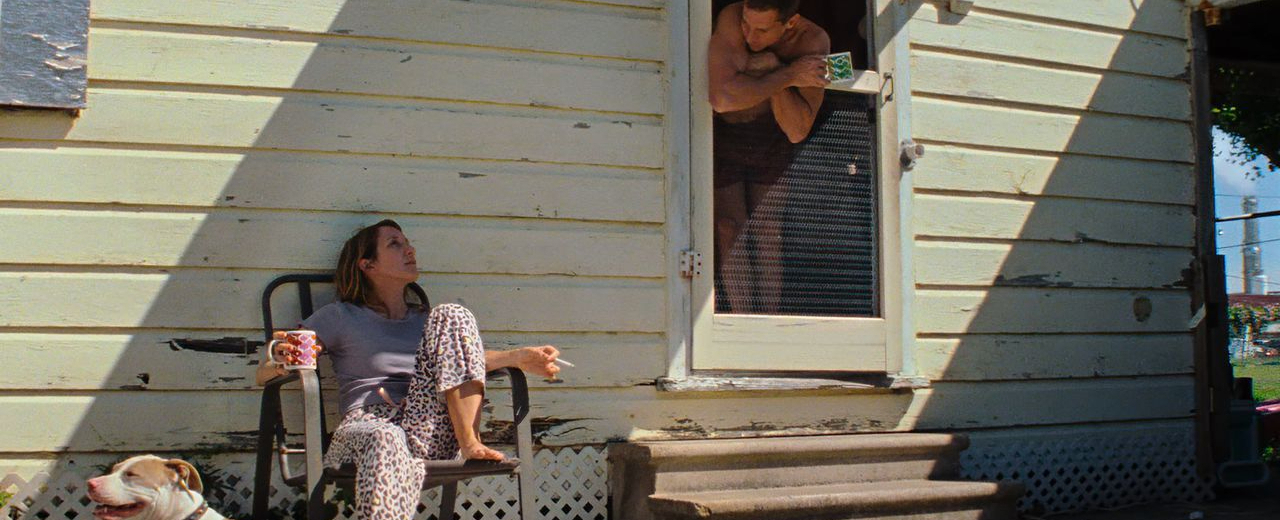
There are two lines of period drama in which director Eva Husson’s Mothering Sunday travels along. One is the standard Silver Cinema kind where Colin Firth comments on how much of a lovely day it is, what with the weather being so nice and fortunate for the occasion, in most of the scenes he appears in. The other is the rise in steamy kind of period drama where lust and passion, the kind that you would never expect to see in something like Downton, emerges with an in-your-face force that would turn away what you would think of as the conventional Silver Cinema audience. While the film boasts Sandy Powell as costume designer it seems that there are plenty of sequences where she may not have had much of a difficult job as Odessa Young and Josh O’Connor casually parade around a lavish house in their birthday suits.

However, the occasion being celebrated isn’t either, or any, character’s birthday, nor even Mother’s Day. It’s in fact the engagement between O’Connor’s Paul and Emma D’Arcy’s Emma. A group of wealthy figures, once much closer before losing their children during World War One – Paul being the only one to have returned – meet to celebrate, however the day is much more emotional than expected. We see them grieve, undistracted by the fine weather, particularly a very brief selection of appearances from Olivia Colman. However, this theme is far from the main focus. There are a selection of ideas on display within the film, yet not all get a chance to come to the fore to be properly realised, on some occasions even by the audience. Instead they’re traded in for scenes focusing on the affair between Paul and maid Jane (Young), who has been given the day off by her employers the Nivens (Firth, Colman).


Largely the film acts as a fairly quiet and calm period piece, reflected in the relatively gentle nature in which the narrative passes. Going along smoothly without any real bumps in the road, both in terms of difficulty and emotional beats. You generally sit there and watch things pan out for the characters, interested at some points but without any real emotional connection to the film due to the fact that it doesn’t seem to go into much overall depth. We see jumps forward to an older Jane, struggling to write a book in her now happily married state with husband Ṣọpẹ Dìrísù. It builds up an image that there may be something dramatic and impactful arriving, although the jumps into the future themselves are still relatively calm. It perhaps makes the, perhaps, eventual dramatic point less impactful than perhaps expected, if anything continuing the pace and tone of much which has come before. Especially when such moments are delivered more as passed on news rather than being properly glimpsed, character emotion often seems to be less of a focus when compared to the design and luxury of many of the settings within the piece.

At one point I found myself making note of an excellent, rather satisfying, looking pie. It’s layers all neat, uniform and formally coordinated. It parallels the film itself. It feels organised and in order, but perhaps not always completely satisfying. It passes by without any major trouble or disturbance with a kind of standard British period drama feel to it – but perhaps with a fair bit more full-frontal nudity. It’s generally fine for what it is, but perhaps lacks the drama that it may want, thus limiting the impact. It dwells on the peaceful nature of the grand house in which Jane finds herself for much of the run-time, enjoying the lovely day that we’re so often reminded of. It is indeed a nice day, a calm one where there seems little to worry about and that could go wrong. A feeling which impacts the film as a whole and your view of it as things continue to travel along a calm path that never truly has an emotional impact, as if it’s become so relaxed and used to its state that, much like Paul and Jane when together, it doesn’t want to leave it.

For much of the run-time Mothering Sunday is a generally fine period piece for what it presents, however its uninterrupted gentle nature means it rarely delves into more dramatic reaches and lacks an emotional connection with the viewer.

Rating: 3 out of 5.