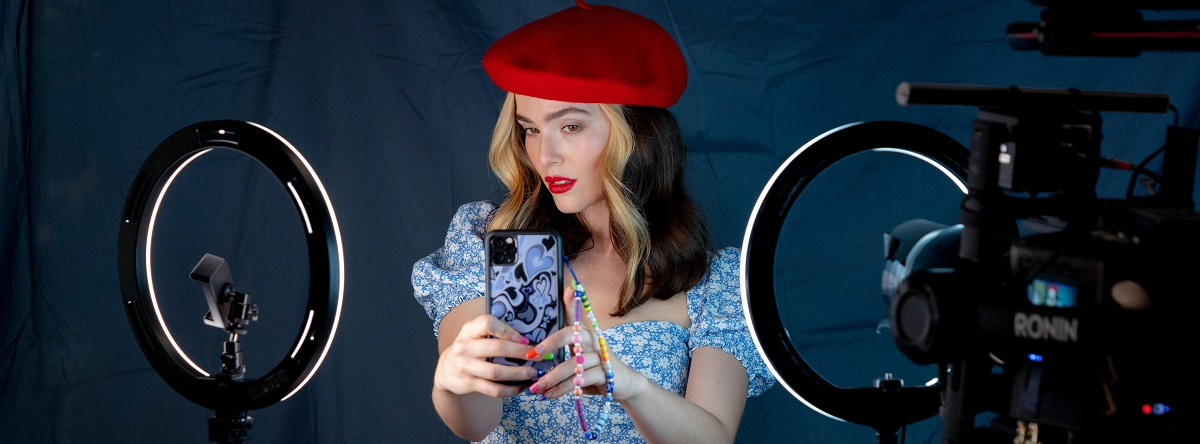
Turning Red – Review

Cert – PG, Run-time – 1 hour 40 minutes, Director – Domee Shi

13 year old Meilin (Rosalie Chiang) is going through the standard changes that come with growing up, however her outgoing confidence is shattered when a generational ‘blessing’ causes her to turn into a giant red panda whenever she gets emotional or overexcited.

As we’re introduced to the unashamedly herself Meilin Lee (Rosalie Chiang), it’s clear that the 13 year old protagonist of Pixar’s latest is overflowing with confidence. An outgoing personality who is ready to take the challenges and effects of growing up head on, it’s all part of her plan. Yet, despite containing a couple of dashes of humour – “and I will not hesitate to do a spontaneous cartwheel if I feel so moved” – the outgoing declarations of Meilin’s pride and confidence in herself in this introduction began to bring to mind thoughts of whether this attitude can be stretched over 90+ minutes without wearing thin and beginning to get somewhat irritating. It echoes a style that was contained within the trailers for this film, one which certainly gave me some initial concern.

How glad I am to have been proved so wrong so quickly. It appears that this was all part of the plan of the film. As co-writer (alongside Julia Cho) and director Domee Shi – who was behind the studio’s wonderful short Boa a few years ago – explores Meilin’s world shattering around her when the changes in life bring about a generational blessing turned “inconvenience” in the form of her transforming into an eight foot tall red panda every time she gets emotional or overexcited. It’s something that can easily be reversed, but in a month’s time with a ritual under the next red moon. Until then Meilin must learn to stay calm and control her inner panda, while riding the perilous tracks of crushes, her favourite boyband performing in town and school bullies. It’s a hazardous road and one which can easily be driven off, especially as Meilin tries to do her won thing in defiance of her usual family dedication, worrying and angering her concerned and uncertain mother (Sandra Oh) at each turn.

As a studio Pixar have become noted for their use of animation and fantastical elements and worlds to translate various themes and ideas to audiences of all ages – Inside Out and its point about necessary sadness is perhaps the biggest standout here – and while Turning Red certainly contains this it also tackles certain themes much more directly. Topics such as periods and mood swings are clearly displayed and simply treated as a fact of life, and indeed help to emphasise the ideas and points about growing up that the film holds so high. The narrative itself is fairly simplistic, following Meilin as she tackles with her panda form and the blessings and curses that it brings to her at this stage in her life, yet it all allows for the themes to lift the piece up and draw the viewer in to form a connection with the piece.


All helped further by the humour that is derived from a number of situations. While you certainly feel the shock and pure embarrassment of certain moments – particularly an early scene where Meilin’s mother confronts a seventeen year old convenience store worker her daughter appears to have a crush on, as if noone else is in the shop – there’s no denying just how much comedy there is throughout the film. This is perhaps Pixar’s funniest film to date, holding plenty of laugh out loud moments in most scenes and montages.

Yet, perhaps the thing that speaks mostly loudly about Turning Red is just who it appears to be speaking to. While Pixar have always catered to a family audience and worked on different levels for different ages – again, see Inside Out – here there are plenty of scenes which are clearly speaking directly to those of Meilin’s age. As if saying to them that it will indeed be alright in the end both individually and with family, even being set in 2002 – acting as something somewhat semi-autobiographical for Shi, although perhaps she didn’t literally turn into a giant red panda as part of a centuries old family (initially) blessing – helps push this idea. Although, none of this is ever shouted.

It’s all conveyed within everything that the film provides and does with its themes and ideas, which help to lift it up and do the most speaking on the various levels that the film products. Still containing the family-leaning moments of fantasy brought to life by fine animation, as has become expected from the studio, especially after the last decade or so. There’s quite a bit being juggled amongst Turning Red’s slightly stripped-back narrative, but it allows for the themes to speak more, particularly with an interesting edge for Pixar of speaking more directly about certain points to certain audience members. And it manages to hit it out of the park rather well.

Perhaps the studio’s funniest film to date, Turning Red signifies Pixar talking in a more direct manner, amongst their usual fantastical-tinted story and message telling, to a particular audience. It works and provides a slightly new view and angle for them that should bring everyone in for a solid 100 minutes.

Rating: 4 out of 5.

LFF 2021: Ride The Wave – Review

Release Date – TBC, Cert – N/A, Run-time – 1 hour 24 minutes, Director – Martyn Robertson

Documentary following pre-teen surfer Ben Larg as he attempts to tackle some of the biggest and most violent waves the world has to offer.

There’s certainly a somewhat simplistic nature to director Martyn Robertson’s Ride The Wave. Yet, it allows for a rather charming nature to come through as it follows young, pre-teen surfer Ben Larg in his ambitious aim to tackle some of the world’s biggest and most dangerous waves. Surfing has long been his passion, he’s dedicated much of his life to it – even in the face of severe bullying and adversity, which has caused him to be taken out of school – and has his heart set on becoming a surfing champion, while still simply enjoying the rush that tackling the waves brings. It certainly comes across in the various montages that show his dedication to the sport, preparing for competitions and truly throwing himself in.

We see the pride that those around him, particularly his parents who play a prominent part in the film, have for Ben. Yet, they bring in an honesty about how this passion has impacted them, at least when it comes to what they’ve seen their son go through when it comes to the bullying he faced at school. It’s as such points are focused on, especially in the second half of the film’s relatively short run-time, that a more traditional feel comes in to play. While not necessarily a bad thing it does create a sense of familiarity, even within a documentary.


As we see various montages play out there’s something alike to the feeling of a more direct narrative feature is created within the piece. It particularly comes across in the pacing of certain sections, again largely in the second half of the film. As some events play out the film seems as if, even though only 84 minutes long, it could be slightly cut down to be closer to the hour mark. Yet, there’s no denying that your attention is still held within the events that are playing out – especially as the central focus of Ben begins to attempt to tackle bigger waves in various competitions, his worries and stresses showing amongst his connection to the adrenaline he gains from the activity.

It’s a central idea to the piece as he’s shown riding various metaphorical and emotional waves alongside the physical ones created by the seas and oceans which surround him and his family. One which manages to engage you and keep you in place throughout, even amongst the occasional shifting nature of the film and the ways in which it presents itself to the viewer. It’s the central passion for surfing that keeps you interested, as is the case with many documentaries such as this. Wanting to see someone who clearly cares about something succeed in that area simply because they are passionate about it. Indeed wanting to see Ben ride the wave(s).

While the nature of Ride The Wave may occasionally shift to something more alike to a narrative film, there’s still a connection to the piece as it clearly show’s the focus’ passion for surfing, creating an element with charm within that.

Rating: 3 out of 5.

Jan Miller Corran ‘Along Came Wanda’ Interview

Writer-director Jan Miller Corran joins me to discuss her debut feature Along Came Wanda, which is available to buy and rent on various platforms now.

Along Came Wanda is available to buy and rent in the UK now. To see the places where it’s available, including in your own country, you can find out through JustWatch.

For anyone interested in listening to Jan’s song requests (played out during the radio broadcast of this interview) you can find them by clicking the links below:
Freeway Of Love – Aretha Franklin
All You Need Is Love – The Beatles
Just Be – Monica Young ft Richie Sullivan

LFF 2021: Dashcam – Review

Release Date – 3rd June 2022, Cert – 18, Run-time – 1 hour 17 minutes, Director – Rob Savage

Loud and outspoken music streamer Annie (Annie Hardy) steals her former bandmate’s (Amar Chadha-Patel) car and begins to experience a series of supernatural attacks after picking up silent, elderly passenger Angela (Angela Enahoro).

After the high impact of small-scale, Zoom based horror Host co-writer (alongside Gemma Hurley and Jed Shepherd) and director Rob Savage returns to further shake up the world of modern horror. Once again focusing on screen based internet horror, this time leaning towards the livestream. Over 77 minutes we duck in and out of connection with Bandcar – the internet’s #1 live improvised music show broadcast from a moving vehicle. That movie vehicle is captained by Annie (Annie Hardy), a loud and outspoken figure unleashing foul-mouthed raps about those in her comments section, and those who, as she views it, have fallen for the hoax that is COVID-19. For much of the opening stages of the film it’s somewhat difficult to actually get on with Annie. Savage and Hardy lure you into a false sense of security as she rattles off various slogans and phrases that you would expect to hear from a stereotypical internet troll diving into arguments about politics.

However, after travelling to the UK and stealing the car of her former bandmate, Stretch (Amar Chadha-Patel), Annie soon has something truly different for her viewers to witness. It comes as she takes on elderly passenger Angela (Angela Enahoro). Whether the silent figure is anything to do with the burst of supernatural occurrences or not is unknown, but what’s clear is that she certainly brings in an extra layer of eeriness to the proceedings. It’s the introduction of Enahoro’s character that truly kickstarts the elements of horror and allows the flow of the film to pick up, taking the viewer – alongside those viewing Annie’s stream – along for the madness and chaos of the ride.

As the film leans away from the toxic traits and spoutings of the central figure, although still including some such views by having – occasionally distracting, although realistic sounding – comments popping up at the side of the screen throughout, it simply allows for the horror elements to take centre stage. There’s a consistent tone established as Annie, and indeed one or two of the other figures who pop up over the course of the film, are thrown around and subjected to various unseen forces. A different tone and style of horror to Host is created, one that embraces a sense of weirdness to slightly match the livestream scenario. It works and helps bring you into the film as it clearly doesn’t take itself too seriously and yet still manages to conjure up plenty of scares within the found footage elements, and an ominous feel to the circling buffering/ connecting sign. It creates a static feeling to the images at play, a further feeling of confinement even when in the trapping open space of the woods.

While the case stands that if you look into certain points and potential repetitions the film might begin to fall apart it’s easy enough to be caught up within it and the various events that form as part of Annie’s continuous attempts to run; or drive, she’s certainly lucky she’s not driving a manual car here, away from the horror. Blair Witch comparisons can easily be made, and there are one or two shots that feel perhaps inspired by it, and yet Dashcam never feels bogged down by comparisons as it rattles along its lines of horror within its short run-time. A run-time which is well spent and flows well – with a fair deal of time spent in the credits with a creative choice that may not be to everyone’s taste.

But, when it comes to the chaos of the horror that the main film produces, particularly after luring you into something of false sense of perception/ presumption, there’s a consistent flow from creepiness to the occasional jump scare; without being too reliant on either. Placing you into the world of the livestream and throwing you around amongst the unseen, unexpected weirdness and chaos that the characters are going through as well. While it would be interesting to see how this would play out on a laptop, as Host so wonderfully did, there’s no denying that there’s a strong audience experience to be had with Dashcam and the various different reactions on display throughout; there’s a range of audible responses to be had and heard which all adds to the thrills of the experience. A fine blend of scares and well-utilised livestream-based mayhem, Rob Savage further displays himself as a fine name in the expanding progression of modern horror.

Pimp My Blair Witch; after leaning away from the traits of the central character and focusing on the horror there are plenty of scares conjured up within the well-used livestream format that Dashcam uses, embracing a sense of effective weirdness the consistent chaos flows well, taking all viewers along for the ride.

Rating: 4 out of 5.

LFF 2021: Luzzu – Review

Release Date – 27th May 2022, Cert – 15, Run-time – 1 hour 34 minutes, Director – Alex Camilleri

Struggling fisherman Jesmark (Jesmark Scicluna) gets involved in black market operations as his work faces increasing restrictions and pressures, limiting him from providing for his wife (Michela Farrugia) and child.

“Without a boat you lose your way” are the words that cement the connection that struggling fisherman Jesmark (Jesmark Scicluna) has with his work. While dedicated to what he does, and certainly making sure to maintain the quality of his small, brightly-coloured boat, he finds himself facing increasing restrictions. He finds what he does caught up in a swirling mixture of political rules and phrases that simply make things harder for him as he already tries to compete with various firms and larger boats. With his wife, Denise (Michela Farrugia) and a newborn son to provide for there needs to be consistent money brought in, however anything but that appears to be making its way into the cramped living space in which they all live. It’s here that Jesmark begins to risk it all as he enters into a world of black market operations to desperately provide for his family.

The central character’s hopes and connection to his own boat are certainly still kept in mind. He’s willing to go down with what he does, there’s nothing else that he can do, he’s not qualified. “This is my Titanic. My home” he explains. Much of these feelings are brought about thanks to the excellent central performance given by Scicluna. Bringing you into the film and the unfolding dramas that are faced over the course of the short 94 minute run-time. You see the determination on his face as he desperately resorts to such measures to keep his family going, yet mixed with regret and reluctance as he feels uncertainty as to what he’s actually got himself caught up in.


Writer-director Alex Camilleri takes the viewer through the film with generally simple execution. However, there’s enough present to keep your engaged throughout. There are effective beats and moments of detail that certainly help to land an emotional response from the viewer, not always down to just Scicluna’s performance, some simply down to the simple sound of the area and the connection that’s established between them and the central character as he finds it hard to leave the working life he’s always known. And many of these moments have their impact because of just what is established in the early stages of the piece, keeping the viewer’s attention as the film runs with such points and ideas for most of its run-time; managing to be consistent in not dropping them.

The close may bring about what feels like a couple of different endings, which begin to feel slightly dragged out, but for most of Luzzu there feels little that’s repeated. There’s certainly a connection to the drama for both the audience and the well-performed central figure as he tries to fight to bring in money for his family amongst his increasingly struggling and isolated worklife. Most of the dramas at play are fairly simplistic, but they’re handled well and help to keep those watching in place. Engaged in what’s unfolding and with a sense of thought and emotion for the central character and the finely established connection that he has to his work, and indeed the boat which helps him just about continue with it, that he has dedicated himself to as much as he is to his family.

While simplistic in execution there’s an easy connection formed with Luzzu, thanks to the strong central performance of Jesmark Scicluna, it brings you in and keeps you in place for the unfolding dramas of confliction which emphasise the restrictions and isolation faced by the central character in the work he cares so much for.

Rating: 4 out of 5.

The Batman – Review

Cert – 15, Run-time – 2 hours 56 minutes, Director – Matt Reeves

A masked killer known as The Riddler (Paul Dano) begins to attack some of Gotham City’s most prominent figures, Batman (Robert Pattinson) begins to track him down through layers of unveiled corruption.

For years now it appears that people have been wondering when a live action Batman flick will take us back to the more detective-based roots of the character. Well, co-writer (alongside Peter Craig) and director Matt Reeves – off the back of the VFX heavy spectacles that were Dawn Of and War For The Planet Of The Apes – has managed to successfully conjure up a big-budget noir with a Detective Bat Man leading the investigation. His (Robert Pattinson) primary target is the highly-masked figure known as The Riddler (Paul Dano). A figure linked to the murders of a number of Gotham City’s most prominent and influential figures, particularly in the build up to the upcoming mayoral election.

This is a Batman who has already built up his tensions with the police, their antagonism towards him shown from his first appearance alongside them. As usual, it appears that only Lieutenant Gordon (Jeffrey Wright) is the only one on the side of the vigilante. They both appear to rely on each other’s brains as they try to deduce the various maps, puzzles and clues that have been left behind by an unknown figure bent on bringing down Gotham’s corrupt system in the wrong way. As more is uncovered we get a true sense of Pattinson’s Batman being a true defender of the city. The location feels detailed in terms of the places we visit and the shady characters who lurk there. On many occasions we’re thrown in to the scenario with only enough context so as to develop information alongside the titular hero – blurring the lines between himself and the somewhat little-seen billionaire Bruce Wayne, who has become something of a recluse over the last couple of years.


This is a Batman still to tackle his demons, afraid to properly confront them, and carrying that in the back of his mind as he goes about trying to locate the Riddler before he kills again. Much of the film is spent as a gradually paced investigation, already allowing for a tonal difference to more recent outings of the caped crusader. The elements combine to create something that feels rather fresh for the character, and simply brings you in for the ride. One which, thanks to the consistent tones of darkness that run throughout, never feels like the almost three hours that it actually goes on for.

Amongst everything at play there’s still time for beats of action. Plenty of heavy, swift punch-ups to truly show the power of this take on the character; not to mention an exhilarating car chase with Colin Farrell’s Penguin (Farrell seemingly having taken to some of De Niro’s classic mob roles for inspiration). There’s real violence and impact when it comes to the fights within this film, sparingly used to further add to the impact and the way in which this Batman’s mind works. He’s a mysterious figure himself, which simply helps to enhance the noir feel that lies in many scenes, alongside the visual style that certainly creates an engaging flare, trying to hide himself as much as possible – largely as Bruce Wayne – while getting on with saving the city. Pair him up with the bold and determined nature of Zoë Kravitz’s Selina Kyle, AKA Catwoman; never underplayed and matching up well to Pattinson’s central figure, and you have a fine mixture of characters who push the themes and story along with ease.

The narrative develops and flows with precision thanks to the finely edited nature of the film. Editing which you barely notice thanks to the flow which it creates and the consistent tone, meaning that your level of engagement only deepens as things unfold. It certainly feels the case that narrative has been put first, with the character’s being allowed to lead the narrative to further your connection with them and the piece. Interest and intrigue grow and develop as does the increasingly worried hunt for the Riddler; a villain who poses a true threat and sense of darkness that fits right into the world that Reeves and co have created. One which stands out from other live-action takes on Batman and Gotham City in its decision to be a punchy, slow-burn, character-led detective thriller above anything else. And much like being in a room with Batman himself, it both knocks you back and commands your attention.

An undeniably impressive achievement The Batman is a strong, character-led detective tale that commands your attention throughout its gradually paced narrative. Not forgetting equally engaging action, it flows with ease and consistency, never forgetting its streak of sinister threat and darkness.

Rating: 5 out of 5.

LFF 2021: Hit The Road – Review

Release Date – 29th July 2022, Cert – 12, Run-time – 1 hour 33 minutes, Director – Panah Panahi

Stuck in a car, on a long journey to an unknown destination, a family put up with each other as they travel across endless, uneven terrain.

For much of the opening 20-25 minutes of writer-director Panah Panahi’s Hit The Road the camera is kept relatively still. Simply sat in a car, watching the family at the heart of the piece as they wind each other up and get wound up by each other. Yet, their movements – particularly the restlessness of the youngest child (a film-stealing Rayan Sarlak) – create plenty to observe within the frame. An energy and dynamic is built up between the central quartet. One which is wonderfully observed and delivered to bring about plenty of laugh-out-loud funny moments, especially from the lively Sarlak. We don’t know how long they’ve been travelling for, we don’t know how far they’ve got left to go. But, what we do gather is it’s been quite some time, and there’s still a fair deal of the way to go, even longer because of the amount of stops they have to make.

Even within the breaks and pauses of the cramped journey, even more so for the tired father (Hasan Majuni), laying in the back of the vehicle with a broken leg, there’s plenty of humour to be found. A chaotic nature of family getting on each others nerves without entirely diving head-first into the pool of ‘hey, recognise this!?’. As the travels across dry, uneven, rocky landscapes continue we begin to learn more about the initial driver and eldest son (Amin Simiar). He’s something of a more dead-pan figure compared to the rest of the family, particularly a quieter figure; responding little to his mother’s (Pantea Panahiha) more cheery nature. As the film begins to dive into the reasons for this family journey it begins to shift away from the style of an out-and-out comedy and into that of something more dramatic.


There’s no denying that the laughs die down. While still slightly present there’s a strong change in tone, coming across in various scenes set outside of the car as the journey takes other forms, paths and stretches. We begin to get quieter scenes of conversation and reflection, particularly between father and son, with a style similar to the observations in the car, but with a more static feel. It’s easy to say that the connection with these moments perhaps isn’t as strong as the louder driving sequences which open the piece. While there’s still a level of interest in what’s unfolding and where things, and indeed the central figures, are going, it perhaps doesn’t quite have the level of amusement and engagement which was built up in the first third where the overall tone is undeniably different.

Even by the end you feel a slight hint that something has been missing. As if there’s more to see after the apparent conclusion, just before the credits begin to roll. Perhaps it seems as if the film has been building to something slightly more. And while what we have been given certainly has some interesting points, largely brought about by the central performances and the overall familial bond and connection they all have – particularly displayed and established in the wonderful opening scenes – the drama simply never feels as engaging as the highly comedic nature of what comes beforehand. However, the piece does manage to not break down, and avoids the feel of aimless wandering, and it’s largely down to the interest and engagement you generally still keep within it throughout the rest of the unfolding events as they try to reach their initially mysterious destination and goal.

There’s a lot to like about the humour and performances within the opening third of Hit The Road, especially a scene-stealing Rayan Sarlak. While the humour dies down in the quieter, more dramatic remainder of the piece there’s enough interest and engagement from the viewer to mostly keep things moving.

Rating: 3 out of 5.

LFF 2021: Inexorable – Review

Release date – TBC, Cert – N/A, Run-time – 1 hour 38 minutes, Director – Fabrice du Welz

A writer (Benoît Poelvoorde), alongside his wife (Mélanie Doutey) and daughter (Janaina Halloy), retreats to a lavish mansion to write the follow-up to his highly successful novel, however he finds himself distracted by mysterious housemaid (Alba Gaïa Bellugi).

Its clear that co-writer (alongside Joséphine Darcy Hopkins and Aurélien Molas) and director Fabrice du Welz’s Inexorable is trying to be something of a throwback to the long-dormant erotic thriller of years ago. One of darkness, flashbacks, scheming and temptation. It comes across in the various stylistic choices that run throughout the 98 minute run-time. There’s a grainy quality to the piece that’s prominent in the various long shots and close ups that establish both the settings and the largely rushing thoughts of central figure Marcel. He’s retreated, alongside his wife, Jeanne (Mélanie Doutey), and young daughter, Lucie (Janaina Halloy), to a quiet mansion where he can write the follow-up to his hit novel Inexorable. However, amongst struggles to create something just as good he finds himself distracted by the presence of newly-recruited housemaid, and stranger to the family, Gloria (Alba Gaïa Bellugi).

It’s the introduction of Gloria that brings about much of the evidence of the tone and style of erotic thriller that this particular film is trying to capture. It’s safe to say that this film doesn’t shy away from its inclusion and depiction of sex. However, when it does make an appearance the act feels so forced and in your face that it almost appears to lose much point aside from simply being included just because sex. Such moments lie amongst a rather by-the-books narrative looking into the various relationships of Marcel, particularly those with his wife and the growing fascination and mystery around Gloria. A potentially threatening, certainly tempting, figure who demonstrates a light and innocent persona to the rest of the family, particularly Lucie who she begins to form something of a bond and friendship with.


While it’s generally clear to see where the film is going from the early stages, particularly thanks to the conventional nature which it holds throughout, there’s still enough happening to keep you relatively interested in the unfolding events. Even in the third act there’s still a slight sense of tension and mystery about the characters and how things are going to pan out, even if the final few minutes do feel as if they’re lacking some elements. The traditional thriller feel of the third act is heightened by the grainy quality of the picture and the lighting. Both helping to bring you into the world and appreciate what the film is aiming to do. You may not be entirely involved, but there’s still enough to keep your engagement and interest; as has largely been the case with much of what has come beforehand, for the time it takes for things to unfold.

While the actual elements of sex might feel somewhat forced and in-your-face, the stylistic elements that help form the tension and tone of a thriller within Inexorable are rather well done. They help to keep you engaged with the piece and manage to have some effect amongst the generally by-the-books nature of the narrative. A set of good performances from the small central cast help to further get across the tone and style and keep things afloat. While this may be acting as a throwback to erotic thrillers of years gone by it occasionally feels as if it’s stuck amongst them in terms of plotting and structure. Yet, there’s still enough present within Inexorable for the elements to gel together well enough to create a decent and interesting enough piece of work for the time it plays out for.

The sex might feel a bit much at times, yet the other stylistic elements within Inexorable create a level of interest within the viewer that puts aside the conventions on display from early-on and manage to still create some tension and darkness, especially within the third act.

Rating: 3 out of 5.

Cyrano – Review

Cert – 12, Run-time – 2 hours 3 minutes, Director – Joe Wright

Guard captain Cyrano (Peter Dinklage) discovers that the woman he has had romantic feelings for since childhood (Haley Bennett) is in love with one of his soldiers (Kelvin Harrison Jr.), who he begins to assist in writing love letters.

When it comes to musicals perhaps we tend to focus more on the songs rather than the dialogue around them, after all it’s the songs that make it a musical. However, within Cyrano there’s something about the dialogue that grabs you and brings you in. Not even around the love letters being written and exchanged throughout, but simply within the conversations and patter between characters. The style is established early on as the titular Cyrano (Peter Dinklage) deprecatingly confesses himself to be “living proof that God has a sick sense of humour”, in contrast to the light and breezy way in which his childhood friend, and unknowing love interest, Roxanne (Haley Bennett – who appears to slightly jump between a British and American accent throughout the film) describes herself as “enigmatically distant and fashionably late” in the opening stages.

Opening stages which are fast-paced with rapid dialogue and movement as if rushing to build up to the first song. A song which appears to come from nowhere and be placed as close to the opening second as possible just to make clear that this is a musical. However, after this each song that comes along feels well placed and built up to. Each helping to convey a fine emotional tone that wraps you up in the moment, and the film as a whole. When assisted by the highly detailed visual look of the piece – the costume and production design are excellent! – it’s easy to fall into the world and the emotional journey that unfolds across it. There’s a theatricality to some of the staging, and indeed the screenplay. Seemingly, knowingly so. It’s perhaps intentional that a key opening scene is set in a theatre. Yet, everything is caught in a highly cinematic nature, working well with the theatrical elements to make it feel as if you are in a world that’s playing out right in front of you, as if you also have a stake in the drama.


Such dramas, alongside occasional slight moments of natural humour, are brilliantly conveyed by the cast. Each of the leading figures gives a strong performance, particularly Dinklage who provides one of the best performances of his career. Even Ben Mendelsohn as villainous Duke De Guiche manages to make an impact, with generally scattered screen-time. When it comes time for his own musical number, which screams villain song from the opening notes, he appears to be relishing the opportunity to chew up the scenery to create a delicious number of imposing threat and darkness.

Everything gels together well with a fine sense of flow from scene to scene, tone to tone. All carrying the idea of Cyrano’s almost crippling self-deprecation and the love letters that give him hope, as he writes for Kelvin Harrison Jr.’s Christian, a soldier in his corps, who, despite having never properly met, it turns out Roxanne has feelings for. Of course, we see many of the events through his eyes, but still manage to get hints and glimpses of what other characters are feeling in each moment – particularly during sequences focusing on Christian and Roxanne’s believed-relationship, emphasising Cyrano’s own feelings which he has anchored and kept to himself for many years. All form into one during a mesmerising balcony scene equipped with humour, heart, romanticism, pain and a song to further encapsulate such feelings. It’s what’s in Cyrano’s mind at the time, and in part the two young romantics. Such points are carried throughout the film, finely portrayed in the performances which further bring to life the screenplay, amongst the visual detail, and all caught by Joe Wright’s direction.

Once it all comes together there’s a true cinematic sense of theatricality and scope to Cyrano. While the musical numbers work and help, alongside the effective editing, to continue the flow of the film – never seeming to try to be an outstanding pop number or earworm (although leading song Someone To Say – featured throughout the trailers – does begin to rotate round the mind), instead simply working as a part of the film to move the narrative and character arcs alone – it’s often the dialogue and spoken character interactions which steal the show. Although, there are a number of engaging battles and interactions through song, especially in the earlier stages of the piece. It all blends together to create an excellent piece of work that makes the most of the big screen and unashamedly lets its story tell itself and be itself. Making for an even more triumphant feel that simply draws you in and wraps you within it. Much like the effect that Cyrano’s own finely-tuned letters and poems have on those around him.

A fine cast, led by a stellar Peter Dinklage, bring to life the excellent screenplay of Cyrano. The words bring you in and, alongside the musical numbers, wrap you up in the world and narrative, heightened by the strong visual style and detail which simply helps push the emotions which run throughout.

Rating: 4 out of 5.

The Duke – Review

Cert – 12, Run-time – 1 hour 35 minutes, Director – Roger Michell

Amongst a string of late-life activism, in-and-out of work Kempton Bunton (Jim Broadbent) is put on trial for stealing Goya’s portrait of the Duke of Wellington, in the hope of gaining free TV licenses for OAPs.

From the rotation of trailers The Duke has been largely pitched as a charming British farcical comedy. However, amongst the humour brought about via the idea of Jim Broadbent trying to hide the fact he’s in possession of artwork worth nearly £150,000 there’s an undeniable strand of drama attempting to emerge throughout. It’s what stops Helen Mirren’s Dorothy, wife to Broadbent’s Kempton, from being entirely sidelined throughout. As the occasional humour of the central narrative is shifted for conversations concerning grief, or rather the lack of conversation about it, between the central pair who have apparently spoken little about the death of their daughter Marian since it happened thirteen years before.

Instead, Kempton – charming from the opening stages – is resigned to writing about it, alongside a number of slightly more far-fetched ideas – titles include ‘The Adventures Of Susan Christ’ – sending off scripts to the BBC for Play For Today, to no response. While his wife cleans houses for people a fair deal wealthier than them (Anna Maxwell Martin plays employer Mrs. Gowling), we see the central sixty-year-old bounce from job to job, after almost always getting kicked out for reasons relating to his string of activism. The thing he’s largely concerned with is getting Free TV For The OAP. Why should veterans and the elderly have to pay to not be lonely in the comfort of their own home? Bunton, often equipped with an excellently sported pipe, removes the ability to be able to watch the BBC on his own set, meaning that he doesn’t have to pay the license fee just for advertiser-paid ITV. When he comes into possession of Goya’s portrait of the Duke of Wellington, newly missing from the National Gallery after he makes a trip to London, he plans to use the money to put his hopes and plans into action.


It’s made clear that Kempton is a passionate figure about equality and people working together for “the greater good”, it’s part of what gets him kicked out of multiple jobs. Broadbent is wonderful in the role and allows moments more based in commentary to not be too bogged down by the subject and discussion, and still have an air of charm about them. He’s a likable figure and it proves for a number of chuckles during courtroom sequences when Kempton’s answering questions in the dock. However, the humour still contrasts to unspoken reflections to his and his wife’s past. The loss of their daughter which they don’t talk about, pointed out by son Jackie (Fionn Whitehead). The drama clashes with the lighter, more comedic content, particularly when cut together and unfolding at exactly the same time the tonal imbalance is very clear.

Throughout the film there are patches where it’s clear that multiple ideas and elements are being juggled at the same time. Whether it comes to aims of the various characters at the heart of the piece, or simply the relationships that they have with each other and the conversations which they have to progress the narrative. While the various elements might work well enough by themselves it’s not always the case that they glue together to help with the overall flow of the film. There’s still a hint of charm, helped by the strong lead of Broadbent and Mirren’s fine supporting performance – particularly with the fluctuating amount that she gets to do – and generally the piece passes by well enough. The theft and hiding of the titular painting is largely kept as the central focus over the course of the short 95 minutes and while other strands and elements may poke their head around and create the occasional clash it all still builds up to a court trial where we’re allowed to see the true humour and generosity of Kempton Bunton.

It may have some dramatic clashes, and not every element quite glues together, but The Duke is held up by its charm, humour and strong performances from both Mirren and Broadbent.

Rating: 3 out of 5.