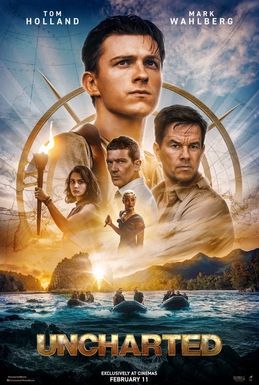
Bartender Nathan Drake (Tom Holland) finds himself recruited by Victor “Sully” Sullivan (Mark Wahlberg) as the perfect candidate to help track down 500 year old hidden pirate treasure.
It’s been a long journey for the Uncharted movie to come to the big screen. At one point Mark Wahlberg was on board to play central character Nathan Drake, now he plays older mentor Sully. Instead the shoes of the young explorer belong to Tom Holland. However, now on the big screen the journey itself perhaps doesn’t feel so long, even amongst all the globe-trotting that occurs throughout it. The reason for the various changes in landscape throughout the just under two hour run-time is the search for 500 year old pirate treasure. Deciphering clues and solving puzzles, occasionally with the help of Sophia Ali’s sometimes quickly sidelined for duo convenience Chloe Frazer, the pair certainly go on a fair share of set-piece adventures throughout the film, to find the gold that Nathan grew up hoping to find with his long-lost brother Sam (Rudy Pankow in an early flashback).
In the first act build-up to the actual adventure nature of the piece we move through events fairly quickly. While there’s still a dash of action and discovery it feels as if the film is certainly eager to travel the globe, while never overly rushing the process beforehand. We meet Antonio Banderas’ Santiago Moncada, who believes that the treasure, and the valuable crosses that will lead him to it, are rightfully his by birth; despite disagreement from his elderly father (Manuel de Blas) who dismisses his sons attempts and want to find the gold, and the ships which hold it, worth billions. Despite being pitched as the core villain of the piece Banderas gets little screen-time, and barely a true villain moment or speech. The film is certainly more concerned with Holland and Wahlberg’s conflicting views on teamwork, and indeed Moncada’s henchmen who do most of his work for him – particularly Tati Gabrielle’s Braddock and Steven Waddington simply credited as The Scotsman, the name pretty much tells you everything you need to know about the character in this context; and his dialogue shows this.
It certainly doesn’t feel as if Uncharted is trying to be an Indiana Jones tribute or knock off of any sorts. The general feel throughout is a standard adventure flick with a handful of tricks, traps, riddles and puzzles to run into along the way. Action certainly comes more into play in the second half, not to mention the rather silly third act fight although there’s no denying it’s enjoyability, and it’s here where there’s a slight character change for Holland. Going from his, potentially slightly typecast, bartender Nate going along for the adventure and not always knowing what to do, to a more battle-ready, tactical version of the character. The feeling isn’t that he’s been miscast, more that there’s a noticeable, almost instant after one particular event around halfway through, shift in the character that makes him feel like quite a different person. Such a feeling is perhaps more prominent when it comes to Nathan’s (or, as he goes by, Nate) relationship with Sully. Not so much a mentor, but more a buddy relationship between a slight newbie and a more experienced adventurer, Wahlberg doing a decent job of capturing this (although not as aged or experienced as the Sully in the games apparently is – which I have to confess to not having played much of).
Yet, despite some character shifts and changes throughout the film, not just from Holland’s central figure, there’s still a fair deal to enjoy and get lightly caught up in when it comes to the general adventure nature of the film. The set-pieces go by relatively quickly and while not always the most complex in execution the film seems to not be striving to be anything expansive and grand in terms of its narrative. However, this does begin to create a more standard feel to the piece. One not quite wanting to push itself or go a full distance in worry of spilling over, particularly in more action-based scenes, aside from the finale; the ridiculousness of which is almost worth the price to get in alone. But, for what Uncharted does provide, there’s a quick and still engaging adventure flick that might not be anything groundbreaking, but still provides plenty of amusement for the time that it’s on to make it an enjoyable enough globetrotting watch.
Despite some big character shifts in the second half of the film there’s still an enjoyable nature to Uncharted as its key draws lie within its puzzles and adventure rather than its more narrative or action based scenes, where it never quite pushes itself beyond a relatively standard feel.
Cert – 12, Run-time – 1 hour 52 minutes, Director – Kat Coiro
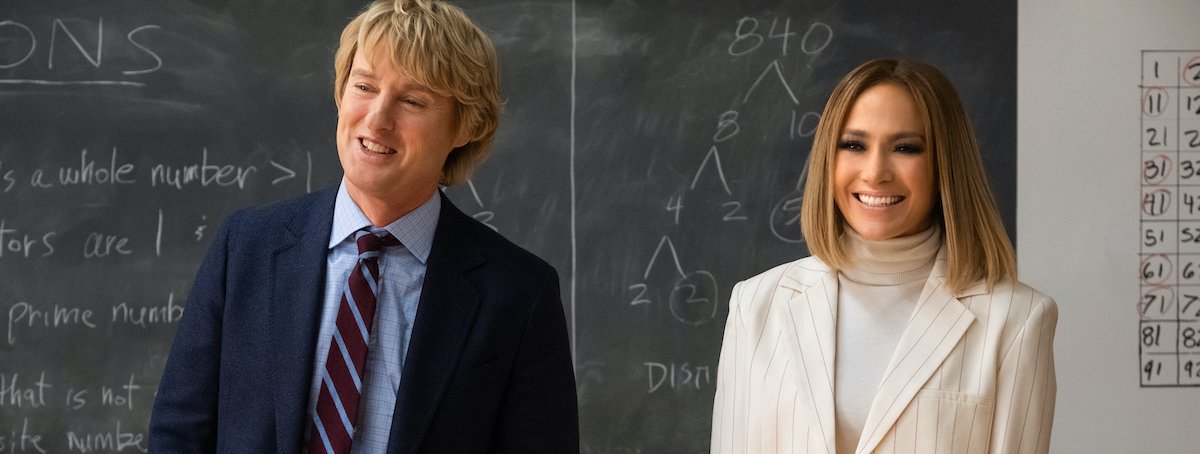
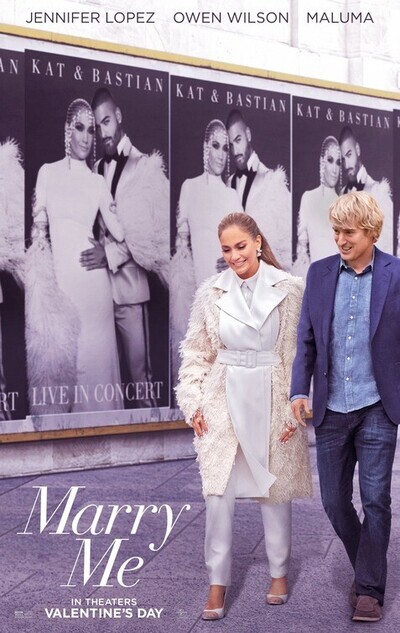
On finding out that her fiancé (Maluma) has been cheating on her, moments before getting married on stage before millions of people, pop singer Kat Valdez (Jennifer Lopez) decides to marry maths teacher Charlie (Owen Wilson), a stranger in the crowd.
It’s been stated already by many people that the combination of Jennifer Lopez and Owen Wilson is perhaps a slightly odd one within a rom-com. However, Marry Me understands that and runs with it as part of its narrative. Lopez plays pop superstar Kat Valdez. Currently on tour with her fiancé, Bastian (Maluma), the final date is booked in to hold the couple’s marriage, live on stage in front of millions of viewers around the world. Their song Marry Me has been a smash hit, and the point of which the tour has revolved around. However, when Kat discovers that Bastian has been cheating on her moments before their about to exchange vows she calls the wedding off, or at least that one. In the crowd she spots maths teacher Charlie (Wilson) holding a Marry Me sign and on the spot agrees to do so. Cue media storm as the newlyweds are hounded by the press; fascinated at this random marriage between one of the most recognisable pop stars on the planet and a man with a passion for maths who has never heard of her before, only taking his daughter (Chloe Coleman) along to the concert when invited by a work-friend (Sarah Silverman).
As the film travels along its course it makes it clear that it’s not trying to be consistently laugh-out-loud funny. There are certainly a handful of chuckles throughout, particularly from Silverman as the guidance councillor at Wilson’s school, but there’s perhaps a more rom leaning nature to this rom-com than anything else. You’re kept in place throughout by the rather likable nature of everything. Wilson and Lopez do muster up a fair bit of chemistry and create an enjoyable set of figures gradually getting to know each other throughout the film. It gets to the point where a big grin spreads across your face as you simply sit back and embrace Lopez walking into Wilson’s math club, preparing for an upcoming major competition, and teaching the class about dealing with fear in the moment via the medium of dance maths.
It’s during such moments that a handful of pop songs begin to appear, after all the film does revolve around a pop star. And while in many films like this pop songs will feel rather tacky or slightly forced in tone those within Marry Me actually feel as if they could be something you hear in the charts (although I couldn’t tell you anything that’s currently in the charts myself…). It overall adds to the general nature of the film, makes the relationship that bit more believable and keeps you engaged and in place for the just under two hour run-time. The occasional chuckles add to your engagement with the piece and simply add another layer to the film that makes it a rather nice surprise, in the end bringing it above the line of a middle-of-the-road rom-com thanks to its general energy alone. This alongside the performances of the central cast, and supporting faces such as Silverman, John Bradley (after bringing a number of laughs to Moonfall just a couple of weeks ago) and Coleman (carrying on from 2020’s pleasant surprise My Spy, although sometimes pushed aside for the sake of the narrative in this case).
Even as the third act slightly begins to make a slight dip into more distracting conventionality a quick song and montage make a turnaround of this and continue the consistent tone that came beforehand. Yes, there may be convention and familiar lines, but does it really matter when you’re engaged within the entertaining wraps of the film? You don’t overly notice or make a point of it because of the nature of Marry Me as a whole. Yes, there may be those cynical about it, not just because it’s a rom-com. But, it’s easily established early on and the central performances simply continue the likable trend throughout. Forming a chemistry that you can get behind and accept, much like the core base of the narrative itself.
Yes, there may be conventions and recognisable elements within Marry Me, but it’s nothing to be overly pointed out thanks to the highly likable nature of the film, thanks to the central relationship between Lopez and Wilson and the well-handled sprinklings of humour.
Release date – 22nd July 2022, Cert – 15, Run-time – 1 hour 35 minutes, Director – Charlotte Colbert
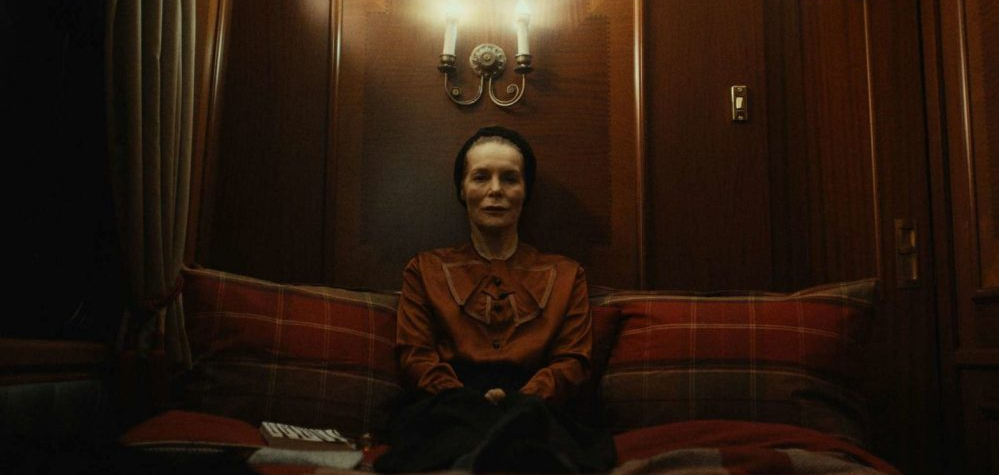
After a double mastectomy an aging actress (Alice Krige) finds herself confronting past and present traumas in an isolated Scottish wellbeing retreat.
There’s a large selection of ideas at play within Charlotte Colbert’s horror feature debut She Will. It pushes the feeling of a selection of genres also at play. Jumping between drama, horror and mystery for ambiguity when it comes to the central figure of aging actress Veronica (Alice Krige). After a double mastectomy she’s checked in to a quiet, forest-located health retreat in Scotland where while attempting to relax and recover she finds herself facing traumas of her past, particularly relating to affects on her career. Her relationships are tense with both the other, perhaps more outgoing, faces at the retreat and the young woman looking after her, Desi (Kota Eberhardt). However, as Veronica begins to recuperate and face the major events and traumas of her life shadows are cast on those around her, and particularly those who may have claimed to have forgotten her.
This particularly comes in the form of Malcolm McDowell as celebrated director Eric Hathbourne, who caused much of a teenage Veronica’s early trauma. Each time McDowell appears on screen there’s something of a surprise due to the fact that within the short 95 minute run-time he’s on screen for what feels like very little time. With only a couple of brief scenes it’s easy to genuinely forget that he’s even in the film. Such scenes appear to make a big deal of his character, and yet this feeling is conflicted by just how little he appears on-screen and the handful of references back to him we get. He largely feels like something almost unrelated to the rest of the film, apart from the various references to his dark relationship to Veronica, which he appears to have casually buried under a self-protective veil of ‘it was a different time’.
Instead we see snippets of ideas and moments in Veronica’s time at the retreat and the cabin in which she stays in. Attempting to take part in activities with other people looking to recuperate their mind and souls, through charcoal drawing outings by the nearby lake. There’s much of the piece focusing on drama before leaning into slight patches of horror, however with the various ideas at play – including an eventual side strand for Desi as she gradually grows slightly closer to the woman she’s initially only meant to bandage up, etc.
Throughout the short 95 minute run-time there are plenty of moments and ideas that are seemingly glued together to form strands of narratives, however there’s never anything to properly hook you into the piece as a whole. It causes a lack of connection to the film and the effects that it has when it comes to moments of horror. During such scenes, particularly in the latter stages of the piece, the main question at hand in terms of mystery is ‘what is actually going on?’. It boils down to a core narrative and characters that feel lacking in detail. There are points, particularly within the rushing nature of the third act, where you feel as if you’ve missed out on something as you try to figure out where this new burst of potential horror has come from. Where almost everything from the previous 75-80 minutes or so crashes together for a conclusion.
It’s one that feels much like the rest of the film. A jumble of themes and ideas, uncertain as to whether it’s supposed to be scary, mysterious, eerie, creepy or all at the same time, or perhaps none? It’s a long stretch building up to it as you feel disengaged for much of the run-time having connected to little and been unsure as to what to feel about a handful of scenes within the collection of moments and ideas. The core points of ambiguity and uncertainty are often as to what’s supposedly going on within the briefly hinted potentially supernatural beats, pushing the question of ‘what’s meant to be happening here?’, and ‘wait, Malcolm McDowell’s in this?’.
Providing little to connect with amongst the tonally imbalanced ideas collected, She Will never really brings you in to feel the effect of any of the horror and drama at play.
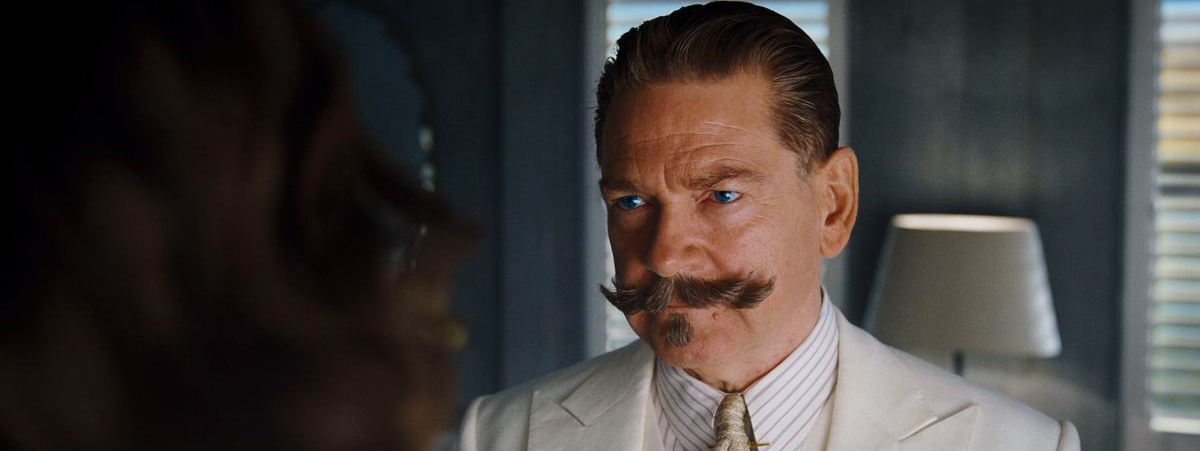
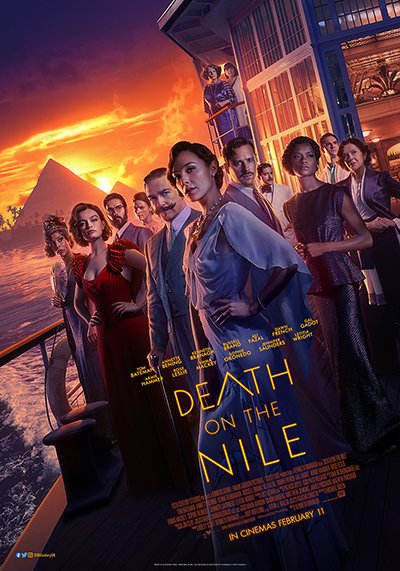
When a recently married bride (Gal Gadot) is murdered during her honeymoon Hercule Poirot (Kenneth Branagh) steps in to decipher which of the invited guests on a boat travelling down the Nile is the killer.
If there’s one thing that confirms Hercule Poirot as one of the smartest detectives, and fictional characters, around it’s perhaps, alongside his smashing moustache, the fact that he seemingly loves a jaffa cake. While not exactly looking like what we know them as it’s undeniably excellent to see him grieved by the disturbance of his enjoyment of “a sublime jaffa cake!”. He’s (Kenneth Branagh) disturbed by old friend Bouc (Tom Bateman) who, whilst flying a kite on the ancient pyramids, invites the detective along to a wedding celebration for two family friends – the recently married Simon (Armie Hammer) and Linnet (Gal Gadot) Doyle. However, surrounded by somewhat jealous friends and family, some distracted by the wealth on display, envy runs deep when Simon’s former fiancé of just six weeks prior, Jacqueline (Emma Mackey), stalks the pair on their honeymoon.
However, when Linnet is killed on the boat that acts as the couple’s honeymoon cruise down the Nile – which seems like a largely CG background with occasionally odd lighting on the characters making it stick out just that bit more – that the killer could be any one of the attendees. Therefore Poirot, who was taken on board to watch out for the newlyweds, puts his skills to use to find out who the murderer is before it’s too late. While he might have the sleuthing skills to know that jaffa cakes are indeed excellent there’s not quite enough from this second outing for Branagh’s take on Agatha Christie’s classic detective to make the actual detection scenes overly engaging. If anything the hour or so before the murder is actually more interesting than when the murder-mystery elements eventually come into play.
The film jumps through various interviews with each of the characters as if trying to remind you of who’s who each time and re-establishing potential motives. It almost runs through circles each time with each figure of the large ensemble cast – all of whom seem to instantly leap into hammy caricature as soon as the murder happens, apart from Gadot who is not only dead by this point but can’t exactly be said to be doing any subtle acting throughout her screen-time. There’s no overall point where you find yourself actively playing along and trying to guess who the killer is, instead simply watching Poirot try to reach a conclusion by asking various questions and eventually reaching his dramatic reveal.
While there’s still a watchable nature to the film, and overall it feels a slight step up from the very generic, middle-of-the-roadness of Murder On The Orient Express, it’s still apparent that the mystery isn’t as involving as everything that comes beforehand. While nothing overly stretching, simply seeing the slight tensions between characters and the interactions on the boat and various sights along the way does generally keep you in place for that chunk of the film. Things eventually build up to a comfortable point where there’s some level of consistency which the film gently travels along in something of a traditional way. You observe the characters and that’s about that. There may be occasional slices of humour, particularly from Dawn French as the nurse of Jennifer Saunders’ socialist godmother to Linette, but mostly the piece continues along a lightly dramatic note until the murder.
It’s easy to focus on the performances and the overall rapid change and nature between scenes in the second half of the film, yet there is still somewhat watchable and some likable moments and nuggets throughout. You’re still generally kept in place watching things unfold, even if not actively taking part, and perhaps the show-stealer is still Poirot’s undeniably excellent moustache. Yet, what’s provided is a film that juggles a lot of characters but manages to play along with its ‘everyone is a suspect’ idea rather well. You sit and watch things unfold in perhaps not the most elegant of ways, but still with a generally traditional feel that has enough within its busyness to make something of a good swipe, if not a clean cut.
The waters, and performances, may be choppier than hoped for, despite the traditional route, but there’s still a generally watchable nature to Death On The Nile. You might not play along with it, but thanks to the first half you’re generally situated in the piece for most of the busy run-time.
Release Date – TBC, Cert – N/A, Run-time – 1 hour 14 minutes, Director – Sam Firth
Director Sam Firth looks back at, and attempts to recreate, her parents divorce, and her own childhood, based on their accounts and her own personal memories.
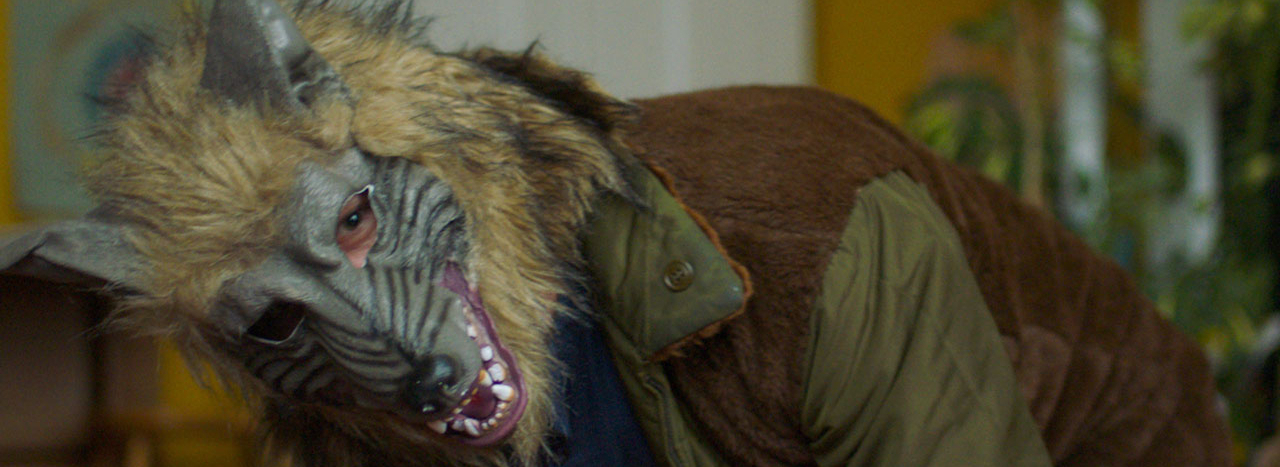
“In some ways I’ve been making this film since I was a teenager” states director Sam Firth towards the start of her documentary feature The Wolf Suit. It’s an undeniably highly personal project for her as she looks back at her early childhood, particularly around the time of her parents divorce. Through recreations of memories and events in all their lives she attempts to work out what happened, with most of her memories being happy ones of family fun and bonding. However, that’s not how things are seen by everyone else, particularly the differing perspectives of her parents who haven’t spoken for many years. Firth claims “I could use drama and filmmaking to prove that everything is not subjective” as she assembles actors and a small production team to craft recreations of her families life before her parents broke apart.
There’s certainly something interesting within the recreations and the way the actors try to understand who they are playing – asking the real life figures, present on set at almost all times, for help in what their mindset should be at the time; despite occasionally conflicting feedback and personal memories. It enhances the point that the film is trying to capture what’s described as “the confusing, contradictory and sometimes painful course that is life”. It’s something that each figure appears to be reliving to different extents over the short 74 minute course of the film. Each one adding a new personal angle to the piece as a whole.
Whether this personal feel is enough to completely connect with the audience is a different matter. While there’s certainly a level of interest in what’s happening on-screen it’s not always the most involving as the viewer often doesn’t have the same amount of connection to the project as those who are actually a part of it; and lived through it the first time round. This is particularly the case when the filming of the recreations is occurring, as the piece travels along one generally direct line for much of this time. It’s during such moments that it’s likely a good thing that the film is as short as it is, risking feeling somewhat lengthy if it were much longer.
Yet, there’s still something engaging about the personal angles that are brought to the film and the differing memories and perceptions of what Firth sees as such big events in not just her own life but those of her family as a whole. It’s a key point of engagement for the viewer as they observe the various different stages of the process of physically remembering. While you might not quite feel the same level of involvement as those actually present in the unfolding moments there’s still an interesting enough piece here, especially when looking at differing memory-based perspective, that spans the short 74 minute run-time rather well.
Clearly a very personal film for those involved, this feeling doesn’t always echo to the viewers of The Wolf Suit. While memory recreations generally travel across one line there’s plenty of interest to be found in the differing views and perspectives of life events.
Teenager Suzu (Kaho Nakamura) enters the virtual reality world of U, where she quickly becomes a world famous singer, however her interest lies in a dark and destructive figure known as The Dragon (Takeru Satoh).
“You can’t start over in reality, but you can start over in U” – it’s this core tagline which acts as a core turning point for quiet, anxious teenager Suzu (Kaho Nakamura). She dons the technology to transport her body to that of a virtual reality figure designed after herself and her personality and is plunged into U; a world of towering buildings and thousands of floating figures, apparently a population of two billion overall. While initially unsure of what to do in this detailed, seemingly endless, landscape she eventually does the thing which comes most naturally to her, sing. It’s something she hasn’t done for years, having not done so since her mother passed away a number of years ago, ever since her relationship with her father (Kōji Yakusho) has been distant, the same going for those she has, or rather doesn’t have, at school – aside from her tech-minded best friend Hiroka (Lilas Ikuta).
While initially her singing appears to be a disturbance to other players in the VR realm Suzu becomes an overnight sensation, her avatar Bell gaining millions of followers within a matter of hours. Gradually the film, the latest from writer-director Mamoru Hosoda, begins to look at the various effects of Bell’s impact on both the online sphere, and Suzu’s life in reality. Brief moments look at the masses of comments that pour in showing potential overload and Suzu’s increased stresses in life. However, none of that takes priority over her and Hiroka’s quest into discovering who the mysterious player known as The Dragon (Takeru Satoh) is. A dark, towering figure who disrupts the peace and harmony within U. The search is conducted both worlds and takes a different form within each. While based in reality there’s a more direct line of research and potential ‘suspects’, however when actually facing the labelled beast herself there’s something of an acknowledged Beauty And The Beast narrative unfolding.
Amongst all of this there are still elements of Suzu’s personal life to be glimpsed. The way she interacts with classmates, leading to one or two particularly humorous instances, also comes to the fore at certain points. There aren’t exactly beats and narrative strands fighting for prominence throughout the film. It feels more the case that as one thing comes forward everything else is almost put on pause, taking turns to develop, rarely all happening at the same time. With the story/ stories unfolding in this way the effect is that of a slightly lengthier run-time than perhaps the film should have. While clocking in at only just over two hours the third act begins to feel as if it tails off from the film and you begin to feel a sense of distance from the film as a whole. Moments that should have more impact don’t fully click after the various patches and changes over the developing course of the piece.
While the animation is still wonderful and truly comes to life on the big screen, the mixture of traditional anime and CG for the world of U is excellently done and adds to the vibrant colour of the worlds at play, especially when Suzu/ Bell is performing (the songs throughout are pretty great), it’s not quite enough to distract from the nearly sprawling narrative. The beauty and the beast elements feel the most pushed back and certainly feel rushed when it finally comes to them, as if a minor detail there to progress things elsewhere/ It’s inclusion causes the second half overall to feel somewhat drawn out, despite the interesting unfolding of events and details in the real world.
There’s certainly a cleverness to the film as a whole and the way it goes about certain elements and strands, both in terms of representing the online, virtual reality world and also some well-handled points within Suzu’s reality, and some of the people around her. However. as it goes on the feeling that the film is slipping into convention increases and it becomes rather familiar as it travels along its various paths. It’s a shame for something which starts out as something so unique and with plenty of potential. What we get is something visually brilliant, and with plenty of good music too, but requiring a stronger narrative structure to properly pull it through to the end of the piece and the viewer along with it.
While strong in terms of visuals and music Belle begins to slip into convention with its stop-start set of narrative strands. It’s certainly interesting and you can feel the creativity, the story could just do with some tightening up.
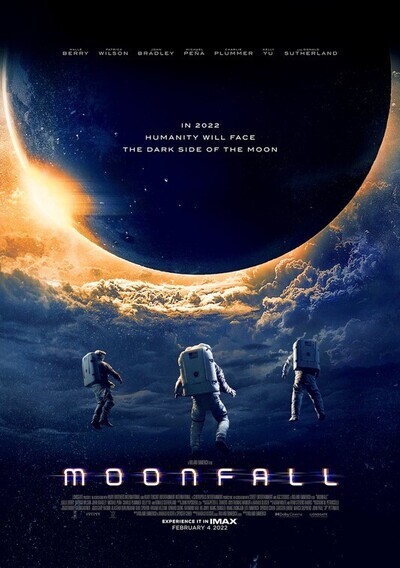
Cert – 12, Run-time – 2 hours 10 minutes, Director – Roland Emmerich
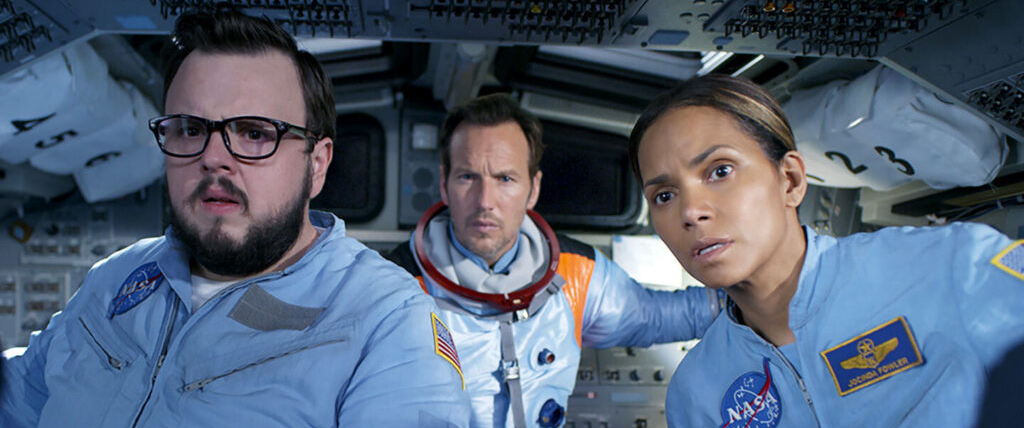
When the Moon is revealed to have gone out of orbit, getting closer to the Earth, a disgraced astronaut (Patrick Wilson), the deputy director of NASA (Halle Berry) and a conspiracy theorist (John Bradley) are sent to discover the force behind this planet-threatening occurrence.
Moonfall. The Moon is falling. Out of orbit it’s threatening to crash into the Earth’s atmosphere, breaking to pieces and destroying the planet along with it. It’s a rather ridiculous disaster movie idea, one that fits the title Moonfall rather well. And yet, co-writer (alongside Harold Kloser and Spenser Cohen) and director Roland Emmerich manages to walk a line away from direct silliness through most of the two hour and ten minute run-time of his latest disaster flick. It’s not that the entire film is thoroughly serious, it acknowledges just what its tone is and there’s a fair deal of comic relief to be found within the effective figure of conspiracy theorist KC Houseman (John Bradley). It’s he who makes one of the initial discoveries, altering the world to the fact, that the moon is rapidly getting closer to the Earth.
However, when nobody is prepared to listen to the man who not only owns a cat called Fuzz Aldrin (an excellent joke!) but believes that the Moon is actually an alien megastructure he attempts to enlist the help of disgraced former astronaut Brian Harper (Patrick Wilson). Trying to deal with his own personal problems; amidst the likely end of the world, including his teenage son (Charlie Plummer) potentially facing prison time for car theft and speeding in a highway chase with the police. However, the two eventually find themselves recruited by NASA, and Brian’s former colleague Jocinda Fowler (Halle Berry); who was on the same mission that led the world to be told that Brian led to the death of another astronaut at the time, and not a mysterious space force, to find out just what is happening to the moon.
It’s of course an unlikely team that manages to click rather well within the confines of the space shuttle and the disaster film as a whole. There’s plenty of build-up but generally things move along rather well before we actually reach the point where the trio meet fully for the first time. Throughout tidal waves and increasing disasters there’s plenty of thrills to be found within the action that Emmerich’s latest produces. Amongst the general silliness of the base narrative the film manages to find an effective disaster tone during the escalating action and drama – even during a point where a space shuttle is trying to take off before it’s wiped out by a tsunami-level wave. This all, of course before the inevitable CGI destruction of recognisable city landscapes.
Such elements are perhaps what make the scenes in space the most interesting elements of the third act. While the film flicks back and forth between the shuttle crew and the unfolding events on Earth, looking at the character’s various family members and what’s happening to them, the stuff on our home planet is never as interesting as what’s happening up front with the Moon. While it might be because we don’t have as much connection with these figures – despite little screen-time the film appears to think most of Michael Peña’s late stage scenes have more effect than they actually do – it’s also because they simply feel like a distraction from the more exciting stuff that’s happening at the same time.
By continuously looking back to the families on Earth trying to survive the end of the world the film almost appears to put the brakes on every so often before jumping back into the main course of interest and action. It’s also the point where the most silliness comes through and the film almost appears to lose itself. Becoming something different in letting go of the more direct edge and allowing for the sprawling ridiculousness to almost get out of hand. It’s at a clear turning point in terms of character and explanation of events that things truly begin to unwind. The film certainly doesn’t drop so dramatically that it becomes bad; there are still a handful of chuckles to be had at the stretches the narrative leaps towards, but it does feel as if there’s something of a dip as the tone clearly changes before things wrap up. As if feeling like it needs to make up for not being as ridiculous as the trailers and core events would suggest. However, where Moonfall works best is when simply letting its base create disaster and seeing the race to save the world unfold. It’s when the intentional humour works and, most importantly, you’re able to get on board with the idea of the moon falling.
When focusing on its three central figures Moonfall manages to create some effective action within its drama, not forgetting to include humour to match the silliness of the general idea. However, there’s a clear dip as the silliness is heightened in third act shifts to less engaging events and side characters.
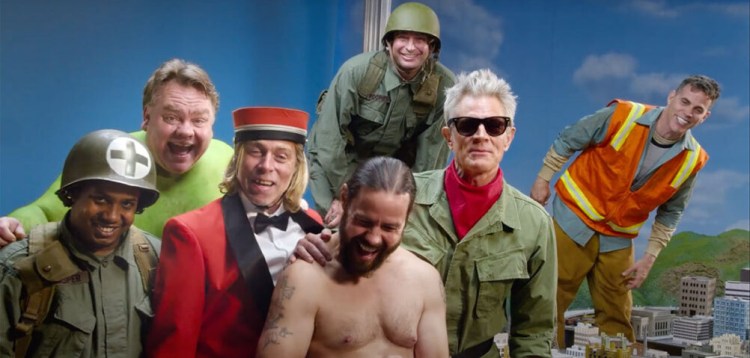
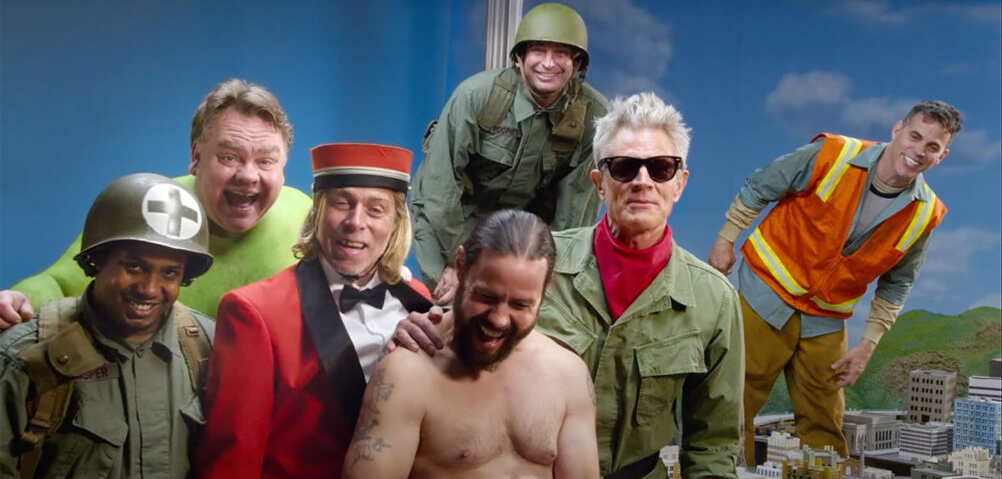
If there’s one thing that Jackass proves it’s that pretty much anything can be perfectly demonstrated in the form of a musical number. After their second feature outing of pranks, stunts, pratfalls and pain the core cast gleefully provide a rendition of The Best Of Times, from La Cage aux Folles. While not quite being able to hit the same (or any) notes as the backing singers the group are also still being put through a succession of their standard stunts. Against the backdrop of building sites and saloons the familiar faces’ tunes-cum-groans are subject to falling off rotating cement mixer lorries and being dragged away by a horse, attached by a rope around the ankle.
Yet, amongst the worry and the pain the smiles remain. There’s a sense of laughter and amusement from all involved at the friendships formed within the various spectacles on display. It’s the case throughout the films, from the gross to the just plain silly. In fact, the film almost opens in this way. As members of the team read what they think is a Valentines message from a fan they find themselves smacked in the face by a spring-loaded boxing glove hidden behind the note and wall. Those in the know emerge in fits of laughter, and often that makes its way onto the face of the punch’s subject. With each new film Jackass has managed to bring the audience in to the environment of people who are simply having a good time in each other’s company and, most importantly, at the end of the day, being able to laugh with (and occasionally at) each other. Truly having the best of times in that very moment.
Up until the build up to latest feature in the franchise, Jackass Forever, I had never personally seen any of the Jackass films. I’d seen one or two clips, but couldn’t really remember anything about them. Even fan favourite moments such as the Poo Cocktail Supreme weren’t overly known to me. My general, cynical, perception was that it would just be a group of people doing stupid things that were either sick, painful or both – although definitely not anything harmful to the viewer. I didn’t quite have the stereotypical parental viewpoint that it was horrible stupidity degrading the youth of today (instead of blaming Canada the finger would likely be pointed towards California), but I certainly didn’t have any overall interest in the franchise, or the TV series from which it spawns from.
However, having delved into the films (including hidden-camera loose narrative Bad Grandpa) it’s clear that I was just ignorantly wrong. While not being a fan of the first entry – finding a fair few of the segments to be somewhat cruel – there’s a fair share of amusement to be found within the other features. As the laughter increases and the stars become the focus over the stunts, their reactions and responses to what they are performing add to those of the viewers. By the time Forever arrives the crew, and indeed director Jeff Tremaine, feel much more present; than the usual cut to cameraman Lance Bangs throwing up, and as much a part of what is being produced as lead faces such as Johnny Knoxville (who, while prominent, certainly isn’t as much of a primary focus as I at least thought he might be, Jackass truly is a set of team efforts) and Steve-O. And yet the feeling of a group of friends hanging out in a(n occasionally expansive) back garden with a budget, a snake/ animal expert, plenty of health and safety personnel and a number of cameras just to muck around is still present.
Their bond is shown in their moments of concern, even before things go wrong, even when they don’t. It’s in any stunt involving a bull. Any moment when unsuspecting victims are trying to help each other out of a situation, knowing how bad a shock from a – or rather multiple – stun gun can be. Duo or team segments where there are multiple people going through the same pain. There are clear bonds and pairings throughout the series – plenty feature Jason ‘Wee Man’ Acuña and Preston Lacy – it adds to the nature of certain stunts and the impact that some of them have. You see the concern and reluctance on Dave England’s face as he’s hesitantly about to take a pogo stick to ‘Danger’ Ehren McGhehey’s testicles; as if he’s about to go through the same nether region located trauma. Even Bam Margera’s mum, April; largely a victim, alongside her husband Phil, in the first two films, is more into the joking and finds herself laughing as chest hair is ripped off those around her with superglue in Jackass 3’s Super Mighty Glue.
It says something that amongst everything that happens the figures that have become synonymous with Jackass over 20+ years still have less trust for animals than they do their co-stars. It’s a recurring point that Margera is terrified of snakes. Whenever in a situation involving then, even rubber ones, he trusts those around him to get him out of the space he’s in (partially there as an act of revenge after having pranked various people on set during filming with glasses of water and boxing gloves). Each figure knows their friend’s weaknesses and fears, the things that truly cross a line for them. The fact that they’re used in stunts, for example a number that involve heights for Lacy, and certain members still go ahead with them says something about the levels of trust on set and in each other, not to mention the confidence of the cast.
Confidence is clearly something that has grown and spawned amongst the group. There may be mistrust about certain events but it’s certainly in place with each respective member, and the crew as a whole. It’s perhaps best demonstrated in the general body confidence that’s on display – none more so than Chris Pontius and his frequently displayed, painted and punished, penis. Jackass, particularly with the newest entry in the series, has always featured a range of body types. It’s lightly pointed out in the stunts, although never with an air of hurt or mockery. The cast are accepted within the group and while sometimes used in the stunts, for example Wee Man being part of a hidden camera bar fight with other people with dwarfism, namely the Half Pint Brawlers, playing bikers, policemen, paramedics, etc, the figure at the centre of the moment always appears to be in on, and supportive of the unfolding point. As if an equal part of the creative drive behind the stunt, prank or simple attempt to make everyone else laugh. You can almost link each figure to a certain type of stunt fit to their identity and overall style, making them fit into their own part of the overall Jackass mould even more.
There could be more said on the point of body positivity and confidence, each figure within the recurring group of men accepted by the others regardless of shape or size, but it can lead back to boiling down to the central idea of friendship that creates the laughter within Jackass (the title said that this whole piece was going to simply state the obvious). It’s clear the fun that the group are having, particularly in the more unexpected ‘behind-the-scenes’ style stunts, such as paint-bomb laden portaloos; where everyone ends up laughing, sometimes just in disbelief at what they fell for, in the end. It’s a welcoming environment of natural humour and acceptance – a group who can build up to stunts with links to Greek myth and still laugh at a quick moment involving what they’ve titled a Poocano.
Over time you too notice that you’re wanting the cast to come out of each segment still intact, and not just as a basic human response, but because their banter, which increases with each film, helps bring you in to the humour that bit more. There’s genuine impression when they manage to land a stunt – perfectly riding a minibike around a loop-the-loop gains a rather amazed response from both cast and audience – and a level of celebration from those on-screen. Of course people know not to go out and copy what they’re seeing on screen; and not just because it’s said at the very start and end of each film (Bad Grandpa aside), or because you can’t exactly just go down the road full speed on a mobility scooter as if the brakes have broken, more for the sake of pricing and availability than anything else. A Toro Totter is an even more difficult amusement to create, and then you have to find a bull.
It’s also perhaps the case that a fair few people just don’t want to copy what they’re seeing happening on screen. It’s very clear the pain and injuries that are caused to these mostly professional stuntmen, and the team that surround them. And amongst the set ups and health and safety precautions the extent to which some of these injuries go is obvious, and likely not anything people would want to recreate for themselves. There’s a reason it’s called Jackass and they claim that even after 20 years they’re “still doing the same old stupid sh!t”, just with a few more missing teeth (some more knowingly caused than others).
Everyone assembles to have a good time. A good laugh in each other’s company, and, of course, to some extent pain. The team is brought in and assembled each time with a confidence in each other, and to an extent themselves, to get them through each prank and stunt. It’s a close grouping that has clearly lasted years for both the Jackasses at the heart of the films themselves and the audiences who go to spectate their daring, and, as they would perhaps also admit, stupidity. Amongst the general content there’s an understandable nature as to why the franchise, and original series, continues to be such a success amongst teens in what’s branded as their coming-of-age years. An almost open, unspoken, invitation into the group. To laugh with them and have a good time for 90 minutes or so (at least when it comes to the film) no matter who you are or what you look like. With no real sense of malice. Whether for the kid who feels alone and needs a friendly pick up or the group of friends watching and laughing with each other (it should be pointed out that all Jackass films, apart from Bad Grandpa which has a 15 rating, are very rightfully rated 18 in the UK).
The films have slightly developed to feature more laughter and slight behind-the-scenes moments amongst the cast and crew. Featured in slightly lengthier segments that focus more on the prank format between the stars, or simply other people coming in and having a go themselves at sitting on an electrified seat. They’re all in it together and it shows through the ensemble nature that has always been present within Jackass. It’s shown in the opening sequences whether it’s everyone crammed into a giant shopping trolley or having their own near specialist style of stunt shown in slow-motion glory against a bright rainbow backdrop. And, of course in a musical number. Celebrating the friendships that make up Jackass, the fun and laughter to be found amongst the pain that the stunts create. The feeling that what’s unfolding at that moment in time is indeed the best of times.
In Jackass 3.5, one of the additional films in the franchise made up of bonus and behind-the-scenes material, Ryan Dunn and Bam Margera detail The Flying Nut High Five. Footage plays of various fails of the stunt, performed to the amusement of the rest of the cast. “The Flying Nut High Five is the attempt to jump up in the air, running at another dude. Spread your legs and then knock your nuts together” explains Dunn just before Margera falls backwards on his standard movie production chair with long, thin, wooden legs. “Did I get sabotaged or am I just stupid?” he questions as Dunn cackles. It’s the first of multiple times the chair will fall over as it begins to gradually break at the base. It seems Margera just simply isn’t made to sit on one of these seats. As it flattens and the pair find themselves increasingly distanced in height from each other their giggles turn to wheezes. As if forgetting the camera, the interview and attempting to smash (still clothed) testicles together Margera tries to hold onto the chair of his friend for both support in case the chair collapses under him, and to hold himself up for laughter. Dunn looks down and continues to laugh. It spreads between the two and further sets them off.
Cert – 12, Run-time – 2 hours 6 minutes, Director – Michael Showalter
Tammy Faye Bakker (Jessica Chastain) is a hopeful, young woman looking to tour America and bring as many people to God as possible, alongside her leading husband Jim (Andrew Garfield) the pair start a televangelism empire, not without its controversies.
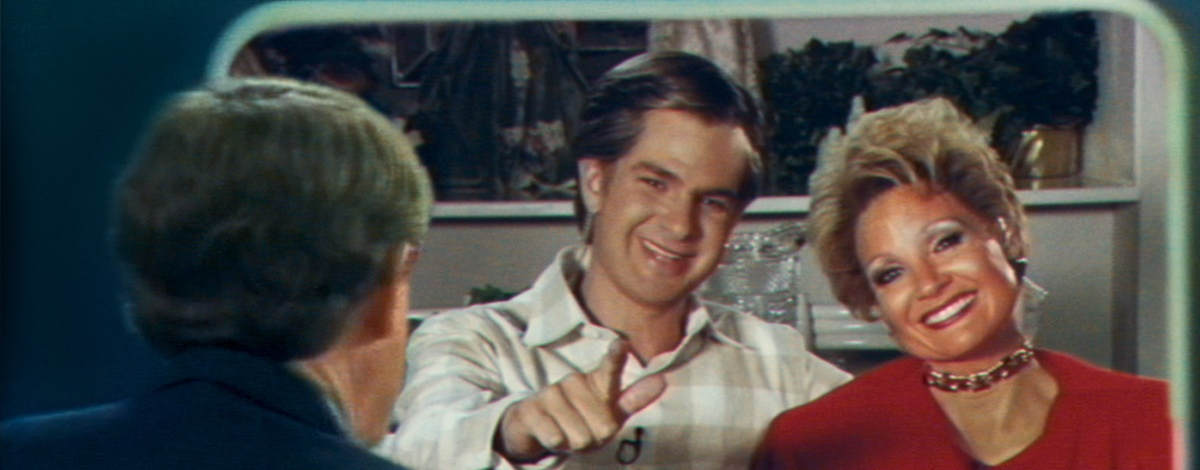
‘Tammy Faye needs to think about her entire life before she sings’. It’s not explicitly said at any point over the course of The Eyes Of Tammy Faye, but if these words were to be stated it would be just one more thing that could lead the film to almost be called Preach Hard: The Tammy Faye Story. There are a handful of elements within the piece that lead it to feel like a, albeit generally watchable, parody of itself, or rather the type of biopic it’s demonstrating. It comes forward in the by-the-numbers convention that runs throughout. Over the course of the narrative and the central life depicted the line between parody and harsh convention is wavered across creating something close to a level of uncertainty for the viewer as to what the true tone of the film is meant to be.
We follow Tammy Faye Bakker (Jessica Chastain), a hopeful preacher who goes from touring America, with her husband Jim (Andrew Garfield) putting on shows for kids and families, to gradually opening up one of the most successful televangelism empires in not just America but eventually the world. However, while Tammy is very much intent on showing God’s acceptance and welcoming people into the televisual congregation Jim seemingly becomes far more intent on bringing money in through sugar-coated appeals, emotional requests for money (or rather “donations”). The marriage becomes a target for the papers, alongside the channel the pair broadcast on and practically run as a whole. “The secular press hates us because we’re winning millions of souls for Jesus” claims Tammy, baffled by why anyone would believe the obvious rumours being spread, and not want to get to know Jesus and have a similar transformational experience as the one she had in her childhood.
Over time the early-blossomed relationship between the two appears fractured as they’re on really seen together on the television screen, where at least Jim is putting across an increasingly false persona. Yet, even as the film appears to firmly establish its characters, slightly settling down and straying away from the parody feel as the marriage becomes the central focus, it seems that Jim fluctuates for the viewer. While you might get used to one character type he soon changes again and you’re never completely sure what his true intentions or views are. Is he being manipulative, is everything for his own gain, or has he actually had a sudden moment of realisation and regret?
Such thoughts are emphasised when it’s made very clear who the real villains of the piece are meant to be. It comes in the form of Vincent D’onofrio as Rev. Jerry Falwell. It’s not just his clear disgust for liberal thinking, and particularly what he sees as the sin of the LGBT+ community, but the way in which he says it. Harsh, sibilant adjectives demonstrate this in a way that clearly states ‘I’m the bad guy’ as he enters into why ministry should also be used to help the Republican party. There’s a general air of obviousness around him whenever he appears on screen, although not down to D’onofrio’s performance.
However, many of the film’s events are seen through the titular eyes of Tammy Faye. Chastain does a great job with what she’s given. While not always getting strong material she certainly avoids a performance that feels like something of a spoof. She helps to lift the film up and push it along, often being the core reason that you stay somewhat involved in the piece and it remains watchable. Although, as she turns to belt out another gospel track, it does all lead you to want to see her in a big, feel good musical.
By the time we reach the ending, after a rather lengthy final 25-30 minute packing in the details of a turnaround in the narrative that has been little referenced up until now, there’s still a watchable piece of work here but one that certainly feels as if we’ve seen it before. Good performances help to distract from an overall feeling of parody and keep you somewhat interested in what’s happening – particularly Chastain when travelling along the lines of her character’s mission rather than the slightly overdone personal worries – perhaps the most familiar elements of the piece. In the end there’s a very by-the-numbers product within The Eyes Of Tammy Faye. It just about keeps your attention and perhaps, much like in real life, it’s down to the on-screen performances.
Often wavering between parody and strong convention The Eyes Of Tammy Faye is a watchable, if very familiar, biopic, often held up by the efforts of Jessica Chastain and Andrew Garfield’s central performances.
Cert – 18, Run-time – 1 hour 36 minutes, Director – Jeff Tremaine
The Jackass team reassemble, with some new faces, after more than ten years away to put each other through another round of pranks, ‘games’, stunts and pain.
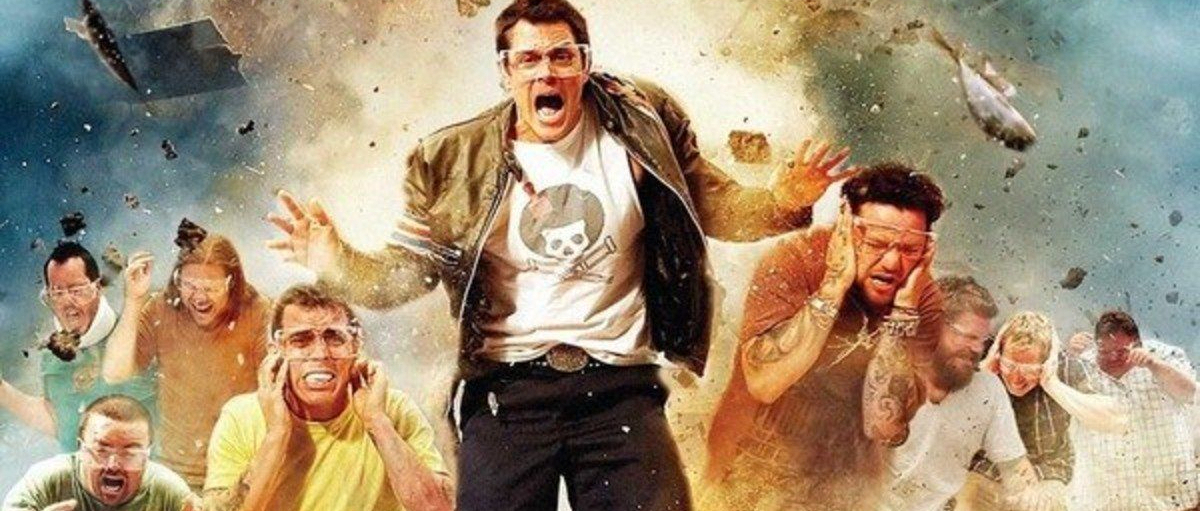
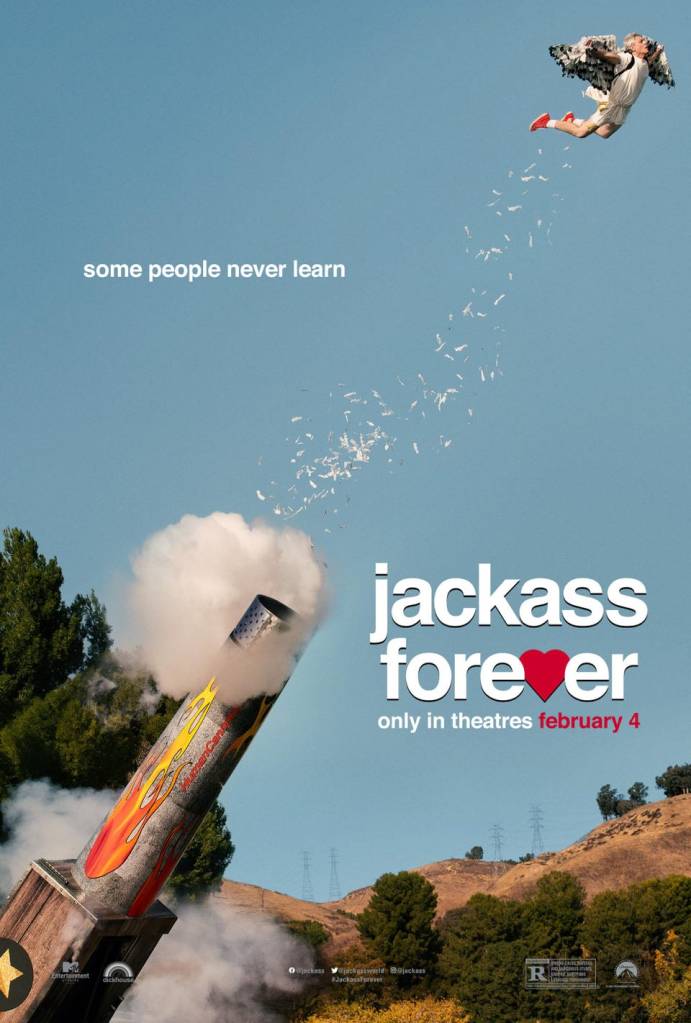
“D!ck pain hurts” three words that state the obvious and also help to sum up just part of Jackass rather well. While still somewhat difficult to review the film franchise based on the hit MTV series has managed to remain a level of consistency (certainly firmer than the faeces regularly featured throughout) while still slightly developing with each feature. It’s been over ten years since the core ensemble were last on the screen putting each other through various painful stunts, but still having a good laugh in (and at) each other’s company. Now, over twenty years since the original TV series, most of the regular ensemble are back, with a handful of new figures (although never taking the spotlight away from the returning members, or feeling pushed aside), as Johnny Knoxville puts it, “doing the same old stupid sh!t”.
Perhaps compared to the previous films there’s more within Jackass Forever that emphasises the more prank-like nature of many of the stunts. An early piece sees various figures locked in a pitch-black room with what they think is a venomous snake, while Knoxville and Chris Pontius (perhaps the most confident man to ever grace(?) the screen), with the help of night vision goggles, tease them with rubber snakes, fake paws and the occasional taser. There’s a developing nature to the increasing worry and laughter of the figures in the room that while spanning only a couple of minutes certainly has a longer feel to it than some other Jackass stunts. Forever appears to have a number of such instances, where in the end everyone has had a good laugh and appears to have some form of good time, even if that comes in the relief after everything that’s just happened. There’s a level of engagement with them as they develop and allow you to laugh with the figures on screen, never feeling cruel – as a handful of pranks and stunts in the first Jackass film feel, to me. Edited montages and compilations create a level of consistency within certain individual segments and generally enhance the humour to be found.
This is perhaps the Jackass film that features the most laughter from the cast, and indeed the crew. While we still have cameramen throwing up there’s a stronger feel to the presence of the crew, with even director Jeff Tremaine featuring slightly more than before and being involved in one or two stunts as well. While there isn’t wholly a sentimental vibe of friendship in place, this is the same old Jackass, it’s clear the bond that the group has and it brings you in that little bit more to be able to laugh more freely at some of the unfolding events. Their bond is shown in moments of worry, Dave England clearly concerned before, during and after bringing a pogo stick to ‘Danger’ Ehren McGhehey’s testicles (perhaps one of the moments that gains the biggest audible flinch response from the audience). As usual, it’s made clear, do not try this at home!
“I’m a grown man, I’m 51 years old!” cries Preston Lacy while his friends around him laugh at heightened toilet humour. The core cast may certainly be older but they’re still having as much of a good time (if albeit occasionally painful) as ever. It manages to rub off on the viewer, particularly during the extended pranks and sequences where things are allowed to truly develop and be built upon for extra chuckles along the way. It feels as if there’s more wider involvement and laughter from the cast and crew as a whole and that also manages to create a fair few laughs amongst the audience.
In general this is perhaps the most ironed-out and enjoyable Jackass film yet, in terms of both set up and occasionally hazardous execution. We’re shown patches of banter between the on-screen figures instead of moving from segment to segment. It helps the overall flow and entertainment factor and simply provides you with plenty of amusement, and, of course, its fair share of shared pain, to make for something that while being the same old Jackass is perhaps the best, most enjoyable one yet.
Perhaps the most ironed-out Jackass film yet there’s a stronger group feel to Jackass Forever than ever before. There’s plenty of chuckles within the harmful amusement, strengthened by the laughs and banter shown on-screen, particularly within the construction of longer segments given time to breathe.




 Just A Little Bit Random