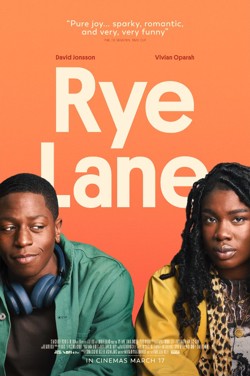
Twenty-somethings Dom (David Jonsson) and Yas (Vivian Oparah) help each other embrace moving on from their respective recently broken up relationships over the course of one day in the streets of South London.
There’s a strong sense of the 90s indie scene within director Raine Allen-Miller’s feature directorial debut Rye Lane. The natural dialogue of Clerks meets the free-roaming scenery and relationship of Before Sunrise in modern day London. As we see twenty-something strangers Yas (Vivian Oparah) and Dom (David Jonsson) roaming around South London there’s a fine sense of place. A clear feeling that the pair know the area well yet are aimlessly wandering and exploring as they go.
Fantasy and flashbacks leak into the real world – not just in terms of a box of popcorn travelling from memory into a scene of conversation – with great effect. It heightens the relationship between the two strangers as they open up over the course of a day about their recently broken-up relationships – the reason for their meeting being Yas having overheard Dom crying in the toilets at a friend’s art exhibition. In general there’s an interesting nature to Allen-Miller’s directorial style which engages you with the characters and the world of the film, alongside giving the film itself a distinct personality. Not just in terms of the way the scenery looks and is captured but also what’s happening in it. There’s so much happening in one moment alongside the main course of the narrative and conversation, even if just hints of details in the background further impacting the events and emphasising the bustling nature of the setting.
Jonsson and Oparah are excellent as the two leads. Bursting with energy and chemistry they bring Nathan Bryon and Tom Melia’s dialogue to life and add to the distinct freewheeling style of the film. It’s easy to get caught up within the connected roaming from place to place as the pair recover from their relationships whilst also trying to reclaim items from them – for Yas it’s a vinyl copy of one of her favourite albums. The fast-flowing nature of the events further caught in the short 82 minute run-time which manages to effectively build-up the relationship, engage you in it and take you and the central figures to so many places without feeling overstuffed. Instead charting a natural course of progression through the developments and conversations.
From that first proper click where the laughs start rolling in this consistently hilarious ride there’s an energy fuelled by a love for what’s on display. A care and passion for the locations and culture that we see throughout. Allen-Miller understands just how to allow this to further fuel the events and embeds each scene into those facts making for something of a celebration throughout the film, particularly during a number of particularly joyous scenes; whether through humour or the upbeat energy on display. There’s a lot to love about Rye Lane. Capturing the creativity and natural dialogue of plenty of 90s indie gems while very much embedding itself in the 21st century.
Early on, when sat opposite Dom’s ex (Karene Peter) and best friend (Benjamin Sarpong-Broni) – now very happily in their own official relationship – Yas appears at the restaurant to help Dom out. When telling a fake story about how the pair met at karaoke they start to chant their names, beginning to match each other’s rhythm. “Dom and Yas, Yas and Dom. Dom and Yas, Yas and Dom”. It’s early in the film, but you really want to join in.
Fuelled with natural dialogue and performances there’s a lot to love about Rye Lane’s celebration of its location and culture. Consistently hilarious and overflowing with creativity giving the film its own distinct style and personality, hopefully one to become a future British classic.
Cert – 12, Run-time – 2 hours 10 minutes, Director – David F. Sandberg
Whilst trying to make sure that his now super-powered family sticks together Billy Batson (Asher Angel) finds his Shazam (Zachary Levi) powers challenged by a group of Gods (Helen Mirren, Lucy Liu, Rachel Zegler) looking to take them back for themselves.
2019’s Shazam was something of a breath of fresh air in the DC Universe when first released. It wasn’t plunged in darkness, or gritty, or the filmic equivalent of a scowl (although none of these labels are really worn by Wonder Woman either). It was fun. As we saw teenager Billy Batson (Asher Angel) explore his various superpowers as the multi-powered superhero Shazam (Zachary Levi) whilst confronting the fact that he can’t just use them for his own amusement. It therefore comes as something of a disappointment that the sequel appears to have forgotten how to have fun, or why its characters worked in the first place.
Billy and his entire foster family (aside from parents Rosa (Marta Milans) and Victor (Cooper Andrews)) now have super powers, however the original Shazam still boasts the full array of powers. Yet, even that collection is challenged when a group of Gods (Helen Mirren, Lucy Liu, Rachel Zegler) arrive on Earth looking to both bring their own realm and take back the powers which are rightfully theirs. Soon the group of heroes start to feel even more strained than before, with some – especially Jack Dylan Grazer’s Freddy and Caroline Grace-Cassidy’s Mary – already having wanted to go near their own way.
There’s a lot of characters on display here, at least as part of the central group, and the film shows this by not quite being able to capture their personalities. Instead a number of side characters within the family – such as Faith Herman’s Darla – feel more like general character traits than people with proper personalities. It’s hard to connect with them as there’s not much there to actually connect with as the film tries to move the narrative forward while still showing the characters with their powers (characters who while clearly being older the film still wants to treat just as they were four years ago). In fact, when shedding elements and simply focusing on Billy/ Shazam (even if you do sometimes forget that the titular hero is a child) there’s a stronger feel to the proceedings as the pace is picked up and the action in general feels much stronger.
Much of this comes forward in the third act after a first hour which, while having its moments, fails to truly lift off due to the simple fact of blandness. A feeling perhaps created because of the struggling personalities of the core family. There’s more focus on less as the film progresses, meaning that there’s more enjoyment to be had. There may not quite be a sense of fun, or as much humour as you would wish despite one or two chuckles along the way, but things certainly improve as become more refined and engaged with their details. The powers of the villains at hand are shown with more effect – especially in regards to a number of very enjoyable, and fearful, monsters which start to crop up alongside an undeniably cool wooden dragon – and there’s a more engaging nature to things overall.
Even with just how much happens in the build-up to the final face off, and to some extent afterwards, there’s a consistently engaging feel to it all. Things could so easily feel drawn out but thankfully the film avoids this making it a rather worthwhile set of events after the more uncertain footing of what has come beforehand. For a film focusing on the central character trying to keep his family together – we see him in a therapy session at the start trying to come to terms with past traumas and abandonment – it works best when they’re largely apart.
There’s an uneven nature to the opening half of Shazam! Fury Of The Gods. While some moments are fine others feel bland due to too many characters with too little personality. However, as things are shed and the action picks up there’s a more enjoyable quality, particularly to the action on display.
Release Date – 17th March 2023, Cert – 15, Run-time – 1 hour 42 minutes, Director – Ti West
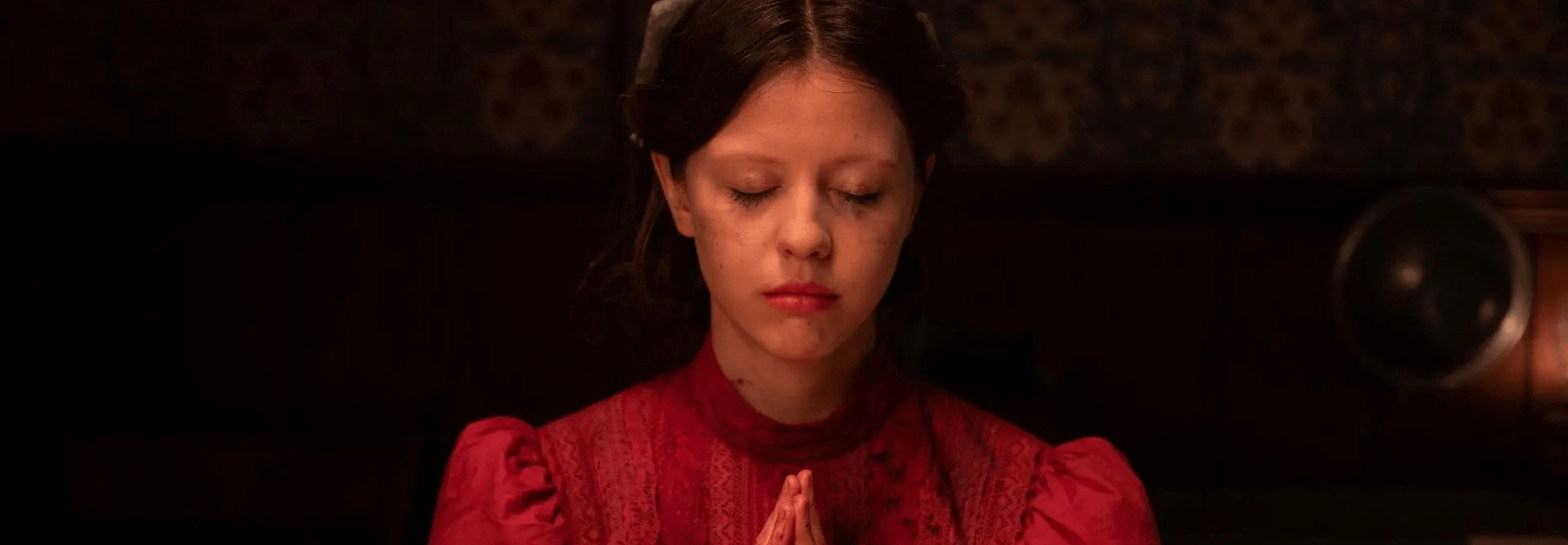
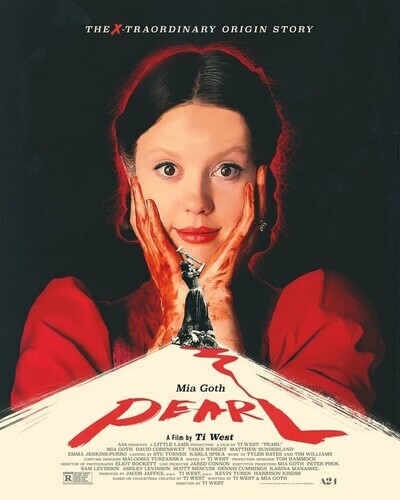
Trapped on her parents (Tandi Wright, Matthew Sunderland) farm Pearl (Mia Goth) dreams of escape, knowing that she’s destined to be a star despite the world around her.
Pearl makes no attempt to veil the fact that Mia Goth is the key selling point of the film. The main reason you buy into it. As the camera stays still the lead and co-writer’s (alongside director Ti West) face prominently fills up the screen against a very out of focus background. For five, if not more, minutes she delivers an increasingly emotional monologue. It might begin to feel slightly lengthy but you stay engaged because of the fantastic central performance which Goth gives. A brilliant turn as the young version of her antagonist in last year’s X.
Set in 1918 Pearl lives on her parents farm. Her behaviour constantly disapproved of by her mother (Tandy Wright) as she knows she’s destined to be a star. However, her work on the farm and tending to her paralysed father (Matthew Sunderland) constantly put her hopes at a standstill, and make her even more desperate to escape her life as it is – and not just by going to the local cinema to see the latest dancing girls film and making friends with the projectionist (David Corenswet).
While certain lines and tangents may feel mostly present to link with X they’re generally tied enough into the film later on to feel more valid in this prequel. A prequel which feels rather different to what came beforehand. While there are certain horror elements, coming more into play as the film goes on, for much of the first half there’s something of a horror-tinted drama at play. The style of the film has been very carefully put together, both visually and audibly, to replicate the look and feel of early-Hollywood productions. It’s an enjoyable idea for a while, however as the run-time begins to progress you do wonder how much the narrative is going to develop. You can’t help but feel that you’re largely being kept in place because of the technical elements – particularly Eliot Rockett’s excellent cinematography – rather than what’s actually being depicted on screen.
It’s a feeling which particularly comes into play when the film feels as if its leaning into more conventional horror territory. Even when more spaced out in the third act cliché begins to crop up again and not quite with a feeling of homage as you realise the origin story is almost just “Oh no, she’s just a psychopath”. There may be good moments and some enjoyable sequences, particularly those which are more stylised and make the most of Goth’s performance such as a standout dance sequence, but often the question comes to mind as to whether a lot of the film is style over substance. Especially when at times it feels fairly light on plot details, and, again, you focus on the technical elements. There are rises throughout, but as mentioned they lead to feelings of occasional cliché, or the film settling back into itself. There’s a good film here, but like the titular character does it ever quite become a star in the way it wants?
There are feelings of style over substance throughout a lot of Pearl. While technically its excellent (especially the cinematography) and led by a brilliant Mia Goth it keeps falling into horror cliché without quite feeling like an homage.
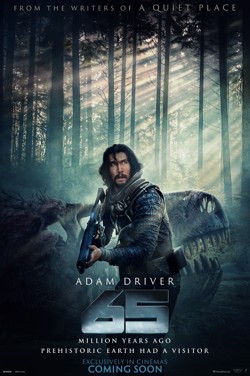
The survivors of a spaceship crash (Adam Driver, Ariana Greenblatt) must make their way through prehistoric Earth to an escape pod before an asteroid collision.
There’s no denying that the trailers for 65 have largely pushed the dinosaur element of things. It’s also understandable, they’re dinosaurs after all. However, the prehistoric creatures aren’t as prevalent throughout the film as you might think. In fact, the focus is largely on the journey and relationship between the two survivors of a spaceship crash. Pilot Mills (Adam Driver) and child Koa (Ariana Greenblatt). For much of the short 93 minute run-time we see the pair making their way across the uncertain terrain as they try to make their way to an escape shuttle 12 kilometres away, before an imminent asteroid collides with the planet.
Writer-directors Scott Beck and Bryan Woods understand the effect of holding back the threatening creatures within the narrative. Building up tension through what we don’t see yet know is there, and creating an impact when properly present by acknowledging the simple fact that they are (often) big and (always) scary. There is a fear factor to them, adding to the suspense of the action sequences which crop up every now and then providing another layer of entertainment to the piece as a whole.
While some of the emotional elements for the leading pair might not have the effect hoped for – particularly when largely appearing in the third act – and the ticking clock element of the nearing asteroids feels contrived there’s still plenty to enjoy within the film. This largely comes down to the fact that the narrative elements which make up the film as a whole are kept relatively simplistic. There are no convoluted tangents or subplots and largely things are kept to the journey for the two central characters – both of whom are rather well performed, particularly Driver who helps to bring some more investment and believability to the rather fantastical basis.
Thanks to this it’s easy to generally sit back and have a good time with 65. It’s nothing overly complicated and what it does it does rather well, making for an entertaining sci-fi actioner which knows how to move alongside its two leads rather than making everything around them the core of the film. Again, the film may not be anything complicated but in a way that adds to the enjoyment there is to be found within it. It may have some bumps along the way, largely in the third act when trying to deal with more emotional elements for both characters before the big finale, but there’s still an entertaining, occasionally suspenseful, and efficient piece of work here. A good time at the cinema.
65 may not be anything overly complex, but it uses that to its strengths, creating an entertaining and efficient sci-fi actioner. More directly dramatic beats might not always have their effect, but the occasional tension certainly does.
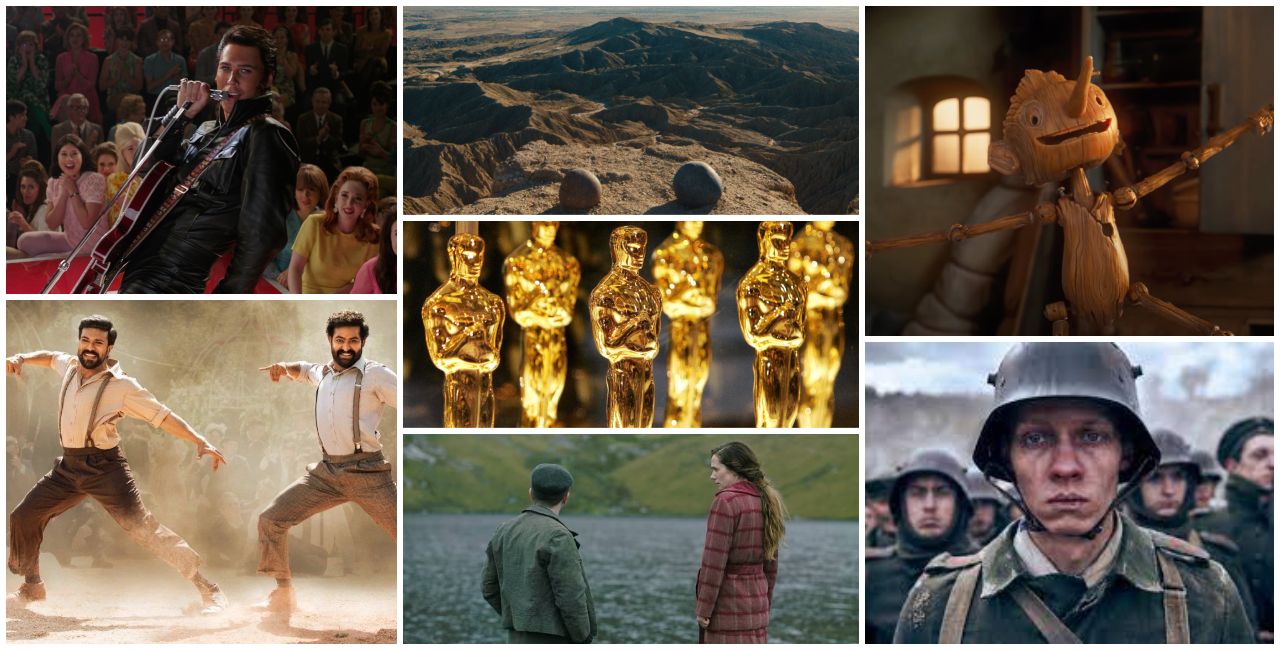
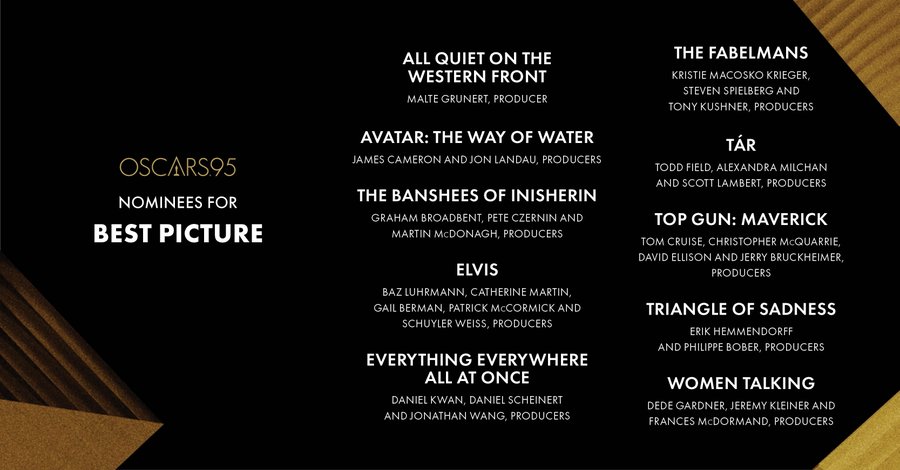
There was a point maybe even just a week ago where Oscar predictions may have seemed pretty set in stone, at least for me. However, it seems that in the days building up to this year’s ceremony while Best Picture has perhaps become more certain most other categories are very much up in the air. Even if the race does seem to be between two particular nominees in such situations a coin toss may be a better predictor, unless a ‘surprise’ winner is announced on the night.
However, as usual, I’m going to try and predict what will win in each category at this year’s Academy Awards. This awards season has shaped out to be quite exciting with the various winners that have cropped up in different places, and how the races themselves have changed and developed overtime (particularly in the often ‘locked in’ technical categories). Add to that the mixture of nominees and in general, as I’ll likely say in a number of my reasonings, this may be the most uncertain I’ve been with predictions in quite some time. Yet, for now, here are my predictions for what will win at the 95th Academy Awards (at time of writing).
Best Cinematography – All Quiet On The Western Front This category appears to be between this and Elvis. Elvis appears to have largely shown as a contender in the last week or two. And while there’s certainly a lot of love for the visual aspects of that film, I feel that All Quiet On The Western Front just has the edge. Not just down to the praise that it’s had for its cinematography, but also the fact that it intensifies the grimness of the various war-torn locations throughout the film. It may not be the ‘showiest’ nominee in the category, but it’s certainly very prominent.
Best Costume Design – Elvis Often this category, alongside Makeup and Hairstyling, feels as if it could swap out ‘best’ for most. While this is a very close competition between each of the nominees Elvis again has a very notable selection of costumes, especially including the central figure’s various stage suits. There’s a lot of flashy costumes on display here, and as the film progresses not just worn by Elvis. With the glamour and maximalism of the film they fit right in, not quite making them a bigger focus but certainly adding to things and giving the film more of a push in this category.
Best Makeup and Hairstyling – Elvis The battle of the fat suits may not be the most intense race at this year’s Oscars, but there’s certainly a lot of heavy (no pun intended) makeup on display. While The Whale has the prominent makeup of the central character it’s more just for that singular figure, whereas for Elvis there are a number (at least two prominent) transformations at its core. Not just Tom Hanks as Col. Tom Parker, but Austin Butler’s turn as Elvis – making him a frontrunner for Best Leading Actor – perhaps may also be thought of by a number of voters. After all, it’s like he was Elvis, right?
Best Production Design – Babylon This is one of the categories that I’m more uncertain about. While there are some nominees here that I think fall away just outside the race (The Fabelmans, All Quiet On The Western Front) others have their pushes. Elvis is a frontrunner in a number of technical categories and that could echo here. Avatar: The Way Of Water is, well, Avatar: The Way Of Water, however that may more likely help it in Visual Effects. In the case of Babylon there is a lot of detail in the various sets and scenery – particularly when it comes to the film studio lot. There’s a slight pull from it due to its lack of major nominations and the fact that, despite some saying it was a contender in key categories it seems to have been somewhat shut out. However, in Production Design, based on the setting and how much there is going in the slightly maximalist styling’s of the film I think Babylon might just make it in this category.
Best Sound – All Quiet On The Western Front It’s a race between All Quiet and Top Gun: Maverick. Both with traditional pushes in this category. The chaos of a war/ battlefield vs the chaos of fighter jet engines. This could go either way. I think in this race All Quiet, once again, just has the lead. The sound category often favours big, showy displays of, as the name might suggest, sound. Whether this be concert or music films (Bohemian Rhapsody in 2019, Whiplash in 2015, Sound Of Metal in 2021; although I don’t think Elvis quite has the strength in this race), machines and vehicles all at once (Ford V Ferrari in 2020, Mad Max: Fury Road in 2016) or war films (Dunkirk in 2018, 1917 in 2020). There’s a lot of (controlled) noise in both films, and in this case I think that the battle sequences of All Quiet On The Western Front may help bring it the majority of votes.
Best Visual Effects – Avatar: The Way Of Water This seems like one of the few locked-in wins of the night. However, Top Gun: Maverick does have a chance of pulling ahead. With all the behind-the-scenes videos that have been shared of the visual effects process for the film, and the rumoured reception that it’s apparently gained within the Academy since the shortlist ‘bake off’ before the nominations it could pull off a win. But, Avatar is Avatar. You can’t really deny Pandora and just how much those effects were, once again, praised. Top Gun could win, but this seems pretty locked in for Avatar.
Best Original Song – Naatu Naatu from RRR There’s perhaps a lot of bias put into this nomination. Best Original Song is often a difficult category to predict. There’s often been an unexpected result which pulls ahead of the frontrunner/s. However, in this case it seems that the hits (Hold My Hand from Top Gun: Maverick, Lift Me Up from Black Panther: Wakanda Forever) are outside contenders. Diane Warren (Applause from Tell It Like A Woman) once again seems to be something of a distant figure in the race leaving this between This Is A Life from Everything Everywhere All At Once and RRR’s Naatu Naatu. This Is A Life could get the Everything Everywhere push, and it’s also a pretty good song, but the love for RRR (despite its lack of other nominations) and the fact that the song is so joyous could just lead it to that win. (Again, there’s likely a lot of personal opinion in this particular prediction).
Best Original Score – Babylon My mind, once again, wants to say All Quiet On The Western Front. Its score is very good (all the scores in this category are great!) and in particular it has the memorably haunting three chord harmonium theme. There’s likely a lot of internet influence on this particular prediction, there’s a lot of me that things All Quiet may very easily grab the win here, but Babylon has such a loud and grand score that it could (again, despite not a lot of mentions elsewhere despite a fairly notable campaign and love for the film) also take the win. It’s this grandness, and also the notable nature of Voodoo Mama which many have pointed out, that makes me predict a win for it here.
Best Film Editing – Everything Everywhere All At Once For a long time I’ve thought that Top Gun: Maverick could grab the win here. Largely because I’m still in the mindset that the Academy lean towards more noticeable/ flashier editing, or at least the bigger films such as this with its various flight sequences, etc. It still has a big chance in what appears to be quite a close race (at least between two particular films). But I think that with the success that it’s been having, and the places that it travels to and its montages and charting of multiple worlds at once, Everything Everywhere All At Once (which itself has some ‘flashier’ editing, so to say) will get this one.
Best Documentary Short – The Elephant Whisperers This appears to be one of the most discussed nominees in this category. There seems to be a fair bit of love directed towards it and its cropped up a number of times in various mentions. If it’s not clear from those brief, basic sentences, the short categories are never my expertise and I’m always a big outsider from them (and tend to rely on what I’ve seen about them over anything else). I really need to get better at looking at those races, and also generally watching more of the shorts each year.
Best Live Action Short – An Irish Goodbye There’s a big push for Le Pupille from a number of sources. It certainly has two big forced behind it – 1. Disney/ Disney+ and 2. Alfonso Cuaron. A big name, or at least notable product, can often be a help in the short film categories, and Le Pupille does certainly seem to crop up quite a bit, also note the increase in mentions for The Red Suitcase in recent weeks. However, An Irish Goodbye has had quite a bit of success on the awards circuit so far, not to mention praise. There’s a chance that this success could continue to the Oscars. This leaning may be influenced by being in the UK and having heard and seen a lot of discussion about it due to both its BAFTA success and the local product angle (Irish film The Quiet Girl, nominated for International Feature, had quite a bit of coverage here too), but I think there’s a good chance of the short picking up a win at the Oscars as well.
Best Animated Short – The Boy, The Mole, The Fox And The Horse Another short fuelled by plenty of praise and love. A big(ish) production with plenty of notable names involved at some stage or another there seems to be a lot of love for this particular short (in a category which features titles such as My Year Of D!cks – which itself appears to have a number of notable wins and force behind it – and An Ostrich Told Me The World Is Fake And I Think I Believe It). In a few months it’s become something of a notable name due to the word-of-mouth around it and the push that it appears to have had. This may end up being something of a close category, but The Boy, The Mole, The Fox And The Horse may just be able to get the Oscar on Sunday night.
Best Documentary Feature – Navalny There’s a lot of love spread amongst the nominees within this category. Fire Of Love was much discussed when released, and even towards the end of the year, whilst All The Beauty And The Bloodshed was briefly discussed as a potential Best Picture nominee after winning the Golden Lion at the Venice Film Festival. Both have been pitched as potential winners of Best Documentary Feature, and certainly have a case to be made for them being announced by whoever presents this category. But, Navalny has certainly gained steam over the last couple of weeks. All that Breathes and A House Made Of Splinters seem to be just outside the race, and even Fire Of Love has somewhat fluctuated and seemed to dip out at one point. Navalny has the leaning of being very relevant to right now which may cause a bigger connection with voters and lead to it gaining the majority of votes (plus, it’s a rather good film).
Best International Feature – All Quiet On The Western Front It’s a Best Picture nominee. While I don’t think that this race is as locked-in as some may say it does seem pretty certain that All Quiet On The Western Front with its various other nominations at this year’s ceremony (not just as a contender for the top prize of the night) has the upper hand here.
Best Animated Feature – Guillermo del Toro’s Pinocchio The specialist film categories this year appear to have some of the most exciting nominees and races, and Animated Feature is no exception. In fact, it perhaps has one of the best selections of contenders in any category this year. Despite this, there doesn’t seem to be a very close race. Guillermo del Toro’s Pinocchio has been coated with love since its release, and was tipped as potentially being able to receive other nominations to. Add to that his very vocal campaign, and acceptance speeches along the awards trail – including the statement that animation is not just for kids, it is a cinematic medium – and this win seems relatively locked in. Although any other win would be a welcome surprise.
Best Original Screenplay – Everything Everywhere All At Once The Banshees Of Inisherin still has a chance of pulling ahead here, particularly with the edge of the dialogue and the tones that it captures. However, when you look at the Academy and what they tend to lean towards here, at least in terms of recent winners (e.g. Get Out and Promising Young Woman) they sometimes lean towards the ‘most’ original screenplay. Of course, there are still winners such as last year’s Belfast to disprove this rule but Everything Everywhere All At Once has that very notable acclaim which will likely give it enough votes to win here. This seems to be a competition between it and Banshees, and while the latter could get ahead – the Academy do seem to like Martin McDonagh after all (especially his writing) – but the love for the former is undeniable, particularly across this year’s awards circuit.
Best Adapted Screenplay – Women Talking There are a number of people claiming a win for All Quiet On The Western Front here. And while it won at the BAFTAs that’s not exactly been the best indicator for the Oscars in recent years. It’s not exactly a film with focus on the screenplay, as was the case with 1917 a few years ago (losing out to Parasite, and not quite being a frontrunner in the Original Screenplay category anyway). Women Talking has built up a lot of steam, particularly in the build up to the closing of Oscar voting. It’s Best Picture nomination gives it a slight boost (Glass Onion: A Knives Out Mystery and Living seem to be outsiders here partly because of this, despite the latter’s Leading Actor nod for Bill Nighy) as does its relevancy. Top Gun: Maverick seems a bit outside the group too as, again, the focus isn’t quite on that film’s screenplay, more so than All Quiet (and to some it was a surprise nominee, although that could speak to the strength that it has behind it). Women Talking has undeniably gained steam in the last few weeks, and particularly with how integral the dialogue is to the debate at the heart of the film it seems like it could well pick up an Adapted Screenplay win for Sarah Polley.
Best Supporting Actor – Ke Huy Quan in Everything Everywhere All At Once Quan has won pretty much every possible acting award under the sun for his role in this film. This category has ben referred to by many as one of the few (if not the only) lock in at this year’s Oscars. And it’s hard to disagree with that belief. The other nominees (especially Judd Hirsch and Brian Tyree Henry) seem like outsiders, with the pair of Banshees Of Inisherin nominees (Brendan Gleeson and Barry Keoghan) potentially cancelling each other out, although there is a chance for one of them (maybe Keoghan thanks to his “well, there goes that dream” scene) to pull through. But, this all feels like somewhat unnecessary drawing out. This is Ke Huy Quan’s Oscar to lose.
Best Supporting Actress – Kerry Condon in The Banshees Of Inisherin Angela Bassett’s chances in this category really seem to have fallen for her performance in Black Panther: Wakanda Forever. There was a time when everyone thought that she was most likely to win, however after losing at BAFTA (although as expected to Kerry Condon in The Banshees Of Inisherin) and Jamie Lee Curtis in Everything Everywhere All At Once at the Screen Actors Guild Awards this category has very quickly become quite unpredictable. Condon has long seemed to be the second place contender, with Curtis having been considered a slight outsider until she won at SAG. I don’t think that the usual superhero bias reasoning plays against Bassett here, in fact as many have claimed a legacy win is possible for her (plus the fact that she is rather good in the role). While Bassett and Curtis have had their odds changed Condon has generally stayed the same and could well pull ahead of both of them. She could be a not-quite-quiet winner in this category, particularly with the effect her performance has in the film.
Best Leading Actor – Brendan Fraser in The Whale The Whale has been a divisive film it turns out, there’s no denying that. But then again, to an extent, so has Elvis. But, Elvis has a Best Picture nomination, and Austin Butler’s performance has been very widely praised and led him to a number of awards. I look at my prediction here and think “yeah, it’s probably going to be Butler”, however after a SAG win, and other wins here and there, there’s part of me that thinks that Fraser could just get the win. There’s a comeback element to this, as there is for Ke Huy Quan in the Supporting Actor category, although this hasn’t quite been as talked about as much in recent weeks for Fraser. The Academy may love a biopic or performances of real life figures, which Butler absolutely is, however they also love very clear emotional performances which Fraser producers, alongside a slight transformation element with all the makeup (again, there is the argument for Butler). It seems to be a race for these two (although don’t be surprised if Colin Farrell just slips ahead for his performance in The Banshees Of Inisherin which has been much acclaimed and could get ahead if Butler and Fraser somehow cancel each other out). Normally in a situation like this I’d look at where the international voters may lean (as was the case with Anthony Hopkins winning for his turn in The Father other the late Chadwick Boseman in Ma Rainey’s Black Bottom just two years ago). However, here it’s difficult to think of what they might lean towards more for various reasons that have already been mentioned here. The general reasoning for my selecting Brendan Fraser is that I just think it’ll turn out that way (probably the reasoning for most of my predictions, really), there are a handful of elements that play into this, and I’m going to keep rethinking myself here, but I’m predicting Fraser to win here.
Best Leading Actress – Michelle Yeoh in Everything Everywhere All At Once Much like with Leading Actor this seems like a two horse race between Yeoh and Cate Blanchett in Tár. Blanchett has won numerous awards over the course of awards season, and so has Yeoh, particularly in the last month or so where her odds have increased quite considerably. While I think that the international voters may more likely lean towards Blanchett (who herself has hinted at leaning towards Yeoh, and was part of the campaign to nominate Andrea Riseborough for her turn in To Leslie) there’s, again, no denying the love for Everything Everywhere All At Once. Yeoh herself has put in a hard campaign (and if anything any votes that might go to Blanchett might be split with Riseborough rather than Yeoh – although Riseborough doesn’t overly seem to be a leading nominee in this race). There are two leaders here and it could well turn out to be either of them, again my mind tells me that I’ve got it wrong and I’ll likely keep telling myself it’s the other nominee until the winner is announced. But, for now, I’m saying that there’s both a legacy element playing into a Yeoh win, a strongly fought campaign, a love for the film and a handful of other elements which could lead Michelle Yeoh to an Oscar.
Best Director – Daniel Kwan and Daniel Scheinert for Everything Everywhere All At Once There’s a chance that Steven Spielberg could quietly grab this one for his personal story in The Fabelmans. He was long-considered a frontrunner and many still claim that he could gain this, even if his film doesn’t win anything else and has fallen away in the Best Picture race. There could well be a Best Picture, Best Director split. However, to once again sound like a broken record, there’s a lot of love for Everything Everywhere All At Once. With the scale of that film, how much happens and the budget and team that were a part of it Daniels seem to have strong chances of winning the Best Director Oscar for their work on this film. Particularly after winning at the Directors Guild Awards over a number of fellow nominees here (and Joseph Kosinski for Top Gun: Maverick over Ruben Östlund for Triangle Of Sadness). Whatever the reasoning, Daniels seem like strong contenders to win here.
Best Picture – Everything Everywhere All At Once Everything Everywhere All At Once has won at pretty much every major guild awards, alongside a couple of technical ones. It was one of the most acclaimed films of last year and that love has been reflected in its increasing awards season success, going from strength to strength in a number of different categories outside of Best Picture. It’s very likely to gain a number of first place placements on the preferential ballot, the question is about whether it can get enough crucial second and third place rankings. Those may go to The Banshees Of Inisherin and Top Gun: Maverick, although with the diverse slate of nominees in this year’s Best Picture category they could be placed in a number of different ways, especially when considering the everchanging face of the Academy in attempts to diversify. Whether Everything Everywhere All At Once gets those other high-ranking placements on enough ballots is a big question I’ve been thinking over a lot. However, I think that – like with Parasite in 2020, which itself didn’t quite sweep the various guild awards – there is so much like for the film, and a strong chance of so many first place rankings, that Everything Everywhere All At Once will be the film to win Best Picture this year.
If you want to read a more in-depth, excessively waffling, dive into the chances of each of this year’s Best Picture nominees at winning the top prize at this year’s Oscars you can read my annual What Will Win Best Picture piece here.
Over the past few years the preferential ballot voting system for the Best Picture Oscar has made for a number of interesting, and at times surprising, races for the top award of the film season. And while this year’s had plenty of excitement when the nominees were first announced, things appear to have settled down since. Yet, perhaps the 2023 race isn’t as cut and dried as many may think it to be, particularly with the preferential ballot.
Thus, once again, I bring back the annual overly-rambly What Will Win Best Picture piece to take a look at the chances for each of the ten nominees in the top category at this year’s Academy Awards. Taking a look at the pushes and pulls towards them winning the Best Picture Oscar on Sunday night. It’s an interesting race to say the least, nut just because of the array of films involved. And with the fluctuating directions the Academy has leaned in recent years, Oscar night could prove interesting.
Last year marked the first year in which a streaming service/ ‘streamer’ won the Best Picture Oscar. After a number of consecutive attempts by Netflix it was Apple TV+ who claimed the award with feel-good flick CODA. If anything, this win has just made Netflix try even harder than before to win the top prize in film. Multiple films produced by the platform have had big Oscar pushes, although not perhaps to the effect that they would have liked. Glass Onion may have an Adapted Screenplay nomination, and Guillermo del Toro’s Pinocchio is a frontrunner in the Animated Feature category, however none of the For Your Consideration campaigns have quite struck as much as All Quiet On The Western Front.
Part of what’s been said of Netflix’s previous campaigns, particularly for last year’s presumed-leader The Power Of The Dog, is that they’ve been too heavy, too much. Cramming nominees down voters throats and almost turning them away from the films. In the case of German war feature All Quiet On The Western Front while there has been something of a campaign the success largely appears to have been natural. Spread through word-of-mouth acclaim and success at other ceremonies – BAFTA is of course the most notable, particularly after having won Best Film and Director there – the film has risen and risen with the occasional gentle prod and advert from Netflix. They appear to have generally left it alone and this tactic has so far proved successful through the clear favour from voters in various fields.
While there might be an absence in key categories such as Best Director and Film Editing there’s representation for the film in Best Adapted Screenplay (a category which itself seems somewhat unpredictable, even after the Writers Guild Awards). Add to this the fact that the film is a frontrunner in the International Feature category (although, again, this may not be as locked in as some may claim), and its favour may expand to Best Picture. Yet, while there may be a number of nominations in technical categories, in which there is a lot of discussion for the film, there was little representation at a number of Guild Award ceremonies. Particularly in the case of key sectors such as the Directors, Producers and Screen Actors Guild (in the case of the WGA the film was ineligible).
While, of course, it can be argued that those are for specific achievements in specific areas and Best Picture is for – as the title of the category might suggest – the best overall film, often there’s overlap at least in terms of nominations. No film in recent years has won Best Picture without a win at at least one of the major Guild Awards. Yet, All Quiet On The Western Front’s natural spread of praise and recognition developed overtime, over the course of awards season as more people discovered it. Perhaps it wasn’t seen in time for such other ceremonies, making it somewhat unpredictable as a Best Picture contender. There’s no denying that it’s continued to gain steam over the course of the season, and that could indeed lead it to faring well in the final round of voting, particularly for Best Picture. Netflix have kept it in people’s minds without being overbearing, and perhaps that’s testament enough to the film. A factor which could well play into it winning the big award at the end of Oscar night.
From a streaming success to a film truly making the most of the big screen experience, perhaps one of the biggest cards that Top Gun: Maverick plays is not only that it was the biggest film of last year at the box office (until fellow contender Avatar: The Way Of Water came along), but that it’s one of the various films to have ‘saved cinema’. Even after a digital and then physical release the film continued to hang around in the box office top ten in various countries, continuously exceeding expectations (the surprise factor of the film itself could also positively affect its Best Picture chances. Even Spielberg let star Tom Cruise know that his film had saved cinema. And while the early-summer release could be used against the film it clearly hasn’t faded from voters memories, especially with how long it was in cinemas for.
The big screen thrill has been reflected in technical nods including in Visual Effects, however director Joseph Kosinski finds himself without a Best Director nod. Despite this, the film still finds itself as a serious contender for Best Film Editing (especially after winning in the dramatic category at the ACE Eddies) and while Tom Cruise may not have obtained a Leading Actor nomination, as some may have hoped he was talked about enough as a serious contender to have some more wind in the sails (can jets apply here?) for Top Gun: Maverick – after all, he is the face of it.
The face of what many may know as a traditional movie star, leading a rather traditional film. While the Academy has tried to change and diversify its voting membership through rule changes and invitees there are still a large number of older (let’s be honest, white male) voters who swing towards the traditional film (see nominees in previous years such as Ford V Ferrari and The Trial Of The Chicago 7). However, Top Gun does the traditional vein (or rather, the more stripped back one) rather well (not to say that other traditional films don’t, of course), having received plenty of acclaim throughout the year and beyond since its release.
While the film itself may have proved a surprise for a number of viewers for some a slight surprise came in its appearance in the Best Adapted Screenplay category. It may not be expected to win here but the fact that the film, whilst being praised for its visuals and cinematic style as part of its greatness, has had its screenplay noted does give it more of a boost than the nomination might initially seem. Many have claimed Top Gun: Maverick to be a strong contender, a frontrunner since nomination predictions were being put together; some of this may be bias love towards the film, however there is a strong case to be made for it. The favour has remained, and while the Academy don’t always lean towards blockbusters as Best Picture winners (there’s usually one or two hits at least nominated though, and certainly a fair few this year to make things all the more interesting), but then again this isn’t just any old (at least modern) blockbuster. There’s an edge to its appeal which has led to what has felt like widespread love for the film and what it has done. Perhaps enough to lead it to Sunday’s top prize.
However, as mentioned, Top Gun isn’t the only blockbuster nominated for this year’s Best Picture Oscar. If that was the film that ‘saved’ cinema Avatar: The Way Of Water helped it back up onto its feet. The biggest film of the year (and currently third biggest film of all time), James Cameron’s long-awaited return to Pandora was the cinematic spectacle that enough of the Academy membership hoped it would be. While Visual Effects seems like a lock-in for the film (although some predict Top Gun to also cause trouble for Avatar here, too) it’s competition in other categories is being challenged. When you consider the technical achievement that the film is, and the effect that it had on the big screen, this puts Best Picture chances into question – even more so when it’s remembered that the only nominations outside of the big race are in technical races.
It seems that the Directors Branch couldn’t even find room for James Cameron for his work on this film(!) Yet, those who have loved the latest Avatar appear to have really loved it, there is a passionate following for it, as there is for the first film which itself had some Oscar success. The sequel may not quite have as many nominations, and be set for the same success (depending on who you ask), but the Academy have never leaned towards sequels. They may nominate them here and there – Top Gun and Glass Onion: A Knives Out Mystery both have key nominations this year – but they never quite gain major wins. However, with the state of this year’s nominees and the love Avatar has received anything could happen (plus, The Godfather Part II won Best Picture and while they may have been almost 40 (yep…) years ago it proves it’s not out of the question.
Avatar may also have the edge of being a ‘more recent’ sequel compared to the nostalgia-fuelled legacy sequel of Maverick. The argument could, of course, be flipped and perhaps the leaning as to which one is ‘better’ (there’s a high chance that both aren’t placed too far apart in most voters preferential ballots) definitely comes down to the individual voter. In the main case of Avatar the argument can definitely be made that the full effect comes from the big screen and a voter watching it for the first time on a screener likely won’t get that (or at least not to the same degree). However, with the recency of a mid-December release, and still being available in a number of cinemas due to its lasting success, the chance may well have been taken, if it hadn’t been already. There could very well be a recency bias for Avatar: The Way Of Water, further fuelled by its box office and the discussion around it and James Cameron, who some may boost the film on their ballot because of his lack of a Director nod.
It may not be represented in key areas, but in the case of something such as Avatar some may view the key areas as the technical aspects which helped bring the world of Pandora and the characters within it to life. Yes, Cameron and his team may have packed a lot more in and clearly displayed a narrative and character development throughout, but with so many still focusing on the cinematic aspect it might be enough alone for some to push only the second instalment in this insanely successful franchise to more success with a Best Picture Oscar.
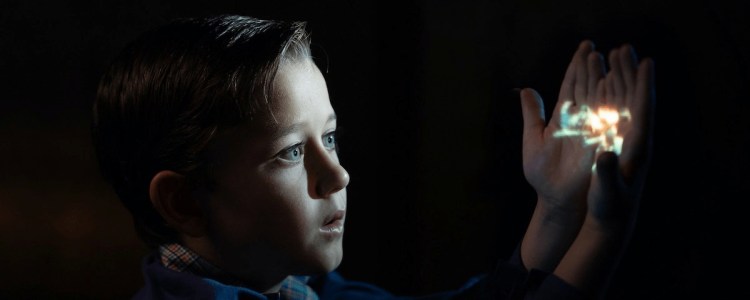
Jumping from an epic sci-fi actioner on another world to a person semi-autobiographical tale in the form of Steven Spielberg’s The Fabelmans. As with most recent Spielberg-helmed Oscar contenders The Fabelmans was said to be a strong frontrunner for the Best Picture Oscar. It was believed that it would be a major contender and could easily pick up the top award. That was until, as, again, has seemed to be the case, the nominations were announced. As soon as this happened almost all steam seemed to be removed from the film’s momentum and everything seemed to stall. It may have its name featured in most key races (Film Editing, which is often a key indicator – although not last year as CODA proved – not included) however, otherwise it appears to have drifted away from the competition, outside Spielberg in Best Director, the Academy love a personal story after all.
Mix a personal story with one about a relationship with filmmaking and cinema and there is a lot of Oscar bait present within this particular feature. It’s the kind of thing that while on paper might seem somewhat niche does have plenty to resonate with those inside the film industry, who luckily happen to be those who vote for the Academy Awards. Not just in the big five categories but also a mention in Production Design, showing that there is some thought for other aspects of the film – as was the case with Parasite not long ago.
In fact, Parasite didn’t receive acting nominations whereas The Fabelmans does have such mentions. There was some uncertainty as to whether Michelle Williams would make an appearance after various exemptions at other ceremonies, however – perhaps thanks to the fact that the Academy combine Supporting and Leading nominations and combine and nominate in whichever category had the most votes – she was successful. This especially being in the much notable nomination ‘battle’ which many have discussed in this category. Alongside Williams Judd Hirsch has gained a nomination for a very, very brief roughly seven minute appearance in the two-and-a-half-hour film. His performance revolves around a standout scene which acts as part of the heart of the film and the propulsion for the central character. “Family. Art. It’ll tear you in two”. If this (admittedly standout) role has been remembered enough to receive an Oscar nomination, after also not having been overly present in nominations from other awards bodies, then there’s perhaps enough of a push for The Fabelmans after all.
There are many expecting a split between Best Director and Best Picture this year. And if Spielberg doesn’t get that directing award it may mean that voters have leaned more towards his film as a whole. It’s been a more frequent occurrence in recent years and so isn’t entirely out of the question, especially if Best Director goes to another fellow Best Picture nominee. Either way, while it might feel as if it’s lost steam, there is the memory of The Fabelmans, a film all about personal memories and cinema. Perhaps playing on the minds of voters and capturing a personal connection with them and their industry. Key factors have clearly already been remembered through nominations and that (alongside the simple fact that Steven Spielberg knows how to make a film) may just be enough to bring the director his second Best Picture Oscar.
Whilst personal tales have a clear interest from the Academy membership the Best Picture category is no stranger to biopics. 2023’s is no different as Elvis has entered the race (sorry…). There’s no denying that much of the acclaim towards Elvis was towards Austin Butler’s titular performance. He’s one of the frontrunners in what has become quite a close and unpredictable Leading Actor race, and with that in mind if people think of how great his performance was it may well impact their view of the film as a whole. It’s a film, obviously, led and dominated by his performance – and we’ve all likely seen the headlines about the lingering voice and accent.
There’s a slight unexpected quality to Elvis in that while it received a fair bit of acclaim when released there wasn’t a lot of discussion about its awards chances towards the end of the year. However, as it began to pick up nominations outside of acting categories at various ceremonies its chances seemed to boost. Those in the film industry clearly have a lot of love for the film – even at BAFTA where a Best Film nod came as quite unexpected – and when first released the initial reception towards the biopic of the iconic star’s life showed that those who loved it LOVED it.
Perhaps some of that love comes from the maximalist style of Baz Luhrmann. While the director, like the screenplay, may have failed to get a nomination himself there are still those fans of him and his style. However, there are also those who feel pushed away by it – as with a lot of maximalist filmmaking it’s certainly not for everyone and can sometimes be quite overwhelming. This even seemed to be proved with the rushing montage-filled case of Elvis – although the film has managed to pick up a Film Editing nomination – and perhaps led towards its slightly mixed reception (although not as much as Bohemian Rhapsody which itself had Oscar success in 2019, including a Best Picture nomination).
Elvis is another case of a slightly uncertain nominee, it could easily be a dark horse in the Best Picture race due to its rice throughout awards season. Another hit on release mid-way through the year, and certainly praised for Austin Butler’s central performance, it’s undoubtedly still in voters minds for a number of reasons. And if Butler, alongside Luhrmann’s style, has that big enough push to boost the film this could lead to the glitziest Best Picture winner in quite some time.
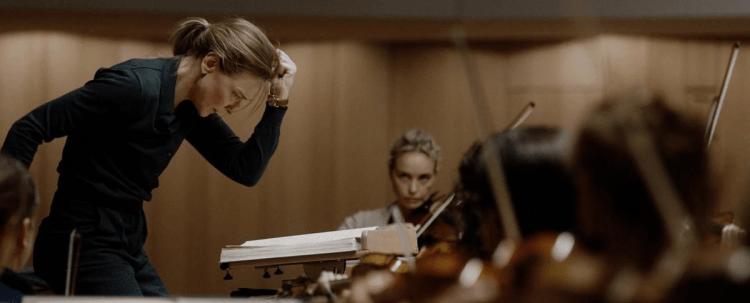
Elvis may have been a real figure, however perhaps the most talked about character amongst this year’s Best Picture nominees is the one we all questioned whether she was real or not, Lydia Tár. Cate Blanchett has been a strong Lead Actress contender for her central performance in Academy-favourite Todd Field’s first film in 16 years. His return has been met with much acclaim, not just in the fact that the film has ticked off nominations in more than just the much noted categories. Field himself has certainly received plenty of acclaim for his work on Tár, and indeed the co-creation of the titular conductor with Blanchett.
Through Tár plenty of contemporary themes are explored, and not just surrounding the idea of cancel culture becoming increasingly relevant throughout the film. There’s plenty for a number of voters to recognise, and perhaps on some scale ‘identify’ within this rather modern piece of work – at least in terms of some of the themes and ideas which it deals with. Perhaps through some personal recognition, understanding or just familiarity through past observance of what’s unfolding on-screen there’s a stronger response to the film beyond just the fact that it’s very well made to boost it up some voters ballots.
While some have somewhat sidelined Tár as unlikely to win Best Picture it’s always seemed a certain nominee. It’s had power throughout awards season and has proved favour with a number of sectors across the industry. It certainly can’t be said that it’s name has been drowned out, there’s been plenty of consistent discussion around it, and not just memes on the Twitter and other social media sites (although this may help some to spring back memory of the film – much of these appear to have come from love for the film, and in part the central character). Tár really shouldn’t be removed as a contender, it’s very much a film of and for now, and that’s often what the Academy lean towards, they have done for decades now – just look at some of the ‘true-to-life’ winners of the 80s. There’s a lot of love towards Tár, and there’s a chance that it could not-quite-quietly provide its central character with yet another Oscar (or two).
From one life to another, in this case a much more fantastical one, Everything Everywhere All At Once is the film that has powered through awards season. The earliest release date of any nominee this year (25th March), the most nominated at this year’s Oscars (11 total), sweeping the Guild Awards (DGA, PGA, SAG, WGA, ACE, etc) and generally being one of the most acclaimed films of the year you could easily call the race here and give the film the award now. Is there anyone who doesn’t like this film?
Well, it seems so. While perhaps a minority there are those who have seemingly taken against the film, especially since its awards success and boosted Best Picture chances. There may be some who place the film towards the bottom of their preferential ballot, or just don’t list it at all, for this reason, to play against it. Some voters may simply think that it’s won enough and that something else should be given a chance – but that doesn’t quite play into the spirit of ‘Best Picture’. Perhaps the main draw away from the film is its slight maximalist style, as mentioned with Elvis although certainly not to the same degree.
It’s been heavily pointed out that Everything Everywhere All At Once isn’t a conventional Best Picture winner. But, with the aforementioned changing face of the Academy, an Academy who awards the title of film of the year to the one where the woman gets it off with the fish man (the thoroughly deserving The Shape Of Water) I think they can put up with some of the humour and absurdity of Daniels latest film. Particularly with just how much is crammed into it that audiences have identified and personally engaged with on an emotional level – not just the deeply existential everything bagel.
There’s a strong force behind Everything Everywhere All At Once, and it’s very likely to get a lot of first place placements on ballots. The question is: will it get enough second and third place listings, the more important slots on such ballots, needed consistently to secure a Best Picture win. It’s something which, as with all nominees, remains to be seen, however there has clearly been enough love for the film already – although largely from organisations (PGA aside) which don’t use the same voting procedure as Best Picture. It’s certain to be at the top of a lot of ballots, and perhaps those placements will be enough to secure it another big win and a big sweep of awards season.
Everything Everywhere All At Once’s Best Picture nomination, and awards success, is certainly interesting, however I’d argue that there’s as much interest in Triangle Of Sadness’ appearance in the line-up of nominees. It too fells quite far from a ‘traditional’ Best Picture nominee with its deeply-rooted satire ripping apart the upper classes/ rich and powerful. Perhaps though the emphasis should just be put on the satire, or rather the fact that the film is a two and a half hour comedy. Comedy being famously something the Academy often lean against. And while Triangle Of Sadness may have had an early awards boost from winning the Palme d’Or at Cannes it wasn’t exactly viewed as a full Oscar contender.
It seems that the film has slipped in as a ninth or tenth place nominee, yet it’s still managed to obtain Original Screenplay and Director nods. A rather unexpected Director nomination for Ruben Östlund – although the directors branch have always been known to slightly deviate from the rest of the nominating landscape with at least one nominee, particularly in recent years (see Thomas Vinterberg for Another Round and Paweł Pawlikowski for Cold War). There’s no denying that the film’s presence in these categories, particularly as a comedy, does show that it’s had a strong resonance and that its key elements are being thought of (plus, Dolly de Leon was much talked about for potentially receiving a Supporting Actress nomination for the film).
Where the film might falter is that it might not be the most widely seen of the nominees. And while most voters will likely have seen all the films in order to vote – at least for the Best Picture nominees, and those nominated multiple times in key categories, there are some who may stray away from certain titles; particularly one called Triangle Of Sadness. Add to this just who the film is satirising and some voters may lean against the film thinking it an attack on themselves. Others may just not get on with the humour, particularly the much-discussed extended gross-out sequence halfway through.
But, while there are a number of films with a fair bit of humour nominated this year, Triangle Of Sadness proudly displays itself as a full-on comedy (although you could argue so does Everything Everywhere All At Once) making it standout from the rest of the nominees. It perhaps gives it a bit more of a stage in some eyes. Voters may remember how much they laughed at it, allowing the film to stand out more amongst the collection of more emotional responses, or wonderment at the cinematic scale of some. There was, as mentioned, early success for the film at Cannes, where some claim awards season truly starts, and for it to have made it this far and still have success there’s a possibility that it could continue all the way to a Best Picture win.
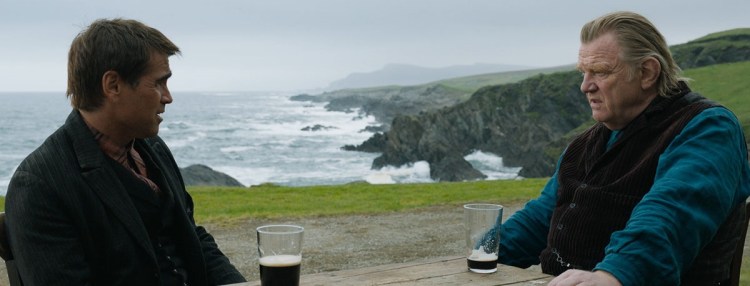
Moving from the humour of modern day socialites to that of the isolated 1920s Irish everyman. Perhaps the strongest thing in The Banshees Of Inisherin’s favour is the fact that it hasn’t really sold itself as a comedy. Certainly there are humorous moments, as was expected from Martin McDonagh’s reteaming with Brendan Gleeson and Colin Farrell, but there’s a large melancholic core to the film as a whole with its dramatic moments. Certainly the humour is still present and tones have combined to create something which has received plenty of acclaim, and a number of outlets consider to be a frontrunner for the Oscar’s top prize.
McDonagh himself has found increasing appreciation from the Academy membership (particularly after Three Billboards Outside Ebbing, Missouri, which appeared to be the runner-up in that year’s Best Picture race), and there’s no denying the push of the cast in his latest feature. Farrell is being eyed up as a strong Lead Actor contender, potentially overtaking a battle between Austin Butler and Brendan Fraser in The Whale. Meanwhile, Kerry Condon could pull ahead in the unpredictable Supporting Actress race. Plus, space was found in Supporting Actor for Gleeson and Barry Keoghan (although this race seems certain to be won by Ke Huy Quan for Everything Everywhere All At Once). With such love for the performances there’s clearly a lot that’s been remembered about the emotional core and characters of the film who are so key to it.
Add to that further mentions in other ‘essential’ categories (again, CODA proved you don’t need a lot of nominations to win Best Picture last year having won three of three nominations, without a Director or Film Editing mention) and there’s a lot of love for The Banshees Of Inisherin. It may feel as if it might have somewhat waned since a loss at BAFTA to All Quiet On The Western Front, but it should be pointed out that there were still a number of wins there, but there’s no denying that there’s still strength behind the film. The same as there was before. It could end up playing a quiet(ish) game and slip into the lead through the ballot, if it gets the right placements. And it certainly seems like it could do with the strong reception that the film has received. It’s an unshowy piece of work that largely speaks for itself, which could be another big boost for it. The film making the case for itself rather than through a big campaign (although there certainly has been campaigning for it, there’s no doubt about that) perhaps gently leading The Banshees Of Inisherin to be the annonced winner after the big drumroll at this year’s Oscars.
If The Banshees Of Inisherin is about the breakup of a male friendship in the wake of not very much then Women Talking could perhaps be the other side of the coin. A very relevant film with plenty of power resonating with a modern audience the story of a group of Amish women debating whether to stay or leave their commune after a series of severe sexual assaults and attacks from the men they live with has picked up a lot of steam throughout this year’s awards season.
Initially there was question as to just how well the film would do after it had seemingly been shut out from a number of other ceremonies. However, in part to its absence being mentioned, and the push that its been given instead of holding off the campaign, the presence of Women Talking in the Best Picture category has caused a lot of discussion around it. Particularly around its themes and what it represents, putting the film into perspective rather than awards. It may mean that a number of voters have come to it relatively recently, putting it fresher into their minds over other nominees.
Add to this the fact that Women Talking is one of the few films this year to win at any of the (particularly major) Guild Awards (Adapted Screenplay at the Writers Guild Awards) and it has something of a big advantage over other contenders, especially with its alleged Adapted Screenplay frontrunner status at the Oscars – even if some claim that this being the film’s only other nomination puts it at a disadvantage. The core of Women Talking is the debate and dialogue running throughout it, acknowledged through the Screenplay nomination and that could be its biggest push. It succeeds very well at pushing its themes in the way that it wants to (also largely through the external scenes breaking from the debate where the most effective moments subtly lie) and could find a push through doing what it does with great power and effect. Women Talking could easily have picked up enough steam, conversation and general recognition to push it across the line and be awarded this year’s Best Picture Oscar.
And now, finally after all this bland rambling, onto the main point of this annually repetitive piece: which film will the ballots of the members of the Academy of Motion Picture Arts and Sciences deem to be the best. What will win Best Picture?
While it might seem direct as to what’s going to win the top prize at this year’s Oscars it largely comes down to the preferential ballot, perhaps more so than in recent years (although it certainly played a fair hand in the wins for CODA, Green Book and The Shape Of Water). This especially the case with such a varied selection of films, including the slate of box office successes on display. The question is, as discussed in previous pieces around this time of year, what’s more likely to be consistently placed in the second and third place slots on the preferential ballot for Best Picture instead of just first. It’s difficult to say as this year it feels as if there may be a fair spread across the ballots for the increasing thousands of the voting Academy membership.
Well, to star to whittle down the nominees there are often those titles that have seemed like outsiders since the start, or simply haven’t been a part of the conversation as much as other competition. They may not have had a rise in wins or mentions since the nominations meaning that they’ve stayed towards the back of the pack without an underdog-style surge. This year’s grouping seems to be led by Triangle Of Sadness – particularly with its satirical and comedic leanings – and, while it’s picked up some steam through its writing and wider-viewing since the nomination, Women Talking. Pushed by the fact that much of the conversation around it seems to have, somewhat rightfully, been around it as a film rather than it amongst the rest of the ‘competition’.
In a similar realm to Triangle Of Sadness, without having lost steam as such, despite Austin Butler’s performance putting him as a leader for the Leading Actor race, Elvis seems a bit too divisive, or at least without a strong enough reception, to quite reach Best Picture – perhaps largely being placed around the midpoint of most ballots.
Meanwhile, while not as divisive, there’s certainly something leaning against Avatar: The Way Of Water. Its large cinematic scale certainly gives it a push, but without a number of core nominations elsewhere, and it seemingly still being pointed out for its technical achievements instead of the very present story, it perhaps lies outside the main pack of contenders.
When it comes to the more certain contenders, largely always predicted as Best Picture contenders well before the nominations were announced and largely present throughout this year’s awards season two films stick out as slightly haven ‘fallen away’ from the rest of the pack. They still have steam and have largely remained in the conversation, particularly as potential winners in other categories, however they don’t quite seem up there as a whole for the top prize. One being former frontunner The Fabelmans, which may find somewhat scattered placements on ballots – with potential consistency just above the midpoints. The other being Tár, the general placement of which (as with pretty much all nominees, these are 9,000+ people. Also there’s a lot of general presumptions made here about consistency and presuming that everyone votes and fills out their Best Picture ballot with every film, which absolutely not everyone will) is hard to predict. There is certainly favour for Tár, especially for its leading performance, however, like The Fabelmans, it seems to be just outside the competition.
Which leaves this poorly put together waffle with an interesting set of four titles. All Quiet On The Western Front, Everything Everywhere All At Once, The Banshees Of Inisherin and Top Gun: Maverick. And this is where the constantly mentioned preferential ballot perhaps most comes into play.
All Quiet On The Western Front despite having gained attention throughout awards season hasn’t overly been present otherwise. Yes, it may have won big at the BAFTAs, but they have begun to prove over the last few years that they aren’t the best predictor of the Oscars anymore. There may be a handful of other awards that the film is likely to pick up, but Best Picture doesn’t quite seem to be it, while its mentions picked up when announced as a nominee, and BAFTA winner, they haven’t quite escaped from beyond that. Therefore leading it to drop out of the race.
Now comes the reasoning that I’m somewhat split on, and slightly contradict everything that I’ve said, much more concisely, in previous years. Top Gun: Maverick is a much talked about contender. There is clearly a lot of love for it, and in some ways what some believe it has represented and done for cinema. A number of people, admittedly particularly online, have continued to claim it as a serious contender and potential Best Picture winner. And, to some extent, I can see it gaining a fair bit of consistency towards the top of ballots, particularly with older voters likely to lean more towards a ‘traditional’ film such as this. They still represent the majority of Academy voters and have clearly helped lean towards winners such as CODA and Green Book in recent years. Top Gun: Maverick may not secure a lot of first place votes, but it could gain a fair few important second and third listings.
The film most likely to earn the most top place rankings is, almost undeniably, Everything Everywhere All At Once. Its success at various Guild awards and other ceremonies speaks for itself. There is A LOT of love for this film – and even that feels like an understatement. The more awards season has gone on the more this film has come into the conversation and proved its strength, alongside a number of its individual elements. The question is where else is it likely to lie outside of first place? Is something else likely to only just overtake to eventually get 51% of first place votes, after a couple of rounds of eliminations, if the film is more sporadically placed?
The main competition cited by various sources and outlets it The Banshees Of Inisherin, which itself feels like a slightly unconventional choice for a Best Picture winner (again, things are, if very, very gradually and with fluctuations, changing). There is also a fair deal of support for this film and while it might feel as if its died down in the wake of Everything Everywhere’s success it’s very much still present. Much like Top Gun Banshees has a strong chance of gaining consistent placements towards the top of ballots. Is there a chance of the two competing against each other and cancelling each other out? Yes. However, there’s also a chance of Triangle Of Sadness winning, although that may be slightly more unlikely?
To properly start to bring all of this to a close. Top Gun: Maverick is the biggest film of the year and has the traditional leaning. The Banshees Of Inisherin has a fair deal of love in various sectors and has long been viewed as a frontrunner and strong competitor. Everything Everywhere All At Once has masses of undeniable love, even towards its actors and screenplay. The former two may have consistent placements towards the top of ballots, while the latter consistent placements at the top of ballots. It’s about which is most likely to cross the 51% bar first and have the bigger push from mentions more towards the top of ballots, especially once other titles have been removed.
Therefore, this year I believe that, amongst various unpredictable and right categories, the voting Academy will award this year’s Best Picture Oscar to Everything Everywhere All At Once.
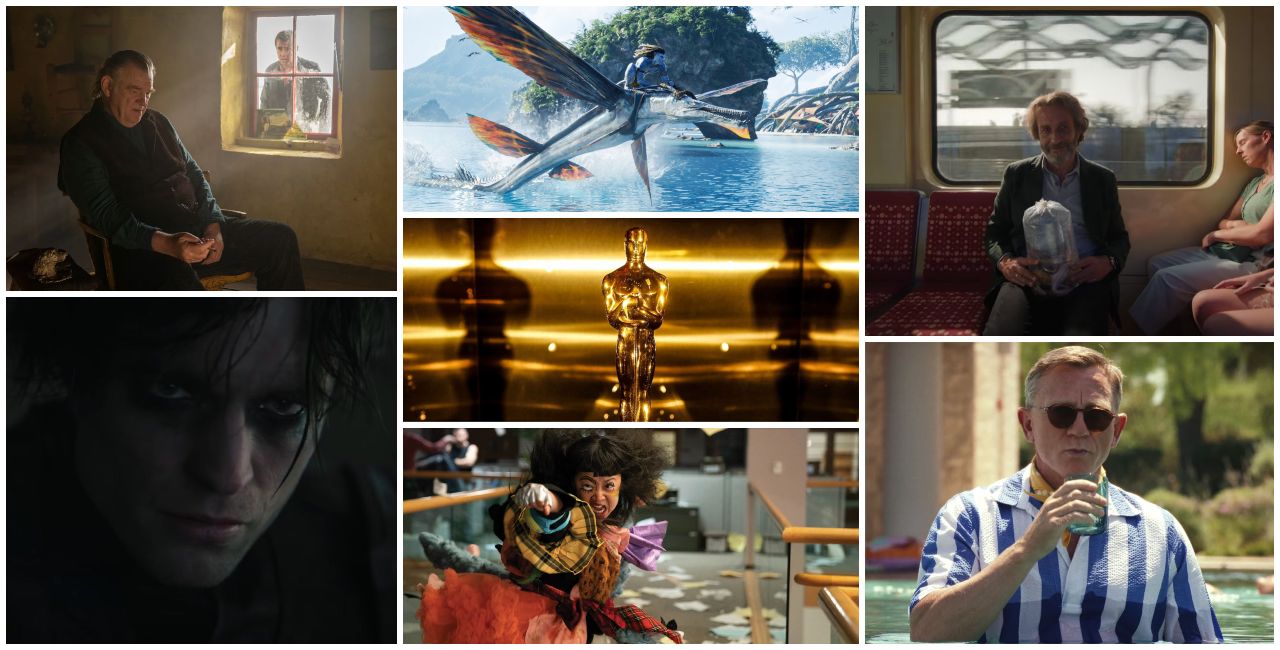
Another Oscars nears and while I’m still putting together my final(ish) predictions for a number of very close races it’s time to start my annual Oscar pieces by taking a look at who and what I would vote for in each category. Once again proving that it’s probably quite a good thing that I’m not a member of the Academy.
Best Cinematography – Bardo, False Chronicle Of A Handful Of Truths I just love the way Bardo looks. It was, for me, one of the best looking films of last year. Not just because of the way it adds energy to the one shots and just how much is going on in them, but also the fantastical elements which are so key to the ways in which the central character’s mind is working. This going for both the more ‘real-world’ fantasies and those which have clearly drifted into some form of dreamscape. Darius Khondji visuals help to emphasise the world(s) and everything that’s happening in it (/them) and allows for further engagement in the occasional strangeness, and the aforementioned one shots. Visually, it’s brilliant.
Best Costume Design – Babylon There’s something about the costumes in Babylon which truly help to push the glamour (or at least want for it) and excess within the film. From the fashion of the wealthy party-starters to the cheap costumes on clustered sets the costumes get across the idea of the period setting whilst establishing the film in a dizzying world of its own. And not just in the party sequences, although there’s plenty on display (and sometimes not) in those. The Hollywood costume detail (of various social statuses) can be seen throughout the film in the likes of the aforementioned film set scenes and the strange underground sex cult tangent.
Best Makeup And Hairstyling – The Batman This was largely between The Whale and The Batman for me (in general this was a fairly close category). And while the former does a good job of making an excessive fat-suit and prosthetics while still maintaining a believable character at the core of the film, the latter has plenty of good, and subtle, displays of effective hair and makeup. Of course plenty of people have discussed Colin Farrell’s transformation into The Penguin, which the campaign in this category seems to have largely focused on, but there are plenty of smaller elements at play in this iteration of Gotham city. The tired, pale, as some have called it, ’emo-like’ look of Bruce Wayne/ Batman, alongside the various slick looks of mob bosses, including John Turturro’s Carmine Falcone. Perhaps Farrell’s transformation does swing this to a fair degree, and as I say this was a fairly close category in general for me, but The Batman would be the box that I tick in this particular race.
Best Production Design – Avatar: The Way Of Water While, of course, there’s plenty to admire about the new landscapes we see in this new trip to Pandora perhaps the thing that swings me most towards this are the giant man-made machines we see, particularly in the third act. Boats, ships, weapons all invading the land of the Metkayina clan. It captures the sci-fi nature of the film, fitting right into the world whilst standing out from the surrounding environments with their strong metallic, artificial look. Yet, of course, there’s still plenty to engage with when it comes to Pandora itself. The various landscapes that make it up, and the various water-related climbs/ depths we get to witness here with plenty of investing scenery and detail. (Of course there’s a discussion as to whether this is down to the visual effects, but a base of the production design surely starts off the look of that scenery and everything else in the world?)
Best Sound – All Quiet On The Western Front To an extent it’s the clichéd answer (a war movie – if it were present after Brett Morgan’s big push for it I’d have absolutely gone for Moonage Daydream) but All Quiet On The Western Front sounded amazing. The elements of the film that struck me the most were the technical ones – both the sound and the visuals. Hand in hand with the score, especially the haunting three-note harmonium theme, the sound throughout is loud and imposing. Echoing the anger and chaos of the battlefield with a fear-inducing noise. It’s an element which feels so precise, even when collected all together in the aforementioned chaos of the battlefield. It pushes you into the middle of the attacks, trenches and even breaks from battle. The sound is excellent.’) but All Quiet On The Western Front sounded amazing. The elements of the film that struck me the most were the technical ones – both the sound and the visuals. Hand in hand with the score, especially the haunting three-note harmonium theme, the sound throughout is loud and imposing. Echoing the anger and chaos of the battlefield with a fear-inducing noise. It’s an element which feels so precise, even when collected all together in the aforementioned chaos of the battlefield. It pushes you into the middle of the attacks, trenches and even breaks from battle. The sound is excellent.
Best Visual Effects – Avatar: The Way Of Water See above. (The visuals are astounding and bring to life new areas of Pandora. The underwater motion capture and tinkering with technology pay off as there’s a visually strong film here. Not just in terms of the landscapes and scenery but also in terms of the characters we see and the creatures which they engage with too. Put them alongside the human characters and you very much believe they’re all in the same world together).
Best Original Song – Naatu Naatu from RRR It’s just a joy. Even without the highly energetic dance visuals Naatu Naatu is just a rather fun, enjoyable song. Perhaps the biggest earworm out of this year’s nominees (although every now and then This Is A Life has begun to echo around my mind) This will likely be the least I say about any category, because as I’ve proved to myself a lot recently I don’t know how to talk about music (and I like Billy Joel), I just rather like the song. I’ve played it a fair few times since first hearing it and very much like its upbeat energy.
Best Original Score – Babylon I wouldn’t mind any of the nominees in this category winning, I think they’re all pretty great. Even John Williams, who some may accuse of having a token nomination simply because he’s John Williams (especially for a Spielberg film), nomination for The Fabelmans is thoroughly deserved. Each score is so different tonally and thematically and does a lot of different work for each film. However, as the score itself, and the one that perhaps just about edges in front of the rest for me is the one that seems to be the ‘fan favourite’: Babylon. There’s so much energy within Justin Hurwitz’s jazz-infused score raging with power through just how much is going on in it. Of course, many lean towards pointing out Voodoo Mama, but there’s plenty running throughout the whole score and each track. From the grander party scenes to the quieter recurring themes and the different styles and motifs they crop up within over the course of the soundtrack/ score.
Best Film Editing – The Banshees Of Inisherin There’s so much within the slow-burn narrative of The Banshees Of Inisherin which in another film could feel bland or repetitive, yet with the way the film is constructed and edited it manages to avoid this feeling, progressing with interest. You feel the humour and the melancholy often at the same time as the tensions between the two not-quite-former-friends rise. The lingering shots hold plenty of effect in both cases and allow for certain points, elements and lines of dialogue to lie. It’s a very well-timed film allowing for what feels like natural progressions within the run-time. There may be flashier editing on display, but in the case of The Banshees Of Inisherin its perhaps the editing which best helps the film, and also perhaps the least noticed?
Best Documentary Feature – Navalny There’s a lot of tension lying in Navalny, particularly as the titular figure tries to piece together the reasoning for and events building up to his attempted murder. The investigative quality to both him and the course of the film is fascinating and brings you in to feel not only further suspense but a sense of fear as to where things might go for all involved. There’s no denying the risk that’s on display, it’s made very clear by almost everyone involved. Yet, instead of making this the only point it uses it to push the narrative and the events which unfold over the course of the documentary.
Best International Feature – All Quiet On The Western Front Undeniably the category with the most gaps for me (outside of shorts), however All Quiet On The Western Front has the edge thanks to just how effective it is tonally. It doesn’t shy away from brutality, both in and out of battles and the trenches, and truly attacks you through its technical achievements. The sound and visual design – especially the cinematography – are excellent and help to emphasises the grimness of the torment the characters are going through. As they give up hope more and more, even when they don’t think there’s any more to lose. There’s a very effective, well made film here. And out of those I have seen in this category, it’s the standout.
Best Animated Feature – Marcel The Shell With Shoes On To quote my notes from when I first watched this film “I love that shell with shoes on”. At time of writing this is still my film of the year (UK release date). The wholesomeness on display is truly affecting, creating both humour and emotion there’s a lot to love about Marcel and his world. Not to mention the fact that you totally buy into the documentary format due to just how detailed it is, seamlessly mixing live-action with stop-motion animation. You genuinely believe that the shells are real. There’s a lot of subtlety to Marcel The Shell With Shoes On, packing in plenty of effect through this while never shielding its central character from the outside world and showing his stresses and anxieties. There’s a lot held in the short 90 minute space of this film, and it’s all handled very well indeed.
Best Original Screenplay – Triangle Of Sadness While in the finished film I think the third act is somewhat drawn out, there’s no denying how funny I found Triangle Of Sadness. Down to just how well it can draw out certain jokes (in one instance for a good 20 minutes) whilst adding in additional gags so as not just to rely on the core point at hand. Much of this through a rather biting satire with plenty of comedic effect. Even in the third act there’s plenty of humour to be found, alongside some more slightly dramatic edges as the situations faced by the characters change. Still managing to get a number of laughs in this section, and managing to still gain them with the eventual film being almost two and a half hours long (presuming a relatively lengthy screenplay).
Best Adapted Screenplay – Glass Onion: A Knives Out Mystery It’s between Glass Onion and Women Talking in this category for me. While Women Talking has some very clever developments when taking its characters outside the barn in which much of the discussion takes place, alongside reminders of the outside world, Glass Onion’s mystery compels me. Yes, the characters might not quite be as well defined as in the first film, but there’s still plenty to enjoy within this latest group of suspects, and the returning ‘gentleman sleuth’ Benoit Blanc. Amongst the various moments of humour Rian Johnson has crafted another brilliant mystery with plenty of clever red herrings and twists along the way. Yet, perhaps the most impressive thing is the fact that the film knows the audience is playing along well before anything happens, tells them this and uses that. It’s open about pretty much all of its details and uses audience participation and their playing along to enhance the mystery and the overall narrative. That’s where much of the brilliance of this latest Benoit Blanc mystery, and the enjoyment of the film as a whole, comes from.
Best Supporting Actor – Brendan Gleeson in The Banshees Of Inisherin In a film with plenty of great performances Brendan Gleeson stood out for me. There’s a blunt seriousness to his dead-pan performance which pushes the drama of the film, particularly in the intensity of his threats. Yet, at the same time there’s plenty of humour within his deliver, or rather the way in which he bounces off of Colin Farrell. There’s a strong sense of loss to his character. A lost soul who thinks he’s broken and isn’t sure why, just trying his best to live out his days – just look at the “how’s the despair?” confession scene, or any moment where his character discusses his mind and how he’s really feeling. Even when saying nothing – the short cart journey sequence – his face manages to give away plenty of detail about his character and what’s in his mind at that moment in time, while giving away very little to Farrell’s lead. Gleeson provides a great performance quietly pushing forward a number of the film’s events. A personal performance of someone going through depression without knowing what it is or acknowledgement of it around him, not helped by the labelling of “despair”.
Best Supporting Actress – Kerry Condon in The Banshees Of Inisherin For a long time I would have said I would vote for Jamie Lee Curtis in Everything Everywhere All At Once, however there’s something about Kerry Condon in The Banshees Of Inisherin which almost speaks for itself. It’s a performance made purely by the performance, by the acting. That’s not to say that Curtis’ performance feels emphasised solely by everything that’s happening around her, or anyone else in this category for that matter (just look at Hong Chau in The Whale after all). However, Condon gives a great performance that brings her character’s exasperation of being trapped on this island with dull, bickering men wonderfully. Especially caught in her occasional outbursts from “you’re all boring” to “was I wild!?” there’s a wonderful character who bounces off well from the performances around her. Struggling to suppress her feelings and frustrations at those around her, and the need to get away, there’s a lot being held in within her performance and it comes across effectively. Particularly showing the effect of her performance and character’s presence when no longer available to help with things anymore.
Best Leading Actor – Brendan Fraser in The Whale If there’s a very restrained, subtle performance that tends to otherwise go unrecognised or seems like an outsider I tend to swing towards that (e.g. Willem Dafoe in At Eternity’s Gate a few years ago was an outstanding performance, in an outstanding film). In the case of this year’s Leading Actor nominees that would be Paul Mescal in Aftersun, my number two choice here. However, and perhaps there’s an element of recency bias here, Brendan Fraser just gets the edge for me here. There’s also likely a personal aspect here in that I saw a lot of personal things in The Whale, and perhaps brought some of that to the film and Fraser’s performance. While certainly he gives a very emotional performance it’s the restrained moments when he’s in ‘dad mode’ which truly worked for me the best. You genuinely believe him when he says of Sadie Sink’s angered teenage daughter “I’m worried she’s forgotten what an amazing person she is”. Yes, this may be a very good comeback performance, but also it’s a great piece of acting in general.
Best Leading Actress – Michelle Yeoh in Everything Everywhere All At Once As generally seems to be the case with pundits, and most outlets, for me this is a race between Michelle Yeoh and Cate Blanchett (if she were here I wouldn’t have thought twice about voting for Danielle Deadwyler in Till – still the best performance I’ve seen this year). While Blanchett gives a brilliant performance which leaves you questioning as to whether or not Lydia Tár is a real person Michelle Yeoh does a wonderful job of tracking her uncertain character through so many different worlds and universes. Tracking the effect on her as she realises what her life could have been like if she’d made one slightly different decision, or turned away a big life event. All while she begins to acknowledge her family and those around her, establishing her relationship with her husband and daughter with great effect. As Evelyn learns to gain control of her new abilities from other universes, and acknowledges what she has around her, there’s sight of an increasingly thought out character tracked through the different worlds we see throughout (even the one where people have hot dog fingers). Add to that the way her character progresses through the action sequences, and generally fights, and there’s a lot of detail in Yeoh’s central performance of someone initially just wanting to pay their taxes.
Best Director – Daniel Kwan and Daniel Scheinert for Everything Everywhere All At Once To have pulled everything in this film off, get across the familial themes amongst the various action sequences and multiverse strangeness you have to admire all of that. Add to that the general style of the piece and the visual nature, both in and out of the action and various moments of multiversal jumping, and there was clearly a great directorial effort that went into Everything Everywhere All At Once. A film like this could easily fall apart, not make sense, feel as if it goes overboard or generally lose control of itself, however Daniels manage to keep everything under control and make a well-constructed, universe-hopping tale in the process. Charting the various worlds we travel to, including multiple at a time in montages, etc, with a strong focus on how its affecting the central character. There’s nod denying the focus, and indeed entertaining style, brought about through the direction of Everything Everywhere All At Once.
Best Picture As Best Picture is voted for via preferential ballot I’ll list my ranking of the nominees (from best to least best – there aren’t any nominees here that I dislike) below before rambling even more than I already have about my top placement.
Having revisited some of these films more than others, and also having some choices suffer from recency bias, I know that this list is likely very wrong (even in my opinion), not to mention in need of more time to be thought over. Once again proving that it’s probably a good thing that I’m not an Academy member.
1. Everything Everywhere All At Once 2. Triangle Of Sadness 3. Tár 4. The Banshees Of Inisherin 5. All Quiet On The Western Front 6. The Fabelmans 7. Women Talking 8. Avatar: The Way Of Water 9. Top Gun: Maverick 10. Elvis
There’s no denying just how bold Everything Everywhere All At Once is. Amongst its absurdity and well-told narrative of family relationships there’s a very entertaining film here. Well told by the entire cast and crew who manage to link and capture the various worlds visited with a clear control. Maintaining a consistent energy from world to world while still effectively charting the journeys of its characters (not just central figure Evelyn) through the ‘decisions that could have been’ there is a strong dramatic core to the film amongst the humour present. It seems that Daniels have injected themselves wholeheartedly into this and its paid off as their film was undeniably one of the most praised and celebrated of last year and understandably why. While I might exactly love it, certainly not to the degree many other people do, I certainly like and enjoy it very much. Both for the absurdity which is on display, the entertainment value that’s to be found within the narrative and the different worlds that we jump to throughout it, but also for the emotional core for the characters and the quiet developments they make throughout it. A gradually developing film about familial relationships, and it’s done rather well indeed.
Samantha Carpenter (Melissa Barrera) and the rest of the ‘Core Four’ (Jenna Ortega, Jasmin Savoy Brown, Mason Gooding) face a new iteration of Ghostface (voiced by Roger L. Jackson) against rumours that Samantha committed the murders the year before.
2022’s Scream was the most ‘Scream’ Scream film yet with its deeply self-aware and meta nature. It brought the franchise back with a hit and as many may have expected a sequel was quickly put into production. Pretty much written and produced within the space of a year there are plenty of moments trying to continue this highly self-aware nature, in fact seemingly pointing that out as well. This largely in the form of returning character Mindy (Jasmin Savoy Brown), knowledgeable of the ins and outs of slasher movies and the different character types she’s obsessed with finding out who the new Ghostface (once again voiced by Roger L. Jackson) is before anyone else, especially after failing to do so last time.
Yet, the explanation of the workings of a requel sequel and legacy films almost seems to be present more for the audience to be aware of the situation rather than for the sake of humour. The self awareness as a whole here doesn’t quite seem to sit as well as the narrative feels somewhat reverse engineered with much of the detail being in the third act confrontations as opposed to throughout the rest of the film. There are certainly enjoyable moments throughout, largely outside of the various character dramas which never quite grab your attention, but they feel dampened by the feeling of the need for at least one more draft of certain sequences.
The Ghostface in question once again seems to be inspired by the previous entries in the Stab franchise, targeting the returning faces from the previous film. However, there’s suspicion that it could be new central figure Samantha Carpenter (Melissa Barrera) after rumours circulate online accusing her of having committed the murders the year before. When things start back up fingers begin to point towards her – especially after an outburst on campus grounds (the story moving from Woodsboro to New York City, without much of a city feel outside of one advertised subway sequence) earlier in the evening. In general you don’t quite buy into the character dramas on display, especially as a handful of elements; and characters, feel like side-thoughts amongst everything else.
When focusing on more stripped back elements, or establishing a good flow in its own particular vein – as the opening sequence rather well displays – Scream VI is at its best. It’s certainly the goriest entry of the franchise and earns its 18 rating in the first ten minutes. There’s an initial darkness to this element which brings a tension to this latest iteration of Ghostface, however this somewhat dims as we shift back to the central characters and their efforts to find out who’s behind the mask this time, and how to stop them. Often the simpler points work the best instead of the more contrived narrative elements or overly-extended kill elements which fill up the midsection of the film, and leak into the third act.
There’s plenty within this film which feels in need of a bit more tuning, at least one more draft could have potentially been done with. However, there’s a good amount withing Scream VI which does work. There are some good horror elements, particularly when not leaning into the very upfront meta nature which writers James Vanderbilt and Guy Busick have injected into these most recent instalments of the franchise; although there is some amusement to be had here, if not to the same extent as last time. While it could have perhaps done with a bit more time in production you can absolutely tell that this is still a Scream film, and still, amongst the irks and frustrations, good viewing at that.
In need of at least one more draft Scream VI feels somewhat contrived in regards to its characters and certain elements which feel like side-thoughts. Yet, despite a faltering meta nature, there are some good elements of straight horror and tension and still an unmistakable sense of Scream.
Release Date – 10th March 2023, Cert – 12, Run-time – 2 hours 4 minutes, Director – Bobby Farrelly
A minor league basketball coach (Woody Harrelson) finds his career halted after an act of aggression leads to him receiving 90 days of community service coaching a team with intellectual disabilities.
There’s a decent enough film within Champions. The kind of conventional ‘feel-good’ sports flick that comes around every now and then and proves to be a likable enough crowdpleaser. Mark Rizzo’s screenplay, and the story arc, certainly seems to say this. It should be fine, however there’s something about the film that often feels off for most of its run-time.
We follow Woody Harrelson as Marcus Marakovich, an assistant coach for a minor-league basketball team. He’s hoping to make it to the big time of the NBA, however those dreams are halted when he pushes head coach Phil (Ernie Hudson) and is booed of the court during a game. Things begin to spiral for Marcus quickly resulting in him receiving 90 days of community service, coaching a local team with intellectual disability – cue multiple gags about what the correct term for the group is, even if characters clearly know that certain “boo-boo words” aren’t at all suitable.
Thus Marcus finds himself having to train the Friends to at least become a working team. However, as he begins to develop a relationship with those on the team – particularly “homie with an extra chromey” Johnny’s (Kevin Iannucci) sister Alex (Kaitlin Olson) – and training starts to pay off Marcus’ career starts to show more signs of restarting. This especially being the case as the Friends find themselves on the road to the Special Olympics. Yet, before that, of course, we need to see them not always able to get the ball through the hoop. As Marcus’ initially finds himself reluctantly serving out his court ordered unpaid work the film feels somewhat oddly framed. It feels as if the disabilities of the central team are almost framed to push certain gags – even when they’re not mentioned or a part of the moment, which is a lot of the time.
It means that instead of a pull factor the film, and the gags in general, seem to push the viewer away due to this strange angle. Maybe it’s from how Marcus sees those in front of him, yet this feeling is still present later in the film, only really dropping for the big finale. It leads to a number of instances which feel rather manipulative, not for those in the film, but for the audience. Uncertainty begins to form as to how you’re supposed to feel about certain moments due to the framing of certain moments leaning away from what it feels like the script intends (although, even that does seem a little bit lax on some occasions).
If it wasn’t for the way in which the direction of the film seems to come across – whether unintentional or not – there would perhaps be a good, if conventional, film from Champions. There’s certainly one within the screenplay, you can even see it at some points during the film. It’s likely to come out more for some audience members, and there’s sure to be something of a crowdpleaser here even if it’s not the entire crowd. The laughs don’t overly come across, perhaps largely down to the angle a number of the core characters seem to be shown from, and in general you sit through Champions thinking two things; that it feels as if there should be a more likable film here, and that (despite being set in Iowa) this is one of the most Canadian-looking films ever made (it was shot in Winnipeg).
The base of Champions is a fairly conventional sports movie, the elements are certainly present however they, alongside the laughs, never quite come through as it feels as if the film often uses the disabilities of the central team to push jokes and ideas even when not relevant, leading to uncertainty of intention during some scenes
Cert – 12, Run-time – 1 hours 56 minutes, Director – Michael B. Jordan
Adonis Creed (Michael B. Jordan) returns to boxing when an old friend (Jonathan Majors) enters the ring, after almost 20 years in jail, with more than the heavyweight champion title on his mind.
Perhaps its helped by the fact that he makes his directorial debut with this film, but you can truly see Michael B. Jordan’s personal and emotional connection with Adonis Creed in Creed III. Retired from boxing and helping coach the next generation in his gym his life seems calm and collected as he enjoys spending more time with his family (Tessa Thompson returns as now music producer Bianca, and Mila Davis-Kent makes a scene-stealing turn as their daughter Amara). However, Creed’s world is shaken up when an old friend is released from jail. Jonathan Majors’ Damian, a former promising boxer, wants to get back in the ring and shows himself to be an opponent as powerful as his knock-out punch.
It’s clear that Damian is after more than just the title of heavyweight champion, it’s said that “Damian ain’t a boxer, he’s fighting a war and he’s trying to hurt people”. You can see the anger, the rage, which he holds in himself both in and out of the ring. He’s looking for some form of revenge, to get back at the world which led him to be imprisoned and let Adonis go free in their youth (the pair played by Spence Moore II and Thaddeus J. Mixson respectively). Majors is brilliant and truly gets across the growing rage of his character as he makes it clear he wants to bring down Creed’s world.
What allows the drama to feel so believable and engaging is the fact that the events feel formed around the characters. Naturally fitting them and allowing for things to naturally progress. While in the first half you might be able to see the individual chapters and details which are constructing the narrative it’s the strength of the performances, and indeed the engagement with the drama, which keep you in place. Allowing for the second half, where things smooth out, to truly push ahead and get across the conflict between the two figures. Whilst one is fuelled by anger the other is trying to deal with his emotions, unsure as to what to do or where to turn as past events and traumas are being brought back up after many years of not having properly faced them – despite Bianca’s encouragement to talk about his feelings.
Much of this comes together in the aforementioned second half, and particularly plays a part during the inevitable training montage and final showdown. The former emphasising the pain and struggle which Creed is going through and managing to get that across to the viewer with plenty of effect. While focusing itself as a character drama – as the best of the Rocky/ Creed films have been – there’s no denying the more stylised nature to some of the boxing sequences make for further interesting viewing and continue to stirring emotions within both characters – alongside two brilliant performances at the heart of the film. The elements successfully come together to create and engaging, and at times thrilling, character drama where the events have been formed around them to push the emotions at play. Michael B. Jordan’s personal investment with the central character and his arc shows and strengthens the proceedings allowing for a natural feel to the events and his character’s best turn to date.
Majors is brilliant and Jordan gives the best performance of his career so far as the two power through an engaging character drama with its fair share of effective, and personal, punches, especially once things smooth out in the second half.