LFF 2022: The Wonder – Review

Cert – 15, Run-time – 1 hour 48 minutes, Director – Sebastián Lelio

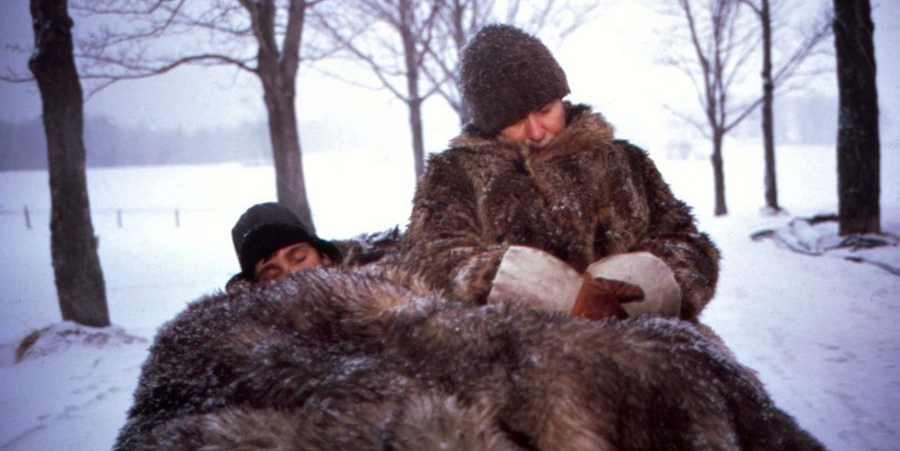
1860s Ireland, English nurse Lib (Florence Pugh) is sent to Ireland to watch over a young girl (Kíla Lord Cassidy) who remains perfectly healthy despite not having eaten for several months.

The Wonder pitches itself as going into a number of different tonal directions as it begins to establish the working relationship between English nurse Lib (Florence Pugh) and young Irish girl Anna (Kíla Lord Cassidy). Lib has been sent to Ireland to observe Anna who remains perfectly active and healthy despite not having eaten for several months. While her job is to watch over and report anything back to the elders of the town her own inquisitive nature begins to take action as she tries to get to the bottom of what’s really going on.

Anna’s claims of “I don’t need to eat. I live on manna. From Heaven” bring in a short burst of near-supernatural horror which dies down quickly as the film also abandons much mystery and ambiguity in favour of a direct period drama. Lib’s perspective is very matter-of-fact and simply presents events as they unfold with little questioning about what might or might not be real. The religious angle may still be played into every now and then but it never feels strong enough to lean back into something more genre-based, instead playing out as more of a character detail for Anna and her family.


It’s one of a handful of elements which appear to be dropped over the course of the film. Niamh Algar somewhat narrates the film; voicing the opening as the camera pans across a soundstage before zooming into the main set and the world of the film, yet her early reminders that ‘this is a story’ are almost entirely forgotten about until much later into the run-time. There’s plenty to be interested in and engaged by throughout the rest of the narrative’s course, but certainly it leans more into directness than the early stages perhaps hint at.

Amongst this there are strong performances from the central cast, particularly, as everyone has come to expect by now, Florence Pugh. Pugh effectively navigates the flow of the film and its occasional cracks and displays of other tones, genres and potential ambiguity with a consistent performance which helps to keep you engaged in how things are going to pan out.

After their initial meeting Lib initially battles with Tom Burke’s Telegraph journalist as they debate what may be the force keeping Anna alive, particularly as she begins to fall ill during Lib’s personal investigation. It’s another element that brings in a sense of slight confliction and mystery before somewhat dropping – although this one does crop up more often than others throughout the film. A number of elements appear to be brought up and dropped in the early stages of The Wonder. While some attempt to break through it largely continues down the lines of a direct period drama, but at least one which, with an intentionally gradual pace, generally holds interest and engagement.

It may only offer glimpses of more genre-based tones and ambiguity but thanks to a set of good performances at the fore The Wonder proves to still be an engaging period drama amongst its directness and intentionally slow-burn nature.

Rating: 3 out of 5.

Barbarian – Review

Cert – 18, Run-time – 1 hour 39 minutes, Director – Zach Cregger

After arriving at a double-booked Airbnb Tess (Georgina Campbell) discovers that there’s a lot more to the house than just another renter (Bill Skarsgård).

It’s already been stated in multiple places that it’s perhaps best to go into Barbarian knowing very little. Having seen the trailer you might think that you’ve been shown some of the twists and turns that the film takes, however it turns out that even that shows the relative basics. There’s much more than just a double-booked Airbnb at the heart of this film, and while it certainly provides a fair deal of tension it does lead to a feeling of the film being somewhat overstuffed.

Throughout the course of the main events we primarily follow Tess (Georgina Campbell), turning up to an Airbnb late at night, ready for a job interview in Detroit the next day. However, on finding no key in the lockbox she discovers that someone else is staying in the house having booked on another app. With all hotels in the area seemingly booked up and the surrounding area not being ideal – to say the least – Tess stays the night, with Bill Skarsgård’s Keith taking the couch, at the house hoping to sort things out in the morning. However, after a couple of bumps in the night gradually it’s discovered that there’s a lot being hidden about the house – including an expansive set of underground corridors.


There’s plenty of tension to be found within these confines and the dark, maze-like construction. It comes after an already eerie nature to Skarsgård’s performance which has provided much of the build-up to this discovery, as the film clearly knows how it wants to pitch him and doesn’t appear to hide that fact. As we delve further into the setting we begin to see different perspectives which add more detail to the film and house as a whole, each witnessing something new, or simply more of what has come before, particularly when it comes to the core threat at hand. Certain moments which may feel like stupid ideas for some characters feel in context for others, such as Justin Long’s generally undisclosed role measuring the place up in the hope that it could make him some money to pay for upcoming legal bills.

Even with this in mind the moment still manages to build up eventual tension as his character delves deeper and eventually stumbles across the same thing that Tess has discovered. It’s as we learn more about this threat, including seeing more from the aforementioned different perspectives – some focused on more than others which act as brief glimpses to simply provide more detail than properly push things along – that the film begins to dip somewhat. It starts to feel slightly overstuffed and as if seeing more of the threat and learning more about it removes something from the film and what it’s been setting up.

While it’s understandable that there would be a restricting feeling to just having a ‘trapped in the tunnels’ horror for 99 minutes – although such sequences are dealt with rather well and certainly have a good air of tension to them – the extra detail and elements simply detract from the overall effect of the horror. Yes, there are still tense and engaging sequences which hold your engagement with the piece and allow for you to still feel involved with it, simply things feel dampened by just how much is eventually shown and explained instead of leaving an element of mystery and suspense in regards to just what lies in the cramped and littered confines of the tunnels. Barbarian is a generally good film, however it could be a truly great horror if it didn’t explore the source of some of its tension as much as it does throughout its run-time.

It may feel dampened by feeling overstuffed in exploring certain elements of the core threat a bit too much, however there’s still a fair deal of tension to be found within Barbarian as it remains engaging whilst travelling along its course.

Rating: 3 out of 5.

Prey For The Devil – Review

Cert – 15, Run-time – 1 hour 33 minutes, Director – Daniel Stamm

A nurse at an exorcism school (Jacqueline Byers) finds herself training to perform an exorcism after re-encountering a demon from her childhood.

Prey For The Devil is perhaps a classic example of a film suffering from ‘we’ve seen it before’. Yet, there’s a determination within it that lifts things up and still makes for a fairly watchable set of events. You can see the heights that it’s reaching for and while it may not quite reach them, due to its flaws, there’s an admirable quality to the film because of this.

Throughout we follow exorcism school nurse Sister Ann (Jacqueline Byers). She believes that she’s had experience with demons and possession in the past, primarily her childhood relationship with her mother (Koyna Ruseva) – who was otherwise diagnosed with schizophrenia. It’s part of Ann’s job to survey various patients in the hospital wing of the school, where they are being watched over to determine whether what is presented is a case of possession or, more simply, mental illness. It makes Ann’s eventual encounter with a demon, taking over the body of young child Natalie (Posy Taylor), more difficult to prove, and lead to an exorcism. Therefore, she breaks the tradition of priests-only in classes, led by Colin Salmon’s Father Quinn, in the hope of learning how to tackle the demon which has caught back up with her.


There’s plenty of horror-leaning sequences throughout involving demonic attacks and freaky body contortions. They may have more effect if not set in constantly flickering lights. In fact, the most effective moments of horror are the less ‘dramatic’ or showy moments that simply let themselves exist as an individual point. At one point, as if taunting her through a two way mirror, Natalie’s body stares at Ann, holes open up in her hands as maggots slowly begin to crawl out. Moments such as this are the most effective parts of the film as they don’t entirely play into the standard tropes of an exorcism/ possession horror, and stray away from throwing various ideas at once into the mix.

Away from the horror things are generally moved along fairly well, particularly thanks to a good central performance from Byers. While some dialogue may feel a bit heavy-handed with certain pieces of religious dialogue comparing the work being done to war and battles – in the opening stages it’s mentioned that “we are losing a war that has been raging for centuries” just to further get into the mind of the viewer just how tough these demons are – there’s generally enough within the drama to make things watchable and to move them along. The final stages may feel somewhat drawn out but as a whole the film feels more saved by the fact that it’s only 93 minutes long, including credits.

The biggest downfall is the feeling of having seen much of this done before, and the lack of subtlety, and forced intensity, or certain horror sequences. There are good ideas and moments here and there, helping to give the film an admirable feeling that it is trying, but as a whole things don’t quite reach the intended heights due to the handful of flaws that are present within the piece. It means that as a whole while fairly watchable Prey For The Devil falters due to not quite being able to overcome its own demons.

There’s a good film within Prey For The Devil and as a whole the film is watchable, it does, however, despite clearly trying, stumble due to familiarity and occasional heavy-handedness with dialogue and horror sequences.

Rating: 2 out of 5.

Lola Atkins ‘Purple Beatz’ Interview

Writer-director Lola Atkins joins me to discuss her upcoming debut feature Purple Beatz, available from Monday 31st October.

Purple Beatz is available to buy and rent on various digital platforms now. To see where you can watch it, including in your own country, you can find out through JustWatch.

You can find more from Lola, and about Purple Beatz, through their respective Twitter accounts.

If you’d like to hear Lola’s song requests you can listen to them by following the links below:
Quest – Shimon and Andy C
Don’t Be Afraid – Des’ree
To You – Rachel Foxx

Bros – Review

Release Date – 28th October 2022, Cert – 15, Run-time – 1 hour 56 minutes, Director – Nicholas Stoller

Whilst preparing to opening America’s first LGBTQ+ museum Bobby (Billy Eichner) finds himself moving away from a life of casual hook-ups as he becomes romantically involved with also struggling-to-commit Aaron (Luke Macfarlane).

Bros commits the cinematic sin of being a rom-com that’s over 90 minutes long, and it doesn’t quite get away with it. While still having a number of laughs along the way you can feel the run-time being drawn-out as it starts to wrap up the various elements that it’s dealing with. You can also feel that it’s still eager to explore and develop certain points and wants to show more while knowing that it needs to wrap itself up. This is largely down to the fact that while it plays along the lines of a traditional rom-com it unashamedly leans into its big promotional angle of being ‘the first major studio gay rom-com’, also featuring an entirely LGBTQ+ central cast. Helping to provide a number of good jokes along the way while never completely jumping into the prominence of the narrative.

Billy Eichner leads in an against-type performance as Bobby, a recently-turned-40 gay influencer with a successful podcast and series of children’s books about LGBTQ+ history. After the prospect of writing a movie fall through when his views of gay romance don’t match those of the studio his sights are turned to America’s first LGBTQ+ museum. The opening is rapidly approaching however there’s disagreement as to what the big final exhibit should be. Should it be dedicated to the idea that Abraham Lincoln was a closeted homosexual, or should it be a Hall Of Bisexuals? Each figure has their own strong views, perhaps none more so that Jim Rash’s scene-stealing Robert, leading to a number of chuckles within the representation-based arguments.

However, Bobby’s focus isn’t entirely in the museum as he begins to enter into a relationship with will lawyer Aaron (Luke Macfarlane). Both are very much single and spend their free time engaging in quick hook-ups with matches on Grindr. However, despite initial hesitancy from both parties a bond begins to form between them. It shouldn’t work “we’re from different worlds. I’m from New York City, you’re from upstate New York”, but it’s made clear through the more intimate scenes between them – as opposed to the humour and lack of emphasis in other sex scenes in the film – that there’s something between them.


Amongst this there’s a clear self-awareness from the film about the relationships it’s depicting and gay representation in pop-culture. Certain scenes, such as Bobby and Aaron leaving another gay cowboy movie led by straight actors or the Hallmark channel now making more inclusive Christmas films such as “A Holly Poly Christmas”, are pitched with an effective satire. It leans into the ‘first of its kind’ push that the film has without, again, feeling overbearing or the main element of the film, the narrative is consistently remembered. Yes, it may mean that the run-time is pushed, but there’s still plenty of amusement to be found within the various laughs held in the third act and its more largely traditional rom-com stylings. With certain moments it’ll be interesting to see how well this film ages, more in regards to its rather modern leanings and the ways in which the likes of dating apps, etc play into Bobby’s life, but while that’s a point for the film in the future for now it all works rather well in the film’s context.

Amongst the humour it almost takes you by surprise when the film delves into a more serious strand. Particularly in an effective character-based monologue from Bobby when sat on a beach with Aaron. The film as a whole works rather well from its frequently acknowledged landmark studio movie perspective while never forgetting the core narrative/s at the centre of it. It might lead to it feeling slightly busy in the final stages where you begin to feel the run-time, but there are still plenty of laughs within co-writers Billy Eichner and Nicholas Stoller’s (who also serves as director) screenplay. Bros remembers its rom-com basis and travels along those lines rather well. Presenting plenty of amusement and satire along the way.

Amongst its self-aware satire and enjoyable humour Bros doesn’t forget its traditional rom-com leanings and narrative. It effectively comes together and while leading to a slightly pushed run-time there’s plenty of laughs to be had along the way.

Rating: 4 out of 5.

LFF 2022: Triangle Of Sadness – Review

Release Date – 28th October 2022, Cert – 15, Run-time – 2 hours 27 minutes, Director – Ruben Östlund

Model and influencer couple Carl and Yaya (Harris Dickinson and Charlbi Dean) find themselves on an increasingly disastrous and uneasy cruise whilst trying to mend their relationship and career.

There’s a sequence towards the end of the second part of Triangle Of Sadness’ clearly divided three act structure which may just be one of the funniest things I’ve seen in a long time. The 15-20 minute sequence is hinted at and built up to but when it finally hits it unfurls in a truly glorious, gross-out, manner. While perhaps being enough on its own individual jokes that tie in to the moment, alongside some which step slightly aside from it, are placed throughout to simply create a brilliantly layered set of events, whilst also stopping the constant from tiring out. Each layer complimenting each other and leading to perhaps one of the funniest, and best, sequences of the year.

It does lead to a slight shame that after such heights the film can’t quite comedically top this. There are still a number of laughs present within writer-director Ruben Östlund’s knack for drawn out gags which border on the lines of effective cringe comedy, but with a slight shift in tone and style none go for anything as grand and in-your-face as the cap on the second act. Instead he continues to play with his clearly targeted characters in usual satirical fashion, throwing them out of their depths in a scenario which is wonderfully delivered by his strong ensemble cast.

For the most part we follow Harris Dickinson and Charlbi Dean as model and influencer couple Carl and Yaya. They’re in a rocky place in terms of their relationship which appears to be led largely by its representation on social media. Add in the fact that Carl is worrying about his own career after a disappointing audition it seems that the only thing that can solve all these problems is a cruise on a luxury superyacht. It’s in this setting where Östlund appears to have the most fun with creating characters. While the drunken captain (Woody Harrelson) is rarely present there’s plenty of input from the other passengers; including a wealthy, scene-stealing Russian fertiliser salesman (Zlatko Buric) – described as “not crazy Russians, it’s very rich Russians” – and elderly British weapons manufacturer owners (Amanda Walker, Oliver Ford Davies).


The run-time may be close to two-and-a-half hours yet thanks to its frequently laugh-out-loud funny humour there’s plenty held within that time to keep things moving, allowing the film to go by quickly. It may slow down in the third act, where up until now little-seen yacht crew member Abigail (Dolly De Leon) begins to command events, after the aforementioned heights of the second parts finale, but there’s still plenty of amusement to be found within the slight tonal shift and new angle which is presented. We see a much more dishevelled and out of place group of people, displayed after the humour of an “a few hours later” title card.

It’s here that the camera appears to most acknowledge itself, or perhaps rather what it’s looking at. The heightened characters and situations allow for it to make an unspoken point of almost looking through a glass into another world to that of the audience, while not creating a distance between them and the film as a whole. During this final segment things may begin to border on the long side, but overall the film fills its run-time rather well and definitely avoids feeling 147 minutes.

Östlund sets his tone with ease in the opening stages which see a loud documentary being filmed while a group of shirtless male models line up waiting to audition. His satire is finely tuned for each character yet broad enough to bring in a variety of laughs within each scenario, although certainly favouring an extended point which leans into cringe comedy. Pointed and yet not afraid to jump head first into gross-out territory there’s plenty of enjoyment to be found here thanks to his scripting and the heightened performances of the ensemble cast. It may start to stretch in the final stages but for the most part Triangle Of Sadness is a wonderfully pitched piece of frequently laugh out loud funny satire.

Favouring effective drawn-out gags yet not afraid to dive into a 15 minute highlight sequence of largely gross-out humour there are plenty of laughs to be found within Triangle Of Sadness’ just pushed run-time and its clearly targeted characters, all well performed by the ensemble cast.

Rating: 4 out of 5.

Black Adam – Review

Cert – 12, Run-time – 2 hours 5 minutes, Director – Jaume Collet-Serra

Having been imprisoned for almost 5000 years Teth Adam (Dwayne Johnson) is unleashed on modern day Kahndaq, with the powers of the gods, looking to finally finish long-sought revenge.

A cinematic depiction of DC’s antihero Black Adam has been in the works since around 2006. Dwayne Johnson has been attached to the role since not long after. While the character, and indeed the film which he leads, has likely taken different forms over that time – including having gone from the antagonist in a Shazam feature to leading his own film – you’d be excused when watching the film for believing that little has changed in that time.

As the central figure of Teth Adam (Johnson) is unleashed in the modern day city of Kahndaq, after having spent almost 5000 years imprisoned, his powers-of-the-gods lead to almost instant chaos and destruction. It catches the attention of the Justice Society, led by Pierce Brosnan’s Dr Fate and Aldis Hodge’s Hawkman. Their aim is to get Adam to say ‘Shazam’, thus removing his powers, before imprisoning him again so that he no longer poses a threat to the world. However, eventually, after a string of chaptered fight sequences which show off each character’s powers – including newbies to field work Cyclone (Quintessa Swindell) and Atom Smasher (Noah Centineo) – all must come together to defeat a potentially stronger threat which links to an ancient crown.

Admittedly, once everyone has come together there is a more direct feeling to the film. It no longer frantically jumps from character to character, feeling less crammed in and generally giving itself a bit more space to breathe. Not to mention a more solid answer to ‘who are we meant to be supporting here?’. Also along for the ride are Adrianna (Sarah Shahi) – the person who brings Teth Adam back in the first place whilst being chased down by mercenaries in a tomb where she believes the integral crown is hidden – and her superhero-obsessed son Amon (Bodhi Sabongui). The relationship between Adam and Amon strikes a feeling of a one-sided Shazam. Amon’s discussion of catchphrases and comic-books is met with a stony-faced, often silence and confused, response as the hero in front of him is more focused on getting revenge and answers.


It’s made clear that this particular hero doesn’t follow the rules. The trailers have highlighted that he’s a hero who kills, and certainly his constant flinging of people from great heights and distances solidifies this point. And while sometimes his responses and differing approach to the Justice Society is a potential source of humour there’s never quite a response due to just how straight the character is played. If anything it just causes him to come across as arrogant in his amoral nature and therefore brings an unlikable sense to the character. With all the constant reminders of Shazam, largely held in that relationship between hero and child which feel like they could just be outtakes from that very film, you sometimes can’t help but think of the character as Angry Shazam. There’s a strong lack of subtlety during one particular fight scene where various close-ups show superhero posters and logos being ripped and torn.

While there are some moments which manage to slightly pull you back in, and certainly this may prove to be amusing and watchable enough for some audiences – the humour may perhaps work better for others, too – the structure of the film soon gets in the way. There are multiple points where, while you know it isn’t, it starts to feel as if it’s bringing itself to a close before suddenly bringing in a new point and remembering to resolve something else. As a whole the film doesn’t feel divided up into stages, but you can occasionally – particularly in the second half – see the seams between ideas and sequences.

Again, there are those for whom Black Adam may prove to work for. Whether they be fans of DC – Zack Snyder fans may get a kick from a number of slow-mo sequences which feel to have been inspired by him – or simply people who have been looking forward to seeing Dwayne Johnson in this role for a long time. It’s a shame that the character doesn’t always come across with the perhaps PG-13 sense of amoral ‘fun’ that’s intended, and as a whole leads to a number of tonally confused scenes and instances. The film as a whole, while providing some watchable sequences within its lengthy action, simply feels weighed down by its structural and narrative issues that it never has the chance to fully take off. The promises that the hierarchy of power in the DC Universe is about to change now feel more akin to the character’s opinion of himself and his (undeniably insanely strong) powers than anything else.

Black Adam’s tonal inconsistency means that it never quite strikes the tone that it perhaps wants, instead occasionally feeling like a set of outtakes from a Shazam of 16 years ago with a more arrogant lead character. Bring in a fluctuating structure and narrative direction and as a whole it never quite fully comes together.

Rating: 2 out of 5.

LFF 2022: Decision To Leave – Review

Release Date – 21st October 2022, Cert – 15, Run-time – 2 hours 19 minutes, Director – Park Chan-wook

When investigating the potential murder of a dead body at the bottom of a mountain a detective (Park Hae-il) finds himself conflicted in suspecting the deceased man’s widow (Tang Wei).

The trailer for Decision To Leave poses a dark, mysterious modern noir. Perhaps the biggest surprise delivered when watching the film is just how funny it is. Yes, there’s definitely a direct seriousness at its core, yet the presence of occasional humour, and what feels like an overall comic relief character in the form of the central detective’s partner, Soo-wan (Go Kyung-pyo). Perhaps the humour that he brings in further shows the experience, and tiredness, of Park Hae-il’s leading Hae-jun. A detective thrown into a mysterious death case. Early on he’s torn between calling it a suicide and trying to find a suspect, something which is only increased when he interviews the deceased man’s wife, Seo-rae (Tang Wei).

As the two interact more over the course of the film Hae-jun becomes more and more conflicted as to whether he believes Seo-rae committed the murder or not, particularly with there being very little evidence. You can see his mind working at a gradual, thoughtful pace. Half of it on the case, the other on the mysterious woman he keeps returning to, both for his investigation and personal reasons. Interest in the film, and indeed the relationship between the pair, is created through the fact that Tang’s character avoids feeling like a standard femme-fatale, partly down to the film’s quiet ambiguity about her. Presenting the character in a very direct manner. It’s a point pushed by, at least for much of the time they’re together, the lack of a romantic bond between the two – although this is seemingly part of the detective’s interest in the potential suspect.


There’s interest in the way things play out and how Hae-jun’s mind controls the course of the investigation and how it pans out. This includes focusing on his own personal life and his relationship with his wife, who he only really sees on weekends due to his job in Busan taking him away from his home. As we see a slight shift in the second half there’s the chance for things to entirely step somewhere slightly different, however co-writer (alongside Seo-kyeong Jeong) and director Park Chan-wook manages to keep things consistent and feeling as one whole piece instead of divided up into two different-feeling sections.

Of course, as many appear to have expected from a Park Chan-wook film, Decision To Leave’s visual style is excellent. Not just down to the direction, but also the arresting cinematography of Ji-yong Kim. Particularly bringing a much more striking feel to the final stages which relish in their visuals and the way in which they add to, and tell, the story. One which moves its characters and their mindsets along with it in a way which keeps the audience engaged thanks to the interesting conflictions which control and plague the investigation of the central figure, and the case which is made more complicated (both for those in the film and those watching it) by his thoughts.

Managing to generally avoid feeling as if it falls under the umbrella of a clichéd noir, Decision To Leave’s story moves its characters into interesting places thanks to bringing their mindsets and views on the central case into question, allowing for an effective set of conflictions to progress the overall piece.

Rating: 4 out of 5.

LFF 2022: The Banshees Of Inisherin – Review

Release Date – 21st October 2022, Cert – 15, Run-time – 1 hour 54 minutes, Director – Martin McDonagh

Pádraic (Colin Farrell) is left confused and isolated when lifelong friend Colm (Brendan Gleeson) suddenly cuts off their friendship.

For those going into The Banshees Of Inisherin expecting In Bruges there’s a likelihood that you’re going to be disappointed. While reteaming lead actors Colin Farrell and Brendan Gleeson with writer-director Martin McDonagh it doesn’t strike the same dark coldness as the latter. The darkness of Banshees is much more subdued, held in the background of the main events and occasionally released in plosive bursts.

The Irish Civil War is unfolding on the mainland a short distance away from the fictional island of Inisherin. While not directly influencing the central events the occasional explosions add another layer of tension to the central broken relationship between long-time pub-mates Colm (Gleeson) and Pádraic (Farrell). We largely follow Pádraic in an increasingly confused, and frustrated, state as he tries to work out why Colm appears to have woken up one day and suddenly refused to talk to him. It’s an idea that he doesn’t seem to understand, even when the basics are put to him as it simply being “about one boring man leaving another man alone”.

As Farrell’s ‘simple man’ continues to try and communicate with his years-long best friend anger rises within Gleeson’s excellently performed character. He threatens consequences bringing in the film’s subtle darkness. Pushed through the wonderfully dead-pan nature with which a number of the one-liners and the conflictions of the central pairing are delivered. There are plenty of laughs to be had and many of them come down to the way the performances convey McDonagh’s screenplay. Not just the two leads but the strong supporting cast alongside them, including Kerry Condon as Pádraic’s suffering, caught-in-the-middle sister Siobhán and Barry Keoghan bringing in a number of chuckles with a very against-type performance.


While the setup of events may feel as if they could be played out on a stage – perhaps McDonagh’s past as a playwright coming through – as we explore more of the few locations around Inisherin, even if just the various paths and lanes, things open up and this initial feeling gradually fades away. Even amongst the fairly stripped-back course that the former friends find themselves on by showing a handful of backdrops throughout the nearly two hour course of the film, and perhaps even opening up to other supporting figures in and around the pub which everyone appears to frequent, things feel a bit more opened up and less stage-like.

The base idea of one friend refusing to talk to another is acknowledged as being rather childlike – “what is he twelve?” – however, for much of the run-time you truly believe that these are fully grown adults interacting, or rather failing to do so. It comes across in the darker elements which appear more as the film goes on and the tensions between the main duo rise. Bringing in comedy amongst the threats which hang in the background with reminders in key points such as the tone, style and structure of the overall piece. Mixing together tones which McDonagh has played with before while managing to feel like something different from him. Those going in expecting In Bruges won’t be met with that, but they should find an entertainingly subdued darkness between the two brilliantly performed leads.

The darkness of The Banshees Of Inisherin effectively lies in the background of the witty one-liners and dead-pan humour, all wonderfully delivered by McDonagh’s cast, particularly the two leads.

Rating: 4 out of 5.

Amsterdam – Review

Cert – 15, Run-time – 2 hours 14 minutes, Director – David O. Russell

Two years-long military friends (Christian Bale, John David Washington) attempt to investigate the murder of their former commanding officer (Ed Begley Jr.), leading them to a mysterious former friend (Margot Robbie), part of a broken bond from World War One.

For anyone who has seen the trailers for Amsterdam you’re likely aware of the absolutely stacked cast that makes up the latest film from writer-director David O. Russell. It’s a fun cast, all of whom appear to have been having a rather good time making this film. This comes across and allows you to engage with them and become caught up within the fast-paced opening stages of the piece. It’s lucky that you’re able to engage with these performances in this way so early on as on a number of occasions throughout the 2 hour+ run-time the cast are doing a lot of the lifting in terms of keeping the audience in place throughout the sprawling, winding narrative.

O. Russell appears to acknowledge this as often characters in scenarios are focused on more than the actual narrative itself. This comes in the form of various attempted gags planted into each scene. While some lift off it’s clear that others are being pushed a bit too hard and therefore gain a slightly awkward reception, particularly in scenes and interactions which seem to simply lengthen the run-time of this not-quite murder-mystery.

We’re certainly not in the confines of a standard whodunnit with Amsterdam, while some have claimed it as a murder-mystery it doesn’t quite follow those lines or generally feel like one. We follow the pair accused of murdering the daughter (Taylor Swift) of their former commanding officer from World War One (Ed Begley Jr.), whose own death is the source of interest and confusion for them. Therefore military pals Burt (Christian Bale) and Harold (John David Washington) set out to find the real culprit and prove their innocence before it’s too late. An aim which leads them back to an old friend from their military days, nurse Valerie (Margot Robbie) who helped the pair in Amsterdam over ten years earlier towards the end of the war. There they formed a close bond and pact, both of which appear to have been broken over time.


Not much time is spent exploring this point as the trio rush around exploring the increasingly complex and wide-spreading murder plot at the core of the film. Figures from their past – including government intelligence and part-time glass salesmen Henry (Michael Shannon) and Paul (Mike Myers) – begin to reappear or provide assistance. As things progress you begin to notice the cracks and weaknesses within the screenplay, particularly when it comes to the amount of elements that it deals with as additions and details linked to the main narrative. It becomes more apparent that the initial engagement you create with the ensemble cast (which also includes the likes of Zoe Saldana, Anya Taylor-Joy, Robert De Niro, Rami Malek, Chris Rock, Andrea Riseborough and more) is the biggest factor of your engagement with the film.

There are entertaining moments dotted throughout the film. Often held within pacier sequences which still manage to hold the relatively lighter, breezy tone of the film. A transition from the entertaining opening stages to a lengthy, explanatory flashback sequence demonstrates the fluctuations of the film early on. Demonstrating early on that your connection with the fun ensemble cast keeps you generally engaged with the film. Perhaps without them this would have ended up as something more alike to the patchy screenplay.

Despite its winding narrative and the increasingly noticeable weakness of the screenplay the early connection you form with the fun ensemble cast which leads the film, and at times the scenarios within it, manages to lift Amsterdam and stop it running off the rails.

Rating: 3 out of 5.