All The Beauty And The Bloodshed – Review

Release Date – 27th January 2023, Cert – 18, Run-time – 2 hours 2 minutes, Director – Laura Poitras

Documentary looking at the life of photographer Nan Goldin through her own pictures, alongside her present day activism against pharmaceutical company Perdue and the Sackler family in relation to the opioid crisis.

“Photography was always a way to walk through fear… It gave me a reason to be there” says photographer Nan Goldin about her life and work. Both encapsulating progressive boundary-pushing attitudes, particularly in regards to her work focusing on the LGBTQ+ community. “Survival was an art” she later states in regards to the creation of a safe space being created for gay people when the streets of Boston became too dangerous. Her activism in the present day is just as passionate as director Laura Poitras follows Goldin and other members of PAIN (Prescription Addiction Intervention Now) protest within prominent museums around the world against the money going into them from the Sackler family. The family who were behind the likes of pharmaceutical company Perdue during the opioid crisis, leading to the deaths of thousands.

In a number of ways there’s almost two different films here. One about Goldin’s life and the other about her current activism. The latter takes more of a standard documentary form while the former sees us taken through a number of Goldin’s slideshows and pictures from over the years, with narration provided by herself recounting her memories – a number of which are acknowledged to have not been much talked about. Both styles work well and indeed have plenty of interest, however occasionally the feeling that you’re watching what could be two different films comes into play, largely in the bridges between each section.


However, the film rarely drops and disengages. Even as its run-time begins to slightly show. It keeps your interest and engagement thanks to the unflinching way in which it treats its subject and the various points that crop up within her life. It’s this attitude which also allows things to keep moving and stay relatively consistent, particularly when it comes to the aforementioned bridges between chapters. There’s almost always some form of development to connect and engage with, particularly within Goldin’s life and the people she finds herself surrounded and pushed by – “I only escape because of my friends” she claims amongst a series of pictures she fondly reminisces over.

Through the work of Poitras and the editing team the cutting attitude of the film is emphasised by a stirring nature to the protest scenes, particularly emotional when you see the push and hear the stories behind the cause, and indeed fascination within strands relating to the likes of censorship – a particular element which moves along with great pace, helped by just how much is shown within it. It’s thanks to moments such a this, and the general force of the film as a whole which fully embraces the bold, boundary-pushing life of Goldin and a number of people who have been part of her life and career. While occasionally things may feel somewhat split both core strands and focuses continue to have strength with plenty to engage and interest.

While it may occasionally feel like its telling two stories, with two different styles, All The Beauty And The Bloodshed powers through with plenty of unflinching stories and details to engage and interest. Fully embracing the bold, boundary-pushing life of its central figure.

Rating: 4 out of 5.

Mat Sheldon ‘The Electricity In Me’ Interview

Writer-director Mat Sheldon joins me to discuss his upcoming short film The Electricity In Me, available to watch online very soon. In the conversation we discuss the likes of cutting away during a to-camera monologue, the work of music on set and opening up a personal story to the cast and crew.

If you’d like to hear Mat’s song requests you can hear them by following the links below:
Let My Key Be C – Nils Frahm and Anne Müller
Love – Mica Levi

LFF 2022: Ashkal – Review

Release Date – TBC, Cert – N/A, Run-time – 1 hour 31 minutes, Director – Youssef Chebbi

When burnt bodies and skeletons begin to appear across Carthage two detectives (Mohamed Grayaâ, Fatma Oussaifi) try to find out the source of what may be an increase in self-immolation.

With each stage of the investigative process that it depicts Ashkal attempts to show the slow, drawn-out process as best as possible within its 91 minute run-time. It’s a slow-burn, there’s no denying that. And sometimes this means that certain elements can feel somewhat disjointed due to the bridges between them and the course that the narrative as a whole follows. We go from focusing on our two leads and the central case at hand to occasionally branching out to look at other, admittedly related, areas that will later impact them and their search for clues and answers.


The figures in question are Batal (Mohamed Grayaâ) and Fatma (Fatma Oussaifi), while there’s a fair deal of discussion between them the film almost seems to focus on their views on the case at hand. We meet them after the discovery of a charred skeleton in the middle of a long-abandoned, unfinished building structure. While initially it’s put down to a case of self-immolation more similar cases begin to crop up, with no known link or source. The more that’s uncovered to do with the bodies the more an eerie sense begins to enter the piece. It’s boosted by occasional elements such as music and the way certain footage is shown and captured – sometimes via a phone or some form of playback – which truly help to capture the darkness that’s at play in something like this.

In fact, while the film and your engagement are sometimes hindered by the slow-burn quality of the narrative the effect of such moments is increased thanks to this factor. In a number of ways it’s the biggest push and pull when it comes to the ways in which the film comes across to the viewer. Especially in terms of the depiction of the relationship between Batal and Fatma, who often feel very distanced from each other, especially in the opening stages as their differences are fully on display, alongside the clear roles which each one plays in the case and work in general. Yet, while occasionally Ashkal might hit some bumps along the way, and create its own distance to the viewer, there’s just about enough present to bring your interest back at certain points to make for interesting viewing, particularly when it comes to the extent of the potential murders that appear throughout.

The slow-burn that constructs Ashkal’s narrative makes for both disengagement and interest. While certain instances feel drawn out of disjointed others have an enhanced darkness and sense of engagement to them helping to broaden out of the mystery taking place.

Rating: 3 out of 5.

LFF 2022: The Eternal Daughter – Review

Release Date – 24th November 2023, Cert – 12, Run-time – 1 hour 36 minutes, Director – Joanna Hogg

A mother and daughter (Tilda Swinton) confront the past in different ways as they spend time in a hotel which was once their family home.

Joanna Hogg’s latest film, The Eternal Daughter, plays out like a personal ghost story. There’s no ghosts present, yet a haunted feeling chills the central figure, Julie (Tilda Swinton), as she paces around the halls and grounds of her former family home. She confronts the past in a much different way to her elderly mother, Rosalind (also Swinton), who largely sits and reminisces as part of a relaxed time away. Swinton is fantastic in the dual lead, effectively creating a true mother-daughter bond between the two central characters.

Rarely do they appear in the same shot; we almost always see them alone. Creating a sense of distance between the pair, further enhancing the later effects of shots where we do briefly see them together. The camera switches back and forth between them as they sit down for dinner, highlighting the natural course of conversation constructed by Hogg’s screenplay. Further conveyed in Julie’s staggered interactions with the hotel receptionist (Carly-Sophia Davies) – who almost seems to be the only member of staff, aside from kindly caretaker Bill (Joseph Mydell).


With each event and interaction the film adds an extra detail of atmosphere to both Swinton’s character and performance, and the surroundings as a whole. While there might not seem to be a great deal of development over the 96 minute run-time it’s the small details which construct the ghostly feeling which plagues the surroundings and what appears to be Julie’s building worries and frustrations. They’re quietly held in but revealed by Swinton’s performance, and the held back details as to why the trip has been made – it’s certainly more than just to see what the old family home is like now. As we reach the final stages everything comes together rather well, with a true effect thanks to the details and techniques which have been built up and demonstrated up until this point.

Like with a number of Hogg’s previous films – primarily The Souvenir – The Eternal Daughter will likely divide the audience. There will likely be a number of people who find it to be slow and drawn out due to the way that it very gradually builds up its small details for mystery and the ‘reveals’ in the final stages. However, for others, myself included, there’s enough intrigue present within the Hammer Horror style confines to engage and push things forward enough to make for an effective not-quite-ghost-story. One which is formed in Hogg’s style and details, and heightened by Swinton’s excellent dual performance.

Made in the subtle details of Hogg’s style and direction, alongside Swinton’s brilliant dual performance, The Eternal Daughter has just enough in each scene to hold interest and keep things moving for an effectively constructed ending.

Rating: 4 out of 5.

LFF 2022: Allelujah – Review

Release Date – 17th March 2023, Cert – 12, Run-time – 1 hour 39 minutes, Director – Richard Eyre

A geriatric ward in a small Yorkshire hospital is threatened with closure, despite the personal connection that the government inspector (Russell Tovey) has with the place.

Perhaps much like some of the characters in the film it’s easy to dismiss Allelujah from its opening stages. It comes across as a generally harmless but enjoyable British comedy with a familiar cast of famous faces. However, as things develop there are a number of truly big surprises along the way as the future of a geriatric ward is put into further questioning.

The ward in question is known as The Beth, part of a small Yorkshire hospital it’s threatened with closure especially when a government inspector (Russell Tovey) starts to look around. However Tovey’s Colin has a personal connection to the place in that his father Joe (David Bradley) is currently a resident of the ward. He, alongside the various other faces staying until they can be sent back to respective homes, is largely tended to by leader of the ward Sister Gilpin (Jennifer Saunders). After multiple years of hard, exhausting work her fellow doctors and nurses, alongside the current patients, are preparing to celebrate, particularly with the presentation of an award – “my service has been admired, there’s no need for the purchase of party novelties” she insists.


Her main priority is continuing to fight “for our right to care”. It’s a point that comes through not just her work but also that of Bally Gill’s Dr Valentine – who we see caringly tending to many of the patients on the ward. Valentine makes sure to build up relationships with those he’s looking after, giving us another glimpse into the ward outside of the ‘who’s got it the worst’ conversations and general bickering. It’s through this that much of the humour comes through, Derek Jacobi in particular is a highlight in this respect and certainly gets a fair deal of focus. It’s evident that there are certainly characters and strands which aren’t quite as prominent as others – even Judi Dench gets a rather minimal, yet undeniably key, role here. However, for what we do get, before things eventually come together, there’s a rather enjoyable piece of work here.

One which, as mentioned, takes a number of highly unexpected turns. Instead of taking you out of the film they instead further hook your interest and bring you along for the remainder of the run-time. Things may lean more towards the dramatic than they had before though, but there’s no denying the intrigue as to how things are going to develop with the various revelations and twists which crop up. All leading to a finale which certainly goes for the emotional punch with a true force. While it remains to be seen how well certain aspects of the film will age (it’s basis and politics are very clearly worn throughout, alongside an undeniably clear pro-NHS stance) as a whole it’s, for now, a rather enjoyable affair which may start off having you thinking you know what it’ll be like and where it’ll go before swerving rather effectively to your greater engagement and interest.

Perhaps, because of the build-up, the film won’t feel like a product of 2021/2 – the film itself is based on Alan Bennett’s 2018 play of the same name after all – as much as it currently might do so close to the time. Regardless, for what it does do there’s more to like and enjoy about Allelujah than there initially might seem. Bringing you into The Beth with the various different faces and characters present who, like the film, have a lot more to show and say than might initially appear to be the case.

While you may settle into the familiarity and ‘you know what you’re going to get’ of Allelujah there’s no denying the dramatic twists and surprises it manages to bring in to further hook your engagement in the later stages. A funny, well-put-together piece of work pushed by the pride that it has in itself.

Rating: 4 out of 5.

LFF 2022: I Love My Dad – Review

Release Date – 23rd January 2023, Cert – 15, Run-time – 1 hour 35 minutes, Director – James Morosini

In an attempt to reconnect with his son (James Morosini), a father (Patton Oswalt) creates a fake dating profile in order to catfish him, resulting in a road-trip to meet the mystery girl.

James Morosini writes, directs and stars as a variation of himself (called Franklin) in this ‘based on true events’ tale of catfishing. “The following actually happened” reads the opening text “my dad asked me to tell you it didn’t”. Patton Oswalt plays his father, Chuck, trying his best to reconnect with his distant son, resorting to creating a fake dating profile – using images of a girl working in a diner he visits – in order to talk to his son. However, the secret becomes more difficult to hold when Chuck finds himself taking a road trip with Franklin in order to meet Becca (Claudia Sulewski).

With Morosini in control of multiple core aspects the film avoids feeling like someone simply reciting an amusing anecdote to you for 90 minutes. An actual narrative is formed and there’s a fair deal of amusement within the various instances which crop up over the course of the journey. While initially the two struggle to converse in the car but can happily message each other (with Chuck playing Becca, not to Franklin’s knowledge) the roles almost begin to switch as they start to communicate more, and struggle for things to talk about – “do you think they’ll make even more shows in the future?” is one topic of conversation between the ‘couple’.


In general there are a handful of chuckles here and there. Occasionally a familiar feeling sets in as if we’ve seen certain scene outlines, and general gags, before, but there’s still enough amusement to be had within the relationship between the two central characters. Certainly it’s the awkward humour which works best (although it’s certainly not the dominant style throughout the film) – a key scene in the later stages of the film in a diner has you watching through your fingers as the awkwardness is ramped up with each line of dialogue. It’s the two leads, and the occasional laughs that they bring which help to keep you engaged within this generally fine comedy.

Things move along well enough for the short 95-minute run-time. There’s a consistent tone and style which while never quite rising above the boundaries of ‘fine’ manage to keep you engaged and interested in the way things pan out. There’s enough to like and be amused by to help the run-time pass by and as a whole there’s enough to enjoy for the time the film lasts to make for worthwhile viewing. It’s just that, even for such a personal ‘based on a true story’ film, things occasionally feel somewhat familiar and as if we’ve seen them before, detracting from the film.

While there’s within I Love My Dad to amuse for the time that it’s on, largely thanks to the two leads emphasising occasionally awkward scenarios, there’s a clear feeling throughout that we’ve seen a number of elements and scene outlines before, creating a generally ‘fine’ feeling for the film overall.

Rating: 3 out of 5.

LFF 2022: The Son – Review

Release Date – 17th February 2023, Cert – 15, Run-time – 2 hours 3 minutes, Director – Florian Zeller

When his teenage son (Zen McGrath) comes to live with him, Peter (Hugh Jackman) finds himself trying to understand what’s going on in his son’s struggling mind.

With 2021’s The Father director Florian Zeller took his play of the same name (alongside co-writer Christopher Hampton) and made it work on the screen through the various changing rooms and designs that the central character found himself thrown into through the lens of dementia. With The Son (largely unrelated) Zeller, once again alongside Hampton, takes another of his plays with a much more difficult idea to try and visualise and put the audience into. We see a series of conversations, primarily between father and son, as Hugh Jackman’s Peter tries to understand what is going on in his teenage son’s (Zen McGrath) mind.

Nicholas is struggling with depression alongside various unspoken mental health issues. His mind is a chaotic place that’s throwing him in all sorts of directions which he can’t fully understand. It makes it even more difficult for those around him to understand causing frustrating, anger and upset between the various family members. Early in the film we see him moving in with his dad, away from mother Kate (Laura Dern) – who, while not the central focus certainly feels sidelined for a lot of the film. With girlfriend Beth (Vanessa Kirby) and recently-born baby Theo also in the Manhattan apartment there’s a lot for Peter to already deal with, alongside his advancing job prospects in Washington’s political sphere. The fact that Nicholas continues to not turn up to school simply adds more stresses which he views as laziness and a lack of cooperation rather than anything else.


It’s partly this which The Son concerns itself with. Trying to show a struggle to understand mental health and what’s going on in someone’s mind; even for the person whose mind it is. Much of the drama and development is confined to a set of conversations, the highlights of the film where it actually manages to put character’s feelings into words. When something such as the themes the film deals with is so difficult to talk about, particularly when you can’t entirely represent it visually, there’s a clear struggle ahead.

As Nicholas tries to explain “I’m not built like other people… I’m in pain all the time. And I’m tired. I’m tired of being in pain” the film lifts and finds the push to say what it wants to and needs to say through the key character in the piece (there’s no denying that Jackman in playing the lead, though). While what has come beforehand is somewhat uncertain in its treatment of the subject matter its these glimpses that spark interest in what’s unfolding and how the characters are feeling. We may get to moments, such as a particular speech by Jackman after this moment, where we start to think ‘I’ve seen this done before, and better’, but as a whole there’s a slightly watchable nature to the film as a whole.

Things may not be revolutionary or game-changing or particularly striking emotionally but there are enough moments that click within The Son to make it generally worthwhile. The moments which manage to break through the struggle of how to represent what Nicholas is going through, and to some extent the responses of those around him, and give the viewer a proper indication of how his mind is making him feel. Almost every character struggles to communicate and in part while this is much the point of the film it also prohibits it sometimes from progressing or pushing forward. When it does it feels like we’ve seen what it does before. While what it does is fine it’s not entirely emotionally gripping. But, when at its best, it’s because, like some of the characters, it’s finally found a moment where it’s been able to bear through the struggle to put something into words.

There’s a struggle to put something you can’t overly see into words, even more so when the subject matter is such a difficult thing to talk about for many people. When The Son does put certain aspects into words it’s at its best, we might feel we’ve seen certain elements done better before, but overall there’s a watchable – if not always emotionally engaging – piece of work here.

Rating: 3 out of 5.

A Man Called Otto – Review

Cert – 15, Run-time – 2 hours 6 minutes, Director – Marc Forster

Having given up on life after the passing of his wife, Otto (Tom Hanks) finds himself constantly interrupted by his disorderly neighbours, especially recently-moved-in Marisol (Mariana Treviño) and her family.

Perhaps one of the reasons 2015’s A Man Called Ove works as well as it does is because of the dead-pan manner in which it treats much of its themes. The ideas of grief mix well with the humour because of the direct and related manner in which they are dealt with. The tone feels fitting and connected, and most importantly embedded within its source country. However, in this English-language remake – based on both the source novel and the 2015 adaptation – the American sensibilities remove the dead-pan nature in favour of a heightened sense of mawkishness. The humour is far more pronounced, especially in its division from the clearer sentimentality which is on display.

Tom Hanks takes on the lead role of Otto, an aging man who despite trying his best to keep order within his closely-built cul-de-sac finds his life constantly interrupted by his neighbours. He’s built his daily rounds and activities on protecting the street from the increasing presence of housing developers who are prowling the area. However, since the death of his wife Otto appears to have given up on life, seemingly more intent on somehow joining her. Yet, his attempts to end his life are constantly interrupted by the noisy activities and disturbances of recently-moved-in Marisol (Mariana Treviño) and her family.

There’s a strong feeling throughout the film that perhaps this wouldn’t have been made if it wasn’t for the involvement of Tom Hanks (who also serves as a producer). He’s certainly the main draw, and the core reason you stay engaged with the unfolding narrative. In fact, perhaps without him the various shifts in tone from pushed comedy to unrestrained drama – largely appearing in the same scene yet never at the same time, creating a clash in the join – mean that without Hanks if this film had happened there may be a weaker piece which you disengage from quickly.


However, much of this is in the first half of the film. As we enter the second half, particularly the final 40 minutes, things appear to change and become slightly more controlled. The observations made in the flashbacks to Otto’s past – the unforced highlights of the film – begin to echo through as the dramatic course begins to take more of a hold without feeling so pushed. In fact a number of the elements appear to line-up together to create something with a generally better sense of flow. While we might get in exchange some crowbarred lip service relating to a trans character (Mack Bayda) taught by Otto’s wife, we get a less-loud performance from Treviño (who for the first half of the film is an early frontrunner for most annoying character of the year) and in hand more stripped back conversations and interactions between her and Hanks.

It’s these moments which are quieter and less reliant on Thomas Newman’s score. Music is part of the reason the first half of A Man Called Otto feel so forced. Placed at almost every opportunity to tell the viewer how they’re supposed to be feeling at each moment, as if the nature of the dialogue isn’t already shouting it enough. And while things may still be watchable, largely thanks to Hanks’ presence, these issues revolve around the mind. It certainly makes for a mixed bag as a whole, especially when arriving in the latter segments of the piece. While things are generally watchable throughout there’s no denying the way the various issues and inconsistencies in tone circle the mind when dominant within the narrative.

Luckily, as mentioned, things do improve. There may still be some downsides and elements which stop you from fully engaging with the characters, but there’s enough to keep you in place and stop the film from dropping and losing your attention overall. Perhaps it’s following the course that Otto himself travels along as he becomes less upfront and agitated by his neighbours, or at least less disgruntled and mistrusting towards them. If so then to some extent it’s worked, but perhaps to too strong a degree as we almost feel how the central figure does towards those around him and the events that unfold instead of properly connecting with him. Regardless, you may well know how things will turn out because it’s Tom Hanks in the lead role, and he’s very much the force that lifts things up.

With a mawkish first half dominated by forced humour and sentimentality, you’re kept in place for A Man Called Otto thanks to Tom Hanks’ presence, leading you into the more direct and balanced second half of personal drama.

Rating: 3 out of 5.

Just A Little Bit Random Audience Top Ten Films Of 2022

If the results of last year’s audience top ten films showed a strong return of big screen blockbusters this year’s demonstrates that the taste for indie fare hasn’t gone away. While perhaps the push of recognisable talent may have provided a push there are definitely some titles present which appear to have simply taken off thanks to word-of-mouth and the fact that they were generally rather good (to put it lightly). Alongside the continuation of a handful of surprises and pushes of favour towards certain films there’s plenty to be interested within this top ten. The big screen and the audience experience (Michael Flatley’s Blackbird received two votes after all) are very much still going strong. And so, let’s jump into it, as voted for by the listeners, readers, visitors and general audience of Just A Little Bit Random, here are their top ten films of 2022 (by UK release date).

10. Roald Dahl’s Matilda The Musical


The stage version of Matilda The Musical continues to be a major success over a decade after its West End debut and it seems that part of what’s made it such an audience favourite has made it into the film adaptation. Matilda has long been a favourite story for many people, with the 90s adaptation being a key touchstone for many people, and it appears that this continues, perhaps especially for a new generation who this take seems to have particularly clicked with.

There’s a new way to escape through the various stories and tales which make up the film, and indeed a new Trunchbull to fear (wonderfully performed by Emma Thompson, perhaps the highlight of the film – relishing lines such as “to teach the child we must first break the child”). A villain who deeply contrasts with Lashana Lynch’s performance as Miss Honey – Lynch herself having been a highlight of 2022 with her diverse turns in the likes of this and The Woman King (one of the best performances of the year). Yet, of course, the true joy for many lies in the musical numbers. Anthems such as Revolting Children and Bruce have you cheering on the characters and diving further into the world which feels as if it could have literally come from the mind of a child. A call which many appear to have answered for it to have landed as the tenth best film of the year in the audience poll.

9. The Worst Person In The World


In a year with plenty of foreign language successes The Worst Person In The World was perhaps one of the first. While prominently displayed in what may be its two most-seen images – the above of lead Renate Reinsve running through the street in a freeze frame of time, and the rather different sharing smoke moment – there was plenty for audiences to absorb, recognise and emotionally connect with within the highly praised not-quite-rom-com.

Eskil Vogt and Joachim Trier’s Oscar nominated screenplay has been praised for its picking apart of rom-com conventions and placing them further into something more resembling the real world, all while keeping elements of fantasy/ which take place more in the central character’s mind. Reassembling them into something which seems familiar to the audience and yet in terms of the film’s world far different from a standard anti-rom-com. All displayed through a very modern lens for which the film was also praised for, definitely seeming to demonstrate its originality which led it to various Original Screenplay nods.

The various blends of genres within the relationships which are shown throughout the film, with various characters occasionally living up to the title, are handled well and indeed form the natural course that we follow for the duration of the film. Wonderfully observed they formed the core connection for many audience members and allowed for a great emotional response as they developed, or in some cases failed to, over time. It makes for a personal yet communal experience that had many people talking about the film and what it provided, both to them and as a whole. Leading to something of a word of mouth hit early in the year. Particularly following on from the 2021 success of Drive My Car it simply helped to kick off a year filled with plenty of success of foreign language, and indeed general indie, films.

8. Black Panther: Wakanda Forever


There’s been much conversation over the last year as to the state of the Marvel Cinematic Universe post-Endgame. And while Marvel films have placed high on the audience vote in pervious years (Avengers: Endgame named the best of 2019 and Spider-Man: No Way Home the second best of 2021) favour appears to have generally been spread elsewhere in 2022. However, out of all their output there’s no denying the success of Black Panther: Wakanda Forever.

For obvious reasons there was already a lot of discussion around the film and just how it would work. And Ryan Coogler and co managed to pull it off rather well. Creating a strong tribute to Chadwick Boseman, and his iteration of Black Panther, while also managing to tell an engaging story with plenty of engaging action. Action which is made all the more engaging thanks to the fact that, once again, the antagonists of the piece (namely Tenoch Huerta’s Namor) are so close to being in the right/ justified that the only thing that stops this from happening is the way that they go about things.

There’s plenty more detail, from the production and costume design to Ludwig Göransson’s score, to increase the authenticity of Wakanda and make it an even more interesting place to experience and be in throughout the film. Adding to the action sequences which certainly provide plenty of thrills and generally making for a more involving world and feature. It was acknowledged that it would be a difficult task to make Wakanda Forever, but the effort and care of all involved clearly shows through the success that it has been, and clearly a favourite of fans from the last year, and perhaps even other audience members as it finds itself in this year’s top ten.

7. The Menu


Proving itself to draw an audience when released in cinemas The Menu appears to have had a number of lives after its festival appearances, including very recently with the word-of-mouth generated from it dropping on Disney+. There’s a lot to enjoy within the theatricality that it presents within the dark delights that are on display throughout. Much like the various chefs helping to prepare the food which appears over the course of the run-time there’s a highly involving nature to the details of the delivery and performance within the various stages – or rather courses – of The Menu.

As the evening takes a dark turn for the handful of diners attending Ralph Fiennes’ restaurant (Fiennes himself providing a captivating performance, holding court even after the reveals have shown the true course of the meal) there’s some truly devilish fun to be had. The thriller lines are well-woven into the pitch-dark humour which pops up throughout. Making for something rather different from not just the rest of the films in this list but also from the rest of the year. While many praised the film for avoiding feeling stage-like there was also plenty of love for just how entertaining it was, and indeed for some of the originality on display within the concept and just how things developed. Overall it was, for some, something of a surprise from 2022’s releases and indeed was one of the many films helped by strong word-of-mouth saying just how much fun there was to be had within this particular dining experience from Hell.

6. Aftersun


Another film which it seems no one saw coming until it was too late, and by too late I of course mean until the tears were streaming, Aftersun picked up traction on the festival circuit and simply hasn’t stopped gaining speed and power since. Whether providing something close to a panic attack or an emotional wipeout there’s certainly been a strong personal and audience-wide response to the film and the subtle emotional complexities that it deals with in the background of images of a relaxed holiday.

A number of people have talked about return visits and repeat viewings which perhaps speaks to just how good the film is and the effect that it has had, especially with it not overly being one that you’d want to return to quickly with the effect that it has. Debuts don’t often come as strong, or – as I continue to say – emotionally complex as Charlotte Wells’ but Aftersun is an undeniably impressive achievement.

Led by excellent performances from Paul Mescal (who continues to have light awards talk around him) and Frankie Corio it may be a film that slowly dawns on you afterwards but there’s no denying that it does have a strong impact on you. One which stays in the mind long after the credits have rolled, leaving a long lasting impression – particularly the much-discussed Under Pressure sequence. Perhaps just part of the reason why people felt compelled to vote for it, enough people to land it this far up the audience top ten.

5. Belfast


Speaking of long-lasting impressions the number five entry in this year’s top ten takes us back to the very start of 2022 to Kenneth Branagh’s personal reflection, Belfast. Awards chatter, and success (let’s not forget it won the Best Original Screenplay Oscar), alongside plenty of discussion about other films throughout the year perhaps meant that Belfast (alongside the likes of Paul Thomas Anderson’s Licorice Pizza) was somewhat forgotten, or at least left out of the conversation by the end of the year. However, when actually looking back at the various films released there was clearly a lot of love for the once-Best-Picture-frontrunner.

While dealing with the rising tensions of The Troubles there’s plenty of familial warmth on display within the innocence demonstrated by Branagh’s central character Buddy (Jude Hill). It adds to the personal angle of Belfast while also providing an extra layer for audiences to engage and connect with, especially with the way that the film follows its central figure and the way that he responds to the changing world around him – his main worry still being how he’s going to talk to a girl he likes at school.

It feels as if Belfast is one of those films that has been dampened slightly by all the awards buzz, at least in the minds of some people (myself included, to be honest). However, on reflection and re-watches it may likely prove to be something referred to along the lines of ‘we forget how good this film is’. Clearly so as it finds its way this far up the top ten almost a whole year after its initial release here in the UK.

4. The Northman


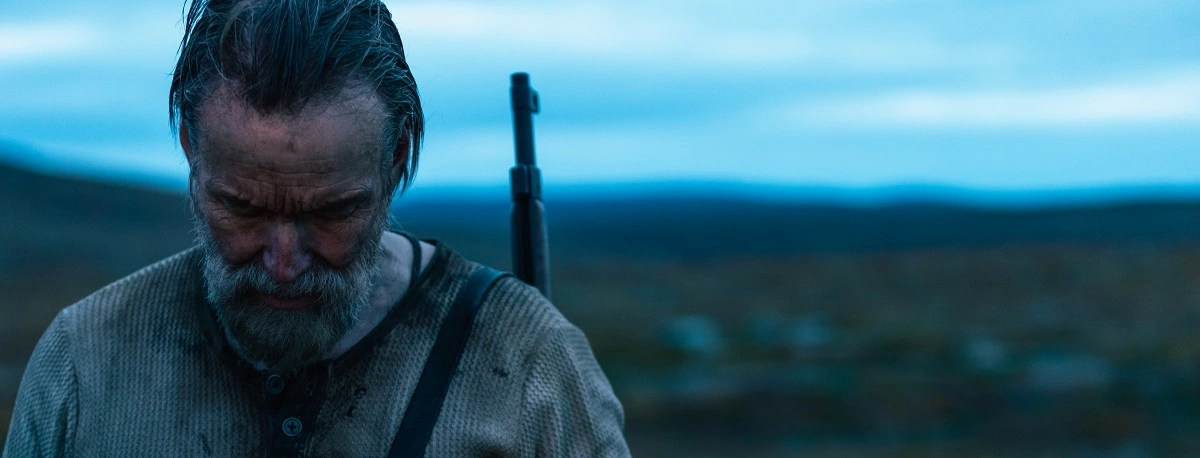
Next to Moonage Daydream The Northman is possibly the biggest sensory attack of the year, although a very different one to the former. Its striking atmosphere is pure Robert Eggers – who appears to have so far increased his audience with each film so far, perhaps showing by the placement of his third film in this year’s audience top ten.

While not the biggest box office success when first released it’s believed that the film eventually made a profit when released on digital platforms and DVD. Whether returning viewers or new The Northman has proved to have some longevity not being forgotten throughout the year (it’s difficult to forget something this intense). Revenge films are often a favourite of many and we certainly haven’t seen one like this for a fair while. One which throws masses of dirt, blood and anger into the mythological mixture.

There are plenty who claim that Robert Eggers is never going to be given this kind of budget, and scale of feature, again – or at least for quite some time. However, he’s certainly picked up a lot of favour, acclaim and potentially even new audience members with this particular Viking roar.

3. Everything Everywhere All At Once


Perhaps the most praised film of the year, and one of the biggest runaway successes, it’s likely no surprise that Everything Everywhere All At Once has appeared on this list, particularly this high up. It might just be one of the defining films of the year with its multiversal narrative full of strange worlds managing to pack in existential themes about life and family.

Much like Michelle Yeoh’s central character, Evelyn, we’re thrown in and out of worlds where life could have been very different (there’s even the possibility of one where everyone has hot dog fingers). Amongst the madness of it all – there’s no denying that the film lives up to its title – there’s no denying the thoughtful elements present within the film and the themes that it tackles throughout. Perhaps all best summed up in the highly existential everything bagel which crops up as a key element.

It feels as if there’s little more to be said about the film. or rather that almost everything has already been said for it. In many ways it generally speaks for itself, alongside the love that has been poured on and towards it. Undeniably one of the most praised, and insane, films of the year which more and more people have discovered and re-watched plenty of times over the course of the year. This is a life.

2. The Banshees Of Inisherin


The reteaming of Martin McDonagh, Colin Farrell and Brendan Gleeson was a long-anticipated event for many people and it seems that The Banshees Of Inisherin was no disappointment. The simple story “about one boring man leaving another man alone” brought plenty of dark laughs and chuckles, as was expected after the likes of In Bruges (although this certainly isn’t in the same vein). Yet, while the leading faces were a major draw the supporting cast, primarily Kerry Condon and Barry Keoghan, almost appear to have stolen the show and gained plenty of attention since the release of the film, and indeed it also recently dropping on Disney+ leading to clips making the rounds on Twitter.

It’s also here that it seems people have been finding more to connect with within the film. While the frequent humour is still very much present it’s the dramas which have also felt more present, and for some heartbreaking. None more so than Keoghan’s “well, there goes that dream” conversation with Condon which has proved a widely spoken about highlight of the film for many viewers.

Of course, there’s still been plenty of praise for the fallen-out friends played by Farrell and Gleeson, both of whom have rightful awards conversation around them. Their increasing feud forms the course that the film travels along yet never detracts from everything happening around them – including the bursts of threat and darkness posed by the Irish civil war unfolding on the mainland right across the water from the fictional island of Inisherin. It all comes together to have created another hit blend for audiences, especially fans of the reunited trio.

1. Glass Onion: A Knives Out Mystery


Normally when the annual audience best of the year vote happens there’s a close race between the top two or three films. In fact, often it’s not clear what will even in the last few hours of voting. However, this year was a very different affair as Glass Onion powered through well ahead after it began to pick up steam in the first couple of days. In total it picked up almost twice as many votes as the second-placed Banshees Of Inisherin. Even more impressive with the fact that it only landed on Netflix (admittedly after time on the festival circuit and the week-long cinema release) on 23rd December.

There’s no denying the love that’s formed around Rian Johnson’s Knives Out films, and, of course, Daniel Craig’s Benoit Blanc, not to mention his eclectic wardrobe and exclamations of shock and frustration. Glass Onion knows that the audience is playing along and trying to guess who the killer is from the very start; well before anything properly happens. It plays with this idea, points it out and continues to tinker and gleefully meddle with murder-mystery conventions for an even more enjoyable experience. Johnson knows just what makes a murder-mystery as enjoyable as it can be and uses that with his own unique set of spins.

Throw in another enjoyable ensemble cast/ set of suspects and you’ve got another hit case for Benoit Blanc. With the first Knives Out film being voted the third best of 2019 (behind Avengers: Endgame and Joker) it appears that for a lot of viewers there’s been little drop in quality, and perhaps even a boost for some, as Glass Onion: A Knives Out Mystery finds itself voted as the Just A Little Bit Random audience’s best film of 2022.

Just A Little Bit Random Review Of The Year 2022

In this special film review of 2022 I’m joined by film journalist Tom Beasley to count down and discuss our respective top ten films of the year lists. From discussion about some of the most acclaimed films of the year to some of the underrated gems, and the shambles that is my top three there’s plenty to be covered in a year not entirely defined by its tentpole films.

If you want to find more from Tom then you can find him on Twitter. If you would like to hear his song requests you can find links to them below:
My Shot – Hamilton Cast
Misery Business – Paramore
Crazy Little Thing Called Love – Queen
Be More Kind – Frank Turner