Meg 2: The Trench – Review

Cert – 12, Run-time – 1 hour 56 minutes, Director – Ben Wheatley

Jonas Taylor (Jason Statham) uncovers both an illegal mining operation at the deepest, deadliest, point of the ocean, and three megalodons.

2018’s The Meg was very much what you expected it to be. A slightly silly summer actioner fitting in with its premise of a long-believed extinct megalodon shark attacking seagoing holidaymakers, with Jason Statham leading the fight against it. Now the sequel, with three times the megalodons, is upon us. Marketed as a much more self-aware film matching the ridiculousness with a grinning sense of humour it turns out that Meg 2 is also exactly what you expected the first film to be.

The tone treads the middle ground between seriousness and silliness, often leaning more towards the former in the first half as Statham’s Jonas Taylor leads an expedition-gone-wrong into The Trench – a layer below the ocean where all kinds of prehistoric creatures reside. It’s a long walk, with jumps back and forth between multiple characters and strands building up to the eventual discovery of an illegal mining operation. A villain is built-up only to be revealed as a quickly disposed of plot point. Everything is simply building up to the second half, and largely the megs making their way to sea level and a new group of tourists trying to enjoy a getaway.
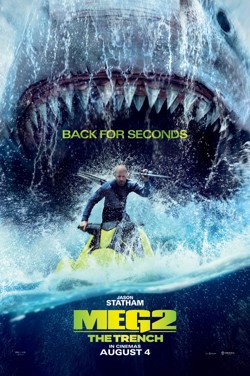

As the action plays out the absurdity of the situation is leaned into. Statham gets some amusing one liners as he carries around metal bars with bombs attached to them in the hoping of defeating the giant sharks. Yet, there are still multiple supporting characters – and a not-quite-villain – to cut to. It causes proceedings to feel busy and overstuffed as the B-movie style action plays out. As a schlocky B-movie Meg 2 works well. Generally fine, if lacking, amusement for the time that it’s on; but certainly something which feels as if it’s largely building up to the main spectacle of Statham riding a jetski across a wave towards a megalodon (undeniably the coolest shot in the film, with a number of others hindered by dodgy CGI).

It’s an action sequence which doesn’t rely on heavy close-ups on characters in bulky costumes, meaning that you can’t entirely see what’s going on in the moment or the scenery which they comment on being so eye-catching. This is a key frustration of the early stages as the plot plods along waiting to properly kick in. However, if I said the film as a whole felt two hours long I’d be lying. Yes, there are plenty of bumps and issues along the way, but it generally goes by well enough in terms of time, and perhaps a lot of this is down to the B-movie tones which are featured throughout, and the style of the third act which sees Jason Statham go from Shark Puncher to Shark Kicker.

Meg 2: The Trench is a busy film with multiple characters who all seem to be there to add seriousness to what should be a slightly sillier film. Luckily, the second half recognises the B-movie nature that should be present and brings enough silliness and schlock to make for an amusing enough sequel.
Rating: 3 out of 5.

Teenage Mutant Ninja Turtles: Mutant Mayhem – Review

Cert – PG, Run-time – 1 hour 40 minutes, Director – Jeff Rowe

Looking for acceptance in New York four young mutant turtles (Nicholas Cantu, Brady Noon, Micah Abbey, Shamon Brown Jr.) find it in a group of tougher mutant animals, although they may have darker intentions for their relationship with humans.

Despite having multiple iterations over the years, including a number of seemingly successful TV series, there’s perhaps been a feeling around the Teenage Mutant Ninja Turtles that a number of their core personality traits are very much products of the late 80s and early 90s. It’s likely that this view is down to a general lack of familiarity with the characters beyond ‘the basics’, and having seen a couple of their big-screen appearances. Regardless, the TMNT quartet feel firmly in place in 2023, with their usual love of pizza and the occasional ‘cowabunga’, as they’re allowed to still feel like teenagers while engaging in some modern-day, fresh-feeling – yet not dark and gritty – violence.

A highlight sequence involves a car chase led into by 4-Non Blondes’ What’s Up – after an excellent punchline involving the song, perhaps one of the best gags of the year. The graphic novel style of the animation rushes by with blurs amongst the fast-flowing movement of vehicles and mutant animals. The titular turtles (Nicholas Cantu, Micah Abbey, Shamon Brown Jr., Brady Noon) thought things were going pretty smoothly as they’d made their way into bulky villain Superfly’s (Ice Cube) gang. For 15 years they’ve been trapped in the sewers, honing their ninja skills with the help of their rat father Splinter (Jackie Chan), Bruce Lee flicks and the occasional instructional VHS, hoping for the day they might be accepted by humans instead of creating fear.


However, there’s hope in aspiring high-school journalist April (Ayo Edebiri) who appears to accept the turtles for who they are, even if some of their actions seem a little strange. Yet, they’re the actions which come across most as teenagers simply joking with each other. There’s a natural sense to a lot of their dialogue, and while it remains to see how well some of it will age, there’s an enjoyable humour to much of it; and, most of all, you actually believe that they’re teenagers (it likely helps that they’re brought to life by a group of likable teenage voice performances). Teenagers who still have the ability to fight off a bad guy with the ability to destroy an entire city.

Things move along with an entertaining style and pace, helped by a sense of threat and darkness from the central villain. Indeed the gang as a whole demonstrate a threat, but for the most part they act as comic relief, particularly when voiced by the likes of Paul Rudd (playing a character who, like Rudd’s real life appearance, seems to have not left the 90s), Natasia Demetriou, Rose Byrne and John Cena. The core source of antagonism is Superfly, with Ice Cube’s performance getting across a lot of the aforementioned darkness. Such feelings help with the tiered stages of the third act battle in the streets of New York. A colourful, finely animated set of events heightened because of the personality of both the characters and the animation.

There’s plenty of well-captured action throughout – one montage in particular of each turtle showing off their skills features an excellent rotating camera shot just to top the whole thing off. The modern style comes through in such action sequences as they move quickly with plenty of entertainment factor. Capturing the equally enjoyable personalities of the central figures, brought to life through likable performances and dialogue. Pizza Hut better get ready, they’re about to get an increase in business.

A fast and enjoyable set of gags and action sequences help to make a finely-animated modern day venture for the Teenage Mutant Ninja Turtles as Mutant Mayhem allows them to actually feel like teenagers through both performance and dialogue.

Rating: 4 out of 5.

Talk To Me – Review

Cert – 15, Run-time – 1 hour 35 minutes, Directors – Danny Philippou, Michael Philippou

On the second anniversary of her mother’s (Alexandria Steffensen) death, teenager Mia (Sophie Wilde) learns what happens when you communicate with the dead for too long.

The most effective horror within Talk To Me is loud. Not in a cliched quiet, quiet, BANG! sense, but a hammering of occasional noise to add to the uncertainty of the darkening situations. Violent bursts of sparingly used blood and gore mixed with clatters and smashes throw the sudden intensity of the moment towards you as the characters suffer the consequences of communicating with the dead for too long.

90 seconds is the limit given to hold the ceramic hand which allows the person gripping it to speak to a random figure in the supposed afterlife. Otherwise they want to stay. On the second anniversary of her mother’s (Alexandria Steffensen) death, teenager Mia (Sophie Wilde) decides to finally go to one of the parties where this happens. Leaping at the chance to have a turn, despite the spirit which briefly possesses her – although such sequences really show how long 90 seconds can be in a situation like this – taunting her best friend Jade’s (Alexandra Jensen) younger brother Riley (Joe Bird), Mia soon gets a taste for the experience, taking the first chance she can to go through it all again. A montage ensues showing the group taking turns to talk to a new spirit each time, they might be having fun but for the audience the tension rises.


Phones are out recording what’s happening, with twin directing duo Danny and Michael Philippou capturing some of this with their camerawork following certain movements such as doors randomly closing to boost the unsettling feel. There might be a bit of distance between the viewer and the film during the early stages – there’s still a good deal of tension, but it sometimes feels like you’re not fully involved, being a slight distance from the film – but once the stakes are established things pick up from there.

After what’s believed to be an interaction with her mother, Mia and her friends are plunged into a dark world of consequences. It’s here, from around the halfway point onwards, when co-writers Danny Philippou and Bill Hinzman, alongside the directing duo, truly have fun with the details of the mythology that they give away surrounding the central hand. The details are light, but enough to not leave too much of a blank canvas. It’s about as much as the characters know, and that’s enough to plunge them into this world. The uncertainty impacts them as the ghosts appear to leak out and plague their everyday lives. Such points may show some of the lesser-explored elements of the film – such as Mia’s relationship with her dad (Marcus Johnson) – but there’s also some good horror sequences here, avoiding jump scares when they could so easily be used.

The horror as a whole is well-constructed and helps to create the aforementioned tension. When working in its loud bursts it’s at its best – with one particular moment of flickering chaos creating real terror – as the sudden bursts really capture just how dark things can get, and just what’s at risk. The uncertainty of the characters is used well, and put onto the audience through the details that are given away surrounding just what’s been gotten into. It all comes together to create a rather effective dark horror which strays away from jump-scares and instead uses the elements that it’s provided itself with to draw out the tension and make its own horror.

Once the stakes of Talk To Me are established it’s easier to properly feel a part of the film, with the tension truly kicking in as the loud bursts of sudden chaos have an even greater effect. Led by an effectively (un)detailed central device.

Rating: 4 out of 5.

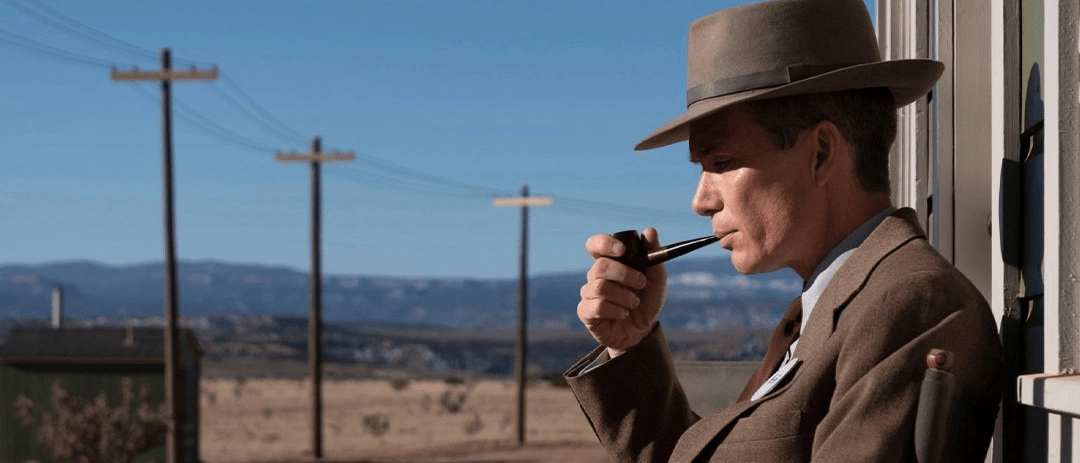
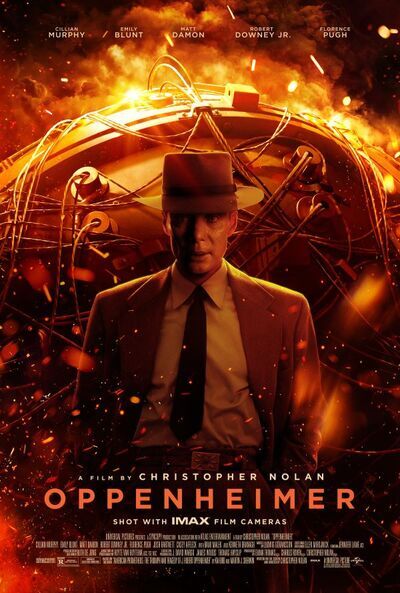
Oppenheimer – Review

Cert – 15, Run-time – 3 hours, Director – Christopher Nolan

Whilst being questioned in a closed hearing about his links to communism, J. Robert Oppenheimer (Cillian Murphy) reflects on his leadership of the creation of the atomic bomb.

As the atomic bomb is tested for the first time, the uncertainty as to whether it will actually work growing – “the chances are near zero” – Christopher Nolan snaps from a suspenseful drama into a horror film. The scare factor has already been rising for over two hours as the inevitable countdown nears. Ludwig Göransson’s excellent score is a ticking clock not signifying the Nazi threat in the race to build the ultimate weapon of mass destruction, it’s a constantly arriving second closer to doomsday. “This isn’t a new weapon, it’s a new world” Oppenheimer (Cillian Murphy) is told about just what he’s making.

Yet, he’s propelled to continue. Whether by personal fascination at the science, the want for the US to win World War II or something else he makes sure that he – and his team, as best as he can – sticks to the job. Murphy’s performance is one of an intelligent and ambitious character, one who is becoming increasingly haunted as he becomes more and more aware of the potential of what he’s creating. It’s a stunning performance dominating almost every scene of the film.

Much of the story is told through flashbacks as Oppenheimer is being questioned as part of a closed hearing about his past links to communism. The odds are stacked against him in an unfair trial intercut with black and white footage of Robert Downey Jr’s effectively restrained performance as US Atomic Energy commissioner Lewis Strauss, going through a Senate hearing in the hopes of becoming Secretary of Commerce. The back-and-forth between the two reflects the montage-like editing of a number of sequences throughout the film. There’s a lot to get through and Nolan, while covering plenty of key details within Oppenheimer’s life, makes it clear that he’s not making a complete biopic – the majority of the film is concerned with the increasingly suspenseful creation of the atomic bomb, becoming fidget-inducingly tense as everything is put together ready for the day of detonation.


“You don’t get to commit sin and then have us feel sorry for your consequences” Oppenheimer’s wife, Kitty (Emily Blunt) tells him after finding out about his affair with Florence Pugh’s Jean Tatlock. Throughout Nolan never tries to create sympathy for the titular figure, instead delivering a straight-faced depiction of events of a man increasingly questioning the moral nature of what he’s doing, and indeed what he’s done. While there’s plenty of interest in his perspective the true connection is with the events. The fear, anxiety and tension which they create. Yes, we know the big explosion is coming (and it’s undeniably a strong, cinematic moment with a punching effect of both wonderment and terror) but there’s still a hint of worry that it might go wrong, perhaps it’s an effect of knowing how it will echo to today.

The explosion has plenty of impact, but it’s helped by the technical aspects of the film. As mentioned Ludwig Göransson’s score is fantastic in working hand-in-hand with the film, meticulously tailored to each moment. It matches the attention to detail in the overall sound design drawing you directly into the world, and as things progress into Oppenheimer’s worry and regret – having already been plagued from his university days with visions of the atomic world burning and splitting. When paired with the production design, and Hoyte van Hoytema’s cinematography, there’s a strong visual nature to the film pushing the atmospheric style which keeps you engaged in the rising dramas – particularly in the shift of the final 40 minutes as the post-bomb events play out.

It may take some time to get used to the new focus which has been glimpsed in bits and pieces prior to this, however it’s not long until the grip of the not-quite-courtroom drama has you fully engaged again. Again, Nolan hasn’t made a direct biopic here, but a film of fear and consequences, and his best to date. A tense, scary and consistently engaging portrait of a man haunted by the events of his life. None more so than becoming death, destroyer of worlds. And how do you reverse that when what you’ve fathered grows and spreads?

The atmospheric design of Oppenheimer is fuel for fear and tension as a two-hour-plus ticking clock counts down to the punch of the atomic bombs detonation. Cillian Murphy is stunning in the increasingly haunted lead role, pushing the grip of the latter consequences and developments in Christopher Nolan’s best film to date.

Rating: 5 out of 5.

Barbie – Review

Cert – 12, Run-time – 1 hour 54 minutes, Director – Greta Gerwig

When her body begins to change, Barbie (Margot Robbie) must travel to the real world, with Ken (Ryan Gosling) beside her, to find the child who owns her – however, the real world is very different to Barbieland.

As Greta Gerwig guides us through the life-size playset houses of Barbieland, assisted by Helen Mirren’s narration, the world is made up of just as much smiles as it is bright pink. It’s hard not to grow a big, stupid grin of your own with each new exclamation of “hi Barbie!” as a new Barbie with a new job appears on screen. It’s a world where “all problems of feminism and equal rights have been solved”, all thanks to Barbie. For Barbie every day is a great day.

That is until the perfect, stereotypical Barbie (Margot Robbie) develops anxiety, cellulite and starts to worry about death. With fears that she’s becoming the new Weird Barbie (Kate McKinnon) she must travel to the real world to find the child who owns her and heal the rift between the two worlds. Alongside her, in case any expertise on ‘beach’ is needed, is Ken (Ryan Gosling). Ken “only has a great day if Barbie looks at him” and is desperate to get her attention – Gosling is fantastic as perhaps the best himbo since Chris Hemsworth in 2016’s Ghostbusters – however the vastly different surroundings of the real world quickly catch the pair off guard.


Gerwig, and co-writer Noah Baumbach, have coated the film with plenty of satire and self-awareness to make for a rather surprising set of narrative events and developments. Particularly by the end there’s a rather bold and ambitious $145 million studio summer feature here. One with plenty of silliness and laughs along the way – early on the Ken’s (largely Gosling and Simu Liu) battle for Barbie’s attention by claiming they’re going to ‘beach’ the other off.

Yet, amongst the laughs the more serious points that Gerwig and Baumbach have to make, cleverly brought up and expanded upon with the same sense of fun, still manage to land well. Both thanks to the positioning and nature of the film and how it works with its themes and elements, but also down to the performances. Whilst clearly having a great deal of fun making this the cast put in strong performances – especially Robbie and Gosling who are both excellent in the lead roles as their character’s worlds and mindsets rapidly change.

This might mean that the laughs die down, alongside characters such as Will Ferrell’s Mattel CEO and other executives being somewhat sidelined, in the build-up to the third act but the film regains its footing. It briefly does this almost for the sake of the events of the third act where the brightly-coloured satire is still played with throughout. It’s hard not to be caught up within the joy of Barbieland, contrasted by the anxiety and crises of the title character as it turns out that maybe Barbie hasn’t had the effect on the world that all the Barbies believe they’ve had. Gerwig’s fingerprints are across the screenplay and film, with plenty of ambition, particularly in the direction of the closing stages. From the 2001 inspired opening she brings a self-awareness to the film heightening the comedy and allowing for more impactful drama.

Margot Robbie and Ryan Gosling give two of the best performances of the year at the centre of a very self-aware Barbie movie. It might slow down just before the kick of the third act, but there’s plenty of laugh-out-loud humour to push the themes of this entertaining, brightly-coloured satire.

Rating: 4 out of 5.

Mission: Impossible – Dead Reckoning Part One – Review

Cert – 12, Run-time – 2 hours 43 minutes, Director – Christopher McQuarrie

Ethan Hunt (Tom Cruise) and the IMF team find themselves in a race between multiple hostile groups all searching for a key to a potentially world-dominating AI power.

The Mission: Impossible franchise, particularly under Christopher McQuarrie who returns for his third instalment, has already proved that it can do chase scenes. There are plenty on display within Dead Reckoning Part One. Whether an extended car and bike chase through the streets of Rome or fast-paced walking through an airport there’s plenty to be caught in the tense grasp of. What this seventh outing for Ethan Hunt (Tom Cruise) and the IMF team displays is the ability to make an effective almost three-hour chase, or rather race.

Multiple hostile groups are all looking for a key which could give them access to an AI power which could allow them to control the world. Our core focus is on Hunt and co. – once again Ving Rhames, Simon Pegg and Rebecca Ferguson, this time with the addition of Hayley Atwell’s international criminal and ace pickpocket Grace – going from location to location in the hope of capturing the key, and finding out what it unlocks, in order to keep it safe from the wrong hands. Every now and then we cut to the likes of Esai Morales’ Gabriel, who appears to already have the power of technology on his side, and the excellent pairing of Shea Whigham and Greg Tarzan Davis’ agency workers Briggs and Degas – both of whom have very different methods of working.


The cuts to the other parties are often brief and occur at the same moment as unfolding action, not to show another perspective of the same thing, but to add to the tension that someone may be ahead in the race. The glimpses of such figures are effective and help to draw you in to another layer of tension amongst the various high-stakes action sequences which unfold, without feeling as if they begin to dominate the narrative or get distracted away from the main action. McQuarrie and co-writer Erik Jendresen, alongside editor Eddie Hamilton, know where the focus should be; and that’s on our central group of IMF agents, everyone else is an uncertain threat and the way they’re worked into the story certainly shows this.

While with so many figures it may take a bit of time for the film to properly get started, truly kicking in with the first major set-piece after the opening credits. Where the tension is truly built up is in the matter of consequences and stakes, put in place against Lorne Balfe’s rising score to truly enhance the suspense. It’s an effective point which grows the narrative tension over that of just the action and makes the most of your engagement, particularly as a bridge between one set-piece or revelation to the next scene, or rather chase and fight sequence/s.

There’s plenty going on in each instance to keep the overall flow consistent and engaging. Everything revolves around and remembers that central narrative, particularly when involving multiple parties at once. There’s an even mixture made up from the characters, especially during the likes of chase scenes and the nerves and uncertainty of a key set of events on a train – made up of multiple well-strung-together events and stages. All helped by a good dose of masks and gadgets – the former of which is particularly fun to see appear multiple times throughout the film. Dead Reckoning has plenty of fun, small details here and there, and they simply add to the intrigue of how the central race-to-the-key plays out – especially when not all motives are full known or clear.

Mission: Impossible – Dead Reckoning Part One knows that the main interest and tension lies within Ethan Hunt and the IMF team. Knowing how to inject other parties into the story with plenty of rising suspense and strong action set-pieces. It might take some time to get going, but once it does, strap in.

Rating: 4 out of 5.

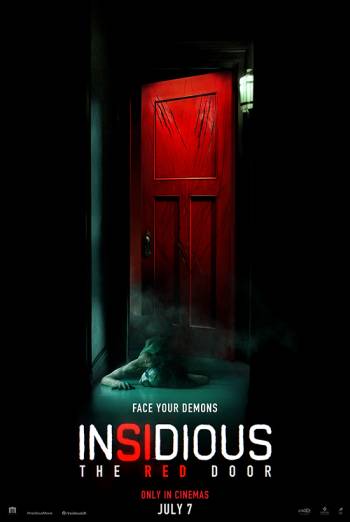
Insidious: The Red Door – Review

Cert – 15, Run-time – 1 hour 47 minutes, Director – Patrick Wilson

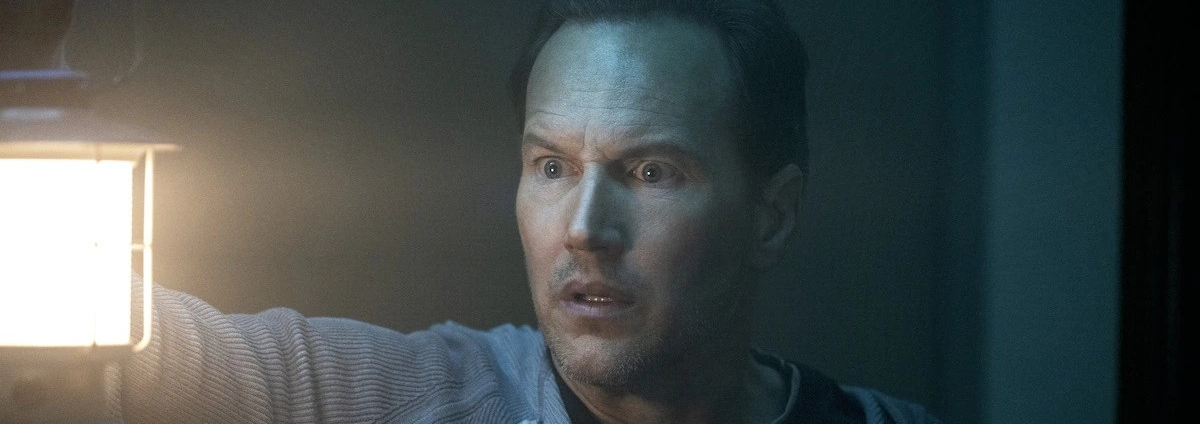
After moving to college Dalton Lambert (Ty Simpkins) finds himself being haunted by the demons of The Further while his distant father (Patrick Wilson) tries to find an explanation as to why his mind has clouded up over recent years.

The Insidious franchise has been a fluctuating horror over the last 13 years. For the most part it’s had its moments of amusement and a couple of thrills, and certainly appears to have found a supportive fanbase. It’s this fanbase which the fifth instalment, The Red Door, plays towards as the distanced Lambert family returns to once again be haunted by the demons of The Further. However, much of the goings on are unfamiliar to disconnected father and son Josh (Patrick Wilson) and Dalton (Ty Simpkins) who were hypnotised to forget about the hauntings of nine years ago.

Emotionally and geographically distanced, with Dalton having gone off to college to study art, the pair are unprepared for the various horrors which lurk in the darkness around them. While there’s a lot of narrative build-up largely focusing on the younger of the pair as he settles into college, trying to decipher what his strange, almost demonic, artistic creations are saying about him, it must be said that the early ghostly encounters do provide some solid jump-scares. Yes, one or two may have a bit too lengthy a build-up, but it doesn’t stop them from causing you to leave your seat for a brief moment.


For much of the film we focus on Dalton, perhaps where the more interesting elements of the somewhat bland narrative are. It’s certainly a film more about his discoveries and treading in his father’s footsteps more than anything else. As things progress, and Josh becomes more a part of the piece with his own discoveries about his forgotten past, there’s a feeling that The Red Door is trying to be some form of Doctor Sleep within the Insidious universe – although without reaching those heights. It’s when the pair begin to be put in focus together that things pick up more, and there’s indeed more directness to the way in which things progress.

What’s come beforehand has wavered with some effective jump-scares amongst the bland plotting, however things manage to gradually gain your interest – although perhaps not your involvement – as the developments pan out. In a number of ways an encapsulation of the franchise up until this point. This may also be the case simply as someone who isn’t exactly a fan of the franchise. There’s certainly a lot here for more invested viewers in this universe to get a kick out of, with plenty of throwbacks and references it almost seems as if this is more for the fans than anyone else who may be coming to this fifth instalment as a more casual viewer, or maybe even new.

While starting out with an uninvolving narrative there are some good jump-scares within Insidious: The Red Door to help things move along. Certainly more for the fans with plenty of details and references to the rest of the franchise, for more casual viewers it’s a decent enough, if uncertain horror.

Rating: 3 out of 5.

Ruby Gillman, Teenage Kraken – Review

Cert – PG, Run-time – 1 hour 31 minutes, Directors – Kirk DeMicco, Faryn Pearl

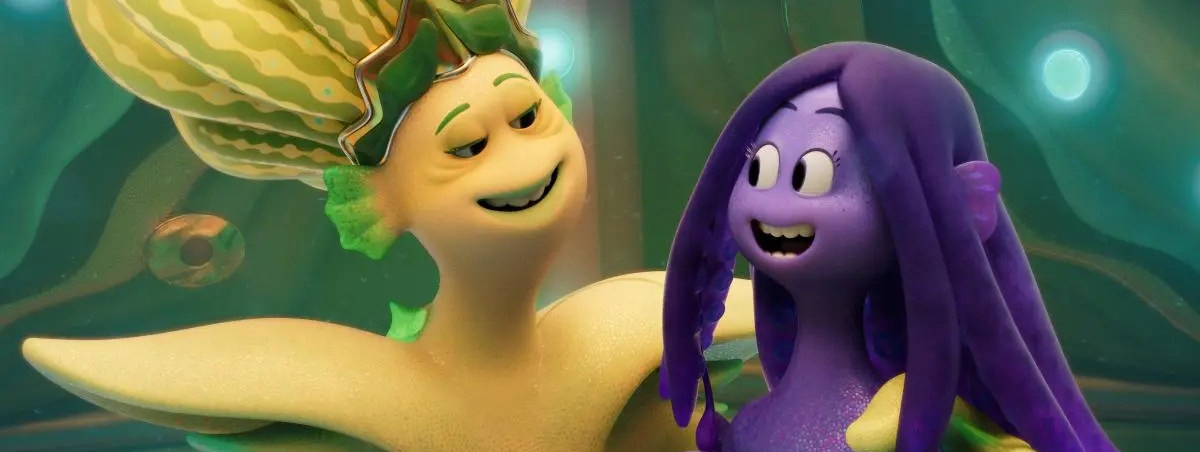
Teenage kraken Ruby Gillman (Lana Condor) learns that she’s descended from underwater royalty, risking her stable life on land to stop the war between mermaids and kraken.

There’s a bubbling energy as Ruby Gillman (Lana Condor) delivers a colourful presentation on why she should be allowed to go to prom. Despite having missed out on all major school events, all her friends going, the safety of the boat and the attractive captain her mother, Agatha (Toni Collette), still says no. The Gillman family are krakens living amongst humanity – when asked about their blue skin they simply explain they’re from Canada – and every family rule prevents them from going back into the ocean. Ruby discovers what her mother has been hiding from her for 15 years after diving in to save her crush Connor (Jaboukie Young-White) after a prom proposal gone wrong – she’s not just a teenage kraken, she’s a giant teenage kraken.

Towering above the rest of the underwater ocean life Ruby begins to discover, thanks to her queen of the krakens grandmother (Jane Fonda), the powers she has. Powers which she’s set on using to help end the war between humans and mermaids – after making friends with new-at-school mermaid Chelsea (Annie Murphy). Much of this is kept secret from the protagonist’s mother, who warns her daughter about her ‘grandmamah’ (as the character insists on being referred to, and is credited, as) without ever really explaining why. In fact the relationship between the two older generations is lightly dealt with and doesn’t feel entirely developed, only really mentioned for the narrative sake when required. Therefore when Ruby converses with her grandmother it feels slightly odd to see them talk with little hesitation or reference to Agatha.


The nature of the narrative is very much a case of ‘in and out’. The story is told quickly and concisely, coming in at 91 minutes, including credits, and generally seems to fit that space rather well. Any more and it may feel somewhat overlong. Partly this is down to the stripped back nature of things, and a slight sense of familiarity. The energy which Ruby is first introduced with, bringing about thoughts of The Mitchells Vs. The Machines’ Katie Mitchell, doesn’t quite linger, and while she herself remains a likable character she somewhat shifts with the film as the nature becomes much more direct.

A couple of laughs crop up here and there and as a whole there’s a decent piece of, albeit likely forgettable, work here. The story is told quickly, with a selection of cartoonish, comic-strip style characters to provide their own pieces of amusement along the way. There may not be anything entirely new here, but for what there is Ruby Gillman manages to keep her head above water making for a likable piece of work which may not quite sail as far as it may hope but certainly floats with enough stability to make for likable viewing.

There’s not entirely anything new within Ruby Gillman, Teenage Kraken, however a likable main character helps to guide us through the concise narrative elements for the short duration of the film.

Rating: 3 out of 5.

Indiana Jones And The Dial Of Destiny – Review

Cert – 12, Run-time – 2 hours 34 minutes, Director – James Mangold

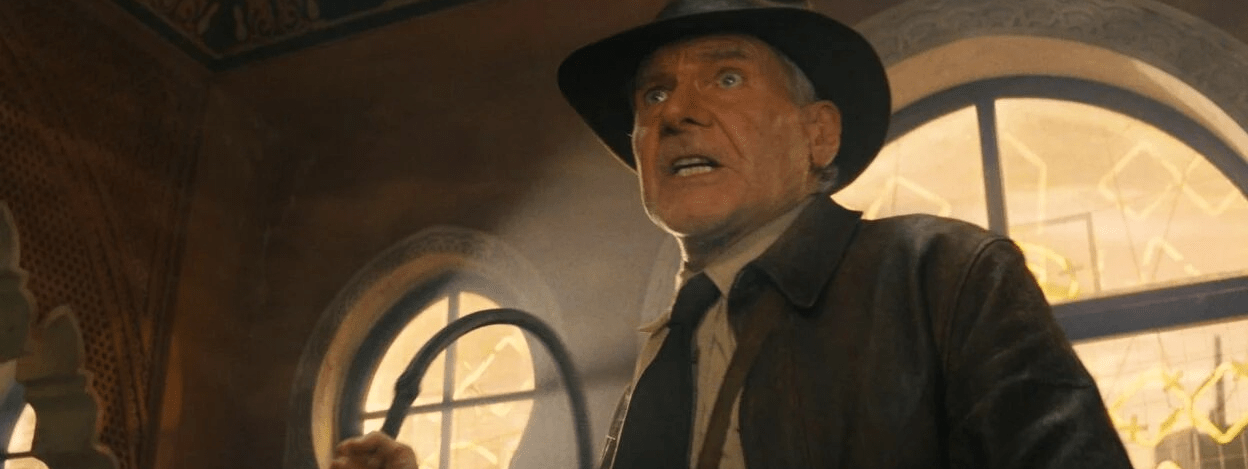
On the verge of retirement Indiana Jones (Harrison Ford) is dragged by his goddaughter (Phoebe Waller-Bridge) into one last adventure, and a race against time to stop Nazis from changing history.

Watching Indiana Jones And The Dial Of Destiny you realise just how much adventure was in the previous films. The set-pieces had action wound into the adventure, made from the elements in the shot and expanding out from there. Allowing for the world to grow and be further explored. Much of this appears to be down to the push of Steven Spielberg, who steps down for directing duties for this final adventure for Harrison Ford’s titular explorer with James Mangold in place.

Mangold directs well but appears to put action at the core of the film with a number of extended sequences constructing the 2 hour and 34 minute run-time of the piece. They’re paired with moments of lengthy explanation and back and forths about history and archaeology to give further context to the developments in the chase for the dial of destiny. A treasure which retiring Professor Henry Jones has encountered in the past, with it chasing back after him in the form of Mads Mikkelson’s Dr Jürgen Voller, hoping to combine both halves of the dial to reverse time and help the Nazis win the war. Thus a race to find and combine both halves begins, with plenty of meetings between the pair along the way.


While Voller has his henchmen (Boyd Holbrook, Olivier Richters) by his side to do all the punching and shooting – causing him to feel less of a threat himself, and this is Mads Mikkelson – Jones has goddaughter Helena Shaw (Phoebe Waller-Bridge). Occasionally, particularly after first meeting her, Helena feels like a character written for someone in their mid-20s. However, after Waller-Bridge certainly puts in a good performance and manages to make the character her own with her own spin of humour, removing the initial feelings created by the dialogue as the film goes on – managing to bring a good handful of chuckles to the proceedings with her sarcastic nature.

Raiders Of The Lost Ark was initially made after a string of big-budget features from Spielberg, and the chaos of 1941. The director decided that he needed a more controlled and restricted budget and decided to make an ode to the B-movie adventure flick and thus the Indiana Jones franchise began. There’s something of that spirit within each of the subsequent films – even Kingdom Of The Crystal Skull, which I’m a defender of. There’s always been elements of the strange and absurd within the occasional fantastical leanings. Here – with an almost $300 million budget! – this is a full on, big-budget main feature blockbuster. The action further pushes this idea, managing to amuse and engage but never quite capturing the spirit of adventure which should be a part of this. Set-pieces are more about what’s going on in them rather than what can be done in them.

The film as a whole is fine and has enjoyable moments within the various sequences which hold your attention for a good del of their duration. A fitting final shot allows Ford to bow out particularly well, and while this might not be the strongest entry in the franchise it’s still overall good. You just wish that it would have a bit more of a sense of adventure. Delving in to what it has rather than drawing out what there is.

There’s some good action within Indiana Jones And The Dial Of Destiny, however it leads you to wish that it would delve a bit more into the adventure and explore its set-pieces just a little bit more.

Rating: 3 out of 5.

Elemental – Review

Release Date – 7th July 2023, Cert – PG, Run-time – 1 hour 49 minutes, Director – Peter Sohn

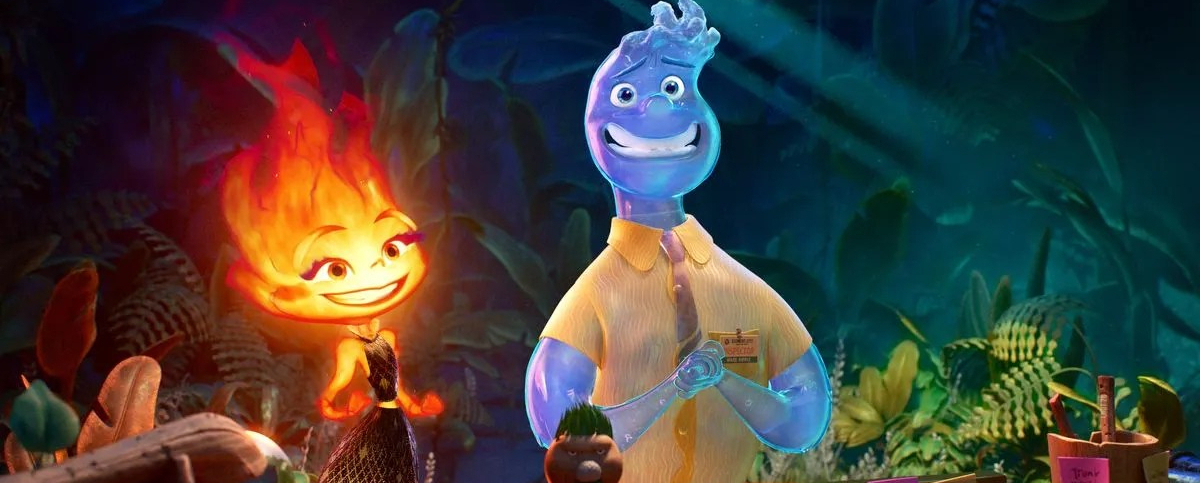
When a neighbourhood of fire elements is at risk of flooding Ember (Leah Lewis) teams up with water figure Wade (Mamoudou Athie) to seal the leak. However, as they get closer the world (especially her parents) insists that elements don’t mix.

It’s strange to think that the studio which brought us Inside Out could ever be on the nose with the themes that it’s presenting. Even the more middlingly regarded Finding Dory wasn’t so upfront with what some saw as themes celebrating disabilities and autism, using them as strengths. Yet, with its repeated point of “elements don’t mix” Elemental, when truly pushing such themes, feels rather obvious.

The belief is one pushed upon central figure Ember (Leah Lewis) as her fiery parents (Ronnie Del Carmen, Shila Ommi) prepare her for taking over the family shop which they set up when first arriving from their homeland, leading to the creation of a fire-based neighbourhood away from the rest of Element City where fire seems to boil or burn everyone else around. However, as the area is put at risk of flooding Ember teams up with highly-emotional water element Wade (Mamoudo Athie) to find the source of the leak, and hopefully save her parents’ business from being shut down after multiple violations are discovered. Leading to various ventures across the landscapes of Element City – a place, also inhabited by grass-patch earth and cloud-like air, with plenty of amusing details and designs to allow for a number of good gags.


Like with Luca, it’s nice to see a film of this nature without a proper antagonist, perhaps even more so than the former. Without this the film still finds plenty to deal with, once properly set on its narrative arc, however at times it feels as if just one too many points are being juggled at once. Alongside the core narrative, the relationship between Wade and Ember and the idea that ‘elements don’t mix’ writers John Hoberg, Kat Likkel and Brenda Hsueh try to deal with Ember’s constantly enflamed temper – trying to find out who she really is and what she wants to do in life – the different opportunities and treatment of different elements and more. Yes, such themes may be dealt with lightly but still, when arising sometimes it feels like there’s a bit too much happening at once.

Through the more on the nose points and the various other themes that pop up here and there throughout the film the biggest thing that helps keep it going is the humour. There are a number of chuckles to be had which help to push the lighter tone which Elemental holds. There’s a likable venture to be found here with enough interest to be gained to keep you in place for the duration of the run-time. There are a number of enjoyable moments during Elemental, and the entertainment factor is certainly there. However, you can’t help but feel that it needs a bit more substance in some of its details to avoid being so on the nose and as if its juggling multiple separate points.

Elemental feels strangely on the nose for a Pixar film, sometimes feeling as if it’s juggling one too many points at once. However, there’s plenty of amusement and detail to make for a worthwhile venture into the engaging and well-designed landscape of Element City.

Rating: 3 out of 5.