Alternative Christmas Film Advent Calendar 2022 – The Disappearance Of Haruhi Suzumiya

With the likes of Rare Exports and Tokyo Godfathers becoming cult classics around this time of year, and after a handful have cropped up in the past, this year’s Alternative Christmas Film Advent Calendar focuses solely on foreign language/ non-English Christmas films. Some simply less heard of around the world, and in some cases their home country, while others aren’t deeply rooted in the season. And so, via this year’s Calendar, let’s go abroad for this year’s Christmas vacation.

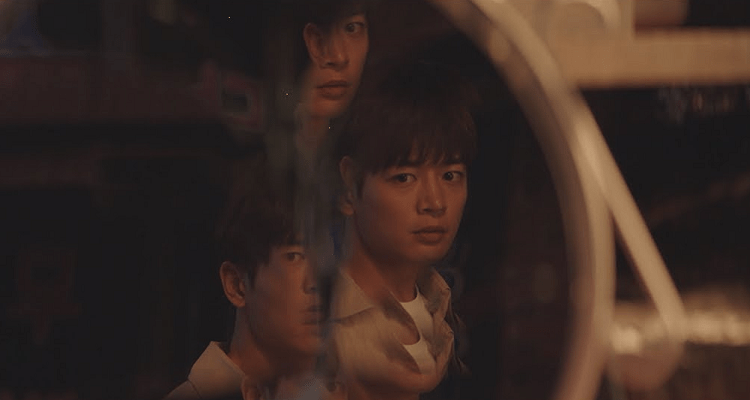
The penultimate day of this year’s calendar has arrived and finally it brings something lighter with more traditional Christmas elements. As mentioned each day so far, Tokyo Godfathers has become something of a cult classic each Christmas, however today we head to Japan for another animated festive offering in the form of The Disappearance Of Haruhi Suzumiya.

It takes a while to realise the lines that The Disappearance Of Haruhi Suzumiya is travelling down. Not that it’s difficult to engage with, more that the recognisable elements are kept at bay by the mystery of the narrative. As teenager Kyon (Tomokazu Sugita) tries to work out not only why none of his friends seem to recognise him, but also the impact they’ve had on his life – particularly school SOS Brigade leader Haruhi (Aya Hirano) who appears to have completely disappeared from the world – gradually themes similar to the likes of It’s A Wonderful Life begin to come through. Yet, as the film asks whether Kyon is in an alternate world, the same with nobody recognising him or something entirely different such thoughts are pushed away as you simply get caught up in the frantic search for answers.

One which takes place in the build-up to Christmas, which the SOS Brigade were preparing for with plans to attend events as the decorations were being pinned around the ordered schoolroom – despite Kyon’s cynicism. The cold is setting in as the snow falls yet despite festive traditions still occurring order is lacking for the central figure as he feels he may run out of time to find answers, as if the big day is the cut off point for him returning to normality.

It’s as the film begins to play with its sci-fi leanings, alongside fantasy elements with the various humanoid figures who pop up throughout the film, that elements relating to not just It’s A Wonderful Life but also A Christmas Carol appear. Time travel becomes a possible explanation, leading Kyon to confront his various relationships with his friends who he initially somewhat dismissed – despite turning up to see them each day in their usual meeting room. All made more engaging by the bright animation which runs throughout, yet still managing to capture the cold wintry environment in which the film takes place; particularly once the big change happens relatively early on in the run-time. We get the build up we need and then off the plot goes along its course.

There’s plenty to enjoy within the finely animated worlds which the film presents. Covering up familiar themes through the stylings of the narrative it may not be the most deeply-rooted in the festive season but there’s certainly enough elements throughout to provide such feelings. Well worth putting in the time (currently it sits as the third longest animated film ever at 2 hours and 42 minutes) it takes to tell its detailed and occasionally reminiscent of Christmas classics story.

The Disappearance Of Haruhi Suzumiya can be watched in the following places:
Microsoft Store
To see if the film is available anywhere else, outside of physical releases, JustWatch lists most platforms in various countries.

Alternative Christmas Film Advent Calendar 2022 – A Christmas Tale

With the likes of Rare Exports and Tokyo Godfathers becoming cult classics around this time of year, and after a handful have cropped up in the past, this year’s Alternative Christmas Film Advent Calendar focuses solely on foreign language/ non-English Christmas films. Some simply less heard of around the world, and in some cases their home country, while others aren’t deeply rooted in the season. And so, via this year’s Calendar, let’s go abroad for this year’s Christmas vacation.

Behind today’s calendar ‘door’ is one final drama before offering some lighter choices before Christmas. Once again switching back to the idea of family, and staying within the French language as instead of family separation we look at the idea of attempted reunion over the festive season in 2008’s A Christmas Tale.

Almost everyone within A Christmas Tale is identified by how they relate to Catherine Deneuve’s Junon. She’s the reason some of them attempt to put their grievances and grudges aside as many figures are called back home not just to celebrate a potentially final family Christmas, but to help in the search for someone willing to donate suitable bone marrow for a required transplant which could save her life.

Arguments are the least of the problems between the family, particularly the set of siblings – mostly in their 30s. As with previous films in this year’s calendar, there appears to be a common theme of family secrets and past lives – as is featured in a number of seasonal re-watches for many people. Again, what better time to look back on a life and family than the season of goodwill? Goodwill in particular being something which A Christmas Tale uses and plays with rather well as the potential death of the family matriarch rears its head into multiple situations – even those which are very individual to certain figures.

Mix in themes about what, or rather who, real family is and how we view such relationships – particularly interesting in the case of Mahieu Amalric’s somewhat prickly character Henri, often stirring the pot in a number of situations – and there’s a fine set of elements for moments of not-quite-forgiveness. It helps the film to not entirely be a lengthy downbeat set of events. What causes this may be a set of lighter dramas, and indeed the likes of distractions for the characters as they try to still celebrate Christmas and not bring any more of a dampener to the festivities – you can see things playing on Junon’s mind as she tries to enjoy a special play that her grandchildren have put together.

Morality and mortality begin to come to the fore as the characters calm down and spend time thinking about their own attitudes instead of outbursts about each others – although, of course, thoughts clearly continue to linger at the back of various minds. The film’s pacing and form become clearer as it deals with the various characters and the way they find themselves impacted, and brought back together, under the circumstances of their mother’s illness. Christmas doesn’t just feel like a background element, or a reason to have the family come together other than the aforementioned illness, it’s used throughout and made a point of. There almost seems to be something redemptive or attitude-changing (although certainly not in the same vein as the classic example of Scrooge) about Christmas Day itself and attending midnight mass. Beginning to fully embrace the spirit of the day just as it starts. A true turning point for the film and the events and relationships that it depicts. Using Christmas as a quiet turning point instead of just including it.

A Christmas Tale can be viewed in the following places:
Amazon
iTunes/ Apple TV
Or, alongside being available on various physical platforms, you can always check JustWatch to see if there’s any other online services stocking the film, particularly in parts of the world outside of the UK.

Alternative Christmas Film Advent Calendar 2022 – Mon Oncle Antoine

With the likes of Rare Exports and Tokyo Godfathers becoming cult classics around this time of year, and after a handful have cropped up in the past, this year’s Alternative Christmas Film Advent Calendar focuses solely on foreign language/ non-English Christmas films. Some simply less heard of around the world, and in some cases their home country, while others aren’t deeply rooted in the season. And so, via this year’s Calendar, let’s go abroad for this year’s Christmas vacation.

As we find ourselves firmly in the week of Christmas the Calendar continues with snowy landscapes amidst another offering of festive fun. Today we take a trip to Canada, keeping the foreign-language theme going by landing in the French-Canadian territory of Quebec for a coming-of-age tale confronting those oh so festive of themes, life and death.

Perhaps a fine summary of Mon Oncle Antoine comes in a sequence about halfway through the film as we see the English-speaking owner of an asbestos mine (Georges Alexander) slowly riding through the local town on a wooden cart led by a horse. Wrapped in warm clothes amongst the cold air and fading snow, he lamely throws flat stockings onto the ground for the local children. While the kids are excited at the prospect and eventually rush out to greet the packages the parents are clearly dismissive, appearing to frown upon the activity – even the face shows a lack of connection to the festive spirit; his pipe emitting more warmth than anything else in the scene.

This opposes the time and effort that has been put into the decorations of the local general store, covered in all sorts of different-size Christmas displays. Times have been tough within the area, with 15-year-old Benoit (Jacques Gagnon) arriving in town for the winter not long after the asbestos mining strikes which took place earlier in the film’s setting of 1949. The titular Antoine (Jean Duceppe) doubles up running the general store, alongside his wife Cécile (Olivette Thibault), with being an undertaker. Through a busy Christmas Eve Benoit must leave the fascinations of the shop – largely his interest in young employee/ colleague Carmen (Lyne Champagne) – to travel through the snow with his weakening uncle to collect a dead body.

It’s through this journey that the ideas about reflecting on life and death come most of the fore within Antoine’s ramblings and insistences upon his teenage nephew. The coming-of-age style switches to a new tone and path as Christmas almost becomes a time of regret and loss over anything else – not helped by the adult’s continuous drinking throughout the day.

While the store tries to push the spirit of the season to the occasional onlookers of the window display unveiling, it generally lacks in the surroundings and soon makes its way into the views and actions of the central figures. Benoit may spend the couple of days the film spans growing up and exploring various elements of the limited world he finds himself in but there’s plenty of contrast in the streets – both views occasionally playing out at the same time. Christmas is a time in this town, particularly in the state it finds itself in, where truths are revealed and attempts are made to accept them. Everyone’s looking for some form of change and development, particularly in regards to the strikes and actions of ‘the Big Boss’. It’s hinted that it may be the young people, still discovering the workings of the world, who at some point can cause that. All encapsulated within the push of the season from some parties, and the lack of reception to it from a great many others, creating the clash which forms the coming-of-age style.

Mon Oncle Antoine can be watched in the following places:
Filmzie
National Film Board of Canada website
YouTube
To see any other places where the film might be available, particularly if you’re in another country, it’s well worth having a look at JustWatch where most services are listed.

Alternative Christmas Film Advent Calendar 2022 – Cabin Fever

With the likes of Rare Exports and Tokyo Godfathers becoming cult classics around this time of year, and after a handful have cropped up in the past, this year’s Alternative Christmas Film Advent Calendar focuses solely on foreign language/ non-English Christmas films. Some simply less heard of around the world, and in some cases their home country, while others aren’t deeply rooted in the season. And so, via this year’s Calendar, let’s go abroad for this year’s Christmas vacation.

Today’s calendar ‘door’ jumps back to the theme of family gatherings around the festive season, although in this case, another dramatic viewpoint. Depicting the rising arguments and turmoil in a cramped cabin surrounded by equally growing levels of snow in the aptly titled Cabin Fever (Or Når nettene blir lange, translating to the equally appropriate When The Night’s Get Long).

One of the few films of the Dogme 95 movement, and the only Norwegian film to be classified as such, writer-director Mona J. Hoel’s use of handheld cameras and natural elements throw us right into the centre of the mix as tensions rise between the central extended family cramped into a rented cabin for Christmas. The naturalism heightens the intensity as various secrets and truths are revealed in the rising heat of Christmas Eve, and into the morning of the next day. All spurred by the alcoholism of father Gunnar (Svein Scharffenberg) who begins to dominate the night with his increasingly drunken ramblings and declarations.

His family are used to this behaviour, trying to distract from it – and hide any alcohol on the premises – as much as possible, particularly in the presence of non-Norwegian speaking Danish in-laws who may as well be complete strangers. It’s already a cocktail for confusion, chaos and misunderstandings, the kind which could normally play a part in a comedy, however here it’s played with deadly-serious drama. There may be some mild merriment to begin with as everyone settles in, but once the kids are put to bed everything begins to boil over.

Everyone simply wants a calm, friendly, family Christmas yet it’s clear that there’s distance within that particular family and there’s little that can stop it – not even the usual traditions, some of which come from new heads at the table, carol singers from the neighbouring cabins and a visit from Santa. Much of the night, and flow into the next day, plays out as if one large sequence. Avoiding the feeling it could be played out on a stage thanks to the naturalistic stylings of the aforementioned Dogme 95 movement you’re simply put at the table and made to feel the awkwardness and frustration that circulates faster and faster over time.

Leaking into the next day like a persistent hangover the air is thick with an unspoken lack of festivity, instead coming across in hesitancy and uncertain looks. That is until everything begins to come out once more in a cocktail of panic, relief, fading energy and disconnect – just to name a few of the various feelings flying around the enclosed space. Cabin Fever depicts the definition of a mirthless Christmas, utilising familiar elements, for viewers and the central characters who are forced to confront truths at this reluctant time of year, to create a naturalistic drama with occasional coldness in the depicted relationships to match the snow-covered surroundings.

Cabin Fever can be watched in the following places:
iTunes/ Apple TV
To see other services which might hold the film to by, rent or stream, particularly in other countries, JustWatch should list most available.

Alternative Christmas Film Advent Calendar 2022 – Gente de Bien

With the likes of Rare Exports and Tokyo Godfathers becoming cult classics around this time of year, and after a handful have cropped up in the past, this year’s Alternative Christmas Film Advent Calendar focuses solely on foreign language/ non-English Christmas films. Some simply less heard of around the world, and in some cases their home country, while others aren’t deeply rooted in the season. And so, via this year’s Calendar, let’s go abroad for this year’s Christmas vacation.

Christmas is often pointed out as a time when we think about those less fortunate, and with that come conversations and pieces about the class divide. It’s this theme which 2014 Colombian drama Gente de Bien (translating to Good People) runs with as struggling father and son Gabriel (Carlos Fernando Pérez) and Eric (Brayan Santamarià) find themselves taken in by a rich family in the build up to Christmas. However, the time of goodwill provides the pair with a strong sense of alienation over anything else.

The film opens with Eric’s mother saying goodbye to her son, insisting it’s only temporary, as for the moment she can’t afford to house the both of them while she’s looking for work. For the rest of the film we see Eric’s father trying to create a bond with his son, while they both find themselves out of their depth in the house of a wealthy family. They’ve been taken in over the Christmas period, whilst Gabriel completes carpentry work he’s been doing, by matriarch Maria (Alejandra Borrero).

Yet, despite being welcomed in the pair constantly find themselves pushed to the sidelines at almost every gathering. A key image used across many posters for the film is of three boys ready to jump into the pool in front of them with Eric some distance away, huddled up to himself, isolated and seemingly unsure as to what to do. There’s initial fascination with the phones and game consoles that the more upper-class kids have, but it soon transforms into hints of jealously via his isolation and feeling out-of-place, pushed away by Maria’s family, yet still allowed to stay in the walls of whichever residence/ building they happen to be in.

As Christmas nears and the decorations go up the lavish glows of lights which flood not just the household but the garden too opposes the washed-out greys of the cramped apartment the father and son otherwise stay in when not out working. Co-writer (alongside Virginie Legeay and Catherine Paillé) and director Franco Lolli establishes the ideas of class struggle, divide and contrast very early on; the rapidly approaching festive celebrations increase this creating a coldness under the warmth of the South American sun. Playing with seemingly universal themes frequently brought up around Christmas, even A Christmas Carol deal with such ideas to some extent, Gente de Bien isn’t a film to watch to feel joyous. It certainly digs in to the definition of ‘alternative’ within the calendar, but much like yesterday’s film uses the Christmas setting to push the themes and ideas that bit further.

Gente de Bien can be watched in the following places:
Amazon
iTunes/ Apple TV
To see where else it might be available to buy, rent or stream, particularly in your country, it’s well worth checking JustWatch.

Alternative Christmas Film Advent Calendar 2022 – Cosy Dens

With the likes of Rare Exports and Tokyo Godfathers becoming cult classics around this time of year, and after a handful have cropped up in the past, this year’s Alternative Christmas Film Advent Calendar focuses solely on foreign language/ non-English Christmas films. Some simply less heard of around the world, and in some cases their home country, while others aren’t deeply rooted in the season. And so, via this year’s Calendar, let’s go abroad for this year’s Christmas vacation.

We start this year’s Calendar with a look at the highly recognisable scenes of festive family gatherings. 1999’s Cosy Dens’ Czech title Pelíšky can be translated to mean the plural of a small animal den or burrow. It’s this feeling which the film gets across as it focuses on a pair of bickering families, and apartment neighbours, in the winter of 1967.

The political tensions of the time make their way into much of the conversation, and the comedy, which particularly lines the first half of the film which follows a Christmas in two busy apartments. One led by a proudly communist-supporting former army officer (Miroslav Donutil), who could happily spend his time praising the ‘unbreakable’ glassware that communism has brought, no matter how low-quality it may be. The other (Jiří Kodet), just upstairs, is a passionate anti-communist who has been imprisoned multiple times for his views against the regime. It’s become an annual tradition his insistence that “the Bolsheviks have a year left at most, maybe two”, much like the political arguments and insults thrown between the pair between windows and down stairwells. However, the film is more concerned with their children.

Michal (Michael Beran) has a crush on the girl upstairs, Jindřiška (Kristýna Nováková), the two are already very good friends and are very much aware of the feud between the families. But, Romeo and Juliet territory this is not. The film views the contrasts of the pairs family Christmases and the arguments that still ensue. Both are fed up of the politics that’s being thrown around the homes and it’s very much the words and actions of the parents which are turned into jokes – including a simple test to prove how long someone can hold their breath for and tears over whether dumplings have been cooked properly or not. The kids aren’t interested and are simply wanting to try and get on with their own lives.

It’s been said that if you’re Czech there’s something to laugh at in almost every scene through the historical contexts which lie within the film. For those viewing outside of the country, and perhaps unaware of the deeper points of the political backgrounds, there’s still plenty to laugh at in terms of the satire and familiar family interactions on display. Each one wonderfully observed and put together for a fine blend of satire and occasional cringe humour.

The Christmas setting and sequences echo into the second half of the film where the real tensions between the families, and lying within the country as it’s depicted at the time in the build-up to the Prague Spring, come more to the fore. While leading up to actual events in the country, Christmas appears to be a great time for the film to start building up its points and rising tensions amongst the images of families looking at very different views of a collective and individual future – perhaps not quite in the same way that we hear Slade singing about each year. There may be plenty to recognise and chuckle at throughout Cosy Dens, particularly in the first hour, and it’s largely thanks to the Christmas theme and setting which effectively echoes into the events of the film’s second half with a largely different response.

Cosy Dens can be watched in the following places:
iTunes/ Apple TV
Or, you might have, or be able to find, a physical copy somewhere. To see if the film is available to buy, rent or stream anywhere else, particularly in your country, it’s always worth checking JustWatch.

LFF 2022: Empire Of Light – Review

Release Date – 9th January 2023, Cert – 15, Run-time – 1 hour 55 minutes, Director – Sam Mendes

In the turbulent days of the early 1980s a romance begins to form between a young Black man (Micheal Ward) and an older white woman (Olivia Colman) in the cinema that they both work at.

After the awards success of the largely direct and focused 1917 – the narrative generally refraining from tangents due to the not-quite-one-shot style – Sam Mendes’ follow-up feature feels structurally almost the complete opposite. A jumble of themes and ideas relating to racism, mixed-race and age-gap romance, cinema, mental illness, a reflection on the early-80s and more make up the just under 2 hour course of Empire Of Light. All tinted, rather well by Roger Deakins, in a glaze which should go down well with the members of tame Facebook nostalgia pages who remember the good old days when you could go to the butcher for meat.

We largely follow cinema worker Hilary (Olivia Colman). While dedicated to her job she finds herself harassed by her manager (Colin Firth) who uses her to have an affair. However, Hilary’s life begins to turn around when new employee Stephen (Micheal Ward) arrives. It’s here that Mendes begins to flirt with ideas of a mixed-race and age-gap relationship, flirt being the key word as such elements occasionally feel brief and buried other under ideas. While accepted by the other staff Stephen’s presence brings unrest from others, particularly during a mass National Front protest which passes by the cinema.


While working well enough such sequences feel as if they have dimmed effect not just due to the fluctuating focus of the film as a whole – having to settle from one thing to another – but also, to some extent, the lack of focus on such themes overall. Part way through Toby Jones’ passionate projectionist begins to explain the way projectors work and just how great cinema can be. This conversation seems to last longer than any reference to do with race that has come before it. As a whole the film feels widely unfocused wanting to capture so many elements that writer-director Mendes remembers from his childhood and teenage years without ever being able to properly whittle them down to a more consistent set of tones and focuses.

Throughout a number of events and sequences find themselves lifted by the, as expected, rather good score courtesy of Trent Reznor and Atticus Ross. In many ways it’s the technical elements, such as visuals and sound, which help to lift up Empire Of Light and lift up the fittingly tame events. Events so tame that each time the characters swear – and it turns out there’s a fair deal more swearing than you might expect – it almost feels out of place with the rest of the surroundings. Bringing in a further element of unevenness to the proceedings. What we may get is watchable and likable, and it may do well with a particular group of older viewers, but as a whole Empire Of Light feels too busy and unfocused to be anything above that. The individual elements are fine, but they change too frequently to create any form of grander connection beyond the surface of what’s there.

While watchable and generally likable there’s little beyond the surface of Empire Of Light due to its frequently changing tone, style and focus, preventing it from rising above a dramatic nostalgia-page-tinted view of the early 80s.

Rating: 3 out of 5.

Avatar: The Way Of Water – Review

Cert – 12, Run-time – 3 hours 12 minutes, Director – James Cameron

When Colonel Quartich (Stephen Lang) returns to Pandora Jake Sully (Sam Worthington) and his family seek refuge with the sea-dwelling Metkayina tribe to avoid being hunted down.

When recalling Avatar many think of the highly acclaimed visual effects which brought the world of Pandora to life. Such effects have already been widely discussed when it comes to the sequel, and certainly they’re on as fine a form as they were 13 years ago. However, co-writer (alongside co-writers Rick Jaffa and Amanda Silver) and director James Cameron doesn’t allow the film to be bogged down in this and be led into sequences of simply sitting in wonderment at the world in which the events take place on. Instead you can see such moments attempted to be wound into the narrative which stretches across the 192 minute run-time.

Happily settled into Na’vi life Jake Sully (Sam Worthington) leads the race in battles against the returning ‘sky people’ of Earth who now plan to turn Pandora into a second home. However, Jake’s leadership is halted when Stephen Lang’s Colonel Quartich returns in Avatar form – his pre-death memories put into a stand-by body – intent on hunting Sully down and killing him, perhaps alongside his family. Abandoning their jungle home and tribe the Sully’s make their way towards the sea, finding refuge with the Metkayina tribe – who teach them how to adapt to the ways of the water and the creatures within it.

It’s here that the film begins to not quite make tangents but certainly starts to include a handful of drawn-out sequences as the various characters explore the world around them. Jake is pushed to the side somewhat, while wife Neytiri (Zoe Saldaña) appears to have a very diminished role, as his children become the focus of the narrative. Exploring the world around them and facing the consequences on a number of occasions. Perhaps it’s in an attempt to build up relationships with the characters, while it’s interesting to see what they do and a number of their interactions they themselves/ their personalities, whilst a key element, aren’t always the most interesting points of a scene. This particularly feels the case in the grand scale battle sequences of the third act. While the highlight of the film – alongside Lang returning as a truly traditional, through-and-through bad guy – with plenty of stunning shots of characters leaping out of the sea and attacking certain points feel as if the film wants and hopes for the audience to have more emotional engagement with the characters than they actually have.


By always focusing on the narrative and trying to create engagement through that a handful of the initial grips with the film are generally dropped. Cameron’s decision to film with a higher frame rate (48fps) occasionally brings about the look of a video game cutscene to some of the action sequences. However as things move on this point, and the fact that the adopted teenage daughter of Jake and Neytiri sounds like Sigourney Weaver (it is – the character is born from Weaver’s character’s Avatar in the first film), begins to drop as you get caught up within the various developments. It might mean that things eventually become somewhat busy focusing on a number of different characters and trying to give each one (apart from youngest Tuk (Trinity Jo-Li Bliss)) some form of independent arc and development.

It’s a busy film, there’s no denying that. It’s also a lot of film. Not just in terms of action but the dramatic stakes and scenes that Cameron and co try to set up within the plot – again, The Way Of Water certainly attempts to create a bond between the audience and the various figures who pop up throughout the run-time. Over the course of 3 hours and 12 minutes the film certainly packs in a lot. Sometimes feeling a bit too much but certainly rarely meaning that it feels overlong. Maybe as a whole it could be trimmed by a few minutes to stop certain sequences from starting to drag, but as a whole there’s plenty to like about what’s on display – particularly in the aforementioned third act which is up there with Nope’s as one of the best sequences of the year.

There’s plenty to like within the busy structure of Avatar: The Way Of Water. James Cameron’s follow-up has arrived with plenty of strong visuals – likely to sweep up a number of technical awards this awards season at least – and a focus on narrative to not get caught up in wonderment. While sometimes it only just keeps itself afloat during longer sequences where the various beats begin to feel a bit too recognisable and familiar it’s made up for by the action set-pieces, especially in the third act; and Stephen Lang’s returning underrated villain. Perhaps not always hitting where or in the way that it wants to there’s still plenty that does click and work throughout making for an enjoyable, if almost too tightly held at times, return to Pandora.

Occasionally rocking the boat but never fully tipping Avatar: The Way Of Water is a lot of movie. You can feel the tight hold throughout to not detract from progressing the characters, who you might not engage with as much as the film thinks, and narrative. Yet, strong action, sound and visuals help to keep you engaged for the majority of the sometimes stretched run-time of what is undeniably a lot of movie.

Rating: 4 out of 5.

Emancipation – Review

Cert – 15, Run-time – 2 hours 12 minutes, Director – Antoine Fuqua

Escaped slave Peter (Will Smith) makes his way through the swamplands of Louisiana to try and make his way back to his family, while being hunted down by a murderous slaveowner (Ben Foster).

“There are many ways to die in a swamp” Will Smith’s enslaved Peter is told when he suggests the idea of trying to escape. “There are many ways to die here” he replies, looking around the rebel camp that he finds himself forced to labour in. It’s a point drilled in throughout the opening act of director Antoine Fuqua and writer Bill Collage’s Emancipation as the film refuses to shy away from the cruelty and torture taking place. There’s a harsh, unforced brutality, further captured in the washed-out colour scheme which borders at times on feeling black-and-white. We’re thrown into the setting much like the central character as the film opens with him being taken away from his family and immediately forced to work.

However, after sparking and leading a mass escape Peter finds himself not only trying to survive the swampland but the murderous slaveowner (Ben Foster) constantly following him. What we see pan out is something much closer to a survival film than a slavery drama, particularly with the occasional action-like beats which spring up every now and then. It’s interesting to see Smith’s performance through this, as predominantly through this section he has little lines, although still delivering a strong performance – the consistent highlight of the film. The overall tone appears to change with each act of the film, especially in something of a sidestep in the somewhat drawn-out final stages, however there’s a direct line in a number of elements thanks to Fuqua’s strong direction.


Some of this tonal shifting appears in early glimpses of quiet drama. Instances which play out as more conventionally ‘Oscar-style’ than other surroundings. Particularly in regards to awards contenders of a few years ago. Certain moments play out as if they’re fit to be used as a clip at next year’s Academy Awards. Luckily, while it has been widely suggested that Emancipation may be an awards contender, or at least Apple have been hoping it to be, the film is clearly not made with these in mind. As a whole it avoids an ‘Oscar bait’ feel, if there is any it’s more that which has been imposed on it by those outside of the actual filmmaking process in the build up to release.

While perhaps not likely to be as much of a contender as some may hope – aside from Smith’s excellent central performance – there’s still plenty to like about Emancipation. The tonal shifts are dialled down thanks to Fuqua’s direction and the similar survival film aspects which play into the first two acts. We’re reminded throughout of what Peter is running from and to, pushing the themes forward even more and often meaning that the film as a whole avoids convention during a number of sequences where it truly finds its stride within the survival-like basis. While occasionally sidestepping towards another tone or style for the more direct moments of drama there’s still enough to make an impact – especially in the effective first hour – and keep your interest throughout in the film’s various different forms.

While it might shift tonally with each act, and not quite always land the quieter drama, a strong central performance from Will Smith and effective direction from Antoine Fuqua capture the different survival bases within Emancipation and bring your interest back round after the occasional sidesteps.

Rating: 3 out of 5.

LFF 2022: Till – Review

Release Date – 6th January 2023, Cert – 12, Run-time – 2 hours 10 minutes, Director – Chinonye Chukwu

Grieving mother Mamie Till-Mobley (Danielle Deadwyler) attempts to find justice after a racist attack leads to the lynching and murder of her 14-year-old son Emmett (Jalyn Hall).

Perhaps the biggest creation of emotional pain within Till is the fact that we’re constantly reminded in the events leading up to the tragic murder of 14-year-old Emmett Till (Jalyn Hill) that the victim is still a child. Simple gestures and images frequently remind us of the smiling child who rapidly finds himself subject of a racist attack after whistling at a white woman (Haley Bennett) in a local shop, when visiting family in Mississippi. The key sequence – not showing the murder itself – is a drawn out process of emotional tension which echoes throughout the rest of the film.

We see this in the stunning central performance of Danielle Deadwyler as Emmett’s mother, Mamie. Back in Chicago, in the wake of her son’s murder, through her grief she begins to seek justice, particularly against the men who took the life of her only child. On multiple occasions throughout the film Deadwyler’s emotional speeches and performance as a whole create chills down the spine. Forming a natural hook into the film as it guides you through the events and Mamie’s activism. She commands the screen whenever she’s in frame; as the credits begin to roll you’re left both floored by the film as a whole and a central performance which feels as if the Best Leading Actress race can just be called off now.


It’s not just Deadwyler who creates the emotional forces though. There are plenty of scenes that leave you feeling devastated for various characters, and sometimes in plain shock at what has happened and why things have had to come to this. While there are certainly a number of strikingly painful scenes – particularly when the words “get him out of the box he can’t breathe” are shouted – Chinonye Chukwu’s film (co-written with Michael Reilly and Keith Beauchamp) focuses on how the pain propels Mamie and those around her to seek justice. It’s a driving force that converts into power and forms a stride as large and powerful as some depicted in the later stages of the film as court trials are sought.

Things move along with a strong pace as the stirring feelings which are formed throughout are used both to engage the audience and connect with them and to help the narrative progress and develop. Not needing to keep you in place things instead use the emotional connection and understanding to have you feel as if you’re present watching each moment pan out. Heightening the overall effect and in response your feelings towards the film and the strength its punches deliver. Helped along by some excellent performances, especially a truly superb turn from Danielle Deadwyler who delivers a tough-to-beat powerhouse performance. All allowing for the tragedy to come through while never feeling bogged down and stuck in it, using it to develop and move forward towards change in the form of the justice that characters begin to seek through the launch of their various acts of activism – particularly Mamie. It all just works and makes for a fantastic, emotionally flooring piece of work.

Danielle Deadwyler leads Till with a truly stunning powerhouse performance which captures the emotion and tragedy within the piece before it’s used for progression and development of both narrative and response. An overall brilliant piece of work which captures your emotional understanding and runs with that for an even greater response.

Rating: 4 out of 5.