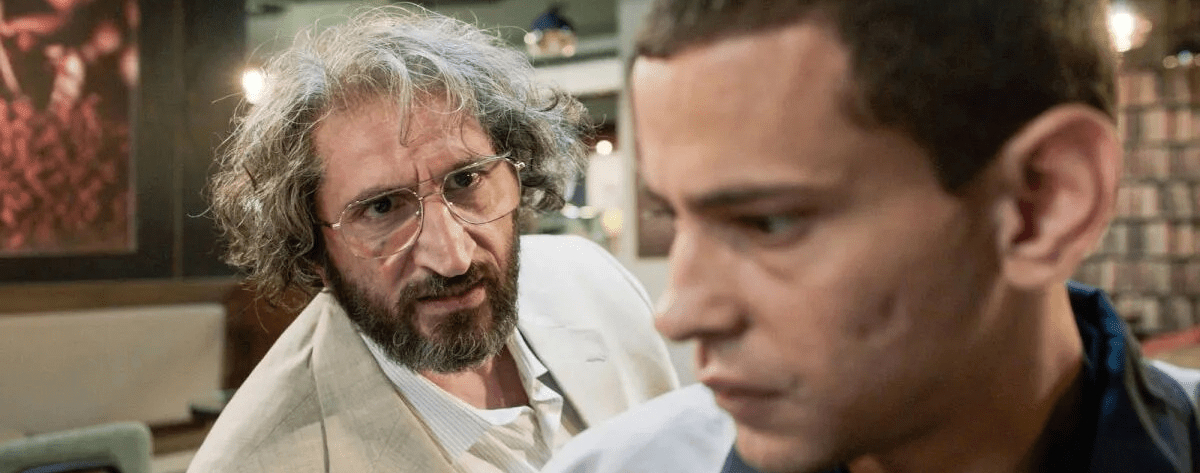
LFF 2022: New Normal – Review

Release Date – TBC, Cert – N/A, Run-time – 1 hour 52 minutes, Director – Jung Bum-shik

A group of strangers find themselves walking into increasingly strange, and occasionally deadly, situations within their everyday lives.

New Normal is perhaps one of the most baffling films I have seen in quite some time. Largely down to the fact that I, or anyone else in the screening for that matter, never really seemed to know what it was trying to do. A series of vignette’s tend to be linked via murders and deaths, perhaps all by the same killer. There’s an obviousness to such moments as things are generally tracked with little to hook you in or find interest. It’s a dull, boring set of events that simply moves along rather slowly. Yet, there’s an underlying sense of something else which is explored later on within the almost two hour run-time. A strange sense of self-knowing which comes into play almost halfway through.

As we see a young man following a trail of notes left in vending machines to potentially meet his soulmate – from blood type to zodiac sign – there’s a level of interest that’s sprouted. Yes, we have to get past him Googling how many steps in 100 metres first, but still as the segment goes on there’s something to maybe like about it. Perhaps it’s the fact that it moves a long a bit more quickly than what has come before, alongside simply having more going on too. Regardless, there may be ridiculous elements to this particular strand, but it’s these which, to some extent, make it a more enjoyable portion.

From then on you never quite know if the film is travelling along with a kind of self-aware nature or not. If certain points are meant to be played for laughs or not. This even being the case within a Peeping Tom (the chapters are titled after various films) segment following another young man, spending his time in his apartment playing video games when he’s not filming his neighbour without her knowing, literally breaking into his neighbour’s apartment and getting up to some rather creepy activity – not including “I’m brushing my teeth with her toothbrush. Indirect kiss”. In fact, much of the film can simply be defined as weird and strange, and not in the best way. More in an off-putting sense which distances you from the film as a whole instead of a comedic manner which engages you with a knowing wink-and-nudge humour.

By the time the final stages arrive, and things have started to slightly pick up, although still within an air of confusion, we arrive at another drawn out segment. Forcibly bringing the characters and their scenarios together in what feels like a deeply lazy and extended set of events which leave, once again, little to be interested in. The final result for New Normal is both messy and confusing. It starts off truly bad, and while it shows glimpses of finding its feet in some strange area of uncertain self-awareness it stumbles and falters again down a path of poor construction and little substance.

New Normal is a confusing piece of work that starts to hint that it might be in on its own joke before caving in again and simply leaving a messy pile of unengaging character interactions in its path.

Rating: 2 out of 5.

Unwelcome – Review

Release Date – 27th January 2023, Cert – 15, Run-time – 1 hour 44 minutes, Director – Jon Wright

After surviving an attack in their London flat expecting-couple Maya (Hannah John-Kamen) and Jamie (Douglas Booth) hope for a life of peace, as long as they can keep the goblin-like Redcaps away.

Unwelcome’s marketing, and opening act, spend a large deal of time building up the mythical Redcaps. A set of rarely-seen goblin-like creatures who are kept at bay with blood offerings left at the bottom of the garden each night. When the homeowner dies it’s up to her nephew and niece-in-law to take on the duties that comes with the house. It’s just a small thing for expecting-couple Jamie (Douglas Booth) and Maya (Hannah John-Kamen) to deal with for a life of peace, after surviving an attack in their London flat. Yet, the biggest issues they have to put up with come in the repairs needed to their new home. Aside from the fact that they need cupboards and furniture put in place there’s a hole in the roof looking straight into the bedroom that needs fixing.

And so the Redcaps are moved aside in favour of the Whelan family, the only builders nearby who are free to do something at such short notice. It’s clear to see why when they present themselves in such a confrontational, and at times plain strange, manner – particularly towards Jamie. Yet, the oddest, and most undeniably creepy, behaviour is that of father Colm (Colm Meaney) who continuously insists to Maya that he be called Daddy – “everyone calls me Daddy”. There’s a genuine wince every time the word is said, and likely not quite in the way that the film intends. It simply comes across as off-putting and creepy.


However, despite all the interactions that occur with the Whelans and the escalating tensions depicted on screen there’s no real tension felt at any point. In fact, there’s almost no tension from any of the strands that the film depicts. The biggest response is more despair at how many times it resorts to simply trying to kick and bring down the pregnant woman at the centre. Moment that try to layer threat and attacks for extra effect never quite work partly because the layering itself never quite comes together and also because it simply feels like the pregnancy is being used once again as another factor for you to care/ feel unpresent tension.

As the film goes on, and particularly during the third act, the question comes to mind as to whether this is meant to be a horror-comedy. There are certainly comedic beats here and there, however it’s never sure whether during the darker elements of the drawn-out final stages we’re meant to find humour. And largely this isn’t down to the presence of the Redcaps themselves, finally properly entering the piece rather late in the day – eventually leading to an even more extended ending which simply leaves you tired. The humour, if there’s meant to be any, never properly comes through and things simply seem quite stupid. Maybe if it had a more solid tone and style there might be something more enjoyable here.

Unwelcome never quite manages to find its footing as it walks through its strands with little tension or effect, simply seeming to just keep kicking its protagonists leading to an overall drawn out feeling.

Rating: 2 out of 5.

LFF 2022: Getting It Back: The Story Of Cymande – Review

Release Date – TBC, Cert – N/A, Run-time – 1 hour 30 minutes, Director – Tim Mackenzie-Smith

Documentary looking at the work and influence of eclectic 70s band Cymande.

“I always wanted the bass to be an instrument that speaks” explains Steve Scipio in an interview delving into the various elements of the music of eclectic 70s band Cymande. It’s one of the many elements which led the band to have growing influence outside of their initial run together through being sampled in multiple tracks over the years. There’s a clear love and respect as shown by other artists and DJs who exclaim their experiences with Cymande’s music, fondly remembering the first time they heard it rumbling through the speakers.

Yet, our initial engagement comes through the band in the present day. Whilst we see them looking back on the 70s and the major South London locations in their lives there’s a fair deal of good humour from each member which helps to ease the viewer into the documentary following them. It allows us to engage more with them and the various genres of music they delved into, including soul, funk and jazz. When looking at the band themselves the film is at its most interesting. Where it begins to deviate is as it takes a look at the reception to their work, and the way in which it was sampled in further tracks over the years.


Interviews start to overlap and repeat each other, bringing in the style of a more standard music doc. While what’s there is still watchable and has your interest it seems to gradually lean away from that initial point of engagement: the band themselves. The focus becomes how their music was used after going their separate ways. The ways in which it was sampled, eventually leading over the strands about how it was adapted to other styles and genres, only really manage to go so far in the film’s second half.

While a key point of this section there are still elements looking at the band themselves, largely how they’ve reformed in the present day and the new found success that they’ve had. It further shows how they’re the biggest drawing factor of the documentary thanks to the clear passion they have for music and the humour which they share and put across. While the film might lean away from this for extended periods of time it eventually comes back to them and reminds us of just who and what spawned the initial praise we see in multiple interviews throughout.

The highlight of Getting It Back: The Story Of Cymande is undeniably the band themselves, their passion for music and humour is the biggest source of engagement amongst the eventual leanings away into slightly overlapping interviews.

Rating: 3 out of 5.

LFF 2022: Inland – Review

Release Date – 16th June 2023, Cert – 15, Run-time – 1 hour 22 minutes, Director – Fridtjof Ryder

After returning home after time in a psychiatric hospital a young man (Rory Alexander) begins to delve into his past and disappeared mother.

There’s a divide between the naturalistic and the arthouse within writer-director Fridtjof Ryder’s feature debut Inland. While we enter into the more direct nature of the world in the well-settled first act, seeing Rory Alexander’s ‘Man’ re-entering his home in Gloucester after what seems like time in a psychiatric ward. He meets the friendly figure of Mark Rylance’s mechanic Dunleavey who takes him in, although the impression is that everything might not be as it seems. However, as the film goes on it asks whether this is actually the case with Rylance’s character or the protagonist.

We follow ‘Man’ – as he’s named in the credits – as he begins to lightly delve into past whilst searching for clues to his disappeared mother. As we delve more into this element of the narrative tones of mystery and ambiguity become more prominent. They contrast with the more naturalistic tones which open the film causing it to feel as if you’re settling into an almost different film.

There are still some good moments dotted here and there within the short 82 minute run-time, however not quite enough to truly lift from the more ambiguous moments where you’re not sure what to make of what’s going on. This particularly being the case with the third act which features more extended moments along these lines, especially in the build-up to the ending. It removes most of the interest in the lines of mystery which are set up beforehand meaning that the more the film goes on the more it seems to push you away.

It’s a shame for something which starts off with quiet promise through the subtle mystery of the naturalistic tones and performances of the opening stages. There may be moments throughout which help to bring back interest as they go back to this style and continue a more direct style of light narrative in this manner. There’s even some engagement within the initial leanings into more less-obvious stylings, however the more the film walks into this territory, especially in the final stages, the more it seems to lose itself, and the viewer’s attention.

While it may start off with quiet interest through the more direct naturalism the more Inland leans into its more ambiguous arthouse stylings the more it distances itself from the viewer, despite occasional patches which bring back the former.

Rating: 3 out of 5.

LFF 2022: Unicorn Wars – Review

Release Date – TBC, Cert – N/A, Run-time – 1 hour 33 minutes, Director – Alberto Vázquez

A group of teddy bears are rapidly trained to be sent to war against the unicorns of the forest, however they’re not prepared for just how brutal it will be.

There are many comparisons and ‘cross-betweens’ that can be, and have been, made about Unicorn Wars. However, it’s perhaps best described by its base idea. Teddy bears at war. A brightly coloured parade of cuddly characters are sent off, after a quick round of training, to war against the unicorns of an unfamiliar forest – having had it drilled into them that teddy bears are the master race and that all unicorns should be dead. However, none of the ensemble, or for that fact the audience, are prepared for just how brutal the fight will be.

There’s a surprise early on in the film when during a scene in the communal showers of the training camp – branding the phrase “Honour, Pain and Cuddles” – where we’re shown a lot more teddy bear penis than might have initially been expected. It’s an amusing shock which let’s us know exactly what this kind of film is going to be, until the next stage where things are ramped up even more. In the forest we see characters ripped apart, bloodied and beaten amongst the true horrors of semi-magical warfare, where some a more up for the fight than others. There’s certainly a fair deal of humour to be found, largely in the clearer scenes such as one of the strangest drug trips to be put on screen in the last few years.


It’s in the more dramatic leanings where things feel a bit less balanced. While in some instances the tonal variation works it’s sometimes uncertain just how much due to it often being presented in, or against the backdrop of, the light of the comedic elements. Especially when certain elements of the warfare are presented with rather clear satirical edges, particularly leaning into an over-the-top or fantastical nature to create the humour.

Such dramatic elements are clearer in the second half of the film as we begin to see more of the characters and the way that they interact with the world around them, particularly two central siblings who have rather different views on the war in general, or at least attitudes to combat style. It leads to a feeling that things, even at just 93 minutes, are a bit narratively drawn out, starting to dampen the film as a whole. Much of this, again, largely comes down to the clash between the comedic and the dramatic. The two simply never quite join together properly meaning that you can often see, and feel, the joins and gaps throughout the film making for a slightly bumpier ride than is initially started.

There’s amusement and chuckles to be had with Unicorn Wars, you’d hope so with that concept, however the more dramatic and narrative elements cause for an uneven ride as they never quite blend with the more fantastical, and at times just plain weird, edges.

Rating: 3 out of 5.

LFF 2022: Klokkenluider – Review

Release Date – 1st September 2023, Cert – 15, Run-time – 1 hour 25 minutes, Director – Neil Maskell

A government whistle-blower (Amit Shah) and his wife (Sura Dohnke) must wait in a remote Belgian cottage with two armed bodyguards (Tom Burke, Roger Evans) whilst they await the arrival of a journalist (Jenna Coleman)

With Klokkenluider Neil Maskell proves just how broad the branches can reach, and themselves be, from the initial roots of dark humour. Through anxiety, fear, awkwardness and struggling-to-play-to-character there’s plenty to laugh at throughout the simple premise of the film. It’s one that could perhaps be played out on stage, yet thanks to Maskell’s writing and direction, and the performances of the small cast, there’s plenty to help make this fit the screen.

We meet Ewan (Amit Shah) – a man who is “pretty much in a state of permanent f*cking panic” – and his wife Silke (Sura Dohnke) residing in a remote cottage in Belgium. An innocent trip to the bakery in the nearby village is soon twisted as Ewan fears that it might give away the location he and his wife are at, especially whilst they wait for bodyguards to arrive. The reason for their escape, and the protection, is due to their impending whistleblowing after the government IT worker discovers shocking secrets whilst at work – secrets which are sustained with mystery and threat throughout as we never discover what they are. Once the tough-guy figures of Tom Burke and Roger Evans arrive all that’s needed is the journalist (Jenna Coleman) to leak the story to.

Unprofessionalism rises as the bottles are opened, and indeed Evans’ character finds it difficult to keep his own secrets – “you’re about as hush hush as Metallica”. We see him and Burke struggle with each other as the ‘tough-guy’ schtick is quickly dropped. While they try to keep that persona in such an unexpected and unconventional situation it’s difficult to do so, providing a number of laughs both from them and the responses of Shah and Dohnke. This is a true ensemble comedy and the performances all bounce off each other excellently with the various gags which crop up throughout, gaining plenty of response. All helping to push and proceed the simple premise.

Yet, no one manages to outshine Jenna Coleman as soon as she properly walks onto the scene. Bringing a gloriously sweary performance which could rival Ralph Fiennes in In Bruges she powers through them all twice-over within a minute or two of being on screen. Pushing forward the next stage of the film in a way only her character could in this film it’s a fantastic show-stealing performance which manages to bring in the following stages of true darkness, and potential tension, as the film begins to play with its elements of mystery to bring the viewer further in as the reveal of the reason for all of these events comes more into play.

In the build up we have a film about waiting and the humour of it, tinged with the anxiety of consequences and holding potentially vital information. While only 85 minutes long the film manages to pack plenty of laughs in to its conversations and interactions. Rattling along quickly while managing to get across the feeling and humour of an awkward, drawn-out evening. Maskell himself has worked with Ben Wheatley in the past and there are certainly tones of his style in this particular film. Held within the darkness, portrayed in both tone, structure and performances. It all comes together to create something highly entertaining within the lightly sinister edges.

There’s plenty of darkness wound into Klokkenluider, mixed into the humour of anxiety and waiting the performances highlight all of this within the frequently funny conversations and contrasting characters, including a triumphantly sweary standout turn from Jenna Coleman.

Rating: 4 out of 5.

Babylon – Review

Cert – 18, Run-time – 3 hours 9 minutes, Director – Damien Chazelle

As the talkies make their way onto the screen the lives of three hopeful Hollywood figures (Margot Robbie, Diego Calva, Brad Pitt) intertwine with different fates for each.

There’s a maximalist style akin to Baz Luhrmann within the outrageous party sequence which opens Damien Chazelle’s Babylon. Yet, there’s a more absorbing quality on display here as we’re thrown head first into the world of unashamed public (and in one or two cases private) sex, drugs, booze and beyond care-free attitudes. All caught through the flow of the camera. Instead of frantic cutting and editing to enhance the maximalist style Chazelle, alongside editor Tom Cross, instead allows for the frame to be filled to excess with all the sights and senses on display – the images shouting into the lens that this film has an 18 rating for a reason. The cinematography, production design, costume design and roaring sound bringing you further into the expansive scene.

It’s here that we see the initial crossover of the lives of hidden assistant Manuel ‘Manny’ Torres (Diego Calva) and hopeful starlet Nellie LaRoy (Margot Robbie) – a young woman adamant of her soon-to-be-recognised status; after all star’s are born, not made, and she was born a star. Over the course of the film we see their careers rise, whether in front of the camera or behind it, having to quickly adapt not just to the business itself but the way in which it itself is having to adapt with the introduction of the talkies. One figure who finds it difficult to adapt due to the response towards his vocal acting is the biggest star around Jack Conrad (Brad Pitt). While he may jump between marriages at the same rate he does bottles of booze he has the money to put towards it due to the success of the large-scale pictures he leads.

We see their changing days at once in an extended montage-like sequence cutting between the experiences of each character on set. The scenes are fast paced and well constructed as the anarchy of a battle scene in the middle of nowhere matches a rushed ‘wild child in a bar’ scene on a nailed-together wooden lot prone to disaster. It’s all tracked with ease thanks to the fact that the chaos of each instance leads into the next. Joining together thanks to the way in which background visuals and audio (Justin Hurwtiz’s score does a lot to enhance the style of particular scenes) work with the more upfront action and conversation.


When we first meet Manny he’s trying to get an elephant up a hill for a party, if you can run with this you can run with most of the stuff that makes up the lavish lifestyles that are on display, and luckily there’s plenty on display. With the natural weaving of such points and the way they are worked into the scene for characters to play with, reacting to explosions happening in the background or completely ignoring the pogo-stick-penis performance as if it’s a normal occurrence, things move along smoothly and with that aforementioned fast pace.

There’s a lot packed into the 3 hours plus course of the film, gradually piecing together a slight narrative via the arcs of the central three figures – and some of the side characters who pop up along the way with key turns including Jovan Adepo, who in particular provides a very understated performance, and Li Jun Li. There’s a lot packed into a number of the performances, including highly striking lingering shots demonstrating plenty of emotion through the punches the industry delivers amongst the humour that’s on display. Yet, amongst everything that the film fits in it must be said that it definitely feels too long by about 20-30 minutes. While it’s possible to still enjoy the various places we visit – although a strange underground sex cult-like strand with Tobey Maguire does feel like a bit too much of a tangent – and find an entertainment factor the feeling does settle in that things are going on for a bit too long.

Luckily, this isn’t down to exhaustion as things calm down somewhat in the second half so we can focus more on the arcs that the characters take as they truly set off on their own journeys, although occasionally intertwining at events and parties. More simply down to the fact that things begin to feel somewhat drawn out – particularly with the more tangent-style developments which are introduced in the final half an hour before the rather well-constructed ending. It might be a bit of a long road to get there, but luckily it’s one flooded with dizzying sights and glamour.

Overflowing with visual glamour and excess there’s plenty to be hooked in by within the entertaining chaos of Babylon. Not forgetting its core character’s arcs it might feel overlong, but luckily there’s still enough present to entertain.

Rating: 4 out of 5.

Plane – Review

Release Date – 27th January 2023, Cert – 15, Run-time – 1 hour 47 minutes, Director – Jean-François Richet

A pilot (Gerard Butler) of a commercial flight must protect his crew and passengers after crash-landing on an island run by separatists.

Plane is further proof that we shouldn’t just suppose January as solely a dumping ground for weaker studio offerings and failed awards contenders (or in the UK the main round of awards releases). While going in you might presume it to be at best a perfectly fine middle-of-the-road actioner it’s not just really good but may end up as one of the tensest films of the year, even before we get into the main action on the separatist island.

Gerard Butler plays Captain Brodie Torrance, a commercial flight pilot forced to go through the middle of a storm and suffering the consequences after crash-landing on the Philippine island of Jolo. An island which the government and military don’t dare go near due to the danger posed to them by the ruthless separatists who run it. Yet, before the actual landing we have to get through the flight-gone-wrong. We may see the general character types of the few passengers on the plane, but the film doesn’t allow itself to get bogged down in such elements and details. Instead we’re thrown right into the chaos and panic of the moment with the sequence playing out in near real-time to enhance the overall effect. You’re pushed back into your seat as the tension rises. There’s a belief that the pilots know what they’re doing, but can’t properly do it due to the conditions. The whole flight is perhaps the highlight of the film. A truly brilliant sequence.


When on Jolo, however, everyone is completely out of their depth. There’s uncertainty over whether a rescue attempt will be made, where to go and what to do. Yet the biggest threat comes from island leader Junmar (Evan Dane Taylor) looking to hold everyone on the plane for ransom, or simply getting his men to kill them. There’s a real darkness to the film from this point, it’s a very different tone and style to what has come before, but it still manages to work in more of a survival thriller style vein. There’s a strong engagement factor and the fact that stakes are clearly established add to the intensity of the thrills and action. Add to that the fact that the film truly lives up to its 15 rating and there’s a lot to throw you into the fast-paced narrative.

There’s a risk, as with a number of films of this nature, that we could see characters wandering around the island going back and forth and generally creating a repetitive set of events and chapters. While we may see a tangent of Butler and Mike Colter as a fugitive being sent back to prison on the flight scouring the area to try and find a phone to call for help with it fits in rather well. In fact, most elements which could feel like a new stage never go as far to feel drawn out or like a new focus has been introduced. Everything moves along rather well thanks to the action and threat which is on display and the way that the various elements of the island are used to move things along.

Perhaps it’s the surprise factor of the film, and just how far it goes at some points, which helps to keep you engaged. There’s an entertainment factor to it. Rarely leaning into silliness or something which feels overdone yet still taking itself too seriously. Whatever it is it clicks and works and takes you along for the ride. A ride which luckily isn’t as bumpy or disastrous as the one depicted in the film, although one which is certainly as tense. An excellent piece of tense action entertainment.

Unexpectedly dark and slightly gory Plane establishes its stakes and sticks to them, ramping up the tension throughout to make for a highly entertaining piece of work. A really great surprise this early in the year.

Rating: 4 out of 5.

LFF 2022: My Robot Brother – Review

Release Date – TBC, Cert – N/A, Run-time – 1 hour 24 minutes, Director – Frederik Nørgaard

When her outdated, childish robot friend (Lars Brygmann, Kristian Holm Joensen) becomes a source of embarrassment Alberte (Selma Iljazovski) is gifted a new updated model (Philip Elbech Andresen) which is able to do more than any other robot at her school.

There’s often a clear line between a family film and a kids film. My Robot Brother may present itself as something more for slightly younger kids with its exaggerated nature and stylings, however there’s no denying that the silliness that’s a part of it allows for a good few chuckles for the older audience members. Much of this comes from Robbi (voiced by Lars Brygmann and physically performed by Kristian Holm Joensen), a tall, bulky, patched up brown robot. Looking like a kids toy that’s somehow been zapped with a growth ray he’s a big, clumsy, cuddly character plucked straight from a children’s cartoon. In many ways this is how he’s designed to be, he treats the young girl he’s designed to be the friend to like she’s much younger than she is. In a number of ways, while there may be a fondness towards the childhood robot there’s an increasing sense of embarrassment.

When Alberte’s (Selma Iljazovski) tech-obsessed parents (Lise Baastrup, Kristian Ibler) – almost always in some form of VR space – give in and buy her a yet-to-be-released new model things begin to turn around for her. Konrad (Philip Elbech Andresen) has many abilities which it seems no other robot at school has. He makes Alberte instantly more popular, however perhaps not everything is as it seems. Thus the film begins to travel down some slightly predictable and conventional lines. However, it’s clear stylings and target audience might just give it something of a slight pass.


Although, the bigger pass might be down to the silliness within the film. So many situations are heightened and exaggerated simply for a laugh, with a handful of decent chuckles scattered throughout the film. Sometimes it may not always be with the piece, or only half with it, but there’s still an undeniable entertainment factor present. Much of which comes from the clumsiness and general existence of Robbi. The character who most sums up the tones of the film, reaching the to the younger audience and most demonstrating the ways in which the film clearly doesn’t take itself too seriously.

My Robot Brother may be highly conventional and targeted more towards a younger audience, however there’s enough chuckles within it to help move things along and make for a likable enough piece of work for the time it’s on. Yes, like scene-stealer Robbi things may be a bit clumpy and overdone, but there’s also amusement to be found within this. Things stay relatively engaging and watchable and by the end, particularly with an audience, there are a fair few giggles to be had thanks to the pure cartoonishness of a number of instances throughout. Just sit back, turn your mind off and have a good, slightly absurd chuckle.

My Robot Brother absolutely targets a younger audience, however there’s enough silliness within its conventional narrative to provide a good amount of giggles and amusement for the time it’s on.

Rating: 3 out of 5.

LFF 2022: Casa Susanna – Review

Release Date – TBC, Cert – N/A, Run-time – 1 hour 37 minutes, Director – Sébastien Lifshitz

The story of the Casa Susanna, a safe haven away from the rest of society in the late ’50s where people could go to express their gender identity and sexuality.

There’s something of a wistful nature to Casa Susanna’s reflection of the late-50s and early-60s. It comes across in the cinematography of present day scenes where figures who found safety within the small walls of the escape haven re-meet to reminisce and discuss the effect of the titular building. While now slightly washed of colour and surrounded by overgrown grass we see plenty of colour and vibrancy in the images of the past. It’s as if it’s still present for the aging figures we hear from throughout the film.

The Casa Susanna was a place in the Catskills where people were allowed to express themselves and explore their gender identity and sexuality with no judgement. Men would come for a weekend of safety away from the judgement of the outside. Whether gay, transgender or transvestite there was a clear openness and acceptance from all others in the small spaces. The joint effect, and indeed individual response to cross-dressing is referred at one point as an “almost out of body experience. It was so powerful”. We see and hear a number of personal stories with emotional tinges throughout, adding to the overall wistful feel. All helping to push a feeling of celebration and freedom which must have been present within the walls of the central building.

It’s as the film slightly drifts away to the outside world where things become slightly more familiar. Not so much in the responses to certain figures’ sexualities and identities but more the general perception of LGBT people in society at the time, particularly in the cities. It’s around this point where in general the film moves away from focusing on the Casa Susanna as a whole and more on the effects that it had. There’s still interest in such elements, particularly with the hints of celebration which are still present, however there is a feeling of something a step away from the initial focus – due to the bridge in-between – meaning that there’s perhaps not as much engagement as there was beforehand.

Therefore things begin to feel somewhat lengthy – even at only 97 minutes. While not by too much there is the feeling that things could be somewhat cut down, or even put into a short documentary about the freedom of expression provided, with some of the effects. However, for what is present here there’s enough to like and engage with, particularly when it comes to the way in which the film and its participants look back at what were for them the good old days. Yet good old days which continued and allowed them to progress – “it wasn’t that the urge was increasing, but that time was passing” is a key phrase about identity which especially strikes within the film’s themes and surroundings. It’s these elements which bring about the most interest and engagement and allow for the true effect of the Casa Susanna to come through just that bit more.

While it might feel slightly lengthy as it moves away from the titular haven itself Casa Susanna still has plenty of wistfulness to help move it along and engage the viewer in its story of identity celebration.

Rating: 3 out of 5.