After almost two-and-a-half years of trying to get him to watch it Somer Valley FM’s Jamie Skinner is finally getting fellow presenter Seb Bailey to watch Titane. At none other than the former Bristol IMAX!
Join the two hosts on Sunday 9th July at 15:30 for a special one-off screening of Julia Ducornau’s Palme d’Or winning fantastical body-horror-drama followed by a live post-screening conversation between the pair. Covering the film and, as on the radio, whichever topics crop up in their rambles (live boat song not guranteed).
To buy tickets and find more information about the screening click here.
The former Bristol IMAX is housed in Bristol Aquarium, near the city’s harbourside. You can find more information on the venue, and how to get there, here.
Cert – 12, Run-time – 2 hours 30 minutes, Director – James Gunn
In order to save the life of Rocket Raccoon (Bradley Cooper), the Guardians pull themselves from loss and fracture to find the data which could save him, leading them to his creator (Chukwudi Iwuji), still intent on creating the perfect animal society.
Come And Get Your Love, Mr Blue Sky, Creep. The latter track, by Radiohead, stands out as a slower, more sombre song in this list and more so in the opening to James Gunn’s Guardians Of The Galaxy trilogy closer. The titular team are in a state of disarray. Lost and fractured while they may have gone up in the universe – now with an HQ based in celestial head Knowhere – their team feels close to disbanding, with arguments and misunderstandings between the group rising.
The effects show most of all when they’re attacked by superpowered Adam Warlock (Will Poulter), seeking to take Rocket Raccoon (Bradley Cooper) back to his creator, the High Evolutionary (Chukwudi Iwuji). After Rocket is injured in the attack the Guardians must pull themselves together to save their friend. With just 48 hours on the clock they need to find the information which could save Rocket from the organisation which funded his creation, stepping close to the High Evolutionary with each event.
It’s as we actually get on to this course that the film properly picks up its pace. The Guardians that many have come to recognise and enjoy over the last nine years are very much still present, but in their initial uncertain state in the opening stages of this particular venture things feel somewhat gradual. We’ve certainly known there to be serious points of drama and personal tragedy in each of the character’s lives, mixed in with the humour and sci-fi action of the films, but with the direct fractures of the relationships dealt with in a serious manner there’s almost a hesitancy to initially engage with them as they appear slightly differently.
Yet, as the narrative develops we’re back to familiar terrain and once engaged you’re very much there for the rest of the ride in true Guardians fashion. While focusing on Rocket in flashbacks to shortly after he was ‘created’ by the High Evolutionary – such scenes working best when dealing with him and his aims to create the perfect society on an alternative to Earth, “be not as you are but as you should be” – writer-director Gunn knows how to involve all of the characters and their various personalities and traits into the rest of the story. Chris Pratt’s Star Lord may still be posed as the captain but this is undeniably a team effort with good performances put in by all, successfully avoiding a tone of saying goodbye to the characters.
Alongside this the world and the various bursts of colour throughout it make a welcome return as the visual style remains strong. Both in terms of make-up and prosthetics and the visual effects throughout. They simply bring to life the various planets and locations which we visit and the action which unfolds within them. Action which manages to have its layer of tension alongside the entertainment factor, especially in the third act and the climactic set-pieces which occur as part of it when the present day take of the villain is put more into focus, after having largely been progressed towards in the build-up with other people (such as Gwendoline Christie’s returning Ayesha from Vol. 2 and Poulter’s otherwise sidelined Adam Warlock) doing his work for him.
Yet, this is a film very much about (as the title might suggest) the Guardians Of The Galaxy. There may be turbulence in their relationship to start with, but as the narrative takes form so do they getting back into the swing of things with another engaging, entertaining sci-fi action-adventure. The bond between the cast, and indeed James Gunn who has clearly held these characters close for well beyond the span of these films, pushes the ideas at play as the team once again learn to embrace each other, and themselves. The tagline “once more with feeling” is certainly lived up to, without an overbearing sentimentality and feeling of goodbye wrung dry throughout.
It may take some time to fully engage with the film as it gradually brings the Guardians back together from fracture, but Guardians Of The Galaxy Vol 3. moves along with effective pace once its narrative arc truly begins. With strong visuals and performances there’s a reason this team are so successful and it’s down to the care and bond that’s put into them, both on fine display here.
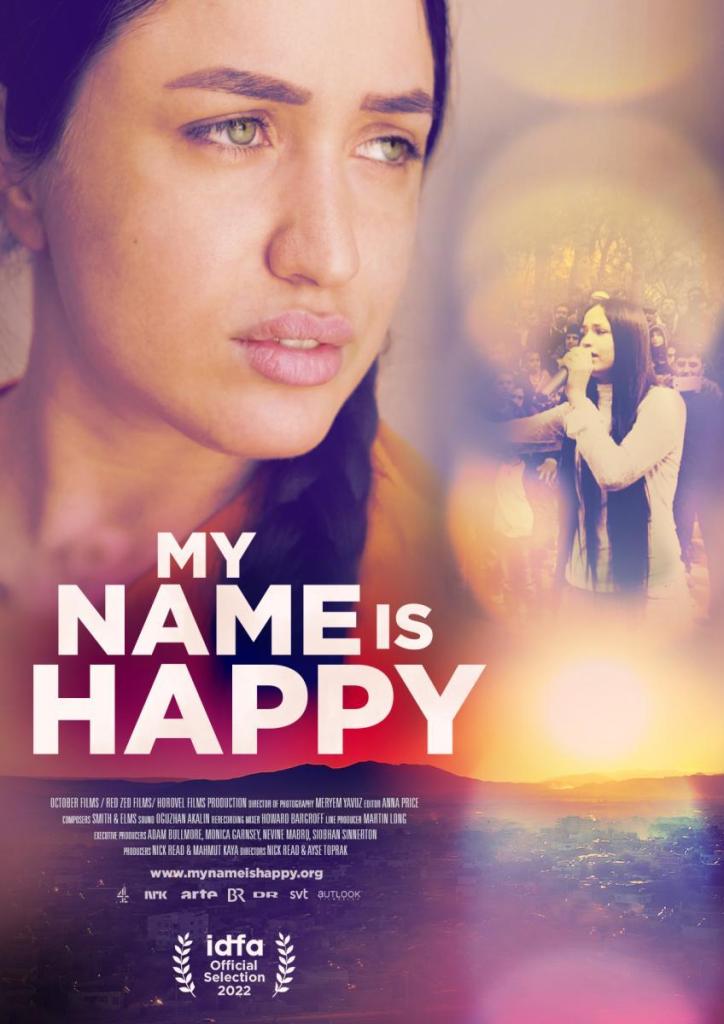
Release Date – TBC, Cert – N/A, Run-time – 1 hour 21 minutes, Directors – Nick Read, Ayşe Toprak
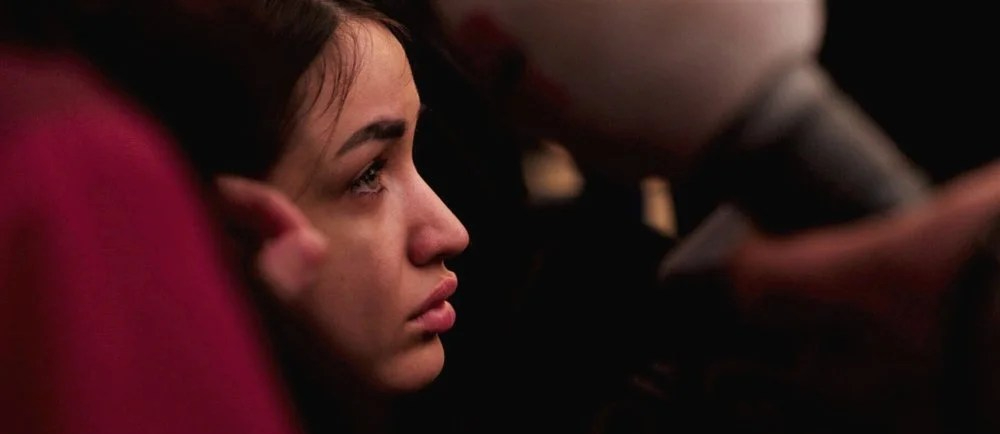
After just surviving a shooting, singer Mutlu Kaya turns to a life of activism, trying to combat the rising rates of femicide in Turkey and around the world.
My Name Is Happy makes no hesitation in emphasising just what was taken away from it’s central focus. At the age of 19 Mutlu Kaya was whisked from her small Kurdish town to Istanbul to appear on a major talent show. Her singing received masses of praise and she was ready to go through to the finals. However, much of this was brought to a shuddering halt when the man she turned a proposal down from shot her in the head, claiming if he couldn’t have her no one could, especially the country through their TV.
Mutlu only just survived the shooting, with the bullet permanently lodged in her brain. Directors Nick Read and Ayşe Toprak follow her as she rebuilds herself and takes to the streets to challenge the rising rates of femicide both in Turkey and around the world. Where the film best succeeds is in the fact that it truly does focus on Mutlu. It brings a sense of hope to the proceedings through this. Yes, there may be the elements of emotion from family members, who certainly contribute effectively to the piece through their interview segments, but the focus is largely on Mutlu and how she develops over time.
Taking to social media and interviewing people about femicide on TikTok you can see her passion increase. In hand the film’s does too as it captures her spirit and uses it as something of a driving force, particularly in the final 20-25 minutes when a more personal angle comes through in this already personal portrait. To call back to the lack of hesitancy the film makes sure to deliver its points in the 81 well-paced minutes and proves its effect through a shocked and riled feeling at the closing text. A haunting nature returns, one first present when Mutlu talks about her attacker, referring to him as a “monster”, getting across the still-present fear.
Engagement comes from the interest in both Mutlu’s progression, as occasionally observed and expressed by those around her, and what she has to say. Her opening words (including mention that her name means ‘happy’), and indeed a number of things she says throughout, are particularly striking and bring you in to feel more a part of the piece. There was a point when I thought this review might have largely been made up of quotes, particularly from the early stages of the film, it’s of course these which create the most insight and perhaps the initial engagement with the film. Bringing you in and taking you along for the quickly moving journey, well contained within its short run-time and making sure to get across its points in that time.
Well put together with a good deal of effect throughout its short run-time, My Name Is Happy engages you through its fixed focus on central figure Mutlu, rarely breaking away from her. There’s an interesting piece of work here, largely thanks to the tone of the depictions throughout.
When a former colleague (Linda Bassett) writes saying she’s in a hospice with cancer, pensioner Harold Fry (Jim Broadbent) decides to walk nearly 500 miles, confronting his own past along the way, to reach her.
“I’m just going to the post box” Harold Fry (Jim Broadbent) assures his wife, Maureen (Penelope Wilton), after receiving a letter from a former colleague that morning. Harold has heard nothing from Queenie Hennessy (Linda Bassett) for years until she reveals that she’s in a hospice, dying from cancer. Thinking over his response he passes the post box, and many others on the way into town, eventually wandering into a petrol station shop and being told by the young woman (Nina Singh) behind the counter that her hope and belief that her aunt would get better when she had cancer helped her along. Determined to do more than just send a letter of condolence Harold sets off there and then on an almost 500 mile journey from south Devon to Berwick-upon-Tweed.
Meanwhile, his wife calls around the house and looks out on the driveway wondering where he’s got to. Her response is less one of worry and more one of frustration, it seems that they’re relationship hasn’t exactly been a close one for some time – cooped up in their rather empty, aside from one or two small decorations, home. As Harold walks (and considering how much walking there is in this film much of it avoids blandness) various elements of his past come to the fore. He says he’s not going to fail his friend again, and occasionally talks about how he believes he failed his son (Earl Cave) who it’s revealed passed away after a drug addiction. In many ways the further he walks the more Harold thinks about his past and the various relationships which have fallen apart throughout it.
These stories are often told through very brief flashbacks amongst everything else, meaning that they never quite have the time they might need causing them to not quite stick the landing. To people of various backgrounds all going through their own troubles. In a film that doesn’t embrace subtlety there are various instances where it’s made clear that even immigrants and gay people have their own personal struggles, but are also kind and helpful towards Harold in his journey without even knowing why he’s travelling. The latter instance scripted and performed as if it’s come straight out of the 1970s (it wouldn’t feel out of place in a Carry On film).
Yet, there’s something about the generally quaint, British tone of the film which keeps it moving. Yes, it might not be overly subtle and might struggle to cover everything it wants to, but there’s a watchable, likable enough nature to it; helped along by Broadbent’s central performance, and indeed Wilton’s turn which effectively lifts up her character’s cut-to moments. It’s something best captured in those aforementioned moments of walking. Harold on his own with his thoughts and determination, “I shall keep walking and she must keep living” he asserts.
There’s something about this tone, and in some parts the mild-mannered nature of the central character, which keeps things moving and creates much of the engagement for the 108 minute run-time. There may be some bumps which are truly revealed in the latter segments as the film stumbles due to not having delved much into the central character’s past beforehand. Yet, things still remain watchable thanks to the restrained British nature of the film, and perhaps the fact that the events themselves kick off very quickly. The tone and central performances are enough to lift things up and help them along through the occasionally bumpy terrain travelled along.
The flashbacks may not quite delve beyond the basics of the central character’s past, causing issues late into the film, but there’s enough to like about The Unlikely Pilgrimage Of Harold Fry’s quaint British tone to make it largely decent enough viewing for the time it’s on.
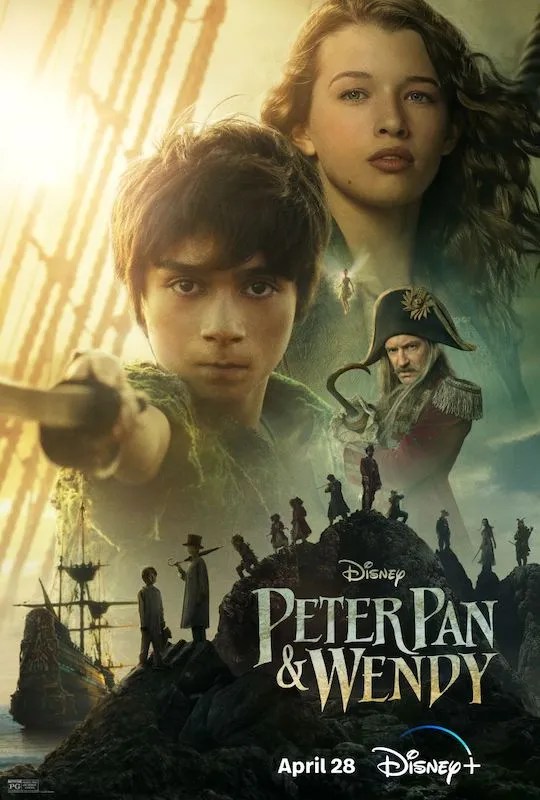
Cert – PG/ Recommended for ages 6+, Run-time – 1 hour 46 minutes, Director – David Lowery
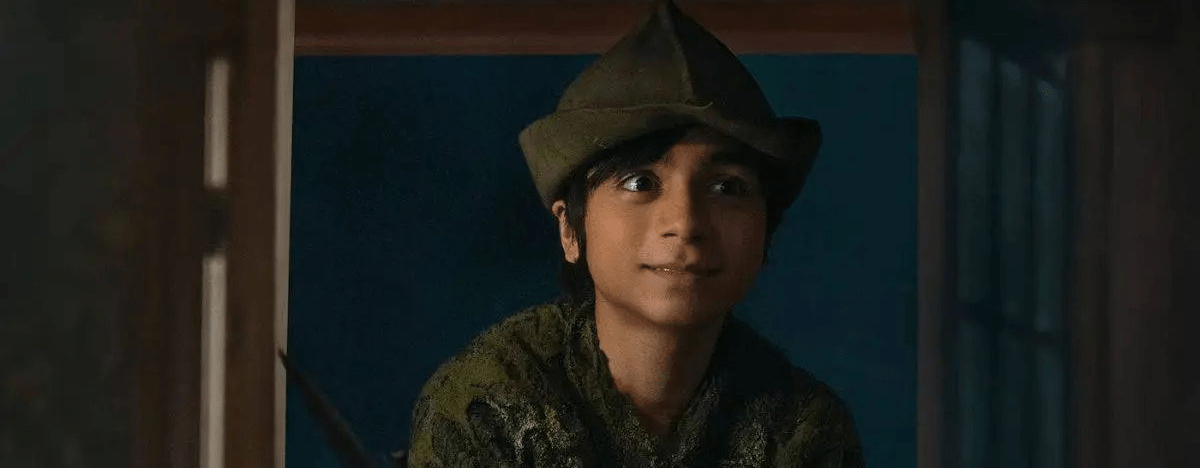
Soon to be sent to boarding school Wendy (Ever Anderson) fears that she’s growing up, only to be flown, via the magic of pixie dust, to Neverland where Peter Pan (Alexander Molony) takes on anyone who grows up, especially pirate Captain Hook (Jude Law).
David Lowery’s 2016 take on Pete’s Dragon is perhaps the best Disney live-action remake to date. Perhaps it’s because with lesser-seen initial material there was more opportunity to take it in a different direction and do something more fresh than with other features – particularly those inside Disney’s ‘Animated Classics’/ Walt Disney Animation Studios branch and label. Returning with another adaptation in the form of Peter Pan And Wendy Lowery’s fingerprints are very much over the directorial and visual style of the film. There’s a personality to it that comes through a number of times in the generally contained narrative.
Where Lowery’s identity comes through less is in those moments where it feels as if the Disney reins are being pulled in. Not so much as with Guy Ritchie’s Aladdin (where you could feel Ritchie wanting to make a darker film than Disney would allow) but still enough to make something of a clear alternation between director and studio every now and then. Perhaps this is less down to the studio and more down to the fact that there’s a strong familiarity with the story, or in this case rather idea, of Peter Pan meaning that there’s a feeling of safety within the events. While there may be some new interpretations and directions (again, the way the narrative is contained and goes from one event to the next is well-handled and the general flow is effective) as a whole it still has many of the standard, recognisable elements of a story about the boy who never grew up.
However, this, as the title so clearly states, isn’t just the story of Peter Pan. This is Peter Pan and Wendy. Wendy Darling (Ever Anderson) is the push of the film as she fears growing up due to the looming presence of boarding school. On hearing her worries Peter Pan (Alexander Molony) flies in through the window and takes her and her two brothers, John (Joshua Pickering) and Michael (Jacobi Jupe), via the magic of pixie dust (Yara Shahidi is on likable Tinker Bell duty) on a flight to Neverland.
While not always dealing with it there is a more upfront dealing with the idea of growing up here than in other adaptations of this story. Pan doesn’t entirely fear or worry about the prospect, but certainly takes against anyone who dares to do so, especially pirate Captain Hook (Jude Law seemingly having a good time hamming it up as the villain). Whilst surrounded by a world of semi-imagination and the idea of clinging onto childhood ideas – particularly when with the Lost Boys – Wendy herself confronts whether she has already grown up, and what points of childhood she can cling on to (is it really all that bad?).
There are some nice ideas which don’t always entirely come through, largely as we jump back to the pirates and what they’re up to before Pan and co come back in to save the day (with Peter himself not feeling overly present for good chunks of the film’s run-time). These ideas, and indeed simply some of the camerawork and capturing the landscape, are where Lowery (alongside co-writer Toby Halbrooks) shows his style the most and brings an identity to this particular Disney ‘reimagining’ that isn’t as present in many of the others (even if they have turned out to be good). Yet, the familiarity with a number of the key ideas, and the occasional feeling of the, albeit not-as-tightly-held, Disney reins being pulled in dampen the proceedings stopping the film from ever truly taking flight in its world of not growing up and imagination.
David Lowery’s visual style and directorial flair help to bring a feeling of personality to Peter Pan And Wendy, helping to occasionally push the conflicted feelings of not growing up within the latter’s mind. However, a mix of familiarity with the key elements and the feeling of some studio notes or influence cause some points to never truly be given the time they need.
Release Date – 28th April 2023, Cert – 12, Run-time – 1 hour 44 minutes, Director – Nida Manzoor
Teenager Ria (Priya Kansara) believes that her older sister Lena (Ritu Arya) is changing for the worse, and forgetting her passions, as she prepares to marry short-term boyfriend Salim (Akshay Khanna) in a wedding which Ria is determined to stop.
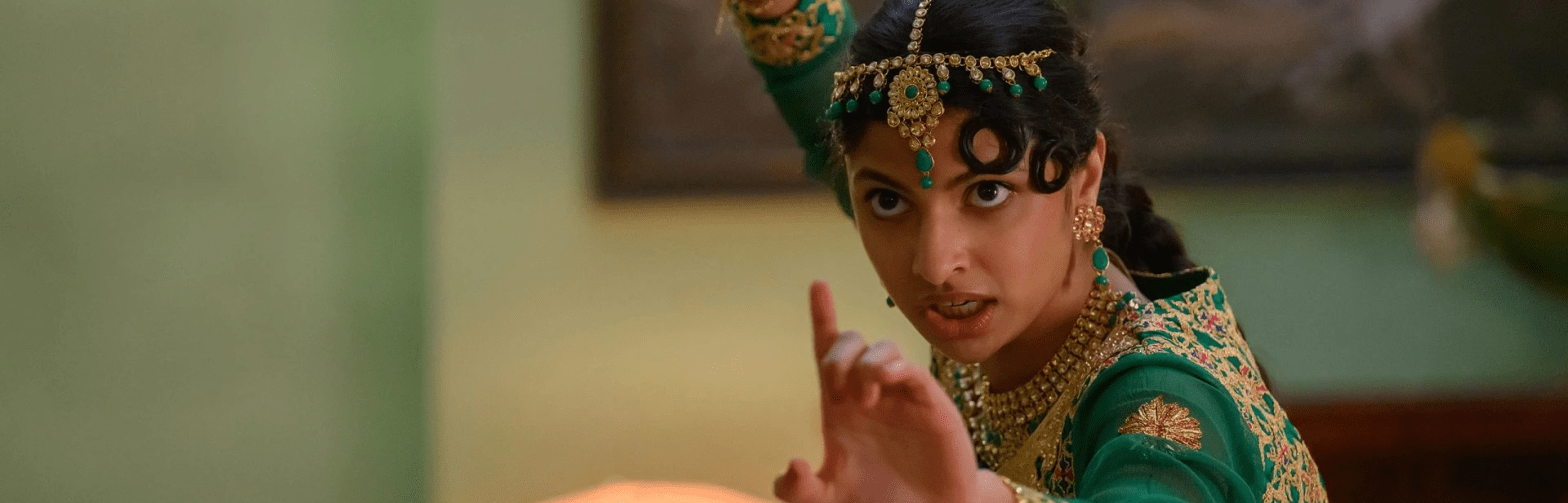
Much of Polite Society’s sharpness comes from its style. The way the fight scenes add explosive bursts of energy to the distinct lines of a colourful British comedy. This is a film with an identity. There are familiar tones and elements (in that aforementioned British vein) but there’s plenty of energy and creativity on display to make for a highly engaging piece of work hopefully on course to become a notable British title.
Teenager Ria (Priya Kansara) aspires to be a stuntwoman, making videos for YouTube displaying her skills. She works with her older sister, art school dropout Lena (Ritu Arya), on these. There’s a great chemistry between the pair as they train and party together while their parents (Shobu Kapoor, Jeff Mirza) are out of the house. However, their bond begins to fade when Lena begins a relationship with wealthy doctor Salim (Akshay Khanna). Ria believes that her sister is becoming a different person, forgetting her art and who she was before the relationship, and when the couple quickly announce their engagement she sets out to break them up. But how can she take down a man who seems so spotless?
Helping her she has best friends Clara (Seraphina Beh) and Alba (Ella Bruccoleri), making for three personalities who truly capture the feeling of an excellent friendship. Not quite the ‘weird’ kids but not amongst the popular crowd they’re slightly at a distance from the other crowds at school. The trio’s performances and chemistry bring about a number of laughs and just a highly enjoyable friendship group to truly liven up the scheming and plan execution on display. The humour comes through with ease thanks to the featured personalities and the clear effort that has gone into the screenplay from writer-director Nida Manzoor; a rapidly rising British talent following on from her acclaimed TV series We Are Lady Parts.
Amongst the humour there’s plenty of action on display. The fight scenes are well choreographed to embrace martial arts films of the past with grounded contexts and settings to allow for the drama to come through. Particularly when it comes to the threat at hand. There are some truly dark moments dotted throughout, especially when it comes to Ria’s interactions with Salim’s mother (Nimra Bucha) who creates genuine tension through her performance. Even if Ria is being constantly disproved with her increasingly dangerous attempts to prove Salim’s disguised intentions the film does a good job of posing Bucha’s Raheela as a consistent antagonist.
The blend of genres all adds to the overall style which the film wears throughout. Everything comes together to create a highly enjoyable piece of work hopefully destined to have legs beyond its initial release. The strong chemistry between the characters helps to heighten the events which take place and connects you more to the action, which itself adds flair to the overall piece feeling a strong part of it even when it might feel (effectively) tonally different. It all comes together to make for a very entertaining film that knows exactly how to work its originality into the narrative to strengthen itself. 2023 is shaping up as an excellent year for British films, and emerging British talent.
Funny, smart and effectively blending influences Polite Society is a highly entertaining piece of work showcasing a great deal of British talent with shedloads of chemistryboth in front of and behind the camera.
Cert – 18, Run-time – 1 hour 37 minutes, Director – Lee Cronin
When her sister (Alyssa Sutherland) is possessed by murderous demons, Beth (Lily Sullivan) must protect her nieces (Gabrielle Echols, Nell Fisher) and nephew (Morgan Davies) and help them escape their powerless apartment block alive.
2019’s underrated chiller The Hole In The Ground is a restrained and eerie affair. Evil Dead Rise is a very different film in terms of its upfront horror. Filled with splatter and gore there’s plenty here to please fans of mad yet never quite ‘just-for-the-sake-of-it’ bloodshed. Yet, one of the biggest draws into the events is writer-director Lee Cronin’s continuing theme of familial horror. Being unsure if you can trust someone who looks like the person you know yet seems completely different. Although, here possessed mother Ellie (Alyssa Sutherland) certainly looks very different to her normal, more composed self.
There’s a very physical nature to Sutherland’s performance which adds to the creepiness of her threats and attacks. She moves like someone (or rather something) not entirely sure of how to work the various limbs and functions of the human body. Add to that the demon’s taunts and attempts to maternally talk to Ellie’s children before attacking and there’s certainly an unsettling nature to this latest form of evil dead.
Battling this force is Ellie’s younger sister Beth (Lily Sullivan), attempting to protect her nieces (Gabrielle Echols, Nell Fisher) and nephew (Morgan Davies) from the bloody onslaught. While the two older figures may try to help fight (with mixed results and various injuries to gain an audible response) it’s youngest Kassie (Fisher) who is most uncertain. After all, as mentioned, this is her mum. Why is she acting so strangely? She can trust her, right? It’s this idea that Cronin plays with very well, establishing that familial theme early on and displaying the relationships effectively before the consistent horror and violence begins, infused with the tinges of the character’s uncertainty and mistrust.
The fight begins to escape the flat and get out of the apartment building alive (a much more difficult task when you’re on the top floor). Another of the film’s biggest strengths is just how fast-paced it is. At just 97 minutes the run-time is undeniably short. Helped by the fact that you genuinely believe that the events are set over one night, or maybe even just a few short hours. Such a feeling is effectively captured and helps to move things along briskly and keep the action moving with the rising threat at hand. One with plenty of strong and effective gore and a handful of unsettling moments along the way. For those looking for enjoyable horror Evil Dead Rise likely won’t miss.
Filled with plenty of effective gore and bloodshed Evil Dead Rise underpins the upfront horror with tones of familial uncertainty for an effective piece of fast-paced action horror.
Cert – 15, Run-time – 1 hour 51 minutes, Directors – Nicholas D. Johnson, Will Merrick
When her mum (Nia Long) doesn’t return from a holiday with her new boyfriend (Ken Leung) 18-year-old June (Storm Reid) uncovers various truths about their disappearance via their online profiles.
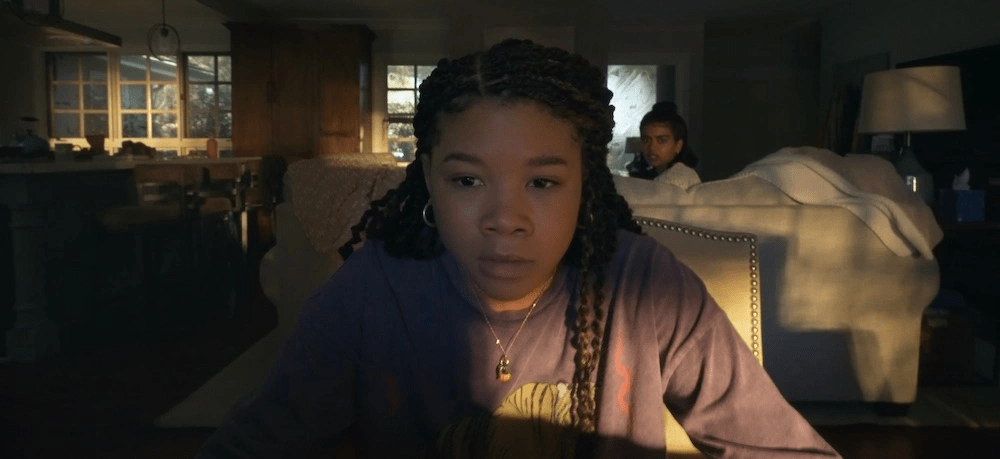
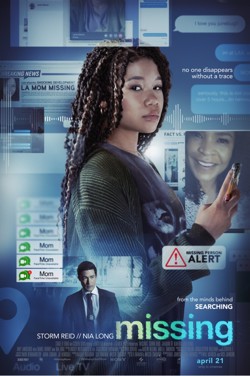
When the fad of screen-based films first spawned it was largely used by horror films such as Unfriended. 2018’s Searching took the format and used it for purposes of tension in John Cho’s search for his missing daughter. However, after that the ‘gimmick’ generally seemed to disappear, being used less frequently (but still to effect such as in Rob Savage’s terrifying Zoom-based horror Host). Now, a sort-of-sequel to Searching arrives in the form of Missing, following 18-year-old June (Storm Reid) as she tries to find out why her mum (Nia Long) and her boyfriend Kevin (Ken Leung) haven’t returned from their brief holiday to Colombia.
Perhaps the key to Missing’s engagement is that the display feels genuine. From a montage of party sequences (cue Snapchat and Instagram updates) as June celebrates having the house to herself to sticky notes littered all over the desktop you believe that this is indeed an 18-year-old’s computer filled with increasing and frantic details. Much of this is helped by Reid’s excellent central performance. It could be so easy to simply put your engagement, and some of the tension, down to the format, however Reid leads the film with a strong turn capturing her character’s fear, panic and disbelief at every turn.
And there are many turns. Having seen the trailer I was worried that many of the twists and revelations had been given away, however there’s plenty left for the film to surprise you with. At certain points the build-up, or perhaps effective drawing out, of reveals is met with an open-mouth constructed with shock and some glee at just how well the rug has been pulled. The mystery is layered with plenty to not see coming and the screen-based format is used to help boost this with plenty of effect in the way the developments are captured. Whether through delving into personal accounts of those who have gone missing, or through hiring someone to find clues on the Colombian equivalent of TaskRabbit (Joaquim de Almeida’s Javi).
For much of the run-time the fast pace helps to keep you involved in the search, allowing for there to always be something to be involved in. All making the third act all the more disappointing. There’s a somewhat predictable nature to the overdone change in style and tone of the third act. It’s a segment all on its own, standing aside from everything else – including the very final few minutes – heightening false darkness with confused melodrama for a very strange set of events. It’s a late-stage fumble for what could otherwise be a thoroughly excellent thriller. Everything that comes beforehand still holds up, and there’s still a very enjoyable film here, it’s just that the final developments are something of an overdone let-down with strong stylistic and tonal changes which are never for the better.
Missing effectively makes the most of its screen format to strengthen its reveals and developments. Alongside Storm Reid’s strong central performance there’s a lot to be engaged and intrigued by. If only it didn’t falter in the overdone and predictable third act.
After following a stranger (Hokuto Matsumura) to an abandoned building, teenager Suzume (Nanoka Hara) finds herself travelling across Japan to stop otherworldly forces from causing disastrous earthquakes.
Bear in mind that we’re still to see Across The Spider-Verse and Pixar’s Elemental, but Suzume may very well be the most visually stunning animated film of the year. The way its settings shine off the screen and truly get across the almost unbelievable fantastical nature leaves you in awe of the animation on plenty of occasions from the opening stages. It’s also thanks to the animation that tone is so easily established in so many settings. We see two different occasions where a chair chases a cat through the streets of Japan. both very different. One leads to plenty of chuckles, the other a good deal of effective tension. All thanks to the style of the animation, the shots that are used and the way in which both scenarios are generally presented; alongside the inviting score from Kazuma Jinnouchi and band Radwimps.
Throughout the journey we follow teenager Suzume (Nanoka Hara) who after following stranger Souta (Hokuto Matsumura) to an abandoned building in her town discovers a door to another world. From this world escapes a giant red worm, sprawling with multiple strands across the sky of her town, only being stopped if the door to its world is closed and locked in time. Otherwise it will fall and destroy her home in a disastrous earthquake. Its for this reason that she ends up travelling across the country with Souta, although racing against time trying to find where the forces will meet to stop these events being risked for another generation.
Along the way they’re taunted by a small cat ridiculing their attempts, and seemingly trying to stop them from progressing. Perhaps not quite an antagonist, there’s an amusing yet eerie sense to the character, helped by the childlike voice (Ann Yamane) and just where and how it appears throughout the story. Soon it almost seems to Suzume and Souta that they’re following the cat rather than the events. With such appearances, and the unknown nature of if and where worms may emerge (when found a number of locations are rather cleverly dealt with and built in), there’s a well-structured narrative taking place. One which moves along quickly and makes the most of your engagement, knowing how to increase it and keep the viewer in place.
It therefore seems somewhat strange when the third act comes along and there’s something of a tonal shift. The course of the narrative changes and it takes a few minutes to adjust and almost re-engage with the film as a whole. While some original footing is regained, particularly when it comes to the action sequences, with some of the character interactions there’s a different tone and style to the proceedings which almost feels separate to the tight, well-flowing events that have taken place over the previous 80-85 minutes. Things gradually rise back up during the aforementioned moments of action, but it takes some time to get there before things are quickly wrapped up. The animation may still be spectacular, and there’s plenty to enjoy, including patches of appreciated humour (it shouldn’t be understated just how funny Suzume is) and the strength of the fantastical elements, just for a while in a slightly different tone and style.
Visually stunning, contributing to both humour and fantastical tension, there’s a lot to like about Suzume and the world it transports you to. The latter stages may feel like a tonal and stylistic shift, but it gradually climbs back for an enjoyable ending.
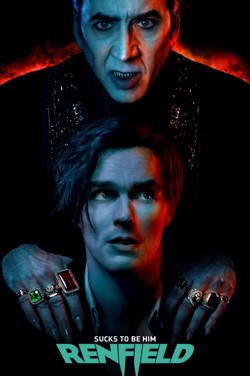
Cert – 15, Run-time – 1 hour 33 minutes, Director – Chris McKay
After decades of serving Dracula (Nicolas Cage), assistant Renfield (Nicholas Hoult) wants out, however it’s difficult when interacting with the police and the most powerful crime family in New Orleans.
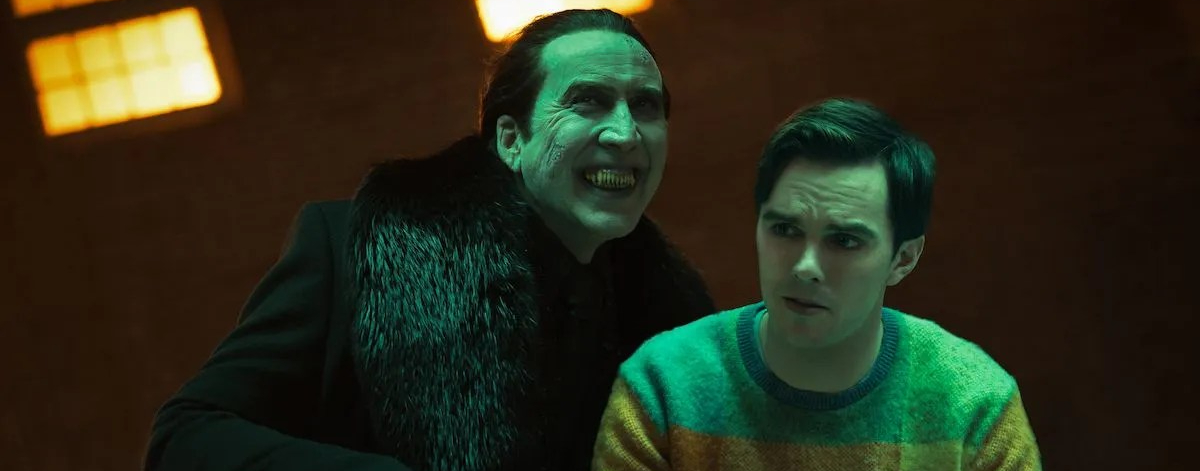
For those going to Renfield for Nicolas Cage giving a rather Nicolas Cage performance as Dracula you’re unlikely to be disappointed. While not flooding the film he’s certainly in it more than you might expect from the trailers. He’s clearly enjoying giving his raspy performance, commanding familiar Renfield (Nicholas Hoult) to bring him more innocent victims whose blood can help bring him back to full power. While Cage is enjoyable the element which truly pushes his performance is the make-up which constructs a gradually repairing Dracula, after almost being burned alive at the start of the film.
He and Renfield take to New Orleans after an attack from hunters try to take the count down. There Hoult’s character attends meetings for those in toxic and co-dependent relationships, listening to their stories and attacking their partners to take to Dracula. However, none of this is enough – “I don’t ask for much, Renfield. Just the blood of a few dozen innocent victims” – a life of just drinking blood isn’t enough. Dracula wants the achieve world domination, and its this which finally pushes his assistant away from him. Going for a life of his own Renfield starts to try to help people instead of killing them. However, this winds him into interactions with the police, particularly officer Rebecca (Awkwafina) – the only non-corrupt officer in the force, it seems – and the most powerful crime family in the city, the Lobos.
The narrative winds in and out of each perspective as each side-character, or at least person Renfield seems to form a relationship with, gets their own subplot. Certain points may wind themselves into the core narrative, but a number of scenes never quite feel like they’re adding context to a moment or pushing the threat to be faced, instead like they’re forming a new strand to follow. With so much going on, and with the general tone and style of the film, things often feel better suited to a TV show. A number of scenes feel like a feature adaptation of a series and as a whole with everything that happens 93 minutes seems like the right amount of time for this particular film.
There are handfuls of amusement throughout and a generally enjoyable tone yet often the things that generate the most response are the visual details. As mentioned there’s a lot to like about the occasional Dracula makeup, but also the splatter and gore shown in a number of action sequences provides a lot to enjoy. For a film that could so easily play into the 12 rated category it leans into the 15/ R certificate bloodshed with a visible grin. It’s such points in the film, alongside the light humour, which brings in the entertainment factor and manages to keep you engaged throughout. It’s very much a film to sit down, switch off and simply enjoy for what it is for around 90 minutes.
While certain aspects within the subplot-filled narrative may feel better suited to a TV series there’s enough humour and splatter within Renfield to keep audiences amused and engaged for its comfortable 93 minute run-time.










 Just A Little Bit Random