
For many people the 2024 Best Picture race for many has been leading to a certain winner for a number of weeks, even before awards season properly arrived. However, the Academy has been known to take a left turn sometimes with their eventual choices, and with the preferential ballot system, and the increasingly diverse face of votership, things may not actually be so certain. Especially with one of the most diverse and interesting, not to mention exciting, selection of Best Picture nominees we’ve seen for a good few years.
As I do around this time every year, in this piece I’ll be taking a look at each of the Best Picture nominees and looking at the forces working in their favour, and those working against them, when it comes to a possible win of the top award on Oscar night. Because, as mentioned, this is a particularly fascinating set of nominees, and looking at a number of winners over the last few years, is the idea of a ‘conventional’ winner increasingly going out the window?

Proving that this is no ordinary, at least by traditional standards, selection of Best Picture nominees from the off, Barbie was the biggest film of last year. While the Academy is no stranger to nominating box office success (look at Top Gun: Maverick and Avatar: The Way Of Water’s nominations last year) they are to films such as Barbie. Yes, it was much celebrated for its themes of feminism and toxic masculinity, but Barbie was a comedy, a genre (alongside the likes of horror, or most direct genre films) which votership largely seems to lean away from. However, Barbie is evidently a very different film, that seen from the first trailers, and just how long it remained in the conversation after release.
Barbie stirred something, and not just a surge in ticket sales alongside an Oppenheimer double bill – I personally believe that a good chunk of Oppenheimer’s gross was from the Barbenheimer double bill and social media trend – within those who watched it. America Ferrera’s monologue bringing many of the themes and ideas to the fore is claimed by many to be what got her a surprise Best Supporting Actress nomination, after being missed out from a number of other key ceremonies, with help from the screenplay which is a frontrunner in the Adapted Screenplay category.
However, a film that has so much personality, and was brought to the fore by its director’s work has failed to earn Greta Gerwig another Best Director nod – after also being missed out to much uproar for her work on Little Women. Yet, this could give voters more reason to push the film, alongside the discussion around Margot Robbie failing to get a Best Leading Actress nomination. It certainly seems to be prominent in people’s minds still, not just when it comes to Ryan Gosling in Supporting Actor but also in technical categories such as Costume and Production Design, which show that it’s being thought about beyond the big categories.
Barbie may have failed to win the ensemble prize at the SAG Awards this year – where it was widely predicted to potentially prevail – with the Actors Branch of the Academy being the biggest of the 10,000+ membership. But, this isn’t about the performances, it’s about the film as a whole. And Barbie has undeniably lasted beyond its initial release, it has consistently been in the awards conversation and been one of the most praised and successful films of the year. A big studio blockbuster with its critiques of consumerism and the brand which created its IP in the first place, it’s not quite weird, but it’s a film with a huge deal of personality.
And in a world where the likes of Everything Everywhere All At Once can win Best Picture, Barbie really has a chance. Greta Gerwig is now three for three when it comes to her films receiving nominations for the top prize at the Oscars, and it genuinely feels like Barbie, with just how popular it is, could be the film that gets her a win. For voters it could well be more than Kenough.

While Barbie dominated the box office, its fellow double bill feature Oppenheimer had both commercial success and awards success. So far the film has won the top prize at the majority of precursors – including BAFTA, DGA, PGA and SAG; the PGA awards being notable for also using a preferential ballot system. It seems that it is the most widely loved film across many branches, also reflected in its 13 nominations – the most of any film this year – and the fact that its a frontrunner in a number of categories. Even Cillian Murphy seems to be stretching out in-front of Paul Giamatti who was for a long time believed to be a joint frontrunner in the Leading Actor race.
Christopher Nolan has firmly become an Academy favourite, and seems to be on his way to a Best Director Oscar, too. He’s been open about the bleakness of the final stages of his film, bringing it up in acceptance speeches at other ceremonies this year. However, the downbeat tone of Oppenheimer, particularly during its closing stages, could turn a number of voters away. Do they really want to award such a pessimistic film? Surely something celebratory or more emotionally affecting, not quite in the way of dread, would have more of a personal effect for them? However, they may also want to celebrate and push the message being sent within the film and what it’s trying to say about the nuclear weapons at hand, pushing it further up their ballots.
Oppenheimer is currently believed to be the frontrunner for this year’s Best Picture award, many consider it to be the only contender at this stage. However, it does still face some prominent, and equally interesting, competition. The book isn’t quite closed in this case, especially when it also still faces fierce competition in other categories and doesn’t seem to be a ‘confirmed’ winner in the likes of Adapted Screenplay – where Barbie is considered a potential winner.
There is also the chance that some voters could be tired of hearing about the film at this stage. This might sound like a somewhat ridiculous point, but it’s been a factor that Netflix has experienced on multiple occasions. Many believed they could have had a win with Roma, and especially with The Power Of The Dog, however with the amount of push and advertising they gave the latter in particular a number of places cited voters simply getting tired of the film, feeling as if they had seen too much of or about it. All Quiet On The Western Front last year seemed to be the streamer’s best shot at the award, especially with their For Your Consideration campaign being much less forced than before, and to some extent it seemed to work out with how consistently the film was in the awards conversation. Yet, Oppenheimer’s buzz seems to be still ongoing, having dropped very little since the Best Picture nominees were announced. The praise it has been receiving may very well continue, leading Christopher Nolan and co to the most prominent stage of awards season for just one more top prize.
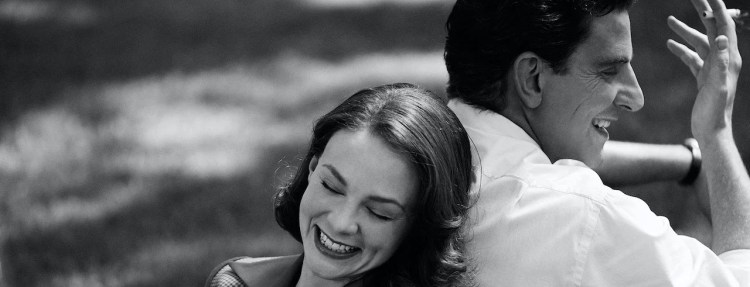
When it comes to their Best Picture nominee this year, Netflix also seems to have gone for a more muted campaign, even more so than last year. While some might suggest that this is because they haven’t got much faith in its chances it could also be down to relying on its star and director. Bradley Cooper has unfairly become something of a punching bag this awards season for his personal connection to Leonard Bernstein, and his passionate portrayal of the conductor and composer. Largely this is on social media, a realm far outside of awards season, where luckily Cooper’s Best Leading Actor nomination doesn’t lie. A nomination which is more than deserved (in a category full of truly excellent performances all deserving of their nods – it’s perhaps the strongest category this year).
Cooper’s performance is a transformational one, the kind the Academy likes. The kind that also means the film gets a Makeup And Hairstyling nomination. With this in their minds, alongside Carey Mulligan’s Leading Actress nominated turn, Maestro could well be firm in voters’ minds. For a good while I wasn’t sure if the film would get a Best Picture nomination, but its awards success thus far, in terms of nominations, has meant that Maestro appears to have exceeded expectations. Even in terms of Oscar nods it’s done quite well, managing to obtain an Original Screenplay nomination if not the usually helpful Director and Film Editing mentions – although in a world where CODA can do as well as it did with just three nominations such nominations aren’t as ‘required’.
On the point of CODA, Maestro is perhaps the most direct and conventional of this year’s Best Picture nominees. While not a straightforward biopic of Leonard Bernstein as a conductor and composer, rather focusing on his relationship with wife Felicia Montealegre (Mulligan), it is the most traditional of the ten nominees this year. The kind of film that performs well with older voters, who still make up a good chunk of the Academy and help push films like CODA and Green Book.
While looking at its general reception Maestro might seem like something of an outlier from the rest of the pack, the success that it’s hand in terms of nominations, and indeed its overall style, including the passion that Cooper has clearly poured into its various aspects, makes it the kind of thing that Oscar voters really go for. It’s perhaps the most Oscar bait-y nominee this year – although that term seems rather derogatory nowadays. Does that mean that the film could be drowned out by more ‘unconventional’ films in a highly diverse line-up fully of variative personality? Maestro in some regards has already quietly exceeded expectations, and it could well do so again by picking up this year’s Best Picture award.
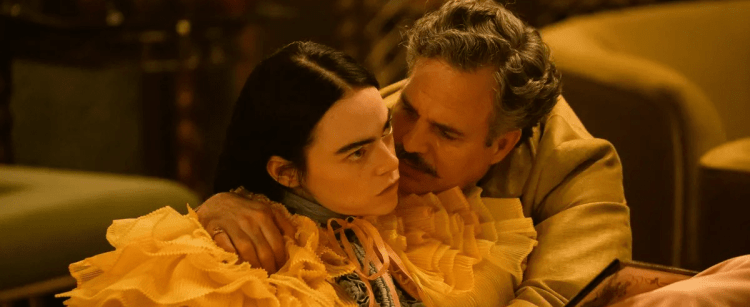
On the other side of Maestro, Poor Things is perhaps the complete opposite of a traditional Oscar film. While Yorgos Lanthimos appears to have become a quick Oscar favourite after the success of The Favourite in 2019 (and The Lobster’s Original Screenplay nod in 2017) his re-teaming with Emma Stone, a current frontrunner in the Leading Actress race, is a much weirder affair – perhaps his weirdest so far. Yet, a number of elements that bring about this ‘weirdness’ are in the general style of the film, much of which has received recognition in the technical categories at this year’s awards. A number of these races the film is widely predicted to win, or at least be a strong contender in; such as Production and Costume Design.
And while it’s a rather different film in terms of its style Everything Everywhere All At Once was last year’s winner, although perhaps with a bit more near-universal praise than Poor Things. The former was praised for its themes of families, particularly immigrant families, acceptance and the different relationship within them, working amongst the moments of multiverses where people have hot dog fingers or find themselves in a Ratatouille-esque situation with a raccoon. However, there’s a difference between such instances and the 18-rated sex, or “furious jumping”, scenes in a rather off-kilter film.
Yet, as Stone’s Bella Baxter explores the outside world for the first time, learning more about herself and expanding her mind themes of female independence and discovery become increasingly prominent. There are some who have seen themes of female autism within the central character’s journey of development throughout the film.
It’s these ideas that people have found within the film, and that the narrative plays with, which are so wonderfully summed up in the lasting closing shot, perhaps allowing for a more memorably film for voters as they reflect on that particular moment. However, there may be some viewers who don’t reach that point as the overall style of Poor Things may prove too much for them. However, the extent of its praise, and again the success of certain Best Picture winners in recent years, show that a big stylistic personality can be a help – and The Favourite was considered a frontrunner in its year, eventually losing out to Green Book.
A more recent release date – Searchlight Pictures pushed the film back to December in the States perhaps due to the SAG strike at the time and also for a bigger awards push after its festival run – could also help the film’s chances when it comes to being in voters’ minds. While recency bias has never been as major a factor for winning Best Picture as some would make out it can be a help, and Poor Things may just have it, alongside the favour of multiple branches (receiving a total of 11 nominations), including the major ones largely looked to for a potential Best Picture winner. The film has certainly received a lot of praise, and those who have loved it have really loved it, perhaps placing it a good way up their preferential ballots. And, as will be mentioned later, when it comes to the eventual Best Picture winner it’s the film/s more consistently placed 2nd and 3rd, and to some extent 4th, on ballots that matter more than at number one.

While Poor Things stands out as a film representing the changing face of the Academy with its overall style, The Zone Of Interest is an equally, if not more so, fascinating nominee in this year’s Best Picture race. It seems so unlikely that a film of this nature would have been nominated five or ten years ago, maybe even two or three. Yet, here a slice-of-life holocaust drama about the commandant of Auschwitz has obtained just this.
Jokes may have been stirring that nobody has seen the film due to the release strategy, however throughout awards season the film has maintained a place in the conversation. In some ways talk around it has grown as more have discovered it due to its awards attention, and the fact that many have talked about what an important film it is. Much of this impact coming from the strong emotional response that many have had to the shocking nature of the film, as it never enters the concentration camp but makes you aware of the events that are occurring within through the sound and visual detail surrounding the central home.
The sound which has picked up a key nomination, showing that it’s been noted how integral it is to the film, and that it’s had an effect. Like Production Design can be a key indicator for some films – as it was for Parasite a couple of years ago in terms of the way the central house worked there – the way that The Zone Of Interest uses sound is so much a part of why and how the film has worked for many audience members. It’s another case where the response to it has been so strong, particularly due to the way in which it leaves viewers after watching. This strong lasting effect could help to keep it in voters minds, pushing it up their ballots and bringing it strong consistent placements.
Add on Directing (this is a very Director’s Branch film) and Adapted Screenplay nominations and the film ticks off key categories. It may not have a Film Editing nomination or any acting nods – Sandra Hüller who could be a dark horse in the Leading Actress race for her turn in fellow Best Picture nominee Anatomy Of A Fall was believed by some to be a possible Supporting Actress contender for this film – but an almost certain International Feature win could push the film. It’s already in mind by some as a winner in that category, and while that might mean lower ballot placements to give other films a chance it may also help it as voters already view it as awards worthy, remember they think highly of it and give it a boost.
It feels like The Zone Of Interest is one of the most praised films in this year’s Best Picture race. I’ve seen very few people speaking less-warmly or simply against it, and that’s coming from a person who appreciates and likes the film but doesn’t love it (I personally think it would be at the bottom of my ballot if I was an Academy voter), there’s a strong case that the strong response to the film could be enough to push it across the line. Even if some, myself included, think that it might be one of the nominees that just about got into the race, but now it’s in it (like any other nominee), it’s a serious contender, and the strength of its reception could get it the biggest win on Oscar night.
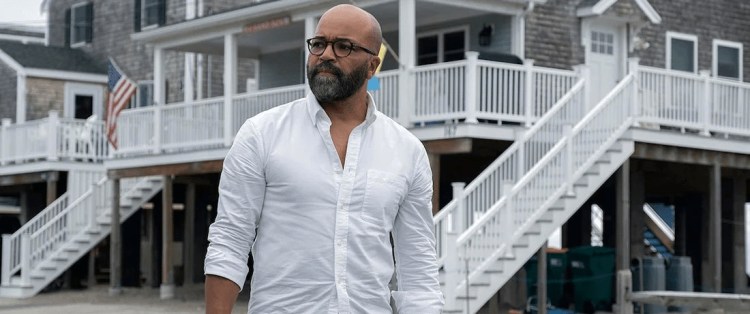
If The Zone Of Interest is the kind of film that just wouldn’t have been recognised by the Academy in most years American Fiction is the film that usually goes under the radar. I genuinely believe that this particular nomination, and the success the film has had, is one of the most interesting things about this awards season. Not just because of its comedy, not just because of that comedy being satirical, not just because its original title was F*ck (without the asterisk), but because it simply feels like the kind of film that gets talked about as an awards contender for five seconds before being completely forgotten about. Yet, here it is as a Best Picture Oscar nominee, and a growing contender in the Adapted Screenplay race – particularly after an unexpected win in that category at BAFTA.
The Academy like to lean toward films with political relevance, and certainly American Fiction’s depiction of Black author Jeffrey Wright fighting against what he views as the industry’s want for books about stereotypical Black stories fits into that. And while it does show criticism towards the film industry – the reason some people believe May December got nothing more than an Original Screenplay nomination – and its frequent depiction of stories relating to slavery, gangs and general pain and suffering when it comes to Black people on screen, the focus is largely on the writing world (or is it?).
While there might not be a mention in either Film Editing or Director, American Fiction did manage to also pick up nominations in Supporting Actor (a truly deserved nomination for a wonderful piece of emotional understanding from Sterling K. Brown) and Original Score, which came as a surprise to some people. While Score isn’t a huge indicator of Best Picture, or shows technical aspects being considered in the way that Sound of Production Design could do, it does add one more point to American Fiction’s belt.
While it might not seem like one of the most talked about nominees it seemed like one of the most certain in the build-up to the nominations announcement. Again, while feeling like something that would normally be left out of the conversation, this has been firmly a part of it. Yes, the louder talk and conversation around a number of other nominees could lead to the film being drowned out, if it hasn’t been already, but it’s solid place in the conversation throughout awards season could help it along. Plus, if it does win Adapted Screenplay that could give it even more of a boost.
The film may not be the most loved, but it certainly doesn’t seem to be the most hated, even with what could be quite a divisive ending which could turn some voters away. This may be the kind of film that gets placed around the middle of ballots, which could damage it, but on the other hand if towards the higher end of this section it could lead the crew of American Fiction to be the final group on stage at the Dolby Theatre on March 10th. Best Picture often doesn’t go to the film that is most vocally loved, but the one that is most generally liked, the one that has the most consistent (positive) consensus.

The Zone Of Interest and American Fiction may be interesting signs of the evolving taste of the Academy, but one certainty has once again proved true, Scorsese is back, again. Like with most of his and Spielberg’s features Killers Of The Flower Moon was another strong awards contender from Scorsese even before it had premiered. Yet, often the case is that the film’s are considered frontrunners, even presumptive winners, up until the point where the nominations are announced and they drop out of the race. However, with this particular film it feels like the conversation around its potential Best Picture win lasted at least a week or two beyond this usual cut-off point.
Many have pointed out that Killers Of The Flower Moon is quite a different beast to Scorsese’s recent work – but as any great director his genres and topics have varied and changed throughout his career as he continues to challenge himself. It’s been praised for the way that it puts its story in the hands of the Osage people whose perspective we see the film from. Much of this reflected in praise for Lily Gladstone, who many are predicting to win the tight Leading Actress race, with her story being used as a key part of the campaign for her and the film. With her at the fore of people’s minds as a key figure throughout this awards season the film may well be alongside.
Yet, despite picking up ten total nominations – including a somewhat unexpected appearance in Best Original Song for Wahzhazhe (A Song For My People) – the film lacks a Best Adapted Screenplay nomination, the only Best Picture nominee this year to not obtain one. While some say that this is because Barbie was switched to the category and took its place, allowing for May December to make its way into Original Screenplay, the fact remains that Killers Of The Flower Moon doesn’t appear in this category. Even CODA a couple of years ago appeared in this very category, and eventually won it.
However, there’s plenty of star power involved in the film both in front of and behind the camera. Leonardo DiCaprio may not have received a Leading Actor nod, but Robert de Niro appears in Supporting while Scorsese achieved another Directing nomination. Frequent collaborator Thelma Schoonmaker is believed to be a strong contender for another Film Editing win, and Robbie Robertson could pull off a posthumous win in Original Score. But, could all of this play against the film? Many of these people already have their Oscars, yes that hasn’t stopped the Academy in the past, but when they’re figures of this calibre do they need another?
It all comes back to that idea that Killers Of The Flower Moon feels different. It’s not that the film has entirely been in the conversation, but its themes, ideas, characters and perspectives which are so key to it and the story that it’s telling. For some voters that may be worth celebrating. Plus, there has been plenty of praise directed towards the film. It may not be number one on the most ballots, but with how much it was, and has been, raved about it could get a good deal of high-ranking placements leading it to Scorsese’s second Best Picture win (The Departed was now 18 years ago after all…)

Also no stranger to the awards campaign trail is Alexander Payne, appearing in this particular Best Picture line-up with a (largely) Christmas film of all things. One that was released in late-October in the US, and received acclaim in the UK where it was released in mid-January. The festive season is just part of what brings The Holdovers its warmth and extended hand of welcoming and understanding. At one point it was considered a strong frontrunner in all of its races, even up to a week or two ago. However, as Guild awards took place and leaned towards Oppenheimer it seemed that it faded away in the conversation and got drowned out. But, there is still a lot of love for the film, and it still seems to be a strong contender in a number of its five categories – not just Da’Vine Joy Randolph’s effective lock-in for the Best Supporting Actress win, but many predict The Holdovers for a win in Original Screenplay.
Oscar voters are known to like to reward career work at times, largely in individual categories rather than Best Picture, and The Holdovers could be on the receiving end of that. Paul Giamatti is still believed by some to be strong competition for Cillian Murphy in Leading Actor, and if some go for Murphy they may go for Giamatti’s film in Best Picture instead, particularly if they also note that Payne is without a Best Director nomination. Plus, isn’t part of The Holdovers about supporting the underdogs and people coming together from their respective isolations?
The Holdovers feels like one of the strongest contenders in this year’s Best Picture race, helped by the fact that it seems to be very consistently liked, if not more so. It ticks off key nominations and while it might not have any technical mentions beyond Film Editing that perhaps speaks to the way that the film has emotionally affected voters. The key details, aside from Director, have been noted and remembered. While some might brush it aside now that awards season has largely panned out, I don’t think that it can be taken out of the race just like that.
I personally think that it’s one of the strongest contenders just because of how much it was praised and liked, plus it has so much of what the Academy sometimes leans towards in terms of its themes and presentation. While having traditional leanings there are open glimpses of mental health and grief (within the 70s setting that the film is based in) the warmth, humour and emotion have been consistently praised and mean that the film has been held in high regard (as if the Best Picture nomination doesn’t already say that). The only thing that seemed to knock it back was another film dominating the conversation. But, The Holdovers has always been close by, and its themes seem to have universally translated. The Academy has, as mentioned, an increasingly diverse range of members eligible to vote, and the agreement seems to be that The Holdovers is very good, particularly at what it does. With this consensus it could be the final film to win an award this Sunday night.
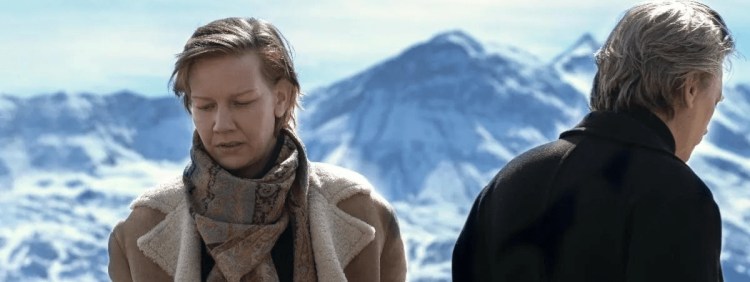
Let’s stay in cold climates for the moment as we switch to the film that has perhaps been in the awards conversation the longest this year, Anatomy Of A Fall. The Cannes Film Festival has increasingly become a solid predictor of Oscars success, while the Palme d’Or has led to a number of acclaimed and successful films, Oscar attention wasn’t always guaranteed. However, after Parasite’s big win in 2020, and Triangle Of Sadness slipping into the nominees last year, Anatomy Of A Fall has had a steady course to the ceremony since May of 2023. And throughout this awards season distributor Neon, and those behind the film, appear to have been throwing as weight as they can behind the film; and it seems to have worked. Out of all nominees Anatomy Of A Fall seems to be the one that has truly gained traction and attention across the season, growing in the conversation as the weeks have gone on.
There’s a strong argument to be made that Anatomy Of A Fall could win in each of the five categories that it’s nominated for. Whether this be through other contenders cancelling each other out, or on the other hand the pure strength of the film; perhaps both, it’s being discussed as a potential winner in each race. When it comes to the Original Screenplay, Director and Film Editing races references to these constantly bring into the conversation the ambiguity of the central trial, the fact that the film never truly leads the viewer in any particular direction. This decision is part of what has so greatly captivated viewers when it comes to the film and the way in which the narrative progresses and develops, delving into ideas of testifying, the truth and morality when it comes to both – particularly from a child’s perspective. The ambiguity keeping audiences thinking about the central trial and murder and playing on the mind, allowing the film to find a place in people’s minds and not just as a great film.
Leading Actress nominee Sandra Hüller, alongside border collie Palm Dog winner Messi (the last major awards contender to win this award was The Artist back in 2011), has become one of the leading faces of this awards season. A quiet contender in her acting race, the power of her performance, and prominence of herself (and Messi) throughout, has been much-discussed throughout awards season and kept the film in voters minds even longer, especially as the last few weeks have panned out. With these details in mind thanks to the push the film has been given the film may well be remembered fondly – and when thinking of fellow nominee The Zone Of Interest, in which Hüller also stars, Anatomy Of A Fall may also get a push in turn, and vice versa.
On the note of The Zone Of Interest, Anatomy Of A Fall isn’t present in the Best International Feature race due to France submitting (the also very good) The Taste Of Things instead – some claim that this was the former isn’t entirely in French, with a good deal of dialogue in English, while others have claimed that the film wasn’t submitted after writer-director Justine Triet was critical of the French government during an awards speech. With the film not present here some voters may push it for Best Picture, a vote for The Zone Of Interest there, one for Anatomy Of A Fall here. There are plenty of voters who will want to spread the love across the categories, and Anatomy Of A Fall very much seems like the kind of film that could receive a good deal of such favour.
Of course, the quietness could just be quietness. In most categories it could be a middling third-or-fourth choice contender, drowned out by the competition and therefore not thought of as much, having an effect in the Best Picture race. But, if unable to get wins in other places, why not give it a chance at the top prize, especially if it is thought of so highly? If other films are taking prominence, and being thought of more that might be the reason as to why not for some voters.
Anatomy Of A Fall has really subtly been playing in the background throughout this awards season. It’s been present for many months in the build-up and when it’s been key to strike it has done so. While it might not have won at many pre-cursors the occasional win and reference here and there – such as an Original Screenplay win at BAFTA – means that it’s remained consistently in the conversation, and grown over time. That growth could very well lead it to wins at the Oscars, including in Best Picture.

Finally, while Anatomy Of A Fall is quietly playing in the background as a contender in its various races, we move on to perhaps the quietest Best Picture nominee this year, Past Lives. With only two nominations – Picture and Original Screenplay – some have discarded Past Lives as an outside contender, however I disagree. I don’t believe that this would have been the film to not be nominated had Dune: Part Two been released last year and the writers and actors strikes not happened. Yes, this might be down to some bias due to thinking this one of the best films of 2023, but I think there’s a good deal of love behind the film – evidenced in its Best Picture nomination.
The lack of nominations does perhaps hinder its chances, despite some discussion of potential inclusion in acting and directing – if Celine Song were in the Director race she’d certainly get my vote – the film was always considered a just-outside contender to be nominated in such areas. However, when released Past Lives got a lot of love, and that echoed into a word-of-mouth success for it, eventually leading it to the awards trail – slightly similar to Drive My Car a couple of years back, although that film’s word-of-mouth grew on the awards trail leading it to Oscar nods that way. And while Drive My Car only won International Feature in the end, Past Lives is a slightly different film, and set of circumstances.
Past Lives story of changing people, immigrant families, ghosts of the past (both ourselves and others) and more truly resonated with a lot of viewers. To some extent it’s a film of what you bring to it you get out of it, and with the personal stories on display to connect to there’s a lot of emotion to be found as they pan out in recognisable fashion. Connecting to a film on such a personal, emotional level can really heighten it and the effect that it has. Such a profound effect could bring it to the fore in voters’ minds and push it up their ballot. There was, and continues to be, a lot of love for Past Lives and while that may just be echoes now, at least those echoes are still held and pushing the film to some extent.
The film has been faint in precursors. While it was included amongst the PGA nominees and won at BAFTA and the DGA awards (first-time feature for Celine Song, beating Cord Jefferson for fellow Best Picture nominee American Fiction) it wasn’t present at all at key guild ceremony SAG, the actors branch, again, marking the biggest percentage of Academy membership. While mentioned the presence of Past Lives has been pushed back by bigger names and contenders. But, it’s another film that brings about universal themes for many to connect to and empathise with as they unfold on screen. Leaving a profound lasting effect after the credits have rolled. If a film has a personal effect that says something to us we may be more likely to remember it and think about it favourably. With this in mind, that may well be the same for Oscar voters, potentially being enough to allow the power that Past Lives holds alone to be enough to lead it to Best Picture. After all, it’s the Best Picture race all others are separate contentions.

Now, we finally approach the whole point of this inconsistent, overlong ramble (if you’ve somehow read it all up until this point, thank you, I hope it hasn’t been too repetitive and boring), what will win Best Picture this year? Just before that it’s a good idea to have a quick rundown, once again, of the preferential ballot.
While every other category at the Oscars is voted on with a ‘most votes wins’ system Best Picture for over a decade now has been voted on by a preferential ballot. Voters will rank the ten nominees from best to worst and gradually nominees are removed, depending on how much favour they have, until a winner is found. The film with the least amount of first placements is removed, in this case the voters that picked said nominee then have their second choice become their first. This continues to happen until a film has 51% of first place picks, or more.
It’s for this reason that often the more consistently liked films, or least divisive ones, can have a tendency to win Best Picture over the ones that have had plenty of acclaim. The kind which have plenty of second and third, maybe even fourth, place rankings instead of just being placed at the top of the most lists.
When starting to whittle down the nominees it’s best to look at those which simply seem like outliers in the race, each year tends to have one or two that as soon as the nominees are announced it seems pretty clear they won’t win. In the case of this year Maestro stood out, largely because of its somewhat mixed response but also because it feels the most traditional film in a batch that has such varying personality and style. Alongside it Past Lives, while those who love it seem to very much do so, it hasn’t had the steam throughout awards season to be talked about very much aside from mentions that it’s nice to see it getting attention via nominations.
Then comes American Fiction, while it seemed certain that it would get a Best Picture nomination, alongside other nods, it never quite seems to have been talked about as much as other nominees. Not entirely getting lost in the crowd of the competition, it just never seems to have been talked about as a strong contender, although may get recognised for its screenplay, which seems to be the main point of attention throughout the season – aside from the performances of Wright and K. Brown.
Barbie, while having a huge personality, seems to have faded away throughout the season. Its Oscar chances look slim for Best Picture after the exclusion of Greta Gerwig in Best Director, and largely because the film leans so much into comedy. Comedy has never been a favourite genre for the often genre-phobic Academy. Barbie may have love on some ballots, but it doesn’t quite seem like it will be enough, despite a handful of nominations. In races where it was once seen as a contender it also seems to have slightly fallen behind and generally feels as if the film, despite its accomplishments and praise, isn’t being taken as seriously as a contender as it once was. In the vein of personality Poor Things, while it may be at the top of a lot of ballots, will likely be towards the bottom of a handful of others as it’s likely to be perhaps the most divisive nominee this year. While Everything Everywhere All At Once won last year, and The Shape Of Water in 2018, it simply feels like Poor Things might just be a bit ‘too weird’ for some voters, particularly when it comes to its strong R-rated nature and sex scenes which appear to have turned one or two voters away.
Now we find ourselves halfway through the nominees. With stronger contenders and the films that generally seem to have been talked about most as potential winners. For Martin Scorsese and Killers Of The Flower Moon it seems that once again it won’t be the case. Not really for an air of ‘he already has his Oscar’ – as mentioned The Departed was almost 20 years ago now… – but it simply feels that, while it was discussed for longer, his film has fallen out of the conversation. Lily Gladstone is the main talking point for the film, and she’s certainly had a lot of focus put on her and a likely Best Leading Actress win. However, it certainly seems that the focus has been on her rather than the film as a whole.
In the case of Anatomy Of A Fall, I do believe that there’s an argument to be made that it could win in each of its categories, but for the most part it seems to be a contender around the middle of the pack – aside from in Original Screenplay. It has attention, and its name has certainly grown over the last few weeks thanks to the pushes studios and distributors have given it (and Messi). But, much of this seems to be promotion and making sure that people are aware of the film rather than pushing it for awards. To some extent there have been more mentions of the dog rather than the film itself. There’s strength to Anatomy Of A Fall, and again a good case to be made for it potentially winning Best Picture, but it doesn’t seem to be so as while the film isn’t being talked about it’s not always about the central narrative and more about individual elements of it, even if it is the key ambiguity, and what helps to bring them about rather than the overall product for Best Picture.
Which leaves us with the three films that I think have the best chance at winning the top award on Oscar night. And it always seems that while my number one might match with other predicted winners, my other two never quite line up – perhaps me thinking about the preferential ballot too much. Nevertheless, I believe that the three films with the best chance this year are Oppenheimer, The Holdovers and The Zone Of Interest.
The Zone Of Interest has had a lot of praise for its haunting nature and just how much it has affected viewers. The downbeat nature seems to not have prevented it from winning a number of other awards and if anything pushes the idea of its importance. Very few have spoken against it, or given more middling thoughts on it, and it seems to be one of the most highly thought of films this awards season. It also can’t be simply said that ‘noone has seen it’, partly down to its nominations and success, and again just how highly it has been spoken of. But, its nomination, it feels, came slightly towards the back of the pack. Despite this, there is a good chance it could win. However, the fact that it’s the kind of thing the Academy usually steers away from in terms of presentation it may just find itself a distance away from the big win for something more direct in its depictions, and to some extent narrative.
Then there’s the case for Oppenheimer and The Holdovers. Oppenheimer has won almost everything this awards season. It’s predicted to pick up in the major categories at this year’s Oscars ceremony, and has won at most, if not all, of the major guild awards in the build-up to this year’s ceremony. The odds are firmly in its favour. But, then there’s the case of The Holdovers, the film that has been largely believed to be in second place to the former for most of the awards run. It’s perhaps the most consistently liked and praised film of the season. With many enjoying and connecting with the warmth it emits in the coming together of the central characters, with a trio of praised performances. It fits in with more traditional winners of recent years and is perhaps the film most likely to fare best on the preferential ballot thanks to more consistent placements in the top half.
When it comes to picking between the two it seems more obvious this year than in other more recent Best Picture races. Due to the success and wins that its had not just with top awards but in technical categories too, I finally bring this stupidly long annual waffle (I deeply apologise for the poor state of it this year) to a close by saying it seems very likely that this year’s Best Picture winner will be Oppenheimer.





 Just A Little Bit Random