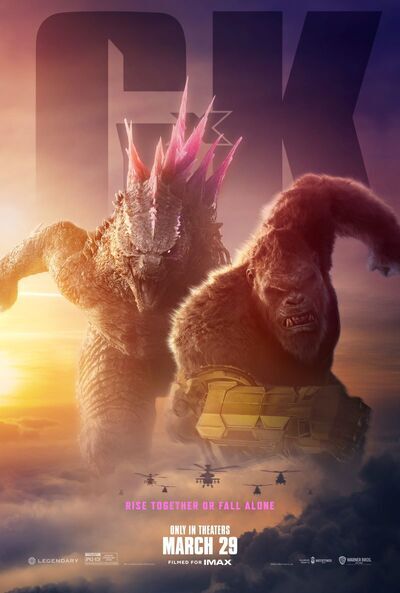
Godzilla X Kong: The New Empire – Review

Cert – 12, Run-time – 1 hour 55 minutes, Director – Adam Wingard

Whilst Godzilla protects the surface, Kong discovers a threat in Hollow Earth which neither could take down alone, however can the two titans team up before it’s too late?

Despite getting top billing in the title Godzilla barely makes what most films would credit as a ‘special appearance’ in Godzilla X Kong. Perhaps he was busy filming Godzilla Minus One while this sequel to 2020’s Godzilla Vs Kong was in the works. Whatever the reason is, there’s a good deal of focus on Kong and a selection of human characters over the towering lizard – whose narrative strand is largely shown through other humans tracking him down. In total there are about three, perhaps four, different perspectives making up this clash, and potential team-up, of the titans as a new ape threat in Hollow Earth is discovered, and one which could cause destruction for the surface world if neither of the titular creatures can defeat it.

There’s a slightly busy, and occasionally slow, feeling to some of the scenes focusing on the human characters exploring Hollow Earth, trying to find the source of what they believe to be a distress signal. However, with the likes of returning Brian Tyree Henry, and Dan Stevens as a doctor for titans, there’s a good deal of humour injected into such moments to stop them from simply losing all possible entertainment factor. Focusing largely on Rebecca Hall’s Ilene Andrews and adopted daughter Jia (Kaylee Hottle) the pair are trying to make sure that Kong is safe, while discovering Jia’s roots, these scenes aren’t for exploring the underground world, that’s what Kong’s perspective is for.


As Kong wanders through new areas of Hollow Earth that it seems he hasn’t strayed into before we begin to meet the main threat at hand for the film, introduced somewhat late simply for the need for the film to have a villain and a reason for the titular creatures to team up eventually. Once in place this is where the majority of the action comes in, and there’s an enjoyable nature to it when things do kick off. This is a film that’s aware of what it’s depicting and tries to have fun with a number of its ideas – ice breathing creatures and Kong’s eventual robot arm included; the latter feeling as if it’s done simply because it’ll look cool, and it gets away with it. When unfolding on the surface there’s little dramatic impact from the buildings that are destroyed during battles, that’s what they’re there for after all, the push is simply making sure that the titan we’re told is evil doesn’t win.

For those wishing to see a repeat of the first film’s selling point of seeing the giant monkey lamp the lizard again you won’t be disappointed, Godzilla X Kong relishes in portraying that again in a fresh fight. In fact, the first meeting of the pair since the previous Monsterverse instalment is a highlight of the film, knowing not to let things drag on for too long before getting back into the other action at hand, where the ideas are truly let loose while still managing to successfully track the action. Plus, better intertwining the human sequences with the monsters for a generally better flow and sense of connection with each strand as they come together for the third act.

In a number of ways this is likely exactly what you would expect from a film such as this, and it’s an improvement on the human-dominated Godzilla Vs Kong. Yes, we still spend a good deal of time with these characters in this sequel, but there’s more humour injected into their scenes and more focus on the titans at hand – even if Godzilla is barely present throughout the almost two-hour run-time. This is an enjoyable, if occasionally bumpy due to multiple perspectives working at the same time, sequel with some entertaining monster scraps, and that’s what we want from this, isn’t it?

While suffering from a number of events and perspectives in the build-up, Godzilla X Kong: The New Empire is an amusing improvement on Godzilla Vs Kong featuring some entertainingly destructive monster fights.

Rating: 3 out of 5.

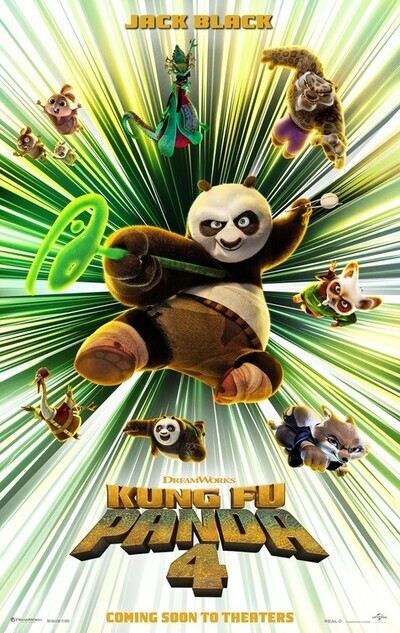
Kung Fu Panda 4 – Review

Cert – PG, Run-time – 1 hour 34 minutes, Directors – Mike Mitchell, Stephanie Stine

Reluctant to become the spiritual leader of the Valley Of Peace, Po (Jack Black) finds reason to keep the label of Dragon Warrior when a shapeshifting sorcerer (Viola Davis) threatens to take over the surrounding lands

The Kung Fu Panda formula has proved favourable for Dreamworks Animation in terms of reception and box office. The same appears to go from a filmmaking standpoint as eight years after panda Po’s (Jack Black) previous outing he’s back in action, minus the Furious Five of kung fu masters, for another adventure which some creatives have already claimed could open a new trilogy. From the off the fat jokes are rolled out as Po struggles with both stairs and the prospect of moving on from his Dragon Warrior label to become the spiritual leader of the Valley Of Peace.

He’s comfortable as he is, and doesn’t feel that he needs to promotion from Master Shifu (Dustin Hoffman). Just at the right time a new villain arises to delay his decision, as shapeshifting sorcerer The Chameleon (Viola Davis) is intent on taking over the surrounding lands for her own gain. Davis’ villain is undoubtedly one of the highlights of the film, and when on screen feels like an enjoyable threat with a dark edge – something which this franchise has successfully dealt with in each of its films – it’s a shame, therefore, that the character is little-seen over the 94-minute course of the narrative. It takes a while for her to even properly make an entrance as we spend a large amount of time seeing Po battle with his possible future, and meet fox Zhen (Awkwafina) who could guide him to The Chameleon.


There’s a generally likable nature to the somewhat familiar proceedings, helped by the occasional moments of humour and the starry voice cast – including James Hong returning as Po’s adoptive father Mr Ping, forming something of a double act with actual father Li (Bryan Cranston), and a very likable appearance from Ke Huy Quan. And when cropping up the action manages to land a solid, colourful punch, yet it feels that occasionally the film is reaching for the reliable hits to get itself through. As mentioned, there are cuts to Ping and Li trying to catch up with their son before he gets himself into danger; despite his previous missions, which seem like little more than bursts of comic relief aside from those within Po and Zhen’s travels and the various characters who crop up along the way.

Kept close to 90 minutes the run-time manages to not feel overstretched and generally the story gets in and out with little trouble aside from the moments which feel somewhat diverted from the main course at hand. There are a good deal of enjoyable sequences here and there – one in a rough mountaintop bar comes to mind – demonstrating that the film is most comfortable in the reliable company of the titular panda, despite a strong villain who deserves much more screen-time than they get. A fitting entry into the franchise, although perhaps not quite reaching the same heights when it comes to the action and threat posed, this feels like a safer outing for Po and Dreamworks Animation, but still with enough personality to make for an entertaining enough time while on, even if not proving as memorable.

Occasionally feeling like its leaning into the hits of its franchise’s formula Kung Fu Panda 4 is a likable adventure for Jack Black’s Po, but one which prevents itself from delving into its best elements, leaving a strong villain lying in the background.

Rating: 3 out of 5.

Mothers’ Instinct – Review

Release Date – 29th March 2024, Cert – 15, Run-time – 1 hour 34 minutes, Director – Benoît Delhomme

After the death of her own son (Baylen D. Bielitz), Celine’s (Anne Hathaway) relationship with best friend and neighbour Alice (Jessica Chastain) becomes fractious amongst feelings of grief, guilt and paranoia

It would be so easy to accuse Mothers’ Instinct of being a slice of forced melodrama. Yet, it’s got to be commended for being effective. As Anne Hathaway’s Celine is thrown into grief after losing her young son, Max (Baylen D. Bielitz), when he falls of the upper storey balcony of their home, the emotion and tragedy really gets across. There’s a real emotional core and push from the scenes delving into the loss which Celine and her husband (Josh Charles) are experiencing. Pushed by that felt by next door neighbour and best friend Alice (Jessica Chastain), alongside her own husband (Anders Danielsen Lie) and son Theo (Eamon Patrick O’Connell), who was best friends with Max.

After trying to shout to Max to get off the balcony bannister, where he was trying to attach a birdhouse to a tree branch, before his fall Alice feels guilty for not having reacted sooner. Does Celine believe that Alice should feel guilty? As the cocktail of grief and guilt begins to mix the pair begin to experience respective paranoia about what the other might be thinking and doing in response, particularly when it comes to Celine’s relationship with Theo.


With the 1960s setting as the thriller plays out there’s a clear Hitchcockian influence. It even comes across in some of director Benoît Delhomme’s style, particularly during driving scenes. Yet, perhaps the most interesting and effective moments that come through in Delhomme’s direction are a few scattered shots which feel as if they’re breaking in to the private lives and conversations of the characters. Like a near-documentary style presentation, as if taken from a camera in the corner of the hoe secretly observing the goings on. While infrequent such shots help to lift up the drama as it unfolds, and brings out the emotional core of a number of instances.

It’s also as the film dives more into its thriller tones and stylings that the structure becomes more noticeable. Instead of feeling entirely fluid it feels as more a set of clear events that almost seem to start and stop. Going from one test of the friendship to another with the effects and responses seen every other test. While things generally work, helped by the performances of Hathaway and Chastain (although perhaps not Chastain’s wig), there is an occasionally staggered feeling to the developments and structure of the narrative which holds back potential tension that the film seems to be aiming for once it has its elements properly built up.

Yet, there’s no denying the effect that the build-up has. While what follows may not be as stirring the emotional response to the opening half hour is strong. It helps to push the remaining hour some way, particularly in the way the performances continue such ideas, and while the tone might change there are still good moments and ideas here and there to make things worthwhile – helped by the overall 94-minute run-time. While the ending might prove somewhat divisive it’s not enough to make or break the film as a whole, and in general Mothers’ Instinct is a likable enough thriller that may not live up to its opening scenes due to some repetition within the noticeable structure but manages to make for solid viewing overall.

While it might not live up to the emotional punches of the opening scenes Mothers’ Instinct is a solid enough thriller helped by its two central performances who form consistency amongst the segmented narrative.

Rating: 3 out of 5.

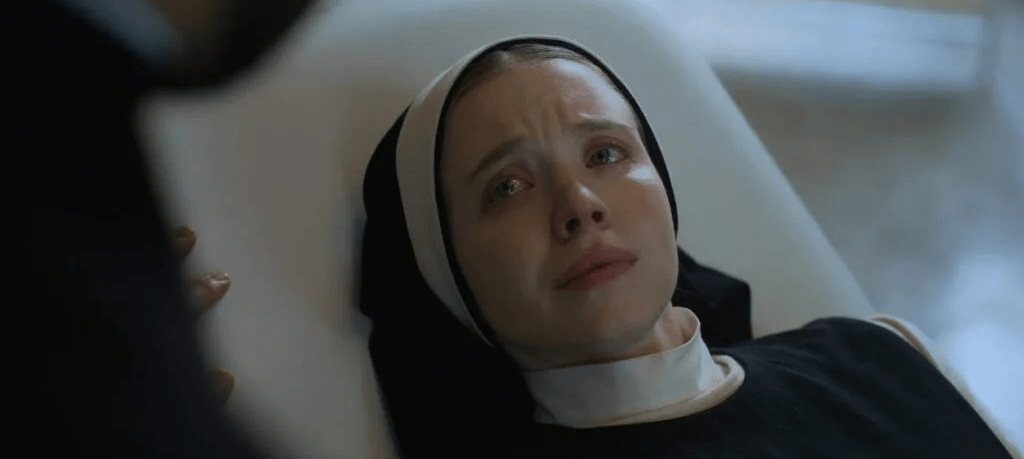
Immaculate – Review

Cert – 18, Run-time – 1 hour 29 minutes, Director – Michael Mohan

Shortly after arriving at an Italian convent Sister Cecelia (Sydney Sweeney) is revealed to be pregnant, could she be carrying the returning messiah?

The final stages of Immaculate fly by with a mixture of potential influences. The lashings of crimson blood of the Evil Dead franchise, the fervour of Rosemary’s Baby and the escape attempts of Get Out. All contained within a gory search for answers as Sydney Sweeney’s nun Sister Cecelia frantically searches for possible answers as to what is happening to her. She’s been pregnant for most of the run-time, labelled as a miracle, a case of immaculate conception, Other characters claim that she’s possibly carrying the second coming of Christ, but could that really be the case?

The build-up may seem somewhat slow at times, despite some effective jump scares hidden in the walls of the Italian convent which Cecelia has recently been welcomed into after her church in America was closed due to low attendance, but thankfully at 89-minutes the film knows how to get to the point. We might have to tick some familiar boxes here and there, but thankfully writer Andrew Lobel injects some jet black humour into the early proceedings. From the bluntness of disapproving Sister Isabelle (Giulia Heathfield Di Renzi) coldly showing Cecelia around the convent looking after aging nuns at the start of the film to the smirk given away during a key reveal before the third act kicks in there’s a consistent level of engagement throughout, and indeed one which consistently grows, as Cecelia attempts to find out whether there’s something more sinister behind her pregnancy.


Sweeney throws herself into the role, especially during the gorier scenes – while earning the 18 rating this isn’t a frequent blood-fest, allowing the instances of splatter to have more of an effect – and truly sells the confliction going on in her character’s mind, and the growing physical struggle. Her surroundings grow increasingly threatening with the narrative allowing for developments to come through with good pace without feeling rushed. Apparently a passion project for the lead this comes through in the effective closing shots, which may well go down as influential themselves; acting as the tense highlights of the film. Capping off a well-tracked sequence where things flow effortlessly from one moment to another.

It’s well worth the wait, and indeed some of the more conventional moments the film has to offer – Cecelia told that she can’t leave to go to a regular hospital, the doctor who visits the convent on most days is trained enough, and delivers babies on Thursdays and Saturdays. Luckily, with the short run-time and the way in which things grow and develop, as mentioned, the film generally goes by quickly. Not all the jump scares or attempts to escalate tension may properly land, but for the most part there’s still interest to be found in the film and Cecelia’s journey in the unfamiliar location. Give it time for things to properly kick in and as the developments grow so does the overall quality of the film.

While it might have its conventional beats and faltering jump scares Immaculate grows in a short space of time, flowing into a seamless, bloody finale, stormed through by Sydney Sweeney, which is more than worth the wait.

Rating: 3 out of 5.

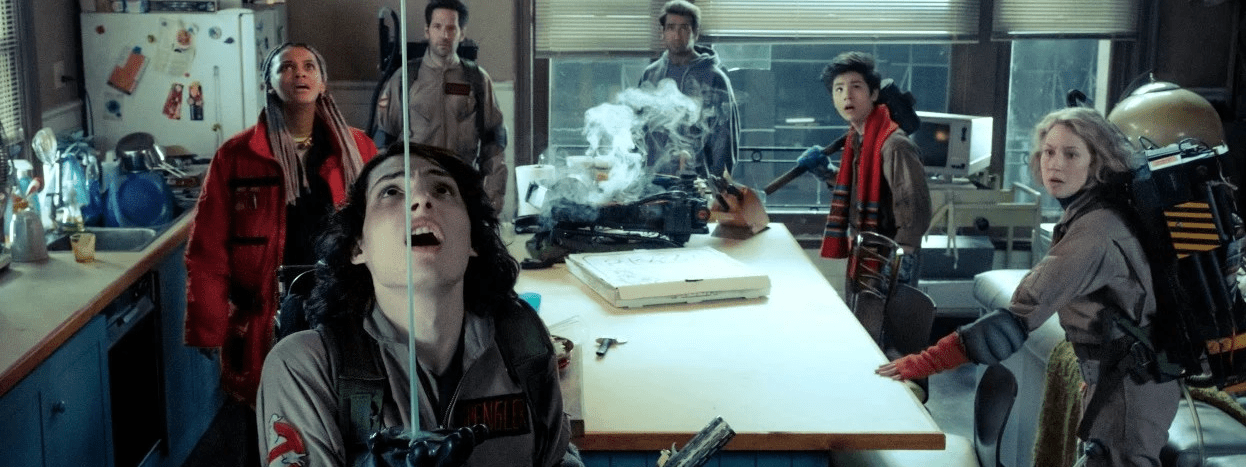
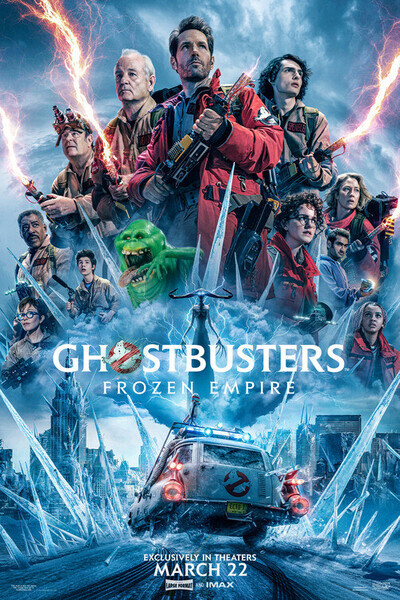
Ghostbusters: Frozen Empire – Review

Cert – 12, Run-time – 1 hour 55 minutes, Director- Gil Kenan

When an ancient ghost threatens to bring the world into a new ice age generations of Ghostbusters must team up to defeat it

The Ghostbusters have typically been a team of four, with, as with any classic quartet, a changing potential fifth member. Whether the classic faces or the new line-up we’ve typically seen a group of four taking on the central roles of ridding the world of haunting ghouls and lingering spirits. However, Frozen Empire both raises the stakes that any group has faced and the number of central Ghostbusters. Instead of four, or even eight, over ten characters come together to save the world.

As an ancient spirit threatens to escape its prison and plunge the world into a second ice age the stakes at hand are clearly those of a grand scale blockbuster. While the titular Frozen Empire doesn’t overly come into play until unexpectedly late into the film the build-up still causes it to feel like an idea perhaps too big for a Ghostbusters film, especially one that’s already trying to juggle as much as it is.

New hand Phoebe Spengler (Mckenna Grace) is wishing to be taken more seriously and allowed to go out and catch ghosts, despite the mayor of New York (William Atherton), and her family, saying she’s too young, and indeed with the Ghostbusters’ future constantly at threat. Meanwhile the rest of her family feel reduced to minor roles, while the old guard pop up for turns between not-quite-cameos (Bill Murray and Annie Potts) and small supporting roles (Dan Aykroyd and Ernie Hudson – who still deserves more screen-time).


Add in other faces from the previous film (Logan Kim’s Afterlife highlight Podcast has nowhere near the same push and therefore likability here) and new additions such as Patton Oswalt, James Acaster and Kumail Nanjiani and there’s a very busy film here. One moment of context ends on a line that writers Gil Kenan (also acting as director) and Jason Reitman appear to hope is cool before jumping into the next moment with a new character. It’s a pattern which frequently happens throughout this legacy sequel sequel and becomes rather tiresome the more the film goes on, jumping between faces without ever really expanding them, and in some case removing the personalities that we’ve seen before.

With so much going on between Phoebe’s strand and the various stages of investigation surrounding a threatening ancient artefact going on around her this is a very busy film, and yet shorter than the previous instalment. Perhaps things would feel less busy if they were allowed more time to grow instead of being wrapped in forced nostalgia, especially in the opening stages which feel almost cynically constructed to wring out joyous ‘memories’ of films past.

What’s lacking is the humour, and to some extent simplicity, that have made previous Ghostbusters films work so well, brought them their sense of fun. There’s so much plot crammed into Frozen Empire that there doesn’t seem to be room for fun, instead we’re meant to find joy in skits involving Finn Wolfhard trying to catch Slimer who has made a home in the firehouse attic, or the antics of mini Stay Puft Marshmallow men who are being treated like the Minions.

It all makes for something that, despite some glimmers and likable moments, feels tired and overstuffed. It leaves you wishing that it would get to the point and bring about its promises, in a more concise and enjoyable manner than something which simply finds ways to jump between a group of characters which is far too big for it to handle, particularly in the back and forth way in which it tries to do so. The feeling is of a film trying to be a huge blockbuster rather than a big budget comedy. And therefore the laughs rarely arrive and neither does the amusement or engagement with the characters. It might take a good while for the ice to properly arrive, but there’s a coldness to Frozen Empire long before it does.

With too many characters and forced attempts at nostalgia, Ghostbusters: Frozen Empire is an overstuffed, occasionally cold, blockbuster aiming for spectacle over comedy, faltering under its ideas and ultimately lacking in humour

Rating: 2 out of 5.

Drive-Away Dolls – Review

Cert – 15, Run-time – 1 hour 24 minutes, Director – Ethan Coen

Escaping their lives for a road trip to Tallahassee, friends Jamie (Margaret Qualley) and Marian (Geraldine Viswanathan) are mistakenly given a car containing criminal belongings.

With the Coen Brothers having gone their separate ways, although it seems only briefly with a horror project seemingly in the line, it was revealed that Joel brought the John Lennon darkness (as seen in The Tragedy Of Macbeth) while Ethan brought Paul McCartney’s impish whimsy. The latter brother’s Drive-Away Dolls is reminiscent of the comedies the pair released throughout the 2000s, even bringing in certain stylings that call back to the films of that time.

Set in 1999 we follow the “modern 20th, soon-to-be-21st, century lesbian” friendship of Jamie (Margaret Qualley) and Marian (Geraldine Viswanathan) as they need to escape their lives and take an impromptu trip down to Tallahassee. However, while one wants to stop and see the sights of the lesbian bars along the way the other simply wants to get to the destination in their drive-away car by the agreed-upon next day. The reason for that date? Unknown to them, the car holds a briefcase containing mysterious criminal belongings meant to be delivered by a group (led by Colman Domingo, overseeing Joey Slotnick and CJ Wilson’s amusing, bickering goons) coincidentally scheduled to also go to Tallahassee.


As each party is setting out on the road the cuts between each one feel as if they’re trying to lead the film’s tone. Cartoonish sound effects mixed with edits that feel like someone just discovering the animation tab on PowerPoint bring a jolt finish to a number of very brief scenes – bringing to mind questions of why certain moments were even included in the first place. The way that the strands play out it feels at times as if we’re seeing two short films, the same events from different perspectives almost, with Jamie and Marian’s story in particular feeling as if it would actually make quite an enjoyable short. The gags may be somewhat hit or miss, with the hits largely gaining a mild exhale of amusement, but there are still some good ones here and there – and as a comedy this thankfully sticks to under 90 minutes.

As things develop and the two stories begin to interact more, and feel more direct as the flashy cuts are toned down and made less frequent, things begin to feel more a whole. There’s a better overall pacing, and more likably nature to the events as they pan out. Qualley and Viswanathan are certainly enjoyable in their roles and help to bring out some of the funnier moments in a narrative with some increasingly bizarre twists and details, it just never feels as if the film has the fast pace it perhaps needs to keep up with them and the more dialled-up caper it’s perhaps going for but never quite reaches despite its efforts.

Instead what we have is a somewhat bumpy ride, but one that gets smoother as it goes on. There are some enjoyable moments and an overall likable nature to Drive-Away Dolls but it feels as if it never fully embraces itself or what it’s offering leading to a number of scenes feeling like very brief filler for two related short films preventing the feature from reaching the pace it seems to be aiming for to match the absurdity of certain situations it brings up as part of its narrative. But, overall there’s enough within Ethan Coen’s solo directorial effort – co-written with wife, and editor, Tricia Cooke – to make for a road trip which manages to get itself from A to B with a couple of stops along the way.

While it might not be as fast paced it perhaps wants to be when Drive-Away Dolls clicks and works there’s enough to like and be amused by the help things along, particularly as things come together more and prevent brief scenes of filler.

Rating: 3 out of 5.

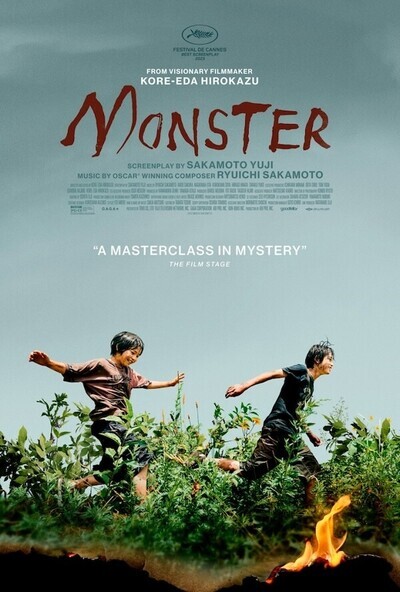
Monster – Review

Release Date – 15th March 2024 Cert – 12, Run-time – 2 hours 7 minutes, Director – Hirokazu Kore-eda

When her son (Soya Kurokawa) begins to hold himself back, single mother (Sakura Ando) demands answers from his school, where he claims a teacher (Eita Nagayama) is abusing him.

We’ve already witnessed about half of the ambiguous drama that director Hirokazu Kore-eda’s latest has to offer when one of the most key lines is uttered. “What really happened doesn’t matter” says headteacher Fushimi (Yūko Tanaka) to accused teacher Mr Hori (Eita Nagayama). She wants to protect her school, and perhaps her own reputation, in the wake of claims that the fifth grade teacher has been abusing one of his students – both verbally and physically. Yet, the question lingers as to if this is really the case, what is truly going on?

Minato’s (Soya Kurokawa) single mother, Saori (Sakura Ando), believes her son’s eventual reasoning behind his scars, bruises and increasingly quiet and held off behaviour, finding herself in frequent meetings with the school arguing this case. However, she’s constantly met with downplaying from the school and a lack of action. The hesitancy from those also in the meeting – insisting that there’s been a misunderstanding of instruction from the child – brings about thoughts of Thomas Vinterberg’s The Hunt. While not holding the same overall sinister tone, the ambiguity which runs throughout creates a fascinating thread of confliction, particularly when we see events from different perspectives while still allowing for consistent uncertainty.


Helped by fantastic performances from Ando and Nagayama the film gets across the point that anyone could be, and perhaps everyone is, hiding something. Preventing the truth from getting out for their own reasons. Even as things grow and we learn more detail there’s something else to question around each corner. Brilliantly tracked by Kore-eda and writer Yūji Sakamoto suspense creeps its way in as Minato’s behaviour grows stranger after he’s found wandering around a tunnel at night, before throwing himself out of a moving car claiming that he has a pig’s brain in his head. He’s at the fore of the conversation and we’re reminded that his words are the reason many of the discussions and meetings are happening, and yet there’s a seemingly personal angle and effect for everyone involved.

As Saori becomes more desperate to see her son happy again you feel the love that she has for him, the pain that she feels seeing him like this. Yet, as we shift perspectives the coin flip to wondering what if Hori is innocent, what if he’s going to lose his career and that around him for something he didn’t do, comes into almost instant effect. Everything gels together to continue the threads without starting over and creates a drama full of intrigue and mystery. It’s only as we get to the third act that things somewhat move away. While ambiguity is still present it feels as if some threads aren’t quite picked up, some intentionally so, and therefore leave the film more open ended than it perhaps wants to be.

While what we see panning out still works and provides a good deal to engage with, especially in relation to the 90 minutes or so we’ve seen beforehand, however there feels like less of a push the more we see from this stage onwards. A large part of this likely because of the ideas and ends which aren’t brought back up and are left on their own in the moments they help construct. Yet, as perspectives come together and start to work alongside each other instead of against for layers of ambiguity there’s still a good deal to like, and suspense takes a new form as the narrative starts to twist and reveal its true colours.

While it might slightly move away from its initial suspense and ambiguity in a third act which leaves one or two points unanswered, Monster is a strong drama led by its layered mysteries and performances.

Rating: 4 out of 5.

Oscars 2024 – What I’d Vote For

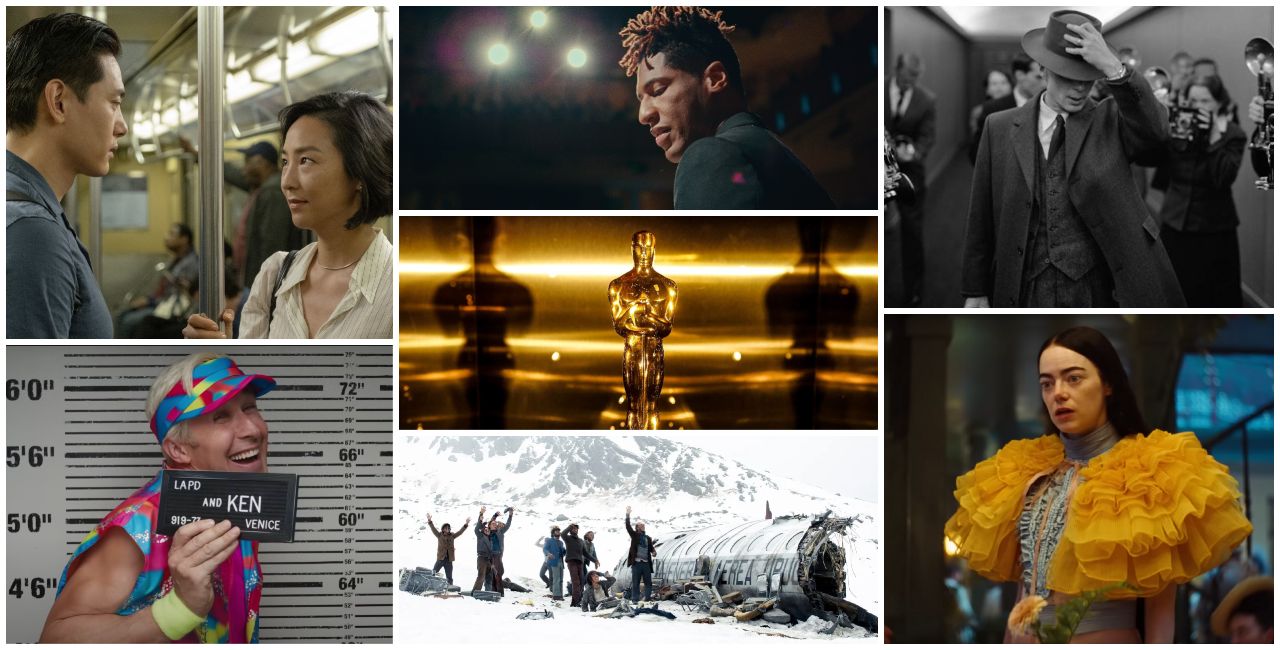
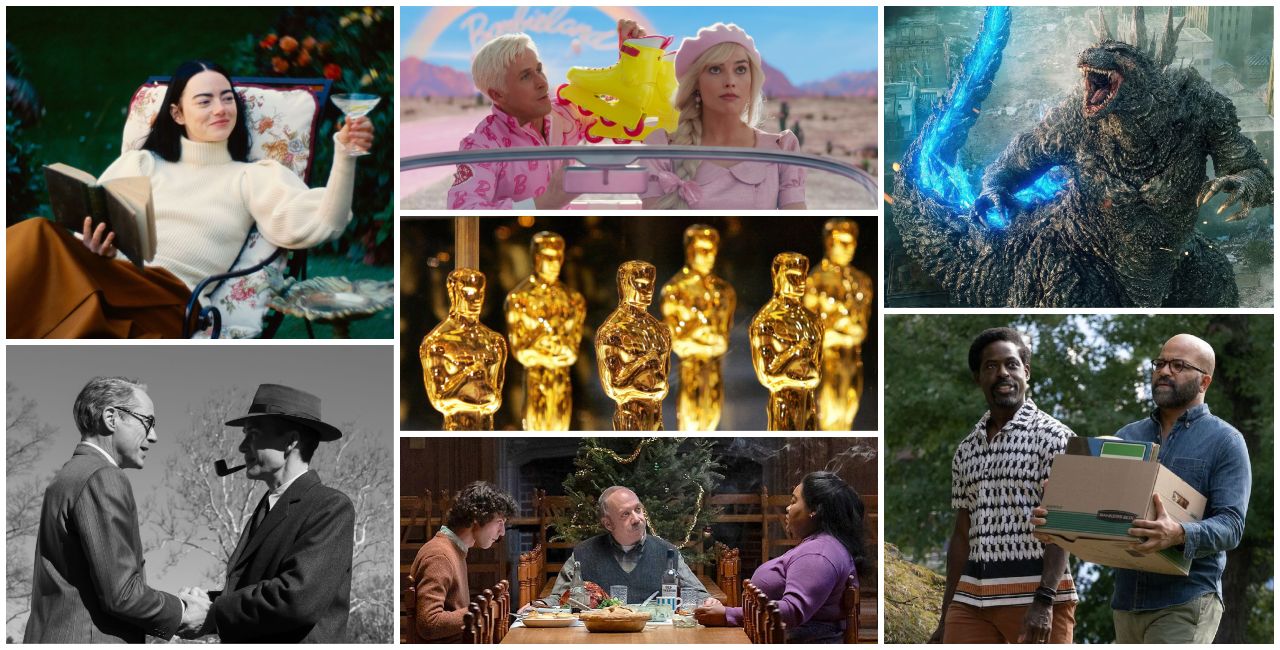
As we approach the 96th Academy Awards, and with my own predictions now in place (at least as they stood at time of writing them), now arrives my personal picks from the nominees in each category. In some cases, again, probably picking the favourite to win and in others going for what many view as the complete outsider, here is who I would vote amongst this year’s Oscar nominees.

Best Cinematography – Oppenheimer
There’s something about the look/s of Oppenheimer and the way they slightly shift depending on when we are, and what’s happening, that adds to the haunting nature of the story at hand, particularly when it comes to the fear and regret faced by Cillian Murphy’s titular scientist in the closed hearing segments of the film. I also think that it generally looks great, particularly when capturing the landscapes of and surrounding Los Alamos.

Best Costume Design – Poor Things
There’s a lot going on when it comes to the costumes in Poor Things. In this case it possibly is the case of ‘most’ costume design when it comes to just how big some of them become, but they, alongside the detail of the hair and makeup, help to emphasise the different worlds that Emma Stone’s Bella Baxter finds herself in, and indeed how she sticks out from the lavish looks and styles of the upper classes that she sometimes finds herself surrounded by. Again, there’s a lot going on when it comes to the detail of the various costumes donned throughout Poor Things and what they add to the surreal world which we explore alongside Bella.

Best Makeup And Hairstyling – Poor Things
As with the costume design, there’s a lot within the hair and makeup of Poor Things that adds to the otherwordly nature of the places which Bella ventures through. Yet, while the prominent elements are seen on the likes of Willem Dafoe’s character there are a good number of more subtle elements on those who surround her or accompany her on her journey. The polished looks of more well-to-do characters, or how Mark Ruffalo becomes increasingly dishevelled the more he loses control or how Bella appears as she develops.

Best Production Design – Oppenheimer
2023 was a brilliant year when it came to production design and the way that films looked thanks to their sets and props. There were plenty of films that could have easily been a part of this line-up, Asteroid City just to name one prominent contender, but there’s no denying the strength of this line-up. From surreal landscapes which we explore for the first time alongside the characters to grand palaces and full scale Dream Houses and Mojo Dojo Casa Houses there were so many films that felt so lived in and unique because of the production design which helped to build the worlds. Yet, for me Oppenheimer would just take this award simply because of the detail which goes into the various rooms and environments we find ourselves in. The way in which Los Alamos comes across in particular and the design of each room feels full of attention to detail which just makes the experience even more immersive when it comes to how the drama plays out, and the way in which characters remember events and details. It feels like possibly the outside contender amongst the nominees, but for me it’s the strongest for just what it manages to do with its spaces and making each one feel fully used and detailed.

Best Sound – Oppenheimer
So much about what contributes to the escalating tension, and fear factor, of Oppenheimer is the way in which it mixes and layers sounds at a number of key moments. The build-up to the Trinity test wouldn’t be the same if it wasn’t for the way in which sounds grow and swell over time, it all adds to the atmosphere which the film successfully creates and, much like I mentioned with the production design, is about the attention to detail which helps to ramp this up further. Balancing a number of clear individual elements to support each other to work together to create a further effective soundscape for the film.

Best Visual Effects – The Creator
This choice isn’t even necessarily about the cost it took to make The Creator, it’s simply the fact that its visuals look as good as they do. While the visual effects help to create an interesting dystopian world what really sells it is how much you buy into the AI characters of all kinds, and indeed the mechanical weapons used throughout – the bomb robots running across the bridge feel authentic, you buy into them because of how real they look, thanks to the effort put into creating them by the visual effects team. Yes, it feels like even more of an achievement because of the lower budget compared to most films of this nature, but in general they are the best visuals in this category.

Best Original Song – It Never Went Away from American Symphony
I was fully ready to go for the joyous anthem that is I’m Just Ken until, while making my way through this year’s Best Original Song nominees, I listened to this particular track. What makes it stand out is just how heartfelt it is, and that’s simply where the punch of it comes from. I’m not going to confess to be able to talk about music (even while trying to expand my listening beyond largely Billy Joel over the last couple of months I still find myself not fully able to explain why or why not I did or didn’t like a track or album), so I’ll simply say that the couple of times I’ve listened to It Never Went Away it’s simply struck me because of the personal passion that’s clearly gone into it. Even without having seen American Symphony when first listening you can tell the personal nature of the song for Jon Batiste. I just think it’s the best song out of the five.

Best Original Score – Poor Things
Like with Best Original Song I was fully ready to say if I was an Academy member I’d vote for another film in this category until in this case revisiting Poor Things. There’s no denying how great Ludwig Göransson’s score is for Oppenheimer, especially in complimenting the film in its build-up of tension at key moments. However, for me the Poor Things score just has the edge. Again, it helps to compliment and work alongside the film to flesh out what’s happening on screen, but it also seems to grow and develop alongside the film’s central character. Also capturing the surreal nature of the world on-screen it feels unique and detailed and I was reminded of just how great I think Jerskin Frendrix’s score for it is.

Best Film Editing – Oppenheimer
With just how much goes on in Oppenheimer, all the jumping around it does between perspectives and times, the fact it’s as easy to follow and compelling as it is, trusts the audience to follow and doesn’t feel as if it’s three hours feels like something of a feat. Helped by the quick pacing (and yes the use of black and white, which isn’t itself down to the editing) it grips you and keeps you in place – even on re-watches – with key sequences building up fear and suspense without ever feeling like montages just for the sake of moving things along. It’s a brilliantly edited film.

Best Documentary Feature – 20 Days In Mariupol
If I had seen this last year it would have absolutely been in my top ten of the year – it might have even been my number one. A deeply harrowing film but one which pulls of the remarkable feat of capturing defiance and hopelessness in equal measure while never itself feeling hopeless. 20 Days In Mariupol is a fantastic, vital piece of work that also manages to highlight the bravery of the journalists capturing the increasingly tragic, shocking and crushing footage over the course of 20 days of growing pain and sorrow. An incomparable piece of work.

Best International Feature – Society Of The Snow
Due to UK release dates I’ve only been able to see two of the nominees in this category, so it’s not exactly the fairest (even if unimpactful, for reasons of not being real) ‘vote’. Having not loved The Zone Of Interest as much as many others have, although liking/ admiring it more on a re-watch, Society Of The Snow has some truly effective moments of struggle in the face of tragedy and uncertainty in trying to survive the seemingly impossible. Each loss and pushback is felt, emphasised by the should-have-been-nominated cinematography (with a landscape dominated by snowy cliffs the film still manages to look great), this is an effective and well done survival tale.

Best Animated Feature – Spider-Man: Across The Spider-Verse
Just as bold and creative as the first film, if not more so. There’s so much imagination on screen when it comes to not just the different universes we’re thrown into, and across, but also the different characters we see – not to mention the range of animation styles, too. The story moves along effectively and there’s a good deal to enjoy about what’s on display in terms of the style, the action and indeed the humour. Like the first film, I may not have loved this as much as many other people have, although I also think this is better than Into The Spider-Verse; but it’s still a great film. One that really sets things up for an exciting third entry while still allowing its own story to move along quickly and with plenty of detail.

Best Original Screenplay – Past Lives
So much about what works with Past Lives is what characters don’t, or can’t, say rather than what they do. The things they hold back and keep to themselves for an inability to say the words, or fear of what might happen to them and the other person. While this is partly down to the performances and Celine Song’s excellent direction this also comes down to Song’s wonderful screenplay. Capturing quiet, relatable nuances of everyday thought and conversation in the wisdom which explores themes of home, belonging and, of course, the ghosts of our past lives. It’s all so subtly contained in a smartly written screenplay which flows with natural events and dialogue.

Best Adapted Screenplay – Oppenheimer
Not just for how much detail it manages to get in without feeling overstuffed, but also for just how well written a number of scenes are. There are a number of quotes which after viewings have echoed around my head as strong summaries of the themes and ideas that the film keeps close – Emily Blunt’s Kitty saying to her husband “you don’t get to commit the sin and have us all feel sorry for you when it has consequences” being a key one since first viewing. There’s so much detail in the dialogue and the way that it manages to construct the worries of the characters, and the conflict which a number of them face – especially when it comes to the clash between Oppenheimer and Robert Downey Jr’s Lewis Strauss, and Oppenheimer’s questioning.

Best Supporting Actor – Ryan Gosling in Barbie
As many have stated over the past few months since Barbie’s initial release, Ryan Gosling absolutely steals the show as the himbo who “only has a good day if Barbie looks at him”. Gosling makes it clear in his performance that not only his is character and his vanity the butt of the joke on a number of occasions but that, more importantly, he is a supporting character. That Margot Robbie as Barbie is the core element of this film and the story is about her, and he in no way tries to overshadow that as Ken, instead throwing himself into a wonderful comedic performance which pushes the satire of someone discovering patriarchy and horses. All while on his way to learning that he is Kenough. It was one of the best performances of last year, and an excellent comedic performance at that.

Best Supporting Actress – Da’Vine Joy Randolph in The Holdovers
In The Holdovers Da’Vine Joy Randolph provides such a wonderful portrayal of someone lost in grief. Acting as the midpoint between Paul Giamatti’s emotionally restrained teacher and Dominic Sessa’s student who struggles to contain and control his emotions, Randolph conveys so much understated feeling in her looks and facial expressions throughout. You feel the weight of grief which holds her down throughout the film, and the brief breaks she gets during the Christmas sequences – particularly as she gets to deliver some of the quickest moments of humour in the film with her reactions to Giamatti’s attempts to help make the season at least slightly better for the pair he’s spending it with. Randolph steals the show with her excellent performance which acts as the emotional heart of The Holdovers and the ways in which its characters develop and understand their feelings and mindsets throughout.

Best Leading Actor – Cillian Murphy in Oppenheimer
I could argue for any performance in this category winning, and could gladly vote for any of them without any trouble – they’re all brilliant, and as I’ve mentioned elsewhere, this is one of the strongest Oscar categories in years. But, for me, Cillian Murphy’s haunted portrayal of regret would get my vote. Oppenheimer is a film which asks ‘how do you cope with having become death, destroyer of worlds’? Murphy’s performance carries the weight of that moral question increasingly as the film goes on. The nightmares and regret which wash over his face as he goes through questioning contrast with the fascination he has with science and what can be done with it as he leads the creation of the atom bomb. Over time you see him grow through a range of emotions as worry turns to fear and eventually regret and self blame. All of which are restrained and allowed to naturally develop and grow over the course of the film. With so many close-ups on his face a strong performance is needed, and Murphy gives just that, sells it and then some. Part of why the film has such a haunting nature, and the final shots are so effective, is because of his performance as everything from the last three hours washes across his face.

Best Leading Actress – Emma Stone in Poor Things
Perhaps my favourite thing about Poor Things is the way the narrative is led by the development, maturing and mental growth of its central character as she embarks on a journey of many discoveries, both about herself and the world/s around her. Emma Stone sells this in her performance as you buy into Bella Baxter from when we first meet her to the final shot which perfectly demonstrates the journey that she’s been on, and the change that she’s gone through both physically and mentally. From staggering around making slurred animal noises to speaking complete, intelligently thought out sentences – with the odd “I must go punch that baby” in-between – Bella is a rather remarkable character developing “at an accelerated pace” yet one that we still manage to witness the details and natural shifts in as she strides through events with confidence and determination in herself, not allowing anyone to get in her way – in the case of Mark Ruffalo by not really giving him a second, or at times first, thought. All of which is excellently captured by Stone in what I think is her best performance to date with equal confidence, and joy of growth and freedom.

Best Director – Christopher Nolan for Oppenheimer
Nolan has made a complex adult drama with plenty of moral questions on a big studio budget and used that money to great success. Crafting a tense piece of work that strays away from being a standard biopic to instead play with themes of dread, regret and indeed point at the current state of the world in the final stages. There’s a grand scale to scenes of men sat in rooms talking about science; cinematic conversations which held to increase the suspense via the stakes at hand. Much of which is down to the highly cinematic way in which Nolan views and captures each instance to truly get the most drama out of each moment and interaction. The specificity of the technical elements and the performances come together under his direction and it all comes together seamlessly.

Best Picture
Due to the fact that Best Picture is voted for via preferential ballot I’ll list what mine would look like below (from best to least best) with my thoughts on my number one pick below.

1. Oppenheimer
2. Past Lives
3. Poor Things
4. Barbie
5. The Holdovers
6. Killers Of The Flower Moon
7. American Fiction
8. Anatomy Of A Fall
9. Maestro
10. The Zone Of Interest

Oppenheimer was, for me, the best film of 2023, so of course it makes the top of my preferential ballot. I’ve repeated myself enough times already in this piece as to why I love it, but just one more time; it’s an excellently constructed adult drama. Straying away from standard biopic it focuses on Oppenheimer’s regrets, asking how you cope with having created the atom bomb, especially in the wake of its use. Suspense, fear, tension and worry play into so many scenes – even when we know how they play out, whether because of re-watches or because history tells us what the case is – and are brought about by each confident element of the film working in unison to create a grand scale, gripping drama that does more than trust its audience as it jumps straight into its proceedings from the opening frames.

Oscar Predictions 2024

While it seems that one film might be ready to sweep a number of categories at this year’s Oscars there are a good deal of races which seem very close. An almost unpredictable race certainly brings about a bit of excitement to the sometimes predictable nature of awards season, and certainly there appear to be a handful of Oscar races this year which could go either of two, or three, ways.

And so, here arrives my annual category-by-category run down of what I think is going to win at this year’s Academy Awards. Trying to give some form of reason as to why and on some occasions double-guessing myself multiple times in the middle of an explanation, particularly for the very close races. But, without any more build-up here are my predictions for what will win at the 96th Academy Awards.

Best Cinematography – Oppenheimer
Killers Of The Flower Moon could pull off a win here, there are a number of standout shots in it particularly during the grander dramatic sequences and this category has been known to throw out the odd surprise here and there, but it feels as if this race has been firmly Oppenheimer’s for a good while. The way in which the visual detail of the film changes depending on what time we’re in, and where, alongside the shifts between black-and-white and colour appear to be leading factors for voters picking this film here. The noticeable details in a category about the visual look and style of films.

Best Costume Design – Poor Things
As I’ve mentioned in previous years, when it comes to the technical categories the way to predict them is to sometimes look for the ‘most’ of something instead of the ‘best’. While Barbie could earn a win here for its various adaptations of Barbie doll clothing and styles the Academy has never really leaned towards contemporary clothing in this category – hence why period dramas tend to do so well here. Poor Things has some of the grandest, and biggest, costumes on display in this category. Add that to the otherwordly nature that it can occasionally have, and the variety we see in the various places that central character Bella visits, and it certainly has the most prominent and eye-catching costume design for voters to draw towards.

Best Makeup And Hairstyling – Poor Things
The winners of Costume Design and Makeup And Hairstyling can often line up because of the mixed nature of the prominent visual detail and noticeable transformations which helps to aid performances. With this latter point in mind Maestro could win here due to the nature of Bradley Cooper’s performance and how much he inhabits Leonard Bernstein in his performance. Yet, with him not looking to win Leading Actor – as Brendan Fraser did last year with an adjacent win for The Whale in this category – Poor Things, with the features that it adds to its actors and the variety of faces we see, particularly the likes of Willem Dafoe, seems set to take this one home.

Best Production Design – Poor Things
Barbie could very easily pick up a win here for the way that it makes life size sets of Barbie’s Dream House (or Ken’s Mojo Dojo Casa House), but Poor Things, again, has that otherwordly feel. The false look of the landscapes that Bella visits and learns from are a key detail of the film as she explores the world around her and grows alongside it. The world is a strange and new place to her, and the production design helps to push and expand this for both her and the viewer. This is one of a number of close, almost coin-toss, races this year, but Poor Things feels like it has that style which Academy voters are more likely to lean towards.

Best Sound – Oppenheimer
This is another race where it seems like Oppenheimer has been the fixed winner for quite some time. The Zone Of Interest could pull an ‘upset’ due to how integral the sound design is to that film and its atmosphere of unseen horror. Particularly with the acclaim that film has had, and its potential Best Picture chances, it’s not out of the question that such a key detail is awarded with a win here. However, Oppenheimer’s sound, mixed with its score, the escalation to the trinity test and key moments of overlapping noise in flashback and haunting for the titular character all bring about the attention to detail there is in the sound design. While this seems like little reasoning compared to The Zone Of Interest, and it absolutely is, I’m pretty certain Oppenheimer’s winning this race.

Best Visual Effects – Godzilla Minus One
For so long I was predicting The Creator in this category, and while it won Outstanding Visual Effects In A Photoreal Picture at the Visual Effects Society Awards it’s general reception, and the nature of wider Academy votership may not reflect this. There’s a lot of love for Godzilla Minus One and sometimes quality of a film is taken into account here, meaning that to award the film Godzilla may end up taking the award here, and perhaps more voters may have seen this over The Creator – although both films don’t have any nominations in other categories, and the general presumption should be that voters have watched all films, and voted in all categories. While The Creator could very easily slip in in one of the closest races of this year’s Oscars (alongside that for Leading Actress), I think that (at time of writing) Godzilla Minus One could just slip in here, particularly with what it pulls off with a low budget, even lower than that of The Creator’s which was already lower than what a number of films use to pull what it does off.

Best Original Song – What Was I Made For? from Barbie
This is another category where I’ve changed my mind in the final days before the ceremony. For a good while I was set on the other contender from Barbie in this category, I’m Just Ken, winning this award. The way in which it became a cultural point and people seemed to almost obsess over it, the role it plays in the film – and Ryan Gosling in that moment, of course with his Best Supporting Actor nomination – it felt as if in a world where the infectious joy and energy of Naatu Naatu could win Best Original Song then I’m Just Ken could do just that as well. But, after winning in various other places, not just at major music awards ceremonies, it feels as if Billie Eilish and Finneas O’Connell, who also already have favour with the Academy after winning in this category for their Bond theme No Time To Die, are on their way to their second Oscars in just a couple of years.

Best Original Score – Oppenheimer
I think that had Spider-Man: Across The Spider-Verse been present in this category then there would have been a more competitive field here, but in the end the award may well have still gone to Oppenheimer. Oppenheimer’s score is perhaps one of the most praised of the year, and not just for the way in which it compliments the film and helps to build up the tension and drama on many occasions. Having previously won for his first nomination in this category for Black Panther it seems that Ludwig Göransson is firmly on his way to his second win.

Best Film Editing – Oppenheimer
There’s a case to be made for a win for each the films here – although primarily Oppenheimer, Killers Of The Flower Moon and Anatomy Of A Fall. In the case of Killers Of The Flower Moon the almost three-and-a-half hour run-time packed with character and narrative detail is eased along thanks to long-time Scorsese editor Thelma Schoonmaker, while for Anatomy Of A Fall, like with the screenplay, so much of the ambiguity of that film could be said to be held in the editing. The latter in this case could be a quiet contender and sneak up on a win. However, this simply seems like another certain win for Oppenheimer thanks to the way that it jumps through time, shows events from different perspectives while still being able to be clear as to where and when you are in time at each point. Again, generally the potentially lengthy run-time has breezed by for many people and the film seems to be almost locked in for another technical win.

Best Documentary Short –  Nai Nai and Wài Pó
The race for this category seems close between Nai Nai and Wài Pó and The Last Repair Shop – with some also predicting a win for The ABCs Of Book Banning. In terms of what appears to have stirred the emotions Nai Nai and Wài Pó appears to have had an effectively heartwarming nature that may well reflect in Academy members votes.

Best Live Action Short – The Wonderful Story Of Henry Sugar
I believe that out of everything he’s done this might be Wes Anderson’s most ‘West Anderson’ work to date. Jackanory with a budget, The Wonderful Story Of Henry Sugar has the writer-director’s recognisable name and the backing of Netflix. It’s perhaps the title in this category that the most voters will have seen and heard of. It may also be seen as a chance to give Anderson an Oscar – something I’d love to see him get, but perhaps not for this particular work which while fine I don’t think is near his best. There is the potential for an upset here though, and to some extent I wouldn’t be surprised if this particular short didn’t win, as in this category in particular the Academy does like to lean towards newer, rising talent than established figures already prominently working in the film industry.

Best Animated Short – War Is Over! Inspired By The Music Of John And Yoko
As with most years, I’m least confident in my short film predictions largely due to the fact that I usually miss out on the nominees, despite needing to rectify this every year. Like with Best Documentary Short this seems to be a close race, but appears to be leaning towards the short that may well stir emotions the most. War Is Over appears to be that short with its anti-war message, and to some extent recognisable nature with its title and backing.

Best Documentary Feature – 20 Days In Mariupol
One of, if not the, most harrowing, unflinching, essential films in years – there’s no doubt that this is winning here, and rightfully so. This isn’t to slight the other nominees in this category which have also had a good deal of praise – Bobi Wine: The People’s President is particularly good – but 20 Days In Mariupol stands out from the crowd for the true power that it has, putting it on almost another level of filmmaking and bravery in the face of fear and tragedy. A more than deserved win.

Best International Feature – The Zone Of Interest
It’s nominated for Best Picture, and is potentially one of the frontrunners in that category, too. I’d be interested to see how this race would have panned out had France submitted Anatomy Of A Fall instead of The Taste Of Things.

Best Animated Feature – Spider-Man: Across The Spider-Verse
For many this race is between Spider-Verse and The Boy And The Heron. After winning at the PGA and Annie awards I would say that Spider-Verse just has the edge. Plus, while there’s plenty of love for The Boy And The Heron, Hayao Miyazaki and Studio Ghibli – who haven’t won an Oscar since Spirited Away over 20 years ago – there might have been or two responses to the film not quite on the same level as that of Spider-Verse but overall it has a good chance, and even won at BAFTA. Plus, Spider-Verse may suffer from being a sequel not long after the first film, and a film that leaves on a cliffhanger building up to a third instalment. But, in this category that may not be too much of a barrier, especially when it comes to a film as acclaimed as Spider-Verse, which some were talking about as a potential contender in the likes of Original Score, and there was a hopeful Best Picture campaign.

Best Original Screenplay – The Holdovers
This is another category where Anatomy Of A Fall could easily pick up a win. It’s widely predicted by many get the award here, and, again, its ambiguity throughout could help it along – plus, the Academy loves a detailed drama such as this, and a good deal of the action unfolds in a courtroom. However, I’ve thought for a little while that The Holdovers may well prevail in the Original Screenplay race. Like Anatomy Of A Fall it’s another quite traditional screenplay that voters like to lean towards – as they still have done so in recent years with the likes of Green Book and Belfast – and the warmth and gradual openness of the characters could reflect in the dialogue and detail of the screenplay. This could go either way, but I personally think that The Holdovers just has the edge.

Best Adapted Screenplay – American Fiction
I’ve been certain for weeks, pretty much since the nominations, that Barbie was going to pick up a win here. While it campaigned in Original the choice was made by the Academy that the screenplay was Adapted due to being based on existing IP. This category change may well have helped it, and as I say I thought it was going to ease into a win. However, as the weeks have gone on it almost seems as if Barbie has somewhat fallen out of this race alongside that of Best Picture, where it wasn’t really a frontrunner but still a prominent nominee. However, as Barbie has slightly fallen Oppenheimer has risen in the race, and American Fiction even more so. American Fiction has been particularly praised for its screenplay and the satire amongst the frank conversations which take place regarding family and politics. After a somewhat unexpected win at BAFTA and a gradual increase in momentum it may very well pick up the award at the Oscars too – although there’s now also something about this category which feels as if it’s potentially open to any winner, although perhaps not The Zone Of Interest.

Best Supporting Actor – Robert Downey Jr in Oppenheimer
He’s won pretty much every major award for his performance in this film and in some people’s eyes has been the frontrunner since the film was released, at least since awards season started to properly take shape. There’s an interesting case to be made for a potential win for Robert De Niro in Killers Of The Flower Moon (while Ryan Gosling is great in Barbie comedic performances never really get recognition via wins so it seems like he’s just a step away from the win, although still possibly with a good chance) this feels like a certain lock in for Downey Jr, with the edge of both a great performance and, as a number of predictions have pointed out, an element of career recognition too.

Best Supporting Actress – Da’Vine Joy Randolph in The Holdovers
As awards season as panned out one of the faces who has risen on the scene at various ceremonies is Da’Vine Joy Randolph thanks to multiple wins for her brilliant turn in The Holdovers. While initially her win at the Oscars seemed likely it’s only become more and more certain with each new prize she’s won over the last couple of months, and each one very much deserved. Plus, she very much stands out from the rest of the pack in this category.

Best Leading Actor – Cillian Murphy in Oppenheimer
The first thing that needs to be said, and I’m sure I’ll say this again when it comes to what I’d vote for at this year’s Oscars, is that this is a fantastic category. Each performance is genuinely excellent and this might be one of the strongest line-ups for a good few years. In any other year there’s a chance that each one could win if on their own. However, like with the Supporting acting categories Leading Actor has seemingly become more and more certain with each new awards show. There’s a case to be made that Paul Giamatti could pick up a win thanks to the wide ranging face of the Academy membership, but due to winning a number of key major awards Cillian Murphy appears to have connected just that little bit more with potential voters and seems to just have the edge over Giamatti for his haunting, and haunted, performance in Oppenheimer.

Best Leading Actress – Lily Gladstone in Killers Of The Flower Moon
To repeat what most people have said many times by now, while there are a number of close races at this year’s Oscars this is perhaps the closest. Throughout awards season the race has been firmly pitched as being between Lily Gladstone in Killers Of The Flower Moon and previous-winner Emma Stone in Poor Things. Two very different performances and yet two which have been acclaimed for leading the key details and courses of the films that they feature in. Gladstone wasn’t present in this category at the BAFTAs, although those nominations are come up with via a mix of votes and juries, where Stone won, however she did win the SAG award – with the Actors branch making up the biggest percentage of Academy votership. Gladstone also has her story of being the first Native American to be nominated for the Best Actress Oscar, and having been close to quitting acting before being cast in Killers Of The Flower Moon. The attention has firmly been on her throughout awards season, and even before it when the film was first released and she has clearly found a place in people’s minds. For this reason, alongside her great performance – which has benefitted from being put in Lead instead of Supporting as some people have stated should be the case – I think that she just has the edge in this race.

Best Director – Christopher Nolan for Oppenheimer
The full name of this category is Achievement In Directing, and Oppenheimer certainly demonstrates the kind of achievement that the Academy tend to award. Not just because of how likely it seems to win a number of awards at this year’s ceremony or how praised it was, but simply because of what it does and how well it manages to combine its various elements. Yes, there could be an element of career recognition for Nolan here, but as a whole it feels like Oppenheimer pulls something off that ticks a number of boxes for the Academy when it comes to the scale and nature of its drama. Add to that, again, all the other awards that Nolan has won this year – including the DGA’s top honour, although Sam Mendes won that a couple of years ago for his work on 1917 and the Oscar went to Bong Joon-ho for Parasite – and the fact that he seems to stand out from the rest of the nominees, this appears to be another certain win for Oppenheimer.

Best Picture – Oppenheimer
After winning at every major guild awards ceremony and looking to pick up a good deal of statues on Oscar night, Oppenheimer is the clear frontrunner for this year’s Best Picture Oscar. The praise for it only seems to have grown over the last few weeks and it looks likely to not run out just before the ceremony. While The Holdovers and The Zone Of Interest might find favour on the preferential ballot, being consistently liked and perhaps having that reflected in high-ranking placements, it still seems that Oppenheimer will triumph over them and its other fellow nominees. Expect it to have strong success on Oscar night, ending with it obtaining the Best Picture award at the end of the night.

To read my overly rambling look at the chances of each Best Picture nominee winning the top award on Oscar night you can read my annual What Will Win Best Picture? piece here.

Imaginary – Review

Cert – 15, Run-time – 1 hour 44 minutes, Director – Jeff Wadlow

Writer and illustrator Jessica (DeWanda Wise) gets inspiration from her youngest step-daughter Alice’s (Pyper Braun) relationship with imaginary friend Chauncey, however Chauncey may be more real than anyone thinks, especially in Jessica’s past.

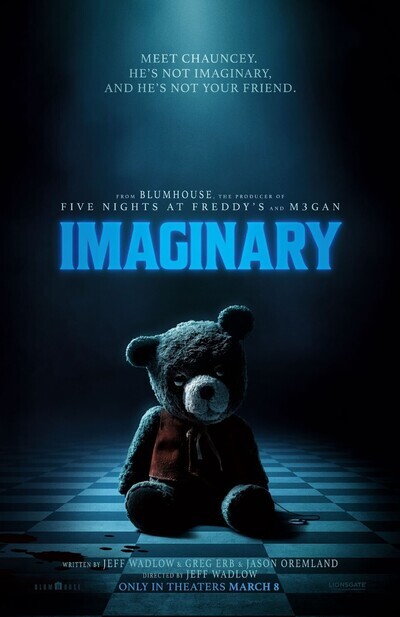
Over the last year or two a number of horror films, particularly under Blumhouse, have tried to get under the viral marketing campaign of creating an iconic new horror villain. The kind which can start social media trends that bring flocks of audiences in to the latest frightener with the edge of enjoying the antagonist at hand. Imaginary is no different as, after an initial teaser trailer encouraging us to use our imaginations to see the horror at hand, slightly dirty teddy bear Chauncey became the centre of attention. Put at the fore of posters and made a key detail of social media marketing the stuffed toy was seemingly being used to draw audiences in like an inanimate main character.

It comes as something of a relief that Imaginary, therefore, doesn’t put Chauncey centre stage and instead makes the imaginary friend of young girl Alice (Pyper Braun) seem like a standard threat or villain to face once he’s creeped the central family at hand out enough. The family are led by Alice’s step-mum Jessica (DeWanda Wise). Having moved back to her childhood home, alongside Alice, musician husband Max (Tom Payne) and teenage step-daughter Taylor (Taegen Burns), potentially sinister details of Jessica’s past, which she seems to have forgotten apart from details arising in dreams, begin to arise, and Chauncey may be part of them. As things develop the bear grows a bigger role in the narrative and eventually starts to feel like a threat designed for social media engagement and ‘most iconic horror villains we couldn’t get enough of’ ranking lists over anything else.


While perhaps lacking in overall scares there’s some intrigue to be found in the developments at hand as things build-up for the family. There are some good ideas scattered throughout as mysterious goings on begin to unfold for the group, while Jessica tries her best to form a connection with her step-daughters – finding it much more difficult with Taylor than Alice – but as we delve into Jessica’s relationship with her childhood home things begin to feel lacklustre and overfamiliar. The film plays into safe territory in regards to its developments and holds itself back from having any of the imagination it wants you to believe is present in the characters, despite good performances from the central cast.

Yet, in the real world there are occasional saving graces to help try and lift things up. When delving into the possibly supernatural, and exploring more of Chauncey and his world things devolve into true blandness. Nowhere more so than in the third act where not only do characters seem to randomly change for no reason but events are drawn out with little reason to further stop you from caring about the characters who could otherwise be leading an interesting restrained chiller.

Yet, the more ambitious it tries to be the more lacking Imaginary seems to become as it distances itself from its characters to delve into a world that it doesn’t seem familiar with itself. Lacking the push that it needs for attempted scares to have any effect. What starts out with intrigue and a likable enough nature soon turns into a boring and distancing piece of work that seems to forget the engaging nature of the, albeit conventional, human relationships at hand in exchange for flat dark fantasies.

Imaginary starts off with promise as human dramas are set out for the well-performed central characters, however as imaginary friend Chauncey is delved into more upfront things fall flat as horror and dark fantasies fall flat, not helped by a strong feeling of familiarity.

Rating: 2 out of 5.