Springsteen: Deliver Me From Nowhere – Review

Cert – 12, Run-time – 1 hour 59 minutes, Director – Scott Cooper

While movie offers and executive demands for more commercial work pile up, Bruce Springsteen (Jeremy Allen White) finds his passion fuelled by a stripped-back switch in style, and his most personal songs to date, for album Nebraska.

There’s not a great deal of musical performance in Springsteen: Deliver Me From Nowhere. We hear the end of Born To Run and a recording session for Born In The USA, but perhaps the reason for this is more to focus on just how stripped-back the songs actually focused on are in comparison. No full band, no expensive production room with all kinds of kit. Just Springsteen (Jeremy Allen White), a guitar, harmonica, a bedroom set-up, and the help of Paul Walter Hauser’s recording engineer Mike.

The music created goes to form his 1982 album Nebraska, a departure from the music that was just starting to make him a star across America and lead him to offers of film roles. Record label execs (particularly David Krumholtz’s) want the singer-songwriter to continue with more commercial ventures, however as he reflects on his childhood and abusive father (Stephen Graham) and current relationship with Odessa Young’s Faye Romano inspiration strikes and leads to a stripped-back, personal selection of tracks.


Music and inspiration appear to split somewhat as the film goes on, especially in the second half. While the moments focusing on Springsteen fighting for the music on the cassette to be released as it sounds that way, raw and in-the-moment without any studio effects or tinkering. There’s something about it that means more that he’s not giving away, although we’re seeing that confronted more as he visits locations from his past. It’s these beats, and those focusing on his relationship with Romano, that feel much more conventional when it comes to music biopics of the last few years. Such moments may be watchable, and have a bigger push in latter stages when delving more into the titular star’s mind and mental health, but such points are properly confronted quite late into the run-time.

In general, the first half of the film feels like a lot of build-up to the second, although largely realised once the idea of Nebraska is committed to and what would become Born In The USA is put to one side. It’s just not until we get into the studio and how much Springsteen cares about Nebraska is shown in White’s performance as he becomes increasingly frustrated at not matching the results on the initially intended as a demo cassette. This is the point where things really click, and I sat there slightly wishing that the click was slightly louder and expanded upon, as it’s where the most interesting beats of the film lie – especially in relation to the artist being focused on, again just as he’s breaking out into national stardom.

There’s something of a film about being caught between two states, pushes, mindsets and stages of life in Deliver Me From Nowhere and to some extent the film itself feels slightly caught between two states. Yet, while both contribute to adding to the personal angles of the songs that are heard throughout there are more conventional music biopic elements throughout which sometimes hold things back from being fully effective and engaging, even if still remaining watchable. Scott Cooper’s film doesn’t feel wholly familiar and just about avoids outstaying its welcome, but could absolutely do with more of its studio sequences and Springsteen’s push to maintain the original sound of his original recording session, where much of Allen White’s performance hits best.

When confronting things most directly and looking at the personal sides of Nebraska and Springsteen’s passion for it Deliver Me From Nowhere breaks out from its more conventional moments with greater interest from the creative team and audience.

Rating: 3 out of 5.

Roofman – Review

Cert – 15, Run-time – 2 hours 6 minutes, Director – Derek Cianfrance

Escaping from prison after a string of robberies, Jeffrey Manchester (Channing Tatum) hides out in the roof of a Toys R Us, eventually forming a relationship with one of the employees (Kirsten Dunst) whilst trying to remain undetected.

Roofman has found itself pulled in multiple directions as to what it is even before its release. While largely advertised as a comedy caper while early pre-review conversation suggested it as an outside Oscar contender, and eventual reviews suggesting that it has Oscar-bait edges with a release that shows a lack of faith in its chances – the actual film is a rather likable comedy-drama.

One that acknowledges the humour a man hiding out in the roof of a Toys R Us, having escaped from prison after a string of McDonalds robberies, while capturing the implications of entering into a relationship with one of the employees whilst trying to remain uncaptured before fleeing the country. Having left the military and not found a new line of work, Jeffrey Manchester (Channing Tatum) finds money by using his observation skills to commit a string of robberies. It’s these skills that allow him to stay hidden in the toy megastore for multiple months, however after getting bored and deciding to donate to a church toy drive he overhears about he gets to know single-mother Leigh (Kirsten Dunst).


While trying to do good, and coming across as a kind person, albeit one whose relationships are led by what he buys for others, the idea that at any moment he may be caught or have to run lingers in the background of Jeffrey’s interactions. It’s around the moral side of things, and the angles of Jeffrey’s relationships, where much of the light drama forms and grows. Yes, there may be laughs as he uses the products in the Toys R Us to keep his mind amused, but as he starts to step out into the outside world that’s where the narrative and film as a whole begin to grow. All coming together in the final stages where his in-two-minds state truly clashes as he’s caught between two lives, and possibly identities.

There’s a very starry cast around Tatum and Dunst, including LaKeith Stanfield, Peter Dinklage, Juno Temple and Ben Medelsohn – the latter two very briefly – and each put in good turns which capture the lighter tones of the narrative at hand. Although, while with such a starry cast Roofman doesn’t come across as an ensemble film and is certainly led by Tatum with enough likability and charisma to avoid making Jeffrey an utterly unlikable and unforgivable character for the risks he takes and creates for other people. His style leaks into the narrative and brings in the engagement factor and overall draw of the film which successfully strikes a crowd-pleasing sweet-spot with its balance of caper and moral drama, which appears to have been its intention from the start.

A likable blend of comedy caper and light moral drama, Roofman is successfully led and rested on Channing Tatum’s central performance, stopping things from being purely unlikable in the humorous and engaging course of the film and its growing dramatic sides.

Rating: 4 out of 5.

LFF 2025: Ballad Of A Small Player – Review

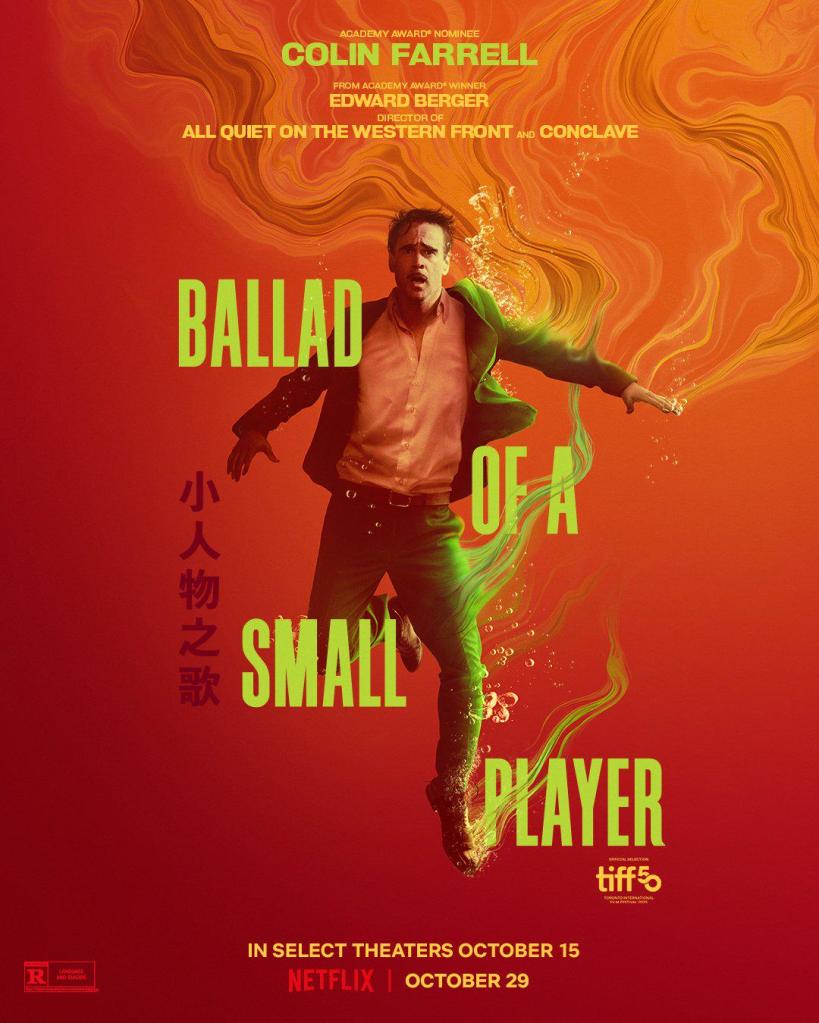
Release Date – 17th October 2025, Cert – 15, Run-time – 1 hour 41 minutes, Director – Edward Berger

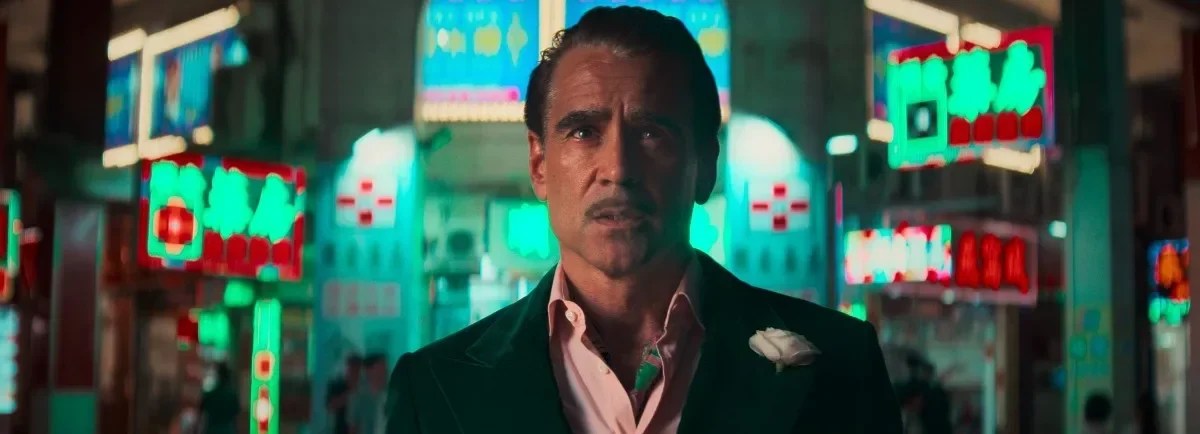
Gambling addict Lord Doyle (Colin Farrell) must pay off his debts to multiple Macau casinos whilst his past starts to catch up with him.

From an introduction where he comes across as Jack Sparrow as played by Orlando Bloom, Ballad Of A Small Player charts the unravelling of gambling addict Lord Doyle (Colin Farrell). However, questions hang over much of this unravelling as to how many layers there are to uncover, or whether things are being wrapped back up behind the camera.

Given just a matter of days to pay off his staggering debts to the casino he’s been living in, and barred from almost every other in Macau, Doyle finds himself desperately hitting the Baccarat table – described as the quickest game with high possible rewards – while his past starts to catch up with him (largely in the form of Tilda Swinton, make sure to stay through the credits for a highlight of the pair sharing the screen). However, the “man whose childish pride has set him way beyond any redemption” is adamant to escape all of this, leading him to dive deeper into his addiction not for the wealth and high life but more for the survival of who he appears to be.

Director Edward Berger’s latest, adapted by Roland Joffe from the novel of the same name (minus determiner) by Lawrence Osborne, may not have the tightness of Conclave or weighty push of All Quiet On The Western Front, but there’s still something compelling thanks to Farrell’s central performance. He’s in love with, yet undaunted, by the shining lights and surroundings that on many occasions dwarf or emphasise him as out of his depth. 


Thanks to James Friend and Jonathan Houlding’s respective cinematography and production design there’s a sinisterly entrancing view of the Macau casino and their surroundings. Showing off the attraction that Doyle finds in them, while reminding of the grip they hold on him; even as he starts to deteriorate and spiral.

It’s this point that the second half of the film focuses on. Not everything about this latter segment clicks, and as we find ourselves in new locations the push isn’t quite the same and the film, even at just 101 minutes, starts to feel slightly on the long side. Yet, when the narrative gets another jolt the compelling nature of Farrell’s central figure grows its initial spark as you can’t help but look away from his make-or-break actions and decisions. All of which he and Berger capture with an extra intensity as it seems Doyle is heading downwards at an increasing rate.

Much like his surroundings, we know there’s doom spelled out – his opening lines promise us that “in a few days my life, as I know it, will be over” – but there’s a draw in delving into the world and seeing the outcomes. This is the key that’s understood by the creative departments at work here. Those working on both the story at hand and the foreboding visuals against which everything is set. 

While not as tight or weighty as Berger’s previous films, Ballad Of A Small Player still has a draw of sinister enticement as the visually striking world closes in around Colin Farrell’s lead performance.

Rating: 4 out of 5.

LFF 2025: Frankenstein – Review

Release Date – 17th October 2025, Cert – 15, Run-time – 2 hours 30 minutes, Director – Guillermo del Toro

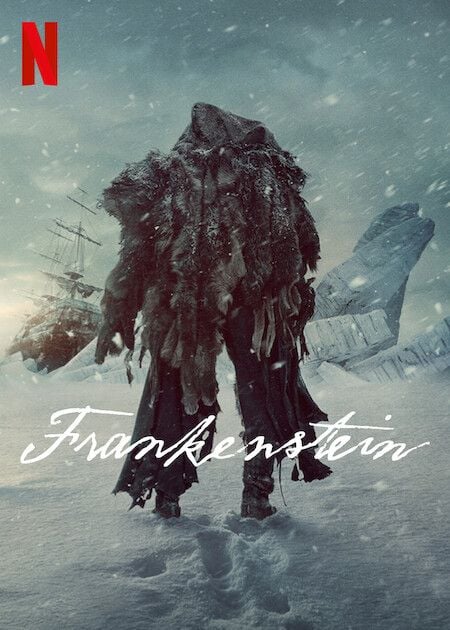
After achieving his dreams of bringing life to a creature assembled from the dead, Victor Frankenstein (Oscar Isaac) is hunted by his attacked creation (Jacob Elordi).

In a London Film Festival where press queues featured bold (and sometimes irritatingly pretentious) claims such as “Daniel Day-Lewis isn’t as good an actor as everyone says he is” one of the most baffling was “I can’t think of a worse director to have tackled that story.” An undoubtedly bold, and I would presume largely disagreed upon, view in relation to Guillermo del Toro and Frankenstein.

Throughout his life and career del Toro has radiated a love for monsters, often highlighting Frankenstein as a key influence. Adapting Mary Shelley’s novel feels like a perfect marriage for the writer-director, tingeing the story with his passion for seeing monsters in the everyday. Perhaps explaining why his take is much more direct in viewing Victor Frankenstein’s (Oscar Isaac) monstrous side, having delved further into madness after his creation comes to life, and the humanity within The Creature (Jacob Elordi). Perhaps in a similar vein to what he did with elements of Pan’s Labyrinth.

Having formed his creation, with much of Alexandre Desplat’s score as the scientist tinkers away at his dream of giving life back to the dead having a feeling of curious exploration which would be also fitting of a family adventure flick, Frankenstein quickly flees in disappointment at the surface of what he’s done. Although, The Creature is quickly on the hunt for him. For answers and revenge. Fuelled by anger and with little love shown from the rest of the world for his presumed monstrosity.


Throughout the film, whether scenes in the frozen Arctic or Victorian Britain, the production and costume design, alongside excellent cinematography – The Creature stood alone in the ice as the sun sets creates one of the best shots of the year, almost eliciting an audible ‘wow’ from myself – are all excellent. Creating immersive detail which intensifies the gothic qualities at hand which del Toro himself is clearly just as lost in when it comes to the how his monsters fit in to what’s around them.

Yet, whilst surrounded by the strong visual detail Isaac still bursts from the screen with a truly fantastic performance. Outside of technical categories the film seems to no longer be even a proper outsider in the upcoming awards race, largely down to its genre. However, while Isaac’s name hasn’t widely been in the Leading Actor mix he’s more than deserving of recognition as the titular character descends into madness, regret and fear. All naturally growing over time. When we first meet him, having just been saved by a group of stranded sailors, he’s losing hope in frantically escaping Elordi’s figure, almost admitting that he has to properly confront his playing God. 

There may be some points where it feels like things are perhaps being more gradually built-up to, especially in the half-condensed early years of the titular character’s life, but there’s still plenty of detail to be lost in throughout del Toro’s largely faithful adaptation. And as a whole the two-and-a-half hour run-time certainly isn’t felt across a narrative tinged with a love for monsters in the everyday.

Amongst the immense visual detail, Oscar Isaac’s central performance bursts from the screen in Frankenstein, a telling of the story which, while gradually paced to start, is made by del Toro’s love for monsters in the everyday.

Rating: 4 out of 5.

Black Phone 2 – Review

Cert – 18, Run-time – 1 hour 54 minutes, Director – Scott Derrickson

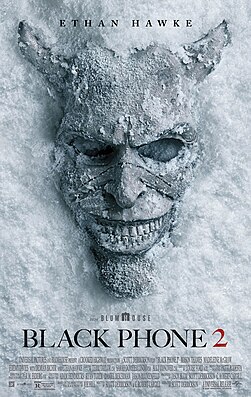
Still tormented by his experiences with The Grabber (Ethan Hawke), Finn (Mason Thames) and his sister (Madeleine McGraw) volunteer at an isolated youth camp with links to the serial-killer, who may be back from the dead in dream form.

The dead killer attacking via dreams against the backdrop of an isolated youth camp, the influences of A Nightmare On Elm Street and Friday The 13th are worn clearly in this follow-up to 2021’s The Black Phone. Supernatural elements are heightened, largely for reasons of bringing back Ethan Hawke’s The Grabber, and they help to bring about some of the best, and bloodiest, sequences. While not physically appearing for past victim Finn (Mason Thames) – still experiencing trauma from his experiences in the last film – The Grabber taunts him over the phone, although Finn often picks it up to tell whoever is on the other side, another presumed victim, that he can’t help them, and appears to his younger sister, Gwen (Madeleine McGraw) in her dreams.

Effects of attacks begin to bleed into the real world, as those around Gwen at the snow-covered youth camp – shut off for the season due to a snowstorm – try their best to help her despite not seeing what’s attacking. When stretching out such sequences, especially towards the film’s climax, Derrickson finds his stride on the directorial side of things. Allowing for the bloodshed to eek out and have more of a sustained impact in the face of the rising threat.


Yet, it takes a while to get here with all the build-up the film has in bringing all of its elements together. While justifying the more supernatural leanings and re-introducing us to the characters is understandable, the pacing of the first act feels a good deal slower compared to what follows. It’s something that leaks into the remainder of the run-time as certain instances feel almost disconnected, or at least slightly wandering, as moments of dialogue bridge between the more upfront horror; likely not helped by the fact that certain interactions with less-developed characters can feel rather clunky.

However, Black Phone 2 doesn’t quite fluctuate. Once it gets going, which does take some time, it finds itself on a largely consistent course that’ll give slasher fans some enjoyable spills. Hawke’s presence provides additional chills, especially when at his most upfront in terms of threat, his grinning devil mask hanging over the characters. Scares may not be anything intense, but there’s still enough that clicks within the film, and its bursts of horror to see it through with enough engagement to rise above the heavy influences.

Whilst slightly disjointed and slow to get to its core, Black Phone 2 has enough slasher action and spills to see it through with solid effect that doesn’t lean too much into its inflences to avoid pure copy or imitation.

Rating: 3 out of 5.

HIM – Review

Cert – 18, Run-time – 1 hour 36 minutes, Director – Justin Tipping

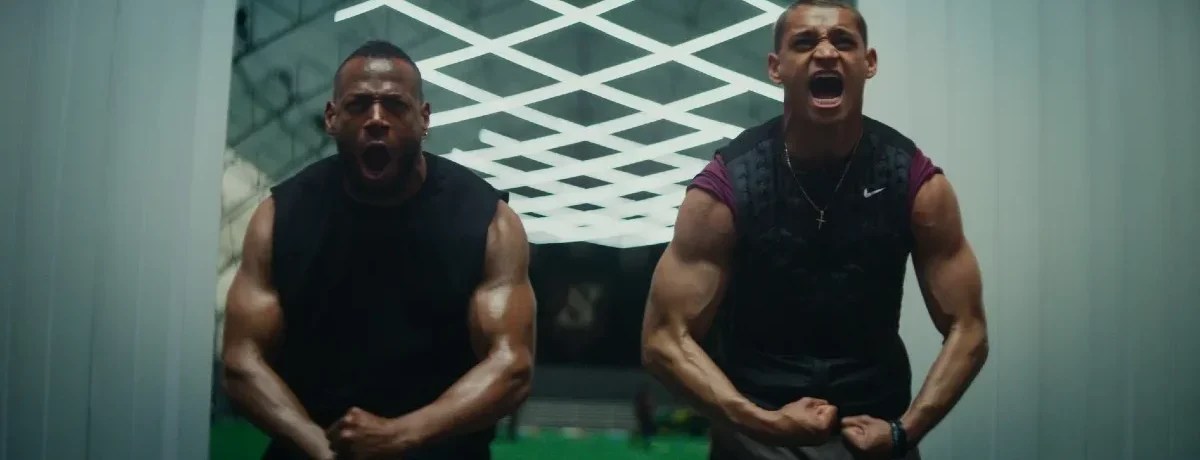
After an attack leads him to fail a major trial, Cameron Cade (Tyriq Withers) is given another chance by training at eight-time championship quarterback Isaiah White’s (Marlon Wayans) compound, where everything may not be as it seems.

Whilst training to make it to one of the most decorated football teams in recent times, the San Antonio Saviors, rising star Cameron Cade is expecting to develop his skills and grow over a short space of time, having been given one week to train with eight-time championship quarterback Isaiah White (Marlon Wayans) at his compound. You’d expect the horror, or at least narrative, of HIM to escalate in a similar way, yet with each day that passes – emphasised with a screen-filling chapter title – however it consistently feels to be on the same level from start to finish with little increase.

The workings of Isaiah’s compound appear to be off-kilter, although it’s difficult for Cameron to put his finger on what it is as he’s welcomed in so quickly. Practices such as preserving high-oxygen blood for when you have a big game are largely passed off as long-held secrets for continued excellence – Isaiah had an injury early in his professional career that many said would end it, but came back strong and is still playing 14 years later, with some saying he’s getting near the point of having the move on and let the next generation in, of which Cameron might be. Photographers appear to jump out of the corridors and weapon-wielding mascots hang in the background of visions. While much is explained in the final stages these points feel as if they’re left alone and could do with some more context, especially as they otherwise stand out from the other threats at hand.


While Marlon Wayans does a good job of growing the strange and threatening behaviours of his character the horror comes less from him alone and more the darkness and bloody bursts in the compound. However, scary isn’t what best describes the horror throughout as the dips are more freaky than anything else. While the un-rising state of the drama and tension holds things back, the final ten minutes earn the 18-rating but would perhaps seem more manic if built-up to better, there’s not anything boring or frustrating here. And indeed director Justin Tipping brings some interesting ideas into the mix.

Occasionally as bodies collide during practice, or injuries are sustained and emphasised the camera’s view switches to look like an X-ray monitor. Capturing the fracturing skeletons and outlines of the figures on-screen before suddenly cutting to see the external aftermath of the event. These shots bring something to the film that isn’t quite present throughout the rest of the run-time, and I would have liked to have seen them used more. They bring in a livelier nature which briefly dig in to some of the points that appear to be trying to be established with the hidden behaviours of Wayans’ character.

HIM manages to hold its head above water, and there are some interesting ideas dotted throughout where Tipping and co-writers Skip Bronkie and Zack Akers properly get into the strange workings of the training week that Withers’ central character embarks on in order to prove himself as the next great quarterback. Not everything clicks, or perhaps grows as it should, but there are still enough beats that create interest beyond what’s happening centrally to help things move along.

While failing to raise tension and not always landing the fear factor, there’s enough interest within HIM, thanks to certain moments of visual flair, to see things through for a watchable, if not always fully effective, time.

Rating: 3 out of 5.

Urchin – Review

Cert – 15, Run-time – 1 hour 39 minutes, Director – Harris Dickinson

Released from prison after assaulting someone trying to help him, Mike (Frank Dillane) is trying to turn over a new leaf, however addiction battles and the prospect of becoming homeless again threaten a downward slope.

Harris Dickinson’s feature debut as writer-director isn’t a glitzy, mid-budget piece with a starry cast. The actor has risen dramatically over the last five years, and is set to play John Lennon in Sam Mendes’ upcoming Beatles movies, but Urchin marks an assured, if still occasionally finding the ropes, voice behind the camera.

Reminiscent of Ken Loach’s later work, Urchin begins with young Mike (Frank Dillane) homeless, trying to find a way to get a drink before finding a quiet, dry place to sleep at night. However, after being released from prison for assaulting and robbing a man offering to buy him some food (Okezie Morro’s Simon) he aims to start afresh. Employed in a hotel kitchen the work is stressful and acceptance from some co-workers rubs against tensions with others, mirroring his outside aims to stay calm and make amends with Simon with the help of counselors, and the struggle to maintain sobriety.

While more interpretative, metaphorical moments of imagery don’t always seem to land the potential intended effect they’re infrequent in the highly naturalistic surroundings of the narrative. Mike is a sympathetic figure, although the more time we spend with him in the second half the more his behaviour becomes difficult to watch, especially the more isolated he finds himself from the rest of the world.


The second half of the film might not quite be on the same level as the brilliant first half, but there’s still enough present to keep engagement and interest. What causes things to slightly lose their footing is the feeling that there are perhaps just one too many stages to the journey we see Mike take. He encounters various faces in a short amount of time and their times in his life appear to become briefer, signalling the growing downward slope that’s starting to form.

Dickinson, who also appears in the film as Nathan, another homeless man we’re introduced to in a moment of key confrontation with Mike, clearly establishes the kind of director he wants to be, and takes inspiration from, with this debut. Like the film, there’s a quietness to his direction which leans into the world and characters, and I look forward to seeing what he does in future behind the camera.

With his central performance, Dillane too marks himself as a name to watch on the British indie film scene, alongside a number of the supporting faces including Karyna Khymchuk, who appeared earlier this year in the excellent On Falling. There’s a quietness to many elements of the film as things are focused on pushing the characters and the drama of Mike’s various battles.

While there might be one stage too many and the drifts into metaphor don’t entirely click, Urchin is still a solid, naturalistic indie debut with quietly assured work in front of and behind the camera, landing an effective punch even in its slightly more uneven second half.

Rating: 4 out of 5.

One Battle After Another – Review

Cert – 15, Run-time – 2 hours 42 minutes, Director – Paul Thomas Anderson

When their location is revealed, a former revolutionary (Leonardo DiCaprio) and his teenage daughter (Chase Infiniti) are separated and caught between running and chasing.

Not even shakey-chair 4D can create the feeling of your stomach leaping and dropping with the rise and fall of a rollercoaster, yet in the tension of a car chase Paul Thomas Anderson can. The camera lies low, almost touching the road; racing along the rise and fall of the almost empty track of hills. Occasionally cutting to the rear-view mirror or long shots of the surroundings, there’s a growing tension throughout the chase, heightened by the internal thrills that Anderson conjures up.

It’s a feeling brought to a number of the action sequences throughout the writer-director’s latest, much of which is centred around running and chasing. Former revolutionary Bob (Leonardo DiCaprio) finds himself caught between the pair when, after 16 years of hiding, his location is revealed and he must find his teenage daughter, Willa (Chase Infiniti), before escaping.

DiCaprio, alongside Jonny Greenwood’s excellent score of rumbling, fluid tension, perfectly captures the rushing panic and fear or Bob’s mind as he’s thrown into a situation he may have thought would never arrive, albeit still some way prepared for it. Hot on his tail, alongside Willa’s, is Colonel Steven Lockjaw (Sean Penn); a familiar face to Bob’s partner Perfidia (Teyana Taylor) – leading much of what we see when it comes to the early revolutionary and chase action in the film. With a consistent scowl on his face, Penn brings a darkness to Lockjaw with a fearful anger easily brought to the surface in the wake of anything that delays or gets in the way of his hopes and plans.


Anderson and editor Andy Jurgensen often cut to his perspective in-between Bob, Willa and other parties who may be involved in the various hunts at play with ease. Yet, even with a near three-hour run-time there’s little that feels irrelevant or as if it’s overstuffing the film in any way. The screenplay is certainly tight, and one of the strongest of the year, with occasional patches of dry humour amongst the grander bursts of chaos as Bob, donning large sunglasses to both remain hidden and not show he’s stoned, fails to remember passwords and coded phrases he hasn’t had to use for 16 years.

Intentional breaks in the action might mean there’s a slight break from the fast pace of the extended sequences they appear between, but for the most part there’s a consistent pace to One Battle After Another. One brought about through the constantly moving nature of the events – like cogs on a treadmill – and the tension that grows throughout the sequences, especially as forces preventing Bob from reuniting with his daughter get closer to either of them.

As a chase and action movie Anderson has created something very effective, however the wider narrative and context that’s given – the world of still-connected revolutionaries and how they keep track of things – adds further detail and more to the relationships at hand. Indeed, the film wouldn’t be the same if we were just thrown in and didn’t see Bob’s relationship with Perfidia form over the course of their revolutionary action, all brilliantly captured by cinematographer Michael Bauman, or the ways in which their lives in some way diverge once they become parents. It’s this that provides not just context but the lens through which the rest of the film is viewed, increasing the suspense and eventual chaos as everything kicks off in the sprawling race DiCaprio’s frenzied protagonist embarks on to reach his daughter before it’s too late.

The idea of hiding, chasing and fleeing takes on different guises and meanings throughout as the situations the characters, particularly Bob, find themselves in change depending on the plan, or lack of, that not just they have but those after and in front of them also do. The shifts and layers throughout emphasise the constantly moving nature of the narrative and the momentum that the film has as a whole with solid effect. It reminded me at one point of Mad Max: Fury Road, although not largely confined to machines and vehicles. Largely in terms of the scale and aforementioned movement of the film, and the feeling of a nearby threat also caught up in the rushed frenzy. Part way through I sat amazed that Warner Bros would stump up at least an estimated $130 million for this, but the final rather un-studio product, they seem to have had difficulty marketing it, is very much worth it. With the elements coming together for a tense, thrilling set of frantic yet connected chases.

While in-between sequences may be more of a slow down than a breather, much of One Battle After Another captures the chaos between fleeing and chasing. With DiCaprio and Jonny Greenwood on great form multiple cat-and-mouse situations converge with a rising tension and consistent thrill.

Rating: 4 out of 5.

A Big Bold Beautiful Journey – Review

Cert – 15, Run-time – 1 hour 49 minutes, Director – Kogonada

After meeting at a wedding, David (Colin Farrell) and Sarah’s (Margot Robbie) rental cars direct them to isolated doors which take them back to key moments in their lives and relationships, which have caused them to hold off on starting new ones.

There’s little lead in to the Charlie Kaufman-esque opening of A Big Bold Beautiful Journey. After finding his car clamped, David (Colin Farrell) travels to a barely decorated warehouse with only two cars, a desk and a banner in – signing The Car Rental Agency. The moment, jumped into from the bright city streets, is our main introduction to the fantastical ways of the next 90 minutes or so. Although, the dialogue, especially when mixed with Phoebe Waller-Bridge’s dipped-in-and-out-of German accent and strange set of randomly dropped f-bombs, feels more off-kilter than fantastical; and sits slightly at odds with the more whimsical implications of the opening scene’s tone.

After being pressured to also hire a sat-nav in case his phone “craps out” he ventures to a wedding and on the way back is asked by the system (voiced by Jodie Turner-Smith) if he would like to go on a big bold beautiful journey. Passionately he appears to shout yes – we see him accept from outside the car – and off to Burger King we go. It’s here we re-meet Margot Robbie’s Sarah. The pair met at the aforementioned wedding with mixed results from their handful of conversations, but after talking again there seems to have been something – not that either will commit. Both are hesitant to enter into another relationship for fear of hurting the other person or being hurt themselves.


Over the course of their big bold beautiful journey together they are directed to multiple isolated doors which take them back to key moments in their lives and past relationships which have either not had the resolution or time with they would perhaps like or have made them who they are today. The vibrant colours of each location visited adds to the picturebook quality brought about by the mixture of cinematography, production and costume design. Visually the film is a consistent treat with many frames that I could gladly hang up and get lost in. However, it’s hard to get lost in the first few flashbacks as they seem to be dashed through with the main aim of these actually being the introduction to the film and its workings after the prologue.

When the flashbacks, largely to childhood in the first half, are given time and look more at the emotional side of things for the characters rather than just relationships – writer Seth Reiss appears to often split the two up, and finds the most success when focusing on the former or managing to combine the pair – there’s more to enjoy. A highlight involves Farrell reliving his high school production of How To Succeed In Business Without Really Trying, whilst also demanding that he be cast in a musical (I wouldn’t mind seeing him taking the lead in The Music Man), before trying to change how things went with the girl who turned him down. Meanwhile, Sarah frequently goes back to her relationship with her late mum (Lily Rabe), where emotions once again get prioritised, and the film comes closer to breaking her out of the manic pixie dream girl archetype.

As the delves, rather than flashes, of jumping into the past and finding some resolve with it is prioritised and given time the central journey, and its characters, strengthen. What starts off as a real jumble of tones and ideas starts to create engagement. It’s during the musical sequence that I started to sit up more and feel myself grabbed by the film and what it was doing, as if it had found its stride. Things might occasionally jump into feeling busy or focusing more on the less interesting points, or rather just thinking of relationships without the emotional aspects, but there’s still enough to help the film along and see it through. Plus, even during points where things dipped I found myself still having an admiration for the film as it was clearly trying something and making some swings, and even if they didn’t all pay off, especially to start with, there was still something to appreciate about that.

While it might occasionally seem a bit jumbled, A Big Bold Beautiful Journey works best when it taps into its characters emotions and the resolves they seek. Consistently trying something and visually brilliant even during moments that don’t quite get the time or spark they need there’s still something to appreciate.

Rating: 3 out of 5.

The Golden Spurtle – Review

Cert – PG, Run-time – 1 hour 15 minutes, Director – Constantine Costi

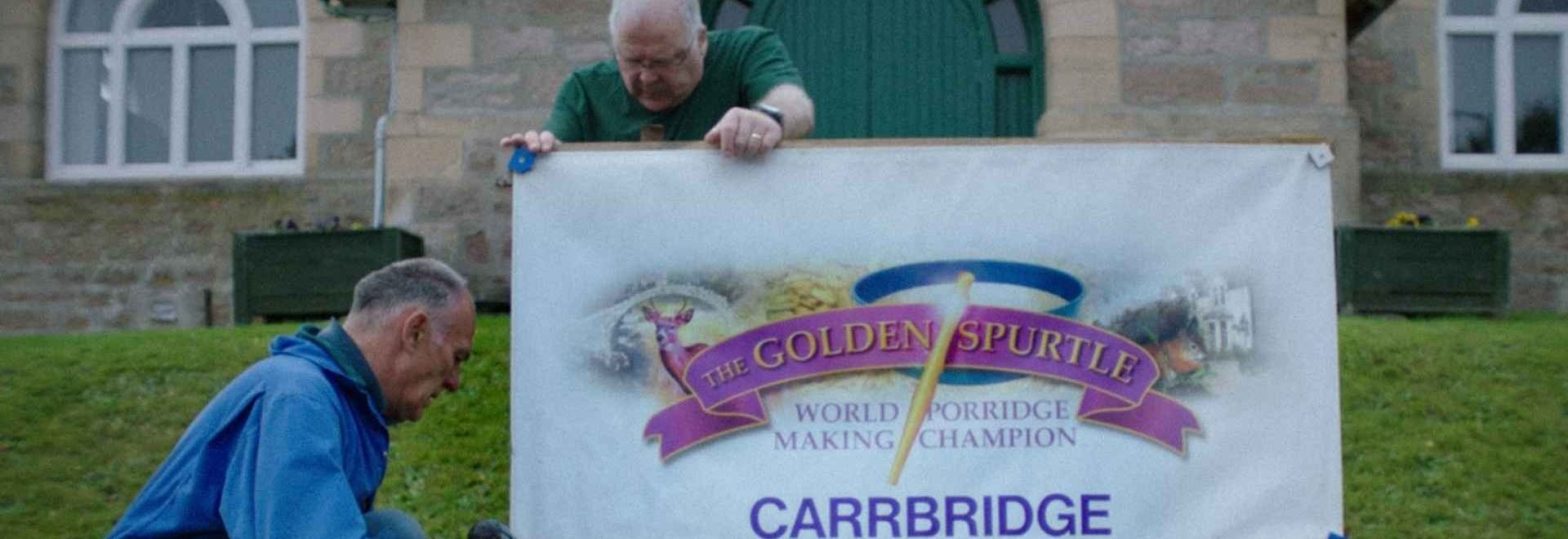
As competitors travel across the world to take part, Charlie Miller prepares for his final year as chieftain of the World Porridge Making Championship in the quiet Scottish village of Carrbridge.

The Golden Spurtle isn’t cynical, fun-poking or insincere. It doesn’t embrace its subjects in a strangling bear hug either. Instead, much like the titular award, it’s a charming and admiring observation of the World Porridge Making Championship, held annually in the small village of Carrbridge, Scotland.

Chieftain Charlie Miller, overseeing the build-up to the event and the creation of spurtles, has taken charge for over 20 years, with the documentary following his final championship before retiring from the role. Alongside him we meet the various characters across the village who volunteer to bring things together each October. They have a knowing humour to them, aware of their quirks and eccentricities, and it’s one of the things that director Constantine Costi appears to admire most. Through this unassuming nature a natural charm comes through, gently flowing throughout the film.


While the air of competition grows and there’s a seriousness from the various competitors all but one still treat things with a lightness (and love of porridge). It seems that the two key, leading factors of The Golden Spurtle are what allow the film and the championship to work so well – porridge and the village of Carrbridge, the small, close-knit quaintness of which is effectively captured by the cameras. There’s a sense of pride from and about both elements which infuses the documentary, this isn’t a mere oddity or quirky annual happening, it’s something that’s genuinely looked forward to and enjoyed. To some extent it’s a shame that we only get to spend 75 minutes in the village’s endearing company – especially when you discover that there’s also an unseen speciality competition alongside the regular porridge championship.

Yet, that short run-time of just over an hour still allows for time to be taken with the elements of the film and given to the figures who crop up. For the eccentricities to come through and certain shots to linger on the moment and scenery. Perhaps this could be a 30-45 minute short-film, but the documentary feels better for that not being the case and adding to the various people involved in the central celebration. By the time the actual competition came around I had a smile spread across my face that was difficult to remove.

A gentleness is brought in early on as we first arrive in Carrbridge and learn about the start of the championship, including Charlie reciting a poem about porridge and joke at expense of England, and it continues right to the very end. From the opening stages the film naturally gets you to leave any pretensions or cynicism behind as it welcomes you in to a world of warming comfort and porridge. Almost instantly engaging, The Golden Spurtle is a warm, sincere look at a porridge competition which calmly watches and admires the proud quirks and eccentricities in both the competitors and the organisers which help make it happen.

Its own bowl of warm, simple comfort The Golden Spurtle is a charming documentary which quietly observes and admires the quirks and eccentricities of the central porridge championship and the quiet village at the centre of it.

Rating: 4 out of 5.