LFF 2019: The Valley – Review

Release date – N/A, Cert – N/A, Run-time – 1 hour 17 minutes, Director – Nuno Escudeiro

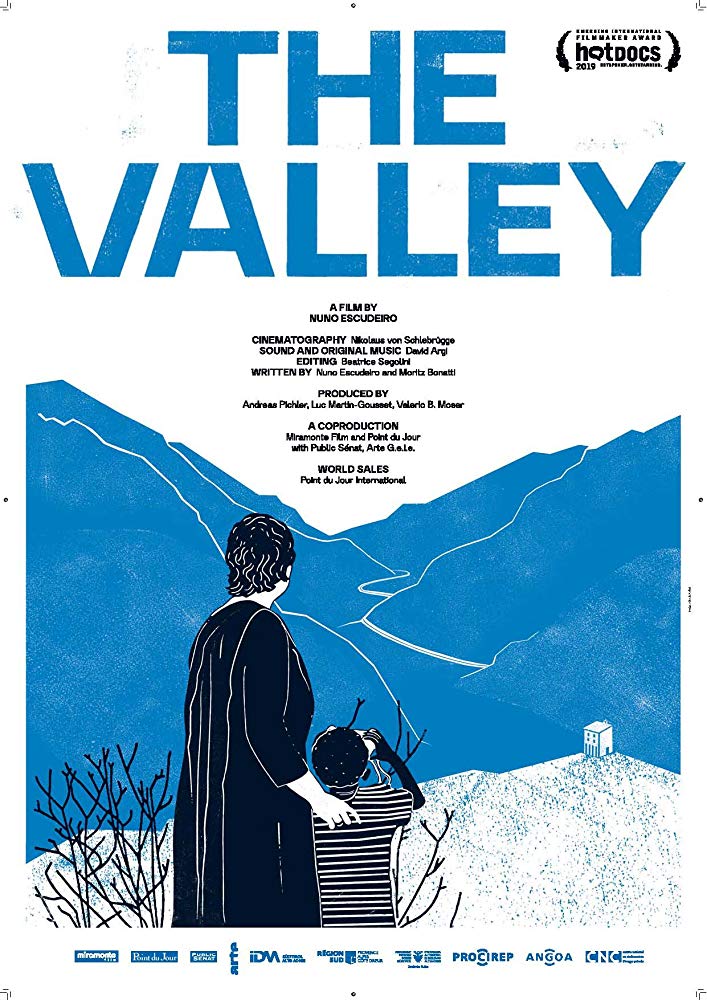
Documentary following the communities who help migrants on the French-Italian border and the actions of the authorities that try to stop them.

There’s a section of the dangerous mountain border of France and Italy where it seems that not even either country knows what area of land belongs to what country. Thousands of migrants and refugees travel through this valley region every year in the hope of finding safety and a new life, helped by the people who live on either side of the border to get to wherever they will be safest. However, the guidance and compassion that such figures give is often put to a stop by the local authorities, doing all they can, even if the actions of those featured in the film are perfectly legal, to put this to a stop.

One such figure, Cédric, has found himself arrested on six separate occasions for trying to help people achieve citizenship and rights. Cédric allows many of the migrants to take residence within his house while he works out what the best way of getting them to a better life is, he’s also the person most involved with the law and makes for a rather interesting focus when he’s on screen; making up some of the best moments that the film has to offer. When making note of the evolution of the law and the way that they act he claims “it isn’t a case of the law evolving, more that they know that they’re acting illegally”. He observes the law in his area and makes note of them, showing the actions they take to swerve their own rules. It’s hinted at that those who help the migrants put themselves in situations as dangerous as crossing the mountains when it comes to dealing with the police, “if you take care of people in trouble… Then you are not the same person anymore” in the eyes of the law.
When it comes to the other focuses of the film there does seem to be a slight imbalance, we get to know some more integral players better than others, or at times some seem to be left out for long periods of time until popping up again after almost being forgotten about. With a short run-time of 77 minutes such short time is split up between multiple people, meaning that sometimes there’s a struggle to properly connect with certain figures. Alongside one or two moments feeling slightly rushed, the first time we see a plan fail doesn’t have the impact the filmmakers may have intended due to not quite having the proper connection with the film at this early stage. Despite this there’s no denying the overall interest that the film creates, and it’s one that will surely encourage some form of debate, especially around thoughtful themes such as whether “we adapt quicker to restrictions of freedom than we do to freedom itself”

Amongst all the debate that the film could encourage and all its subjects have to say about the families and people they come across and help at the end of the day much of The Valley is simply about love and compassion. Caring for others and how often kindness and helping people is a forgotten fundamental principle. The disheartening nature of some of the events that the film presents makes this theme more prominent. When mixed with the simply followed themes of the film, and the short run-time, the final product is a fairly concise, interesting film. It does leave some gaps and it feels like there’s more to be explored; however what we do see says enough and treats the viewer as an equal, managing to successfully show them the handful of people and subjects that it covers and give them even just one thing to take away.

About caring for those around us as much as it’s about immigration and the law The Valley is a subtle, calm yet still slightly disheartening documentary that poses some interesting ideas and questions in its short run-time, even if it doesn’t always manage to form an impactful connection.

Rating: 4 out of 5.

Simon Brew ‘Film Stories’ Interview

Simon Brew joins me to talk about the various different sections of Film Stories. From its birth as a podcast to the impact that it’s had in just one year as a magazine.

Film Stories can be found through its Twitter and website, where you can subscribe to and buy the magazine, listen to the podcast, find daily film news, and much more.

Simon can be found through his Twitter.

For those interested in his song requests they can be found here;
Skeet Surfing – Val Kilmer
Burning Heart – Survivor
Drive It Like You Stole It – Sing Street

LFF 2019: Marriage Story – Review

Release date – 15th November 2019, Cert – 15, Run-time – 2 hours 17 minutes, Director – Noah Baumbach

A stage director husband (Adam Driver) and actor wife (Scarlett Johansson) go through a divorce and legal battle over their future family set-up.

Back in 1979 Kramer Vs Kramer was first witnessed by audiences. In the four decades since it was first released it’s, unsurprisingly, become the film that many instantly refer to when the subject of divorce dramas is mentioned. So, when talking about a modern divorce drama, especially one such as Noah Baumbach’s latest, Marriage Story, it would be easy to easily start comparing the two. However, there are vast differences when it comes to the plot and focus of the two. While Kramer Vs Kramer focuses on the father-son relationship at the centre of the film, leaving the legal drama until late in the film, Marriage Story is very much consistently concerned with the legal nature of the divorce proceedings between Adam Driver’s stage-director Charlie and Scarlett Johansson’s actor, Nicole. Equally focusing on the pair.

The opening scene of the film, set to Randy Newman’s fantastic and sparingly used score (some of the best, most effective scenes, are done in complete silence) consists of Charlie’s voice-over telling the audience how much he loves Nicole; set to footage of the close bond between the two. However, it’s soon revealed that the couple aren’t as close as it might initially seem, the voice-over is actually Driver reading a letter as part of marriage counselling, the effects of which aren’t being felt and instead seem to be leading the couple closer to their eventual divorce proceedings. At one point Nicole, realising her new freedom, goes as far to say “I never really came alive myself, I was just his aliveness” – just one of the wonderful ways in which the dialogue shows true feelings put into words. As the couple split their separate ways, and Nicole moves away from New York to L.A. a silent battle between the pair erupts, mostly fought through the lawyers that they eventually hire, even hiring lawyers raises suspicions that the pair are discreetly attacking the other chances of spending more time with their child

Throughout Marraige Story Baumbach very much keeps his naturalistic style (seen put into effect in his previous feature The Meyerowitz Stories) which helps to push through the real sense of drama and emotion that the film tries to get across. The raw feelings of both Driver and Johansson’s characters are clearly displayed. The hard outer shells that they show severely contrasting with the emotional breakdowns they have in private, all while trying to put on a brave face for their young son, Henry (Azhy Robertson – who seems to have been given the task of playing a child a couple of years younger than him).

Amongst all the drama that the film has to offer the natural feeling also allows for some much appreciated humour to be brought into play. In fact during some of the tensest scenes, or those dealing the most with legal matters, do some of the biggest laughs come, specifically from Laura Dern as Nicole’s lawyer Nora. One of the most bittersweet and emotional scenes of the film, showing Driver’s panicked dad trying to prove to a child welfare representative that he’s capable of providing his son with a good home-life, is also one with the most comedic potential. The entire film is a masterclass in naturalistic acting; and could very well lead Driver to a Leading Actor win, and a Leading Actress nomination for Johansson. The two stars give the definition of powerhouse performances from start to finish through monologues, musical numbers (Driver’s rendition of Stephen Sondheim’s Being Alive is worthy of rapturous applause in itself, being one of the most captivating and breathtaking moments of the entire film; taking the viewer into a realm of almost fantasy). At one point a whole (partially eaten) chicken is casually eaten with a knife and fork and it seems completely normal and serious.

Amongst all the power and pain that the film delivers it never lets go of its sense of hope, family and the simplistic plot. Forming a total gut punch in both natural comedy and drama, at times almost feeling like a highly cinematic play – which seems fitting considering the professions of the two lead characters. This impression given by the extended, yet far from dull, nature of some scenes and the considered nature of the fantastically presented courtroom drama elements. Everything simply combines to create a compelling, magnificently done and unique drama. Fresh for a modern audience yet still holding traditional themes, Marriage Story is very much a modern Kramer Vs Kramer, almost guaranteed to be a future classic, but equally very much in a different vein. It’s fantastically done in every aspect and despite its simplicity and natural style it commands to be seen on the big screen. A genuinely heartfelt hit that all should see.

Randy Newman’s spellbinding score is just the tip of the iceberg when it comes to the masterful nature of Marriage Story. Devastatingly emotional yet naturally funny, with two dominating powerhouse performances at the centre of it, it combines some of the best elements of cinema to create an overall phenomenal feature.

Rating: 5 out of 5.

LFF 2019 – This Is Not Berlin – Review

Release date – N/A, Cert – N/A, Run-time – 1 hour 55 minutes, Director – Hari Sama

A teenager (Xabiani Ponce de León) attends a nightclub that has his eyes opened to a world of drugs, rebellion and sexual freedom.

Earlier this year audiences were treated to the absolute delight that was Beats. Looking into the actions of two Scottish teenagers exploring the 1990’s rave scene. Hari Sama’s This Is Not Berlin initially seems to be in a similar vein, following two rebellious teens as they discover and explore the world of 1980’s punk rebellion through a nightclub that they both attend. However, as one begins to become increasingly fascinated with the loud and confident world of drugs and sexual freedom the other begins to feel distanced from his once best friend, trying to keep his credibility in school as intact as possible; feeling it having been damaged from just one visit to the nightclub.

The nightclub is very much focused on public demonstrations of freedom and equality, taking part in what may seem somewhat outlandish protests, one involving naked men and women, “gay” sprawled all over themselves, pulling a clothed figure with a whip down the road. Such actions are met with large amounts of distaste from the public, especially with this being set in 1980’s Mexico. Initially such protests, and the rebellious nature of the depicted punk scene are rather interesting. The creative and experimental nature captures the attention and imagination of the viewer, while still managing to encapsulate the rather anarchic nature of the attitudes presented, one key unique example being a band performing through destroying a car with a pneumatic drill. In many ways the lengthy nature of the nightclub and protest scenes makes them feel like they’ve come from a completely different film when compared with the angered dramas of stretched relationships that make up the rest of the piece.

Throughout there are many different relationships that are tested and slightly explored. Aside from the main one between Carlos (Xabiani Ponce de León) and best friend Gera ( José Antonio Toledano), Carlos also finds his family connections become looser and tenser, especially with his mother. As he begins to explore his own identity, in a way that begins to recall Barry Jenkins stunning Moonlight, and the world around him more his attitudes, and even look, gradually begin to change. Unfortunately with so many different themes, ideas and characters there isn’t a great deal of time spent with each one. Meaning that the required connection is never properly formed and the viewer, to an extent, feels slightly left out from the film. This isn’t helped by the relative lack of detail in the characters, despite the fact that there are only one or two main focuses they either feel the same or at least rather basic in their differences, further creating a sense of distance from the audience, meaning that during key scenes there’s no major emotional response or impact.

Although much of the film is rooted in the intended thoughtful, rebellious drama of teenagers discussing the politics of museums and showing their anger through art, political statements, music and nightclub raves there is still an attempt by Sama to inject comedy into his project. However, due to the weight of the drama laughs never really seem to properly lift off the ground, and when seeming attempts appear it almost makes the film seem as if it’s trying to be a comedy, confused about it’s genre and what it’s really trying to delve into.

The main issue with This Is Not Berlin is the fact that it has so much going on it doesn’t know what it wants to focus on. It doesn’t seem to know what’s important and rattles off multiple points and ideas at once, concluding in a, at times, lengthy and rather drawn-out final product. While it has some interesting and unique moments these are often the more brief experimental touches before going back to the winding storyline that instead of layers seems to have been divided into uneven laid out chunks.

Initially seeming like a not quite as good cross between Beats and Moonlight, This Is Not Berlin soon drops its unique and interesting experimental side for something far heavier and overall lacking in detail and character.

Rating: 3 out of 5.

LFF 2019: The House Of Us – Review

Release date – N/A, Cert – N/A , Run-time – 1 hour 32 minutes, Director – Ga-eun Yoon

A young girl (Kim Na-Yeon) tries to bring her warring parents together while escaping to worlds of imagination with her two new best friends.

One of the most difficult things to do in a film is to put the viewer in the position of a child. Showing things from the perspective of a young person is something that few filmmakers have been able to do properly, Spielberg has shown his ability to do this in some of his more fantasy based features, such as E.T. and Hook, and more recently Sean Baker took a more realistic approach with 2017’s The Florida Project. In many ways South Korean writer-director Ga-eun Yoon’s latest feature shares some similarities with The Florida Project, at times feeling very much like the heartbreaking build-up to the final minute; all while never forgetting the essence of childhood innocence.

The House Of Us follows Hana (Kim Na-Yeon), a young girl who spends most of her time alone in the city in which she lives. Her biggest wish is to simply cook a meal for her family so they can all sit together and eat, however due to tensions between her constantly arguing parents even eating together doesn’t seem to be permitted. It’s made apparent that Hana’s parents are on the edge of divorce, something which she tries to repair while her older brother claims that he wishes they would get on with to stop the hate, upset and anger in the house. Ideas such as divorce, and many matters of the adult world, are shown through the lens of an adult’s point of view, leading to effective transitions from tone to tone as we switch from joyful childhood innocence to the upset and stresses of grown-up life. Leading to a film that can transition from uplift to shattering heartbreak in moments.

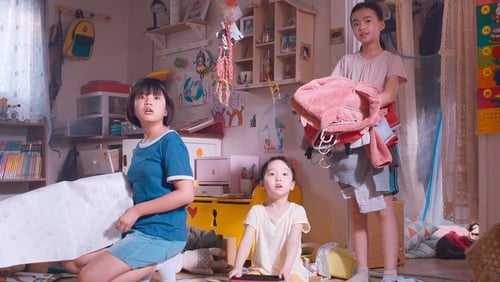
It’s not long until Hana finally comes across two younger girls who quickly become her two best friends. Sisters, Yoomi (Kim Shi-A) and Yoojin (Joo Ye-Rim). The three spend much time at the flat of the two sisters, which when it’s revealed that it has been put up for sale, they try to do all they can to put visitors off from even having a proper look round. It’s the friendship between the three wonderfully performed central figures that brings about much of the heartwarming innocence and joy of the film. It’s almost impossible to remove the smile from your face during the scenes of the girls simply talking to each other and using their imaginations to create their own fun, enhanced by the brightly lit colour palette that much of the scenery holds. Without the worry of parents arguing, neither of Yoomi and Yoojin’s parents seem to ever be present, however the time the girls spend together removes any worries and is treasured even more when compared to their separate home lives, and the gradually rising fear of childhood separation.

While what there is of plot isn’t overly grand, sprawling or complex there’s something about the overall simplicity of Yoon’s feature that makes it shout all the more louder. Guiding the viewer into the one that’s created and allowing them to forget most of their worries for just over 90 minutes as they find themselves swept up in all the different emotions that her film has to offer. While the loose narrative does make the film begin to ebb towards the end, feeling unsure as to what should be its final note and beginning to feel slightly overdone there are still hints of the uplift and sadness that the previous scenes were overflowing with. And for most of the piece there’s something about the overall simplicity that brings about much of the heart.

While it might begin to ebb in the final stages the overall heart, warmth, emotion and joy of childhood innocence that Ga-eun Yoon holds closely in The House Of Us is more than enough to make it a truly treasured experience.

Rating: 4 out of 5.

LFF 2019: Jojo Rabbit – Review

Release date – 1st January 2020, Cert – 12, Run-time – 1 hour 48 minutes, Director – Taika Waititi

A young boy (Roman Griffin Davis), who idolises Hitler to the point where he is his imaginary friend (Taika Waititi), discovers that his mother (Scarlett Johansson) is hiding a Jewish girl (Thomasin McKenzie) in their house.

“People used to say a lot of nasty things about me. Oh, this guy’s a lunatic! Oh, look at that psycho he’s going to get us all killed!” mimics Taika Waititi in character of Adolf Hitler, sarcastically shrugging off the comments of other people before he became leader of Germany. Or rather, in character of Adolf Hitler, the imaginary friend of Jojo Betzler (Roman Griffin Davis), a 10 year old boy whose dream it is to be the perfect Nazi; devoting himself as much as possible to the Hitler youth. After a harsh grenade incident, during an activity at a training camp, he takes it upon himself to roam around the local town with propaganda posters and leaflets. For those going in to Jojo Rabbit expecting a biting, scathing satire and commentary on modern politics this line of dialogue is almost as close as the film gets to the “anti-hate satire” tagline used on most of the marketing. Instead audiences are treated to the standard sweet Taika Waititi style of storytelling that many have grown to love over the last decade, with the likes of Boy and Hunt For The Wilderpeople.

While being set in Nazi Germany towards the height of World War Two there’s a great deal of warmth to this latest Waititi feature. Much of the story revolves around Jojo conversing with the Jewish girl he discovers living in the walls of his house. Elsa, played by Thomasin McKenzie (giving another wonderful turn after her stunning breakout role in 2018’s Leave No Trace), goes along with Jojo’s delusions based around Jewish stereotypes spread by the Nazi regime, using them against him so that she can stay safe in the walls of his house. As with much of the comedy in the film, endlessly ridiculing Hitler, the gestapo and basically everything to do with the Nazi regime, Waititi is never afraid to go deep with the finely tuned elements of drama. Elsa is very much a tragic character; attacked and scarred by the war, alone and afraid. When told by Jojo’s mother (Scarlett Johansson) “you have lived a thousand lifetimes” she sorrowfully replies “I haven’t lived at all”. During a number of the more serious and sombre moments, especially in the third act, the film almost seems to recollect a feeling similar to the final moments of Blackadder. This is a piece of cinema with the rare ability to be able to go from pure side-splitting joy to straight seriousness in a split second.

As the narrative develops and the relationship between the central two figures grows the balance between drama and comedy, upset and uplift is always masterfully kept. At one point it’s almost impossible to wipe the huge grin off your face while doing the same with the stream of tears from laughter, soon turning into ones of emotion. The tonal transitions from scene to scene are effectively handled and manage to have great impact on the viewer. Allowing for a greater connection to be formed with the characters, and therefore with the rather odd and offbeat world that’s created.

The more time Jojo and Elsa spend together the more the imaginary form of Hitler becomes sidelined. While the comedic element still remains, Hitler almost acting like a belligerent child annoyed that their friend, or parent, is talking to someone else, as higher levels of drama are introduced the levels of rage shown begin to rise. Waititi’s performance, much like the screenplay and the film he perfectly understands and directs in such a way, is a layered one that genuinely deserves awards recognition – like many other elements of the film. In fact the rest of the all-star cast; which includes names such as Sam Rockwell, Rebel Wilson and Stephen Merchant, all give wonderfully hilarious, and at times necessarily emotional and dramatic, performances.

Amongst all of this, and what could very easily be the case, the screenplay never feels one-note when it comes to the comedy. It easily covers a wide range of gags from ridicule, to simple misunderstandings and verbal gags – Johansson’s character when it’s pointed out that she isn’t eating mimes chewing on wine claiming “I’m not hungry, I’m just going to chew on these grapes” – to something as simple as Hitler diving straight out of a window just to leave the scene; something which truly needs to be seen to appreciate and understand the full effect of. All of this complimenting the contrasting drama. Both elements made ever more impactful by the use and clear and precise understanding of the other to create an overall bittersweet Taika Waititi feature. Albeit one like no other. Sticking to his recognisable themes of looking at the world from the perspective of the lonely outsider, something which Jojo Rabbit holds very closely.

There’s something about this particular product that allows Waititi to shine in multiple ways, more so than he has done in the past, while also allowing for everyone else to have their moment. Every element combining to create something genuinely masterful. Consistently laugh out loud hilarious and equally tragic it perfects the right balance to make it all the more delightful. Topped off by an overflowing sense of warmth and charm this is Waititi yet again outdoing himself by creating not only his best film so far, but also by forming what is very possibly the film we need in these often weird and depressing times.

Those going for a scathing satire will likely be disappointed by Jojo Rabbit. What you get is a perfectly balanced warm, sweet, occasionally tragic, and consistently hilarious Taika Waititi gem.

Rating: 5 out of 5.

LFF 2019: Wounds – Review

Release date – 18th October 2019, Cert – 15, Run-time – 1 hour 36 minutes, Director – Babak Anvari

A bartender (Armie Hammer) begins to be haunted by unexpected demons and images after accepting a mysterious call from a phone left behind at his bar.

Part way through the screening of Wounds at this year’s London Film Festival I was adamant that there wouldn’t be a funnier film over the next week and a half of festival films. Even my high hopes for Jojo Rabbit couldn’t have come close to the unintentionally laugh out loud nature of Babak Anvari’s follow-up to his 2016 feature debut the universally acclaimed Under The Shadow. In many ways Wounds almost seems to be the complete polar opposite of Under The Shadow, both written and directed by Anvari.

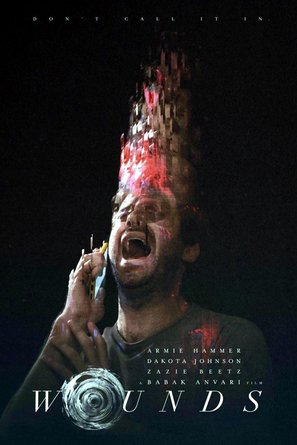
Wounds follows bartender and all-round everyday manly-man Will (Armie Hammer). When Will isn’t busy working at the bar he’s just your average everyday bloke; he plays video games and casually scratches his armpits through his sweaty pop-culture T-shirt while doing so, because, remember viewer, he’s just like you! However, Will’s life is instantly turned around when he accepts a call from a phone left behind at the bar – after a long, winding and, mostly needlessly, overly detailed opening. Soon, he begins to see images of what seems to be a dark tunnel, alongside increasingly disturbing visions of figures crawling out of wounds, skulls and bodies. The more he sees the more tormented Will feels by the phone, trying to return it to who it belongs to, which leads him to accepting more disturbing and poorly sounding calls. Something which he says is caused by “some nerd who’s into special effects”, which is also initially who it seems might have made this film.

As he falls further into insanity Will’s relationship with his non-plot-essential girlfriend Carrie (Dakota Johnson) begins to gradually crumble. Or at least whatever relationship was there in the first place does. The chemistry between Hammer and Johnson is so lacking that it’s easy to think that there are flatmates quarrelling over the electricity bill with more of a connection than these two. It’s not surprising when it seems like both the screenplay and all the performances throughout the film were bought from Ikea. At one point, when the various tunnels begin to appear on his computer, TV and phone screens – somehow possessing his partner to look endlessly into this void and becoming even more void of life than Johnson’s performance already seems to convey.

While there’s certainly nothing close to resembling any form of scare or even mild creepiness to be found in Wounds there’s no denying the slight entertainment factor that it does hold. As the second half arrives and the piece gets increasingly ridiculous and nonsensical the laughs begin to arrive. It’s almost a shame that this will only be dropped on Netflix to likely be watched by a handful of people on their own, or possibly teens with friends at a sleepover thinking that there might actually be some elements of horror. Because Wounds actually works really well as an audience experience, where multiple members of the audience are audibly laughing at the poorly constructed nature of the entire film, all stemming from a rather atrocious screenplay.

It’s highly possible that there’s a much better film within Wounds, that it started out as something scarier and potentially even more complex than the dull nonsense that it actually is. It’s been stated that the initial themes of the film related to PTSD, however when everything seems as dumb as it does it’s hard to believe that there was ever any underlying themes within this lazily constructed piece, where characters seem crowbarred in and certain narrative details tacked on just to further include them. The only thing that saves it are the laughs that it creates, and even a number of those are rather poor and only just raised. This truly is the complete opposite of Under The Shadow.

Wounds seems to have no attempt to create horror and tension, instead gaining a few laughs instead of scares. It;s certainly more of a dent in whatever Ikea product it was made film.

Rating: 2 out of 5.

LFF 2019: Make Up – Review

Release date – 31st July 2020, Cert – 15, Run-time – 1 hour 26 minutes, Director – Claire Oakley

A young girl (Molly Windsor) goes to a holiday camp to live with her boyfriend (Joseph Quinn) for the summer, however she begins to suspect that he is cheating on her with another member of staff.

A coastal town in Cornwall, spending the summer with your boyfriend at the caravan site he works at. For teenager Ruth (Molly Windsor) this seems to be nearly the perfect getaway from the restriction of her parents – who themselves disapprove of her going away. Even her having to work on the site doesn’t put a dampener on her spirits. However, the thing that does is her suspicions that her boyfriend, Tom (Joseph Quinn) is having an affair with another member of staff. Ruth becomes intent on finding out who this mysterious red haired girl is, however whether she exists or not is a completely different matter.

As Ruth makes her way through the dark nighttime maze of caravans she begins to occasionally see the figure of this mysterious person. Like a villain from a horror film she seems to just appear and disappear, only to be seen by Ruth, with no real explanation as to how this is possible. This being just one of the elements that hints at Make Up being a horror. Albeit one with no real scares or tension. It’s this lack of any real horror response that creates the feeling of this simply being a dark drama. Unfortunately this potentially accidental mixture of genre creates an unbalance cocktail of tone that never quite sits right. The film almost feels confused as to what it actually wants to be.

When combined with a plot that sends mixed messages with not much detail. Creating an overall confusing plot and set of ideas, pushed further by various flashbacks with twisted details each time, or new hints that push in different themes. Not in the style of a mystery, but a plot with almost too many ideas to deal with, all to build up to a relatively simple ending and reveal; that still leaves many questions unanswered and therefore resulting in a rather unsatisfied taste at the end of the film. Ruth’s investigation almost always seems to lead to a dead end. With everyone else denying her, or her mind simply playing tricks on her. It seems that she, the viewer and the film never quite know what’s real and what’s not – creating an overall sense of confusion and imbalance.

While Make Up initially has some promise it soon becomes confused when it comes to its overall tone and the various different messages that it seems to try to send.

Rating: 2 out of 5.

LFF 2019: The Lighthouse – Review

Release date – 31st January 2020, Cert – 15, Run-time – 1 hour 49 minutes, Director – Robert Eggers

Two lighthouse keepers (Willem Dafoe and Robert Pattinson) are left alone on a remote island for four weeks, however the isolation begins to play with one of their minds.

Back in 2015 writer-director Robert Eggers made his debut with one of the decade’s best horror films, The Witch. Much like Jordan Peele followed his equally terrifying Get Out with Us earlier this year Eggers second feature has been highly anticipated for a fair while now. Similarly tackling some previous themes of historical horror and isolation The Lighthouse sees Robert Pattinson and Willem Dafoe – equipped with glorious facial hair – as two wickers, tasked with maintaining and lighting the titular building for four weeks.

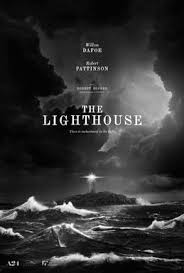
The look of the piece is a gruelling as the work depicted; dark, grey (the film is effectively shot in black and white to enhance the feeling of the 1890’s) and grimy. And much like the time on the island the film itself is a slow-burn, but an effective one. The more time that passes the more connected, or rather trapped, the viewer becomes with the world and the two central characters. As the time on the island gets extended; due to harsh weather conditions, it initially seems like the elements are against the two keepers of the lighthouse. However, as time wears on it becomes apparent that everything might not quite be as it seems. Pattinson’s character begins to experience haunting visions. What isn’t made clear is the nature behind such visions. Is it the harsh conditions? Is it the island itself? Is it the drunken nature of his character – although one that can’t even begin to compete with that of Dafoe’s commanding booze-hound, Thomas Wake. Is it simply his own madness at being left on such a small patch of desolate rock for so long? Or is it the light of the lighthouse itself? An area of the building in which Thomas never allows Pattinson’s Ephraim Winslow to enter. The way the light is restricted and referred to makes it seem like something alien, something which Ephraim begins to feel like as his potential delusions become increasingly frequent and realistic.

With elements such as this it would be easy to compare The Lighthouse to the likes of The Shining, a number of the close-ups throughout the film almost seem to be inspired by this film in particular. Focusing on the terrified eyes of Ephraim’s tormented figure much of the sea-salt coated narrative is told through these eyes. All building up to the point where Eggers, along with brother Max; who has co-written the screenplay, flicks the switch from intermittent bursts of torment to a constant stream of madness. With the claustrophobic, restrictive and pressured feeling of the island still weighing heavily, through Jarin Blaschke’s stunning, highly cinematic, cinematography the full intensity of this mostly two man piece is released.

There are many undertones and possible themes within The Lighthouse. One prominent potential theme is that of male repression. Holding in personal feelings, rage, upset, boredom and even sexual frustration to lead to demons of all forms on the outside. All making for an intense, unique and deeply unnerving cinematic experience filled with detail and enough to make the most ordinary of seagulls appear as far, far worse than just the chip stealing thieves they might initially seem.

Highly cinematic and deeply unnerving when mixed with the intense performances, drab look, and detailed nature of the piece you’ll leave the desolate madness of The Lighthouse not knowing what’s real and what’s not.

Rating: 4 out of 5.

LFF 2019: Blackbird – Review

Release date – N/A, Cert – N/A, Run-time – 1 hour 37 minutes, Director – Roger Michell

A family regather for one last time together to say goodbye to their terminally ill relative (Susan Sarandon).

Almost every year during that patch between Boxing Day and the New Year, while all the big pre-Christmas blockbusters are still competing at the box office, a small film is usually dropped into the market to often mixed or somewhat weak reviews. Either a drama with ideas somewhat similar to It’s A Wonderful Life, a mild family based comedy-drama or just a generic American family comedy; all of these almost always having a big name ensemble cast. Blackbird – while not currently having a release date – falls into the second of these categories. Adapted from his 2014 film Silent Heart writer Christian Torpe pens the story of a family coming together as the terminally ill mother (Susan Sarandon) prepares to live her final days; choosing to quietly take her life rather than suffer by gradually being locked in her own body.

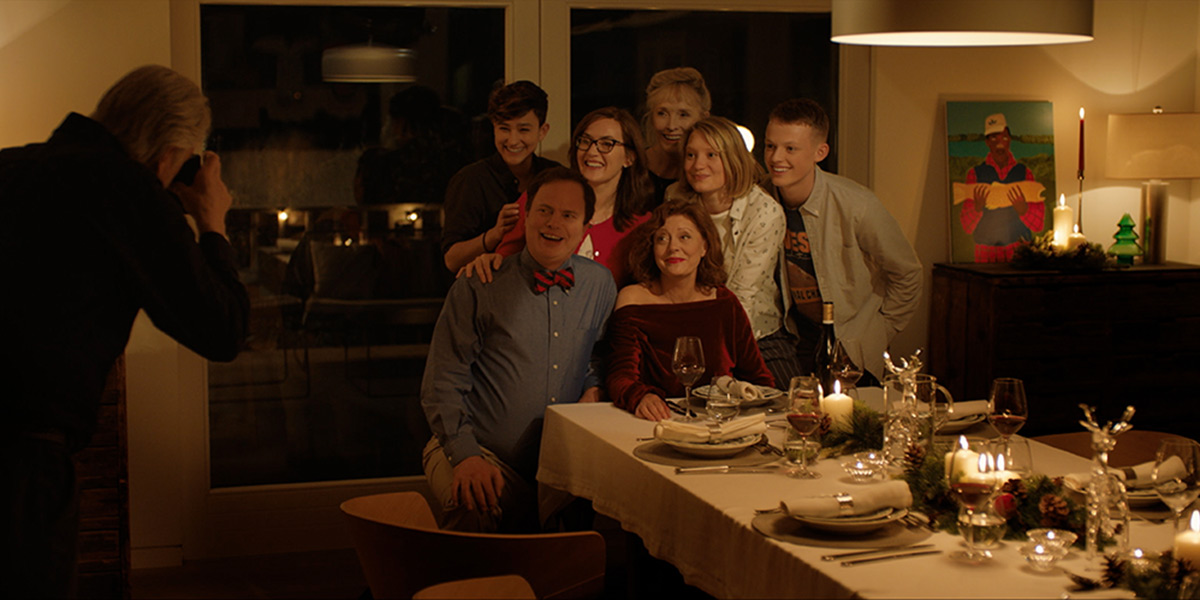
This decision is, of course, met with varying responses from the family. While husband (Sam Neill) and daughter, Jennifer (Kate Winslet), seem to be fine with the idea other daughter Anna (Mia Wasikowska) secretly wishes for more time to spend with her mother, objecting against the idea. Add into the mix the boring husbands, latest partners, and children of the family, and the best friend of Sarandon’s character (featuring names such as Rainn Wilson and Lindsay Duncan) and the different opinions of the group begin to show and create tensions in what’s intended to be a time of calm.

It’s clear from the subject matter that Blackbird could easily be seen as a straight upsetting drama, however Torpe’s screenplay chooses to inject comedy into the piece to create a lighter tone, possibly with the intention of creating a more human piece. However, the scenes throughout the film appear to alternate between comedy and drama, giving a sense of imbalance. With this being the case it almost feels as if the film itself isn’t sure as to whether it’s a comedy or a drama, as often it certainly feels as if it’s not a mix between the two. A feeling that’s further brought about by the occasionally improvised feel to a number of scenes, some feeling as if they are being performed on a stage rather than as a part of a film – in fact you could easily be forgiven for thinking that this was an adaptation of a play rather than another film. The lengthy nature of some scenes and interactions further creating the stage-like feel that large amounts of the film hold.

While there are one or two laughs throughout the piece, coming from conventional places such as misunderstandings or a bickering family. Much of Blackbird’s central ideas and moments come from places of convention. To an extent this is a film that has been seen a number of times before, making this feel particularly cliche and at times nothing more than rather cheesy, as is possibly to be expected from a feature such as this. The performances throughout are perfectly fine and in many ways reflect the conventional nature of the film. Piecing together as each new element is brought in. Adjusting to the tone depending on what the scene or moment requires, confliction, upset, humour or even just displaying the feeling of casual memories of walking a route taken during childhood. In fact if there’s one box that the film and the performances within it don’t tick it’s that of subtlety. While there is some slight subtlety scattered throughout the piece much of the tone and ideas attempted to be conveyed are mostly very matter of fact, although not quite bordering on being in the face of the viewer.

When everything is brought together the final result is something very safe and conventional. Playing to what we’ve seen a number of times and therefore not quite packing the emotional punch, or at times comedic point, that it may be aiming for it overall feels rather average. The performances are fine and the screenplay, might like the film itself, might feel slightly improvised and tonally imbalanced at times, but overall the film is perfectly fine. It has some decent enough elements and goes through with enough ease to make it a perfectly fine mild family based comedy-drama that fits in with the likes often released between Boxing Day and New Year.

Blackbird has a number of tonal issues, often brought about by the slightly improvised feel. And while it does seem to heavily rely on convention it’s perfectly fine for what it does, and the big name cast also puts in a good turn to help keep things going.

Rating: 3 out of 5.