LFF 2019: Nocturnal – Review

Release date – N/A, Cert – N/A, Run-time – 1 hour 26 minutes, Director – Nathalie Biancheri

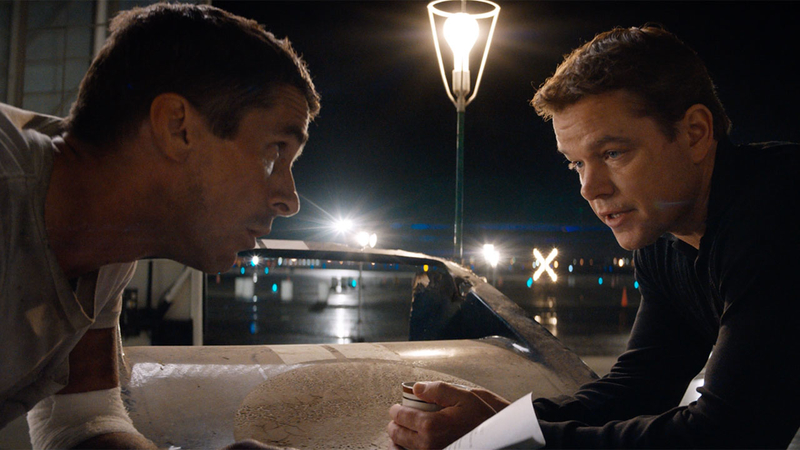
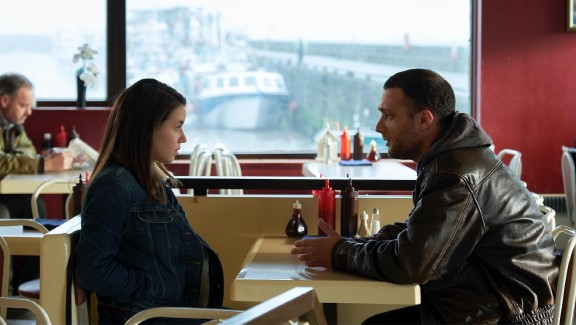
A man in his 30’s (Cosmo Jarvis) begins to form a close bond and relationship with a schoolgirl (Lauren Coe)

The basis of Nathalie Biancheri’s narrative feature directorial debut is a rather simple one. A man in his early 30’s (Cosmo Jarvis), after tensions with his partner begin to rise, and she storms out of his flat in the middle of the night, begins to form a relationship with a schoolgirl (Lauren Coe). Pete’s life is one of repetition and little excitement, he spends his time as a self-employed painter and decorator, before returning to his drab and barely decorated flat. However, his life seems to change when he meets schoolgirl Laurie. His interests appear to immediately shift, almost forgetting his girlfriend entirely in favour of this young figure who grabs his attention from first sight.

It would be easy to tag this film as creepy and just plain unacceptable, however, somehow for much of the short run-time the film avoids stepping into areas of discomfort. Instead there’s something rather interesting about the piece and the way that it handles its themes. The screenplay, and indeed the performances, is subtle and considered. The film itself feels somewhat relaxed, helping to bring the viewer into the film, and wanting to see what happens to the characters. Characters who as they develop begin to introduce elements of tension into the film with their crossed and conflicting intentions and feelings. In fact the only major moment of discomfort is when Laurie, playfully flirting with her new, older, friend says “33, like Jesus. Better than Jesus”. It’s this praise and flirtation that brings in a sense of unease and worry as to where the film might go. However, as the film proceeds it goes back to it’s initial relatively calm, not too challenging, tone that just about gets away with its themes. Being more interesting instead of inappropriate.

Jarvis’ central role not only solidifies his status as one of the next big names in British acting but shows a layered and thoughtful performance. One that invests the viewer who almost feels the need to try and unpick the slightly mysterious figure that they see on-screen. Mixing in hints of anger, confusion and almost a sense of loss – something which Coe gets across in her performance, but to connect more with her own generation and with rather different thoughts for her character – which further highlights the laid-back nature to the quieter scenes involving the central pairing.

Much of the film is quiet, very conversational and thoughtfully paced. It might sometimes not go quite further than the general basis and themes that the plot entails, however there are one or two surprising areas to which the film goes. And with it all done in the short, fairly quick 86 minute run-time the film is concise, does what it does and does it fairly well. With good performances and a lack of creepiness that is alone to be commended it’s a decent and quite interesting piece, especially for a directorial debut from a director who looks set to bring about some very interesting naturalistic British cinema in the years to come.

While at times it might seem somewhat basic Nocturnal is an overall good watch. With an interesting tackling of themes and ideas, and good performances it’s worth it just for the way that it avoids creepiness and the acting and directing careers that it will surely launch further alone.

Rating: 3 out of 5.

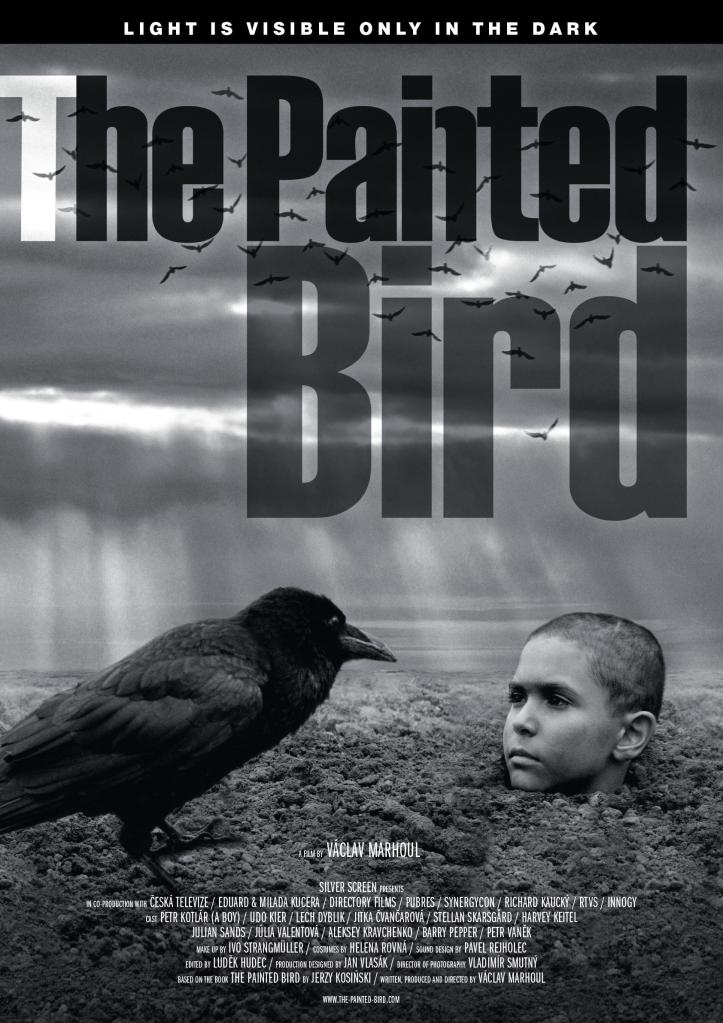
LFF 2019: The Painted Bird – Review

Release date – 27th March 2020, Cert – 18, Run-time – 2 hours 49 minutes, Director – Václav Marhoul

A young Jewish boy (Petr Kotlar) must fend for himself in the hostile landscape of World War 2 Eastern Europe.

Writer-director Václav Marhoul has claimed about his latest feature – his first for 11 years – that his decision to make it in the Interslavic language (the first feature film ever to do so) was made so that no Slavic nation would nationally identify with the story. Which seems like a good tactic as it turns out that almost every character in The Painted Bird (based on the novel of the same name) is a terrible, terrible person. Almost every single figure that Petr Kotlar’s young character, who for almost the entire film remains nameless; simply labelled as “A Boy”, comes across feels the need to beat and abuse him, and not just the Nazi soldiers who attack any Jewish person they come across.

Kotlar’s character, who’s almost always on-screen, finds himself walking the harsh landscapes of a cold, desolate Eastern Europe during the heights of World War 2 after his aunt dies, his parents having sent him away to avoid antisemitic attacks. For the remaining two hours and forty minutes the central figure finds himself coming across a range of different people, taking residence with each of them and being abused and effectively tortured by each sadistic mind he comes across. You’d think that there’s only so much child abuse, torture, attacks, murder, sexual abuse and much more that you could put in an almost three hour film, however at times it seems that Marhoul thinks otherwise. Yet, somehow he’s managed to bring some fairly big names such as Harvey Keitel and Stellan Skarsgård on board.

Amongst all the drab and lengthy sequences that the film has to offer, the dehumanising nature of which is enhanced by the black and white nature of the film – despite almost always seeming as if it’s in colour – and the cold, isolated feel to every scene and landscape that the main character comes across. There are admittedly some rather powerful scenes – seeing a large group of Jewish people trying to run for their lives from a train likely bound for a camp as various Nazi soldiers mercilessly shoot at them is deeply effective at creating a helpless sense of emotion. One that contrasts well with the, at times, rather boring nature of a number of other scenes and ideas that the film has to present. Much of it told through a relatively episodic nature, as the boy goes from place to place, person to person and generally seems to start a new chapter and restart multiple times – potentially something carried over from the novel of the same name, which the film is adapted from?

It’s easy to figure out part way through the first act that The Painted Bird is a very arthouse film for a very specific, rather niche audience. Who that very specific, rather niche audience is I’m not quite sure. But then again the overall lengthy nature doesn’t help, the feeling that the film could do with some editing, especially during the longer scenes and extended sequences, It all makes for the film being a mixed-bag. Leading the final product to be something that can be appreciated and simply just watched rather than properly liked, it certainly can’t be enjoyed due to the subject matter and overall tone of the piece. I’m certainly not the target audience, whatever that audience might be, and this, if there is any type of film that isn’t my type of film, probably isn’t my type of film, so can I really be a person to give an opinion on it, probably not? But, while it has some good points and there are a number of merits throughout, The Painted Bird is a very, very long film, the length not quite helped by the highly bleak and depressing tone and feel of the piece.

The Painted Bird is a long, long film and often one that, while holding some powerful and effective moments; which are sparingly used for effect, is too bleak and depressing to properly engage with and feel a part of the world. The style can be appreciated more like ‘liked’. However, as I say, if there’s any, this certainly isn’t my type of film.

Rating: 2 out of 5.

LFF 2019: Le Mans ’66 – Review

Release date – 15th November, Cert – 12, Run-time – 2 hours 32 minutes, Director – James Mangold

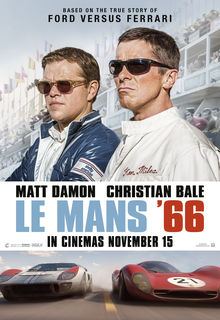
Race car designer Carol Shelby (Matt Damon) and driver Ken Miles (Christian Bale) battle the lead figures of Ford to create a car that will beat Ferrari at the 24 hour Le Mans race.

Ford Vs Ferrari is the better title, that seems to have been one of the main agreed thoughts when it comes to Le Mans ’66, as it’s been labelled in the UK. It seems that the studio have taken the opinion that the 24 hours at Le Mans racing competition is well known enough in the UK for that to be the title, instead of the Ford Vs Ferrari label – which arguably better conveys the competition that the film tries to get across. Following race car designer Carol Shelby (Matt Damon) as he’s tasked by the Ford motor company to build a car in only a matter of months that could beat the consistent winners of the race, Ferrari. Shelby finds himself recruiting driver Ken Miles (Christian Bale) – and somewhat questionable Brummie accent – to help him build the hopeful winning car, despite the disapproval of senior Ford figures, who want to keep a clean image, which the prone-to-outbursts Miles has made a name for. An early scene showing him calling a race official an “arsehole” when his car is apparently not fit to race, something which he quickly fixes with a few hits from a hammer.

“This isn’t the first time that Ford motors has gone to war in Europe” explains Henry Ford II (Tracy Letts) to Shelby as he explains his ambitions in hoping that winning the competition will make his cars more attractive to a younger audience of post-war buyers. It’s lines of dialogue like this that capture the attention of the viewer and bring them into the world of the film; not lines like “cor blimey, did you see that?” However, while the dialogue fluctuates much of the film is rather conventional. The more talky scenes that make up most of the two and a half hour run-time of James Mangold’s latest are filled with a sense of convention, which at times leads to a slight lack of connection with the characters at the centre of the piece. It’s also such moments that make the film really feel like two and a half hours.

What does work though are the racing scenes. The general look and, especially, sound of such moments is engaging, and slightly thrilling. Bringing the viewer in for relatively fast-paced sequences, especially in the extended third act race finale – the definite highlight of the entire film, even if you do have to go through almost two hours of build-up to get to it.

There are enjoyable moments throughout the film, some slight moments of humour, often coming from Bale’s easily agitated figure, even if every attempted beat doesn’t quite work. Emotion or major moments of character development also don’t quite get across either. A moment of Ken talking to his son (Noah Jupe), explaining the perfect lap, doesn’t quite work and almost begins to feel slightly forced, as does much of the emotion or moments of close character bonding, often between Ken and his wife (Caitriona Balfe) or son, that the film tries to get across. Through tensions of whether he should race to earn money, after his car workshop has been forcefully closed down and he has no other major source of income, despite telling his wife that he had retired from racing. The only major thing pushing him on being his son’s equal passion for cars and racing and his own love for the pair.

And it’s clear that the main love and effort for the film has been put into the energy and flare held by the racing scenes, and the majority of moments based around driving a car at a high speed around a track. The editing and sound makes them what they are and very much puts the viewer in the front seat, perhaps not the driving seat but definitely the passenger seat. The racing scenes are the true energy of the film, while what else there is is still lightly enjoyable the convention definitely gets in the way at times, alongside Christian Bale’s slightly wobbly accent.

The racing scenes are the true action and heart of Le Mans ’66, while the rest of the film is perfectly fine it’s deeply rooted in convention and at times feels safe to the point where the two and a half hour run-time begins to be felt.

Rating: 3 out of 5.

LFF 2019: Vivarium – Review

Release date – 27th March 2020, Cert – 15, Run-time – 1 hour 37 minutes, Director – Lorcan Finnegan

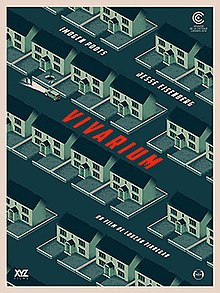
A young couple (Imogen Poots and Jesse Eisenberg) find themselves trapped in a maze of identical houses, forced by a never seen figure to live their lives in one.

From the moment that young-couple Tom and Gemma (Jesse Eisenberg and Imogen Poots) step foot into a creepily symmetrical estate agent, the only member of staff being Jonathan Aris’ robotic Martin, the levels of unease and tension that run throughout Vivarium are firmly established. Throughout the entire film everything never quite feels right, and as the couple soon find themselves stuck in a maze of identical houses. No matter what they try they seem to keep coming across one specific house – the one it seems that the invisible onlookers of the housing estate have designated them to live in.

Soon, the pair find themselves receiving deliveries of tasteless food, packages neatly placed outside their house from more invisible figures, and then a baby. The pair are told, as they become increasingly desperate for escape, that they must bring the baby up and then they can be set free; something which they doubt will actually be the case. The longer the couple spend in the vivarium like residency the more their mental states begin to decline, and they begin to resort to basic animal instincts. While Gemma is able to keep herself slightly sane, Tom finds himself ready to attack, desperate to leave – constantly digging in the front garden in the hope of finding some way of making a tunnel out.

In many ways the slow-burn of the short 97 minute run-time, watching the two central figures slowly go insane and loose their patience and general senses has feelings of The Shining. However, Vivarium is a very matter of fact film, it stays grounded and to an extent relatively realistic, before releasing everything in the final 10-15 minutes. Effectively unnerving, helped by the two strong performances at the centre of the piece, and wonderfully written, tension and mistrust are built up from the very start. In many ways Vivarium shares similar style and ideas with the more horror oriented episodes of Inside No 9. Holding a creepiness and unease that will stick with the viewer long after they’ve left the cinema.

The only thing that the sense of horror gets in the way of is the other tones that the film tries to sporadically introduce. Emotion and humour don’t quite break through in the way that director Lorcan Finnegan and writer Garret Shanley may have hoped. However the general fear factor that the piece so effectively holds is never lost or broken, leading to a crazy, acid-trip like finale filled with scares and originality. The overall film itself might be simple, but there’s no denying the effect that it has. Fuelled by two intense performances and an atmosphere that overflows with creepiness Vivarium is a fantastically made horror filled with tension, fear, insanity and a general state of madness. Nothing will be quite the same by the time it finishes, leaving a cold chill down the back of the viewer long after the credits close.

Insanely creepy and powered by two intense performances, Vivarium is a truly messed-up acid trip akin to an episode of Inside No 9. Taking the viewer for a greatly enjoyable, unpredictable ride of tense madness.

Rating: 4 out of 5.

LFF 2019: The Disappearance Of My Mother – Review

Release date – N/A, Cert – N/A, Run-time – 1 hour 34 minutes, Director – Beniamino Barrese

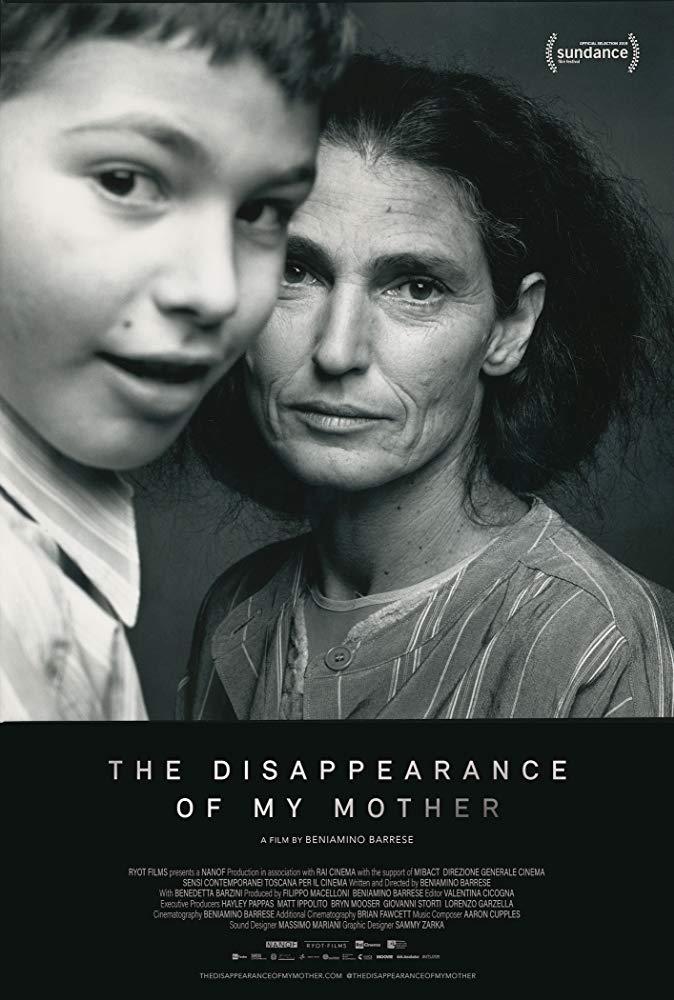
Once iconic model Benedetta Barzini has the intention of disappearing from the view of the world, however her son, Beniamino Barrese, decides to make one last film of her, despite her protests

Benedetta Barzini has spent the majority of her life in-front of a camera. As a once iconic model she once appeared on the front covers of some of the world’s most famous and influential fashion magazines. However, she now has the intention of disappearing, vanishing from the view of the world to an isolated island of her own. On hearing this her son, director Beniamino Barrese, decides to document his mother in case she disappears, despite her constant protests. It’s evident that Barzini still very much loves what she does and takes her modelling work very seriously, however for someone who is famous for being seen through a lens she tells her son “the lens isn’t you. The lens is the enemy”. She feels tired and simply wants to retire and be left alone.

It’s evident from much of the film that Barazini is a deeply intelligent and thoughtful figure. Her life experiences – some of which are recreated by her son, who hires a number of actresses to take on the persona of his mother in her youth, recapturing old footage or pictures of her – and wisdom shines throughout the film and makes for an utterly compelling subject. And yet amongst all her disheartening upset and anger over the film that’s being made about her she still manages to inject a fair deal of humour into the piece. Her objection against the creation of the documentary varies, at one moment her taking against it can be rather funny, whereas at others it can be genuinely saddening. For both her and her son, who doesn’t want to say goodbye to his mother. The contrasting views of mother and son create for a rather touching and thoughtful final product that never once feels heavy-handed or forceful.

This is a deeply personal piece for Barrese, capturing his relationship with the woman who brought him up, attempting to keep a time capsule of his memories of her. One which connects with the viewer on an emotional level, allowing for them to see the personal lives of the two, their bond and therefore bringing them in for an emotional journey over the course of 94 minutes. 94 minutes which goes by rather quickly as the outside world is forgotten, the only thing that matters is the woman at the centre of the film. By the end the audience is simply consumed by emotion, desperately wanting to know what happens and whether the titular mother decides to go through with her disappearance or not. While she seems adamant that it’s what she’ll do – saying “I don’t give a damn what island, I just want to be able to go away” – the more she’s shown to spend time on the catwalk – moments that are genuinely lump-in-throat tense and emotional – and with her friends you begin to think that she might not actually ever leave, or that she might somehow be trapped in the life she lives.

“It was the first time that somebody wanted me, specifically me. And it felt good” she says about when she was first picked up as a model. Her opinions have changed as she’s gotten older and she’s certainly become far more insightful and interesting. For such a simple basis for a documentary it’s one of the most compelling, investing and emotional docs of the last few years. While the central focus brings in enough emotion and humour to power the film through what truly makes it is the connection and relationship between the mother and her son who documents her. It might be one very personal story for the son/ director, but it connects deeply with the audience and compels them in emotion for almost the entire, quick-flowing run-time.

Engaging, interesting and deeply compelling The Disappearance Of My Mother is a passionate, personal yet welcoming documentary. Flowing with emotion, humour and a wonderfully engaging subject it just clicks and works right from the start.

Rating: 4 out of 5.

LFF 2019: The Aeronauts – Review

Release Date – 4th November 2019, Cert – PG, Run-time – 1 hour 41 minutes, Director – Tom Harper

A scientist (Eddie Redmayne) and a widowed adventurer (Felicity Jones) embark on a hot air balloon trip to go higher than any man has ever gone.

1862, the weather as we know can’t be predicted as it is nowadays. Scientist James Glashier is adamant to change the way that it’s done, by going higher into the sky than any man has ever gone in a hot-air balloon. Assisting him is widowed pilot/ adventurer Amelia Wren. From the very start of the film, where Glashier is worried about setting off on time and achieving his scientific discovery, tracking each and every element of the flight, Wren is more concerned with dressing up in bright colours and heavy make-up to put on a show for the crowd. For much of the film this seems to be as much character detail and development that we get for the 101 minute run-time. Not a great deal changes over the course of the unfolding events.

The events of the film are very much split between the events in the balloon, and the risks of going higher, as air runs out and the balloon itself begins to freeze, and flashbacks to how the central pair met. Much like the two leads there’s very much a contrast between the styles of what sometimes seem like two very different narratives. While the flashbacks seem very conventional – a typical period drama of people wanting to achieve their dream despite the disapproving views of other people – the events in the sky are the highlights of the film. The sense of height, while not always being felt, does have an effect, sometimes feeling similar to the main event in Robert Zemeckis’ The Walk.

There are moments where Jones’ character braves her life and climbs up the side of the balloon where there is a genuinely breathless feel. However, it only creates the wish for more moments like this, more impact and connection with the otherwise predictable and conventional piece. The flashbacks very much come in and disturb the flow of the piece, slowing things down, feeling as if they could be put at the very start of the film and told in a much shorter, more concise way. To briefly establish the context and then allow the main action during the flight to take centre stage, even if that is still coated in a, admittedly slightly thinner, veneer of convention; removing some of the potential thrills, until the final act of the piece when the true scale of threat and danger comes into play.

All this not helped by the lack of connection that the viewer feels with the film. While during the key scenes there’s a slight sense of connection the high levels of convention, and feeling that what’s happening has been seen done a number of times before in a better, more ambitious way.

While the two leads, of course, give good performances there’s a great deal of convention to The Aeronauts that blocks a proper connection and doesn’t quite allow it to fly as high as it might hope.

Rating: 3 out of 5.

LFF 2019: Calm With Horses – Review

Release date – 13th March 2020, Cert – 15, Run-time – 1 hour 40 minutes, Director – Nick Rowland

Douglas (Cosmo Jarvis) is the tough enforcer for an Irish crime family, however he becomes increasingly torn between his crime life and his actual family, especially when asked to kill for the first time.

“Violence isn’t always in, it’s sometimes just the way a fella makes sense of the world” states former boxer Douglas (Cosmo Jarvis). The tough-man enforcer for the Devers family. A notorious crime family in rural Ireland, led by Barry Keoghan. Douglas’ life almost seems to be dominated by violence, he craves to be back in the boxing ring but after multiple injuries he has to live life by beating those that the Devers family is out for. However, things take a turn for the worst when he’s told to kill for the first time in his life. Douglas finds himself torn between his life of crime and his actual family, including his five year old, highly autistic son, Jack. The contrast between the two lifestyles clearly shown, Douglas’ house is dark and shaded, much like everything he comes into contact with when with the Devers, whereas when spending time with his son things are brightly lit, if slightly grey-washed.

Debut director Nick Rowland does a fantastic job in conveying the true scale of the violence that lines a number of the scenes in the film. Each beat is flinch inducingly tense, bringing in elements of slight discomfort and unease to create a truly impactful feel. Fuelled further by the fast-paced editing and the overall gritty feel of the piece the bloody nature of the film is truly felt, the right sense of darkness being used to enhance the world that Rowland, and screenwriter Joseph Murtagh, creates. As the third act comes into play there are hints of Edgar Wright’s Baby Driver in that once one thing goes wrong it’s all downhill from there. The tension being ramped up to an edge of your seat style finale; where anything can happen.

This all contrasting with the moments of calm that Douglas experiences. He discovers the pure joy of riding horses, something which he begins to have in common with his son – the scenes where he tries but fails to connect being truly upsetting and disheartening. During such moments there’s a genuine sense of uplift, a pure smile comes to the face of the viewer during this time of relief, something akin to therapy. The performances throughout helping to perfectly capture the tone of each scene.

Each performance in the film is truly outstanding, capturing the real essence of each character, adding new layers as the plot progresses. In fact the performances that steal the show are those of the supporting cast – especially Niamh Agar as Douglas’ suffering ex, Ursula. Showing the struggles, stresses and gradual breakdown of the character as she worries about her son’s future – wanting to move to Cork so that she can enrol him in a school that will be able to cater towards his needs more than a standard one would.

As all the fears and worries of Douglas’ life begin to rapidly escalate so does the overall sense of darkness, grit and tension that the film so wonderfully encapsulates. Everything is clearly planned out, thought-through and generally sculpted to heighten the investment and engagement of the viewer within the world created. One that feels grounded and realistic, forming a stronger connection with the deeply conflicted nature of the central figure. When mixed with the believable, yet brutal, nature of violence which is sparingly used and carefully crafted, there’s a lot to enjoy about Calm With Horses. From the clearly passionate input from all the cast and crew to the various effects on the audience. Rowland shows with his directorial feature debut that he’s put a great deal of time and effort into his craft, and it shows to strong effect. Demonstrating great future promise for a director who may very well become the British equivalent of the Coen Brothers.

Dark, gritty and equally emotional there’s a great mixture of feelings poured into the passionately made Calm With Horses. Fulled further by top editing and performances it’s a deeply unflinching drama from a promising rising talent who’s sure to be a huge name in British/Irish cinema very soon.

Rating: 4 out of 5.

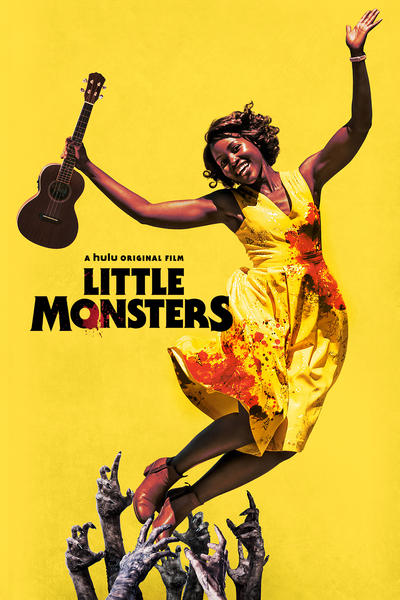
Little Monsters – Review

Cert – 15, Run-time – 1 hour 34 minutes, Director – Abe Forsyth

A failed musician (Alexander England), pre-school teacher (Lupita Nyong’o) and a kids TV show presenter (Josh Gad) team up to save a group of children from a wave of zombies

After her deeply chilling, Oscar worthy performance in this years Us one of the instant thoughts was where would the actress go from there. Well, it seems that the only option was to stay in the horror vein, while introducing a lighter tone with elements of comedy in zomcom Little Monsters. Nyong’o plays Miss Caroline; a pre-school teacher on a trip with her class to Pleasant Valley, a family attraction that just happens to be based next to a U.S. military base, to see American kids TV presenter Teddy McGiggle (Josh Gad). On the trip she’s assisted by deadbeat failed musician Dave (Alexander England), the uncle of one of the kids on the trip who offers to help in the hopes of getting close to Miss Caroline – who he soon finds out is engaged.

You’d be excused for being easily mistaken by the tone of the first 20 minutes that Little Monsters may simply be a film just about David’s struggle. A failing busker getting into consistent arguments with his sister, who he lives with along with his nephew – although angering her to the point of getting closer to being thrown out due to his reckless lack of effort. However, after the slightly mismatched opening, the film soon becomes a zombie fulled comedy. It turns out that the military base next door to the small farm and mini-golf course has accidentally released zombies created after an experiment gone wrong. Soon, the otherwise desolate area is filled with flesh-eating zombies. The three adult figures soon have to team up and protect the class of kids with them.

Miss Catherine distracts the kids by treating the entire life or death situation like a game. Singing to them – ukulele almost always in hand – and imaging that running away from the zombies is simply a game of tag. As the situation worsens so does the desperation of the teacher, and the sanity of the other adult figures begins to lower. Teddy McGiggle begins to break character, showing his true angered sweary self. Swearing which the kids consistently respond to by singing about how a bad word was said – leading to further angry swearing from the commonly restrained and laid back characters that Gad has become known for.

While a number of the film’s gags are relatively similar, and sometimes feel like the same joke stretched out for an extended period of time, there’s something about the unique and somewhat light nature of the film that makes it enjoyable. Helped by the performances, and the ever enjoyable presence of Nyong’o, the lightness of the film is what brings the viewer into the world, and creates the majority of the laughs. All contrasting well with the occasional gore and bloodshed as the normally smiley teacher beats multiple zombies with a spade.

There are moments that do feel like they’re put in just to make this feature length, and almost give the impression that this concept may work better as a short film. However, when it comes to the overall feel and style of the piece such thoughts and worries are forgotten about and the pure entertainment factor takes over. The world isn’t exactly detailed, and neither is the plot, but there’s something about the low-budget thrills that creates the funny, engaging and rather imaginative nature of the film. Overall making for a fine, bloody zomcom filled with energy and creativity, further reviving what many were beginning to think was a dying genre.

Nyong’o shines in this funny, inspired and uniquely creative zombie-comedy which while simple has fun with what it does and does it rather well.

Rating: 4 out of 5.

Last Christmas – Review

Cert – 12, Run-time – 1 hour 43 minutes, Director – Paul Feig

A Christmas shop elf, Kate (Emilia Clarke), begins to roam the streets of London with a mysterious stranger, Tom (Henry Golding)

Wham!’s Last Christmas is undoubtedly one of the biggest Christmas songs of all time, next to Mariah Carey it’s possibly one of the seasons most heavily rotated tracks. It also seems to be the only song that anyone in the Emma Thompson co-written (with Bryony Kimmings) Last Christmas has heard of, next to Jingle Bells. Every brightly-coloured (like the wine selection of The Crown in Hot Fuzz, either red or white) high-pitched novelty item in the all-year Christmas shop that central figure Kate (Emilia Clarke) works at seems to have the song available to play at the push of a button.

It’s been made clear that Last Christmas is very much inspired by the music of Wham! and George Michael – almost every transition between scenes or moment of casual happiness for Clarke’s generally unorganised character is set to a brief snippet of a song from either name. Kate is a disorganised dispassionate figure, prone to breaking friendships with her clumsy mistakes, spending most of her time drinking in bars before going home with whoever will chat her up, simply so she has a place to sleep for the night. All this due to her apparent broken relationship with her out of control mother (Emma Thompson), a traditional former Yugoslavian, who she refuses to go back home to.

However, it’s not long until; in common London-based rom-com style, that Kate bumps into a handsome stranger, the mysterious Tom (Henry Golding). Initially the two bump into each other outside Kate’s work at an all-year round Christmas shop, run by a strict Michelle Yeoh (apparently named Santa), where she dresses in a bright green elf costume, while she’d rather be working on the stage, her passion for singing stemming back to her childhood. Gradually the pair begin to bump into each other all across London, roaming the streets and alleyways of the nighttime scene of the brightly-lit city flooded with Christmas decorations. As the two get to know each other more the film ticks off a quickly increasing amount of cliches, in terms of both gags and the overall storyline.

But, despite this it seems that Kate’s life is still taking many turns for the worst, as she gets closer to Tom she begins to become increasingly upset about his constant random appearing and disappearing, alongside her multiple failed auditions and stresses with her family. Amongst all of this somehow Thompson and Kimmings try to crowbar in themes for a more contemporary feel, such as xenophobia rising up as the result of Brexit – something which is only briefly displayed for a small amount of time in the final stages of the film. All building up to asking whether all of this is her fault or not, whether she needs to have a change of heart like Scrooge or not. All leading towards a predictable storyline and eventual finale that never properly engages the viewer or captures their imagination in any form of emotional or entertaining way.

Much of the film seems to simply be rather lazily constructed, filled with convention and predictability. Leading to it lacking in any form of overall festive cheer, laughs or general uniqueness. It all simply falls flat and results as an unengaging and rather uninspiring piece that while its heart might be in the right place all other elements certainly aren’t.

Last Christmas is an extremely cliched film, lacking in laughs and any form of major festive spirit. If it shares anything with the festive season it’s turkey.

Rating: 2 out of 5.

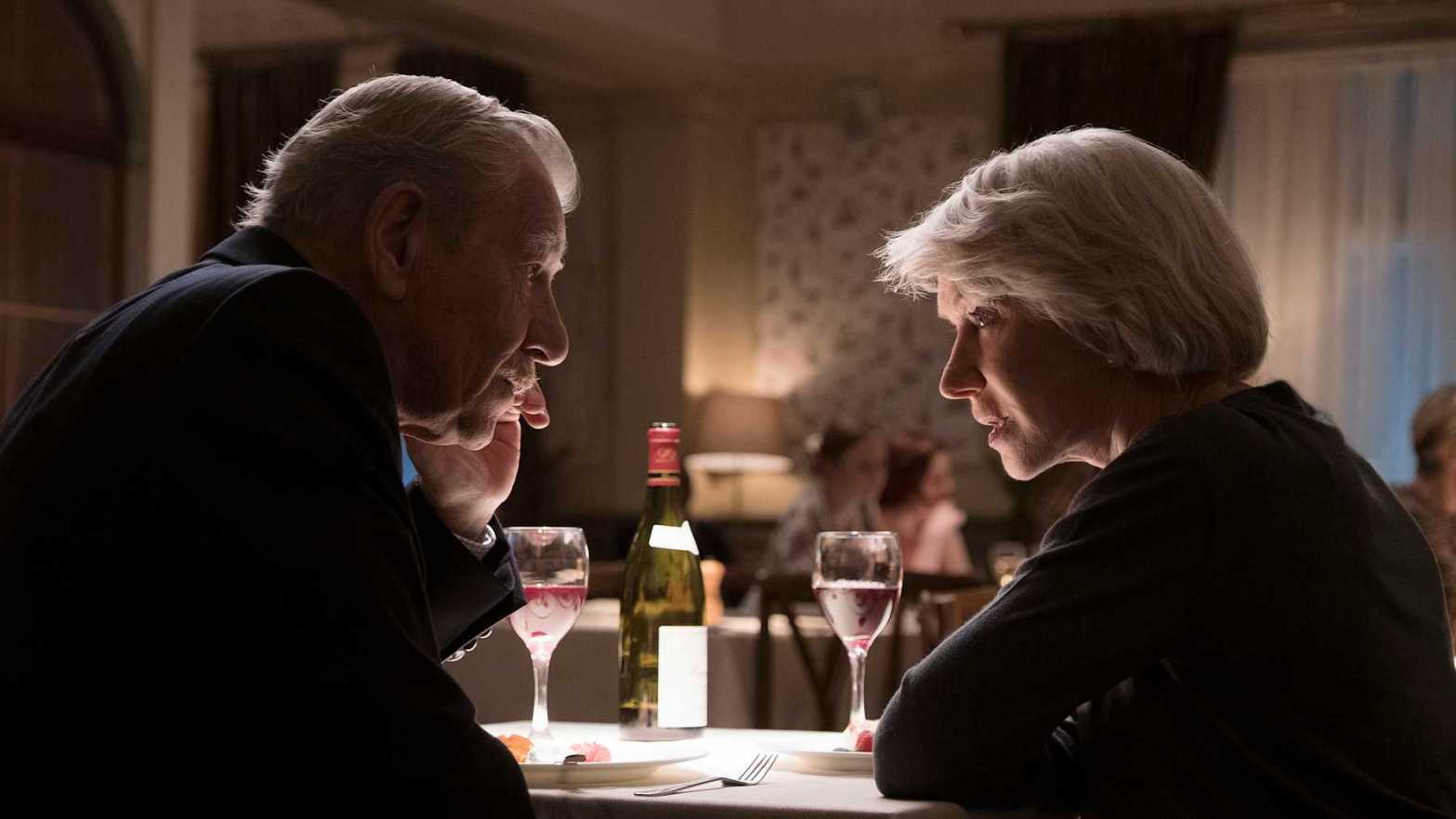
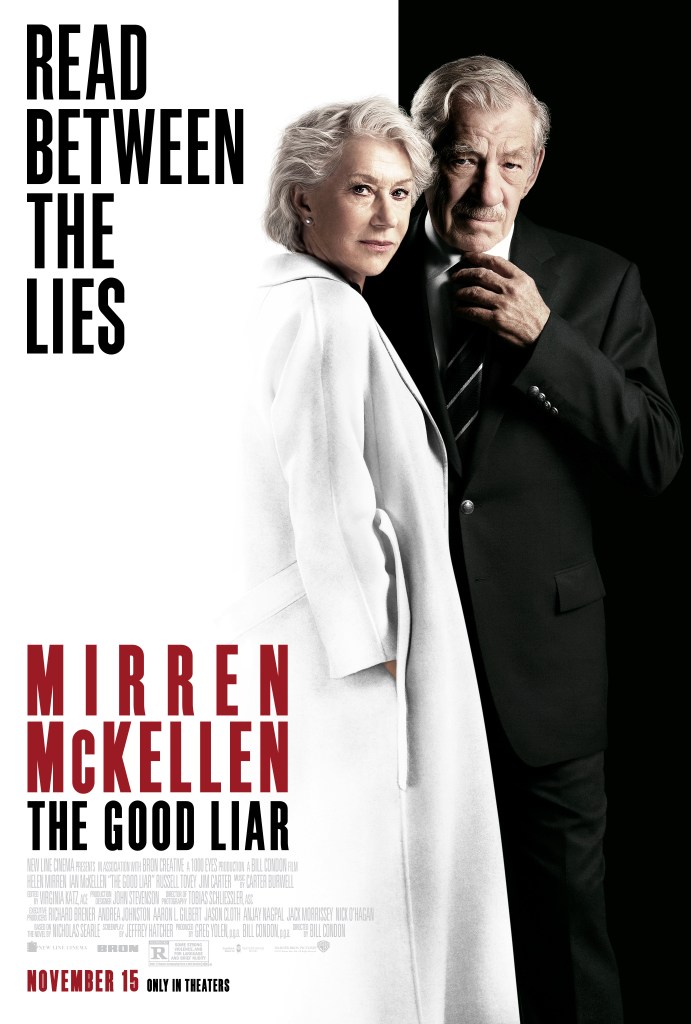
The Good Liar – Review

Cert – 15, Run-time – 1 hour 49 minutes, Director – Bill Condon

A con-artist (Ian McKellen) falls into a relationship with a wealthy widow (Helen Mirren).

The story of a con-man entering into a relationship with a wealthy woman has been done a number of times in the past. However, possibly not quite with the charm of Ian McKellen – sporting a cracking tash – and Helen Mirren. The two veteran British actors are on the top of their game in Bill Condon’s latest – The Good Liar. McKellen plays the suave, polite and charming Roy Courtnay. While you could easily be led to believe that he’s much alike to your own granddad Roy hides behind a thick veil of secrecy. Happening to be an at-large con-man, swindling hundreds of thousands of pounds out of the most unwitting people, a number of them through dating websites. Which is where he meets Betty (Helen Mirren) a recently widowed grandmother who happens to be sitting on a multi-million fortune. It’s not long until she welcomes Roy into her home and opens up her life to him, despite the mistrust of her grandson, Steven (Russell Tovey).

As the pair get closer more of Roy’s crimes and various outside activities are revealed, to the audience at least. Along with his accomplice Vincent (Jim Carter) he tricks people into investing high levels of money into a joint account, saying that in a short amount of time the value will vastly increase, before taking it all and sharing it, in varying amounts, between the group. However, amongst all this the central relationship that makes up the majority of the film is relatively simple. There’s something about the simplicity that creates a comfortable nature, pushed by the charisma of the two leads, both giving truly brilliant performances, one that invites the viewer in, especially as it seems that Roy begins to form a genuine connection with Betty. One which threatens his criminal workings as much of his actions begin to catch up with him in the busy London streets.

In many ways there’s something about The Good Liar that works and clicks. Leading to a sophisticated and slightly layered film that moves quickly in a truly engrossing way. Capturing the viewer’s imagination and bringing them along for the ride, that some might brand as a thriller – despite the minimal, yet effective when appearing, use of action and overall thrills. This is very much a relatively laid-back thriller where the main sense of excitement or tension comes from a simple discussion, or someone being found out for who they truly are.

For much of the run-time the film rattles along almost perfectly. Only beginning to come off its track and truly show its conventions in the final 20 minutes, as the reveals – which gradually become rather predictable – are made clear. While the performances remain strong the writing not so much. The charm and sophisticated nature seems to be immediately dropped in exchange for drawn-out cliche, in what ends up being a rather lengthy final stage. There are still enjoyable elements, as already mentioned, but the flaws begin to shine as the film gradually comes to a close and the unpredictability of the central relationship wears away – which was much of what made the film so great in the first place.

The Good Liar may very well be one of the best, most charming, British films of the year, with McKellen and Mirren giving two top level performances, and it could be one of the best films of the year in general if it wasn’t for the drawn-out and cliched final 20 minutes.

Rating: 4 out of 5.