LFF 2025: Cover-Up – Review

Release Date – 5th December 2025, Cert – TBC, Run-time – 1 hour 57 minutes, Directors – Laura Poitras, Mark Obenhaus

Documentary looking at the work of political journalist Seymour Hersh, who uncovered and reported on some of the biggest cover-ups and exposés of the last 60 years.

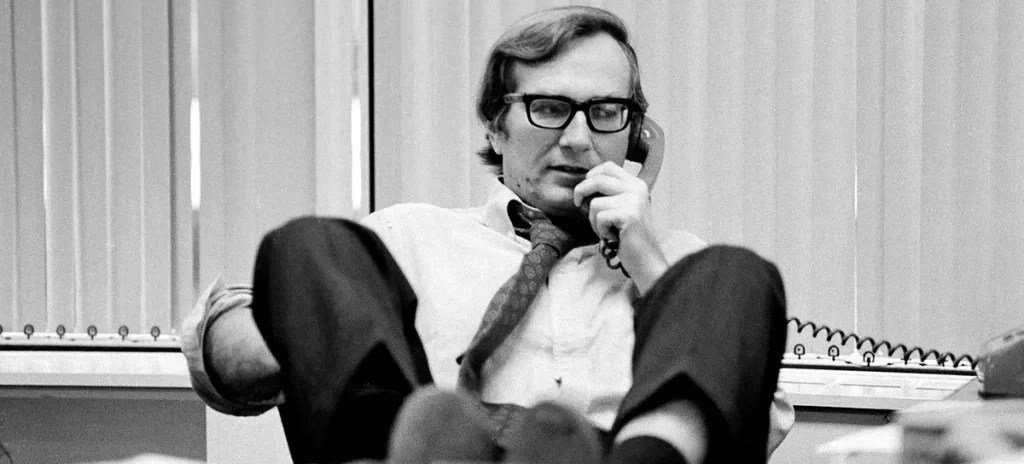
Seymour Hersh appears to want to focus on his work more than anything else, even then he’s somewhat hesitant. “It’s hard to know who to trust. I barely trust you guys” he tells directors Laura Poitras and Mark Obenhaus, and in turn their cameras. Hersh has spent his life working on some of the biggest, most shocking, exposés of modern history. We see him still working today, communicating with sources over the phone about the war in Gaza. This insight into his continuing work and the ways in which he’s engaged are among the closest we get to the personal side of Hersh – “I was very happy not talking about myself” – who is still kept largely quiet as Cover-Up focuses on key stories from his life’s work.

Cover-Up isn’t quite a whistle-stop tour. We spend a good deal of time with only a handful of major uncoverings that Hersh was involved in, but there’s still a lot of ground covered meaning that things aren’t always as in-depth as they perhaps could be. That doesn’t mean there’s not a sense of shock at some of what the subject has been behind. Images and details from the Abu Ghraib tortures still provoke a sense of horror. Each story and the various elements that crop up within them creates interest, but I never found myself fully engaged over the near-two-hour run-time.

Perhaps that came from wanting to know a bit more about the man behind all of the discussed exposés, even if just seeing more of him at work and his thoughts whilst learning about what was happening. But, perhaps that’s wanting the film to be something it’s not. Especially, again, with Hersh seeming to intentionally put focus onto his work and being wary of the cameras and what he’s saying about himself.

The ways in which he talks about trust and the ways in which he communicates with people certainly bring something to the film and add a layer to the man and what he’s done throughout his career – Hersh is currently 88 and continues to fight through his reporting. A layer which certainly brings more to the interest in what the film covers, but also feels like something which could be explored just that bit more, even through the many details we hear about the various stories at hand. Again, perhaps I was wanting Cover-Up to be a different film to what it actually is, but it does feel as if it could have a bit more about the man that leads it to bring more engagement to his work.

While certainly interesting, especially when seeing work and communication in progress, Cover-Up’s look at the career of Seymour Hersh means that the man doesn’t always come through meaning that the documentary is more interesting than fully engaging.
Rating: 3 out of 5.

LFF 2025: Blue Moon – Review

Release Date – 28th November 2025, Cert – 15, Run-time – 1 hour 40 minutes, Director – Richard Linklater

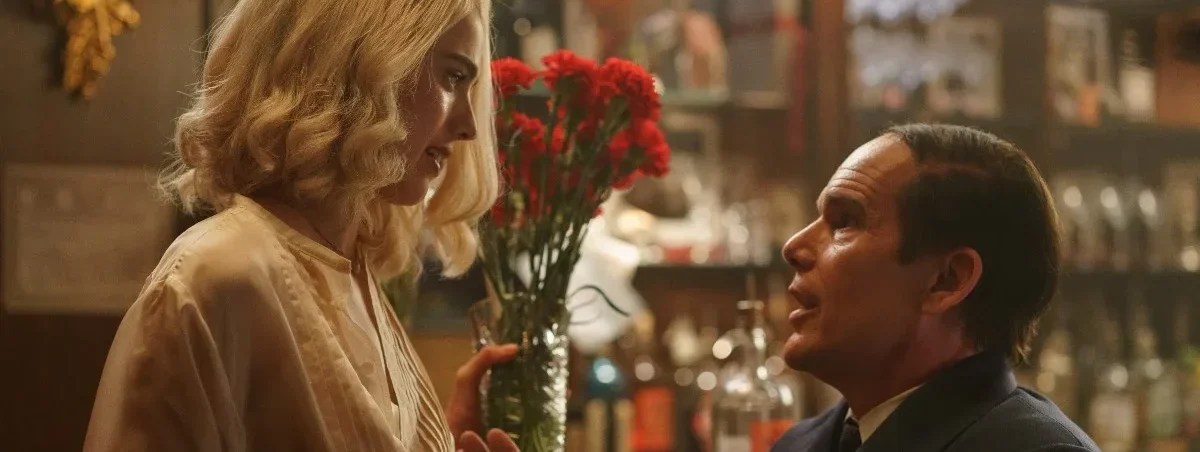
Lorenz Hart (Ethan Hawke) leaves the premiere of Oklahoma! to visit his trusted bar, knowing the afterparty is imminent there, alongside his former creative partner Richard Rodgers (Andrew Scott).

“Do you ever feel like you’re entire life is a play?” was the question Blue Moon asked after I’d already asked myself if it was based on a stage production. Songwriter Lorenz Hart’s (Ethan Hawke) life is condensed into a New York City bar as he escapes the Broadway premiere of Oklahoma! early. Hurt by his creative partner Richard Rodgers’ (Andrew Scott) decision to team-up with Oscar Hammerstein II (Simon Delaney) on the musical, he’s trying to find encouragement in alcohol and those who serve it. The bar is quiet and much of the conversation comes from Hawke, with occasional input from bartender Bobby Cannavale and pianist Morty (Jonah Lees).

The piano naturally accompanies the flow of Lorenz’s monologues as he looks back on what he views as a long and illustrious career where he, as a writer, is now an antique. Hawke perfectly sets the tone with his performance (even if occasionally the 5’10” actor’s performance does look like he’s walking with bent knees to play the 5’5″ central character), capturing a sentimentality in what his character says with a layer of tragedy to what it actually means, and where it comes from. He avoids bringing a sense of bitterness to Robert Kaplow’s dialogue, but a feeling of loss and uncertainty – someone desperate to prove himself to everyone around him and not be forgotten. The tragedy of his pursuits heightened by the fact that the film opens with him falling into a puddle, dead – “sometimes I think that even God is finished with me.” It all makes for an intimate opening 20 minutes.


As the Oklahoma! afterparty makes its way into the same bar Lorenz makes his way through a series of gradually repeating conversations – especially with Scott’s Rodgers. The cycles are emphasised by a feeling that when away from the bar the various scenes feel longer, in some instances more drawn out. The individual moments are more noticeable than when at the bar where things flow with more ease, and humour, due to simply feeling more alive as the elements work better together, and the central figure is in higher, more jubilant, spirits.

Blue Moon as a whole does feel overlong, not always helped by its pacing. And as additional characters, including Margaret Qualley as Elizabeth, the 20-year-old woman the 47-year-old Hart hopes to finally win the love of over the course of the night, pop in and out of the action the film proves the hit-and-miss nature of each conversation had. And when they don’t hit that’s when they truly feel drawn out. There are still retreats to the safety of the bar, for both Hart and the audience, there there’s less busyness, a more relaxed feeling although a line trod between acceptance and custom.

When straying away from the spirits of the bar there’s a hit-or-miss nature to the conversations and monologues which start to draw Blue Moon out, however there’s still a likable wit and flow to the sentimentality and tragedy of Hawke’s well-performed central character.

Rating: 3 out of 5.

LFF 2025: Pillion – Review

Release Date – 28th November 2025, Cert – 18, Run-time – 1 hour 47 minutes, Director – Harry Lighton

Quiet parking officer Colin (Harry Melling) becomes the submissive partner of tough-exterior biker Ray (Alexander Skarsgård), however while the relationship allows Colin to discover more of himself a lack of communication and expression from his partner causes tensions.

‘The annual gay BDSM bikers’ skinny dipping and fishing expedition’ easily sounds like it could be a Python sketch. Pillion sees no element of humour or mocking in the day out between biking enthusiast friends and their submissive/ dominant partners. While the film is refreshing and original in its normalised, unjudging view of the kinks of the characters, including protagonist Colin’s (Harry Melling) “aptitude for devotion,” this scene is also refreshing for Colin as he is brought further into a world where he’s less alone.

The quiet, unsure parking officer meets near-silent, hard-staring, leather-clad biker Ray (Alexander Skarsgård) at a pub on Christmas Eve, the next night their first date is a quick, seemingly unintimate blow job in an alley in the town centre. Yet, Colin’s intrigued, and much like him we’re drawn in to the mystery of Ray. However, as the pair move in together and their sub-dom relationship takes place, with Colin starting to find himself and his expressions of love within it, the reasons for Ray’s mystery start to cause tensions between the pair.

Skarsgård is great at turning the uncommunicative biker from a tough-edged enigma to a character clearly holding something in, making it hard for Melling’s continuously tender performance to start conversations about his want for more expression and conversation between the pair, more intimacy. There’s clearly a connection between the two, but it feels, successfully, divided because of their different views, and wants, from the relationship. Caught in the contrast between the brave and compelling performances, both, like the film, unflinching, totally committed and unshakably sensitive.


While many films may try to find humour around Pillion’s basis the laughs that are present, and there are a good few, come from the surroundings. Interactions Colin has with his colleagues and family as his looks start to change – although his mum (Lesley Sharp) starts to grow increasingly concerned the more distanced her son appears to become, especially when he reveals that Ray’s told him to go to the shop to buy ingredients for his special birthday dinner, that he has to cook himself. Even still, the enigmatic sense that hangs around Ray and what draws Colin too him is still understood and in place.

Yet, the humour never gets in the way of the growing strain the pair face due to the lack of dialogue they share. It’s a point that, like many others throughout the film, is looked at thoughtfully, bringing out the emotional side of things in a relationship that often lacks direct, verbal emotional expression – wonderfully conveyed as Melling starts to overflow and leak out his wants and feelings. He may sometimes hold in his emotions and feelings, yet the film manages to get them across with ease to keep us emotionally engaged and connected with Colin and the journey he goes on.

Everything in Pillion comes together not for a film that can be best described as bold or raw, but simply refreshing. An original love story that manages to gently and naturally flip over its themes to show the other, more difficult side of things in the wonderfully-performed central relationship. Mysterious and compelling, this is a tender look at discovery of self in love and communicating in the wake of that, even if they might seem to contrast.

Tender, compassionate and enigmatic, Pillion is a refreshing love story about self-discovery and trying to communicate. Sensitively performed by Melling and Skarsgård, the central relationship is utterly compelling as the film easily communicates the emotions the characters can’t.

Rating: 4 out of 5.

Christmas Karma – Review

Cert – PG, Run-time – 1 hour 54 minutes, Director – Gurinder Chadha

Christmas Eve, tight-fisted and disparaging businessman Mr Sood (Kunal Nayyar) fires all his staff and is visited by three spirits (Eva Longoria, Billy Porter, Boy George) to confront his past and grow forgiveness.

Perhaps the one thing worse than a preachy musical is a preachy musical with bad songs. Add in some truly dreadful lip-syncing that puts disgruntled bands on 90s Top Of The Pops to shame and each new song in Christmas Karma becomes cause for an eye roll as the joy of charity and togetherness during the Christmas season is crammed down the throats of everyone watching well before the first ghost, the uncanny valley CG vision of Jacob Marley (Hugh Bonneville in the film’s only non-live-action role, making it seem all the odder), appears to the latest iteration of Scrooge.

Scrooge, in Gurinder Chadha’s take on A Christmas Carol, comes in the form of Kunal Nayyar’s Eshaan Sood. A bitter, critical figure whose past appears to be dealt with more in-depth and personally than some other iterations of the character, and when doing so Nayyar’s performance becomes much less played up and theatrical. As the ghosts who visit Sood throughout Christmas Eve come into play, starting with Eva Longoria’s Ghost of Christmas Past, Chadha creates engagement through the new details that she introduces to this modern British telling. Through Sood’s childhood, moving to Britain after his Indian family is forced to leave their home in Uganda – having been there for multiple generations after building railroads for the British.


A want for a sense of belonging and family hang over Sood, alongside grief still held from his own unconfronted personal losses. They push the ideas of forgiveness and alongside compassion to others a hint of self-compassion appears. The songs might still be completely naff with on-the-nose lyrics and unmemorable tunes – whether as a big musical number or just used for another montage – but emotion does start to come into play. And as it did I found myself, unexpectedly after the far-from-subtle nature of the various stages of set-up, warming to the film and what Chadha brought to the narrative.

It’s in quieter moments, however, where things are most effective. Where the obvious isn’t stated and repeated. In one particular moment Sood asks a question about what he’s witnessed, we expect Billy Porter’s wonderful Ghost of Christmas Present to quote back the businessman’s comments to charity collectors instead he just turns and looks at him, silent. It’s my favourite, and perhaps the most effective, moment of the film. As is the case for the other moments where the emotions are successfully stirred, the brief shots where things aren’t shouted from the screen but are just allowed to sit amongst the characters as tragedy and actions of the past reflect into the present.

There may still be big in-your-face song and dance numbers which disturb the flow of things and reintroduce a difficult to get on with tone of overemphasised cheer, but, for all the issues the film has, and there are a good number of them, I found myself starting to embrace it. And I don’t think I can put that down to the festive spirit either – not for it only just being on the cusp of mid-November, but the fact that the more the film pushed its festive and seasonal goodwill the more tacky it seemed, almost like a touring production for schools. Simply the fact that when Chadha starts to deal with the emotional aspects and get into the themes that she seems to be really interested in, especially the past and familial history of the central character, there’s an interest formed that helps things along. While forgiveness might not be created for all the problems there are in Christmas Karma, a sense of more goodwill certainly grows towards it, fittingly, once the spirits start to appear.

Despite the awful songs and lack of subtlety a sense of warmth grows towards Christmas Karma as it gets into the past of its take on Scrooge. There may still be a good deal of issues, but Chadha’s work with the brief emotional aspects manages to just about see it through.

Rating: 3 out of 5.

Now You See Me: Now You Don’t – Review

Cert – 12, Run-time – 1 hour 52 minutes, Director – Ruben Fleischer

After a decade apart, the Horsemen (Jesse Eisenberg, Isla Fisher, Dave Franco, Woody Harrelson) are brought back together alongside a new generation of magicians (Justice Smith, Ariana Greenblatt, Dominic Sessa) to take on a diamond company owner (Rosamund Pike) involved in money laundering.

Magic can be difficult to pull off on film, especially in a $90 million film such as Now You See Me where they let you in on how they pull off some of the tricks. There’s an awareness simply from the production itself of the trickery at hand; the camera, the scripting, the editing. It’s why the grander big reveal moments of the franchise haven’t been as impressive as highlight scenes where the camera follows a series of quick-succession tricks. There’s still an element to this instance in third entry Now You Don’t still highlights a sense of effects trickery, but as the central set of magicians show off their skills trying to outdo and dumbfound each other there’s more of a relaxed nature that embraces the simple performance of magic.

As another globetrotting heist for the Horsemen (Jesse Eisenberg, Isla Fisher, Woody Harrelson, Dave Franco), reunited for the first time in a decade by a mysterious set of tarot cards, starts to take place there’s thankfully not as much of a tangled narrative as in the previous sequel to completely overshadow the magical elements. The group, alongside a new generation of magicians (Justice Smith, Ariana Greenblatt, Dominic Sessa) are tasked with stealing one of the biggest diamonds ever found, labelled ‘the heart’, from diamond company owner Veronika Vanderberg (Rosamund Pike), a woman who helps assist arms dealers and war lords with money laundering through her sales.

Tricks and illusions once again come in different forms, working best when not reaching for grand spectacle. There’s an element of theatricality to this film which contrasts with the broader, big-budget elements. Yet, they come across less in individual sequences and more occasional moments of bickering between the characters – largely Eisenberg and Sessa’s duelling frontmen – where dialogue feels particularly on the nose, or characters in shots they’re not fully involved in seemingly being given the direction ‘just react’ and making sure that they really do.


Yet, even with these beats of awkwardness present there’s still a level of enjoyment to be derived from this film. One that calls back to what made the first film the success it was. perhaps with a little bit of egoless showing off, and largely steers away from the issues of the second. As things progress the cast seem to be getting back into the swing of things, after a number of the leads have been away from the characters for almost ten years, and relaxing more into the roles as sequences better incorporate their strengths from lockpicking and escapes to sleight of hand and mentalism.

The midpoint of the film contains some of the best examples of this. While a house of tricks might initially seem like a slightly pointless, although still amusing, exercise plot-wise it soon unveils itself before leading into an entertaining prison sequence. It’s these moments where scenes flow from one to the other with ease, and, again, allow for the skills of the Horsemen to come into play without feeling lazy or just in place to remind us of the fact they’re magicians.

There may be certain points of Now You See Me: Now You Don’t that feel slightly awkward with occasionally clunky dialogue – perhaps a side-effect of four credited screenwriters – and a theatrical nature that doesn’t quite fit the broader tonal surroundings, but there’s still an overall entertaining nature to the film as a whole. One that finds the most enjoyment when it lets loose and remembers why magicians were chosen to lead the events in the original film and having fun with the skills that they can bring to the various scenarios, and little bits of magical nerdery here and there, too.

While the screenplay might occasionally be slightly clunky, the magic in Now You See Me: Now You Don’t isn’t as clunky as previous Horsemen outings, giving entertaining opportunities for the characters to show off their skills away from thoughts of cinema trickery.

Rating: 3 out of 5.

LFF 2025: Christy – Review

Release Date – 28th November 2025, Cert – 15, Run-time – 2 hours 15 minutes, Director – David Michôd

Christy Martin (Sydney Sweeney) rises through the ranks of 90s boxing, establishing a stronger place for women in the sport, however is held back and undermined by her family and abusive husband (Ben Foster).

Christy certainly shows the flaws of its titular figure in her attitude to facing opponents. Maybe she’s playing up for the press and cameras, but there’s something about Christy Martin’s (Sydney Sweeney) comments which demonstrate an unlikable ego and cockiness. During fights which may not go as hoped as she rises through the ranks of 90s boxing it’s hard to feel a full degree of sympathy.

Where sympathy does come through though is in her personal life outside of the ring. While her career appears to excel, making for a more prominent place for women in the sport, Christy finds herself facing regular abuse from her husband (an increasingly unsettling, and to some degree unrecognisable, Ben Foster), Jim, also acting as her coach. He tells her that if she leaves him he’ll kill her, there’s no doubt that he means it. In dealing with this the film goes to some truly unexpected, and hard to watch places; especially in the third act where the drama and fear are ramped up beyond anything you’d imagine from the trailers. A conversation over the phone between the two is full of threatening tension.


Since its first festival screenings the biopic has been subject to some very sniffy reviews, and I’d argue quite unfairly. While in the first half it might be quite difficult to fully connect with the central figure there’s still an effective nature to the drama. One focusing on events outside of the ring as opportunities start to dry up in the wake of Jim holding Christy back, and her family only appearing to listen to his manipulative side of things, particularly patronising and ignorant mother Joyce (Merritt Wever) – who you just want to see get lamped like one Christy’s boxing rivals.

Over time the film certainly becomes more engaging, and a selection of good performances help to bring in consistency amongst the growing threat that Sweeney’s character faces. There’s engagement and a likable nature to much of the first half, but as the film gets closer to its third act it turns into something quite unexpected, and truly effective. The tone and push of a number of sequences that don’t hold back on detail or the levels of abuse Christy faces are quite something when it comes to the emotional reaction they earn. Through this lens Christy becomes a film about someone finding themselves, discovering their identity and what they’re good at different stages in life. Wrecked by those around her. When delving into that, and it does grow as a core theme, this slightly-sold-as-boxing-drama film, and there are elements of direct boxing drama in here that work and have a likable nature to them, is at its best.

A film with surprises in the intensity of the drama, with a good deal of threat and tension, Christy is a well-performed surprise that might not always connect you to the central figure in the first half but still has engagement in the more straightforward boxing beats.

Rating: 4 out of 5.

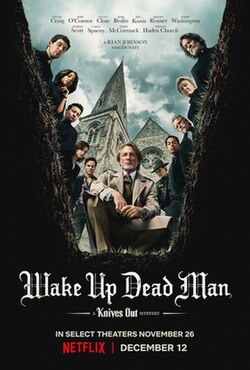
LFF 2025: Wake Up Dead Man: A Knives Out Mystery – Review

Release Date – 26th November 2025, Cert – 12, Run-time – 2 hours 24 minutes, Director – Rian Johnson

Arriving in a small, New England town, Benoit Blanc (Daniel Craig) is called to assist in investigating an unexplainable murder in a closed-off church, could the cause actually be spiritual?

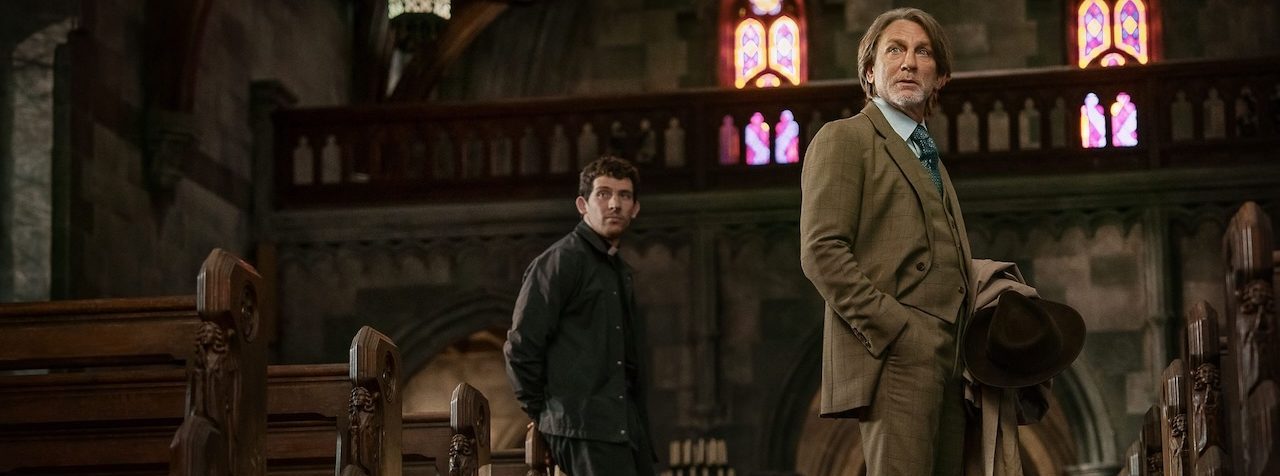
Benoit Blanc (Daniel Craig) describes himself as a “proud heretic – I kneel at the altar of the rational.” To challenge his belief Rian Johnson throws him into his most personally challenging case yet, an unexplainable murder that may well have been a divine, or demonic, act. A body tucked away in a rural New England church with nobody near it at the time of death, during a service.

The congregation (including Glenn Close, Cailee Spaeny, Andrew Scott, Kerry Washington, Daryl McCormack and Jeremy Renner – no references to Renning Hot, unfortunately) is assembled at the time of the murder and we see them gathering a number of times throughout. Generally, we see them more as a starry collective rather than individual figures. Johnson’s screenplay is still full of fun and clever details, but it seems to focus more on the challenge at hand for Blanc rather than the suspects, who don’t appear to have as much time spent with than in the delicious mysteries of the previous two Knives Out features.

Where we see these characters most is in the flashbacks to the days building up to the murder, and the different perspectives that surround these events. There certainly seems to be more jumping back and forth between times in this third film for Craig and Johnson’s detective and while the film is slower-paced with a more intense edge to the dramatic confrontations and heated exchanges – largely headed by the local Monsignor (Josh Brolin – often made to look like he’s just walked out of The Ten Commandments) whose sermons are less about the word of God and more fiery attacks on newcomers to the church, including recently-placed Father Jud Duplenticy (Josh O’Connor).


It’s Jud who we follow throughout the film, alongside Blanc, as the newcomer accused by the congregation of stirring trouble and committing the murder. O’Connor gives a strong performance as the determined yet increasingly nervous priest still dealing with a church that appears to have decided to clash with and challenge him before he even arrived. He pairs well with the battle that Craig’s consistently entertaining Blanc finds himself in with the impossible crime at hand – a point which creates some of the most interesting beats of the film that could be expanded on more.

For all the drama unfolding in the investigation there’s still the familiar comic relief present in the previous two films, and more than you’d perhaps expect from all the promotion and interviews making it seem as if Wake Up Dead Man will be a deadly serious affair. There are still plenty of chuckles throughout which don’t distract from the overall tone and slower pace, and further highlight the audience aspect of watching a mystery such as this. Even if the slower pace means that the overall film feels less tight than before.

Yet, Johnson and Craig are still clearly having a great deal of fun making these films, and it comes across in the detail of the clues, reveals and investigation. Still involving and intriguing, even if the suspects aren’t quite glimpsed as much on an individual basis this time around. The characters who lead, and the mystery around the mystery, are the biggest draws here and create the most engagement and entertainment. Bringing out the sharper edges of the intense dramatic exchanges and personal battles which surround the murder and those near to it. While Blanc may struggle to suspect foul play this time, it’s easy for everyone else to suspect another finely executed Knives Out mystery.

While it might not quite be as tight as previous entries due to less time spent focusing on the suspects, Wake Up Dead Man is still an investing mystery that turns up the drama with personal battles for the well-performed leads of Blanc and O’Connor. This is another slice of gloriously detailed fun from Johnson and Craig.

Rating: 4 out of 5.

LFF 2025: Jay Kelly – Review

Release Date – 14th November 2025, Cert – 15, Run-time – 2 hours 12 minutes, Director – Noah Baumbach

In an attempt to reconnect with his daughter (Grace Edwards), a famous Hollywood actor (George Clooney) follows her across Europe, confronting his past and other relationships in the process.

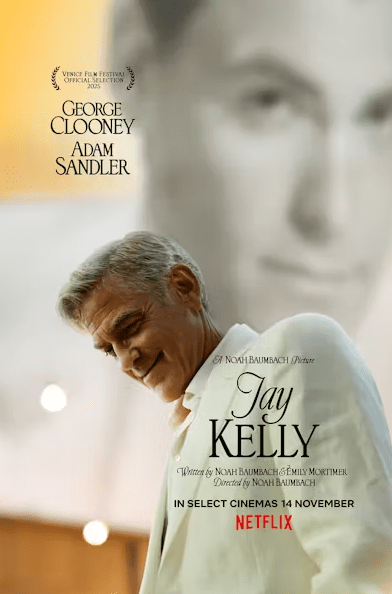
Jay Kelly (George Clooney) is a rich and famous Hollywood actor, but he has problems, too. For year’s he’s been recognised largely as himself, not associated with everyone – although after a string of dud films and a particularly tacky production he’s looking to rekindle old working relationships to get back on track and find the joy of his work again. However, when the director who gave him his big break (Jim Broadbent) passes away Jay starts to look back on his life even more.

After realising his distant relationship with his youngest daughter (Grace Edwards), his estranged eldest (Riley Keough) has left home and forged her own path away from the silver screen, he decides to follow her across a holiday in Europe under the guise of accepting a lifetime achievement award from a festival. However, the journey brings more flashbacks to his past beyond just his work, despite claiming early on that “all my memories are movies.” As director Noah Baumbach – co-writing with Emily Mortimer – dives into these flashbacks there’s something of a disjointed feeling to such scenes, as if separate pockets from the rest of the journey that constructs the overall narrative. It contributes to a feeling of slight uncertainty at the end as to what’s meant to have been taken away from everything that’s just been seen.

Alongside Jay’s journey we see individual strands for those following him, including manager Ron (a wonderfully restrained Adam Sandler in a performance that could finally get him a well-deserved Oscar nomination) and publicist Liz (Laura Dern). The pair appear to have had a history together, but it’s not quite given time to breath, as with most side details from the core arc which settles in nicely to a very traditional Hollywood feel of years gone by.


Clooney leads the action with a brilliant charm and swagger which is chipped away at as Jay re-encounters his past without the lens of work or film. Alongside the light, although sometimes very funny, humour throughout he helps keep engagement throughout the run-time, alongside Sandler who he effectively bounces off of in a relationship which grows more tense in regards to work and life, and giving time to other clients. “You’re a proper human with a family” Ron’s told at one point, “Jay’s single and weird and needs to be entertained.” His entertainment comes from maintaining the glamour, style and suave nature of his films and performances for fans who tell him how much they love him and his work. However, as life and fame appear to be slowing down the fractures in that façade grow and give a chance for the other elements of his life to catch up.

Baumbach and Mortimer bring in moments of poignancy amongst the amusement of the plot. It comes in the quieter more reflective moments where Jay is forced by those around him to finally have an open and direct conversation, to drop the performance. We can see the performance he’s putting on as Clooney shows us the battle playing out behind his character’s eyes between the thoughts of Jay Kelly the famous movie star and Jay Kelly the man forced to confront the moments and relationships of his life. As mentioned, these moments are wonderfully performed with mixed, bittersweet emotions coming from the characters – and often wonderfully captured by Baumbach and cinematographer Linus Sandgren who brings some great shots to the proceedings.

The growing, conflicting emotions of working relationships with friendships and familial bonds is at the fore of Jay Kelly and when being properly confronted they make for some of the strongest details of the film. Brilliantly performed by Clooney with a fantastically understated turn from Sandler, and a great supporting cast, with Baumbach complimenting the unfolding events with a traditional Hollywood feel. Not everything may click as the central figure pushes back against some of what he looks back on and creates an occasionally separate feel to flashbacks, but there’s no denying the level of engagement and amusement there is to be found over the course of this increasingly reflective and consistently enjoyable piece.

While moments that stray from the core narrative of Jay Kelly might feel slightly disjointed from everything else, Clooney and Sandler bring brilliant performances to Baumbach’s funny, reflective and undeniably engaging traditional Hollywood tale of an actor confronting the past and his life outside of films.

Rating: 4 out of 5.

The Running Man – Review

Release Date – 12th November 2025, Cert – 15, Run-time – 2 hours 13 minutes, Director – Edgar Wright

To afford a better life for his wife (Jayme Lawrence) and ill daughter, Ben Richards (Glen Powell) enters The Running Man, a show where he must survive a month while trained hunters and the world are after him.

Despite the title The Running Man is far from Edgar Wright’s most fast paced film. It’s also a film that seems to acknowledge when it’s run out of steam. Moving into a quick succession of sequences as if the film starts rattling off its ending in montage form so as not to go on any longer, and as the central chase nears its conclusion.

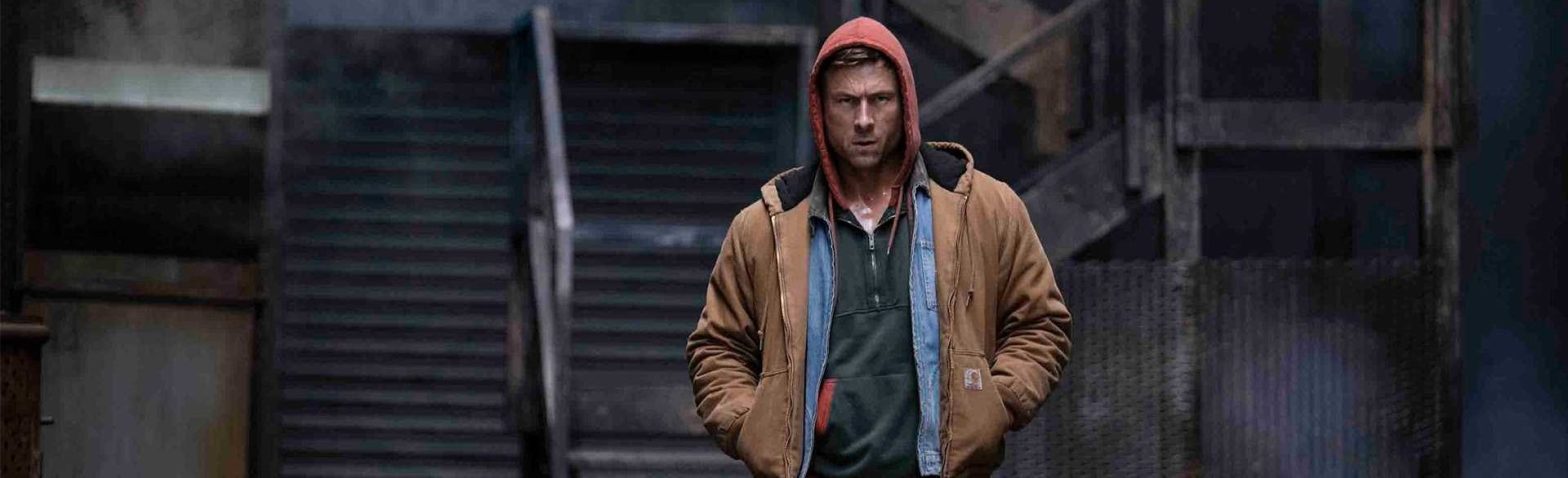
The chase at hand is The Running Man competition, where three runners must evade being killed by trained hunters, or the public, over the course of a month. If they succeed they earn a billion new dollars – the currency in this dystopian future, which we see much more of compared to the 1987 Arnold Schwarzenegger starring adaptation of Stephen King’s novel of the same name (published under his pseudonym Richard Bachman). The money is exactly what Ben Richards (Glen Powell) needs, fired from his job for reporting a safety violation after a major incident and wanting to move his wife (a largely unseen Jayme Lawrence) and ill daughter to a better place, and pay for medicine.

As the chase unfolds Wright certainly restrains his trademark style of quick-cuts and snappy-editing, yet there are still glimpses of the director’s style still present here, including some fun needle drops. Tension rises during multiple close calls with the hunters, especially as Ben thinks that he’s safe at least for a couple of hours. The more Wright allows the camera to follow the action, or at least things move around the multiple layers of a building, the more tension rises. Two particular sequences show off in-the-moment plans and a more layered set of traps, led by an entertaining Michael Cera, with equally as much enjoyment.


The more the hunt goes on, presented by an ominous Colman Domingo, the more Ben starts to encounter faces who suggest that there’s more to the behind-the-scenes of the show than viewers, and participants, are being told about. It’s this that the second half, particularly the third act, deals with more as things start to have to move more towards an ending that’s about more than whether the central figure, well-performed by Powell taking on a more serious-edged leading action role still with some of his naturally playful humour, will survive to the end. While not all of these beats entirely click as they become much more of a core focus of the narrative, largely feeling like they push the run-time – Emilia Jones comes in as a hostage brought into the game by Ben and is on-screen for longer than her underwritten character initially suggests.

Yet, there are still fun details when action kicks off, even in the climactic stages where fights are much more upfront and seemingly personal as the run-time starts to be felt. While Wright has certainly made more of a studio film than what might be more widely recognised as an Edgar Wright film that’s no bad thing. The visual look of the world certainly has a good deal to like and be caught in, even in the confines of a near-future dystopia that seems to be run by the controllers of an authoritarian TV network.

As Powell’s increasingly determined underdog, and a set of floating cameras alongside Wright’s, runs through the various landscapes on offer there’s a good deal to enjoy, especially when the action kicks in, sometimes with a good needle drop. Things might feel overlong as the plot starts to wind in setting things up for its conclusion, but there’s no denying the push of Ben’s efforts to survive, and the Running Man viewers rallying calls of Richards Lives!

The Running Man appears to admit that it runs out of steam as its plot starts to wind, but there’s still an enjoyable hit with the action as the camera tracks Glen Powell’s entertaining lead through different floors and settings, although not quite as fast-paced as you’d expect from Wright.

Rating: 4 out of 5.

The Choral – Review

Cert – 12, Run-time – 1 hour 53 minutes, Director – Nicholas Hytner

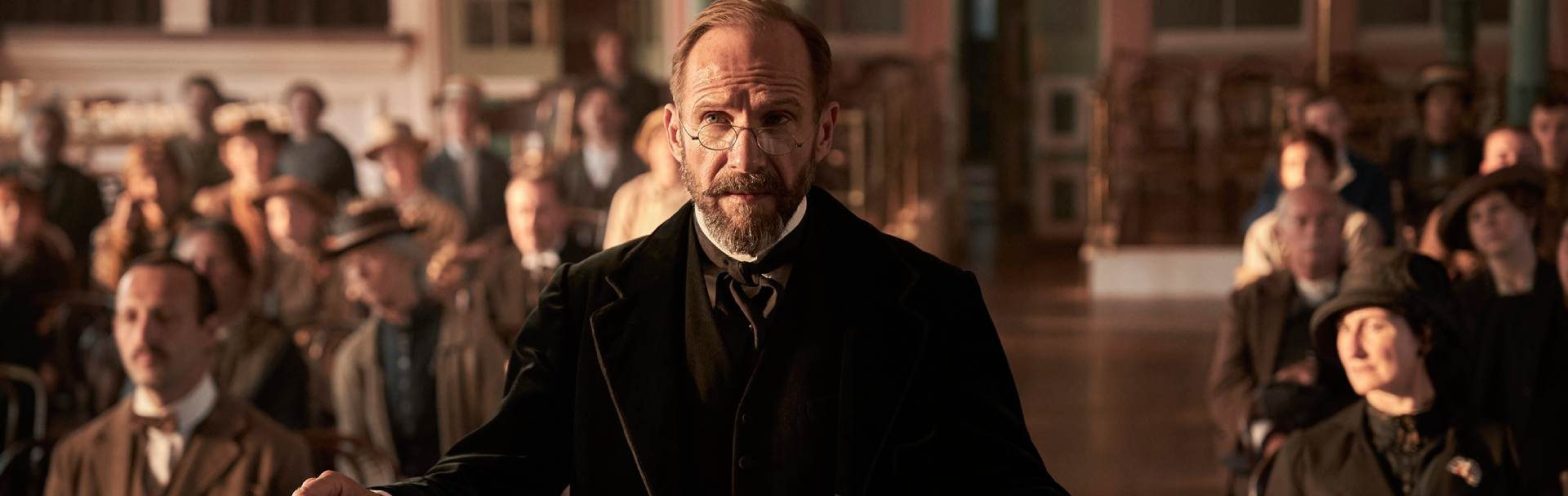
Having spent years living in Germany, Dr Henry Guthrie (Ralph Fiennes) is brought in as the new choirmaster of Ramsden, Yorkshire, a town facing considerable loss as World War I continues.

There can be many members of a choir, and in just under two hours The Choral tries to feature each of them. Some as slight comic relief, others as more prominent protagonists. It makes for a very busy and awkward-sitting film as throughout scenes are cut down to the most fleeting of moments. Hastily stopping and starting, as choirmaster Dr Guthrie (Ralph Fiennes) gets those he’s conducting to do.

Guthrie has been called upon by the senior members of the Ramsden Choral Society to lead them when their choirmaster signs up to fight in World War I. However, while he’s viewed as the best, most musically experienced choice he’s spent a number of years living in Germany, and frequently speaks the language to the shock of those around him. He’s a strong advocate for art being an escape rather than a distraction, something that can benefit and help – and sees that being the case with some of the choir members, particularly young men returning to war, or preparing to be called up.


Ramsden (a fictional town) is full of grief as telegrams go round signalling the death of friends and family members, or in one case the uncertainty of an MIA notice. Yet, through the lens of the effect of art director Nicholas Hytner, once again teaming up with writer Alan Bennett, there’s a more sedate feeling to things. Particularly pushed with just how many characters and situations we cut back and forth between in a jumpy manner that stops a connection from being properly performed. Certainly there are a couple of good chuckles along the way, particularly courtesy of Roger Allam and Mark Addy, and the big final performance lands an effect that successfully stirs emotions, but this is the moment that’s built up to by almost all points amongst all the separate details and relationships.

For the most part The Choral is a film that if you’ve seen the trailer you’ll know how the film will go down with you, but even that fails to get across the restless nature that runs throughout much of the first half, and threatens to return every now and then. When it feels most confident in the themes that it’s dealing with, those which are most consistent, the film moves along rather well. But, when cutting back and forth between sometimes poorly edited scenes there’s a disconnect formed due to the unsettled nature of the unfolding events which struggle to base multiple ideas into one core theme. Most of the notes may be in tune, but they’re not always in harmony.

While fine and certainly hitting some good notes throughout when focusing on its themes surrounding the effect and use of art, there’s an awkwardness to much of The Choral’s first half as it hastily cuts between brief scenes featuring a busy cast.

Rating: 3 out of 5.