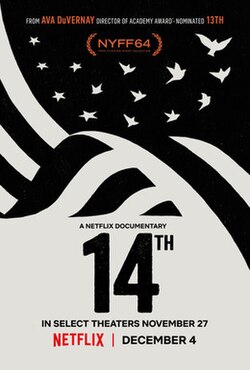
Release Date – 27th November 2026, Cert – 15, Run-time – 1 hour 48 minutes, Director – Ava DuVernay
Documentary looking at the representation and birthright citizenship promised by the 14th amendment of the United States constitution, and how that’s being threatened.
The 14th amendment is described early on in Ava DuVernay’s follow-up to her incredible 2016 documentary 13th as “the everything bagel of democracy.” It’s a strong selling point, a hopeful one at that. But, as we see not too long after, one that’s being challenged. A hand comes on screen to tear apart chunks of a star on-screen for each part of the amendment that American governments, and citizens, have seemingly been stripping away bit by bit through insurrections, the normalisation of the confederate flag and responses to confederate statues being taken down.
There’s a heatedness to DuVernay’s film, as there was with 13th, but she understands that sometimes the best way to make a point is through humour, and that that can also give us the best glimpse of a time and how things haven’t changed over the years. One of the first things we see is a clip of George Carlin saying “this country was founded by slave owners who wanted to be free!” These ideas combine with interviews with politicians, professors, historians and more – only one of whom, Republican representative Anna Paulina Luna, appears to speak against everyone else – to create a rousing film that makes its points loud, clear and with plenty of time given to each, unified under the star imagery and clear links and a through line between each section of the amendment.
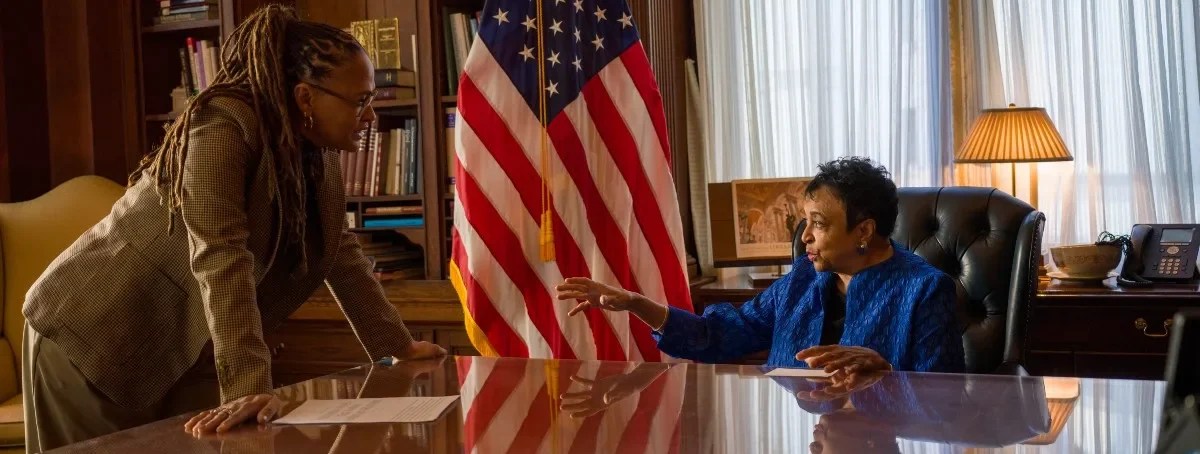
While archive footage, interviews and such remain untainted the decision has been made to seemingly recreate historical images, or perhaps expand them, using AI. As if the camera is moving in to a 3D image, to emphasise the faces in them. However, the effect is a sense of uncanny valley that takes you out of the moment and the point that’s trying to be made – especially when it’s about how some things haven’t changed, or are unfortunately coming full circle.
DuVernay’s film is strongest when reality is speaking for itself, insurrection footage is still shocking and terrifying, and there are plenty of notable quotes from the talking heads present. When talking about the normalisation of confederate iconography one figure states that “their memory is more important that your present.” This idea echoes in the following elements of the segment, and into others, as once again the film looks at attempts to re-write history, and to in some ways disregard the 14th amendment and the birthright citizenship that it offers – such as through action from ICE.
14th proves a focused and passionate film that makes a clear and effective call. There’s a fluidity to it thanks to the linking of each point and idea presented, effectively tied together under the titular amendment. While not every moment creates a striking effect, and there’s some particularly unnecessary, and disconnecting, use of AI, there’s plenty to find interest and engagement in, and be roused by in the view of the modern American landscape. One that’s less looked on as an inevitable worsening, but has a sense of hope that things can be changed, that there’s action being done to maintain the amendment and lives of American citizens who feel under threat. Seeing this just over a month ago, and looking at recent events in America, perhaps that hopeful tone may come out more on a re-watch. Either way, the call is still passionate and one that’s got a fire in its stomach that comes across on screen.
A passionate and rousing call, 14th’s use or archive footage and talking heads create strong through lines and links between each idea presented for a fluid and striking documentary that doesn’t forget a sense of hope against the threat presented with each tear in the star.

